The Bigs: The Secrets Nobody Tells Students and Young Professionals About How to Find a Great Job, Do a Great Job, Be a Leader, Start a Business, Stay Out of Trouble, and Live A Happy Life by Ben Carpenter
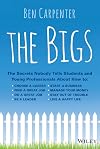
“The Bigs,” was a great, easy read. The author gave tons of examples of people doing great and not so great things on the job. With such detailed descriptions of Carpenter’s colleagues you almost feel like you're eavesdropping.
The advice in “The Bigs” is practical and actionable. Without giving away too much, here are a few of takeaways from the book:
-In the workplace, most of the time you have to earn respect, but sometimes you have to demand it
-Starting out, focus on what you do well over your passion
-Use the power of informational interviews to prime the pump for future job interviews
I would recommend the book to any college student or young adult who wants to know how to find a meaningful career, how to excel at work, and how to manage those early paychecks. I think the book is also ideal for seasoned professionals planning a career change.
The advice in “The Bigs” is practical and actionable. Without giving away too much, here are a few of takeaways from the book:
-In the workplace, most of the time you have to earn respect, but sometimes you have to demand it
-Starting out, focus on what you do well over your passion
-Use the power of informational interviews to prime the pump for future job interviews
I would recommend the book to any college student or young adult who wants to know how to find a meaningful career, how to excel at work, and how to manage those early paychecks. I think the book is also ideal for seasoned professionals planning a career change.
How to Prepare a Standout College Application: Expert Advice that Takes You from LMO* (*Like Many Others) to Admit by Alison Cooper Chisolm
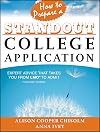
I would like to see this book in the hands of every high school freshmen, provided they are willing to do the work. The authors, both former college admissions officers, provide a step-by-step guide to college applications. The book provides lots of real-world examples and templates. Most importantly, the book dispels any belief that college applications can be done in a weekend.
How to Prepare a Standout College Application shows students how to best present their credentials, not how to build the credentials. That is why I suggest students read the book early in their high school career so that they understand what will appear on future college applications, and start to build the right mix of grades, activities, and impact.
I would recommend this book to a friend, and any student/parent interested in creating a standout college application. Well done.
Note: I received an advanced copy for review. I received no compensation. This is 100% my opinion.
How to Prepare a Standout College Application shows students how to best present their credentials, not how to build the credentials. That is why I suggest students read the book early in their high school career so that they understand what will appear on future college applications, and start to build the right mix of grades, activities, and impact.
I would recommend this book to a friend, and any student/parent interested in creating a standout college application. Well done.
Note: I received an advanced copy for review. I received no compensation. This is 100% my opinion.
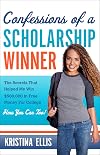
I don’t think you can read this book without feeling inspired. It’s targeted towards high school students, but there is a message of hope that will likely resonant with many parents. The advice is simple and practical. Best of all, the advice is not just for the perfect student. As the author points out, she had imperfect grades and average SAT scores.
It should be noted that the book focuses less on finding scholarships, and more on how to become a strong scholarship applicant. I believe that anyone who follows Kristina’s advice, and commits to working hard, will win free money for college.
I’m glad that I discovered Confessions of a Scholarship Winner while my kids are still young. I would recommend this book to any student or parent in the scholarship hunt.
It should be noted that the book focuses less on finding scholarships, and more on how to become a strong scholarship applicant. I believe that anyone who follows Kristina’s advice, and commits to working hard, will win free money for college.
I’m glad that I discovered Confessions of a Scholarship Winner while my kids are still young. I would recommend this book to any student or parent in the scholarship hunt.
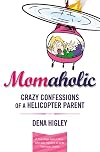
Higley's balance of humor, introspection and self-deprecation makes this one a real page turner.
This book incited the busy body in me. I was a fly on the wall to the Higley family drama, fights with television executives, and the author’s turbulent wedding planning for her eldest daughter, an ordeal that put Higley’s own marriage in peril.
Momaholic allows us to pull back the curtains on a woman who seemed to have it all, and see that we all struggle, have insecurities and setbacks. I think that’s a comfort for any mom who is just trying to do her best.
I would definitely recommend to a friend.
This book incited the busy body in me. I was a fly on the wall to the Higley family drama, fights with television executives, and the author’s turbulent wedding planning for her eldest daughter, an ordeal that put Higley’s own marriage in peril.
Momaholic allows us to pull back the curtains on a woman who seemed to have it all, and see that we all struggle, have insecurities and setbacks. I think that’s a comfort for any mom who is just trying to do her best.
I would definitely recommend to a friend.
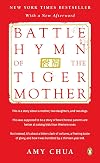
A journalist friend once told me that great writing requires tension. If readers agree with your every word they will likely be bored to tears. Amy Chua’s Battle Hymn of the Tiger Mother bursts with tension. Page after page, I found myself hoping that her husband Jed would take their daughters and run far, far away from the tiger beast.
Chua, a Yale law professor, recounts her struggles and triumphs as she attempts to parent her daughters the “Chinese” way. According to the book, this includes grueling, sometimes demented music lessons, demands for academic and personal excellence, and even threats of violence against stuffed animals.
Battle Hymn holds the kind of suspense and intrigue usually limited to murder mysteries. This is not the kind of book you want to read with the television on or the kids fooling around in the background. You will want to absorb every drop in peace.
Aside from the absurdity of Chua’s attempts to parent her dog the “Chinese” way, I missed the advertised laugh-out-loud hilarity.
Unlike many, I found Chua to be a sympathetic character. It would be easy to join the tide of parents and media who have labeled Chua a monster for her tale of extreme parenting. I was exhausted just reading about her daily schedule, not to mention her epic battles with her youngest daughter Lulu. On some level, albeit an intense level, Chua is just another mother trying to figure things out, making her mistakes along the way.
If Chua’s goal was to produce show more an interesting family memoir—mission accomplished. If the purpose was to show how Chinese parents are better at raising kids than Western ones, the author essentially admits her outlook has evolved. If nothing else, this book will make you think about achievement, self-esteem, love and what successful parenting really means.
Would I recommend this book to a friend? Yes, but only my clever friends (which they all are of course). You have to have some level of mental fortitude to get through a book where you are mind battling the narrator one crazy scene after another. show less
Chua, a Yale law professor, recounts her struggles and triumphs as she attempts to parent her daughters the “Chinese” way. According to the book, this includes grueling, sometimes demented music lessons, demands for academic and personal excellence, and even threats of violence against stuffed animals.
Battle Hymn holds the kind of suspense and intrigue usually limited to murder mysteries. This is not the kind of book you want to read with the television on or the kids fooling around in the background. You will want to absorb every drop in peace.
Aside from the absurdity of Chua’s attempts to parent her dog the “Chinese” way, I missed the advertised laugh-out-loud hilarity.
Unlike many, I found Chua to be a sympathetic character. It would be easy to join the tide of parents and media who have labeled Chua a monster for her tale of extreme parenting. I was exhausted just reading about her daily schedule, not to mention her epic battles with her youngest daughter Lulu. On some level, albeit an intense level, Chua is just another mother trying to figure things out, making her mistakes along the way.
If Chua’s goal was to produce show more an interesting family memoir—mission accomplished. If the purpose was to show how Chinese parents are better at raising kids than Western ones, the author essentially admits her outlook has evolved. If nothing else, this book will make you think about achievement, self-esteem, love and what successful parenting really means.
Would I recommend this book to a friend? Yes, but only my clever friends (which they all are of course). You have to have some level of mental fortitude to get through a book where you are mind battling the narrator one crazy scene after another. show less
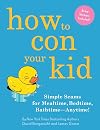
The miniature hard cover with cute cover art makes this book ideal for a tabletop or gift basket. What I really liked was how the authors gave practical tips without taking themselves too seriously. The book is quick and easy to read which is perfect for busy parents.
The book is divided into sections like Grooming Cons, Getting Ready Cons, and Mealtime and Bedtime Cons. The authors present the con (desired behavior), for example, get your kid to let you leave. Then move to laying the groundwork, in this case, letting your child know in advance that you are going out, and normalizing the experience by enlisting neighborhood kids to talk about how great it is to be at home with a babysitter.
The book offers basic cons and short cons for every situation. Basic cons for getting your kid to let you leave include things like saying goodbye positively and quickly and making sure you have everything ready to go (keys, wallet, bowling ball) so that you can make a clean get away. The short cons focus more on the language to use with your child—“Do you want to give me a goodbye kiss or a goodbye hug?”
It’s been fun to practice the techniques with my daughter. It’s a comfort knowing that I have a few tricks up my sleeve. I would recommend this book to a friend with young children.
The book is divided into sections like Grooming Cons, Getting Ready Cons, and Mealtime and Bedtime Cons. The authors present the con (desired behavior), for example, get your kid to let you leave. Then move to laying the groundwork, in this case, letting your child know in advance that you are going out, and normalizing the experience by enlisting neighborhood kids to talk about how great it is to be at home with a babysitter.
The book offers basic cons and short cons for every situation. Basic cons for getting your kid to let you leave include things like saying goodbye positively and quickly and making sure you have everything ready to go (keys, wallet, bowling ball) so that you can make a clean get away. The short cons focus more on the language to use with your child—“Do you want to give me a goodbye kiss or a goodbye hug?”
It’s been fun to practice the techniques with my daughter. It’s a comfort knowing that I have a few tricks up my sleeve. I would recommend this book to a friend with young children.
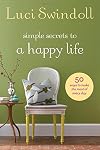
The layout is simple and effective with short chapters. Each chapter title is five words long and starts with an action verb. Examples include Keep Your Word Every Time, Acknowledge Your Need for Help, and Do All Your Homework First.
This was the first book I read by Luci Swindoll. Unfortunately it fell flat for me. The title and introduction warn that the advice is simple. A simple reading of the table of contents as a bulleted list might have been as satisfying as the couple hundred pages of text. It just wasn't enough to sink my teeth into.
That is not to say that Simple Secrets is without merit.
There was one chapter that I would like to pluck out and give to my reading-adverse friends—Build Yourself a Small Library. Swindoll explains how as a child, her family treasured books, a fact that led her on a rewarding path in life. Today Swindoll and her siblings each have home libraries and live by Mark Twain’s reported quote “The man who does not read good books has no advantage over the man who cannot read them.” I love that.
There are lots of interesting tidbits about the Swindoll children including her brother, well-known pastor and author Chuck Swindoll. From reading the book, Luci Swindoll seems like a very pleasant and interesting woman, with a great deal of wisdom to share. Sadly, as far as this book is concerned, that wisdom could have been condensed into a pamphlet.
The publisher provided a free copy of this book in exchange for an honest review.
This was the first book I read by Luci Swindoll. Unfortunately it fell flat for me. The title and introduction warn that the advice is simple. A simple reading of the table of contents as a bulleted list might have been as satisfying as the couple hundred pages of text. It just wasn't enough to sink my teeth into.
That is not to say that Simple Secrets is without merit.
There was one chapter that I would like to pluck out and give to my reading-adverse friends—Build Yourself a Small Library. Swindoll explains how as a child, her family treasured books, a fact that led her on a rewarding path in life. Today Swindoll and her siblings each have home libraries and live by Mark Twain’s reported quote “The man who does not read good books has no advantage over the man who cannot read them.” I love that.
There are lots of interesting tidbits about the Swindoll children including her brother, well-known pastor and author Chuck Swindoll. From reading the book, Luci Swindoll seems like a very pleasant and interesting woman, with a great deal of wisdom to share. Sadly, as far as this book is concerned, that wisdom could have been condensed into a pamphlet.
The publisher provided a free copy of this book in exchange for an honest review.
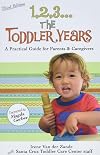
1,2,3...The Toddler Years: A Practical Guide for Parents and Caregivers delivers on its promise to provide practical instruction for living and learning with young children. Each chapter is beautifully simple with topics ranging from how to handle toddler quarrels to how to help your child handle grief and loss. The scenarios and examples of parents and caregivers will ring true for toddler moms and dads.
Irene Van der Zande’s 1,2,3…The Toddler Years is a quick, informative read. It can be read start to finish or just chapter by chapter as needed. I would recommend it to a friend.
Irene Van der Zande’s 1,2,3…The Toddler Years is a quick, informative read. It can be read start to finish or just chapter by chapter as needed. I would recommend it to a friend.
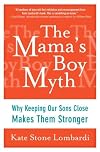
Author Kate Stone Lombardi knocks a hole in the theory that a tight mother-son bond is detrimental to the son’s development in her book The Mama’s Boy Myth: Why Keeping Our Sons Close Makes Them Stronger. Lombardi seamlessly blends interviews of mothers, sons, and experts to show that not only is a mother’s relationship with her son not harmful, it benefits both mother and son, as well as society as a whole.
The tales from everyday moms are as haunting as they are instructive. I will never forget Jean who handed a frozen waffle to her demanding eight-year old son with a lesson on the virtues of patience.
This book offers a buffet of fascinating statistics without being overwhelming. The author does not back down from dissenting experts, but instead uses their own theories to expose their folly.
The book contains a few spaced out examples of suspect parenting, such as Teresa Capone, mother to murderous gangster Al Capone, who insisted that her son was a good boy. I would have liked to see more examples of mothers getting it wrong, both for my own curiosity and to add a little balance.
Overall, Mama’s Boy Myth was a great read and I would definitely recommend it to a friend.
The publisher provided a copy of this title in exchange for an honest review.
The tales from everyday moms are as haunting as they are instructive. I will never forget Jean who handed a frozen waffle to her demanding eight-year old son with a lesson on the virtues of patience.
This book offers a buffet of fascinating statistics without being overwhelming. The author does not back down from dissenting experts, but instead uses their own theories to expose their folly.
The book contains a few spaced out examples of suspect parenting, such as Teresa Capone, mother to murderous gangster Al Capone, who insisted that her son was a good boy. I would have liked to see more examples of mothers getting it wrong, both for my own curiosity and to add a little balance.
Overall, Mama’s Boy Myth was a great read and I would definitely recommend it to a friend.
The publisher provided a copy of this title in exchange for an honest review.
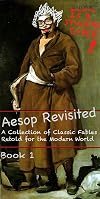
Credit goes to author Ethan Russell Erway for an interesting concept. What counts as humor, especially the religious and political variety, is inherently subjective. Aesop Revisited-Book 1 might have worked better if it had not been promoted as a rewriting of the old fables.
The revisited versions held varying degrees of charm. For example, when Fox, formerly of the Fox and the Grapes fable, auditions for Animal Idol and is told it was “an atrocious performance”, you could imagine the story might play well for a children’s audience. Not tucked between stories of grasshoppers who can’t get government benefits because the “illegal migration insects had eaten up the majority of the government’s reserves.”
Aesop Revisited-Book 1 had several bright spots, and was not entirely the “ridiculous dribble” that Aesop himself warned about in the book’s Foreward.
The revisited versions held varying degrees of charm. For example, when Fox, formerly of the Fox and the Grapes fable, auditions for Animal Idol and is told it was “an atrocious performance”, you could imagine the story might play well for a children’s audience. Not tucked between stories of grasshoppers who can’t get government benefits because the “illegal migration insects had eaten up the majority of the government’s reserves.”
Aesop Revisited-Book 1 had several bright spots, and was not entirely the “ridiculous dribble” that Aesop himself warned about in the book’s Foreward.
This review was written for LibraryThing Member Giveaways.