
Read to give me a better perspective on Trans people and their experiences.
For a younger audience than me, purchased because it was listed as one of the best gay books written that year.
Frank Leslie's Illustrated History of the Civil War. The Most Important Events of the Conflict Between the States Graphically Pictured. Stirring ... ... Portraits of Principal Participants by Frank Leslie
Reprint in a too small format that made the illustrations too small (at least for my eyesight).

Harl is knowledgeable, informative, balanced (he presents differing viewpoints), and interesting in this course about Alexander.

Excellent except for accepting that the Peace of Westphalia established the modern state.
Remembering Woolworth's: A Nostalgic History of the World's Most Famous Five-and-Dime by Karen Plunkett-Powell
Mostly nostalgic look at the now defunct F. W. Woolworth's stores, which numbered in the thousands in the United States alone.
The book provides brief biographies of the store founder, Frank (F. W.) Woolworth, including family backgrounds. A history of the company is also provided, including the Woolworth Tower, at on time the world's tallest building, with separate chapters for non-United States subsidiaries. There was also a chapter on collectables, again showing the book's emphasis on nostalgia.
Interesting for reminding me of the store in my hometown where I would shop for toys and comics growing up.
The book provides brief biographies of the store founder, Frank (F. W.) Woolworth, including family backgrounds. A history of the company is also provided, including the Woolworth Tower, at on time the world's tallest building, with separate chapters for non-United States subsidiaries. There was also a chapter on collectables, again showing the book's emphasis on nostalgia.
Interesting for reminding me of the store in my hometown where I would shop for toys and comics growing up.
By far the best description of the effort to supply troops during the American civil war. The book includes supplying by ship (coastal and riverboat), train, wagons, and pack mules.
The Logistics of Mobilizing and Supplying the Union Army during the Initial Stages of the Civil War (The American Civil War) by Trey G. Burrows
The book is a Master's thesis written for a non-history field (a masters in supply management) for the Air Force Institute of Technology. The author researched the sources (secondary sources) by calling a couple history professors and asking their advice. It could benefit from better sources and better editing (it contains many repetitions and misspellings). Not recommended.
Being curious about Civil War logistics, I purchased this book. The author is apparently a Civil War enthusiast who was also curious and decided to research the topic and write a book about his findings. Many good Civil War books have been written by amateur historians.
The book needed a good editor, to organize the content, eliminate the many digressions, and correct the many annoying typos. The organization (apparently) is to provide general observations (such as the weight of ammo boxes) and then use Gettysburg as a case study. To my astonishment, Rice specifically excludes City Point (the biggest Union supply camp) from his study in logistics. Rice also does not discuss how trains were used to transport supplies, instead only discussing wagon transportation.
The bibliography is strewn with references to Wikipedia; I often use Wikipedia as a quick reference, but not as a source for a book when the authors can be unknown and its information unsubstantiated.
Yet Rice has documented some information that I had not seen elsewhere: the weight of ammo boxes, how the pontoon bridges were transported, how the surgeons and ambulances were transported as part of the supply wagon trains, and his calculations for the food required by troops and transport animals. Rice also criticizes the Confederate movement of troops and supplies to Gettysburg, blaming bad logistics handling for delays in moving troops and ammunition to what would be the battlefield. This criticism was interesting, show more and I wished he had developed it more. Yet, I have another book (I believe it is entitled "Retreat from Gettysburg") where the author praises the Confederate's retreat for its mastery of logistics in moving troops, wounded, and supplies back to the safety of Virginia. Obviously, there is some controversy about how well Lee's army handled logistics.
All in all, the book disappointed me. show less
The book needed a good editor, to organize the content, eliminate the many digressions, and correct the many annoying typos. The organization (apparently) is to provide general observations (such as the weight of ammo boxes) and then use Gettysburg as a case study. To my astonishment, Rice specifically excludes City Point (the biggest Union supply camp) from his study in logistics. Rice also does not discuss how trains were used to transport supplies, instead only discussing wagon transportation.
The bibliography is strewn with references to Wikipedia; I often use Wikipedia as a quick reference, but not as a source for a book when the authors can be unknown and its information unsubstantiated.
Yet Rice has documented some information that I had not seen elsewhere: the weight of ammo boxes, how the pontoon bridges were transported, how the surgeons and ambulances were transported as part of the supply wagon trains, and his calculations for the food required by troops and transport animals. Rice also criticizes the Confederate movement of troops and supplies to Gettysburg, blaming bad logistics handling for delays in moving troops and ammunition to what would be the battlefield. This criticism was interesting, show more and I wished he had developed it more. Yet, I have another book (I believe it is entitled "Retreat from Gettysburg") where the author praises the Confederate's retreat for its mastery of logistics in moving troops, wounded, and supplies back to the safety of Virginia. Obviously, there is some controversy about how well Lee's army handled logistics.
All in all, the book disappointed me. show less

This book is organized by state, with the result that it is a good reference book or interesting to read an individual state, but becomes tedious if you read too many at once.
Colonial, territorial, and state boundary disputes were quite numerous, some of which resulted in armed confrontations. There were also many instances of shoddy surveying, many of which remain today's state lines. Often geographical considerations (mountain chains, rivers, lakes) shaped the boundaries. Sometime politics dictates boundaries, as when Texas released its claims north of 36 degrees 30 minutes to comply with the Missouri Compromise. Stein covers all of these.
It's certainly worth a read; just not all at once.
Colonial, territorial, and state boundary disputes were quite numerous, some of which resulted in armed confrontations. There were also many instances of shoddy surveying, many of which remain today's state lines. Often geographical considerations (mountain chains, rivers, lakes) shaped the boundaries. Sometime politics dictates boundaries, as when Texas released its claims north of 36 degrees 30 minutes to comply with the Missouri Compromise. Stein covers all of these.
It's certainly worth a read; just not all at once.
This book failed to hook my interest in the first thirty or so pages and thus I abandoned it. I am adding it to LibraryThing so that I don't accidentally acquire it again.
I like to read Fantasy books when I am in the mood for light reading. The book failed to hook my interest in the first thirty or forty pages. I therefore abandoned the book as a waste of my time. I usually don't add to LibraryThing books that I have "abandoned" reading, but I wanted to avoid acquiring accidentally this book again.
13 Things that Don't Make Sense: The Most Baffling Scientific Mysteries of Our Time by Michael Brooks
This book is a collection of essays about some scientific mysteries, ranging from dark matter in astronomy to homeopathy in biology. As might be expected, some of the topics are discussed more thoroughly and aptly than other topics. For example, the essays on death, sexual reproduction, and placebos were much weaker (and his discussion unconvincing in portions of these discussions) than his essays on astronomy, homeopathy, and physics.
One of the book's strengths is that each area is presented as though it were a mystery with a concrete example; thus, he presents the mystery of the pioneer space probe's trajectory to talk about the physic's puzzle it represents.
One of the book's strengths is that each area is presented as though it were a mystery with a concrete example; thus, he presents the mystery of the pioneer space probe's trajectory to talk about the physic's puzzle it represents.
I didn't like this book because I thought the protagonist was immature and self-centered. At the end of his first life, he is complaining about the house (too small), the wife (he lacks passion for her, and she has a medical problem that makes her unable to have children), the job, and the last vacation. What a twit!
I was disappointed and would not recommend the book.
I was disappointed and would not recommend the book.

If you have visited Florence, Italy, you have seen the dome of Il Duomo, the church which dominates the city. The dome is huge, and was built during the Renaissance, hundreds of years prior to modern engineering or machinery.
This book details the story of the dome's builder, Filippo Brunelleschi, the genius that translated the architect's vision into reality, and the building of the dome. To complete the dome, Brunelleschi had to invent new cranes and construction techniques, both of which the book describes. Before Brunelleschi, people were unsure if the dome as designed could be built. Fittingly, the dome is now called "Brunelleschi's Dome."
The book is a fun read, intended for a general (not scholarly) audience.
This book details the story of the dome's builder, Filippo Brunelleschi, the genius that translated the architect's vision into reality, and the building of the dome. To complete the dome, Brunelleschi had to invent new cranes and construction techniques, both of which the book describes. Before Brunelleschi, people were unsure if the dome as designed could be built. Fittingly, the dome is now called "Brunelleschi's Dome."
The book is a fun read, intended for a general (not scholarly) audience.
I read this book with some hesitation, as the author was not a minister (with having the benefit of seminary classes) nor a theologian. To my surprise and delight, I found the author well-versed in the Bible, both the Old and New Testaments, and espousing similar beliefs to those that I hold.
He surveys the nature of God and Jesus; the role of the Bible, of church, and of Christians; and provides an interpretation of today's moral issues (such as abortion, capital punishment, assisted suicide, and gay rights) as a progressive Christian. He discusses each thoroughly, and arrives at what I think is an appropriate understanding. As a gay man in a same-sex marriage, I am opinionated about gay rights, but the author mirrored my beliefs.
Overall, the book was a delight to read, and I probably didn't rate it with enough stars (I'm usually stingy in my ratings). I would recommend this book.
He surveys the nature of God and Jesus; the role of the Bible, of church, and of Christians; and provides an interpretation of today's moral issues (such as abortion, capital punishment, assisted suicide, and gay rights) as a progressive Christian. He discusses each thoroughly, and arrives at what I think is an appropriate understanding. As a gay man in a same-sex marriage, I am opinionated about gay rights, but the author mirrored my beliefs.
Overall, the book was a delight to read, and I probably didn't rate it with enough stars (I'm usually stingy in my ratings). I would recommend this book.
Longitude: The True Story of a Lone Genius Who Solved the Greatest Scientific Problem of His Time by Dava Sobel
The author tells about the search for a method to determine longitude, badly needed to safely navigate oceans. It aptly explains the two methods (by celestial bodies or by a ship-borne clock) that were developed, their advantages and disadvantages, and the inventions necessitated by each.
The author mentions in their Acknowledgments that this book was expanded from a magazine article. Unfortunately, the book seemed overly long, and perhaps should have remained as a magazine article.
The author mentions in their Acknowledgments that this book was expanded from a magazine article. Unfortunately, the book seemed overly long, and perhaps should have remained as a magazine article.
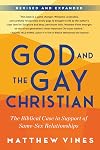
Matthew Vines, the author of this book, started a new outreach group to Christian fundamentalists. Having some experience with Christian fundamentalists, I am rather dubious about the success of this endeavor; nonetheless, it made me curious about the book he wrote while starting the outreach.
The same Bible verses have been used to bludgeon gays for hundreds of years, and Vines covers much of the same ground in the same way as was covered in the 1980s and 1990s when I last looked at this topic in depth. The only difference in this book is the approach, written as if a fundamentalist were to be reading the book (doubtful, unless the reader is trying to reconcile a gay sexual orientation with their fundamentalist beliefs).
I was disappointed in the book, and thus rated it only two and a half stars.
The same Bible verses have been used to bludgeon gays for hundreds of years, and Vines covers much of the same ground in the same way as was covered in the 1980s and 1990s when I last looked at this topic in depth. The only difference in this book is the approach, written as if a fundamentalist were to be reading the book (doubtful, unless the reader is trying to reconcile a gay sexual orientation with their fundamentalist beliefs).
I was disappointed in the book, and thus rated it only two and a half stars.

I had trouble rating this book because it alternated between tedious and enthralling. The book was a somewhat rambling collection of biographical stories, philosophy on life, and observations about contemporary (1980s) society combined with how L'Amour educated himself by reading multitudes of books. Many of the book titles are included, and he even supplies a appendix listing the books he read by year for the 1930s. The best portions of the book dealt with his biographical stories. Unfortunately, he died before writing a true autobiography.
L'Amour was the best selling author who specialized in writing westerns, but who also wrote on other topics, including a historical novel on the middles ages (The Walking Drum) and a novel about a captured American pilot escaping from a Siberian prison during the cold war (The Last of the Breed). I still enjoy reading his novels.
L'Amour was the best selling author who specialized in writing westerns, but who also wrote on other topics, including a historical novel on the middles ages (The Walking Drum) and a novel about a captured American pilot escaping from a Siberian prison during the cold war (The Last of the Breed). I still enjoy reading his novels.

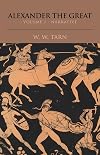
W. W. Tarn was one of the eminent ancient historians prior to the 1940s.
Biographers are often a product of their times, and so is Tarn. Sexuality in ancient times was perceived differently than it was around WWII or even today. Alexander had sexual relationships with both men and women, with what seems his most enduring relationship a homosexual one with Hephaestion. Yet Tarn fails to acknowledge this relationship, possibly because in his era homosexuality was viewed with disgust and dishonor. Yet this homosexual relationship is part of Alexander's story, and one that Tarn neglects and even hides.
The map furnished at the back of the book is quite good, showing the ancient world across two pages with Alexander's route of conquest superimposed. The map also has a useful index separate from that of the book's text.
There are better biographies of Alexander, but Tarn's map is still useful.
Biographers are often a product of their times, and so is Tarn. Sexuality in ancient times was perceived differently than it was around WWII or even today. Alexander had sexual relationships with both men and women, with what seems his most enduring relationship a homosexual one with Hephaestion. Yet Tarn fails to acknowledge this relationship, possibly because in his era homosexuality was viewed with disgust and dishonor. Yet this homosexual relationship is part of Alexander's story, and one that Tarn neglects and even hides.
The map furnished at the back of the book is quite good, showing the ancient world across two pages with Alexander's route of conquest superimposed. The map also has a useful index separate from that of the book's text.
There are better biographies of Alexander, but Tarn's map is still useful.

Rufus Fears is sometimes quite bad, and sometimes quite good, in "Famous Greeks." For example, his portrayal of Alexander the Great includes a claim that his generals and men thought Alexander was a god; my understanding is that the generals perceived Alexander as first among equals and were distressed and confrontive when he behaved differently, such as when he wanted people to prostrate themselves to him after defeating Darius. Fears also uses estimates of the Persian army that are wildly inflated; we don't have good estimates of their strength, although it was certainly more than the Macedonian numbers.
Yet Fears provides a good survey of Greek history through his biographies, and often provides a good overview of their accomplishments and of what we know of their life.
And then there is Fear's delivery of the course: it's awful. Most annoying are his pauses, given for dramatic effect, that are overly long and actually detract from the content. His imagined dialogues between people, used as a dramatic device, sometimes also detract from his biographies.
Thus, I only give him two stars for the course.
Yet Fears provides a good survey of Greek history through his biographies, and often provides a good overview of their accomplishments and of what we know of their life.
And then there is Fear's delivery of the course: it's awful. Most annoying are his pauses, given for dramatic effect, that are overly long and actually detract from the content. His imagined dialogues between people, used as a dramatic device, sometimes also detract from his biographies.
Thus, I only give him two stars for the course.
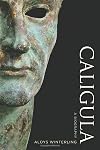
A revisionist biography advocating persuasively that Caligula was not insane, only portrayed as mad because the aristocracy so hated him.
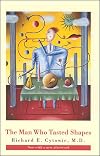
I had previously bought and then culled this book, thinking I'd never have time to read it. When I found I had purchased another copy, I decided I should read it.
I've always been curious about how people with "blended senses" perceive things. The book describes one person who perceives shapes when tasting food, and another case where the person perceives colors when hearing sound. The book also contains an interesting chart showing how senses can be blended together (the technical term is "synesthesia") and its frequency. All the possibilities are quite rare.
The book has three themes: synesthesia, the biology of the brain and of perceptions, and the philosophy of perception and consciousness. Most of it is presented in the context of a detective story as the author encounters the people with synesthesia, attempts to scientifically validate their perceptions, and presents the findings to a skeptical scientific community.
An interesting read.
I've always been curious about how people with "blended senses" perceive things. The book describes one person who perceives shapes when tasting food, and another case where the person perceives colors when hearing sound. The book also contains an interesting chart showing how senses can be blended together (the technical term is "synesthesia") and its frequency. All the possibilities are quite rare.
The book has three themes: synesthesia, the biology of the brain and of perceptions, and the philosophy of perception and consciousness. Most of it is presented in the context of a detective story as the author encounters the people with synesthesia, attempts to scientifically validate their perceptions, and presents the findings to a skeptical scientific community.
An interesting read.
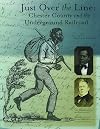
Just Over the Line was an exhibition catalog for the 2002 Underground Railroad exhibit at the Chester County Historical Society in Pennsylvania.
Written by William C. Kashatus, who has an MA in History from Brown and a PhD in History education from the University of Pennsylvania, the book conveys an excellent introduction to the underground railroad in the area and contains a nice mixture of pictures and illustrations (all of which appeared at the exhibition) to supplement the text.
This book is not intended for the expert, but is a fine introduction for the topic.
Written by William C. Kashatus, who has an MA in History from Brown and a PhD in History education from the University of Pennsylvania, the book conveys an excellent introduction to the underground railroad in the area and contains a nice mixture of pictures and illustrations (all of which appeared at the exhibition) to supplement the text.
This book is not intended for the expert, but is a fine introduction for the topic.
Making Freedom: The Underground Railroad and the Politics of Slavery (Steven and Janice Brose Lectures in the Civil War Era) by R. J. M. Blackett
Making Freedom is a fine overview of the underground railroad in the period before the fugitive slave act and afterwards, including the impact of the act on slave escapes, and the resulting resistance to the act's enforcement. It accomplishes this in a concise and interesting fashion.
It could have profited from stricter editing: for example, the explanation of the Christina, Pennsylvania resistance (which resulted in the slave owner being killed while attempting to reclaim his former slave) appeared after its first reference.
Overall, the book was a good introduction to the underground railroad.
It could have profited from stricter editing: for example, the explanation of the Christina, Pennsylvania resistance (which resulted in the slave owner being killed while attempting to reclaim his former slave) appeared after its first reference.
Overall, the book was a good introduction to the underground railroad.
William Henry Harrison is one of the biographies in The American Presidents series, known for its concise biographies because of their limit to roughly 125 pages. For a president such as Harrison, who only served for one month, this conciseness works well.
The author, Gail Collins, is not a professional historian; nonetheless, she does a fine job in describing Harrison's life.
The author, Gail Collins, is not a professional historian; nonetheless, she does a fine job in describing Harrison's life.
The Roads of the Romans (Getty Trust Publications: J. Paul Getty Museum) by Romolo Augusto Staccioli
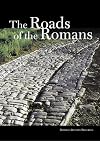
The book contains great photos of all aspects of the Roman road system, but the text doesn't have much depth. I was left wishing for more information on how they constructed roads, bridges, and tunnels. If you're looking for a fun and quick read on roman roads, this is your book. If you desire an in-depth text, look elsewhere.
The Men Who Lost America: British Leadership, the American Revolution, and the Fate of the Empire (The Lewis Walpole Series in Eighteenth-C) by Andrew Jackson O'Shaughnessy
Good for the British viewpoint of the American revolution, and for concise biographies of the British players, from the king and cabinet ministers to the military commanders.
The End of the Bronze Age, by Robert Drews, is a good introduction to the catastrophe of the bronze age. The book provides a summary of the events, a map showing the sites, and a critique of the various possible explanations of the cause. Drews also speculates that the cause was a change in tactics and weaponry (an improved sword).
Although the book was written in the mid 1990s, it is still current. The same debate still exists about the cause, with the same possible explanations.
Although the book was written in the mid 1990s, it is still current. The same debate still exists about the cause, with the same possible explanations.