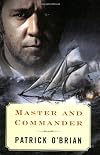
The year is 1800 and the place is Port Mahon, Minorca. The island is a British possession since 1713, and a base of operations of the Royal Navy in the Mediterranean Sea. There, Lieutenant John “Jack” Aubrey, a naval officer, enjoyed some shore time. During a concert at the governor’s mansion, he made the acquaintance of Stephen Maturin, a doctor by trade.
When Jack returns to his lodgings that night, there is a dispatch from the admiralty waiting for him. It was his long-awaited promotion. He was to take command of the sloop HMS Sophie. Tradition wanting that a departing captain may take with him a number of his crew to his new command, Captain Aubrey (the multiple definitions of the title of, and of the rank of captain are well-described in the book) was left without a first officer and a doctor.
When doctor Maturin joins the crew of the Sophie to escape from his financial difficulties, they embark on a series of adventures that include a convoy mission, action against the Spaniards, a manhunt for Irish republican leaders, and an ill-fated courier job.
O’Brian does a great job at putting on paper the life of men at sea. He also makes smart use of the character of doctor Maturin for this purpose. An outsider to all things nautical, he uses the questions of the good doctor to explain the inner workings of the ship and the procedures and traditions of the Royal Navy, which is of great use to neophytes such as yours truely.
This book is a great starting point to a show more series of stories that have conquered the hearts of adventure fans and historical fiction nuts for decades. It is highly recommended! show less
When Jack returns to his lodgings that night, there is a dispatch from the admiralty waiting for him. It was his long-awaited promotion. He was to take command of the sloop HMS Sophie. Tradition wanting that a departing captain may take with him a number of his crew to his new command, Captain Aubrey (the multiple definitions of the title of, and of the rank of captain are well-described in the book) was left without a first officer and a doctor.
When doctor Maturin joins the crew of the Sophie to escape from his financial difficulties, they embark on a series of adventures that include a convoy mission, action against the Spaniards, a manhunt for Irish republican leaders, and an ill-fated courier job.
O’Brian does a great job at putting on paper the life of men at sea. He also makes smart use of the character of doctor Maturin for this purpose. An outsider to all things nautical, he uses the questions of the good doctor to explain the inner workings of the ship and the procedures and traditions of the Royal Navy, which is of great use to neophytes such as yours truely.
This book is a great starting point to a show more series of stories that have conquered the hearts of adventure fans and historical fiction nuts for decades. It is highly recommended! show less
There are many writers who have tried their hand at the historical novel. Some have achieved a certain amount of success, but few have succeeded on the scale of the likes of Patrick O’Brian, whose star has not faded one bit since his passing 11 years ago. Perhaps that is attributable to the fact that there are few names that are so intimately linked to fiction set in the glorious age of sail. C.S. Forester and Alexander Kent are probably the only real competitors to the title of the most famous chronicler of the Royal Navy of the 19th century.
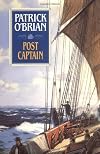
Apart stands this one novel. Post Captain is the second novel in O’Brian’s Aubrey-Maturin series. It follows the adventures of Jack Aubrey, a dashing young master and commander and Stephen Maturin, his best friend and ship’s surgeon. Here we follow the pair as they make their way into both career and social advancement, with special attention to the latter.
As the peace of 1802 with Napoleon smoothes out the tensions between England and France, the number of ships necessary to the Royal Navy begins a period of decline and the commands are being awarded to the seniormost officers. Our hero, having only been promoted as ship’s commander the year before, he finds himself one of the many commanders without a ship.
As he takes vacation in rural England and awaits news from his prize agent, the man who handles the sale of the captured ships, he makes the acquaintance of the Williams family and their daughters, of whom Sophie show more captures his heart. He soon learns that the prize agent had fled to Bordeaux, leaving nothing behind him and that he found himself penniless and unable to settle his affairs on land and in a hefty debt.
The novel explores in detail the intricate inner workings of social interaction in 19th century English society as Captain Aubrey tries to secure a command and make good on his promises to Sophie, while dodging his debtors. Stephen Maturin on the other hand tries his best to juggle between a love interest of his own and the underworld of political intrigue and espionage into which the admiralty has dragged him.
This novel takes place more on land than at sea, and certainly has a different pacing than its predecessor, Master and Commander. That is not to say that there is not plenty of seagoing adventure to be had and enjoyed, but simply that the emphasis here has been put more on the development of the social status of the protagonists. It has earned Post Captain a well deserved reputation of being Patrick O’Brian’s homage to Jane Austen. show less
Apart stands this one novel. Post Captain is the second novel in O’Brian’s Aubrey-Maturin series. It follows the adventures of Jack Aubrey, a dashing young master and commander and Stephen Maturin, his best friend and ship’s surgeon. Here we follow the pair as they make their way into both career and social advancement, with special attention to the latter.
As the peace of 1802 with Napoleon smoothes out the tensions between England and France, the number of ships necessary to the Royal Navy begins a period of decline and the commands are being awarded to the seniormost officers. Our hero, having only been promoted as ship’s commander the year before, he finds himself one of the many commanders without a ship.
As he takes vacation in rural England and awaits news from his prize agent, the man who handles the sale of the captured ships, he makes the acquaintance of the Williams family and their daughters, of whom Sophie show more captures his heart. He soon learns that the prize agent had fled to Bordeaux, leaving nothing behind him and that he found himself penniless and unable to settle his affairs on land and in a hefty debt.
The novel explores in detail the intricate inner workings of social interaction in 19th century English society as Captain Aubrey tries to secure a command and make good on his promises to Sophie, while dodging his debtors. Stephen Maturin on the other hand tries his best to juggle between a love interest of his own and the underworld of political intrigue and espionage into which the admiralty has dragged him.
This novel takes place more on land than at sea, and certainly has a different pacing than its predecessor, Master and Commander. That is not to say that there is not plenty of seagoing adventure to be had and enjoyed, but simply that the emphasis here has been put more on the development of the social status of the protagonists. It has earned Post Captain a well deserved reputation of being Patrick O’Brian’s homage to Jane Austen. show less

The year is 1793 and Europe is wracked with fire and blood. In France, the king was deposed and the nobles are fleeing the country to escape the guillotine of the hungry new republic. With republican ideas shaking the stability of regimes across Europe, King George has vowed to restore the rightful ruler of France (Louis XVIII, currently in exile in England) to his throne. It is a time of explosive diplomatic relations and the politics of war make for strange allies and friends become foes on a moment's notice.
A complete antithesis to the fearless knight in shining armour, Horatio is a timid, frail and sickly young man. A gifted scholar, he would probably have done better following in his father's footsteps and becoming a doctor. This is epitomized by young Hornblower being seasick in the very first pages pf the book -while the ship is still at anchor!- . Not being of noble birth, it probably took all of his father's influence and possibly quite a sum of money to afford his seventeen year old son a warrant as a midshipman in the Royal Navy.
This first volume reads more like a collection of short stories than an actual novel, and perhaps it was originally intended to be published as such. Not all the stories have him operating from the same ship. A few plot elements do give a sense of interconnection, but the main point to be observed is that they all feature our hero at the rank of midshipman.
The first chapters take him from the daily shipboard life on a man-of-war to the show more command of a french merchantman which was taken as a prize. He then goes on an education on the responsibilities that come with authority and rank as he earns the respect of both his superiors and the men under his command. Later on his knowledge of the french language (which he learned from his old tutor, an exiled nobleman) leads him to be involved in an ill-fated expedition in support of the french monarchists and finally to action against the Spaniards. The final arc sees him go up for his examination for the rank of lieutenant, which becomes in itself an adventure of epic proportions in it's own right.
While the characters might feel slightly underdeveloped for the reason explained above, this book contains a torrential stream of action-packed adventures as told by a master storyteller. The history presented here is all based on fact and has been thoroughly researched by the author for maximum authenticity. Forester being a seaman in the Royal Navy himself adds a richness of depth to the descriptions. For all of it's strengths, I would still recommend that you read “Lieutenant Hornblower” (which is the subject of the next review) first so as to get a better feel for the character before getting into this one. show less
A complete antithesis to the fearless knight in shining armour, Horatio is a timid, frail and sickly young man. A gifted scholar, he would probably have done better following in his father's footsteps and becoming a doctor. This is epitomized by young Hornblower being seasick in the very first pages pf the book -while the ship is still at anchor!- . Not being of noble birth, it probably took all of his father's influence and possibly quite a sum of money to afford his seventeen year old son a warrant as a midshipman in the Royal Navy.
This first volume reads more like a collection of short stories than an actual novel, and perhaps it was originally intended to be published as such. Not all the stories have him operating from the same ship. A few plot elements do give a sense of interconnection, but the main point to be observed is that they all feature our hero at the rank of midshipman.
The first chapters take him from the daily shipboard life on a man-of-war to the show more command of a french merchantman which was taken as a prize. He then goes on an education on the responsibilities that come with authority and rank as he earns the respect of both his superiors and the men under his command. Later on his knowledge of the french language (which he learned from his old tutor, an exiled nobleman) leads him to be involved in an ill-fated expedition in support of the french monarchists and finally to action against the Spaniards. The final arc sees him go up for his examination for the rank of lieutenant, which becomes in itself an adventure of epic proportions in it's own right.
While the characters might feel slightly underdeveloped for the reason explained above, this book contains a torrential stream of action-packed adventures as told by a master storyteller. The history presented here is all based on fact and has been thoroughly researched by the author for maximum authenticity. Forester being a seaman in the Royal Navy himself adds a richness of depth to the descriptions. For all of it's strengths, I would still recommend that you read “Lieutenant Hornblower” (which is the subject of the next review) first so as to get a better feel for the character before getting into this one. show less

There is grumbling between the decks of the Renown. Tension is palpable, and nobody quite knows what to expect. In the time of a few months, their legendary and adulated captain’s behaviour has become increasingly strange and erratic. He is as likely to bouts of paranoia during which he can accuse just about anyone of conspiracy and “black bloody mutiny” as to randomly grant a double helping of spirits to all hands to recognise their loyalty right on the afternoon watch.
These are the conditions under which Lieutenant William Bush, which fans of the series know as Hornblower’s lifelong friend, joins the complement of the Renown. In a departure from the style in which the rest of the series is written, this book is actually told from Bush’s perspective. This ingenious device is played to particularly good results, allowing not only to better understand how other people actually perceive Horatio Hornblower, but also because it allows a plot element to which Hornblower is thought to be privy to remain mysterious.
When his paranoia leads Captain Sawyer to believe that Midshipman Wellard, a 12 year old boy, is undermining his authority in the eyes of the men, he has the boy severely beaten, which leads the officers, Lieutenants Buckland, Bush and Hornblower to doubt his sanity and ability to command.
While looking for mutineers on the lower deck, Captain Sawyer mysteriously falls down to the hold but lives, if only worsened by his fall. When it is determined that show more Captain Sawyer is unfit to resume command, it is expected that an admiralty hearing would await them in Jamaica to look into the removal of Captain sawyer. It is agreed by all that it would be best to pull into port with the successful execution of Sawyer’s orders than simply come ‘home’ with their tail between their legs and go under scrutiny with nothing to show. Under the command of the competent but utterly indecisive Lieutenant Buckland, the captain’s orders for action at Santo Domingo are therefore read and executed.
This adventure is brimming with action and features “black bloody mutiny”, the usual ship battle, the land raid of a spanish fort and an attempt to overrun the ship all the while exploing the mysterious events around Captain Sawyer’s suspicious fall. This second entry in the Hornblower series is vastly superior on all accounts to the ‘first’ and is a must read to anyone who likes a good suspense.
[It it of note that there is a reference to "the irish incident" near the begining of the novel. This 'incident' is recounted in the short story "The widow McCool", which while it happens somewhere between "Midshipman" and "Lieutenant", it was actually published much later in 1967, included with the final and unfinished "Hornblower and the crisis". The short story features also Lieutenant Buckland and a sane Captain James Sawyer.] show less
These are the conditions under which Lieutenant William Bush, which fans of the series know as Hornblower’s lifelong friend, joins the complement of the Renown. In a departure from the style in which the rest of the series is written, this book is actually told from Bush’s perspective. This ingenious device is played to particularly good results, allowing not only to better understand how other people actually perceive Horatio Hornblower, but also because it allows a plot element to which Hornblower is thought to be privy to remain mysterious.
When his paranoia leads Captain Sawyer to believe that Midshipman Wellard, a 12 year old boy, is undermining his authority in the eyes of the men, he has the boy severely beaten, which leads the officers, Lieutenants Buckland, Bush and Hornblower to doubt his sanity and ability to command.
While looking for mutineers on the lower deck, Captain Sawyer mysteriously falls down to the hold but lives, if only worsened by his fall. When it is determined that show more Captain Sawyer is unfit to resume command, it is expected that an admiralty hearing would await them in Jamaica to look into the removal of Captain sawyer. It is agreed by all that it would be best to pull into port with the successful execution of Sawyer’s orders than simply come ‘home’ with their tail between their legs and go under scrutiny with nothing to show. Under the command of the competent but utterly indecisive Lieutenant Buckland, the captain’s orders for action at Santo Domingo are therefore read and executed.
This adventure is brimming with action and features “black bloody mutiny”, the usual ship battle, the land raid of a spanish fort and an attempt to overrun the ship all the while exploing the mysterious events around Captain Sawyer’s suspicious fall. This second entry in the Hornblower series is vastly superior on all accounts to the ‘first’ and is a must read to anyone who likes a good suspense.
[It it of note that there is a reference to "the irish incident" near the begining of the novel. This 'incident' is recounted in the short story "The widow McCool", which while it happens somewhere between "Midshipman" and "Lieutenant", it was actually published much later in 1967, included with the final and unfinished "Hornblower and the crisis". The short story features also Lieutenant Buckland and a sane Captain James Sawyer.] show less