McCarthy's take on the fragility of humanity, love, and kindness in a post-apocalyptic terrain.
I notice something different with each re-read. This time it was his clean style and love of the wild.

Hard-boiled story about werewolves told in free verse. Very fun and imaginative. Highly recommended.

This is an extreme portrayal of the lives of a group of gay male escorts and their pimps that is narrated through wildly unreliable sources. Topics include necrophilia, snuff movies, castration, rape, bareback breeding, and prostitution.
Recently finished Isaacson’s Einstein: His Life and Universe. Based on newly available Einstein papers, it’s dishy and gossipy while still capturing the social climate, academic politics, and culture of war that impacted much of Einstein’s life. It’s well crafted and i particularly enjoyed early sections on Einstein’s struggles and breakthroughs. i would have liked more science, but Isaacson does do a good job making the case that Einstein’s philosophy of science grew organically from youthful sass, curiosity, focus, imagination, and obstinate contrarianism.
Isaacson also shows the development of Einstein’s politics in a way that counters charges of naïveté and/or aloofness. The politics don’t seem nearly as dated as they might:
"In 1949 [Einstein] wrote an influential essay for the inaugural issue of the Monthly Review titled “Why Socialism?”
In it he argued that unrestrained capitalism produced great disparities of wealth, cycles of boom and depression, and festering levels of unemployment. The system encouraged selfishness instead of cooperation, and acquiring wealth rather than serving others. People were educated for careers rather than for a love of work and creativity. And political parties became corrupted by political contributions from owners of great capital.
These problems could be avoided, Einstein argued in his article, through a socialist economy, if it guarded against tyranny and centralization of power. “A planned economy, which show more adjusts production to the needs of the community, would distribute the work to be done among all those able to work and would guarantee a livelihood to every man, woman, and child,” he wrote. “The education of the individual, in addition to promoting his own innate abilities, would attempt to develop in him a sense of responsibility for his fellow-men in place of the glorification of power and success in our present society.”
He added, however, that planned economies faced the danger of becoming oppressive, bureaucratic, and tyrannical, as had happened in communist countries such as Russia. “A planned economy may be accompanied by the complete enslavement of the individual,” he warned. It was therefore important for social democrats who believed in individual liberty to face two critical questions: “How is it possible, in view of the far-reaching centralization of political and economic power, to prevent bureaucracy from becoming all-powerful and overweening? How can the rights of the individual be protected?”
That is imperative – to protect the rights of the individual – was Einstein’s most fundamental political tenet. Individualism and freedom were necessary for creative art and science to flourish. Personally, politically, and professionally, he was repulsed by any restraints." show less
Isaacson also shows the development of Einstein’s politics in a way that counters charges of naïveté and/or aloofness. The politics don’t seem nearly as dated as they might:
"In 1949 [Einstein] wrote an influential essay for the inaugural issue of the Monthly Review titled “Why Socialism?”
In it he argued that unrestrained capitalism produced great disparities of wealth, cycles of boom and depression, and festering levels of unemployment. The system encouraged selfishness instead of cooperation, and acquiring wealth rather than serving others. People were educated for careers rather than for a love of work and creativity. And political parties became corrupted by political contributions from owners of great capital.
These problems could be avoided, Einstein argued in his article, through a socialist economy, if it guarded against tyranny and centralization of power. “A planned economy, which show more adjusts production to the needs of the community, would distribute the work to be done among all those able to work and would guarantee a livelihood to every man, woman, and child,” he wrote. “The education of the individual, in addition to promoting his own innate abilities, would attempt to develop in him a sense of responsibility for his fellow-men in place of the glorification of power and success in our present society.”
He added, however, that planned economies faced the danger of becoming oppressive, bureaucratic, and tyrannical, as had happened in communist countries such as Russia. “A planned economy may be accompanied by the complete enslavement of the individual,” he warned. It was therefore important for social democrats who believed in individual liberty to face two critical questions: “How is it possible, in view of the far-reaching centralization of political and economic power, to prevent bureaucracy from becoming all-powerful and overweening? How can the rights of the individual be protected?”
That is imperative – to protect the rights of the individual – was Einstein’s most fundamental political tenet. Individualism and freedom were necessary for creative art and science to flourish. Personally, politically, and professionally, he was repulsed by any restraints." show less
Wilde is the master of comic irony in verbal and dramatic forms. Non-stop wonderful, ironic wit permeates these plays. For example, in Earnest, a character remarks about a recent widow, "her hair has gone quite gold from grief." Very highly recommended.
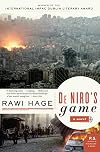
De Niro’s Game is a stream of consciousness account of a shell-shocked young man struggling to retain his sanity in the middle of a war. The narrator’s voice is disengaged and repetitive as he describes the events that overcome his family, childhood friendships, and city. Hage presents a stark contrast between the poetic beauty of his language and the tragedies of war. Another reader (TL) felt Hage’s use of hybrid colloquialisms and mixed cultural references in his crazy charged poetic lingo was done better, more economically, and with more thematic value than Diaz in the Wao book. The style shifted when the narrator, Bassam, moved to Paris. i thought the outer slowdown reflected Bassam’s psychological state ~ indecision as to what could be revealed combined with figuring out how to navigate within such a different culture. While his decisions over when and how to act may have been a bit plot device-y, what struck me most strongly was the isolation, confusion, and nightmares he dealt with during that stage.
De Niro's Game is one of the best books i’ve read this year.
De Niro's Game is one of the best books i’ve read this year.
Omensetter’s Luck addresses the fragility of love in human society as seen through the pseudo-porn obsessions of a deprived preacher in an isolated community.

Ruth dons multiple disguises to obtain fair reviews as a food writer for the New York Times. As expected, she receives very different treatment depending on whether she is a wealthy looking young blond, bold 60s radical, or old woman of modest means. Unexpectedly, she finds her personality changing to fit each disguise and discovers she is able to inhabit a new personality as well as a new disguise. This in turn impacts her thoughts regarding the food she reviews. An interesting read.

i was one of a few among my peers who had never read the Maus books. When i finally got around to Maus I, i was completely blown away by the gut-wrenching power of this story. Not to be missed. Seriously. This is a must read.
Sentence-by-sentence, this is one of the most beautiful books i've ever read. Ideas such as all horses have one soul and death comes suddenly and unexpectedly are skillfully woven into the narrative. Do yourself a favor and don't miss it.
A community's response to a man's descent into isolation, insanity, murder and necrophilia. This McCarthy stands apart from others i've read in that the focus stays on people's relationships with each other rather than civilization vs. nature. Even so, McCarthy plays with the idea of what constitutes natural/unnatural desires. By titling the book, Child of God, we are encouraged to understand the urges of a murderous necrophiliac.
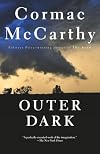
As usual, sentence by sentence, Cormac McCarthy writes surprising, penetrating, beautiful prose. Outer Dark's tragedies are seen through the eyes of cowboys, woodsmen, moonshiners, snake hunters and others who live in poverty to the rhythm of the seasons. We see morning glories climbing a fence next to a starving girl and hear the ruminations of serial killers as 19 year old Rinthy Holme wanders barefoot and hungry searching for her stolen baby through a dangerous landscape. Highly recommended.
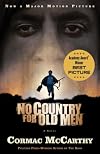
Whenever i try to summarize Cormac McCarthy's work, i get stuck in specifics -- sentence by careful sentence, it works for me. One of the main themes in No Country for Old Men is the idea that things have gone very wrong. Nature is disappearing and there is a brutality that pervades civilization which wasn't as pervasive before. Many artists write about hunting, ephemerality, enchanting beauty, and the idea that money and civilization's order are at war with what little wildness is left. But i haven't found any that leave suburban confines behind quite so well.

i loved Perrin Ireland's Chatter and was struck by its similarity to Paula Fox's masterpiece, Desperate Characters (which i just read). The premises are the same: A middle-aged, unemployed, childless, anxious woman isn't connecting well with her financially successful husband. She struggles as an artist and hasn't produced for awhile. Beset by class and age angst, she feels adrift and is drawn into a rendevous with another man.
Another reader described Chatter as lapidary, as i did Desperate Characters. But were it not for his description, i would have put Chatter down after the first 25 pages ironically because Ireland captures the controlling, neurotic thought rhythms of her main character, Sarah, so well that i felt claustrophobic. Self-absorbed Sarah muses over dress sizes, feels status guilt, makes judgments of male attractiveness based on testosterone and bounciness in the step, etc. Trained in disinterest by her mother, she listens without listening to her husband, Michael, while criticizing him and waiting for episodes of passion. The first 25 pp. were cringe-inducing and i was ready to quit. But then the novel opens up to the world and other characters. Ireland brilliantly captures an NPR-listening, New Yorker/literary fiction-reading milieu bombarded by TV's constant stream of war, poverty, and cruelty. Sarah helps a friend with cancer and Ireland's writing brings to mind Thom Jones's depths. Ireland knows her stuff and gets it down right from an ex-soldier who show more won't ever get over killing other people, to the motivations of guerillas, to the flight of global bankers, to the escapism of adventure travel, to the despair of ex-Peace Corps volunteers who know they didn't accomplish a damn thing beyond experiencing life in a slum.
Ireland's also playful; the thoughts of the ex-soldier bring to mind Tim O'Brien and then, voilà, a character muses on the seminality of The Things They Carried. i appreciate her playful intertextuality; it fits and she doesn't bang on trying to convince me she's a genius. i know i'm not saying this well, but with about 75 pp. to go, the anxious chatter recedes and becomes just one piece in an overall effect that is wise and kaleidoscopic. show less
Another reader described Chatter as lapidary, as i did Desperate Characters. But were it not for his description, i would have put Chatter down after the first 25 pages ironically because Ireland captures the controlling, neurotic thought rhythms of her main character, Sarah, so well that i felt claustrophobic. Self-absorbed Sarah muses over dress sizes, feels status guilt, makes judgments of male attractiveness based on testosterone and bounciness in the step, etc. Trained in disinterest by her mother, she listens without listening to her husband, Michael, while criticizing him and waiting for episodes of passion. The first 25 pp. were cringe-inducing and i was ready to quit. But then the novel opens up to the world and other characters. Ireland brilliantly captures an NPR-listening, New Yorker/literary fiction-reading milieu bombarded by TV's constant stream of war, poverty, and cruelty. Sarah helps a friend with cancer and Ireland's writing brings to mind Thom Jones's depths. Ireland knows her stuff and gets it down right from an ex-soldier who show more won't ever get over killing other people, to the motivations of guerillas, to the flight of global bankers, to the escapism of adventure travel, to the despair of ex-Peace Corps volunteers who know they didn't accomplish a damn thing beyond experiencing life in a slum.
Ireland's also playful; the thoughts of the ex-soldier bring to mind Tim O'Brien and then, voilà, a character muses on the seminality of The Things They Carried. i appreciate her playful intertextuality; it fits and she doesn't bang on trying to convince me she's a genius. i know i'm not saying this well, but with about 75 pp. to go, the anxious chatter recedes and becomes just one piece in an overall effect that is wise and kaleidoscopic. show less
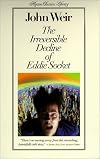
The Irreversible Decline of Eddie Socket a funny, heartwrenching, beautifully told story of a young gay man living in NYC during the 80s. John Weir's portrayal of Eddie and those around him is pitch-perfect. What sticks is Eddie's witty, conflicted mind and the heart (or lack of heart) in the people around him. The book's so good, it's hard to believe so many people haven't heard of it. Weir could have used some of my friends from when i was Eddie's age as his model and described them perfectly. Such pleasure to read something and think, 'oh yes, that's exactly right.'
It's one of my faves and i recommend it extremely highly.
It's one of my faves and i recommend it extremely highly.
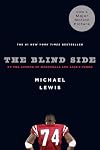
This is the true story of Michael Oher, a black kid from Memphis who was poor, unschooled, sometimes hungry and homeless, and is now on track to becoming a first-round draft pick for the NFL. Lewis takes us deep into the life of the formerly shy, somewhat passive loner known as Big Mike, who overcame tremendous obstacles to become a student at Briarcrest Christian Academy. On arrival,
"Michael had no money and no reliable way to get around. He was totally dependent on whoever might give him a lift, and he had no idea, when he arrived at school in the morning, where he might spend the night. He sort of shopped around every day for the best deal he could find."
i was struck by the heart of those who helped him succeed ~ his friend, Big Tony, who first drove him to the white side of town and argued that he should be enrolled in an expensive private school; Leigh Anne Tuohy who noticed Michael wearing the same clothes every day and eventually became his adoptive mom when Sean and Leigh Anne took him in; Sue Mitchell who volunteered many hours to tutor him to help him overcome his lack of education; etc. And faced with enormous changes, Michael kept pushing forward:
"He'd gone from among the least valued fifteen-year-olds on the planet to among the most highly prized eighteen-year-olds. In the market for him great forces were at work. Soem of these forces arose from changes in football strategy: professional football now exalts the value of the task that Michael Oher's body is show more ideally suited to perform. But the greater forces arose from a series of social accidents -- his wandering out of poor black Memphis into rich white memphis, being taken in by a rich white family, and, above all, his willingness to endure an immense amount of trouble and discomfort to better his lot."
Equally fascinating is Lewis's description of the rise of the passing game and the recognition of the left tackle's importance:
"Offensive linemen were the stay-at-home mothers of the NFL: everyone paid lip service to the importance of their contribution yet hardly anyone could tell you exactly what that was. In 1985 the left tackle had no real distinction. He was still expected to believe himself more or less interchangeable with the other linemen."
But that changed when Lawrence Taylor appeared:
"(New York Giant linebacker Lawrence) Taylor is coming. From the snap of the ball (Washington Redskins quarterback Joe) Theismann has lost sight of him. He doesn't see Taylor carving a wide circle behind his back; he doesn't see Taylor outrun his blocker upfield and then turn back down; and he doesn't see the blocker diving, frantically, at Taylor's ankles. He doesn't see Taylor leap, both arms over his head, and fill the sky behind him. Theismann prides himself on his ability to stand in the pocket and disregard his fear. He thinks this quality is a prerequisite in a successful NFL quarterback. "When a quarterback looks at the rush," he says, "his career is over." Theismann has played in 163 straight games, a record for the Washington Redskins. He's led his team to two Super Bowls, and won one. He's thirty-six years old. He's certain he still has a few good years left in him. He's wrong. He has less than half a second." show less
"Michael had no money and no reliable way to get around. He was totally dependent on whoever might give him a lift, and he had no idea, when he arrived at school in the morning, where he might spend the night. He sort of shopped around every day for the best deal he could find."
i was struck by the heart of those who helped him succeed ~ his friend, Big Tony, who first drove him to the white side of town and argued that he should be enrolled in an expensive private school; Leigh Anne Tuohy who noticed Michael wearing the same clothes every day and eventually became his adoptive mom when Sean and Leigh Anne took him in; Sue Mitchell who volunteered many hours to tutor him to help him overcome his lack of education; etc. And faced with enormous changes, Michael kept pushing forward:
"He'd gone from among the least valued fifteen-year-olds on the planet to among the most highly prized eighteen-year-olds. In the market for him great forces were at work. Soem of these forces arose from changes in football strategy: professional football now exalts the value of the task that Michael Oher's body is show more ideally suited to perform. But the greater forces arose from a series of social accidents -- his wandering out of poor black Memphis into rich white memphis, being taken in by a rich white family, and, above all, his willingness to endure an immense amount of trouble and discomfort to better his lot."
Equally fascinating is Lewis's description of the rise of the passing game and the recognition of the left tackle's importance:
"Offensive linemen were the stay-at-home mothers of the NFL: everyone paid lip service to the importance of their contribution yet hardly anyone could tell you exactly what that was. In 1985 the left tackle had no real distinction. He was still expected to believe himself more or less interchangeable with the other linemen."
But that changed when Lawrence Taylor appeared:
"(New York Giant linebacker Lawrence) Taylor is coming. From the snap of the ball (Washington Redskins quarterback Joe) Theismann has lost sight of him. He doesn't see Taylor carving a wide circle behind his back; he doesn't see Taylor outrun his blocker upfield and then turn back down; and he doesn't see the blocker diving, frantically, at Taylor's ankles. He doesn't see Taylor leap, both arms over his head, and fill the sky behind him. Theismann prides himself on his ability to stand in the pocket and disregard his fear. He thinks this quality is a prerequisite in a successful NFL quarterback. "When a quarterback looks at the rush," he says, "his career is over." Theismann has played in 163 straight games, a record for the Washington Redskins. He's led his team to two Super Bowls, and won one. He's thirty-six years old. He's certain he still has a few good years left in him. He's wrong. He has less than half a second." show less

Greatly enjoyed the many little anecdotes such as Franklin and Adams sharing a bed and arguing about whether the window should be open. Or, Adams pestering the ship captain on his first passage across the Atlantic. Or, Jefferson referring to Adams as a poisonous weed, but then deciding he likes him enough to go off on a long garden tour with just Adams. Enjoyable all the way through except for a very brief slog during the VP years which was dull. Great read for those who like American history.
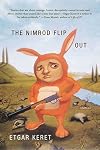
Fantastic group of micro-stories from an enormously inventive and talented author. i've never read anything quite like this before; almost every line zings.
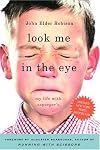
Heartfelt memoir from John Elder Robison, a man who grew up feeling like a defective freak because of his Asperger's syndrome. A mix of humor and pain, his memoir is a strong plea for tolerance and understanding. Robison hopes that fewer kids will grow up feeling lonely because people think they want to be alone; he hopes people will understand that many kids on the spectrum of autism want to connect but haven't yet developed the skills needed to play with other kids. In addition to having Asperger's Robison grew up in a violently dysfunctional family (his brother, Augusten Burroughs, describes it from his perspective in Running with Scissors). Robison found his own ways to escape including using his mechanical genius to create one jaw dropping teenage prank (involving police, firemen, EMTs) after another. Although high school wasn't a good fit, he eventually found ways to use his skills in creative, productive ways as an adult. Great read.
A stray cat which might have rabies bites a woman in New York City. The lapidary prose of this slim novel brings the outcome into sharp relief in a manner which relates to us all. Rarely do authors craft their prose so brilliantly. (Don Delillo and David Foster Wallace come to mind.) When i finished it, i started re-reading it immediately. It's utterly brilliant and has my highest recommendation. Don't miss it if you enjoy extraordinary writing.
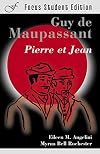
Pierre et Jean was one of the best reading experiences of my life. They're pretty strictly realistic; you don't get the supernatural bits some of the stories have, and they aren't plot-tricky. DG.
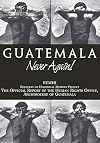
April 1998 report of the Human Rights Office of the Guatemalan Archdiocese, which broke the silence with heart-rending testimony from survivors and witnesses. While not timely, the report provides validation for the families of the disappeared. When i met with the head of this organization back in 1990, every Guatemalan's life would be put at risk for speaking out; he would barely admit to the then current atrocities. When the report was published in 1998, the Guatemalan military murdered the head of the Archdiocese, Bishop Juan Gerardi, two days later.
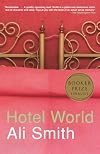
Ali Smith delves into the psyches of a teenage ghost, homeless woman, young front desk worker, and guests connected to a hotel. The prose is disturbing and also very funny, sometimes at the same time. Jim Crace blurbed the book: "Courageous and startling. I doubt that I shall read a tougher or more affecting novel this year." i'd agree if i hadn't just read Jhumpa Lahiri's Unaccustomed Earth, but Hotel World is still wonderful and i recommend it highly.
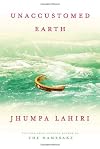
Havent read any fiction this good in a very long time. The stories connect and grow with each other. At one point, a short burst of Lahiri's lapidary prose about a photojournalist brought back an unexpected rush of memories that left me trembling. No other writer, including Didion writing about a similar subject in Salvador, has been that powerful for me. This book has my highest recommendation.
And the Band Played On: Politics, People, and the AIDS Epidemic, 20th-Anniversary Edition by Randy Shilts
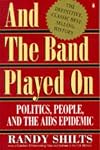
100 pages into And The Band Played On: Politics People and the AIDS Epidemic, some doctors hope a bad batch of poppers is causing the 'gay cancer'. A few other doctors are doing the legwork of interviewing patients in an attempt to piece together better theories. Shilts details fierce struggles between the CDC and the patronizing NCI and New England Journal of Medicine which turn deaf ears to CDC doctors' pleas for resources and speed. He brings the story to life through the voices of people involved in the crisis ~ Larry Kramer, Paul Popham, Gaëtan Dugas, and Grethe Rask stand out so far.
As i read, i find myself seething at the willful blindness, homophobia, egos, and ideologies of those who hindered the work. For example, in the last few pages, a doctor noticed similar symptoms in the baby of a drug-addicted mother and noted it on the baby's chart. His notes were struck out by higher ups who insisted it was 'just a gay disease' that had nothing to do with the child. Aargh!
By the end of the book, the greed, venality, timidity, fear, apathy, hatred, self-interest, and lust for power that created one unconscionable act after another and led to unfathomable suffering and death has been detailed. But what also stood out was the courage and spirit of AIDS victims such as the young psychotherapist, Gary Walsh. i wish every America would read this book.
As i read, i find myself seething at the willful blindness, homophobia, egos, and ideologies of those who hindered the work. For example, in the last few pages, a doctor noticed similar symptoms in the baby of a drug-addicted mother and noted it on the baby's chart. His notes were struck out by higher ups who insisted it was 'just a gay disease' that had nothing to do with the child. Aargh!
By the end of the book, the greed, venality, timidity, fear, apathy, hatred, self-interest, and lust for power that created one unconscionable act after another and led to unfathomable suffering and death has been detailed. But what also stood out was the courage and spirit of AIDS victims such as the young psychotherapist, Gary Walsh. i wish every America would read this book.

Exquisitely crafted short stories. One of a small list of books i'll re-read. Ivan Ilych doesn't waste a word in illuminating the soul's contents. Brilliant flashes of humor throughout lighten the agony.
Thoroughly enjoyable ~ those who like a dose of obsession and socio-pathology in their reading might also like it. The frantic world of a group of grad students comes to life through their pairings and lusts, infidelities and separations, desperations and depressions. Doubles are everywhere and fun to figure out. The tone/voice's viewpoint shifts without warning in a way that highlights underlying themes of death, sudden dislocation, and identity theft. Other threads contrasted celebrity with non-descript, suburban lifestyles, as well as geniuses/artists with banal intellectuals.
Short, borderline horror story, full of zingers that make it fun.
Short, borderline horror story, full of zingers that make it fun.
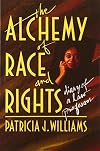
Engaging reflection on the effects of racism told in the style of a memoir by a brilliant legal mind.