This thick book tells the history of the development of science leading up to the unique impact of homo sapiens on the planet. There are many amazing facts often involving huge numbers that have to be taken at face value believed or not - unless they can be verified. May need another read but is very readable. Interesting that many advances have only been possible because certain individuals were wealthy enough to be able to spare the time.

This book presents some of the evidence for evolution.
Chapter one Defines theory, hypothesis, fact and theorem and coins theorem; putting evolution alongside heliocentrism.
Chapters two and three How men bred breeds by selecting what was desired. Compared what man has achieved in a few 1000 years to what might be possible in millions of years.
Chapter 4 How do we know how much time was available? Radioactive clocks.
Chapter 5 Gives examples of evolution we can see eg in bacteria, guppies, lizards and hunted elephants.Chapter 6Considers various objections to evolution including gaps in the fossil records and missing links.Chapter 7Examines fossil ancestors of humans and chimpanzees.Chapter 8 Embryology shows what can be achieved in small steps from a single cell. Cells do what they do internally and externally in relation with others in accordance to local rules.
Chapter 9 The importance of islands in developing strains and new species.
Chapter 10 Skeletal similarities indicate common ancestry as do genetics. Molecular clocks.
Chapter 11 Tells evolutionary history read from the bodies of current animals.
Chapter 12 How resource limits cause inter- and intra-competition of species by wasteful arms races. Evolutionary rationale for pain and suffering.
Chapter 13 Dawkins summaries his book using the final paragraph of Darwin's Origin of Species which he extols and interprets like a favourite verse of scripture. He chooses to refer to the first edition which misses out the phrase show more "by the Creator"
Appendix: Laments evolution is still not generally accepted show less
Chapter one Defines theory, hypothesis, fact and theorem and coins theorem; putting evolution alongside heliocentrism.
Chapters two and three How men bred breeds by selecting what was desired. Compared what man has achieved in a few 1000 years to what might be possible in millions of years.
Chapter 4 How do we know how much time was available? Radioactive clocks.
Chapter 5 Gives examples of evolution we can see eg in bacteria, guppies, lizards and hunted elephants.Chapter 6Considers various objections to evolution including gaps in the fossil records and missing links.Chapter 7Examines fossil ancestors of humans and chimpanzees.Chapter 8 Embryology shows what can be achieved in small steps from a single cell. Cells do what they do internally and externally in relation with others in accordance to local rules.
Chapter 9 The importance of islands in developing strains and new species.
Chapter 10 Skeletal similarities indicate common ancestry as do genetics. Molecular clocks.
Chapter 11 Tells evolutionary history read from the bodies of current animals.
Chapter 12 How resource limits cause inter- and intra-competition of species by wasteful arms races. Evolutionary rationale for pain and suffering.
Chapter 13 Dawkins summaries his book using the final paragraph of Darwin's Origin of Species which he extols and interprets like a favourite verse of scripture. He chooses to refer to the first edition which misses out the phrase show more "by the Creator"
Appendix: Laments evolution is still not generally accepted show less

Hard to believe that "everything recorded here actually happened" as stated in the preface. I have had a sheltered life it seems. Life in America in his childhood was quite different from mine in Britain. I wonder how many other sons know of their Dad's secret store. Bryson is the drop-out that made good by following his heart and making a living out of what he enjoyed. His childhood was living the American dream. Interesting that he now lives in Britain, but then Des Moines is totally transformed from how he knew it and even the photographic record of those days has been lost (see page 370). : a sad end

Two obesrvations:
(1) In Ch31, "Sam seemed oblivious". More probable is that the playful actions of a child under 5 years of age indicated he WAS oblivious to all the danger attracted by the adults in his life.
(2) In Ch33, The account of wheel-chair bound Stefanovitch's confrontation with the Grave Dancer oozes suspense and determination
(1) In Ch31, "Sam seemed oblivious". More probable is that the playful actions of a child under 5 years of age indicated he WAS oblivious to all the danger attracted by the adults in his life.
(2) In Ch33, The account of wheel-chair bound Stefanovitch's confrontation with the Grave Dancer oozes suspense and determination
Farce. Some complicated clever sentences but none the less a breezy read. Very rude sexual language and topics.

I like the rhythm of the rhymes. I like to learn by heart. As a 16 yr old I recited "To a Mouse" at a school poetry competition. I didn't win. I fear it was not understood. I repeated the reading at my Father's funeral. The version of the book that I own was his before me and his Father's before him. I am currently learning "Tam o' Shanter" which was one of their favorites. I do not intend to ever finish with reading this book. It is part of my culture and my heritage and part of me.
This is a poem in many books (chapters to you and me). Interesting but quite hard going. Here I review book 5.
Introduction
This Book continues the narrative of Aurora’s relationship with her cousin Romney but really only as sideshow for the main event which is a disposition of her literary knowledge and an examination of woman’s place in art. This book is a mixture of these 2 themes and it is really difficult to tell which is the main one.
Romney
In the opening pages she complains that she has failed to “hold and move” Romney, whom she has not seen for 18 months. She decides that fame is not enough-she needs a man. Later she attends a ball and eavesdrops a conversation about Romney and Lady Waldemar between 2 men, a student of Germany and an older gentleman. Aurora is disappointed to discover that her cousin has moved on from the peasant girl Marian, whom he was to marry, across the class divide, for reasons of social equality driven by religious belief. He has fallen for Lady Waldemar, whose influence Aurora describes as “this vile woman’s way of trailing garments, shall not trip me up”. Lord Howe rescues her from the strangers and engages Aurora in conversational sparring about art. But being pestered by fans of her writing, promises to escort Aurora out. On the way, they meet Lady Waldemar, who boasting of her new relationship with Romney, taunts Aurora awkwardly. Aurora makes her excuses, leaves the ball early to reflect at home. She resolves to send a show more congratulatory note to Lady Waldemar and leave the country.
Literature
In this book, Browning makes 110 references to places, constructions and characters both living, dead and mythological. She refers to God 12 times and to the devil twice. 3 mentions each go to the Greeks, Proclus, Wolff (“the kissing Judas”), Mark Gage and Graham. St Lucy, Belmore, Bacchus, Pygmalion and Gottingen get 2 mentions. A further 80 get solitary mentions.
Aurora hopes to write poems that will evoke as nature impels. She says that a poem needs to “humanise”, like the view from a hill needs inhabitants. The poet must give nature a “voice with human meanings” in order to get the message across. She feels she must do more because of “this inferior nature”. Women artists, she complains, are not fairly judged-“Honour us with truth, if not with praise”. Her own attempt at a pastoral failed, she said, because it was just a book of surface pictures, pretty to look at but unmoving and functional. She discusses form in poems and plays and concludes that artists should not be bound by rules but “trust the spirit” and not be led by popularity, praise or hire. show less
Introduction
This Book continues the narrative of Aurora’s relationship with her cousin Romney but really only as sideshow for the main event which is a disposition of her literary knowledge and an examination of woman’s place in art. This book is a mixture of these 2 themes and it is really difficult to tell which is the main one.
Romney
In the opening pages she complains that she has failed to “hold and move” Romney, whom she has not seen for 18 months. She decides that fame is not enough-she needs a man. Later she attends a ball and eavesdrops a conversation about Romney and Lady Waldemar between 2 men, a student of Germany and an older gentleman. Aurora is disappointed to discover that her cousin has moved on from the peasant girl Marian, whom he was to marry, across the class divide, for reasons of social equality driven by religious belief. He has fallen for Lady Waldemar, whose influence Aurora describes as “this vile woman’s way of trailing garments, shall not trip me up”. Lord Howe rescues her from the strangers and engages Aurora in conversational sparring about art. But being pestered by fans of her writing, promises to escort Aurora out. On the way, they meet Lady Waldemar, who boasting of her new relationship with Romney, taunts Aurora awkwardly. Aurora makes her excuses, leaves the ball early to reflect at home. She resolves to send a show more congratulatory note to Lady Waldemar and leave the country.
Literature
In this book, Browning makes 110 references to places, constructions and characters both living, dead and mythological. She refers to God 12 times and to the devil twice. 3 mentions each go to the Greeks, Proclus, Wolff (“the kissing Judas”), Mark Gage and Graham. St Lucy, Belmore, Bacchus, Pygmalion and Gottingen get 2 mentions. A further 80 get solitary mentions.
Aurora hopes to write poems that will evoke as nature impels. She says that a poem needs to “humanise”, like the view from a hill needs inhabitants. The poet must give nature a “voice with human meanings” in order to get the message across. She feels she must do more because of “this inferior nature”. Women artists, she complains, are not fairly judged-“Honour us with truth, if not with praise”. Her own attempt at a pastoral failed, she said, because it was just a book of surface pictures, pretty to look at but unmoving and functional. She discusses form in poems and plays and concludes that artists should not be bound by rules but “trust the spirit” and not be led by popularity, praise or hire. show less
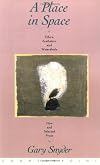
This book, as the preview declares, is a collection of essays, each essay occupying a chapter. Here are my comments on a selection of those essays.
Chapter: energy is eternal delight
Written in 1974, Snyder suggests that the Judeo-Christian worldview with its exploitation of the world’s resources and uncontrollable growth may lead to our destruction. He proposes an alternative for our salvation, namely a respect for all life as adopted by Buddhism and many Red-Indian societies. He proposes “scaled-down, balanced technology” and “steady-state economy”.
My thoughts are that corporations need to change as they have developed a global reach since 1974. Governments are unlikely to help as growth and immigration is wanted.
Chapter: Earth Day and the war against the imagination
Snyder gave a talk at the 1st Earth Day in 1970 and 20 years later at the 1990 event. That 1st event in 1970 put conservationism and ecology on the map. Since then there have been some changes in forestry management on public lands but largely the world scale issues of 1970 persist:
1. deforestation
2. soil erosion
3. biological diversity erosion
4. water and air pollution
5. overpopulation
6. unequal wealth distribution
7. unequal environmental cost distribution
Snyder espouses the philosophy of the Native American who lives with nature and sees his home as a place for future generations up to the 7th generation in contrast to the socially and politically entrenched attitudes and institutions that show more reinforce our misuse of nature and our cruelty toward each other” (page 61). Corporations do not pay a fair share for the pollution they cause. People and corporations are making themselves rich through the pursuit of profit while their consumption of natural resources threatens future generations. More emphasis should be given to communities looking to sustain a quality of life. One community may be successful in preventing an environmental issue in their area but it is a hollow victory if in so doing it displaces that problem to another community not so well equipped to oppose that threat. Better to say “not in anyone’s backyard” and get nationwide changes in policy.
This chapter ends with a call to keep politically active at the local level in order to shape a better future that is closer to nature.
chapter: re-inhabitation
This chapter is about people who inhabit land. Inhabitants are people who never move more than 30 miles from their home - people who know the land and know how to crop its produce in a sustainable way. Inhabitants are people who expect their grandchildren to be living the same kind of life as them.
Modern society is against inhabitants. Modern economics are in favour of exploitation for a quick buck rather than investment in the future.
Of course people have moved to get to where we are now.
Also agricultural knowledge is pre-civilisation, probably from the Neolithic age. That would be the time that animals were domesticated. Re-inhabitation is to do with the small number of people who choose to go back to being inhabitants.
Chapter: Nets of beads, webs of cells
On page 65 the author conducts an appealing study of the interpretation of ‘ahimsa’ - the philosophy of causing no unnecessary harm, which can be done by anyone, even a soldier. He illustrates by the Zen story of a single chopstick that has been harmed when its partner is lost - the idea is that a single chopstick is useless for its intended purpose. As an aside, Snyder points out the toll on the rainforest to source disposable wooden chopsticks. But the forest station is not new. It was extensive in Buddhist China in 500 to 1500 and also in pre-modern India.
On page 68, he argues against, surprisingly, an absolute ban on eating meat, something possible in the west, but not so in the Third World, pointing out that eating meat is practised by some Buddhist monks.
On page 71, he derides Europeans for fondly quoting “nature, red in tooth and claw” and suggests popular Darwinism implies human beings have “moral superiority over the rest of nature.”
I do not see this in Darwinism. I see survival of the fittest and natural selection as teaching our interdependence.
Ultimately, Snyder says, if human beings do not pull back, then nature will do it for us - most likely by thirst or starvation. He also says that ecology has brought an understanding of the “inter-relationship and interdependence” of species.
I would say that this is implicit in natural selection.
He concludes with the call to work tirelessly to maintain ecosystems in the face of our aggressive economic structures.
Chapter entitled "Language goes Two ways"
Language has evolved out of wildness. It gives us a way of understanding the world, but also shapes, by virtue of syntax and vocabulary, how we see that world.
"Good language usage is associated with the speech of people of power and position". Another standard is the technical sort of writing. Technical writing must be mastered in order to do the boring stuff.
Having an interest in bird watching, the following piece of mysticism appealed to me: "to see a wren in the bush, Call it a wren, and go on walking is to have seen nothing. To see a bird and stop, watch, feel, forget yourself for a moment, be in the bushes shadows, maybe then feel wren that is to have joined in a larger moment of the world".
"we are made free by the training that enables us to master necessity, and we are made disciplined by a free choice to undertake mastery"
Chapter: the porous world
Crawling
this short chapter is about the practice of literally crawling on the forest floor in the Sierra forests of California. You might be wondering why would you be crawling? why not walk? well the answer is a lot of the Sierra forests are under process of regeneration following logging or fires and as a result the vegetation is dense but of a low height, so the only way to navigate it is to crawl on the forest floor. Snyder sees this as the only way to explore such forests.
Living in the open
In this short piece, Snyder describes his family’s way of life in the Sierra Nevada.
His idea is not to fight against the environment but to live in it. So part of the philosophy involves not attempting to keep out the mice and the insects, but to take some precautions for looking after food in proper containers and also bedding containers which are non-accessible to insects. Other than that the environment is left to encroach. This is his Buddhist philosophy in practice.
He’s not worried about rattlesnakes or bears or poison oak as he sees the risk from these as low.
Chapter: the forest in the library
Prepared as a dedication of the new West Wing of Shields library University of California at Davis, Snyder begins by making connections evoked by the libraries location and construction. He connects to the native Californians who lived on the site for thousands of years and to the old oaks which potentially have a longer heritage and include an existing oak within the courtyard. He evokes Swainson’s Hawks, which are often seen soaring in the sky, the burrowing owls and the local creek which is now dry but which runs close to the site. The structure itself has a large proportion of concrete which consists of water washed gravels from the Stanislaus River drainage, so he suggests that the structure is “a riverbed stood on end”.
He also invokes the connections with Europe, Africa, Polynesia and Asia and highlights the diversity of the student body and studies.
He lauds libraries from Aristotle’s own words proclaiming “our Occidental humanistic and scientific intellectual tradition”.
Anecdotally he tells how, while in his grandparents time, stories were told around the campfire and passed on from generation to generation orally, nowadays stories are passed on via reading books.
He points out that our habit of collecting, and in this case collecting books and libraries, is not original or not exclusively human. He tells of the wood rat nests found in the Mojave Desert containing wood rat treasures that are 12,000 years old.
For fun Snyder makes an ecological analogy. He starts with the graduate students and young scholars who he says are basic photo synthesisers “grazing brand-new material”. Others are in the detritus cycle tunnelling through huge amounts of boring literature and converting them into something fresh. The library itself is a place where the nutrients of this degradation of literature are stored. He goes on to suggest that dissertations and technical reports of primary workers are digested by senior researchers and condensed into conclusions and theories. “The studies in turn are passed up the information chain to the thinkers at the top who will digest them and come out with some unified theory .“ Though the final texts are seen as the pinnacle of assembled information these themselves are destined to become, in years to come, the detritus on the forest floor.
He praises language, which is the source of all literature, in a rather mystical way and finally he returns to laud the library for its organisation of literature.
Chapter: Walt Whitman's old New World
Snyder examines Whitman's essay "Democratic vistas" in which Whitman envisages an America of the future, ideal and human centric. Snyder regrets that Whitman missed out reference to the biodiversity of the United States. Giving as an example the 50,000,000 bison and approximately 20,000,000 pronghorn which were on the great Plains as late as the mid 19th century. "This was the largest single population of big animals anywhere on earth".
He points out that at the same time "15 to 20,000 buffalo hunters were killing and wasting literally millions of bison every season." Central to Snyder's vision of the future are the native Americans who have suffered a poor lot in the face of European expansion. It seems that in 1992 Inuit Indians of Alaska, Canada, Greenland and Siberia were looking to setting something on Turtle Island. He hopes that Whitman would have given his optimism to this venture.
I'm not sure, but I think Turtle Island may be a pseudonym for North America. show less
Chapter: energy is eternal delight
Written in 1974, Snyder suggests that the Judeo-Christian worldview with its exploitation of the world’s resources and uncontrollable growth may lead to our destruction. He proposes an alternative for our salvation, namely a respect for all life as adopted by Buddhism and many Red-Indian societies. He proposes “scaled-down, balanced technology” and “steady-state economy”.
My thoughts are that corporations need to change as they have developed a global reach since 1974. Governments are unlikely to help as growth and immigration is wanted.
Chapter: Earth Day and the war against the imagination
Snyder gave a talk at the 1st Earth Day in 1970 and 20 years later at the 1990 event. That 1st event in 1970 put conservationism and ecology on the map. Since then there have been some changes in forestry management on public lands but largely the world scale issues of 1970 persist:
1. deforestation
2. soil erosion
3. biological diversity erosion
4. water and air pollution
5. overpopulation
6. unequal wealth distribution
7. unequal environmental cost distribution
Snyder espouses the philosophy of the Native American who lives with nature and sees his home as a place for future generations up to the 7th generation in contrast to the socially and politically entrenched attitudes and institutions that show more reinforce our misuse of nature and our cruelty toward each other” (page 61). Corporations do not pay a fair share for the pollution they cause. People and corporations are making themselves rich through the pursuit of profit while their consumption of natural resources threatens future generations. More emphasis should be given to communities looking to sustain a quality of life. One community may be successful in preventing an environmental issue in their area but it is a hollow victory if in so doing it displaces that problem to another community not so well equipped to oppose that threat. Better to say “not in anyone’s backyard” and get nationwide changes in policy.
This chapter ends with a call to keep politically active at the local level in order to shape a better future that is closer to nature.
chapter: re-inhabitation
This chapter is about people who inhabit land. Inhabitants are people who never move more than 30 miles from their home - people who know the land and know how to crop its produce in a sustainable way. Inhabitants are people who expect their grandchildren to be living the same kind of life as them.
Modern society is against inhabitants. Modern economics are in favour of exploitation for a quick buck rather than investment in the future.
Of course people have moved to get to where we are now.
Also agricultural knowledge is pre-civilisation, probably from the Neolithic age. That would be the time that animals were domesticated. Re-inhabitation is to do with the small number of people who choose to go back to being inhabitants.
Chapter: Nets of beads, webs of cells
On page 65 the author conducts an appealing study of the interpretation of ‘ahimsa’ - the philosophy of causing no unnecessary harm, which can be done by anyone, even a soldier. He illustrates by the Zen story of a single chopstick that has been harmed when its partner is lost - the idea is that a single chopstick is useless for its intended purpose. As an aside, Snyder points out the toll on the rainforest to source disposable wooden chopsticks. But the forest station is not new. It was extensive in Buddhist China in 500 to 1500 and also in pre-modern India.
On page 68, he argues against, surprisingly, an absolute ban on eating meat, something possible in the west, but not so in the Third World, pointing out that eating meat is practised by some Buddhist monks.
On page 71, he derides Europeans for fondly quoting “nature, red in tooth and claw” and suggests popular Darwinism implies human beings have “moral superiority over the rest of nature.”
I do not see this in Darwinism. I see survival of the fittest and natural selection as teaching our interdependence.
Ultimately, Snyder says, if human beings do not pull back, then nature will do it for us - most likely by thirst or starvation. He also says that ecology has brought an understanding of the “inter-relationship and interdependence” of species.
I would say that this is implicit in natural selection.
He concludes with the call to work tirelessly to maintain ecosystems in the face of our aggressive economic structures.
Chapter entitled "Language goes Two ways"
Language has evolved out of wildness. It gives us a way of understanding the world, but also shapes, by virtue of syntax and vocabulary, how we see that world.
"Good language usage is associated with the speech of people of power and position". Another standard is the technical sort of writing. Technical writing must be mastered in order to do the boring stuff.
Having an interest in bird watching, the following piece of mysticism appealed to me: "to see a wren in the bush, Call it a wren, and go on walking is to have seen nothing. To see a bird and stop, watch, feel, forget yourself for a moment, be in the bushes shadows, maybe then feel wren that is to have joined in a larger moment of the world".
"we are made free by the training that enables us to master necessity, and we are made disciplined by a free choice to undertake mastery"
Chapter: the porous world
Crawling
this short chapter is about the practice of literally crawling on the forest floor in the Sierra forests of California. You might be wondering why would you be crawling? why not walk? well the answer is a lot of the Sierra forests are under process of regeneration following logging or fires and as a result the vegetation is dense but of a low height, so the only way to navigate it is to crawl on the forest floor. Snyder sees this as the only way to explore such forests.
Living in the open
In this short piece, Snyder describes his family’s way of life in the Sierra Nevada.
His idea is not to fight against the environment but to live in it. So part of the philosophy involves not attempting to keep out the mice and the insects, but to take some precautions for looking after food in proper containers and also bedding containers which are non-accessible to insects. Other than that the environment is left to encroach. This is his Buddhist philosophy in practice.
He’s not worried about rattlesnakes or bears or poison oak as he sees the risk from these as low.
Chapter: the forest in the library
Prepared as a dedication of the new West Wing of Shields library University of California at Davis, Snyder begins by making connections evoked by the libraries location and construction. He connects to the native Californians who lived on the site for thousands of years and to the old oaks which potentially have a longer heritage and include an existing oak within the courtyard. He evokes Swainson’s Hawks, which are often seen soaring in the sky, the burrowing owls and the local creek which is now dry but which runs close to the site. The structure itself has a large proportion of concrete which consists of water washed gravels from the Stanislaus River drainage, so he suggests that the structure is “a riverbed stood on end”.
He also invokes the connections with Europe, Africa, Polynesia and Asia and highlights the diversity of the student body and studies.
He lauds libraries from Aristotle’s own words proclaiming “our Occidental humanistic and scientific intellectual tradition”.
Anecdotally he tells how, while in his grandparents time, stories were told around the campfire and passed on from generation to generation orally, nowadays stories are passed on via reading books.
He points out that our habit of collecting, and in this case collecting books and libraries, is not original or not exclusively human. He tells of the wood rat nests found in the Mojave Desert containing wood rat treasures that are 12,000 years old.
For fun Snyder makes an ecological analogy. He starts with the graduate students and young scholars who he says are basic photo synthesisers “grazing brand-new material”. Others are in the detritus cycle tunnelling through huge amounts of boring literature and converting them into something fresh. The library itself is a place where the nutrients of this degradation of literature are stored. He goes on to suggest that dissertations and technical reports of primary workers are digested by senior researchers and condensed into conclusions and theories. “The studies in turn are passed up the information chain to the thinkers at the top who will digest them and come out with some unified theory .“ Though the final texts are seen as the pinnacle of assembled information these themselves are destined to become, in years to come, the detritus on the forest floor.
He praises language, which is the source of all literature, in a rather mystical way and finally he returns to laud the library for its organisation of literature.
Chapter: Walt Whitman's old New World
Snyder examines Whitman's essay "Democratic vistas" in which Whitman envisages an America of the future, ideal and human centric. Snyder regrets that Whitman missed out reference to the biodiversity of the United States. Giving as an example the 50,000,000 bison and approximately 20,000,000 pronghorn which were on the great Plains as late as the mid 19th century. "This was the largest single population of big animals anywhere on earth".
He points out that at the same time "15 to 20,000 buffalo hunters were killing and wasting literally millions of bison every season." Central to Snyder's vision of the future are the native Americans who have suffered a poor lot in the face of European expansion. It seems that in 1992 Inuit Indians of Alaska, Canada, Greenland and Siberia were looking to setting something on Turtle Island. He hopes that Whitman would have given his optimism to this venture.
I'm not sure, but I think Turtle Island may be a pseudonym for North America. show less
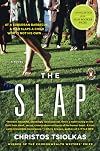
At first, I did not like the writing style of this novel, apparently long listed for the Man Booker prize 2010, and was not surprised it missed the shortlist. However the more I read, the more the book grew on me, the more I could empathise with the characters, and the more I thought the author was showing real insight and was worthy of his literary honour.
I liked the way it told the story by devoting a chapter to telling the story from a particular character’s perspective, handing on the batton of the storytelling rather than retelling the same episode.
Overall I think the book is an interesting and entertaining read. The book examines different portions of Australian society; gives an insight into the way different age groups view life and seems quite realistic in its portrayal of characters and their relationships e.g. Ritchie's awkwardness and embarrassment over his sexuality; Hector and Aisha’s holiday argument.
WARNING: There are lots of references to sex and drugs. The drugs culture is treated as matter-of-fact without any judgement and as if there are no bad consequences.
I liked the way it told the story by devoting a chapter to telling the story from a particular character’s perspective, handing on the batton of the storytelling rather than retelling the same episode.
Overall I think the book is an interesting and entertaining read. The book examines different portions of Australian society; gives an insight into the way different age groups view life and seems quite realistic in its portrayal of characters and their relationships e.g. Ritchie's awkwardness and embarrassment over his sexuality; Hector and Aisha’s holiday argument.
WARNING: There are lots of references to sex and drugs. The drugs culture is treated as matter-of-fact without any judgement and as if there are no bad consequences.
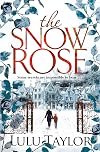
The 1st chapter is 20 pages long and slow. By the end, we know the main character is a mother on the edge, making dubious life choices for herself and young daughter. What has driven her to this state? Probably a philandering husband. This is a girly book.
The book is about relationships, cults and grief from a feminine point of view. It is full of emotion and reflection: "or maybe marriage is just a complete illusion". The charisma of "the beloved" rings bells with me. People with such power do exist. Therefore I was not convinced that Kate would so soon express deprecating views of her hosts and leave the commune. I think it would have been much harder to leave because she was in a depressed state and enjoying the care and healing attention of the commune's leader. Would she go back with her husband even if he was uxorious?
The book is about relationships, cults and grief from a feminine point of view. It is full of emotion and reflection: "or maybe marriage is just a complete illusion". The charisma of "the beloved" rings bells with me. People with such power do exist. Therefore I was not convinced that Kate would so soon express deprecating views of her hosts and leave the commune. I think it would have been much harder to leave because she was in a depressed state and enjoying the care and healing attention of the commune's leader. Would she go back with her husband even if he was uxorious?

The story features a private investigator, Hercule Poirot, who is commissioned to investigate a crime which took place 16 years earlier.
The novel is laid out in 4 sections, consisting of an introduction, book 1, 2 and 3.
In the introduction, his client declares, "It's psychology that interest you isn't it (Poirot)?". This interest is key to solving the crime.
Book 1 is set out in 10 chapters, the 1st 5 of which, record Poirot's interviews with the key officials in the case ie the defence counsel and lawyers, the prosecutor and the police. During these interviews, 5 key players are identified and Poirot, in the last 5 chapters of the book, interviews each in turn ending with an invitation to each to record their memories in writing.
Book 2 consists of the narratives from each of the 5 key players set out in one chapter each.
In book 3, Poirot poses a supplementary question to each of the 5 and invites them to a reunion at which he intends to reveal the truth, deploying his knowledge of people behaviour.
The perpetrator of the crime is detectable from the interviews, written accounts and 5 supplementary answers. The difficulty posed to the reader is to decide, using psychological means, what veracity should be applied to the evidence provided e.g. truth, poor memory or downright lie.
As for my own detective skills, I could see the familial motivation but did not fully unravel the romantic entanglements.
The novel is laid out in 4 sections, consisting of an introduction, book 1, 2 and 3.
In the introduction, his client declares, "It's psychology that interest you isn't it (Poirot)?". This interest is key to solving the crime.
Book 1 is set out in 10 chapters, the 1st 5 of which, record Poirot's interviews with the key officials in the case ie the defence counsel and lawyers, the prosecutor and the police. During these interviews, 5 key players are identified and Poirot, in the last 5 chapters of the book, interviews each in turn ending with an invitation to each to record their memories in writing.
Book 2 consists of the narratives from each of the 5 key players set out in one chapter each.
In book 3, Poirot poses a supplementary question to each of the 5 and invites them to a reunion at which he intends to reveal the truth, deploying his knowledge of people behaviour.
The perpetrator of the crime is detectable from the interviews, written accounts and 5 supplementary answers. The difficulty posed to the reader is to decide, using psychological means, what veracity should be applied to the evidence provided e.g. truth, poor memory or downright lie.
As for my own detective skills, I could see the familial motivation but did not fully unravel the romantic entanglements.

I thought this book was slow and didn't know where it was going. It portrays the routine life of a scholar, thwarted in his duty as a husband and as a father, and facing difficulty in his work as a tutor. Stoner is no hero figure, though he is long-suffering. A recurring theme in his life is the hardship faced and disappointment inflicted, for example by his spiteful wife, Edith. Initially she was repressed, not wanting married life or motherhood, but after the "epiphany" of her father's death, she sets out to destroy her husband's pleasure. Is she a man hater? It is a depressing story. For a long time, it seemed as though the book was going to wear him down to some horrible demise. I didn't buy the way Edith was able to transform Grace's opinion of her father.
It was not until chapter 12 that the story blew up and became something quite different. The grey and stolid man became a colourful figure through the medium of an affair with a student.
Referring presumably to this relationship, the author writes: "in his 43rd year William Stoner learned what others much younger had learned before him: that a person one loves at first is not always the person one loves at last, and that love is not an end but a process through which one person attempts to know another".
It seems to me that the whole book has been written for this one maxim, speaking of the course of any relationship whether within marriage or without.
If William was the weak older man, going through a midlife crisis, show more then Catherine was the well clued young woman, who knew what she wanted, got what she wanted and was able to put it away in a box before moving on. Did she not put the wedding band in the fireplace to signify the end of their relationship? She would leave behind, in that place, the memory of their time together.
This cool and determined nature was further evidenced by the meticulous planning of her departure. Stoner told her it had to finish, but she had already arrived at that conclusion, for the sake of them both, but mostly for his sake.
From this point, all that seems to remain is a resumption of the slow decline of Stoner as he gets worn down by opponents in the University and perhaps by bitterness within himself. show less
It was not until chapter 12 that the story blew up and became something quite different. The grey and stolid man became a colourful figure through the medium of an affair with a student.
Referring presumably to this relationship, the author writes: "in his 43rd year William Stoner learned what others much younger had learned before him: that a person one loves at first is not always the person one loves at last, and that love is not an end but a process through which one person attempts to know another".
It seems to me that the whole book has been written for this one maxim, speaking of the course of any relationship whether within marriage or without.
If William was the weak older man, going through a midlife crisis, show more then Catherine was the well clued young woman, who knew what she wanted, got what she wanted and was able to put it away in a box before moving on. Did she not put the wedding band in the fireplace to signify the end of their relationship? She would leave behind, in that place, the memory of their time together.
This cool and determined nature was further evidenced by the meticulous planning of her departure. Stoner told her it had to finish, but she had already arrived at that conclusion, for the sake of them both, but mostly for his sake.
From this point, all that seems to remain is a resumption of the slow decline of Stoner as he gets worn down by opponents in the University and perhaps by bitterness within himself. show less

From the introduction written by Simone Weil’s confidante Gustave Thibon, it is clear that understanding Weil’s philosophy will be tiring work, as many of her thoughts are obscure to me and necessitate serious contemplation. Her philosophy is not, I think, main stream any religion - Thibon concedes she was neither a Catholic nor an orthodox Christian either. However she may have hero-worshipped Jesus Christ, living, as she did, by self effacing notions and dieing young. She is portrayed as someone who never stopped living according to her beliefs and it has been suggested (by BBC Radio 4 Great Lives program) that her beliefs may have contributed to her untimely death. As such perhaps her views should be read with caution.
Solar by Ian McEwan
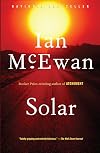
There are no named or numbered chapters to provide a break to catch one’s breath as the story spins along with farcical pace and what appears to be solid science. However the story is told in three parts corresponding to events in 2000, 2005 and 2009.
The main character, Michael Beard, is a five-time married philanderer and a Nobel Laureate physicist. His private life is as important to the story as is the physics of photosynthesis and fuel cells and both get plenty of coverage. Come the final climax, I was hoping he would indeed save the world.
The main character, Michael Beard, is a five-time married philanderer and a Nobel Laureate physicist. His private life is as important to the story as is the physics of photosynthesis and fuel cells and both get plenty of coverage. Come the final climax, I was hoping he would indeed save the world.
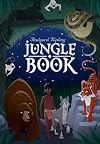
This children’s book is a series of stories which are quite short and at times amusing, even for an adult. In an era, a long time ago, as a boy cub (a fledgling of the boy scout movement), I was read the Jungle book at pack meetings but I don't remember very much of it. What I did remember was that Akela was what we called the pack leader and indeed chanted AAAAAAAAA KAAAAAAA LAAAAAAAAA. That person, in the case of my 1960s Stoneywood pack, was a very bubbly charismatic person of the female persuasion, who went on to receive an MBE for services to scouting. While reading the book, the only other things that I recognised, from my cub days, were Riki Tiki Tavi the mongoose and Shere Khan the Tiger.
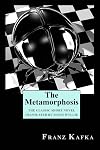
This is a short allegorical novel about the transformation of a family following a child going bad and coping with a dying relative.
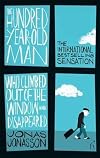
Interesting premise for a story and interesting story telling format - with the narrative split between a biographical vein and what the centenarian did next - both fantastical adventures and celebrity encounters at key moments. Its seems his longevity is down to a passion for vodka and a mantra of "Whatever will be will be so there's no point in worrying about it". There is humour but also some awkward writing - perhaps due to translation from Swedish.

They fcuk you up, your mum and dad
they may not mean to, but they do
-
What is a poem?
She asked..............
Another person's nonsense
She answered.
they may not mean to, but they do
-
What is a poem?
She asked..............
Another person's nonsense
She answered.
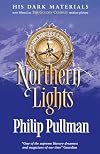
Childish writing. Plot Convenient at times and surprising at others. Didnt foresee Lyra's betrayal though foretold

Very accurate and enlightening analysis of being old and in a home. Good detective yarn as well with an ending I didnt see.
Quick paced story told in snappy short chapters which end leaving you wanting to know more but then jump to another character in the story. It jumps to and fro and eventually all characters meet up. There are some unbelievable bits and it is rather spoilt by the unrealistic involvement of the cavalry
Taking a break from Simone Weil with this page-turner. Set in Scotland, I am quite glad its not written with an attempt to reflect the dialects that might be spoken. Seemed quite realistic.
If you really want to know what I thought of this book, you’re going to be disappointed because I don’t really feel like going in to it. I mean it was OK as books go. Don’t get me wrong. It’s no David Copperfield. Boy that book bored me. Most any book by old Dickens is the same: full of lengthy descriptions about an alien culture in a language I only half understand about a time in history well before I was born. No, Catcher was the sort of book you don’t want to put down and not too thick. I hate those books that are so big you need two hands to hold them. They’re too big to fit in your pocket so you’ve got to carry them around and people think you’re a Bible basher and look at you all askew like as if you’re just about any time going to start preaching and all.
If you’d asked me before hand what Catcher was about I wouldn’t have been able to tell you even though I thought I had read the book at school. However I have just read it without any recollection whatsoever, so I fancy that if it did come up at school it must have been just as an extract or else I’ve forgotton about it completely, which wouldn’t be too surprising really as its been an awful long time. If I had heard about it, I suppose it would have been from old Longevity, my English teacher at the grammar school I went to. What a waste of time that was. And what a waste of my Dad’s money. But I was clever enough to pass the entrance exams and the school was very well thought of: it show more was a grammar school after all in the time of comprehensive education and for ever under threat of being closed down by the Labour government. But I think it was mainly for snobby reasons that I went there. We lived in a very snobby area and only moved there the year previously and my Mum and Dad ( well Mummy and Daddy I called them then ) especially my Mum were glad to be able to boast to the neighbours. Old Dad liked to have something to boast about too but he also had this terrible habit of trying to get one over on you. When he succeeded (which was most always), he’d lick his finger and draw a big 1 in the air. He was very competitive my Dad. He had to win at everything. He never gave any of us kids a chance. Old Mum would never play anything with him. I suppose she wised up long before we came on the scene. Actually I never ever called her Mum. She was always Mummy until we got to a certain age and then she said we should call her Mother and my Daddy, Father instead. I hate snobs and “Mother” and “Father” was really a bit snobby and in a way phoney as well but I didn’t mind using Father instead of Daddy because it suited the formal nature of our relationship.
Catcher isn’t about anything. Well really it is. I mean it has a point. But what I mean is it doesn’t really have a dramatic story line. Well things happen of course in the time-line of the narration but also there are loads of digressions into things that happened at earlier times and seem to be just digressions but if you wait a few paragraphs or maybe a chapter or two then you find the point. At times I was scared something really terrible was going to happen to the main character just like happened to one of his school buddies but then I remembered that he must be alright in the end because otherwise he couldn’t be telling the story. It was well before the end that I knew there wasn’t going to be any real story, but it was a surprise when I turned the last page. I thought there would be more to the last chapter because there were plenty more pages in the book. But they were all blank. I hate that. Also if there are pages at the end full of adverts or appendices. You think you’ve got several more hours of enjoyment and then “Pow!” instead you’ve got a dictionary of whaling terms. Mind you if the book is boring or longwinded like some of old Dickens then what a blessed relief!
One thing I do like and I look out for in any book I read is when the author mentions other books. Good old Salinger. What a service he’s done to Scottish poetry by mentioning old Robert Burns and naming his book after a song what he wrote. show less
If you’d asked me before hand what Catcher was about I wouldn’t have been able to tell you even though I thought I had read the book at school. However I have just read it without any recollection whatsoever, so I fancy that if it did come up at school it must have been just as an extract or else I’ve forgotton about it completely, which wouldn’t be too surprising really as its been an awful long time. If I had heard about it, I suppose it would have been from old Longevity, my English teacher at the grammar school I went to. What a waste of time that was. And what a waste of my Dad’s money. But I was clever enough to pass the entrance exams and the school was very well thought of: it show more was a grammar school after all in the time of comprehensive education and for ever under threat of being closed down by the Labour government. But I think it was mainly for snobby reasons that I went there. We lived in a very snobby area and only moved there the year previously and my Mum and Dad ( well Mummy and Daddy I called them then ) especially my Mum were glad to be able to boast to the neighbours. Old Dad liked to have something to boast about too but he also had this terrible habit of trying to get one over on you. When he succeeded (which was most always), he’d lick his finger and draw a big 1 in the air. He was very competitive my Dad. He had to win at everything. He never gave any of us kids a chance. Old Mum would never play anything with him. I suppose she wised up long before we came on the scene. Actually I never ever called her Mum. She was always Mummy until we got to a certain age and then she said we should call her Mother and my Daddy, Father instead. I hate snobs and “Mother” and “Father” was really a bit snobby and in a way phoney as well but I didn’t mind using Father instead of Daddy because it suited the formal nature of our relationship.
Catcher isn’t about anything. Well really it is. I mean it has a point. But what I mean is it doesn’t really have a dramatic story line. Well things happen of course in the time-line of the narration but also there are loads of digressions into things that happened at earlier times and seem to be just digressions but if you wait a few paragraphs or maybe a chapter or two then you find the point. At times I was scared something really terrible was going to happen to the main character just like happened to one of his school buddies but then I remembered that he must be alright in the end because otherwise he couldn’t be telling the story. It was well before the end that I knew there wasn’t going to be any real story, but it was a surprise when I turned the last page. I thought there would be more to the last chapter because there were plenty more pages in the book. But they were all blank. I hate that. Also if there are pages at the end full of adverts or appendices. You think you’ve got several more hours of enjoyment and then “Pow!” instead you’ve got a dictionary of whaling terms. Mind you if the book is boring or longwinded like some of old Dickens then what a blessed relief!
One thing I do like and I look out for in any book I read is when the author mentions other books. Good old Salinger. What a service he’s done to Scottish poetry by mentioning old Robert Burns and naming his book after a song what he wrote. show less
The Evidence for Evolution, The Greatest Show on Earth by Richard Dawkins (Hardcover), (The Greatest Show on Earth: The Evidence for Evolution) by Richard Dawkins
Chapter one
Defines theory, hypothesis, fact and theorem and coins theorem; putting evolution alongside heliocentrism.
Chapters two and three
How men bred breeds by selecting what was desired. Compared what man has achieved in a few 1000 years to what might be possible in millions of years.
Chapter 4
How do we know how much time was available? Radioactive clocks.
Chapter 5
Gives examples of evolution we can see eg in bacteria, guppies, lizards and hunted elephants.
Chapter 6
Considers various objections to evolution including gaps in the fossil records and missing links.
Chapter 7
Examines fossil ancestors of humans and chimpanzees.
Chapter 8
Embryology shows what can be achieved in small steps from a single cell. Cells do what they do internally and externally in relation with others in accordance to local rules.
Chapter 9
The importance of islands in developing strains and new species.
Chapter 10
Skeletal similarities indicate common ancestry as do genetics. Molecular clocks.
Chapter 11
Tells evolutionary history read from the bodies of current animals.
Chapter 12
How resource limits cause inter- and intra-competition of species by wasteful arms races. Evolutionary rationale for pain and suffering.
Chapter 13
Dawkins summaries his book using the final paragraph of Darwin’s “Origin of Species” which he extols and interprets like a favourite verse of scripture. He chooses to refer to the first edition which misses out the phrase “by the Creator”
Defines theory, hypothesis, fact and theorem and coins theorem; putting evolution alongside heliocentrism.
Chapters two and three
How men bred breeds by selecting what was desired. Compared what man has achieved in a few 1000 years to what might be possible in millions of years.
Chapter 4
How do we know how much time was available? Radioactive clocks.
Chapter 5
Gives examples of evolution we can see eg in bacteria, guppies, lizards and hunted elephants.
Chapter 6
Considers various objections to evolution including gaps in the fossil records and missing links.
Chapter 7
Examines fossil ancestors of humans and chimpanzees.
Chapter 8
Embryology shows what can be achieved in small steps from a single cell. Cells do what they do internally and externally in relation with others in accordance to local rules.
Chapter 9
The importance of islands in developing strains and new species.
Chapter 10
Skeletal similarities indicate common ancestry as do genetics. Molecular clocks.
Chapter 11
Tells evolutionary history read from the bodies of current animals.
Chapter 12
How resource limits cause inter- and intra-competition of species by wasteful arms races. Evolutionary rationale for pain and suffering.
Chapter 13
Dawkins summaries his book using the final paragraph of Darwin’s “Origin of Species” which he extols and interprets like a favourite verse of scripture. He chooses to refer to the first edition which misses out the phrase “by the Creator”
My first Prachett. One of my son's books. I enjoyed the witty style and the novel idea of an apprentice to the grim reaper. Interesting discussion around the meaning of fate.
Covers 1980 to 1981. Very easy reading the farce of Adrian's life. I enjoyed the wit and empathised with the teenage angst

Obvious parallel between Aslam's sacrifice and Christ's

For 30 years I would have set this at the top of my list of good reads. I was captivated by the mystical powers of the hero and the novelty of the giant worms
Covers 2/6/2007 to 5/5/2008. Adrian is ill with cancer and its treatment and is not as funny as usual. Credit to Sue for dealing with this male health issue. At times it felt very much like reading a real diary: some of the entries were brief; some dates no entries at all; and the situations that just come out of the blue without any prior development by earlier entries.