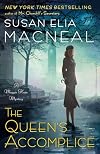
It is pleasing to reacquaint oneself with a series and find its quality undiminished. I read the first Maggie Hope mystery, but have missed the intervening three novels. This time around it's 1942 and whilst the bombing raids have ceased, young women are being murdered in a direct replication of Jack the Ripper's methods by a man dubbed The Blackout Beast. Maggie is seconded to MI5 to assist in the capture of the Beast, bumping heads with the lead investigator and re-establishing her links to the royal family. A most satisfying read.
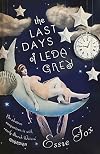
Ed Peters is a London journalist returning to the seaside town of his childhood. On a whim, he enters a dilapidated secondhand shop and strikes up a conversation with the shop's elderly, somewhat fey owner. Noticing an old postcard bearing a striking looking woman, Ed is astonished to learn that this man is the woman's brother and that she is still alive, living in recluse in White Cliffs House, scene of some of the twentieth century's earliest experimental films.
Intrigued, Ed makes the trek to Leda Grey's house and is an eager recipient of Leda's stories and memories of that film-making era. So caught up, he stays with Leda for days, hypnotized by Leda in the flesh and Leda as shown in the films, directed by Charles Beauvoir who becomes Leda's lover and she, his muse.
Fox effectively establishes a paranoid and stifling mise en scene as Ed falls deeper and deeper under Leda's spell - to his eventual cost.
Intrigued, Ed makes the trek to Leda Grey's house and is an eager recipient of Leda's stories and memories of that film-making era. So caught up, he stays with Leda for days, hypnotized by Leda in the flesh and Leda as shown in the films, directed by Charles Beauvoir who becomes Leda's lover and she, his muse.
Fox effectively establishes a paranoid and stifling mise en scene as Ed falls deeper and deeper under Leda's spell - to his eventual cost.
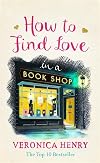
A very sweet-natured novel about the Nightingale Bookshop located in the picturesque rural village of Peasebrook, and the people who live, work and shop there. If you're in the mood for a gentle tale of good people, try this. If you're looking for something a bit edgier (after all, the two worst characters in the entire book are a greedy property developer, and a coke user - both of whom get their comeuppance) try Lucy Dillon's The Ballroom Class.
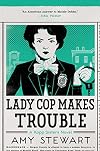
Having loved the first installment of the Kopp sisters adventures I was eagerly looking forward to reading the second book. This time Deputy Sheriff Constance Kopp has risked her position in letting a prisoner escape, also having consequences for Sheriff Heath. As in the first book the period detail seems just right, and if this time around it doesn't quite have the appeal of the first, it's because the characters are already established, whereas we spent more time with pigeon-fancier Norma, and stage-struck Fleurette in the first installment, learning about the Kopp family. And their secrets.
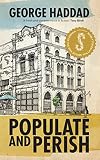
A novella about place and identity seen through the experiences of Nassim (Nick) and his sister Amira, living in Melbourne. Of Lebanese descent, their mother is dead and their father - according to their mother - is still in Lebanon. Nick is adrift and dissatisfied, surviving on the money he earns from having sex with men. On a whim he suggests to Amira they travel to Lebanon to look for their father, not realizing that their mother had been spinning a lie for years. Meeting their Lebanese relations has a liberating effect on Nick especially; could he settle in this new country where he feels so at home?
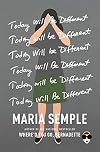
In 'Today will be different' Maria Semple presents us with another woman on the verge (see: 'Where'd you go Bernadette'). This time it's Eleanor Flood, who confesses is not very good with time, dates, names or faces. She is an acclaimed animator/graphic designer; a wife who would like to do better by Joe her husband of twenty years, and a funnily snippy mother to nine year old Timby.
"Was it happiness I'd found in my long marriage? Or capitulation? Or is that all happiness is, capitulation?"
Eleanor's main aim in life is to do no harm, a seemingly purposeful and not impossible aim. But given this is a Semple novel, the course of her life does not run smoothly. The first half of the novel lives up to the promise of an hilarious ride alongside Eleanor highlighted by Semple's trademark wit and humour, but then the novel moves into darker territory, recounting her life with Ivy, the sister she no longer sees, and then quite a strange segue way into Joe finding religion. A slightly bewildering end to the novel.
"Was it happiness I'd found in my long marriage? Or capitulation? Or is that all happiness is, capitulation?"
Eleanor's main aim in life is to do no harm, a seemingly purposeful and not impossible aim. But given this is a Semple novel, the course of her life does not run smoothly. The first half of the novel lives up to the promise of an hilarious ride alongside Eleanor highlighted by Semple's trademark wit and humour, but then the novel moves into darker territory, recounting her life with Ivy, the sister she no longer sees, and then quite a strange segue way into Joe finding religion. A slightly bewildering end to the novel.
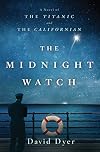
Most people are aware that as the Titanic was sinking, the 'Carpathia' was steaming towards the unsinkable ship and would be the first on the scene. But I didn't know that there was a ship closer to the Titanic, the 'Californian', who did not go to the aid of the Titanic despite the sinking ship firing eight distress rockets. This novel, based on fact, imagines the story of the men aboard the 'Californian', in particular the second officer Herbert Stone, on watch at the time Titanic was sinking and witness to the rockets. The narrator is an almost decent, but somewhat seedy American journalist who knows a suspicious story as well as he knocks down bourbon. So he starts investigating the role of the Captain of the 'Californian', the flinty, resolute Stanley Lord, who insists his ship was not aware of the Titanic's trouble. This is a compulsively readable novel about the nature of men under pressure.
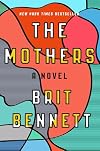
This brilliant debut novel explores the notion of how one mistake can have repercussions for years to come. We follow the lives of Nadia, Luke and Aubrey, and the people that swirl around their lives. Nadia is a beautiful and intelligent girl about to enter college who lives with her withdrawn and distant father who has never recovered from his wife's suicide.
Luke is the Pastor's son whose promising football career has been shattered by a leg injury. Nadia tries to lose her innate sadness by having sex with Luke.
Aubrey is a quiet unassuming girl unlike Nadia in every way, but as they both spend time at the ministry of Luke's father, a bond is forged between the girls.
The title has layers of meaning: both Nadia and Aubrey have lost their mothers; the 'mothers' of the ministry represent a Greek chorus, commenting and reflecting on the behaviour of the characters.
A fantastic read.
Luke is the Pastor's son whose promising football career has been shattered by a leg injury. Nadia tries to lose her innate sadness by having sex with Luke.
Aubrey is a quiet unassuming girl unlike Nadia in every way, but as they both spend time at the ministry of Luke's father, a bond is forged between the girls.
The title has layers of meaning: both Nadia and Aubrey have lost their mothers; the 'mothers' of the ministry represent a Greek chorus, commenting and reflecting on the behaviour of the characters.
A fantastic read.
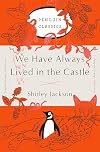
Eighteen year old Mary Katherine Blackwood ('Merricat') lives with her older sister, Constance, and her doddering wheelchair-bound Uncle Julian, in a house that has become their castle: impenetrable to strangers - in fact to anyone. Everyone else in her family is dead.
Merricat is part feral child, part shrewd adult, existing within a set of boundaries, both arranged for her and self-imposed. As Constance has never returned to the village since she was acquitted of the arsenic-laced murders of her family, Merricat braves the taunts of the villagers, all of who she wishes dead.
But with the arrival of their cousin Charles, the balance of their lives begins to tilt.
A lot happens in this short "gothic suspense" as Joyce Carol Oates has described it. I eagerly await the recently published biography of Shirley Jackson and discovering the roots of her fervid imagination.
Merricat is part feral child, part shrewd adult, existing within a set of boundaries, both arranged for her and self-imposed. As Constance has never returned to the village since she was acquitted of the arsenic-laced murders of her family, Merricat braves the taunts of the villagers, all of who she wishes dead.
But with the arrival of their cousin Charles, the balance of their lives begins to tilt.
A lot happens in this short "gothic suspense" as Joyce Carol Oates has described it. I eagerly await the recently published biography of Shirley Jackson and discovering the roots of her fervid imagination.
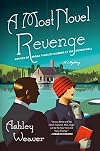
The third outing for amateur sleuth Amory Ames and her debonair husband Milo, finds them at Lyonsgate, the country house of her cousin Laurel's friend Reggie Lyons. The party gathered there consists of the same people (minus the Ames') who seven years ago were in residence when a young man was found dead in the snow.
Months later a thinly disguised novel is published by Isobel Van Allen, one of the party, accusing one of the group of murder. Unable to bear the the accusation , the implicated man kills himself.
Now, seven years later Isobel has summoned the same group of people and stuns everyone by announcing she is writing another novel - this time telling the truth. That night she is murdered and Amory swings into investigative mode. Once again Weaver has written a good mystery with a fine eye for period detail.
Months later a thinly disguised novel is published by Isobel Van Allen, one of the party, accusing one of the group of murder. Unable to bear the the accusation , the implicated man kills himself.
Now, seven years later Isobel has summoned the same group of people and stuns everyone by announcing she is writing another novel - this time telling the truth. That night she is murdered and Amory swings into investigative mode. Once again Weaver has written a good mystery with a fine eye for period detail.
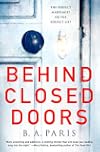
Grace seems to have it all: good looks, good job, a younger sister Millie (who has Down’s Syndrome) whom she dearly loves. And entering the picture is Jack Angel, a devastatingly handsome lawyer whose claim is never to have a case prosecuting wife-beaters.
After a whirlwind courtship they marry and honeymoon in Thailand. It is on the first night of their honeymoon when Jack deserts Grace that the gilded life starts to tarnish. Grace is soon disabused of the notion of Jack, Mr. Nice Guy, for Jack is a psychopath who gradually controls every aspect of Grace’s life. And for each ‘transgression’, Grace will be punished. With the time drawing near for Millie to live with them, the true motive for Jack wanting Millie becomes apparent to Grace, and the fate he has envisioned for both sisters.
This a tightly written thriller that will have you on the edge of your seat as you rush towards the end of this exciting debut.
After a whirlwind courtship they marry and honeymoon in Thailand. It is on the first night of their honeymoon when Jack deserts Grace that the gilded life starts to tarnish. Grace is soon disabused of the notion of Jack, Mr. Nice Guy, for Jack is a psychopath who gradually controls every aspect of Grace’s life. And for each ‘transgression’, Grace will be punished. With the time drawing near for Millie to live with them, the true motive for Jack wanting Millie becomes apparent to Grace, and the fate he has envisioned for both sisters.
This a tightly written thriller that will have you on the edge of your seat as you rush towards the end of this exciting debut.
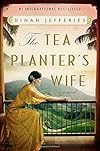
Gwen marries an older man, Laurence, a widower who owns a tea plantation in colonial Ceylon. Falling pregnant not long after her arrival, it is the birth of twins that forces Gwen into a decision that will have consequences for years to come. Her role as mistress of the house is undermined by the constant presence of Verity, Laurence's younger sister, and who appears to be under her sway. And then there is Christina, the beautiful American who is an old flame of Laurence's who seems to think she some claim on him.
But Gwen is not the only person concealing information; she can find out very little about Caroline and Thomas, Laurence's first wife and son, who took her own and her son's life. Living under threat and fear of discovery, Gwen's dilemma is stiflingly believable.
Jeffries' writing is redolent of the sounds and fragrances of the pearl drop island.
But Gwen is not the only person concealing information; she can find out very little about Caroline and Thomas, Laurence's first wife and son, who took her own and her son's life. Living under threat and fear of discovery, Gwen's dilemma is stiflingly believable.
Jeffries' writing is redolent of the sounds and fragrances of the pearl drop island.
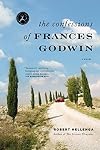
When one picks up a ‘confession’, the immediate question is what is she/he confessing? In the case of a retired high school Latin teacher, one might conjecture: not much. However, during an otherwise blameless life, Frances does do something of import to confess. In fact it is the catalyst for Frances’ spiritual journey; one that (she hopes) after contrition and confession will come salvation. If this sounds like a bit of a slog for fiction, it’s not, as Hellenga introduces an irresistible character to help Frances sort herself out: God. They have colloquies – in Latin of course! Frances realizes that “God’s agenda was to get me to go to confession.” Their colloquiums cover a lot of ground, existentialism, dark matter, dark energy, black holes, natural law, etc. Frances’ crime puts her at a crossroad; has she ever really examined her life? Or been confronted by the big questions head on? Or has she turned away, attempting to tamp it down.
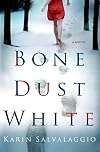
From the upper floor in an isolated house surrounded by thick snow, 17 year old Grace sees figures outside. A man towers over a woman; they appear to be arguing, before the man attacks the woman. Aghast, Grace calls the police, 'though realizing they won't arrive in time. Tentatively she leaves the safety of her house to investigate: she sees a woman lying in the snow, but no sign of the attacker. Only when she feels for a pulse does she realize this thin emaciated woman is her mother who abandoned her into the care of her sister eleven years ago. With her dying words, she warns Grace that she's not safe and that "they're still after the money".
Detective Macy Greeley is called in to take the investigation. The heavily pregnant cop is reluctant, not only because of her condition, but because around a decade ago four young girls were found murdered near Grace's town of Collier when Macy was a junior in the force. Collier is a hard, chilly town - conditions that befit its inhabitants, for most of the town's citizens hide something, none more so than Grace herself.
The author does an exemplary job of holding everything together, penning a dandy of a mystery/thriller. One of the finds of the year.
Detective Macy Greeley is called in to take the investigation. The heavily pregnant cop is reluctant, not only because of her condition, but because around a decade ago four young girls were found murdered near Grace's town of Collier when Macy was a junior in the force. Collier is a hard, chilly town - conditions that befit its inhabitants, for most of the town's citizens hide something, none more so than Grace herself.
The author does an exemplary job of holding everything together, penning a dandy of a mystery/thriller. One of the finds of the year.

Tom Putnam has spent the last 20 years, life on hold, married to Marjory a needy neurotic who he co-manages with the help of his mother-in-law, Agnes. He and Agnes have formed an alliance, and bond, to cope with Marjory. Tom is a professor of English, admired and liked by all, although he often finds his mind filled with Shakespearean quotes to get through life.
In a series of related events Tom meets Rose, the new manager of the campus bookstore (is instantly smitten), and receives a letter from a woman with whom he had a short fling many years ago, a misstep that Marjory has never forgiven or forgotten, informing him that he has a ten year old son, Henry, who will be arriving to stay with him within days. Beset by conflicting emotions his life is about to spin out of control. Spoiler Alert! Marjory is soon out of the picture.
Henry arrives, not 10 years old, but 6 - and black! Of vital importance he carries a birth certificate with Tom listed as the father.
Woodroof neatly introduces some plot devices that explains the arrival of Henry. The author's other attribute is her ability to write likeable, genuine characters. One takes Tom, Henry, Rose and Agnes to heart; even the (initially) objectionable characters like Iris are allowed their vulnerabilities. I loved it.
In a series of related events Tom meets Rose, the new manager of the campus bookstore (is instantly smitten), and receives a letter from a woman with whom he had a short fling many years ago, a misstep that Marjory has never forgiven or forgotten, informing him that he has a ten year old son, Henry, who will be arriving to stay with him within days. Beset by conflicting emotions his life is about to spin out of control. Spoiler Alert! Marjory is soon out of the picture.
Henry arrives, not 10 years old, but 6 - and black! Of vital importance he carries a birth certificate with Tom listed as the father.
Woodroof neatly introduces some plot devices that explains the arrival of Henry. The author's other attribute is her ability to write likeable, genuine characters. One takes Tom, Henry, Rose and Agnes to heart; even the (initially) objectionable characters like Iris are allowed their vulnerabilities. I loved it.
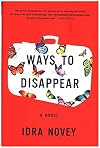
A famous Brazilian writer, Beatriz Yagoda, one day climbs a tree with suitcase, book and cigars. Then she disappears. Her American translator Emma immediately flies to Brazil, unsure of what she can do. Beatriz's two adult children are also flummoxed, as she only cryptically communicates with her former publisher. This is a witty, engaging novel that will leave you never quite sure of what will happen when you turn the page, reminiscent of Calvino I think. It also explores the role of the translator via Emma's role in the saga; should she be an invisible presence or an active participant?
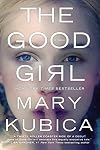
Mia Dennett, daughter of a prominent judge and a bored dissatisfied trophy wife, is kidnapped from a bar late one night. But the plan quickly goes awry when the kidnapper fails to deliver Mia to the man behind the job. Instead he takes Mia to a remote cabin, holding her captive during a freezing winter. No ransom is demanded so her family have no clue as to her whereabouts. Only the persistence of a detective manages to keep the case alive.
This is a compelling thriller and I resented any time spent away from reading. Nothing or no one can be relied upon, and the ending will leave you questioning what you've just read.
This is a compelling thriller and I resented any time spent away from reading. Nothing or no one can be relied upon, and the ending will leave you questioning what you've just read.
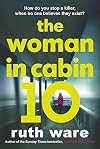
Laura Blacklock has been handed the chance of a lifetime by her boss, the editor of a travel magazine. Laura will be one of a handful of influential people invited on the maiden voyage of 'Aurora', the luxury boat owned by Lord Richard Bullmer. What should have been a perfect trip and an opportunity to advance her career is derailed by an incident just prior to the trip/ In the middle of the night Laura is awoken by a burglar, which triggers off her anxieties, panic attacks and an over-reliance on alcohol. Eager to get aboard and escape her nightmares on land, Laura is gobsmacked by the opulence of the Aurora, but, also nervous on her first night on-board, drinks too much and goes to bed slightly sloshed. Suddenly, past midnight, she's awake, having heard noises in the next cabin (10), then a big splash , as if something was thrown overboard. Summoning the boat's security Laura takes him through the events of the night, however when cabin 10 is unlocked, it's clean with no evidence of habitation. Laura knows this cannot be true as before dinner she borrowed a mascara from the woman in cabin 10.
What follows is a desperate search by Laura for the missing woman - not impeded by Bullmer or security - but clearly not believed.
Ware has penned one of the thrillers of the year, with taut writing, a flawed heroine, that will have you flipping the pages with increasing frequency.
What follows is a desperate search by Laura for the missing woman - not impeded by Bullmer or security - but clearly not believed.
Ware has penned one of the thrillers of the year, with taut writing, a flawed heroine, that will have you flipping the pages with increasing frequency.

It is after Lizzie's parents are divorced that her mother and two siblings begin the not-so-gentle slide from comparative riches to rags. Infuriated by the divorce Lizzie's mum takes solace in alcohol and writing plays - or snippets of plays that reflect the mess their lives have become. Jettisoned to a rural village whose inhabitants view the new arrivals with scepticism and hostility - for, after all, what's an attractive young woman doing here (apart from seducing the occasional local)?
For Lizzie's mother has no Talent, except for smoking, drinking and the oft-resorted to, play writing. As the money begins to dry up, Lizzie and her sister decide to make a list of men who may play the role of Man At The Helm, as it is clear there is abundant need for one. Set in England during the 1970s this is a hilarious look at love, and all its complications, from a child's perspective. A welcome discovery for readers who enjoy humorous tales.
For Lizzie's mother has no Talent, except for smoking, drinking and the oft-resorted to, play writing. As the money begins to dry up, Lizzie and her sister decide to make a list of men who may play the role of Man At The Helm, as it is clear there is abundant need for one. Set in England during the 1970s this is a hilarious look at love, and all its complications, from a child's perspective. A welcome discovery for readers who enjoy humorous tales.

Evie Lockhart wants to do something with her life. She refuses to emulate her mother's bored and listless lifestyle, to which her sister Viola aspires. An unexpected tragedy that will later have personal ramifications results in Evie's determination to become an obstetrician - but this is New York 1922 - and there are no role models for Evie. Going against her family's wishes and patronage, she enrols in summer school to get her grades sufficiently up to par (a Radcliffe degree in literature hardly qualifies one for medical school).
To support herself she auditions for the Ziegfeld Follies, and to her surprise is accepted, so, by day a student and secretly by night a scantily clad showgirl.
Her childhood best friend Charlie is the son of a patrician and wealthy family who assumes that Evie will marry him, but it is his elder brother Thomas who wins her heart, prompting a festering hatred in Charles towards both his brother and Evie.
Faced with discrimination and hostility by the male world of hospitals and obstetrics, Evie battles through year after year, coping with long absences by Thomas, building his banking interests in London.
Lester throws in a curveball with the introduction of a child named Mary which I, in my reader's omniscience, thought was a fairly lazy narrative gambit, but I have to hand it to the author, she had it all over me.
This is a fast-paced novel that will have you flipping through the pages hoping and rooting for Evie.
To support herself she auditions for the Ziegfeld Follies, and to her surprise is accepted, so, by day a student and secretly by night a scantily clad showgirl.
Her childhood best friend Charlie is the son of a patrician and wealthy family who assumes that Evie will marry him, but it is his elder brother Thomas who wins her heart, prompting a festering hatred in Charles towards both his brother and Evie.
Faced with discrimination and hostility by the male world of hospitals and obstetrics, Evie battles through year after year, coping with long absences by Thomas, building his banking interests in London.
Lester throws in a curveball with the introduction of a child named Mary which I, in my reader's omniscience, thought was a fairly lazy narrative gambit, but I have to hand it to the author, she had it all over me.
This is a fast-paced novel that will have you flipping through the pages hoping and rooting for Evie.

Evan is a 32 year old single man who works at a public hospital with a program for suicide assistance. Although, obviously, not called that.
Brought up by his feisty mother Viv, after his father drives over a cliff when Evan was six, Viv is hospitalised with Parkinson's disease. Evan considers himself well suited to the work, but after an episode with a patient in which Evan "assists " a little too much and is subsequently fired. He's contacted by a group called Jasper's Path who undertake the same sort of work minus the medical regulations - oh, yes, and for profit.
Viv has bought her Nembutal and expects Evan to help her out, literally. He loves Viv but is in a quandary when it applies to his own mother. This is not a morbid read; Amsterdam writes movingly and with a wry sense of humour.
Brought up by his feisty mother Viv, after his father drives over a cliff when Evan was six, Viv is hospitalised with Parkinson's disease. Evan considers himself well suited to the work, but after an episode with a patient in which Evan "assists " a little too much and is subsequently fired. He's contacted by a group called Jasper's Path who undertake the same sort of work minus the medical regulations - oh, yes, and for profit.
Viv has bought her Nembutal and expects Evan to help her out, literally. He loves Viv but is in a quandary when it applies to his own mother. This is not a morbid read; Amsterdam writes movingly and with a wry sense of humour.

If a readership could be won by earnestness and good intentions this novel would capture an enthusiastic audience. However this debut novel from a professor of medicine, who began his internship in 1981 simply moves too slowly to grab a general reader's interest. If you're interested in the early days of the AIDS epidemic and the mystification and uncertainties it engendered in the doctors at the front line you might want to give this a go.
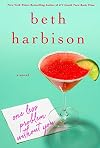
Three women with one thing in common, or more to the point, one person. Prinny is an all-round nice woman, despite a childhood, indeed her current life, dominated by her jealous half-brother Leif. She is secretly in love with her (married) lawyer, who does his best to protect Prinny and her interests from the insatiable Leif. Diane: married to (and in love with) Leif, but knowing her self-respect flies out the window after every one of Leif's indiscretions. One of whom happens to be Chelsea - aspiring actress and best friends with Andrew, gay friend to many. Told in many flashbacks, some from whom we never hear from again, the narrative can sometimes be confusing. I guess my main problem is with Leif: I know there are men out there that are predatory and vindictive, but Leif came across as a bit of a cliché.

Clifford's first novel starts out promisingly. Penelope (Pen), our narrator states up front that her role in the events played out in the novel could be construed in a number of ways depending on where you start the story. Pen begins her story by escaping her small provincial town to start law at university. There are clues that Pen has been involved in a tragedy - one that has included her best friend and also made her a pariah in her home town. Through her sessions with a psychiatrist The Reader gradually learns of this episode. When Pen starts university, unexplained deaths begin.
The period is specific: late 1980s; it may be pedantic of me but there's something unsettling about the locale of this novel, presumably the uni is in a large-ish town or city, but there's so little detail provided it's distracting. The university itself - large or small; with such a small cast of characters should we assume it's tiny? And for a law student Pen doesn't appear to take any classes or even study.
The period is specific: late 1980s; it may be pedantic of me but there's something unsettling about the locale of this novel, presumably the uni is in a large-ish town or city, but there's so little detail provided it's distracting. The university itself - large or small; with such a small cast of characters should we assume it's tiny? And for a law student Pen doesn't appear to take any classes or even study.