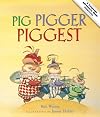
Based off the classic fairytale of The Three Little Pigs, Pig, Pigger, Piggest is a story about three pigs who lived in a castle with their father, the king. But when the three pigs grow up, the king kicks them out of the castle and they set off to build homes of their own. Instead of being challenged by the Big Bad Wolf, the three pigs find themselves being harassed by Witch, Witcher and Witchest! This book is filled with both real and nonsense examples of comparatives and superlatives. The funny illustrations, rich language and surprise ending will engage all readers and listeners.
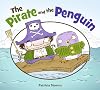
The penguin just isn't happy with his life in the South Pole. It's too cold and there's nothing to do, except daydream and yoga and daydream about yoga! So the penguin set off on an ice floe to find sunshine and adventure. Meanwhile, somewhere in the Caribbean Sea, a pirate wasn't feeling much happier than the penguin. The sun made his skin itch and he didn't care about finding a treasure. He just wanted some inner peace! So the pirate went down to sleep in his cool, cozy cabin on the ship. While the penguin is off to seek adventure and the pirate is off to seek inner peace, they find each other in the middle of the sea. When they find each other, they finally find there happiness....
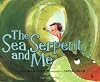
A little girl was just about to crawl out of her bathtub, when a sea serpent dropped out of the faucet. He was so beautiful and so small that the little girl could hold him in her hand. Instead of being scared of each other, the little girl and the sea serpent became immediate friends. As they played together, the sea serpent told the little girl all about the ocean, his home. With each passing day, the serpent got bigger and bigger until finally he had to go back to the ocean. Before they said goodbye, the swam and floated in the waves together. That night, the little girl listened for the sea serpent singing about the sea.
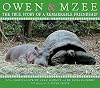
This is the true story of the baby hippo, Owen, who was separated from his family during the 2004 tsunami and was rescued by villagers in Kenya. When moved to a wildlife sanctuary, he met the tortoise, Mzee, and they quickly became each other's new family.
This is a great nonfiction story to share with students and has several realistic fiction books to accompany it.
This is a great nonfiction story to share with students and has several realistic fiction books to accompany it.
MAMA: a TRUE story, in which a BABY HIPPO loses his MAMA during a TSUNAMI, but finds a new home, and a new MAMA by Jeanette Winter
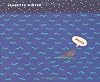
Mama tells the story of Owen, the baby hippo, who was swept out to see during the 2004 tsunami. This virtuously wordless picture book takes readers through his journey of survival. Although the pictures are simple, building the background of the story will captivate the books' readers. This is a true story of survival, hope and family.
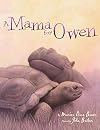
Before the tsunami hit, Owen the baby hippo and his mama were best friends. They did everything together. But when the tsunami came, it took Owen's mama with it. Luckily, after Owen is safe, he finds a new friend, Mzee the tortoise. They play and rest together, they become great friends and even family.
But after the rain stops, Owen befriends Mzee, a grayish brown tortoise. He plays with him, snuggles with him, and decides he just might turn out to be his best friend and a brand-new mama.
But after the rain stops, Owen befriends Mzee, a grayish brown tortoise. He plays with him, snuggles with him, and decides he just might turn out to be his best friend and a brand-new mama.
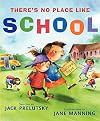
More fun poems from Jack Prelutsky! This is a great mentor text for teaching poetry.
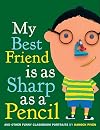
This picture book is full of portraits made out of classroom supplies such as pencils, a globe, a magnifying glass and more. After reading, the students can think of how they would represent themselves or their friends with classroom objects.
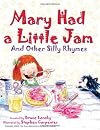
Mary Had a Little Jam is a great twist on your favorite nursery rhymes. Clever and funny, kids will get a kick out of listening to and/or reading these rhymes.
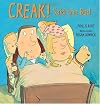
Nighttime...such a peaceful, quiet, calm time. Not always! Dad's snoring, the thunder's booming and where is that creak coming from? Everyone piles in mom and dad's bed and with each movement there's a new sound to tickle the ear. This is a great story for sequencing events or just to read for fun.
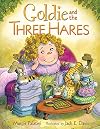
As Goldilocks is running from the Three Bears, she falls down a rabbit hole and hurts her foot. But this is not just any rabbit hole, it leads to the home of the Three Hares. The Hares graciously take her in and help her with her foot, but Goldilocks is not a pleasant guest. She is greedy, loud, BIG, and DEMANDING! The Three Hares try to think of a way to get her to leave, but she just won't go. Maybe the mention of The Three Bears will do the trick...

It is spring and the world looks new! It is City Dog’s first day in the country. He is ready to run far and run fast and meet all the newness of spring. As he approaches the pond, he notices something that he has never seen before; it is a frog, a country frog. When City Dog asks Country Frog what he is doing, Country Frog simply replies, “Waiting for a friend. But you’ll do.” So as the newness of spring begins, so does a new friendship for City Dog and Country Frog; they learn to be great friends. With a spring in his step, Country Frog teaches City Dog his country games. They jumped and splashed and croaked. It was a happy spring. In the greenness of summer, City Dog taught Country frog his city dog games. There was sniffing, catching and barking. Their games lasted as long as the summer sun, until Country Frog started to grow tired. It was a happy summer. The coming of fall meant nature was slowing down; leaves changed colors and slowly wafted to the ground and the summer sun was starting to retreat earlier and earlier. Country Frog felt himself slow down just as the nature around him did, so City Dog and Country Frog played remembering games. It was a happy fall. As the white of winter covered the ground, City Dog ran straight for Country Frog’s rock. Only on his way, he saw no green grass, colorful leaves, blue pond and no Country Frog. So City Dog waited. He waited for Country Frog. It was a sad winter. As the newness of spring came again, City Dog waited show more again on the rock for Frog and again he didn’t come. Then a voice from behind the rock asked, “What are you doing?” “Waiting for a friend,” replied City Dog. As he turned around and met Country Chipmunk, City Dog said, “But you’ll do.” It was a happy spring. show less
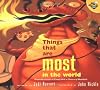
Talk about extremes! Kids will giggle as they find out the silliest, heaviest and smelliest things in the world. This would be a great mentor text for writing. Student can make their own page of the ______est thing in the world and put them all together to make a class book.
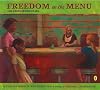
A story of the segregated South in 1960 told from a child's point of view, gives today's young readers the idea of what it meant to be courageous and stand up for human rights. This piece of critical literature shows readers that we can all become involved in a great cause and stand up for what we believe and know is right and true.
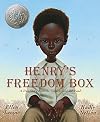
Henry's Freedom Box is a true story from the Underground Railroad. Before even reading the words, the amazing illustration of Henry as a little boy on the cover of the book will mesmerize readers; the story begins in the little boy's eyes. This is a story of a little boy, born as a slave but not willing to live as one. Henry was sold to his Master's son and taken away from his family. He later married a slave woman and had a family. Then is happened to him. His own children were taken from him, sold, just as he was as a child. As he wiped his tears, his wife was gone too. Henry couldn't do it anymore. The life song had been taken from his heart and his mind. With help from two friends, Henry fit himself into a box and sent himself to freedom.
This courageous story with fantastic art work will enlighten its readers, young and old.
This courageous story with fantastic art work will enlighten its readers, young and old.
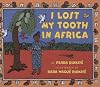
Amina lives in Portland, Oregon and she is about to go back to Africa to visit her family. She has a wiggly tooth that is almost ready to come out and it just HAS TO come out while she's in Africa. Her father told her that if she looses her tooth in Africa, the African Tooth Fairy will give her a CHICKEN! Amina can't wait to loose her tooth and get a chicken.
Young readers will find a connection to Amina as they recount the excitement of loosing a tooth and waiting to see what the Tooth Fairy has left for them. I wonder...have you ever gotten a chicken from the tooth fairy?
Young readers will find a connection to Amina as they recount the excitement of loosing a tooth and waiting to see what the Tooth Fairy has left for them. I wonder...have you ever gotten a chicken from the tooth fairy?
Bad News for Outlaws: The Remarkable Life of Bass Reeves, Deputy U. S. Marshal (Exceptional Social Studies Titles for Intermediate Grades) by Vaunda Micheaux Nelson
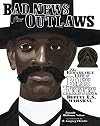
Bass Reeves was a deputy U.S. Marshall. "Everything about him was big." "But the biggest thing about Bass Reeves was his character. He had a dedication to duty few men could match. He didn't have a speck of fear in him. And he was as honest as the day is long." Growing up as a young slave, Bass was "smart and decent and had nothing but good in his heart." This is a story of Bass Reeves, who went from being a slave to a deputy, a man who was respected yet feared, "a big man who brought peace to a big country."

Little Red Chicken loves it when her Papa reads her a bedtime story. The only problem is, she can't help but jump in and try to help the characters in trouble! She must warn Hansel and Gretel and Red Riding Hood about the dangers ahead. She has to let Chicken Little know that it's not the sky that's falling, only an acorn. All of the interruptions lead the Rooster father to convince his young chicken to write her own bedtime story. When little chicken reads her story about a chicken putting her Papa to bed, it is she that is interrupted...by her Papa's snores.
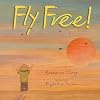
Mai loved to visit the birds in the cage near the temple, but she longed for them to be free. One day, Mai invites a stranger to help her feed the birds. As they give them food, Mai sings, "Fly free, fly free in the sky so blue. When you do a good deed, it will come back to you!" Those words stay with the stranger as she carries on and passes on a good deed to another. Throughout the village, that songs is heard by more and more and good deeds are occuring all around. Finally, a good deed travels back to the temple and a man has come to free the birds. Although Mai won't be able to visit her friends anymore, she is glad that they are flying free in the sky so blue.
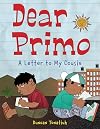
Charlie, who lives in America, and Carlitos, who lives in Mexico, are cousins. They have never met but are learning so much about each other through their letters to each other. Charlie and Carlitos compare the things in their lives from transportation to family traditions. Maybe, one day, the two will meet.
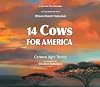
Kimeli travels back to visit his village in Kenya. When asked by a child if he has any stories, he tells them he does. He tells his family about the tragedy of the 9/11 attacks on the United States. His tribe, the Maasai, is "moved to kindness when they hear of suffering and injustice" and they ask what they can do to help. In a wave of compassion, the Maasai tribe greets a diplomat of the US Embassy with a ceremony, a sacred ritual. In honor of the USA, the tribe gives what they value as the most precious gift, 14 cows. At the end of this story, Kimeli telling the detailed story of the day the Maasai gave such a great gift to America.
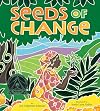
Wangari, a young girl living in Kenya, is smart and hard working. Even though other girls in her village do not go to school, she tells her brother she must. Wangari's parents knew that she would be a good student, so they gathered the fees and supplies and sent her to school. Wangari moved away from her family to continue her education in the capital city of Nairobi. It was there that she discovered her love for science. Her studies took her to the United States where she "discovered a spirit of possibility and freedom." She wanted to share that spirit with Kenyan women, so she moved back to Africa to teach at the University of Nairobi. There she worked for equal rights for women, paved the way for future female scientists, started the Green Belt Movement and was the first African American woman/environmentalist to win a Nobel Peace Prize. This is an amazing story about how passion and courage can change lives.
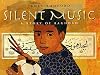
Ali, a young boy in Baghdad, loves to play soccer with this friends, he loves to listen to "parent-rattling music" and he loves to dance. But Ali finds the most peace and solace when he writes calligraphy. The ink flowing from him pen across the paper sounds like "silent music" in his head. Like the famous calligrapher, Yakut, who lived in Baghdad eight hundred years earlier, Ali uses his calligraphy to fight the sound of bombs that fill Baghdad's air. As he fills his page with beautiful strokes, his mind fills with peace.
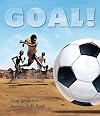
Ajani lives in South Africa. It is his job to get water for his family before dark, but first, it is time to play soccer with his friends. Ajani is so proud of his new federations-size football (soccer ball) that he earned for being the best reader in his class. They kick, they dribble, they run after their brilliant ball. While they play in the street, they take turns keeping a look out from the roof of a nearby building. They look out for each other because the streets are not always safe. But still, they kick, they dribble, they run after their brilliant ball. Until suddenly the game has to stop. They see the bullies; they are trapped. As long as the bullies don't see the new federation-size ball, they'll be safe.
This is an enlightening and inspiring story of friendship and resilience.
This is an enlightening and inspiring story of friendship and resilience.
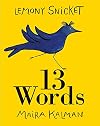
13 Words is a creatively written book comprised of 13 seemingly unconnected words. The story builds as each page reveals a new word to add to the story. This book has a mixture of simple and complex vocabulary. This book could be used as a mentor text for teaching writing. Have your students brainstorm a list of "random" words, then challenge them to write a story using all of the words from the list.
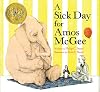
Zookeeper, Mr. McGee, is a loyal friend and care taker for all of his animals at the zoo. But who will be there for him when he needs a caretaker? To his surprise and delight, he wakes up to all of his animal friends giving him the same good care that he gives to them. This is a touching, gentle, simple story of friendship.
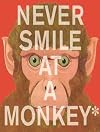
Tails, eyes, ears, noses, feet, mouths; most animals have them, but do they all use them the same way? Learn about all kinds of interesting animals and how they use their body parts in Steve Jenkins award winning nonfiction book.
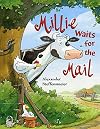
Most cows on the farm moo, graze and give milk. Not Millie, she's more interested in the mail carrier. Millie gets a kick out of scaring him every time he comes to the farm. And every day it's a new trick, how will Millie scare the mail carrier today? And will that poor mail carrier ever be able to deliver the mail in peace?
This book is sure to get the giggles out of young readers.
This book is sure to get the giggles out of young readers.
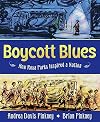
With amazing broad brush strokes dipped in bold color, Brian Pinkney paints the picture of Rosa Parks as Andrea Pinkney tells her story. This is a "blues-infused" story about the many men and women who stood up for their rights during the Montgomery bus boycott and refused to give up until they got justice.
Amazing book, amazing illustrations.
Amazing book, amazing illustrations.
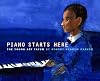
Art Tatum, a young black boy who can't see the difference between night and day, lives in humble upbringings with his mother and father in Ohio. Even though he can't see the keys of the piano, the first time he stokes them, the sound fills his heart with joy. Even though he can't see the keys, he knows that piano; he knows the keys, the pedals, the sweet sounds of music that people sing to when he plays. The music that young Art Tatum makes with the piano please everyone. He plays at home, church, school, at the cafe around the corner, and even at a neighborhood bar. Tatum's music spreads from town to town and he is soon playing his piano for people around the country. But even as Art Tatum becomes famous and travels all around to delight people with the stroke of the piano key, he thinks about his family and friends back home that were the first to hear his sweet sounds.