The Hollow Crown is an excellent history of the Wars of the Roses. The author writes in a very narrative style, which puts you right in the action along with the historical figures. This approach is incredible engaging and makes the Hollow Crown a wonderful read. I look forward to reading more from this author.
This is an excellent book on the origins of World War I. The author focusses on the "how" rather than the "why" which results in a detailed account of the complex factors leading up to the outbreak of war, rather than a casting of blame. The style is highly readable and engaging, including interesting character sketches of many of the key players. Highly recommended if you have any interest in this topic.
I was surprised by this book. Beautiful ruins is packaged like a "beach read" and I was expecting something on the light side, but the story really took hold and I was hooked. This story is both simple and complex, a story of what happened in Italy in the 1960s while Cleopatra was filming, and many stories that are connected to that. The plot weaves back and forth from the past to present, from Italy to America, and from the various characters who are all connected in some way. Highly enjoyable read.
As the saying goes, the truth is stranger than fiction. This account of an early Spanish explorer is so surreal that it is hard to believe. Even stranger still is that this story is relatively unknown in the English speaking world. Why this epic hasn't been made into a major movie, I can't say.
In summary, Cabeza de Vaca is part of a colonization expedition to Florida that goes horribly wrong. Stranded there, the conquistadores raft from Florida to Texas, but most die along the way. Cabeza de Vaca and 3 others manage to survive through adapting to different native cultures, first as slaves, then as shamanistic healers. After wandering from along the coast of Texas and Mexico, and then walking through the continent to the Pacific Ocean (!), they eventually meet up with Spanish slavers after 6 years. Cabeza de Vaca returned to Spain and wrote a record of his journey.
His is an amazing story on its own, but of equal intrigue are the tantalizing details of the many Native groups he and the 3 other castaways encountered. Some of the groups that Cabeza de Vaca encoutered disappeared almost immediately after contact from either disease or enslavement. His historic record is one of the only glimpses we will ever have of some of these peoples.
Resendez retells Cabeza de Vaca's tale based on his and other historic records, as well as providing some context around the larger political machinations occuring at the time. For example, Cabeza de Vaca's ill fated journey was an indirect show more result of Cortes' conquest of Mexico and the rivalry of conquistadores.
Fascinating story and well compiled and presented by Resendez. I would recommend to anyone who is interested in the early history and conquest of North America. show less
In summary, Cabeza de Vaca is part of a colonization expedition to Florida that goes horribly wrong. Stranded there, the conquistadores raft from Florida to Texas, but most die along the way. Cabeza de Vaca and 3 others manage to survive through adapting to different native cultures, first as slaves, then as shamanistic healers. After wandering from along the coast of Texas and Mexico, and then walking through the continent to the Pacific Ocean (!), they eventually meet up with Spanish slavers after 6 years. Cabeza de Vaca returned to Spain and wrote a record of his journey.
His is an amazing story on its own, but of equal intrigue are the tantalizing details of the many Native groups he and the 3 other castaways encountered. Some of the groups that Cabeza de Vaca encoutered disappeared almost immediately after contact from either disease or enslavement. His historic record is one of the only glimpses we will ever have of some of these peoples.
Resendez retells Cabeza de Vaca's tale based on his and other historic records, as well as providing some context around the larger political machinations occuring at the time. For example, Cabeza de Vaca's ill fated journey was an indirect show more result of Cortes' conquest of Mexico and the rivalry of conquistadores.
Fascinating story and well compiled and presented by Resendez. I would recommend to anyone who is interested in the early history and conquest of North America. show less
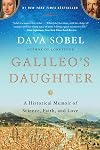
Galileo's Daughter is a biography of Galileo Galilei wonderfully told by Dava Sobel. It is also a story of Galileo's daughter, with whom he corresponded extensively and loved devotedly. The surviving letters from Galileo's daughter frame Sobel's recounting of Galileo's life, from his intellectual triumphs to the ultimately tragic confrontation with the Catholic Church regarding the Copernican view of the universe. Throughout the story, Sobel includes other fascinating details about 16-17th century Italy, such as what life was like for Galileo's daughter living in a convent, and how the plague impacted events. Overall I found this book to be enjoyable and beautifully written.
 This review was written for LibraryThing Early Reviewers.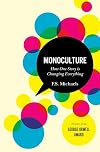
Monoculture's premise is that the "economic story" has become the dominant paradigm in our culture to the point, where is has become so embedded we don't really question it. Monoculture spends the majority of the book making its case for how this story has pervaded different facets of our lives, and finishes with a chapter on what might be done to change this.
Monoculture covers interesting and important topics and points out the interconnectedness of these issues under the umbrella theme of the "economic story". However I found the book to be simultaneously too light weight in its broad generalizing of the topic but too heavy in its prose. By this I mean that the writing has a very academic feel to it, like it is a thesis. It is missing the style and flow that really well written non-fiction has, which manages to capture and hold the reader. That is not to say it is badly written, but that it is more dry than I was expecting.
I also found that Monoculture was a bit too general and light in its treatment of the topic. I think that if the author had provided more examples, including more global examples, this would have not only strengthened her thesis but would provide more tangible points of interest.
Despite my criticisms, Monoculture makes a convincing case that the "economic story" is something that we should question, or at least realize is there and acknowledge the affects it has on our lives.
Monoculture covers interesting and important topics and points out the interconnectedness of these issues under the umbrella theme of the "economic story". However I found the book to be simultaneously too light weight in its broad generalizing of the topic but too heavy in its prose. By this I mean that the writing has a very academic feel to it, like it is a thesis. It is missing the style and flow that really well written non-fiction has, which manages to capture and hold the reader. That is not to say it is badly written, but that it is more dry than I was expecting.
I also found that Monoculture was a bit too general and light in its treatment of the topic. I think that if the author had provided more examples, including more global examples, this would have not only strengthened her thesis but would provide more tangible points of interest.
Despite my criticisms, Monoculture makes a convincing case that the "economic story" is something that we should question, or at least realize is there and acknowledge the affects it has on our lives.
This review was written for LibraryThing Early Reviewers.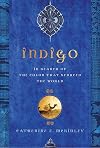
Like other reviewers, I was also disappointed by the disparity between the marketing for this book and the actual content. It is not that Indigo is a bad book, but I was expecting something different than what I got. This is not a detailed natural or cultural history of Indigo. Rather it is a memoir of the author's search for Indigo, interwoven with reflections on her past and identity. I found some of her journey to be interesting, as I have never travelled to Africa before, and her descriptions gave a good sense of the places and people. However I got bogged down in some parts when not much seemed to be happening and sometimes it was hard to motivate myself to keep reading. Overall I didn't find the authors musings on identity to be that interesting.
Recommended if you enjoy this type of memoir, but not if you are looking for a book actually about Indigo.
Recommended if you enjoy this type of memoir, but not if you are looking for a book actually about Indigo.
This review was written for LibraryThing Early Reviewers.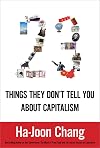
Back in my university days, when I was taking economics classes, there was something that was always bothered me about how economics was taught and the assumptions that were used. At the time, I had trouble articulating what it was. Well, I wish I had this book back then. Ha-Joon Chang's book captures those niggling questions in the back of my mind and then some.
23 Things strikes the right balance between being approachable but not dumbing down the subject matter. Chang does an excellent job explaining his points and his tone is balanced and straight forward. The overarching point of the book is that economics does not operate in a vaccuum and cannot be separated from politics. Given the times we live in, the author does a great service trying to educate people on this point.
Highly recommended for anyone curious about economics.
23 Things strikes the right balance between being approachable but not dumbing down the subject matter. Chang does an excellent job explaining his points and his tone is balanced and straight forward. The overarching point of the book is that economics does not operate in a vaccuum and cannot be separated from politics. Given the times we live in, the author does a great service trying to educate people on this point.
Highly recommended for anyone curious about economics.
This review was written for LibraryThing Early Reviewers.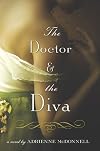
The Doctor and the Diva is a lushly written novel that explores the relationship between a doctor who specializes in fertility treatments, and a husband and wife who come to him for help concieving a child.
While, I found the book to be well written, I am a bit unsure as to how I feel about it. On the one hand, I loved the details of the settings and time period that the author works into the narrative. I had perfect pictures in my mind of the streets of Boston or the plantation in Trinidad. I also liked the details about the fertility treatments of the time. Its fascinating to know about the "modern" origins of that form of medical treatment. The delicacy that doctors had to use when addressing the husband's role was unsurprising, but amusing.
However, I found I had difficulty connecting with any of the characters. Erika seemed very distant and it was difficult to form a picture of her character. Peter, her husband, was always described as "childlike" in his manner and behaviour and it was difficult to feel sympathy towards him. Doctor Ravell was the most interesting of the three, but again I found it difficult to feel a connection towards him.
Overall, I would say this is a well written story, however it missing something to make me connect with it on a more emotional level
While, I found the book to be well written, I am a bit unsure as to how I feel about it. On the one hand, I loved the details of the settings and time period that the author works into the narrative. I had perfect pictures in my mind of the streets of Boston or the plantation in Trinidad. I also liked the details about the fertility treatments of the time. Its fascinating to know about the "modern" origins of that form of medical treatment. The delicacy that doctors had to use when addressing the husband's role was unsurprising, but amusing.
However, I found I had difficulty connecting with any of the characters. Erika seemed very distant and it was difficult to form a picture of her character. Peter, her husband, was always described as "childlike" in his manner and behaviour and it was difficult to feel sympathy towards him. Doctor Ravell was the most interesting of the three, but again I found it difficult to feel a connection towards him.
Overall, I would say this is a well written story, however it missing something to make me connect with it on a more emotional level
This review was written for LibraryThing Early Reviewers.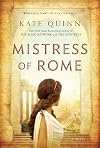
“Mistress of Rome” is a compelling and highly readable historical fiction novel. The story follows three main characters, whose lives are intertwined: Thea, a slave with a mind of her own; Lepida, her spoilt mistress, and Arius, the best gladiator in Rome. The story also follows the reign of Emperor Domintus, whose favour could make fortunes but could also turn on a whim.
I really enjoyed “Mistress of Rome” and found it to be a page turner. Thea’s character was very relatable. She definitely wasn’t perfect, but she strove to find dignity in her situation and tried to determine her own fate. I also found Arius to be compelling and sympathetic. However, Lepida was one of the most evil characters I have read about in recent memory. I cringed every time she started some new scheme, but it was too fascinating and sordid to stop reading.
"Mistress of Rome " is an entertaining novel about the decadences and intrigues of Ancient Rome. I highly recommend this novel to anyone interested in historical fiction of this era.
I really enjoyed “Mistress of Rome” and found it to be a page turner. Thea’s character was very relatable. She definitely wasn’t perfect, but she strove to find dignity in her situation and tried to determine her own fate. I also found Arius to be compelling and sympathetic. However, Lepida was one of the most evil characters I have read about in recent memory. I cringed every time she started some new scheme, but it was too fascinating and sordid to stop reading.
"Mistress of Rome " is an entertaining novel about the decadences and intrigues of Ancient Rome. I highly recommend this novel to anyone interested in historical fiction of this era.
This review was written for LibraryThing Early Reviewers.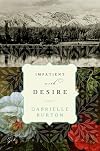
Don’t let the romantic sounding title and flowers on the cover fool you, “Impatient with Desire” is a grim and chilling story of survival. The story is a fictionalized retelling of the infamous Donner Party expedition from the perspective of Tamsen Donner. Tamson is the wife of George Donner, the expedition captain, and mother/stepmother to 5 children, most of whom are very young. The title refers the settlers being “impatient with desire” to go west to California, despite the dangers and extreme conditions.
Reading this book, I was already aware of the outcome (as I’m sure many potential readers are) but that did not lessen the impact. Ms. Burton has crafted a beautifully written story, detailing the experience at the camp where they are stranded in the mountains, as well as the lead up to that point. This includes both the expedition across the west and the Donners’ lives before. The author provides many details about what life was like in that era, and also succeeds in showing the mindset of Donners and other settlers in their party, as to why they would undertake this dangerous journey.
Tamsen is a strong character, who is ahead of her time in terms of education and views. The author has done extensive research on Tamsen Donner and it is likely that this fictionalization is mostly accurate. However, as the story is told from Tamsen’s point of view, I think that the author uses the “unreliable narrator” device in several places. It is apparent that show more Tamsen is struggling with keeping her family together and sane. Is she really writing the whole story down? It is left up to the reader to interpret those hints.
“Impatient with Desire” is a heartbreaking story that puts a very human face on the events from the Donner Party expedition. Highly recommended for those who enjoy historical fiction. show less
Reading this book, I was already aware of the outcome (as I’m sure many potential readers are) but that did not lessen the impact. Ms. Burton has crafted a beautifully written story, detailing the experience at the camp where they are stranded in the mountains, as well as the lead up to that point. This includes both the expedition across the west and the Donners’ lives before. The author provides many details about what life was like in that era, and also succeeds in showing the mindset of Donners and other settlers in their party, as to why they would undertake this dangerous journey.
Tamsen is a strong character, who is ahead of her time in terms of education and views. The author has done extensive research on Tamsen Donner and it is likely that this fictionalization is mostly accurate. However, as the story is told from Tamsen’s point of view, I think that the author uses the “unreliable narrator” device in several places. It is apparent that show more Tamsen is struggling with keeping her family together and sane. Is she really writing the whole story down? It is left up to the reader to interpret those hints.
“Impatient with Desire” is a heartbreaking story that puts a very human face on the events from the Donner Party expedition. Highly recommended for those who enjoy historical fiction. show less
This review was written for LibraryThing Early Reviewers.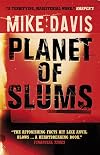
An important and sobering book, but not the easiest read. Each paragraph is filled with so many different stats and numbers that it requires some effort to distill the main points. That said, Davis backs up his points and the book is an eye opening view of our urban world.
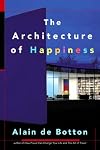
Why do we like some buildings and loathe others? How much impact does architecture have on our mental and physical well being? Turns out we are surprisingly vulnerable to the aesthetics of our surroundings. The author explores this less tangible aspect of the built environment and provides an excellent dicussion on the nature of aesthetics.

This review is for the 2005 edition of The Book of the Thousand Nights and One Night by Assouline Publishing, which features a translation by Powys Mathers (although Amazon's data lists the translation as Richard Burton's, that is incorrect). This edition also features stunning illustrations by Leon Carre and beautiful ornamental design by Racim Mohammed. In fact the illustrations are the reason I purchased this book and thought that a review that focused on this might be useful to other readers. The illustrations were originally from an older multi-volume edition published in the 1920s. This "coffee-table book" sized edition only contains about 20 full page colour plates, a sample of the original number, but as the illustrations are linked to the stories selected, and those are just a small sample of the tales, it is understandable. Leon Carre's illustrations are lush, detailed, and exotic. The colours, patterns of the carpets, details of the garden are a feast for the eyes and perfectly portrays the sense of wonder and exoticism the reader envisions while reading the stories. The ornamental designs by Racim Mohammend adorn the pages throughout the book, with particularly elaborate work on the title and first pages of each tale. They match well with Carre's illustrations and add to the richness of this book. The book also comes in a slipcase, which features another full-sized illustration by Carre.
If you are looking for a beautiful illustrated edition of 1001 nights, I show more highly recommend this book. It is both affordable and gorgeous! show less
If you are looking for a beautiful illustrated edition of 1001 nights, I show more highly recommend this book. It is both affordable and gorgeous! show less
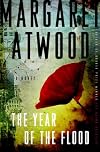
The Year of the Flood is a companion novel to Atwood's 2003 novel Oryx and Crake, which is one of the most memorable books I've ever read. I found myself constantly referencing it in conversations and thinking back to it while watching news stories on disheartening topics, such as climate change, food supply issues, or private security forces such as Blackwater.
The Year of the Flood continues to explore the same issues raised in Oryx and Crake, as well as flesh out more of the details of the catastrophic events which occur. Atwood has called both novels speculative fiction, and aims to show a possible outcome if we continue down the road of unchecked corporatism, private security forces, genetic engineering advancements (without any ethical concerns), climate change and all-out exploitation of the environment.
The Year of the Flood focuses on a religious group known as “God’s Gardeners”, who blend environmentalism with spiritualism. The story is told through the voice’s of two women involved with the Gardeners; Toby and Ren. The story shifts through time, before and after the “Waterless Flood”, following Toby and Ren to detail how the Gardeners lived before, and what happens to the survivors afterwards. I won’t go into a lot of detail about the story itself, but I found how Atwood structured it kept me interested to the end. However, what really kept me turning the pages were all the darkly satirical details of the future. Just when you thought it as grim as show more you could get, another horrific (and sometimes darkly humorous) concept would pop up. Things like Secret Burger or the Rarity Restaurants.
Although it is not necessary to read Oryx and Crake prior to this book, I would recommend it. Several of the characters appear in both, and some of the explanations for things are given more depth in the first book.
The Year of the Flood is an excellent return to the grim dystopian future of Oryx and Crake. I highly recommend this book! show less
The Year of the Flood continues to explore the same issues raised in Oryx and Crake, as well as flesh out more of the details of the catastrophic events which occur. Atwood has called both novels speculative fiction, and aims to show a possible outcome if we continue down the road of unchecked corporatism, private security forces, genetic engineering advancements (without any ethical concerns), climate change and all-out exploitation of the environment.
The Year of the Flood focuses on a religious group known as “God’s Gardeners”, who blend environmentalism with spiritualism. The story is told through the voice’s of two women involved with the Gardeners; Toby and Ren. The story shifts through time, before and after the “Waterless Flood”, following Toby and Ren to detail how the Gardeners lived before, and what happens to the survivors afterwards. I won’t go into a lot of detail about the story itself, but I found how Atwood structured it kept me interested to the end. However, what really kept me turning the pages were all the darkly satirical details of the future. Just when you thought it as grim as show more you could get, another horrific (and sometimes darkly humorous) concept would pop up. Things like Secret Burger or the Rarity Restaurants.
Although it is not necessary to read Oryx and Crake prior to this book, I would recommend it. Several of the characters appear in both, and some of the explanations for things are given more depth in the first book.
The Year of the Flood is an excellent return to the grim dystopian future of Oryx and Crake. I highly recommend this book! show less
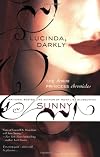
Hmmm... where to start with this book?
First off, I would dearly like to know what Anne Bishop thinks of Sunny and her work, as Sunny incorporates many aspects of Bishop's Black Jewels world building into her story. The rest of her story is filled in with "Laurel K. Hamilton style" action, including lots of sex and a paranormal menagerie of creatures. So, while stylistically Sunny has much in common with LKH, as a reader, I found the Black Jewels type elements to be more jarring. This is probably because Anne Bishop's series and world building was so unique, and being a fan, I've developed some loyalty. In fact, I almost feel like I can't appreciate the book on its own merits without knowing the back story in its creation. Is Anne Bishop okay with this inspired work?
I also think that Sunny could have changed many of the Black Jewels-esque details in her story to add her own personal stamp, without it affecting the overall story or logic of her world building. For example, she could use some other title besides High Lord for the ruler of Hell. And stating that the High Lord of Hell looks almost exactly the same as his son, the High Prince of Hell is just too similar to Saetan and Daemon in the Black Jewels series for my tastes. In case you think I'm being petty, these are just a couple examples out of the numerous world building and character details that are similar between the two series.
As this review indicates, I was so caught up in the similarities that I found the show more actual story to be less than memorable. Sure, its readable and fast paced; short and sweet. The titular character, Lucinda, is a demon-dead princess who can kick butt, but unfortunately also came off as a bit of a Mary Sue. The supporting characters were better, especially Nico. However, Stephan, the love interest, was boring. There was no sexual tension between him and Lucinda. They hop into bed right away and fall in love. There was no intrigue. The book is also set up to be a series, so there were lots of details that weren't tied up at the end.
Anyhoo, to summarize, I guess I'm just one reader who is having trouble judging this book solely on its story due to the similarities to another series. But even on its own merits, I found it to be pretty forgettable. show less
First off, I would dearly like to know what Anne Bishop thinks of Sunny and her work, as Sunny incorporates many aspects of Bishop's Black Jewels world building into her story. The rest of her story is filled in with "Laurel K. Hamilton style" action, including lots of sex and a paranormal menagerie of creatures. So, while stylistically Sunny has much in common with LKH, as a reader, I found the Black Jewels type elements to be more jarring. This is probably because Anne Bishop's series and world building was so unique, and being a fan, I've developed some loyalty. In fact, I almost feel like I can't appreciate the book on its own merits without knowing the back story in its creation. Is Anne Bishop okay with this inspired work?
I also think that Sunny could have changed many of the Black Jewels-esque details in her story to add her own personal stamp, without it affecting the overall story or logic of her world building. For example, she could use some other title besides High Lord for the ruler of Hell. And stating that the High Lord of Hell looks almost exactly the same as his son, the High Prince of Hell is just too similar to Saetan and Daemon in the Black Jewels series for my tastes. In case you think I'm being petty, these are just a couple examples out of the numerous world building and character details that are similar between the two series.
As this review indicates, I was so caught up in the similarities that I found the show more actual story to be less than memorable. Sure, its readable and fast paced; short and sweet. The titular character, Lucinda, is a demon-dead princess who can kick butt, but unfortunately also came off as a bit of a Mary Sue. The supporting characters were better, especially Nico. However, Stephan, the love interest, was boring. There was no sexual tension between him and Lucinda. They hop into bed right away and fall in love. There was no intrigue. The book is also set up to be a series, so there were lots of details that weren't tied up at the end.
Anyhoo, to summarize, I guess I'm just one reader who is having trouble judging this book solely on its story due to the similarities to another series. But even on its own merits, I found it to be pretty forgettable. show less
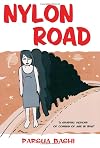
Nylon Road tells the story of Parsua Bashi’s childhood and adult experiences in Iran and as an immigrant in Switzerland. The story is told through various encounters with herself, from different points in her life and with very different attitudes and perspectives. I found this device to work well and to provide interesting dialogues, as Parsua discusses issues with a younger version of herself. The contrasts between her peaceful European life and her tumultuous life in Iran are very striking. Bashi manages to tell her story with humour and insight, while still showing the difficult and sad events that happened in her past. A very interesting tale that is beautifully told.
This review was written for LibraryThing Early Reviewers.
Just awful! And awfully boring! Harris also succeeded in totally destroying Clarice's character and removing Hannibal's mystic. Not a book for the fans of 'Red Dragon' or 'Silence of the Lambs'.

This is the first book I have read by Italo Calvino. It popped up on my LT recommendations list, and being a bit of a city planning "nerd" (and interested in cities, in general), I was immediately intrigued. Happily I chanced upon a copy during my recent travels, and it became a perfect accompaniment for my trip.
At its surface, Invisible Cities is a dialogue between the famed explorer Marco Polo and the legendary Emperor Kublai Khan. Polo describes cities that he has visited on his travels, either physically or psychologically fantastical, and all curiously possessing feminine names. However as the tale progresses Khan becomes less convinced that Polo has actually traveled to these places. The reader is suspicious as well, especially as anachronisms creep into the descriptions...
The descriptions themselves are beautifully written, each intriguing and as well as self contained. The book is formatted into sections that open and close with dialogue between Polo and Khan, framing the descriptions of the different cities. The descriptions are also tied loosely to one another by their repeating titles: “Cities & Memory 1” or “Hidden Cities 4” for example.
Calvino explores not only the idea of the city (what is it anyway?), but uses the city to play with our notion of how we interact with our environment (built or otherwise). Did we create the cities or did they create us?
Along the same theme, the cities described seem to represent different parts of our psyches (at least show more to me). They probe at many aspects of the human experience such as: fear of death, weariness, love, and longing. At the same time, Invisible Cities explores broader dichotomies such as: permanence/impermanence; opulence/squalor; life/death; virtue/sin and truth/falsity.
To me, reading Invisible Cities was comparable to having a glass of fine wine. If you are inclined, you could drink it in quickly and eagerly, enjoying its beauty and flavour on one level. However, for me to fully appreciate Invisible Cities, I found it was better to sip it slowly and let the story unravel its complexities and richness as I meditated on the imagery and ideas Calvino presented. show less
At its surface, Invisible Cities is a dialogue between the famed explorer Marco Polo and the legendary Emperor Kublai Khan. Polo describes cities that he has visited on his travels, either physically or psychologically fantastical, and all curiously possessing feminine names. However as the tale progresses Khan becomes less convinced that Polo has actually traveled to these places. The reader is suspicious as well, especially as anachronisms creep into the descriptions...
The descriptions themselves are beautifully written, each intriguing and as well as self contained. The book is formatted into sections that open and close with dialogue between Polo and Khan, framing the descriptions of the different cities. The descriptions are also tied loosely to one another by their repeating titles: “Cities & Memory 1” or “Hidden Cities 4” for example.
Calvino explores not only the idea of the city (what is it anyway?), but uses the city to play with our notion of how we interact with our environment (built or otherwise). Did we create the cities or did they create us?
Along the same theme, the cities described seem to represent different parts of our psyches (at least show more to me). They probe at many aspects of the human experience such as: fear of death, weariness, love, and longing. At the same time, Invisible Cities explores broader dichotomies such as: permanence/impermanence; opulence/squalor; life/death; virtue/sin and truth/falsity.
To me, reading Invisible Cities was comparable to having a glass of fine wine. If you are inclined, you could drink it in quickly and eagerly, enjoying its beauty and flavour on one level. However, for me to fully appreciate Invisible Cities, I found it was better to sip it slowly and let the story unravel its complexities and richness as I meditated on the imagery and ideas Calvino presented. show less
Pride and Prejudice and Zombies: The Classic Regency Romance - Now with Ultraviolent Zombie Mayhem! by Seth Grahame-Smith

This book answers the age old question of how you can improve on a masterpiece... just add zombies!
Okay, that's a bit of a lie, as this certainly can't beat the original, however it is the fun and quirky result of an (admittedly) gimicky idea. If you are wanting to reread Pride & Prejudice with an amusing twist, then this is the book for you (85% of the text is from the original). Or, if you wish to introduce a reluctant reader to classic literature, then this could also fit the bill.
Fun, saucy, and zombified!
Okay, that's a bit of a lie, as this certainly can't beat the original, however it is the fun and quirky result of an (admittedly) gimicky idea. If you are wanting to reread Pride & Prejudice with an amusing twist, then this is the book for you (85% of the text is from the original). Or, if you wish to introduce a reluctant reader to classic literature, then this could also fit the bill.
Fun, saucy, and zombified!
Silly but mostly enjoyable. If you are a die hard fan of the Black Jewels series, you will likely enjoy it, if you don't think too hard about the plot details. However for anyone unfamiliar with the Black Jewels world, this is not the novel to start with. As Ms. Bishop states, the wars are over and the major villains are defeated, so this is a story that focuses on more minor events between the characters.
The main characters from the trilogy are all there, and while the story is supposed to focus on Surreal, I think almost as much time was spent on Lucivar and Daemon. I actually found Lucivar to be the most interesting one, and I think his character gets more development than the others in this book, as well as in "Dreams made Flesh".
Anyway, as other reviewers have said, the actually story about the "spooky" house and the jealous writer was pretty silly. There are lots details that don't make sense, but who's counting? The villain is one dimensional and kind of pathetic, but of course he is awful enough to justify his comeuppance.
Oh, and the story featured lots of strangely trivial little conflicts between the main characters which served no other purpose than to have them get angsty, exchange snappy comebacks, and "rise to the killing edge". On the one hand, I know that readers likely expect these things given the characters, so I can understand why Ms. Bishop writes it in, but I don't think she established enough conflict to justify all the "angstiness". I mean in the show more previous books, the characters have gone through torture, war, abuse, etc., and then they get all freaked out about the wording on invitations or being shut out of a library.
Anyway, besides the silliness, its always fun to revisit characters you like, so I found the book to be mostly enjoyable if I didn't think too hard about it. show less
The main characters from the trilogy are all there, and while the story is supposed to focus on Surreal, I think almost as much time was spent on Lucivar and Daemon. I actually found Lucivar to be the most interesting one, and I think his character gets more development than the others in this book, as well as in "Dreams made Flesh".
Anyway, as other reviewers have said, the actually story about the "spooky" house and the jealous writer was pretty silly. There are lots details that don't make sense, but who's counting? The villain is one dimensional and kind of pathetic, but of course he is awful enough to justify his comeuppance.
Oh, and the story featured lots of strangely trivial little conflicts between the main characters which served no other purpose than to have them get angsty, exchange snappy comebacks, and "rise to the killing edge". On the one hand, I know that readers likely expect these things given the characters, so I can understand why Ms. Bishop writes it in, but I don't think she established enough conflict to justify all the "angstiness". I mean in the show more previous books, the characters have gone through torture, war, abuse, etc., and then they get all freaked out about the wording on invitations or being shut out of a library.
Anyway, besides the silliness, its always fun to revisit characters you like, so I found the book to be mostly enjoyable if I didn't think too hard about it. show less
Read this based on Cauterize's recommendation. Kinsale is a talented writer and I'm glad to have discovered her. Her writing style manages to be both detailed and action packed. The hero and heroine are well developed characters and continue to evolve throughout the story. The chemistry between them is slow to start but builds to simmering levels. Some details of their relationship might not be to everyone's taste, but I found it an interesting part of the power dynamic between them, as well as quiet sexy! This is one of the best novels I've read in the romance genre. Really enjoyed it and will definitely be reading more from this author.
If I was forced to pick, I would probably say this one is my favourite Amanda Quick book. There is just something about this story that I really love. Phoebe and Gabriel both share a love of rare medieval books. Phoebe has an unwavering belief in Gabriel's nobility, while Gabriel starts out far more cynical and mercenary. Phoebe, in turn, is not used to having anyone to answer to for her reckless behavior. The settings of London and Gabriel's castle also appeal to me. And unlike many of Quick's books, Phoebe's family are alive and well, and are an important part of the story. Very enjoyable and I highly recommend it.
An enjoyable and light novel. This book is, well, sweeter than some of Chase's other work. The heroine tries her best to be good and dutiful, despite a scandalous secret in her past. The hero is supposedly an unemotional rake, but turns out to be caring and honorable. While there was less of Chase's witty dialogue present in this story, I felt there was more character development, particularly for the heroine. Her struggles to hide her secret and not dishonor her family gave her greater depth. This was also more of a character driven story than plot driven story, and it has a slower pace than some of Chase's other novels. However I found it to work well and to be an enjoyable read.
As other reviewers have said, this book is continually referred to as one of the best romance novels. I decided to check it out and I was not disappointed. The heroine, Jessica, was endearing and easy to relate to. While she was smart and independent, she also had aspects to her character that made her fragile and, well, more human. The hero is thoroughly debauched and yet is extremely sympathetic. The chemistry between two is apparent almost right away. Chase's writing style is very enjoyable and witty. For the most part, the novel is well paced, however there were a few events that seemed rushed through and could have had more detail. The one other complaint I have is that this story includes an element I really dislike: the "annoying child" character. However, this was minor character and hardly detracted from my overall enjoyment of this novel. Great read.

Sewell presents a manifesto for Canadian cities that makes the case for reexamining the funding sources available to cities, as well as federal/provincial jurisdiction on issues pertaining to cities. He convincingly argues that major Canadian cities have had more responsibilities loaded onto them by federal and provincial governments without new sources of revenue or the necessary authority to deal with the issues. He calls for a reallocation of certain types of tax revenues and changes to legislation to empower municipalities. Interesting reading regarding issues facing Canadian cities.
The book explores atheism and the "big three" religions from a philosophical perspective. The case for atheism is mostly built up by examining the negative aspects of religion. The author makes a compelling case against the irrationality of religion, and harm that has been caused in the name of God. I enjoyed the writing style, especially Onfray's ability to distill complexities into clear and succinct points. However some of the vocabulary and concepts referenced would not make it the most accessible book to a reader generally unfamiliar with philosophy. I also think that Onfray could have provided more detail on post-christian secularism and atheism itself, and not just focus on how undesirable religion is.
A dystopic fiction that takes place in the "not-too-distant" future in the United States. The story explores what the US would be like, if the logical progression of ultra neoconservative policies and the corporate agenda were allowed to continue unabated. The novel follows the actions of several characters who have differing political stances: the corporate CEO, the militant protester, and the peaceful activist.
Overall, I found The Army of the Republic to be interesting and thought provoking. The events that occur in the book, such as privatization of municipal water, have already occurred in other countries as a result of neo-conservative World Bank policies. It is not much of a stretch to see the US heading down that path, considering the events of the past 8 years, the colossal national debt, and economic melt-down. The incorporation of a private security force similar to Blackwater into the story was also chilling. The author explores a very relevant "What If" scenario.
However, while I enjoyed the ideas presented and the overall story, I thought the execution could have been a bit better. The characters could have been more developed and writing tightened up a bit. That's not to say that it was bad, it just fell short of being really good.
In summary: great and thought provoking ideas, execution fell a bit short, but overall good read.
Overall, I found The Army of the Republic to be interesting and thought provoking. The events that occur in the book, such as privatization of municipal water, have already occurred in other countries as a result of neo-conservative World Bank policies. It is not much of a stretch to see the US heading down that path, considering the events of the past 8 years, the colossal national debt, and economic melt-down. The incorporation of a private security force similar to Blackwater into the story was also chilling. The author explores a very relevant "What If" scenario.
However, while I enjoyed the ideas presented and the overall story, I thought the execution could have been a bit better. The characters could have been more developed and writing tightened up a bit. That's not to say that it was bad, it just fell short of being really good.
In summary: great and thought provoking ideas, execution fell a bit short, but overall good read.
This review was written for LibraryThing Early Reviewers.
Instant Cities is richly illustrated and explores contemporary urbanism and metropolitan development. As the book says, "the term 'instant city' itself should not be taken too literally". Rather, the term acts as an umbrella for several dichotomous themes: Growth/Masterplan, Utopia/Dystopia, Fantasy/Reality, Nuclear/Distributed, Nomadic/Rooted, Global/Local, Humanity/Environment. Through these themes, many diverse topics are explored including, Dubai, Thames Town (in China), Second Life (the online game), architecture in film, and refugees in Nairobi, to name a few.
It is not necessary to read the book start to finish as you can easily read one section as a stand alone. The images selected are fascinating and survey some of the most cutting edge architecture, as well as notable plans and designs from the past.
Given the diversity of the topics, it is not surprising that the writing is to the point and mostly summary. The terminology and lack of embellishment put the discussion a bit beyond the average reader who is unfamiliar with architecture and planning concepts. That said, accompanying illustrations go a long way in explaining things.
One complaint: despite the high quality of production, the text was very small compared to the page size (coffee table book sized), and got even smaller in some of the subsections. Perhaps this was done for visual reasons but it did not make reading it any easier.
Overall a beautiful book that provides interesting examples of contemporary show more urban development around the world. show less
It is not necessary to read the book start to finish as you can easily read one section as a stand alone. The images selected are fascinating and survey some of the most cutting edge architecture, as well as notable plans and designs from the past.
Given the diversity of the topics, it is not surprising that the writing is to the point and mostly summary. The terminology and lack of embellishment put the discussion a bit beyond the average reader who is unfamiliar with architecture and planning concepts. That said, accompanying illustrations go a long way in explaining things.
One complaint: despite the high quality of production, the text was very small compared to the page size (coffee table book sized), and got even smaller in some of the subsections. Perhaps this was done for visual reasons but it did not make reading it any easier.
Overall a beautiful book that provides interesting examples of contemporary show more urban development around the world. show less

I picked this up in Barcelona, so its written in Catalan, but the back of the book contains the entire text in both English and Spanish. The book is a companion to the (Barcelona) Modern Art Museum's exhibition of "Cities that Never Existed", depicting strange architectures and other-worldly cities from western art.