
The concert for Bangladesh 1971
Part of my summer reading was a short book by Abu Sayed and Priyajit Debsarkar on the 1971 concert for Banglagesh, one of a series of momentous events in the period which saw east Pakistan break away from West Pakistan, in a bloody conflict marked by outrageous crimes on the part of the Pakistani military and its supporters, to become the independent nation of Bangladesh.
"The concert for Bangladesh: United friends of Bangladesh" is a 112 page work which first appeared in Bangla last year, followed by an English translation in 2023. It is beautifully produced with a colour cover, and excellent quality black and white photographs throughout. This is history poorly known to British readers, and is all the more valuable for that. Some of the baddies however, are all too familiar - the Chinese government and Henry Kissinger for example, had few concerns about Pakistani atrocities, as they sought a balance of power in the region which weakened India.
This work will also be of interest to Beatles completists motivated to buy anything and everything with George Harrison (and indeed Ravi Shankar) on the front cover. As for the Madison Square garden concert, the concept of cultural diplomacy is now one that is very familiar - less so in 1971. As Sayed and Debsarkar record, by 1985 some $12 million had been raised for Bangladesh - the impact on later interventions, such as Live Aid and Ethiopia, is clear.
Gripes? The text needed a tighter spell and show more grammar check, and as yet, the book does not appear to be available on some of the main online book sales sites? show less
Part of my summer reading was a short book by Abu Sayed and Priyajit Debsarkar on the 1971 concert for Banglagesh, one of a series of momentous events in the period which saw east Pakistan break away from West Pakistan, in a bloody conflict marked by outrageous crimes on the part of the Pakistani military and its supporters, to become the independent nation of Bangladesh.
"The concert for Bangladesh: United friends of Bangladesh" is a 112 page work which first appeared in Bangla last year, followed by an English translation in 2023. It is beautifully produced with a colour cover, and excellent quality black and white photographs throughout. This is history poorly known to British readers, and is all the more valuable for that. Some of the baddies however, are all too familiar - the Chinese government and Henry Kissinger for example, had few concerns about Pakistani atrocities, as they sought a balance of power in the region which weakened India.
This work will also be of interest to Beatles completists motivated to buy anything and everything with George Harrison (and indeed Ravi Shankar) on the front cover. As for the Madison Square garden concert, the concept of cultural diplomacy is now one that is very familiar - less so in 1971. As Sayed and Debsarkar record, by 1985 some $12 million had been raised for Bangladesh - the impact on later interventions, such as Live Aid and Ethiopia, is clear.
Gripes? The text needed a tighter spell and show more grammar check, and as yet, the book does not appear to be available on some of the main online book sales sites? show less

Al-Qaeda 2.0: a critical reader, edited by Donald Holbrook, London, Hurst and
Company, 2017, 296 pp., £25 (paperback), ISBN 9781849048101
This new reader by Donald Holbrook is a collection of Al-Qaeda (AQ) communiques from the post-Bin Laden era (2011–2016). These are divided into three sections: the Arab Spring, the divisions in Syria and, finally, AQ’s relations with the Islamic State. Each has been professionally translated and comes with an introduction by Holbrook. There is also a short foreword by Cerwyn Moore. Most pieces are from its current leader,
Ayman al-Zawahiri, so serve as a marker in his development as a thinker and practitioner of armed struggle. As such, this is a companion to Bruce Lawrence’s 2005 collection of Bin Laden’s statements, “Messages to the World” and the lesser known, but equally significant “Knights Under the Prophet’s Banner” – an earlier compendium of al-Zawahiri’s writings. As primary sources, these titles provide important snapshots, both of AQ’s strategic thinking, and its reaction to events.
There are several dominant themes in Al-Qaeda 2.0 which have long been present in the group’s rhetoric. The focus on attacking the far enemy (i.e. the US) continues. Indeed, al-Zawahiri is at pains to stress that conflict with local regimes should be avoided unless it is “inevitable” (p. 52). The difficulty for al-Zawahiri is he is writing in a period where two decades of jihad has failed to drain the energy from the show more Americans,
in the manner he believes the USSR was defeated. Indeed, the killing of Bin Laden in Pakistan, mourned in the May 2011 statement “The Noble Knight Dismounted”, showed instead that the far enemy could still reach aggressively into Islamic heartlands.
Equally difficult is the specific backdrop of the Arab Spring, where sudden revolutionary change appeared to be happening without AQ’s leadership. What does all this mean on a day-to-day basis? It is through primary sources such as this that the world view, and the consistent religiosity, of AQ emerges. As Bruce Lawrence observed, Bin Laden never spoke of imperialism, but of waging jihad against “global disbelief”
(Lawrence 2005, xx). Here, al-Zawahiri writes of “Sharia politics, seeking to bring about virtues and prevent vices” (p. 53), of the need to convert the Copts in Egypt, and propagational work to explain the necessity of monotheism and unity. This is consistent with his concerns, a decade earlier in “Knights Under the Prophets Banner”, that schism and defeat can only be avoided under Islamic slogans. Then he wrote despairingly of Muslim youth combining with leftists or nationalists in Palestine: “They
allied themselves with the devil, but lost Palestine” (Mansfield 2006, 36). To see the same “mistakes” repeated in 2011 must have been difficult for al-Zawahiri to take.
Holbrook appropriately titles part two “Al-Qaeda and the Syrian fitna” (sedition or strife). The Assad regime is approached by al-Zawahiri in historical, if not sectarian terms: “Read the history of the people and the history of their predecessors in order to understand the present” (p. 128). This leads to the view that the Shia have never accepted the
concept of a caliphate run by the “true people of Islam”. Instead, Iran wants a Shia state extending from Lebanon to Afghanistan. AQ at first sought to proceed cautiously in the Syrian conflict, making no initial
announcement of its presence (p. 107) and expressing surprise at the creation of IS. By May 2014, al-Zawahiri was warning that jihadist in-fighting was a potential calamity. Divisions should be addressed by arbitration at sharia committees, and al- Zawahiri is clearly trying to stem gaping wounds when he declares fighters involved in intra-Mujahideen violence cannot claim to be only following orders. No Amir (leader)
“will protect you against the punishment of God if you have committed aggression against your brother mujahidin” (p. 105).
Despite these divisions, al-Zawahiri insists that only jihad, supported by the ummah, can defeat Assad. The rise of IS, and the threat of being outflanked by a more militant rival, does seem to have forced a degree of re-branding. AQ is described as a mission (p. 101) and a message (p. 107) before it is an organisation. We are reminded that “endurance is the
key to victory” (p. 96) – hardly the rhetoric of a group with momentum, revelling in contemporary victories. Prompted by discussions with Hani al Sibai and his London based al-Maqreze Centre for Historical Studies, “Testimony to Preserve the Blood of the Mujahidin in Al-Sham” goes into battle, declaring IS a subordinate group to AQ. After calling for an end to violence between rival Mujahideen, al-Zawahiri instructs IS leader
al-Baghdadi to “return to the fold of listening and obedience to your Amir” (p.144). The two IS communiques that follow instead show how far al-Baghdadi moved from al- Zawahiri, declaring himself Caliph Ibrahim, within months. AQ had been usurped by a young pretender. Worse, by encouraging AQ affiliates in north Africa and Yemen to transfer allegiance to IS, the fitna was spreading “to the rest of the Muslim world” (p. 190) and “was not based on the Prophetic method; it is an illegitimate takeover without proper consultation” (p. 198). Al-Zawahiri is vexed that some who had pledged allegiance to the Taliban’s Mullah Omar also broke ranks. This makes him look decidedly out of touch. As his 2015 “Islamic Spring” statement was being distributed, it was revealed Mullah Omar had been dead for two years, a matter the Taleban had covered up, and IS had sought to expose.
Whilst Sykes-Picot, Viscount Allenby, the collapse of the Ottoman Empire, and British rule in Egypt are largely forgotten in the west, to al-Zawahiri, these are live, breathing issues which shape events today. His is a world view which ranges back and forth across centuries, often on the same page. It is an analysis steeped in two things: history and the Qur’an – or perhaps more accurately, al-Zawahiri’s interpretation of them. However, he is guilty at times of trying to graft events to fit his analysis. On the Arab Spring, his claim that “the removal of the Israeli embassy is a main target of the Egyptian uprising” (p. 36) is indicative. The end of Mubarak’s dictatorship, freedom and lower food prices in the shops (Roccu 2013) all featured more prominently in protestors’
thoughts.
On international relations, al-Zawahiri’s Islamic utopianism predominates.
Whilst many would share the criticism that the five permanent members of the UN Security Council dominate the institution, his request that the General Assembly decide issues not by majority but by sharia (p. 48) is unrealistic. Like many armed groups before them, AQ appear to be in a position where their proscription on a specific issue could only be achieved via the complete victory of their broader programme – in which
case reform would be superfluous anyway.
In allowing such contradictions to emerge, Holbrook has done an enormous service to all who seek to better understand such actors.
References
Lawrence, B. 2005. Messages to the World: The Statements of Osama Bin Laden. London: Verso.
Mansfield, L. 2006. His Own Words: A Translation of the Writings of Dr Ayman Al Zawahiri. United States of America: TLG Publications.
Roccu, R. 2013. “David Harvey in Tahrir Square: The Dispossessed, the Discontented and the Egyptian Revolution.” Third World Quarterly 34 (3): 423–440.
This review appeared in Critical Studies on Terrorism, Vol 11 No 2, 2018.
doi:10.1080/01436597.2013.785338. show less
Company, 2017, 296 pp., £25 (paperback), ISBN 9781849048101
This new reader by Donald Holbrook is a collection of Al-Qaeda (AQ) communiques from the post-Bin Laden era (2011–2016). These are divided into three sections: the Arab Spring, the divisions in Syria and, finally, AQ’s relations with the Islamic State. Each has been professionally translated and comes with an introduction by Holbrook. There is also a short foreword by Cerwyn Moore. Most pieces are from its current leader,
Ayman al-Zawahiri, so serve as a marker in his development as a thinker and practitioner of armed struggle. As such, this is a companion to Bruce Lawrence’s 2005 collection of Bin Laden’s statements, “Messages to the World” and the lesser known, but equally significant “Knights Under the Prophet’s Banner” – an earlier compendium of al-Zawahiri’s writings. As primary sources, these titles provide important snapshots, both of AQ’s strategic thinking, and its reaction to events.
There are several dominant themes in Al-Qaeda 2.0 which have long been present in the group’s rhetoric. The focus on attacking the far enemy (i.e. the US) continues. Indeed, al-Zawahiri is at pains to stress that conflict with local regimes should be avoided unless it is “inevitable” (p. 52). The difficulty for al-Zawahiri is he is writing in a period where two decades of jihad has failed to drain the energy from the show more Americans,
in the manner he believes the USSR was defeated. Indeed, the killing of Bin Laden in Pakistan, mourned in the May 2011 statement “The Noble Knight Dismounted”, showed instead that the far enemy could still reach aggressively into Islamic heartlands.
Equally difficult is the specific backdrop of the Arab Spring, where sudden revolutionary change appeared to be happening without AQ’s leadership. What does all this mean on a day-to-day basis? It is through primary sources such as this that the world view, and the consistent religiosity, of AQ emerges. As Bruce Lawrence observed, Bin Laden never spoke of imperialism, but of waging jihad against “global disbelief”
(Lawrence 2005, xx). Here, al-Zawahiri writes of “Sharia politics, seeking to bring about virtues and prevent vices” (p. 53), of the need to convert the Copts in Egypt, and propagational work to explain the necessity of monotheism and unity. This is consistent with his concerns, a decade earlier in “Knights Under the Prophets Banner”, that schism and defeat can only be avoided under Islamic slogans. Then he wrote despairingly of Muslim youth combining with leftists or nationalists in Palestine: “They
allied themselves with the devil, but lost Palestine” (Mansfield 2006, 36). To see the same “mistakes” repeated in 2011 must have been difficult for al-Zawahiri to take.
Holbrook appropriately titles part two “Al-Qaeda and the Syrian fitna” (sedition or strife). The Assad regime is approached by al-Zawahiri in historical, if not sectarian terms: “Read the history of the people and the history of their predecessors in order to understand the present” (p. 128). This leads to the view that the Shia have never accepted the
concept of a caliphate run by the “true people of Islam”. Instead, Iran wants a Shia state extending from Lebanon to Afghanistan. AQ at first sought to proceed cautiously in the Syrian conflict, making no initial
announcement of its presence (p. 107) and expressing surprise at the creation of IS. By May 2014, al-Zawahiri was warning that jihadist in-fighting was a potential calamity. Divisions should be addressed by arbitration at sharia committees, and al- Zawahiri is clearly trying to stem gaping wounds when he declares fighters involved in intra-Mujahideen violence cannot claim to be only following orders. No Amir (leader)
“will protect you against the punishment of God if you have committed aggression against your brother mujahidin” (p. 105).
Despite these divisions, al-Zawahiri insists that only jihad, supported by the ummah, can defeat Assad. The rise of IS, and the threat of being outflanked by a more militant rival, does seem to have forced a degree of re-branding. AQ is described as a mission (p. 101) and a message (p. 107) before it is an organisation. We are reminded that “endurance is the
key to victory” (p. 96) – hardly the rhetoric of a group with momentum, revelling in contemporary victories. Prompted by discussions with Hani al Sibai and his London based al-Maqreze Centre for Historical Studies, “Testimony to Preserve the Blood of the Mujahidin in Al-Sham” goes into battle, declaring IS a subordinate group to AQ. After calling for an end to violence between rival Mujahideen, al-Zawahiri instructs IS leader
al-Baghdadi to “return to the fold of listening and obedience to your Amir” (p.144). The two IS communiques that follow instead show how far al-Baghdadi moved from al- Zawahiri, declaring himself Caliph Ibrahim, within months. AQ had been usurped by a young pretender. Worse, by encouraging AQ affiliates in north Africa and Yemen to transfer allegiance to IS, the fitna was spreading “to the rest of the Muslim world” (p. 190) and “was not based on the Prophetic method; it is an illegitimate takeover without proper consultation” (p. 198). Al-Zawahiri is vexed that some who had pledged allegiance to the Taliban’s Mullah Omar also broke ranks. This makes him look decidedly out of touch. As his 2015 “Islamic Spring” statement was being distributed, it was revealed Mullah Omar had been dead for two years, a matter the Taleban had covered up, and IS had sought to expose.
Whilst Sykes-Picot, Viscount Allenby, the collapse of the Ottoman Empire, and British rule in Egypt are largely forgotten in the west, to al-Zawahiri, these are live, breathing issues which shape events today. His is a world view which ranges back and forth across centuries, often on the same page. It is an analysis steeped in two things: history and the Qur’an – or perhaps more accurately, al-Zawahiri’s interpretation of them. However, he is guilty at times of trying to graft events to fit his analysis. On the Arab Spring, his claim that “the removal of the Israeli embassy is a main target of the Egyptian uprising” (p. 36) is indicative. The end of Mubarak’s dictatorship, freedom and lower food prices in the shops (Roccu 2013) all featured more prominently in protestors’
thoughts.
On international relations, al-Zawahiri’s Islamic utopianism predominates.
Whilst many would share the criticism that the five permanent members of the UN Security Council dominate the institution, his request that the General Assembly decide issues not by majority but by sharia (p. 48) is unrealistic. Like many armed groups before them, AQ appear to be in a position where their proscription on a specific issue could only be achieved via the complete victory of their broader programme – in which
case reform would be superfluous anyway.
In allowing such contradictions to emerge, Holbrook has done an enormous service to all who seek to better understand such actors.
References
Lawrence, B. 2005. Messages to the World: The Statements of Osama Bin Laden. London: Verso.
Mansfield, L. 2006. His Own Words: A Translation of the Writings of Dr Ayman Al Zawahiri. United States of America: TLG Publications.
Roccu, R. 2013. “David Harvey in Tahrir Square: The Dispossessed, the Discontented and the Egyptian Revolution.” Third World Quarterly 34 (3): 423–440.
This review appeared in Critical Studies on Terrorism, Vol 11 No 2, 2018.
doi:10.1080/01436597.2013.785338. show less
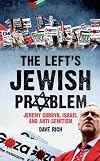
A contentious issue during the Corbyn revolution has been the relationship between the Labour left and the Jewish community. Historically this is an aberration, as the British left was long considered a welcoming place for Jews, whether practising or secular. Of the main parties, Labour was perhaps the most explicitly pro-Israel until at least the 1960s, whilst at one point the Communist Party of Great Britain had an estimated 10% of its membership of Jewish heritage (p.6) How then do we get to a situation where Jewish Chronicle (04/05/16) poll data suggests only 8.5% of British Jews are likely to vote Labour, and where the party has conducted three inquiries into alleged anti-Semitism almost in succession?
Dave Rich is arguably better placed than anyone within the Jewish community to analyse this dislocation. Deputy Director of Communications at the Community Security Trust, the primary organisation established to provide security advice and protection to British Jews and their property, Rich was completing a PhD on left wing anti-Zionism from the 1960s-1980s as Jeremy Corbyn was elected leader of the Labour party. His historical knowledge ensures that as well as seeking to explain contemporary political controversies, there is plenty here for the political train spotter and fan of socialist esoterica. That the Young Liberals considered themselves part of the new left (p.42), that George Galloway was a member of the British Anti-Zionist Organisation (BAZO) or that Israel show more produced an anti-Zionist communist party, Matzpen, that significantly influenced British Trotskyists (p.101) is easily forgotten.
Rich situates the formation of Israel in a distinct background – that it was created by Jews within Europe’s left tradition. Zionists had to fight a traditional colonial power - Britain - in an insurgency to establish their state. This is a book which works hard to bring in overlooked and perhaps inconvenient historical facts – in 1944 Labour supported transferring Arabs out of Palestine to make way for Jews (p.5) and the Soviet bloc’s initial support for Israel came via both rhetoric at the United Nations and arms shipments to fight Arab forces (p.2-3).
Public criticism of Israel on the left seems to have begun not in 1948 with what Palestinians designate the nakba, but with Israel’s greatest military triumph – the Six-Day War against Egypt, Jordan and Syria. The noun ‘Palestinian’ did not appear in New Left Review before 1967 (p.24). Rich observes the seismic change that was commencing on the left as identity politics began to meet, match and in time supplant socio-economic concerns. His categorisation of the new left in class terms is particularly valuable:
… the new Left effectively represented a new social class, rooted in intellectual and cultural professions, populated by public sector workers, and whose political agenda would come to be dominated by identity and iconoclasm (p.8).
From the new left is seen to come the view Zionism is racist and Israel a remnant of western imperialism (p.11). Organisations such as the International Marxist Group began to conceive of revolution spreading from the third world inwards, and Tony Cliff’s International Socialists declared Israeli workers could not be revolutionary. Zionism is an issue where definitions really do determine debate, and Rich gets his in early with regards to Israel, arguing that criticisms of the state may become anti-Semitic when they “use language and ideas that draw on older anti-Semitic myths about Jews” (p.xxii). This was a problem for both the new left and orthodox communists, as by 1967-8 the much-admired revolutionaries of the FLN in Algeria were adopting anti-Semitic conspiracy theories, and the USSR returned to one of its periodic bouts of anti-Semitism (p.20-1). Interaction between Matzpen, the new left and Palestinian exiles in the UK seems to have run aground though on more concrete problems, which Rich perhaps sums up adroitly:
….. is it a conflict between two competing national movements, both with a legitimate claim to the same piece of land; or is it a case of coloniser and colonised, with all the right on one side and all the wrong on the other? (p.104)
In 1975 the UN General Assembly declared Zionism to be a form of racism (a position it rescinded in 1991). Rich gained access to the National Union of Students archives, and there is much here on how the UNGA resolution led to attempts to ‘no platform’ both Zionists and Jewish Societies (JSOCs) on campus. Here the left divided, with the Broad Left and Communists generally opposed, the Trotskyists for (p.129-131). In this controversy, we again see the centrality of identity politics, and its ability to produce division and stalemate. In the 1970s JSOCs had responded to criticism by using the language of democratic rights and free speech. By the 1980s they too had adopted that of identity politics, comparing themselves to “every other minority group” (p.137-8). To deny Jewish students their right to organise on campus would be deeply problematic. But to anti-Zionists, if Jewish students use that political space to exercise a Zionist identity, they are propagating racism. Student unions are yet to square that circle.
Chapter five “The New Alliance: Islamists and the Left” critiques the relationship between exiled Islamists, usually but not always from Muslim Brotherhood backgrounds, and both the revolutionary and Labour left. Jeremy Corbyn has been central to these alliances. Whilst they did not stop the Iraq war nor bring freedom to Palestine, they have changed the composition of the left in Britain (p.162) paving the way for Corbyn’s eventual victory. However, for these relationships to prosper, the left has had to turn a blind eye to political attitudes it would usually reject, and actively opposes, when articulated by the far right. In what is the strongest section of the book, Rich cites examples in the fields of human rights, suicide attacks and racism.
The Hamas Charter cites anti-Semitic forgery the Protocols of the Elders of Zion as fact, whilst believing the United Nations was created by the Zionists (p.176). The British left is inexorably sucked into this nonsense via its affiliations with Islamic actors in the Middle East and here. In 2003 the Cairo anti-war conference, which brought together regional activists with anti-war figures such as Corbyn and John Rees, adopted the position the Iraq war was “part of the Zionist plan” (p.189). Socialists chanting ‘We are Hezbollah’ at Stop the War’s 2006 protests against the Israel-Hezbollah conflict either did not know, or did not care, Hasan Nasrallah has called for all Jews to go to Israel, so they can best be killed in one place (p.178).
Labour’s recent anti-Semitism controversy has involved former Mayors in London, Bradford and Blackburn, plus councillors in Luton, Nottingham, Burnley, Newport and Renfrewshire (p.197-8). Rich’s book goes a long way in explaining how we got there. It ends with the hope that the left and British Jews can again have a positive relationship. The re-admittance of Momentum’s Jackie Walker to Labour demonstrates how tricky this will be. Rich traces her ‘analysis’ that the Jews financed the slave trade, to a 1991 book by the Nation of Islam’s Louis Farrakhan. Identity politics has brought the left more problems than answers.
This review appears in Socialist History 53, pp.124 - 127, 2018. show less
Dave Rich is arguably better placed than anyone within the Jewish community to analyse this dislocation. Deputy Director of Communications at the Community Security Trust, the primary organisation established to provide security advice and protection to British Jews and their property, Rich was completing a PhD on left wing anti-Zionism from the 1960s-1980s as Jeremy Corbyn was elected leader of the Labour party. His historical knowledge ensures that as well as seeking to explain contemporary political controversies, there is plenty here for the political train spotter and fan of socialist esoterica. That the Young Liberals considered themselves part of the new left (p.42), that George Galloway was a member of the British Anti-Zionist Organisation (BAZO) or that Israel show more produced an anti-Zionist communist party, Matzpen, that significantly influenced British Trotskyists (p.101) is easily forgotten.
Rich situates the formation of Israel in a distinct background – that it was created by Jews within Europe’s left tradition. Zionists had to fight a traditional colonial power - Britain - in an insurgency to establish their state. This is a book which works hard to bring in overlooked and perhaps inconvenient historical facts – in 1944 Labour supported transferring Arabs out of Palestine to make way for Jews (p.5) and the Soviet bloc’s initial support for Israel came via both rhetoric at the United Nations and arms shipments to fight Arab forces (p.2-3).
Public criticism of Israel on the left seems to have begun not in 1948 with what Palestinians designate the nakba, but with Israel’s greatest military triumph – the Six-Day War against Egypt, Jordan and Syria. The noun ‘Palestinian’ did not appear in New Left Review before 1967 (p.24). Rich observes the seismic change that was commencing on the left as identity politics began to meet, match and in time supplant socio-economic concerns. His categorisation of the new left in class terms is particularly valuable:
… the new Left effectively represented a new social class, rooted in intellectual and cultural professions, populated by public sector workers, and whose political agenda would come to be dominated by identity and iconoclasm (p.8).
From the new left is seen to come the view Zionism is racist and Israel a remnant of western imperialism (p.11). Organisations such as the International Marxist Group began to conceive of revolution spreading from the third world inwards, and Tony Cliff’s International Socialists declared Israeli workers could not be revolutionary. Zionism is an issue where definitions really do determine debate, and Rich gets his in early with regards to Israel, arguing that criticisms of the state may become anti-Semitic when they “use language and ideas that draw on older anti-Semitic myths about Jews” (p.xxii). This was a problem for both the new left and orthodox communists, as by 1967-8 the much-admired revolutionaries of the FLN in Algeria were adopting anti-Semitic conspiracy theories, and the USSR returned to one of its periodic bouts of anti-Semitism (p.20-1). Interaction between Matzpen, the new left and Palestinian exiles in the UK seems to have run aground though on more concrete problems, which Rich perhaps sums up adroitly:
….. is it a conflict between two competing national movements, both with a legitimate claim to the same piece of land; or is it a case of coloniser and colonised, with all the right on one side and all the wrong on the other? (p.104)
In 1975 the UN General Assembly declared Zionism to be a form of racism (a position it rescinded in 1991). Rich gained access to the National Union of Students archives, and there is much here on how the UNGA resolution led to attempts to ‘no platform’ both Zionists and Jewish Societies (JSOCs) on campus. Here the left divided, with the Broad Left and Communists generally opposed, the Trotskyists for (p.129-131). In this controversy, we again see the centrality of identity politics, and its ability to produce division and stalemate. In the 1970s JSOCs had responded to criticism by using the language of democratic rights and free speech. By the 1980s they too had adopted that of identity politics, comparing themselves to “every other minority group” (p.137-8). To deny Jewish students their right to organise on campus would be deeply problematic. But to anti-Zionists, if Jewish students use that political space to exercise a Zionist identity, they are propagating racism. Student unions are yet to square that circle.
Chapter five “The New Alliance: Islamists and the Left” critiques the relationship between exiled Islamists, usually but not always from Muslim Brotherhood backgrounds, and both the revolutionary and Labour left. Jeremy Corbyn has been central to these alliances. Whilst they did not stop the Iraq war nor bring freedom to Palestine, they have changed the composition of the left in Britain (p.162) paving the way for Corbyn’s eventual victory. However, for these relationships to prosper, the left has had to turn a blind eye to political attitudes it would usually reject, and actively opposes, when articulated by the far right. In what is the strongest section of the book, Rich cites examples in the fields of human rights, suicide attacks and racism.
The Hamas Charter cites anti-Semitic forgery the Protocols of the Elders of Zion as fact, whilst believing the United Nations was created by the Zionists (p.176). The British left is inexorably sucked into this nonsense via its affiliations with Islamic actors in the Middle East and here. In 2003 the Cairo anti-war conference, which brought together regional activists with anti-war figures such as Corbyn and John Rees, adopted the position the Iraq war was “part of the Zionist plan” (p.189). Socialists chanting ‘We are Hezbollah’ at Stop the War’s 2006 protests against the Israel-Hezbollah conflict either did not know, or did not care, Hasan Nasrallah has called for all Jews to go to Israel, so they can best be killed in one place (p.178).
Labour’s recent anti-Semitism controversy has involved former Mayors in London, Bradford and Blackburn, plus councillors in Luton, Nottingham, Burnley, Newport and Renfrewshire (p.197-8). Rich’s book goes a long way in explaining how we got there. It ends with the hope that the left and British Jews can again have a positive relationship. The re-admittance of Momentum’s Jackie Walker to Labour demonstrates how tricky this will be. Rich traces her ‘analysis’ that the Jews financed the slave trade, to a 1991 book by the Nation of Islam’s Louis Farrakhan. Identity politics has brought the left more problems than answers.
This review appears in Socialist History 53, pp.124 - 127, 2018. show less
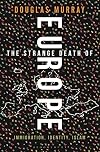
One of the publishing successes of 2017 has been Douglas Murray’s examination of the changes we see occurring all around us. There are two reasons for this – Murray is a considered, thoughtful writer with a much greater degree of empathy than he is given credit for. The second is the terrible events at the Manchester Arena on the 22 May. Murray’s explanation of how we reached the stage where our children are being blown up at pop concerts, was surprisingly commissioned by and shown on the BBC. That eloquence, and dismay at the mistakes the political class has made, characterises this book.
It has several overlapping themes. Central is Europe’s contemporary lack of confidence in itself, its history, its beliefs and practice. This has conjoined with an era of large scale immigration, often of people with little or no intention of becoming anything like the citizens of the nations they have moved to. Murray roots his work in a sound statistical basis, and the position that historically governments have tended to both lie to their populations about immigration, usually by underestimating demographic change, and then subsequently to do little to address concerns. Instead curious games are played out. Examples vary from the serious – that so few illegal migrants are ever deported - to the surreal. Consider the Office for National Statistics listing Mohammed and Muhammad separately in their annual lists of children’s names until “this was immaterial because the show more name in all its variants had indeed become the most popular boy’s name in England and Wales. At which point the official line changed to ‘And so what?” (p.313)
Murray explains how academic sleight of hand has been necessary to provide an evidence base that immigration is inherently an economic good, despite the awkward reality that an insurance based welfare system open to all, is unlikely to prosper if significant numbers of people can take out who are yet to pay in. The chameleon like nature of political leaders emerges repeatedly – in one decade it is racist to expect migrants to speak the language of their host country, in another it becomes essential. Sometimes assimilation is promoted, at other times the retention of migrant cultures, with concessions to practices, like sharia law, which appear incompatible with existing structures and rights. Confused? Everybody is.
That immigration may undermine, not strengthen liberal values was something Britain had warning of first, via the Rushdie affair in 1989, an event Murray considers “a crash course in the rules of Islam” (p.131). If so, the response of successive British governments has become distinctly un-British – to play down freedom of speech and the rights of the individual, and to increasingly assert the group rights of multi-culturalism. Those worst affected by this are often minority communities themselves “ordinary Muslims suddenly had a branch of religious representation inserted between them and their political representatives” (p.132) often via groups like the Muslim Council of Britain, dominated by the British end of Pakistan’s main clerical party, the Jamaat-e-Islami. As Murray concludes “No one had prepared for the possibility that those arriving might only not become integrated but might bring many social and religious views with them” (p.152).
If this book were simply a critique of blunders made, it would risk polemic. Murray avoids this, in part through his considered style, in part through interviews with those coming to places like Lampedusa, a transit island between north Africa and Sicily, and Lesbos, one of the Greek Islands closest to Turkey. Most want to go to Germany, although Sweden and the UK are also popular destinations. In 2015 “around 400,000 migrants moved through Hungary’s territory alone. Fewer than twenty of them stopped to claim asylum in Hungary” (p. 81). Whilst empathetic about the conditions many are fleeing, Murray is never naïve. He reminds us that the father of three-year-old Aylan Kurdi, whose dead body washed up on the Turkish coast, dominating newspaper headlines in September 2015, took the regrettable decision to leave behind a paid job in a safe country, Turkey, to try to sail for a new life in Europe. Whilst his death provoked emotional political outpourings in Europe and North America, in Muslim majority countries there was little or no interest. Western guilt, absorbed from the top down in our societies, be it about colonialism, race or the holocaust, ensured entirely different responses.
What to do about all this? Even if we wanted to solve the problems of Eritrea, to take just one source of mass migration, where would we begin? The response of the EU was to give six billion Euros to Turkey to prevent its use as a transit point for migrants, thus ensuring Europe’s taxpayers (you and me) pay for the crisis. A chapter on terrorism, violence and sexual assaults by migrants is entitled ‘Learning to Live With It’, the view of terrorism forever associated with the Mayor of London, Sadiq Khan. A theme Murray returns to time after time is the deceit, we might at times say self-deceit, of our ruling elites. Mrs Merkel for example, was able to declare multi-culturalism a failure in Germany in 2010, then to decide it could work in 2015. Perhaps we need to hold these leaders to account a little more?
A deeper, philosophical question, is the issue of what replaces Christianity in our post-Christian societies? What provides us with a foundation and the moorings needed in times of stormy weather? Here Murray suggests the countries of eastern Europe may have a better basis from which to survive, than those in the west. They at least, seem set to avoid the wave of jihadist attacks that has so shaken France, Belgium, Germany and Britain. As for here, even our architecture seems to be in decline “In London the great building to commemorate the turn of the millennium wasn’t even a structure built to last, but a vast empty tent” (p.263).
There are omissions. Margaret Thatcher, who believed Islam could be used as a bulwark against Communism and was consequently indulgent of some of its most extreme manifestations, is not mentioned once. Murray’s own flirtation with a secular god that failed, neo-Conservatism, is similarly overlooked. In discussing the greatest living French novelist, Michel Houellebecq and his work Submission, Murray misses perhaps the obvious comparison – just as Solzhenitsyn chronicled the disasters of the Soviet era, so Houellebecq’s fiction chronicles the disasters of an increasingly Islamised France. There are few better than Murray though in placing these events in their political, historical and philosophical contexts. If this is a book that ends pessimistically, it is because we have much to be worried about. show less
It has several overlapping themes. Central is Europe’s contemporary lack of confidence in itself, its history, its beliefs and practice. This has conjoined with an era of large scale immigration, often of people with little or no intention of becoming anything like the citizens of the nations they have moved to. Murray roots his work in a sound statistical basis, and the position that historically governments have tended to both lie to their populations about immigration, usually by underestimating demographic change, and then subsequently to do little to address concerns. Instead curious games are played out. Examples vary from the serious – that so few illegal migrants are ever deported - to the surreal. Consider the Office for National Statistics listing Mohammed and Muhammad separately in their annual lists of children’s names until “this was immaterial because the show more name in all its variants had indeed become the most popular boy’s name in England and Wales. At which point the official line changed to ‘And so what?” (p.313)
Murray explains how academic sleight of hand has been necessary to provide an evidence base that immigration is inherently an economic good, despite the awkward reality that an insurance based welfare system open to all, is unlikely to prosper if significant numbers of people can take out who are yet to pay in. The chameleon like nature of political leaders emerges repeatedly – in one decade it is racist to expect migrants to speak the language of their host country, in another it becomes essential. Sometimes assimilation is promoted, at other times the retention of migrant cultures, with concessions to practices, like sharia law, which appear incompatible with existing structures and rights. Confused? Everybody is.
That immigration may undermine, not strengthen liberal values was something Britain had warning of first, via the Rushdie affair in 1989, an event Murray considers “a crash course in the rules of Islam” (p.131). If so, the response of successive British governments has become distinctly un-British – to play down freedom of speech and the rights of the individual, and to increasingly assert the group rights of multi-culturalism. Those worst affected by this are often minority communities themselves “ordinary Muslims suddenly had a branch of religious representation inserted between them and their political representatives” (p.132) often via groups like the Muslim Council of Britain, dominated by the British end of Pakistan’s main clerical party, the Jamaat-e-Islami. As Murray concludes “No one had prepared for the possibility that those arriving might only not become integrated but might bring many social and religious views with them” (p.152).
If this book were simply a critique of blunders made, it would risk polemic. Murray avoids this, in part through his considered style, in part through interviews with those coming to places like Lampedusa, a transit island between north Africa and Sicily, and Lesbos, one of the Greek Islands closest to Turkey. Most want to go to Germany, although Sweden and the UK are also popular destinations. In 2015 “around 400,000 migrants moved through Hungary’s territory alone. Fewer than twenty of them stopped to claim asylum in Hungary” (p. 81). Whilst empathetic about the conditions many are fleeing, Murray is never naïve. He reminds us that the father of three-year-old Aylan Kurdi, whose dead body washed up on the Turkish coast, dominating newspaper headlines in September 2015, took the regrettable decision to leave behind a paid job in a safe country, Turkey, to try to sail for a new life in Europe. Whilst his death provoked emotional political outpourings in Europe and North America, in Muslim majority countries there was little or no interest. Western guilt, absorbed from the top down in our societies, be it about colonialism, race or the holocaust, ensured entirely different responses.
What to do about all this? Even if we wanted to solve the problems of Eritrea, to take just one source of mass migration, where would we begin? The response of the EU was to give six billion Euros to Turkey to prevent its use as a transit point for migrants, thus ensuring Europe’s taxpayers (you and me) pay for the crisis. A chapter on terrorism, violence and sexual assaults by migrants is entitled ‘Learning to Live With It’, the view of terrorism forever associated with the Mayor of London, Sadiq Khan. A theme Murray returns to time after time is the deceit, we might at times say self-deceit, of our ruling elites. Mrs Merkel for example, was able to declare multi-culturalism a failure in Germany in 2010, then to decide it could work in 2015. Perhaps we need to hold these leaders to account a little more?
A deeper, philosophical question, is the issue of what replaces Christianity in our post-Christian societies? What provides us with a foundation and the moorings needed in times of stormy weather? Here Murray suggests the countries of eastern Europe may have a better basis from which to survive, than those in the west. They at least, seem set to avoid the wave of jihadist attacks that has so shaken France, Belgium, Germany and Britain. As for here, even our architecture seems to be in decline “In London the great building to commemorate the turn of the millennium wasn’t even a structure built to last, but a vast empty tent” (p.263).
There are omissions. Margaret Thatcher, who believed Islam could be used as a bulwark against Communism and was consequently indulgent of some of its most extreme manifestations, is not mentioned once. Murray’s own flirtation with a secular god that failed, neo-Conservatism, is similarly overlooked. In discussing the greatest living French novelist, Michel Houellebecq and his work Submission, Murray misses perhaps the obvious comparison – just as Solzhenitsyn chronicled the disasters of the Soviet era, so Houellebecq’s fiction chronicles the disasters of an increasingly Islamised France. There are few better than Murray though in placing these events in their political, historical and philosophical contexts. If this is a book that ends pessimistically, it is because we have much to be worried about. show less

This is a beyond parody. A comic book aimed at teenagers with the sub-heading "Inspired by the EU budget, a class of international students from Bratislava funds an adventure-packed school trip across Europe".
The same EU accounts which fail to be agreed each year, due to the scale of the fraud?
The same EU accounts which fail to be agreed each year, due to the scale of the fraud?

This review originally appeared on the University of East Anglia's Poliitics blog, Eastminster.
In autobiographical terms, 2013 belonged to Manchester. Barely had Sir Alex Ferguson passed a burning torch to David Moyes, than his second (!) autobiography was topping the sales charts. Not far behind, in the immodestly titled Penguin Classics series, was Morrissey’s memoir, of his home city, The Smiths, family, popular culture and a fair amount of score settling.
Morrissey’s Manchester receives a Joycean stream of consciousness introduction, including the highlight of “Mother Peter, a bearded nun who beats children from dawn to dusk” (p.9) After an overlong summary of an adolescence which serves as an attempt to put ‘The Headmaster Ritual’ to words again, things pick up. The real skills here are observation, detail and evocation – a whole cast of Mancunian characters are introduced then packed off, usually via early deaths from illness or accidents.
The shifting music scene of the mid-1970s has rarely been better evoked than it is here. “Iggy defined the new manhood that the world so badly needed, lest we die beneath the wheels of Emerson, Lake and Palmer” (p.113) or of the Sex Pistols first Manchester gig “They are not the saviours of culture, but the destruction of it – which suits me quite perfectly, and I manage to see them two more times that year” (p.115). One constant are the sketches of heroes and influences. Star struck at the sight of show more American author James Baldwin, Morrissey backs away, fearing the totality of rejection. Breakfast with David Bowie sees the great man announce he has had so much sex and drugs in his life, he can’t believe he’s still alive – to which Morrissey naturally responds “I have had so little sex and drugs I can’t believe I’m still alive” (p.245) That Morrissey met and knew Ian Curtis is something I had never considered, and brings a tear to the eye.
It is p. 147 before The Smiths get a mention, and the humour submerges into cattiness. It is made crystal clear from the start that The Smiths was Morrissey and Marr, with Joyce and Rourke mere accoutrements. Record label Rough Trade’s management is caricatured as congenitally out of touch, succeeding in little but holding the band back. Sandie Shaw is portrayed as a little madam, Tony Wilson a touch too keen to be ‘Mr Manchester’. Not that the author claims infallibility. This is after all a man who wanted to drop ‘There Is A Light That Never Goes Out’ as he doubted it was good enough for ‘The Queen is Dead’. At times the sense of grievance does become tiresome – a frustration at world domination denied only by the incompetence of others is inherent. This tune (also played to death by Peter Hook of New Order) arguably reflects the dichotomy between critical and commercial success, financial eminence or artistic credibility. Few end up with both.
Morrissey’s solo career is a curious beast – there is much more of it than his time in The Smiths, and it has tended to swing from extreme peaks to extreme trough. Yet few have had careers of his longevity and managed to maintain such a cutting edge - a track as political as ‘Irish Blood, English Heart’ was released a full 22 years after The Smiths formed. When ‘Margaret on the Guillotine’ appears Morrissey even receives a visit from the secret police, Special Branch requiring assurance that he did not pose a mortal threat to Mrs Thatcher. Amongst the score settling is clear anger that the NME could accuse him of flirting with fascism for posing with the national flag, yet a few years later make the union jack a virtual logo as the music press embraced ‘Brit-Pop’ with relish. How easily times change.
There are challenges in being Morrissey. Meetings with parents of the Moors Murders victims must have been harder than he sketches (p.167) and being the soundtrack to adolescent misery and sexual frustration brings a peculiar responsibility which is not addressed herein (“Angel, Don’t Take Your Life” on his first solo LP is a very deliberate anti-suicide song, written to discourage fans from killing themselves). At particular times clumsy pronouncements on animal rights or animal welfare in China have rightly brought opprobrium.
Yes, the world could survive without his examination of the Smiths 1996 court case (mercilessly relayed on p. 302-351). But griping and the lack of an index aside, there is little else wrong with this book. What we have runs parallel to Morrissey’s best music - a genuine slice of thoughtful popular culture, and an insight into Britain and Britishness, that matters.
Why is Morrissey important? Arguably it is for the sense of loss that has always pervaded his – and The Smiths work. Whilst critics focused on the personal introspection and sexual failure in songs like “There Is a Light That Never Goes Out” or “Unloveable” watch the video to “Dagenham Dave” and see an England that has shifted irreparably in our lifetimes. As Dave’s intended dumps him in the underground car park, by a giant Ford motor logo, and he angrily smashes Morrissey’s gold disc, we seem to be left with nothing, except absence and anger.
Still, there is always X Factor, Britain’s Got Talent and Simon Cowell............. show less
In autobiographical terms, 2013 belonged to Manchester. Barely had Sir Alex Ferguson passed a burning torch to David Moyes, than his second (!) autobiography was topping the sales charts. Not far behind, in the immodestly titled Penguin Classics series, was Morrissey’s memoir, of his home city, The Smiths, family, popular culture and a fair amount of score settling.
Morrissey’s Manchester receives a Joycean stream of consciousness introduction, including the highlight of “Mother Peter, a bearded nun who beats children from dawn to dusk” (p.9) After an overlong summary of an adolescence which serves as an attempt to put ‘The Headmaster Ritual’ to words again, things pick up. The real skills here are observation, detail and evocation – a whole cast of Mancunian characters are introduced then packed off, usually via early deaths from illness or accidents.
The shifting music scene of the mid-1970s has rarely been better evoked than it is here. “Iggy defined the new manhood that the world so badly needed, lest we die beneath the wheels of Emerson, Lake and Palmer” (p.113) or of the Sex Pistols first Manchester gig “They are not the saviours of culture, but the destruction of it – which suits me quite perfectly, and I manage to see them two more times that year” (p.115). One constant are the sketches of heroes and influences. Star struck at the sight of show more American author James Baldwin, Morrissey backs away, fearing the totality of rejection. Breakfast with David Bowie sees the great man announce he has had so much sex and drugs in his life, he can’t believe he’s still alive – to which Morrissey naturally responds “I have had so little sex and drugs I can’t believe I’m still alive” (p.245) That Morrissey met and knew Ian Curtis is something I had never considered, and brings a tear to the eye.
It is p. 147 before The Smiths get a mention, and the humour submerges into cattiness. It is made crystal clear from the start that The Smiths was Morrissey and Marr, with Joyce and Rourke mere accoutrements. Record label Rough Trade’s management is caricatured as congenitally out of touch, succeeding in little but holding the band back. Sandie Shaw is portrayed as a little madam, Tony Wilson a touch too keen to be ‘Mr Manchester’. Not that the author claims infallibility. This is after all a man who wanted to drop ‘There Is A Light That Never Goes Out’ as he doubted it was good enough for ‘The Queen is Dead’. At times the sense of grievance does become tiresome – a frustration at world domination denied only by the incompetence of others is inherent. This tune (also played to death by Peter Hook of New Order) arguably reflects the dichotomy between critical and commercial success, financial eminence or artistic credibility. Few end up with both.
Morrissey’s solo career is a curious beast – there is much more of it than his time in The Smiths, and it has tended to swing from extreme peaks to extreme trough. Yet few have had careers of his longevity and managed to maintain such a cutting edge - a track as political as ‘Irish Blood, English Heart’ was released a full 22 years after The Smiths formed. When ‘Margaret on the Guillotine’ appears Morrissey even receives a visit from the secret police, Special Branch requiring assurance that he did not pose a mortal threat to Mrs Thatcher. Amongst the score settling is clear anger that the NME could accuse him of flirting with fascism for posing with the national flag, yet a few years later make the union jack a virtual logo as the music press embraced ‘Brit-Pop’ with relish. How easily times change.
There are challenges in being Morrissey. Meetings with parents of the Moors Murders victims must have been harder than he sketches (p.167) and being the soundtrack to adolescent misery and sexual frustration brings a peculiar responsibility which is not addressed herein (“Angel, Don’t Take Your Life” on his first solo LP is a very deliberate anti-suicide song, written to discourage fans from killing themselves). At particular times clumsy pronouncements on animal rights or animal welfare in China have rightly brought opprobrium.
Yes, the world could survive without his examination of the Smiths 1996 court case (mercilessly relayed on p. 302-351). But griping and the lack of an index aside, there is little else wrong with this book. What we have runs parallel to Morrissey’s best music - a genuine slice of thoughtful popular culture, and an insight into Britain and Britishness, that matters.
Why is Morrissey important? Arguably it is for the sense of loss that has always pervaded his – and The Smiths work. Whilst critics focused on the personal introspection and sexual failure in songs like “There Is a Light That Never Goes Out” or “Unloveable” watch the video to “Dagenham Dave” and see an England that has shifted irreparably in our lifetimes. As Dave’s intended dumps him in the underground car park, by a giant Ford motor logo, and he angrily smashes Morrissey’s gold disc, we seem to be left with nothing, except absence and anger.
Still, there is always X Factor, Britain’s Got Talent and Simon Cowell............. show less

This review first appeared in Anarchist Studies Vol 21 No:1 of Anarchist Studies, 2013.
Spend any time at an anti-war demonstration in England, and the view that there is a global war on Islam, or against Muslims, will be articulated. The protagonists are seen as the United States, Israel or the UK (or any combination thereof). Mark Curtis turns these conventions upside down, with a withering expose of how Britain has historically looked to work with and alongside Islam, and in particular its most conservative adherents. The settings for this approach vary – Empire, Iran under Mossadegh, Soviet-dominated Afghanistan, much of the Arab world in post-colonial
years – but the aims and practice of British foreign policy have been surprisingly consistent. These have been to develop working relationships with those in power or likely to obtain it, and to promote British and international business interests against domestic populations.
When King Abdullah of Transjordan called for a pan-Islamic movement after World War Two, the Foreign Office was supportive, on the grounds it would be a bulwark against Communism. Within a decade a clear division existed in the region between the Islamic monarchies supported by Britain (to ensure access to their oil) and nationalist regimes whose orientation was frequently leftist. Curtis makes great use of the national archives to show that British plotting with radical Shia in Iran and funding of the Muslim Brotherhood in Egypt bore mixed show more results. Eventually it was to be Saudi oil money that ensured an Islamic bloc emerged to counter the nationalists (p.92).
In 1973 the world’s economic axis shifted, as the oil price quadrupled. Saudi Arabia used that wealth in two ways: the global propagation of its brand of Islam, and making serious financial investments in Western countries. By 1975 the Saudis had invested $9.3 billion here. Curtis argues ‘The upshot was that Britain was now economically reliant on the Saudi regime and would be in effect tied to aligning its foreign policy to the regime’ (p.119).
The US support for the Mujahideen in Soviet-occupied Afghanistan is a matter of record, but this book sheds new light on Britain’s role in that ill-considered escapade. The MI6 officer co-ordinating British support to the holy warriors was Alastair Crooke, based in Islamabad (p.144), and ex-SAS men were employed to train Mujahideen in Oman, Saudi Arabia and even Britain itself. Indeed, as it is Saudi Arabia and Pakistan who have been the primary sponsors of radical Sunni Islam, Curtis concludes: ‘Whitehall thus made a British contribution to the imminent emergence of global Islamist terrorism’ (p.149). Whilst the question of where this militancy would end was ignored, the Saudis made sure they kept the money flowing: from 1985 to 1988, the UK signed military contracts worth £15 billion with the Kingdom.
In the 1990s London began to become an important centre for both Arab exiles and, in time, the Arab media. Foreign Office advice was that fundamentalism was unlikely to have much appeal in the UK; something Curtis argues led to the toleration and protection of radical emigres for many years (p.174). With hindsight, this protection was astonishing: Osama Bin Laden’s two core fatwas declaring war against the West, were faxed from London in 1996 and 1998 (p.185).
And so it continues. Kosovo, Libya, Iraq – in each country Islamist actors were embraced against nationalist regimes (p.224). At times the perfidy is genuinely shocking. In 1978 the Shah of Iran was sold CS gas to put down riots, whilst talks were opened with the opposition. In 1982 a KGB defector gave MI6 details of Soviet assets inside the new Islamic Republic. MI6 and the CIA gave their names to the Ayatollahs, leading to the crushing of the left wing Tudeh party.
There are some areas Curtis does not address. Policy within the UK is broadly outside his terms of reference, yet in recent years we have seen an interesting domestic variant of the foreign policy he sketches. Here the New Labour government simultaneously gave huge sums of public money to the Quilliam Foundation (critical of many aspects of radical and conservative British Islam, and headed by several reformed Muslim ‘extremists’), whilst at the same time the Metropolitan Police’s Muslim Contact Unit purposefully worked with and empowered Salafi and Muslim
Brotherhood groups in an attempt to diminish Al Qaeda’s influence in London’s mosques. As ever, our ruling class likes to have money on both horses in the race.
What they are not however, is ‘at war’ with Islam per se, and we have Curtis’ superb historiography to thank for explaining this.
Paul Stott, University of East Anglia show less
Spend any time at an anti-war demonstration in England, and the view that there is a global war on Islam, or against Muslims, will be articulated. The protagonists are seen as the United States, Israel or the UK (or any combination thereof). Mark Curtis turns these conventions upside down, with a withering expose of how Britain has historically looked to work with and alongside Islam, and in particular its most conservative adherents. The settings for this approach vary – Empire, Iran under Mossadegh, Soviet-dominated Afghanistan, much of the Arab world in post-colonial
years – but the aims and practice of British foreign policy have been surprisingly consistent. These have been to develop working relationships with those in power or likely to obtain it, and to promote British and international business interests against domestic populations.
When King Abdullah of Transjordan called for a pan-Islamic movement after World War Two, the Foreign Office was supportive, on the grounds it would be a bulwark against Communism. Within a decade a clear division existed in the region between the Islamic monarchies supported by Britain (to ensure access to their oil) and nationalist regimes whose orientation was frequently leftist. Curtis makes great use of the national archives to show that British plotting with radical Shia in Iran and funding of the Muslim Brotherhood in Egypt bore mixed show more results. Eventually it was to be Saudi oil money that ensured an Islamic bloc emerged to counter the nationalists (p.92).
In 1973 the world’s economic axis shifted, as the oil price quadrupled. Saudi Arabia used that wealth in two ways: the global propagation of its brand of Islam, and making serious financial investments in Western countries. By 1975 the Saudis had invested $9.3 billion here. Curtis argues ‘The upshot was that Britain was now economically reliant on the Saudi regime and would be in effect tied to aligning its foreign policy to the regime’ (p.119).
The US support for the Mujahideen in Soviet-occupied Afghanistan is a matter of record, but this book sheds new light on Britain’s role in that ill-considered escapade. The MI6 officer co-ordinating British support to the holy warriors was Alastair Crooke, based in Islamabad (p.144), and ex-SAS men were employed to train Mujahideen in Oman, Saudi Arabia and even Britain itself. Indeed, as it is Saudi Arabia and Pakistan who have been the primary sponsors of radical Sunni Islam, Curtis concludes: ‘Whitehall thus made a British contribution to the imminent emergence of global Islamist terrorism’ (p.149). Whilst the question of where this militancy would end was ignored, the Saudis made sure they kept the money flowing: from 1985 to 1988, the UK signed military contracts worth £15 billion with the Kingdom.
In the 1990s London began to become an important centre for both Arab exiles and, in time, the Arab media. Foreign Office advice was that fundamentalism was unlikely to have much appeal in the UK; something Curtis argues led to the toleration and protection of radical emigres for many years (p.174). With hindsight, this protection was astonishing: Osama Bin Laden’s two core fatwas declaring war against the West, were faxed from London in 1996 and 1998 (p.185).
And so it continues. Kosovo, Libya, Iraq – in each country Islamist actors were embraced against nationalist regimes (p.224). At times the perfidy is genuinely shocking. In 1978 the Shah of Iran was sold CS gas to put down riots, whilst talks were opened with the opposition. In 1982 a KGB defector gave MI6 details of Soviet assets inside the new Islamic Republic. MI6 and the CIA gave their names to the Ayatollahs, leading to the crushing of the left wing Tudeh party.
There are some areas Curtis does not address. Policy within the UK is broadly outside his terms of reference, yet in recent years we have seen an interesting domestic variant of the foreign policy he sketches. Here the New Labour government simultaneously gave huge sums of public money to the Quilliam Foundation (critical of many aspects of radical and conservative British Islam, and headed by several reformed Muslim ‘extremists’), whilst at the same time the Metropolitan Police’s Muslim Contact Unit purposefully worked with and empowered Salafi and Muslim
Brotherhood groups in an attempt to diminish Al Qaeda’s influence in London’s mosques. As ever, our ruling class likes to have money on both horses in the race.
What they are not however, is ‘at war’ with Islam per se, and we have Curtis’ superb historiography to thank for explaining this.
Paul Stott, University of East Anglia show less
My review of this book appeared in issue 9 of the magazine Notes From the Borderland, in November 2009.
I will put the text of the article up as soon as possible.
I will put the text of the article up as soon as possible.

It is books like this that give America its bad name in the world.
Absolutely potty, Jeremiah forces you to read on out of a peverse curiousity that the book cannot be as illogical as it actually appears.
It is.
The prophetic clues are as clear as mud (even after Jeremiah's extremely generous explanations) and the chapter on Islam embarrassing - and I speak as someone not exactly known for ignoring the dangers of Islamism.
If Jeremiah makes a living out of this, it is proof of the old adage - there really is one born every minute....
Absolutely potty, Jeremiah forces you to read on out of a peverse curiousity that the book cannot be as illogical as it actually appears.
It is.
The prophetic clues are as clear as mud (even after Jeremiah's extremely generous explanations) and the chapter on Islam embarrassing - and I speak as someone not exactly known for ignoring the dangers of Islamism.
If Jeremiah makes a living out of this, it is proof of the old adage - there really is one born every minute....

This is an SWP book from 1988 that its members are not encouraged to read these days. Apologetic as it is at times for Islamism, it is not apologetic enough for today's liberal left.
If you are looking for a book on Iran from a Socialist perspective, far better to read Maziar Behrooz's "Rebels Without A Cause - The Failure of the Left in Iran" where he relates the price Iranian comrades paid for failing to grasp what the Ayatollahs were really about.
It is a mistake Socialists should not make twice.
If you are looking for a book on Iran from a Socialist perspective, far better to read Maziar Behrooz's "Rebels Without A Cause - The Failure of the Left in Iran" where he relates the price Iranian comrades paid for failing to grasp what the Ayatollahs were really about.
It is a mistake Socialists should not make twice.

This is shockingly bad.
I could write a poe faced analysis pointing out that Ms Chiu clearly does not know anything Anarchism - she seems to think it is based around the pursuit of material wealth at all costs. Sorry dear - that's capitalism.
More seriously though, this is a book that is supposed to raise the odd giggle. It is actually intended to make you laugh - and it does not.
It is very, very poor. The only area in which it succeds is it manages to do what the film Anarchist Cookbook managed a few years back - to hit a new low in the portrayal of Anarchism.
For that alone, Penny Chiu can take a bow!
I could write a poe faced analysis pointing out that Ms Chiu clearly does not know anything Anarchism - she seems to think it is based around the pursuit of material wealth at all costs. Sorry dear - that's capitalism.
More seriously though, this is a book that is supposed to raise the odd giggle. It is actually intended to make you laugh - and it does not.
It is very, very poor. The only area in which it succeds is it manages to do what the film Anarchist Cookbook managed a few years back - to hit a new low in the portrayal of Anarchism.
For that alone, Penny Chiu can take a bow!

I first published review in the June 2008 Bulletin of the Kate Sharpley Library.
Mike Davis “City Of Quartz “ (£10.99, Verso, 2006).
This is a history of Los Angeles and its environs. It is not the sort of history you associate with America – Davis does not exclude the Anarchists, Socialists, company towns and class struggles that lie hidden, deep in the void of US folklore. Where it touches upon the history of ‘great men’, it is one where they are shown, warts and all.
City of Quartz is not necessarily a straightforward book for the non-American reader. Davis never misses an opportunity to go into detail, and that means covering many places and individuals that will be utterly unfamiliar to European readers.
The issues, even when they appear unique to LA are however all too often universal - in particular Davis concentrates on a city choking on its waste, and an area deeply damaged by the contradictions of capitalism – the over-production, greed, social stratification, gentrification, political chicanery, religious revivalism and ignorance of the environment. If LA is a glimpse of our own futures, you don’t want to go there.
Davis’ sense of humour, and cutting attitude to the well-heeled, peeks through. LA appears to have been a trailblazer of homeowner associations and all manner of NIMBY groups. Of one such body he comments “When it comes to solving major urban problems, moreover, the Valley homesteaders are about as patient and constructive as show more Sendero Luminoso”.
A sorry picture emerges in particular of black working class Los Angeles squeezed from all sides – left behind by de-industrialisation and under-priced by Latino labour, the 1980s found south central LA surrounded by a hostile police force and a corrupt political system where even so-called 1960s radicals had long since given up on black youth. However, as America was to see in the 1992 riots, the one thing the youth of Los Angeles had not done, was give up.
Davis inadvertently raises hard questions for radicals. Whilst we can no doubt all agree that the environment cannot survive if every American businessman who wants to build a new development in the desert does so, can everyone who wants to live in California do so, and continue doing so?
It is one thing to believe in “No Borders” - another to see it implemented solely by capitalism’s need for mass migrant labour. Those issues, and the one’s thrown up by the creation of an increasingly Spanish speaking and Catholic California, are unlikely to go away.
Davis’ narrative stops in 1990, and whilst this book claims to be a ‘new edition’ it is in fact the old one, but with a new 14 page preface. Given that, if you bought this first time round, there is probably little point in rushing out to get the 2006 remix.
That should not take away from the importance of City of Quartz. If like me, this is your first book by Davis, it is unlikely to be your last. This is a guy who knows what he is talking about. show less
Mike Davis “City Of Quartz “ (£10.99, Verso, 2006).
This is a history of Los Angeles and its environs. It is not the sort of history you associate with America – Davis does not exclude the Anarchists, Socialists, company towns and class struggles that lie hidden, deep in the void of US folklore. Where it touches upon the history of ‘great men’, it is one where they are shown, warts and all.
City of Quartz is not necessarily a straightforward book for the non-American reader. Davis never misses an opportunity to go into detail, and that means covering many places and individuals that will be utterly unfamiliar to European readers.
The issues, even when they appear unique to LA are however all too often universal - in particular Davis concentrates on a city choking on its waste, and an area deeply damaged by the contradictions of capitalism – the over-production, greed, social stratification, gentrification, political chicanery, religious revivalism and ignorance of the environment. If LA is a glimpse of our own futures, you don’t want to go there.
Davis’ sense of humour, and cutting attitude to the well-heeled, peeks through. LA appears to have been a trailblazer of homeowner associations and all manner of NIMBY groups. Of one such body he comments “When it comes to solving major urban problems, moreover, the Valley homesteaders are about as patient and constructive as show more Sendero Luminoso”.
A sorry picture emerges in particular of black working class Los Angeles squeezed from all sides – left behind by de-industrialisation and under-priced by Latino labour, the 1980s found south central LA surrounded by a hostile police force and a corrupt political system where even so-called 1960s radicals had long since given up on black youth. However, as America was to see in the 1992 riots, the one thing the youth of Los Angeles had not done, was give up.
Davis inadvertently raises hard questions for radicals. Whilst we can no doubt all agree that the environment cannot survive if every American businessman who wants to build a new development in the desert does so, can everyone who wants to live in California do so, and continue doing so?
It is one thing to believe in “No Borders” - another to see it implemented solely by capitalism’s need for mass migrant labour. Those issues, and the one’s thrown up by the creation of an increasingly Spanish speaking and Catholic California, are unlikely to go away.
Davis’ narrative stops in 1990, and whilst this book claims to be a ‘new edition’ it is in fact the old one, but with a new 14 page preface. Given that, if you bought this first time round, there is probably little point in rushing out to get the 2006 remix.
That should not take away from the importance of City of Quartz. If like me, this is your first book by Davis, it is unlikely to be your last. This is a guy who knows what he is talking about. show less
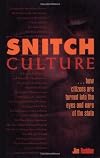
From a review I had published in issue 82 of Class War:
Snitch Culture - How Citizens Are Turned Into The Eyes And Ears Of The State
Jim Reddon (Feral House, £12.95)
Although written by an American for a US audience, there is, sadly, much in this book relevant to British readers. The desire of governments to catalogue and inspect their citizens is universal, and whilst America may have a slight head start in technological monitoring, you can bet Europe is not far behind. We may not have gone as far as the US school system, which encourages children to report their parents for taking drugs in the home, but British citizens are now continuously encouraged to phone hotlines grassing up neighbours, friends and family. The Stasi society is here.
A crucial element in any snitch society is the media. Redden gives examples of quite outrageous falsehoods being pushed by the American police into the laps of willing journalists about political activists. This has a direct echo with the coverage of May Day 2000 and May Day 2001 here. Exaggerated media stories are then used to justify continued police harassment and arrests of demonstrators. The British police appear well versed in the tactics of their American cousins.
The spying of the supposed anti-racist groups the Anti-Defamation League and the Southern Poverty Law Centre on political activists of the right and left has clear echoes of the British "anti-fascist" magazine Searchlight. The ADL was discovered by the San Francisco show more District Attorney's Office to be holding files on four categories of protestor - "Arab" "Pinko" "Right" and "Skin".
Where civil rights legislation prevents the authorities from monitoring political activists they just pay an advocacy group to do it for them. When the anti-capitalist movement took off in America the ADL was on hand to advise local police departments on how they could ban protestors from wearing masks, under laws designed to disrupt Ku Klux Klan activity. By 2000, the SPLC had begun reporting on the anti-globalisation movement eager to find 'evidence' of its links to the far-right.
If there is one criticism of Redden's book it is of the ultimately depressing tone. He tells us much of what is being done to us, but little of what we can do about it. show less
Snitch Culture - How Citizens Are Turned Into The Eyes And Ears Of The State
Jim Reddon (Feral House, £12.95)
Although written by an American for a US audience, there is, sadly, much in this book relevant to British readers. The desire of governments to catalogue and inspect their citizens is universal, and whilst America may have a slight head start in technological monitoring, you can bet Europe is not far behind. We may not have gone as far as the US school system, which encourages children to report their parents for taking drugs in the home, but British citizens are now continuously encouraged to phone hotlines grassing up neighbours, friends and family. The Stasi society is here.
A crucial element in any snitch society is the media. Redden gives examples of quite outrageous falsehoods being pushed by the American police into the laps of willing journalists about political activists. This has a direct echo with the coverage of May Day 2000 and May Day 2001 here. Exaggerated media stories are then used to justify continued police harassment and arrests of demonstrators. The British police appear well versed in the tactics of their American cousins.
The spying of the supposed anti-racist groups the Anti-Defamation League and the Southern Poverty Law Centre on political activists of the right and left has clear echoes of the British "anti-fascist" magazine Searchlight. The ADL was discovered by the San Francisco show more District Attorney's Office to be holding files on four categories of protestor - "Arab" "Pinko" "Right" and "Skin".
Where civil rights legislation prevents the authorities from monitoring political activists they just pay an advocacy group to do it for them. When the anti-capitalist movement took off in America the ADL was on hand to advise local police departments on how they could ban protestors from wearing masks, under laws designed to disrupt Ku Klux Klan activity. By 2000, the SPLC had begun reporting on the anti-globalisation movement eager to find 'evidence' of its links to the far-right.
If there is one criticism of Redden's book it is of the ultimately depressing tone. He tells us much of what is being done to us, but little of what we can do about it. show less
From my review in issue 81 of Class War, back in 2001:
Albert Meltzer (AK Press £3.95)
This 20-year-old title has been re-printed by AK Press, and as political introductions go, this is as good a place as any to start.
Meltzer could be a rambling writer, but kept in a straight line by the book's format of short chapters under specific titles, he flourishes. Buy it.
Albert Meltzer (AK Press £3.95)
This 20-year-old title has been re-printed by AK Press, and as political introductions go, this is as good a place as any to start.
Meltzer could be a rambling writer, but kept in a straight line by the book's format of short chapters under specific titles, he flourishes. Buy it.
I had this review published in issue 80 of Class War, in Autumn 2000.
Duncan took a year off from his work as a Guardian sports journalist, initially to work for the boxing promoter Frank Warren. His aim was to arrange a series of fights between Western and Cuban fighters under both amateur and professional rules. As all professional sport has been banned in Cuba since 1961, all Duncan came away with was a good book, one which serves as a fascinating insight into Cuban boxing (past and present), but more significantly into Cuba itself.
Duncan shows us how the lives of ordinary Cubans can be damaged by the bureaucratic nightmare of the Castro regime (and before any spotty student tries to tell you otherwise it is without question a regime). Saddest of all are the apartheid style rules that keep ordinary Cubans well away from the most expensive tourist resorts. Cuba is once again the play thing of the rich, but this time only the Cuban government is allowed to make any money out of it. Quite why Cuba has traditionally succeeded in boxing is clear. The manager of Cuban boxing, Alcides Sagarra, is on the Central Committee of the Communist Party of Cuba. In 1997 his goal was to plan for the Olympics. The Olympics in mind being those of...2008!
Secondly Cuba has a clear ethos of sport for all - for love not money. This is particularly refreshing to us in the UK surrounded by greedy footballers with their bimbo girlfriends and their grasping agents. Duncan describes the Cuban show more ethos skilfully, particularly when discussing the Heavyweight Felix Savon who turned down 10 million dollars from Don King to turn professional. Savon comes across as being happier more often in a week than Tyson will be in the whole of the rest of his life.
However, the Cubans may well find time has left them behind. "Amateur" sport has died a death around the world, and the Cubans discovered at the 1999 World Championships that amateur boxing can be just as bent as its professional cousin. Mr Sagarra, rather like Mr Castro, has had his day. show less
Duncan took a year off from his work as a Guardian sports journalist, initially to work for the boxing promoter Frank Warren. His aim was to arrange a series of fights between Western and Cuban fighters under both amateur and professional rules. As all professional sport has been banned in Cuba since 1961, all Duncan came away with was a good book, one which serves as a fascinating insight into Cuban boxing (past and present), but more significantly into Cuba itself.
Duncan shows us how the lives of ordinary Cubans can be damaged by the bureaucratic nightmare of the Castro regime (and before any spotty student tries to tell you otherwise it is without question a regime). Saddest of all are the apartheid style rules that keep ordinary Cubans well away from the most expensive tourist resorts. Cuba is once again the play thing of the rich, but this time only the Cuban government is allowed to make any money out of it. Quite why Cuba has traditionally succeeded in boxing is clear. The manager of Cuban boxing, Alcides Sagarra, is on the Central Committee of the Communist Party of Cuba. In 1997 his goal was to plan for the Olympics. The Olympics in mind being those of...2008!
Secondly Cuba has a clear ethos of sport for all - for love not money. This is particularly refreshing to us in the UK surrounded by greedy footballers with their bimbo girlfriends and their grasping agents. Duncan describes the Cuban show more ethos skilfully, particularly when discussing the Heavyweight Felix Savon who turned down 10 million dollars from Don King to turn professional. Savon comes across as being happier more often in a week than Tyson will be in the whole of the rest of his life.
However, the Cubans may well find time has left them behind. "Amateur" sport has died a death around the world, and the Cubans discovered at the 1999 World Championships that amateur boxing can be just as bent as its professional cousin. Mr Sagarra, rather like Mr Castro, has had his day. show less
This is how I reviewed this book in Class War issue 82, way back in 2001.
He Kills Coppers by Jake Arnott, (Sceptre, £10)
Arnott's second novel takes its title from the ever popular song about your friend and mine, Harry Roberts. Roberts, re-named Billy Porter is one of three core characters - the others a policeman struggling to avoid the corruption of the Met, and a particularly odious tabloid journalist - whose lives are followed from the 1960s to the 1980s.
By taking historical characters and re-naming them for fictional stories (Arnott's previous novel The Long Firm was clearly based on the Kray Twins) one of the essential requirements for a novelist - the need to create believable characters - is removed. Equally Arnott seems incapable of writing about women, who are absent from the book virtually throughout. You do not have to be that well read to discover that Arnott has digested books like The Fall Of Scotland Yard by Cox, Shirley and Short, Anarchist by Ian Bone or that he watched the BBC series Our Friends In The North on video a few times before putting pen to paper.
That said the book does take you into and give you a feel for 1960s London. Moving on from the 60s, it stands (and falls) on its twist surrounding one of the three central characters. Its observations of the 1980s Anarchist scene (and Class War) are somewhat predictable and lazy - all the more disappointing in that no Anarchist group has tried harder to avoid a 'crustie' image than Class War, and show more that Arnott himself was allegedly involved in the movement during the 1980s.
There is a great book to be written about Harry Roberts, both as an individual and how he impacted on the lives of others. This is not it.
Whether as an author Arnott is more than a one trick pony it is too soon to tell, although the planned televising of The Long Firm will no doubt guarantee best seller status for this and subsequent books. show less
He Kills Coppers by Jake Arnott, (Sceptre, £10)
Arnott's second novel takes its title from the ever popular song about your friend and mine, Harry Roberts. Roberts, re-named Billy Porter is one of three core characters - the others a policeman struggling to avoid the corruption of the Met, and a particularly odious tabloid journalist - whose lives are followed from the 1960s to the 1980s.
By taking historical characters and re-naming them for fictional stories (Arnott's previous novel The Long Firm was clearly based on the Kray Twins) one of the essential requirements for a novelist - the need to create believable characters - is removed. Equally Arnott seems incapable of writing about women, who are absent from the book virtually throughout. You do not have to be that well read to discover that Arnott has digested books like The Fall Of Scotland Yard by Cox, Shirley and Short, Anarchist by Ian Bone or that he watched the BBC series Our Friends In The North on video a few times before putting pen to paper.
That said the book does take you into and give you a feel for 1960s London. Moving on from the 60s, it stands (and falls) on its twist surrounding one of the three central characters. Its observations of the 1980s Anarchist scene (and Class War) are somewhat predictable and lazy - all the more disappointing in that no Anarchist group has tried harder to avoid a 'crustie' image than Class War, and show more that Arnott himself was allegedly involved in the movement during the 1980s.
There is a great book to be written about Harry Roberts, both as an individual and how he impacted on the lives of others. This is not it.
Whether as an author Arnott is more than a one trick pony it is too soon to tell, although the planned televising of The Long Firm will no doubt guarantee best seller status for this and subsequent books. show less
Parker has given a skilful analysis of the various groups inside the British Communist party who attempted to push it into (in their view) more revolutionary directions. Six chapters cover the different developments, with a brief concluding chapter where the author stresses his surprise that anything revolutionary was to emerge from the CPGB at all.
The Thoughts of Chairman Mao
Writings on British Maoism are few and far between, and whilst I was familiar with Reg Birch's move towards the Chinese side of the Sino-Soviet split, Michael McCreery was a new name to me.
In the early 1960s key Chinese texts began to emerge in the UK, and McCreery was eventually to establish the snappily titled Committee to Defeat Revisionism For Communist Unity, which gives us the utterly dyslexic acronym (CDRFCU). We can only assume that McCreery, an old Etonian, did not spend his evenings spraying CDRFRU on too many walls in Tufnell Park!
Calling All Leftist Trainspotters
Anyone interested in the political lineage of contemporary organisations such as the New Communist Party (NCP) and Weekly Worker/CPGB will find Parker's book essential, although I suspect even the author would recognise that this is very much a publication for the connoisseur rather than the activist new to socialist or communist ideas.
Whilst Parker does not hide his clear distaste for the Marxism Today, Nina Temple types that were to finally destroy the CPGB (think New Labour before New Labour was invited, and you will get an show more idea of how bad they were) this book succeeds because it keeps its eye on the ball - it is about the opposition within the CPGB, not what the CPGB was, could have been or perhaps even should have been.
Indeed Parker is clear that those looking to critique the "British Road To Socialism" need to remember not just that Stalin is believed to have helped Harry Pollit draw up the CPGB's core reformist programme, but that ultimately the idea of a revolutionary CPGB linked to a reformist Communist Party of the Soviet Union was a nonsense.
What No Spooks?
No history of Communist groups in the West during the Cold War should be without reference to the cold war machinations of the security services. Sadly this book is. We know from Francis Beckett's history of the CPGB that the UK security services knew all about the 'Moscow Gold' - it was seemingly kept in Reuben Falber's loft, and the authorities were quite happy for the arrangement to continue.
MI5 may well have had a whole raft of reasons for encouraging dissension within, and indeed splits around British Communism, whilst MI6 would surely have been interested in any attempts by the Chinese and Albanian governments to develop links with like-minded individuals in the UK.
Sadly Parker does not go down the road of examining such issues. It is not as if he did not have the opportunity - we are told in one footnote that Michael McCreery was the son of a leading General, and was himself a former military intelligence man, but nothing more.
One of Parker's key sources in Chapter 5 is NCP member Daphne Liddle, who has spent a generation working for 'anti-fascist' magazine Searchlight, a publication with declared links to the security services. Indeed its publisher, ex-CPGB member Gerry Gable, has at times taken paid remuneration from the Metropolitan Police training centre at Hendon, and boasts of his links with MI5. What a tale Ms Liddle could tell!
However, this is not to criticise Parker's sources per se, indeed the range of interviews and dusty old publications given in the footnotes is exhaustive.
What Else Is There?
If this little book has wetted your appetite for Communist history, Lawrence and Wishart have published what come closest to 'official' histories of the CPGB. One of these, John Callaghan's history of the CPGB from 1951-68, is used extensively by Parker. Having been taught by Callaghan myself I have no doubts as to the scale of his knowledge in this area, but note his ability to come a cropper outside of it - witness his ludicrous attempt to link Class War to the National Front a few years ago.
A visit to the Working Class Movement Library in Salford is also recommended - just make sure you spit on the sign for Hazel Blears MP as you go through the front door!
The Kick Inside can be ordered for £5.15 (postage included) from the author at vorzedia@yahoo.co.uk show less
The Thoughts of Chairman Mao
Writings on British Maoism are few and far between, and whilst I was familiar with Reg Birch's move towards the Chinese side of the Sino-Soviet split, Michael McCreery was a new name to me.
In the early 1960s key Chinese texts began to emerge in the UK, and McCreery was eventually to establish the snappily titled Committee to Defeat Revisionism For Communist Unity, which gives us the utterly dyslexic acronym (CDRFCU). We can only assume that McCreery, an old Etonian, did not spend his evenings spraying CDRFRU on too many walls in Tufnell Park!
Calling All Leftist Trainspotters
Anyone interested in the political lineage of contemporary organisations such as the New Communist Party (NCP) and Weekly Worker/CPGB will find Parker's book essential, although I suspect even the author would recognise that this is very much a publication for the connoisseur rather than the activist new to socialist or communist ideas.
Whilst Parker does not hide his clear distaste for the Marxism Today, Nina Temple types that were to finally destroy the CPGB (think New Labour before New Labour was invited, and you will get an show more idea of how bad they were) this book succeeds because it keeps its eye on the ball - it is about the opposition within the CPGB, not what the CPGB was, could have been or perhaps even should have been.
Indeed Parker is clear that those looking to critique the "British Road To Socialism" need to remember not just that Stalin is believed to have helped Harry Pollit draw up the CPGB's core reformist programme, but that ultimately the idea of a revolutionary CPGB linked to a reformist Communist Party of the Soviet Union was a nonsense.
What No Spooks?
No history of Communist groups in the West during the Cold War should be without reference to the cold war machinations of the security services. Sadly this book is. We know from Francis Beckett's history of the CPGB that the UK security services knew all about the 'Moscow Gold' - it was seemingly kept in Reuben Falber's loft, and the authorities were quite happy for the arrangement to continue.
MI5 may well have had a whole raft of reasons for encouraging dissension within, and indeed splits around British Communism, whilst MI6 would surely have been interested in any attempts by the Chinese and Albanian governments to develop links with like-minded individuals in the UK.
Sadly Parker does not go down the road of examining such issues. It is not as if he did not have the opportunity - we are told in one footnote that Michael McCreery was the son of a leading General, and was himself a former military intelligence man, but nothing more.
One of Parker's key sources in Chapter 5 is NCP member Daphne Liddle, who has spent a generation working for 'anti-fascist' magazine Searchlight, a publication with declared links to the security services. Indeed its publisher, ex-CPGB member Gerry Gable, has at times taken paid remuneration from the Metropolitan Police training centre at Hendon, and boasts of his links with MI5. What a tale Ms Liddle could tell!
However, this is not to criticise Parker's sources per se, indeed the range of interviews and dusty old publications given in the footnotes is exhaustive.
What Else Is There?
If this little book has wetted your appetite for Communist history, Lawrence and Wishart have published what come closest to 'official' histories of the CPGB. One of these, John Callaghan's history of the CPGB from 1951-68, is used extensively by Parker. Having been taught by Callaghan myself I have no doubts as to the scale of his knowledge in this area, but note his ability to come a cropper outside of it - witness his ludicrous attempt to link Class War to the National Front a few years ago.
A visit to the Working Class Movement Library in Salford is also recommended - just make sure you spit on the sign for Hazel Blears MP as you go through the front door!
The Kick Inside can be ordered for £5.15 (postage included) from the author at vorzedia@yahoo.co.uk show less
It is hard to know whether to laugh or cry reading this book.
Does anyone take this sort of rubbish seriously?
Does anyone take this sort of rubbish seriously?
If this is the best 'Ripperologists' can do, its no wonder the mystery remains unsolved!
Given Knight could not see through the Bhagwan Shree Rajneesh my hopes were not high, but even I did not expect to see 'The Protocols' cited as evidence of Masonic involvement in the murders.
I don't doubt Knight worked hard on researching a very cold trail, but any idea that this is 'case solved' is delusional.
Still, in naming Walter Sickert as a suspect, Joseph Sickert gave his father's legacy a significant boost, without actually pinning anything other than circumstantial evidence to him.
Given Knight could not see through the Bhagwan Shree Rajneesh my hopes were not high, but even I did not expect to see 'The Protocols' cited as evidence of Masonic involvement in the murders.
I don't doubt Knight worked hard on researching a very cold trail, but any idea that this is 'case solved' is delusional.
Still, in naming Walter Sickert as a suspect, Joseph Sickert gave his father's legacy a significant boost, without actually pinning anything other than circumstantial evidence to him.
This review originally appeared in Class War issue 91. Winter 2006.
Good books on Anarchism are pretty rare. Books about the UK anarchist movement are even rarer. In “Rebel Alliances” Benjamin Franks has not only managed to avoid the car crash of earlier summaries (such as “Demanding The Impossible” by Peter Marshall, or “Anarchism” by George Woodcock) but has given a serious overview of what anarchists attempt to do, and why.
The first success is that the book largely covers the period from 1984-2002. Rather than addressing past texts by noted beards, Rebel Alliances concentrates on recent actions, the groups involved, and their motivations. This is not to say no lessons can be learned from the small amount of historical information included – it is worth noting that historically Jewish anarchists in Whitechapel defied the authority of the Rabbi’s – compare that to the behaviour of “socialists” in Tower Hamlets today towards the local mullah’s.
Franks sets out the process by which anarchists in the UK ceased tail-ending the Leninist left, and created their own agenda. Events like the 1992 Anti-Election Alliance march were pivotal to this process, as of course was the slow but steady decline of the old Marxist-Leninist left. Whilst the last century left waited around for the trades unions to “defeat” the Poll Tax – anarchists correctly identified just who had the tools to do the job – working class communities themselves. All too often show more politics really is a very simple process, made complicated by that bane on us all – politicians!
Methods of anarchist organisation are also set out – from uniting around “The Platform” through to the “Open Cells” of groups like the Angry Brigade or the Hit Squads in the Miners strike. The books greatest strength lies in the authors ability to spot when theory is undermined by reality. Whilst squatting is fine as a principle, it brings with it the danger of creating an “alternative” economy based around the sorts of goods and services that often appeal to squatters and their friends. Such alternative economies can and do assist in the gentrification of working class areas.
This is possibly not a book for someone brand new to reading about Anarchism. There are occasionally times when Rebel Alliances will have you groping for your dictionary – the author seems particularly attached to the word “prefigurative” – and the section on propaganda is far more fun than the heavier section on ethics. Franks can be a tad PC – is it really “old prejudice” to say that feminists of the Greenham Common variety were weakening class struggle? To many working class women the living conditions at the camp would have been eccentric at best, abhorrent at worst. Also - where are those feminists now?
Given its national emphasis, good local anarchist campaigns are, perhaps inevitably, overlooked. Some, like the successes of Anarchists in Sheffield in the 1980s, really need to be evaluated somewhere. It is also worth noting that anarchist campaigns do not exist in a vacuum, and those opposed to anarchism are not passive players. The Carnival Against Global Capitalism on June 18 1999 is discussed in detail, but since then the police have more than regained the upper hand, to the extent that for many activists it is now virtually impossible to even have a drink in the west end on the day of a big demonstration.
These are however minor gripes – Rebel Alliances is likely to become the standard work on our movement for some years. Given he is known to so many people involved in class struggle anarchism, no one is better placed to examine the contemporary British anarchist movement than Ben Franks. Steal this book at the first opportunity. show less
Good books on Anarchism are pretty rare. Books about the UK anarchist movement are even rarer. In “Rebel Alliances” Benjamin Franks has not only managed to avoid the car crash of earlier summaries (such as “Demanding The Impossible” by Peter Marshall, or “Anarchism” by George Woodcock) but has given a serious overview of what anarchists attempt to do, and why.
The first success is that the book largely covers the period from 1984-2002. Rather than addressing past texts by noted beards, Rebel Alliances concentrates on recent actions, the groups involved, and their motivations. This is not to say no lessons can be learned from the small amount of historical information included – it is worth noting that historically Jewish anarchists in Whitechapel defied the authority of the Rabbi’s – compare that to the behaviour of “socialists” in Tower Hamlets today towards the local mullah’s.
Franks sets out the process by which anarchists in the UK ceased tail-ending the Leninist left, and created their own agenda. Events like the 1992 Anti-Election Alliance march were pivotal to this process, as of course was the slow but steady decline of the old Marxist-Leninist left. Whilst the last century left waited around for the trades unions to “defeat” the Poll Tax – anarchists correctly identified just who had the tools to do the job – working class communities themselves. All too often show more politics really is a very simple process, made complicated by that bane on us all – politicians!
Methods of anarchist organisation are also set out – from uniting around “The Platform” through to the “Open Cells” of groups like the Angry Brigade or the Hit Squads in the Miners strike. The books greatest strength lies in the authors ability to spot when theory is undermined by reality. Whilst squatting is fine as a principle, it brings with it the danger of creating an “alternative” economy based around the sorts of goods and services that often appeal to squatters and their friends. Such alternative economies can and do assist in the gentrification of working class areas.
This is possibly not a book for someone brand new to reading about Anarchism. There are occasionally times when Rebel Alliances will have you groping for your dictionary – the author seems particularly attached to the word “prefigurative” – and the section on propaganda is far more fun than the heavier section on ethics. Franks can be a tad PC – is it really “old prejudice” to say that feminists of the Greenham Common variety were weakening class struggle? To many working class women the living conditions at the camp would have been eccentric at best, abhorrent at worst. Also - where are those feminists now?
Given its national emphasis, good local anarchist campaigns are, perhaps inevitably, overlooked. Some, like the successes of Anarchists in Sheffield in the 1980s, really need to be evaluated somewhere. It is also worth noting that anarchist campaigns do not exist in a vacuum, and those opposed to anarchism are not passive players. The Carnival Against Global Capitalism on June 18 1999 is discussed in detail, but since then the police have more than regained the upper hand, to the extent that for many activists it is now virtually impossible to even have a drink in the west end on the day of a big demonstration.
These are however minor gripes – Rebel Alliances is likely to become the standard work on our movement for some years. Given he is known to so many people involved in class struggle anarchism, no one is better placed to examine the contemporary British anarchist movement than Ben Franks. Steal this book at the first opportunity. show less
Should be essential reading for anyone who is, or has been, involved in left wing politics in the UK. You won't like it all, you won't agree with it all, but you will - or more accurately should - learn from it.

This review was originally published in issue 91 of Class War.
Undefeated – My Story by Terry Marsh (Self-published, £20)
Sporting autobiographies are two a penny. Henry Cooper has written three at the last count. George Best has written more than he has had livers – and that is saying something! It is perhaps because there are so many, that the good one’s actually stand out. “Undefeated” stands alone, not merely for its honesty, but the range of experiences it shares with the reader.
Eastender
From his birth in east London in 1958, until 1991 (when the books narrative ends) Terry Marsh fitted in more than many people manage in a lifetime. A career in the Royal Marine Commandos, life as a fireman, an amateur and then professional boxer, media celebrity, a remand prisoner and defendant at the Old Bailey, all are relayed to the reader in an easy-going, self deprecating manner. At times it actually sounds easy!
Marsh touches on his working class upbringing in Stepney, where his parents cared for his disabled older brother in difficult surroundings. Like many Londoners of their era they took the opportunity to move to better surroundings in Essex, but this is no clichéd tale of East End boy made good, indeed he is at pains to point out that despite living in Stepney for 48 years his dad appears to be the only person there never to have met the Kray Twins!
Marine
Joining the Royal Marines whilst still a teenager, Marsh gives an interesting insight into the selection, show more training and life of a Royal Marine. It is unlikely to be one used for promotional purposes by the Marines recruitment officers. A picture easily emerges of officers who are indifferent or even callous to those in their charge, whilst Marines try, collectively, to get through a recruitment process that is designed to separate them into competing, atomised individuals. Whilst the Marines would no doubt claim the end justifies the means, a slightly unpleasant picture emerges, which is amplified by the pages describing Marsh’s service in Northern Ireland, in the republican stronghold of South Armagh. Supposedly fighting the IRA, Marines instead sit about bored, or carry out tedious searches designed to do little more than harass and provoke Catholic residents. They don’t put this in the adverts.
Despite all this, Marsh set his heart on joining the Special Boat Service, before coming out of the military intending to improve his education. Instead he switched from amateur to professional boxing, embarking on a career that would give him British, Europe and World honours. Unusually he did much of this whilst maintaining a day job – that of a fireman. It says much about the poor pay that firemen receive that this job is described as merely paying the bills, whilst the money to actually “live” came from boxing.
Fighter
As a boxer, Marsh was skilful rather than explosive in the ring. His autobiography rather understates his abilities, and whilst some personalities emerge from what was a very good era for British boxing (Nigel Benn, or promoters the Maloney brothers) they are sketches rather than detailed portraits. Having become World Light Welterweight Champion by beating the American Joe Manley, a new life opened – that of the media celebrity. What happened next is not unique in boxing - a dispute with a smooth talking, somewhat slippery manager, followed by financial difficulties and a feeling of a loss of control. Here some humour still emerges – in his first title defence Marsh was aghast when “God Save the Queen” was played, and deliberately jogged on the spot rather than standing stiff as a statue. Despite a nasty cut, he did what he set out to do – to make one successful defence as World Champion.
Going Down?
By now Terry Marsh’s legal dispute with his manager, Frank Warren was getting ever more complicated, heading towards the libel courts, and attempts at becoming a fight promoter himself had got off to a slow start. Family and health problems (his wife Jacqui is portrayed as a sort of Footballers Wives character throughout the book) clearly did not help his situation.
When Warren was shot and seriously injured in Stratford in 1989, Marsh was not originally a suspect, although Warren had recently brought libel proceedings against him. His subsequent arrest, and time spent in prison on remand are described in detail.
One of the ways you can always tell the police have little or no case against a defendant is when a central plank of the prosecution is the testimony of a fellow prisoner. Time after time cases have centred not on evidence collected by the police before or shortly after arrest, but instead on evidence dubiously obtained from within the prison system. Sometimes we are expected to believe a defendant who never agreed to say a single word to the police whilst being questioned, gets straight to prison, finds the biggest scumbag in the whole jail and immediately starts bragging to him about what he has supposedly done. Such was the case with Terry Marsh.
Life, outside of the police mindset, is simply not like that.
Fighting Back
Remanded in custody charged with attempted murder, Marsh spent time in three London prisons, spending time on the block on each. The banality and sheer stupidity of prison life, and in particular prison officers, has rarely been detailed with such gusto. Viewing prisoners who meekly do as they are told as collaborators, Marsh quickly became a marked man as far as the authorities were concerned. This resistance inspired other prisoners – in one of the most exciting narratives Marsh stands his ground with a group of screws in Wormwood Scrubs. His offence? Refusing to tuck his shirt in. Surrounded by more and more officers, Marsh was resigned to a beating until a fellow prisoner urged him to stand his ground – the screws were losing their nerve. He walked through their lines untouched, to pats on the back from his fellow inmates.
This was a testing time for those running Britain’s prisons – the Strangeways riot and poor industrial relations between the Prison Officers Association and the Prison Service stretched the authorities in a way they had rarely been tested before. Of these “disputes”, Marsh is scathing “Double their money and they will be willing to have six to a cell. It was the first industrial dispute where I have had no sympathy for the union”. Interestingly he is far from scathing when describing the IRA prisoners he met in HMP Brixton, with whom he played many hours of scrabble. His life had turned full circle.
Fighting Dirty
That the police were willing to fight dirty to convict Marsh is clear from several unexplained events, be it curious letters sent to Marsh whilst he was in jail, to people approaching members of his family whilst he was in custody, asking if they could obtain access to firearms. Marsh’s wife was “looked after” by female police officers whose brief even extended to do her shopping for her.
The vultures of the tabloid media also circled, desperate for the big story – about Terry Marsh if he was convicted, from Terry Marsh if he was found not guilty. One female journalist even hinted she wanted a relationship with Marsh on his release, to try and secure his story.
Marsh does not overly dwell on his dramatic acquittal at the Old Bailey, and shows little triumph that his eventual libel action against Frank Warren went ahead, resulting in what could be best described as a narrow points victory. Instead, the impression is left of a man who appreciated the simple things in life all the more for nearly losing them.
The more things change…..
“Undefeated” ends, rather abruptly, in 1991. As such it is a snapshot of a life, and a world that has changed. Or has it?
Instead of being unpopular in Northern Ireland, the Royal Marines are unpopular in Afghanistan and Iraq. The prison service has strengthened its control over prisons, some of which are now privatised, but the problems of hard drugs and overcrowding inside are worse than ever. Solidarity amongst prisoners is however, sadly, well below the levels that it was in the early 1990s.
Boxing is continuously referred to as being a sport down in the dumps, yet it continues to provide an excellent living for a few, and a harsher life for many. People said much the same 14 years ago. And this year an unbeaten World Light Welterweight champion has been involved in an increasingly bitter dispute with his manager. For Terry Marsh, substitute Ricky Hatton. For Frank Warren, substitute….. Frank Warren!
Undefeated
As a book, it is possible to find faults with “Undefeated”. Boxing fans may have preferred more detail about some of the fight characters Marsh undoubtedly met, whilst those expecting tales of celebrity drug taking and partying will be disappointed – when Marsh succeeded in getting a date with Miss Isle of Man, he was horrified to turn up and find she had brought her boyfriend with her! Although the issues Terry Marsh faced with epilepsy are mentioned, the reader is not informed if these problems persist today.
Given the book trades increasing dominance by a few big publishers, and a decreasing number of book stores, self-published titles like this, which have not kissed the hand of the safe, corporate chains are to be applauded. That however is not the reason to buy “Undefeated” – buy it because you will laugh hard, you will wonder, and most of all you will learn something – about sport, about politics and about life. show less
Undefeated – My Story by Terry Marsh (Self-published, £20)
Sporting autobiographies are two a penny. Henry Cooper has written three at the last count. George Best has written more than he has had livers – and that is saying something! It is perhaps because there are so many, that the good one’s actually stand out. “Undefeated” stands alone, not merely for its honesty, but the range of experiences it shares with the reader.
Eastender
From his birth in east London in 1958, until 1991 (when the books narrative ends) Terry Marsh fitted in more than many people manage in a lifetime. A career in the Royal Marine Commandos, life as a fireman, an amateur and then professional boxer, media celebrity, a remand prisoner and defendant at the Old Bailey, all are relayed to the reader in an easy-going, self deprecating manner. At times it actually sounds easy!
Marsh touches on his working class upbringing in Stepney, where his parents cared for his disabled older brother in difficult surroundings. Like many Londoners of their era they took the opportunity to move to better surroundings in Essex, but this is no clichéd tale of East End boy made good, indeed he is at pains to point out that despite living in Stepney for 48 years his dad appears to be the only person there never to have met the Kray Twins!
Marine
Joining the Royal Marines whilst still a teenager, Marsh gives an interesting insight into the selection, show more training and life of a Royal Marine. It is unlikely to be one used for promotional purposes by the Marines recruitment officers. A picture easily emerges of officers who are indifferent or even callous to those in their charge, whilst Marines try, collectively, to get through a recruitment process that is designed to separate them into competing, atomised individuals. Whilst the Marines would no doubt claim the end justifies the means, a slightly unpleasant picture emerges, which is amplified by the pages describing Marsh’s service in Northern Ireland, in the republican stronghold of South Armagh. Supposedly fighting the IRA, Marines instead sit about bored, or carry out tedious searches designed to do little more than harass and provoke Catholic residents. They don’t put this in the adverts.
Despite all this, Marsh set his heart on joining the Special Boat Service, before coming out of the military intending to improve his education. Instead he switched from amateur to professional boxing, embarking on a career that would give him British, Europe and World honours. Unusually he did much of this whilst maintaining a day job – that of a fireman. It says much about the poor pay that firemen receive that this job is described as merely paying the bills, whilst the money to actually “live” came from boxing.
Fighter
As a boxer, Marsh was skilful rather than explosive in the ring. His autobiography rather understates his abilities, and whilst some personalities emerge from what was a very good era for British boxing (Nigel Benn, or promoters the Maloney brothers) they are sketches rather than detailed portraits. Having become World Light Welterweight Champion by beating the American Joe Manley, a new life opened – that of the media celebrity. What happened next is not unique in boxing - a dispute with a smooth talking, somewhat slippery manager, followed by financial difficulties and a feeling of a loss of control. Here some humour still emerges – in his first title defence Marsh was aghast when “God Save the Queen” was played, and deliberately jogged on the spot rather than standing stiff as a statue. Despite a nasty cut, he did what he set out to do – to make one successful defence as World Champion.
Going Down?
By now Terry Marsh’s legal dispute with his manager, Frank Warren was getting ever more complicated, heading towards the libel courts, and attempts at becoming a fight promoter himself had got off to a slow start. Family and health problems (his wife Jacqui is portrayed as a sort of Footballers Wives character throughout the book) clearly did not help his situation.
When Warren was shot and seriously injured in Stratford in 1989, Marsh was not originally a suspect, although Warren had recently brought libel proceedings against him. His subsequent arrest, and time spent in prison on remand are described in detail.
One of the ways you can always tell the police have little or no case against a defendant is when a central plank of the prosecution is the testimony of a fellow prisoner. Time after time cases have centred not on evidence collected by the police before or shortly after arrest, but instead on evidence dubiously obtained from within the prison system. Sometimes we are expected to believe a defendant who never agreed to say a single word to the police whilst being questioned, gets straight to prison, finds the biggest scumbag in the whole jail and immediately starts bragging to him about what he has supposedly done. Such was the case with Terry Marsh.
Life, outside of the police mindset, is simply not like that.
Fighting Back
Remanded in custody charged with attempted murder, Marsh spent time in three London prisons, spending time on the block on each. The banality and sheer stupidity of prison life, and in particular prison officers, has rarely been detailed with such gusto. Viewing prisoners who meekly do as they are told as collaborators, Marsh quickly became a marked man as far as the authorities were concerned. This resistance inspired other prisoners – in one of the most exciting narratives Marsh stands his ground with a group of screws in Wormwood Scrubs. His offence? Refusing to tuck his shirt in. Surrounded by more and more officers, Marsh was resigned to a beating until a fellow prisoner urged him to stand his ground – the screws were losing their nerve. He walked through their lines untouched, to pats on the back from his fellow inmates.
This was a testing time for those running Britain’s prisons – the Strangeways riot and poor industrial relations between the Prison Officers Association and the Prison Service stretched the authorities in a way they had rarely been tested before. Of these “disputes”, Marsh is scathing “Double their money and they will be willing to have six to a cell. It was the first industrial dispute where I have had no sympathy for the union”. Interestingly he is far from scathing when describing the IRA prisoners he met in HMP Brixton, with whom he played many hours of scrabble. His life had turned full circle.
Fighting Dirty
That the police were willing to fight dirty to convict Marsh is clear from several unexplained events, be it curious letters sent to Marsh whilst he was in jail, to people approaching members of his family whilst he was in custody, asking if they could obtain access to firearms. Marsh’s wife was “looked after” by female police officers whose brief even extended to do her shopping for her.
The vultures of the tabloid media also circled, desperate for the big story – about Terry Marsh if he was convicted, from Terry Marsh if he was found not guilty. One female journalist even hinted she wanted a relationship with Marsh on his release, to try and secure his story.
Marsh does not overly dwell on his dramatic acquittal at the Old Bailey, and shows little triumph that his eventual libel action against Frank Warren went ahead, resulting in what could be best described as a narrow points victory. Instead, the impression is left of a man who appreciated the simple things in life all the more for nearly losing them.
The more things change…..
“Undefeated” ends, rather abruptly, in 1991. As such it is a snapshot of a life, and a world that has changed. Or has it?
Instead of being unpopular in Northern Ireland, the Royal Marines are unpopular in Afghanistan and Iraq. The prison service has strengthened its control over prisons, some of which are now privatised, but the problems of hard drugs and overcrowding inside are worse than ever. Solidarity amongst prisoners is however, sadly, well below the levels that it was in the early 1990s.
Boxing is continuously referred to as being a sport down in the dumps, yet it continues to provide an excellent living for a few, and a harsher life for many. People said much the same 14 years ago. And this year an unbeaten World Light Welterweight champion has been involved in an increasingly bitter dispute with his manager. For Terry Marsh, substitute Ricky Hatton. For Frank Warren, substitute….. Frank Warren!
Undefeated
As a book, it is possible to find faults with “Undefeated”. Boxing fans may have preferred more detail about some of the fight characters Marsh undoubtedly met, whilst those expecting tales of celebrity drug taking and partying will be disappointed – when Marsh succeeded in getting a date with Miss Isle of Man, he was horrified to turn up and find she had brought her boyfriend with her! Although the issues Terry Marsh faced with epilepsy are mentioned, the reader is not informed if these problems persist today.
Given the book trades increasing dominance by a few big publishers, and a decreasing number of book stores, self-published titles like this, which have not kissed the hand of the safe, corporate chains are to be applauded. That however is not the reason to buy “Undefeated” – buy it because you will laugh hard, you will wonder, and most of all you will learn something – about sport, about politics and about life. show less
This review originally appeared on my website here:
http://paulstott.typepad.com/i_intend_to_escape_and_co/2007/07/fun-with-fascis.h...
“Action! Race War To Door Wars - A Life Lived On The Edge” by Joe Owens (£9.99, Lulu, 2007)
The British far-right has not produced much in the way of significant memoirs or appraisals. Astonishingly Nick Griffin failed to follow up his court victory with either a book covering his trial, or an autobiography. Has a British politician ever had such a platform, then failed to build upon it? Anti-fascists everywhere should be grateful for Griffin’s idleness.
Looking at my own bookshelves, veteran fascist John Bean’s “Many Shades of Black” was rather flat, and suffered from the authors need to play down parts of his past, to be accepted as the loyal Griffinite he now is. Anyway, you can’t take a man seriously who wears a syrup!
Of the other memoirs I have read two particularly disappointed me. Knightsbridge Safe Deposit robber Valerio Viccei tells us nothing about his time as a fascist gunman in Italy during the ‘years of lead’, in his “Too Fast To Live” but much about his criminal career in England. As he was to be murdered by Italian police not long after he left the UK, he will never get the chance now.
Burnley man Andrew Porter tells us a lot about Burnley FC’s Suicide Squad in his memoirs, but little of detail about racial division and fascism in east Lancashire. Given he was jailed for 3 years after the 2001 riots, I show more had expected more. And of course Martin Webster’s “Rum, Sodomy and the Fash” is yet to appear (sorry I made that one up).
Stepping Up To The Plate
So Joe Owens is stepping into a comparatively open market. Now it’s out, what do you get for your tenner? Well, in a way you get three or four books for the price of one. There is plenty here for the lover of ‘real-life’ crime books, plenty of local interest for Scousers or those who went clubbing in Liverpool or Cheshire in the 80s-90s, and Owens background in both the NF and BNP will ensure that many fascists will buy his book. Anti-fascists will also find much of interest here, and not just on a ‘know your enemy’ basis.
If one core element runs through the book it is that Owens sees the importance of standards. In the introduction he comments “I have found in the traditional martial arts ethos and the nationalist outlook value systems to live by”. With this must surely come a sense of disappointment or even failure – the British far-right has traditionally under achieved, and is not associated with ‘high standards’ in many people’s estimation.
One of the things that increasingly interests me is how politics changes over time, but often with no real consensus, or even acknowledgement of the changes that have occurred. The Anarchist movement of today is very different from that of people like Albert Meltzer and Stuart Christie in the 1970s, and concepts of personal development and the perfectability of man seem to have been long abandoned.
Owens’ title “Action!” takes us back to a fascism that was not obsessed with denying what it actually is, but was (is?) an ideology championing nature, physical strength, youth, vigour and indeed violence. Take a look at the lard arses attending the BNP’s forthcoming Red, White and Blue festival and you will understand that “Action” has become an old-fashioned term on the British far-right.
Eyes Wide Right
When sketching his time in the National Front, Owens reminds us of a vastly different political era. In 1979 a Liverpool NF electoral rally brought in 200 punters and 50 ANL protestors, figures few areas could match today. Activists used spit to put up political stickers – DNA testing did not exist in those days!
It is often said on the left that one of the reasons the racist right must be fought is because racist violence automatically follows in its wake. Whilst not disagreeing with the thrust of this, it has become something of a mantra, with evidence not always being considered necessary before it is repeated. Indeed, a political analysis of Oldham’s race problems may well conclude that the BNP followed the violence, not the other way round. It is interesting then that the re-counting of fascist activity in the Kensington area of Liverpool in 1980 so clearly illustrates racist violence following far-right activity, with an agitated community aiming its hatred not upwards, but downwards.
A reminder of the reactionary nature of fascism is given by Owens assessment of the 1981 Toxteth riots. Whilst the local community rose up, with black and white fighting the police with gusto, Joe Owens and his companions were on the other side, heckling and attacking an anti-police march. Anyone who sees fascism as a ‘radical alternative’ really should read these sections, where he appears genuinely disappointed the police did not shoot significant numbers of Liverpudlians!
Humour is not too far away however. When travelling to Manchester to attack the Manchester Martyrs march, Liverpool’s fascists were stunned to be joined in their minibus by an Asian loyalist, looking to fight the IRA for queen and country! Politics can be a complicated business.
Something left out of the press coverage I have seen of Joe Owens life has been his (brief) UDA membership. Indeed his book captures one area – Liverpool – where fascism and Loyalism over-lapped very strongly. His views on loyalists are however scathing “I never once saw any firearms, or any active service whilst in the UDA. They spent most of their time in the pub, or on silly Orange Order marches. Their outlook in life was about maintaining Orange dominance in Northern Ireland, never once seeing the bigger picture or problems that faced us all”. As an epitaph for that brand of Loyalism, I have seen few better.
Spreading The Word
Anti-fascists can gain much from this book. One example is how fascism looks to spread from a firm base – the BNP of the mid-80s looking to expand from its lively Liverpool group into other North West towns (p.73) We have seen something similar in recent years, with the BNP spreading from strongholds like Oldham and Burnley, south into Stockport, the Manchester suburbs and even Northwich.
Who’s going through your bins at night? One fascist tactic revealed is the amount of information the NF and BNP got by stealing the bin bags from outside Militant’s Liverpool HQ. There’s another reason to be opposed to those fortnightly bin collections! Mentioning Militant brings us towards the political realities of 1980s Liverpool – a city that had the rough end of Thatcherism, with a Labour Party divided by Trotskyist entryism, was fertile ground for the left.
Somewhat reluctantly Owens admits that the size of opposition (if not the quality) eventually wore down the Liverpool BNP group and their fellow travellers in other fascist groups. When most of his friends dropped out of politics, so did he.
Doing The Doors
The chapters devoted to working in Liverpool’s clubland are the most violent, and arguably depressing of the book. Here violence is instinctive, routine and tends not to follow the Queensbury Rules. And right in the middle of the gang wars, drug dealers and club owners are people trying to simply enjoy themselves on a night out. It is not hard to imagine that Owens is almost talking about himself, when he says
“Without social goals to aim for, is it any wonder that a large section of young people turned to dance music like a new religion”.
Joe Owens has been arrested by police investigating three Liverpool gangland murders – that of Stephen Cole, George Bromley and the double shooting of Kevin Maguire and Nathan Jones. Whilst on remand in Strangeways for the Bromley shooting, as a Category A prisoner he met many of the regions best known criminals. Here at least he seems to have put his racism to one side – at least in his formal dealings with other prisoners – but the reader is again left with an image of a man slightly out of his time, longing for a world that has long gone.
Discussing a Manchester gangster called Gary Shearer he comments:
“Shearer was the type of guy who, a hundred years ago, would have been out building the empire. Now he consciously regarded himself as one of the Hip Hop generation, modelling himself on the gangster rappers from the American ghettos”. We are even told of another major Manchester figure who “was married to a Jamaican woman”. Whilst the book is quick to condemn examples of black criminality or violence towards whites as proof that integration can never work, examples that contradict such positions (such as the above) tend to be mentioned but never seriously analysed.
Refering to one Liverpool doorman – a black criminal called Negus – it hit me that Owens racism is of the old-fashioned variety. When a person is white and does a bad thing, it is because they are a bad person. When a black person does a bad thing, it is because they are a bad black person. It is a viewpoint common to anyone who grew up in England in the 1970s and 80s (I certainly heard it all the time) That it is rarely articulated today does not mean it does not still exist. It does – you just don’t get to hear it in the UK media.
Returning To Fascism
Unable to work in clubland, Owens appears to have drifted back into politics as much as anything else (p.255) Yet he was soon at the centre of the BNP, driving and guarding its leader Nick Griffin, and making significant contributions to party funds.
Owens even witnessed Griffin offering to shake Abu Hamza by the hook before their Cambridge debate, an incident that surely could not be made up! His doubts about Griffin’s leadership appear to have begun when old Nick failed to listen to advice during Jean Marie Le Pen’s visit to the UK in 2004. Protestors nearly trapped Le Pen in the hotel hosting the BNP’s press conference, leading Owens to conclude “Griffin had dropped a right clanger”.
Indeed Griffin appears to have been dropping them ever since, failing to deal properly with the bizarre approach made by his long term associate, Tony Lecomber, to Owens, that appears to centre on the shooting dead of members of the British establishment. Whilst Owens loss of the BNP’s security remit, and subsequent critiques of those who replaced him can easily be seen as sour grapes, it has to be said that the public reaction towards the BNP’s security team, as currently constituted, is virtually entirely negative. No other political group in the UK – even in Northern Ireland – carries on in such a manner. And I would bet on a fair few anti-fascists in a fight ahead of BNP Head of Security Martin “Fatty” Reynolds!
Fighting The Filth
It is fair to say Joe Owens is unlikely to receive a Christmas card from Merseyside Police. Telling criminal figures in Liverpool that Owens intends to shoot them (e.g. p.248) is a carbon copy of some of the old ‘bad-jacketing’ tricks used by the FBI in the COINTELPRO operations against the Black Panthers. Liverpool doormen have a record of winning major court cases against Merseyside Police that marks any of them out for future retribution. The violence and dirty tricks will continue, whether or not Joe Owens is there.
Where the police tread, crime correspondents are never far behind. This is book with a long and difficult gestation. Heavily trailed on the Internet, it was originally to be co-authored with big-hitting crime author Graham Johnson, published by Edinburgh’s Mainstream and even had the subtle title “The Nazi Assassin?” A website with that name promoted the book for several months, but Johnson and Owens fell out, with other changes following. Graham Johnson’s role in the affair leads to Owens concluding he was looking to get taped confessions from him, to specific murders. If these had been made, and ended up in police hands, Merseyside Police may well have finally got their man. It will be interesting to read Johnson’s response to these accusations.
Summing Up!
As someone who had followed the Nazi Assassin website closely, I do feel a tad short changed. Some of the ‘exposes’ promised have not appeared in “Action!” Whilst some of these were no doubt frivolous – Purple Aki and his press-up fetish for one – I was looking forward to reading an account – from the fascist side – of Ricky Tomlinson’s time in the National Front, especially as Tomlinson has failed to name the fascist who he accuses of hawking his NF past around the media, and sending him poison pen letters on the subject.
Whilst I was left with a clear understanding of Joe Owens personal morals and principles, the book oddly enough lacks ideology, especially given its author has spent a large chunk of his life involved in organised politics. What he thinks about many issues away from loyalty to one’s peers, crime and race are not mentioned. Whilst the NF’s more extreme activism is often decried by Owens for failing to get its message across, he fails to lavish praise on the direction in which Nick Griffin did take the BNP. A contradiction.
Not long after this book appeared, Owens home was firebombed, his elderly mother narrowly escaping the flames. Such an incident is, by anyone’s definition, a news story. Yet the local and regional media did not mention it. “Action! From Race War To Door Wars” is by any definition a book with plenty of content. Much can be learned from it – it should not be ignored. show less
http://paulstott.typepad.com/i_intend_to_escape_and_co/2007/07/fun-with-fascis.h...
“Action! Race War To Door Wars - A Life Lived On The Edge” by Joe Owens (£9.99, Lulu, 2007)
The British far-right has not produced much in the way of significant memoirs or appraisals. Astonishingly Nick Griffin failed to follow up his court victory with either a book covering his trial, or an autobiography. Has a British politician ever had such a platform, then failed to build upon it? Anti-fascists everywhere should be grateful for Griffin’s idleness.
Looking at my own bookshelves, veteran fascist John Bean’s “Many Shades of Black” was rather flat, and suffered from the authors need to play down parts of his past, to be accepted as the loyal Griffinite he now is. Anyway, you can’t take a man seriously who wears a syrup!
Of the other memoirs I have read two particularly disappointed me. Knightsbridge Safe Deposit robber Valerio Viccei tells us nothing about his time as a fascist gunman in Italy during the ‘years of lead’, in his “Too Fast To Live” but much about his criminal career in England. As he was to be murdered by Italian police not long after he left the UK, he will never get the chance now.
Burnley man Andrew Porter tells us a lot about Burnley FC’s Suicide Squad in his memoirs, but little of detail about racial division and fascism in east Lancashire. Given he was jailed for 3 years after the 2001 riots, I show more had expected more. And of course Martin Webster’s “Rum, Sodomy and the Fash” is yet to appear (sorry I made that one up).
Stepping Up To The Plate
So Joe Owens is stepping into a comparatively open market. Now it’s out, what do you get for your tenner? Well, in a way you get three or four books for the price of one. There is plenty here for the lover of ‘real-life’ crime books, plenty of local interest for Scousers or those who went clubbing in Liverpool or Cheshire in the 80s-90s, and Owens background in both the NF and BNP will ensure that many fascists will buy his book. Anti-fascists will also find much of interest here, and not just on a ‘know your enemy’ basis.
If one core element runs through the book it is that Owens sees the importance of standards. In the introduction he comments “I have found in the traditional martial arts ethos and the nationalist outlook value systems to live by”. With this must surely come a sense of disappointment or even failure – the British far-right has traditionally under achieved, and is not associated with ‘high standards’ in many people’s estimation.
One of the things that increasingly interests me is how politics changes over time, but often with no real consensus, or even acknowledgement of the changes that have occurred. The Anarchist movement of today is very different from that of people like Albert Meltzer and Stuart Christie in the 1970s, and concepts of personal development and the perfectability of man seem to have been long abandoned.
Owens’ title “Action!” takes us back to a fascism that was not obsessed with denying what it actually is, but was (is?) an ideology championing nature, physical strength, youth, vigour and indeed violence. Take a look at the lard arses attending the BNP’s forthcoming Red, White and Blue festival and you will understand that “Action” has become an old-fashioned term on the British far-right.
Eyes Wide Right
When sketching his time in the National Front, Owens reminds us of a vastly different political era. In 1979 a Liverpool NF electoral rally brought in 200 punters and 50 ANL protestors, figures few areas could match today. Activists used spit to put up political stickers – DNA testing did not exist in those days!
It is often said on the left that one of the reasons the racist right must be fought is because racist violence automatically follows in its wake. Whilst not disagreeing with the thrust of this, it has become something of a mantra, with evidence not always being considered necessary before it is repeated. Indeed, a political analysis of Oldham’s race problems may well conclude that the BNP followed the violence, not the other way round. It is interesting then that the re-counting of fascist activity in the Kensington area of Liverpool in 1980 so clearly illustrates racist violence following far-right activity, with an agitated community aiming its hatred not upwards, but downwards.
A reminder of the reactionary nature of fascism is given by Owens assessment of the 1981 Toxteth riots. Whilst the local community rose up, with black and white fighting the police with gusto, Joe Owens and his companions were on the other side, heckling and attacking an anti-police march. Anyone who sees fascism as a ‘radical alternative’ really should read these sections, where he appears genuinely disappointed the police did not shoot significant numbers of Liverpudlians!
Humour is not too far away however. When travelling to Manchester to attack the Manchester Martyrs march, Liverpool’s fascists were stunned to be joined in their minibus by an Asian loyalist, looking to fight the IRA for queen and country! Politics can be a complicated business.
Something left out of the press coverage I have seen of Joe Owens life has been his (brief) UDA membership. Indeed his book captures one area – Liverpool – where fascism and Loyalism over-lapped very strongly. His views on loyalists are however scathing “I never once saw any firearms, or any active service whilst in the UDA. They spent most of their time in the pub, or on silly Orange Order marches. Their outlook in life was about maintaining Orange dominance in Northern Ireland, never once seeing the bigger picture or problems that faced us all”. As an epitaph for that brand of Loyalism, I have seen few better.
Spreading The Word
Anti-fascists can gain much from this book. One example is how fascism looks to spread from a firm base – the BNP of the mid-80s looking to expand from its lively Liverpool group into other North West towns (p.73) We have seen something similar in recent years, with the BNP spreading from strongholds like Oldham and Burnley, south into Stockport, the Manchester suburbs and even Northwich.
Who’s going through your bins at night? One fascist tactic revealed is the amount of information the NF and BNP got by stealing the bin bags from outside Militant’s Liverpool HQ. There’s another reason to be opposed to those fortnightly bin collections! Mentioning Militant brings us towards the political realities of 1980s Liverpool – a city that had the rough end of Thatcherism, with a Labour Party divided by Trotskyist entryism, was fertile ground for the left.
Somewhat reluctantly Owens admits that the size of opposition (if not the quality) eventually wore down the Liverpool BNP group and their fellow travellers in other fascist groups. When most of his friends dropped out of politics, so did he.
Doing The Doors
The chapters devoted to working in Liverpool’s clubland are the most violent, and arguably depressing of the book. Here violence is instinctive, routine and tends not to follow the Queensbury Rules. And right in the middle of the gang wars, drug dealers and club owners are people trying to simply enjoy themselves on a night out. It is not hard to imagine that Owens is almost talking about himself, when he says
“Without social goals to aim for, is it any wonder that a large section of young people turned to dance music like a new religion”.
Joe Owens has been arrested by police investigating three Liverpool gangland murders – that of Stephen Cole, George Bromley and the double shooting of Kevin Maguire and Nathan Jones. Whilst on remand in Strangeways for the Bromley shooting, as a Category A prisoner he met many of the regions best known criminals. Here at least he seems to have put his racism to one side – at least in his formal dealings with other prisoners – but the reader is again left with an image of a man slightly out of his time, longing for a world that has long gone.
Discussing a Manchester gangster called Gary Shearer he comments:
“Shearer was the type of guy who, a hundred years ago, would have been out building the empire. Now he consciously regarded himself as one of the Hip Hop generation, modelling himself on the gangster rappers from the American ghettos”. We are even told of another major Manchester figure who “was married to a Jamaican woman”. Whilst the book is quick to condemn examples of black criminality or violence towards whites as proof that integration can never work, examples that contradict such positions (such as the above) tend to be mentioned but never seriously analysed.
Refering to one Liverpool doorman – a black criminal called Negus – it hit me that Owens racism is of the old-fashioned variety. When a person is white and does a bad thing, it is because they are a bad person. When a black person does a bad thing, it is because they are a bad black person. It is a viewpoint common to anyone who grew up in England in the 1970s and 80s (I certainly heard it all the time) That it is rarely articulated today does not mean it does not still exist. It does – you just don’t get to hear it in the UK media.
Returning To Fascism
Unable to work in clubland, Owens appears to have drifted back into politics as much as anything else (p.255) Yet he was soon at the centre of the BNP, driving and guarding its leader Nick Griffin, and making significant contributions to party funds.
Owens even witnessed Griffin offering to shake Abu Hamza by the hook before their Cambridge debate, an incident that surely could not be made up! His doubts about Griffin’s leadership appear to have begun when old Nick failed to listen to advice during Jean Marie Le Pen’s visit to the UK in 2004. Protestors nearly trapped Le Pen in the hotel hosting the BNP’s press conference, leading Owens to conclude “Griffin had dropped a right clanger”.
Indeed Griffin appears to have been dropping them ever since, failing to deal properly with the bizarre approach made by his long term associate, Tony Lecomber, to Owens, that appears to centre on the shooting dead of members of the British establishment. Whilst Owens loss of the BNP’s security remit, and subsequent critiques of those who replaced him can easily be seen as sour grapes, it has to be said that the public reaction towards the BNP’s security team, as currently constituted, is virtually entirely negative. No other political group in the UK – even in Northern Ireland – carries on in such a manner. And I would bet on a fair few anti-fascists in a fight ahead of BNP Head of Security Martin “Fatty” Reynolds!
Fighting The Filth
It is fair to say Joe Owens is unlikely to receive a Christmas card from Merseyside Police. Telling criminal figures in Liverpool that Owens intends to shoot them (e.g. p.248) is a carbon copy of some of the old ‘bad-jacketing’ tricks used by the FBI in the COINTELPRO operations against the Black Panthers. Liverpool doormen have a record of winning major court cases against Merseyside Police that marks any of them out for future retribution. The violence and dirty tricks will continue, whether or not Joe Owens is there.
Where the police tread, crime correspondents are never far behind. This is book with a long and difficult gestation. Heavily trailed on the Internet, it was originally to be co-authored with big-hitting crime author Graham Johnson, published by Edinburgh’s Mainstream and even had the subtle title “The Nazi Assassin?” A website with that name promoted the book for several months, but Johnson and Owens fell out, with other changes following. Graham Johnson’s role in the affair leads to Owens concluding he was looking to get taped confessions from him, to specific murders. If these had been made, and ended up in police hands, Merseyside Police may well have finally got their man. It will be interesting to read Johnson’s response to these accusations.
Summing Up!
As someone who had followed the Nazi Assassin website closely, I do feel a tad short changed. Some of the ‘exposes’ promised have not appeared in “Action!” Whilst some of these were no doubt frivolous – Purple Aki and his press-up fetish for one – I was looking forward to reading an account – from the fascist side – of Ricky Tomlinson’s time in the National Front, especially as Tomlinson has failed to name the fascist who he accuses of hawking his NF past around the media, and sending him poison pen letters on the subject.
Whilst I was left with a clear understanding of Joe Owens personal morals and principles, the book oddly enough lacks ideology, especially given its author has spent a large chunk of his life involved in organised politics. What he thinks about many issues away from loyalty to one’s peers, crime and race are not mentioned. Whilst the NF’s more extreme activism is often decried by Owens for failing to get its message across, he fails to lavish praise on the direction in which Nick Griffin did take the BNP. A contradiction.
Not long after this book appeared, Owens home was firebombed, his elderly mother narrowly escaping the flames. Such an incident is, by anyone’s definition, a news story. Yet the local and regional media did not mention it. “Action! From Race War To Door Wars” is by any definition a book with plenty of content. Much can be learned from it – it should not be ignored. show less

I suspect my review is too long for the space available, so please see the link below.
http://paulstott.typepad.com/i_intend_to_escape_and_co/2006/07/the_mancunian_w.h...
http://paulstott.typepad.com/i_intend_to_escape_and_co/2006/07/the_mancunian_w.h...
From my blog:
http://paulstott.typepad.com/i_intend_to_escape_and_co/2006/11/been_there_done.h...
Ian Bone's autobiography "Bash the Rich" is probably the most mainstream Anarchist book to be published in the UK since Stuart Christie's autobiography "Granny Made Me An Anarchist". That is not the reason why you should read it though - it should be read for its honesty, its humour and the manner in which the author places himself (and Class War) in a radical British political tradition that should be supported.
First things first - Tangent Books have done an excellent job in publishing what is an immaculately produced book. Whilst billed as Bone's autobiography, it in fact covers the period from childhood through to about 1986, abruptly stopping before one of the main industrial disputes of the modern era - Wapping. I'm assuming a follow up is planned! So what do you get for your £9.99?
Well first off is an interesting Anglo-Scottish childhood as a butler's son, and a first person insight into a class system that was once far more more formal and rigid than it is now. People under 30 may struggle to come to terms with just how divided Britain used to be, in a really stuffy way. Somewhere in my family archive there is a letter the Prime Minister of Northern Ireland wrote to my Uncle after he left the Marines in the late 1950s. It starts "Dear Wilcox......" - no first name, and certainly no Mister! Ian was brought up below stairs, whilst his parents struggled to combine show more subservience with their Labour party beliefs.
Jack Army
There are not many people for whom moving to Swansea it a liberating experience, but Bone skillfully describes student life in south Wales in the 1960s, after a hilarious first approach to the Anarchist movement via Freedom Press. Politically the scope of groups and struggles touched upon from the late 60s through to the 1970s is impressive. The casual reader can encounter the student "rebellion" of 1968, anti-apartheid campaigns, claimants unions, the Angry Brigade and most amusingly the sometimes violent, sometimes comical Welsh nationalist fringe, for whom Ian appears to have been a sort of honorary Welshman.
Most significant politically is arguably the two groups Ian helped launch that came to major prominence - Alarm in a Labour dominated, corrupt Swansea, and in the 1980s Class War. Whilst sticking to what could be termed standard class struggle anarchist principles and working firmly from the bottom up, Alarm in particular looked to reach out to Joe Public in a simple, non-academic way that anyone could identify with. Having first looked to install some backbone into the early 1980s Anarchist movement, Class War was to repeat this trick. Spectacularly.
If Thatcherism had not existed, Class War would have had to invent it. Whilst most of the left cried foul at the attacks of Thatcherism, the aim of Class War was always to fight back - both in print and in person. The attempts to "open up a second front" during the Miners Strike are the clearest example of this. How could the Metropolitan Police have kept the coalfields down and policied inner-city riots at the same time? Whilst the 1980s may not seem that long ago, Bone also shows us how quickly things change. CND, animal rights and feminism may barely rear their heads these days (especially in the anarchist movement) but all these currents had real influence - and to be honest needed to be overcome - by anyone looking to make politcal progress at that time.
In It To Win It
Class War's honesty in that era was its strongest foundation. Neil Kinnock, and much of the trades union movement (and more accurately its leaders) was no match for Margaret Thatcher, who fought the class war to win it. Those who bought Class War - and to an extent still do - who were not declared Anarchists, were often people who responded positively to the sight of the odd bucket of piss being hurled back in the direction of the ruling class. Many were life long Labourites. In the best section of the book Bone outlines just what Thatcherism wanted to do, and the effect that had on some traditional working class communities:
She didn't just want to smash the miners and displace the inner-city inhabitants. She wanted to destroy the idea there was any community of interest amongst ordinary people. My mum and dad's caring Alton social networks counted for nothing compared to the Thatcher-eulogised, hideous, braying yuppies in the city making themselves overnight fortunes in selling off our social assets. I might have stopped hating my country but I loathed its ruling class more than ever. But this time, common sense was on our side. Thatcher's "no such thing as society" was seen as bollocks by most people including mum and dad. We had some common ground again, we were no longer the loonies, the crazed Tahtcher was the 'mad cow'. There were millions of people like my mum and dad all over the country. Class War needed to reach them. We needed to emphasise the positive self-organisation that had come out of the miners strike whaich was in direct contradiction of Thatcher's 'we're all selfish bastards' analysis.
Summing Up
Gripes? Well Ian briefly repeates the silly urban myth that boxer Freddie Mills murdered several prostitutes in the early 1960s (there is actually far more evidence that Mills was not interested in women at all!) and the book suffers from some bad spelling mistakes and minor errors that could have been removed with tighter editing. To claim the Poll Tax riot occured in 1992 is a bit of a howler, especially for a man once confronted by a Brazilian film crew accusing him of organising it!
What effect will this book have? Well it has already given Ian the opportunity to raise the banner of class struggle anarchism in the media in his own style. It has also rejuvenated several other retired, or semi-retired class warriors. Ian also hardens attitudes.
Those who hate Class War (and unless you have been involved in the UK Anarchist movement, you will not understand how much certain anarchists despise Class War for not being stuck in their little ghetto) will hate Class War even more because of this book. Bone skillfully places CW in a British radical tradition that is certainly not strictly anarchist but that is optimistic, insurrectionist and based on principles of solidarity - from the Luddites to the Chartists, through to those who fought the Poll Tax, or the inner-city rioters struggling to pay the police back in kind for every person they killed. Ultimately you know who he means. I can almost hear the "leaders" of groups like the Anarchist Federation now - "The guy wanted to appeal to the Labour movement. He's not even a proper anarchist, he gives interviews to the TV for fucks sake" Those who think the world began in 1936 in Spain and ended in 1939 somewhere on the Iberian Penisula will also be disappointed by this book.
Oh well - you stay in your little pure ghetto if you want. Bash the Rich is a reminder that there is a much bigger world out there. And it still needs changing. show less
http://paulstott.typepad.com/i_intend_to_escape_and_co/2006/11/been_there_done.h...
Ian Bone's autobiography "Bash the Rich" is probably the most mainstream Anarchist book to be published in the UK since Stuart Christie's autobiography "Granny Made Me An Anarchist". That is not the reason why you should read it though - it should be read for its honesty, its humour and the manner in which the author places himself (and Class War) in a radical British political tradition that should be supported.
First things first - Tangent Books have done an excellent job in publishing what is an immaculately produced book. Whilst billed as Bone's autobiography, it in fact covers the period from childhood through to about 1986, abruptly stopping before one of the main industrial disputes of the modern era - Wapping. I'm assuming a follow up is planned! So what do you get for your £9.99?
Well first off is an interesting Anglo-Scottish childhood as a butler's son, and a first person insight into a class system that was once far more more formal and rigid than it is now. People under 30 may struggle to come to terms with just how divided Britain used to be, in a really stuffy way. Somewhere in my family archive there is a letter the Prime Minister of Northern Ireland wrote to my Uncle after he left the Marines in the late 1950s. It starts "Dear Wilcox......" - no first name, and certainly no Mister! Ian was brought up below stairs, whilst his parents struggled to combine show more subservience with their Labour party beliefs.
Jack Army
There are not many people for whom moving to Swansea it a liberating experience, but Bone skillfully describes student life in south Wales in the 1960s, after a hilarious first approach to the Anarchist movement via Freedom Press. Politically the scope of groups and struggles touched upon from the late 60s through to the 1970s is impressive. The casual reader can encounter the student "rebellion" of 1968, anti-apartheid campaigns, claimants unions, the Angry Brigade and most amusingly the sometimes violent, sometimes comical Welsh nationalist fringe, for whom Ian appears to have been a sort of honorary Welshman.
Most significant politically is arguably the two groups Ian helped launch that came to major prominence - Alarm in a Labour dominated, corrupt Swansea, and in the 1980s Class War. Whilst sticking to what could be termed standard class struggle anarchist principles and working firmly from the bottom up, Alarm in particular looked to reach out to Joe Public in a simple, non-academic way that anyone could identify with. Having first looked to install some backbone into the early 1980s Anarchist movement, Class War was to repeat this trick. Spectacularly.
If Thatcherism had not existed, Class War would have had to invent it. Whilst most of the left cried foul at the attacks of Thatcherism, the aim of Class War was always to fight back - both in print and in person. The attempts to "open up a second front" during the Miners Strike are the clearest example of this. How could the Metropolitan Police have kept the coalfields down and policied inner-city riots at the same time? Whilst the 1980s may not seem that long ago, Bone also shows us how quickly things change. CND, animal rights and feminism may barely rear their heads these days (especially in the anarchist movement) but all these currents had real influence - and to be honest needed to be overcome - by anyone looking to make politcal progress at that time.
In It To Win It
Class War's honesty in that era was its strongest foundation. Neil Kinnock, and much of the trades union movement (and more accurately its leaders) was no match for Margaret Thatcher, who fought the class war to win it. Those who bought Class War - and to an extent still do - who were not declared Anarchists, were often people who responded positively to the sight of the odd bucket of piss being hurled back in the direction of the ruling class. Many were life long Labourites. In the best section of the book Bone outlines just what Thatcherism wanted to do, and the effect that had on some traditional working class communities:
She didn't just want to smash the miners and displace the inner-city inhabitants. She wanted to destroy the idea there was any community of interest amongst ordinary people. My mum and dad's caring Alton social networks counted for nothing compared to the Thatcher-eulogised, hideous, braying yuppies in the city making themselves overnight fortunes in selling off our social assets. I might have stopped hating my country but I loathed its ruling class more than ever. But this time, common sense was on our side. Thatcher's "no such thing as society" was seen as bollocks by most people including mum and dad. We had some common ground again, we were no longer the loonies, the crazed Tahtcher was the 'mad cow'. There were millions of people like my mum and dad all over the country. Class War needed to reach them. We needed to emphasise the positive self-organisation that had come out of the miners strike whaich was in direct contradiction of Thatcher's 'we're all selfish bastards' analysis.
Summing Up
Gripes? Well Ian briefly repeates the silly urban myth that boxer Freddie Mills murdered several prostitutes in the early 1960s (there is actually far more evidence that Mills was not interested in women at all!) and the book suffers from some bad spelling mistakes and minor errors that could have been removed with tighter editing. To claim the Poll Tax riot occured in 1992 is a bit of a howler, especially for a man once confronted by a Brazilian film crew accusing him of organising it!
What effect will this book have? Well it has already given Ian the opportunity to raise the banner of class struggle anarchism in the media in his own style. It has also rejuvenated several other retired, or semi-retired class warriors. Ian also hardens attitudes.
Those who hate Class War (and unless you have been involved in the UK Anarchist movement, you will not understand how much certain anarchists despise Class War for not being stuck in their little ghetto) will hate Class War even more because of this book. Bone skillfully places CW in a British radical tradition that is certainly not strictly anarchist but that is optimistic, insurrectionist and based on principles of solidarity - from the Luddites to the Chartists, through to those who fought the Poll Tax, or the inner-city rioters struggling to pay the police back in kind for every person they killed. Ultimately you know who he means. I can almost hear the "leaders" of groups like the Anarchist Federation now - "The guy wanted to appeal to the Labour movement. He's not even a proper anarchist, he gives interviews to the TV for fucks sake" Those who think the world began in 1936 in Spain and ended in 1939 somewhere on the Iberian Penisula will also be disappointed by this book.
Oh well - you stay in your little pure ghetto if you want. Bash the Rich is a reminder that there is a much bigger world out there. And it still needs changing. show less

I review this book on my blog:
http://paulstott.typepad.com/i_intend_to_escape_and_co/2006/07/freddie_mills_h.h...
A sympathetic account of a great fighter, Jack Birtley's history of Freddie Mills life and death is a worthy introduction for anyone looking to find out more about one of Britain's gamest fighters.
Birtley examines Mills' early life, his teenage obsession with boxing and charts his rise from Bournemouth milkman to World Light Heavyweight Champion. Birtley is not shy to address issues that may detract from Mills' image as a popular celebrity - his somewhat odd private life and the damage to his health caused by his robust fighting style are both examined in some detail.
Curious
This is at times though a curious book. Birtley rarely quotes directly from anyone in Freddie Mills' family or circle - information simply emerges, and we are left to simply take Birtley's word on many things.
Birtley seems to have been curiously unable to address the issue of the legacy of Freddie Mills the fighter, making no attempt to examine where he sits in the pantheon of British boxing, or how his fleeting fame, and financial worries after retiring, were part of a pattern that has involved many great boxers.
On the issue of Mills' suspicious death, Birtley makes little attempt to speculate about possible gangland involvement, even though he cites enough evidence in passing to allow the reader to consider it a possibility.
Inquest
A firm believer in the inquest verdict that Mills show more committed suicide with a fairground gun that he had somehow adapted to become a deadly weapon, Birtley links Mills' financial problems, headaches caused by boxing, and a tendency to "do a runner" if under pressure, into a position where suicide became a logical answer.
Although far from complete, Jack Birtley's book should be read by fans of boxing, and fans of Freddie Mills in particular. It may not however do much towards answering the questions that remain, forty years later, about his death. show less
http://paulstott.typepad.com/i_intend_to_escape_and_co/2006/07/freddie_mills_h.h...
A sympathetic account of a great fighter, Jack Birtley's history of Freddie Mills life and death is a worthy introduction for anyone looking to find out more about one of Britain's gamest fighters.
Birtley examines Mills' early life, his teenage obsession with boxing and charts his rise from Bournemouth milkman to World Light Heavyweight Champion. Birtley is not shy to address issues that may detract from Mills' image as a popular celebrity - his somewhat odd private life and the damage to his health caused by his robust fighting style are both examined in some detail.
Curious
This is at times though a curious book. Birtley rarely quotes directly from anyone in Freddie Mills' family or circle - information simply emerges, and we are left to simply take Birtley's word on many things.
Birtley seems to have been curiously unable to address the issue of the legacy of Freddie Mills the fighter, making no attempt to examine where he sits in the pantheon of British boxing, or how his fleeting fame, and financial worries after retiring, were part of a pattern that has involved many great boxers.
On the issue of Mills' suspicious death, Birtley makes little attempt to speculate about possible gangland involvement, even though he cites enough evidence in passing to allow the reader to consider it a possibility.
Inquest
A firm believer in the inquest verdict that Mills show more committed suicide with a fairground gun that he had somehow adapted to become a deadly weapon, Birtley links Mills' financial problems, headaches caused by boxing, and a tendency to "do a runner" if under pressure, into a position where suicide became a logical answer.
Although far from complete, Jack Birtley's book should be read by fans of boxing, and fans of Freddie Mills in particular. It may not however do much towards answering the questions that remain, forty years later, about his death. show less