

Ms. Murphy has created an interesting premise with a great deal of promise: a bookish girl, frustrated with her mother's harping, decides to pretend to bow to her wishes in an effort to get what she wants, i.e., more time to herself and her studies. Said girl gets caught in her own trap and begins to enjoy herself as a faux society maven. Romance ensues.
Enter the mother, pleased with her daughter's transformation but insistent she wed a gentleman other than Francesca's choosing. The two clash. The truth about the mother's resentment comes to the fore, including the father's absentee parenting and obvious favoritism for Francesca. The crisis reaches its peak.
Francesca's true love clues in the absent father about the goings-on between his wife and daughter. The father returns to restore Francesca to grace, address the mother's issues, and establish the true love as his daughter's rightful suitor.
Ms. Murphy tackles some meaty issues here and presents thoughtful commentary. The thread is redolent with potential for a book much more significant than a run-of-the-mill Regency romance. Unfortunately, it comes in the last quarter of the book, almost as if she stumbled over it accidentally, achieved by a plot twist that crosses over the boarder from implausible to ludicrous. I am not quite convinced she is aware of it at all, but rather created it while casting about for denouement.
Even more unfortunate is the fact that to get there the reader must first plow their way through show more one-dimensional characters with no redeeming qualities performing inexplicable, unjustifiable actions which produce no ill consequences; multiple demonstrations of the author's ignorance of and/or complete disregard for social mores of the day or the repercussions of flaunting them; unlikely scenarios, unimaginable demands, and long strings of linguistic acrobatics meant to impress but which ultimately underscore a shaky understanding of the lexicon, at best.
It grieves me to say it, but the author lost me when (at the beginning of the book) she placed her protagonist alone at her family's country house without any matronly supervision while her mother and sisters abandoned her for London and The Season, and her father tended his shipping business in Liverpool—her father, the otherwise non-delineated lord of the realm. There I'll stop because I've said far too much already.
Bottom line: I hesitate to pan the efforts of any author, knowing as I do my own work fails to meet the standards of many, I'm sure. However, I cannot in good conscience recommend this book. It has received glowing reviews on both Amazon and GoodReads, but, in my opinion, true Austenophiles picking up this book because of its tagline will find themselves gravely disappointed. show less
Enter the mother, pleased with her daughter's transformation but insistent she wed a gentleman other than Francesca's choosing. The two clash. The truth about the mother's resentment comes to the fore, including the father's absentee parenting and obvious favoritism for Francesca. The crisis reaches its peak.
Francesca's true love clues in the absent father about the goings-on between his wife and daughter. The father returns to restore Francesca to grace, address the mother's issues, and establish the true love as his daughter's rightful suitor.
Ms. Murphy tackles some meaty issues here and presents thoughtful commentary. The thread is redolent with potential for a book much more significant than a run-of-the-mill Regency romance. Unfortunately, it comes in the last quarter of the book, almost as if she stumbled over it accidentally, achieved by a plot twist that crosses over the boarder from implausible to ludicrous. I am not quite convinced she is aware of it at all, but rather created it while casting about for denouement.
Even more unfortunate is the fact that to get there the reader must first plow their way through show more one-dimensional characters with no redeeming qualities performing inexplicable, unjustifiable actions which produce no ill consequences; multiple demonstrations of the author's ignorance of and/or complete disregard for social mores of the day or the repercussions of flaunting them; unlikely scenarios, unimaginable demands, and long strings of linguistic acrobatics meant to impress but which ultimately underscore a shaky understanding of the lexicon, at best.
It grieves me to say it, but the author lost me when (at the beginning of the book) she placed her protagonist alone at her family's country house without any matronly supervision while her mother and sisters abandoned her for London and The Season, and her father tended his shipping business in Liverpool—her father, the otherwise non-delineated lord of the realm. There I'll stop because I've said far too much already.
Bottom line: I hesitate to pan the efforts of any author, knowing as I do my own work fails to meet the standards of many, I'm sure. However, I cannot in good conscience recommend this book. It has received glowing reviews on both Amazon and GoodReads, but, in my opinion, true Austenophiles picking up this book because of its tagline will find themselves gravely disappointed. show less

For my complete review visit http://amindwandering.blogspot.com
The Sun Zebra by Rolando Garcia is a charming little anthology written by a father enchanted with his young daughter, an exploration into the vibrant world of a child's imagination. Only 66 pages long, it's a quick read as we encounter with little Nell a family farm awash in a vibrant sunset; a aeronautically challenged cicada, a balloon and a kindly ornithologist; a bold and intrepid squirrel invoking Edgar Allen Poe; a Charlie Brown Christmas tree seemingly outshone by the competition; and an artist in a park particularly tuned in to the world of fairies. Each experience provides Nell a new opportunity to teach her parents (and us) important lessons in life, or, at the very least, inspire contemplation in daughter and introspection in dad.
Mr. Garcia writes in an easy, conversational style: Hey, how ya doin'? Come on out to the deck, grab a Coke, and shoot the breeze while the kids chase each other around the yard. Each vignette left a smile on my face, and Birdman and the Fairy Tale made me laugh out loud so the other people in the doctor's waiting room eyed me funny.
The Sun Zebra by Rolando Garcia is a charming little anthology written by a father enchanted with his young daughter, an exploration into the vibrant world of a child's imagination. Only 66 pages long, it's a quick read as we encounter with little Nell a family farm awash in a vibrant sunset; a aeronautically challenged cicada, a balloon and a kindly ornithologist; a bold and intrepid squirrel invoking Edgar Allen Poe; a Charlie Brown Christmas tree seemingly outshone by the competition; and an artist in a park particularly tuned in to the world of fairies. Each experience provides Nell a new opportunity to teach her parents (and us) important lessons in life, or, at the very least, inspire contemplation in daughter and introspection in dad.
Mr. Garcia writes in an easy, conversational style: Hey, how ya doin'? Come on out to the deck, grab a Coke, and shoot the breeze while the kids chase each other around the yard. Each vignette left a smile on my face, and Birdman and the Fairy Tale made me laugh out loud so the other people in the doctor's waiting room eyed me funny.
For my complete review, please visit Perpetual Chaos of a Wandering Mind.
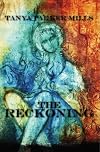
The Reckoning Plot: beginning in the summer of 2002, our heroine, Theresa, a freelance journalist after a story, illegally crosses out of Kurdish-controlled northern Iraq and is spotted by the Islamist fundamentalist group, the Ansari, which leads to her apprehension by the Iraqi army. With her are arrested her cameraman, Peter (who is in love with her), and her three Kurdish guides (a father and two sons).
Just a few months before the US invasion, Saddam Hussein and George W. Bush are rattling sabers at one another. Terror reigns in Iraq. Theresa, Peter, Jalal, Massoud, and Barham endure isolation, starvation, and torture in the hands of the Iraqi secret police. When Theresa's history of living in Iraq as a child comes to light, her situation becomes nearly hopeless.
Tanya Parker Mills' finely honed craft draws in the reader with painful, sometimes shocking realism. Her plot so tight it's hermetically sealed, her characters rich and compelling, her pacing impeccable, she accomplishes what only the best writers manage: she disappears as she envelopes the reader in the story.
Tanya Parker Mills illustrates the country in vivid detail with the sights, sounds and smells of the region. The heat of the desert radiates from the page. Perhaps most importantly, Ms. Mills' own time spent in the Middle East has given her compassion and empathy for its people which she in turns instills in her readers.
She creates show more an unlikely hero in the arresting officer, Tariq al-Alwali, US educated but caught up in events beyond his control, doing what he must to keep his family alive. Like himself, his mother and grandfather, even his house help all live in fear knowing that any moment they could be arrested, arbitrarily executed, and never heard from again, all without cause or hope of redress. Just as the rest of the Iraqi population, they are at the mercy of their government and the consciences (or lack thereof) of the men in power.
The reader should be cautioned that Tanya Parker Mills writes with stark realism and doesn't pull any punches. Her characters are tortured and brutalized in the manner known to be practiced in Iraq at the time, including rape and dismemberment. People suffer and die. She often taxes the sensibilities of the reader with the intensity of her prose.
The Reckoning is a novel to read again and again to truly appreciate all its subtle nuances.
FTC disclaimer: An electronic copy of this book was provided by the author or their agent with the understanding I would publish a fair and honest review. I receive no other compensation for this content. show less
The Reckoning Plot: beginning in the summer of 2002, our heroine, Theresa, a freelance journalist after a story, illegally crosses out of Kurdish-controlled northern Iraq and is spotted by the Islamist fundamentalist group, the Ansari, which leads to her apprehension by the Iraqi army. With her are arrested her cameraman, Peter (who is in love with her), and her three Kurdish guides (a father and two sons).
Just a few months before the US invasion, Saddam Hussein and George W. Bush are rattling sabers at one another. Terror reigns in Iraq. Theresa, Peter, Jalal, Massoud, and Barham endure isolation, starvation, and torture in the hands of the Iraqi secret police. When Theresa's history of living in Iraq as a child comes to light, her situation becomes nearly hopeless.
Tanya Parker Mills' finely honed craft draws in the reader with painful, sometimes shocking realism. Her plot so tight it's hermetically sealed, her characters rich and compelling, her pacing impeccable, she accomplishes what only the best writers manage: she disappears as she envelopes the reader in the story.
Tanya Parker Mills illustrates the country in vivid detail with the sights, sounds and smells of the region. The heat of the desert radiates from the page. Perhaps most importantly, Ms. Mills' own time spent in the Middle East has given her compassion and empathy for its people which she in turns instills in her readers.
She creates show more an unlikely hero in the arresting officer, Tariq al-Alwali, US educated but caught up in events beyond his control, doing what he must to keep his family alive. Like himself, his mother and grandfather, even his house help all live in fear knowing that any moment they could be arrested, arbitrarily executed, and never heard from again, all without cause or hope of redress. Just as the rest of the Iraqi population, they are at the mercy of their government and the consciences (or lack thereof) of the men in power.
The reader should be cautioned that Tanya Parker Mills writes with stark realism and doesn't pull any punches. Her characters are tortured and brutalized in the manner known to be practiced in Iraq at the time, including rape and dismemberment. People suffer and die. She often taxes the sensibilities of the reader with the intensity of her prose.
The Reckoning is a novel to read again and again to truly appreciate all its subtle nuances.
FTC disclaimer: An electronic copy of this book was provided by the author or their agent with the understanding I would publish a fair and honest review. I receive no other compensation for this content. show less

Read my entire review here: http://amindwandering.blogspot.com/2012/07/book-review-intended-for-harm-by-cs.h...
My husband caught me sniffling at my Kindle last night. Intended for Harm is that kind of book. You can read the prologue here: http://cslakin.com/chapters/IFH_chaps.pdf
Intended for Harm draws upon the rich and profound biblical tale of Jacob and Joseph. With the skill of Orson Scott Card and her own inimitable style, C.S. Lakin possesses the insight to understand these near-legends whose stories are anchored in the foundations of American society. She introduces the reader to real people in heart-rending situations and illustrates their characters, their motivations and their fears.
Like Card, she embraces the lexicon of her faith, reinvents their stories, translates them for a contemporary audience and makes them relevant to the here and now. True to life, she jumbles up the good and the bad in each character, giving them redemptive qualities and sympathetic points of view in addition to their flaws. She withholds judgment. She sheds light, infuses life, and pulls our heroes into our reach.
Intended for Harm is a story of forgiveness, redemption, and God's grace. Jake's quest for God, a forty-year epoch journey, comprises its central theme. As the biblical Jacob wandered in the wilderness, Jake roams aimlessly through the desolation of his life without rudder or sail, seeking without finding until he at last allows himself God's love.
As Jacob wrestled with God's show more angel and demanded a blessing, Jake wrestles with his faith, unwilling or unable to accept a god who allows such tragedies to happen. Eventually, unable to deny what he sees with his own eyes, he allows himself to admit there is a God who has blessed Joseph with the power to perform miracles. However, he cannot see himself as regarded or even known, let alone loved. His anger with God continues his banishment, and not until he allows himself to see the "blessing amidst the storm" can he truly come home.
Although she embraces religious themes, C.S. Lakin shuns the pedantic and overwrought. Rather than mount a soapbox, she reveals spiritual journeys more potent and important to her characters than any other they experience. She writes powerfully with the voice of personal knowledge. Her words speak heart-to-heart and soul-to-soul universal truths which transcend the fractures of denomination and organized religion.
Intended for Harm works its way through long bleak years rife with bitterness, anger and strife. Moments of happiness come few and far between and provide the reader little relief. Those accustomed to the typical "feel-good" Christian fiction fare may fail to appreciate the more difficult passages of this book and the grittier side of life Ms. Lakin chooses to portray.
The reader should be aware of a rape scene, a violent murder and all the trappings of teenagers caught up in drug and alcohol abuse, including theft, drug-dealing and illicit sex. Leah's struggle with mental illness includes adultery. However, CS Lakin guides Jake's journey from darkness into light with a deft hand, and manages to convey the stark realism of these situations without assaulting the reader with the coarse and crass.
Bottom line: Intended for Harm delivers dead-on reality skillfully merged with the less tangible but equally concrete world of faith in a manner appealing to her broad base of readers. I highly recommend this book. show less
My husband caught me sniffling at my Kindle last night. Intended for Harm is that kind of book. You can read the prologue here: http://cslakin.com/chapters/IFH_chaps.pdf
Intended for Harm draws upon the rich and profound biblical tale of Jacob and Joseph. With the skill of Orson Scott Card and her own inimitable style, C.S. Lakin possesses the insight to understand these near-legends whose stories are anchored in the foundations of American society. She introduces the reader to real people in heart-rending situations and illustrates their characters, their motivations and their fears.
Like Card, she embraces the lexicon of her faith, reinvents their stories, translates them for a contemporary audience and makes them relevant to the here and now. True to life, she jumbles up the good and the bad in each character, giving them redemptive qualities and sympathetic points of view in addition to their flaws. She withholds judgment. She sheds light, infuses life, and pulls our heroes into our reach.
Intended for Harm is a story of forgiveness, redemption, and God's grace. Jake's quest for God, a forty-year epoch journey, comprises its central theme. As the biblical Jacob wandered in the wilderness, Jake roams aimlessly through the desolation of his life without rudder or sail, seeking without finding until he at last allows himself God's love.
As Jacob wrestled with God's show more angel and demanded a blessing, Jake wrestles with his faith, unwilling or unable to accept a god who allows such tragedies to happen. Eventually, unable to deny what he sees with his own eyes, he allows himself to admit there is a God who has blessed Joseph with the power to perform miracles. However, he cannot see himself as regarded or even known, let alone loved. His anger with God continues his banishment, and not until he allows himself to see the "blessing amidst the storm" can he truly come home.
Although she embraces religious themes, C.S. Lakin shuns the pedantic and overwrought. Rather than mount a soapbox, she reveals spiritual journeys more potent and important to her characters than any other they experience. She writes powerfully with the voice of personal knowledge. Her words speak heart-to-heart and soul-to-soul universal truths which transcend the fractures of denomination and organized religion.
Intended for Harm works its way through long bleak years rife with bitterness, anger and strife. Moments of happiness come few and far between and provide the reader little relief. Those accustomed to the typical "feel-good" Christian fiction fare may fail to appreciate the more difficult passages of this book and the grittier side of life Ms. Lakin chooses to portray.
The reader should be aware of a rape scene, a violent murder and all the trappings of teenagers caught up in drug and alcohol abuse, including theft, drug-dealing and illicit sex. Leah's struggle with mental illness includes adultery. However, CS Lakin guides Jake's journey from darkness into light with a deft hand, and manages to convey the stark realism of these situations without assaulting the reader with the coarse and crass.
Bottom line: Intended for Harm delivers dead-on reality skillfully merged with the less tangible but equally concrete world of faith in a manner appealing to her broad base of readers. I highly recommend this book. show less
For my complete review, visit http://amindwandering.blogspot.com/20...
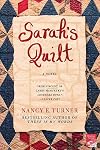
Sarah's Quilt: A Novel of Sarah Agnes Prine and the Arizona Territories, 1906, a sequel to These Is My Words, picks up some ten years after the end of the first book, her children all but grown. However, her child-rearing troubles continue as she gradually becomes the matriarch of her close-knit family: tutoring her nieces and nephews, bonding with her grandchildren, nursing the sick back to health, rescuing her brother and his family from the wreckage of the great San Francisco earthquake, and making the tough decisions no one else wants to make.
Although she no longer fights of Comanche or Apache, she yet must still wrangle with cattle rustlers and greedy land barons. Teetering on the brink of bankruptcy, her Arizona cattle ranch continues to struggle and she battles drought, poisoned wells, crazy old coots, pushy neighbors, wild fires, tornadoes, and rebellious children. She meets with plenty of opposition to struggle against and prove her mettle, shows her heart of gold, and dallies with a bit with romance both welcome and not. This volume ends with more tragedy and heartbreak, rain, family solidarity and a tenuous truce struck between herself and Maldonado, her grasping neighbor.
Nancy E. Turner's characters are well-written and lovable. The reader becomes as attached to the third generation as is Sarah herself. Her aged are venerable, vital to the family's survival and bereaved when lost. I show more especially appreciate the fact that she assaults the middle generation with their own new beginnings. Even parents of grown children cherish dreams and make journeys of self-discovery. Every phase of life means change which the family must face as a whole.
While this book is written in Ms. Turner's inimitable style and strong voice, I found it somewhat less compelling than her first book. While neither are the tear-jerker of her first book, Sarah's Quilt: A Novel of Sarah Agnes Prine and the Arizona Territories, 1906 and The Star Garden: A Novel of Sarah Agnes Prine make welcome additions to Sarah Agnes Prine's story. Ms. Turner steps up and delivers everything the reader came to expect with These Is My Words show less
Sarah's Quilt: A Novel of Sarah Agnes Prine and the Arizona Territories, 1906, a sequel to These Is My Words, picks up some ten years after the end of the first book, her children all but grown. However, her child-rearing troubles continue as she gradually becomes the matriarch of her close-knit family: tutoring her nieces and nephews, bonding with her grandchildren, nursing the sick back to health, rescuing her brother and his family from the wreckage of the great San Francisco earthquake, and making the tough decisions no one else wants to make.
Although she no longer fights of Comanche or Apache, she yet must still wrangle with cattle rustlers and greedy land barons. Teetering on the brink of bankruptcy, her Arizona cattle ranch continues to struggle and she battles drought, poisoned wells, crazy old coots, pushy neighbors, wild fires, tornadoes, and rebellious children. She meets with plenty of opposition to struggle against and prove her mettle, shows her heart of gold, and dallies with a bit with romance both welcome and not. This volume ends with more tragedy and heartbreak, rain, family solidarity and a tenuous truce struck between herself and Maldonado, her grasping neighbor.
Nancy E. Turner's characters are well-written and lovable. The reader becomes as attached to the third generation as is Sarah herself. Her aged are venerable, vital to the family's survival and bereaved when lost. I show more especially appreciate the fact that she assaults the middle generation with their own new beginnings. Even parents of grown children cherish dreams and make journeys of self-discovery. Every phase of life means change which the family must face as a whole.
While this book is written in Ms. Turner's inimitable style and strong voice, I found it somewhat less compelling than her first book. While neither are the tear-jerker of her first book, Sarah's Quilt: A Novel of Sarah Agnes Prine and the Arizona Territories, 1906 and The Star Garden: A Novel of Sarah Agnes Prine make welcome additions to Sarah Agnes Prine's story. Ms. Turner steps up and delivers everything the reader came to expect with These Is My Words show less
For my complete review, visit: http://amindwandering.blogspot.com/20...
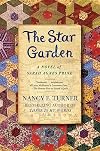
The third in the Sarah Agnes Prine series (These Is My Words) The Star Garden: A Novel of Sarah Agnes Prine picks up a few months after Sarah's Quilt: A Novel of Sarah Agnes Prine and the Arizona Territories, 1906. The truce is broken as Maldonado starts gun-running into Mexico and conspires with the railroad to steal her land. Her love life picks up with her new neighbor, further sparking Maldonado's ire, and her sons bring home their own love interests to keep it interesting. An all out range war ensues.
This volume focuses a great deal on the dynamics of the Prine family and Sarah deciding first if she loves Udell Hanna and then if he loves her or just wants a wife for his house. The self-protective caution life has forced upon Sarah over the years serves Udell in poor stead. As is the case with turbulent romances, communication degenerates to an all-time low and Sarah resigns herself to widowhood for the rest of her life. Even so, Udell proves himself.
Nancy E. Turner's characters are well-written and lovable. The reader becomes as attached to the third generation as is Sarah herself. Her aged are venerable, vital to the family's survival and bereaved when lost. I especially appreciate the fact that she assaults the middle generation with their own new beginnings. Even parents of grown children cherish dreams and make journeys of self-discovery. Every phase of life means change which the family must show more face as a whole.
While both these books are written in Ms. Turner's inimitable style and strong voice, I found them somewhat less compelling than her first book. Perhaps because Sarah is more mature, more seasoned, more certain of herself and less passionate about the men in her life. Neither Moldanado nor Hanna claimed center stage as did Jack Elliot.
While there are plenty of life-and-death situations and the books are full to the brim with heartbreak, neither book is the white-knuckle ride that was These Is My Words. But then, that seems the way of maturing. You grow up, you stabilize, you start to get some ballast so that when the worst gales rage, you aren't at the mercy of the wind quite as much. Trouble is, you get too much ballast and you swamp.
Bottom Line: While neither are the tear-jerker of her first book, Sarah's Quilt and The Star Garden make welcome additions to Sarah Agnes Prine's story. Ms. Turner steps up and delivers everything the reader came to expect with These Is My Words. show less
The third in the Sarah Agnes Prine series (These Is My Words) The Star Garden: A Novel of Sarah Agnes Prine picks up a few months after Sarah's Quilt: A Novel of Sarah Agnes Prine and the Arizona Territories, 1906. The truce is broken as Maldonado starts gun-running into Mexico and conspires with the railroad to steal her land. Her love life picks up with her new neighbor, further sparking Maldonado's ire, and her sons bring home their own love interests to keep it interesting. An all out range war ensues.
This volume focuses a great deal on the dynamics of the Prine family and Sarah deciding first if she loves Udell Hanna and then if he loves her or just wants a wife for his house. The self-protective caution life has forced upon Sarah over the years serves Udell in poor stead. As is the case with turbulent romances, communication degenerates to an all-time low and Sarah resigns herself to widowhood for the rest of her life. Even so, Udell proves himself.
Nancy E. Turner's characters are well-written and lovable. The reader becomes as attached to the third generation as is Sarah herself. Her aged are venerable, vital to the family's survival and bereaved when lost. I especially appreciate the fact that she assaults the middle generation with their own new beginnings. Even parents of grown children cherish dreams and make journeys of self-discovery. Every phase of life means change which the family must show more face as a whole.
While both these books are written in Ms. Turner's inimitable style and strong voice, I found them somewhat less compelling than her first book. Perhaps because Sarah is more mature, more seasoned, more certain of herself and less passionate about the men in her life. Neither Moldanado nor Hanna claimed center stage as did Jack Elliot.
While there are plenty of life-and-death situations and the books are full to the brim with heartbreak, neither book is the white-knuckle ride that was These Is My Words. But then, that seems the way of maturing. You grow up, you stabilize, you start to get some ballast so that when the worst gales rage, you aren't at the mercy of the wind quite as much. Trouble is, you get too much ballast and you swamp.
Bottom Line: While neither are the tear-jerker of her first book, Sarah's Quilt and The Star Garden make welcome additions to Sarah Agnes Prine's story. Ms. Turner steps up and delivers everything the reader came to expect with These Is My Words. show less
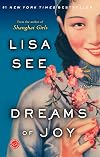
Pearl and her daughter, Joy, are plunged into the perils and ennui of post-war/-revolution China when Joy runs away from home to Shanghai to find her birth-father. She conveniently has a passport. Her mother keeps a fortune in a coffee can under the sink. The biggest difficulty she encounters is her college boyfriend bailing out on her when she calls his bluff. He has no intention of joining "the People" in China to built a glorious new nation. Joy hops on a plane and goes anyway, determined never to return. Pearl chases after her, hard on her heels, financed with surprisingly more money stashed away in the house.
Joy finds her father, a disillusioned but famous artist on the brink of renunciation. She has no real difficulty getting to Shanghai, and the authorities are only too happy to tell her exactly where to find him. He not only accepts her but whisks her off to the countryside, his preferred punishment over exile to a Chinese Gulag. Joy falls in love, with the people, with the countryside, with the cooperative, and a talented local boy with an eye for the ladies. However, primarily she's in love with her own idealism and refuses to see what has soured her father on the People's Republic.
Joy and Pearl have just walked into one of Mao's worst blunders, "The Great Leap Forward", which resulted in famine and starvation for millions in his full communization of the cooperatives and disastrous farming strategies. Lisa See does it full justice, in Panovision and show more Technicolor. While not as overtly violent as Shanghai Girls, it is far more disturbing. I closed it more than once, hesitant to go where I feared Ms. See meant to take me. When I start scanning pages ahead, I've pretty much given up on the book. But, I needed a review for today so I made myself finish it.
The author manages to convey the opposing perspectives of Joy and Pearl with equal dexterity. She gets inside both women's heads and peeks around. She follows Joy's learning curve, from wide-eyed innocence and unfailing optimism to cynical, calculating manipulation of the system mandatory for survival. Pearl gradually grows into her dragon self and realizes her own self-worth.
Pearl acts heroically. Joy is terribly clever. Pearl is at last rewarded for a miserable life (although, right up to the last page it seems unlikely). May, perpetually off-stage and piping money in from America, likewise manages to wrestle her demons into submission.
Ms. See knows her craft. She manages to approach the strengths and weaknesses of socialism and communism with a fair and unprejudiced eye. Her grasp of the social and ideological issues of the day seem well-grounded and are treated with honesty and respect.
She resolves the interpersonal relationship issues by the end of the book. Everyone's suffering has made them larger, more tolerant; taught them contentment, even joy. Everyone important survives. But all that comes within the last ten pages of the book. There is not enough to light to dispel the oppressive darkness, and certainly not enough to tempt me into either book.
Bottom line: Ms. See tells a compelling story that is nicely paced, starkly real, and well-considered. I fear I just don't care for the stories she chooses to tell. show less
Joy finds her father, a disillusioned but famous artist on the brink of renunciation. She has no real difficulty getting to Shanghai, and the authorities are only too happy to tell her exactly where to find him. He not only accepts her but whisks her off to the countryside, his preferred punishment over exile to a Chinese Gulag. Joy falls in love, with the people, with the countryside, with the cooperative, and a talented local boy with an eye for the ladies. However, primarily she's in love with her own idealism and refuses to see what has soured her father on the People's Republic.
Joy and Pearl have just walked into one of Mao's worst blunders, "The Great Leap Forward", which resulted in famine and starvation for millions in his full communization of the cooperatives and disastrous farming strategies. Lisa See does it full justice, in Panovision and show more Technicolor. While not as overtly violent as Shanghai Girls, it is far more disturbing. I closed it more than once, hesitant to go where I feared Ms. See meant to take me. When I start scanning pages ahead, I've pretty much given up on the book. But, I needed a review for today so I made myself finish it.
The author manages to convey the opposing perspectives of Joy and Pearl with equal dexterity. She gets inside both women's heads and peeks around. She follows Joy's learning curve, from wide-eyed innocence and unfailing optimism to cynical, calculating manipulation of the system mandatory for survival. Pearl gradually grows into her dragon self and realizes her own self-worth.
Pearl acts heroically. Joy is terribly clever. Pearl is at last rewarded for a miserable life (although, right up to the last page it seems unlikely). May, perpetually off-stage and piping money in from America, likewise manages to wrestle her demons into submission.
Ms. See knows her craft. She manages to approach the strengths and weaknesses of socialism and communism with a fair and unprejudiced eye. Her grasp of the social and ideological issues of the day seem well-grounded and are treated with honesty and respect.
She resolves the interpersonal relationship issues by the end of the book. Everyone's suffering has made them larger, more tolerant; taught them contentment, even joy. Everyone important survives. But all that comes within the last ten pages of the book. There is not enough to light to dispel the oppressive darkness, and certainly not enough to tempt me into either book.
Bottom line: Ms. See tells a compelling story that is nicely paced, starkly real, and well-considered. I fear I just don't care for the stories she chooses to tell. show less

Read my complete review at http://bit.ly/LOhyaB
Conundrum resonated with me on many levels, having experiences which mirrored those in the book. People I love are burdened with the very real, life-altering effects of depression and bipolar disorder. Others struggle with their interpersonal relationships and their inability to see beyond the mistaken truths they have created for themselves to cope with the unhappiness in their lives. Ms. Lakin takes these issues head-on, as she does marital discord, infertility and financial disaster.
She takes them on, works her characters through them one incredibly painful step at a time, offers some hope, allows others the imperfect happiness they have fought for, and stepped away from still others in disassociation to protect the rest. Neither does she leave any of them faultless or absolutely justified in their actions, even the best-meaning of them. In Conundrum, there are no absolutes, no pat answers, no definitive "vorpal sword to defeat the Jabberwok".
Set in 1986, in rural-ish Marin Country, California, north of San Francisco, the central plot of the story revolves around Lisa's journey into her father's past. A brilliant mathematician, Nathan Sitterhoff worked in the aerospace industry which provided nuclear energy for the long-distance space probes of the Gemini project. In this story within the story, well-developed and well-researched, Ms. Lakin's plot, characters, and motivations all ring true.
In the process of uncovering the show more truth one fragment at a time, Lisa Sitterhoff alienates her family and raises more questions than she could ever hope to answer. Seeking out associations 25 years gone, each character involved relates their own personal, often conflicting truths. It is up to Lisa to jury-rig the mismatched perspectives together to create a hazy, incomplete picture of the past—one that will ultimately set all three siblings free. For me, the ordeal resembled watching someone else work a jigsaw puzzle with my hands tied behind my back and my mouth taped shut.
However, the mystery of Nathan's death serves as a catalyst to healing and hope for his children, rather like chemotherapy. Truth, the figurative drug necessary to bring about the emotional recovery so desperately required first must bring the family body as near death as possible. Ms. Lakin uses the metaphor of cancer to powerfully incorporate the lies, half-truths and misconceptions that quite nearly destroy Raff, Lisa's marriage, and any hope Neal ever has of becoming more than his mother's appendage.
With her intelligent, insightful prose, Ms. Lakin has created very real, very flawed characters struggling with raw, debilitating circumstances. However, she manages to do so while yet maintaining her own standards. More importantly, she broaches the themes of hope, healing, forgiveness and compassion in a manner anyone of any faith (or lack thereof) can embrace. While her characters engage in some very un-Christian activities, profoundly worldly and she faces them head-on, in Conundrum, she proves my thesis that one need not resort to the salacious, crass and profane to create truly great fiction.
Conundrum is not a fast read. It is not even a fun read. However, it is intensely profound and compelling, one to pause over, read again and surrender to introspection—one which tempts the reader not only onward into more of Ms. Lakin's works but also to the classics which have so obviously influenced her.
Bottom line: I very much enjoyed this book and recommend it. I found it a welcome change of pace and a great addition to my library. show less
Conundrum resonated with me on many levels, having experiences which mirrored those in the book. People I love are burdened with the very real, life-altering effects of depression and bipolar disorder. Others struggle with their interpersonal relationships and their inability to see beyond the mistaken truths they have created for themselves to cope with the unhappiness in their lives. Ms. Lakin takes these issues head-on, as she does marital discord, infertility and financial disaster.
She takes them on, works her characters through them one incredibly painful step at a time, offers some hope, allows others the imperfect happiness they have fought for, and stepped away from still others in disassociation to protect the rest. Neither does she leave any of them faultless or absolutely justified in their actions, even the best-meaning of them. In Conundrum, there are no absolutes, no pat answers, no definitive "vorpal sword to defeat the Jabberwok".
Set in 1986, in rural-ish Marin Country, California, north of San Francisco, the central plot of the story revolves around Lisa's journey into her father's past. A brilliant mathematician, Nathan Sitterhoff worked in the aerospace industry which provided nuclear energy for the long-distance space probes of the Gemini project. In this story within the story, well-developed and well-researched, Ms. Lakin's plot, characters, and motivations all ring true.
In the process of uncovering the show more truth one fragment at a time, Lisa Sitterhoff alienates her family and raises more questions than she could ever hope to answer. Seeking out associations 25 years gone, each character involved relates their own personal, often conflicting truths. It is up to Lisa to jury-rig the mismatched perspectives together to create a hazy, incomplete picture of the past—one that will ultimately set all three siblings free. For me, the ordeal resembled watching someone else work a jigsaw puzzle with my hands tied behind my back and my mouth taped shut.
However, the mystery of Nathan's death serves as a catalyst to healing and hope for his children, rather like chemotherapy. Truth, the figurative drug necessary to bring about the emotional recovery so desperately required first must bring the family body as near death as possible. Ms. Lakin uses the metaphor of cancer to powerfully incorporate the lies, half-truths and misconceptions that quite nearly destroy Raff, Lisa's marriage, and any hope Neal ever has of becoming more than his mother's appendage.
With her intelligent, insightful prose, Ms. Lakin has created very real, very flawed characters struggling with raw, debilitating circumstances. However, she manages to do so while yet maintaining her own standards. More importantly, she broaches the themes of hope, healing, forgiveness and compassion in a manner anyone of any faith (or lack thereof) can embrace. While her characters engage in some very un-Christian activities, profoundly worldly and she faces them head-on, in Conundrum, she proves my thesis that one need not resort to the salacious, crass and profane to create truly great fiction.
Conundrum is not a fast read. It is not even a fun read. However, it is intensely profound and compelling, one to pause over, read again and surrender to introspection—one which tempts the reader not only onward into more of Ms. Lakin's works but also to the classics which have so obviously influenced her.
Bottom line: I very much enjoyed this book and recommend it. I found it a welcome change of pace and a great addition to my library. show less

For the complete review, visit: http://bit.ly/Jjigj0
The Napping House written by Audrey Wood and delightfully illustrated by Don Wood is a wonderful cumulative rhyme (e.g., this is the house that Jack built) about a sleepy little house on a dozy, rainy day, a snoring granny, a slumbering child, a dog, a cat, a mouse, and a surprise at the end. The absorbing, humorous illustrations in quiet and cool colors set the mood and enrich the tale, providing lots of fodder for discussion, discovery, and imagination.
I picked up this large board book off a Sam's Club bargain table (a grandmother's best friend), drawn to it by . . . well, just about everything: the napping, the rain, the granny, and the androgenous any-child. Maybe it's the doziness of our too-quiet house, but it spoke to me. I could not resist taking it home. It also comes in hardcover, board book, and padded board book.
You will love the quiet laughter and gentle humor of this book. It's perfect murmured into tender ears at that certain time of the afternoon when eyelids grow heavy and yawns prevail over stubborn wills. It not only invites slumber but serves as a wonderful reminder that, inevitably, rain stops, naps end, and brilliant sunshine invites play once again.
The Napping House written by Audrey Wood and delightfully illustrated by Don Wood is a wonderful cumulative rhyme (e.g., this is the house that Jack built) about a sleepy little house on a dozy, rainy day, a snoring granny, a slumbering child, a dog, a cat, a mouse, and a surprise at the end. The absorbing, humorous illustrations in quiet and cool colors set the mood and enrich the tale, providing lots of fodder for discussion, discovery, and imagination.
I picked up this large board book off a Sam's Club bargain table (a grandmother's best friend), drawn to it by . . . well, just about everything: the napping, the rain, the granny, and the androgenous any-child. Maybe it's the doziness of our too-quiet house, but it spoke to me. I could not resist taking it home. It also comes in hardcover, board book, and padded board book.
You will love the quiet laughter and gentle humor of this book. It's perfect murmured into tender ears at that certain time of the afternoon when eyelids grow heavy and yawns prevail over stubborn wills. It not only invites slumber but serves as a wonderful reminder that, inevitably, rain stops, naps end, and brilliant sunshine invites play once again.

For complete review, visit: http://bit.ly/KjmLas
One of the shortest books in Robert Jordan's Wheel of Time series, New Spring differs in several ways. First, it is a prequel, beginning some eighteen years prior to The Eye of the World, and rather than the three youths, Rand, Mat, and Perrin, focuses on the Aes Sedai, Moiraine, her best friend, Siuan, and her warder, Lan Mandragoran. It also is much faster in pace, with less attention to the details of setting, countries, and customs and more to the characters and the plot development. Written after ten previous volumes, Mr. Jordan seems to assume his readers are already comfortable in (if not natives of) the Wheel of Time world, which approach lends greatly to the enjoyment of this book. Two or three of his other late-in-the-series books could have benefited from this same approach.
In this book, two of our favorite supporting characters, Moiraine Damodred and Siuan Sanche are young Accepted at the White Tower when they witness a Foretelling prophesying of the birth of the Dragon Reborn. In the meantime, Lan Mandragon is outside the walls of Tar Valon fighting the last skirmishes of the Aiel War. Over the course of the book,the two friends begin their perilous quest to find the new babe who will one day hopefully save the world, and sweep up Lan into it as together they battle against the dreaded Black Ajah.
I enjoyed this book and finished it quickly. Mr. Jordan initially intended to make this a three-volume series, but show more his untimely death prevented it, as it did his completion of the last volumes of The Wheel of Time. Brandon Sanderson has thus far done a marvelous job completing two of the three last volumes of the first series with the help of Mr. Jordan's extensive notes and writing. It is to be hoped that completing the youthful tale of Moiraine, Siuan and Lan is on his to-do list.
Final word: I own this book. It goes on my 'enjoy again' shelf show less
One of the shortest books in Robert Jordan's Wheel of Time series, New Spring differs in several ways. First, it is a prequel, beginning some eighteen years prior to The Eye of the World, and rather than the three youths, Rand, Mat, and Perrin, focuses on the Aes Sedai, Moiraine, her best friend, Siuan, and her warder, Lan Mandragoran. It also is much faster in pace, with less attention to the details of setting, countries, and customs and more to the characters and the plot development. Written after ten previous volumes, Mr. Jordan seems to assume his readers are already comfortable in (if not natives of) the Wheel of Time world, which approach lends greatly to the enjoyment of this book. Two or three of his other late-in-the-series books could have benefited from this same approach.
In this book, two of our favorite supporting characters, Moiraine Damodred and Siuan Sanche are young Accepted at the White Tower when they witness a Foretelling prophesying of the birth of the Dragon Reborn. In the meantime, Lan Mandragon is outside the walls of Tar Valon fighting the last skirmishes of the Aiel War. Over the course of the book,the two friends begin their perilous quest to find the new babe who will one day hopefully save the world, and sweep up Lan into it as together they battle against the dreaded Black Ajah.
I enjoyed this book and finished it quickly. Mr. Jordan initially intended to make this a three-volume series, but show more his untimely death prevented it, as it did his completion of the last volumes of The Wheel of Time. Brandon Sanderson has thus far done a marvelous job completing two of the three last volumes of the first series with the help of Mr. Jordan's extensive notes and writing. It is to be hoped that completing the youthful tale of Moiraine, Siuan and Lan is on his to-do list.
Final word: I own this book. It goes on my 'enjoy again' shelf show less
Lapsing Into a Comma: A Curmudgeon's Guide to the Many Things That Can Go Wrong in Print - and How to Avoid Them by Bill Walsh
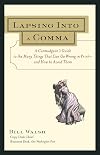
For complete review, visit: http://bit.ly/LYlYyS
As a stickler for correctness and very old school when it comes to dangling participles and split infinitives, not to mention the whole issue of constantly morphing comma usage, I find myself wandering through mine fields of doubt when writing in a contemporary voice. American English is not what it was fifty or even thirty years ago when I was diagramming sentences in sophomore English. We've loosened up. We've accommodated change. Whether that is a good thing or a bad thing is a matter for debate, but it is so, and so we adapt or become obsolete.
Mr. Walsh does a terrific job of guiding writers around the pitfalls and ambiguities which have resulted in American English getting hip. And, he does it with authority: Here's Goodread's author bio:
Bill Walsh was born in Pennsylvania coal country but grew up in Madison Heights, Mich., and Mesa, Ariz. He is a 1984 journalism graduate of the University of Arizona and has worked as a reporter and editor at the Phoenix Gazette and an editor at the Washington Times and the Washington Post. He is now the chief copy editor for national news at the Post.
Language is my living. I forge words and thought into meaningful communication. Whether someone else's words or my own, I manipulate them in image, print and page, hopefully creating a coherent whole. And that coherence depends a great deal in understanding my audience. Whether I'm editing a manuscript or a master's thesis, transcribing show more medical documentation or personal history interviews, constructing business prospectuses, blogging, or writing historical fiction in my Regency voice, the form and style I use must connect with the reader, rather than throw up roadblocks because we're not really speaking the same language.
Changing voices strikes dread in my heart at times (I'm much better at clinical than casual) and I accept the degeneration of change in language usage kicking and screaming. However, Mr. Walsh is of my generation, far better educated, and is editor of one of the most respected journals in the country. So, whenever I argue with myself about who vs. whom or the proper placement of commas this week, I find refer to his opinion.
Then, I go and do what I want anyway. show less
As a stickler for correctness and very old school when it comes to dangling participles and split infinitives, not to mention the whole issue of constantly morphing comma usage, I find myself wandering through mine fields of doubt when writing in a contemporary voice. American English is not what it was fifty or even thirty years ago when I was diagramming sentences in sophomore English. We've loosened up. We've accommodated change. Whether that is a good thing or a bad thing is a matter for debate, but it is so, and so we adapt or become obsolete.
Mr. Walsh does a terrific job of guiding writers around the pitfalls and ambiguities which have resulted in American English getting hip. And, he does it with authority: Here's Goodread's author bio:
Bill Walsh was born in Pennsylvania coal country but grew up in Madison Heights, Mich., and Mesa, Ariz. He is a 1984 journalism graduate of the University of Arizona and has worked as a reporter and editor at the Phoenix Gazette and an editor at the Washington Times and the Washington Post. He is now the chief copy editor for national news at the Post.
Language is my living. I forge words and thought into meaningful communication. Whether someone else's words or my own, I manipulate them in image, print and page, hopefully creating a coherent whole. And that coherence depends a great deal in understanding my audience. Whether I'm editing a manuscript or a master's thesis, transcribing show more medical documentation or personal history interviews, constructing business prospectuses, blogging, or writing historical fiction in my Regency voice, the form and style I use must connect with the reader, rather than throw up roadblocks because we're not really speaking the same language.
Changing voices strikes dread in my heart at times (I'm much better at clinical than casual) and I accept the degeneration of change in language usage kicking and screaming. However, Mr. Walsh is of my generation, far better educated, and is editor of one of the most respected journals in the country. So, whenever I argue with myself about who vs. whom or the proper placement of commas this week, I find refer to his opinion.
Then, I go and do what I want anyway. show less
The Elephants of Style : A Trunkload of Tips on the Big Issues and Gray Areas of Contemporary American English by Bill Walsh
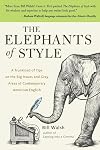
For complete review, visit: http://bit.ly/LYlYyS
As a stickler for correctness and very old school when it comes to dangling participles and split infinitives, not to mention the whole issue of constantly morphing comma usage, I find myself wandering through mine fields of doubt when writing in a contemporary voice. American English is not what it was fifty or even thirty years ago when I was diagramming sentences in sophomore English. We've loosened up. We've accommodated change. Whether that is a good thing or a bad thing is a matter for debate, but it is so, and so we adapt or become obsolete.
Mr. Walsh does a terrific job of guiding writers around the pitfalls and ambiguities which have resulted in American English getting hip. And, he does it with authority: Here's Goodread's author bio:
Bill Walsh was born in Pennsylvania coal country but grew up in Madison Heights, Mich., and Mesa, Ariz. He is a 1984 journalism graduate of the University of Arizona and has worked as a reporter and editor at the Phoenix Gazette and an editor at the Washington Times and the Washington Post. He is now the chief copy editor for national news at the Post.
Language is my living. I forge words and thought into meaningful communication. Whether someone else's words or my own, I manipulate them in image, print and page, hopefully creating a coherent whole. And that coherence depends a great deal in understanding my audience. Whether I'm editing a manuscript or a master's thesis, transcribing show more medical documentation or personal history interviews, constructing business prospectuses, blogging, or writing historical fiction in my Regency voice, the form and style I use must connect with the reader, rather than throw up roadblocks because we're not really speaking the same language.
Changing voices strikes dread in my heart at times (I'm much better at clinical than casual) and I accept the degeneration of change in language usage kicking and screaming. However, Mr. Walsh is of my generation, far better educated, and is editor of one of the most respected journals in the country. So, whenever I argue with myself about who vs. whom or the proper placement of commas this week, I find refer to his opinion.
Then, I go and do what I want anyway. show less
As a stickler for correctness and very old school when it comes to dangling participles and split infinitives, not to mention the whole issue of constantly morphing comma usage, I find myself wandering through mine fields of doubt when writing in a contemporary voice. American English is not what it was fifty or even thirty years ago when I was diagramming sentences in sophomore English. We've loosened up. We've accommodated change. Whether that is a good thing or a bad thing is a matter for debate, but it is so, and so we adapt or become obsolete.
Mr. Walsh does a terrific job of guiding writers around the pitfalls and ambiguities which have resulted in American English getting hip. And, he does it with authority: Here's Goodread's author bio:
Bill Walsh was born in Pennsylvania coal country but grew up in Madison Heights, Mich., and Mesa, Ariz. He is a 1984 journalism graduate of the University of Arizona and has worked as a reporter and editor at the Phoenix Gazette and an editor at the Washington Times and the Washington Post. He is now the chief copy editor for national news at the Post.
Language is my living. I forge words and thought into meaningful communication. Whether someone else's words or my own, I manipulate them in image, print and page, hopefully creating a coherent whole. And that coherence depends a great deal in understanding my audience. Whether I'm editing a manuscript or a master's thesis, transcribing show more medical documentation or personal history interviews, constructing business prospectuses, blogging, or writing historical fiction in my Regency voice, the form and style I use must connect with the reader, rather than throw up roadblocks because we're not really speaking the same language.
Changing voices strikes dread in my heart at times (I'm much better at clinical than casual) and I accept the degeneration of change in language usage kicking and screaming. However, Mr. Walsh is of my generation, far better educated, and is editor of one of the most respected journals in the country. So, whenever I argue with myself about who vs. whom or the proper placement of commas this week, I find refer to his opinion.
Then, I go and do what I want anyway. show less
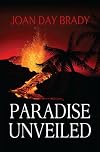
For complete review, visit: http://bit.ly/KLOuCv
In Paradise Unveiled, Valerie, a single young woman with high moral standards, flees a violently abusive relationship and finds herself in Hawaii, of all places. Alone and unprotected, she stumbles into some potentially disastrous (if humorous) situations, until she finds safe harbor in the friendship of a young mother and her family and friends.
Valerie isn't looking for love, but romance comes knocking. Andrew is everything she wants: handsome, strong, gentle, funny, devoted to family, but, especially, he shares her faith and her values. Andrew is not only safety and security but a chance for real and lasting happiness, and it appears smooth sailing for their future together.
However, just as their budding romance begins to truly blossom, Valerie's old flame appears on the scene, threatening everything, including Andrew's life. Neither is Hawaii as benign and genial as it appears at first glance. Dangers lurk in the most unexpected places, and only hope and faith will rescue Valerie's cast-adrift dreams.
The book is set in 1960s-era Hawaii, a time and a place where Joan lived for several years as a young wife and mother. Her firsthand knowledge comes through the prose with strength and confidence. The reader feels safe in the custody of a long-time resident on a chatty island excursion, not of the tourist sites and heavy-traffic glitz but of the back roads and real people who make the Hawaiian islands their home. Her show more descriptions are vivid, her people real, and her recount of the Hilo Bay tsunami and its aftermath chilling.
Based on real if fictionalized events, the first-hand flavor that stirs the sensibilities also comes as a matter of course.
Bottom line: pass along — a great book to enjoy and share.
—A Chaotic Mind show less
In Paradise Unveiled, Valerie, a single young woman with high moral standards, flees a violently abusive relationship and finds herself in Hawaii, of all places. Alone and unprotected, she stumbles into some potentially disastrous (if humorous) situations, until she finds safe harbor in the friendship of a young mother and her family and friends.
Valerie isn't looking for love, but romance comes knocking. Andrew is everything she wants: handsome, strong, gentle, funny, devoted to family, but, especially, he shares her faith and her values. Andrew is not only safety and security but a chance for real and lasting happiness, and it appears smooth sailing for their future together.
However, just as their budding romance begins to truly blossom, Valerie's old flame appears on the scene, threatening everything, including Andrew's life. Neither is Hawaii as benign and genial as it appears at first glance. Dangers lurk in the most unexpected places, and only hope and faith will rescue Valerie's cast-adrift dreams.
The book is set in 1960s-era Hawaii, a time and a place where Joan lived for several years as a young wife and mother. Her firsthand knowledge comes through the prose with strength and confidence. The reader feels safe in the custody of a long-time resident on a chatty island excursion, not of the tourist sites and heavy-traffic glitz but of the back roads and real people who make the Hawaiian islands their home. Her show more descriptions are vivid, her people real, and her recount of the Hilo Bay tsunami and its aftermath chilling.
Based on real if fictionalized events, the first-hand flavor that stirs the sensibilities also comes as a matter of course.
Bottom line: pass along — a great book to enjoy and share.
—A Chaotic Mind show less

For complete review, visit here: http://bit.ly/KOhQjE
YA speculative fiction isn't usually my thing (I usually go for meatier fare), but I've been devouring a lot of different books lately and the premise of this plot seemed intriguing. I confess, once I got to the action sequences, I couldn't put it down until the climax resolved. Unfortunately, that was 4:30am.
Ms. Huff does a pretty good job of capturing the emotional walls built up by an isolated teenager, as well as his starvation for human contact and blossoming of character when he finally connects with someone he trusts. I also liked the camaraderie between Beau and his twin brother, Bryce, his lifeline to humanity until Rose helps him break out of his shell.
Reading it brought to mind another YA speculative fiction book I read this year, Sting, by B.J. Rowley. I review that book here. The premises are very similar: outsider boy shuns physical contact until "new girl" who doesn't know better, they make a connection, danger and skullduggery ensue. I won't draw further similarities so as not to spoil the plot. Despite the familiar ring, the plot stands well on its own in both originality and execution. Ms. Huff's voice is her own, and she draws out the disparate sensibilities of her various characters with skill.
One sidebar: Ms. Ogden begins on page one with a note to the reader about the "soundtrack" to her book, offering suggestions of music she enjoys, as well as Internet links to the various artists. I shrugged. show more Whatever. However, scattered throughout the book are more prompts to more websites for more music. I found this very distracting and detracting from her story. Great for a supplemental website—for a book, not so much.
When I read, I like to be submersed in the tale, flowing smoothly from scene to scene playing out in my head. Jarring me to the surface with these prompts left me coughing and sputtering and gasping for air. Perhaps her target audience is different. Plugged in as they are, wired for sound, they probably are, but when I read, block out all other sound so I can hear the voices speaking in my head.
Final Word: I liked this book and look forward to reading the sequel, Supreme Chancellor of Stupidity. show less
YA speculative fiction isn't usually my thing (I usually go for meatier fare), but I've been devouring a lot of different books lately and the premise of this plot seemed intriguing. I confess, once I got to the action sequences, I couldn't put it down until the climax resolved. Unfortunately, that was 4:30am.
Ms. Huff does a pretty good job of capturing the emotional walls built up by an isolated teenager, as well as his starvation for human contact and blossoming of character when he finally connects with someone he trusts. I also liked the camaraderie between Beau and his twin brother, Bryce, his lifeline to humanity until Rose helps him break out of his shell.
Reading it brought to mind another YA speculative fiction book I read this year, Sting, by B.J. Rowley. I review that book here. The premises are very similar: outsider boy shuns physical contact until "new girl" who doesn't know better, they make a connection, danger and skullduggery ensue. I won't draw further similarities so as not to spoil the plot. Despite the familiar ring, the plot stands well on its own in both originality and execution. Ms. Huff's voice is her own, and she draws out the disparate sensibilities of her various characters with skill.
One sidebar: Ms. Ogden begins on page one with a note to the reader about the "soundtrack" to her book, offering suggestions of music she enjoys, as well as Internet links to the various artists. I shrugged. show more Whatever. However, scattered throughout the book are more prompts to more websites for more music. I found this very distracting and detracting from her story. Great for a supplemental website—for a book, not so much.
When I read, I like to be submersed in the tale, flowing smoothly from scene to scene playing out in my head. Jarring me to the surface with these prompts left me coughing and sputtering and gasping for air. Perhaps her target audience is different. Plugged in as they are, wired for sound, they probably are, but when I read, block out all other sound so I can hear the voices speaking in my head.
Final Word: I liked this book and look forward to reading the sequel, Supreme Chancellor of Stupidity. show less
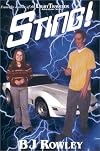
For complete review, go here: http://bit.ly/MShiJj
Here is a classic case of "don't judge a book by its cover". I guess it could also be a lesson on how the right cover art is vital to that all-important first impression.
When I saw this book sitting on the shelf in my family room, I confess, I didn't think much of it. It looked rather—well—cheesy unprofessional. However, when my daughter-in-law recommended it and I understood her friendship with the author, I felt courtesy demanded that I should read it. I was quite pleasantly surprised. That was earlier this year.
I was reminded of it again when I read this book, Master of Emotion by D. Ogden Huff. Like that work, a socially outcast teenager, Stephen Ray "Sting" Fischer, who shuns physical contact out of necessity, is rescued from his lonely fate by the new girl in town, Connie Phillips, who hasn't been around long enough to learn the "rules" about him. His "abilities" (a great word in speculative fiction) capture his attention. Her mysterious past intrigues him. Romance ensues.
Sting's physical quirk gives him special technical prowess, while Beau of MoE hones his super people skills. Perhaps the difference between male and female authors is reflected here. The plots diverge when Sting and Connie get caught up in the intrigues of a secret government project, with lots of sinister scientists and jack-boots and a spiffy Corvette Stingray. Poor Beau and Rose of MoE only get a beat-up truck, an old VW, and a mad show more gynecologist. In both, secret lairs are breached, muscles are flexed, personal growth occurs, worlds expand, and special connections are made. Boy gets girl. Becoming the cool guy at school is the gravy.
Mr. Rowley does a good job drawing the reader into the tale, although I took exception to a few scenarios. Even the thickheaded-est football player is smart enough to recognize the difference between life-saving procedures and creepy groping. And what paramedic in their right mind drives away leaving a kid standing there gripping live high-voltage wires in his fists? Ms. Ogden did a better job at the human interaction. Mr. Rowley has better Clancy-esque skills.
Like MoE, I read this in one night, which I think is about the right length and depth for a young adult novel. It isn't profoundly insightful or Pulitzer Prize worthy, but it is a fresh take on a universal condition, for what high-school teenager doesn't feel like an outsider deep down in his bones? And what such person doesn't want to get the girl and be cool? show less
Here is a classic case of "don't judge a book by its cover". I guess it could also be a lesson on how the right cover art is vital to that all-important first impression.
When I saw this book sitting on the shelf in my family room, I confess, I didn't think much of it. It looked rather—well—cheesy unprofessional. However, when my daughter-in-law recommended it and I understood her friendship with the author, I felt courtesy demanded that I should read it. I was quite pleasantly surprised. That was earlier this year.
I was reminded of it again when I read this book, Master of Emotion by D. Ogden Huff. Like that work, a socially outcast teenager, Stephen Ray "Sting" Fischer, who shuns physical contact out of necessity, is rescued from his lonely fate by the new girl in town, Connie Phillips, who hasn't been around long enough to learn the "rules" about him. His "abilities" (a great word in speculative fiction) capture his attention. Her mysterious past intrigues him. Romance ensues.
Sting's physical quirk gives him special technical prowess, while Beau of MoE hones his super people skills. Perhaps the difference between male and female authors is reflected here. The plots diverge when Sting and Connie get caught up in the intrigues of a secret government project, with lots of sinister scientists and jack-boots and a spiffy Corvette Stingray. Poor Beau and Rose of MoE only get a beat-up truck, an old VW, and a mad show more gynecologist. In both, secret lairs are breached, muscles are flexed, personal growth occurs, worlds expand, and special connections are made. Boy gets girl. Becoming the cool guy at school is the gravy.
Mr. Rowley does a good job drawing the reader into the tale, although I took exception to a few scenarios. Even the thickheaded-est football player is smart enough to recognize the difference between life-saving procedures and creepy groping. And what paramedic in their right mind drives away leaving a kid standing there gripping live high-voltage wires in his fists? Ms. Ogden did a better job at the human interaction. Mr. Rowley has better Clancy-esque skills.
Like MoE, I read this in one night, which I think is about the right length and depth for a young adult novel. It isn't profoundly insightful or Pulitzer Prize worthy, but it is a fresh take on a universal condition, for what high-school teenager doesn't feel like an outsider deep down in his bones? And what such person doesn't want to get the girl and be cool? show less

Read complete review here: http://bit.ly/L4pqDf
I had fun reading Ms. Huff's second installment of her Beau & Bryce Blair trilogy. Like Master of Emotion which I reviewed here, this story is told in first person. However, Supreme Chancellor of Stupidity speaks with the voice of Beau's twin brother, Bryce, a smart Alec, charmer, and terminal flirt.
Nicely juxtaposed against Beau's brooding isolation and channeling of emotions without thoughts, Bryce, a semi‒ Big Man On Campus, reads thoughts without the emotions. He uses his talent to anticipate football plays and connect with the ladies. Think What Women Want (Paramount 2000) with Mel Gibson and Helen Hunt. Unfortunately, like all rakes with true hearts of gold, Bryce falls and falls hard for the one girl who refuses to give him the time of day because he's that kind of scoundrel. What's a guy to do? Enlist the help of a dating coach, of course, and instigate a faux relationship to practice his new resolutions.
Starving for affection, Bryce realizes that, despite outward appearances, he has isolated himself as completely as had his brother, Beau, and sincerely wishes to create real relationships in his life. He seeks the help of Smart Girl Emily who takes on his case, partly out of sympathy and partly as research material for the psychology book she will write one day. Unfortunately, the strategy is not without its costs. Determined to cease using his superpowers for evil, his exclusivity antagonizes his cheerleader show more groupies and his popularity plummets. He is forced to watch (and seriously doubt himself) as he swaps social positions Beau, who doesn't like the limelight at all.
While Bryce learns to keep his eyes and hands to himself, he makes progress by leaps and bounds. Eventually, the bells go off in the head of his dream girl/original target, but his relationship with Emily has crossed over from practice to sincere attachment. His new-found moral fiber prevents him from dumping the comfortable relationship with the sweet girl for whom he harbors sincere fondness for the love-at-first-sight bombshell who, quite literally, steals his breath away. Circumspection, moral dilemmas and high jinx ensue.
They say a mother shouldn't have favorites, but with her deft touch and delicate hand in creating this character, I can easily tell which of the two eighteen-year-olds connects best with Ms. Huff. Bryce is written as genuinely charming. His self-doubt and personal struggle ring true, his flippant remarks and sarcasm feel natural, and the reader easily envisions the cocky smile and sparkling eyes he so readily flashes at the targets of his flirtation. He's the guy girls of any sense know better than to get involved with but can't help but like just the same. The author has done a great job of getting into Bryce's head.
Dr. Cavan, our arch villain, looms in the background threatening the happiness of our heroes and their friends, and one or two surprise revelations lay in store for the boys. However, Bryce's journey from womanizing neanderthal to evolved human worthy of true love remains the primary focus of this book. SCoS is a bridge between MoE and Ms. Huff's third yet-to-be-released installment, Dictator of Disaster. Think The Empire Strikes Back of the original Star Wars trilogy.
Bottom line: a fun read and a good lead-in to Dictator of Disaster, which promises a distinct flavor and narrative voice of its own. show less
I had fun reading Ms. Huff's second installment of her Beau & Bryce Blair trilogy. Like Master of Emotion which I reviewed here, this story is told in first person. However, Supreme Chancellor of Stupidity speaks with the voice of Beau's twin brother, Bryce, a smart Alec, charmer, and terminal flirt.
Nicely juxtaposed against Beau's brooding isolation and channeling of emotions without thoughts, Bryce, a semi‒ Big Man On Campus, reads thoughts without the emotions. He uses his talent to anticipate football plays and connect with the ladies. Think What Women Want (Paramount 2000) with Mel Gibson and Helen Hunt. Unfortunately, like all rakes with true hearts of gold, Bryce falls and falls hard for the one girl who refuses to give him the time of day because he's that kind of scoundrel. What's a guy to do? Enlist the help of a dating coach, of course, and instigate a faux relationship to practice his new resolutions.
Starving for affection, Bryce realizes that, despite outward appearances, he has isolated himself as completely as had his brother, Beau, and sincerely wishes to create real relationships in his life. He seeks the help of Smart Girl Emily who takes on his case, partly out of sympathy and partly as research material for the psychology book she will write one day. Unfortunately, the strategy is not without its costs. Determined to cease using his superpowers for evil, his exclusivity antagonizes his cheerleader show more groupies and his popularity plummets. He is forced to watch (and seriously doubt himself) as he swaps social positions Beau, who doesn't like the limelight at all.
While Bryce learns to keep his eyes and hands to himself, he makes progress by leaps and bounds. Eventually, the bells go off in the head of his dream girl/original target, but his relationship with Emily has crossed over from practice to sincere attachment. His new-found moral fiber prevents him from dumping the comfortable relationship with the sweet girl for whom he harbors sincere fondness for the love-at-first-sight bombshell who, quite literally, steals his breath away. Circumspection, moral dilemmas and high jinx ensue.
They say a mother shouldn't have favorites, but with her deft touch and delicate hand in creating this character, I can easily tell which of the two eighteen-year-olds connects best with Ms. Huff. Bryce is written as genuinely charming. His self-doubt and personal struggle ring true, his flippant remarks and sarcasm feel natural, and the reader easily envisions the cocky smile and sparkling eyes he so readily flashes at the targets of his flirtation. He's the guy girls of any sense know better than to get involved with but can't help but like just the same. The author has done a great job of getting into Bryce's head.
Dr. Cavan, our arch villain, looms in the background threatening the happiness of our heroes and their friends, and one or two surprise revelations lay in store for the boys. However, Bryce's journey from womanizing neanderthal to evolved human worthy of true love remains the primary focus of this book. SCoS is a bridge between MoE and Ms. Huff's third yet-to-be-released installment, Dictator of Disaster. Think The Empire Strikes Back of the original Star Wars trilogy.
Bottom line: a fun read and a good lead-in to Dictator of Disaster, which promises a distinct flavor and narrative voice of its own. show less

Read complete review here: http://bit.ly/LZnReY
They say everyone has a doppleganger, even in LDS fiction. Savannah is a middle-class Mormon girl at a turning point in her life. Amelia is a spoiled cosmopolitan heiress on vacation. Everyone loves Savannah. Amelia not so much. Their looks are similar enough that they are mistaken for one another when both are wearing sunglasses. They sit down next to each other on a flight from Mexico to Arizona. Mayhem ensues.
Typical topics for LDS books, with the Gospel being shared, lives changed, hearts are won, etc., etc., Identity differs with its plot of murder, intrigue, industrial espionage, blended family politics, alcohol dependency and surprise developments. The blood and guts seem an odd juxtaposition to father's blessings and scripture study, but, it actually works.
The first published work of Ms. Love, it is ambitious. While not ready to face off with Tom Clancy or Dan Brown, she manages to pull it off with few contradictions and plausibility issues. I had a few problems with it, not the least of which was the bad .mobi formatting of the Kindle version and lack of a table of contents, but such difficulties could be eliminated with a new edition.
Other problems in the plot don't resolve quite so easily and are difficult to overlook, police and judicial procedure being the big issue. Unfortunately, the suspense plot rests squarely upon a premise stemming from the investigatory processes. They could be a deal breaker for the book, show more unless one is filled with good Christian charity and decides to enjoy the story for its own sake. [engage willing suspension of disbelief here]
Many of the characters are richly drawn, and the action feels well-considered. The interpersonal relationships seem plausible for the most part. Others are hinted at, alluded to, but ultimately neglected. I found myself wanting to learn more about Amelia's daunting step-father, the tangle of relationships between her company and that of her fiancee, and the how and why she resented the pair to such an extent that she would ditch Brent in Mexico. Fleshing out these details would have lengthened the book, but I believe would have enriched it and made the end even more satisfying.
All that being said, the acid test with a book for me is how much sleep I lose over it. I stayed up until 4am to finish this one. If you are a member of the Church of Jesus Christ of Latter-day Saints, you will understand the references in this book. If not, it will give you a fairly accurate (discounting the skullduggery) glimpse into the "Mormon" culture. Either way, Identity is an entertaining read.
Bottom line: a good first attempt at a suspense/thriller from an author with great ideas and a sound foundation of Gospel principles. Portents of good things to come from Ms. Love. show less
They say everyone has a doppleganger, even in LDS fiction. Savannah is a middle-class Mormon girl at a turning point in her life. Amelia is a spoiled cosmopolitan heiress on vacation. Everyone loves Savannah. Amelia not so much. Their looks are similar enough that they are mistaken for one another when both are wearing sunglasses. They sit down next to each other on a flight from Mexico to Arizona. Mayhem ensues.
Typical topics for LDS books, with the Gospel being shared, lives changed, hearts are won, etc., etc., Identity differs with its plot of murder, intrigue, industrial espionage, blended family politics, alcohol dependency and surprise developments. The blood and guts seem an odd juxtaposition to father's blessings and scripture study, but, it actually works.
The first published work of Ms. Love, it is ambitious. While not ready to face off with Tom Clancy or Dan Brown, she manages to pull it off with few contradictions and plausibility issues. I had a few problems with it, not the least of which was the bad .mobi formatting of the Kindle version and lack of a table of contents, but such difficulties could be eliminated with a new edition.
Other problems in the plot don't resolve quite so easily and are difficult to overlook, police and judicial procedure being the big issue. Unfortunately, the suspense plot rests squarely upon a premise stemming from the investigatory processes. They could be a deal breaker for the book, show more unless one is filled with good Christian charity and decides to enjoy the story for its own sake. [engage willing suspension of disbelief here]
Many of the characters are richly drawn, and the action feels well-considered. The interpersonal relationships seem plausible for the most part. Others are hinted at, alluded to, but ultimately neglected. I found myself wanting to learn more about Amelia's daunting step-father, the tangle of relationships between her company and that of her fiancee, and the how and why she resented the pair to such an extent that she would ditch Brent in Mexico. Fleshing out these details would have lengthened the book, but I believe would have enriched it and made the end even more satisfying.
All that being said, the acid test with a book for me is how much sleep I lose over it. I stayed up until 4am to finish this one. If you are a member of the Church of Jesus Christ of Latter-day Saints, you will understand the references in this book. If not, it will give you a fairly accurate (discounting the skullduggery) glimpse into the "Mormon" culture. Either way, Identity is an entertaining read.
Bottom line: a good first attempt at a suspense/thriller from an author with great ideas and a sound foundation of Gospel principles. Portents of good things to come from Ms. Love. show less
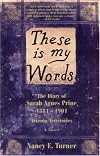
View complete review here: http://bit.ly/Lc5Ogy
My friend, Ginger, showed up on my porch the other day with this book and Shanghai Girls by Lisa See in hand. "You need to read this," she announced unceremoniously as she shoved These Is My Words at me. "We're doing it for book club." Shanghai Girls was an afterthought. I could read it and pass it on to whomever wanted it. However, These Is My Words she wants back. I know because she wrote her name in it.
The last book I borrowed from Ginger was Catching Fire, the second of the Hunger Games trilogy by Suzanne Collins. I had picked up The Hunger Games at Sam's Club on the cheap to see what the fuss was about, finished it in the middle of the night, and was desperate to get my hands on the next installment. As always, she came through for me.
Ginger never steers me wrong. I knew TIMW had to be good, so I picked it up and found it near impossible to put down. I need to call her and see if she has Sarah's Quilt, the next book in the Sarah Agnes Prine series.
In the format of a journal, Ms. Turner writes as a barely literate pioneer girl of seventeen who taught herself to read from the Bible. She lives in the New Mexico territory, and the book starts out as her family sets out for San Angelo, Texas, in search of greener pastures. Assaulted by Apache, brigands and nature, tragedy after tragedy beset the Prine family. At San Angelo, fatherless, with a mother in deep shock, the self-sufficient siblings determine to return home. They show more fall in with a wagon train of disparate settlers escorted by a detachment of soldiers for protection. Captain Jack Elliot, a war-hardened horse soldier, commands the company. The Prines give up the idea of returning to their old homestead but stick with the Army until they reach Tucson in the Arizona territory where they begin anew.
These Is My Words grips the reader from the outset because no one is safe. Graves litter the trail to San Angelo. Family members young and old are murdered or succumb to accidents and illness. Hopes are disappointed and disasters strike. The reader feels the blistering heat, the harsh, unforgiving landscape and the sharp stones beneath feet ill-shod. The bone-weary fatigue and paralyzing grief burn through muscles and joints. Told in the voice of a young girl emerging into womanhood, the narrative reads both naive and brutal. The body count is high.
Two scenes in particular are graphically gruesome, but, on the whole, Ms. Turner manages to strike a balance between stark realism and deference to the reader's sensibilities. Even so, she scarcely allows the reader a chance to catch their breath before her fast-paced narrative assaults Sarah and her kin once again.
Sarah emerges as a tough-as-nails do-or-die take-no-prisoners woman who lusts after knowledge and a home of her own. She happens upon an abandoned cache of books to satisfy the former and finds the latter in marriage and a horse ranch. However, like everything else in her life, her dreams of love are shattered, but, as in all else, she picks herself up, dusts herself off, and keeps on with the business of living. A crack shot with nerves of steel, she stands unflinching between anyone or anything threatening her own. She attacks life with the same dogged determination.
The story covers a span of twenty years, and Ms. Turner deftly and subtly expands Sarah's education merely through the quality of her language. Love blossoms on a similarly insidious fashion, until it becomes an all-consuming passion that both sustains her and causes her greatest heartbreaks. I read some reviewer compare Sarah and Jack to Scarlet O'Hara and Rhett Butler, but I have to disagree. Scarlet may have the same survivor spunkiness, but she is also spoiled, myopic and self-centered. Selflessness defines Sarah Prine despite her stubbornness, temper and lack of refinement, and Jack is her perfect counterpart.
As for my acid test, I read until 5am and have a screaming headache because I couldn't put down this book, but it was worth it. I can't wait to get my hands on the two sequels.
Bottom line: Sarah Prine is the best protagonist I have read in a very, very long time. I don't know of Ginger is ever going to get her book back. show less
My friend, Ginger, showed up on my porch the other day with this book and Shanghai Girls by Lisa See in hand. "You need to read this," she announced unceremoniously as she shoved These Is My Words at me. "We're doing it for book club." Shanghai Girls was an afterthought. I could read it and pass it on to whomever wanted it. However, These Is My Words she wants back. I know because she wrote her name in it.
The last book I borrowed from Ginger was Catching Fire, the second of the Hunger Games trilogy by Suzanne Collins. I had picked up The Hunger Games at Sam's Club on the cheap to see what the fuss was about, finished it in the middle of the night, and was desperate to get my hands on the next installment. As always, she came through for me.
Ginger never steers me wrong. I knew TIMW had to be good, so I picked it up and found it near impossible to put down. I need to call her and see if she has Sarah's Quilt, the next book in the Sarah Agnes Prine series.
In the format of a journal, Ms. Turner writes as a barely literate pioneer girl of seventeen who taught herself to read from the Bible. She lives in the New Mexico territory, and the book starts out as her family sets out for San Angelo, Texas, in search of greener pastures. Assaulted by Apache, brigands and nature, tragedy after tragedy beset the Prine family. At San Angelo, fatherless, with a mother in deep shock, the self-sufficient siblings determine to return home. They show more fall in with a wagon train of disparate settlers escorted by a detachment of soldiers for protection. Captain Jack Elliot, a war-hardened horse soldier, commands the company. The Prines give up the idea of returning to their old homestead but stick with the Army until they reach Tucson in the Arizona territory where they begin anew.
These Is My Words grips the reader from the outset because no one is safe. Graves litter the trail to San Angelo. Family members young and old are murdered or succumb to accidents and illness. Hopes are disappointed and disasters strike. The reader feels the blistering heat, the harsh, unforgiving landscape and the sharp stones beneath feet ill-shod. The bone-weary fatigue and paralyzing grief burn through muscles and joints. Told in the voice of a young girl emerging into womanhood, the narrative reads both naive and brutal. The body count is high.
Two scenes in particular are graphically gruesome, but, on the whole, Ms. Turner manages to strike a balance between stark realism and deference to the reader's sensibilities. Even so, she scarcely allows the reader a chance to catch their breath before her fast-paced narrative assaults Sarah and her kin once again.
Sarah emerges as a tough-as-nails do-or-die take-no-prisoners woman who lusts after knowledge and a home of her own. She happens upon an abandoned cache of books to satisfy the former and finds the latter in marriage and a horse ranch. However, like everything else in her life, her dreams of love are shattered, but, as in all else, she picks herself up, dusts herself off, and keeps on with the business of living. A crack shot with nerves of steel, she stands unflinching between anyone or anything threatening her own. She attacks life with the same dogged determination.
The story covers a span of twenty years, and Ms. Turner deftly and subtly expands Sarah's education merely through the quality of her language. Love blossoms on a similarly insidious fashion, until it becomes an all-consuming passion that both sustains her and causes her greatest heartbreaks. I read some reviewer compare Sarah and Jack to Scarlet O'Hara and Rhett Butler, but I have to disagree. Scarlet may have the same survivor spunkiness, but she is also spoiled, myopic and self-centered. Selflessness defines Sarah Prine despite her stubbornness, temper and lack of refinement, and Jack is her perfect counterpart.
As for my acid test, I read until 5am and have a screaming headache because I couldn't put down this book, but it was worth it. I can't wait to get my hands on the two sequels.
Bottom line: Sarah Prine is the best protagonist I have read in a very, very long time. I don't know of Ginger is ever going to get her book back. show less
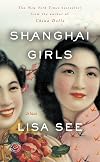
Read full review here: http://bit.ly/LLNtFO
This book is well-written with a compelling and tragic story line. However, were it a movie, I would rate it a strong R due to the violence and sexual content. One would argue that its subject matter, Shanghai of the 1930's, the Japanese invasion of the Sino-Japanese war, and the horrors that accompanied it, demand such treatment. However, I believe the best authors capable of conveying the concepts and evoking the proper visceral responses in the reader without such graphic detail.
It is also very bleak, with little relief to either reader or protagonist. To quote Pearl: "my life has not had three days of happiness or three days of sunshine." She emerges with a better understanding of her mother after twenty years of hardship, but I found the book otherwise without enough character growth for my taste.
However, with its long list of credits, Ms. Lee has done an excellent job with her research and the story feels very true to life. She draws from interviews and tales from real Chinese American immigrants, and one cannot help but have compassion for the protagonists and anger over the persecution and discrimination they suffered in the Land of the Free and the Home of the Brave in the 19th & 20th centuries. With her matter-of-fact prose, Ms. Lee manages to illuminate the lives of her people without banging a drum about it, which is both refreshing and compelling. She gives enough information and trusts the reader to get there on show more their own.
Even so, she fails to create the strong attachment between her protagonist and the reader necessary to make the book truly satisfying. Perhaps Pearl's inability to completely drop the barriers between herself and her family due to her emotional scars fosters the same barrier between her and the reader. I find unfortunate Ms. Lee's inability to convey one while dispelling the other. Sadly, Pearl's worst tragedies left this reader dry-eyed.
Bottom Line: This book provides excellent insight into the Chinese American experience, but is graphically violent without providing any emotional pay-off. I won't be reading this book again.
Footnote: I read in this review that this book improves when read in conjunction with its sequel, Dreams of Joy. If I read it and find I agree, I'll amend my review as did the above critic. However, for now, I remain skeptical. show less
This book is well-written with a compelling and tragic story line. However, were it a movie, I would rate it a strong R due to the violence and sexual content. One would argue that its subject matter, Shanghai of the 1930's, the Japanese invasion of the Sino-Japanese war, and the horrors that accompanied it, demand such treatment. However, I believe the best authors capable of conveying the concepts and evoking the proper visceral responses in the reader without such graphic detail.
It is also very bleak, with little relief to either reader or protagonist. To quote Pearl: "my life has not had three days of happiness or three days of sunshine." She emerges with a better understanding of her mother after twenty years of hardship, but I found the book otherwise without enough character growth for my taste.
However, with its long list of credits, Ms. Lee has done an excellent job with her research and the story feels very true to life. She draws from interviews and tales from real Chinese American immigrants, and one cannot help but have compassion for the protagonists and anger over the persecution and discrimination they suffered in the Land of the Free and the Home of the Brave in the 19th & 20th centuries. With her matter-of-fact prose, Ms. Lee manages to illuminate the lives of her people without banging a drum about it, which is both refreshing and compelling. She gives enough information and trusts the reader to get there on show more their own.
Even so, she fails to create the strong attachment between her protagonist and the reader necessary to make the book truly satisfying. Perhaps Pearl's inability to completely drop the barriers between herself and her family due to her emotional scars fosters the same barrier between her and the reader. I find unfortunate Ms. Lee's inability to convey one while dispelling the other. Sadly, Pearl's worst tragedies left this reader dry-eyed.
Bottom Line: This book provides excellent insight into the Chinese American experience, but is graphically violent without providing any emotional pay-off. I won't be reading this book again.
Footnote: I read in this review that this book improves when read in conjunction with its sequel, Dreams of Joy. If I read it and find I agree, I'll amend my review as did the above critic. However, for now, I remain skeptical. show less
Read the complete review here: http://bit.ly/LYgW5x
The Guernsey Literary and Potato Peel Pie Society came through my front door, another one of my friend Ginger's recommendations. Truth to tell, my #1 daughter-in-law, Ariane, recommended it to me first by a couple of months, but she failed to actually put the book into my hands and so it slipped by me. When she reminded me—she was there when Ginger dropped by—I remembered, as I recalled her repeated admonition: "Yeah. The author got the manuscript finished, but she never published it. Then she died, and her niece came along and got it published. But you have to publish your book because I'm not a writer and can't do that!"
In truth, Ms. Shaffer fell into ill health while in the process of getting her book ready to be published, and Ms. Barrows did the extra work the editors required before it went to print, Ms. Shaffer still living, but the sentiment is the same. I really appreciate Ariane's vote of confidence. It helps to keep me moving forward. But I digress. Ginger and Ariane are both correct. I love this book. My sister, Carrie—also present at the time—also read it and recommended it. It begs the questions: was I the only person who hadn't read this book? I wouldn't be surprised, as it is quite enchanting.
The second book in a week I've read focused on a writer trying to figure out what to write, like Once Upon A Tour, GLPPS is not truly about the writing but about the people around the writer who influence and show more inspire her. In this case, the author in question, Juliet, living in 1946-London receives a query from a complete stranger living on the isle of Guernsey, a little bit of England off the coast of France, one of what are known as the Channel Isles. Unable to expend the resources to protect it, the UK allowed Germany to overrun Guernsey during the war, and its inhabitants lived under Nazi Occupation for five years. The Guernsey Literary and Potato Peel Pie Society is formed as a spur-of-the-moment ruse to cover illicit activities from the Nazis but ultimately grows into a group of people who use literature and camaraderie to help one another get through the hardships and heartbreak of the war. This book is about how Juliet comes to know and love what once were complete strangers and how they change her life forever, as she does for them.
A cast of enchanting characters populate Guernsey: a quiet stone mason/pig farmer, quite common but the backbone of the group; a senior lady who mothers everyone and lends the disparate group an air of respectability; an aging fisherman who is forced to send his grandson to England to escape the Occupation, then loses his daughter and her newborn on the day the Germans roll in; an eccentric free spirit rumored to be a witch who sells her herbal concoctions in a market stall; a drunken valet impersonating his absent lord of an employer and draining his wine cellar; an orphaned love child in desperate need of a mother; a holier-than-thou busybody who condemns everyone and everything; a courageous young woman, the heart of group, who binds them all together with love and self-sacrifice. Juliet is courted by a rich, pushy American, is doted on by her editor, supported by her girlhood friend, and embraced by the good people of Guernsey.
I find "correspondence" novels somewhat gimmicky and often strained, especially because letters between friends tend to rely a great deal upon previous mutual understanding which doesn't translate well into storytelling. Either the reader is forced to accept that the correspondents write tomes filled with unnecessary (to the recipient) minutiae with each and every letter they send, or the details feel too sketchy, unsatisfying, or even confusing to the reader. However, Mdms. Shaffers and Barrows weave an engrossing, heart-warming, and sometimes tear-jerking tale with just the right balance between plausibility and necessary narrative. The voices of each character are distinctive, humorous, and natural. The tone is light and generous, albeit sad at times. This is, after all, a story about the privations of war, starvation, oppression, betrayal, and brutality, but also about hope and courage and love and sacrifice.
The book ends with joy and victory. True, the war is over, but life is still difficult. Shortages abound and the healing is slow. Europe still reels in the aftershocks of pandemic destruction. But, the new day is dawning, Guernsey is picking itself up and dusting itself off, setting about the work of rebuilding, as is London and the rest of the UK. Hope gleams brightly and love, if not able to conquer all, overcomes a great deal. It inspires hope and infuses fresh courage and determination in our friends. Happily ever after becomes a glorious new beginning.
Bottom Line: Read this book. I borrowed my copy, but I want to own it. It's on my read and read again list. show less
The Guernsey Literary and Potato Peel Pie Society came through my front door, another one of my friend Ginger's recommendations. Truth to tell, my #1 daughter-in-law, Ariane, recommended it to me first by a couple of months, but she failed to actually put the book into my hands and so it slipped by me. When she reminded me—she was there when Ginger dropped by—I remembered, as I recalled her repeated admonition: "Yeah. The author got the manuscript finished, but she never published it. Then she died, and her niece came along and got it published. But you have to publish your book because I'm not a writer and can't do that!"
In truth, Ms. Shaffer fell into ill health while in the process of getting her book ready to be published, and Ms. Barrows did the extra work the editors required before it went to print, Ms. Shaffer still living, but the sentiment is the same. I really appreciate Ariane's vote of confidence. It helps to keep me moving forward. But I digress. Ginger and Ariane are both correct. I love this book. My sister, Carrie—also present at the time—also read it and recommended it. It begs the questions: was I the only person who hadn't read this book? I wouldn't be surprised, as it is quite enchanting.
The second book in a week I've read focused on a writer trying to figure out what to write, like Once Upon A Tour, GLPPS is not truly about the writing but about the people around the writer who influence and show more inspire her. In this case, the author in question, Juliet, living in 1946-London receives a query from a complete stranger living on the isle of Guernsey, a little bit of England off the coast of France, one of what are known as the Channel Isles. Unable to expend the resources to protect it, the UK allowed Germany to overrun Guernsey during the war, and its inhabitants lived under Nazi Occupation for five years. The Guernsey Literary and Potato Peel Pie Society is formed as a spur-of-the-moment ruse to cover illicit activities from the Nazis but ultimately grows into a group of people who use literature and camaraderie to help one another get through the hardships and heartbreak of the war. This book is about how Juliet comes to know and love what once were complete strangers and how they change her life forever, as she does for them.
A cast of enchanting characters populate Guernsey: a quiet stone mason/pig farmer, quite common but the backbone of the group; a senior lady who mothers everyone and lends the disparate group an air of respectability; an aging fisherman who is forced to send his grandson to England to escape the Occupation, then loses his daughter and her newborn on the day the Germans roll in; an eccentric free spirit rumored to be a witch who sells her herbal concoctions in a market stall; a drunken valet impersonating his absent lord of an employer and draining his wine cellar; an orphaned love child in desperate need of a mother; a holier-than-thou busybody who condemns everyone and everything; a courageous young woman, the heart of group, who binds them all together with love and self-sacrifice. Juliet is courted by a rich, pushy American, is doted on by her editor, supported by her girlhood friend, and embraced by the good people of Guernsey.
I find "correspondence" novels somewhat gimmicky and often strained, especially because letters between friends tend to rely a great deal upon previous mutual understanding which doesn't translate well into storytelling. Either the reader is forced to accept that the correspondents write tomes filled with unnecessary (to the recipient) minutiae with each and every letter they send, or the details feel too sketchy, unsatisfying, or even confusing to the reader. However, Mdms. Shaffers and Barrows weave an engrossing, heart-warming, and sometimes tear-jerking tale with just the right balance between plausibility and necessary narrative. The voices of each character are distinctive, humorous, and natural. The tone is light and generous, albeit sad at times. This is, after all, a story about the privations of war, starvation, oppression, betrayal, and brutality, but also about hope and courage and love and sacrifice.
The book ends with joy and victory. True, the war is over, but life is still difficult. Shortages abound and the healing is slow. Europe still reels in the aftershocks of pandemic destruction. But, the new day is dawning, Guernsey is picking itself up and dusting itself off, setting about the work of rebuilding, as is London and the rest of the UK. Hope gleams brightly and love, if not able to conquer all, overcomes a great deal. It inspires hope and infuses fresh courage and determination in our friends. Happily ever after becomes a glorious new beginning.
Bottom Line: Read this book. I borrowed my copy, but I want to own it. It's on my read and read again list. show less

Read complete review here: http://bit.ly/LYfss0
To be totally honest, I am always a touch leery of "Mormon" literature. Don't get me wrong: I like to read books about characters who try to hold to the same standards as my own. I enjoy reading about their struggles to live in but not of the world. I especially appreciate getting through an entire book without being blindsided by gratuitous sexual content or foul language or graphic violence or any combination of the three. I believe it's possible to tell interesting stories without having to resort to the salacious, and I appreciate it when the authors I read prove it.
However, I don't care to be preached at. When I want to read about Gospel doctrine, I head to the nonfiction aisle and, more often than not, authors whose names begin with "Elder". More importantly, I don't believe that LDS writers should be held to a lower standard simply because they are LDS. Sacrificing quality for safety is a lose:lose situation. We are an educated people. Shouldn't the literature we produce reflect that?
All of the above illustrates why I truly enjoy reading Ms. Huff. Her only overtly LDS work, Once Upon A Tour is, hands down, my favorite of the three I have read. The premise is a simple one—Mormon girl strikes out on her own in search of romance and finds herself in way above her head in a secular, instant-gratification world—but Ms. Huff manages to employ her fresh approach and insightful characters to flesh out the tale and make it show more her own.
She peppers her story with what feels like firsthand experience in touring Eastern Europe—Romania, Hungary, Austria, Czech Republic, Germany and Switzerland—and manages to make her locales integral to the plot. She also intersperses Alina's fanciful prose in the story, which serves well when the character's little stories and overactive imagination get her into plenty of trouble. When life begins to reflect art, Alina struggles to differentiate the two.
I must admit here that I fretted in the beginning because Alina was acting—well—not like a good Mormon girl should, letting herself be hit on by a handsome stranger, getting way too physical way too fast, allowing him all sorts of presumptions, and I had difficulty accepting the speed with which their relationship moved. But, Ms. Huff puts Alina's indiscretions to good purpose and crafts a tale about temptation, redemption, true love vs. physical attraction, and how easy it is to get swept away by our emotions when we let down our guard.
Ms. Huff manages all this convincingly without preaching or teaching a Sunday school class. In my opinion, some spiritual experiences are lost in any translation—"words cannot express"—and shouldn't be attempted, but too many LDS fiction authors do just that. The result is unfortunate. In thinking about it, maybe I just believe such profound truths shouldn't be fictionalized.
Ms. Huff nicely "fades to black", more or less, in the scenes alluding to Alina's spiritual experiences. She doesn't try to quote prayers or scriptures or describe moments of personal revelation in intimate detail. Rather, she focuses on the results, which I find very refreshing.
On the flip side, Alina's indiscretions sometimes get on the far side of PG-13—the far, far side—which made me squirmy. But then, I believe that in itself presents a problem with which writers of LDS romance struggle. At least it is for me. Good writing is about evoking visceral responses in the reader. How does one convey the emotions, both good and bad, without pushing into the squirmy place? Even so, it's a skill worth honing for, in the words of my sister, "I don't want to read a Mormon Harlequin romance."
I'm a fade-to-black person myself. I have written the other and have decided that I would rather not steam up the proverbial car windows of my readers with lots of heavy breathing. I want to inspiring more elevated sensibilities—sentiments more worthy of my efforts. Writing historical fiction makes that easier because the social norms were far more strict in my time period of choice, but I believe Ms. Huff does a fairly good job of finding the balance for contemporary fiction. She teeters, but manages to step back from the edge, which I believe is the whole point of the story.
Bottom line: I recommend this book and look forward to Ms. Huff's future efforts. How do you feel about LDS romantic fiction? Who is your favorite LDS writer? show less
To be totally honest, I am always a touch leery of "Mormon" literature. Don't get me wrong: I like to read books about characters who try to hold to the same standards as my own. I enjoy reading about their struggles to live in but not of the world. I especially appreciate getting through an entire book without being blindsided by gratuitous sexual content or foul language or graphic violence or any combination of the three. I believe it's possible to tell interesting stories without having to resort to the salacious, and I appreciate it when the authors I read prove it.
However, I don't care to be preached at. When I want to read about Gospel doctrine, I head to the nonfiction aisle and, more often than not, authors whose names begin with "Elder". More importantly, I don't believe that LDS writers should be held to a lower standard simply because they are LDS. Sacrificing quality for safety is a lose:lose situation. We are an educated people. Shouldn't the literature we produce reflect that?
All of the above illustrates why I truly enjoy reading Ms. Huff. Her only overtly LDS work, Once Upon A Tour is, hands down, my favorite of the three I have read. The premise is a simple one—Mormon girl strikes out on her own in search of romance and finds herself in way above her head in a secular, instant-gratification world—but Ms. Huff manages to employ her fresh approach and insightful characters to flesh out the tale and make it show more her own.
She peppers her story with what feels like firsthand experience in touring Eastern Europe—Romania, Hungary, Austria, Czech Republic, Germany and Switzerland—and manages to make her locales integral to the plot. She also intersperses Alina's fanciful prose in the story, which serves well when the character's little stories and overactive imagination get her into plenty of trouble. When life begins to reflect art, Alina struggles to differentiate the two.
I must admit here that I fretted in the beginning because Alina was acting—well—not like a good Mormon girl should, letting herself be hit on by a handsome stranger, getting way too physical way too fast, allowing him all sorts of presumptions, and I had difficulty accepting the speed with which their relationship moved. But, Ms. Huff puts Alina's indiscretions to good purpose and crafts a tale about temptation, redemption, true love vs. physical attraction, and how easy it is to get swept away by our emotions when we let down our guard.
Ms. Huff manages all this convincingly without preaching or teaching a Sunday school class. In my opinion, some spiritual experiences are lost in any translation—"words cannot express"—and shouldn't be attempted, but too many LDS fiction authors do just that. The result is unfortunate. In thinking about it, maybe I just believe such profound truths shouldn't be fictionalized.
Ms. Huff nicely "fades to black", more or less, in the scenes alluding to Alina's spiritual experiences. She doesn't try to quote prayers or scriptures or describe moments of personal revelation in intimate detail. Rather, she focuses on the results, which I find very refreshing.
On the flip side, Alina's indiscretions sometimes get on the far side of PG-13—the far, far side—which made me squirmy. But then, I believe that in itself presents a problem with which writers of LDS romance struggle. At least it is for me. Good writing is about evoking visceral responses in the reader. How does one convey the emotions, both good and bad, without pushing into the squirmy place? Even so, it's a skill worth honing for, in the words of my sister, "I don't want to read a Mormon Harlequin romance."
I'm a fade-to-black person myself. I have written the other and have decided that I would rather not steam up the proverbial car windows of my readers with lots of heavy breathing. I want to inspiring more elevated sensibilities—sentiments more worthy of my efforts. Writing historical fiction makes that easier because the social norms were far more strict in my time period of choice, but I believe Ms. Huff does a fairly good job of finding the balance for contemporary fiction. She teeters, but manages to step back from the edge, which I believe is the whole point of the story.
Bottom line: I recommend this book and look forward to Ms. Huff's future efforts. How do you feel about LDS romantic fiction? Who is your favorite LDS writer? show less
This review includes the movie of the same name with Kate Beckisale and Sir Ian McKlellan. View complete review at: http://bit.ly/MBUKZc
I've wanted to see this movie ever since I saw Kate Beckinsale plug it on Letterman way back in the day. When I finally caught Cold Comfort Farms on Netflix, I enjoyed it so well, I had to scrounge our local library and actually read the book.
CCF is an entertaining little film, and despite the brilliant turns by an all-star cast (Sir Ian McKlellan, Joanna Lumley, Eileen Aikins and Rufus Sewell, to name a few), the real star of the show is author Stella Gibbons, and Malcolm Bradbury who outdid himself remaining true to the book when he wrote the screenplay.
Ms. Gibbons' writing is witty, pithy, and bitingly satirical. To be perfectly honest, as much as I try to write an intelligent review of the book, I find this reviewer on GoodReads says absolutely everything I way to say, so go read it. But, especially, read the book before you see the movie. It helps to understand the indecipherable linguistics of the Starkadder tribe who speak a south Sussex argot captured by Ms. Gibbons. You might still not know what they mean, but at least you'll hear it properly.
Ms. Gibbons has a way with words and contrasts sparking clean and tony London (home of glam Mrs. Smiling and handsome Charles Fairford) with grimy and gloriously bleak country living with place names like Howling and Beershorn, Nettle Flitch field and Mockuncle Hill. She satires the show more Starkadders fatalism by naming their horses Arsenic, Travail and Viper. The cows are Feckless, Graceless, Pointless and Aimless. Graceless loses her leg now and then.
As for the film, young Kate is great is the orphaned, impoverished and meddlesome Flora Poste who, in her determination to avoid working, decides to mooch off her poor and backward relations, and in the process expends a great deal of effort rearranging all their lives. Joanna Lumbley is absolutely fabulous as Flora's friend and mentor, the merry widow Mrs. Mary Smiling who gets comparatively little screen time but makes the most of what she's got. Mrs. Smiling keeps our Flora supplied with advice, fashion magazines and gum boots to keep her sane in her remote isolation.
Heading the south Sussex tribe of Starkadders (all over-large and under-washed) are Judith (Aikens), clinically depressed and fixated on her second son, and her husband Amos (Sir Ian McKlellan). Sir Ian gives a standout performance as the erstwhile preacher at the Church of the Quivery Brethren. Flora deftly maneuvers Amos out of the house and out of the way of eldest son Ruben's improvements with the temptation of the life of an itinerant preacher roaming the countryside in a Ford van.
Rufus Sewell plays the second son, Seth, virility walking and the fecundity of the countryside personified. Seth is everything Ms. Gibbons wants to say about the popular genre of her time (earthy novels about the animal lives of country folk). He plays at being the neighborhood bad boy, but in truth, all he wants to do is watch the "talkies". Flora disposes of his untidiness by sending him off to become a Hollywood heartthrob. One is left admiring the way Ms. Gibbons pens a tome entirely about sex without in sex in it at all.
Other family folk who populate the house are daughter Elfine (the flighty nature's child) in love with the country squire Dick Hawk-Monitor of Hautcouture Hall, Urk (a creepy cousin of some sort who has been promised Elfine), and Adam Lambsbreath, an aged hired hand who in the movie appears to be Elfine's father, but is not.
Aging matriarch Ada Doom, Flora's great-aunt, bullies them all from the seclusion of her room. She feigns madness to keep them shackled to the farm because there have always been Starkadders at Cold Comfort. After all, she saw something nasty in the woodshed. . . . or what it the cowshed. . . or maybe it was the bike shed or tool shed. Anyway, it was a shed and it was nasty. Various other colorful family and hired folk round out both cast and novel.
So much goes on in this short book and film, so many colorful characters populate it and Flora spends so much time fixing everyone else, the reader must watch carefully to catch Flora's own romance which Ms.Gibbons slips in so subtly, it's almost missed. I much prefer the way Ms. Gibbons treated the final resolution of Flora's own circumstances over that of Mr. Bradbury, but each ending is most appropriate for its respective medium and highly satisfactory.
Bottom line: I strongly recommend this book and the film adaptation. I will definitely be reading Ms. Gibbons' Cold Comfort sequels. My version included an introduction by Lynne Truss which I found quite enlightening to begin with.
********
Footnote: Unlike the book, the movie capitalizes on Flora's initial attempt to become a writer. This made no sense to me because, other than the quote above and a place where Elfine announces she's going to write poetry when she's fifty, it isn't mentioned again in the novel. However, how else could the screenwriter work in the flowery prose Ms. Gibbons seems to mock, other than by having Flora create some of her own? Witness:
Dawn crept over the Downs like a sinister white animal, followed bythe snarling cries of a wind eating its way between the black boughs of the thorns. The wind was the furious voice of this sluggish animal light that was baring the dormers and mullions and scullions of Cold Comfort Farm. ― Stella Gibbons, Cold Comfort Farm
Only the utter incongruity of these passages in the book (and their stark similarity to works like Wuthering Heights) hints at Ms. Gibbons' gentle poke at the genre, but the film decides to make a stronger jab at it.
Golly. Glad I never get caught in traps like that. show less
I've wanted to see this movie ever since I saw Kate Beckinsale plug it on Letterman way back in the day. When I finally caught Cold Comfort Farms on Netflix, I enjoyed it so well, I had to scrounge our local library and actually read the book.
CCF is an entertaining little film, and despite the brilliant turns by an all-star cast (Sir Ian McKlellan, Joanna Lumley, Eileen Aikins and Rufus Sewell, to name a few), the real star of the show is author Stella Gibbons, and Malcolm Bradbury who outdid himself remaining true to the book when he wrote the screenplay.
Ms. Gibbons' writing is witty, pithy, and bitingly satirical. To be perfectly honest, as much as I try to write an intelligent review of the book, I find this reviewer on GoodReads says absolutely everything I way to say, so go read it. But, especially, read the book before you see the movie. It helps to understand the indecipherable linguistics of the Starkadder tribe who speak a south Sussex argot captured by Ms. Gibbons. You might still not know what they mean, but at least you'll hear it properly.
Ms. Gibbons has a way with words and contrasts sparking clean and tony London (home of glam Mrs. Smiling and handsome Charles Fairford) with grimy and gloriously bleak country living with place names like Howling and Beershorn, Nettle Flitch field and Mockuncle Hill. She satires the show more Starkadders fatalism by naming their horses Arsenic, Travail and Viper. The cows are Feckless, Graceless, Pointless and Aimless. Graceless loses her leg now and then.
As for the film, young Kate is great is the orphaned, impoverished and meddlesome Flora Poste who, in her determination to avoid working, decides to mooch off her poor and backward relations, and in the process expends a great deal of effort rearranging all their lives. Joanna Lumbley is absolutely fabulous as Flora's friend and mentor, the merry widow Mrs. Mary Smiling who gets comparatively little screen time but makes the most of what she's got. Mrs. Smiling keeps our Flora supplied with advice, fashion magazines and gum boots to keep her sane in her remote isolation.
Heading the south Sussex tribe of Starkadders (all over-large and under-washed) are Judith (Aikens), clinically depressed and fixated on her second son, and her husband Amos (Sir Ian McKlellan). Sir Ian gives a standout performance as the erstwhile preacher at the Church of the Quivery Brethren. Flora deftly maneuvers Amos out of the house and out of the way of eldest son Ruben's improvements with the temptation of the life of an itinerant preacher roaming the countryside in a Ford van.
Rufus Sewell plays the second son, Seth, virility walking and the fecundity of the countryside personified. Seth is everything Ms. Gibbons wants to say about the popular genre of her time (earthy novels about the animal lives of country folk). He plays at being the neighborhood bad boy, but in truth, all he wants to do is watch the "talkies". Flora disposes of his untidiness by sending him off to become a Hollywood heartthrob. One is left admiring the way Ms. Gibbons pens a tome entirely about sex without in sex in it at all.
Other family folk who populate the house are daughter Elfine (the flighty nature's child) in love with the country squire Dick Hawk-Monitor of Hautcouture Hall, Urk (a creepy cousin of some sort who has been promised Elfine), and Adam Lambsbreath, an aged hired hand who in the movie appears to be Elfine's father, but is not.
Aging matriarch Ada Doom, Flora's great-aunt, bullies them all from the seclusion of her room. She feigns madness to keep them shackled to the farm because there have always been Starkadders at Cold Comfort. After all, she saw something nasty in the woodshed. . . . or what it the cowshed. . . or maybe it was the bike shed or tool shed. Anyway, it was a shed and it was nasty. Various other colorful family and hired folk round out both cast and novel.
So much goes on in this short book and film, so many colorful characters populate it and Flora spends so much time fixing everyone else, the reader must watch carefully to catch Flora's own romance which Ms.Gibbons slips in so subtly, it's almost missed. I much prefer the way Ms. Gibbons treated the final resolution of Flora's own circumstances over that of Mr. Bradbury, but each ending is most appropriate for its respective medium and highly satisfactory.
Bottom line: I strongly recommend this book and the film adaptation. I will definitely be reading Ms. Gibbons' Cold Comfort sequels. My version included an introduction by Lynne Truss which I found quite enlightening to begin with.
********
Footnote: Unlike the book, the movie capitalizes on Flora's initial attempt to become a writer. This made no sense to me because, other than the quote above and a place where Elfine announces she's going to write poetry when she's fifty, it isn't mentioned again in the novel. However, how else could the screenwriter work in the flowery prose Ms. Gibbons seems to mock, other than by having Flora create some of her own? Witness:
Dawn crept over the Downs like a sinister white animal, followed bythe snarling cries of a wind eating its way between the black boughs of the thorns. The wind was the furious voice of this sluggish animal light that was baring the dormers and mullions and scullions of Cold Comfort Farm. ― Stella Gibbons, Cold Comfort Farm
Only the utter incongruity of these passages in the book (and their stark similarity to works like Wuthering Heights) hints at Ms. Gibbons' gentle poke at the genre, but the film decides to make a stronger jab at it.
Golly. Glad I never get caught in traps like that. show less
Read complete review here: http://bit.ly/M5Rhnj
Central to the plot of Deconstructing Infatuation are Helen Hayes, a late thirty-something literary agent living in Manhattan, and Tiziano Conti, a handsome Florentine in town to run the New York Marathon (one would assume, referred as it is as the marathon). Helen has a significant other who lives in his own apartment across town when he is in town which is not often as he is traveling 360 days of the year.
Her roommate, Marlene, comes and goes, it would seem, although the reasons for her itinerancy are never explained. It's enough to the author and presumably to the reader that Marlene will be out of town for a month and wants to sublet her bedroom, which she has done in the past with less than satisfactory results. However, this negative experience does not deter the roommates, and the story opens on the pair holding an open house in an attempt to find the right temporary tenant.
Tiziano shoulders his way in as the Johnny-come-lately five minutes before the end of the open house. He is sexy, impudent, and Italian. Helen, rigid, compulsively organized and scheduled with her life properly pigeonholed in all the correct places, dislikes messy, spontaneous Tiziano from the start. Marlene (the one leaving) pushes to accept him, while Helen (the roommate who will actually have to live with him) wants to send him packing. Marlene ultimately gets her way.
Exit Marlene. Commence the devolution of uptight, Type A, perfectly rational show more and calculating Helen into a spontaneous, irresponsible and ultimately irrational romantic. Tiziano's insidious corrupting influence animal magnetism and existential philosophy gradually overcomes Helen to the point that she decides to throw her entire life away based on a lot of imported Italian beer, a few mornings of burnt bagels, two weeks of flirtation, and two days of passionate wild abandon. And none of it makes any sense—especially not the abrupt and far from satisfying conclusion.
But, that's Ms. Cardus' entire point. She writes in a matter-of-fact almost-clinical fashion doing exactly what she sets out to do: she deconstructs Helen's, if not inexplicable, unexpected and uncharacteristic anticipated renunciation of everything she had spent her entire adult life creating. Without making any moral judgments on their "beautiful interlude", she attempts to find reason in Helen's unreasonable impulse to fling everything over for a guy who may have no intention of progressing the relationship beyond the physical.
Ultimately, Helen knows absolutely nothing about Tiziano except that he excites her physically and makes her dissatisfied with and distrustful of her long-standing relationship with the traveler. Moreover, she never attempts to find out anything about him, which is only one of the inexplicable things she does. Add to that list her unfathomable expectation of finding Tiziano anxiously awaiting her return and ready to run away with her after she has spent a ten-day vacation with her boyfriend, and her grand idea that the best way to hang on to both is to "entertain" one to conceal the fact that the other lurks outside the bedroom door. Is it any wonder that the book ends as it does? . . . and that is how, exactly?
As a reviewer, it's easy to pass judgment on Helen's behavior and rather difficult to keep from finger-wagging. However, I must admit that Ms. Cardus does a good job of bluntly and objectively examining the situation which curiously instills in the reader the very sensibilities she wishes to convey—that of "is that all there is?" It's a question she leaves her protagonist asking and stubbornly refuses to answer. Ms. Cardus gets high marks for an intelligent, concise and well-written work. I believe she accomplished what she set out to do and can be proud of her efforts.
Be that as it may, from my personal perspective, I find the entire situation difficult to fathom, starting from the moment the two women agree to allow a complete and total stranger not only into their lives—or, more to the point, Helen's unprotected life—based solely on the fact that he's attractive and they're tired of looking at candidates. Never mind the potential intimacy issues. How do they know he's not an ax-murderer?
Neither have I ever been able to relate to a lifestyle where casual sex is considered the opening overtures of a relationship and "commitment" means extending that intimacy beyond the physical, i.e., get to know someone beyond their first name. Why bother to find out the unimportant stuff like, I dunno, what they do for a living or if they are married or whether or not they are even someone you want to spend any length of time with at all? Neither do I think that Ms. Cardus was trying to make that point. We seem to look out on two very different worlds. But again, it's a matter of taste.
Also a matter of taste: I skipped over probably six paragraphs total of unnecessary love-making, but it was not too terribly graphic or prevalent. I think she dropped perhaps two F-bombs and a few more OMG-type profanities, but it wasn't anything more than one is exposed to in public and probably a great deal less.
Bottom line: This book is very well-crafted with interesting, likable characters in what I fear are all-too-true-to-life situations. It is emotionally compelling and distancing both at once, which takes skill, and is concise and to the point which is harder still. If you can live with the salacious content (or self-censor), I would recommend this book. If nothing else, it provides a window into how the other half lives. show less
Central to the plot of Deconstructing Infatuation are Helen Hayes, a late thirty-something literary agent living in Manhattan, and Tiziano Conti, a handsome Florentine in town to run the New York Marathon (one would assume, referred as it is as the marathon). Helen has a significant other who lives in his own apartment across town when he is in town which is not often as he is traveling 360 days of the year.
Her roommate, Marlene, comes and goes, it would seem, although the reasons for her itinerancy are never explained. It's enough to the author and presumably to the reader that Marlene will be out of town for a month and wants to sublet her bedroom, which she has done in the past with less than satisfactory results. However, this negative experience does not deter the roommates, and the story opens on the pair holding an open house in an attempt to find the right temporary tenant.
Tiziano shoulders his way in as the Johnny-come-lately five minutes before the end of the open house. He is sexy, impudent, and Italian. Helen, rigid, compulsively organized and scheduled with her life properly pigeonholed in all the correct places, dislikes messy, spontaneous Tiziano from the start. Marlene (the one leaving) pushes to accept him, while Helen (the roommate who will actually have to live with him) wants to send him packing. Marlene ultimately gets her way.
Exit Marlene. Commence the devolution of uptight, Type A, perfectly rational show more and calculating Helen into a spontaneous, irresponsible and ultimately irrational romantic. Tiziano's insidious corrupting influence animal magnetism and existential philosophy gradually overcomes Helen to the point that she decides to throw her entire life away based on a lot of imported Italian beer, a few mornings of burnt bagels, two weeks of flirtation, and two days of passionate wild abandon. And none of it makes any sense—especially not the abrupt and far from satisfying conclusion.
But, that's Ms. Cardus' entire point. She writes in a matter-of-fact almost-clinical fashion doing exactly what she sets out to do: she deconstructs Helen's, if not inexplicable, unexpected and uncharacteristic anticipated renunciation of everything she had spent her entire adult life creating. Without making any moral judgments on their "beautiful interlude", she attempts to find reason in Helen's unreasonable impulse to fling everything over for a guy who may have no intention of progressing the relationship beyond the physical.
Ultimately, Helen knows absolutely nothing about Tiziano except that he excites her physically and makes her dissatisfied with and distrustful of her long-standing relationship with the traveler. Moreover, she never attempts to find out anything about him, which is only one of the inexplicable things she does. Add to that list her unfathomable expectation of finding Tiziano anxiously awaiting her return and ready to run away with her after she has spent a ten-day vacation with her boyfriend, and her grand idea that the best way to hang on to both is to "entertain" one to conceal the fact that the other lurks outside the bedroom door. Is it any wonder that the book ends as it does? . . . and that is how, exactly?
As a reviewer, it's easy to pass judgment on Helen's behavior and rather difficult to keep from finger-wagging. However, I must admit that Ms. Cardus does a good job of bluntly and objectively examining the situation which curiously instills in the reader the very sensibilities she wishes to convey—that of "is that all there is?" It's a question she leaves her protagonist asking and stubbornly refuses to answer. Ms. Cardus gets high marks for an intelligent, concise and well-written work. I believe she accomplished what she set out to do and can be proud of her efforts.
Be that as it may, from my personal perspective, I find the entire situation difficult to fathom, starting from the moment the two women agree to allow a complete and total stranger not only into their lives—or, more to the point, Helen's unprotected life—based solely on the fact that he's attractive and they're tired of looking at candidates. Never mind the potential intimacy issues. How do they know he's not an ax-murderer?
Neither have I ever been able to relate to a lifestyle where casual sex is considered the opening overtures of a relationship and "commitment" means extending that intimacy beyond the physical, i.e., get to know someone beyond their first name. Why bother to find out the unimportant stuff like, I dunno, what they do for a living or if they are married or whether or not they are even someone you want to spend any length of time with at all? Neither do I think that Ms. Cardus was trying to make that point. We seem to look out on two very different worlds. But again, it's a matter of taste.
Also a matter of taste: I skipped over probably six paragraphs total of unnecessary love-making, but it was not too terribly graphic or prevalent. I think she dropped perhaps two F-bombs and a few more OMG-type profanities, but it wasn't anything more than one is exposed to in public and probably a great deal less.
Bottom line: This book is very well-crafted with interesting, likable characters in what I fear are all-too-true-to-life situations. It is emotionally compelling and distancing both at once, which takes skill, and is concise and to the point which is harder still. If you can live with the salacious content (or self-censor), I would recommend this book. If nothing else, it provides a window into how the other half lives. show less
Read complete review here: http://bit.ly/LSDsLv
The date: August 15, 1939. The place: Storstrombroen in Denmark. The people: a pilot, a copilot, two oil-company executives, a German corporate lawyer and a British member of Parliament. A fiery crash, suspicious circumstances, conflicting reports, five deaths, and one survivor. A world on the brink of war. All true facts, all meticulously documented.
Add in Zionists, Palestinians, an arms race, the military industrial complex on three continents, psychics, nightmares, hypnotists, past life regression, a Peruvian shaman and espionage. Garnish with a famous bridge and landmark notorious for Nazis gun placements, a watery grave for scores of Allied aircraft and a popular suicide destination. Stir well and you have a really great action/suspense thriller. All the elements are there.
Tom Clancy would have spun a tale of spy vs. spy, arms dealers, intercontinental assassins and Nazi infiltrators. John Grisham could have produced a novel rife with Big Oil, political intrigue, corporate posturing, dirty dealings, and sabotage. Dan Brown would have lead the reader down a maze of cold, hard facts and totalitarianism vs. deep conviction and heroic sacrifice, all against a backdrop of spiritual intensity and intricate relationships with consequences on a global scale spanning more than seven decades.
Cut-away of the
Lockhead Electra
Unfortunately, Ms. Egan doesn't do any of these things. Lost and floundering in a sea of conflicting loyalties show more (conventional scholarly research vs. journeys of faith), she cannot decide which approach to take, dabbles with each and ultimately accomplishes none.
In an attempt to better understand her grandfather and explain the reasons for his death, she poured her heart and soul into this book. She sacrificed decades of her life and a significant amount of money to the effort. She retraced her grandfather's footsteps and researched as carefully as any historian working on their doctorate dissertation. However, her personal journey into the spiritual or supernatural arena left her doubting her own veracity (or at least growing fretful of what "true" historians would make of her work) and decided to make her research into fiction.
It doesn't work. Rather than focusing on the story and victims of the airplane crash in 1939, this book becomes the story of Ms. Egan in 2010, researching the crash and the gentleman she encounters in the process whom they both believe is the reincarnated pilot, the sole survivor. Working from opposite sides of the Atlantic, the pair pulled together all her research into the crash documentation, the guidance she received from psychics and the results of his hyponotherapy sessions with past life regression to come up with . . . . a sequence of events, at the very best.
She writes the bibliography right into the narrative. Contrived emails and Skype conversations between the author and her one created character consist of reporting to one another what the narrator has already discussed, the results of their investigations. The fabricated girlfriend and the real Canadian businessman living in London sit around in bed discussing what they have discovered while enjoying postcoital cigarettes and bottles of white wine.
Ms. Egan raises plenty of questions subsequent to her study of the documentation and crash investigation. Her research is so comprehensive, she seems to know each passenger and investigator intimately. She reports the facts of the anonymous gentleman's sessions and what he believes are the surviving pilot's experiences. But nothing coalesces. She doesn't truly commit to a theory, even fictitiously.
Amelia Earhart & her Lockhead Electra,
the same model as the ill-fated G-AESY
At the end of 379 painstaking pages, the strongest image she has created for the reader is of her study packed to the rafters with decades of accumulated books, folders, binders and file boxes. One feels overwhelmed at the sheer volume of information and abandoned beneath an avalanche of musty-smelling and nicotine-stained photocopies.
Ms. Egan's narrative voice is strong and well-educated. Her passion for her subject comes through on every page, as does her love for her grandfather, the strength of her faith, and her commitment to peace and humanity. One has to admire the blood, sweat, and tears she has devoted to this work and her courage in exposing to the world her belief system which most would call unorthodox, at best. I believe all of this invests her with the perfect right to write a non-fiction memoir without the thinly veiled attempts to fictionalize her experience. One would hope she will.
Bottom line: This is a fascinating story worthy of print. Ms. Egan's efforts are awe-inspiring. Lovers of history, particularly World War II history, will enjoy reading this book. show less
The date: August 15, 1939. The place: Storstrombroen in Denmark. The people: a pilot, a copilot, two oil-company executives, a German corporate lawyer and a British member of Parliament. A fiery crash, suspicious circumstances, conflicting reports, five deaths, and one survivor. A world on the brink of war. All true facts, all meticulously documented.
Add in Zionists, Palestinians, an arms race, the military industrial complex on three continents, psychics, nightmares, hypnotists, past life regression, a Peruvian shaman and espionage. Garnish with a famous bridge and landmark notorious for Nazis gun placements, a watery grave for scores of Allied aircraft and a popular suicide destination. Stir well and you have a really great action/suspense thriller. All the elements are there.
Tom Clancy would have spun a tale of spy vs. spy, arms dealers, intercontinental assassins and Nazi infiltrators. John Grisham could have produced a novel rife with Big Oil, political intrigue, corporate posturing, dirty dealings, and sabotage. Dan Brown would have lead the reader down a maze of cold, hard facts and totalitarianism vs. deep conviction and heroic sacrifice, all against a backdrop of spiritual intensity and intricate relationships with consequences on a global scale spanning more than seven decades.
Cut-away of the
Lockhead Electra
Unfortunately, Ms. Egan doesn't do any of these things. Lost and floundering in a sea of conflicting loyalties show more (conventional scholarly research vs. journeys of faith), she cannot decide which approach to take, dabbles with each and ultimately accomplishes none.
In an attempt to better understand her grandfather and explain the reasons for his death, she poured her heart and soul into this book. She sacrificed decades of her life and a significant amount of money to the effort. She retraced her grandfather's footsteps and researched as carefully as any historian working on their doctorate dissertation. However, her personal journey into the spiritual or supernatural arena left her doubting her own veracity (or at least growing fretful of what "true" historians would make of her work) and decided to make her research into fiction.
It doesn't work. Rather than focusing on the story and victims of the airplane crash in 1939, this book becomes the story of Ms. Egan in 2010, researching the crash and the gentleman she encounters in the process whom they both believe is the reincarnated pilot, the sole survivor. Working from opposite sides of the Atlantic, the pair pulled together all her research into the crash documentation, the guidance she received from psychics and the results of his hyponotherapy sessions with past life regression to come up with . . . . a sequence of events, at the very best.
She writes the bibliography right into the narrative. Contrived emails and Skype conversations between the author and her one created character consist of reporting to one another what the narrator has already discussed, the results of their investigations. The fabricated girlfriend and the real Canadian businessman living in London sit around in bed discussing what they have discovered while enjoying postcoital cigarettes and bottles of white wine.
Ms. Egan raises plenty of questions subsequent to her study of the documentation and crash investigation. Her research is so comprehensive, she seems to know each passenger and investigator intimately. She reports the facts of the anonymous gentleman's sessions and what he believes are the surviving pilot's experiences. But nothing coalesces. She doesn't truly commit to a theory, even fictitiously.
Amelia Earhart & her Lockhead Electra,
the same model as the ill-fated G-AESY
At the end of 379 painstaking pages, the strongest image she has created for the reader is of her study packed to the rafters with decades of accumulated books, folders, binders and file boxes. One feels overwhelmed at the sheer volume of information and abandoned beneath an avalanche of musty-smelling and nicotine-stained photocopies.
Ms. Egan's narrative voice is strong and well-educated. Her passion for her subject comes through on every page, as does her love for her grandfather, the strength of her faith, and her commitment to peace and humanity. One has to admire the blood, sweat, and tears she has devoted to this work and her courage in exposing to the world her belief system which most would call unorthodox, at best. I believe all of this invests her with the perfect right to write a non-fiction memoir without the thinly veiled attempts to fictionalize her experience. One would hope she will.
Bottom line: This is a fascinating story worthy of print. Ms. Egan's efforts are awe-inspiring. Lovers of history, particularly World War II history, will enjoy reading this book. show less
Read full review here: http://bit.ly/LYdaZH
The Owen family is large, with five living sons and two daughters, having put two sons in the ground during the Civil War. With the final return of the four soldiers of the family (Rulon, Carl, James, and father Rod), the family decides to leave their farm in the Shenandoah Valley, destroyed by the Union Army, and set off to Colorado territory to raise beef cattle.
Rod sets about gathering up families (including Rulon and his wife) to make up a wagon train, two of whom conveniently have daughters for Carl and James. Without letting on to the boys, he arranges for the marriages to take place the evening before they hit the trail. However, his plans are foiled when the preacher is called away to a dying woman's side. The two couple are forced to make the journey unhitched. Conflicts ensue.
This story centers on Carl who is engaged to Ida, and Ellen, who is engaged to James. The characterizations are somewhat predictable. Carl is noble if hot-blooded. Blonde Ida is shallow, manipulative and grasping. James is dutiful, hardworking and angry. Redhead Ellen is feisty, outspoken and, paradoxically, silently self-sacrificing. Rod goes around arranging everyone's lives with seemingly little thought and only token resistance from his long-suffering wife, Julia.
They say that only a few 19th century pioneers traveling through the western frontier ever suffered the harrowing experiences of the likes of the Donner Party or the Willie & Martin show more handcart companies. By and large, most journeys were long, boring days of drudgery, an extended if demanding camp-out. The Man From Shenandoah seems to have taken its cue from that particular truth. The Owen wagon train doesn't even encounter any Indians.
The book is a pleasant, casual read which requires little emotional investment. The characters are likable, the plots uncomplicated. Unlike These Is My Words by Nancy E. Turner, the reader is not left panting for breath at the end of every chapter, begging for a bit of respite. Despite the war, the outlaws, the carpetbaggers, the Union soldiers, the blizzards, and the unending toil, the lives of the Owen family go on rather smoothly, right down to the timely windfalls that make everything possible. Although the Big Bad Evil comes in the form of murderous cattle rustlers and Berto Acosta, by far the most promising (in a literary sense) conflict rests between the two brothers, Carl and James. Unfortunately, Ms. Ward doesn't get there in this book.
The Man From Shenandoah is intelligent and well-written, if paced a bit slow here and there. The plot is believable and the characters well-defined. Ms. Ward embraces the themes of family, honor and sacrifice with certainty. Filial obedience, a foreign concept in the 21st century, finds its place and its justification in the Owen family.
Ms. Ward masterfully transports the reader to the 19th century. She manages authenticity without assaulting the reader with obscenities and constant sexual innuendo. Her her calm, even voice with a slight country twang rings true. Her writing creates a safe and engaging environment for youth which at the same time satisfies the adult reader.
Bottom line: Ms. Ward has provided me with a pleasing introduction to the Western genre. I enjoyed reading this book and have already started the second installment of the Owens Family Saga, Ride to Raton. show less
The Owen family is large, with five living sons and two daughters, having put two sons in the ground during the Civil War. With the final return of the four soldiers of the family (Rulon, Carl, James, and father Rod), the family decides to leave their farm in the Shenandoah Valley, destroyed by the Union Army, and set off to Colorado territory to raise beef cattle.
Rod sets about gathering up families (including Rulon and his wife) to make up a wagon train, two of whom conveniently have daughters for Carl and James. Without letting on to the boys, he arranges for the marriages to take place the evening before they hit the trail. However, his plans are foiled when the preacher is called away to a dying woman's side. The two couple are forced to make the journey unhitched. Conflicts ensue.
This story centers on Carl who is engaged to Ida, and Ellen, who is engaged to James. The characterizations are somewhat predictable. Carl is noble if hot-blooded. Blonde Ida is shallow, manipulative and grasping. James is dutiful, hardworking and angry. Redhead Ellen is feisty, outspoken and, paradoxically, silently self-sacrificing. Rod goes around arranging everyone's lives with seemingly little thought and only token resistance from his long-suffering wife, Julia.
They say that only a few 19th century pioneers traveling through the western frontier ever suffered the harrowing experiences of the likes of the Donner Party or the Willie & Martin show more handcart companies. By and large, most journeys were long, boring days of drudgery, an extended if demanding camp-out. The Man From Shenandoah seems to have taken its cue from that particular truth. The Owen wagon train doesn't even encounter any Indians.
The book is a pleasant, casual read which requires little emotional investment. The characters are likable, the plots uncomplicated. Unlike These Is My Words by Nancy E. Turner, the reader is not left panting for breath at the end of every chapter, begging for a bit of respite. Despite the war, the outlaws, the carpetbaggers, the Union soldiers, the blizzards, and the unending toil, the lives of the Owen family go on rather smoothly, right down to the timely windfalls that make everything possible. Although the Big Bad Evil comes in the form of murderous cattle rustlers and Berto Acosta, by far the most promising (in a literary sense) conflict rests between the two brothers, Carl and James. Unfortunately, Ms. Ward doesn't get there in this book.
The Man From Shenandoah is intelligent and well-written, if paced a bit slow here and there. The plot is believable and the characters well-defined. Ms. Ward embraces the themes of family, honor and sacrifice with certainty. Filial obedience, a foreign concept in the 21st century, finds its place and its justification in the Owen family.
Ms. Ward masterfully transports the reader to the 19th century. She manages authenticity without assaulting the reader with obscenities and constant sexual innuendo. Her her calm, even voice with a slight country twang rings true. Her writing creates a safe and engaging environment for youth which at the same time satisfies the adult reader.
Bottom line: Ms. Ward has provided me with a pleasing introduction to the Western genre. I enjoyed reading this book and have already started the second installment of the Owens Family Saga, Ride to Raton. show less
Read full review here: http://bit.ly/MpP8mk
The second installment of The Owen Family Saga, Ride to Raton picks up where The Man From Shenandoah left off. It follows jilted James Owen as he storms away from the wedding of his brother and Ellen, the women to whom he had been betrothed, albeit an arrangement between parents. Not quite out of his teens, hostile and belligerent James shakes the dust from his feet as he leaves his family behind him.
His professed intent the gold fields north of Denver, James narrowly escapes not only death and marriage in Pueblo, scarcely a day's ride from his home. He then heads south in search of work and is again waylaid by a corpse and a promise. He finds one put upon young Latina patiently awaiting the opportunity to sacrifice herself to an arranged marriage, standing in the way of fulfillment of that vow.
James' desperate need for a purpose latches on to the plight of the beautiful Amparo who refuses to go anywhere without first throwing her wifely duty upon the altar of matrimony. James vows to wed in name only. Neither speaks the other's language. Heavy breathing ensues.
Here I must compare Ride to Raton to the 1969 New York Mets who, running in last place for most of the season, made a miraculous comeback to win the World Series in a most dramatic fashion. (And, I only know this because I've seen Men in Black III). Ride to Raton had wound down to three stars by the last quarter when Ms. Ward finally hit her stride and redeemed the entire show more book.
Visit http://bit.ly/MpOZiQ for more picture of Raton Pass
In the first half of the book, the pacing is as slow-going as James' progress through the southwestern Colorado territory. He spends a great deal of time getting shot and otherwise roughed up and, ironically, recovering with speed bordering on the miraculous before he goes of to get injured again. His trip south to Santa Fe with Amparo drags on with bad weather, miscommunication, language lessons, and James inevitable spiritual healing. However, I'm still disappointed that Ms. Ward failed to explore the complexity between the two brothers that could have developed in The Man From Shenandoah. Instead, she allowed the conflict to simply fade away.
It is not until the couple again head north that this book comes alive and truly engages the reader. Here not only does the pacing pick up and the action become compelling, but the sensibilities ring true, as do their motivations. The characters grow more complex and of deeper dimension. Here the reader engages with the story so profoundly, the last 25% of the book makes up from the tepid beginning. When the reader reaches the last page, the outcome really matters.
Despite Ms. Ward's enthusiastic taking to similes like a pig to a wallow, stumbling over her particular gift, the turn of phrase, continues to delight. Consider "It was nearly noon, with the November sun pouting on the breast of a hazy sky." Or, my particular favorite:
Sunset encroached upon daylight like a powder burst from the mouth of a crimson cannon—orange and gold ribbons shot forth to wage a battle against the clouds. The western horizon was obscured by a glow like a living thing.
How many sunsets have I seen exactly like that and haven't been able to find the words to describe it?
Bottom line: Despite the uneven pacing, Ms. Ward's perceptive and intelligent writing continues to engage the reader and compel her stories forward. In addition to the perils which the pair suffer, the relationship which evolves between her two protagonists and the intricacies of their characters make Ride to Raton well worth the personal investment. The reader will find themselves reaching for the sequel, Trail of Storms, scarcely before the last page is turned. show less
The second installment of The Owen Family Saga, Ride to Raton picks up where The Man From Shenandoah left off. It follows jilted James Owen as he storms away from the wedding of his brother and Ellen, the women to whom he had been betrothed, albeit an arrangement between parents. Not quite out of his teens, hostile and belligerent James shakes the dust from his feet as he leaves his family behind him.
His professed intent the gold fields north of Denver, James narrowly escapes not only death and marriage in Pueblo, scarcely a day's ride from his home. He then heads south in search of work and is again waylaid by a corpse and a promise. He finds one put upon young Latina patiently awaiting the opportunity to sacrifice herself to an arranged marriage, standing in the way of fulfillment of that vow.
James' desperate need for a purpose latches on to the plight of the beautiful Amparo who refuses to go anywhere without first throwing her wifely duty upon the altar of matrimony. James vows to wed in name only. Neither speaks the other's language. Heavy breathing ensues.
Here I must compare Ride to Raton to the 1969 New York Mets who, running in last place for most of the season, made a miraculous comeback to win the World Series in a most dramatic fashion. (And, I only know this because I've seen Men in Black III). Ride to Raton had wound down to three stars by the last quarter when Ms. Ward finally hit her stride and redeemed the entire show more book.
Visit http://bit.ly/MpOZiQ for more picture of Raton Pass
In the first half of the book, the pacing is as slow-going as James' progress through the southwestern Colorado territory. He spends a great deal of time getting shot and otherwise roughed up and, ironically, recovering with speed bordering on the miraculous before he goes of to get injured again. His trip south to Santa Fe with Amparo drags on with bad weather, miscommunication, language lessons, and James inevitable spiritual healing. However, I'm still disappointed that Ms. Ward failed to explore the complexity between the two brothers that could have developed in The Man From Shenandoah. Instead, she allowed the conflict to simply fade away.
It is not until the couple again head north that this book comes alive and truly engages the reader. Here not only does the pacing pick up and the action become compelling, but the sensibilities ring true, as do their motivations. The characters grow more complex and of deeper dimension. Here the reader engages with the story so profoundly, the last 25% of the book makes up from the tepid beginning. When the reader reaches the last page, the outcome really matters.
Despite Ms. Ward's enthusiastic taking to similes like a pig to a wallow, stumbling over her particular gift, the turn of phrase, continues to delight. Consider "It was nearly noon, with the November sun pouting on the breast of a hazy sky." Or, my particular favorite:
Sunset encroached upon daylight like a powder burst from the mouth of a crimson cannon—orange and gold ribbons shot forth to wage a battle against the clouds. The western horizon was obscured by a glow like a living thing.
How many sunsets have I seen exactly like that and haven't been able to find the words to describe it?
Bottom line: Despite the uneven pacing, Ms. Ward's perceptive and intelligent writing continues to engage the reader and compel her stories forward. In addition to the perils which the pair suffer, the relationship which evolves between her two protagonists and the intricacies of their characters make Ride to Raton well worth the personal investment. The reader will find themselves reaching for the sequel, Trail of Storms, scarcely before the last page is turned. show less
View complete review here: http://bit.ly/MDFHjJ
Trail of Storms is Book 3 of The Owen Family Saga. Six years elapsed between the publishing of volumes 2 and 3, but Ms. Ward picks right up from where she left off in the powerful ending of Ride to Raton. However, she leaves the James Owen, et al, in Colorado territory and whisks us back to the Shenandoah Valley where the left-behind Bingham family is suffering their own misfortunes. The Yankee occupiers continue to oppress the little town of Mount Jackson, rapscallions and scallywags carry on an unchecked reign of terror.
Ms. Ward comes out swinging in Chapter One and the reader knows she has finally hit her stride. With the oldest sister, Hannah scarcely clinging to life and sanity after a brutal sexual assault, her husband, Robert Fletcher, in danger of the hangman's noose and/or mob justice, the fatherless Bingham-Fletcher clan escape from the Yankees in the night. Sister Heppie leaves behind her beau, George Heizer, who lingers behind to care for his ailing brother, Ned, who has yet to return from his stint as an officer in the Union Army. Youngest sister, Jessica, proves the strength of the family when everyone else falls to pieces although she secretly pines for James Owen who abandoned her when he left for Colorado territory more than a year gone. Mrs. Bingham and teenaged Luke round out the cast.
Trail of Storms gives the reader plenty to chew on, plenty to care about, and real, honest, painfully raw issues that have show more no easy answers. Anger, fear, hatred and anguish all assault the family and the reader. One flinches with the blows that are landed on George as the hoodlums attempt to extract information from him. One's nerves grow taut as Jessica stares down the barrel of a shotgun at the rapist's cronies bent on revenge and feel her crises of conscience as she struggles with the consequences of her choices.
As surely as the Bingham-Fletzer-Heizer clan make their tormented way across the months and the plains, darkness subsides, bodies and spirits begin to heal, accommodations are made, and, little by little, hope returns. By the time the little train of three wagons stumbles across James and all his issues exactly where he was left at the end of Ride to Raton, the reader is good and ready for him to stir things up again. And, again, Ms. Ward plunges the reader back into the depths of James' agony made even more complex by the presence of the betrothed Jessica Bingham and her typical 19th century racial mores.
Just a note or two: As in her previous two novels, Ms. Ward struggles a bit with pacing in the middle, (I really don't care how chairs were arranged at a dinner table); like Ride to Raton, the Law/Army remain conspicuously absent and/or uninterested in the various murders, assaults, and other criminal activities both in Virginia and out in the frontier; and money and food never truly become a pressing issue. (A few weeks of work in Saint Louis set the family up with Conestoga wagons, mules and draft horses for the long trek across the plains).
I also find it somewhat annoying that whenever the Binghams run into people from Mount Jackson, either they barely recognize them after only a year's absence, or introductions have to be made all over again. The Binghams were bakers and the Hilbrands owned the general store in the town. Why would they not instantly recognize one another?
However, these issues (I always have pet peeves, it seems) easily pale when compared to the compelling drama embellished with such gems of phrases as "stinging his face and his dignity." And then,
He stood as tall as he could, considering that his soul was bent over, crouching and curling into a ball at having to admit the truth.
Finally, unlike the first two installments of the Owen Family Saga, parents should use caution and first read this book before turning it over to their children. It contains mature subject matter, particularly in the first two chapters. However, Trail of Storms can also be used as a door to conversation, particularly when discussing such subjects as rape, contraception, sexually transmitted diseases and abortion with older teenagers. Ms. Ward handles many of these issues with the frankness young adults crave but also with the sensitivity and circumspection parents will appreciate.
The Mormon Issue: Ms. Ward is a member of The Church of Jesus Christ of Latter-day Saints, but this series has not been overtly "Mormon fiction." Up to this point, the closest the Mormons ever got to the Owen clan was across the Continental Divide. However, here a small group of Saints migrating from Mississippi to the Salt Lake Valley cross paths with our travelers, share their faith with the heartsick and downtrodden, and fill both James and Hannah with a bright new hope and relief to their suffering.
By and large, Ms. Ward does this with a deft hand. She provides religion as a means to an end and only stands on her toes to raise her voice above the din, rather than clamber on her soapbox and bellow out a sermon over the heads of the insensible masses. Many a literary character find solace in religion, and, like every other author, Ms. Ward writes what she knows.
Bottom Line: This is a very fast, easy read with periods of emotional intensity and disturbing violence. Parents are advised to use caution. However, the mature themes are treated skillfully to tell a compelling, emotionally engaging story. I eagerly await the release of Ms. Ward's next installment of The Owen Family Saga, A Spinster's Folly. show less
Trail of Storms is Book 3 of The Owen Family Saga. Six years elapsed between the publishing of volumes 2 and 3, but Ms. Ward picks right up from where she left off in the powerful ending of Ride to Raton. However, she leaves the James Owen, et al, in Colorado territory and whisks us back to the Shenandoah Valley where the left-behind Bingham family is suffering their own misfortunes. The Yankee occupiers continue to oppress the little town of Mount Jackson, rapscallions and scallywags carry on an unchecked reign of terror.
Ms. Ward comes out swinging in Chapter One and the reader knows she has finally hit her stride. With the oldest sister, Hannah scarcely clinging to life and sanity after a brutal sexual assault, her husband, Robert Fletcher, in danger of the hangman's noose and/or mob justice, the fatherless Bingham-Fletcher clan escape from the Yankees in the night. Sister Heppie leaves behind her beau, George Heizer, who lingers behind to care for his ailing brother, Ned, who has yet to return from his stint as an officer in the Union Army. Youngest sister, Jessica, proves the strength of the family when everyone else falls to pieces although she secretly pines for James Owen who abandoned her when he left for Colorado territory more than a year gone. Mrs. Bingham and teenaged Luke round out the cast.
Trail of Storms gives the reader plenty to chew on, plenty to care about, and real, honest, painfully raw issues that have show more no easy answers. Anger, fear, hatred and anguish all assault the family and the reader. One flinches with the blows that are landed on George as the hoodlums attempt to extract information from him. One's nerves grow taut as Jessica stares down the barrel of a shotgun at the rapist's cronies bent on revenge and feel her crises of conscience as she struggles with the consequences of her choices.
As surely as the Bingham-Fletzer-Heizer clan make their tormented way across the months and the plains, darkness subsides, bodies and spirits begin to heal, accommodations are made, and, little by little, hope returns. By the time the little train of three wagons stumbles across James and all his issues exactly where he was left at the end of Ride to Raton, the reader is good and ready for him to stir things up again. And, again, Ms. Ward plunges the reader back into the depths of James' agony made even more complex by the presence of the betrothed Jessica Bingham and her typical 19th century racial mores.
Just a note or two: As in her previous two novels, Ms. Ward struggles a bit with pacing in the middle, (I really don't care how chairs were arranged at a dinner table); like Ride to Raton, the Law/Army remain conspicuously absent and/or uninterested in the various murders, assaults, and other criminal activities both in Virginia and out in the frontier; and money and food never truly become a pressing issue. (A few weeks of work in Saint Louis set the family up with Conestoga wagons, mules and draft horses for the long trek across the plains).
I also find it somewhat annoying that whenever the Binghams run into people from Mount Jackson, either they barely recognize them after only a year's absence, or introductions have to be made all over again. The Binghams were bakers and the Hilbrands owned the general store in the town. Why would they not instantly recognize one another?
However, these issues (I always have pet peeves, it seems) easily pale when compared to the compelling drama embellished with such gems of phrases as "stinging his face and his dignity." And then,
He stood as tall as he could, considering that his soul was bent over, crouching and curling into a ball at having to admit the truth.
Finally, unlike the first two installments of the Owen Family Saga, parents should use caution and first read this book before turning it over to their children. It contains mature subject matter, particularly in the first two chapters. However, Trail of Storms can also be used as a door to conversation, particularly when discussing such subjects as rape, contraception, sexually transmitted diseases and abortion with older teenagers. Ms. Ward handles many of these issues with the frankness young adults crave but also with the sensitivity and circumspection parents will appreciate.
The Mormon Issue: Ms. Ward is a member of The Church of Jesus Christ of Latter-day Saints, but this series has not been overtly "Mormon fiction." Up to this point, the closest the Mormons ever got to the Owen clan was across the Continental Divide. However, here a small group of Saints migrating from Mississippi to the Salt Lake Valley cross paths with our travelers, share their faith with the heartsick and downtrodden, and fill both James and Hannah with a bright new hope and relief to their suffering.
By and large, Ms. Ward does this with a deft hand. She provides religion as a means to an end and only stands on her toes to raise her voice above the din, rather than clamber on her soapbox and bellow out a sermon over the heads of the insensible masses. Many a literary character find solace in religion, and, like every other author, Ms. Ward writes what she knows.
Bottom Line: This is a very fast, easy read with periods of emotional intensity and disturbing violence. Parents are advised to use caution. However, the mature themes are treated skillfully to tell a compelling, emotionally engaging story. I eagerly await the release of Ms. Ward's next installment of The Owen Family Saga, A Spinster's Folly. show less

I first met Laura Besley on Book Blogs, a networking site for writers and bloggers, shortly after I read Shanghai Girls by Lisa See. In the book, in the 1930s, residents of Shanghai look down on Hong Kong as somewhat provincial, and so stumbling upon this anthology intrigued me. I was curious to see the other side of the story, which is in itself kind of freaky, in that the Writers Circle chose SIDES as their theme. The concept of a writers association compiling their work for an annual publication also captured my imagination and I wanted to investigate the execution.
I recently had the opportunity to chat with Laura about the book, writing, the HKWC, her blog, and Hong Kong. We prearranged our dates (13-hour time difference) and place (Google Chat), I wrote up a few questions to have ready, and we went from there. I have included that discussion below, with a few minor editorial changes for punctuation and continuity. Laura provided the graphics.
Enjoy. I know I enjoyed the chat as much as I enjoyed the book. (Find author interview here: http://bit.ly/LY24nK)
Bottom Line: As We See It: Hong Kong Stories is an intelligent and thought-provoking anthology of short stories, with a fair number true diamonds scattered in amongst the other gems. While some are less than stellar, others stand out with each compelling thought expressed with precision and grace. I found it a quick, satisfying read and well-worth the small investment of resources.
I recently had the opportunity to chat with Laura about the book, writing, the HKWC, her blog, and Hong Kong. We prearranged our dates (13-hour time difference) and place (Google Chat), I wrote up a few questions to have ready, and we went from there. I have included that discussion below, with a few minor editorial changes for punctuation and continuity. Laura provided the graphics.
Enjoy. I know I enjoyed the chat as much as I enjoyed the book. (Find author interview here: http://bit.ly/LY24nK)
Bottom Line: As We See It: Hong Kong Stories is an intelligent and thought-provoking anthology of short stories, with a fair number true diamonds scattered in amongst the other gems. While some are less than stellar, others stand out with each compelling thought expressed with precision and grace. I found it a quick, satisfying read and well-worth the small investment of resources.