Aphra Behn's Oroonoko is theorized in style and format to possibly be one of the first novels in English, connecting the worlds of Europe, Africa, and America in a tale that is common in plot but uncommon in character. Written by the so-called "bad girl" of her time, Behn's novel explores firs the foreign world of Coramantien and its royalty. The title character of the Royal Prince then finds himself with soldiers and war captains with the natives of Surinam, and then with its colonists. Separated in different social classes, the main character, who is black, is deemed royalty in one world, and slave in another. This is just one the main dualities presented in this text. Race, social class, gender, age, life and death all play a part in this manuscript. The interesting story makes definite commentary on the role of women and of religion as shown by the contrast in cultures. Oroonoko, while not an immediately likable character in his stoicism, is given the effect of reader appeal through the other characters in the text. His love interest, Imoinda, shines. Dismissed during its publishing as vulgar and sensational because of the author's "warm" attitude toward sexuality and violence, Oroonoko is now placed among the treasures of British literature. Its value as a story, a novel, and a commentary of social life and slavery is highly valuable.Oroonoko is one of the only known novels written by this author, who has yet to be fully discovered and publicized. For a long while, show more Behn was negatively criticized for both her work and her social life outside of her writing. She was also notorious for her torrid relationships with other well-known people of her time, and for working a provocative job as a spy. She changed the definition of feminine in presenting works where women are objects subjugated to male carnal desire, and punished for going outside this subjugated sphere. She champions the female as a deliberately sexual being who is punished for being so. Other works of hers include a large work of poetry that is slowly finding its way into mainstream literature anthologies. Her contributions to both prose and poetry have contributed greatly to feminism and to literature. show less
This being the fifth book I've read from the prolific Louise Erdrich, I was at first both disappointed and intrigued by her break from her normal Ojibwe dynasty that make up the residents of a fictional North Dakota town known as Argus. After the first few pages, though, I pleasantly discovered Erdrich had simply widened her character scope to welcome some interesting and likeable characters. Included in this new group is a family of German immigrants, headed by the master butcher, Fidelis, and his steadfast wife, Eva. On the other end is Delphine Watzka, a quietly determined woman who knows, with equal expertise, how to balance chairs on her stomach, how to take care of her town drunk of a father, and how to love Cyprian, a man who for his own reasons may not be as compelled to return her love. Add a few more equally memorable characters to this mix, not to mention a men's singing club, and you are left with lyrically compelling and highly memorable novel. This is not wholly a story about World War I and World War II, but the wars push their way to the forefront as overpowering aspects of Fidelis and Cyprian's recent past, and as overwhelming aspects of the future of Fidelis and Eva's four sons. Commingled with these conflicts are also conflicts of the heart and body --- a tempered love, a fatal affliction, a desire to care as well as to destroy. Erdrich, just like Delphine with her chairs, plays these elements in a delicate balancing act that creates a sometimes show more calming, sometimes electrifying flow of words and images. Rising above this flow, more strongly here than in any of her other novels, is the gift of song. Dedicating the book to "my father, who sang to me", Erdrich uses the power of a good story as a love song to the people and events that charm even the most charmless lives. Frequent readers of Erdrich may find themselves at a loss with this new cast of characters, though I actually was glad for the change. The humor of her other novels is also present here in smaller doses, and her imagery is vivid, at times almost arresting. As with other Erdrich novels, though, be prepared to take in many subplots that have within them a valid attraction. I find that I often develop favorite subplots or supporting characters, and sometimes have to remind myself of the others. I did not have to do so in this case, which leads me to believe this novel more compact in its presentation than previous novels. First-time readers of Erdrich need not be hindered by a lack of knowledge about Argus folklore; though the novel does lead to Erdrich's favorite literary shelter, the introduction to the town is skillfully rendered. In the end, however, it is hard to tell if the feeling readers are left with is bittersweet. The tidal wave that is supposed to consume the main characters in the end seems closer to a shallow puddle, which may or may not be what Erdrich intended in the first place. While this hardly takes away from the enjoyment of the novel, it does leave me wanting more. show less
It is not surprising that Carlos Bulosan found an early American inspiration in Abraham Lincoln; the U.S. President, like Carlos, was the son of uneducated farmers and was himself poor and educated only very briefly. Lincoln also was associated in his time and ours as being a symbol for the struggle of national unity, a struggle that Bulosan would take up in his own form in the latter part of his life. His novel/autobiography (a composite of his and his compatriot’s experiences), America is in the Heart, characterizes the author’s early experience and the formative years that drove Bulosan towards this cultural and political awakening. It is his childhood experiences as well as his various introductions to American life that stir in him both the brimming ideals and the shattered illusions of equality, and teach him the differences between action and reaction. The idea of America as existing and thriving in the heart is what fuels the constant hope that Carlos holds of unity and acceptance for himself and his fellow countrymen.Bulosan’s initial struggles for survival in the Philippines and his final migration to America create a picture of what early United States immigrants endured against the face of racism, the economy, and the cultural climate that eventually led to Japan’s bombing of Pearl Harbor. As Carey McWilliams describes in the book’s introduction, Bulosan was like many other immigrants “who were attracted to this country by its legendary promises of show more a better life” (vii). Bulosan’s journey towards America was also equally a move to escape the poverty of his life in the Philippines, the hopelessness of the farming that would always be hindered by the government and absentee landlords. His peasant life in the Philippines is mysterious to him, full of questions. In dire conditions, he watches as his brothers leave, and his father struggles against changing conditions to maintain the dignity of his forefathers: “My father was a farmer, not a hired laborer,” he writes. “It humiliated him to hire himself out to someone. Yet he was willing to swallow his pride and to forget the honor of his ancestors” (29). A later memory of his mother not eating so that Carlos and his brothers would have enough food also haunts this early consciousness of what it meant to be poor and seemingly helpless (280-1). As Carlos and his two brothers struggle to piece together an existence in America, Carlos learns that sometimes more than honor and comfort must be sacrificed when one comes face-to-face with the deception and hardship that accompany American idealism: “Was it possible,” he writes, “that, coming to American with certain illusions of equality, I had slowly succumbed to the hypnotic effects of racial fear?” (164) Bulosan’s rage and cynicism when encountering the constant stigma of being Filipino in America surprises even himself; he soon learns that simply reacting to prejudice with sheer hatred would cause only further discontent and disunity.It is out of this despair and hunger that Carlos discovers the power of the written word, and the complicated possibilities that can stem from human kindnesses. Through the kinship he shares with his countrymen and adopted brothers, the shared experiences of writers like Thomas Mann and Yone Noguchi, and the unexpected and often confusing kindnesses of white people like John Fante, Marian, and Alice and Eileen Odell, Bulosan finds a chance for hope of which he could be the source: “I could follow the path of these poets… and if, at the end of my career, I could arrive at a positive understanding of America, then I could go back to the Philippines with a torch of enlightenment. And perhaps, if given a chance, I could help liberate the peasantry from ignorance and poverty” (228). Even as his conditions and health worsen, his hope expands to encompass first his family, then his village and, maybe, all of the Philippines (236).Before saying goodbye to his family to leave for America, Carlos writes, “I was determined to leave that environment and all its crushing forces, and if I were successful in escaping unscathed, I would go back someday to understand what is meant to be born of the peasantry… I would go back to give significance to all that was starved and thwarted in my life” (62). The fact that Bulosan never gets a chance to go back to the Philippines becomes subjects for his later works – and while he may never have attained a reunion with his parents and sisters as he would have liked, the political consciousness that he attains in the latter chapters of the book show a hope for this understanding of poverty and the possibilities it may spark in others. Bulosan, who initially could not find a name for the listlessness and anxiety that he feels when confronted with racism, eventually finds a way to reach the hearts of men through his writings and teachings, and a way to let them into his vision of an ideal America. “I went from town to town,” he writes, “forming workers’ classes and working in the fields. I knew that I was also educating myself. I was learning from the men. I was rediscovering myself in their eyes… I felt my faith extending toward a future that shone with a new hope” (313).It is this faith and hope that shades Bulosan’s every interpretation of America into one of a country blossoming with possibility, even when it is at its most hateful. Ironically it is in America, and not in his childhood as a farmer’s working son, that Carlos begins to understand his father’s love for “the earth where his parents and their parents before him had lacerated their lives” (76). In the same American pea fields where he toils for his next meal, he finds the reminder of his own home, his father’s land, and “discover[s] with astonishment that the American earth was like a huge heart unfolding warmly to receive me” (326). In his eyes, America becomes a caring and grieving mother – a mother who can be giving and generous if only the right questions are asked. The experiences of some of Bulosan’s comrades leaves them filled with bitterness, hunger driving them to crime and desperation; Carlos manages to overcome the struggle within and finds himself feeling at peace. At a crossroads of social and political awakening, Carlos is able to find a way for the goodness in his heart to most effectively inspire others: “My brother Macario had spoke of America in the hearts of men. Now I understood what he meant, for it was this small yet vast heart of mine that had kept me steering towards the stars” (314). It is through Bulosan’s words and actions that he finally is able to understand and express the optimism of his America, the hopes of his heart. show less
Probably most intriguing about the structure of Maxine Hong Kingston’s Woman Warrior, beginning with "No Name Woman” and ending in A Song for a Barbarian Reed Pipe,” is that it characterizes Maxine Hong Kingston’s memoir, told in the interesting format of non-sequential episodes, as one that begins in oppressed silence but ends in universal song. When looking at the three woman warrior figures in the book – her aunt, the No Name Woman; the rewritten legendary warrior in “White Tigers” (based upon the Mulan legend); and the poet and barbarian captive, Ts’ai Yen – the characteristics that unite them all are their determined attempts at asserting their own kinds of power, femininity, and individuality in patriarchal Chinese society. The methods through which they do so revolve around words written, spoken, or not spoken: from the silence practiced by No Name Woman, to the words written on the warrior’s back, to the songs created by Ts’ai Yen and, finally, to the stories that Kingston as the author uses to find the marks of the woman warrior within herself, and to do so in a way that allows the readers insight into a life that even the narrator is grappling to understand. The words that open Woman Warrior, which begins with the story of No Name Woman, are quite interestingly an admonition of silence: “’You must not tell anyone,’ my mother said, ‘what I am about to tell you’” (3). This admonition signifies a promise, and a breaking of a show more promise: The narrator’s mother Brave Orchid is showing courage and confidence in her daughter by sharing something that should not be remembered, yet at the same time, her mother is breaking the silence surrounding her sister-in-law, the titled No Name Woman. This is one of the first of many of the narrator’s mother’s talk-stories, ones that were told with a purpose to aid her children in life events, while sealing the bond between child and mother. The story of the woman warrior, who is the protagonist of “White Tigers,” is created in history and then transformed by the narrator into one of triumph through the breaking of silences. Inspired by Kingston’s childhood and the stories of Yue Fei and Mulan, the chapter becomes another way for the narrator to celebrate the breaking of silences, something that continues throughout the book. This union between mother and daughter the novel can be seen as the compromise of generations, an idea carried out in Kingston’s appropriation of myths and stories seen in the retelling of these woman warriors. Her mother, in fact, is the narrator’s guide of the methods in which to appropriate talk-stories for her own purposes. Kingston’s retellings are part of the idea that a culture growing up in one country can appropriate the lessons of their parents, who grew up in another. It is the idea and the hope that stories created by a patriarchal culture can still make room for its daughters, ultimately one the most important ideas Kingston communicates in her beautifully rendered book. show less
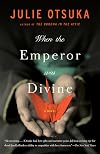
The international conflict that eventually became known as World War II affected more just than the soldiers fighting it: Mothers, fathers, sons and daughters, victims of war and victors of war are all touched by the war and its devastation. It is possible that no novel reflects this so poignantly or poetically as Julie Otsuka's When the Emperor Was Divine, which takes on the point of view of various members of a Japanese family in California during the time of Japanese internment in the early 1940s. The family members remain anonymous, though certainly not unfamiliar – Otsuka's method of keeping the family members nameless has the effect of making the readers identify and sympathize with the characters, but also helps readers to view these characters simply as human beings outside of their political, economic or racial identities. While oftentimes only hinted at, the rage surrounding the Japanese during the war is pervasive. Rocks, bricks and bottles are thrown through windows on multiple occasions, and the Japanese (or even other Asians perceived as possibly being Japanese) find themselves losing jobs and being denied basic services. In spite of this constant discrimination, the picture of the family before the war is a typical one: the nameless characters are depicted by Otsuka as being the all-American family engaged in all the images associated with being American. The disconnection implied by the anonymity of these characters is in effect both a narrowing of their show more boundaries to the reader as it is a distancing, both of which appear to be intended by the author. When the family returns home after nearly three-and-a-half years confined to the camp, the mother keeps her head down, unwilling or maybe unable to acknowledge herself to others unless absolutely necessary. In a lecture given to them, the children are taught to become anonymous as a way of self-preservation – to not answer questions in class even when they know the answer, to follow all rules no matter how unusual they may seem, and to remain common, unmemorable, and nameless. The novel's title, When the Emperor was Divine, hearkens back to a time before the war, when the Japanese American person was allowed to be both Japanese and American without having to contend with the possibility that being Japanese could be construed as being un-American. The family comes out of the experience of the war and the interment as wholly changed and seemingly unrecognizable. The novel exists as a warning that this kind of devastation can be avoided only if people are seen as something more than their names and racial identities. show less
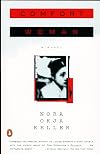
Kim Soon Hyo, the mother in Nora Okja Keller’s Comfort Woman, is not sure how to share her own story of being a comfort woman with her daughter, Beccah Bradley. In fact, in some ways Akiko, as she was known in the comfort stations, is not sure whether to share her story at all. This uncertainty, bound and tangled with motherly love, compels both Beccah and Akiko to form their identities in the fluid space between them. Comfort women, kept in imprisoned prostitutes in Japanese camps during World War II, are a story of history that are not often brought to light (and are, in fact, denied by many to have even happened). The fact that Keller devotes this novel to their stories, as presented by a woman and her daughter, is something that cannot be dismissed, in whatever form, but Keller manages to present a story that is well-written and delicately told. Beccah’s childhood dreams of fitting into American culture surrounded by Marie Osmond and blue-eyed dolls, and Akiko’s own strained relationship with Beccah’s father, an American missionary, find common ground in the unspoken ties that unite mother and daughter. The motif of language is one that is of interesting focus in the story. Akiko, who spoke to own her mother in a sort of secret language (17), employs a similar method to “speak” to the comfort women. “I would sing to the women,” she relates. “When I hummed certain sections, the women knew to take those unsung words for a message” (20). A definite show more note of strength is found in this: As comfort women ravaged by the soldiers, the aspect of physicality, the sense of touch, would have been all too real for these women. Akiko, however, is able to use this physicality in a different way, to communicate in a way that avoids “useless words.” She watches her husband teach their daughter how to speak German, English, and Japanese, and worries about her confusion. As her mother’s stories begin to emerge about the horrors these women faced, Beccah learns that naming - the other main theme of the book - is important as an aspect of identity, and the calling out of a true name acts as the affirmation and celebration of a life. False names only act as more of that spoken, dissecting language. One of the character’s final pronouncements of naming is an affirmation of the life she lived before being owned by the Japanese: “I am Korea, I am a woman, I am alive. I am seventeen, I had a family just like you do, I am a daughter, I am a sister” (20). Taking a difficult subject and rendering it with compassion and the right amount of sympathy is not always easy, and while it has a rocky start, Keller manages to do this quite well, and with vivid memorable imagery and characters. It is obviously not the easiest read for numerous reasons, but it is well worth the effort. show less
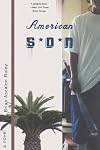
Brian Ascalon Roley’s novel, American Son, is a gritty and disturbing picture of what amounts to failed assimilations of different extremes, with sons Gabe and Tomas struggling with their identities as much as their mother did in her generation. Published in 2001, the story centers around a struggling Filipino immigrant family in California. The two brothers and their mother do not often get along, and their various conflicts and difficult attempts to understand each other and their actions is a sad and sometimes frustrating endeavor. It is a realistically rendered portrayal of coming of age and inner city life in the 1990s. Gabe and Tomas's mother, Ika, reacts differently than her sons to the American world outside, secluding herself and hiding in her fears, whereas Tomas reacts destructively, wielding tire irons, fists, and pure hatred in his reaction to the outside world. In the middle of these poles is the narrator, Gabe, who appears to vacillate between his mother’s passivity and his brother’s aggression in a confusing, often haphazard way. Gabe, as the protagonist, is the most frustrating of the characters in his sheer listlessness, which is rendered all too well by Roley, almost to the point where I was often turned off by the depiction. What saves the characterization is Gabe’s understandable confusion - regarding his family, his racial identity, and his self-identity as a whole. He is often shrouded in silence, a complex character while at the same time show more somewhat blank. Unwilling or maybe even unable to break through his shell, he endures the alienation of his mother and the bullying of his brother without attempting to confront either. Gabe clearly tries to give himself an identity as the good son and the good brother. However, with Tomas and his mother at odds, Gabe’s identification with one is often at the exclusion of the other; he breaks into cars with Tomas while fearing what their mother would say if she finds out, and then he stands beside his mother in her purple sunglasses worrying about how the other kids at school perceive him. His betrayal of himself and his mother with the truck driver was enough to make me cringe; I almost had to put the book down. It is this vacillating protectiveness of their mother, however, that unites Gabe with his brother Tomas and hints at some small hope for both to acquire some of the gifts of paternity that America has to offer them as American sons. It, in fact, seems to be the only hope offered. Whether this is deliberate or not cannot be confirmed. This diasporic postcolonial immigrant tale is probably best read the second time around, when the various travails of the characters can be understood in hindsight. Roley has created characters that I felt sorry for, but with whom I did not necessarily enjoy sharing company. show less
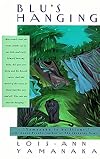
Lois-Ann Yamanaka’s novel, Blu’s Hanging, begins most appropriately with a description of hunger satisfied in meager portions – the narrator Ivah Ogata feeding herself and her little siblings, Blu and Maisie, only with bread covered in mayonnaise, while their father feeds his hunger for his dead wife by playing “Moon River” at the piano (3). The atmosphere of hunger and want, told and highlighted by Ivah’s lilting pidgin, appears in moments of sweet sorrow throughout the book even in its final chapters, reflecting the reality of a world where hunger never ceases, even in death. Yamanaka’s story, a source of controversy for its depiction of sexuality and incest (primarily in the form of the Ogata family’s neighbor, Uncle Paolo - a depiction that later caused the rescinding of an award from the AAAS), is sometimes alienating and sometimes cringeworthy, but I cannot deny that it is well-written and that the characters are presented so vividly that they are often too real. Racism and poverty also have center stage here, as the family copes to deal with the death of their mother. The children’s need for belonging is often heartbreaking. Ivah dreams of being Betty from the Archie comics, while Blu tries to place himself in every Clint Eastwood cowboy scene he can think of, despite his corpulence and his not being white. Within the family unit, the desire for acceptance is fueled by fear. As the children’s father slips deeper and deeper into his grief, the show more rare moments where he is at the house and not working multiple jobs are accented by his tiredness and his unwillingness to deal with the children except in the most practical of terms. Any emotion Bertram may have felt outside of this tiredness is as silenced, a reflection of his daughter Maisie, whose silence overtook her and rendered her mute upon their mother’s death. The relative absence of both of their parents causes the children, particularly Ivah, to grow up very quickly in order to mother each other. Yamanaka’s novel is certainly not for everybody, and even I venture to think twice before reading it again. Still it is a well-written novel even when some of the characters are unlikable, and stories often too in touch with the reality of what they are depicting. show less
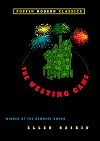
A children's mystery classic, Ellen Raskin's The Westing Game is a remarkable whodunit, with a likable cast of characters and a complicated and enjoyable storyline. Sixteen heirs are brought together by the will of an odd and quirky millionaire by the name of Samuel Westing. What these characters have in common, and why they were chosen is the ultimate mystery of the book, but wrapped up in this is the fortune itself, which can be won only by deciphering the one-word clues each set of heirs is given at the will's reading. From this comes an adventure that was as enjoyable to me at age 6 as it is now. The book, with funny, appealing(albeit mildly stereotyped and somewhat cartoonish) characters, is an enthralling mystery and a quick and enjoyable read. Children, I imagine, will relate as I did to Turtle Wexler, the youngest (and possibly the smartest) potential heir, either with her smarts or her annoying traits is up to the reader. However there are also other characters to enjoy, and the situations they often find themselves in lead to interesting and often laugh-out-loud interactions. As it was first copyrighted in 1978, this book is only beginning now to slightly show its age a little in the storyline, but not so much that it should be alien to new young readers of the tale. (Anyone who can should get their hands on the book on CD with the reading done by Jeff Woodman - it's a lot of fun to listen to). Touted as a puzzle mystery, the main 'selling point', if you will, show more of the novel is that it allows the reader insight into all of the clues, something that is not an initial privilege of any of the characters. This allows readers to be empowered to solve the mystery themselves, an interesting plot element that has caused, according to one reviewer on here, this novel to be featured as part of their math class, and a definitely alluring approach for junior sleuths out there. Raskin is adept at presenting an ensemble cast that rivals the best Robert Altman film in its twists and turns, comedic elements, quirky character intricacies, and a deviously clever conclusion. At a mere 196 pages, this is well worth a read. show less
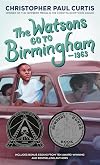
In a sometimes episodic depiction of a Northern black family in the 60s, Christopher Paul Curtis has managed to create probably one of the funniest and saddest young adult books of the 20th century. First published in 1998 (and republished by Laurel Leaf in 2000), The Watsons Go to Birmingham 1963 is more than a recounting of a family trip, despite the title. The book starts out with the various dealings of its protagonist and precocious 10-year old narrator, Kenny Watson, with his older brother (the troubled Byron), his younger sister (the sweet and sometimes annoying Joetta), and his parents. Kenny's is a voice not easily forgotten. Charming and hilarious, he is probably one of my favorite fictional narrators. All that's needed to get an idea of the type of voice he possesses is to list some of his chapter titles: 1. And You Wonder Why We Get Called the Weird Watsons 4. Froze-Up Southern Folks 7. Every Chihuahua in America Lines Up to Take a Bite out of Byron 13. I Meet Winnie's Evil Twin Brother, the Wool Pooh When Kenny's older brother plays one too many pranks and gets in trouble one too many times, the parents discuss in hushed whispers, and finally in boisterous somewhat staged voices, their intentions to take Byron to Birmingham to get disciplined and a good hard dose of reality living under the belligerent strictness of their Grandma Sands. Their mom relating that Grandma Sands "says that that stuff on TV isn't happening around her" (119) is the first hint that show more all isn't as it is cracked up to be in Birmingham, something that Kenny does not quite understand or realize until it is too late to get the searing images of reality out of his head, or the readers. As Kenny says, their home of Flint is "about two million miles" from Alabama. Kenny's experience as they make an unscheduled stop in the middle of nowhere, more a frightened reaction to the nervousness experienced by her mom and Byron about the realities of racism (Byron says to Kenny, "they'd hang you now, then eat you later"), is later magnified when he comes across the wreckage of a church bombing (based on Sixteenth Street Baptist Church that was bombed on September 15, 1963) that changes the family's lives forever. While a bit jarring (such is life, I suppose), the switch from comedy to drama is one that is best rectified through the consistent voice of the narrator, whose voice and experience of the world is utterly convincing, and a great way to deal with very delicate subject matter of racism and children's death. The delicate subject matter makes me think that parents should read this first before broaching the subject with children, but that this is a good way to bring it into focus (the epilogue gives a historical foundation for looking more into the history of segregation and civil rights. That being said, the Watsons are a loving and lovable family. Moments of sibling rivalry and Kenny's unique perspective can make you laugh out loud, while the chilling realities seep in and transform the narrative into something that important enough to be shared across classrooms in this country. The back cover recommends this for ages 10 and up - I would still read it first before handing it over to a 10-year old. show less
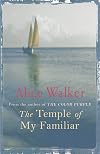
Alice Walker is reputedly one of the most well-known, yet most difficult post-modern authors to read, and The Temple of My Familiar makes both of these reputations known. Why is it difficult? In an effort to present life, and I mean life as in the history of man (and other creatures) in this world throughout time, there's no doubt that the result of this feat would be a difficult read. Walker's novel travels in a non-linear way through time, covering South America, North America, Africa, and England, among others. With such an all-encompassing focus on "human" history, Walker can focus neither on one time period or one character. Walker achieves this by use of a different ordering principle than we normally use to recognize time, i.e., past lives. She takes fantastic liberties with the presentation of the past and human origins, telling a matriarchal creation story where the men attempt the emulate the perfect art form of female childbirth and pregnancy. Walker also presents an arboreal past that is possibly an evolutionary history, and the most utopic of all the worlds in the novel.With these stories and multi-faceted characters, Walker communicates that in every other person, there is a piece of ourselves and our histories, that from within one person, our entire past exists. She communicates the Jungian philosophy of the collective unconscious being connected back through time and culture in significant ways. It is with this that one of the characters, Mary Jane, show more claims that "we all touch each other's lives in ways we can't begin to imagine."Such off-the-wall stories and complicated concepts add to the difficulty of the read while at the same time encouraging the readers to swallow a world that is so unlike their "normal" ones. This world of magic realism, an art form perfected by Walker and fellow writer, Toni Morrison, is one that makes for a refreshing and engrossing read. The characters are unforgettable, the historical and visual backdrops breathtaking. Names like Carlotta, Fanny, Hal, Lulu, Suwelo, and Lissie will forever remain portraits of amazing people that live in my mind beyond Walker's intricate telling.Suwelo himself speaks of the "rare people...[who are] connected directly with life and not with its reflection." It is this ultimate person that I believe Walker wants to present, create and/or reach with the readers of this story. With this, Walker's confusing journey becomes almost a dramatization of how she feels the universe itself works. show less
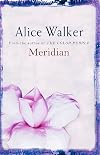
Meridian Hill is a silent, eccentric, and determined woman who has held onto her strength and dignity despite the many hardships she has faced throughout her life. The events leading up to the opening chapters are dispersed throughout the novel in scattered, yet plausible flashbacks. Meridian's life is filled with many unique people and events that shape her into a seemingly worry free woman, the outcome being the opposite of what would normally be expected with her experiences.The one thing that impassioned Meridian in her childhood was the mysticism of her Indian ancestry, a haunting love and power shared by both her father and her deceased grandmother, Feather Mae. The mysteries of her ancestry are furthered by her unforgettable ethereal experiences while in the coils of the Sacred Serpent, that incredible land phenomenon built thousands of years by Native Americans. Used as a Cherokee burial ground, an interesting family conflict in the novel rests on this hallowed land.Alice Walker takes us through this book with an effective, poetic, and sweeping type of prose. The book spans Meridian's amazing life, from her time with her mother, Mrs. Hill, her time as a teenager with an ignorance about sex (attributed mostly to Mrs. Hill), and her life as a stoic, nearly certifiable single parent. One of the interesting periods of Meridian's life takes place in Saxon College in Atlanta. This time of her life is especially turbulent, and filled with unique characters like show more Anne-Marion, the Sojourner, and the Wild Child, people that will live forever in Meridian's memory as those who were able to teach her things that Saxon's beloved professors did not. These tumultuous years were preceded by an awareness of the Civil Rights movement. A bombing of a neighboring house brought Meridian to the door of a voting coalition office where she met Truman, a man with whom she has an on-and-off affair. Thought-provoking presentations of race and love are presented in this and other parts of this multi-faceted novel, with that unique tinge of magic that Walker brings to all her works.Meridian moves from place to place in this novel, sprinkling little pieces of resolve into the minds of all the townspeople who were fortunate enough to be in her presence. Walker's rich protagonist presents many important issues in a subtle way, touching upon racism and prejudice, religion, and the right to human life. Meridian's endearing qualities will easily find a place in the hearts of Ms. Walker's readers. show less
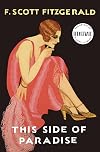
With this first novel, 23-year old Fitzgerald was catapulted into fame as the offspring of the Jazz Age, and with no surprise. This novel, which covers the life of Amory Blaine, a wandering Princeton egoist who is bored and disillusioned with the world around him, is reminiscent not only of the lost generation after World War I, but of the great coming-of-age novels of our time, most notably Salinger's The Catcher in the Rye.It was Fitzgerald himself who said that he was merely "a product of a versatile mind in a restless generation-—with every reason to throw my mind and pen in with the radicals." The appeal of this book is hence universal and completely timeless, and just like Holden Caufield, many will take on this character and his hedonism as their own, recognizing his faults and weaknesses and learning, probably before he does, from his mistakes. Based partly on Fitzgerald's own burgeoning academic life, the author claims to capture "a new generation grown up to find all Gods dead, all wars fought, all faiths in man shaken." Probably the most experimental of all of Fitzgerald's books, filled not only with the actual story text, but also with acridly humorous lists, melodramatic poems, and even a section written like a play, all coming together seamlessly to show how Blaine learns from his friendships, affairs, and intellectual and spiritual lessons and mishaps how to become a more mature (though not necessarily a better and happier) person.Though not all will be show more drawn to this self-absorbed character, many still will find a thread of themselves in this man. As Fitzgerald's first novel, this is probably his most unadulterated and honest, and hence is of great value to all Fitzgerald followers. Those who have read other Fitzgerald books may not find this to be like the others. It lacks the flapper-filled floating atmosphere of The Great Gatsby, which is certainly his greatest novel. It lacks the sweet and insipid romance of such novels as my personal favorite, Tender is the Night. Still, there is a pervading sense of instability in Amory that seems extant in many of Fitzgerald's heroes and heroines, a certain off-center quality that keeps them down to earth at the same time it makes them other-worldly. Amory carries this quality like a sword and shield, and, more than any one of Fitzgerald's characters, looks at the world around him with the illusion that he is far above it because of his idiosyncrasies. show less
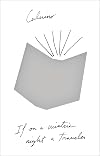
Italo Calvino's book, If on a Winter's Night a Traveler, begins by assaulting the reader: "You are about to begin reading Italo Calvino's new novel, If on a winter's night a traveler. Relax. Concentrate. Dispel every other thought. Let the world around you fade. Best to close the door; the TV is always on in the next room. Tell the others right away, "No, I don't want to watch TV!" Raise your voice--they won't hear you otherwise--"I'm reading! I don't want to be disturbed!" Maybe they haven't heard you, with all that racket; speak louder, yell; "I'm beginning to read Italo Calvino's new novel!" Or if you prefer, don't say anything; just hope they'll leave you alone." And so goes the opening paragraph. The entire introduction is an encouragement to read, with the punchline being that Calvino himself is delaying your reading of his novel! But don't think this book a non-fiction. The book is in fact a text that is part short story collection, part novel within a novel, part commentary on reading, and part... well, I don't know... It's hard to say. The format follows The Reader and The Other Reader (the latter a woman named Ludmilla) as they go through reading ten very different novels, never quite finishing any one. As the characters find themselves not finishing their novels, so do the readers of Calvino's book. Interspersed through these engaging vignettes are some very interesting ideas on what reading means and how different types of reading can affect the way a story is show more perceived. In showing us this view into his mind, Calvino in effect plays a magic trick on the reader by affecting the way his very novel is read. Unlike authors who try to immerse you in the worlds of their novels, Calvino takes his words and encourages them to float off the page, insisting that you be reminded over and over again that you are, in fact, reading the novel. His idea becomes then to not "let the world around you fade" but to capture it and celebrate it in text. The texts themselves are far from humdrum. In fact, their stories are so absorbing that it is no wonder that some readers simply can't take it. Consisting of everything from romances to typical airport thrillers to strange science fiction, the stories remain threaded together by the equally enthralling experience of the two characters. For those who find the Reader and Other Reader less compelling than the stories they read, frustration is definitely a given. Hence, this novel is not for everyone. In the MTV generation of fast-moving everything, it's hard to believe that this novel doesn't have some place among those not interested in a unique and entertaining treatise on reading and writing, but it's very possible that we're just not as finicky as we thought. There's no doubt in my mind that Calvino tells a great story. In fact, he tells several great stories. Still, keep in mind the caveat that picking up this novel is not the same as picking up a focused one-story narrative novel; it's not even the same as picking up a collection of short stories. Still, the novel as a whole is funny, suspenseful, thought-provoking, and, yes, frustrating. It is a love note to the act of reading, and a love note to all kinds of readers. And, sometimes, love hurts. It's possible that Calvino derives some kind of masochistic enjoyment from playing with the readers, and it's possible that those who get to the end of the novel are masochists themselves. Still, it is also possible that Calvino is letting his readers in on a delicious secret, if only they are willing to stay for the ride. show less
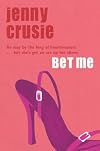
A guy walks into a bar. He meets his friends there, one of whom picks an okay-looking girl and bets him $10,000 that he will sleep with her within a month. He instead bets his friend $10 that he will take her out to dinner. Two things are of note here: (1) The friend making the bet just finished breaking up with this girl, and (2) the girl happens to overhear most of it, and is now under the impression that her ex-boyfriend bet a guy $10 that he would sleep with her in a month. The guy accepting the bet, the ever-popular serial dater Cal Morrissey, accepts the bet for dinner and $10 with the girl, Min Dobbs. Min's ex-boyfriend, David, is too drunk to realize that Cal accepted the $10 bet, and not the $10,000 bet. Min decides to go out with Cal in order to spite David. Plot to one of the archived comic relief episodes of Beverly Hills, 90210? Not hardly, and I must sheepishly admit that 90210 was one of my favorites in its heyday. Instead, this is the catalyst event for Jennifer Crusie's book, Bet Me, a novel I picked up with cynical expectations in my exploration of the "chick lit" genre. I have to say that I was not surprised to see that the characters (aside from, to a certain extent, Min and Cal) are generally one-sided and the plot itself was quite predictable (what else would they do but end up in each other's arms, right?). Still, the writing was very funny, and at the least it was an entertaining read if you are able to dismiss these shortcomings. Regarding these show more cookie cutter characters, it is almost easy enough to put the large majority of them into categories. Min has her girlfriends - one is the popular, svelte one who gets all the guys and is more than a little suspicious of men, and the other is the sweet, soft-spoken one who believes in fairy tales. Cal's friends are similar foils: One is the tough guy who appears to be monomaniacal when it comes to certain pick-up lines, and the other is a sort of shy and simple guy with old-fashioned values. Cal and Min at first present themselves too to fit right in. Cal is the popular hunk with a habit for dumping women, and Min is the angry woman who is upset over her breakup not because David left her, but because he left her without a date for her sister's wedding. A somewhat refreshing twist from this formula is the eventually over-emphasized subplot dealing with Min's weight, which is a subject of constant debate and complaint from her overbearing mother. (Yet another typical character... Heck, even the phrase "overbearing mother" is a cliche, yeah?) It was nice to take a break from the whole I-hate-you, I-love-you plotline to hear about Min's concerns about her weight and the tension it causes with the women of the Dobbs household. Aside from this twist, the subplots in the story act mostly as a way of presenting the rest of this ensemble cast in its typical fashion: Naturally, Cal and Min's friends attempt to hook up accordingly. Naturally, Cal and Min's exes act as interlopers. At times it felt like the subplots were fillers to space out the Cal and Min story, which would have been very typical if it weren't for the supporting actors of chicken marsala and Krispy Kreme donuts. The stars of the subplots were, possibly because of their one-dimensional nature, only somewhat likable, and only at certain moments. To be honest, some of the subplots were annoying, others ridiculous. Still, after all this, I have to say that the book did make me laugh out loud. The stories are set up for some entertaining, and even mildly believable comic moments. Once the main characters gain familiarity with the reader, it is easy to enjoy their expected reactions when faced with certain predicaments. I feel that more could have been done with this... More could have been done with EVERYTHING, but the comic potential is the only aspect that really made it through to near completion. Borrow it from the library if you're in the mood for a laugh on the beach. show less
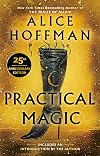
I used to love the movie for this book, and I didn’t even know until after I had seen it that it was originally in book form. After finally getting a copy of the book and reading it, something magical happened: I didn’t know which one I liked better. Usually, having to decide favorites between the book and the movie is very easy. Except in the case of Grisham's The Pelican Brief, I almost always prefer the book versions. In some cases (as with Gone with the Wind and Scarlett), I simply refuse to see the movie, while in other cases (like The Great Gatsby and Jurassic Park) I prefer the book hands-down though the movie versions are certainly more than tolerable. With Hoffman’s Practical Magic, I just don’t know.Part of the reason for this anomaly in my reading life may be the fact that the movie and book bear little resemblance to each other. Here is what is in the book that is also in the movie: the names of the characters (which in itself is a bit skewered), and the fact that this all has to do with witches, family, and magic. That’s about it. Other than that, even the basic plotline is very different. I can understand how the movie might need to condense the plotline to fit its regular two hours, but this plotline has been almost completely altered.Unlike the movie, the book gives more equal attention to each of the sister protagonists, Sally and Gillian. This was both a good and a bad thing for me, due to my fascination with the characters and my partiality show more towards actress Sandra Bullock, who plays Sally in the movie version. The aunts, who are prominently figured in the movie as well, appear only as absent characters throughout most of the book. The children, Antonia and Kylie (their names are switched in the movie), are much older than their elementary school-age movie counterparts, and have very deep and intriguing characterizations that are lacking from the movie. Overall, the book does a better job of observing and presenting the importance, history, and closeness of sisterly relationships. Hoffman’s writing has an utterly absorbing lyrical and poetic quality to it that I greatly admire. I ate this book up, partly because I was pushing for the protagonist Sally’s vindication (a point made in such a focused and concentrated manner in the movie), and partly because Hoffman’s writing is just superb and catching. I swallowed down pieces of this book for hours at a time, and would have to literally shake myself out of the mood of it all if I were so RUDELY interrupted. =) The “magic” is of a different kind in the book, less magical in some senses, and focusing more on clairvoyance and intuition, a point much easier made and mystified in book form. Hoffman takes full charge of this, infusing this in every sentence of her text, and making the readers literary clairvoyants in their own sense. The predictability and unpredictability of this story makes it a book that can be read as I did in one gulp as I did or in a strolling leisurely fashion without losing anything of the book’s power or meaning.Without a doubt, the movie has tainted, and at the same time, enhanced my reading of the book, so much so that I don’t even have a suggestion as to which medium persons should expose themselves to first. Should you read the book after seeing the movie, though, there are some things you should keep in mind. Certainly, one of the main things to remember is that Hoffman’s Gillian is no Nicole Kidman. Another thing to remember is that the movie, because of its required brevity, only touches upon the deep psychological implications and character insight of the book. Most importantly, the book characters don’t get wasted on midnight margaritas and dance around the dinner table to Harry Nillson’s “Coconut” song. show less
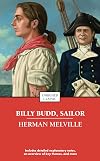
Reading Herman Melville's book for the second time, I found that it made an interesting perspective on the law and human judgment, and how they sometimes come into conflict.Throughout life and history, laws have been around to define the boundaries between right and wrong, and providing appropriate punishment for those who overstep these boundaries. Most would say that the definitions for these boundaries are reasonable and easy to abide to. Sometimes, though, these definitions come into question. In Billy Budd the law defining the firm criteria of what constituted mutiny--the martial law--was contested by one of the ship's officers, the virtuous and seemingly flawless Billy Budd. The punishment facing him was death by hanging.Billy Budd was well-loved by all his workmates (except Master-at-Arms Claggart) and was called the "Handsome Sailor". On the ship, the Bellipotent Billy finds himself in an interesting situation as an envious Claggar is intent on framing Billy for treason.What makes Billy's breaking of the law different is the unique circumstances surrounding it. One of the characters, Captain Vere, makes no apology for this and instead justifies the punishment by saying that law can sometimes contradict human nature, and one must always show allegiance to the king and their duties as crew members. Though he mentions human nature, established law takes precedence in conflicts. Still, because humans make these laws, there is the possibly of human error and judgment. show more The law in this novel shows how the leaders keep order in society. Crew members made half-hearted attempts to refute him, but none could deny the existence of that law, so plain in existence and so straightforward in content.As with all of Melville's work, this was not an easy reading. There are the author's distinctive character descriptions and his digressions, but that does not mean that the book is entirely inaccessible. Some editions of this book have other stories included, as well as readers' supplements and bibliographies. There are a couple of movie editions of this book, including one with Terence Stamp and Peter Ustinov, as well as an opera. show less
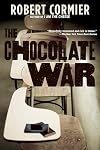
The depravity of the institutions of religion and education is one of the major factors that causes the conformity in The Chocolate War to exist, mainly because this corruption destroys the outlets to which the protagonist, Jerry Renault, and the other students can turn. Despite the fact that the majority of the novel takes place in a Catholic private school, neither the teachers nor religion are presented as dependable. Religion is not a main element in any of the students' lives, and all the religious images Cormier uses are sinister and pessimistic. A man in the Common is pictured as "some grotesque John the Baptist" while the students rendering a beat-up Jerry invisible "was like the parting of the Red Sea."The teachers, too, with their guises of being both educators and religious leaders, are shown as dishonest and hypocritical. In fact, by the end of the novel, one of the most prestigious educators is allied with the leader of the school's cult-like conformist society, the Vigils. With teachers being so unreliable and religion so nonexistent, it is no wonder that the students feel the need to conform to the Vigils, to be part of something even as more stable institutions fall apart. Among these institutions, too, are the parents, who quickly become the most disrespected fixtures in the students' lives. For most students, their parents are metaphorically dead, living day to day without spontaneity or life. Even as the kids saw their parents giving in to the stresses show more of their society, they repeat this cycle in following the Vigils. It is with this breakdown that Cormier is most effective in presenting the indifference held by many adolescents today. The Chocolate War, as ugly and repulsive as it may be to many readers, is written as it is because there exists a section of adolescents who lack a source of guidance and naturally act indifferently towards life. With this they try to find some place to belong, no matter how cruel or corrupt that place may be. Everything about the adolescent culture Cormier describes--the breakdown of major institutions, the intolerance of differences, the carelessness towards life and authority--pushes his characters to conform and leave all individualism behind. Why is this book, in all its grimness, important today? Because it is this very commentary on conformity that people do not want to listen to. In the cruel world of The Chocolate War, conformity is merely a means of survival, since disturbing the universe, as Jerry himself learns, is bought only at the highest price of pain. When Jerry wonders, "Do I dare disturb the universe?", he is partially speaking for the author himself, who chooses with his words to disturb the universe no matter how many schools ban his book from their presence. Hidden in this negativity is Cormier's own voice countering that of his characters and telling readers that they can disturb their universes without giving in to the conformity it enforces. show less
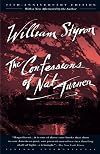
Why is a novel that won a Pulitzer Prize in 1967 on my "Hate" list? Author Styron has no question about the important presence his novel has; he states that he is giving readers a fictional presentation of the actual history surrounding our title "character" in 1831. With this, Stryon takes on a certain authorial latitude that can be easily misconstrued with actual history. I can understand the message Styron wishes to communicate. He presents the historical precursor for the problems and prejudices that haunt urban African-Americans today. But, with this, is it necessary to add his own altering of the actual history of this slave rebellion? Here are some of the true facts Styron presents either directly or indirectly: 60 white persons killed, 17 perpetrators hung, 12 more sent to Alabama to die in slavery, and 131 free and enslaved Americans killed by a mob. With 220 dead and America's laws at the time becoming increasingly harsh (think of the Fugitive Slave Law), how much more latitude does Styron need to express his point?With such a novel that uses an actual person and event, how much responsibility does Styron hold to historical accuracy? Many would say that he holds none at all. There is, indeed, the anonymously-written Primary Colors, among others, that takes its own version of history and "tweaks" it for entertainment appeal. So let's consider Styron's purpose? Is it entertainment? In the book's afterword, Styron writes that the real Nat Turner was a person of show more "conspicuous ghastliness" and "a dangerously religious lunatic". So what does Styron want to do? He wants to change this person of demonic fanaticism with one of "stern piety". Thus Styron wants to alter this man's personality. With this, the story becomes one of a tortured man who feels that being cut off from God is a fate worse than death. Throughout all his brutal and grotesque violence, he claims himself in the fictional parts of this novel to be a man of God. Has Styron acted responsibly in doing this? More importantly, does this alteration make it easier to swallow this historical event, and should that even be a consideration? This event is just a small slice of the over 60 million slaves whose lives were lost. What if these and other figures were altered in other historical events? What if the numbers and events were altered regarding the over 12 million lost in the Holocaust? What if authors decide they want to take some authorial license over the recent events in Rwanda, Cambodia, and Kosovo?I do not discount the fact that the actual historically-accurate circumstances regarding Nat Turner are of great significance today. But can readers benefit from a story that claims to present important history and yet is not wholly accurate? In a book entitled Ten Black Writers Respond, the title persons say that both they and their white counterparts would have better benefited from an unbiased assessment and chronicling of history as it is truly presented. In fact, in one of the most obvious historically-accurate omissions of Nat Turner being married with at least two children, activists and black writers accused Styron of adding firewood to the white racist view that black men are obsessed with white women.By taking liberties with the story and the man, Styron seemed to brush off the fact that slaves' lives were actually worsened by Nat Turner and his rebellion. The fact that Turner seems almost as prejudiced against field slaves as well as masters is soon overshadowed by the fact that he later becomes a champion of slaves nationwide. Styron overlooks the fact that the real Nat Turner had a wife, and that his last few masters were actually relatively kind in a system of slavery that did not afford many kindnesses. These overlooked historical facts could have only added to the human complexity that Styron was aiming for. Noting all of these fallbacks, it seems the author was seeking a preposterous self-aggrandizement by claiming unabashedly that his novel is a complete "meditation on history." As a historical novelist, Styron did not do what historical novelists should do--i.e., investigate the facts. Therefore, Confessions is not an accurate portrayal of Nat Turner, and dangerously takes a controversial figure of race relations and distorts him. Only by presenting true accounts can historical novelists hope to honor and understand the complexity of the past and present this importance to their readers. show less
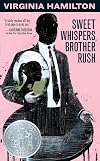
I turned the last page, expecting more and yet finding only the short bio on Virginia Hamilton. I felt like nothing had really been resolved. Hamilton's adolescent novel, Sweet Whispers, Brother Rush, left me very disappointed by the ending. However, in looking back I realize now how powerful and effective a writer Hamilton is, and that I was wrong in initially accusing her of the deus ex machina. A lot of my initial disappointment came from my lack of insight into the text. On second read, though, I find that the precise and all-inclusive details give much insight into the issues behind this story of a brother and sister, their deadbeat mother, and the mystery behind their dead uncle, Brother Rush. The issues of disease (specifically porphyria), family, and the "poor man's reality" is evident in all scenes presented between Hamilton's vivid characters. The surreal existence of Brother Rush is comparable to the mystery surrounding the title character in Morrison's Beloved. Lovers of Morrison's story will highly benefit in their read should they continue the idea of the mystical versus the tangible in this tale. A seasoned professor at my university, in fact, refers to Hamilton as the adolescent's version of Morrison.Readers of Hamilton's novel will benefit from reading it with more than just a shallow glimpse into the story itself. Even young readers can appreciate the many social ramifications the novel carries throughout its pages. While Hamilton does ilicit a happy show more ending, it is tainted with a deliberate cynicism and a thought-provoking aura that characterizes Hamilton's writing. show less
Eyewitness to America: 500 Years of American History in the Words of Those Who Saw It Happen by David Colbert
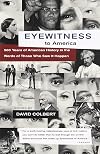
Edited by David Colbert, Eyewitness to America is a comprehensive compilation of crucial moments and personalities in 500 years of American history, as told by the people who had first-hand experiences. The various primary sources used here range from John Smith's account of Jamestown and Pocahontas, to President Truman's perspective on his firing of MacArthur. There is also a great coverage of popular history, including first-hand encounters with Elvis, Tom Wolfe's coverage of the Beatles, Ritchie Havens on Woodstock, and John Houseman on The War of the Worlds mix-up. Each account, which averages about 2-6 pages, is an interesting and brief read into historical events from the people that knew them best. With a thorough index, comprehensive notes on primary sources, and an overall appealing format, Eyewitness to America is perfect for American history enthusiasts as well as anyone who is even mildly interested in history in general. It is an engaging, entertaining, and highly inviting book to flip through that leaves little out and is a great presentation of the diversity in American history.
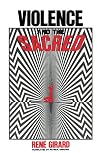
In a highly innovative book that studies the mechanisms and structures behind violence, Girard's Violence and the Sacred presents his unique insights into violence in literature and society. From the bible to Oedipus Rex to various indigenous tribes throughout the world, Girard attempts to cover all bases in his arguments. He finds interesting psychological sources for the various sacrifices of humankind, talks of the victim and the scapegoat, and analyzes the way humans fight, block, and stop violence. His ideas, while they may be quite offensive or at the least controversial to some, definitely present new perspectives on why humans give in to primal instincts.Girard discusses, in complicated and yet fairly understandable terms, common literary elements of sacrifice, plagues, dealing with crisis, and generative and reciprocal violence. Another interesting topic Girard analyzes in his novel is that of desire. In presenting the idea that human desire is mimetic and external, he eventually comes to the conclusion that desire invariably becomes violent.The tried and tried again theory behind the title character of Oedipus Rex gets a revamping in Girard's second chapter with the suggestion that Oedipus, rather than being led into fate, himself took the deliberate steps to end up where he was. Every aspect of Oedipus, as well as many other stories and novels, can be analyzed under Girard's theory with the result of a highly different perspective.Other literary analyses are of show more great interest, including the idea of the "monstrous double" in literature, the literary elements of mirroring and repetition, and the historical significance of twins in society. Girard's novel gives a new and large perspective not only on literature, but on society. show less

One of the few (if only) anthologies of its kind, Songs of Ourselves is a compilation of poetry and short fiction written in English by women whose cultural background is from the Philippines. Edited by Edna Zapanta Manlapaz, the collection does not claim to highlight the greatest in female Filipino writing, nor does it claim a feminist intent. While written with the purpose of sharing the stories and perspectives of Filipino women (i.e., Filipinas), anyone who is female (no matter what culture), who is merely interested in learning the norms and idiosyncrasies of another people, or who is of a strict family upbringing or strong patriarchal culture will find much value in this book. Manlapaz, in revealing the motivation behind the compilation, states that while many men have presented the plight of the Filipina in their English writings, "their speech has not always been listened to with the attentiveness conventionally claimed by male discourse" (xiv). This collection hence gives a voice to the many Filipinas out there, relating stories spanning history and countries, including a story of of a lonely seamstress in the province and a poem of a silent woman who returns from Kuwait with physical and emotional scars of slavery. Still, a lot of the writing is triumphant, offering in small doses the very essence of growing up female in this culture, of plowing through boundaries and coming out victorious. Included is a thorough and highly informative introduction written by show more the editor, who includes a brief history of the English language as it was viewed among the colonies and the sexes as well as a summary of the authors included, their struggles as writers, and the various topics they cover. There is also an annotated list of the contributors at the end of the book which solidifies the admiration and understanding of the challenges the writers faced in their culture and presented in their works. While my entire family descends from the Philippines, I have struggled to learn the native language. This volume was therefore a privilege to own. Within its covers it presents so many of the idyllic narratives of the past as well as present firebrand and contemporary issues of the present, all in a creative form that was inviting and thought-provoking. Those who want to further pursue this track will be interested in A Native Clearing: Philippines Poetry and Verse from English Since the '50s to the Present(1993) edited by Gemino H. Abad for the University of Philippines Press, Filipina I(Women in Media Now)(1984) edited by Mila Astorgo Garcia, Marra PL. Lanot and Lilia Quindoz-Santiago for New Day, Forbidden Fruit: Women Write the Erotic(1992) edited by Tina Cuyugan for Anvil, and Kung Ibig Mo: Love Poetry by Women(1993) edited by Marjorie M. Evasco and Benilda S. Santos, also for Anvil. Those who are priveleged enough to know the Tagalog language of the Philippines may also be interested in the companion to Songs of Ourselves entitled Ang Silid na Mahiwaga. show less
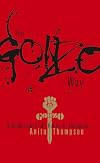
To put it simply, there is something for everyone to like in this book. Published in 2007 by Anita Thompson, the late wife of Gonzo journalist Hunter S. Thompson, the book is at once a memoir, advice book (I purposely avoid that phrase 'self-help' here), mission statement, and, for Anita Thompson, a way to exorcise the demons she has been dealing with since Hunter S. Thompson committed suicide in 2005. So first, the aspect of memoir. Even those who were suspicious of young Anita Thompson's 'intentions' with their beloved Hunter can find something scintillating in this small volume's voyeuristic viewpoint into the Thompson home at Owl Farm, for who left could really know it best? As if to answer this, Anita Thompson very tactfully lends her pages to the words of others as well, close friends, compatriots, and sometimes enemies of Hunter himself, to contribute their voices as well (these including Kurt Vonnegut, Bob Dylan, Benecio del Toro, Lyle Lovett and Bill Murray). This however, is presented with a caveat, one that both Anita Thompson and Douglas Brinkley (who writes the foreword) make clear: This is not a book about sex, drugs and rock and roll. Though these may make appearances indirectly, Thompson's goal is to show Hunter as the man she knew him to be - someone caught up in politics, human connections, and changing the world, one word and act at a time. The insights into the way Hunter's mind works are fascinating - he seemed a man of boundless energy, throwing show more himself whole-heartedly into causes which he then would try to rally the world behind. His monomania was fed through rivulets of deeper meaning, and Thompson manages to depict this skillfully with select anecdotes that are at once charming, nostalgic, and sometimes all too amusing. As for advice, Anita passes a lot of it on, hers being a volume that she says is meant to teach readers what Hunter taught her, simplified into seven illuminating lessons. This verges on the almost too simplistic aphorisms that have blanketed the self-help market today (e.g., "It's Wrong When It Stops Being Fun"), but is seemingly refreshed by the legend behind the man who said it, and to the people he is often saying it to. Hunter S. Thompson, presented in full technicolor and with not a little bit of awe, is a figure enraptured by these life lessons, and it doesn't take much convincing to see that they worked for him (and Anita Thompson as well it seems) in their own sometimes unexpected ways. It is, however, with Anita Thompson's own writing that interestingly enough does justice to the writer that passed before her. Hers is simple and unadorned speech, straightforward (Lesson 5's title is "Truth is Easier") and never apologetic (lesson 7!). More notably, hers is the often heartbreaking, sometimes even too honest, voice of a woman who has lost her best friend, and the reader is invited to mourn along with her, but then also to move on, and to see that the world Hunter S. Thompson has left behind is one that is still worth living, and worth living well. "Everyone fumbles. What matters is the recovery." - An oft-quoted phrase, said by Hunter S. Thompson. The Gonzo Way is a book that is Anita Thompson's attempt at recovery, and she manages to pull it off with courage, fun and pure honesty. show less
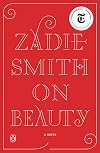
Zadie Smith's 2005 book, On Beauty, is surprisingly light on beauty - hers instead is a world of sometimes cringe-inducing and sometimes awe-inspiring reality. Her talent is finding those strange but common moments of confusing thought and excising them of their mystery, something that she does very well here (though maybe not as stunningly in her debut, White Teeth). As usual, Smith focuses on characterizations that make her protagonists jump off the page - in this case the saga of two families whose intertwined lives lead to an unexpected conclusion. On top of all this Smith manages to rope threads around some very serious issues, here covered in brief with the hope that I'm not giving too much away: Art - the two warring professors, Howard Belsey and Monty Kipps, each have their own ideas of what constitutes great art and, Smith potentially argues, are both quite wrong. These are two men who have are no longer capable of seeing beauty, but rage on stubbornly, and (almost?) blindly. Politics - Belsey and Kipps also spend a good deal of time arguing liberal (Belsey) versus conservative (Kipps) belief systems, particularly how they should be addressed in a university setting. Class - This was a tricky one and, like her other two books to date, one of the biggest shadows cast over the book. Various characters explore and struggle with their ideas of what constitutes 'real' living, and these ideas are almost universally wrapped up in class, each one thinking that the other show more is living a life of superficial falsity for not comprehending and/or taking on the ideals of the other. Gender - Probably the book that has most directly dealt wit this head-on, Howard Belsey's sometimes wife Kiki at the center of this struggle to assert herself as a woman and a human being, to be seen by her distracted husband as something beyond the flesh (of which it is noted she has quite a bit of - hers is not the body it once was in her youth, and this too brings out issues of identity in even the smallest mentions of her character). With Monty Kipps' wife Carlene, the two women seem to represent the two extreme opposites of their generation. Race - Kiki is also the black somewhat more privileged wife of a white man, something that the Belsey children deal with often indirectly, with a rendering that is, typical of Smith, very artfully done (Again White Teeth is a great reference for more of this kind of depiction). Religion - Put simply, some of them have it, and some of them think it's ridiculous. A man who seems to be a representative figure of it turns out to be a fraud, and the man who seems to scoff at it appears to find his own version of it at the end of the novel. Many praises have been heaped on this novel, and for good reason. Whether she's exposing the bureaucracy of the university system or following the perils of a boy who would rather act like a poor Haitian than a well-off son of a nurse and professor from the suburbs, Smith's depiction of the human race is spot on - except for maybe Jerome Belsey, who starts off the story and seems to disappear for most of it - his is the only characterization that seems to have floundered, an odd exclusion when Smith is known for her skillful portrayal of large casts of characters. Aside from this omission, probably the only other problem I have with this book is its somewhat one-sided depiction of the university system. Smith does show, seemingly as an aside, one 'real' girl Kate, a grounded, shy and down-to-earth student who seems lost in the university's haughty scholarship, but she seems to be the exception to the rule, which I'm not sure if a very balance portrayal. (It probably should also be noted that there are some adult situations that do not make this appropriate for persons of a certain age.) Still, there's genuine moments of hilarity and drama in this novel, mixed in with a satire (that only very occasionally sounds like lecturing), and an exploration of class and privilege that make it well worth the read. show less
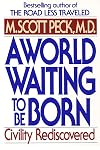
Peck’s A World Waiting to Be is an important book. No doubt about that. As always, this man makes a great contribution in speaking his mind and dissecting and explaining the woes of the world. Still, there is some contradictions and confusions in this book that lessen its value. The book is still important, but there are some things to know from the start before you open that first page. It is with this that I warn potential readers….The Author’s Purpose in Question“An illness is abroad in the land.” The world is at the apex of a crisis, where incivility reigns. Peck makes this broad statement known from the very beginning of the book, thus influencing the tone the rest of the book takes. Altogether more aggressive than his well-known and acclaimed Road Less Traveled, Peck’s A World Waiting to Be Born is almost a survival guide and a tactical plan for living and combating a world wrought with incivility.Throughout the book, Peck emphasizes that his purpose in writing his book was to get readers to surmise their own definition of civility. It is possible that, in doing so, Peck made one of the biggest contractions of all in his book. Of course, no one is required to follow anything they read in books, yet Peck constructs the novel in such a way that it becomes more of a tool to follow his own version of civility rather than to guide readers in developing their own definition. If Peck had hoped for individualized definitions of civility to flourish among his show more readers, why did he devote most of his pages to exposition on how to advance in his definition of civility? Why did he use such words as “impertinent” and “necessary” towards his own definition, if he were not trying to push it forward? No doubt, Peck’s grand call to civility is admirable, regardless of his intentions. Still, more clarity and balance needs to be given to this issue, and readers should be forewarned of even the own unintentional and unwitting machinations of the author himself. As Peck himself points out, civility in some cases should not give way to a compromise of one’s convictions. Here, then, is the import of devising your own definition of civility, independent of Peck’s provisions. Every situation is unique, and it is with this in mind that readers should apply the tools Peck so graciously offers us.God and Her PurposesWhile Peck’s book is replete with academic citations and statistics, his religious beliefs certainly shine through, and he brings out various disclaimers for them throughout the book (like the fact that he refers to God as a “she” at various points). Unusual, indeed, especially since I cannot for once in my various readings of this book figure out exactly what religious derivations he may be writing from. The various convictions and contradictions that follow his religious disclaimers can be smoothed over in readers’ minds to some extent, though sometimes his claims are held up solely by this mysterious religious foundation of Holy Spirit and other convictions. These latter claims are the hardest to swallow, and have caused me to (unfairly) question the worth of a book as a whole.Still, despite this, I have learned a valuable lesson from my reading that was never so obviously noticeable before: Just because it’s published, that doesn’t mean it is always accurate, understandable, or superior. Indeed, when Peck isn’t confusing readers with his religious convictions and the reasoning that they support, Peck pushes readers to their own empowerment.The Power is Yours!Captain Planet? Hardly. Peck isn’t one to fly around with his environmentally sound cohorts ridding the world of incivility. However, even when he’s pushing his version of civility on us, or telling us what is true and good, he empowers his readers. Indeed, he states that we are, to some extent, slaves of our unconscious mind (he also calls this the “Holy Spirit”), which is “always one step ahead of the conscious mind in the right or the wrong direction”. Still, this does not mean that civility is failing because only the unconscious mind is in control, or always going in the wrong direction. Peck believes that the cure for this civility comes from developing personal definitions of civility (ahem), and making sure that all people have a “conscious intention [or] awareness” towards civility. He does not doubt the existence of people capable of controlling their lives and bringing positive influence to themselves and others, and this is where the power of the book, and its readership, lies.By the way, for a less confusing, more basic look at the world through Peck's eyes, try his tried and true Road Less Traveled. It is sure to change anyone who reads it. show less
This beautifully-written story is an interesting modern rendition of Hans Christian Anderson's "The Little Mermaid" and compared together, bring about important comparisons. They share the same main ideas, yet the distinct difference that help emphasize the different themes expressed by both stories.In My Love, My Love, the teenaged dreamer here is named Desiree Dieu-Donne, an island Ti Moune (or orphan) who, while without parents, is raised by her affectionate adoptive parents, Tonton Julian and Mam Euralie. Just like the character namesake in "The Little Mermaid," Desiree's life is changed when she falls in love with a comely young prince, Daniel Beauxhomme, a youthful rich mulatto who she nurses back to health after he is in a car accident. Daniel, just like the mermaid's prince, is of a different world, and not meant to be a love interest at all, and Daniel, just like the prince, must return to his old world, taking with him the simplistic heart of his young lover.Both girls in these stories go to extreme lengths to be reunited with their sweethearts. Desiree leaves her family and village and places her life in the blood-stained hands of Papa Ge, the island's horrid messenger of the sea. An interesting feminist symbol is utilized as Desiree, forced to wear a new pair of shoes, endures the immense pain in her feet even though each step was "a new experience in torture." While the mermaid gives over her voice for freedom, Desiree is a mute in her own sense since she show more knows not the languages of the foreign diplomats. The interloper who moves in the way of the two "star-cross'd lovers" in both stories is everything the protagonist is not: confident, articulate, and rich. Desiree, like the mermaid, realizes that she has endangered her life over a man who looks lost to her. Hidden in My Love, My Love is the sometimes sad and total cost of challenging established circumstances and status quo. It shows how high the price can be for selfless love. It is interesting to note the commonalities between "The Little Mermaid" and this modern rendition. Throughout, there are subtle, and less-than-subtle allusions to that well-loved, later-Disney-fied classic. Just note the allusion made by one of the characters, Mama Euralie: "She [Desiree] gives up her honor to this man, born of a world as different from hers as land is from the sea."For good comparisons and a more interesting reading experience, read this novel after, or alongside, the version of Hans Christian Anderson (and no, it is quite different from Disney's cartoon!). I recommend this for adolescents and adults, as well as anyone interesting in modernized fairy tales, or in the true non-Disney versions of the stories we love. show less
The Color Line: Legacy for the Twenty-First Century (Paul Anthony Brick Lectures) by John Hope Franklin
Franklin's The Color Line is the chronicle of US racial struggles from the 17th century onwards. The color line, that subtle racial strain that separates society in schools, housing, government, and employment, is covered in great detail. Focusing on the oppression of the African American race in the US, Franklin covers President Carter's attempts at recruiting more women and black people into his administration and goes on to criticize President Reagan's attempts at removing any office appointment that contradicted his values. The various incidents of racial tension and outright persecution become the framework for Franklin's stand against the color line. As first suggested by the distinguished writer, sociologist, and co-founder of the NAACP, William Edward Bughardt Do Bois, the racism that divides American will keep on growing and alienating persons. In carrying on this premonition, Franklin admonishes, just as Du Bois, that the world in general cannot function properly if color continues to be a fact in all aspects of life and in considerations of rank and leadership.Franklin denounces those who claim the United States is color-blind and accuses them of being noncommittal, not interested in changing their country for the better. He refers to the Plessy vs. Ferguson case, stating that the Supreme Court Justice John Marshall Harlan and Plessy's attorney Albion Tourgee figured prominently in the dissent of civil rights, adamantly believing the law and Constitution, like show more justice herself, is color-blind. Not acknowledging racial tension, Franklin believes, allows others to abuse racial discrimination. The various claims Franklin makes are supported with a plethora of evidence and instances. This should be expected with the gravity of the accusations he makes. State governments, he writes, would not be color-blind while the national government executes non-racist laws purely on the reluctant need and superficial responsibility of pleasing the people. He reveals the government's extensive role in the color line going as far back as Virginia's explicit definitions of a "Negro" in 1879 (with the main requirement of having one-fourth or more of "Negro" blood). Franklin infers that such precise, authorized forms of discrimination can occur again if the color line is not recognized and eliminated.At first glance, Franklin's work appears far from an objective historical reference. While his accounts of the pivotal events of the civil rights movement are seemingly accurate, Franklin's acrid attitude and condescending tone may make the reader dubious. Across the pages, his script has a tone of anger and frustration at the silence of the African American race and the people who invoke this silence. He takes on a certain sarcasm in speaking of the unappreciated achievements of the African American. It is possible, though, that the biased demeanor of his prose is purposeful, meant to inspire people to further investigate the implications of the color line. Franklin spews forth his information without mercy or sensitivity. In his aggression for the color line, Franklin is not suggesting the elimination of aspects of culture and the total disregard of color. Franklin advises his readers to sway the government away from the color line, and to look to themselves as individuals not to keep lengthening the color line's divisions. The solution, he says, is in looking at America's past without dismissing it or flinching at it, without closing eyes or minds to the brutal events of racial inhumanity. In doing so, Franklin endeavors all Americans to look at each other, not in terms of color, but as human beings. show less
In one of the most interestingly presented books I have seen, socio-cultural theorist, Marshall McLuhan, and graphics designer and artist, Quentin Fiore, present The Medium is the Massage, a book that, while written in the 1960s, has more direct application to our contemporary times than it did during its inception. Taking its cue from the saying, "the medium is the message" and altering it to fit their own message, McLuhan and Fiore present the argument of how the electronic media is slowly lulling us into not realizing the dramatic changes and new perspectives this technology is creating. Their 'writing style', if it can be called such, is a provocative, visually-impacting array of photographs, unique texts, quotes, humorous cartoons, and other images to give the reader a better understanding of the ideas being presented. While there is a slight danger of their message being lost in its unorthodox presentation, (two pages, for example, are printed with the text upside-down), their argument is solid and restated in unique ways throughout. The book is revolutionary in the way it shows how electric technology is continually changing our government, our families, our jobs, and our social relationships. While the evidence and the way it is presented does reveal its origination in the earlier part of this technological movement, the words nonetheless show its relevance to our time period.
Despite the title, Barbara G. Walker's incredibly thorough handling of female connections and allusions in different cultures, ethnicities, histories, etc. is highly useful and engaging for anyone interested in myth, history, or society in general. In fact, the synopsis includes a highly praising quote from Russell Hoban, the author of _Riddley Walker_. The _Encyclopedia_ covers a huge number of interesting topics that is told in a style of writing that is not "monotone" as most normal encyclopedias are. Among other things, it covers the significance of Cinderella's glass slipper, the various mythologies and beliefs surrounding the moon, and the symbolic qualities of things like pomegranates and hair. It answers questions like, "Who was Adam's first wife?" "Why is breaking a mirror considered to be bad luck?" and "Was there ever a female pope or a real Easter bunny?" I have gained so much knowledge from this book, which is best-read by flipping through it and stopping at different points of interest or curiosity. Aside from her entries, Walker includes interesting trivia on the margins and begins each section with various images of historic statues, sculptures, paintings, and photographs.Walker is really worthy of much praise here. Over 1100 pages and over 20 years of research has resulted in an amazing fusion of myth, history, legend, culture, religion, and so many countless other disciplines. The detail is simply unbelievable. I found myself so enthralled in this book, show more much like I would be caught up in a good suspense novel. It is easy to get completely caught up in this book. So many topics are covered, and once I came up with one at random and found Walker's coverage and research on it, my mind popped up with yet another possibility to discover. show less