Saw this book at the Show of Shows Military Antique Show in Louisville, Kentucky last year and had to have it. My current hobby/fascination is collecting and studying post-WW2 international camouflage clothing and equipment. This book has EVERY country on the planet's post-war camo patterns used and every page is filled with color photographs. It has helped me immensely in my study and identification of newly bought items. It is alphabetized first by continent, then by country which is extremely helpful in identifying origin, time lines, etc. A little pricey (at the show is was 75) but it is well worth the cost.
Dry. Boring. And a bit too revisionist for my taste.
Wow. Where to begin with this book? After reading numerous pieces on the Crusades, I noticed that one was invariably reading quotes from the same chronicles over and over again. I took it upon myself to try and read as many of these chronicles as I could. Pieces such as [The Itinerarium Perigrinorum Et Gesta Regis Ricardi], [The Chronicle of Fulcher of Chartres], and Joinville were always there, along with this little piece. Written by the daughter of Emperor Alexius (1081-1118), it tries ever so hard to be taken as a serious historical record to the life and reign of of this Byzantine leader. And it many ways it succeeds. But in as many ways, it too, falls short.
Anna tries very hard indeed to nullify the reader's knowledge of her closeness with her father by attempting to frame the work as a purely un-biased histography. She fails rather hard on this attempt. It nearly approaches humor, the amount of praise that she heaps upon Alexius and his wife, her mother. It gets rather tiresome to hear repeatedly just how God-like this man was.
All in all, this is an interesting book. Very little of it deals with the 1st Crusade which was a bit of shock to me. It is very informative for the details that are given about Alexius life (the intrigue and military actions) and those role-players that surrounded him. As a military history piece I would actually give it 4 stars, but overall I can only muster 3.
Anna tries very hard indeed to nullify the reader's knowledge of her closeness with her father by attempting to frame the work as a purely un-biased histography. She fails rather hard on this attempt. It nearly approaches humor, the amount of praise that she heaps upon Alexius and his wife, her mother. It gets rather tiresome to hear repeatedly just how God-like this man was.
All in all, this is an interesting book. Very little of it deals with the 1st Crusade which was a bit of shock to me. It is very informative for the details that are given about Alexius life (the intrigue and military actions) and those role-players that surrounded him. As a military history piece I would actually give it 4 stars, but overall I can only muster 3.

"Medieval Warfare" by Geoffrey Hindley is a book that encompasses exactly what is in the title. Albiet in a very abriged form. This book turned out to be what I expected it to be when I purchased it from a used bookstore with the slightly inflated price of $6.50. I would actually recommend this book to an adolescent who was interested in the subject. It covers well the development of warfare during what is classified traditionally as medieval times. Touching lightly on all aspects of the period, such as fighting at sea, arms and armour, the Crusades, etc., this work is a very fast read. This is due mainly to the amount of illustrations that take up much of the 125 pages.
The one aggrivating trait of this work has to be mentioned, and that is the illustrations are not captioned in the traditional manner but are numbered and included in the text of the book. One is supposed to stop reading when they get to each number and then look at the picture. Sort of annoying, but that just may be me. That aside I found this an OK book at best, suitable for the most novice student.
The one aggrivating trait of this work has to be mentioned, and that is the illustrations are not captioned in the traditional manner but are numbered and included in the text of the book. One is supposed to stop reading when they get to each number and then look at the picture. Sort of annoying, but that just may be me. That aside I found this an OK book at best, suitable for the most novice student.

Although I prefer pieces that are a bit more specific, such as chronicles or books on one Crusade in particular, this is a very good overview of the sweeping conflicts that occured in the Holy land from 1098 to the 1300s. All the main players were highlighted as well as the dominating characters and events. I found Mr. Payne's narrative very entertaining and easy to read. He even brought to light a group of Crusaders that I had somehow managed to miss (or had forgotten about) in all my reading of the subject, and that was the Tafurs.
Mr. Payne obvioulsy loved high drama and one can tell that he was writing with relish about those such times. The book also contains somewhat helpful maps and an overview of the religion of Islam, something that is lacking in similar books. Everything is done chronologically, concisely, and entertainingly. A good enough book to spur me to find more of his works and read them as well.
Mr. Payne obvioulsy loved high drama and one can tell that he was writing with relish about those such times. The book also contains somewhat helpful maps and an overview of the religion of Islam, something that is lacking in similar books. Everything is done chronologically, concisely, and entertainingly. A good enough book to spur me to find more of his works and read them as well.
Oddly enough, {Agincourt: 1415 The Archer's Story} really has one chapter dedicated to the bowman of that particular battle. I felt a bit mislead by the title. Up to that point the book was fairly informative and interesting with chapters on Henry V, the battle itself, and (finally) the book's namesake. This piece then wanders off into a biography of Sir Thomas Erpingham. Don't get me wrong, as alleged commander of the archers at Agincourt, Sir Thomas did deserve prominence in this book, but I felt that he dominated it instead of complimenting.
Be forewarned, this book is made up of essays from several different auhors, which in itself is not a bad thing if they were essays illustrating different aspects of the longbowman or the battle. Like I said earlier, waaaay to much emphasis on Erpingham (there is an excruciating chapter on Norfolk architecture inspired by and featuring him!). An essay on his role in the two different "Henry V" films delivered the coup de grace' for me. Very dissapointed in a book that I was really looking forward to reading and wasted on vacation.
Be forewarned, this book is made up of essays from several different auhors, which in itself is not a bad thing if they were essays illustrating different aspects of the longbowman or the battle. Like I said earlier, waaaay to much emphasis on Erpingham (there is an excruciating chapter on Norfolk architecture inspired by and featuring him!). An essay on his role in the two different "Henry V" films delivered the coup de grace' for me. Very dissapointed in a book that I was really looking forward to reading and wasted on vacation.
"Nobles, Knights and Men-At-Arms in the Middle Ages" is a collection of essays written by Mr. Keen over 30 years of his scholarly and professional careers. Covering such subjects as courtly love, Chaucer's Knight, and the practice of "brother-hoods in arms", just to name a few, Mr. Keen attempts to shed some light on some critical arguments pertaining to these issues.
Although I admire intensely Mr. Keen's passion, immense dedication, devotion to study and obvious knowledge on these subjects, I did not find this book very relevant to the military history genre. It tends to delve, in my opinion, more into medieval law studies and literature. Very dry and boring. There was one bright spot smack dab in the middle of the book. The chapter on Gadifer de la Salle was an attempt to highlight the career of a typical knight of the times who had achieved a bit more of his fair share of fortune, and failure.
Again, this book can be interesting, and I am glad it is now in my library, but I doubt I'll ever be pulling it down from the shelf to reference it anytime in the future.
Although I admire intensely Mr. Keen's passion, immense dedication, devotion to study and obvious knowledge on these subjects, I did not find this book very relevant to the military history genre. It tends to delve, in my opinion, more into medieval law studies and literature. Very dry and boring. There was one bright spot smack dab in the middle of the book. The chapter on Gadifer de la Salle was an attempt to highlight the career of a typical knight of the times who had achieved a bit more of his fair share of fortune, and failure.
Again, this book can be interesting, and I am glad it is now in my library, but I doubt I'll ever be pulling it down from the shelf to reference it anytime in the future.

I really do hate to give ANY book a 1 start rating. In fact, I think this may be the first one that I have done so to. After thinking on it, the only reason I gave it 1 star is because I recently read another work by Mr. Ashdown, gave it 2 stars, and reading this one was like reliving some sort of horrible nightmare! I really believe that if I had recognized the author's name in time I would not have even purchased this book, let alone read it.
I went back and re-read my review of said previous work by Mr. Ashdown and realized that I could basically copy and paste it here without finding new ways to discourage one from reading it. That is how dreadfully similar the two works are (and I suspect ANYTHING written by Mr. Ashdown to be). So here goes with some small changes:
Pros: Chronology and categories are very well organized.
That was quick, now the cons.
Cons: Mr. Ashdown should be taken only in small doses.
He uses slightly outdated terms in relation to armor pieces despite the book's recent publication.
Mr. Ashdown seems to be able to tell if an armor piece is made from cuir boulli or steel just by looking at it's representation in a centuries-old manuscript, stained glass window or funeral brass.
Has an obsession with something called "banded mail". I HAVE REFERRED TO THIS SUBJECT AS THE "BIGFOOT" OF ARMOR STUDY. AVOID LIKE THE PLAUGE! I've come across the term a few times in a dozen books, most never even mentioning it. The consensus seems to be that it either never show more existed or was very rare at best. Yet he finds it everywhere in illustrations, not considering the artist's representative methods may not have been very accurate.
At least half the book is just a study of monumental brasses and effigies as it is anything. Very tedious reading unless this is your main area of study.
I know these points could be confusing, but once one sat down and started reading this work, they would instantly recognize what I am talking about. This is really a simply boring and odd book. show less
I went back and re-read my review of said previous work by Mr. Ashdown and realized that I could basically copy and paste it here without finding new ways to discourage one from reading it. That is how dreadfully similar the two works are (and I suspect ANYTHING written by Mr. Ashdown to be). So here goes with some small changes:
Pros: Chronology and categories are very well organized.
That was quick, now the cons.
Cons: Mr. Ashdown should be taken only in small doses.
He uses slightly outdated terms in relation to armor pieces despite the book's recent publication.
Mr. Ashdown seems to be able to tell if an armor piece is made from cuir boulli or steel just by looking at it's representation in a centuries-old manuscript, stained glass window or funeral brass.
Has an obsession with something called "banded mail". I HAVE REFERRED TO THIS SUBJECT AS THE "BIGFOOT" OF ARMOR STUDY. AVOID LIKE THE PLAUGE! I've come across the term a few times in a dozen books, most never even mentioning it. The consensus seems to be that it either never show more existed or was very rare at best. Yet he finds it everywhere in illustrations, not considering the artist's representative methods may not have been very accurate.
At least half the book is just a study of monumental brasses and effigies as it is anything. Very tedious reading unless this is your main area of study.
I know these points could be confusing, but once one sat down and started reading this work, they would instantly recognize what I am talking about. This is really a simply boring and odd book. show less
This book is a very informative source on the two campaigns undertaken by the Prince of Wales in 1355 and 1356 respectively. The word "campaign" is probably not entirely accurate when referring to the large raids carried out during the Hundred Years War by successive monarchs and their lieutenants alike. But when detailing the preparation and logistical mayhem that occurs before any such endeavour, Mr. Hewitt makes it perfectly clear that these 'chevauchee' were indeed great in their scale.
After the obligatory 'origins of the Hundred Years War' chapter, the author dives into the logistical planning and inspiration for a large raid to be carried out under The Black Prince's command. The starting point of the raid was to be Gascony, but the majority of the force hailing from England. Mr. Hewitt certainly did his research homework concerning the supplies, recruiting, and shipping for the adventure.
The remainder of the book is sectioned into chapters detailing the first raid, the period of wintering in Gascony before the second raid, and finally the raid of 1356 which resulted in the battlel of Poitiers. On this point, sadly, not enough content spent on the battle itself. There is a very interesting section dealing with the aftermath of the battle/raid and the curious practice of loot division and prisoner ransoming.
All in all a very good book. If you are not an experienced student of the Hundred Years War this book will probably leave you asking more questions than it show more answers. But for the seasoned historian, it is valuable indeed. show less
After the obligatory 'origins of the Hundred Years War' chapter, the author dives into the logistical planning and inspiration for a large raid to be carried out under The Black Prince's command. The starting point of the raid was to be Gascony, but the majority of the force hailing from England. Mr. Hewitt certainly did his research homework concerning the supplies, recruiting, and shipping for the adventure.
The remainder of the book is sectioned into chapters detailing the first raid, the period of wintering in Gascony before the second raid, and finally the raid of 1356 which resulted in the battlel of Poitiers. On this point, sadly, not enough content spent on the battle itself. There is a very interesting section dealing with the aftermath of the battle/raid and the curious practice of loot division and prisoner ransoming.
All in all a very good book. If you are not an experienced student of the Hundred Years War this book will probably leave you asking more questions than it show more answers. But for the seasoned historian, it is valuable indeed. show less

"English Weapons and Warfare 449-1660" is another foray into the field of military history led by the productive author A.V.B. Norman. I have several of his books on the medieval soldier, his equipment, and tactics and have found them all entertaining and somewhat illustrative. This book is no different in quality from his previous works.
In this book, Mr. Norman takes an unusual approach in that he chose to cover the time period of the title in chapters that are sub-divided into 4 uniform areas. Starting in the Saxon period, and ending in the late 17th century, the content is labeled pertaining either to organization, arms and armor, tactics and strategy, and finally castles and cannons. Each section is labeled with an icon to let the reader know that he is crossing a definite boundary on his journey through that particular time period. It is a very useful tool.
This work is well illustrated and filled with Mr. Norman's considerable knowledge of the subject on hand. I had actually gleaned a couple of pieces of insight that I had previously not known (or had forgotten). All in all, a good book, probably a bit on the novice side of study, but useful nonetheless.
In this book, Mr. Norman takes an unusual approach in that he chose to cover the time period of the title in chapters that are sub-divided into 4 uniform areas. Starting in the Saxon period, and ending in the late 17th century, the content is labeled pertaining either to organization, arms and armor, tactics and strategy, and finally castles and cannons. Each section is labeled with an icon to let the reader know that he is crossing a definite boundary on his journey through that particular time period. It is a very useful tool.
This work is well illustrated and filled with Mr. Norman's considerable knowledge of the subject on hand. I had actually gleaned a couple of pieces of insight that I had previously not known (or had forgotten). All in all, a good book, probably a bit on the novice side of study, but useful nonetheless.
This book is a fairly important summerization of the origins and exploits of that conquering race of Northmen known as the Normans. Having read several books on the subject, I looked forward to gaining another author's point of view on such famous names as Robert Guiscard, Bohemond, Tancred, and of course, William the Conquerer/Bastard.
Mr. Brown quickly (perhaps too much so)covers the orginis of the Normans and the establishment of the Norman state in northern France. He then compartmentalizes the rest of the content into the three main areas of Norman exploit, namely William's invasion and conquering of England, the Norman invasion and subjugation of southern Italy and Sicily, and finally the Norman impact on the First Crusade. Although these events do somewhat follow parallel timelines, Mr. Brown's approach does lend well to the flow and rhythm of the book.
One disappointing aspect of the book however, is the author's choice of illustrations for this book. The majority of photos included are those of Norman architecture and Norman influence on buildings in far away places such as Antioch and Apulia. Important yes, but an over-abundance in a work such as this.
Overall, this book is a little compact for such an enormous subject that deserves so much attention, but can still be a moderately valuable addition to your library.
Mr. Brown quickly (perhaps too much so)covers the orginis of the Normans and the establishment of the Norman state in northern France. He then compartmentalizes the rest of the content into the three main areas of Norman exploit, namely William's invasion and conquering of England, the Norman invasion and subjugation of southern Italy and Sicily, and finally the Norman impact on the First Crusade. Although these events do somewhat follow parallel timelines, Mr. Brown's approach does lend well to the flow and rhythm of the book.
One disappointing aspect of the book however, is the author's choice of illustrations for this book. The majority of photos included are those of Norman architecture and Norman influence on buildings in far away places such as Antioch and Apulia. Important yes, but an over-abundance in a work such as this.
Overall, this book is a little compact for such an enormous subject that deserves so much attention, but can still be a moderately valuable addition to your library.
Having eagerly awaited for the release of this book, after about two years I believe since volume II, I dove into it with great hopes. I was not dissapointed. Mr. Sumption had heretofore established himself, in my opinion, as the premier authority on the Hundred Years War. Volumes I and II were some of the finest pieces on the subject that I had run across to date. Volume III, "Divided Houses", is an exceptional study of the post "Treaty of Bretigny" period, France's military resurgence on the continent, the moves and counter-moves of the two main antagonists regarding the Iberian Peninsula, all the way up to Lancaster's overthrow of Richard II.
Granted, the military narrative of France's re-conquest of much of Gascony does become a bit tedious with the seemingly endless sieges, counter-sieges, and skirmishes. But Mr. Sumption expertly crafts these events into a clear and concise picture enabling the reader visualize who and what is where.
Again, I cannot stress how important this series is to the student of the HYW, or even Medieval history for that matter. The amount of research, detail, translation, and just pure effort that has obviously been invested in this book is astounded to say the least. I know find myself anxiously awaiting volume IV. If I could give this book 10 stars, I would.
Granted, the military narrative of France's re-conquest of much of Gascony does become a bit tedious with the seemingly endless sieges, counter-sieges, and skirmishes. But Mr. Sumption expertly crafts these events into a clear and concise picture enabling the reader visualize who and what is where.
Again, I cannot stress how important this series is to the student of the HYW, or even Medieval history for that matter. The amount of research, detail, translation, and just pure effort that has obviously been invested in this book is astounded to say the least. I know find myself anxiously awaiting volume IV. If I could give this book 10 stars, I would.

Well, since the last book I read and reviewed was an atlas and found it fitting to next read and review an encyclopedia. This is a VERY thorough book that should be used as a very good reference. The editors drew the content from obvious experts in the fields of the subject matter. In an effort to save time (and my interest) I skimmed this work stopping only to read the entries that pertained to my area of study; mainly arms and armor of the middle ages. Of the material I read, it was very informative and accurate.
The book in it's entirety covers arms (from prehistoric weaopons, to more modern assault rifles), armor the associated terms and technical minutae. As I mentioned earlier, this will be an excellent reference source for the student arms and armor. Overall, I would recommend it and am glad I aquired it.
The book in it's entirety covers arms (from prehistoric weaopons, to more modern assault rifles), armor the associated terms and technical minutae. As I mentioned earlier, this will be an excellent reference source for the student arms and armor. Overall, I would recommend it and am glad I aquired it.
The Cambridge Illustrated Atlas of Warfare: The Middle Ages, 768-1487 (Cambridge Illustrated Atlases) by Nicholas Hooper

I don't usually make it a habit to read dictionaries or encyclopedias, or even atlases, but since the subject of this book was Medieval warfare I assumed that I would find it somewhat informing and entertaining, at least, to me. It fills the role of "atlas" quite well, providing the reader plenty of maps and a chronology of warfare, along with the many advancements of warfare during the period.
It would be hard to label this book as some sort of "required" reading for the student or enthusiast as all of the information contained wherein can be found in many other, and better, sources. Still, it is not a wast of time reading it.
I found the first couple of sections of the book rather tedious and boring, but as the study advanced to post 1066 it seemed to settle down into a comfortable rhythm and dispensed with the tedium of date and place regurgitation. I found the last section, "The Theory and Practice of Medieval Warfare", very interesting. It quickly covered topics such as arms and armor, military manuals, naval warfare and seige warfare,
The most striking thing I noticed about this book was its lack of useful illustrations. The maps were extremely "busy" and really not worth the effort. The photo inserts were in many cases very small, hard to make out, and quite useless. Overall, coffee table material to be read, not browsed.
It would be hard to label this book as some sort of "required" reading for the student or enthusiast as all of the information contained wherein can be found in many other, and better, sources. Still, it is not a wast of time reading it.
I found the first couple of sections of the book rather tedious and boring, but as the study advanced to post 1066 it seemed to settle down into a comfortable rhythm and dispensed with the tedium of date and place regurgitation. I found the last section, "The Theory and Practice of Medieval Warfare", very interesting. It quickly covered topics such as arms and armor, military manuals, naval warfare and seige warfare,
The most striking thing I noticed about this book was its lack of useful illustrations. The maps were extremely "busy" and really not worth the effort. The photo inserts were in many cases very small, hard to make out, and quite useless. Overall, coffee table material to be read, not browsed.
I thoroughly enjoyed this book as I did Mr. Farwell's "Eminent Victorian Soldiers". It is one of those rare books that actually can be hard to put down. Although Victorian era warfare is not my main area of interest, I will read a book on it from time to time to "cleanse" my reading "pallet". I found this book to be light, quick, entertaining and pleasantly distracting.
The serious student of the Queen Victoria's army would probably find this book entertaining as well but not required reading. It moves along at a fairly fast pace, covering nearly a century and tens of thousands of miles. The reader will not be deluged with any technical minutiae on weapons and specific tactics, but will instead be treated to many many good stories.
The author's description of the campaigns and battles lends a fairly good picture of the pertinent situations. Above all he has included my favorite aspect of the subject and that is the personalities involved. Exhaustively researched and expertly written, this is a very fun book to read for the military historian of any era.
The serious student of the Queen Victoria's army would probably find this book entertaining as well but not required reading. It moves along at a fairly fast pace, covering nearly a century and tens of thousands of miles. The reader will not be deluged with any technical minutiae on weapons and specific tactics, but will instead be treated to many many good stories.
The author's description of the campaigns and battles lends a fairly good picture of the pertinent situations. Above all he has included my favorite aspect of the subject and that is the personalities involved. Exhaustively researched and expertly written, this is a very fun book to read for the military historian of any era.
Towton 1461: England's Bloodiest Battle (Praeger Illustrated Military History) by Christopher Gravett
Owning numerous Osprey Campaign titles, I found this one to be better than most. Christopher Gravett is one of the best authors in Osprey's stable, and when paired with the excellent artwork of Graham Turner the book is sure to be a homerun.
In Osprey tradition, "Towton 1461" is a general account of the battle, dwelling mostly on the opposing forces, leaders, and the battle proper. Along with the very helpful illustrations, the reader can visualize exactly how the opposing formations moved about the battlefield, along with the fairly detailed narrative. After reading this work one has a better idea of what happened on that bloody Palm Sunday in the fields outside of Towton, and its grisly outcome
In Osprey tradition, "Towton 1461" is a general account of the battle, dwelling mostly on the opposing forces, leaders, and the battle proper. Along with the very helpful illustrations, the reader can visualize exactly how the opposing formations moved about the battlefield, along with the fairly detailed narrative. After reading this work one has a better idea of what happened on that bloody Palm Sunday in the fields outside of Towton, and its grisly outcome

I just finished this book and am VERY glad that I read it. This is by far one of the most comprehensive, authoritative, and above all READABLE books on a very large and sometimes complex subject. Although Mr. Blair wrote this book over 50 years ago he insist on using the modern terms and vernacular for the various pieces of armor and general overall harness. This helps the modern collector/enthusiast/student immensely; allowing them to instantly recognize what the author is talking about without having to translate French and/or Latin.
In the preface Mr. Blair admits that this is difficult undertaking; presenting a short and concise work on such a large subject, but he pulls is off masterfully. He cleanly covers centuries of armor development from the age of mail, to the eventual decline of plate armor as a result of better firearms.
It is a very detailed, but not cumbersome account, which I think, makes this book so enjoyable. He tracks the trends between the two big armor-producing centers (Italy and Germany
from the "Transitional Era" to the 17th century with clear and defined differences and similarities.
Illustrated and with a large collection of drawn plates. The reader is provided with the plate number to reference when the author is describing styles and appearance of certain pieces. This is extremely useful. An overall great book and I recommend it to the enthusiast, whatever the level.
In the preface Mr. Blair admits that this is difficult undertaking; presenting a short and concise work on such a large subject, but he pulls is off masterfully. He cleanly covers centuries of armor development from the age of mail, to the eventual decline of plate armor as a result of better firearms.
It is a very detailed, but not cumbersome account, which I think, makes this book so enjoyable. He tracks the trends between the two big armor-producing centers (Italy and Germany
from the "Transitional Era" to the 17th century with clear and defined differences and similarities.
Illustrated and with a large collection of drawn plates. The reader is provided with the plate number to reference when the author is describing styles and appearance of certain pieces. This is extremely useful. An overall great book and I recommend it to the enthusiast, whatever the level.
"War in the Middle Ages" by Philippe Contamine seemed, to me, to take a very long time to read. Many books possess this trait and more times than not this can be construed as a negative. I found myself wishing that it would go a bit quicker at some times, other times I enjoyed the pace. Being such a comprehensive work, it covers nearly all aspects of warfare during this period and will certainly illuminate the reader's interest level in the different fields of the subject.
I found the first two chapters of the book, the Barbarian period and overview of the beginning of the fuedal era respectively, a bit dry and ponderous to read.
The book picks up a bit from that point on and I found myself slowly enjoying it more and more. This is a very thorough exploration of the subject and Mr. Contamine touches on nearly every facet of the period. He is a tad slim on some of the more technical aspects, the down to earth details on arms and armour, which is something that I would have enjoyed, but in a work of this size it was probably space prohibitive to delve into that subject too intensely.
This is overall a fine book for the student or historian. I found it to be very informative and generally useful. He does skip around a lot, both geographically and in his timeline but it does not prove to be a huge obstacle. He is un-biased and approaches several controversial subjects with a critical eye and really allows the reader to make up their own mind. I recommend it, but only for show more those with a seasoned knowledge or interest in this fascinating period. show less
I found the first two chapters of the book, the Barbarian period and overview of the beginning of the fuedal era respectively, a bit dry and ponderous to read.
The book picks up a bit from that point on and I found myself slowly enjoying it more and more. This is a very thorough exploration of the subject and Mr. Contamine touches on nearly every facet of the period. He is a tad slim on some of the more technical aspects, the down to earth details on arms and armour, which is something that I would have enjoyed, but in a work of this size it was probably space prohibitive to delve into that subject too intensely.
This is overall a fine book for the student or historian. I found it to be very informative and generally useful. He does skip around a lot, both geographically and in his timeline but it does not prove to be a huge obstacle. He is un-biased and approaches several controversial subjects with a critical eye and really allows the reader to make up their own mind. I recommend it, but only for show more those with a seasoned knowledge or interest in this fascinating period. show less
The Conquest of Jerusalem and the Third Crusade: Sources in Translation (Crusade Texts in Translation) by Peter W. Edbury
"The Conquest of Jerusalem and the Third Crusade: Sources in Translation" is part of series titled "Crusade Texts in Translation" of which I own two books. As in most translated chronicles I found this to be extremely informative and lively read. The majority of it consist of what is called The Old French Continuation of William of Tyre, 1184-97, which is universally regarded as the work of William of Tyre. As with most chroniclers of his age he gives detailed and entertaining accounts of events viewed first or second-hand. He does have the tendency to jump around a bit, both geographically and chronologically, but it is very easy to follow, and actually lends to the main subject matter. William is extrememly unbiased in my opinion, a rarity for any chronicler, and should be viewed as quite sensible.
The later part of the book consists of other selected sources ranging from letters by Richard Cour de Lion, Pope Urban III and other administrative and ruling types. Mostly dealing with the marriage of Queen Sibylla, The Battle of Hattin and it's aftermath, this section is bit tedious (footnote heavy) but vivid in detail and rhetoric. I found this book a more enjoyable read than the other I have in this series, "Chronicle of the Third Crusade: A Translation of the Itinerarium Peregrinorum et Gesta Regis Ricardi".
The later part of the book consists of other selected sources ranging from letters by Richard Cour de Lion, Pope Urban III and other administrative and ruling types. Mostly dealing with the marriage of Queen Sibylla, The Battle of Hattin and it's aftermath, this section is bit tedious (footnote heavy) but vivid in detail and rhetoric. I found this book a more enjoyable read than the other I have in this series, "Chronicle of the Third Crusade: A Translation of the Itinerarium Peregrinorum et Gesta Regis Ricardi".
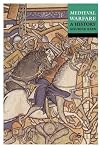
Maurice Keen's "Medieval Warfare, a History" is actually a collection of essay's written by various experts on certain facets of the subject. The first half of the book is a chronological look at Medieval Warfare in general, starting the Carolingian and Ottonian area and finishing with the Hundred Years War. A particular author is assigned different periods of this time frame and each lends their talent and expertise to the reader, greatly enhancing the usefullness of the text. This section did start out a bit slow and tedious but rapidly transformed into a nicely comprehensive study into the various periods of Medival Warfare.
The second half of the book, entitled "The Arts of Warfare", covered subjects such as fortification and sieges, arms, armour, horses, naval warfare, non-combatants, and finally firearms with permanent armies. Again, each subject is address by an author considered expert in the field. If found this book very informative and probaly not too intimidating to the beginner. Mr. Keen did an excellent job at selecting the subjects and writers of this book along with a clear and informative presentation.
The second half of the book, entitled "The Arts of Warfare", covered subjects such as fortification and sieges, arms, armour, horses, naval warfare, non-combatants, and finally firearms with permanent armies. Again, each subject is address by an author considered expert in the field. If found this book very informative and probaly not too intimidating to the beginner. Mr. Keen did an excellent job at selecting the subjects and writers of this book along with a clear and informative presentation.
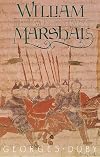
This book is not a very good biography, of ANYONE, let alone William Marshall. Mr Duby relies too heavily on the Chanson de geste of William Marshall, a sort of life story comemorating the life of a famouse figure, encased in a giant poem, and paid for by that figure's family. Hardly a resource for accurate and detailed facts of one's life.
Mr Duby tends to stray from the subject of his book and venture into lectures of courtly life and fuedal obligations. I honestly do not believe that I learned one new thing about the life of William Marshal by reading this "biography".
If one wants to read a good book on this fascinating figure, they should pick up David Crouch's "William Marshal: Knighthood, War, and Chivalry, 1147-1219"
Mr Duby tends to stray from the subject of his book and venture into lectures of courtly life and fuedal obligations. I honestly do not believe that I learned one new thing about the life of William Marshal by reading this "biography".
If one wants to read a good book on this fascinating figure, they should pick up David Crouch's "William Marshal: Knighthood, War, and Chivalry, 1147-1219"
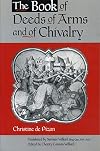
Contemporary accounts and chronicles of certain periods have always fascinated me. Many manuscripts and works are unknown to me and I am always on the lookout for new ones. Most I aquire and read are referenced in others books about that particular mind. That is how I discovered this particular work.
Much is made that a book containing strategic warfare during the Middle Ages was written by a woman. Today, not such a big deal, but at the time groundbreaking and unusual. It seem to me that Ms. Pizan just loved writting and was very prolific with it. After one gets into this work a bit, one sees that it probably was not a mammoth effort on her part to produce this book.
The book begins a little dryly but should be held in the context that you are exploring the mindset of someone who lived over 600 years ago, which in itself, lends itself valuable to the study of that period's mindset.
She then begins to recount various strategems and tactics used by the Ancients and Romans during their respective campaigns and battles. By far the most interesting and readable part of the book.
The latter half of the book I found tedious as she imparts upon the reader an imaginary discussion she has with Honore Bonet, the author of The Tree of Battles. If you have read The Tree of Battles, they prepare to read some of it again. It is nearly verbatum and covers no new ground.
I gave this book 3 starts for historical ambiance value and overall counsel.
Much is made that a book containing strategic warfare during the Middle Ages was written by a woman. Today, not such a big deal, but at the time groundbreaking and unusual. It seem to me that Ms. Pizan just loved writting and was very prolific with it. After one gets into this work a bit, one sees that it probably was not a mammoth effort on her part to produce this book.
The book begins a little dryly but should be held in the context that you are exploring the mindset of someone who lived over 600 years ago, which in itself, lends itself valuable to the study of that period's mindset.
She then begins to recount various strategems and tactics used by the Ancients and Romans during their respective campaigns and battles. By far the most interesting and readable part of the book.
The latter half of the book I found tedious as she imparts upon the reader an imaginary discussion she has with Honore Bonet, the author of The Tree of Battles. If you have read The Tree of Battles, they prepare to read some of it again. It is nearly verbatum and covers no new ground.
I gave this book 3 starts for historical ambiance value and overall counsel.
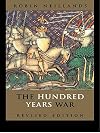
An excellent book throughout. Mr Neillands gives an accurate, unbiased and fittingly detailed account of the war (or series of wars) that is both informative and entertaining. He stays away from the tedious aspects of the war that other authors find themselves muddled in while giving a clear picture of the events. Not on the level of a Jonathan Sumption piece, but altogether one of the best books I've read on the overall conflict. He balances the geo-political facets with the ever popular battle accounts very well, leaving neither subject neglected. I would recomend this book to any novice student on the subject to the mid-range enthusiast.

While taking notes reading this book, I realized my notes were evolving into a pros and cons list quite unintentionaly. So far be it from me to deprive you of it's descriptive:
Pros: Chronology and categories are very well organized.
That was quick, now the cons.
Cons: Mr. Ashdown should be taken only in small doses.
He uses slightly outdated terms in relation to armor pieces despite the book's recent publication.
Mr. Ashdown seems to be able to tell if an armor piece is made from cuir boulli or steel just by looking at it's representation in a centuries-old manuscript, stained glass window or funeral brass.
Has an obsession with something called "banded mail". I've come across the term a few times in a dozen books, most never even mentioning it. The consensus seems to be that it either never existed or was very rare at best. Yet he finds it everywhere in illustrations, not considering the artist's representative methods may not have been very accurate.
At least half the book is just a study of monumental brasses and effigies as it is
anything. Very tedious reading unless this is your main area of study.
I know these points could be confusing, but once one sat down and started reading this work, they would instantly recognize what I am talking about. This is really a simply boring and odd book.
Pros: Chronology and categories are very well organized.
That was quick, now the cons.
Cons: Mr. Ashdown should be taken only in small doses.
He uses slightly outdated terms in relation to armor pieces despite the book's recent publication.
Mr. Ashdown seems to be able to tell if an armor piece is made from cuir boulli or steel just by looking at it's representation in a centuries-old manuscript, stained glass window or funeral brass.
Has an obsession with something called "banded mail". I've come across the term a few times in a dozen books, most never even mentioning it. The consensus seems to be that it either never existed or was very rare at best. Yet he finds it everywhere in illustrations, not considering the artist's representative methods may not have been very accurate.
At least half the book is just a study of monumental brasses and effigies as it is
anything. Very tedious reading unless this is your main area of study.
I know these points could be confusing, but once one sat down and started reading this work, they would instantly recognize what I am talking about. This is really a simply boring and odd book.
This book is a general synopsis of the development of arms and armor from the begining of history to the 20th century. I have several in my library just like it. While it is a moderately useful reference book there is nothing in it that stands out from the dozens of works just like it.
I got the impression that (and I may be wrong) may be more of an expert and enthusiast of the more modern weapons (matchlocks till present day) than of the earlier tools. That in itself is fine, but I got the feeling he was relying heavily on friendly peers for the Middle Ages and earlier sections of his book.
Ok book for the general reader but for you students of Renaissance, Middle Ages, Ancient , and pre-history arms and armor you might want to save your self some money and pass on this one.
I got the impression that (and I may be wrong) may be more of an expert and enthusiast of the more modern weapons (matchlocks till present day) than of the earlier tools. That in itself is fine, but I got the feeling he was relying heavily on friendly peers for the Middle Ages and earlier sections of his book.
Ok book for the general reader but for you students of Renaissance, Middle Ages, Ancient , and pre-history arms and armor you might want to save your self some money and pass on this one.

After trudging through a pack of crappy books lately, King Edward III by Michael Packe was a godsend. It is such a pleasure to read a work on a favorite subject that is well written and you enjoy thoroughly. Too many times have I started a book on something I enjoy reading about only to discover that it is poorly written or incredibly boring. This book was just the opposite.
This work is detailed and vivid. He does not give you verbatum the accounts of 4 different chronicles of the same event. He is author and as such has taken charge of his book and is selective of what he includes in it. On the whole the book is also unbiased and fair to Edward III memory, which is a rarity on anything pertaining to the Hundred Years War.
There is one section that Mr. Packe dwells WAY too long on about whether or not Edward committed rape. This is a biography and would be an important event in any such work, but to the military history-minded like myself, it was a bit of a bore. Mr. Packe did resort to what I call "dueling chroniclers" and spent a bit too much time as well exploring the exact identity or the supposed victim.
All in all a great book and I recommend it. Probably the authoritive biography on this great king.
This work is detailed and vivid. He does not give you verbatum the accounts of 4 different chronicles of the same event. He is author and as such has taken charge of his book and is selective of what he includes in it. On the whole the book is also unbiased and fair to Edward III memory, which is a rarity on anything pertaining to the Hundred Years War.
There is one section that Mr. Packe dwells WAY too long on about whether or not Edward committed rape. This is a biography and would be an important event in any such work, but to the military history-minded like myself, it was a bit of a bore. Mr. Packe did resort to what I call "dueling chroniclers" and spent a bit too much time as well exploring the exact identity or the supposed victim.
All in all a great book and I recommend it. Probably the authoritive biography on this great king.
I found this an easy and entertaining book to read. In fact, it was almost "too entertaining".
Mr. Featherstone does a good job of relating the historical developement and emergence of England's pride of martial prowess, but one big problem I have with it is the quoting of Sir Conan Doyle's "The White Company" which is, in fact, a piece of fiction. It is well based on history and research, but quoting fiction sources in a "military history" piece is a big no-no in my eyes.
One thing I really did like is Mr. Featherstone keeps away from all the socio-economic-geopolitical machinations of the times that lead to these battles. He gets right down to the nitty-gritty much like a fighting man would do himself.
A novice on medieval warfare would love this book and it would serve to inspire many to more research. The "wizened" vet on the subject is bombarded by the same anecdotes, stories, and quotes that he has read a hundred times before. But I found if far from tiresome and sort of comfortable actually. Overall, a good book.
Mr. Featherstone does a good job of relating the historical developement and emergence of England's pride of martial prowess, but one big problem I have with it is the quoting of Sir Conan Doyle's "The White Company" which is, in fact, a piece of fiction. It is well based on history and research, but quoting fiction sources in a "military history" piece is a big no-no in my eyes.
One thing I really did like is Mr. Featherstone keeps away from all the socio-economic-geopolitical machinations of the times that lead to these battles. He gets right down to the nitty-gritty much like a fighting man would do himself.
A novice on medieval warfare would love this book and it would serve to inspire many to more research. The "wizened" vet on the subject is bombarded by the same anecdotes, stories, and quotes that he has read a hundred times before. But I found if far from tiresome and sort of comfortable actually. Overall, a good book.
It really pains me to write reviews of people's work in the following manner but I have to be honest at least to myself. This is one of the most boring, dreadful, tedious, and altogether uninteresting books I've read in a REALLY long time.
To begin, this book is about Robert the Bruce's various camaigns against the English monarchs Edward I, II, and III respectively. It spans the years 1306-28 and includes those actions in Wales and his brother's expeditions to be crowned "King of Ireland"
Chapter 3 of this book, "The Raiding of Northern England" was honestly the hardest chapter I've ever read in my whole life. It was truly a miserable experience. I may be alone in this. Many readers may enjoy reading precise figures on what each tiny village in Northumbria lost in victuals due to Scottish raiding. If they do, they will love this work because it is page, after page, after page, after page, of the same thing. When bombarded by information like the fact that Egremont lost two water mills about midsummer of 1322 due to Scottish burning, literally hundreds of times, for thousands of words, and hours upon hour, one tends to be lulled into a brain dead trance. I personally began to resent having to read the book.
I've always thought that good history books keep numbers down to a minimum. I understand history IS dates, places, and people. But an overabundance of any of the three in a text make it very difficult to read and/or retain the information within. There is so much minutiae show more that you will find yourself skimming over it to avoid the dates/places trap.
This book is very echoic and boring.
The second half of this book, starting with the invasion of Ireland is only slightly better.
I do not know why Mr. McNamee gave this work the title that he did. There is barely a half page reference to ANY of the battles of the period. It should not ever be labelled as a military history book.
Why two stars? Mr. McNamee is very obviously and expert on the subject and feels very passionate for it. He incontrovertibly researched this book exhaustingly and thouroughly. But a good author knows what to include and what to leave out to keep the read entertained and interested. This book is a horrible example of how not to do it. show less
To begin, this book is about Robert the Bruce's various camaigns against the English monarchs Edward I, II, and III respectively. It spans the years 1306-28 and includes those actions in Wales and his brother's expeditions to be crowned "King of Ireland"
Chapter 3 of this book, "The Raiding of Northern England" was honestly the hardest chapter I've ever read in my whole life. It was truly a miserable experience. I may be alone in this. Many readers may enjoy reading precise figures on what each tiny village in Northumbria lost in victuals due to Scottish raiding. If they do, they will love this work because it is page, after page, after page, after page, of the same thing. When bombarded by information like the fact that Egremont lost two water mills about midsummer of 1322 due to Scottish burning, literally hundreds of times, for thousands of words, and hours upon hour, one tends to be lulled into a brain dead trance. I personally began to resent having to read the book.
I've always thought that good history books keep numbers down to a minimum. I understand history IS dates, places, and people. But an overabundance of any of the three in a text make it very difficult to read and/or retain the information within. There is so much minutiae show more that you will find yourself skimming over it to avoid the dates/places trap.
This book is very echoic and boring.
The second half of this book, starting with the invasion of Ireland is only slightly better.
I do not know why Mr. McNamee gave this work the title that he did. There is barely a half page reference to ANY of the battles of the period. It should not ever be labelled as a military history book.
Why two stars? Mr. McNamee is very obviously and expert on the subject and feels very passionate for it. He incontrovertibly researched this book exhaustingly and thouroughly. But a good author knows what to include and what to leave out to keep the read entertained and interested. This book is a horrible example of how not to do it. show less
Having amassed a moderately sized stable on books about museum armor collections, I had a pretty good idea about how this one would be formatted and what it would contain. I was not suprised. The illustrations were very well done though, with some very nice illustrations created by my all-time favorite artist Graham Turner. Unfortunately there was (again) a preponderance of 16th century and later pieces that filled most of the book as to where my interest lie in earlier time periods.
Tobias Capwell certainly knows his stuff, and being someone who participates in modern day jousting tournaments (like Graham Turner) I would have thought that he could have gotten more into detail of many of the pieces. Things like manufacture and wear were skimmed over and the overall feel of the text seemed to be directed toward a novice or tourist on the subject. That, in itself, is OK but it fails to engage the more seasoned student of arms and armor. There is a focus on Scottish equipment which is a change and cannot be found elsewhere within the genre.
Overall, it deserves a solid 3 stars.
Tobias Capwell certainly knows his stuff, and being someone who participates in modern day jousting tournaments (like Graham Turner) I would have thought that he could have gotten more into detail of many of the pieces. Things like manufacture and wear were skimmed over and the overall feel of the text seemed to be directed toward a novice or tourist on the subject. That, in itself, is OK but it fails to engage the more seasoned student of arms and armor. There is a focus on Scottish equipment which is a change and cannot be found elsewhere within the genre.
Overall, it deserves a solid 3 stars.

I was very pleasantly suprised by this book. It was a very good, entertaining book and above all informative. I've read several on the subject and would have to rate this one the overall best.
This book was the first that I've read that went into great deal about the Great Company and how it was formed. Most other books mention it and get into the comings and goings of it's characters a little bit, but this one really took an effort at explaining it's origins and it's actions.
Around a 3rd of the book was about Hawkwood alone, which did not bother me at all seeing how he is one of the more interesting figures of the time in my opinion. Mr. Trease covered Hawkwood more thoroughly than some biographies on the English mercenary.
This book gives a good account of some of the practical issues that would arise for the common mercenary foot-soldier as well, something that is passed over in most books. Issues such as arming himself, and what to do with spare equipment, are paid handsome attention.
And refreshingly enough, I did not have to trudge through a long chapter about how the condotta system was able to flourish amongst the Italian states unlike anywhere else in Europe. Call me a salty dog on the subject but pouring over the same old speculation does get old.
To wrap, this is really a very good book. Mr. Trease has a very entertaining and easy gait to his writing and has included many interesting and RELEVANT illustrations within the pages. I highly recommend it.
This book was the first that I've read that went into great deal about the Great Company and how it was formed. Most other books mention it and get into the comings and goings of it's characters a little bit, but this one really took an effort at explaining it's origins and it's actions.
Around a 3rd of the book was about Hawkwood alone, which did not bother me at all seeing how he is one of the more interesting figures of the time in my opinion. Mr. Trease covered Hawkwood more thoroughly than some biographies on the English mercenary.
This book gives a good account of some of the practical issues that would arise for the common mercenary foot-soldier as well, something that is passed over in most books. Issues such as arming himself, and what to do with spare equipment, are paid handsome attention.
And refreshingly enough, I did not have to trudge through a long chapter about how the condotta system was able to flourish amongst the Italian states unlike anywhere else in Europe. Call me a salty dog on the subject but pouring over the same old speculation does get old.
To wrap, this is really a very good book. Mr. Trease has a very entertaining and easy gait to his writing and has included many interesting and RELEVANT illustrations within the pages. I highly recommend it.