
"Warrior's Grace" is about our male main character (MMC) who decides to adopt two orphans after almost running them over with his carriage, because that's exactly what wealthy businessmen decide to do when they almost kill street urchins. He decides to do it up right, and hires a governess to look after the children at his magnificent country estate. The Female Main Character (FMC) is the governess and she happens to have been an agent for the equivalent of England's CIA but now, she's ready to retire and live a more quiet life, and so governess-ing (?) seems like a perfect match for her.
Annnnnd hijinks ensue. Of course the FMC and the MMC fall for one another, but neither one of them tells the other person. A sinister player from the FMC's past comes after her for revenge and targets the MMC and the children. There is also some mistaken identity, suitably supportive and remarkably accepting (for the era) family members, and a secret in the attic, all of which combine to make this story great fun, if not particularly deep. This book is the second in a series about the same family, but can also stand alone (I did not read the first book and do not feel like it was necessary to be able to enjoy this one.)
I rate each of the elements of this story on a scale of 1 to 5 stars as follows:
MMC - 4 stars
FMC - 4 stars
Supporting characters - 3 stars
Plot - 4 stars
Pacing - 4 stars
Dialogue - 3 stars
World-building - 5 stars
Grammar/Syntax/Spelling - 5 stars
AVERAGE: a very respectable 4 stars
Annnnnd hijinks ensue. Of course the FMC and the MMC fall for one another, but neither one of them tells the other person. A sinister player from the FMC's past comes after her for revenge and targets the MMC and the children. There is also some mistaken identity, suitably supportive and remarkably accepting (for the era) family members, and a secret in the attic, all of which combine to make this story great fun, if not particularly deep. This book is the second in a series about the same family, but can also stand alone (I did not read the first book and do not feel like it was necessary to be able to enjoy this one.)
I rate each of the elements of this story on a scale of 1 to 5 stars as follows:
MMC - 4 stars
FMC - 4 stars
Supporting characters - 3 stars
Plot - 4 stars
Pacing - 4 stars
Dialogue - 3 stars
World-building - 5 stars
Grammar/Syntax/Spelling - 5 stars
AVERAGE: a very respectable 4 stars
 This review was written for LibraryThing Early Reviewers.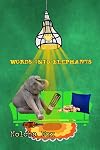
"Words Into Elephants" is a cute little book of cute little poems. Most are short - rarely do they go over a dozen lines or so, and are written in free verse style. I have no specific criticism about free verse poetry because it's so subjective - there are no rules like iambic pentameter or plotting or pacing, etc. It's just, if you like it, if it makes you think or feel a certain way, if a turn of the phrase appeals to you, etc. - then you'll think it's a great poem. And similarly,if you don't like it, you don't like it.
I found myself enjoying a poem here or there, and smiling at a particular image brought to mind by the lines, but I wasn't really "blown away" by any of them. Of course, I didn't think any of them really sucked, either. I especially liked "No Bluebirds Here" (in response to Charles Bukowski's "Bluebirds"), "It Is What It Is," and "Tambourine," but I don't think they qualify for my list of "favorite poems ever." Most of the poems are fine, even interesting - but easily forgettable even tho0ugh they are entertaining enough.
If you have a few minutes to kill (waiting in the car for practice to wind up, for dinner to heat in the microwave, to entertain yourself in the bathroom rather than doomscrolling, etc.) then these little bite-sized poetry nuggets fit the bill just right! Just don't expect to walk away with any deep insights into the human condition or anything like that.
I found myself enjoying a poem here or there, and smiling at a particular image brought to mind by the lines, but I wasn't really "blown away" by any of them. Of course, I didn't think any of them really sucked, either. I especially liked "No Bluebirds Here" (in response to Charles Bukowski's "Bluebirds"), "It Is What It Is," and "Tambourine," but I don't think they qualify for my list of "favorite poems ever." Most of the poems are fine, even interesting - but easily forgettable even tho0ugh they are entertaining enough.
If you have a few minutes to kill (waiting in the car for practice to wind up, for dinner to heat in the microwave, to entertain yourself in the bathroom rather than doomscrolling, etc.) then these little bite-sized poetry nuggets fit the bill just right! Just don't expect to walk away with any deep insights into the human condition or anything like that.
This review was written for LibraryThing Early Reviewers.
If you crossed “Harry Potter” with some of Judy Blume’s best work, you would have “A Madness Unmade,” I think. It has all of the mystery, foreshadowing, intrigue, and fun atmospheric details of the former, with the emotional, coming-of-age, self-doubt, and ultimate victory of the latter. I honestly don’t know what the author could have done better!
Our story is about Laurel Rumbroom. She is the only person living in her house – which is not to say she is alone! Her house, The Underhallow, is also filled with ghosts! In this world, ghosts are not permitted to haunt wherever and whenever they please, so the Rumbroom family has dedicated their lives (and living arrangements) at the Underhallow as a sanctuary for these ghosts. Laurel’s father was the last Guardian of this sanctuary, but he mysteriously died, and the ghosts have been waiting for Laurel to come of age and step into his footsteps.
Laurel, however, has her own struggles. She feels like she is more ghost than live person, and she struggles with executive functioning skills – she honestly comes across as someone living with neurodiversity (like ADHD and/or autism, though neither is expressly mentioned) and it makes her start to wonder if she is real, or a ghost, or just going mad! When dead moths start showing up once a week at The Underhallow’s gates, Laurel is compelled to take charge of her life rather than just float along, and solve the mystery of her father’s death and the moths, once and show more for all!
I have to say, I absolutely LOVED “A Madness Unmade” and was sad when it ended because I was so invested in Laurel and the fate of her ghosts. Luckily, it is the first of a series, so we will be able to visit Laurel and her friends at the Underhallow again! show less
Our story is about Laurel Rumbroom. She is the only person living in her house – which is not to say she is alone! Her house, The Underhallow, is also filled with ghosts! In this world, ghosts are not permitted to haunt wherever and whenever they please, so the Rumbroom family has dedicated their lives (and living arrangements) at the Underhallow as a sanctuary for these ghosts. Laurel’s father was the last Guardian of this sanctuary, but he mysteriously died, and the ghosts have been waiting for Laurel to come of age and step into his footsteps.
Laurel, however, has her own struggles. She feels like she is more ghost than live person, and she struggles with executive functioning skills – she honestly comes across as someone living with neurodiversity (like ADHD and/or autism, though neither is expressly mentioned) and it makes her start to wonder if she is real, or a ghost, or just going mad! When dead moths start showing up once a week at The Underhallow’s gates, Laurel is compelled to take charge of her life rather than just float along, and solve the mystery of her father’s death and the moths, once and show more for all!
I have to say, I absolutely LOVED “A Madness Unmade” and was sad when it ended because I was so invested in Laurel and the fate of her ghosts. Luckily, it is the first of a series, so we will be able to visit Laurel and her friends at the Underhallow again! show less
This review was written for LibraryThing Early Reviewers.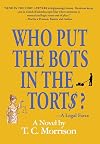
I work in the legal profession and with torts, specifically, so when I saw the title, "Who Put the Bots in the Torts? A Legal Farce," I thought it might, at the very least, be interesting, and at the worst, I'd be familiar enough with the terms, etc., to make it a fairly easy and entertaining read. I was wrong on both counts.
First, there are so many characters to keep track of!! The fact that this title is fourth in a series might be responsible - had I read the previous three, the characters might be more familiar to me and thus, easier to follow. Second, every character has a pun for a name: Mona Lotte, Dusty Rhoades, and so on. One or two names like these would be clever, perhaps even funny, but an entire cast of characters so named gets redundant and confusing. Any single name fails to stand out against the myriad number of similarly labeled characters. And when you've got Pup and Pap and Big Pap (I think Pap and Big Pap are the same person) and Little Pap, and so on, you really have to work to remember who is who!
The actual plot is OK. It seems to be lifted directly from the headlines, with obvious nods to George Santos (former representative from NY who faked his resume,) Google (named "Boogle" in the book,) and OpenAI not compensating artists for their works or likenesses used to train their ChatGPT product. It also heavily relies on what I see as lawyer stereotypes: "ambulance chasing," questionable morals, expense account lunches, etc., etc. I'm not an attorney show more so I'm not necessarily offended by them, but I don't find them very interesting or entertaining, either. So my third critique is the fact that the story is a farce seems like the main point, with everything else having secondary importance and at the expense of the story-telling.
And finally, a substantial part of the book is either a blow-by-blow account of the firm's attorneys having their Monday morning case review meeting, or deposition testimony - which can be dry under the best of circumstances! I felt like some of of these passages could have been summarized or left out, entirely, to move the plot along, and that they may have only been included in the first place to pad page count. I also disliked the way a particular character's words are written in some kind of accent - I couldn't figure out if she was supposed to be dumb, black, southern, or some combination of the three.
Other than those criticisms and a few minor typos, the book was fine. Other people may even really enjoy it! I just had a hard time getting into it and kept putting off returning to it, so it was a bit of a slog to get through. Your mileage may vary.
I rated each element of this book on a one-to-five scale, as follows:
Main Characters: 4/5 stars
Supporting Characters: 3/5 stars
Plot: 3/5 stars
Pacing: 2/5 stars
World Building: 3/5 stars
Dialogue: 2/5 stars
Syntax/spelling/grammar: 3 stars
FINAL RATING: 2.86 stars, rounded up to 3 stars show less
First, there are so many characters to keep track of!! The fact that this title is fourth in a series might be responsible - had I read the previous three, the characters might be more familiar to me and thus, easier to follow. Second, every character has a pun for a name: Mona Lotte, Dusty Rhoades, and so on. One or two names like these would be clever, perhaps even funny, but an entire cast of characters so named gets redundant and confusing. Any single name fails to stand out against the myriad number of similarly labeled characters. And when you've got Pup and Pap and Big Pap (I think Pap and Big Pap are the same person) and Little Pap, and so on, you really have to work to remember who is who!
The actual plot is OK. It seems to be lifted directly from the headlines, with obvious nods to George Santos (former representative from NY who faked his resume,) Google (named "Boogle" in the book,) and OpenAI not compensating artists for their works or likenesses used to train their ChatGPT product. It also heavily relies on what I see as lawyer stereotypes: "ambulance chasing," questionable morals, expense account lunches, etc., etc. I'm not an attorney show more so I'm not necessarily offended by them, but I don't find them very interesting or entertaining, either. So my third critique is the fact that the story is a farce seems like the main point, with everything else having secondary importance and at the expense of the story-telling.
And finally, a substantial part of the book is either a blow-by-blow account of the firm's attorneys having their Monday morning case review meeting, or deposition testimony - which can be dry under the best of circumstances! I felt like some of of these passages could have been summarized or left out, entirely, to move the plot along, and that they may have only been included in the first place to pad page count. I also disliked the way a particular character's words are written in some kind of accent - I couldn't figure out if she was supposed to be dumb, black, southern, or some combination of the three.
Other than those criticisms and a few minor typos, the book was fine. Other people may even really enjoy it! I just had a hard time getting into it and kept putting off returning to it, so it was a bit of a slog to get through. Your mileage may vary.
I rated each element of this book on a one-to-five scale, as follows:
Main Characters: 4/5 stars
Supporting Characters: 3/5 stars
Plot: 3/5 stars
Pacing: 2/5 stars
World Building: 3/5 stars
Dialogue: 2/5 stars
Syntax/spelling/grammar: 3 stars
FINAL RATING: 2.86 stars, rounded up to 3 stars show less
This review was written for LibraryThing Early Reviewers.
"Portrait of Love" is a short (only 21 pages) story that reads like a classic fairy tale faintly (and only slightly) reminiscent of Wilde's "The Picture of Dorian Gray." I think the author does an excellent job of world-building and setting the time/place very accurately and descriptively.
The characters are less well-developed, with the exception of the main protagonist. I would have liked to have seen at least the artist and the wife fleshed out more, especially the artist's blessing/curse, but it wasn't absolutely necessary given the brevity of the story. If there is a weak spot, the traveling sequence where the protagonist visits others who have had a portrait done by the author seemed a bit rushed and too much "tell" vs. "show."
These minor issues do not detract overmuch from the overall story, though. There is a nice twist that I somewhat saw coming, but not until about 75% of the way through and not the details.
Based on this short story, I would definitely read longer-form writing from this author if the topic and plot synopsis appealed to me.
I give it 4 out of 5 stars.
The characters are less well-developed, with the exception of the main protagonist. I would have liked to have seen at least the artist and the wife fleshed out more, especially the artist's blessing/curse, but it wasn't absolutely necessary given the brevity of the story. If there is a weak spot, the traveling sequence where the protagonist visits others who have had a portrait done by the author seemed a bit rushed and too much "tell" vs. "show."
These minor issues do not detract overmuch from the overall story, though. There is a nice twist that I somewhat saw coming, but not until about 75% of the way through and not the details.
Based on this short story, I would definitely read longer-form writing from this author if the topic and plot synopsis appealed to me.
I give it 4 out of 5 stars.
This review was written for LibraryThing Early Reviewers.
Fun fact: My husband and I occasionally write haikus to one another. We also love dogs. So when I saw a story about dog lovers written entirely in haiku, I jumped at the chance to read it.
The story is short with each chapter made up of a single haiku, but it still manages to portray a cohesive plot. It's creative, cute, funny, upbeat, and a light, quick, read. I have to give props to the author for managing all of that in such a highly-structured poetic format!!
If I have any gripes, it's simply that I prefer haikus that are one thought per line, as opposed to breaking a thought mid-sentence just to meet the syllable count and continuing on with the thought in the next line. As far as I'm aware, though, there is no absolute requirement that haikus be written that way - that's just my personal penchant.
I really liked the short story/collection of poems and enjoyed the novelty of the form. I thoroughly recommend you give it a read!
The story is short with each chapter made up of a single haiku, but it still manages to portray a cohesive plot. It's creative, cute, funny, upbeat, and a light, quick, read. I have to give props to the author for managing all of that in such a highly-structured poetic format!!
If I have any gripes, it's simply that I prefer haikus that are one thought per line, as opposed to breaking a thought mid-sentence just to meet the syllable count and continuing on with the thought in the next line. As far as I'm aware, though, there is no absolute requirement that haikus be written that way - that's just my personal penchant.
I really liked the short story/collection of poems and enjoyed the novelty of the form. I thoroughly recommend you give it a read!
This review was written for LibraryThing Early Reviewers.
I struggled with what score to give this novella. On the one hand, it's well-written, cohesive, descriptive, and flows quickly and well. The characters are complex and individualistic, the dialogue is believable, and the world-building, vivid.
But I just didn't like it. Granted, I am not a big fan of horror stories - and that's what I would categorize this offering as - so keep that in mind as you decide whether or not this book is for you.
Essentially, the book is about a politically conservative writer forced to change his name and relocate as a result of "cancel culture" coming for his more unpopular views. He moves from California to a suburban neighborhood that seems very at odds with his more pompous, narcissistic, urban, personality. He festers there, for lack of a better word. He has writer's block and fears he has lost his muse, and fills his time with affairs and making fun of his solid-though-uninspiring neighbors until one day, someone new moves into the house across the street. That someone is an alleged murderer whose conviction was overturned thanks, in large part, to a documentary about him that provided him with an alibi that did not come out at the original trial. The rest of the book is really about the mind games played between these two men, and the others that are sucked into their orbit.
What it really felt like was a psychological battle between two equally unpleasant and self-centered men that eventually deteriorates into bloodshed. I wouldn't show more want to spend time with either the main protagonist or antagonist as they are both thoroughly horrible - and consequently, I didn't want to spend time reading about them, either. There is no real "good guy" to root for in this short novel as the main characters are so distasteful and the supporting characters are more like caricatures that fulfill a certain niche in the plot.
I rate each of the following aspects of the story on scale of 1 to 5 stars, as follows:
Protagonist - 1 star
Antagonist - 2 stars
Supporting characters - 3 stars
Plot - 1 star
Pacing - 4 stars
World-building/setting - 5 stars
Dialogue - 5 stars
Syntax/grammar, etc. - 5 stars
AVERAGE: 3.3 stars, which I rounded up to 4 because I really do think it's a well-written example of its genre - it's just not a genre I particularly like.
I think the author is talented, and oddly enough, I can see this story becoming a fairly successful horror movie, but it's just not for me. Your mileage may vary. show less
But I just didn't like it. Granted, I am not a big fan of horror stories - and that's what I would categorize this offering as - so keep that in mind as you decide whether or not this book is for you.
Essentially, the book is about a politically conservative writer forced to change his name and relocate as a result of "cancel culture" coming for his more unpopular views. He moves from California to a suburban neighborhood that seems very at odds with his more pompous, narcissistic, urban, personality. He festers there, for lack of a better word. He has writer's block and fears he has lost his muse, and fills his time with affairs and making fun of his solid-though-uninspiring neighbors until one day, someone new moves into the house across the street. That someone is an alleged murderer whose conviction was overturned thanks, in large part, to a documentary about him that provided him with an alibi that did not come out at the original trial. The rest of the book is really about the mind games played between these two men, and the others that are sucked into their orbit.
What it really felt like was a psychological battle between two equally unpleasant and self-centered men that eventually deteriorates into bloodshed. I wouldn't show more want to spend time with either the main protagonist or antagonist as they are both thoroughly horrible - and consequently, I didn't want to spend time reading about them, either. There is no real "good guy" to root for in this short novel as the main characters are so distasteful and the supporting characters are more like caricatures that fulfill a certain niche in the plot.
I rate each of the following aspects of the story on scale of 1 to 5 stars, as follows:
Protagonist - 1 star
Antagonist - 2 stars
Supporting characters - 3 stars
Plot - 1 star
Pacing - 4 stars
World-building/setting - 5 stars
Dialogue - 5 stars
Syntax/grammar, etc. - 5 stars
AVERAGE: 3.3 stars, which I rounded up to 4 because I really do think it's a well-written example of its genre - it's just not a genre I particularly like.
I think the author is talented, and oddly enough, I can see this story becoming a fairly successful horror movie, but it's just not for me. Your mileage may vary. show less
This review was written for LibraryThing Early Reviewers.
The chapters in "Confidential" about different moments in a family's life are little glimpses into different family members at different times in their lives that ultimately read more like short stories than one cohesive plot. Every character is referred to by a pronoun or a title - never a name - and only as each story-within-a-chapter unfolds does the reader piece together the idea that the boy in one chapter becomes the professor in another, and that he is is Grandfather in still another one, etc. The pieces, once put together, illuminate the full circle of life.
There is no real sense of a particular character or narrator's voice as no names are ever mentioned and each chapter is from a different point of view. It's only through the characters' revelations in subsequent sketches that you go, "Oh! Because he is the boy, only grown now!" or "Yes, she's remembering a similar experience she endured as a child," etc. And there is no world-building or sense of place beyond the vaguest hint of it being set in a European country on a macro level, and on the micro level, the immediate setting of the action: an apartment, a street, a movie theater, in the rain, a hospital, and so on. So it's very difficult to use typical fiction measures such as likeability or consistency of character or chemistry or sense of immersion in a particular place or its culture or personality rendered with clarity, etc. It's more like dropping in to spy on members of the same family at different show more points in time, and witnessing little incidents that, together, make up the whole of a life. Or lives.
I can't quite decide if this unconventional approach appeals to me or not. I appreciate the novelty of writing a life story this way, and give full credit to the author's deft hand to be able to string together these little moments with enough dexterity to tell such a complete story when each piece, each chapter, is anything but complete. It's almost like putting together a jigsaw puzzle when you have no idea what the completed picture is supposed to look like: eventually, you figure it out, but until you are most of the way finished, you have no idea what's going on; e.g., the white blob could be clouds, cake frosting, or a lab coat but you wont' know until you get more pieces to the puzzle.
The tone of the work, as a whole, has an air of wry melancholy and gravitas that resonated with me, but also left me feeling vaguely nostalgic (for what, I don't know) and maybe a little sad. However, I also found myself repeatedly nodding my head to acknowledge some unnamed but universal truths, thinking, "Yes! Life IS like that!"
The pacing is even despite there being large gaps of time in between the events of the different chapter-stories, and kudos to the translator for making the book accessible from its original Polish to English speakers. I just can't decide if I like this book or not, despite there not being anything really "wrong" with it, which is the only reason I can't give it a full 5-star review.
I do, however, have the feeling that "Confidential" will stay with me for a long time, even if my final opinion is somewhat ambiguous. I definitely think people should read it, even if for no other reason than to experience how "less becomes more" in the hands (or pen) of a skillful craftsman. But if you like your fiction to be obvious, light-hearted, or laugh-out-loud funny, then this book is not for you.
Based on this book alone, though, I would definitely read more works by the author. show less
There is no real sense of a particular character or narrator's voice as no names are ever mentioned and each chapter is from a different point of view. It's only through the characters' revelations in subsequent sketches that you go, "Oh! Because he is the boy, only grown now!" or "Yes, she's remembering a similar experience she endured as a child," etc. And there is no world-building or sense of place beyond the vaguest hint of it being set in a European country on a macro level, and on the micro level, the immediate setting of the action: an apartment, a street, a movie theater, in the rain, a hospital, and so on. So it's very difficult to use typical fiction measures such as likeability or consistency of character or chemistry or sense of immersion in a particular place or its culture or personality rendered with clarity, etc. It's more like dropping in to spy on members of the same family at different show more points in time, and witnessing little incidents that, together, make up the whole of a life. Or lives.
I can't quite decide if this unconventional approach appeals to me or not. I appreciate the novelty of writing a life story this way, and give full credit to the author's deft hand to be able to string together these little moments with enough dexterity to tell such a complete story when each piece, each chapter, is anything but complete. It's almost like putting together a jigsaw puzzle when you have no idea what the completed picture is supposed to look like: eventually, you figure it out, but until you are most of the way finished, you have no idea what's going on; e.g., the white blob could be clouds, cake frosting, or a lab coat but you wont' know until you get more pieces to the puzzle.
The tone of the work, as a whole, has an air of wry melancholy and gravitas that resonated with me, but also left me feeling vaguely nostalgic (for what, I don't know) and maybe a little sad. However, I also found myself repeatedly nodding my head to acknowledge some unnamed but universal truths, thinking, "Yes! Life IS like that!"
The pacing is even despite there being large gaps of time in between the events of the different chapter-stories, and kudos to the translator for making the book accessible from its original Polish to English speakers. I just can't decide if I like this book or not, despite there not being anything really "wrong" with it, which is the only reason I can't give it a full 5-star review.
I do, however, have the feeling that "Confidential" will stay with me for a long time, even if my final opinion is somewhat ambiguous. I definitely think people should read it, even if for no other reason than to experience how "less becomes more" in the hands (or pen) of a skillful craftsman. But if you like your fiction to be obvious, light-hearted, or laugh-out-loud funny, then this book is not for you.
Based on this book alone, though, I would definitely read more works by the author. show less
This review was written for LibraryThing Early Reviewers.
“Access All Areas” is the story of childhood acquaintances set in the 80’s who meet as adults at the behest of the female main character’s (FMC) mother and the mother’s friend, who happens to be the mother of the male main character (MMC). Seems the MMC is in a rock band and mom is worried about his lifestyle, and the two mothers conspire to send the FMC in as the band’s personal assistant so she can spy on the MMC and report back to the MMC’s mother. Hijinks ensue.
Is this a far-fetched premise? Absolutely. I don’t really mind that, though, as romance novels do have their tropes and often, the suspension of disbelief is required to immerse yourself in the story. The author started this book as a teenager in the 80’s, and it shows. The writing is sophomoric, and the entire first third to half of the book is tedious page-padding that reads like the itinerary it is. When the focus of the book – the relationship between the FMC and MMC – finally starts to seem like something more than incidental, it still moves at a glacial pace. So what I do mind, is poor grammar/syntax choices, anachronisms, and just plain mean-ness, and this book has all of that and more.
Specifically, the author refers to certain cultural phenomena that hadn’t yet happened in the time the book is set. The author also makes some eyebrow-raising grammatical choices; for instance, writing “in tack” instead of “intact,” “day-today” instead of “day-to-day,” and show more “wrack” instead of “rack.” I could go on nitpicking specific instances, but these are nothing a good editor and some continuity/fact-checking couldn’t correct.
The MMC – who, while decidedly the most fundamentally decent person in the band, is still problematic – does a 180-degree turn around at the end with no explanation of how he processed the fact situation he was in to come up with the decisions he made. The FMC has no backbone until close to the end, and while you could say, “Well, it was the 80’s – it was a different time,” I lived through the 80’s, myself, and I promise that even then, if I was in the FMC’s shoes, I would not have taken the abuse that she did. It wasn’t THAT different.
Because finally, every character in this book outside of the FMC and the moms is just. Plain. Mean. Are there people like that in real life? Yes. Does the music industry maybe attract more of that type of person than you’d likely meet on the street? I’m willing to entertain the premise. But every character in this book outside of the two main characters and maybe one supporting character was just plain unlikeable!! And it’s no more pleasant reading about unlikeable people than it is spending time with them in real life.
I mean, I’ve read worse, and she did actually finish writing a full-length novel approximately 40 years after starting it, so I’m giving at least one star for that accomplishment. But I rate every other aspect of the book on a scale of 1 to 5 as follows:
FMC – 2 stars
MMC – 2 stars
Supporting characters – 0 stars
Setting – 3 stars
World-building – 1 star
Plotting – 2 stars
Pacing – 1 star
Dialogue – 1 star
Sex scenes – 2 stars
AVERAGE: 1.6 stars, very generously rounded up to 2 stars
I would say don’t waste your time or money on this mess. show less
Is this a far-fetched premise? Absolutely. I don’t really mind that, though, as romance novels do have their tropes and often, the suspension of disbelief is required to immerse yourself in the story. The author started this book as a teenager in the 80’s, and it shows. The writing is sophomoric, and the entire first third to half of the book is tedious page-padding that reads like the itinerary it is. When the focus of the book – the relationship between the FMC and MMC – finally starts to seem like something more than incidental, it still moves at a glacial pace. So what I do mind, is poor grammar/syntax choices, anachronisms, and just plain mean-ness, and this book has all of that and more.
Specifically, the author refers to certain cultural phenomena that hadn’t yet happened in the time the book is set. The author also makes some eyebrow-raising grammatical choices; for instance, writing “in tack” instead of “intact,” “day-today” instead of “day-to-day,” and show more “wrack” instead of “rack.” I could go on nitpicking specific instances, but these are nothing a good editor and some continuity/fact-checking couldn’t correct.
The MMC – who, while decidedly the most fundamentally decent person in the band, is still problematic – does a 180-degree turn around at the end with no explanation of how he processed the fact situation he was in to come up with the decisions he made. The FMC has no backbone until close to the end, and while you could say, “Well, it was the 80’s – it was a different time,” I lived through the 80’s, myself, and I promise that even then, if I was in the FMC’s shoes, I would not have taken the abuse that she did. It wasn’t THAT different.
Because finally, every character in this book outside of the FMC and the moms is just. Plain. Mean. Are there people like that in real life? Yes. Does the music industry maybe attract more of that type of person than you’d likely meet on the street? I’m willing to entertain the premise. But every character in this book outside of the two main characters and maybe one supporting character was just plain unlikeable!! And it’s no more pleasant reading about unlikeable people than it is spending time with them in real life.
I mean, I’ve read worse, and she did actually finish writing a full-length novel approximately 40 years after starting it, so I’m giving at least one star for that accomplishment. But I rate every other aspect of the book on a scale of 1 to 5 as follows:
FMC – 2 stars
MMC – 2 stars
Supporting characters – 0 stars
Setting – 3 stars
World-building – 1 star
Plotting – 2 stars
Pacing – 1 star
Dialogue – 1 star
Sex scenes – 2 stars
AVERAGE: 1.6 stars, very generously rounded up to 2 stars
I would say don’t waste your time or money on this mess. show less
This review was written for LibraryThing Early Reviewers.
“Louisa Sophia And The Legion of Sisters” is an enjoyable book based somewhat in fact. Apparently, Napoleon set up a boarding school for the daughters of France’s Legion of Honor winners, and the author drew upon its history and the diary entries of former students on which to base some of the book’s characters, events, and settings. The story follows the adventures of a group of girls (the Legion of Sisters) attending the school as they embark on a trip around the continent with the goal of being introduced to “suitable” potential husbands. Louisa Sophia, however, is not in the market for a husband, and would rather live for herself than some man. Her unique skills (taught to her by her uncle) and inventiveness save her friends more than once!
The book is a rollicking adventure from Paris to the countryside of France and through Portugal and back again. The traveling party hits all the major “tourist attractions” and I enjoyed most of the characters very much. I also enjoyed Louisa Sophia’s thought processes and her climbing exploits and the backstory vignettes of how she acquired her skills.
However, there is obviously some backstory missing about the main villain that I wish had been expanded upon, especially since there is a hint of the supernatural to his origins. Also, some of the dialogue was a little “clunky,” for lack of a better word – not sure if this last was due to the time period and/or language differences between 19th century French show more and 21st century American English, or because a man was trying to write like he thinks girls might talk? Either way, it didn’t feel “natural” or like it really flowed. However, Louisa Sophia’s inner dialogue did not have this problem so I’m not really sure what was going on when the girls were talking to one another?
Also, be warned that if you are squeamish or have experience any kind of SA, stalking, bullying, or similar behavior, the majority of this book could be quite triggering for you. Read at your own risk! If that is not too off-putting, though, this book is a charming, easy, little read that, were it not for the depravity of the main villain, I would not hesitate to recommend to junior high age readers and up.
I rate each aspect of the book on a scale of 1 to 5 stars as follows:
Main character – 4 stars
Supporting characters – 4 stars
Villain – 3 stars
Dialogue – 3 stars
Setting(s) – 5 stars
World-building – 5 stars
Plotting – 4 stars
Pacing – 5 stars
Grammar/syntax – 4 stars
Prose – 4 stars
AVERAGE: 4.1 stars, rounded down to 4 stars for the review
I think I would read other books in this series and/or by this author, but not sure I would want to pay full price to do so. Your mileage may vary! show less
The book is a rollicking adventure from Paris to the countryside of France and through Portugal and back again. The traveling party hits all the major “tourist attractions” and I enjoyed most of the characters very much. I also enjoyed Louisa Sophia’s thought processes and her climbing exploits and the backstory vignettes of how she acquired her skills.
However, there is obviously some backstory missing about the main villain that I wish had been expanded upon, especially since there is a hint of the supernatural to his origins. Also, some of the dialogue was a little “clunky,” for lack of a better word – not sure if this last was due to the time period and/or language differences between 19th century French show more and 21st century American English, or because a man was trying to write like he thinks girls might talk? Either way, it didn’t feel “natural” or like it really flowed. However, Louisa Sophia’s inner dialogue did not have this problem so I’m not really sure what was going on when the girls were talking to one another?
Also, be warned that if you are squeamish or have experience any kind of SA, stalking, bullying, or similar behavior, the majority of this book could be quite triggering for you. Read at your own risk! If that is not too off-putting, though, this book is a charming, easy, little read that, were it not for the depravity of the main villain, I would not hesitate to recommend to junior high age readers and up.
I rate each aspect of the book on a scale of 1 to 5 stars as follows:
Main character – 4 stars
Supporting characters – 4 stars
Villain – 3 stars
Dialogue – 3 stars
Setting(s) – 5 stars
World-building – 5 stars
Plotting – 4 stars
Pacing – 5 stars
Grammar/syntax – 4 stars
Prose – 4 stars
AVERAGE: 4.1 stars, rounded down to 4 stars for the review
I think I would read other books in this series and/or by this author, but not sure I would want to pay full price to do so. Your mileage may vary! show less
This review was written for LibraryThing Early Reviewers.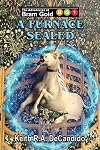
I really enjoyed “A Furnace Sealed!” I thought the characters were well-drawn, and the premise (creatures – think werewolves, gods, vampires, etc. - walking among modern NYC society, with their own protectors and policers) was original and very entertaining. As much as I liked it, though, there were a few detractions:
Chiefly, it seemed like a lot of time and effort was put into naming the locations where certain activities took place, complete with routes how to get there, street names, and traffic conditions. While this much detail on something that is only tertiary to the main story certainly helped cement the location in the reader’s mind and contributed to building the world the story takes place within, it seemed overdone and as if it were mainly included to help pad the word count. A few examples of place names, landmarks, and traffic situations would have been sufficient, I think, instead of paragraphs and pages devoted to the main character’s traveling methods and routes any time he would go anywhere – especially when I would suspect that the majority of readers are NOT from the Bronx and don’t care if the action took place on Jerome Avenue or West 263rd Street!
Secondly, as soon as the “villain” made their first appearance in the story, I knew they were going to be important later and eventually be caught. It would have improved the story if this character and their place in the world were a bit more nuanced and subtle and didn’t telegraph show more their culpability quite so much.
That being said, though, I appreciated the diversity among the supporting characters, the camaraderie between them, and (without spoiling it) the dilemma faced by the main character at the end.
I rate each of the aspects of this book on a scale of one to five stars, as follows:
Main character – 5 stars
Supporting characters – 5 stars
World-building – 5 stars
Villain – 3 stars
Plotting – 4 stars
Dialogue – 4 stars
Prose – 4 stars
Grammar/syntax – 4 stars
TOTAL: 4.25 stars, rounded down to 4 stars for rating purposes
All that being said, I did enjoy this book and I would recommend it to others. I would probably read others in the series, too – I would just skip all the parts about how characters got from point A to point B. The book would be about 2/3 its original length if I did….. show less
Chiefly, it seemed like a lot of time and effort was put into naming the locations where certain activities took place, complete with routes how to get there, street names, and traffic conditions. While this much detail on something that is only tertiary to the main story certainly helped cement the location in the reader’s mind and contributed to building the world the story takes place within, it seemed overdone and as if it were mainly included to help pad the word count. A few examples of place names, landmarks, and traffic situations would have been sufficient, I think, instead of paragraphs and pages devoted to the main character’s traveling methods and routes any time he would go anywhere – especially when I would suspect that the majority of readers are NOT from the Bronx and don’t care if the action took place on Jerome Avenue or West 263rd Street!
Secondly, as soon as the “villain” made their first appearance in the story, I knew they were going to be important later and eventually be caught. It would have improved the story if this character and their place in the world were a bit more nuanced and subtle and didn’t telegraph show more their culpability quite so much.
That being said, though, I appreciated the diversity among the supporting characters, the camaraderie between them, and (without spoiling it) the dilemma faced by the main character at the end.
I rate each of the aspects of this book on a scale of one to five stars, as follows:
Main character – 5 stars
Supporting characters – 5 stars
World-building – 5 stars
Villain – 3 stars
Plotting – 4 stars
Dialogue – 4 stars
Prose – 4 stars
Grammar/syntax – 4 stars
TOTAL: 4.25 stars, rounded down to 4 stars for rating purposes
All that being said, I did enjoy this book and I would recommend it to others. I would probably read others in the series, too – I would just skip all the parts about how characters got from point A to point B. The book would be about 2/3 its original length if I did….. show less
This review was written for LibraryThing Early Reviewers.
The one thought that kept entering my mind as I read "Dadding Poorly" is that Dave Barry did it better 30+ years ago. "Babies and Other Hazards of Sex" by Barry and Arte Johnson is absolutely hysterical so admittedly it sets the bar high. Unfortunately, "Dadding Poorly" does not measure up. I give the author full credit for the attempt, but the humor, for me, was almost trying too hard and thus, felt cringe-y rather than clever and veered toward the "absurd for absurdity's sake" rather than the merely cheeky.
Still, it's not a bad book. It was fairly well-written from the standpoint of having complete, coherent, sentences with correct spelling and punctuation, etc., and it's short - only 76 pages - so there's that. And it's entirely possible - in fact, probable - that I just don't have the kind of sense of humor to which this book would most appeal. There was a disclaimer at the beginning of the book that warned that it was all absurdist parody, so that should have been my warning that it would not appeal to me. I like my humor more subtle and tongue-in-cheek, and less outright ridiculous/dada-esque. Your mileage may vary.
I was really hoping that the book might make a cute, silly, gift for my son-in-law, who is expecting his first child any day now. However, I just didn't find it so much funny ha-ha as I did funny strange. But as I said, I don't think this book was written for people like me. I think if you find the more esoteric bits of Monty Python's Flying Circus show more downright funny and not just somewhat bewildering, you will like this book. If you are more like me and only like their movies and some of the Monty Python Show's more well-known sketches ("Spam," "The Lumberjack Song," or "Raymond Luxury Yacht," for example) you'll likely think, like I do, that this book is just "meh."
My rating of 3 stars reflects that feeling, and I leave you with this recommendation: if you're looking for a funny book about pregnancy and parenting, do yourself a favor and get Barry's book, instead. show less
Still, it's not a bad book. It was fairly well-written from the standpoint of having complete, coherent, sentences with correct spelling and punctuation, etc., and it's short - only 76 pages - so there's that. And it's entirely possible - in fact, probable - that I just don't have the kind of sense of humor to which this book would most appeal. There was a disclaimer at the beginning of the book that warned that it was all absurdist parody, so that should have been my warning that it would not appeal to me. I like my humor more subtle and tongue-in-cheek, and less outright ridiculous/dada-esque. Your mileage may vary.
I was really hoping that the book might make a cute, silly, gift for my son-in-law, who is expecting his first child any day now. However, I just didn't find it so much funny ha-ha as I did funny strange. But as I said, I don't think this book was written for people like me. I think if you find the more esoteric bits of Monty Python's Flying Circus show more downright funny and not just somewhat bewildering, you will like this book. If you are more like me and only like their movies and some of the Monty Python Show's more well-known sketches ("Spam," "The Lumberjack Song," or "Raymond Luxury Yacht," for example) you'll likely think, like I do, that this book is just "meh."
My rating of 3 stars reflects that feeling, and I leave you with this recommendation: if you're looking for a funny book about pregnancy and parenting, do yourself a favor and get Barry's book, instead. show less
This review was written for LibraryThing Early Reviewers.
This book was nothing if not predictable: bad boy pro gets in trouble and as penance, gets sent to a small town [insert business here] struggling to stay afloat, falls in love with the owner, and due to his connections, saves the day, etc., etc. I'm sure you know the trope. Still, people read romance novels because they LIKE the tropes, and the predictability of knowing what comes next and that it will be a happily-ever-after by the time the last page is turned, so I'm not necessarily holding that against it. The plot was just not terribly original, so if that's important to you, skip this book.
Alas, the plot was not the only baggage this book came with. The pacing was irregular, with about faces in characters' actions back-to-back with nothing to explain why they had a change of heart. The male main character, in particular, seemed positively bipolar the way he would jump from being mean and grouchy, to very helpful Mr. Nice Guy. The dialogue is somewhat clunky, as well, and I thought the kids' personalities, in particular, were very cliché. Isn't there always a small kid named Timmy or Tommy who cries a lot and who is the worst kid on the team at the beginning but comes back to shoot the winning shot by the end? And since when does an offender sentenced to community service report to the mayor? There were a lot of holes like this one that made suspension of any disbelief very difficult.
But the one thing that really sank this book for me is the fact that it was all show more written in present active tense! It's almost like the author was confusing active tense with active voice. Random example from page 31: "Jack pauses at the rink's entrance, taking a deep breath of the crisp morning air. He pushes through the doors...he spreads his notes on the bench...the sound of approaching chatter breaks his concentration..." and so on. You can still write in active voice without making everything sound like a play-by-play from a sporting event. It made for difficult, cringe-y, reading, for me - your mileage may vary.
I rate each of the characteristics of this novel on a scale of 1 to 5 stars as follows:
Female Main Character - 3 stars
Male Main Character - 2 stars
Supporting Characters - 2 stars
Plot - 2 stars
Pacing - 2 stars
Dialogue - 2 stars
World-building - 2 stars
Grammar/Syntax - 1 star (I can't get over the present tense thing, plus all the clichés...)
Overall score: 2 stars. If I never read another book written completely in present active tense, it will be too soon. show less
Alas, the plot was not the only baggage this book came with. The pacing was irregular, with about faces in characters' actions back-to-back with nothing to explain why they had a change of heart. The male main character, in particular, seemed positively bipolar the way he would jump from being mean and grouchy, to very helpful Mr. Nice Guy. The dialogue is somewhat clunky, as well, and I thought the kids' personalities, in particular, were very cliché. Isn't there always a small kid named Timmy or Tommy who cries a lot and who is the worst kid on the team at the beginning but comes back to shoot the winning shot by the end? And since when does an offender sentenced to community service report to the mayor? There were a lot of holes like this one that made suspension of any disbelief very difficult.
But the one thing that really sank this book for me is the fact that it was all show more written in present active tense! It's almost like the author was confusing active tense with active voice. Random example from page 31: "Jack pauses at the rink's entrance, taking a deep breath of the crisp morning air. He pushes through the doors...he spreads his notes on the bench...the sound of approaching chatter breaks his concentration..." and so on. You can still write in active voice without making everything sound like a play-by-play from a sporting event. It made for difficult, cringe-y, reading, for me - your mileage may vary.
I rate each of the characteristics of this novel on a scale of 1 to 5 stars as follows:
Female Main Character - 3 stars
Male Main Character - 2 stars
Supporting Characters - 2 stars
Plot - 2 stars
Pacing - 2 stars
Dialogue - 2 stars
World-building - 2 stars
Grammar/Syntax - 1 star (I can't get over the present tense thing, plus all the clichés...)
Overall score: 2 stars. If I never read another book written completely in present active tense, it will be too soon. show less
This review was written for LibraryThing Early Reviewers.
This is a short story detailing the blind date between friends of friends who get set up by said friends, and end up having the strangest coffee date I've ever encountered! It's not the worst thing I've ever read, by any stretch of the imagination, but the events and antics described make it one of the most far-fetched dates (and stories) I've ever heard of. I think the characters have promise, but I wasn't really feeling the charisma or heat, and I feel like the relationship developing between the two acted as a framework on which to hang the oddities of the other coffee shop patrons and staff, rather than the main character's romance (or potential romance) being the center stage and the coffee shop being an incidental setting.
I understand that this is one of many short stories all based on the premise of this one individual acting as matchmaker and setting up various pairs of her friends together, so it's quite possible that other blind dates in the series are more my cup of tea. Your mileage may vary!
I usually rate the various aspects of a novel by things like plot, pacing, character development, world-building, etc., but that's harder to do with a short story. Nevertheless, I rated what I could on a scale of 1 to 5, as follows:
FMC - 3 stars
MMC - 3 stars
Supporting characters - too many, with too brief of appearances to rate
Chemistry - 2 stars
Plot - 2 stars
Pacing - 2 stars
World-building - 4 stars
Pacing - 3 stars
Dialogue - 3 stars
Grammar/syntax - 3 stars (a few show more misplaced commas and missing or altogether wrong words, ex., "because" instead of "become" on pg. 39, "mediations" instead of "meditations" on pg. 24, etc.)
Overall score: 2.7 stars, rounded up to 3 show less
I understand that this is one of many short stories all based on the premise of this one individual acting as matchmaker and setting up various pairs of her friends together, so it's quite possible that other blind dates in the series are more my cup of tea. Your mileage may vary!
I usually rate the various aspects of a novel by things like plot, pacing, character development, world-building, etc., but that's harder to do with a short story. Nevertheless, I rated what I could on a scale of 1 to 5, as follows:
FMC - 3 stars
MMC - 3 stars
Supporting characters - too many, with too brief of appearances to rate
Chemistry - 2 stars
Plot - 2 stars
Pacing - 2 stars
World-building - 4 stars
Pacing - 3 stars
Dialogue - 3 stars
Grammar/syntax - 3 stars (a few show more misplaced commas and missing or altogether wrong words, ex., "because" instead of "become" on pg. 39, "mediations" instead of "meditations" on pg. 24, etc.)
Overall score: 2.7 stars, rounded up to 3 show less
This review was written for LibraryThing Early Reviewers.
"Part B" is kind of a fun read - it deals with a TV morning show anchor who is dealing with infertility, and how she lost herself and finds herself again. There is some romance, and I learned some things (I'd never heard of the island called Sark before!) and although I didn't really identify with the main character, I really liked the plot line about falling for someone who is not what they seem on the surface, and regretting it. I won't give the ending away, but I do appreciate and respect how the main character dealt with it and so I'm glad I read this book, even though other aspects were not necessarily what I might have wished.
Specifically, I liked the supporting characters - especially the German lady and the agent/friend of the main character. They seemed like people I would want to be friends with in real life. Other reviewers have pointed to the donkey and the older neighbor as highlights, and although I did like them, I didn't think they added as much to the story as the other two did. I did not like the co-host/boyfriend, but then, I don't think the reader is supposed to! As for the primary love interest: he's a tough and gruff guy who keeps to himself, so it's difficult to really get to know him. I wish this character had been developed a little bit more, and earlier in the story.
There is no real "heat" on the page in this one, although it is alluded to, and a smattering of swears but nothing too outrageous. The pacing is fairly even, with no "dead" spots, show more and I found myself looking forward to finding out what happens next. I rate each of the aspects of this book on a scale of 1 to 5 stars, as follows:
Female Main Character - 4 stars
Male Main Character - 3 stars
Supporting characters - 4 stars
Villain - 4 stars
Plot - 3 stars (I'm rating it smack-dab in the middle because there were parts I would give 5 stars to, like the "mistake," and parts I would give 2 stars to, like the infertility issues. It's almost too much to include in one book, although the one makes a good reason for the other, I guess....)
Pacing - 4 stars
World-building - 4 stars
Dialogue - 4 stars
Grammar/syntax - 3 stars (should be "she and..." not "her and...," typo saying "put" instead of "out" (pg. 333), a missing "the" on page 262, etc.)
Overall score: 3.6 stars, rounded up to 4 show less
Specifically, I liked the supporting characters - especially the German lady and the agent/friend of the main character. They seemed like people I would want to be friends with in real life. Other reviewers have pointed to the donkey and the older neighbor as highlights, and although I did like them, I didn't think they added as much to the story as the other two did. I did not like the co-host/boyfriend, but then, I don't think the reader is supposed to! As for the primary love interest: he's a tough and gruff guy who keeps to himself, so it's difficult to really get to know him. I wish this character had been developed a little bit more, and earlier in the story.
There is no real "heat" on the page in this one, although it is alluded to, and a smattering of swears but nothing too outrageous. The pacing is fairly even, with no "dead" spots, show more and I found myself looking forward to finding out what happens next. I rate each of the aspects of this book on a scale of 1 to 5 stars, as follows:
Female Main Character - 4 stars
Male Main Character - 3 stars
Supporting characters - 4 stars
Villain - 4 stars
Plot - 3 stars (I'm rating it smack-dab in the middle because there were parts I would give 5 stars to, like the "mistake," and parts I would give 2 stars to, like the infertility issues. It's almost too much to include in one book, although the one makes a good reason for the other, I guess....)
Pacing - 4 stars
World-building - 4 stars
Dialogue - 4 stars
Grammar/syntax - 3 stars (should be "she and..." not "her and...," typo saying "put" instead of "out" (pg. 333), a missing "the" on page 262, etc.)
Overall score: 3.6 stars, rounded up to 4 show less
This review was written for LibraryThing Early Reviewers.
"Superstition" is about a college journalism student who investigates a string of suspicious deaths on his college campus. It also has subplots regarding said college student's love life, friendships, and lessons learned along the way. I really enjoyed the relationships between all of the characters and the dialogue - they sounded like I imagine college students would sound. I think it has an interesting premise and a lot of promise, but unfortunately, was somewhat lacking in execution.
The major issue I had with the book is that I didn't really understand the concept of magic as it was explained in the book (it was compared to microwaves and electricity, and granted, I don't really understand how those things work, either) and because I didn't understand that, I didn't really understand why the villain's motivation to do what they felt they had to do in order to influence events in the manner they wished to, and I didn't understand the plan to eventually thwart the villain, either. I feel like if the "mythos" of the book's world could be clarified or tightened up more, I would've liked it better. The eventual "bad guy" was a surprise, though, and I appreciated that their identity wasn't telegraphed from the very beginning.
I really did not like either of the main character's love interests, either. They both come off as self-centered, though in different ways. Darla, especially, was just plain annoying! I don't know how the main character could stand to be with her even show more for a short time, with all of her mind games. I wanted to punch her on his behalf, so I guess she was written well, for who she was supposed to be!
There were also a couple of typos/grammatical errors (leaves crunching "in" her feet? "Stuck" by a bus instead of "struck?" "College newspaper reporter [singular] make [plural verb] startling breakthrough...") They weren't really that serious, but they were enough to take me out of the story and think, wait - did I misread that? Do people in upstate NY use these words differently than I do? Etc.
I rate each individual element of the book on a scale of 1 to 5 stars as follows:
Main Character - 4 stars
Supporting Characters - 3 stars
Relationships between characters - 4 stars
Setting - 5 stars
Plot - 3 stars
Pacing - 4 stars
World-building - 2 stars
Character growth - 4 stars
Grammar/syntax - 3 stars
Prose - 4 stars
Dialogue - 5 stars
OVerall impression: 3.7 stars, rounded up to 4.
Apparently this is one of several books written or planned by this author that all deal with the same characters at the same fictional university in upstate New York. I wouldn't mind reading the others, but based on this one, they wouldn't be ones that I'd put on the top of my "TBR" pile. As always, your mileage may vary! show less
The major issue I had with the book is that I didn't really understand the concept of magic as it was explained in the book (it was compared to microwaves and electricity, and granted, I don't really understand how those things work, either) and because I didn't understand that, I didn't really understand why the villain's motivation to do what they felt they had to do in order to influence events in the manner they wished to, and I didn't understand the plan to eventually thwart the villain, either. I feel like if the "mythos" of the book's world could be clarified or tightened up more, I would've liked it better. The eventual "bad guy" was a surprise, though, and I appreciated that their identity wasn't telegraphed from the very beginning.
I really did not like either of the main character's love interests, either. They both come off as self-centered, though in different ways. Darla, especially, was just plain annoying! I don't know how the main character could stand to be with her even show more for a short time, with all of her mind games. I wanted to punch her on his behalf, so I guess she was written well, for who she was supposed to be!
There were also a couple of typos/grammatical errors (leaves crunching "in" her feet? "Stuck" by a bus instead of "struck?" "College newspaper reporter [singular] make [plural verb] startling breakthrough...") They weren't really that serious, but they were enough to take me out of the story and think, wait - did I misread that? Do people in upstate NY use these words differently than I do? Etc.
I rate each individual element of the book on a scale of 1 to 5 stars as follows:
Main Character - 4 stars
Supporting Characters - 3 stars
Relationships between characters - 4 stars
Setting - 5 stars
Plot - 3 stars
Pacing - 4 stars
World-building - 2 stars
Character growth - 4 stars
Grammar/syntax - 3 stars
Prose - 4 stars
Dialogue - 5 stars
OVerall impression: 3.7 stars, rounded up to 4.
Apparently this is one of several books written or planned by this author that all deal with the same characters at the same fictional university in upstate New York. I wouldn't mind reading the others, but based on this one, they wouldn't be ones that I'd put on the top of my "TBR" pile. As always, your mileage may vary! show less
This review was written for LibraryThing Early Reviewers.
"Finding Naomi" tells the story of a young Japanese-American woman in Japan existing rather than living. She has a dead end job, a jerk of a boyfriend, and no real goals or plans for her life. Raised by her grandparents, she never knew her father, so imagine her surprise when she learns he's passed away and named her heir to his estate! The rest of the story involves Naomi moving to a one-stoplight town in Nebraska to claim her inheritance, and how she turns her life around, discovering truths about friendships, family, life, love, and herself along the way. I really enjoyed it!
I actually minored in Japanese in college, so I especially enjoyed all the Japanese phrases and glimpses of the culture of Naomi's life in Japan that were sprinkled in. Since I haven't had to use the language in over 35 years, seeing it again was kind of like being reunited with an old friend and picking up right where you left off the last time you saw one another. I also quite liked all of the characters with the exception of the villain, who was easy to spot, and enjoyed the romantic subplot and thought it was realistically portrayed.
The mystery of the inheritance "fraud" and the subplot involving the ex-wife were a little convoluted and hard to swallow, and I knew who the ultimate culprit was probably half-way through the book, but that did not take away from the enjoyment of the story, itself. The tension with Naomi's cousins and grandparents still in Japan was very realistic, though.
I rate show more each of the elements of this story on a scale of 1 to 5 stars as follows:
Female Main Character - 5 stars
Male Main Character - 4 stars
Supporting Characters - 4 stars
Plot - 4 stars
Pacing 4 stars
Dialogue - 4 stars
World-building - 5 stars
Syntax/Grammar - 4 stars
Chemistry between FMC/MMC - 4 stars
Spiciness - 2 stars (physical intimacy implied and discussed, but no overt sex scenes, and no hard swears. The rating for this category is not included in determining overall score.)
OVERALL SCORE: 4.2 out of 5 stars
The author has a very fresh and almost innocent style of writing that I very much enjoyed. Even though there was tension and a few bad things happened here and there, the overall tone of the book was cheerful and uplifting. I would not hesitate to read other works by this author. show less
I actually minored in Japanese in college, so I especially enjoyed all the Japanese phrases and glimpses of the culture of Naomi's life in Japan that were sprinkled in. Since I haven't had to use the language in over 35 years, seeing it again was kind of like being reunited with an old friend and picking up right where you left off the last time you saw one another. I also quite liked all of the characters with the exception of the villain, who was easy to spot, and enjoyed the romantic subplot and thought it was realistically portrayed.
The mystery of the inheritance "fraud" and the subplot involving the ex-wife were a little convoluted and hard to swallow, and I knew who the ultimate culprit was probably half-way through the book, but that did not take away from the enjoyment of the story, itself. The tension with Naomi's cousins and grandparents still in Japan was very realistic, though.
I rate show more each of the elements of this story on a scale of 1 to 5 stars as follows:
Female Main Character - 5 stars
Male Main Character - 4 stars
Supporting Characters - 4 stars
Plot - 4 stars
Pacing 4 stars
Dialogue - 4 stars
World-building - 5 stars
Syntax/Grammar - 4 stars
Chemistry between FMC/MMC - 4 stars
Spiciness - 2 stars (physical intimacy implied and discussed, but no overt sex scenes, and no hard swears. The rating for this category is not included in determining overall score.)
OVERALL SCORE: 4.2 out of 5 stars
The author has a very fresh and almost innocent style of writing that I very much enjoyed. Even though there was tension and a few bad things happened here and there, the overall tone of the book was cheerful and uplifting. I would not hesitate to read other works by this author. show less
This review was written for LibraryThing Early Reviewers.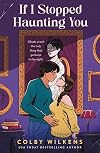
Horror writers Penelope "Pen" Skinner (female main character/FMC) and Neil Storm (male main character/MMC) are manipulated by a mutual friend to attend a writers retreat together in a haunted Scottish castle, but each is unaware that the other is attending. They have history: they are both indigenous authors which automatically leads to comparisons between them, and Pen thinks Neil sold out to get his book published - her irritation with him, and his antagonism of her, ultimately culminates with Pen throwing a book at him at a conference. Since that moment, neither one has been able to write another thing, so on paper, at least, the retreat is exactly what they need.
The plot can be summed up as a combination of the "enemies to lovers" trope combined with that of "opposites attract." The plot fits in both, and yet, is really neither one. As we get to know our main characters better, we realize they were never really enemies, and they have more in common than it would first appear. There is also a supernatural/horror element (not TOO scary - think more...."pleasantly goth," maybe) that set up the framework for the plot and having the retreat in the castle provided many opportunities for moody, spooky, vibes. I also enjoyed the indigenous author angle of this story. It really made me think about how we categorize our entertainment "tropes" (including literary ones) and in so doing, deprive ourselves of seeing - and enjoying - the individuality of something that defies show more categorization.
I did not especially care for either of the main supporting characters. I thought the mutual friend who tricked them into attending the retreat was pretty ballsy - if one of my friends tricked me into spending a week or two with someone I thought I thoroughly disliked, I would've been really angry!! It smacks of manipulation and dishonesty/lack of consent, but it does make an effective plot device! The other supporting character was just rude and annoying. I'm not even sure why she was included, other than to show that Pen is queer and perhaps to provide a counterpoint to the friend who arranged the retreat? I also thought the description of the setting (the castle) could stand improvement as there was the occasional confusing moment when a trap door didn't align with the room I thought it should or a view out a window didn't make sense given what I thought I knew about the layout, etc. Minor details, but they did take me out of the story a little bit.
I rate each of the individual elements of this book on a scale of 1 to 5 stars as follows:
FMC - 4 stars
MMC - 3 stars
Supporting characters - 2 stars
Plot - 5 stars
Setting - 4 stars
Pacing - 4 stars
Syntax/grammar, etc. - 4 stars
Dialogue - 5 stars
World-building - 4 stars
TOTAL - 3.9 stars, rounded up to a solid 4 stars out of 5.
If you like romances and don't want your horror to be too graphic or bloody, I think you will enjoy this book. Based on this book alone, I would read other books by this author.
I received an advance review copy for free, and I am leaving this review voluntarily. show less
The plot can be summed up as a combination of the "enemies to lovers" trope combined with that of "opposites attract." The plot fits in both, and yet, is really neither one. As we get to know our main characters better, we realize they were never really enemies, and they have more in common than it would first appear. There is also a supernatural/horror element (not TOO scary - think more...."pleasantly goth," maybe) that set up the framework for the plot and having the retreat in the castle provided many opportunities for moody, spooky, vibes. I also enjoyed the indigenous author angle of this story. It really made me think about how we categorize our entertainment "tropes" (including literary ones) and in so doing, deprive ourselves of seeing - and enjoying - the individuality of something that defies show more categorization.
I did not especially care for either of the main supporting characters. I thought the mutual friend who tricked them into attending the retreat was pretty ballsy - if one of my friends tricked me into spending a week or two with someone I thought I thoroughly disliked, I would've been really angry!! It smacks of manipulation and dishonesty/lack of consent, but it does make an effective plot device! The other supporting character was just rude and annoying. I'm not even sure why she was included, other than to show that Pen is queer and perhaps to provide a counterpoint to the friend who arranged the retreat? I also thought the description of the setting (the castle) could stand improvement as there was the occasional confusing moment when a trap door didn't align with the room I thought it should or a view out a window didn't make sense given what I thought I knew about the layout, etc. Minor details, but they did take me out of the story a little bit.
I rate each of the individual elements of this book on a scale of 1 to 5 stars as follows:
FMC - 4 stars
MMC - 3 stars
Supporting characters - 2 stars
Plot - 5 stars
Setting - 4 stars
Pacing - 4 stars
Syntax/grammar, etc. - 4 stars
Dialogue - 5 stars
World-building - 4 stars
TOTAL - 3.9 stars, rounded up to a solid 4 stars out of 5.
If you like romances and don't want your horror to be too graphic or bloody, I think you will enjoy this book. Based on this book alone, I would read other books by this author.
I received an advance review copy for free, and I am leaving this review voluntarily. show less

I'm going to start with a disclaimer: I feel obligated to point out that I am not a man, yet I chose to read and review this book, anyway. I thought that looking at it from a female perspective might generate a slightly different response than reviews from the book's target audience of heterosexual males.
This book is rather short (just 86 pages) and is written in very succinct snippets - almost like a list of bullet points, rarely devoting more than two or three sentences to any one topic/item. While that limits the depth to which any one subject is explored, it's excellent for getting through a lot of material, quickly, and for being able to be used later as quick reference material. And overall, I can say that, as a woman, I agree with the tips and techniques the author chose to include/promote to his male readers.
I am disappointed by what was NOT included in the book, though. Specifically, in the section that discusses the basics of sex, there is a paragraph that discusses consent, and defines it as "agreeing out of your will and without being threatened or coerced in any way." I would argue that this definition should be expanded to include that some individuals (e.g., those under legal age; those under the influence of mind-altering substances; anyone suffering from significant mental or emotional disability, impairment or deficiency; or someone in a position that is subject to power or coercion exerted by the other person) cannot freely give consent under ANY show more circumstances, and therefore must never be assumed to be "consenting" - even in the absence of explicit threat or coercion.
Secondly, in the section that discusses contraception, there is a part that talks about the regularity of menstrual cycles. It states, "Some women have irregular periods...." However, in a study conducted by the National Institute of Health, a full 66% of the women surveyed had variations in their menstrual cycles of 7 to 14 days. Therefore, I would argue that MOST women have irregular periods - not just "some." And thirdly, where it discusses the anatomy of the vulva, I might mention that both male and female genitalia start out as a clitoris in the embryonic state, and in a male fetus, some weeks later in pregnancy the two "halves" join to create the phallus. Therefore, in general, if you wouldn't do it to your penis (especially the glans), DO NOT do it to a woman's clitoris! They're virtually the same bundle of nerves, just expressed differently according to gender.
Other than those few criticisms, I feel like the work was complete, easy to follow, and generally accurate. If you are a man who feels insecure or worried about whether or not you know what you're doing when it comes to sex, then this book is probably a very good place to start. Just know that ultimately, whatever consenting adults mutually decide to do privately is ultimately OK, even if this book does not specifically mention it. show less
This book is rather short (just 86 pages) and is written in very succinct snippets - almost like a list of bullet points, rarely devoting more than two or three sentences to any one topic/item. While that limits the depth to which any one subject is explored, it's excellent for getting through a lot of material, quickly, and for being able to be used later as quick reference material. And overall, I can say that, as a woman, I agree with the tips and techniques the author chose to include/promote to his male readers.
I am disappointed by what was NOT included in the book, though. Specifically, in the section that discusses the basics of sex, there is a paragraph that discusses consent, and defines it as "agreeing out of your will and without being threatened or coerced in any way." I would argue that this definition should be expanded to include that some individuals (e.g., those under legal age; those under the influence of mind-altering substances; anyone suffering from significant mental or emotional disability, impairment or deficiency; or someone in a position that is subject to power or coercion exerted by the other person) cannot freely give consent under ANY show more circumstances, and therefore must never be assumed to be "consenting" - even in the absence of explicit threat or coercion.
Secondly, in the section that discusses contraception, there is a part that talks about the regularity of menstrual cycles. It states, "Some women have irregular periods...." However, in a study conducted by the National Institute of Health, a full 66% of the women surveyed had variations in their menstrual cycles of 7 to 14 days. Therefore, I would argue that MOST women have irregular periods - not just "some." And thirdly, where it discusses the anatomy of the vulva, I might mention that both male and female genitalia start out as a clitoris in the embryonic state, and in a male fetus, some weeks later in pregnancy the two "halves" join to create the phallus. Therefore, in general, if you wouldn't do it to your penis (especially the glans), DO NOT do it to a woman's clitoris! They're virtually the same bundle of nerves, just expressed differently according to gender.
Other than those few criticisms, I feel like the work was complete, easy to follow, and generally accurate. If you are a man who feels insecure or worried about whether or not you know what you're doing when it comes to sex, then this book is probably a very good place to start. Just know that ultimately, whatever consenting adults mutually decide to do privately is ultimately OK, even if this book does not specifically mention it. show less
This review was written for LibraryThing Early Reviewers.
At the risk of spoiling the ending, I will say that "Emma Madison, Master Meddler" is a feel-good story. It's about a lonely widow who takes in her niece and her niece's daughter when the niece has what amounts to a life crisis. It's set in the mid-20th-century, so the surrounding community has a bit of an air of disapproval regarding the niece and her past exploits in the community. Many of them have their own secrets, so to a certain extent, this book is a bit of a mystery, as well, and eventually reveals each character's part in the overall drama. It reminded me of "The Pecan Man" and "Peyton's Place," simultaneously.
I really enjoyed the main character, Emma, and the backbone that she had - especially for the time period in which events were set. I also enjoyed Emma's other niece and how she interacted with her troubled cousin and her cousin's daughter. I appreciated seeing some of the busybodies in the community get a certain amount of justice served, and I really enjoyed the ending. There were passages that were wonderfully evocative and really enhanced the mood of the characters, individually, and of the story as a whole.
I have two chief complaints about this book: first, it was LONG. I mean, Russian novelist's opus long. A full 121 chapters long. Which, if every moment had been active and electric and driving the plot, would've been fine. But as is, there was a lot of description of ordinary stuff that, although it set the scene, was largely superfluous and show more rambling. Boring, even. It made getting into the story - which doesn't even really start moving until chapter 25 or so - very difficult, and I was tempted to give up many times.
My second complaint is that there were so many characters, it made it difficult to remember who was who and how they were related and was this the one that did that or was it the other one, etc. It's kind of a dilemma because I think we need many of those individual characters to maintain the mystery and explain the niece's situation, but it was confusing at times, primarily due to the emphasis on conformity that was a hallmark of the time period.
Other than those two things, this was a satisfying read, if not an electrifying one. There were no swears, explicit sex, or gratuitous violence included. I rate each of the individual aspects on a scale of 1 to 5 stars, as follows:
Main characters: 4 stars
Supporting characters: 3 stars
Plot: 4 stars
Pacing: 2 stars
World-building: 5 stars
Dialogue: 4 stars
Syntax/grammar: 5 stars
Overall score: 3.8 stars, rounded up to 4 begrudgingly simply because it was so long and so hard to get into. show less
I really enjoyed the main character, Emma, and the backbone that she had - especially for the time period in which events were set. I also enjoyed Emma's other niece and how she interacted with her troubled cousin and her cousin's daughter. I appreciated seeing some of the busybodies in the community get a certain amount of justice served, and I really enjoyed the ending. There were passages that were wonderfully evocative and really enhanced the mood of the characters, individually, and of the story as a whole.
I have two chief complaints about this book: first, it was LONG. I mean, Russian novelist's opus long. A full 121 chapters long. Which, if every moment had been active and electric and driving the plot, would've been fine. But as is, there was a lot of description of ordinary stuff that, although it set the scene, was largely superfluous and show more rambling. Boring, even. It made getting into the story - which doesn't even really start moving until chapter 25 or so - very difficult, and I was tempted to give up many times.
My second complaint is that there were so many characters, it made it difficult to remember who was who and how they were related and was this the one that did that or was it the other one, etc. It's kind of a dilemma because I think we need many of those individual characters to maintain the mystery and explain the niece's situation, but it was confusing at times, primarily due to the emphasis on conformity that was a hallmark of the time period.
Other than those two things, this was a satisfying read, if not an electrifying one. There were no swears, explicit sex, or gratuitous violence included. I rate each of the individual aspects on a scale of 1 to 5 stars, as follows:
Main characters: 4 stars
Supporting characters: 3 stars
Plot: 4 stars
Pacing: 2 stars
World-building: 5 stars
Dialogue: 4 stars
Syntax/grammar: 5 stars
Overall score: 3.8 stars, rounded up to 4 begrudgingly simply because it was so long and so hard to get into. show less
This review was written for LibraryThing Early Reviewers.
This book is hard to categorize. The author noted that it was "smut with a little plot" so I knew going in that it was likely to be fairly graphic - even pornographic - so I was not surprised by the frequency and explicitness of the sex scenes. In no way do I use the word "smut" as pejorative! However, I do feel like the author should have said "VERY little plot" - as in next to no plot. I guess I prefer my smut to start to with the plot, and then add intimate scenes where appropriate, rather than starting with the sex and crafting a plot around and about it. After a while, that much physicality gets boring, lol. But that's me - your mileage may vary!
The true gem in this book is Nessie, the female main character. She is funny and clever and, dare I say it, the stereotypical "sassy black female." Except she is anything but! There are some queer nuances that keep her from being any type of stock character, and she was certainly put through enough drama to get a real sense of individuality.
Unfortunately, I did not care for the supporting characters as much, nor the amount of drama overall. Some of it felt… manufactured, I guess. I mean, the author admits up front that this book is not serious - or at least, that's how I took the "smut with a little plot" quip. It's definitely not some opus from a Russian novelist! So why so complicated? It got to be a little frustrating after a while. I also found it difficult to keep them straight (no pun intended) and remembering who was show more who. I thought the contract, especially, seemed unrealistic and unnecessarily complicated things between the two main characters.
And I was very frustrated with the ending! I understand that this is the first book in a series, though, so I hope the subsequent books give Nessie the outcome I was rooting for.
Overall, this book was fine. I didn't love it, and I didn't hate it. I think the plot could be fine-tuned and polished with some selective editing.
I rate each of the individual aspects of the book on a scale of 1 to 5 stars as follows:
Female main character - 4 stars
Male main character - 3 stars
Supporting characters - 3 stars
Plot - 2 stars
Pacing - 3 stars
World-building - 4 stars
Dialogue - 2 stars
Syntax/grammar - 2 stars
Sex scenes - 3 stars (explicit, but overkill, if that makes sense)
Overall score: 2.9, rounded up to 3 stars.
I received an advance review copy for free, and I am leaving this review voluntarily. show less
The true gem in this book is Nessie, the female main character. She is funny and clever and, dare I say it, the stereotypical "sassy black female." Except she is anything but! There are some queer nuances that keep her from being any type of stock character, and she was certainly put through enough drama to get a real sense of individuality.
Unfortunately, I did not care for the supporting characters as much, nor the amount of drama overall. Some of it felt… manufactured, I guess. I mean, the author admits up front that this book is not serious - or at least, that's how I took the "smut with a little plot" quip. It's definitely not some opus from a Russian novelist! So why so complicated? It got to be a little frustrating after a while. I also found it difficult to keep them straight (no pun intended) and remembering who was show more who. I thought the contract, especially, seemed unrealistic and unnecessarily complicated things between the two main characters.
And I was very frustrated with the ending! I understand that this is the first book in a series, though, so I hope the subsequent books give Nessie the outcome I was rooting for.
Overall, this book was fine. I didn't love it, and I didn't hate it. I think the plot could be fine-tuned and polished with some selective editing.
I rate each of the individual aspects of the book on a scale of 1 to 5 stars as follows:
Female main character - 4 stars
Male main character - 3 stars
Supporting characters - 3 stars
Plot - 2 stars
Pacing - 3 stars
World-building - 4 stars
Dialogue - 2 stars
Syntax/grammar - 2 stars
Sex scenes - 3 stars (explicit, but overkill, if that makes sense)
Overall score: 2.9, rounded up to 3 stars.
I received an advance review copy for free, and I am leaving this review voluntarily. show less
This review was written for LibraryThing Early Reviewers.
The Black Heart of Budapest is about a boy who wants to leave his family of "paranormal exterminators" as he finds he doesn't have a stomach for all the killing - even if the demons, vampires, ghosts, and ghouls he dispatches are not very nice! The price of leaving the family business is becoming all but invisible/anonymous to anyone he knows up to this point of his life. He is OK with the price, but mourns the idea of losing touch with an old friend - now he will never be able to rekindle that relationship.
Meanwhile, said old friend is trying to keep her family's hotel going. The hotel by turns looks shabby or 5 star, depending on when it was last "fed." I won't give away any spoilers, but suffice it to say that the hotel is very nearly a third character in the book.
Up to this point, I was all in on this book! Each of the primary characters were interesting, with problems of their own, and I was really rooting for them! Eventually, however, the relationship between them develops, and that's when the cracks start to show. Not that I didn't want them to be together - just, their "togetherness" was somewhat disturbing. I wanted to smack the male main character (MMC): he would assume he knew what the female main character (FMC) needed or wanted without even attempting to communicate with her, and the FMC assumed her life was too strange to open up completely to the MMC. They both needed to be honest with each other and communicate truthfully and appreciate each others' show more strengths. Instead, we get two très tragique lovers who swan about alternately brooding, moping, and whining.
So, what starts as a unique premise with promise ends up being killed by the drama of the main characters' relationship. Add in an abrupt ending with no real resolution of any of the outstanding conflicts and just makes the entire tale "meh."
I rank each aspect of the novel as follows:
Main Characters - 3/5 stars
Supporting Cast - 2/5 stars
Plotting - 2/5 stars
World-building - 4/5 stars
Pacing - 3/5 stars
Grammar/Syntax - 4/5 stars
Sexy times - 3/5 stars
Overall impression - 3 stars
I was hoping this book would really take off at some point. Unfortunately, it did not. It's too bad because I still think the premise has merit and the entire story could be improved by making the conflict about the two main characters vs. the rest of the universe, instead of between the two main characters, between each character and the universe, between the MMC and his family, the FMC and the hotel, etc. Hopefully the author will consider a rewrite and come back with a book that matches the potential in the opening chapters. show less
Meanwhile, said old friend is trying to keep her family's hotel going. The hotel by turns looks shabby or 5 star, depending on when it was last "fed." I won't give away any spoilers, but suffice it to say that the hotel is very nearly a third character in the book.
Up to this point, I was all in on this book! Each of the primary characters were interesting, with problems of their own, and I was really rooting for them! Eventually, however, the relationship between them develops, and that's when the cracks start to show. Not that I didn't want them to be together - just, their "togetherness" was somewhat disturbing. I wanted to smack the male main character (MMC): he would assume he knew what the female main character (FMC) needed or wanted without even attempting to communicate with her, and the FMC assumed her life was too strange to open up completely to the MMC. They both needed to be honest with each other and communicate truthfully and appreciate each others' show more strengths. Instead, we get two très tragique lovers who swan about alternately brooding, moping, and whining.
So, what starts as a unique premise with promise ends up being killed by the drama of the main characters' relationship. Add in an abrupt ending with no real resolution of any of the outstanding conflicts and just makes the entire tale "meh."
I rank each aspect of the novel as follows:
Main Characters - 3/5 stars
Supporting Cast - 2/5 stars
Plotting - 2/5 stars
World-building - 4/5 stars
Pacing - 3/5 stars
Grammar/Syntax - 4/5 stars
Sexy times - 3/5 stars
Overall impression - 3 stars
I was hoping this book would really take off at some point. Unfortunately, it did not. It's too bad because I still think the premise has merit and the entire story could be improved by making the conflict about the two main characters vs. the rest of the universe, instead of between the two main characters, between each character and the universe, between the MMC and his family, the FMC and the hotel, etc. Hopefully the author will consider a rewrite and come back with a book that matches the potential in the opening chapters. show less
This review was written for LibraryThing Early Reviewers.
Jeri Westerson has done it again! "The Mummy of Mayfair" is the second pastiche of the Sherlock Holmes mysteries by Westerson, following her initial offering, "The Isolated Seance."
I gave her introductory tale of former Baker Street Irregulars Timothy Badger and Ben Watson (yes, Badger has his own Watson!) 5 stars. Dare I say I like this second offering even more? Yes, I dare!
Although I enjoy the original Arthur Conan Doyle Sherlock stories, as a product of their time and place, the language is a bit stilted compared to modern dialogue. I think that's the primary reason I enjoy Westerson's works: there is every bit of the clever mystery, well-drawn characters, and flavor of the original works, but with more insight into the internal workings of the main characters' minds and more detail surrounding their life outside of their detective business. While perhaps not the most faithful adherent to Doyle's dire (to me) writing style, Westerson's mysteries are every bit as carefully and cleverly plotted and the clues as skillfully hidden.
This particular mystery taps into the Victorian "Mummy Party" fad of the late 19th century, and also includes bits of Victorian-era medicine. The tale is as interesting from that standpoint as it is examining the relationship between Badger and Ben, and Badger's growing affection for a certain lady reporter. I am hoping that as the series continues, Ben's romantic interest in their Irish maid will get more time.
I rate each of the individual show more elements on a scale of 1 to 5 as follows:
Main Characters - 5/5 stars
Supporting Cast - 5/5 stars
Plotting - 5/5 stars
World-building - 5/5 stars
Pacing - 4/5 stars
Grammar/Syntax - 5/5 stars
Mystery - 5/5 stars
Overall impression - a solid, enthusiastic, 5 stars!
If you enjoy cozy mysteries and/or Holmesian stories, I definitely recommend this book for you. I am looking forward to the next installment, myself! show less
I gave her introductory tale of former Baker Street Irregulars Timothy Badger and Ben Watson (yes, Badger has his own Watson!) 5 stars. Dare I say I like this second offering even more? Yes, I dare!
Although I enjoy the original Arthur Conan Doyle Sherlock stories, as a product of their time and place, the language is a bit stilted compared to modern dialogue. I think that's the primary reason I enjoy Westerson's works: there is every bit of the clever mystery, well-drawn characters, and flavor of the original works, but with more insight into the internal workings of the main characters' minds and more detail surrounding their life outside of their detective business. While perhaps not the most faithful adherent to Doyle's dire (to me) writing style, Westerson's mysteries are every bit as carefully and cleverly plotted and the clues as skillfully hidden.
This particular mystery taps into the Victorian "Mummy Party" fad of the late 19th century, and also includes bits of Victorian-era medicine. The tale is as interesting from that standpoint as it is examining the relationship between Badger and Ben, and Badger's growing affection for a certain lady reporter. I am hoping that as the series continues, Ben's romantic interest in their Irish maid will get more time.
I rate each of the individual show more elements on a scale of 1 to 5 as follows:
Main Characters - 5/5 stars
Supporting Cast - 5/5 stars
Plotting - 5/5 stars
World-building - 5/5 stars
Pacing - 4/5 stars
Grammar/Syntax - 5/5 stars
Mystery - 5/5 stars
Overall impression - a solid, enthusiastic, 5 stars!
If you enjoy cozy mysteries and/or Holmesian stories, I definitely recommend this book for you. I am looking forward to the next installment, myself! show less
This review was written for LibraryThing Early Reviewers.
"A Good Woman" by Jalana Remy is an interesting story from the standpoint that it includes some topics/scenarios that traditional romance novels avoid, i.e., be advised there are trigger warnings, and rightly so! I don't want to spoil anything so I'm not going to reveal what they are, but suffice it to say that even though I read the trigger warnings, the description still caught me off guard when it came up in the book and it seemed like a very true-to-life description. This scenario is important because it sets up the rest of the premise of the book, so if you skip this part, the rest of the book lacks context. I'm not sure, were I the author, I would've had the intestinal fortitude to write about something so triggering with as much candor and vivid detail, so I give her props for that, at least.
Once the wheels are set in motion, however, the book becomes somewhat monotonous. There are only so many different ways you can say they sucked each other's tongues, y'know? And while I appreciate spicy sex scenes as much as anyone, I feel like every scene should serve a purpose and advance the novel's story arc. I felt like sometimes, these scenes were just thrown in to kill time/fill pages until the next big crisis, so they were explicit, but boring at the same time.
I did not like how the female main character (FMC) started out being strong and sassy, then got wishy-washy and wouldn't ever just tell the male main character (MMC) what she was thinking unless he dragged it out show more of her. And I didn't like how the MMC thought because he saved the FMC once, that he then could tell her where and when she could work, etc. He came across as controlling - or as if he were starting down that kind of path. I didn't like that he threw temper tantrums about big issues and did things like slam doors, glare, and drive fast instead of just talking about them.
This story is set in Trinidad and Tobago, and I imagined in my head a lilting Caribbean accent which really enhanced the world built by the author. I recognize that the dialect of English spoken there is different from what I speak, but the fact that - to me - words were left out or were not used with the correct tense or even, in one instance, simply misused, entirely (using the word "scoffed" instead of "scarfed," p.59) was disconcerting at best and completely took me out of the story at worst.
However, there was believable conflict with genuine issues to be worked out, and interesting supporting characters, as well. So although the book is problematic in some respects, there is a decent plot and I think with some serious editing and help in the pacing, it has great potential.
I rate each of the individual aspects of this book on a scale of 1 to 5 stars as follows:
FMC - 3 stars
MMC - 3 stars
Supporting characters - 3 stars
Plot - 3 stars
Pacing - 1 star
World-building - 4 stars
Sexy times - 3 stars
Grammar/Syntax - 1 star
TOTAL: 21 stars out of a possible 40, for a rating of 2.6, rounded up to 3 stars.
I would encourage this author to keep writing because, as noted, there is a lot of potential here. A good editor would probably help iron out the kinks in the pacing, as well as address some of the syntax and grammar issues. Not counting those two areas, I would probably still only give this book 4 stars due to some character flaws in the main protagonists and the explicit inclusion of what is, I'm sure, a problematic event for many readers. I look forward to what Ms. Remy will do as she develops more as a writer! show less
Once the wheels are set in motion, however, the book becomes somewhat monotonous. There are only so many different ways you can say they sucked each other's tongues, y'know? And while I appreciate spicy sex scenes as much as anyone, I feel like every scene should serve a purpose and advance the novel's story arc. I felt like sometimes, these scenes were just thrown in to kill time/fill pages until the next big crisis, so they were explicit, but boring at the same time.
I did not like how the female main character (FMC) started out being strong and sassy, then got wishy-washy and wouldn't ever just tell the male main character (MMC) what she was thinking unless he dragged it out show more of her. And I didn't like how the MMC thought because he saved the FMC once, that he then could tell her where and when she could work, etc. He came across as controlling - or as if he were starting down that kind of path. I didn't like that he threw temper tantrums about big issues and did things like slam doors, glare, and drive fast instead of just talking about them.
This story is set in Trinidad and Tobago, and I imagined in my head a lilting Caribbean accent which really enhanced the world built by the author. I recognize that the dialect of English spoken there is different from what I speak, but the fact that - to me - words were left out or were not used with the correct tense or even, in one instance, simply misused, entirely (using the word "scoffed" instead of "scarfed," p.59) was disconcerting at best and completely took me out of the story at worst.
However, there was believable conflict with genuine issues to be worked out, and interesting supporting characters, as well. So although the book is problematic in some respects, there is a decent plot and I think with some serious editing and help in the pacing, it has great potential.
I rate each of the individual aspects of this book on a scale of 1 to 5 stars as follows:
FMC - 3 stars
MMC - 3 stars
Supporting characters - 3 stars
Plot - 3 stars
Pacing - 1 star
World-building - 4 stars
Sexy times - 3 stars
Grammar/Syntax - 1 star
TOTAL: 21 stars out of a possible 40, for a rating of 2.6, rounded up to 3 stars.
I would encourage this author to keep writing because, as noted, there is a lot of potential here. A good editor would probably help iron out the kinks in the pacing, as well as address some of the syntax and grammar issues. Not counting those two areas, I would probably still only give this book 4 stars due to some character flaws in the main protagonists and the explicit inclusion of what is, I'm sure, a problematic event for many readers. I look forward to what Ms. Remy will do as she develops more as a writer! show less
This review was written for LibraryThing Early Reviewers.
"Healing Magic & Playboys" is an interesting book - part fantasy, part romance, part defies categorization. Essentially, a librarian (female main character, or FMC) at a conservative Christian school is part time dancer in a strip club. However, she is also a healing witch and the only reason she dances is because the lust from the audience fuels her magic so that she is able to continue healing herself from debilitating migraines. One of her regular audience members (the male main character, or MMC) attempts to woo her using the methods he, as a multimillionaire, has become accustomed to which, naturally, do not appeal to our witch. How does the MMC get our FMC's attention, then? How does our FMC juggle her demanding day job (which includes a morality clause) with her risque' night job? Will our FMC and MMC figure out their differences enough to have a real, honest-to-goodness relationship with one another? You'll have to read it to find out!
I did like this book; even though I had no background on which to base my understanding of this, the third novel in a series all dealing with various magical creatures living in plain sight in modern America. It was easy enough to follow the story (although I kept getting some of the supporting characters mixed up with one another) and the book is complete in and of itself with no cliffhangers. I liked the different magical features of each of the characters and how different - and alike - they were. I also appreciated that the MMC show more was a little unsure of himself, even though from the outside, it looked like he had everything! And, I appreciated his thoughtful gifts for the FMC. The "villain" was easy to dislike, and the pacing moved the story along fairly well. There were no real "dead" spots. I changed my views re: "listening" to books vs. "reading" books - I like that she presented it in terms of an accommodation for a disability vs. laziness.
What I didn't like: the MMC bordered on needy/whiney sometimes. It's a very narrow road to walk - to be sensitive and a little insecure without being maudlin and irritating - and I would say that this author accomplished it successfully in the MMC at least 80% of the time. I also didn't care for the fact that the FMC let her employer basically kick her around, when she wouldn't stand for that type of treatment in any other circumstance or situation. Throwing good money after bad, or rather precious time after crappy time, seemed out of keeping with her personality. And, there are a lot of characters to keep track of - especially if you are new to the series, like me - and not all of them are distinct enough from one another to make that an easy task.
I rate each of the elements of this book on a scale of 1 to 5 as follows:
FMC - 4/5 stars
MMC - 3/5 stars
Supporting characters - 3/5 stars
Setting - 4/5 stars
World-building - 5 stars
Dialogue - 3/5 stars
Pacing - 4/5 stars
Plot - 4/5 stars
Sexy times - 3/5 stars
Grammar/syntax - 4/5 stars
Total score: 3.7, rounded up to 4 stars
I think I would read other books by this author and I think I would recommend this particular book if for no other reason than the take on reading vs. listening and developing a bad guy you love to hate. show less
I did like this book; even though I had no background on which to base my understanding of this, the third novel in a series all dealing with various magical creatures living in plain sight in modern America. It was easy enough to follow the story (although I kept getting some of the supporting characters mixed up with one another) and the book is complete in and of itself with no cliffhangers. I liked the different magical features of each of the characters and how different - and alike - they were. I also appreciated that the MMC show more was a little unsure of himself, even though from the outside, it looked like he had everything! And, I appreciated his thoughtful gifts for the FMC. The "villain" was easy to dislike, and the pacing moved the story along fairly well. There were no real "dead" spots. I changed my views re: "listening" to books vs. "reading" books - I like that she presented it in terms of an accommodation for a disability vs. laziness.
What I didn't like: the MMC bordered on needy/whiney sometimes. It's a very narrow road to walk - to be sensitive and a little insecure without being maudlin and irritating - and I would say that this author accomplished it successfully in the MMC at least 80% of the time. I also didn't care for the fact that the FMC let her employer basically kick her around, when she wouldn't stand for that type of treatment in any other circumstance or situation. Throwing good money after bad, or rather precious time after crappy time, seemed out of keeping with her personality. And, there are a lot of characters to keep track of - especially if you are new to the series, like me - and not all of them are distinct enough from one another to make that an easy task.
I rate each of the elements of this book on a scale of 1 to 5 as follows:
FMC - 4/5 stars
MMC - 3/5 stars
Supporting characters - 3/5 stars
Setting - 4/5 stars
World-building - 5 stars
Dialogue - 3/5 stars
Pacing - 4/5 stars
Plot - 4/5 stars
Sexy times - 3/5 stars
Grammar/syntax - 4/5 stars
Total score: 3.7, rounded up to 4 stars
I think I would read other books by this author and I think I would recommend this particular book if for no other reason than the take on reading vs. listening and developing a bad guy you love to hate. show less
This review was written for LibraryThing Early Reviewers.
I really enjoyed "Escaping Circumstances." It's kind of an "opposites attract" romance but one with well-developed characters and substantive issues beyond just "romance." Essentially, Quinn (the FMC), an artsy creative type, is moving into her new apartment when she meets Scorp/Elliot (the MMC), a huge, semi-frightening, bearded guy with tattoos, and discovers he is her new neighbor. They are both attracted to one another but neither acts on it as the MMC is an undercover cop and also taking care of his little sister.
Eventually, though, our two main characters do connect and it becomes a "friends to something more" story. The true path to happiness never does run smoothly, though, and both the FMC and the MMC have their secrets. Will MMC get permanent custody of his sister? Will our hero and heroine get their happily ever after? You'll have to read it to find out!
What I liked about this story: every character, even the ones who only showed up here and there, were distinctly different from one another and were multi-dimensional. They seemed like "real" people. I also liked the dichotomies mutiple characters presented: the tough "alpha" wanting to be a single parent to his young sister. The happy-go-lucky airhead who comes through with the big guns in a pinch. The scatterbrained best friend who also takes her BFF's happiness seriously enough to do something about it, and so on. And that the MMC cared enough about his family and the FMC to consider making a big change in show more order to better accommodate them - too often, it's the FMC who just rolls over to accommodate the MMC!
Things I didn't like: that the FMC sort of "lost her spunk" while the MMC was being a doofus about things that shouldn't matter. She had so much backbone up until this point, and then just turned meek. That the two weren't open with one another about their big "secrets" before they became seriously "together." That the the appearance of the FMC was unclear - at one point, I got the impression that she had shorter, reddish, curly hair, and then at another point, she had long brown hair?
Still, this was a great book with unique plot elements and it held my interest well. I rate the individual aspects of this story on a scale of 1 to 5 stars as follows:
FMC - 4/5 stars
MMC - 4/5 stars
Supporting characters - 5/5 stars
Plot - 4/5 stars
Pacing - 5/5 stars
World building - 4/5 stars
Dialogue - 5/5 stars
Intimacy/sex scenes - 3/5 stars
Grammar/syntax - 4/5 stars
Overall score: 4.2 stars - I'd rate it 4.5 if I could give half stars, but since I can't, I'm rounding down to 4.
This book is part of a series and although I don't know if I would search out and purchase the related books, if I came across them at a good price, I would definitely read them. I would probably recommend this book to others, as well, if for nothing else than a good example of writing an entire cast full of well-developed, dimensional characters that are still individual from one another. show less
Eventually, though, our two main characters do connect and it becomes a "friends to something more" story. The true path to happiness never does run smoothly, though, and both the FMC and the MMC have their secrets. Will MMC get permanent custody of his sister? Will our hero and heroine get their happily ever after? You'll have to read it to find out!
What I liked about this story: every character, even the ones who only showed up here and there, were distinctly different from one another and were multi-dimensional. They seemed like "real" people. I also liked the dichotomies mutiple characters presented: the tough "alpha" wanting to be a single parent to his young sister. The happy-go-lucky airhead who comes through with the big guns in a pinch. The scatterbrained best friend who also takes her BFF's happiness seriously enough to do something about it, and so on. And that the MMC cared enough about his family and the FMC to consider making a big change in show more order to better accommodate them - too often, it's the FMC who just rolls over to accommodate the MMC!
Things I didn't like: that the FMC sort of "lost her spunk" while the MMC was being a doofus about things that shouldn't matter. She had so much backbone up until this point, and then just turned meek. That the two weren't open with one another about their big "secrets" before they became seriously "together." That the the appearance of the FMC was unclear - at one point, I got the impression that she had shorter, reddish, curly hair, and then at another point, she had long brown hair?
Still, this was a great book with unique plot elements and it held my interest well. I rate the individual aspects of this story on a scale of 1 to 5 stars as follows:
FMC - 4/5 stars
MMC - 4/5 stars
Supporting characters - 5/5 stars
Plot - 4/5 stars
Pacing - 5/5 stars
World building - 4/5 stars
Dialogue - 5/5 stars
Intimacy/sex scenes - 3/5 stars
Grammar/syntax - 4/5 stars
Overall score: 4.2 stars - I'd rate it 4.5 if I could give half stars, but since I can't, I'm rounding down to 4.
This book is part of a series and although I don't know if I would search out and purchase the related books, if I came across them at a good price, I would definitely read them. I would probably recommend this book to others, as well, if for nothing else than a good example of writing an entire cast full of well-developed, dimensional characters that are still individual from one another. show less
This review was written for LibraryThing Early Reviewers.
Wow, I don't even know where to start with "Shattered by Faith." First of all, it's very long - over 500 pages, when most of the books I read are generally less than 350. And you know if you have a book that long, there is going to be a lot going on! It's almost like there are two separate books, in one: the first half, and then the second half, and each could probably be it's own stand-alone book! And I would classify the whole thing as more of an adventure story with some elements of romance thrown in, rather than a true romance.
And secondly, this is a "shifter" book. If you're not familiar with the term, it's when one of the main characters (usually the male) is part human, part beast - think werewolves and the like. It's not a genre I regularly read, but I don't mind it from time to time. These kinds of stories do require an almost immediate suspension of disbelief, however, and sometimes that's easier to do than others. I think that makes writing a shifter story that much more difficult - you've got to be so smooth that the reader doesn't struggle believing the premise. I think "Shattered by Faith" accomplished this with mixed success.
The plot had so many ups and downs! I kind of felt like I'd been dragged through a knothole backwards when I finished. Even so, certain parts of the book were a little bit slow, and I think with tighter editing, this 500-page tome could've easily been a 400 page thriller! I found myself skipping a page or three here and there, just show more because it kind of dragged on with unimportant details.
Things I liked: the world-building, especially on the island. The dialogue. The supporting characters, except for Stark Clevenger. The "bad boy reformed by love" trope. Things I didn't like: the errors. Oh, the errors! Things like using "course" when the appropriate word was "coarse." Hyphenating a one syllable word at the end of a line/page. The lack of adequate explanation for Elian's (MMC) horrible behavior (to be fair, an explanation was given - sort of - but I didn't feel that it adequately explained how he got to be as bad as he was, nor explained how he managed to to change his outlook 180 degrees other than one day, he thought this, and the next day, he thought that.) The fact that Faith (FMC) seemed rather one-dimensional, to the extent that even though the author only lists their initials as their nom de plume, it made me think they're probably male as almost all of the male characters were developed better than the FMC, and generally speaking, authors tend to write their own genders better. And I really disliked the whole "Stark Clevinger" subplot - some parts more than others. I won't go into why so as not to reveal any spoilers, but it was kind of a "Rumplestiltskin" situation. And I disliked the huge gaps in time that were just explained by inserting "6 weeks later" or "two years later," with no explanation as to what became of the characters in the intervening years.
I rated each of the individual elements of this book on a scale of 1 to 5 as follows:
FMC - 3/5 stars
MMC - 3/5 stars
Supporting characters - 3/5 stars
Plot - 3/5 stars
Pacing - 2/5 stars
Dialogue - 4/5 stars
World-building - 4/5 stars
Sub-plots - 1/5 stars
Sex scenes - 2/5 stars
Grammar/Syntax - 1/5 stars
Average score: 2.6 stars out of 5, rounded up begrudgingly to 3.
I don't think I would necessarily recommend this book to others to read. I feel like there is too much violence, too much overt masculinity, and the whole Stark Clevinger thing was very much a turn-off. I'm not even sure I'd read another book by this author - certainly not one as long as this one. I feel like it's time I'll never get back, when I could've been reading something more suited to my tastes. If you're into shifter tropes, though, your mileage may vary. show less
And secondly, this is a "shifter" book. If you're not familiar with the term, it's when one of the main characters (usually the male) is part human, part beast - think werewolves and the like. It's not a genre I regularly read, but I don't mind it from time to time. These kinds of stories do require an almost immediate suspension of disbelief, however, and sometimes that's easier to do than others. I think that makes writing a shifter story that much more difficult - you've got to be so smooth that the reader doesn't struggle believing the premise. I think "Shattered by Faith" accomplished this with mixed success.
The plot had so many ups and downs! I kind of felt like I'd been dragged through a knothole backwards when I finished. Even so, certain parts of the book were a little bit slow, and I think with tighter editing, this 500-page tome could've easily been a 400 page thriller! I found myself skipping a page or three here and there, just show more because it kind of dragged on with unimportant details.
Things I liked: the world-building, especially on the island. The dialogue. The supporting characters, except for Stark Clevenger. The "bad boy reformed by love" trope. Things I didn't like: the errors. Oh, the errors! Things like using "course" when the appropriate word was "coarse." Hyphenating a one syllable word at the end of a line/page. The lack of adequate explanation for Elian's (MMC) horrible behavior (to be fair, an explanation was given - sort of - but I didn't feel that it adequately explained how he got to be as bad as he was, nor explained how he managed to to change his outlook 180 degrees other than one day, he thought this, and the next day, he thought that.) The fact that Faith (FMC) seemed rather one-dimensional, to the extent that even though the author only lists their initials as their nom de plume, it made me think they're probably male as almost all of the male characters were developed better than the FMC, and generally speaking, authors tend to write their own genders better. And I really disliked the whole "Stark Clevinger" subplot - some parts more than others. I won't go into why so as not to reveal any spoilers, but it was kind of a "Rumplestiltskin" situation. And I disliked the huge gaps in time that were just explained by inserting "6 weeks later" or "two years later," with no explanation as to what became of the characters in the intervening years.
I rated each of the individual elements of this book on a scale of 1 to 5 as follows:
FMC - 3/5 stars
MMC - 3/5 stars
Supporting characters - 3/5 stars
Plot - 3/5 stars
Pacing - 2/5 stars
Dialogue - 4/5 stars
World-building - 4/5 stars
Sub-plots - 1/5 stars
Sex scenes - 2/5 stars
Grammar/Syntax - 1/5 stars
Average score: 2.6 stars out of 5, rounded up begrudgingly to 3.
I don't think I would necessarily recommend this book to others to read. I feel like there is too much violence, too much overt masculinity, and the whole Stark Clevinger thing was very much a turn-off. I'm not even sure I'd read another book by this author - certainly not one as long as this one. I feel like it's time I'll never get back, when I could've been reading something more suited to my tastes. If you're into shifter tropes, though, your mileage may vary. show less
This review was written for LibraryThing Early Reviewers.
I really struggled with how I wanted to rate "Tricked By Love," by Tara Kennedy. It had some things that I really liked about it, but other things that I couldn't relate to at all - sort of like polar opposites that cancel each other out to end up with a "meh" response. Except, I don't feel "meh" about this book! I could say I liked it, except for the parts I didn't, or that I disliked the story, except for the parts I liked. Either would be more accurate than saying it was "meh!"
One of the things I really liked about it was that the way Lillian (FMC) and Xavier's (MMC) relationship progressed, it seemed like romance could (and probably does) unfold like that all the time. Their dates and the way they each slowly got under the other's skin implied that, hey! Romance could be right under your nose, too! As Ferris Bueller said, "Life moves pretty fast. You don't stop and look around once in a while, you could miss it." So stop and look around - you might be surprised by what's just outside your own front door!
I also liked the little bits and pieces of Chinese-American culture that were slid in as "just another day" kind of ambience rather than bonking you over the head with CULTURE. I like to learn by picking things up like that, as opposed to having the lesson shoved down my throat, and I thought the author did that particularly well.
What I didn't like was the FMC's need for secrecy. I mean, I get that she has a protective sibling and liked to keep her circles show more small/separate to avoid triggering him. But I also feel like, if you hesitate to share what you're doing with other people, then that's generally a pretty good sign that whatever it is you're doing doesn't sit well with your conscience. And Lillian absolutely has a right to a life without brotherly interference!! If she really cared about Xavier, I feel like he (and more importantly, his feelings) should take precedence over her sibling. I had difficulty liking her because of her need for secrecy - it smacked of immaturity and self-centeredness.
And of course, the FMC and the MMC are going to hook up, but the sex scenes seemed very "wham, bam, thank you, ma'am" (or sir, as the case may be.) I would appreciate a little more foreplay, myself - both literally and figuratively, lol!
It really was a good story, though, and I found myself wanting to get back to it when I had to put it down for a bit. So you can see why I struggled with trying to categorize my review. I rate each of the individual aspects of this book on a scale of 1 to 5 stars as follows:
FMC = 2/5 stars
MMC = 4/5 stars
Supporting characters = 4/5 stars
Plot = 5/5 stars
Pacing = 4/5 stars
World-building = 5/5 stars
Dialogue = 3/5 stars
Grammar/Syntax = 4/5 stars
Sex scenes = 3/5 stars
Average score and total = 3.8 rounded up to 4 stars
I would probably read other books by this same author, and I might recommend this one to other people if for no other reason than the glimpses of another culture. show less
One of the things I really liked about it was that the way Lillian (FMC) and Xavier's (MMC) relationship progressed, it seemed like romance could (and probably does) unfold like that all the time. Their dates and the way they each slowly got under the other's skin implied that, hey! Romance could be right under your nose, too! As Ferris Bueller said, "Life moves pretty fast. You don't stop and look around once in a while, you could miss it." So stop and look around - you might be surprised by what's just outside your own front door!
I also liked the little bits and pieces of Chinese-American culture that were slid in as "just another day" kind of ambience rather than bonking you over the head with CULTURE. I like to learn by picking things up like that, as opposed to having the lesson shoved down my throat, and I thought the author did that particularly well.
What I didn't like was the FMC's need for secrecy. I mean, I get that she has a protective sibling and liked to keep her circles show more small/separate to avoid triggering him. But I also feel like, if you hesitate to share what you're doing with other people, then that's generally a pretty good sign that whatever it is you're doing doesn't sit well with your conscience. And Lillian absolutely has a right to a life without brotherly interference!! If she really cared about Xavier, I feel like he (and more importantly, his feelings) should take precedence over her sibling. I had difficulty liking her because of her need for secrecy - it smacked of immaturity and self-centeredness.
And of course, the FMC and the MMC are going to hook up, but the sex scenes seemed very "wham, bam, thank you, ma'am" (or sir, as the case may be.) I would appreciate a little more foreplay, myself - both literally and figuratively, lol!
It really was a good story, though, and I found myself wanting to get back to it when I had to put it down for a bit. So you can see why I struggled with trying to categorize my review. I rate each of the individual aspects of this book on a scale of 1 to 5 stars as follows:
FMC = 2/5 stars
MMC = 4/5 stars
Supporting characters = 4/5 stars
Plot = 5/5 stars
Pacing = 4/5 stars
World-building = 5/5 stars
Dialogue = 3/5 stars
Grammar/Syntax = 4/5 stars
Sex scenes = 3/5 stars
Average score and total = 3.8 rounded up to 4 stars
I would probably read other books by this same author, and I might recommend this one to other people if for no other reason than the glimpses of another culture. show less
This review was written for LibraryThing Early Reviewers.
“Silver Hearts” is a bit of a late-in-life romance, with bits of mystery, danger, and humor thrown in, too. The story involves Pernilla (FMC), who owns and runs a boarding house, and her husband of 30 years, Lars (MMC). They live on the Alberta prairie at the turn of the last century, and the sheer drudgery of keeping their family and their lives afloat under harsh and primitive circumstances has taken a toll on their marriage. Both seem consumed by their responsibilities, with little time or energy left for things they once loved – including each other. Pernilla has further stretched Lars’ patience (and their household coffers) by allowing three widows of miners who lost their lives (in a previous altercation with government regulators trying to break up a mining strike) and their children live in the boarding house in lieu of helping her cook and clean and otherwise cater to paying customers.
There is a terrible blizzard that causes the train to derail just outside of town and traps Lars, Pernilla, the widows and their children, and the new lodgers from the derailed train inside the boarding house until the weather breaks. But the blizzard brings danger with it: at least one of the lodgers is hiding a terrible secret that could mean danger for Pernilla and Lars, or – if they can figure out who it is and alert the authorities in time – could bring a much-needed infusion of cash into their boarding house business. Who is hiding what secrets? Will they have show more enough food and coal to outlast the storm? Can Pernilla and Lars figure it all out in time? And how do they right the sinking ship of their marriage? All of these questions, and more, are answered by the book’s end.
This story was very slow to get started. Although the author created excellent tension and stress through describing the blizzard, and very realistically portrayed a long-married couple who had “lost the spark,” the whole build-up to when things finally started happening just wore me down – rather like being snowed in with strangers with no end in sight might actually feel! So even though it wasn’t pleasant, I do give the author points for being able to conjure a sense of isolation and borderline panic with her words, alone.
And, although there is an aspect of romance to the story, it really seems more like a subplot to the real story: that of the mysterious guest and the potential for reward money if Pernilla and Lars can figure it out in time. I’m glad I slogged through the first half of the book in order to finish, as it was a satisfying read. But because a good portion of the book was so difficult to get through, I can’t rate the whole book as highly as I might like, given the ending.
I rate each of the following aspects of the story on a scale of 1 to 5 stars:
FMC – 3/5 stars
MMC – 3/5 stars
Plot - 3/5 stars
Pacing - 2/5 stars
Supporting characters – 3/5 stars
World-building & historical accuracy – 5/5 stars
Dialogue – 3/5 stars
Mystery – 4/5 stars
Grammar/Syntax – 3/5 stars
Romance/Intimacy – 4/5 stars
Ending – 5/5 stars
Average score for the book as a whole: 3.5 stars, rounded up to 4
I don’t know if I would recommend this book to friends, or not. It would depend on the person – I think some people have the patience to keep going while they wait for the pay off, while others may give up and figure it’s not worth their time. Unfortunately, for some people, the payoff may not be a lucrative enough reward to justify spending the time to read it. I think I probably would have had more patience for the beginning if I had known going into it that eventually, it picks up, and that feeling of existential dread so well-captured by the first several chapters is eventually replaced with something a little more dynamic. show less
There is a terrible blizzard that causes the train to derail just outside of town and traps Lars, Pernilla, the widows and their children, and the new lodgers from the derailed train inside the boarding house until the weather breaks. But the blizzard brings danger with it: at least one of the lodgers is hiding a terrible secret that could mean danger for Pernilla and Lars, or – if they can figure out who it is and alert the authorities in time – could bring a much-needed infusion of cash into their boarding house business. Who is hiding what secrets? Will they have show more enough food and coal to outlast the storm? Can Pernilla and Lars figure it all out in time? And how do they right the sinking ship of their marriage? All of these questions, and more, are answered by the book’s end.
This story was very slow to get started. Although the author created excellent tension and stress through describing the blizzard, and very realistically portrayed a long-married couple who had “lost the spark,” the whole build-up to when things finally started happening just wore me down – rather like being snowed in with strangers with no end in sight might actually feel! So even though it wasn’t pleasant, I do give the author points for being able to conjure a sense of isolation and borderline panic with her words, alone.
And, although there is an aspect of romance to the story, it really seems more like a subplot to the real story: that of the mysterious guest and the potential for reward money if Pernilla and Lars can figure it out in time. I’m glad I slogged through the first half of the book in order to finish, as it was a satisfying read. But because a good portion of the book was so difficult to get through, I can’t rate the whole book as highly as I might like, given the ending.
I rate each of the following aspects of the story on a scale of 1 to 5 stars:
FMC – 3/5 stars
MMC – 3/5 stars
Plot - 3/5 stars
Pacing - 2/5 stars
Supporting characters – 3/5 stars
World-building & historical accuracy – 5/5 stars
Dialogue – 3/5 stars
Mystery – 4/5 stars
Grammar/Syntax – 3/5 stars
Romance/Intimacy – 4/5 stars
Ending – 5/5 stars
Average score for the book as a whole: 3.5 stars, rounded up to 4
I don’t know if I would recommend this book to friends, or not. It would depend on the person – I think some people have the patience to keep going while they wait for the pay off, while others may give up and figure it’s not worth their time. Unfortunately, for some people, the payoff may not be a lucrative enough reward to justify spending the time to read it. I think I probably would have had more patience for the beginning if I had known going into it that eventually, it picks up, and that feeling of existential dread so well-captured by the first several chapters is eventually replaced with something a little more dynamic. show less
This review was written for LibraryThing Early Reviewers.
I really enjoyed the premise of this book. In "Bound Across Time," an American history expert moves to Wales to lead historic tours of a Welsh castle. The castle’s director pressures her to make the tours more "theatrical" with the addition of ghost stories, etc., which the female main character (FMC) resists – that is, until she meets an actual ghost! The ghost is a long-dead warrior who is cursed to spend eternity in a sort of purgatory attached to the castle for various misdeeds committed while he was alive.
The rest of the story involves the ghost (who is our male main character, or MMC) convincing our FMC that he is, in fact, real; the lengths the FMC goes to to first, resist the ghost, and then later, to research his history, and finally, the two of them eventually falling in love. Will they be able to overcome the purgatory sentence in order to have their happily-ever-after, or will our FMC forever be forced to visit her ghost by sneaking into the castle grounds after visiting hours?
Overall, I thought this story was well-plotted. The beginning was a little bit slow, but after the first chapter or two it picked right up. I felt the pacing was uneven: the slow beginning, then a lot of action in terms of the two main characters meeting, then another slow section while they manage to have sex in every room of the castle, and then it picked up again towards the end. Count this as your warning if you don’t like explicit sex: this book is not for you!
There were also show more some “coicidences” that seemed a little…unreal. Of course, we’re dealing with ghosts and purgatory so what are a few more unbelievable moments? Meeting the expert in the library at exactly the right moment, waiting months for a snail mail reply from the FMC’s aunts to a very important family question in the day and age of cellphones and e-mail, finding helpful witches at exactly the right moment, the FMC being able to work as a volunteer docent and live in Wales on her savings, alone (where did that money come from?), etc., etc. I just felt like some of these elements could’ve been tightened up and woven into the story with a little more subtlety, without their plot purpose bonking you over the head from the moment they’re introduced.
I rate each of the book’s elements on a scale of 1 to 5, as follows:
FMC – 4/5 stars
MMC – 4/5 stars
Chemistry between FMC & MMC – 5/5 stars
Supporting characters – 3/5 stars
Plot – 4/5 stars
Pacing – 2/5 stars
World-building – 4/5 stars
Dialogue – 5/5 stars
Grammar & syntax – 4/5 stars
Sex scenes – 4/5 stars (if anything, there were TOO many of them – they started to get boring after a while!)
Average across the board = 3.9 stars, rounded up to a solid 4 stars out of 5.
I don’t know that I would recommend this book to a friend, but I would definitely read more by this author. I feel like the story and plot were well-done, and just the execution was a little lacking, which can easily be remedied in future books. show less
The rest of the story involves the ghost (who is our male main character, or MMC) convincing our FMC that he is, in fact, real; the lengths the FMC goes to to first, resist the ghost, and then later, to research his history, and finally, the two of them eventually falling in love. Will they be able to overcome the purgatory sentence in order to have their happily-ever-after, or will our FMC forever be forced to visit her ghost by sneaking into the castle grounds after visiting hours?
Overall, I thought this story was well-plotted. The beginning was a little bit slow, but after the first chapter or two it picked right up. I felt the pacing was uneven: the slow beginning, then a lot of action in terms of the two main characters meeting, then another slow section while they manage to have sex in every room of the castle, and then it picked up again towards the end. Count this as your warning if you don’t like explicit sex: this book is not for you!
There were also show more some “coicidences” that seemed a little…unreal. Of course, we’re dealing with ghosts and purgatory so what are a few more unbelievable moments? Meeting the expert in the library at exactly the right moment, waiting months for a snail mail reply from the FMC’s aunts to a very important family question in the day and age of cellphones and e-mail, finding helpful witches at exactly the right moment, the FMC being able to work as a volunteer docent and live in Wales on her savings, alone (where did that money come from?), etc., etc. I just felt like some of these elements could’ve been tightened up and woven into the story with a little more subtlety, without their plot purpose bonking you over the head from the moment they’re introduced.
I rate each of the book’s elements on a scale of 1 to 5, as follows:
FMC – 4/5 stars
MMC – 4/5 stars
Chemistry between FMC & MMC – 5/5 stars
Supporting characters – 3/5 stars
Plot – 4/5 stars
Pacing – 2/5 stars
World-building – 4/5 stars
Dialogue – 5/5 stars
Grammar & syntax – 4/5 stars
Sex scenes – 4/5 stars (if anything, there were TOO many of them – they started to get boring after a while!)
Average across the board = 3.9 stars, rounded up to a solid 4 stars out of 5.
I don’t know that I would recommend this book to a friend, but I would definitely read more by this author. I feel like the story and plot were well-done, and just the execution was a little lacking, which can easily be remedied in future books. show less
This review was written for LibraryThing Early Reviewers.