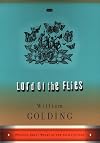
A terrible book, in the old meaning of "terrible," as in "to inspire terror." An excellent read for its intricate plotting to demonstrate metaphor and parable, but definitely nothing I would pick up again, because its message is not something I like to face too ofen.

Written in an easy, conversational style, and brings 17th Century France and the court of Louis XIV to vivid life.
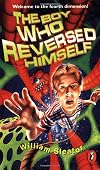
One of the first science fiction novels I read as a child, and one of the most thought-out, logical (nothing jarring jumps out at you while during) and interesting ways to think about inter-dimension travel and multi-dimension world systems.
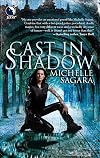
Tempest in a tea pot.
Sure, there were human sacrifices, childhood betrayals, ancient powers reawakening to plague the world, yada yada. However, the protagonist seems like a romance novel heroine playing dress-up as a dangerous detective-type.
The "horrible" events weren't that horrible. The reawakening dark power weren't that dark. The multiple deaths lacked emotional impact, thereby making the protagonist's angst nothing more than a collection of descriptive words. Maybe if we were treated to more back stories of her relationship to these children? Show, don't tell!
I am reading the 2nd book of this series, and so far it's hard going. I am surprised, because I really liked her earlier series: THE SUNDERED.
Sure, there were human sacrifices, childhood betrayals, ancient powers reawakening to plague the world, yada yada. However, the protagonist seems like a romance novel heroine playing dress-up as a dangerous detective-type.
The "horrible" events weren't that horrible. The reawakening dark power weren't that dark. The multiple deaths lacked emotional impact, thereby making the protagonist's angst nothing more than a collection of descriptive words. Maybe if we were treated to more back stories of her relationship to these children? Show, don't tell!
I am reading the 2nd book of this series, and so far it's hard going. I am surprised, because I really liked her earlier series: THE SUNDERED.
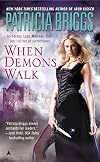
Cardboard characters. Cardboard situation. Random people introduced for no particular purpose... "The Shark"--What purpose did this man serve, other to than to provide the heroine with some easy "hidden" information, and to carry the colorful name?
Never has demon possession been so tame, never has the demon's purpose been so...anticlimactic. Never has magic evoked such little wonder. Never has a curse that slowly warps a man's body to cripple him been so... boring.
Her later writings are SO much better.
Never has demon possession been so tame, never has the demon's purpose been so...anticlimactic. Never has magic evoked such little wonder. Never has a curse that slowly warps a man's body to cripple him been so... boring.
Her later writings are SO much better.
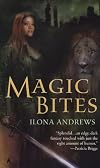
Great setup, a very realistic twist on the urban vampire/were/monsters fantasy genre. Kate Daniels is tough and believable, without being too super-human, lusted-after-by-every-male, or too angsty. The only problem was the villain and his eventual demise...anticlimatic, to say the least. The dude came out of no where, lacked menace, and had no real good reason for doing whatevef it was he was doing.
Great start to a series!
Great start to a series!
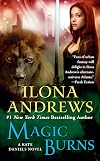
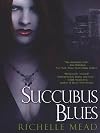
Well-written, but fluffy. The ending--i.e. who the villains turned out to be, how they were dispatched--was pretty anti-climatic. Otherwise, an enjoyable couple of hours.
Recommended!
Recommended!
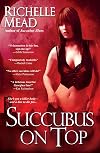
Fun, but fluffy.
The heroine does not act like she has had centuries of experience doing evil deeds while hiding a heart of gold. Instead, she gets giggly over her mortal boyfriend.
I re-iterate: fluffy.
The heroine does not act like she has had centuries of experience doing evil deeds while hiding a heart of gold. Instead, she gets giggly over her mortal boyfriend.
I re-iterate: fluffy.
An interesting take on Faerie.
Very reminiscent of Merry Gentry novels, where everyone seems out to have their way with the heroine as access towards more power. And for main love interests, we once again have two beautiful supernatural men vying for her attentions, one a nicer version of Jean-Claude, the other, a sexier Richard. Sigh... when will we get away from the shadow of LH?
However, there are enough differences to warrant a read, and the heroine has potential to become something more, I hope. I will keep reading.
Very reminiscent of Merry Gentry novels, where everyone seems out to have their way with the heroine as access towards more power. And for main love interests, we once again have two beautiful supernatural men vying for her attentions, one a nicer version of Jean-Claude, the other, a sexier Richard. Sigh... when will we get away from the shadow of LH?
However, there are enough differences to warrant a read, and the heroine has potential to become something more, I hope. I will keep reading.

The city of Tai-tastigon, mysterious as it is, fails to draw me in. It forms no shape in my mind's eye, and slips like shadows from my dreams' landscape.
The main character, Jame, mysterious as she is, with cryptic memories sprouting like weeds from her brain, a thief incomparably skilled yet honorable, a being of as-yet-undiscovered powers, fails to form as a coherent person. Sometimes she is tortured. The next instant, she is carefree and joking. No transition between these two states.
The tone of this novel is confusing. Some passages describes darkness and misery. Others, mere fluffy everyday nonsense. It does not seem to matter that people die and gods are wrathful and houses fall and burn. These leave no mark on the characters, and I am not moved either.
Many characters have highlighted cryptic, quirky personalities, yet have no real impact on the plot line. I am left scratching my head. Why did abc spend all this time plotting cryptically, yet nothing comes out of it but...this? Why did xyz exchange long probing gazes all that time, and nothing results but...that?
Finally, and worst of all, this novel is in serious need of a single, good villain. Result: an underwhelming climax.
However, the Kencyr mythology seems quite interesting. I will move on to the next book in this series, and hope that is a better read!
The main character, Jame, mysterious as she is, with cryptic memories sprouting like weeds from her brain, a thief incomparably skilled yet honorable, a being of as-yet-undiscovered powers, fails to form as a coherent person. Sometimes she is tortured. The next instant, she is carefree and joking. No transition between these two states.
The tone of this novel is confusing. Some passages describes darkness and misery. Others, mere fluffy everyday nonsense. It does not seem to matter that people die and gods are wrathful and houses fall and burn. These leave no mark on the characters, and I am not moved either.
Many characters have highlighted cryptic, quirky personalities, yet have no real impact on the plot line. I am left scratching my head. Why did abc spend all this time plotting cryptically, yet nothing comes out of it but...this? Why did xyz exchange long probing gazes all that time, and nothing results but...that?
Finally, and worst of all, this novel is in serious need of a single, good villain. Result: an underwhelming climax.
However, the Kencyr mythology seems quite interesting. I will move on to the next book in this series, and hope that is a better read!
- 4 for the world building, the fascinating cultures based on alchemical elements
- 2 for plot, characterization, the abrupt romance that lacked any build-up or foundation, and the general lack of character logic
This world being full of book yet me short on minutes, my primary gauge for what constitutes a good book is if it keeps me flipping the pages. Despite the thin plot and characterization, THE POISON MASTER kept me up to the wee hours trying to reach its (telegraphed and kinda wimpy) conclusion. The worlds described therein are fascinating--parc-verticales and the various dramatic architecture, drugs that have "souls" which could be convinced to do one thing or another. Creative stuff.
On the downside, the main characters are basically cardboard. The novel ends with more questions left unanswered than not. The heroine is a strong female with a single preoccupation in life--to save her twin from the evil villains. However, despite being born in what seems like a backwater world where high tech is outlawed from the masses, she accepts seemingly-too-good offers from mysterious off-worlders with amazing calmness. Just off she goes to overthrow the masters of all the known planets, armed with a plan as insubstantial as when mice plot to overthrow supersonic jetfighters.
And what about that mysterious off-worlder? No background information for him, really. No details on his origin or background, only the barest reasons for his motivation, no interactions
I could go on, but won't. Regardless, I recommend this book for an interesting journey to the four worlds, but nothing more.
Fascinating adventure through an unimaginably huge world, in the company of some interesting aliens (which provided some humor via inter-species interaction).
The only con is: none of the two female characters have any real personality, and were blandly annoying. But I suppose that's to be expected from a sci-fi book from the 70s. In context of the novel, it's a small quibble. I recommend it!
The only con is: none of the two female characters have any real personality, and were blandly annoying. But I suppose that's to be expected from a sci-fi book from the 70s. In context of the novel, it's a small quibble. I recommend it!
This is Oliver Sacks' first book of clinical case study, and it shows.
Compared to his later works, there is very little storytelling. The whole thing reads like a collection of notes by a Nineteenth Century physician, full of archaic turns of speech and obscure words, destroying my illusion that I had a fairly decent vocabulary. Festination. Athetosis. Torticollis. Tachyphrenia... really?!
But it is interesting for its description of a rare and horrific neurological disease, as well as the courage of those afflicted.
Compared to his later works, there is very little storytelling. The whole thing reads like a collection of notes by a Nineteenth Century physician, full of archaic turns of speech and obscure words, destroying my illusion that I had a fairly decent vocabulary. Festination. Athetosis. Torticollis. Tachyphrenia... really?!
But it is interesting for its description of a rare and horrific neurological disease, as well as the courage of those afflicted.
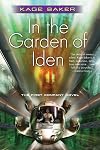
Quite an interesting premise for immortality, with humorous bits in between. The main character, Mendoza, however, is somewhat whiny, and could grate upon the nerves.´
Also, it was strange to read this--the first of a long series--while the author was laid upon her deathbed. Definitely affected my level of appreciation for this book...
Also, it was strange to read this--the first of a long series--while the author was laid upon her deathbed. Definitely affected my level of appreciation for this book...
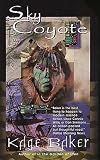
While the first book--IN THE GARDEN OF IDEN--set up a clever premise, and were humorous in parts, I found this second book a chore to get through. Yes, I know it's suppose to get better--plot-wise? character development?--down the line, but my problems are not so much about the plot than some inherent elements of the series itself.
First, I could not identify with any of the immortals. In general, these are people supposedly equipped with towering IQ, endless knowledge reserves, centuries to millennia of hands-on experience, and they have not developed any introspection or philosophy about their lives and what they do. It's as though, having been estopped from aging, they were also estopped from emotional growth. Aside from the author's repeated mention of how this person came from Neanderthal stock, that person lived through rise and fall of Rome, they could have been culled from today's reality tv.
Mendoza, especially, I find inexplicably touchy and annoying. What reason has she to be so angry?! Eternal youth, endless intellect, saved from being burnt at the stake to a life of 24th Century privilege even as she traverse through History. Sounds like a good deal to me. Yes, yes, a few obligatory references here or there about how the Company regard them as virtual slaves, and her fatal love affair, blah blah. Compared to others in the novel--Budu, for
I also dislike how the mortals are portrayed. Mostly one-dimensional, always foolish, especially those from the 24th Century. It's one thing to have the immortal see mortals as inferior--but to have the mortals actually BE inferior as well just seem like missed opportunities for dramatic depth.
But I guess we don't read this series for depth?
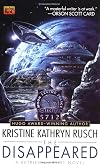
As for the treaties, it'd be nice if we were given some historical background and details... Also, aren't treaties MUTUAL? So the human governments completely kowtow to alien cultures, without negotiating for ANY human-culture-based sub-clauses and exemptions?
For a "what if" novel, it's not very well thought-out.
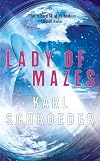
Fascinating premise. However, this is definitely more of a "big idea" kinda book. You should not be reading it for well-encapsulated relationships and characters...
Takes some close reading to understand. The author writes in jump-cut style, and not chronologically. So far, however, it's been an interesting and worthwhile ride through the streets of El Iskandryia, with true love and cybernetic enhancements alongside Arabic traditional culture.
However, the common theme in this series seems to be -- everyone is abused during childhood, physically or mentally, by circumstances or parents, regardless of whether they came from rich or poor levels of society. The continuation of the Ottoman Empire apparently ensures that no one could grow up with a happy and stable home life. Statistically speaking, this cannot possibly be true. But it's a minor quibble...
However, the common theme in this series seems to be -- everyone is abused during childhood, physically or mentally, by circumstances or parents, regardless of whether they came from rich or poor levels of society. The continuation of the Ottoman Empire apparently ensures that no one could grow up with a happy and stable home life. Statistically speaking, this cannot possibly be true. But it's a minor quibble...
Better than the first book in this series, of which IRONSIDE is the direct sequel. Characters are slightly more fleshed-out, and relationships have more redemptive qualities. Character progression, however, still lack smoothness, coming in spurts, often out of nowhere.
Further, Faerie as background is only roughly sketched-in and difficult to visualize. The only image that stuck in my mind were trees with cloud-like leaves that turned out to be masses of silken cocoons up close. The entire series had all too few description of such visual wonders, which should have been the essence of Faerie.
The trilogy is worth a read, but for more interesting tales of urban-fae intersection, I recommend THE IRON DRAGON'S DAUGHTER and WAR FOR THE OAKS.
Further, Faerie as background is only roughly sketched-in and difficult to visualize. The only image that stuck in my mind were trees with cloud-like leaves that turned out to be masses of silken cocoons up close. The entire series had all too few description of such visual wonders, which should have been the essence of Faerie.
The trilogy is worth a read, but for more interesting tales of urban-fae intersection, I recommend THE IRON DRAGON'S DAUGHTER and WAR FOR THE OAKS.
Interesting take on an urban-faerie adventure. Could have been taken further, though.
Also, many characters lacked depth, and others acted unreasonably. I mean... would you really go live on the streets just because your 4+ months bf did what he did? Seems a bit drastic. And the love that came out of no where between the main characters...
Not bad for a casual read, though.
Also, many characters lacked depth, and others acted unreasonably. I mean... would you really go live on the streets just because your 4+ months bf did what he did? Seems a bit drastic. And the love that came out of no where between the main characters...
Not bad for a casual read, though.
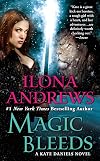
This series is really shaping up to be one of the best in this genre. All I can say is, keep up the great work!
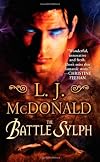
I read an electronic version of this book, cover-less (hence, unwarned), which accounts for my anger and disappointment at its contents. Otherwise I would have known that this is one of them genre romances, only thinly disguised as fantasy.
5 hours later, my eyes were rattling in their sockets, I had rolled them so much. However, I did finish it--albeit with much skimming--so it's not all bad.
Recommended for readers of genre romance who wanted a little twist in their formula.
===================================================
** As fantasy, ONE STARS.
RANT: So they couldn't come up with a better name than Solie (could there be a more spineless and silly name)? And why SYLPHS (which, last I checked, were airy sprites and certainly do not conjure up visions of deadly vigor)??
So, for the son of a king's important ceremony to acquire a terrifying and rare battle sylph -- they couldn't pre-capture a virgin, but have to get one just before the ceremony, stat? What if they caught the town slut instead, out on her nightly stroll?
For a creature from some other dimension, typically form-less and living in hives--how do these sylphs know to speak the human language? How does Heyou, not much more than a "hatchling", know how to conduct himself in human lands? I could go on...
Mostly one-note characters. Too-easy magic. A narrative voice that would have been much better to have been first-person rather than third-person omniscient. All this make for a horrific read, fantasy-wise. Which show more brings me to the next portion of the review:
** As an example of genre romance, THREE STARS.
Well, I got warm during a few scenes (too few of them, unfortunately!), and the basic idea of shape-shifting faeries bound to you forever and ever, in love and will do whatever you want, is... not bad for those pesky girlish fantasies we all have deep in the night. So I guess it did its job. show less
5 hours later, my eyes were rattling in their sockets, I had rolled them so much. However, I did finish it--albeit with much skimming--so it's not all bad.
Recommended for readers of genre romance who wanted a little twist in their formula.
===================================================
** As fantasy, ONE STARS.
RANT: So they couldn't come up with a better name than Solie (could there be a more spineless and silly name)? And why SYLPHS (which, last I checked, were airy sprites and certainly do not conjure up visions of deadly vigor)??
So, for the son of a king's important ceremony to acquire a terrifying and rare battle sylph -- they couldn't pre-capture a virgin, but have to get one just before the ceremony, stat? What if they caught the town slut instead, out on her nightly stroll?
For a creature from some other dimension, typically form-less and living in hives--how do these sylphs know to speak the human language? How does Heyou, not much more than a "hatchling", know how to conduct himself in human lands? I could go on...
Mostly one-note characters. Too-easy magic. A narrative voice that would have been much better to have been first-person rather than third-person omniscient. All this make for a horrific read, fantasy-wise. Which show more brings me to the next portion of the review:
** As an example of genre romance, THREE STARS.
Well, I got warm during a few scenes (too few of them, unfortunately!), and the basic idea of shape-shifting faeries bound to you forever and ever, in love and will do whatever you want, is... not bad for those pesky girlish fantasies we all have deep in the night. So I guess it did its job. show less
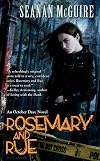
Style, prose and coherence - TWO STARS
Originality and worldbuilding - FOUR STARS
I like Toby. She is slightly different from the typical PNR heroine--a bit more cautious, a bit more quiet than most. No obnoxious mouthiness here. She knows her place, the rules, and tries to keep out of trouble. It's a pleasant change.
Unfortunately, there are problems with the way she is set up that constantly intruded into my attention to the story:
She says she is not stupid (I counted 4 instances of "I am not stupid/idiotic/etc" in the first chapter alone). However, she does stupid things: for a weak-blooded changeling who makes a living detecting stuff both human and fae, she seems to take not even basic human precautions. How about obtaining a gun license? Or at least a knife strapped close at all times? Magic abilities not so great? Compensate with technology! She throws herself into dangerous situations without a thought, without prepping--take a crap load of weapons! or at least a flashlight.
In the beginning, Toby seemed to have been a solitary character, head down, out of the limelights, all that. Towards the middle, she suddenly shifted. Before you could sneeze out a "Mary Sue!" everybody knew her, she had friends in high places, and allies start spilling from the woodworks. Potential love interests looked at her with puppy eyes (or brooding ones). Did I blink, and missed the set up? What did she do that was so noteworthy or admirable? What was her allure, again? Sure, she was show more knighted--which, as we are told, means she earned her rep... but HOW? A few casually dropped hints of past deeds would have helped. Then, there are the cryptic mentions of how she's "just like her mother." What did this even mean, when all the story we get on Amandine is she has a specialty in blood magic, became a fae wife and married a mortal?
All in all, novice writing mistakes. Too much telling, not enough showing. Not enough setup for the subtle things, too much setup--as in, TELEGRAPHED--for all the more-obvious items.
Nevertheless, I give it THREE STARS for good effort, and recommend it. The plot was fairly tight and kept me turning the pages. She did her research regarding the fae. She creates a believable world. show less
Originality and worldbuilding - FOUR STARS
I like Toby. She is slightly different from the typical PNR heroine--a bit more cautious, a bit more quiet than most. No obnoxious mouthiness here. She knows her place, the rules, and tries to keep out of trouble. It's a pleasant change.
Unfortunately, there are problems with the way she is set up that constantly intruded into my attention to the story:
She says she is not stupid (I counted 4 instances of "I am not stupid/idiotic/etc" in the first chapter alone). However, she does stupid things: for a weak-blooded changeling who makes a living detecting stuff both human and fae, she seems to take not even basic human precautions. How about obtaining a gun license? Or at least a knife strapped close at all times? Magic abilities not so great? Compensate with technology! She throws herself into dangerous situations without a thought, without prepping--take a crap load of weapons! or at least a flashlight.
In the beginning, Toby seemed to have been a solitary character, head down, out of the limelights, all that. Towards the middle, she suddenly shifted. Before you could sneeze out a "Mary Sue!" everybody knew her, she had friends in high places, and allies start spilling from the woodworks. Potential love interests looked at her with puppy eyes (or brooding ones). Did I blink, and missed the set up? What did she do that was so noteworthy or admirable? What was her allure, again? Sure, she was show more knighted--which, as we are told, means she earned her rep... but HOW? A few casually dropped hints of past deeds would have helped. Then, there are the cryptic mentions of how she's "just like her mother." What did this even mean, when all the story we get on Amandine is she has a specialty in blood magic, became a fae wife and married a mortal?
All in all, novice writing mistakes. Too much telling, not enough showing. Not enough setup for the subtle things, too much setup--as in, TELEGRAPHED--for all the more-obvious items.
Nevertheless, I give it THREE STARS for good effort, and recommend it. The plot was fairly tight and kept me turning the pages. She did her research regarding the fae. She creates a believable world. show less
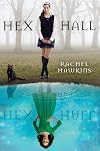
An excellent debut!
Not a whole of lot of surprising development or originality or detailed world-building here, but smooth all the way, more so than many so-called established authors. Believable teenage protagonist, some interesting spells, and realistic angst without any over-wrought melodramatics. Characters are mostly stock -- the handsome love interest, the strict head mistress, the lonely-girl best friend, the meanie trio bullies, etc -- but still manage to come to life. I am drawn to find out what will happen to each of them, and look forward to the next book.
A worthwhile quick read and good start to an interesting series. Recommended.
Not a whole of lot of surprising development or originality or detailed world-building here, but smooth all the way, more so than many so-called established authors. Believable teenage protagonist, some interesting spells, and realistic angst without any over-wrought melodramatics. Characters are mostly stock -- the handsome love interest, the strict head mistress, the lonely-girl best friend, the meanie trio bullies, etc -- but still manage to come to life. I am drawn to find out what will happen to each of them, and look forward to the next book.
A worthwhile quick read and good start to an interesting series. Recommended.

Perhaps it's wrong to use a science-fiction/fantasy reader's eye to evaluate romance, but the premise of a magical ring that can talk and transports people through time is just too...pat.
And even for romance... Sure, the heroine is feisty and can play a mean round of guitars, and the hero has amazing body and awesome blue eyes... However, his suddenly-revealed background is hardly believable. That she can run some kind of a revolution--albeit a quick and bloodless one--is even less so.
Finally, for a novel that supposedly happens among a familia of gypsies... there is amazingly little background information about this historically xenophobic tribe, beyond that they accept thieving and fortune-reading as valid means of making a living. Stereotypical, can we say?
Overall, sub-par in every way.
And even for romance... Sure, the heroine is feisty and can play a mean round of guitars, and the hero has amazing body and awesome blue eyes... However, his suddenly-revealed background is hardly believable. That she can run some kind of a revolution--albeit a quick and bloodless one--is even less so.
Finally, for a novel that supposedly happens among a familia of gypsies... there is amazingly little background information about this historically xenophobic tribe, beyond that they accept thieving and fortune-reading as valid means of making a living. Stereotypical, can we say?
Overall, sub-par in every way.
I find that I am rarely able to write gushing positive reviews... I am too swept up in the well-developed relationships, the cohesive plot and twists, to even take notes.
All I can say is, I love Mercy -- that she is not all-powerful and has to get by on her wits half the time, that she will accept help when necessary, and all that good stuff that makes her more than just another PNR Mary Sue.
Highly recommended!
All I can say is, I love Mercy -- that she is not all-powerful and has to get by on her wits half the time, that she will accept help when necessary, and all that good stuff that makes her more than just another PNR Mary Sue.
Highly recommended!
An excellent addition to the series.
Poor Adam -- he certainly got beat up a-plenty in this book -- but we got to see the gradual deepening of his relationship to Mercy, which is always a good thing. As for Samuel... Well, let's just say what happened to him seemed slightly deus ex machina, hence this FOUR STAR rather than five-star rating.
As always, highly recommended.
Poor Adam -- he certainly got beat up a-plenty in this book -- but we got to see the gradual deepening of his relationship to Mercy, which is always a good thing. As for Samuel... Well, let's just say what happened to him seemed slightly deus ex machina, hence this FOUR STAR rather than five-star rating.
As always, highly recommended.
* World-building - FOUR STARS.
Not particularly original, but realistic, with concrete details. I was able to easily visualize and follow along their journey in my mind's eye.
* Plot, characterization, etc. - TWO and a HALF STARS.
Clunky prose, torturous dialogue. Weak characterization of everyone except Senneth and Tayse -- the two main characters who were appropriately complex and interesting enough to carry the story. However, I appreciated that there are no helpless characters that needs frequent rescuing, nor "strong" characters that needs frequent rescuing, either. Everyone had their strength, and were not afraid to use it -- though in Cammon's case it seems like a too-rapid transformation from a helpless boy (often characterized as extremely young, but is actually NINETEEN. In this kind of semi-medieval world, men his age should already be fathers) to a full-on mystic.
Plot is composed entirely of a journey around Gillengaria, mostly focused on interactions within the group. Nary a climax to be found, though.
I struggled in a few parts, but this is overall a pretty readable book. Recommended.
Not particularly original, but realistic, with concrete details. I was able to easily visualize and follow along their journey in my mind's eye.
* Plot, characterization, etc. - TWO and a HALF STARS.
Clunky prose, torturous dialogue. Weak characterization of everyone except Senneth and Tayse -- the two main characters who were appropriately complex and interesting enough to carry the story. However, I appreciated that there are no helpless characters that needs frequent rescuing, nor "strong" characters that needs frequent rescuing, either. Everyone had their strength, and were not afraid to use it -- though in Cammon's case it seems like a too-rapid transformation from a helpless boy (often characterized as extremely young, but is actually NINETEEN. In this kind of semi-medieval world, men his age should already be fathers) to a full-on mystic.
Plot is composed entirely of a journey around Gillengaria, mostly focused on interactions within the group. Nary a climax to be found, though.
I struggled in a few parts, but this is overall a pretty readable book. Recommended.