Living Water: Powerful Teachings from the International Bestselling Author of The Heavenly Man by Brother Yun
Brother Yun's experience of the revival of Christianity in China results in him having a highly critical view of the western church: that it spends too much time looking inward on unimportant details and too little time focused on evangelising unbelievers. As a biblicaly literate ex-believer, I find his core message and many of his criticisms to be very persuasive.
The style of writing is pretty unappealing. Overall this is a caring gentle polemic, delivered with serious overuse of formulaic vague religious platitudes. I expect that believers will be able to assign some specific meaning to phrases like "rivers of living water flowing from you", but not having any personal experience of that or being able to assign to it any concrete scientific meaning, it is hard to digest other than in terms of the general qualitative feelings he is seeking to convey.
The style of writing is pretty unappealing. Overall this is a caring gentle polemic, delivered with serious overuse of formulaic vague religious platitudes. I expect that believers will be able to assign some specific meaning to phrases like "rivers of living water flowing from you", but not having any personal experience of that or being able to assign to it any concrete scientific meaning, it is hard to digest other than in terms of the general qualitative feelings he is seeking to convey.

Not as good as Pillars of the Earth. Plot too clunky. Story appears by comparison rather lazily written - too much sex and drama, too little historical or architectural interest.
Generally good clear descriptions of quantum physics in an accessible fashion. However in some respects the attempt to do this by teaching it to a dog was less than perfect. At times the links to the dog were effectively abandoned, at others the links and analogies were perhaps rather forced.

An excellent steady revelation of the human condition through the life of one, unextraordinary, young man. The pace is somewhat slow, but weaves a thorough picture that draws you in.

I enjoyed this; it was Banks back on form. A very engaging story with pervading undercurrents of menace, guilt and possible redemption. the central character had me totally drawn in: I cared what happened to him. The descriptions of the place and events were very evocative.

As a fan of Banks, this book disappointed me. Some of his books have been brilliant, a few have been a waste of time. This sits somewhere in between. There are some really good parts to - some of the writing and some of the ideas. However, as a whole, it just didn't add up. There are so many threads to the story and I don't believe all of them were resolved; or if they were then it was lost in the complexity and confusion. Also there were plot holes associated with a central concept. I have no problem with suspension of disbelief in SciFi provided that there is a self consistency and logic to concept being used. In several places this consistency is violated and that perturbs my suspension of disbelief. The writing is also a bit patchy. There are some great parts and then there are some very one dimensional characters and parts inserted rather crudely to convey a political point. It really needed a strong editor to tell him it wasn't ready to publish! If you are a Banks fan, of course read it. If you are new to Banks there are much better books that he has written.
A hugely engaging book. This is the first Hardy I have read since the mid 1970s when I hated the Mayor of Casterbridge as required reading as a school student. Friends persuaded me to try him again and my prejudices have been shattered. Whilst at places there was some of the ponderous and prolix descriptions of pastoral life with which I had no patience when younger, they added charm and depth to a compelling story. The book brilliantly combines important social points with clever plot, engaging characters and well painted descriptions which all draw you in. Glad I read the ebook - so much easier when you don't know a word just to tap on it, rather than ponder whether to look for the dictionary.
A compelling and engrossing book. I was surprised at how completely absorbed I could become in the world of people whose lives are so completely different from mine. Very readable. Also very informative on a country that has rarely been out of the news, or conflict, for decades.
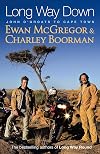
The book is comprised of alternating short sections of text from Ewan and Charley describing their journey from the north of Scotland to the south of Africa on motorcycles. I had seen Long Way Round on TV, but not read the book and I had seen perhaps one episode of Long Way Down on TV. I have to say it makes better TV than books. In part this is because of the visual aspect of travel in such interesting places, and I fear in part because the writing does not really draw you in in its short diary style structure. The story though is engaging and there are descriptions, albeit to me rather superficial descriptions, of many interesting places. The book too focuses a lot on the arguments and disunity between the team and even between the main protagonists. I would have much preferred it if this had been omitted for more details of the places, the bikes and the riding. It felt like they were trying to draw me in to some petty argument and make me take sides. When I envied what they were doing, I really did not want to know about their quarrels.

I felt I should read this as Wikipedia lists it as the world's fourth best-selling book.
It is hard work to read. There are a huge number of characters, many of whom are poorly differentiated or appear briefly, making it quite confusing. There is also no apparent "plot". It is a long rambling story describing the minutiae of life in the mansions / palaces of two interconnected aristocratic families.
Of course, it was written, I think, two hundred years ago; it describes a culture with which I am not terribly familiar; it was written originally in Chinese; and this (also historic) translation is dated and quite apparently flawed in places, resulting often in very stilted language.
However there are sufficient redeeming features that not only have I finished Book I, but I am reading Book II. The rambling description of the minutiae of life also has an immersive quality whereby you get to feel like you understand what life was like there and then. The entanglement of the mystical with the very real is interesting, but (unless it leads someone in Book II) seems to fade out quite rapidly from the introduction.
It is hard work to read. There are a huge number of characters, many of whom are poorly differentiated or appear briefly, making it quite confusing. There is also no apparent "plot". It is a long rambling story describing the minutiae of life in the mansions / palaces of two interconnected aristocratic families.
Of course, it was written, I think, two hundred years ago; it describes a culture with which I am not terribly familiar; it was written originally in Chinese; and this (also historic) translation is dated and quite apparently flawed in places, resulting often in very stilted language.
However there are sufficient redeeming features that not only have I finished Book I, but I am reading Book II. The rambling description of the minutiae of life also has an immersive quality whereby you get to feel like you understand what life was like there and then. The entanglement of the mystical with the very real is interesting, but (unless it leads someone in Book II) seems to fade out quite rapidly from the introduction.
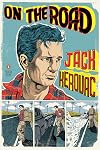
Worth reading, mostly because it is educational. It isn't terribly enjoyable; it is hard to empathise with the lead characters, the story rambles and the language is archaic (and alien) in places. As well as being a counter-cultural classic, it is very informative about the development of popular and counter culture from the period from WW2 to the mid fifties. In particular it was fascinating that the wild rebellious behaviour in that period was not in essence different to that of any of the following sixty years. I recall someone wise wrote something along the lines of each generation believes it is the first to rebel.
Generally a good, easy to read, introduction to Australian beer. Presumably written for the consumer of mass-market beer. Some of the ratings are very strange, presumably to be palatable to this target reader. The most annoying thing is the descriptions, some of which are ludicrous (or is this humour?)
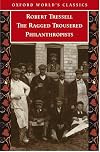
Rather a polemic, but very readable, mainly for it's social history, but also for the clarity of its explanation of the roots of poverty
Overall, this book is hard going. Some parts are quite profound. Other parts seem to be just deliberate obfuscation by playing with "smart" use of language. It doesn't really get anywhere, but it traverses some very interesting territory not getting there.
It's a big tome, which covers a lot of events in history with half to one page. That format brings with it a lot of constraints. Given those constraints, I thought it did remarkably well. There are parts of history that I felt I knew quite well and I thought the coverage of those was good. The beauty of the book is that having read it there were many other parts of history that I had no, or just the most fleeting, knowledge of - and now I have at least an awareness of them. The authors are British, and whilst the coverage does strive to be international, and the coverage of European history seems to be quite broad, there were a few selections that left me wondering "did that really shape the world?". Definitely not a cover-to-cover read, but a nice book to dip into.
The "jokes" in this book are mostly pathetically unfunny or obscure
Explores immigration, age, Ukranian history and, peripherally, tractors. Engaging, readable, thought-provoking, but for "comic fiction", not actually very funny. I cynically suspect that that description has been used to sell the book. It is however a good read. Some of the stereotyping is perhaps a little unsubtle and there is a rather odd structural disconnect between the majority of the book and the "history" towards the end.
As well as exploring a set of important issues in an engaging way, and showing the evolution of the main characters, especially the growing together of two estranged sisters, the story reveals a dark past in the family history in a refugee camp. The actual stated dark event is bad, but not as bad as the build-up suggests. However there are several pointers in the story that suggest another much darker interpretation.
As well as exploring a set of important issues in an engaging way, and showing the evolution of the main characters, especially the growing together of two estranged sisters, the story reveals a dark past in the family history in a refugee camp. The actual stated dark event is bad, but not as bad as the build-up suggests. However there are several pointers in the story that suggest another much darker interpretation.

Some odd and dated ideas and little science. However there is some interesting exploration of the impact of relativistic travel on personal and cultural relationships. Of course it is heavily influenced by the Vietnam war.