What a great primer on Systematic Theology!
I finally finished Dug Down Deep by Joshua Harris. Pastor Harris is the author who is probably best known in evangelical circles as the guy who wrote I Kissed Dating Goodbye. But Josh is so much more than just that first book. He has written on courtship and marriage, purity issues and the importance of a vibrant connection to a local church as well.
Dug Down Deep was one of those books that once I finally read it, I regretted having let it sit on my shelves for almost two years. It is an excellent resource and one I would especially recommend to those who have never read any systematic theology like Wayne Grudem's Introduction to Biblical Doctrine. Josh intersperses stories and illustrations throughout this book to help bring out both the importance of knowing God through the systematic study of doctrine as well as the application of these truths to every day life.
I especially enjoyed the last chapter where Harris asks and answers the question, 'What should studying truth do to us?" This section alone should be read by every young man entering Bible college or seminary as it addresses the struggle between being passionate about the new truths you are learning and being compassionate with others that may disagree or be a bit behind you on their journey.
I found myself laughing at times, wanting to cry sometimes but mostly wanting to shout these things from the rooftop as I read through this book. I will definitely be giving a show more copy to your youth pastor and recommending he consider using it to teach the teens in our church. Pick up a copy of this book and make your way through it. You will not be disappointed.
*I was provided a free copy of this book by LibraryThing's Early Reviewers program exchange for an unbiased free review. Provided by LibraryThing's Early Reviewers Program. show less
I finally finished Dug Down Deep by Joshua Harris. Pastor Harris is the author who is probably best known in evangelical circles as the guy who wrote I Kissed Dating Goodbye. But Josh is so much more than just that first book. He has written on courtship and marriage, purity issues and the importance of a vibrant connection to a local church as well.
Dug Down Deep was one of those books that once I finally read it, I regretted having let it sit on my shelves for almost two years. It is an excellent resource and one I would especially recommend to those who have never read any systematic theology like Wayne Grudem's Introduction to Biblical Doctrine. Josh intersperses stories and illustrations throughout this book to help bring out both the importance of knowing God through the systematic study of doctrine as well as the application of these truths to every day life.
I especially enjoyed the last chapter where Harris asks and answers the question, 'What should studying truth do to us?" This section alone should be read by every young man entering Bible college or seminary as it addresses the struggle between being passionate about the new truths you are learning and being compassionate with others that may disagree or be a bit behind you on their journey.
I found myself laughing at times, wanting to cry sometimes but mostly wanting to shout these things from the rooftop as I read through this book. I will definitely be giving a show more copy to your youth pastor and recommending he consider using it to teach the teens in our church. Pick up a copy of this book and make your way through it. You will not be disappointed.
*I was provided a free copy of this book by LibraryThing's Early Reviewers program exchange for an unbiased free review. Provided by LibraryThing's Early Reviewers Program. show less
 This review was written for LibraryThing Early Reviewers.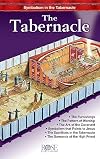
I love the Old Testament for many reasons. We’re told of it’s value, point blank style, by Paul the apostle in Romans 15:4 when he writes,
“For whatever was written in former days was written for our instruction, that through endurance and through the encouragement of the Scriptures we might have hope.” (Romans 15:4 ESV)
Click for more information or to purchase
One of my favorite aspects of the OT is all of the imagery, on virtually every page, that points to the one who would come, Jesus Christ.
The Tabernacle, built by Moses in the book of Exodus is certainly no exception.
Rose Publishing puts out fantastic resources for the body of Christ. Their small booklet on The Tabernacle is jam-packed with pictures, information and encouragement.
Yes, encouragement. For the simple reason that the entire Tabernacle, from beginning to end, is a glorious picture of Christ, our great God and Savior.
Speaking of “beginning to end” – as usual, Rose has published another resource that is tremendously helpful and informative from beginning to end. The pictures that Rose puts in virtually every one of their books and pamphlets are helpful all by themselves. But Rose goes above and beyond with their extensive articles, notes, charts, cross references and explanations on most everything in this pamphlet.
This fold out is a must have for any serious student of the Old Testament in general and of Christ and his types, specifically. Starting from a bird’s eye view, the Tabernacle is show more surveyed from above with a neatly annotated color drawing to give a good overview of the entire structure and its parts. Then, with careful precision, Rose goes into the specific details of each and every object, material and arrangement explaining not only the facts and figures of the items themselves, but their spiritual significance as well.
As you unfold the Tabernacle pamphlet, it only gets better. Some key sections that I found very helpful are -
* A thorough article on the Ark of the Covenant.
* An excellent chart detailing the symbolism of the OT and how Christ fulfills what were formerly mysterious shadows and signs.
* A full page annotated illustration of the Aaronic priest, his garments and duties.
* A breakdown of the five main sacrifices recorded in Leviticus 1-6, their symbolism and ultimate fulfillment in Christ, the lamb of God slain before the foundation of the world.
* An outstanding time line surveying the “travels” of the Ark of the Covenant from its initial construction by Moses to its highly probable destruction by the Babylonians (sorry, Raiders of the Lost Ark isn’t real) around 586 B.C.
If you’re in your local Christian bookstore and you see a Rose resource, buy it if you can. If you see the Rose Tabernacle pamphlet, buy it even if you can’t afford it. It’s well worth the money and will encourage you to see the Bible, yes even the Old Testament, as one united book who’s one and only main character is Jesus Christ, God’s Son, our Passover lamb who has been sacrificed. show less
“For whatever was written in former days was written for our instruction, that through endurance and through the encouragement of the Scriptures we might have hope.” (Romans 15:4 ESV)
Click for more information or to purchase
One of my favorite aspects of the OT is all of the imagery, on virtually every page, that points to the one who would come, Jesus Christ.
The Tabernacle, built by Moses in the book of Exodus is certainly no exception.
Rose Publishing puts out fantastic resources for the body of Christ. Their small booklet on The Tabernacle is jam-packed with pictures, information and encouragement.
Yes, encouragement. For the simple reason that the entire Tabernacle, from beginning to end, is a glorious picture of Christ, our great God and Savior.
Speaking of “beginning to end” – as usual, Rose has published another resource that is tremendously helpful and informative from beginning to end. The pictures that Rose puts in virtually every one of their books and pamphlets are helpful all by themselves. But Rose goes above and beyond with their extensive articles, notes, charts, cross references and explanations on most everything in this pamphlet.
This fold out is a must have for any serious student of the Old Testament in general and of Christ and his types, specifically. Starting from a bird’s eye view, the Tabernacle is show more surveyed from above with a neatly annotated color drawing to give a good overview of the entire structure and its parts. Then, with careful precision, Rose goes into the specific details of each and every object, material and arrangement explaining not only the facts and figures of the items themselves, but their spiritual significance as well.
As you unfold the Tabernacle pamphlet, it only gets better. Some key sections that I found very helpful are -
* A thorough article on the Ark of the Covenant.
* An excellent chart detailing the symbolism of the OT and how Christ fulfills what were formerly mysterious shadows and signs.
* A full page annotated illustration of the Aaronic priest, his garments and duties.
* A breakdown of the five main sacrifices recorded in Leviticus 1-6, their symbolism and ultimate fulfillment in Christ, the lamb of God slain before the foundation of the world.
* An outstanding time line surveying the “travels” of the Ark of the Covenant from its initial construction by Moses to its highly probable destruction by the Babylonians (sorry, Raiders of the Lost Ark isn’t real) around 586 B.C.
If you’re in your local Christian bookstore and you see a Rose resource, buy it if you can. If you see the Rose Tabernacle pamphlet, buy it even if you can’t afford it. It’s well worth the money and will encourage you to see the Bible, yes even the Old Testament, as one united book who’s one and only main character is Jesus Christ, God’s Son, our Passover lamb who has been sacrificed. show less
This basically picks up on Foxe's book of Martyrs and continues the story of the persecuted church in the world up until more recent times. Great, encouraging stories from those who looked forward to a better heavenly city. With the exception of a few accounts, I would highly recommend reading these stories to your children, especially if you are a Christian living in America where we suffer virtually no persecution. Our children need to know how blessed by God they are to live in a land where the Gospel, by and large, goes forth unhindered.
Amazon review: Here
Like "Island Girl" (another Amazon reviewer) said, "...It moves you, it angers you, it amazes you..."
This is exactly how I feel about this book. It also greatly saddens me, makes me overwhelmingly thankful and makes me passionately teach and warm my children about the cruelty and evil that comes from forgetting or refusing to believe the intrinsic value every human being has before God and the respect each one deserves from one another.
Get this book, read it. It reads so fast and is an absolute page turner. But get ready. If you really, honestly read it, you're going to experience a whole range of emotions. Anger, sadness, thankfulness and passion to share what you read with others.
I honestly don't like it when people say, "Every ____ should read this book" But I have to admit, I would wholeheartedly say that about this book. Every American should read this book. I remember learning about slavery in US history during school, but not like this. We need to go back, often, and see the cruelties of one group of people toward others (Cain and Able, Jews, Canaanites, Babylonians, Assyrians, Persians, Greeks, Romans, Crusaders, Nazis etc) so we can learn and not repeat these mistakes.
This book also begs many critical questions such as:
1. How could an entire race of people think it was acceptable to treat, by and large, an entire other race of people so inhumanely?
2. How does one act when put in a situation where one is told to do something evil and if they show more disobey, they know they will simply be put to death and the next able bodied person will be made to do the same?
3. What one thing (many things?) is it that cuts across the horrors of US slavery, the travesty that was Nazi Europe, the evil of Sudan and on and on and on, and teaches us what is wrong and right and why these things happened?
Many more questions as well. All of these questions are answered, by the way, in the 66 books of the Christian Bible.
Highly recommend this one to you. Especially if you're a young Dad like me, trying to teach and train your children.
----
Update: Finished today 3/9/10 and was very disappointed by how the book ended. Left much to be desired by the reader. No final commentary from Lester. Very negative and bitter. I understand that the world is still much plagued by prejudice, oppression and racism and it will always be like that until the Prince of Peace returns. But the author could have brought things to a better summary and at least proposed some thought provoking questions for his readers to walk away with. show less
Like "Island Girl" (another Amazon reviewer) said, "...It moves you, it angers you, it amazes you..."
This is exactly how I feel about this book. It also greatly saddens me, makes me overwhelmingly thankful and makes me passionately teach and warm my children about the cruelty and evil that comes from forgetting or refusing to believe the intrinsic value every human being has before God and the respect each one deserves from one another.
Get this book, read it. It reads so fast and is an absolute page turner. But get ready. If you really, honestly read it, you're going to experience a whole range of emotions. Anger, sadness, thankfulness and passion to share what you read with others.
I honestly don't like it when people say, "Every ____ should read this book" But I have to admit, I would wholeheartedly say that about this book. Every American should read this book. I remember learning about slavery in US history during school, but not like this. We need to go back, often, and see the cruelties of one group of people toward others (Cain and Able, Jews, Canaanites, Babylonians, Assyrians, Persians, Greeks, Romans, Crusaders, Nazis etc) so we can learn and not repeat these mistakes.
This book also begs many critical questions such as:
1. How could an entire race of people think it was acceptable to treat, by and large, an entire other race of people so inhumanely?
2. How does one act when put in a situation where one is told to do something evil and if they show more disobey, they know they will simply be put to death and the next able bodied person will be made to do the same?
3. What one thing (many things?) is it that cuts across the horrors of US slavery, the travesty that was Nazi Europe, the evil of Sudan and on and on and on, and teaches us what is wrong and right and why these things happened?
Many more questions as well. All of these questions are answered, by the way, in the 66 books of the Christian Bible.
Highly recommend this one to you. Especially if you're a young Dad like me, trying to teach and train your children.
----
Update: Finished today 3/9/10 and was very disappointed by how the book ended. Left much to be desired by the reader. No final commentary from Lester. Very negative and bitter. I understand that the world is still much plagued by prejudice, oppression and racism and it will always be like that until the Prince of Peace returns. But the author could have brought things to a better summary and at least proposed some thought provoking questions for his readers to walk away with. show less
Sadly lacking in a lot of Bible exposition, still a good book. Gives couples a great starting framework to operate within. Has helped me understand my spouse, myself as well as others.
Check out a great review here
Check out a great review here

I CANNOT wait to read this again! This is one of the (very) few books I actually read when I was young. I remember finding it in an upstairs bedroom at my grandfather's house and reading it. The cover illustration has always stuck in my mind along with the mission name (Operation: MINCEMEAT). My recently piqued interest in WWII and desire to find books from my past caused me to search and purchase this from the web ($.75!)
Can't wait to crack it open again!
Can't wait to crack it open again!
Celebration of Discipline: The Path to Spiritual Growth : 20th Anniversary Edition by Richard J. Foster
I recently completed Richard Foster’s book Celebration of Discipline. This small work, just 201 pages, is hailed as a classic among Christian devotional literature. It has been reprinted several times and is frequently used as resource material in Bible colleges and seminaries. When studying the subject of spiritual formation, one can hardly find a book or article which does not draw from Celebration. I had heard about this book for years. I would often see it in the CBD catalogue, noticing it on sale or being sold in bulk as a bible study tool. The title has always intrigued me. I was somewhat interested in its contents. I once heard its opening line quoted in a sermon. Having now finished the work, I offer the following response.
Richard Foster wrote the first edition of Celebration in 1978. What were his reasons behind producing such a work? From the beginning of his book, his concern is very clear. Namely, that the Christian faith, in its practice among its followers, is always slipping away from center. The Christian’s working out of the “faith, once for all delivered” can always be drifting toward a dry, cold, intellectual affirmation of mere facts. This drift manifests itself in every epoch of Church history. As God is faithful to build His kingdom through the Church, sadly, those who make up that church have always been prone to wander. Certainly the time period Foster wrote in was no exception. Consider the mainline protestant Church’s drift away from show more inerrancy in the 1950’s. Consider the Church’s struggle with issues of civil authority and roles of woman (and men!) that ran through the 1960s and 70s. This is the context in which the author found himself. Foster, as I understand him, had a keen awareness of the body of Christ’s propensity toward drift. The specific drift he pens his warnings about is one that ultimately trades a deep, heart-felt love relationship with the Creator for a sadly unsatisfying superficiality offered by the world. He shakes the reader; grabbing their attention with an opening line that captures this concern well, “Superficiality is the curse of the age” He goes on to say, “The desperate need today is not for a greater number of intelligent people, or gifted people, but for deep people” See, Foster saw what everyone sees when they look honestly at the landscape of Christian experience. He saw superficiality. Jesus said it well in Matthew 15:8, “These people honor me with their lips, but their hearts are far from me” We have been called out from the kingdom of darkness into the kingdom of God’s glorious son and we are now fully enlisted in the ongoing war against evil. At base camp, God expects a deep and loving commitment to Him and Him alone. Outside camp, on patrol or in the foxhole, our enemy whispers suggestively to us. He asks us to forsake, to wander and to drift. He fools us with the false promise that we can still look outwardly clean, while inwardly we go through the motions. Foster fires a rocket propelled grenade into the enemy’s camp with the thoughts in Celebration. He writes to combat the notion that one who has been redeemed in Christ can simply sail along on the surface of the river of faith. He calls his readers to tip their canoe and go deep. He calls those in Christ to grab our snorkeling gear and head for the riverbed. And, oddly enough, the things he suggests as solutions to the drift are really nothing new. He fully admits that these “disciplines” have been practiced by many throughout the history of the Church. Surely there is nothing new under the son and Foster is simply calling the Church to walk the old paths once more. With the author’s intentions clear, let us now survey what he actually says.
After a brief introduction in which he explains the things he believes God did to prepare him for this book and allow him to write it, he opens chapter one with an apologetic of the disciplines and their liberating effect. Foster reminds his readers that we must not fall prey to the idea that spiritual disciplines are reserved exclusively for the giants of the faith. He argues, quite persuasively, that the concepts he will lay out in this book are for every believer and have profound practical application in every day living. He then moves to assuage another popular concern; that of the disciplines being harsh and dull, “aimed at exterminating laughter…” He argues that this concern could not be further from the truth, affirming instead that the joy of the Lord is the natural outcome of a disciplined life. Foster then moves swiftly to present the two most pressing difficulties one faces when writing on such a topic, let alone putting it into practice. The first difficulty is primarily found in the culture at large. We live immersed in an ocean of rationalism. We are surrounded on all sides by those who not only take the natural, tangible and scientific world for granted but who also vehemently defend it as the only reality there is. This bleeds into the church. The church drifts toward the world’s thinking. Therefore, any discussion that hints at the metaphysical, the spiritual realm, is often met with much resistance because of our bent toward rational materialism. Foster urges us to break free from this false thinking, to swim upstream, when he writes, “…we should be willing to study and explore the spiritual life with all the vigor and determination we would give to any field of research”
The second major difficulty one faces when embarking on such a study is the “how to”. We are so far removed from the days when the disciplines were a staple part of everyday Christian living that we simply do not have a clue how or where to start. Pastorally, the author comforts, encourages and challenges the reader to remember that the motive of the heart is more important than the logistical outworking of the desire. He promises that with practice, we can return to faithful practice of these precious precepts and walk in them. Foster passes onto a clear defense of total depravity and the will’s utter inability to cleanse the soul. He then argues that in the realm of our sanctification, or the progression toward greater Christ-likeness, the spiritual disciplines are the very things that can open the door to this progress. We must never think we can “will” our way toward greater holiness, nor can we ever cast off all law, claiming we are free from the responsibility to work out our salvation with fear and trembling. According to Foster, the disciplines are the balance between these two heresies. He is clear to say that the disciplines themselves do not save or sanctify, but only place us on a path where this sanctification can occur more naturally. Before diving into the specific disciplines, Foster heralds one final preliminary warning. “It is possible, however, to turn [the disciplines] into another set of soul-killing laws. Law-bound disciplines breathe death” Our tendency is to turn principles that should aid our spiritual growth into “be-all-end-all” laws that both we and others must obey. Before he pulls back the veil and begins to teach us the nuts and bolts, he wants to make sure we understand their proper use. They should never be twisted from life giving guidelines into petrified regulations that enslave both us and others.
Foster did well explaining his reasons for writing. He lays a solid foundation in chapter one giving the reader the ability to proceed properly and safely as they tour the forthcoming chapters and erect a solid understanding of his thesis. Without these critical guardrails in place from the beginning, the reader could quickly get a lot of wrong ideas about what the disciplines are and, more importantly, their proper application to the individual Christian life. It’s absolutely critical that we tell our audiences both what we are saying and what we are not saying. Foster does this well and points out from the outset the tendency we all have to swing the pendulum to the far right or left. Having argued generally for a Biblical balance, the author now ushers the reader into the specifics of the disciplines.
Foster organizes the disciplines into three categories: Inward, outward and corporate. Under inward he lists meditation, prayer, fasting and study. Under the discipline of meditation he begins by stating the need. We live in a hurried, noisy and crowded world. We truly do need time away, time to unwind, time to think. Enter meditation. Foster says that, Biblically speaking, meditation is always connected to changed behavior. He is quick to point out the stark and important contrasts between Eastern ideas of meditation and Christian ones. He then offers a definition of Christian meditation. Up until his definition, I agree with Foster. When he writes, “…meditation…is the ability to hear God’s voice and obey his word” , I depart from him. Biblically speaking, the ability to hear God’s word and obey does not come from a discipline that we perform. God alone gives people the ability to hear His word and obey it. Meditation, by contrast, is our response to having been given “ears to hear and eyes to see” . When Joshua is commanded to meditate on God’s word day and night , God is not telling him to hear and obey God’s voice. Though this may be a result of Joshua’s meditation this is not the means. The meditation both Moses and the Psalmist write about is one of constant rehearsal of the revealed truth from God. Foster actually comes around to affirming this on page 29 calling meditation on Scripture one of the many forms. This is more than one form; it’s the Biblical definition of the discipline itself. Next, he lays out the purpose of meditation: to deepen our relationship with the Lord. In wonderful Pastoral fashion, Foster does a good job of reminding us that we must prepare to meditate, especially in the harried world we find ourselves. He wraps up with some specific forms of meditation. Most of this section is good, with the exception of his “centering down” method This smelled all too much like New Age, Zen Buddhism to me. Not sure what Biblical precedent he draws from, but given his Quaker background, I’m not surprised. This departure into strange mystic teaching is only one example of many sprinkled throughout this work.
Next he turns to prayer. I affirm the importance of prayer. I love prayer. I don’t pray enough and I need to be reminded and challenged to pray. I say all that to say this: in Foster’s desire to encourage his readers to pray, I believe he dispenses some very dangerous theology in the process. He departs substantially from the reformed view of prayer and a high view of God’s sovereignty over all things when he writes, “…we are working with God to determine the outcome of events” and “we are working with God to determine the future.” Foster’s call to prayer is wonderful; his decrying of the absence of prayer in the Christian community is necessary and commendable. However, the half-truths he sprinkles throughout this chapter are concerning. The Bible declares that the Lord God reigns over “all things” He calls us to pray, not to help him govern his universe, for that would be the most dangerous thing in the universe, but to deepen our trust, reliance and devotion upon him. Much more could be said here, but I will move on.
Foster next discusses the discipline of fasting. I think he does a great job defending its validity for today, toppling the false arguments about health risks and the need to be constantly eating. He gives us a great survey of the Biblical passages dealing with fasting along with references from Church history. He reminds us well that food does not ultimately sustain us; God does. I appreciated him being clear to say we must fill the time we would normally be eating with prayer and Bible reading. This is critical. His descriptions of what to expect at the various stages in a fast are helpful from a physiological standpoint. Overall, Foster presents a good balanced approach to this oft-forgotten discipline. He may credit fasting with a bit too much power for my taste, but the fact that he even brings it up, defends it well, and helps us implement it is an encouraging breath of fresh air for the Church today.
The last of the “inward” disciplines is study. Foster argues that study is one of the central ways in which God transforms Christians. He suggests four steps to successful study; repetition, concentration, comprehension and reflection. These principles are helpful. However, within repetition, Foster creates what I believe to be false dichotomy when he writes, “…a vast difference exists between the study of Scripture and the devotional reading of Scripture. In the study of Scripture a high priority is placed upon interpretation; what is means. In the devotional reading of Scripture a high priority is placed upon the application: what it means for me” This simply is not the case. One cannot and, more importantly, should not ever read interpretively to the exclusion of application. Nor should one ever read devotionally to the exclusion of proper interpretation. Study and devotion are not mutually exclusive but rather are linked to one another and should always be done together. The reader must start by analyzing the Scripture through serious study and then quite naturally allow personal application to flow from such study. Application, at least proper application, cannot be done without rigorous study which precedes it. Rigorous and real study cannot be done without bursting forth into a doxology which reflects the truth it has unearthed. Foster issues a wonderful challenge to make time for study, maintaining its importance and concludes by reminding us that the only proper result from study is pure joy.
Foster now moves to his second section to discuss what he calls “Outward Disciplines”. Under this section, he’ll introduce us to simplicity, solitude, submission and service. This was by far, for me, the most enjoyable section of the book. Foster’s explanation and defense of simplicity is refreshing. After describing and defending the simple life, he offers several great practical suggestions on how to implement it into our every day lives. Foster’s chapter on solitude is excellent with only a few small exceptions. His serious call to capitalize on the small moments of life, using every opportunity we have to the glory of God is encouraging. He lays out wonderfully practical ideas such as journaling, taking a retreat, and intentionally being silent for long periods of time. These ideas put feet to his teaching. His chapter on submission is well done. I depart from his understanding on a few points but, overall, I feel he handles the issues of authority and hierarchy well. Service is a critical concept in the Christian faith. Foster is wonderful to point up the importance of service done “in secret”. So often are we bombarded with the world’s definition of service, we forget that the philanthropist who parades his gift giving on the public stage is such a far cry from the example of Christ who donned the servant’s cloth and washed feet while hidden away in the upper room. His section on the correlation of service and humility is a “must-read”- humbling and challenging.
Foster’s last section in his triad is the “Corporate Disciplines”. These, he argues, are the precepts most appropriately practiced in the midst of a gathered group of believers. Here he will take us on a tour through confession, worship, guidance and celebration. His discussion of the importance of confession is interesting. In his introduction however, I take issue with several points he makes. Foster states that Jesus, “[took] on the collective sin of the human race…all the sin of all the past, all the present, and all the future” This is not the place to enter into a full discussion of the issues surrounding such assertions. It is sufficient to say that Christ did not die for every sin ever committed. If He had, every sin would be paid for and all people would be saved from having to pay for their own sin. There are also many good things in this chapter and so I will turn to them. Foster’s three prong approach to what confession ought to contain is very helpful. An examination of the conscience, sorrow over sin, and a commitment to turn away from evil are the three ingredients he puts forth. I enjoyed especially his note on what sorrow truly is: “Sorry as it relates to confession is not primarily an emotion, though emotion may be involved” This counsels me in my cycle of sin, repentance, drift, sin and repentance again. I was greatly encouraged by his Pastoral words of warning against too quickly confessing to someone who we are not sure can keep a confidence.
In chapter 11 Foster discuss worship. I was very glad to see the author make it clear that Biblical worship is our proper responding to God’s initiation of grace. Foster hits the nail on the head when he says, “We worship the Lord not only because of who He is, but also because of what He has done” This squares perfectly with Psalm 119:68. Foster is faithful to not allow us to fall for the common dichotomy in our day which says worship is something that can and is only done in a Church on Sunday mornings. Worship indeed pervades all of life and our corporate gatherings should be an overflow of our personal worship throughout the week. Though I strongly disagree with Foster’s promotion of the modern day charismatic movement and his statement that “we learn to worship by worshipping.”, the other points in this chapter are helpful and important to his readers.
In his chapter on guidance, I am most troubled by both his general approach and his specific content. If he had not written, “The one Spirit will never lead in opposition to the written Word that he inspired”, I’m afraid I would have to call this chapter almost a complete loss. Foster’s obvious and strong lean toward experience-based forms of subjective leading and guidance seriously concern me. I wonder how many in the Quaker movement and tradition share his same views. God’s written Word is our primary if not exclusive source for guidance today. Any and all other of forms of so-called leading from God are always to be brought under scrutiny using the closed canon.
Foster brings his work to a close by a discussion of the discipline of celebration. He writes, “Without joyous celebration to infuse the other Disciplines, we will sooner or later abandon them” I enthusiastically affirm the same. Foster attempts to persuade us that celebration is a great antidote to taking ourselves too seriously, can help stem the tide of periodic bouts with sadness and aides us in keeping a balanced perspective. Though Foster, once again, reveals his charismatic views in this chapter, it is a good summary and conclusion to a moderately helpful work on spiritual formation.
In conclusion, I offer the following: This was my first “classic” book on the disciplines of the faith. This book contains some great new material, encouragement and warning along with some content that was familiar but great to read again. Foster’s pastoral heart comes through clearly as he articulates our problems and humbly offers suggestions for holy living. However, given Foster’s Quaker background, much of what has manifest itself today in Pentecostal/Charismatic circles and many of these non-Biblical teachings being sprinkled consistently throughout this book, I cannot say that I would highly recommend this to many of my brothers and sisters in Christ. Instead, a deep and serious study of the doctrine of sanctification should be conducted using several systematic theologies. This will lay a solid foundation and build critical thinking and discernment skills needed to work your way through works such as Celebration without being overly discouraged or outright deceived. If one does feel compelled to read works on this topic, I would recommend starting with the Puritans. John Owen is outstanding in The Mortification of Sin. Thomas Brooks’ Precious Remedies Against Satan’s Devices is indeed precious, in the truest sense of the word. Even pre-Puritan 4th century bishop Augustine’s Confessions is worth its weight in gold when working through the disciplines of solitude, simplicity and obviously, confession.
I would encourage everyone to become familiar with Celebration solely to be able to engage in discussion with someone who would embrace its content as a whole. We must call others to better works on this topic, point out where Foster departs and ultimately to ground those seeking spiritual growth deeply in the Word of God. show less
Richard Foster wrote the first edition of Celebration in 1978. What were his reasons behind producing such a work? From the beginning of his book, his concern is very clear. Namely, that the Christian faith, in its practice among its followers, is always slipping away from center. The Christian’s working out of the “faith, once for all delivered” can always be drifting toward a dry, cold, intellectual affirmation of mere facts. This drift manifests itself in every epoch of Church history. As God is faithful to build His kingdom through the Church, sadly, those who make up that church have always been prone to wander. Certainly the time period Foster wrote in was no exception. Consider the mainline protestant Church’s drift away from show more inerrancy in the 1950’s. Consider the Church’s struggle with issues of civil authority and roles of woman (and men!) that ran through the 1960s and 70s. This is the context in which the author found himself. Foster, as I understand him, had a keen awareness of the body of Christ’s propensity toward drift. The specific drift he pens his warnings about is one that ultimately trades a deep, heart-felt love relationship with the Creator for a sadly unsatisfying superficiality offered by the world. He shakes the reader; grabbing their attention with an opening line that captures this concern well, “Superficiality is the curse of the age” He goes on to say, “The desperate need today is not for a greater number of intelligent people, or gifted people, but for deep people” See, Foster saw what everyone sees when they look honestly at the landscape of Christian experience. He saw superficiality. Jesus said it well in Matthew 15:8, “These people honor me with their lips, but their hearts are far from me” We have been called out from the kingdom of darkness into the kingdom of God’s glorious son and we are now fully enlisted in the ongoing war against evil. At base camp, God expects a deep and loving commitment to Him and Him alone. Outside camp, on patrol or in the foxhole, our enemy whispers suggestively to us. He asks us to forsake, to wander and to drift. He fools us with the false promise that we can still look outwardly clean, while inwardly we go through the motions. Foster fires a rocket propelled grenade into the enemy’s camp with the thoughts in Celebration. He writes to combat the notion that one who has been redeemed in Christ can simply sail along on the surface of the river of faith. He calls his readers to tip their canoe and go deep. He calls those in Christ to grab our snorkeling gear and head for the riverbed. And, oddly enough, the things he suggests as solutions to the drift are really nothing new. He fully admits that these “disciplines” have been practiced by many throughout the history of the Church. Surely there is nothing new under the son and Foster is simply calling the Church to walk the old paths once more. With the author’s intentions clear, let us now survey what he actually says.
After a brief introduction in which he explains the things he believes God did to prepare him for this book and allow him to write it, he opens chapter one with an apologetic of the disciplines and their liberating effect. Foster reminds his readers that we must not fall prey to the idea that spiritual disciplines are reserved exclusively for the giants of the faith. He argues, quite persuasively, that the concepts he will lay out in this book are for every believer and have profound practical application in every day living. He then moves to assuage another popular concern; that of the disciplines being harsh and dull, “aimed at exterminating laughter…” He argues that this concern could not be further from the truth, affirming instead that the joy of the Lord is the natural outcome of a disciplined life. Foster then moves swiftly to present the two most pressing difficulties one faces when writing on such a topic, let alone putting it into practice. The first difficulty is primarily found in the culture at large. We live immersed in an ocean of rationalism. We are surrounded on all sides by those who not only take the natural, tangible and scientific world for granted but who also vehemently defend it as the only reality there is. This bleeds into the church. The church drifts toward the world’s thinking. Therefore, any discussion that hints at the metaphysical, the spiritual realm, is often met with much resistance because of our bent toward rational materialism. Foster urges us to break free from this false thinking, to swim upstream, when he writes, “…we should be willing to study and explore the spiritual life with all the vigor and determination we would give to any field of research”
The second major difficulty one faces when embarking on such a study is the “how to”. We are so far removed from the days when the disciplines were a staple part of everyday Christian living that we simply do not have a clue how or where to start. Pastorally, the author comforts, encourages and challenges the reader to remember that the motive of the heart is more important than the logistical outworking of the desire. He promises that with practice, we can return to faithful practice of these precious precepts and walk in them. Foster passes onto a clear defense of total depravity and the will’s utter inability to cleanse the soul. He then argues that in the realm of our sanctification, or the progression toward greater Christ-likeness, the spiritual disciplines are the very things that can open the door to this progress. We must never think we can “will” our way toward greater holiness, nor can we ever cast off all law, claiming we are free from the responsibility to work out our salvation with fear and trembling. According to Foster, the disciplines are the balance between these two heresies. He is clear to say that the disciplines themselves do not save or sanctify, but only place us on a path where this sanctification can occur more naturally. Before diving into the specific disciplines, Foster heralds one final preliminary warning. “It is possible, however, to turn [the disciplines] into another set of soul-killing laws. Law-bound disciplines breathe death” Our tendency is to turn principles that should aid our spiritual growth into “be-all-end-all” laws that both we and others must obey. Before he pulls back the veil and begins to teach us the nuts and bolts, he wants to make sure we understand their proper use. They should never be twisted from life giving guidelines into petrified regulations that enslave both us and others.
Foster did well explaining his reasons for writing. He lays a solid foundation in chapter one giving the reader the ability to proceed properly and safely as they tour the forthcoming chapters and erect a solid understanding of his thesis. Without these critical guardrails in place from the beginning, the reader could quickly get a lot of wrong ideas about what the disciplines are and, more importantly, their proper application to the individual Christian life. It’s absolutely critical that we tell our audiences both what we are saying and what we are not saying. Foster does this well and points out from the outset the tendency we all have to swing the pendulum to the far right or left. Having argued generally for a Biblical balance, the author now ushers the reader into the specifics of the disciplines.
Foster organizes the disciplines into three categories: Inward, outward and corporate. Under inward he lists meditation, prayer, fasting and study. Under the discipline of meditation he begins by stating the need. We live in a hurried, noisy and crowded world. We truly do need time away, time to unwind, time to think. Enter meditation. Foster says that, Biblically speaking, meditation is always connected to changed behavior. He is quick to point out the stark and important contrasts between Eastern ideas of meditation and Christian ones. He then offers a definition of Christian meditation. Up until his definition, I agree with Foster. When he writes, “…meditation…is the ability to hear God’s voice and obey his word” , I depart from him. Biblically speaking, the ability to hear God’s word and obey does not come from a discipline that we perform. God alone gives people the ability to hear His word and obey it. Meditation, by contrast, is our response to having been given “ears to hear and eyes to see” . When Joshua is commanded to meditate on God’s word day and night , God is not telling him to hear and obey God’s voice. Though this may be a result of Joshua’s meditation this is not the means. The meditation both Moses and the Psalmist write about is one of constant rehearsal of the revealed truth from God. Foster actually comes around to affirming this on page 29 calling meditation on Scripture one of the many forms. This is more than one form; it’s the Biblical definition of the discipline itself. Next, he lays out the purpose of meditation: to deepen our relationship with the Lord. In wonderful Pastoral fashion, Foster does a good job of reminding us that we must prepare to meditate, especially in the harried world we find ourselves. He wraps up with some specific forms of meditation. Most of this section is good, with the exception of his “centering down” method This smelled all too much like New Age, Zen Buddhism to me. Not sure what Biblical precedent he draws from, but given his Quaker background, I’m not surprised. This departure into strange mystic teaching is only one example of many sprinkled throughout this work.
Next he turns to prayer. I affirm the importance of prayer. I love prayer. I don’t pray enough and I need to be reminded and challenged to pray. I say all that to say this: in Foster’s desire to encourage his readers to pray, I believe he dispenses some very dangerous theology in the process. He departs substantially from the reformed view of prayer and a high view of God’s sovereignty over all things when he writes, “…we are working with God to determine the outcome of events” and “we are working with God to determine the future.” Foster’s call to prayer is wonderful; his decrying of the absence of prayer in the Christian community is necessary and commendable. However, the half-truths he sprinkles throughout this chapter are concerning. The Bible declares that the Lord God reigns over “all things” He calls us to pray, not to help him govern his universe, for that would be the most dangerous thing in the universe, but to deepen our trust, reliance and devotion upon him. Much more could be said here, but I will move on.
Foster next discusses the discipline of fasting. I think he does a great job defending its validity for today, toppling the false arguments about health risks and the need to be constantly eating. He gives us a great survey of the Biblical passages dealing with fasting along with references from Church history. He reminds us well that food does not ultimately sustain us; God does. I appreciated him being clear to say we must fill the time we would normally be eating with prayer and Bible reading. This is critical. His descriptions of what to expect at the various stages in a fast are helpful from a physiological standpoint. Overall, Foster presents a good balanced approach to this oft-forgotten discipline. He may credit fasting with a bit too much power for my taste, but the fact that he even brings it up, defends it well, and helps us implement it is an encouraging breath of fresh air for the Church today.
The last of the “inward” disciplines is study. Foster argues that study is one of the central ways in which God transforms Christians. He suggests four steps to successful study; repetition, concentration, comprehension and reflection. These principles are helpful. However, within repetition, Foster creates what I believe to be false dichotomy when he writes, “…a vast difference exists between the study of Scripture and the devotional reading of Scripture. In the study of Scripture a high priority is placed upon interpretation; what is means. In the devotional reading of Scripture a high priority is placed upon the application: what it means for me” This simply is not the case. One cannot and, more importantly, should not ever read interpretively to the exclusion of application. Nor should one ever read devotionally to the exclusion of proper interpretation. Study and devotion are not mutually exclusive but rather are linked to one another and should always be done together. The reader must start by analyzing the Scripture through serious study and then quite naturally allow personal application to flow from such study. Application, at least proper application, cannot be done without rigorous study which precedes it. Rigorous and real study cannot be done without bursting forth into a doxology which reflects the truth it has unearthed. Foster issues a wonderful challenge to make time for study, maintaining its importance and concludes by reminding us that the only proper result from study is pure joy.
Foster now moves to his second section to discuss what he calls “Outward Disciplines”. Under this section, he’ll introduce us to simplicity, solitude, submission and service. This was by far, for me, the most enjoyable section of the book. Foster’s explanation and defense of simplicity is refreshing. After describing and defending the simple life, he offers several great practical suggestions on how to implement it into our every day lives. Foster’s chapter on solitude is excellent with only a few small exceptions. His serious call to capitalize on the small moments of life, using every opportunity we have to the glory of God is encouraging. He lays out wonderfully practical ideas such as journaling, taking a retreat, and intentionally being silent for long periods of time. These ideas put feet to his teaching. His chapter on submission is well done. I depart from his understanding on a few points but, overall, I feel he handles the issues of authority and hierarchy well. Service is a critical concept in the Christian faith. Foster is wonderful to point up the importance of service done “in secret”. So often are we bombarded with the world’s definition of service, we forget that the philanthropist who parades his gift giving on the public stage is such a far cry from the example of Christ who donned the servant’s cloth and washed feet while hidden away in the upper room. His section on the correlation of service and humility is a “must-read”- humbling and challenging.
Foster’s last section in his triad is the “Corporate Disciplines”. These, he argues, are the precepts most appropriately practiced in the midst of a gathered group of believers. Here he will take us on a tour through confession, worship, guidance and celebration. His discussion of the importance of confession is interesting. In his introduction however, I take issue with several points he makes. Foster states that Jesus, “[took] on the collective sin of the human race…all the sin of all the past, all the present, and all the future” This is not the place to enter into a full discussion of the issues surrounding such assertions. It is sufficient to say that Christ did not die for every sin ever committed. If He had, every sin would be paid for and all people would be saved from having to pay for their own sin. There are also many good things in this chapter and so I will turn to them. Foster’s three prong approach to what confession ought to contain is very helpful. An examination of the conscience, sorrow over sin, and a commitment to turn away from evil are the three ingredients he puts forth. I enjoyed especially his note on what sorrow truly is: “Sorry as it relates to confession is not primarily an emotion, though emotion may be involved” This counsels me in my cycle of sin, repentance, drift, sin and repentance again. I was greatly encouraged by his Pastoral words of warning against too quickly confessing to someone who we are not sure can keep a confidence.
In chapter 11 Foster discuss worship. I was very glad to see the author make it clear that Biblical worship is our proper responding to God’s initiation of grace. Foster hits the nail on the head when he says, “We worship the Lord not only because of who He is, but also because of what He has done” This squares perfectly with Psalm 119:68. Foster is faithful to not allow us to fall for the common dichotomy in our day which says worship is something that can and is only done in a Church on Sunday mornings. Worship indeed pervades all of life and our corporate gatherings should be an overflow of our personal worship throughout the week. Though I strongly disagree with Foster’s promotion of the modern day charismatic movement and his statement that “we learn to worship by worshipping.”, the other points in this chapter are helpful and important to his readers.
In his chapter on guidance, I am most troubled by both his general approach and his specific content. If he had not written, “The one Spirit will never lead in opposition to the written Word that he inspired”, I’m afraid I would have to call this chapter almost a complete loss. Foster’s obvious and strong lean toward experience-based forms of subjective leading and guidance seriously concern me. I wonder how many in the Quaker movement and tradition share his same views. God’s written Word is our primary if not exclusive source for guidance today. Any and all other of forms of so-called leading from God are always to be brought under scrutiny using the closed canon.
Foster brings his work to a close by a discussion of the discipline of celebration. He writes, “Without joyous celebration to infuse the other Disciplines, we will sooner or later abandon them” I enthusiastically affirm the same. Foster attempts to persuade us that celebration is a great antidote to taking ourselves too seriously, can help stem the tide of periodic bouts with sadness and aides us in keeping a balanced perspective. Though Foster, once again, reveals his charismatic views in this chapter, it is a good summary and conclusion to a moderately helpful work on spiritual formation.
In conclusion, I offer the following: This was my first “classic” book on the disciplines of the faith. This book contains some great new material, encouragement and warning along with some content that was familiar but great to read again. Foster’s pastoral heart comes through clearly as he articulates our problems and humbly offers suggestions for holy living. However, given Foster’s Quaker background, much of what has manifest itself today in Pentecostal/Charismatic circles and many of these non-Biblical teachings being sprinkled consistently throughout this book, I cannot say that I would highly recommend this to many of my brothers and sisters in Christ. Instead, a deep and serious study of the doctrine of sanctification should be conducted using several systematic theologies. This will lay a solid foundation and build critical thinking and discernment skills needed to work your way through works such as Celebration without being overly discouraged or outright deceived. If one does feel compelled to read works on this topic, I would recommend starting with the Puritans. John Owen is outstanding in The Mortification of Sin. Thomas Brooks’ Precious Remedies Against Satan’s Devices is indeed precious, in the truest sense of the word. Even pre-Puritan 4th century bishop Augustine’s Confessions is worth its weight in gold when working through the disciplines of solitude, simplicity and obviously, confession.
I would encourage everyone to become familiar with Celebration solely to be able to engage in discussion with someone who would embrace its content as a whole. We must call others to better works on this topic, point out where Foster departs and ultimately to ground those seeking spiritual growth deeply in the Word of God. show less
This is a fantastic book. Very well written, extremely convicting and very encouraging. Highly recommended for church leaders. Would make a great gift as well, to young adults.
Great little book. Very quick read, very straightforward. One overarching thesis: Jesus is our only hope for purity of thought. Our will will not win the battle against wandering thoughts. Flee to Jesus!
Dangerous Duty of Delight: The Glorified God and the Satisfied Soul (LifeChange Books) by John Piper

One of those books where it's absolutely critical that you READ THE WHOLE THING through. Piper is great for using language that shocks the reader into paying attention. If you take what he sometimes writes, out of context, then you will think he's a heretic. Let him finish his thought and explain himself and you will find him radically transforming.
My wife and I went through this as brand new Christians and it helped lay a great foundation. This is not some book you read and walk away saying you know the Bible not at all. this book is like the frame of the puzzle. Read it so you know where all the little pieces fit in the big picture and then spend the rest of your life learning, studying and sharing with others all the details of Scripture.
Confessions, The (Works of Saint Augustine, a Translation for the 21st Century: Part 1- Books) by Saint Augustine
This was a wonderful read from so many points. Augustine is me, in the 4 century! So honest, so weak, so transparent, so wise(ok, wise is not so much me). Written as one huge prayer to God, the father of Calvinism(hundreds of years before John came!) Augustine goes deep in his reflections and meditations on various topics(his birth, his infant years, his family, father, mother, his youthful lusts) He speaks as though he lives today with the struggles I go through each day. This work is a wonderful testimony to the unchanging Gospel of Jesus Christ and it's fruits in our lives as Christians. I highly recommend this book! And don't wait years to read it like I did!

This was a good refresher(in one sense) and somewhat of a discouragement in another. The author(s) basically condone the use of slang and improper grammar as legitimate "informal" language. No wonder the dumbing down of the American people continues to occur. This was a college text book that I borrowed from a friend! We don't even expect college students to speak or write correctly?! This was a very eye-opening book for me.
I read this book several years ago as a much younger Father of (I think) only two at that time. It was greatly encouraging. Farrar speaks at many Promise Keeper's events(or at least used to) and does a great job. He brings many statistics, anecdotes and Biblical concepts to bear on the topic of husbandry and fatherhood in this work. I recommend it to anyone who knows about and agrees with God on their weaknesses and wants to be a better father and husband for His glory.

Everything for life and godliness. As a young Christian, I started by reading through the King James version. The NIV study was immensely helpful for years and most recently I've started using the ESV study(Reformation Study Bible from Ligonier). Of course, the best approach is to have many translations in front of you to get the sense of the original while you read, study and meditate. I recommend the NIV study, but not in exclusion of other English translations.