
A 1947 Nevil Shute novel I had not read before, but I pulled off the shelf to read because part of the story is set in Burma just after the end of WWII. This hopefully would fit in with my prior reads. It certainly did. I think I liked this a lot more than other readers. Just about a 4 star novel for me. Some people get bent about the use of the word nig**r which is used intensely in this book as part of the story (one part of four) that concerns a black American soldier deployed to the Cornwall area in England who falls in love with a white English girl and gives her a kiss. The newly arrived Southern American white soldiers have been flipping out over how accepting and in fact protective the English residents are of the black soldiers. The racists from America want segregation. Anyway, that is just a part of the story but a very interesting part. Modern readers might be offended about how things were in the 1940s. The main driver of the story is a man suffering from a brain injury from the war who wants to reconnect with several soldiers he was hospitalized with before he dies. These men meant a lot to him and helped him. He wants to help them back if they need help before he is gone. There is also the relationship with the man's wife. A lot of stuff in here and it really gave me a look at the era with (to me) a pretty interesting story. The long period spent in Burma was the highlight for me in several ways. Recommended esp for Nevil Shute fans.
An enjoyable Japanese cozy, told in four parts it includes recipes. There is a follow-up coming out that I hope my library gets. The four parts are considered by some to be short stories, but I viewed them as chapters. This is an interesting setting and each part of the story deals with individuals grieving and coming to terms with their loss. Very well done for what it is. The Japanese culture woven in was a real plus.

Recommended by a friend, I got caught up in this story of loss, survival and redemption.
The story is told in three main parts and begins with Henry Seine near rock bottom. His wife is abandoning him with a series of "Dear John" letters, which I don't think are ever read after the first one, but the loss is sealed by a phone call home and a later visit home. His career on the chaotic and unforgiving Arctic seas is spiraling downward. When Seine's first tugboat capsizes under a mad captain, Julia, a cook-deckhand who is monitoring aboard a nearby ship literally saves Seine with a coast guard call. She is the siren of the novel I suppose.
The story is more than that but I think is really defined by the first third and last third of the story as a sort of arctic terror novel. It is fueled by alcohol, marijuana, tobacco and ghosts which got a little tiresome. The middle is more than a bit of a mush as the arctic station is taken down. Then back to the arctic seas and a rescue operation which becomes another terror. I did like the end of the story. Recommended for those who like action-adventure novels of the sea, with something extra.
The story is told in three main parts and begins with Henry Seine near rock bottom. His wife is abandoning him with a series of "Dear John" letters, which I don't think are ever read after the first one, but the loss is sealed by a phone call home and a later visit home. His career on the chaotic and unforgiving Arctic seas is spiraling downward. When Seine's first tugboat capsizes under a mad captain, Julia, a cook-deckhand who is monitoring aboard a nearby ship literally saves Seine with a coast guard call. She is the siren of the novel I suppose.
The story is more than that but I think is really defined by the first third and last third of the story as a sort of arctic terror novel. It is fueled by alcohol, marijuana, tobacco and ghosts which got a little tiresome. The middle is more than a bit of a mush as the arctic station is taken down. Then back to the arctic seas and a rescue operation which becomes another terror. I did like the end of the story. Recommended for those who like action-adventure novels of the sea, with something extra.

An anthology from 2006 of 7 original novellas published by the Science Fiction Book Club. The editors recognized at the time that very little science fiction that teens would enjoy (as well as appealing to adults) was being published. How are new readers going to step into science fiction? The young adult/juvenile niche had been swamped for years (and continues to be to this day) by fantasy novels aiming for a teen audience.
• Introduction: Escaping from Earth • (2006) • essay by Gardner Dozois and Jack Dann
• Escape from Earth • (2006) • novella by Allen Steele
• Where the Golden Apples Grow • (2006) • novella by Kage Baker
• Derelict • (2006) • novella by Geoffrey A. Landis
• Space Boy • (2006) • novella by Orson Scott Card
• Incarnation Day • (2006) • novella by Walter Jon Williams
• Combat Shopping • (2006) • novella by Elizabeth Moon
• The Mars Girl • (2006) • novella by Joe Haldeman
Well, the editors did a reasonably good job. These are mostly good stories aimed at a teenage audience. What sort of surprised me was that they were not stories to get hooks into me, to get me invested. I don't know how young teens would react. I was disappointed.
Set in the then present of 2006, Allen Steele's "Escape From Earth" was a fun exciting romp, something a twelve+ year old boy would maybe relate to. However, I think most boys who read Heinlein novels might make a different choice at the end than our main character Eric did. I mean, a cute show more girl, the stars, starships, your dreams come true and you say No? I don't think so. Well, Eric has a secret plan to make it happen someday, and he's not telling. I wouldn't mind reading a sequel to this story.
"Where the Golden Apples Grow" by Kage Baker hit me as a weaker story. As an adventure story on Mars written in the present day I thnk you need to pay more attention to what is believable. This wasn't very believable. 2+ stars. As an adventure story, not too bad. Others clearly disagree since Dozois included it in his year's best science fiction collection (24th edition).
I will give an OK 3+ stars to the well imagined Derelict by Geoffrey Landis. This was another adventure story, set now in orbital colonies, and involves a group of 3 friends exploring a space station that had a disaster about 80 years in the past from the time of the story. A surprise lies at the end when they find out what really happened. One of the better stories here.
“Spaceboy” by Orson Scott Card was an annoying dud. Card tried too hard with this fantasy thing and his anal obsession. I abandoned this story. Other than Ender's Game I have a hard time liking Card's fiction. 1 star
Incarnation Day by Walter Jon Williams is very good as far as an imaginative idea but it was another story that didn't really click with me.
"Combat Shopping" I skipped after a few pages.
"The Mars Girl" I recognized quickly as having read before. I recall liking it. show less
• Introduction: Escaping from Earth • (2006) • essay by Gardner Dozois and Jack Dann
• Escape from Earth • (2006) • novella by Allen Steele
• Where the Golden Apples Grow • (2006) • novella by Kage Baker
• Derelict • (2006) • novella by Geoffrey A. Landis
• Space Boy • (2006) • novella by Orson Scott Card
• Incarnation Day • (2006) • novella by Walter Jon Williams
• Combat Shopping • (2006) • novella by Elizabeth Moon
• The Mars Girl • (2006) • novella by Joe Haldeman
Well, the editors did a reasonably good job. These are mostly good stories aimed at a teenage audience. What sort of surprised me was that they were not stories to get hooks into me, to get me invested. I don't know how young teens would react. I was disappointed.
Set in the then present of 2006, Allen Steele's "Escape From Earth" was a fun exciting romp, something a twelve+ year old boy would maybe relate to. However, I think most boys who read Heinlein novels might make a different choice at the end than our main character Eric did. I mean, a cute show more girl, the stars, starships, your dreams come true and you say No? I don't think so. Well, Eric has a secret plan to make it happen someday, and he's not telling. I wouldn't mind reading a sequel to this story.
"Where the Golden Apples Grow" by Kage Baker hit me as a weaker story. As an adventure story on Mars written in the present day I thnk you need to pay more attention to what is believable. This wasn't very believable. 2+ stars. As an adventure story, not too bad. Others clearly disagree since Dozois included it in his year's best science fiction collection (24th edition).
I will give an OK 3+ stars to the well imagined Derelict by Geoffrey Landis. This was another adventure story, set now in orbital colonies, and involves a group of 3 friends exploring a space station that had a disaster about 80 years in the past from the time of the story. A surprise lies at the end when they find out what really happened. One of the better stories here.
“Spaceboy” by Orson Scott Card was an annoying dud. Card tried too hard with this fantasy thing and his anal obsession. I abandoned this story. Other than Ender's Game I have a hard time liking Card's fiction. 1 star
Incarnation Day by Walter Jon Williams is very good as far as an imaginative idea but it was another story that didn't really click with me.
"Combat Shopping" I skipped after a few pages.
"The Mars Girl" I recognized quickly as having read before. I recall liking it. show less

Several years back I really enjoyed Edith Wharton's "Ethan Frome", but this time the melodrama didn't work
I don't think there is any part of this short novel that I liked. Probably on purpose a lot of stuff, characters and history included is sketchily drawn. This may have worked more effectively 110 years ago when it was written. For lack of a better term I'll call this social incest, a betrayal and violation of trust. Charity Royall is left with no options but to marry her much much older 'guardian'. Yuck.
I don't think there is any part of this short novel that I liked. Probably on purpose a lot of stuff, characters and history included is sketchily drawn. This may have worked more effectively 110 years ago when it was written. For lack of a better term I'll call this social incest, a betrayal and violation of trust. Charity Royall is left with no options but to marry her much much older 'guardian'. Yuck.

The story is set in the late 1960's or early 1970's in a small English town on the Dorset coast. Dynmouth we are told has a population of 4,139 and half were children. There is a rather large cast of characters. The main character is a misfit teenager, Timothy, who initially comes across as a rather addled boy trying too hard to be funny in an unfunny annoying manner. We soon see that he is something worse than that, a true creepy and malicious boy who thrives on telling lies, half-truths and exposing secrets of the townspeople and poking a stick into wounds. He will lie to stir things up and make stuff up just to be mean if he lacks some nasty business about someone. He is a mean one, prodding and poking where most people wouldn't.
There are other children in the story, as the title suggests, and I liked some of the parts of the story where Timothy was not involved. Timothy however manages to get himself involved with all the parts ...
I am unsure if I would recommend this as it creeped me out.
There are other children in the story, as the title suggests, and I liked some of the parts of the story where Timothy was not involved. Timothy however manages to get himself involved with all the parts ...
I am unsure if I would recommend this as it creeped me out.
This past week+ I have been carefully reading (and sometimes re-reading whole sections) this novel about "The Dreyfus Affair". Let me confess here and now that prior to opening the book I had zero knowledge of the Affair and had only heard the term as a historical reference to some scandal in France before the first world war. An Officer and a Spy is one of those rare historical novels that behaves like a time machine with a conscience. It doesn’t just recreate the Dreyfus Affair, it invites you to live inside it.
The author tells us that although this is a fictional novel, it is also an entirely true story. It is very rare for me to become entirely, I'm not sure what words describe it, but to become immersed in a time and place I was unfamiliar with - Paris and individuals from about 1894 and some years that follow. I have heard of Devil's Island, probably from the film Papillon. Dreyfus is sent there. I vaguely thought it was in the South Atlantic, but looking it up as I did more than a few things while reading this, I discovered it to be just off the coast of South America, French Guiana.
The story is dense with military procedure, coded memos, and the slow drip of revelation. Harris trusts the reader to keep up, but he also rewards that effort by gradually tightening the screws. The result is immersion that feels earned rather than handed over.
One of the novel’s most effective choices is its focus on Georges Picquart, the officer who uncovers the miscarriage of show more justice. Through him, the book becomes a study of conscience under pressure. Picquart isn’t initially heroic; in fact, he shares some of the prejudices of his milieu. Watching him evolve—slowly, reluctantly—makes the moral stakes feel real rather than staged.
If there’s a critique to make, some readers (myself included) will find the pacing heavy in the middle sections, where documents and counter-documents pile up. But even that density mirrors the suffocating machinery Picquart is trying to navigate.
There is one very brief moment when I wish I could have travelled back in time for ten minutes to 1890s Paris, to the scene: "Duty done, I ran out into the rue Saint-Dominique and managed, by the skin of my teeth, to hail a taxi. By eight-thirty I was slipping into my seat beside Blanche de Comminges at the Salle d'Harcourt. I looked around for Debussy but couldn't see him. The conductor tapped his baton, the flautist raised his instrument to his lips, and those first few exquisite, plangent bars - which some say are the birth of modern music - washed Dreyfus clean from my mind."
That would be "Prélude à l'Après-midi d'un faune"
This is a political scandal and tragedy that is brought to life. I am very glad to have read this. show less
The author tells us that although this is a fictional novel, it is also an entirely true story. It is very rare for me to become entirely, I'm not sure what words describe it, but to become immersed in a time and place I was unfamiliar with - Paris and individuals from about 1894 and some years that follow. I have heard of Devil's Island, probably from the film Papillon. Dreyfus is sent there. I vaguely thought it was in the South Atlantic, but looking it up as I did more than a few things while reading this, I discovered it to be just off the coast of South America, French Guiana.
The story is dense with military procedure, coded memos, and the slow drip of revelation. Harris trusts the reader to keep up, but he also rewards that effort by gradually tightening the screws. The result is immersion that feels earned rather than handed over.
One of the novel’s most effective choices is its focus on Georges Picquart, the officer who uncovers the miscarriage of show more justice. Through him, the book becomes a study of conscience under pressure. Picquart isn’t initially heroic; in fact, he shares some of the prejudices of his milieu. Watching him evolve—slowly, reluctantly—makes the moral stakes feel real rather than staged.
If there’s a critique to make, some readers (myself included) will find the pacing heavy in the middle sections, where documents and counter-documents pile up. But even that density mirrors the suffocating machinery Picquart is trying to navigate.
There is one very brief moment when I wish I could have travelled back in time for ten minutes to 1890s Paris, to the scene: "Duty done, I ran out into the rue Saint-Dominique and managed, by the skin of my teeth, to hail a taxi. By eight-thirty I was slipping into my seat beside Blanche de Comminges at the Salle d'Harcourt. I looked around for Debussy but couldn't see him. The conductor tapped his baton, the flautist raised his instrument to his lips, and those first few exquisite, plangent bars - which some say are the birth of modern music - washed Dreyfus clean from my mind."
That would be "Prélude à l'Après-midi d'un faune"
This is a political scandal and tragedy that is brought to life. I am very glad to have read this. show less
This was the 4th novel in the Pendergast series and my favorite read of the series so far. I have read the first four plus some of the more recent ones. Some of the books are just a bit too gruesome for my tastes - these are horror mysteries for the most past. This one has some nasty bits but the overall story in many ways is just very very good. We mostly leave New York behind although there is a bit of touchback to the preceding novel 'The Cabinet of Curiosities', but this is primarily set in rural Kansas. There are also several references to the novel 'Beyond the Ice Limit' which was not yet published until years later, AFAIK. (That book is my favorite of all the Preston and Child books I have read).
The reader learns more about Special Agent Pendergast and also we solve the mystery (well most of it) as Pendergast gathers clues and the astute reader might be a bit ahead of the game here. This is the book where we meet Corrie Swanson who is a main character in some later books by Preston and Child. The actual twisty ending came as a surprise to me. There has to be some surprise left!
I do need to say that the body count by gruesome means gets pretty high in this book and I rather wish it wasn't. The one real downer for the book.
The reader learns more about Special Agent Pendergast and also we solve the mystery (well most of it) as Pendergast gathers clues and the astute reader might be a bit ahead of the game here. This is the book where we meet Corrie Swanson who is a main character in some later books by Preston and Child. The actual twisty ending came as a surprise to me. There has to be some surprise left!
I do need to say that the body count by gruesome means gets pretty high in this book and I rather wish it wasn't. The one real downer for the book.
Twelve unrelated short stories, most of which were first published in the New Yorker Magazine, were put together for this collection in 2007. Despite the general excellence of Trevor's writing the stories didn't always please me. Partly I think this was because the topics bounced around. Still, very much worth the read and a reminder to me to read more by this author.
I should mention that these are all sad melancholic stories mostly about people with unhappy lives or parts of life. So there is a theme of sorts. The first story in the book was my favorite and set the tone for the book. It has been a while since I have read William Trevor but I think I prefer his stories written earlier in life.
I should mention that these are all sad melancholic stories mostly about people with unhappy lives or parts of life. So there is a theme of sorts. The first story in the book was my favorite and set the tone for the book. It has been a while since I have read William Trevor but I think I prefer his stories written earlier in life.
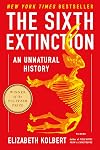
On Earth Day 1970 Pogo told it like it was, only now we can see especially if you read this book that it is far worse. We have met the enemy and he is us. This book is 12 years old now.
Not a perfect book and quite interesting as a travelogue but one chapter after another we follow the path to extinction, faster than ever. I can see why this was awarded the Pulitzer prize.
I think every person should read this book. We are already at the start of a mass extinction and the way the world is now it is probably far too late to stop it. This isn't a preachy global warming book, by the way.
Not a perfect book and quite interesting as a travelogue but one chapter after another we follow the path to extinction, faster than ever. I can see why this was awarded the Pulitzer prize.
I think every person should read this book. We are already at the start of a mass extinction and the way the world is now it is probably far too late to stop it. This isn't a preachy global warming book, by the way.

This is a novel first published in the early 1940's, and it is a war story and a romance and I liked it quite a bit. Better than China Flight I think. I'll give it close to four stars for the time it was written. Buck knew China very well at the time, at least the Chinese people anyway, and the insight she had then helps. The romance stuff in here is a bit much but the meat of the story saved this for me. I may have seen the movie a very long time ago, in fact I think I must have, because the storyline was familiar to me.
A strange thing happened while I was reading the novel. I read about the first third of the book one evening before bed. My dreams that night were very strong and I think were like an extension of the story in my mind with me in it. When I woke I couldn't tell you what was part of my dream and what was in the book, but like most dreams the dream images quickly faded and now I can't remember them other than they were very intense.
A strange thing happened while I was reading the novel. I read about the first third of the book one evening before bed. My dreams that night were very strong and I think were like an extension of the story in my mind with me in it. When I woke I couldn't tell you what was part of my dream and what was in the book, but like most dreams the dream images quickly faded and now I can't remember them other than they were very intense.
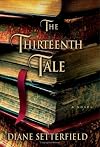
This is a beautifully constructed first edition with marbled endpapers and a look and feel that will appeal to booklovers. As far as I can tell, the author has written three novels and the Thirteenth Tale from 2006 was her first and most popular. I read Setterfield's most recent novel, Once Upon A River in 2022. I really liked it. It was my favorite book read that year and I gave it a rare 5 stars.
I took a look at Bellman and Black and decided I didn't want to read a horror novel and gave it a pass, but The Thirteenth Tale looked like it would be a delight to a booklover so I have kept it on the shelf the last three years for when I wanted a really good read.
My favorite time to read is an hour or two (sometime more) before bedtime. When I started to read this I settled right in and felt like I was really going to like this. On my second night I realized the author was going for a strange gothic horror vibe. My third night I read maybe 25 pages and declared myself done with the book. I do not want to read about self-mutilation, a sibling that tortures another incessantly, children who terrorize a large neighborhood and steal an infant, children who destroy a family garden that a gardener and his forefathers have lovingly cared for for several generations. This is simply ugly and I am done with it.
I am being kind with my review here.
Take a look at some of the one star reviews. I am not alone.
I took a look at Bellman and Black and decided I didn't want to read a horror novel and gave it a pass, but The Thirteenth Tale looked like it would be a delight to a booklover so I have kept it on the shelf the last three years for when I wanted a really good read.
My favorite time to read is an hour or two (sometime more) before bedtime. When I started to read this I settled right in and felt like I was really going to like this. On my second night I realized the author was going for a strange gothic horror vibe. My third night I read maybe 25 pages and declared myself done with the book. I do not want to read about self-mutilation, a sibling that tortures another incessantly, children who terrorize a large neighborhood and steal an infant, children who destroy a family garden that a gardener and his forefathers have lovingly cared for for several generations. This is simply ugly and I am done with it.
I am being kind with my review here.
Take a look at some of the one star reviews. I am not alone.
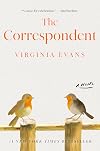
I don't feel like I can write a proper review without being very spoilery. This is a highly rated recent novel. It is a book of letters and a few postcards and emails that an aging woman has kept.
It piqued my curiosity as a bit of synchronicity or something like it because I had been thinking this past week or so how we (me) don't write letters anymore. I thought I should write a few this past Christmas and yet I still haven't. Here is a book about a woman who wrote letters her entire life. I thought I must read it.
There are 2 1/2 star review and 4 plus star reviews here on LT that cover most of my thoughts on the book. In the end I will say that at various points I was confused because all these names are thrown on the page and although we do learn who they were, they meant next to nothing at the start. And I would flip back to read things again numerous times to find where the person was previously mentioned. There were also letters and notes that rather charmed me.
I would easily recommend this to my friends who like "women's fiction"
It piqued my curiosity as a bit of synchronicity or something like it because I had been thinking this past week or so how we (me) don't write letters anymore. I thought I should write a few this past Christmas and yet I still haven't. Here is a book about a woman who wrote letters her entire life. I thought I must read it.
There are 2 1/2 star review and 4 plus star reviews here on LT that cover most of my thoughts on the book. In the end I will say that at various points I was confused because all these names are thrown on the page and although we do learn who they were, they meant next to nothing at the start. And I would flip back to read things again numerous times to find where the person was previously mentioned. There were also letters and notes that rather charmed me.
I would easily recommend this to my friends who like "women's fiction"
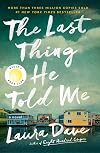
3 to 3 1/2 stars. Picked up this library book. Not my usual type of read. But there was a mystery here, and I liked the story and characters.
I didn't rate this higher because of a couple of bothers. My biggest bother is what wasn't said at the end which became more pronounced because the ebook I had from the library had the first chapter of a followup novel as a preview. That first chapter of the new book should have been the last chapter of the book I just read. Or maybe the second to last because there is more to the story missing. I was also bothered throughout the read by the countless flashbacks -- some would be fine, but I thought this was rather excessive - this story is not told in a straight narrative. So, although I liked the story, I could have liked it more ... and I have no plans to read the followup novel.
I didn't rate this higher because of a couple of bothers. My biggest bother is what wasn't said at the end which became more pronounced because the ebook I had from the library had the first chapter of a followup novel as a preview. That first chapter of the new book should have been the last chapter of the book I just read. Or maybe the second to last because there is more to the story missing. I was also bothered throughout the read by the countless flashbacks -- some would be fine, but I thought this was rather excessive - this story is not told in a straight narrative. So, although I liked the story, I could have liked it more ... and I have no plans to read the followup novel.
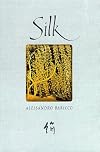
One of my favorite reads in 2022. This is an Italian book, translated. My initial impression was rather poor, but as I read through this short novel my feelings about it changed. It slowly seduces the reader. I found the time spent in Japan the most interesting part, but I was drawn into the whole story.
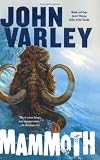
Sad to see that John Varley has passed on. Mammoth is a time travel book my wife picked up about 20 years ago. In the late 70's and into the mid 80's Varley was a favorite author of mine because of his short stories. I didn't enjoy his novels. This book had a lot of potential but I disliked the storytelling. The early part of the book is quite tedious and an odd manner of presenting the story was distracting for quite a while. The characters are mostly unlikeable and though there is some redemption at the end, it felt hollow. 3 stars at best.

The most interesting thing about this issue that a friend passed along to me was to discover that some company had bought various genre magazines like Ellery Queen's Mystery magazine, Fantasy and Science Fiction, Analog, Asimov's, Alfred Hitchcock and maybe others early this year. Some of the magazines might be in limbo.
I read this in bits over a month - the double issues have a lot of stories in them. Most of the stories did not interest me since the science subjects of some are beyond my understanding or interests. After s short time I could no longer recall the stories, which is not unusual with unremarkable stories. There were a couple though that I liked such as the Larry Niven story.
I don't know what the future of these magazines will be.
I read this in bits over a month - the double issues have a lot of stories in them. Most of the stories did not interest me since the science subjects of some are beyond my understanding or interests. After s short time I could no longer recall the stories, which is not unusual with unremarkable stories. There were a couple though that I liked such as the Larry Niven story.
I don't know what the future of these magazines will be.

A rather loosely connected set of previously published short stories that I found enjoyable. A bit too zany in places but quite sharp in others. The writing is top notch. The cover says "a novel" but this is a collection of stories over many years that tell pieces of a person's life, very non-linear. I liked it much more than expected.

A book review by Baird Searles in the October 1984 issue of Asimov's science fiction magazine prompted me back then to look for this ancient fantasy and horror tale. I have a 1983 edition of a 1908 novel set in the wild lands, and beyond of Ireland. The story starts off well enough but then if there was going to be a plot it flew off across the wasteland as we spend the majority of the book reading a manuscript found in the ruins of what was once a great house on the borderlands, and the ruins rest on a small spit of land hanging over a huge hole in the land. The author's imagination clearly went wild here and when I consider the age of this story I can only appreciate it all the more. This book would not be for everyone but it was a very good surreal spooky October read. Parts of this book are very very good. Parts, mind you. I'm giving this an extra half star because of when it was written.

This novel is from 1968, although it expands upon a short story in The Saturday Evening Post from 1960. It was also later revised. Finney's stories seem to connect with me, but this one didn't. This was probably because the beginning of the story put me off. It was intended to I am sure so the reader can think "what a jerk" the main character is. But then there comes the story where our protagonist, by discovering Woodrow Wilson's head on one of his dimes, rather than Mercury or FDR, can move to an alternate parallel history timeline. There he has almost everything he dreamed of, but for one thing that he didn't appreciate in his "real" life. And he wants that back. I didn't find this story as amusing as it tries to be. Instead it went overboard on zany. A very few cute moments overwhelmed by the rest. I think I'd like to read the original short story one day. Of the Finney books I have read, this would be my least favorite. Disappointed and Not recommended.

Published at about the same time as the movie in the 1950's, this was apparently the break that Matheson needed to get in the Hollywood door since he wrote the screenplay. I barely, just barely, remember the film from TV when I was young. The story is about a man, and why just him and why him at all, who starts shrinking 1/7 of an inch a day after being misted by something coming across a boat he was on. Most of the story was ridiculous, boring and tiresome although the ending surprised me in a good way, even if it didn't make any logical sense. The story was quite repetitive and the hundred pages or more of sexual frustration was laughably bad. This was a fairly quick read. Maybe it would have been a better read in the 50's but I doubt it. Not recommended.

I picked up this lovely 1955 novel more than a dozen years ago. I think the pretty cover seduced me. I found this to be a very enjoyable gothic mystery/romance/suspense and not the sort of thing I usually read. Thomas Welles is a down on his luck American author writing in Nice, France who is out of money. A couple with a scheme persuades him to be an assistant, a man Friday, and away we go. Tom is in the dark for quite a while. He does not seem to really sense that Paul and Anna and their friend Hugo are up to some sort of shady business. They insist they are not but cannot tell him what it is, only that no one will be hurt. Anna's repeated attempts to apparently seduce Tom begin to get his worry going and he resists temptation. Tom meets a girl in a park he visits and then the adventure really picks up.
I enjoyed it quite a bit. Reminded me just a little bit of one of Mary Stewart's gothic suspense novels, which I do like. The romantic in me was very happy with the ending here.
I enjoyed it quite a bit. Reminded me just a little bit of one of Mary Stewart's gothic suspense novels, which I do like. The romantic in me was very happy with the ending here.
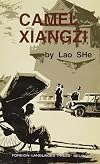
This is really one of the saddest books I have read in a long time. A life of poverty and one strong young man trying his hardest to have a better life in 1930s China. Well, not a chance.
My copy of the book was published in the People's Republic of China in 1981, Foreign Language Press, Beijing. It is a lovely book complete with a ribbon bookmark and several woodblock style colored illustrations scattered through the novel. The novel was first published in (I think) 1935 but was subsequently revised a number of times, before and after the revolution. What I found especially informative was the 1979 preface by the author's widow and the afterwords by the author from Sept 1954 and 1945.
My copy of the book was published in the People's Republic of China in 1981, Foreign Language Press, Beijing. It is a lovely book complete with a ribbon bookmark and several woodblock style colored illustrations scattered through the novel. The novel was first published in (I think) 1935 but was subsequently revised a number of times, before and after the revolution. What I found especially informative was the 1979 preface by the author's widow and the afterwords by the author from Sept 1954 and 1945.

As a general rule I really like Nevil Shute's novels. ( I have most of them including a few duplicates). The author is a good, natural storyteller. Like the title, however, this one went around the bend in a most unlikely fashion. There's a lot of aviation stuff in here, some early history of the Persian Gulf (late 40s) and an unusual religious development, the creation of a new religion and a modern prophet or Buddha. This part was so wonky and it is a large part of the book. The novel reads like a narrative memoir, and at the very end we find out why.
Otherwise, this, in a way, is a good look at how things were back in the 1930s to late 1940s. My least favorite Shute book.
Otherwise, this, in a way, is a good look at how things were back in the 1930s to late 1940s. My least favorite Shute book.
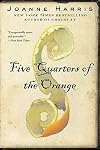
Reading Five Quarters of the Orange felt like stepping into another time. I really liked the way Joanne Harris captured the atmosphere of wartime rural France through the eyes of the children. Framboise, especially, stood out to me — she’s spunky, strong, and independent, even as a child caught in difficult times, and she is the narrator of this story. But she had a dark side with the way she fought against her mother. That bothered me a bit with the intensity but it made her a strong person. I admired how she carried that strength into adulthood, even when haunted by memories of the past, even though she had to assume a new identity to return to the village of her childhood late in life.
I was less thrilled with the modern part of the story where sibling frictions were rather annoying. All over a "secret" cookbook and recipes that Framboise's mother had made into a diary, which required careful translation to discover the reality of the childhood times and the person behind the mother's mask.
The German soldier storyline was fascinating too, but it got sort of dropped for a time after being an important part of the story, before coming back. Harris gave him a kind of complexity that made the story feel more real, and sympathetic, not just a simple “good vs. bad” setup.
And the final ending was sweet and satisfying. Seeing Framboise reconnect with Paul, her childhood friend, felt like a gentle full circle, a quiet kind of healing after so much pain. The mix of show more wartime shadows and a sort of personal redemption is what made the book linger with me after finishing it.
I can see myself rereading this again one day, if only there weren't so many other great books calling. show less
I was less thrilled with the modern part of the story where sibling frictions were rather annoying. All over a "secret" cookbook and recipes that Framboise's mother had made into a diary, which required careful translation to discover the reality of the childhood times and the person behind the mother's mask.
The German soldier storyline was fascinating too, but it got sort of dropped for a time after being an important part of the story, before coming back. Harris gave him a kind of complexity that made the story feel more real, and sympathetic, not just a simple “good vs. bad” setup.
And the final ending was sweet and satisfying. Seeing Framboise reconnect with Paul, her childhood friend, felt like a gentle full circle, a quiet kind of healing after so much pain. The mix of show more wartime shadows and a sort of personal redemption is what made the book linger with me after finishing it.
I can see myself rereading this again one day, if only there weren't so many other great books calling. show less
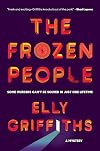
I waited quite a while for my hold on the book from the library. To be honest, I was underwhelmed with this from the start. I was repeatedly re-reading passages near the beginning. Disappointed. After about 100 pages the story became a bit interesting and I persevered. This tale involving time travel back to 1850 London had a few good bits but it is not one I would recommend. Loved the Ruth Galloway series.
There's a story missing in the book, something teased and mentioned again near the end. I can only assume it is planned for a sequel book. I would rather have read the missing story in this book.
There's a story missing in the book, something teased and mentioned again near the end. I can only assume it is planned for a sequel book. I would rather have read the missing story in this book.
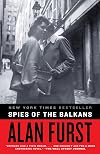
The enjoyment of reading two WWII era novels this year, spy novels, made me want to tackle another similar to Eric Ambler's work. Alan Furst’s Spies of the Balkans unfolds in the tense world of 1940-1941 Europe. I've already read 9 of Furst's espionage novels, this is the tenth. Set primarily in Salonika, Greece, a city historically rich with Jewish heritage, the novel follows Costa Zannis, a senior police official entangled in a dangerous web of political intrigue and humanitarian urgency. Zannis is 'recruited' to aid in the escape of wealthy Jews who have not yet been taken by the Gestapo in Germany. He does this willingly despite the risk. Somewhat unwillingly, near the end, the British pressure him to rescue a downed aviator who must not be captured and interrogated.
Part of what sets Spies of the Balkans apart is its heart: the story of Jews fleeing Nazi-occupied Europe, and the fragile, underground network of people working desperately to get them to safety before they are taken by the SS. Zannis becomes an unlikely yet deeply compelling hero, orchestrating escapes through the mountains of the Balkans, away from the ever-encroaching reach of the SS. Furst captures the looming menace, although their presence is often felt more than seen. The fear is visceral, and there are quite a few pulse pounding moments while reading.
The setting of Greece is more than backdrop; it’s a character in itself. Salonika, on the cusp of Axis occupation, is portrayed with a kind of show more melancholy, whispers of Byzantine history, and the sea in the distance.
Furst’s style here bears a resemblance to Eric Ambler, not just the setting but in its emphasis on ordinary men thrust into extraordinary situations. Zannis is no James Bond (although there does seem to be a nod or two to Bond) - but he’s thoughtful, morally driven, and operates in a world where right and wrong are often murky.
In sum, Spies of the Balkans is a moody, elegant spy novel that intertwines historical accuracy with noir-style suspense. It's a tribute not just to resistance and courage, but to those quiet acts of defiance that saved lives in Europe’s darkest hours. I'll be a little spoilery and say that the novel ends with the aerial bombardment of Salonika by the advancing Germans which wrecks the ship that could have taken Zannis away. Zannis and his lady franticly flee in another way. However, the novel ends before the arrival of the German army and the occupation. We therefor do not witness here the destruction that the Germans bring to Salonika.
Recommended show less
Part of what sets Spies of the Balkans apart is its heart: the story of Jews fleeing Nazi-occupied Europe, and the fragile, underground network of people working desperately to get them to safety before they are taken by the SS. Zannis becomes an unlikely yet deeply compelling hero, orchestrating escapes through the mountains of the Balkans, away from the ever-encroaching reach of the SS. Furst captures the looming menace, although their presence is often felt more than seen. The fear is visceral, and there are quite a few pulse pounding moments while reading.
The setting of Greece is more than backdrop; it’s a character in itself. Salonika, on the cusp of Axis occupation, is portrayed with a kind of show more melancholy, whispers of Byzantine history, and the sea in the distance.
Furst’s style here bears a resemblance to Eric Ambler, not just the setting but in its emphasis on ordinary men thrust into extraordinary situations. Zannis is no James Bond (although there does seem to be a nod or two to Bond) - but he’s thoughtful, morally driven, and operates in a world where right and wrong are often murky.
In sum, Spies of the Balkans is a moody, elegant spy novel that intertwines historical accuracy with noir-style suspense. It's a tribute not just to resistance and courage, but to those quiet acts of defiance that saved lives in Europe’s darkest hours. I'll be a little spoilery and say that the novel ends with the aerial bombardment of Salonika by the advancing Germans which wrecks the ship that could have taken Zannis away. Zannis and his lady franticly flee in another way. However, the novel ends before the arrival of the German army and the occupation. We therefor do not witness here the destruction that the Germans bring to Salonika.
Recommended show less

The Dogs of Babel, as much as I like parts, there are more than a few bothers in this which keeps me from giving this a wholehearted 5 stars. But I can't just give it an OK 3 stars either.
The book appears to be about solving the mystery of of a woman's death, which is how the book starts. Paul's wife Lexy has fallen from an apple tree in their backyard and died. The only witness is their dog Lorelei. I am not a reader who falls in love with characters but I was utterly smitten and charmed with the Lexy we meet in Paul's memory. Which was clearly the author's intention to share the exuberance with Paul. I was not terribly taken with Paul, nor his obsession, but was sympathetic. However, behind the charming sunny exterior of the Lexy we first meet in Paul's memory lies a different troubled person. Here I began to be bothered because we begin being told something in great detail that is probably not in Paul's memory as it is relayed to the reader. Not with the detail anyway. Lexy had been a troubled teenager and Paul early on has realized that Lexy's death could be a suicide. Methinks that Paul knew from the start especially since Lexy left clues and things we are told later. The story bounces around a bit too much for me. I would like things just a little bit more linear.
Paul, a university linguistics professor, decides he can teach the dog Lorelei to talk and tell him what happened to Lexy. At some point I decided that Paul was severely damaged mentally by Lexy's death show more (and apparent suicide) and the dog business was the result. The dog, Lorelei, is a sweetheart who was originally Lexy's dog before Paul met Lexy. If, like me, you are sensitive to the ugliness of humans with respect to animals you might want to skip ahead several chapters or just avoid this novel. I wish some parts of the story wasn't in here. It rather spoiled the book for me.
I read this because a couple of friends read this recently in real life and it somehow called to me. It was not what I expected. This is not a book that I will forget. show less
The book appears to be about solving the mystery of of a woman's death, which is how the book starts. Paul's wife Lexy has fallen from an apple tree in their backyard and died. The only witness is their dog Lorelei. I am not a reader who falls in love with characters but I was utterly smitten and charmed with the Lexy we meet in Paul's memory. Which was clearly the author's intention to share the exuberance with Paul. I was not terribly taken with Paul, nor his obsession, but was sympathetic. However, behind the charming sunny exterior of the Lexy we first meet in Paul's memory lies a different troubled person. Here I began to be bothered because we begin being told something in great detail that is probably not in Paul's memory as it is relayed to the reader. Not with the detail anyway. Lexy had been a troubled teenager and Paul early on has realized that Lexy's death could be a suicide. Methinks that Paul knew from the start especially since Lexy left clues and things we are told later. The story bounces around a bit too much for me. I would like things just a little bit more linear.
Paul, a university linguistics professor, decides he can teach the dog Lorelei to talk and tell him what happened to Lexy. At some point I decided that Paul was severely damaged mentally by Lexy's death show more (and apparent suicide) and the dog business was the result. The dog, Lorelei, is a sweetheart who was originally Lexy's dog before Paul met Lexy. If, like me, you are sensitive to the ugliness of humans with respect to animals you might want to skip ahead several chapters or just avoid this novel. I wish some parts of the story wasn't in here. It rather spoiled the book for me.
I read this because a couple of friends read this recently in real life and it somehow called to me. It was not what I expected. This is not a book that I will forget. show less

The falling apart paperback I read dates to 1965 but the stories here date from 1896 to 1955. Not really science fiction, more supernatural fantasy I would say. Subtitled "Fantastic stories of the unknown, by masters such as Ray Bradbury, Robert Heinlein, Fritz Leiber, Avram Davidson and Theodore Sturgeon". Twelve stories here, including one of the weakest ones by Richard McKenna from 1958. McKenna would gain fame several years later with "The Sand Pebbles". McKenna's story isn't bad, it just isn't as good as most of the others. For the time this strikes me as a much better than average collection of stories. Ray Bradbury's story is excellent, as are several others. Oddly I have read one of the stories twice in other anthologies relatively recently (Trouble with Water). I think it was cute the first time, but less so on the third read! Besides Ray Bradbury's "The Black Ferris" I think Fritz Leiber's "The Man Who Never Grew Young", stories that bookend the collection, were two of my favorites (and the best of the collection). Also I enjoyed "It" by Theodore Sturgeon, from 1940, a lot. Creepy stuff in here.
7 • Introduction (The Dark Side) • (1965) • essay by Damon Knight
9 • The Black Ferris • (1948) • short story by Ray Bradbury
18 • They • (1941) • short story by Robert A. Heinlein
35 • Mistake Inside • (1948) • novelette by James Blish
56 • Trouble with Water • (1939) • short story by H. L. Gold
79 • c/o Mr. Makepeace • (1954) • short story show more by Peter Phillips
92 • The Golem • (1955) • short story by Avram Davidson
99 • The Story of the Late Mr. Elvesham • (1896) • short story by H. G. Wells
117 • It • (1940) • novelette by Theodore Sturgeon
143 • Nellthu • (1955) • short story by Anthony Boucher
146 • Casey Agonistes • (1958) • short story by Richard McKenna
159 • Eye for Iniquity • (1953) • novelette by T. L. Sherred
184 • The Man Who Never Grew Young • (1947) • short story by Fritz Leiber show less
7 • Introduction (The Dark Side) • (1965) • essay by Damon Knight
9 • The Black Ferris • (1948) • short story by Ray Bradbury
18 • They • (1941) • short story by Robert A. Heinlein
35 • Mistake Inside • (1948) • novelette by James Blish
56 • Trouble with Water • (1939) • short story by H. L. Gold
79 • c/o Mr. Makepeace • (1954) • short story show more by Peter Phillips
92 • The Golem • (1955) • short story by Avram Davidson
99 • The Story of the Late Mr. Elvesham • (1896) • short story by H. G. Wells
117 • It • (1940) • novelette by Theodore Sturgeon
143 • Nellthu • (1955) • short story by Anthony Boucher
146 • Casey Agonistes • (1958) • short story by Richard McKenna
159 • Eye for Iniquity • (1953) • novelette by T. L. Sherred
184 • The Man Who Never Grew Young • (1947) • short story by Fritz Leiber show less

I hesitate to give this a star rating because this is very much an old fashioned science fiction magazine. I'll list the fiction stories below with a few comments but there are also other things within the magazine.
What made me very happy to have a look at this magazine was a story by Robert Silverberg that I had not read before. 1967 was a time when Silverberg was hitting his stride and "King of the Golden World" was a good short story even though the cover of the magazine calls it a complete short novel. It had an excellent twist at the end that I should have seen coming but did not. So much of Silverberg's fiction has been collected and anthologized the last decade or more, but this one has not been so I am happy I read it here. Fans of Larry Niven might enjoy his story here as well. I became a fan of Niven's stories around this time myself. But I outgrew him. I also thought "Black Corridor" by Fritz Leiber was interesting. I'd call it horror science fiction, like a nightmare of sorts. All the rest I could do without including the Poul Anderson one.
Outpost of Empire • novella by Poul Anderson
artwork by Gray Morrow
The South Waterford Rumple Club • short story by Richard Wilson
artwork by Jack Gaughan
King of the Golden World • short story by Robert Silverberg (variant of The King of the Golden River)
Black Corridor • short story by Fritz Leiber
The Red Euphoric Bands • short story by R. S. Richardson (as by Philip Latham)
Galactic Consumer Report No. 3: A Survey of show more the Membership • short story by John Brunner
artwork by Jack Gaughan
Handicap • Known Space • novelette by Larry Niven (variant of The Handicapped)
Handicap • interior artwork by Jack Gaughan
The Fairly Civil Service • short story by Harry Harrison
artwork by Jack Gaughan show less
What made me very happy to have a look at this magazine was a story by Robert Silverberg that I had not read before. 1967 was a time when Silverberg was hitting his stride and "King of the Golden World" was a good short story even though the cover of the magazine calls it a complete short novel. It had an excellent twist at the end that I should have seen coming but did not. So much of Silverberg's fiction has been collected and anthologized the last decade or more, but this one has not been so I am happy I read it here. Fans of Larry Niven might enjoy his story here as well. I became a fan of Niven's stories around this time myself. But I outgrew him. I also thought "Black Corridor" by Fritz Leiber was interesting. I'd call it horror science fiction, like a nightmare of sorts. All the rest I could do without including the Poul Anderson one.
Outpost of Empire • novella by Poul Anderson
artwork by Gray Morrow
The South Waterford Rumple Club • short story by Richard Wilson
artwork by Jack Gaughan
King of the Golden World • short story by Robert Silverberg (variant of The King of the Golden River)
Black Corridor • short story by Fritz Leiber
The Red Euphoric Bands • short story by R. S. Richardson (as by Philip Latham)
Galactic Consumer Report No. 3: A Survey of show more the Membership • short story by John Brunner
artwork by Jack Gaughan
Handicap • Known Space • novelette by Larry Niven (variant of The Handicapped)
Handicap • interior artwork by Jack Gaughan
The Fairly Civil Service • short story by Harry Harrison
artwork by Jack Gaughan show less