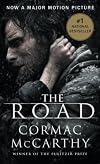
The Road was an interesting book. I read it for my american literature class and thought it a nice change from the repeatedly used books that teachers do every year.
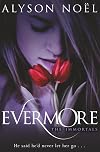
This novel was more of a summer read, and it was what I expected of it. I enjoyed the leisure of reading it although it was very symbolic. The main character is a young woman named Ever, struggling with the loss of her family and dealing with the supernatural. She can see auras and as every color means something there are 12 symbols listed at the beginning of the book. Also, since the book was laid out easily, the themes were also easy to spot.
Since Ever is dealing with grief and letting go of her sister, who still visits her as a ghost, the main theme has to do with her guilt. “The point is, it’s nobody’s fault. That’s just the way it happened. That’s just the way it was supposed to be.” (284). This is said by Ever’s sister Riley in the dramatic climax where Ever is painfully letting Riley leave and “cross the bridge”. Riley is making Ever finally let go of her and causing her to realize that she can’t blame herself for accidents since they are no one’s fault. Later it is found that Drina spooked the deer that caused the car to crash but Ever still learns a valuable lesson.
The second theme was deciding things for yourself and growing up. Ever has to make some tough choices in order to become the immortal girl she ends up as. She has to decide for herself what she wants in her life and even though she is only 16 she still learned how to be independent.
Of all the color symbols, the most important were red and white. These were the colors of the show more flowers Ever’s boyfriend, Damen, gave to her and her nemesis, Stacia. I thought it was interesting how Stacia was given white roses signifying the heart that knows no love or heart ignorant of love. Whereas, the aura color white meant perfect balance in an aura. It’s just odd that Noel would make white mean this when the rose was meant to signify that Damen didn’t think Stacia was worthy of love while white meant perfect balance. Stacia perhaps was in more of alignment than Ever was, in her grievous state, and it was Damen’s way of saying that she needed to change. The other symbols made more sense; Ever was given the red tulip which meant undying love. At the same time, the aura color red meant a person was feeling energized, strong, angry, sexual, passionate, fearful, or egotistical.
The other symbol was portrayed as a tattoo drawn around Ever’s friend named Haven’s wrist. A snake beginning to eat its own tail is a mythical creature called an ouroboros. It symbolizes eternal life, creation out of destruction, life out of death, and immortality. This symbol was also a foretelling of Drina and Damen’s lives and how they were immortals. Drina was trying to subtly tell Ever to leave them alone, but because Ever didn’t see the signs, she was mostly unprepared for what happened. As a reader, though, I guessed long before what Damen and Drina were, although I too thought vampires.
The book was written in first person from Ever’s point of view, and the setting was in Laguna Beach, California. I enjoyed the book, especially the feeling of suspense. It was hard to set down, enjoyably and surprisingly so. I believe I will read the next novel in the series, Blue Moon. show less
Since Ever is dealing with grief and letting go of her sister, who still visits her as a ghost, the main theme has to do with her guilt. “The point is, it’s nobody’s fault. That’s just the way it happened. That’s just the way it was supposed to be.” (284). This is said by Ever’s sister Riley in the dramatic climax where Ever is painfully letting Riley leave and “cross the bridge”. Riley is making Ever finally let go of her and causing her to realize that she can’t blame herself for accidents since they are no one’s fault. Later it is found that Drina spooked the deer that caused the car to crash but Ever still learns a valuable lesson.
The second theme was deciding things for yourself and growing up. Ever has to make some tough choices in order to become the immortal girl she ends up as. She has to decide for herself what she wants in her life and even though she is only 16 she still learned how to be independent.
Of all the color symbols, the most important were red and white. These were the colors of the show more flowers Ever’s boyfriend, Damen, gave to her and her nemesis, Stacia. I thought it was interesting how Stacia was given white roses signifying the heart that knows no love or heart ignorant of love. Whereas, the aura color white meant perfect balance in an aura. It’s just odd that Noel would make white mean this when the rose was meant to signify that Damen didn’t think Stacia was worthy of love while white meant perfect balance. Stacia perhaps was in more of alignment than Ever was, in her grievous state, and it was Damen’s way of saying that she needed to change. The other symbols made more sense; Ever was given the red tulip which meant undying love. At the same time, the aura color red meant a person was feeling energized, strong, angry, sexual, passionate, fearful, or egotistical.
The other symbol was portrayed as a tattoo drawn around Ever’s friend named Haven’s wrist. A snake beginning to eat its own tail is a mythical creature called an ouroboros. It symbolizes eternal life, creation out of destruction, life out of death, and immortality. This symbol was also a foretelling of Drina and Damen’s lives and how they were immortals. Drina was trying to subtly tell Ever to leave them alone, but because Ever didn’t see the signs, she was mostly unprepared for what happened. As a reader, though, I guessed long before what Damen and Drina were, although I too thought vampires.
The book was written in first person from Ever’s point of view, and the setting was in Laguna Beach, California. I enjoyed the book, especially the feeling of suspense. It was hard to set down, enjoyably and surprisingly so. I believe I will read the next novel in the series, Blue Moon. show less

The book was published in 1816 so I expected the language and plot to be difficult to understand yet this was not the case. The book was extremely easy to understand, the plot is all but given away on the back cover, and the main character is an idiotic young woman of 20 some years. The many themes are all easily gleaned as they are simply the morals Emma learns the hard way, by making mistakes. The book is written in omniscient 3rd person and is set in the countryside of England, 1816.
The first thing that stuck out at me from the book was this quote; “There is so pointed and so particular a meaning in this comment”, said she [Emma], “that I cannot have a moment’s doubt as to Mr. Elton’s intentions. You are his object, -- and you will soon receive the completest proof of it” (64). It encompasses the moral of the story that Jane Austen so unsubtly repeats throughout the book: don’t assume you’re right and know that you cannot control people’s hearts.
The first two themes are the following: try to not allow your imagination to cause you to create misunderstandings and mistakes and don’t beat about the bush with fanciful language. Each is exhibited with the fiasco of the charade from Mr. Elton (62). He should have thought about Emma reading it in front of her friend since the two were always joined at the hip, that’s just a bad way to go about telling a girl you like her. There is also another quote about mistakes that struck me; “Seldom, very show more seldom does complete truth belong to any human disclosure; seldom can it happen that something is not a little disguised, or a little mistaken; but where, as in this case, though the conduct is mistaken, the feelings are not, it may not be very material” (388). After some thought, I realized that the author meant that even though we make mistakes in communication we can always make up for it with emotions like love. Love conquers all, with all including miscommunication. This idea was one of the few in the book that to me shows the writing I expected of Austen. It was something I had to think about to understand, and was very enjoyable.
Examples of Austen’s last two themes are straight out spoken in a conversation between Mr. Knightly and Emma. They each believe that a couple, in marriage, must be equal, neither higher than the other; and that people should make marriages for love rather than simple connections. Later at least, Emma realizes the first, when she sees Harriet is not all that higher than Martin, and she would do no wrong to marry the one she loves.
There are many characters in Austen’s book and sometimes I found it hard to keep track of an entire town, but that made it a bit more interesting. The second most important character of the book, although Emma was the only main character, was Mr. Knightly. I loved him because he made so much sense. His one mistake was to think that Emma was as smart as he was. He knew the truth of things long before her and had to teach her like a child, when she was over 20, the things he already easily figured out. I thought he deserved better than her and that their relationship was a bit weird. It seemed at the beginning that he was her older brother and brother in law isn’t much different. I know it is back when marrying your cousin is okay but I don’t have to like it.
Emma was an okay read but it lowered my expectations. I’m eager to see if Austen’s other books, like Pride and Prejudice, are superior. show less
The first thing that stuck out at me from the book was this quote; “There is so pointed and so particular a meaning in this comment”, said she [Emma], “that I cannot have a moment’s doubt as to Mr. Elton’s intentions. You are his object, -- and you will soon receive the completest proof of it” (64). It encompasses the moral of the story that Jane Austen so unsubtly repeats throughout the book: don’t assume you’re right and know that you cannot control people’s hearts.
The first two themes are the following: try to not allow your imagination to cause you to create misunderstandings and mistakes and don’t beat about the bush with fanciful language. Each is exhibited with the fiasco of the charade from Mr. Elton (62). He should have thought about Emma reading it in front of her friend since the two were always joined at the hip, that’s just a bad way to go about telling a girl you like her. There is also another quote about mistakes that struck me; “Seldom, very show more seldom does complete truth belong to any human disclosure; seldom can it happen that something is not a little disguised, or a little mistaken; but where, as in this case, though the conduct is mistaken, the feelings are not, it may not be very material” (388). After some thought, I realized that the author meant that even though we make mistakes in communication we can always make up for it with emotions like love. Love conquers all, with all including miscommunication. This idea was one of the few in the book that to me shows the writing I expected of Austen. It was something I had to think about to understand, and was very enjoyable.
Examples of Austen’s last two themes are straight out spoken in a conversation between Mr. Knightly and Emma. They each believe that a couple, in marriage, must be equal, neither higher than the other; and that people should make marriages for love rather than simple connections. Later at least, Emma realizes the first, when she sees Harriet is not all that higher than Martin, and she would do no wrong to marry the one she loves.
There are many characters in Austen’s book and sometimes I found it hard to keep track of an entire town, but that made it a bit more interesting. The second most important character of the book, although Emma was the only main character, was Mr. Knightly. I loved him because he made so much sense. His one mistake was to think that Emma was as smart as he was. He knew the truth of things long before her and had to teach her like a child, when she was over 20, the things he already easily figured out. I thought he deserved better than her and that their relationship was a bit weird. It seemed at the beginning that he was her older brother and brother in law isn’t much different. I know it is back when marrying your cousin is okay but I don’t have to like it.
Emma was an okay read but it lowered my expectations. I’m eager to see if Austen’s other books, like Pride and Prejudice, are superior. show less