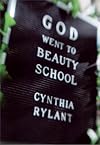
(From CLCD)
John Green (Booklist, Aug. 1, 2003 (Vol. 99, No. 22))
A recent hit song asked what if God was one of us? Here, the question is, what if He is just a Guy (or possibly a Girl) who plays poker and watches movies and sometimes catches a cold and needs Mother Teresa to come over and take care of him? Such is the premise of Rylant's slim volume of poems, which is classified as fiction. In the title poem, God goes to beauty school because He likes hands and wants to do nails for a living. (He calls His shop "Nails by Jim" because He worries that if He called it "Nails by God," people would think Him sacrilegious and not tip). From there, God is caught up in all sorts of worldly craziness, from getting arrested to writing a fan letter to a country music singer. The poems aren't particularly meaty, and a few of them may be deemed offensive by some readers. They are frequently funny, however, and they play on Christian tradition without disrespect, ultimately celebrating God's kindness and love. Category: Books for Middle Readers--Fiction. 2003, HarperCollins, $15.99, $16.89. Gr. 4-8.
Awards won:
Boston Globe--Horn Book Awards Honor Book 2004 Fiction and Poetry United States 1
John Green (Booklist, Aug. 1, 2003 (Vol. 99, No. 22))
A recent hit song asked what if God was one of us? Here, the question is, what if He is just a Guy (or possibly a Girl) who plays poker and watches movies and sometimes catches a cold and needs Mother Teresa to come over and take care of him? Such is the premise of Rylant's slim volume of poems, which is classified as fiction. In the title poem, God goes to beauty school because He likes hands and wants to do nails for a living. (He calls His shop "Nails by Jim" because He worries that if He called it "Nails by God," people would think Him sacrilegious and not tip). From there, God is caught up in all sorts of worldly craziness, from getting arrested to writing a fan letter to a country music singer. The poems aren't particularly meaty, and a few of them may be deemed offensive by some readers. They are frequently funny, however, and they play on Christian tradition without disrespect, ultimately celebrating God's kindness and love. Category: Books for Middle Readers--Fiction. 2003, HarperCollins, $15.99, $16.89. Gr. 4-8.
Awards won:
Boston Globe--Horn Book Awards Honor Book 2004 Fiction and Poetry United States 1
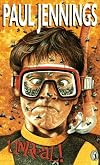
(From CLCD)
David Bennett (Books for Keeps No. 39, July 1986)
Any story collection with titles like 'Without a Shirt', 'Lucky Lips', 'Cow Dung Custard' and 'Wunderpants' is sure to attract some attention. There are eight 'surprising stories' in this first book by an Australian writer and they are certainly very bizarre and jockey. They ought to appeal to most tastes in the upper junior/lower secondary range and read aloud well. The custard in question is a fatal manure mixture created by Greg's dad, which brings horrific consequences to the whole neighborhood, but in the and it's an ill-wind that proves lucrative! As for the underpants, they're a home-spun creation fabricated out of a scrap of material printed with a fairy design. They don't half make a pet mouse run through ...! Category: Middle/Secondary. . ...., Puffin, D1.50. Ages 10 to 14.
Awards won:
Books I Love Best Yearly (BILBY) Awards Winner 1992 Read Alone (Primary) Australia 1
Canberra's Own Outstanding List (COOL) Award Winner 1993 Fiction for Younger Readers Australia 1
Kids Own Australian Literature Awards (KOALA) Winner 1990 Secondary Australia 1
Kids Reading Oz Choice (KROC) Awards Winner 1992 Australia 1
Young Australians' Best Book Award (YABBA) Winner 1987 Older Australia 1
David Bennett (Books for Keeps No. 39, July 1986)
Any story collection with titles like 'Without a Shirt', 'Lucky Lips', 'Cow Dung Custard' and 'Wunderpants' is sure to attract some attention. There are eight 'surprising stories' in this first book by an Australian writer and they are certainly very bizarre and jockey. They ought to appeal to most tastes in the upper junior/lower secondary range and read aloud well. The custard in question is a fatal manure mixture created by Greg's dad, which brings horrific consequences to the whole neighborhood, but in the and it's an ill-wind that proves lucrative! As for the underpants, they're a home-spun creation fabricated out of a scrap of material printed with a fairy design. They don't half make a pet mouse run through ...! Category: Middle/Secondary. . ...., Puffin, D1.50. Ages 10 to 14.
Awards won:
Books I Love Best Yearly (BILBY) Awards Winner 1992 Read Alone (Primary) Australia 1
Canberra's Own Outstanding List (COOL) Award Winner 1993 Fiction for Younger Readers Australia 1
Kids Own Australian Literature Awards (KOALA) Winner 1990 Secondary Australia 1
Kids Reading Oz Choice (KROC) Awards Winner 1992 Australia 1
Young Australians' Best Book Award (YABBA) Winner 1987 Older Australia 1
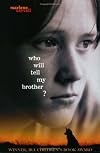
From CLCD
Hazel Rochman (Booklist, Jul. 1, 2002 (Vol. 98, No. 21))
A public issue comes close to home in this story of Evan Hill, a part-Mohawk high-school senior, who protests against his school's use of Indian mascots. Drawing on the real-life experience of her own two sons, Carvell lets Evan tell the story, which unfolds in quiet, spare, very readable, free-verse vignettes that express his hurt, anger, and humiliation as he tries to get the school board, the principal, and his classmates to listen to him and get rid of the noble savage caricature of his people. At times the narrative degenerates into sermonizing, with too much reverential talk about "proud solemnity." But Evan's words personalize his search for his Mohawk roots, even as his bullying classmates call him "Injun hippie" and "timber nigger" and then kill his beloved dog. The issues are sure to spark discussion: What about the bystanders who just let it happen? Will Evan change any minds? What's all the fuss about, anyway? Category: Books for Older Readers--Fiction. 2002, Hyperion, $15.99. Gr. 7-10.
Awards won:
Children's Book Award Winner 2003 Intermediate -Fiction United States 1
Hazel Rochman (Booklist, Jul. 1, 2002 (Vol. 98, No. 21))
A public issue comes close to home in this story of Evan Hill, a part-Mohawk high-school senior, who protests against his school's use of Indian mascots. Drawing on the real-life experience of her own two sons, Carvell lets Evan tell the story, which unfolds in quiet, spare, very readable, free-verse vignettes that express his hurt, anger, and humiliation as he tries to get the school board, the principal, and his classmates to listen to him and get rid of the noble savage caricature of his people. At times the narrative degenerates into sermonizing, with too much reverential talk about "proud solemnity." But Evan's words personalize his search for his Mohawk roots, even as his bullying classmates call him "Injun hippie" and "timber nigger" and then kill his beloved dog. The issues are sure to spark discussion: What about the bystanders who just let it happen? Will Evan change any minds? What's all the fuss about, anyway? Category: Books for Older Readers--Fiction. 2002, Hyperion, $15.99. Gr. 7-10.
Awards won:
Children's Book Award Winner 2003 Intermediate -Fiction United States 1
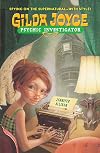
From School Library Journal
Starred Review. Grade 5-9 -Zany, likable Gilda Joyce deserves a place right next to her inspiration, Harriet the Spy. Ever since her father died two years ago, Gilda has been working on sharpening her psychic skills, both in an attempt to communicate with him and to solve spooky mysteries. The summer before ninth grade, she invites herself to San Francisco to visit relatives she's never met who live in a brooding Victorian mansion, complete with a ghost in the tower. Lester Splinter, her distant cousin, seems to be hiding something about his sister's suicide years ago, and Gilda is determined to find out what it is, with the help of his lonely, hostile daughter who is her age. Gilda's bravery, bluntness, and willingness to try anything help bring Juliet out of herself. Her asides to her father, written on his old typewriter, are not only humorous; they also show her grief, longing, and love for him. The wacky wigs and costumes she dons will make readers giggle out loud, as will the inserted progress reports she writes of how well her investigations are going. Readers will feel the hair on the back of their necks rise over the predicaments she manages to get into and out of. Returning home at summer's end, Gilda is surprised that her mother has begun to date and her older brother, Stephen, is friendlier. They have all begun to heal from their loss. Let's hope Gilda also returns in another psychic mystery that needs her gutsy, brash show more attention.-Connie Tyrrell Burns, Mahoney Middle School, South Portland, ME show less
Starred Review. Grade 5-9 -Zany, likable Gilda Joyce deserves a place right next to her inspiration, Harriet the Spy. Ever since her father died two years ago, Gilda has been working on sharpening her psychic skills, both in an attempt to communicate with him and to solve spooky mysteries. The summer before ninth grade, she invites herself to San Francisco to visit relatives she's never met who live in a brooding Victorian mansion, complete with a ghost in the tower. Lester Splinter, her distant cousin, seems to be hiding something about his sister's suicide years ago, and Gilda is determined to find out what it is, with the help of his lonely, hostile daughter who is her age. Gilda's bravery, bluntness, and willingness to try anything help bring Juliet out of herself. Her asides to her father, written on his old typewriter, are not only humorous; they also show her grief, longing, and love for him. The wacky wigs and costumes she dons will make readers giggle out loud, as will the inserted progress reports she writes of how well her investigations are going. Readers will feel the hair on the back of their necks rise over the predicaments she manages to get into and out of. Returning home at summer's end, Gilda is surprised that her mother has begun to date and her older brother, Stephen, is friendlier. They have all begun to heal from their loss. Let's hope Gilda also returns in another psychic mystery that needs her gutsy, brash show more attention.-Connie Tyrrell Burns, Mahoney Middle School, South Portland, ME show less
From School Library Journal
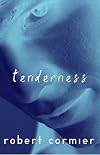
Grade 6 Up. Cormier is in top form in this chilling portrait of a serial murderer. Eric Poole has progressed from killing kittens, cats, and a canary to parents and unsuspecting young women. Now 18, he has paid for his mother and stepfather's murders with three years of juvenile detention and is ready to continue his "plan." Unfortunately, his looks and shallow charm are as pleasing on the outside as his character is ugly on the inside. The story unfolds through the eyes of two characters: Eric, and the luckless 15-year-old Lori, a runaway who met Eric once when she was 12 and is drawn to him like a moth to the flame. Even when she realizes his guilt, after he attempts to kill her, she can not desert him. The ugliness of the story contrasts with the beauty of the language. Perfectly titled with characteristic irony, a sense of "tenderness" pervades this gripping tale. Where other, lesser writers would have screamed the story in full-blown tabloid prose, Cormier is the model of decorum. No overt blood and gore are needed for this author to terrify his readers. Eric is not an antihero. Sympathy is not so much for the undeserving villain, but for the society that spawned and neutered him. A meaty horror study that's a fine substitute for the anemic, but popular "Fear Street" books.?Marilyn Payne Phillips, University City Public Library, MO
Copyright 1997 Reed Business Information, Inc.
Grade 6 Up. Cormier is in top form in this chilling portrait of a serial murderer. Eric Poole has progressed from killing kittens, cats, and a canary to parents and unsuspecting young women. Now 18, he has paid for his mother and stepfather's murders with three years of juvenile detention and is ready to continue his "plan." Unfortunately, his looks and shallow charm are as pleasing on the outside as his character is ugly on the inside. The story unfolds through the eyes of two characters: Eric, and the luckless 15-year-old Lori, a runaway who met Eric once when she was 12 and is drawn to him like a moth to the flame. Even when she realizes his guilt, after he attempts to kill her, she can not desert him. The ugliness of the story contrasts with the beauty of the language. Perfectly titled with characteristic irony, a sense of "tenderness" pervades this gripping tale. Where other, lesser writers would have screamed the story in full-blown tabloid prose, Cormier is the model of decorum. No overt blood and gore are needed for this author to terrify his readers. Eric is not an antihero. Sympathy is not so much for the undeserving villain, but for the society that spawned and neutered him. A meaty horror study that's a fine substitute for the anemic, but popular "Fear Street" books.?Marilyn Payne Phillips, University City Public Library, MO
Copyright 1997 Reed Business Information, Inc.
(From CLCD) Carolyn Phelan (Booklist, November 1, 1994 (Vol. 91, No. 5))
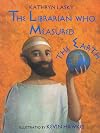
Introducing a person and a period largely unknown to children, this picture-book biography depicts the life of Eratosthenes, an ancient Greek who eventually became the head of the famous library in Alexandria. His most notable achievement was a remarkably ingenious method for measuring the earth's girth. After determining the angles of shadows in two cities and the distance between them, he used geometry to calculate the circumference of the earth. Illustrating the text with warmth and humor, Hawkes' acrylic paintings capture the period details of the setting and clarify the geometric concepts used in the measurement. The often dramatic compositions vary from page to page, while the sunlit reds, oranges, and yellows glow brightly against the cooler blues and greens. Even unnamed characters look like individuals, with their own concerns and personalities. Hawkes' attention to detail and his occasional visual humor will reward any child who studies the illustrations. Entertaining as well as instructional, the text presents the man, the story, the geometry, the geography, and the ancient world itself in simple prose. Lasky can be commended for making history so readable. And yet . . . is it history? Is it biography? Or is it fiction? In the introductory "Author's Note," Lasky explains that there are gaps in our knowledge of Eratosthenes and that "we cannot fill them in by making up facts, but we can try show more to responsibly imagine based on what we already know, which is what I've tried to do in this book." Unfortunately, the reader has no way of knowing what parts of the book are factual and what parts spring from Lasky's imagination. As a baby, was Eratosthenes really "curious and full of wonder"? Well, probably; most babies fit that description. Did he "crawl across the kitchen floor to follow the path of ants"? Maybe. Did he wonder "why there were beads of water on the cistern in the morning" and "why the stars stayed in the sky"? Or did the author "responsibly imagine" that part? How about the details of school life at the gymnasium in Cyrene? Was Eratosthenes "a real whiz in math" as a schoolboy? Or does Lasky imagine that he must have been a whiz as a child because of his later achievements in the field as an adult? A more careful wording of the text would separate knowledge from supposition, a fundamental principle of scholarship. When she speaks of Eratosthenes measuring the earth's circumference, Lasky says, "Perhaps he imagined the earth as a grapefruit." The word perhaps makes all the difference. If she had taken that approach from the beginning, this book would be outstanding. As fragmentary as the record may be, there's something special about real history, and readers can sense it. The old juvenile biographies with invented conversations fell out of favor for good reason. Readers count on nonfiction to deliver the truth: maybe not the whole truth, but nothing but the truth, within the limits of the author's knowledge. Eratosthenes sounds like a fascinating man, but it's difficult to sort out which parts of this book are historically accurate and which are not. The author's and illustrator's bibliographies of 25 books and articles reassure us that they know what is history and what is invention. But in calling the book a biography, the author has a responsibility to let readers know, as well. Otherwise, the book should be placed in the equally respectable category of historical fiction, which also requires enormous research but gives greater range for an author's imagination. Although flawed in its presentation of the main character, The Librarian Who Measured the Earth belongs in many libraries because it contains an entertaining introduction to the ancient world, a clear explanation of Eratosthenes' measurement of the earth, and remarkably vibrant illustrations. Category: Middle Readers. 1994, Little, Brown, $16.95. Gr. 3-5, younger for reading aloud.
Awards, Honors, Prizes:
Society of School Librarians International Book Awards Honor 1995 Social Studies - Elementary, K-6 United States show less
Introducing a person and a period largely unknown to children, this picture-book biography depicts the life of Eratosthenes, an ancient Greek who eventually became the head of the famous library in Alexandria. His most notable achievement was a remarkably ingenious method for measuring the earth's girth. After determining the angles of shadows in two cities and the distance between them, he used geometry to calculate the circumference of the earth. Illustrating the text with warmth and humor, Hawkes' acrylic paintings capture the period details of the setting and clarify the geometric concepts used in the measurement. The often dramatic compositions vary from page to page, while the sunlit reds, oranges, and yellows glow brightly against the cooler blues and greens. Even unnamed characters look like individuals, with their own concerns and personalities. Hawkes' attention to detail and his occasional visual humor will reward any child who studies the illustrations. Entertaining as well as instructional, the text presents the man, the story, the geometry, the geography, and the ancient world itself in simple prose. Lasky can be commended for making history so readable. And yet . . . is it history? Is it biography? Or is it fiction? In the introductory "Author's Note," Lasky explains that there are gaps in our knowledge of Eratosthenes and that "we cannot fill them in by making up facts, but we can try show more to responsibly imagine based on what we already know, which is what I've tried to do in this book." Unfortunately, the reader has no way of knowing what parts of the book are factual and what parts spring from Lasky's imagination. As a baby, was Eratosthenes really "curious and full of wonder"? Well, probably; most babies fit that description. Did he "crawl across the kitchen floor to follow the path of ants"? Maybe. Did he wonder "why there were beads of water on the cistern in the morning" and "why the stars stayed in the sky"? Or did the author "responsibly imagine" that part? How about the details of school life at the gymnasium in Cyrene? Was Eratosthenes "a real whiz in math" as a schoolboy? Or does Lasky imagine that he must have been a whiz as a child because of his later achievements in the field as an adult? A more careful wording of the text would separate knowledge from supposition, a fundamental principle of scholarship. When she speaks of Eratosthenes measuring the earth's circumference, Lasky says, "Perhaps he imagined the earth as a grapefruit." The word perhaps makes all the difference. If she had taken that approach from the beginning, this book would be outstanding. As fragmentary as the record may be, there's something special about real history, and readers can sense it. The old juvenile biographies with invented conversations fell out of favor for good reason. Readers count on nonfiction to deliver the truth: maybe not the whole truth, but nothing but the truth, within the limits of the author's knowledge. Eratosthenes sounds like a fascinating man, but it's difficult to sort out which parts of this book are historically accurate and which are not. The author's and illustrator's bibliographies of 25 books and articles reassure us that they know what is history and what is invention. But in calling the book a biography, the author has a responsibility to let readers know, as well. Otherwise, the book should be placed in the equally respectable category of historical fiction, which also requires enormous research but gives greater range for an author's imagination. Although flawed in its presentation of the main character, The Librarian Who Measured the Earth belongs in many libraries because it contains an entertaining introduction to the ancient world, a clear explanation of Eratosthenes' measurement of the earth, and remarkably vibrant illustrations. Category: Middle Readers. 1994, Little, Brown, $16.95. Gr. 3-5, younger for reading aloud.
Awards, Honors, Prizes:
Society of School Librarians International Book Awards Honor 1995 Social Studies - Elementary, K-6 United States show less
( From CLCD )
Stephanie Zvirin (Booklist, Sept. 1, 1992 (Vol. 89, No. 1))
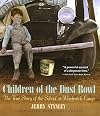
Not all of the 50 period photographs were available at the time of this review, but Stanley's text is a compelling document all by itself, supplying much more than the history of the construction of Weedpatch School that the subtitle implies. The book begins with a vivid account of the "Dirty Thirties," picturing Dust Bowl farmers driven from their homes by "the winds of despair." The first part of the text records the enormity of the Dust Bowl exodus and the migrants' desperate, dangerous journey, with the remainder of the book focusing on the efforts of Leo Hart, who founded Arvin Federal Emergency (Weedpatch) School, and on the group of Okie children who actually built it. Throughout are songs, stories, and comments from individuals who survived to tell of the filth and heat and dust, of the meals of coffee grounds and apple pits, and of the prejudice and poverty encountered in the California promised land. The story is inspiring and disturbing, and Stanley has recorded the details with passion and dignity. An excellent curriculum item. Category: Middle Readers. 1992, Crown, $15 and $15.99. Gr. 4-8. Starred Review.
Awards, Honors, Prizes:
Friends of Children and Literature (FOCAL) Award Winner 1993 United States
Jefferson Cup Award Winner 1993 United States
John and Patricia Beatty Award Winner 1993 United States
Orbis Pictus Award for Outstanding Nonfiction for Children Winner 1993 United States show more
Western Writers of America Spur Awards Winner 1992 Nonfiction United States show less
Stephanie Zvirin (Booklist, Sept. 1, 1992 (Vol. 89, No. 1))
Not all of the 50 period photographs were available at the time of this review, but Stanley's text is a compelling document all by itself, supplying much more than the history of the construction of Weedpatch School that the subtitle implies. The book begins with a vivid account of the "Dirty Thirties," picturing Dust Bowl farmers driven from their homes by "the winds of despair." The first part of the text records the enormity of the Dust Bowl exodus and the migrants' desperate, dangerous journey, with the remainder of the book focusing on the efforts of Leo Hart, who founded Arvin Federal Emergency (Weedpatch) School, and on the group of Okie children who actually built it. Throughout are songs, stories, and comments from individuals who survived to tell of the filth and heat and dust, of the meals of coffee grounds and apple pits, and of the prejudice and poverty encountered in the California promised land. The story is inspiring and disturbing, and Stanley has recorded the details with passion and dignity. An excellent curriculum item. Category: Middle Readers. 1992, Crown, $15 and $15.99. Gr. 4-8. Starred Review.
Awards, Honors, Prizes:
Friends of Children and Literature (FOCAL) Award Winner 1993 United States
Jefferson Cup Award Winner 1993 United States
John and Patricia Beatty Award Winner 1993 United States
Orbis Pictus Award for Outstanding Nonfiction for Children Winner 1993 United States show more
Western Writers of America Spur Awards Winner 1992 Nonfiction United States show less
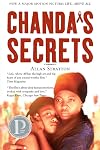
Africa has a secret. In a town the same as any town, there is a shameless cloud that hovers over the people who live there. Covered up for many years, Chanda is determined to end the struggle of her people. HIV is affecting many of her people. Funeral homes are profiting from this sadness. When she buys a coffin for her baby sister, she decides that this insensitivity has to stop. Many of her family have been taken by this illness. Her youth quickly fades as she is forced to leap to adulthood. As her mother falls into the “secret”, Chanda is forced to take over the family. Forced to leave her adolescence behind, yet desperate to keep her childhood dream of becoming a doctor or lawyer Chanda defies a community and takes in those who are shunned. Chanda’s Secrets leads the reader down a road that dispels myths and challenges morality. What was once a clear definition of right and wrong is clouded by the gray area that faces this community- what has to be done to survive? Published in sixteen different countries, Chanda’s Secret has a sequel, Chanda’s Wars coming in February 2008. Stratton writes for adults and young adults alike on the issues that were once taboo. Having visited many of the places that he writes about, he experiences the culture to intertwine in his books. A winner of countless book awards, Stratton opens the door for discussion. This inspirational story that incites the reader to become involved. Genre: Fiction-Social Issues, Ages 14-18 (5Q-4P)
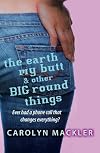
Michele Winship (KLIATT Review, July 2003 (Vol. 37, No. 4))
The title alone is enough to pull teens in, but the spunky narrator in Mackler's second YA novel will keep them reading. Fifteen-year-old Virginia Shreves is a thick girl in a thin world, and a thin family. Being 15 is tough enough, but Virginia's best friend Shannon has moved across the country, and she's trying to figure out if Froggy Welsh the Fourth is actually a boyfriend or just trying to cop a quick feel during their weekly make-out sessions. Her "perfect" family only makes matters worse. Her older, very together sister Anais is in Africa in the Peace Corps, and her brother Byron, the rugby god and straight-A student, is sailing through his sophomore year at Columbia. Her mother, the exercise fiend psychologist, is constantly trying to get her to diet, and her father constantly reminds her how pretty she'd be if she just lost weight. Virginia finds refuge at school with Ms. Crowley, a language arts teacher, and looks forward to visiting Shannon in Seattle over Thanksgiving. Then the world falls apart. Byron is kicked out of school under circumstances that shock Virginia, destroy her image of her "perfect" brother, and send her parents reeling. As she struggles to come to terms with such life-altering circumstances, Virginia realizes that she has been programmed to please others and to go with the flow, and she decides that enough is enough. She books her trip to Seattle, gets her eyebrow pierced, dyes her show more hair purple, and finally asserts herself to her mother. In accepting herself, she accepts the flaws that really do exist with the rest of her family, including Byron. Funny, touching, and very real, Mackler depicts both the trials and triumphs of adolescence when, like Virginia, we search for, and hopefully find, ourselves. Category: Hardcover Fiction. KLIATT Codes: JS--Recommended for junior and senior high school students. 2003, Candlewick, 256p., $15.99. Ages 12 to 18.(CLCD)
Awards:
Abraham Lincoln Illinois High School Book Award Third Place 2006 United States
Michael L. Printz Award Honor Book 2004 United States
Teens' Top Ten List Winner 2004 United States
Volunteer State Book Award 3rd Place 2006 Grades 7-12 Tennessee
West Australian Young Readers' Book Award (WAYRBA) Reading List 2006 Older Reader Australia show less
The title alone is enough to pull teens in, but the spunky narrator in Mackler's second YA novel will keep them reading. Fifteen-year-old Virginia Shreves is a thick girl in a thin world, and a thin family. Being 15 is tough enough, but Virginia's best friend Shannon has moved across the country, and she's trying to figure out if Froggy Welsh the Fourth is actually a boyfriend or just trying to cop a quick feel during their weekly make-out sessions. Her "perfect" family only makes matters worse. Her older, very together sister Anais is in Africa in the Peace Corps, and her brother Byron, the rugby god and straight-A student, is sailing through his sophomore year at Columbia. Her mother, the exercise fiend psychologist, is constantly trying to get her to diet, and her father constantly reminds her how pretty she'd be if she just lost weight. Virginia finds refuge at school with Ms. Crowley, a language arts teacher, and looks forward to visiting Shannon in Seattle over Thanksgiving. Then the world falls apart. Byron is kicked out of school under circumstances that shock Virginia, destroy her image of her "perfect" brother, and send her parents reeling. As she struggles to come to terms with such life-altering circumstances, Virginia realizes that she has been programmed to please others and to go with the flow, and she decides that enough is enough. She books her trip to Seattle, gets her eyebrow pierced, dyes her show more hair purple, and finally asserts herself to her mother. In accepting herself, she accepts the flaws that really do exist with the rest of her family, including Byron. Funny, touching, and very real, Mackler depicts both the trials and triumphs of adolescence when, like Virginia, we search for, and hopefully find, ourselves. Category: Hardcover Fiction. KLIATT Codes: JS--Recommended for junior and senior high school students. 2003, Candlewick, 256p., $15.99. Ages 12 to 18.(CLCD)
Awards:
Abraham Lincoln Illinois High School Book Award Third Place 2006 United States
Michael L. Printz Award Honor Book 2004 United States
Teens' Top Ten List Winner 2004 United States
Volunteer State Book Award 3rd Place 2006 Grades 7-12 Tennessee
West Australian Young Readers' Book Award (WAYRBA) Reading List 2006 Older Reader Australia show less
Hoot by Carl Hiaasen
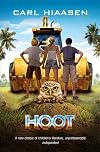
Bill Ott (Booklist, Oct. 15, 2002 (Vol. 99, No. 4))
It seems unlikely that the master of noir-tinged, surrealistic black humor would write a novel for young readers. And, yet, there has always been something delightfully juvenile about Hiaasen's imagination; beneath the bent cynicism lurks a distinctly 12-year-old cackle. In this thoroughly engaging tale of how middle-schooler Roy Eberhardt, new kid in Coconut Cove, learns to love South Florida, Hiaasen lets his inner kid run rampant, both the subversive side that loves to see grown-ups make fools of themselves and the righteously indignant side, appalled at the mess being made of our planet. When Roy teams up with some classic children's lit outsiders to save the home of some tiny burrowing owls, the stage is set for a confrontation between right-thinking kids and slow-witted, wrongheaded civic boosters. But Hiaasen never lets the formula get in his way; the story is full of offbeat humor, buffoonish yet charming supporting characters, and genuinely touching scenes of children enjoying the wildness of nature. He deserves a warm welcome into children's publishing. Category: Books for Middle Readers--Fiction. 2002, Knopf, $15.95. Gr. 5-8. (CLCD)
Awards, Honors, Prizes:
ABC Children's Booksellers Choices Award Winner 2003 Middle Grade Readers United States
Agatha Awards Nominee 2002 Best Children's/Young Adult Mystery Unites States
American Booksellers Book Sense Book of the Year (ABBY) Award Finalist 2003 Children's show more Literature United States
Blue Hen Book Award Nominee 2004 Chapter Book United States
Golden Archer Award Winner 2007 Middle/Junior High Wisconsin show less
It seems unlikely that the master of noir-tinged, surrealistic black humor would write a novel for young readers. And, yet, there has always been something delightfully juvenile about Hiaasen's imagination; beneath the bent cynicism lurks a distinctly 12-year-old cackle. In this thoroughly engaging tale of how middle-schooler Roy Eberhardt, new kid in Coconut Cove, learns to love South Florida, Hiaasen lets his inner kid run rampant, both the subversive side that loves to see grown-ups make fools of themselves and the righteously indignant side, appalled at the mess being made of our planet. When Roy teams up with some classic children's lit outsiders to save the home of some tiny burrowing owls, the stage is set for a confrontation between right-thinking kids and slow-witted, wrongheaded civic boosters. But Hiaasen never lets the formula get in his way; the story is full of offbeat humor, buffoonish yet charming supporting characters, and genuinely touching scenes of children enjoying the wildness of nature. He deserves a warm welcome into children's publishing. Category: Books for Middle Readers--Fiction. 2002, Knopf, $15.95. Gr. 5-8. (CLCD)
Awards, Honors, Prizes:
ABC Children's Booksellers Choices Award Winner 2003 Middle Grade Readers United States
Agatha Awards Nominee 2002 Best Children's/Young Adult Mystery Unites States
American Booksellers Book Sense Book of the Year (ABBY) Award Finalist 2003 Children's show more Literature United States
Blue Hen Book Award Nominee 2004 Chapter Book United States
Golden Archer Award Winner 2007 Middle/Junior High Wisconsin show less
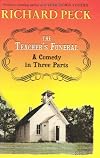
(CLCD)
Judy Crowder (Children's Literature)
Combine a slice of Americana with young adult angst, throw in some humor, unforgettable characters and beautiful writing and you have this YA novel by one of the country’s most skilled and prolific writers. Russell Culver, 15, wastes few tears when he hears about his school teacher’s sudden death. Maybe their one-room school will close for lack of a teacher and he and his friend, Charlie Parr, can light out for the Dakotas and a life of running shining farm machines. Or maybe not. Suddenly, his seventeen-year-old sister, Tansy, persuades the county school board to let her teach. Russell and his younger brother, Lloyd, are reluctantly educated at a pace that leaves the late Miss Myrt Arbuckle in the dust. Then the questions come: can Tansy handle a class ranging from a six-year-old to young men taller than she is? Why does Glenn Tarbox, older than the teacher, suddenly show up “for learnin’ and for the long haul?” Are he and Charlie sweet on the teacher? Who is the mysterious Sweet Singer of Sycamore Township who posts her poems around the community and seems to know everyone too well? What about Eugene Hammond, the driver of the Overland speedster who literally ran into Russell’s family as they returned from Miss Myrt’s funeral? When boxes of school supplies arrive, compliments of the Overland Automobile Company, Russell is forced to see Tansy--and life in the small farming community--a bit differently. Peck is a show more wordsmith whose descriptions sing. Comedy or not, this book is a pleasure to read. 2004, Dial Books, $16.99. Ages 12 up.
Awards, Honors, Prizes:
Blue Hen Book Award Nominee 2006 Chapter Book United States
Christopher Awards Winner 2005 Ages 10-12 United States show less
Judy Crowder (Children's Literature)
Combine a slice of Americana with young adult angst, throw in some humor, unforgettable characters and beautiful writing and you have this YA novel by one of the country’s most skilled and prolific writers. Russell Culver, 15, wastes few tears when he hears about his school teacher’s sudden death. Maybe their one-room school will close for lack of a teacher and he and his friend, Charlie Parr, can light out for the Dakotas and a life of running shining farm machines. Or maybe not. Suddenly, his seventeen-year-old sister, Tansy, persuades the county school board to let her teach. Russell and his younger brother, Lloyd, are reluctantly educated at a pace that leaves the late Miss Myrt Arbuckle in the dust. Then the questions come: can Tansy handle a class ranging from a six-year-old to young men taller than she is? Why does Glenn Tarbox, older than the teacher, suddenly show up “for learnin’ and for the long haul?” Are he and Charlie sweet on the teacher? Who is the mysterious Sweet Singer of Sycamore Township who posts her poems around the community and seems to know everyone too well? What about Eugene Hammond, the driver of the Overland speedster who literally ran into Russell’s family as they returned from Miss Myrt’s funeral? When boxes of school supplies arrive, compliments of the Overland Automobile Company, Russell is forced to see Tansy--and life in the small farming community--a bit differently. Peck is a show more wordsmith whose descriptions sing. Comedy or not, this book is a pleasure to read. 2004, Dial Books, $16.99. Ages 12 up.
Awards, Honors, Prizes:
Blue Hen Book Award Nominee 2006 Chapter Book United States
Christopher Awards Winner 2005 Ages 10-12 United States show less
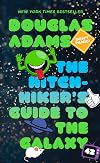
(Amazon.com)
Join Douglas Adams's hapless hero Arthur Dent as he travels the galaxy with his intrepid pal Ford Prefect, getting into horrible messes and generally wreaking hilarious havoc. Dent is grabbed from Earth moments before a cosmic construction team obliterates the planet to build a freeway. You'll never read funnier science fiction; Adams is a master of intelligent satire, barbed wit, and comedic dialogue. The Hitchhiker's Guide is rich in comedic detail and thought-provoking situations and stands up to multiple reads. Required reading for science fiction fans, this book (and its follow-ups) is also sure to please fans of Monty Python, Terry Pratchett's Discworld series, and British sitcoms.
Join Douglas Adams's hapless hero Arthur Dent as he travels the galaxy with his intrepid pal Ford Prefect, getting into horrible messes and generally wreaking hilarious havoc. Dent is grabbed from Earth moments before a cosmic construction team obliterates the planet to build a freeway. You'll never read funnier science fiction; Adams is a master of intelligent satire, barbed wit, and comedic dialogue. The Hitchhiker's Guide is rich in comedic detail and thought-provoking situations and stands up to multiple reads. Required reading for science fiction fans, this book (and its follow-ups) is also sure to please fans of Monty Python, Terry Pratchett's Discworld series, and British sitcoms.
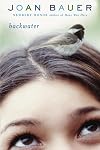
(from CLCD)
Jean Franklin (Booklist, May 15, 1999 (Vol. 95, No. 18))
Sixteen-year-old, motherless Ivy Breedlove has a genuine calling to be a historian. When her great-aunt's failing vision forces her to stop work on a family history, Ivy takes on the job, doing it so thoroughly that she rattles the rest of the clan. The Breedloves are a strenuous, overachieving New York State family, bred to the legal profession since the first ancestors stepped off the Mayflower. They have also, Ivy finds, produced occasional "backwater" Breedloves--fascinating eccentrics like Ivy's own Aunt Jo, a sculptor living alone deep in the Adirondacks, ignored by the rest of the family. When Ivy hires wilderness guide Mountain Mama to help her track down Aunt Jo for an interview, her life--and that of the entire Breedlove family--changes forever. This warm, funny, patchwork quilt of a book offers a sturdy heroine, vivid characters, a touch of romance, and a final survival adventure that will keep readers turning the pages to the last. But Bauer tackles more, bringing in issues of personal and historical honesty, connection between generations, and tolerance for those who follow a different drummer. Pair this with Bauer's Rules of the Road (1998) for a dynamite mother-daughter book discussion. Category: Older Readers. 1999, Putnam, $15.99. Gr. 7-10.
Awards:
ABC Children's Booksellers Choices Award Winner 2000 Young Adult Readers United States
Jean Franklin (Booklist, May 15, 1999 (Vol. 95, No. 18))
Sixteen-year-old, motherless Ivy Breedlove has a genuine calling to be a historian. When her great-aunt's failing vision forces her to stop work on a family history, Ivy takes on the job, doing it so thoroughly that she rattles the rest of the clan. The Breedloves are a strenuous, overachieving New York State family, bred to the legal profession since the first ancestors stepped off the Mayflower. They have also, Ivy finds, produced occasional "backwater" Breedloves--fascinating eccentrics like Ivy's own Aunt Jo, a sculptor living alone deep in the Adirondacks, ignored by the rest of the family. When Ivy hires wilderness guide Mountain Mama to help her track down Aunt Jo for an interview, her life--and that of the entire Breedlove family--changes forever. This warm, funny, patchwork quilt of a book offers a sturdy heroine, vivid characters, a touch of romance, and a final survival adventure that will keep readers turning the pages to the last. But Bauer tackles more, bringing in issues of personal and historical honesty, connection between generations, and tolerance for those who follow a different drummer. Pair this with Bauer's Rules of the Road (1998) for a dynamite mother-daughter book discussion. Category: Older Readers. 1999, Putnam, $15.99. Gr. 7-10.
Awards:
ABC Children's Booksellers Choices Award Winner 2000 Young Adult Readers United States
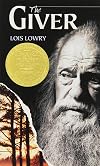
Ilene Cooper (Booklist, Apr. 15, 1993 (Vol. 89, No. 16))
Lowry once again turns in a new direction; this time to the future. Jonas lives in a world that many of us have longed for. There is no war, poverty, or family turmoil, and so no fear, no hardship, no everyday discontent, no long-term terror. Jonas lives with his father, who's a Nurturer at the childcare center; his mother, who works at the Department of Justice; and his sister, Lily, who is a Six. Jonas himself is soon to be a Twelve, an important age because each year at the annual Ceremony all the 12-years-olds in the community receive their life assignments from the Elders. Jonas is named to the most prestigious and unusual job in the community--the Receiver of Memory. There is only one Receiver, and when he grows old, he trains his successor. Jonas is both puzzled and frightened by his job, which requires him to receive all the memories of their world and the land that lies beyond their community, Elsewhere. Like the falling of night, the story's mood changes almost imperceptibly. Readers lulled by the warmth and safety of the community will find themselves quite surprised as the darkness enfolds them. What the former Receiver, now the Giver, has to tell Jonas rocks the boy's sense of self and turns inside out the life he has known. At first, the Giver offers benign memories--of snow, sunshine, and color, things that existed before the community went to Sameness--and the boy grieves for what has been lost. But show more soon Jonas receives memories of pain and death, and then he is torn. Perhaps his community's decision to shelter the citizens from the world's sorrow has been correct. Yet by going to Sameness, the community has also eliminated all possibilities for choice and, finally, for happiness. The simplicity and directness of Lowry's writing force readers to grapple with their own thoughts about this dichotomy; though it is clear what the right answer is (and, at times, the narrative lacks subtlety in insisting upon that answer), the allure of a life without pain will give even the least philosophical of readers something to ponder. Lowry forces the point for Jonas when he learns that baby Gabriel, whom the family had been raising, is to be Released. Jonas had always thought Release simply meant going Elsewhere, but now he knows the term's real meaning: the baby will be killed. So to save Gabriel, and with the Giver's help, Jonas decides to flee to Elsewhere. Lowry heightens the tension as Jonas and Gabriel dodge search parties and airplanes, face starvation, and become weaker seeking a better place. Lowry's ending is the most unsatisfying element of the book. Jonas and Gabriel, freezing, starving, very near death, finally see the lights and hear the music of Elsewhere. But have they arrived? Or, as some (mainly adults, perhaps) will wonder--have the children died? With the book's tension level raised so high, readers will want closure, not ambiguity. Anti-Utopian novels have an enduring appeal. This one makes an especially good introduction to the genre because it doesn't load the dice by presenting the idea of a community structured around safety as totally negative. There's a distinctly appealing comfort in sameness that kids--especially junior high kids--will recognize. Yet the choice is clear. Sameness versus freedom, happiness at the risk of pain. Something to talk about. Category: Older Readers. 1993, Houghton, $13.95. Gr. 6-9. Starred Review. (From CLCD)
Awards Won:
ABC Children's Booksellers Choices Award Winner 1994 Young Adults United States
Arizona Young Readers' Award Winner 1995 Middle School/Young Adult Arizona
Buckeye Children's Book Award Winner 1997 Gr. 6-8 Ohio
The Golden Archer Award Winner 1996 Middle / Junior High Wisconsin
Eliot Rosewater Indiana High School Book Award Winner 1997 Indiana show less
Lowry once again turns in a new direction; this time to the future. Jonas lives in a world that many of us have longed for. There is no war, poverty, or family turmoil, and so no fear, no hardship, no everyday discontent, no long-term terror. Jonas lives with his father, who's a Nurturer at the childcare center; his mother, who works at the Department of Justice; and his sister, Lily, who is a Six. Jonas himself is soon to be a Twelve, an important age because each year at the annual Ceremony all the 12-years-olds in the community receive their life assignments from the Elders. Jonas is named to the most prestigious and unusual job in the community--the Receiver of Memory. There is only one Receiver, and when he grows old, he trains his successor. Jonas is both puzzled and frightened by his job, which requires him to receive all the memories of their world and the land that lies beyond their community, Elsewhere. Like the falling of night, the story's mood changes almost imperceptibly. Readers lulled by the warmth and safety of the community will find themselves quite surprised as the darkness enfolds them. What the former Receiver, now the Giver, has to tell Jonas rocks the boy's sense of self and turns inside out the life he has known. At first, the Giver offers benign memories--of snow, sunshine, and color, things that existed before the community went to Sameness--and the boy grieves for what has been lost. But show more soon Jonas receives memories of pain and death, and then he is torn. Perhaps his community's decision to shelter the citizens from the world's sorrow has been correct. Yet by going to Sameness, the community has also eliminated all possibilities for choice and, finally, for happiness. The simplicity and directness of Lowry's writing force readers to grapple with their own thoughts about this dichotomy; though it is clear what the right answer is (and, at times, the narrative lacks subtlety in insisting upon that answer), the allure of a life without pain will give even the least philosophical of readers something to ponder. Lowry forces the point for Jonas when he learns that baby Gabriel, whom the family had been raising, is to be Released. Jonas had always thought Release simply meant going Elsewhere, but now he knows the term's real meaning: the baby will be killed. So to save Gabriel, and with the Giver's help, Jonas decides to flee to Elsewhere. Lowry heightens the tension as Jonas and Gabriel dodge search parties and airplanes, face starvation, and become weaker seeking a better place. Lowry's ending is the most unsatisfying element of the book. Jonas and Gabriel, freezing, starving, very near death, finally see the lights and hear the music of Elsewhere. But have they arrived? Or, as some (mainly adults, perhaps) will wonder--have the children died? With the book's tension level raised so high, readers will want closure, not ambiguity. Anti-Utopian novels have an enduring appeal. This one makes an especially good introduction to the genre because it doesn't load the dice by presenting the idea of a community structured around safety as totally negative. There's a distinctly appealing comfort in sameness that kids--especially junior high kids--will recognize. Yet the choice is clear. Sameness versus freedom, happiness at the risk of pain. Something to talk about. Category: Older Readers. 1993, Houghton, $13.95. Gr. 6-9. Starred Review. (From CLCD)
Awards Won:
ABC Children's Booksellers Choices Award Winner 1994 Young Adults United States
Arizona Young Readers' Award Winner 1995 Middle School/Young Adult Arizona
Buckeye Children's Book Award Winner 1997 Gr. 6-8 Ohio
The Golden Archer Award Winner 1996 Middle / Junior High Wisconsin
Eliot Rosewater Indiana High School Book Award Winner 1997 Indiana show less

CCBC (Cooperative Children’s Book Center Choices, 2007)
The Monkey King is tired of his second-class status. Adored by his own subjects, he is snubbed by human deities until he perfects his powers and literally beats those who would mock him into submission. “I am not a monkey” he proclaims. “I am the Great Sage, Equal of Heaven!” Jin Wang is the only Chinese American student at his school. When Wei-Chen Sun arrives from Taiwan, Jin Wang thinks, “Something made me want to beat him up.” Still, it’s not long before the two boys become best friends. Blond-haired Danny’s life would be perfect were it not for his cousin, Chin-Kee, who embodies every offensive stereotype of the Chinese, from buck teeth and braided ponytail to mispronunciations (“Harro Amellica!”). Gene Luen Yang’s brilliant graphic novel moves back and forth between these three separate narrative strands, each one exploring issues of identity, belonging, humility, and friendship as the storylines develop. Yang’s narrative builds to an unforgettable and dazzling series of revelations as the three storylines surprisingly converge in a book that is eye-opening and provocative, pushing the boundaries of comfort for readers as it exposes racism from its most subtle to most overt. CCBC Category: Fiction for Young Adults. 2006, First Second, 233 pages, $16.95. Age 13 and older. ( From CLCD )
Awards Won:
Cybils Winner 2006 Graphic Novels Ages 13 and Up United States
Michael L . Printz Award show more Winner 2007 United States
National Book Awards Finalist 2006 Young People's Literature United States
Quill Awards Nominee 2007 Young Adult/Teen United States show less
The Monkey King is tired of his second-class status. Adored by his own subjects, he is snubbed by human deities until he perfects his powers and literally beats those who would mock him into submission. “I am not a monkey” he proclaims. “I am the Great Sage, Equal of Heaven!” Jin Wang is the only Chinese American student at his school. When Wei-Chen Sun arrives from Taiwan, Jin Wang thinks, “Something made me want to beat him up.” Still, it’s not long before the two boys become best friends. Blond-haired Danny’s life would be perfect were it not for his cousin, Chin-Kee, who embodies every offensive stereotype of the Chinese, from buck teeth and braided ponytail to mispronunciations (“Harro Amellica!”). Gene Luen Yang’s brilliant graphic novel moves back and forth between these three separate narrative strands, each one exploring issues of identity, belonging, humility, and friendship as the storylines develop. Yang’s narrative builds to an unforgettable and dazzling series of revelations as the three storylines surprisingly converge in a book that is eye-opening and provocative, pushing the boundaries of comfort for readers as it exposes racism from its most subtle to most overt. CCBC Category: Fiction for Young Adults. 2006, First Second, 233 pages, $16.95. Age 13 and older. ( From CLCD )
Awards Won:
Cybils Winner 2006 Graphic Novels Ages 13 and Up United States
Michael L . Printz Award show more Winner 2007 United States
National Book Awards Finalist 2006 Young People's Literature United States
Quill Awards Nominee 2007 Young Adult/Teen United States show less
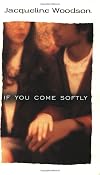
For Ellie and Jeremiah it is love at first sight in this understated love story. Though the couple comes from different backgrounds, both have strange home lives. After his parents' divorce, Jeremiah's dad moved across the street and Jeremiah now spends his time going between his mother's and father's apartments. Ellie lives in a very large apartment with her mother and father, and they all seem to inhabit separate corners of a space that once housed a large family. Ellie's relationship with her mother, who has left the family twice, is strained. Estranged from both their families, Ellie and Jeremiah become the perfect couple, providing the security and love that they feel is lacking at home. Of course there is a complication: Ellie is white and Jeremiah is black. Ellie thinks that racism is a thing of the past, until she is heartbroken to discover that her favorite sister is racist. The couple is also surprised when they face hostility from perfect strangers, but they persevere and their relationship blossoms. This sweet story is filled with a sense of foreboding. In fact, Jeremiah is shot by a police officer who mistakes him for a crime suspect. In truth, Jeremiah is shot because he is an African American who is running (dribbling his basketball) after dark. While such incidents are all too common, this reader found herself wishing that Woodson had ended on a more optimistic note--the "happily-ever-after" ending is not always the predictable one--and wanted to know if show more Jeremiah and Ellie could have endured in the face of so much opposition. One positive note: Ellie forms a relationship with Jeremiah's mother and together they mourn their loss. The gentle and melancholy tone of this book makes it ideal for thoughtful readers and fans of romance. VOYA CODES: 4Q 3P M J (Better than most, marred only by occasional lapses; Will appeal with pushing; Middle School, defined as grades 6 to 8; Junior High, defined as grades 7 to 9). 1998, Putnam, 181p., $15.99. Ages 11 to 15.
(Alison Kastner (VOYA, December 1998 (Vol. 21, No. 5))
Awards:
Black-Eyed Susan Book Award Winner 2002 Maryland
Gateway Readers Award Third Place 2001 Grades 9-12 Missouri
Virginia Young Readers Program Winner 2001 High School Virginia show less
(Alison Kastner (VOYA, December 1998 (Vol. 21, No. 5))
Awards:
Black-Eyed Susan Book Award Winner 2002 Maryland
Gateway Readers Award Third Place 2001 Grades 9-12 Missouri
Virginia Young Readers Program Winner 2001 High School Virginia show less
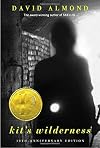
(Amazon.com)From Publishers Weekly
Revisiting many of the themes from Skellig, Almond offers another tantalizing blend of human drama, surrealism and allegory. He opens the novel with a triumphant scene, in which Kit Watson, the 13-year-old narrator, and his classmates, John Askew and Allie Keenan reemerge from "ancient darkness into a shining valley," as if to reassure readers throughout the course of the cryptic tale that the game of "Death," so central to the book, is indeed just a game. Nevertheless, he takes readers on a thrilling and spine-tingling ride. When Kit moves with his mother and father to the mining town of Stoneygate to keep company with his newly widowed grandfather, he feels drawn to John Askew who, like Kit, comes from a long line of coal miners. Askew presses Kit to take part in a game of "Death," for which the participants spin a knife to determine whose turn it is to "die." The chosen one then remains alone in the darkness of Askew's den, to join spirits with boys killed in a coal mine accident in 1821. Some regular players consider the game to be make-believe, but Kit senses something far more profound and dangerous, and the connection he forges with the ancient past also circuitously seals a deeper bond with Askew. Allie acts as a bridge between the two worlds, much as Mina was for Michael in Skellig. The ability that Askew, Kit and his grandpa possess to pass between two seductive worlds, here and beyond, in many ways expands on the landscape show more Almond created in Skellig. The intricacy and complexity of the book's darker themes make it a more challenging read than his previous novel for children, but the structure is as awe-inspiring as the ancient mining tunnels that run beneath Stoneygate. Ages 12-up. (Mar.)
Copyright 2000 Reed Business Information, Inc. --This text refers to the Hardcover edition.
Awards:
Prinz Award Winner,
Smarties Book Prize Solver Award Winner 1999 show less
Revisiting many of the themes from Skellig, Almond offers another tantalizing blend of human drama, surrealism and allegory. He opens the novel with a triumphant scene, in which Kit Watson, the 13-year-old narrator, and his classmates, John Askew and Allie Keenan reemerge from "ancient darkness into a shining valley," as if to reassure readers throughout the course of the cryptic tale that the game of "Death," so central to the book, is indeed just a game. Nevertheless, he takes readers on a thrilling and spine-tingling ride. When Kit moves with his mother and father to the mining town of Stoneygate to keep company with his newly widowed grandfather, he feels drawn to John Askew who, like Kit, comes from a long line of coal miners. Askew presses Kit to take part in a game of "Death," for which the participants spin a knife to determine whose turn it is to "die." The chosen one then remains alone in the darkness of Askew's den, to join spirits with boys killed in a coal mine accident in 1821. Some regular players consider the game to be make-believe, but Kit senses something far more profound and dangerous, and the connection he forges with the ancient past also circuitously seals a deeper bond with Askew. Allie acts as a bridge between the two worlds, much as Mina was for Michael in Skellig. The ability that Askew, Kit and his grandpa possess to pass between two seductive worlds, here and beyond, in many ways expands on the landscape show more Almond created in Skellig. The intricacy and complexity of the book's darker themes make it a more challenging read than his previous novel for children, but the structure is as awe-inspiring as the ancient mining tunnels that run beneath Stoneygate. Ages 12-up. (Mar.)
Copyright 2000 Reed Business Information, Inc. --This text refers to the Hardcover edition.
Awards:
Prinz Award Winner,
Smarties Book Prize Solver Award Winner 1999 show less
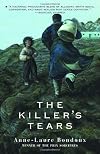
Angel, a wanted murderer escaping authorities, happens upon a poor family in a remote area in Chile. After killing the parents, Angel forges a bond with their young son, Paolo. This relationship is challenged with the arrival of Luis, a wealthy and educated man who is trying to sort out his life, and Luis and Angel compete for the affections of Paolo. After several years, when the three travel to the city to purchase supplies, Luis meets a young woman and takes off with her, and a series of events are set in motion that culminate with the arrest of Angel and the placement of Paolo in a foster home. Angel's search for redemption by associating and caring for Paolo after he kills the young child's parents is what drives this story. The author uses characterization and dialogue to skillfully contrast the violent and conflicted Angel with the innocent and unworldly Paolo and to portray the desolation and loneliness of the setting. This powerful novel is a beautifully written moral tale that is sure to challenge readers to examine their views on forgiveness and rehabilitation, on whether violence is ever necessary, on how environment can influence human actions, and on the very nature of love. Winner of the Prix Sorcieres and translated from the French, this book's brevity and simplicity make it a good choice for a read aloud, while the depth of the story line is sure to ignite classroom discussions on a myriad of moral issues, including the death penalty. 2006, Delacorte, show more 224p., $15.95 and PLB $17.99. Ages 12 to 18.Chris Carlson (VOYA, April 2006 (Vol. 29, No. 1))
Awards:
Batchelder Award Honor Book 2007 show less
Awards:
Batchelder Award Honor Book 2007 show less
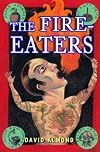
(CLCD)
Ilene Cooper (Booklist, Mar. 15, 2004 (Vol. 100, No. 14))
Almond returns to some familiar themes--the mystery and the pain of life--in a dramatic story drawn from both global and personal events. It is 1962, and the world is on the brink of nuclear destruction. For Bobby Burns, the waste and ruin is even closer to home: his father is seriously ill, and a cruel schoolmaster is forcing Bobby to take a stand that may destroy his educational chances. As in all of Almond's books, everyday detail mingles with the grotesque. The bizarre here comes in the form of McNulty, a fire-eater and strongman who also pushes sharp objects through his flesh--an explicit demonstration of pain mirrored by Bobby's sticking pins in his hands as a sacrifice to keep his father healthy. For anyone who loves words, Almond's books are a pleasure. But this time the Newcastle accent used by most of the characters may be difficult to grasp initially, and though Almond brings together the strands of his story, some of his many characters are not well integrated. Whatever the book's flaws, though, Almond's writing is so imaginative and layered that turning the pages is always meaningful. Category: Books for Older Readers--Fiction. 2004, Delacorte, $15.95, $17.99. Gr. 6-8.
Awards:
Boston Globe--Horn Book Awards Winner 2004 Fiction and Poetry United States
Guardian Award for Children's Fiction Shortlist 2003 United Kingdom
Nestle Smarties Book Prize Gold Winner 2003 Ages 9-11 United Kingdom
Costa show more Childrens Book Award show less
Ilene Cooper (Booklist, Mar. 15, 2004 (Vol. 100, No. 14))
Almond returns to some familiar themes--the mystery and the pain of life--in a dramatic story drawn from both global and personal events. It is 1962, and the world is on the brink of nuclear destruction. For Bobby Burns, the waste and ruin is even closer to home: his father is seriously ill, and a cruel schoolmaster is forcing Bobby to take a stand that may destroy his educational chances. As in all of Almond's books, everyday detail mingles with the grotesque. The bizarre here comes in the form of McNulty, a fire-eater and strongman who also pushes sharp objects through his flesh--an explicit demonstration of pain mirrored by Bobby's sticking pins in his hands as a sacrifice to keep his father healthy. For anyone who loves words, Almond's books are a pleasure. But this time the Newcastle accent used by most of the characters may be difficult to grasp initially, and though Almond brings together the strands of his story, some of his many characters are not well integrated. Whatever the book's flaws, though, Almond's writing is so imaginative and layered that turning the pages is always meaningful. Category: Books for Older Readers--Fiction. 2004, Delacorte, $15.95, $17.99. Gr. 6-8.
Awards:
Boston Globe--Horn Book Awards Winner 2004 Fiction and Poetry United States
Guardian Award for Children's Fiction Shortlist 2003 United Kingdom
Nestle Smarties Book Prize Gold Winner 2003 Ages 9-11 United Kingdom
Costa show more Childrens Book Award show less
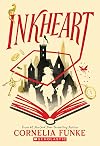
Inkheart is another wonderful tale of adventure and intrigue translated from the German author Cornelia Funke. Each chapter begins with an excerpt from a "great" piece of literature. The influence of all of these fantasy (and fantastic) authors has obviously greatly influenced Funke's writing style. The quotes widely range in authors and styles: from The Jungle Book by Kipling to The Lord of the Rings by Tolkien. This book is well written, and the beautiful imagery draws the reader further and further into the story. As a translation, this book stands up to most stories written in an author's first language. The story unfolds slowly giving away only bits and pieces of the puzzle which frustrates not only the main character, Meggie, but the reader as well. The plot revolves around the "actual" book Inkheart which influenced Meggie's past, more than she realizes at first, and then finds it greatly affecting her present and future. Meggie's father, Mortimer (Mo), is a bookbinder, and her Aunt Elinor is a overzealous book collector; these adults in the story are no more sensible than Meggie when it comes to decision making. We seem to jump into this story mid stream, which leaves the reader trying untangle all the information as it is presented to Meggie. Other important supporting characters belong to (or in) Inkheart and have been magically brought into "our" world. These characters create the conflict which Mo and Meggie ultimately need to resolve. There were parts of this show more novel where the plot dragged and the action seemed unnecessary for moving the story ahead. At times, the main characters plotted or planned but didn't follow through. They seemed to let the plot lead them and appeared to go along with whatever came next. Characterization in this novel lacked real depth. An attachment to any particular character was not solidified. The missing connections did not make me want to read more about Meggie, Mo, or Capricorn. The descriptions of Mo's talent were random and illogical throughout. People appearing and disappearing wasn't clearly addressed. Was there supposed to be an alternative or parallel reality? Unfortunately, the antagonistic character of Capricorn was very flat and needed far more detail to create a believable horrifying villain. The author mainly developed Capricorn through what other characters said. When Capricorn was in the "action," he seemed to shout and bluster but didn't seem powerful or evil. Even the desecration of Aunt Elinor's books was achieved in absence of both the reader and Capricorn! It also must be mentioned that the format, cover and illustrations on and within this book play a huge part in creating the aura surrounding the mystery of the plot. The book cover is subtly textured and appears to be luxuriously bound. The images shimmer and leap out to one's sense of touch. The "nutmeg" smell of the pages is referred to in the novel and literally makes the reader stick their nose in the book! The conclusion is artfully woven, although it is, again, mainly plot driven. The reader is left wondering about the reality of this tale in spite of the trolls, blue fairies, and Tinker Bell. Inkheart will appeal to all young adults. However, the size of this novel may be off putting for weaker readers. Any avid reader should definitely add this to their must read list! As an adult, I found the connections to the excerpts from other novels especially fascinating. I certainly will wonder next time I read a book aloud! Recommended. Rating: *** /4. Grades 5-9. 2003, The Chicken House/Scholastic (Distributed in Canada by Scholastic Canada), 534 pp., cloth, $24.99. Ages 10 to 14.
(Gillian Bernard (CM Magazine, January 30, 2004 (Vol. X, No. 11 ))(CLCD)
Awards:
Askews Torchlight Children's Book Award Winner 2005 United Kingdom
Book Sense Book of the Year Award Finalist 2004 Children's Literature United States
Colorado Children's Book Award Winner 2007 Junior Book Colorado
Flicker Tale Children's Book Award Winner 2006 Juvenile Book North Dakota
Mythopoeic Fantasy Award for Children's Literature Finalist 2004 Children's Literature United States
West Australian Young Readers' Book Award (WAYRBA) Reading List 2005 Younger Reader Australia show less
(Gillian Bernard (CM Magazine, January 30, 2004 (Vol. X, No. 11 ))(CLCD)
Awards:
Askews Torchlight Children's Book Award Winner 2005 United Kingdom
Book Sense Book of the Year Award Finalist 2004 Children's Literature United States
Colorado Children's Book Award Winner 2007 Junior Book Colorado
Flicker Tale Children's Book Award Winner 2006 Juvenile Book North Dakota
Mythopoeic Fantasy Award for Children's Literature Finalist 2004 Children's Literature United States
West Australian Young Readers' Book Award (WAYRBA) Reading List 2005 Younger Reader Australia show less
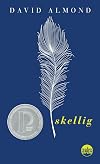
There was a large drawing of Skellig, standing erect with his wings high above his shoulders. He gazed out at us, smiling. ...The kind of thing William Blake saw. He said we were surrounded by angels and spirits. We must just open our eyes a little wider, look a little harder." This is Mina's work, which Michael sees one day when he is at her house. The two children have seen Skellig together, a strange creature who lives in Michael's old garage, eating Chinese take-out and owl pellets. One magical time the three joined hands and danced in a circle, and the children grew wings from their shoulder blades and learned what it means to fly. In the midst of these wondrous things, Michael is trying hard to understand why his tiny baby sister is so fragile, and he worries that she will die. He and his father are trying to take care of each other while the mother is staying at the hospital with the baby. Michael's concerns for his little sister have taken him to some edge of awareness where he is able to see Skellig. Other mysterious things happen, such as Michael's mother has a vivid dream in the hospital of a strange old man with a tender face coming to lift up the baby in her crib and fill her with life. When Michael's mom sees Mina's picture of Skellig, she "caught her breath." Then she smiled knowingly at the children. So, Skellig is a strange book, certainly a memorable one. It isn't the usual fantasy, rather there is something about it that makes the reader feel if he or show more she just looked a bit harder, and listened more carefully, many wondrous creatures would be there to find. Almond combines the strangeness of Skellig with the equal wonder of baby bird fledglings nearby, with sudden power to play excellent football, with the eye and hand creating intricate drawings -- in other words, with the things right in front of all of us each moment. In that way, Almond has given us all a profound book. Almond, who is British, has written for adults, but this is his first work for children. He says in a note at the back of the book, "Writing can be difficult, but sometimes it really does feel like a sort of magic. I think that stories are living things -- among the most important things in the world." Skellig certainly is important. KLIATT Codes: J--Recommended for junior high school students. 1998, Delacorte. 183p, $15.95. Ages 13 to 15.
(Claire Rosser (KLIATT Review, January 1999 (Vol. 33, No. 1))(CLCD)
Awards:
Carnegie Medal Winner 1998 United Kingdom
Carnegie of Carnegies Contender 2007 United Kingdom
Garden State Teen Book Award Winner 2002 Fiction (Gr. 6-8) New Jersey
Michael L. Printz Award Honor Book 2000 United States
Mythopoeic Fantasy Award for Children's Literature Finalist 2000 Children's Literature United States
Paterson Prize for Books for Young People Winner 2000 Grades 7-12 United States
West Australian Young Readers' Book Award (WAYRBA) Reading List 2001 Younger Reader Australia
Whitbread Books of the Year Winner 1998 United Kingdom show less
(Claire Rosser (KLIATT Review, January 1999 (Vol. 33, No. 1))(CLCD)
Awards:
Carnegie Medal Winner 1998 United Kingdom
Carnegie of Carnegies Contender 2007 United Kingdom
Garden State Teen Book Award Winner 2002 Fiction (Gr. 6-8) New Jersey
Michael L. Printz Award Honor Book 2000 United States
Mythopoeic Fantasy Award for Children's Literature Finalist 2000 Children's Literature United States
Paterson Prize for Books for Young People Winner 2000 Grades 7-12 United States
West Australian Young Readers' Book Award (WAYRBA) Reading List 2001 Younger Reader Australia
Whitbread Books of the Year Winner 1998 United Kingdom show less
(From School Library Journal)
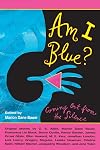
Grade 7 Up-This collection of 18 short stories by recognized children's and young adult authors explores the various meanings of gay/lesbian identity in the lives of teenagers. The book begins and ends with thoughtful commentaries by Bauer, and each story is followed by an afterword by its author that ranges from ho-hum to fascinating; the best tell the "story behind the story" and reveal the ways in which gay/lesbian issues or individuals have touched the authors' lives. Most feature white, middle-class, suburban/urban milieus, although several stories have a more diverse cast than is generally found in YA fiction. All seek to convey the very mixed emotions that accompany the acceptance of sexual difference at an age that places a high value on conformity to an established norm. Although the title story is a humorous fantasy featuring a camp fairy godfather who comes to the aid of a gay-bashing victim, most of the tales are realistic portrayals of contemporary YAs. In Nancy Garden's "Parents Night," an unexpected reconciliation occurs between a young lesbian and her father, while in Bauer's "Dancing Backward," the trauma of two young women's boarding school expulsion is offset by the revelation of their love. In Lois Lowry's "Holding," a young man returns from the funeral of his father's partner and finally tells his best friend that his father is gay, while James Cross Giblin's "Three Mondays in July" captures the isolation of small-town show more life in the early '50s. As is the case with most short story collections, the overall quality is uneven, but the best stories are memorable. They speak of survival and hope; they say, like the man on the beach in Giblin's story, "You're not alone."-Christine Jenkins, University of Illinois, Champaign
Copyright 1994 Reed Business Information, Inc. show less
Grade 7 Up-This collection of 18 short stories by recognized children's and young adult authors explores the various meanings of gay/lesbian identity in the lives of teenagers. The book begins and ends with thoughtful commentaries by Bauer, and each story is followed by an afterword by its author that ranges from ho-hum to fascinating; the best tell the "story behind the story" and reveal the ways in which gay/lesbian issues or individuals have touched the authors' lives. Most feature white, middle-class, suburban/urban milieus, although several stories have a more diverse cast than is generally found in YA fiction. All seek to convey the very mixed emotions that accompany the acceptance of sexual difference at an age that places a high value on conformity to an established norm. Although the title story is a humorous fantasy featuring a camp fairy godfather who comes to the aid of a gay-bashing victim, most of the tales are realistic portrayals of contemporary YAs. In Nancy Garden's "Parents Night," an unexpected reconciliation occurs between a young lesbian and her father, while in Bauer's "Dancing Backward," the trauma of two young women's boarding school expulsion is offset by the revelation of their love. In Lois Lowry's "Holding," a young man returns from the funeral of his father's partner and finally tells his best friend that his father is gay, while James Cross Giblin's "Three Mondays in July" captures the isolation of small-town show more life in the early '50s. As is the case with most short story collections, the overall quality is uneven, but the best stories are memorable. They speak of survival and hope; they say, like the man on the beach in Giblin's story, "You're not alone."-Christine Jenkins, University of Illinois, Champaign
Copyright 1994 Reed Business Information, Inc. show less
Recorded Books (Recorded Books, LLC.)
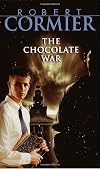
Numb and shellshocked by his mother’s recent death, Jerry Renault is not prepared to face the pressures of classes and classmates at New England’s Trinity School. So when a secret school society known as The Vigils tapes a summons letter to his locker, Jerry is in no mood to answer it. The summons is from Archie Costello, the leader of The Vigils and master of intimidation. But it is Archie who is intimidated when a cool, street-smart teacher orders him to lead the school’s annual fundraiser, the famous Trinity chocolate sale. At first, it’s an easy job for Archie. But when Jerry refuses to answer his summons to participate in the chocolate sale, the job gets a lot more difficult--and more violent. What will it take to make Jerry obey the summons? The Chocolate War is a brilliant, unflinching portrait of vicious mob cruelty and conformity in an exclusive prep school. A gripping story from one of the most provocative writers in modern young adult literature, it will hold you spellbound until the final, anguished fight on the football fields of Trinity School. nd, Recorded Books, Unabridged CD - Library Edition; C1749, $58.75. Ages 13 to 18. (CLCD)
Numb and shellshocked by his mother’s recent death, Jerry Renault is not prepared to face the pressures of classes and classmates at New England’s Trinity School. So when a secret school society known as The Vigils tapes a summons letter to his locker, Jerry is in no mood to answer it. The summons is from Archie Costello, the leader of The Vigils and master of intimidation. But it is Archie who is intimidated when a cool, street-smart teacher orders him to lead the school’s annual fundraiser, the famous Trinity chocolate sale. At first, it’s an easy job for Archie. But when Jerry refuses to answer his summons to participate in the chocolate sale, the job gets a lot more difficult--and more violent. What will it take to make Jerry obey the summons? The Chocolate War is a brilliant, unflinching portrait of vicious mob cruelty and conformity in an exclusive prep school. A gripping story from one of the most provocative writers in modern young adult literature, it will hold you spellbound until the final, anguished fight on the football fields of Trinity School. nd, Recorded Books, Unabridged CD - Library Edition; C1749, $58.75. Ages 13 to 18. (CLCD)
BfK (Books for Keeps No. 144, January 2004)
These two collections by Shel Silverstein, Where the Sidewalk Ends and A Light in the Attic, were first published in 1974 and 1981 and they have more than withstood the test of time. Silverstein believed in the symbiotic nature of word and image and would not allow his verse to be illustrated by anyone else; reading these collections tells you why. The relationship between illustration and poem makes these books very special. His black and white drawings echo and complement the poems which can be funny, cautionary, serious and sometimes surreal. Silverstein's subjects and thoughts are everything and everyone under the sun, plus a few more. There's the 'Skin Stealer': 'This evening I unzipped my skin / And carefully unscrewed my head, / Exactly as I always do / When I prepare myself for bed.' There's the baby bat who 'screamed out in fright, / Turn on the dark, / I'm afraid of the light.' But, there is also the place 'Where the Sidewalk Ends' 'And before the street begins, / And there the grass grows soft and white, / And there the sun burns crimson bright, / And there the moon-bird rests from his flight / To cool in the peppermint wind.' One, and preferably both, of these poetry books should be part of the canon of children's poetry. Category: 8-10 Junior/Middle. Rating: ****. ...., Marion Boyars Publishers, 176pp; Poetry, D9.99 each hbk. Ages 8 to 10.
These two collections by Shel Silverstein, Where the Sidewalk Ends and A Light in the Attic, were first published in 1974 and 1981 and they have more than withstood the test of time. Silverstein believed in the symbiotic nature of word and image and would not allow his verse to be illustrated by anyone else; reading these collections tells you why. The relationship between illustration and poem makes these books very special. His black and white drawings echo and complement the poems which can be funny, cautionary, serious and sometimes surreal. Silverstein's subjects and thoughts are everything and everyone under the sun, plus a few more. There's the 'Skin Stealer': 'This evening I unzipped my skin / And carefully unscrewed my head, / Exactly as I always do / When I prepare myself for bed.' There's the baby bat who 'screamed out in fright, / Turn on the dark, / I'm afraid of the light.' But, there is also the place 'Where the Sidewalk Ends' 'And before the street begins, / And there the grass grows soft and white, / And there the sun burns crimson bright, / And there the moon-bird rests from his flight / To cool in the peppermint wind.' One, and preferably both, of these poetry books should be part of the canon of children's poetry. Category: 8-10 Junior/Middle. Rating: ****. ...., Marion Boyars Publishers, 176pp; Poetry, D9.99 each hbk. Ages 8 to 10.
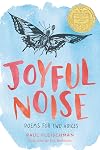
David Larson (The Five Owls, July/August 1988 (Vol. 2, No. 6))
Like its predecessor, I Am Phoenix (1985), Paul Fleischman's newest collection features poems that "were written to be read aloud by two readers at once." Fleischman uses these two voices in a variety of ways. Sometimes the readers merely volley identical lines. In other situations, the voices exchange contrasting points of view or even speak different lines simultaneously. Because of this unique configuration, Fleischman's work is distinguished from some other forms of poetry. Whie most poetry can be appreciated by solitary, silent readers, Fleischman's poems demand to be read aloud. That the words are not intended for private study is clear from the subtitle, Poems for Two Voices. But also, with the exception of "Fireflies," the poems in Joyful Noise lack the vivid visual images that lend themselves to individual contemplation. Instead, Fleischman's essential images are aural. Not only are the sounds of individual words important, but even more, it is the effect of the dialogic interplay between the dual voices that is primary. These interwoven exchanges cannot be recreated satisfactorily by an isolated reader. Fleischman successfully takes advantage of the dual voices in two ways. At times, in dramatic form, the two voices represent distinct characters. In "Honeybees," for instance, while one voice intimates the blessings of the queen bee's life, the parallel voice drones about the drudgery of a worker's show more existence: I'm loved and I'm lauded, I'm outranked by none. Then I pack combs with pollen--not my idea of fun. When I've done enough laying Then, weary, I strive I retire to patch up any cracks in the hive. for the rest of the day. In other poems, Fleischman uses the readers' voices to create sonic images. In "Whirligig Beetles," for instance, the cacophony created by the overlapping voices elicits the random, atom-like motion of the colliding beetles. Here the sound-picture is more effective than any visual image. This aural emphasis might suggest the employment of musical settings to augment the effect of the words. One could imagine, say, chirping percussion instruments accompanying the performance of "Crickets." Though the poems could be understood and enjoyed by young children, the performance of these poems requires a fair amount of reading skill or patient rehearsal. Not that public performance is essential. It can be wonderful fun to read these poems aloud with a loved one and listen. 1988, Harper & Row, $11.95. Ages all. show less
Like its predecessor, I Am Phoenix (1985), Paul Fleischman's newest collection features poems that "were written to be read aloud by two readers at once." Fleischman uses these two voices in a variety of ways. Sometimes the readers merely volley identical lines. In other situations, the voices exchange contrasting points of view or even speak different lines simultaneously. Because of this unique configuration, Fleischman's work is distinguished from some other forms of poetry. Whie most poetry can be appreciated by solitary, silent readers, Fleischman's poems demand to be read aloud. That the words are not intended for private study is clear from the subtitle, Poems for Two Voices. But also, with the exception of "Fireflies," the poems in Joyful Noise lack the vivid visual images that lend themselves to individual contemplation. Instead, Fleischman's essential images are aural. Not only are the sounds of individual words important, but even more, it is the effect of the dialogic interplay between the dual voices that is primary. These interwoven exchanges cannot be recreated satisfactorily by an isolated reader. Fleischman successfully takes advantage of the dual voices in two ways. At times, in dramatic form, the two voices represent distinct characters. In "Honeybees," for instance, while one voice intimates the blessings of the queen bee's life, the parallel voice drones about the drudgery of a worker's show more existence: I'm loved and I'm lauded, I'm outranked by none. Then I pack combs with pollen--not my idea of fun. When I've done enough laying Then, weary, I strive I retire to patch up any cracks in the hive. for the rest of the day. In other poems, Fleischman uses the readers' voices to create sonic images. In "Whirligig Beetles," for instance, the cacophony created by the overlapping voices elicits the random, atom-like motion of the colliding beetles. Here the sound-picture is more effective than any visual image. This aural emphasis might suggest the employment of musical settings to augment the effect of the words. One could imagine, say, chirping percussion instruments accompanying the performance of "Crickets." Though the poems could be understood and enjoyed by young children, the performance of these poems requires a fair amount of reading skill or patient rehearsal. Not that public performance is essential. It can be wonderful fun to read these poems aloud with a loved one and listen. 1988, Harper & Row, $11.95. Ages all. show less
Betsy Hearne (The Bulletin of the Center for Children's Books, February 1997 (Vol. 50, No. 6))
Claiming to stockpile against famine, the raja has for years demanded an unfair portion of his subjects' rice, but once hunger strikes, he feasts instead of sharing. When a clever villager returns the rice that falls from a basket bound for the palace, she asks as reward only one grain, to be doubled each day for thirty days. Every subsequent double-page spread shows animals delivering larger amounts of rice until the climactic fold-out of four pages of elephants lined up in ten rows of twenty-five or twenty-six each. The villager gathers the last of her reward and shares it with all the hungry people-including the raja. Intense crimsons and rich golds emphasize the power of royalty, while Demi's tiny, precise figures set against vertically geometric backgrounds seem especially suited to this Indian story about counting on a grand scale. A concluding chart shows the exact numbers mounting up and added together for a grand total of 1,073,741,823. Although different in style and tone from David Schwartz's How Much Is a Million? (BCCB 8/85), the two would make entertaining quantitative companions for the same age group. A source note is included. R--Recommended. Reviewed from galleys (c) Copyright 1997, The Board of Trustees of the University of Illinois. 1997, Scholastic, [36p], $19.95. Ages 5-8 yrs.
Claiming to stockpile against famine, the raja has for years demanded an unfair portion of his subjects' rice, but once hunger strikes, he feasts instead of sharing. When a clever villager returns the rice that falls from a basket bound for the palace, she asks as reward only one grain, to be doubled each day for thirty days. Every subsequent double-page spread shows animals delivering larger amounts of rice until the climactic fold-out of four pages of elephants lined up in ten rows of twenty-five or twenty-six each. The villager gathers the last of her reward and shares it with all the hungry people-including the raja. Intense crimsons and rich golds emphasize the power of royalty, while Demi's tiny, precise figures set against vertically geometric backgrounds seem especially suited to this Indian story about counting on a grand scale. A concluding chart shows the exact numbers mounting up and added together for a grand total of 1,073,741,823. Although different in style and tone from David Schwartz's How Much Is a Million? (BCCB 8/85), the two would make entertaining quantitative companions for the same age group. A source note is included. R--Recommended. Reviewed from galleys (c) Copyright 1997, The Board of Trustees of the University of Illinois. 1997, Scholastic, [36p], $19.95. Ages 5-8 yrs.
Mary Jane (BookHive (www.bookhive.org))
A tiny mosquito tells a tall tale which sets into motion a series of events, some comical, some sad. All the jungle animals become upset by the news of an owlet's death and consequently mother owl is too sad to wake up the sun. The animals get together to fix the situation and punish mosquito. Mosquito gives up telling tall tales, but learns an even more annoying habit. Leo and Diane Dillon's powerful, award-winning illustrations of African masks and woodprints evoke a strong sense of the jungle. Category: Award Books; Folklore; Multicultural. Grade Level: Preschool; Primary (K-3rd grade). 1976, Dial. Ages 3 to 9.
A tiny mosquito tells a tall tale which sets into motion a series of events, some comical, some sad. All the jungle animals become upset by the news of an owlet's death and consequently mother owl is too sad to wake up the sun. The animals get together to fix the situation and punish mosquito. Mosquito gives up telling tall tales, but learns an even more annoying habit. Leo and Diane Dillon's powerful, award-winning illustrations of African masks and woodprints evoke a strong sense of the jungle. Category: Award Books; Folklore; Multicultural. Grade Level: Preschool; Primary (K-3rd grade). 1976, Dial. Ages 3 to 9.
From Publishers Weekly
The grass may be greener in the country, and the carpets softer in the city, but--as the two amiable mouse couples in Brett's rich interpretation of the timeless fable finally resolve--"There's no place like home." Brett's ( The Mitten ; Trouble with Trolls ) version of how they arrive at their wise conclusion serves up a sumptuous visual feast. The art on each double-page spread (alternately devoted to urban and rural settings) is brimming with droll details; exquisite patterns appear on clothing, china and rugs; and imaginative borders range from silk cord to pottery shards to dandelions. The text also conveys the culture gap between the city and the country mice with a good deal of humor. When she feels a raindrop on her head, the city-mouse wife asks, "Is the bathtub leaking?"; and her natty husband proudly dons a new jacket ("so colorful and eye-catching"), not realizing that it will indeed catch a creature's eye--that of a large owl whose greedy clutches he barely escapes. Bound to be a standout among the season's picture book offerings. Ages 4-8.
Copyright 1994 Reed Business Information, Inc. (amazon.com)
The grass may be greener in the country, and the carpets softer in the city, but--as the two amiable mouse couples in Brett's rich interpretation of the timeless fable finally resolve--"There's no place like home." Brett's ( The Mitten ; Trouble with Trolls ) version of how they arrive at their wise conclusion serves up a sumptuous visual feast. The art on each double-page spread (alternately devoted to urban and rural settings) is brimming with droll details; exquisite patterns appear on clothing, china and rugs; and imaginative borders range from silk cord to pottery shards to dandelions. The text also conveys the culture gap between the city and the country mice with a good deal of humor. When she feels a raindrop on her head, the city-mouse wife asks, "Is the bathtub leaking?"; and her natty husband proudly dons a new jacket ("so colorful and eye-catching"), not realizing that it will indeed catch a creature's eye--that of a large owl whose greedy clutches he barely escapes. Bound to be a standout among the season's picture book offerings. Ages 4-8.
Copyright 1994 Reed Business Information, Inc. (amazon.com)
Amazon.com
If geese had graves, Mother Goose would be rolling in hers. The Stinky Cheese Man and Other Fairly Stupid Tales retells--and wreaks havoc on--the allegories we all thought we knew by heart. In these irreverent variations on well-known themes, the ugly duckling grows up to be an ugly duck, and the princess who kisses the frog wins only a mouthful of amphibian slime. The Stinky Cheese Man deconstructs not only the tradition of the fairy tale but also the entire notion of a book. Our naughty narrator, Jack, makes a mockery of the title page, the table of contents, and even the endpaper by shuffling, scoffing, and generally paying no mind to structure. Characters slide in and out of tales; Cinderella rebuffs Rumpelstiltskin, and the Giant at the top of the beanstalk snacks on the Little Red Hen. There are no lessons to be learned or morals to take to heart--just good, sarcastic fun that smart-alecks of all ages will love.
If geese had graves, Mother Goose would be rolling in hers. The Stinky Cheese Man and Other Fairly Stupid Tales retells--and wreaks havoc on--the allegories we all thought we knew by heart. In these irreverent variations on well-known themes, the ugly duckling grows up to be an ugly duck, and the princess who kisses the frog wins only a mouthful of amphibian slime. The Stinky Cheese Man deconstructs not only the tradition of the fairy tale but also the entire notion of a book. Our naughty narrator, Jack, makes a mockery of the title page, the table of contents, and even the endpaper by shuffling, scoffing, and generally paying no mind to structure. Characters slide in and out of tales; Cinderella rebuffs Rumpelstiltskin, and the Giant at the top of the beanstalk snacks on the Little Red Hen. There are no lessons to be learned or morals to take to heart--just good, sarcastic fun that smart-alecks of all ages will love.

Amazon.com
This exuberant valise of verse bulges with more than 100 poems about things you've never thought about, such as Underwater Wibbles who dine exclusively on cheese, and things you probably have thought about, such as sneezing oysters and the dot-gobbling Flotz. Jack Prelutsky, one of the premier children's poets of our time, manages to be deadpan and goofy simultaneously and in perfect rhythm right up to the pleasantly unpredictable punch lines of his poems.
Take "Jellyfish Stew." "You're soggy, you're smelly, / you taste like shampoo, / you bog down my belly / with oodles of goo, / yet I would glue noodles / and prunes to my shoe, / for one oozy spoonful / of jellyfish stew." Poems about greedy grannies, exploding Bloders, and hypothetical situations such as having your nose unfortunately situated between your toes are guaranteed to delight you and your favorite kids. Quirky, surprising, and always delightful, Prelutsky's poems make us wish we'd grown up with his books in hand. Illustrator James Stevenson's loose pen-and-ink sketches are lively and fluid, waltzing along perfectly with Prelutsky's playful poetry. Once you and your children have howled your way through this ALA Notable Book, you'll be happy to discover that this talented pair has created two other meaty collections, including Something BIG Has Been Here and A Pizza the Size of the Sun. (Ages 4 to 12)
This exuberant valise of verse bulges with more than 100 poems about things you've never thought about, such as Underwater Wibbles who dine exclusively on cheese, and things you probably have thought about, such as sneezing oysters and the dot-gobbling Flotz. Jack Prelutsky, one of the premier children's poets of our time, manages to be deadpan and goofy simultaneously and in perfect rhythm right up to the pleasantly unpredictable punch lines of his poems.
Take "Jellyfish Stew." "You're soggy, you're smelly, / you taste like shampoo, / you bog down my belly / with oodles of goo, / yet I would glue noodles / and prunes to my shoe, / for one oozy spoonful / of jellyfish stew." Poems about greedy grannies, exploding Bloders, and hypothetical situations such as having your nose unfortunately situated between your toes are guaranteed to delight you and your favorite kids. Quirky, surprising, and always delightful, Prelutsky's poems make us wish we'd grown up with his books in hand. Illustrator James Stevenson's loose pen-and-ink sketches are lively and fluid, waltzing along perfectly with Prelutsky's playful poetry. Once you and your children have howled your way through this ALA Notable Book, you'll be happy to discover that this talented pair has created two other meaty collections, including Something BIG Has Been Here and A Pizza the Size of the Sun. (Ages 4 to 12)