
These comments are about Linda Tressel. (Previously read & reviewed the companion Nina Balatka in this edition.)
The cover says it all - an anguished woman exhausted by the struggles in her life.
In this case, Linda Tressel is living with Aunt Charlotte in "the red house," willed to Linda. Aunt Charlotte wants the young Linda to marry boarder and much older man Peter Steinmarc. Linda refuses and, unlike some Trollope heroines who feel forced to do something but resist only quietly, Linda voices her resistance strongly and persistently.
Nevertheless, Linda feels the guilt ingrained in her by her religious upbringing. She sins by disobeying her aunt. And that's what keeps her wavering toward agreeing to the marriage, however odious and "rusty" Herr Steinmarc is.
Linda does find a love interest in young Ludovic, who works in the mill across the stream. They see each other secretly, and even try to elope at one point. But even that doesn't affect Herr Steinmarc's desire to marry her; what a pleasure it will be to"guide" her as God wishes, dominate her and punish her for resisting him, he thinks.
In the end, Ludovic proves unreliable, and as a last resort, a day before her scheduled wedding to Steinmarc, Linda takes the train from Nuremberg to Cologne, to the home of her only other relative, an estranged uncle, who generously takes her in.
She is tracked down, though, and it doesn't end well.
As usual, Trollope eases the unpleasantness with the occasional humorous scene, but this is show more a downer to be sure. show less
The cover says it all - an anguished woman exhausted by the struggles in her life.
In this case, Linda Tressel is living with Aunt Charlotte in "the red house," willed to Linda. Aunt Charlotte wants the young Linda to marry boarder and much older man Peter Steinmarc. Linda refuses and, unlike some Trollope heroines who feel forced to do something but resist only quietly, Linda voices her resistance strongly and persistently.
Nevertheless, Linda feels the guilt ingrained in her by her religious upbringing. She sins by disobeying her aunt. And that's what keeps her wavering toward agreeing to the marriage, however odious and "rusty" Herr Steinmarc is.
Linda does find a love interest in young Ludovic, who works in the mill across the stream. They see each other secretly, and even try to elope at one point. But even that doesn't affect Herr Steinmarc's desire to marry her; what a pleasure it will be to"guide" her as God wishes, dominate her and punish her for resisting him, he thinks.
In the end, Ludovic proves unreliable, and as a last resort, a day before her scheduled wedding to Steinmarc, Linda takes the train from Nuremberg to Cologne, to the home of her only other relative, an estranged uncle, who generously takes her in.
She is tracked down, though, and it doesn't end well.
As usual, Trollope eases the unpleasantness with the occasional humorous scene, but this is show more a downer to be sure. show less

Patricia Hampl goes in search of ... what? ... a contemplative life? a renewed or new connection to God and/or spirituality? the meaning of life?
She interweaves childhood memories and life events into her spiritual travels to Italy and California.
Most interesting for me were her childhood memories of St. Paul, MN (where neighborhood families were simply either Catholic - like hers - or not Catholic) and her trip to Assisi and Lourdes in Italy. Not so much for the spiritual direction she sought and found, but rather for the stories she tells and the characters she meets in this first three-quarters of the book.
I didn't connect so much with the final fourth of the book, when she attends a one-week retreat in solitude in California.
I didn't grow up Catholic so her memories of nuns and religious school from the 1940s, '50s and 60s were fascinating to me.
Her descriptions of her travels and the people she meets and travels with are clearly described and memorable.
And then - all the questions raised!
Would you rather be the star baton-twirler or the person watching the entire parade?
Can you be exhausted enough or inspired enough or quiet enough to ever sort things out?
What's the difference between secular spirituality and prayer and faith-based spirituality and prayer?
She interweaves childhood memories and life events into her spiritual travels to Italy and California.
Most interesting for me were her childhood memories of St. Paul, MN (where neighborhood families were simply either Catholic - like hers - or not Catholic) and her trip to Assisi and Lourdes in Italy. Not so much for the spiritual direction she sought and found, but rather for the stories she tells and the characters she meets in this first three-quarters of the book.
I didn't connect so much with the final fourth of the book, when she attends a one-week retreat in solitude in California.
I didn't grow up Catholic so her memories of nuns and religious school from the 1940s, '50s and 60s were fascinating to me.
Her descriptions of her travels and the people she meets and travels with are clearly described and memorable.
And then - all the questions raised!
Would you rather be the star baton-twirler or the person watching the entire parade?
Can you be exhausted enough or inspired enough or quiet enough to ever sort things out?
What's the difference between secular spirituality and prayer and faith-based spirituality and prayer?

This is a field of spring flowers for all of us who love books and reading.
Simon, of Stuck in a Book blog, brought this book to my attention, and his conclusion is my conclusion - her reading tastes don't usually agree with mine, but talking about books with her over a cup of coffee would be a blast.
She usually talks about her life when she talks about her reading and her favorite books - sometimes in real-time, sometimes reminiscing, including the year of covid and her father's death, the latter of which brought me to tears.
She would read to her ailing father and also set him up with audio books, but he most enjoyed listening to Lucy and her mother talking. "He would just lie and gaze happily at Mum. She had been, after all - for 50 years and more - always his favorite story." Heartbreaking.
As a relief valve, she also at this time is setting up her library in her new house, and listening to her love of physical books and the stories they hold make all readers swoon.
She also offers words of advice, thought she doesn't phrase them as that. Like: If you feel guilty about buying a new book at full price, just pro rate the cost over the years you will have it, like you would a TV or a car. However, also buy books at used-books shops and borrow books from your library because both feel to be on the brink of extinction.
My only quibble was fighting through her all-too-frequent long and tangled sentences. They could go on for 10 lines and include just about every punctuation show more mark. Such as this, when she was 36 and pregnant and didn't read one book on childbirth or parenting: I felt I had, over my previous 36 years (that's the age at which you are considered an "elderly prima gravida," by the way - "old for a first pregnancy"; I translated it much more loosely as "coming into the prime of my gravitas," which made it a lot more palatable), absorbed enough about the whole baby business by osmosis.
But I was willing to fight through these word jungles just because she can speak so lovingly about books and reading and can make both much more important than "just a hobby." show less
Simon, of Stuck in a Book blog, brought this book to my attention, and his conclusion is my conclusion - her reading tastes don't usually agree with mine, but talking about books with her over a cup of coffee would be a blast.
She usually talks about her life when she talks about her reading and her favorite books - sometimes in real-time, sometimes reminiscing, including the year of covid and her father's death, the latter of which brought me to tears.
She would read to her ailing father and also set him up with audio books, but he most enjoyed listening to Lucy and her mother talking. "He would just lie and gaze happily at Mum. She had been, after all - for 50 years and more - always his favorite story." Heartbreaking.
As a relief valve, she also at this time is setting up her library in her new house, and listening to her love of physical books and the stories they hold make all readers swoon.
She also offers words of advice, thought she doesn't phrase them as that. Like: If you feel guilty about buying a new book at full price, just pro rate the cost over the years you will have it, like you would a TV or a car. However, also buy books at used-books shops and borrow books from your library because both feel to be on the brink of extinction.
My only quibble was fighting through her all-too-frequent long and tangled sentences. They could go on for 10 lines and include just about every punctuation show more mark. Such as this, when she was 36 and pregnant and didn't read one book on childbirth or parenting: I felt I had, over my previous 36 years (that's the age at which you are considered an "elderly prima gravida," by the way - "old for a first pregnancy"; I translated it much more loosely as "coming into the prime of my gravitas," which made it a lot more palatable), absorbed enough about the whole baby business by osmosis.
But I was willing to fight through these word jungles just because she can speak so lovingly about books and reading and can make both much more important than "just a hobby." show less

Southern literature is a thing unto itself, isn't it? Distinctly regional, heavy on common-way-of-talking storytelling, and events that seem unlikely to happen anywhere else. Eudora Welty adds a layer of describing a character impeccably with just a few words or phrases.
Unfortunately - especially at the time of publication of this novella - it can also include race-based terms, attitudes and characters that make most of us uncomfortable today.
I struggle with whether that means I can't like the story and the telling of it, which I did, with its pettiness between families, the accommodation of oddball family members, and classic events and scenes that can be found in other Southern novels - like the summer trial in a sweltering courthouse.
In this Southern story in particular, I liked Miss Welty's pinpoint description of people - the woman who wears black glasses in white frames that she keeps in a case that's a celluloid butterfly from Woolworth's, the man with a diamond on this little finger that's "bigger than mine, but not half as expensive."
Nevertheless, any conversation about this book (just like 'Huckleberry Finn') is probably going to lead to a discussion about what to do about the "uncomfortable" parts of the book - acknowledge them and write them off to the book being a product of its day, condemn the book and try to make sure no one reads it, republish it with special editing?
Unfortunately - especially at the time of publication of this novella - it can also include race-based terms, attitudes and characters that make most of us uncomfortable today.
I struggle with whether that means I can't like the story and the telling of it, which I did, with its pettiness between families, the accommodation of oddball family members, and classic events and scenes that can be found in other Southern novels - like the summer trial in a sweltering courthouse.
In this Southern story in particular, I liked Miss Welty's pinpoint description of people - the woman who wears black glasses in white frames that she keeps in a case that's a celluloid butterfly from Woolworth's, the man with a diamond on this little finger that's "bigger than mine, but not half as expensive."
Nevertheless, any conversation about this book (just like 'Huckleberry Finn') is probably going to lead to a discussion about what to do about the "uncomfortable" parts of the book - acknowledge them and write them off to the book being a product of its day, condemn the book and try to make sure no one reads it, republish it with special editing?
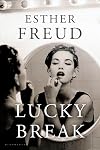
Four young people who attend Drama School in England forge friendships that will last for years to come.
Charlie - a beauty whose best break will be a sexy film in France. After she takes, by fluke, a lesson in raiki attunement, she seems more gifted in that. (This was an intriguing, continuing development that I really liked.)
Dan & Jemma - who marry and have four kids, which pretty much brings Jemma's acting possibilities to an end. Dan has spotty success - a short but good tour with Macbeth, a career-enhancing movie role in Africa, an audition in NYC, after which he decides to take a shot at opportunities in LA. Instead, a casting director asks Dan to let his 6-year-old daughter audition. Dan does land a successful run in a play.
Nell - who was asked to leave the Drama School after two years and not continue for the third year (both they and she, they say, have done as much as they can to make her as good as she'll get, which isn't good enough to warrant another year of teaching and learning). Yet she ends up on the red carpet at the royal premier of a movie she starred in.
There's lots of good stuff here about the secret life of actors, especially if, like me, you have no experience in that. I did know going in that "overnight success" is usually not overnight, but rather success after years of fits and starts and temp jobs and criticism and being passed over, and this novel shows that.
I liked best, though, following the characters' personal lives. How Dan and Jemma can show more get on each other's nerves, but seem to always come back to a loving place. The friendship between Charlie and Nell, so close that Nell takes Charlie with her on her red-carpet turn, where Charlie has a nice chat with Camilla.
A particularly sweet scene is a phone call between Nell and her mother, when Nell weeps about how an agent refused to represent her because they already have someone like Nell. Mom, perfectly, concludes the call by telling Nell that "there's no one like you."
Also nice was Charlie thinking that maybe the theater isn't for her, that maybe she should concentrate on film roles - and then laughing that she imagines she'll have the choice.
I was absorbed in this story looked forward to it every day I was reading it. show less
Charlie - a beauty whose best break will be a sexy film in France. After she takes, by fluke, a lesson in raiki attunement, she seems more gifted in that. (This was an intriguing, continuing development that I really liked.)
Dan & Jemma - who marry and have four kids, which pretty much brings Jemma's acting possibilities to an end. Dan has spotty success - a short but good tour with Macbeth, a career-enhancing movie role in Africa, an audition in NYC, after which he decides to take a shot at opportunities in LA. Instead, a casting director asks Dan to let his 6-year-old daughter audition. Dan does land a successful run in a play.
Nell - who was asked to leave the Drama School after two years and not continue for the third year (both they and she, they say, have done as much as they can to make her as good as she'll get, which isn't good enough to warrant another year of teaching and learning). Yet she ends up on the red carpet at the royal premier of a movie she starred in.
There's lots of good stuff here about the secret life of actors, especially if, like me, you have no experience in that. I did know going in that "overnight success" is usually not overnight, but rather success after years of fits and starts and temp jobs and criticism and being passed over, and this novel shows that.
I liked best, though, following the characters' personal lives. How Dan and Jemma can show more get on each other's nerves, but seem to always come back to a loving place. The friendship between Charlie and Nell, so close that Nell takes Charlie with her on her red-carpet turn, where Charlie has a nice chat with Camilla.
A particularly sweet scene is a phone call between Nell and her mother, when Nell weeps about how an agent refused to represent her because they already have someone like Nell. Mom, perfectly, concludes the call by telling Nell that "there's no one like you."
Also nice was Charlie thinking that maybe the theater isn't for her, that maybe she should concentrate on film roles - and then laughing that she imagines she'll have the choice.
I was absorbed in this story looked forward to it every day I was reading it. show less
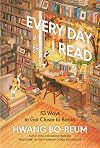
I really enjoyed this collection of "quick hit" essays about books and reading.
Some essays were of more interest to me (always have a book with you, you don't always have to finish it, visiting the library, the joy of collecting quotes) than others (use a timer app, books and drinks, movies and novels). But they are all good.
Speaking of quotes, here are some favorite excerpts:
If I have a book in my hands, it feels like I'm always connected with the world. ... Books soothe me and everything feels all right again.
So what do I hope to get out of books? I hope to become stronger, to stand firm by my convictions, and to become a more mature person. Someone neither arrogant nor naive.
If I am a slightly different person after reading a book, it's OK if I don't remember every word.
Some essays were of more interest to me (always have a book with you, you don't always have to finish it, visiting the library, the joy of collecting quotes) than others (use a timer app, books and drinks, movies and novels). But they are all good.
Speaking of quotes, here are some favorite excerpts:
If I have a book in my hands, it feels like I'm always connected with the world. ... Books soothe me and everything feels all right again.
So what do I hope to get out of books? I hope to become stronger, to stand firm by my convictions, and to become a more mature person. Someone neither arrogant nor naive.
If I am a slightly different person after reading a book, it's OK if I don't remember every word.

Nicholas Quinn, who is deaf, is the newly hired member of a Britain-based international testing service. He's murdered, and Morse and Lewis investigate how and who.
I tried to pay special attention to what looked like clues and to people's alibis and possible motives. Alas, as usual, I was unable to deduce whodunnit. But Morse manages to come up with two theories!
I tried to pay special attention to what looked like clues and to people's alibis and possible motives. Alas, as usual, I was unable to deduce whodunnit. But Morse manages to come up with two theories!
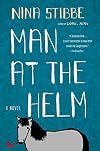
I've had this book on my shelf for a long time. The time finally came to try it and either like it or get rid of it.
I must have read about the plot to be interested enough to buy all those years ago (from a used-books shop? a library book sale?), but when I pulled it down off the shelf earlier this month, I was expecting a murder mystery. I didn't read the plot summary before starting. (I often like to start a book cold, especially one that's been hanging around for years waiting for the right time to be read.)
So ... it's not a murder mystery. Rather, it's a story about 10-year-old Lizzie Vogel and her sister (there's a younger brother, too, but he's rarely seen or talked about), and their attempts to find a new husband for their just-divorced mother -- a new man at the helm for their family.
What I like best about this novel is the just-right perspective of how a child is aware, but doesn't fully comprehend, the lives of the adults around her or how the world works.
For example, the sisters realize that their mother is moody, but picking up her prescription drugs is just another errand that they sometimes need to do. And for example, they see nothing wrong with their plan to find a new husband for their mother by making a list of all the possible men in the village and writing letters to them, as if written by her, inviting them over to the house.
The other thing I like a lot are the humorous, quirky asides. Like the story of Bufo the frog puppet, and how that younger show more brother, Jack, insists that he can't hear anything if his eyes are closed.
The story takes a turn when the family's "income" suffers from the ex-husband's financial downturn, but that leads to a refreshing revival for confidence and love.
What a nice surprise this novel was for me ... and proof that some books can justify the space they've occupied on your shelves for years. show less
I must have read about the plot to be interested enough to buy all those years ago (from a used-books shop? a library book sale?), but when I pulled it down off the shelf earlier this month, I was expecting a murder mystery. I didn't read the plot summary before starting. (I often like to start a book cold, especially one that's been hanging around for years waiting for the right time to be read.)
So ... it's not a murder mystery. Rather, it's a story about 10-year-old Lizzie Vogel and her sister (there's a younger brother, too, but he's rarely seen or talked about), and their attempts to find a new husband for their just-divorced mother -- a new man at the helm for their family.
What I like best about this novel is the just-right perspective of how a child is aware, but doesn't fully comprehend, the lives of the adults around her or how the world works.
For example, the sisters realize that their mother is moody, but picking up her prescription drugs is just another errand that they sometimes need to do. And for example, they see nothing wrong with their plan to find a new husband for their mother by making a list of all the possible men in the village and writing letters to them, as if written by her, inviting them over to the house.
The other thing I like a lot are the humorous, quirky asides. Like the story of Bufo the frog puppet, and how that younger show more brother, Jack, insists that he can't hear anything if his eyes are closed.
The story takes a turn when the family's "income" suffers from the ex-husband's financial downturn, but that leads to a refreshing revival for confidence and love.
What a nice surprise this novel was for me ... and proof that some books can justify the space they've occupied on your shelves for years. show less

Natalie Powell's daughter Rhoda has sacrificed her life to take care of her aging parents in the family home. After Natalie's husband dies, it becomes financially necessary for her to sell the house and move to a smaller place. The story is about the big moving day, and although the novel covers pretty much just that one day, the characters' thoughts and conversations explore their shared history, the choices they've made, the lives that are the result of those choices, and the choices that are now available to them.
Rhoda realizes that she gave up a life of her own to take care of her folks, and she wonders now whether this move to a new house is the ideal time to make a change. Or is it too late? Would it be selfish of her to leave now to pursue a life for herself, just when her mother needs her most? There is a deeper question, too -- does Rhoda like her life of being needed?
Delia understands that she escaped the life that Rhoda is in, and she would like Rhoda to finally have a shot at an independent life, too. Delia tells Rhoda that she will leave her job in London soon when she gets married, and that she could probably get her boss to hire Rhoda when Delia leaves.
Rhoda's and Delia's brother Maurice lives nearby with his society-minded wife, Ellen, and their adored daughter. He's dissatisfied with the way his married life has turned out, but there's no way he's going to become their mother's main caretaker.
Lots of meaty life questions here, and because of the way show more Lettice Cooper writes about the characters, I wanted everyone to have a happy ending. It isn't clear whether they do.
Some good passages:
Life was never closed to you as long as you went down any avenue that was open.
If you don't fight for yourself you die, and if you do, you are always liable to damage other people.
A tyranny is not all the tyrant's fault; it is the fault of those who submit to be slaves.
And, because I have a dear sister, I especially liked this: If your sister was also your great friend, there was nothing else like it, and you had one piece of luck whatever else you missed. show less
Rhoda realizes that she gave up a life of her own to take care of her folks, and she wonders now whether this move to a new house is the ideal time to make a change. Or is it too late? Would it be selfish of her to leave now to pursue a life for herself, just when her mother needs her most? There is a deeper question, too -- does Rhoda like her life of being needed?
Delia understands that she escaped the life that Rhoda is in, and she would like Rhoda to finally have a shot at an independent life, too. Delia tells Rhoda that she will leave her job in London soon when she gets married, and that she could probably get her boss to hire Rhoda when Delia leaves.
Rhoda's and Delia's brother Maurice lives nearby with his society-minded wife, Ellen, and their adored daughter. He's dissatisfied with the way his married life has turned out, but there's no way he's going to become their mother's main caretaker.
Lots of meaty life questions here, and because of the way show more Lettice Cooper writes about the characters, I wanted everyone to have a happy ending. It isn't clear whether they do.
Some good passages:
Life was never closed to you as long as you went down any avenue that was open.
If you don't fight for yourself you die, and if you do, you are always liable to damage other people.
A tyranny is not all the tyrant's fault; it is the fault of those who submit to be slaves.
And, because I have a dear sister, I especially liked this: If your sister was also your great friend, there was nothing else like it, and you had one piece of luck whatever else you missed. show less
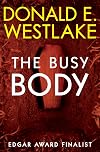
Aloysius Engel, right-hand man to mob boss Nick Ravit, is told to dig up the casket of recently deceased, memorialized and buried Charlie Brody because in the lining of his suitcoat pocket is a significant amount of smuggled drugs. Al's first attempt at exhumation results in mayhem, and we're off to the races.

Leticia "Lucy" Pym taught French ... until she read a book on psychology, found it ridiculous, read dozens more, then wrote her own, which became a bestseller. Because of that bit of fame, a former school chum, Henrietta, invites Lucyto speak at a school that teaches young women gymnastics and dance in preparation for careers in health care. Lucy is encouraged to continue to stay for a longer period of time, eventually through graduation and "demonstration day."
The author hints that Lucy is going to wish she had left when she had the chance.
On the day when graduates are given their professional appointments, Henrietta passes over the ace student, Innes, and gives a primo appointment to Rouse, less accomplished academically but, Henrietta reasons, better suited to the position.
And then ... Rouse is injured in an accident involving the gymnastics equipment and eventually dies.
Lucy suspects Innes and finds evidence to support her theory of the crime. She confronts Innes but agrees to not expose her when Innes declines the offer of the premium job and vows to live a life of penitence.
Lucy had been counseled to reveal her suspicion of Innes to school leaders despite the consequences there would be for Innes - "let God dispose" - but Lucy doesn't take that advice.
On the very last page of this wonderful novel, the twist of the story is revealed.
I raced through this; it is that good.
The author hints that Lucy is going to wish she had left when she had the chance.
On the day when graduates are given their professional appointments, Henrietta passes over the ace student, Innes, and gives a primo appointment to Rouse, less accomplished academically but, Henrietta reasons, better suited to the position.
And then ... Rouse is injured in an accident involving the gymnastics equipment and eventually dies.
Lucy suspects Innes and finds evidence to support her theory of the crime. She confronts Innes but agrees to not expose her when Innes declines the offer of the premium job and vows to live a life of penitence.
Lucy had been counseled to reveal her suspicion of Innes to school leaders despite the consequences there would be for Innes - "let God dispose" - but Lucy doesn't take that advice.
On the very last page of this wonderful novel, the twist of the story is revealed.
I raced through this; it is that good.
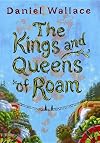
A fantastical story about a remote community established through deception and about a sisters' relationship, also tainted by deception.
Elijah McCallister kidnaps Ming Kai because Ming knows how to make silk and has silk worm pods. Together they establish the remote town of Roam, though the "togetherness" is on Elijah's terms and with Ming's resentment. The town flourishes, in the context of its remoteness, but Ming Kai warns Elijah that the town's beginnings will result in a curse on generations to come.
In Roam, years later, live Helen and Rachel, Elijah's great-grandchildren. Helen, the elder, is homely and sullen. Rachel is blind and beautiful, and a victim to Helen's lies and cruelty. Helen tells Rachel that she's lucky she's blind because that way she can't see how homely she (Rachel) is; whenever someone tells Rachel how pretty she is, she believes they're mocking her or being clumsily polite.
The sisters' parents make the treacherous drive once a week to procure magical water that they hope will allow Rachel to see. But Helen empties the vials and fills them with tap water.
What happens to all these characters, and others, comprises the rest of this absorbing and compassionate story. And because this is from Daniel Wallace, there are also fantastical touches - giant lumberjacks, ghosts, the magical waters.
I was surprised at one of the endings - that Rachel would turn on the friend who eventually led her to a cure for her blindness - but the book is wonderful, and Mr. show more Wallace certainly knows how to tell a story.
Some favorite passages:
(Elijah) knew what was in a man's heart just by looking. This is how he became who he was: by seeing what was in a man's heart, and taking it from him.
Helen ... discovered in her sister's absence what love and the loss of it is. ... It's a real thing inside of you made of paper thin glass, and when it breaks, the shards move through your blood and cut you to pieces.
A storyteller makes up things to help other people; a liar makes up things to help himself.
He stumbled, but it was grief that made him fall to his knees. show less
Elijah McCallister kidnaps Ming Kai because Ming knows how to make silk and has silk worm pods. Together they establish the remote town of Roam, though the "togetherness" is on Elijah's terms and with Ming's resentment. The town flourishes, in the context of its remoteness, but Ming Kai warns Elijah that the town's beginnings will result in a curse on generations to come.
In Roam, years later, live Helen and Rachel, Elijah's great-grandchildren. Helen, the elder, is homely and sullen. Rachel is blind and beautiful, and a victim to Helen's lies and cruelty. Helen tells Rachel that she's lucky she's blind because that way she can't see how homely she (Rachel) is; whenever someone tells Rachel how pretty she is, she believes they're mocking her or being clumsily polite.
The sisters' parents make the treacherous drive once a week to procure magical water that they hope will allow Rachel to see. But Helen empties the vials and fills them with tap water.
What happens to all these characters, and others, comprises the rest of this absorbing and compassionate story. And because this is from Daniel Wallace, there are also fantastical touches - giant lumberjacks, ghosts, the magical waters.
I was surprised at one of the endings - that Rachel would turn on the friend who eventually led her to a cure for her blindness - but the book is wonderful, and Mr. show more Wallace certainly knows how to tell a story.
Some favorite passages:
(Elijah) knew what was in a man's heart just by looking. This is how he became who he was: by seeing what was in a man's heart, and taking it from him.
Helen ... discovered in her sister's absence what love and the loss of it is. ... It's a real thing inside of you made of paper thin glass, and when it breaks, the shards move through your blood and cut you to pieces.
A storyteller makes up things to help other people; a liar makes up things to help himself.
He stumbled, but it was grief that made him fall to his knees. show less

I've liked everything I've read by Ann Patchett, but Bel Canto has been sitting on my shelf for years because the plot is not exactly what interests me in a novel - an opera singer, a Central or South American country, terrorists and hostages.
But ... it's Ann Patchett.
And it's terrific.
The vice president of the country is throwing a birthday party for Mr. Hosokawa, a Japanese businessman, who, it's hoped, will bring business to the country. He hires opera singer Roxane Coss to sing because she's a favorite of Mr. Hosokawa. The terrorists are there because they thought the president was going to be there.
A few days after the terrorists crash the party, may of the hostages are released. And then we enter months of claustrophobic captivity.
We learn the stories of many of the characters, we see how the people adapt to circumstances beyond their control, how the captives and terrorists come to live with each other, how routines are established in the most un-routine of situations.
Amazingly, Ms. Patchett tells us early on how all this is going to end, and yet I couldn't wait every day to get back into that house.
An amazing plot executed by the master Ann Patchett.
But ... it's Ann Patchett.
And it's terrific.
The vice president of the country is throwing a birthday party for Mr. Hosokawa, a Japanese businessman, who, it's hoped, will bring business to the country. He hires opera singer Roxane Coss to sing because she's a favorite of Mr. Hosokawa. The terrorists are there because they thought the president was going to be there.
A few days after the terrorists crash the party, may of the hostages are released. And then we enter months of claustrophobic captivity.
We learn the stories of many of the characters, we see how the people adapt to circumstances beyond their control, how the captives and terrorists come to live with each other, how routines are established in the most un-routine of situations.
Amazingly, Ms. Patchett tells us early on how all this is going to end, and yet I couldn't wait every day to get back into that house.
An amazing plot executed by the master Ann Patchett.

This will go down as one of the best surprises of my reading year!
I love the movie made from this book, and finally got around to reading the book. I wish I hadn't waited so long.
William Bloom, recalls - and sometimes resents - the life of his father Edward Bloom, who is on his deathbed.
Edward led a bigger-than-life life. There are tall tales, legends, unbelievable events and plenty of jokes, both at home in Alabama and throughout the world on his travels. After all, the subtitle of the book is "a novel of mythic proportions." From the two-headed geisha, to an old woman's glass eye that shows a group of mischievous boys how and when they will die, to the taming of the giants - the adventure tales are fantastical and fun and full of life lessons.
William is at his father's deathbed to try and reconcile before it's too late. They do, in the most fantastical tale of all.
"Remembering a man's stories makes him immortal, did you know that?"
If you've seen the wonderful movie "Big Fish, read the book. If you've read the book, see the movie.
Outside of the story, Mr. Wallace begins the book with a nice acknowledgement of teachers.
I love the movie made from this book, and finally got around to reading the book. I wish I hadn't waited so long.
William Bloom, recalls - and sometimes resents - the life of his father Edward Bloom, who is on his deathbed.
Edward led a bigger-than-life life. There are tall tales, legends, unbelievable events and plenty of jokes, both at home in Alabama and throughout the world on his travels. After all, the subtitle of the book is "a novel of mythic proportions." From the two-headed geisha, to an old woman's glass eye that shows a group of mischievous boys how and when they will die, to the taming of the giants - the adventure tales are fantastical and fun and full of life lessons.
William is at his father's deathbed to try and reconcile before it's too late. They do, in the most fantastical tale of all.
"Remembering a man's stories makes him immortal, did you know that?"
If you've seen the wonderful movie "Big Fish, read the book. If you've read the book, see the movie.
Outside of the story, Mr. Wallace begins the book with a nice acknowledgement of teachers.
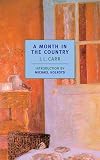
A short but powerful book.
From the slow reveal of the main character to descriptions of the idyllic countryside to the unusual job at hand (uncovering and restoring a mural inside a country church), this is a marvelous story.
As he slowly reveals the artwork - the day of reckoning - narrator Tom Birkin, a damaged WWI soldier, slowly recuperates from his experiences.
Along the way he meets:
The Rev. J.G. Keach and his young wife Alice
Charles Moon, also a veteran, who is working in the village to locate the unknown burial site of Piers Hebron, an ancestor of Miss Adelaide Hebron, who hired him.
Kathy Ellerbeck, 14, daughter of the station master, who frequently visits Birkin when he's working in the chapel
There are intriguing scenes (Tom's speculation about how the mural was finished and the discovery by Charles Moon of the grave of a Muslim man), and there are light-hearted scenes (the link between a man's moustache and the style of his praying, and an organ-shopping trip).
The story concludes with one of the most affecting passages I've ever read about remembrance, loss and grief.
From the slow reveal of the main character to descriptions of the idyllic countryside to the unusual job at hand (uncovering and restoring a mural inside a country church), this is a marvelous story.
As he slowly reveals the artwork - the day of reckoning - narrator Tom Birkin, a damaged WWI soldier, slowly recuperates from his experiences.
Along the way he meets:
The Rev. J.G. Keach and his young wife Alice
Charles Moon, also a veteran, who is working in the village to locate the unknown burial site of Piers Hebron, an ancestor of Miss Adelaide Hebron, who hired him.
Kathy Ellerbeck, 14, daughter of the station master, who frequently visits Birkin when he's working in the chapel
There are intriguing scenes (Tom's speculation about how the mural was finished and the discovery by Charles Moon of the grave of a Muslim man), and there are light-hearted scenes (the link between a man's moustache and the style of his praying, and an organ-shopping trip).
The story concludes with one of the most affecting passages I've ever read about remembrance, loss and grief.

Upon James Sallis' death recently, I decided that I should re-read at least the first book in his Lew Griffin series; I read the series decades ago. (I must have liked them because all the used-book copies I bought then are still on my shelves.)
I still like them.
The missing-persons cases that Lew Griffin investigates are pretty intense and horrific - unbelievable street scenes, crime scenes, hospital scenes, love scenes. But the books are so atmospheric, and Girffin is an interesting, thoughtful, caring, well-read character.
The book is broken up into four sections - 1964, 1970, 1984 and 1990. Each involves a different case, a different stage in Lew Griffin's life (usually as he's emerging from going off the rails because of bad decisions and bad behavior) and, often, a new woman in his life.
Griffin goes through many stages, and ends up writing novels himself. He also is dealing with an unsolved missing-person case - his son.
Griffin is a writer, and this is one though of his that I liked: I looked at her then, the way she held the toast. ... It's never ideas, but simple things, that break our hearts: a falling leaf that plunges us into our own irredeemable past, the memory of a young woman's ankle, a single smile among unknown faces, a madeleine, a piece of toast.
I still like them.
The missing-persons cases that Lew Griffin investigates are pretty intense and horrific - unbelievable street scenes, crime scenes, hospital scenes, love scenes. But the books are so atmospheric, and Girffin is an interesting, thoughtful, caring, well-read character.
The book is broken up into four sections - 1964, 1970, 1984 and 1990. Each involves a different case, a different stage in Lew Griffin's life (usually as he's emerging from going off the rails because of bad decisions and bad behavior) and, often, a new woman in his life.
Griffin goes through many stages, and ends up writing novels himself. He also is dealing with an unsolved missing-person case - his son.
Griffin is a writer, and this is one though of his that I liked: I looked at her then, the way she held the toast. ... It's never ideas, but simple things, that break our hearts: a falling leaf that plunges us into our own irredeemable past, the memory of a young woman's ankle, a single smile among unknown faces, a madeleine, a piece of toast.
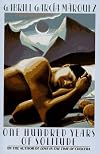
What a fabulous surprise this was for me!
I took it off my shelf figuring I needed to either start it and love it or start it and not like it and get rid of it. It was a "love it."
Where to begin?! The story of generations of a family in Central America, peppered with odd events and fantastical events. Ghosts & gypsies & a fortune teller & superstitions & the plague of insomnia & magical powers & turbulent love & broken hearts.
The fantastical events are - surprisingly and satisfyingly - dealt with as a matter of fact and not something extraordinary. A priest levitates to prove the existence of God. Villagers aren't impressed when a man arrives with a hot-air balloon because they remember the gypsies and their flying carpets.
I know that there is lots of symbolism here that I don't get and that would be explained and discussed if I read this in a literature course, but I don't care that I am missing that aspect of the novel.
It's so great.
I took it off my shelf figuring I needed to either start it and love it or start it and not like it and get rid of it. It was a "love it."
Where to begin?! The story of generations of a family in Central America, peppered with odd events and fantastical events. Ghosts & gypsies & a fortune teller & superstitions & the plague of insomnia & magical powers & turbulent love & broken hearts.
The fantastical events are - surprisingly and satisfyingly - dealt with as a matter of fact and not something extraordinary. A priest levitates to prove the existence of God. Villagers aren't impressed when a man arrives with a hot-air balloon because they remember the gypsies and their flying carpets.
I know that there is lots of symbolism here that I don't get and that would be explained and discussed if I read this in a literature course, but I don't care that I am missing that aspect of the novel.
It's so great.

An account of the women in playwright Thomas Harrow's life, primarily his three wives, and primarily the first one, Rhoda.
The action in the book takes place over just one day and the next morning, but it's a day of Tom remembering his life, from his meteoric rise as a playwright in the 1920s all the way to this day, when he faces financial ruin after sinking everything he had into producing a play that's going to fail. He also has to figure out how in the world he's going to tell his current, third, wife, Emily, that the life to which she has become accustomed is going to be no more, as he struggles to complete the third act of his current play.
There's much for him and the reader to contemplate as he recalls his childhood, his first love, God, friendship, the role and control of money and success, and the ramifications of both good and bad decisions.
Some excerpts:
"The trouble with you is that you read too many books and people who read too many books never know what is what outside of books."
It's pretty tough writing all day and then sitting down with an unrehearsed cast and talking dialogue all night.
"You're new," he said (to Rhoda). He had never made a truer remark. Every time he had ever seen her, there had never been the repetition that threw most human relationships into lives of boredom. There was always something different with her in the same way that the month of May was different every year, in spite of how well you thought you knew it.
None of it is her fault, show more after all, and Emily's always done the best she could. ... It occurred to him that it was almost the unkindest thing a man could say about a woman - that she had done the best she could. show less
The action in the book takes place over just one day and the next morning, but it's a day of Tom remembering his life, from his meteoric rise as a playwright in the 1920s all the way to this day, when he faces financial ruin after sinking everything he had into producing a play that's going to fail. He also has to figure out how in the world he's going to tell his current, third, wife, Emily, that the life to which she has become accustomed is going to be no more, as he struggles to complete the third act of his current play.
There's much for him and the reader to contemplate as he recalls his childhood, his first love, God, friendship, the role and control of money and success, and the ramifications of both good and bad decisions.
Some excerpts:
"The trouble with you is that you read too many books and people who read too many books never know what is what outside of books."
It's pretty tough writing all day and then sitting down with an unrehearsed cast and talking dialogue all night.
"You're new," he said (to Rhoda). He had never made a truer remark. Every time he had ever seen her, there had never been the repetition that threw most human relationships into lives of boredom. There was always something different with her in the same way that the month of May was different every year, in spite of how well you thought you knew it.
None of it is her fault, show more after all, and Emily's always done the best she could. ... It occurred to him that it was almost the unkindest thing a man could say about a woman - that she had done the best she could. show less
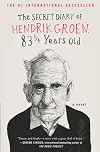
I read this book over the course of a year, maybe 2. Not because it isn't good - it is - but because it is easy to read occasionally because it's in the form of diary entries.
Hendrik is a resident of an old-age facility in Amsterdam, and his diary entries are about his life there, and the lives of the other residents, some of whom are his closest friends, who work to keep boredom, institutional rules and old-age ailments at bay.
The book does become sad at the end as a woman loved by Hendrik suffers a debilitating stroke, another friend loses body parts because of diabetes, and another transitions into dementia. But this section of the book is also incredibly helpful. For example, the friend who is entering dementia knows it, and their conversations provide valuable information and lessons for those of us who will eventually arrive in the same spot - either finding ourselves on the same road or finding ourselves a friend of someone on that road.
Hendrik is a resident of an old-age facility in Amsterdam, and his diary entries are about his life there, and the lives of the other residents, some of whom are his closest friends, who work to keep boredom, institutional rules and old-age ailments at bay.
The book does become sad at the end as a woman loved by Hendrik suffers a debilitating stroke, another friend loses body parts because of diabetes, and another transitions into dementia. But this section of the book is also incredibly helpful. For example, the friend who is entering dementia knows it, and their conversations provide valuable information and lessons for those of us who will eventually arrive in the same spot - either finding ourselves on the same road or finding ourselves a friend of someone on that road.
Her Midwest version of the Jane Austen novel "Persuasion."
Not great literature, and not my favorite Inez Ross, but a read to pass the time.
Not great literature, and not my favorite Inez Ross, but a read to pass the time.

The story is told in chapters that deal with members of a family during different points in history, from American colonial time to the Vietnam War era. Auchincloss, for me, is a fabulous writer. What I liked most about this particular book was the moral dilemma presented in each story: If a person truly believes that what he or she is doing is the right thing to do, but it isn't right or results in harmful consequences, how guilty is that person, is guilt or responsibility mitigated by the person's sincere motives. In other words, does sincere belief make a difference in actual or moral guilt for what happens as a result of your actions. A fascinating discussion, whether you're talking about pointing the finger at "witches" in the 1600s or about the many issues of our day.

Maigret, cool & deep, solves another atmospheric case, even though he is biased at the beginning by the fact that the murder victim's father was mean to Maigret's father back when the Fumal, the king of butchers, and Maigret were kids.
Fumal, the king of butchers, has been receiving anonymous letters threatening his life. (But was he writing them himself?) He is afforded police protection, but ends up getting killed anyway right under their noses. Everyone in the household hated him, but who did the deed?
Fumal, the king of butchers, has been receiving anonymous letters threatening his life. (But was he writing them himself?) He is afforded police protection, but ends up getting killed anyway right under their noses. Everyone in the household hated him, but who did the deed?
Another winner in the No. 1 Ladies Detective Agency; in this one, the ladies work for each spouse in a couple and try to find out who is cheating on who.
Good excerpts:
God ... was even-handed in his treatment of peoples, but even he could not help himself from particularly favoring Botswana.
They watched a group of younger children line up for a race. They were milling around and chattering while the starter tried to get them to the start line. And then a shout set them off, like a flock of twittering birds taking off from a field.
Mma Potokwane poured more tea, and cut her another slice of fruit cake. This helping was not quite as large as the initial one, but was generous enough - about 35 degrees this time.
I think sometimes that I have shed all the tears that can be shed, but then I find that this is simply not true.
Good excerpts:
God ... was even-handed in his treatment of peoples, but even he could not help himself from particularly favoring Botswana.
They watched a group of younger children line up for a race. They were milling around and chattering while the starter tried to get them to the start line. And then a shout set them off, like a flock of twittering birds taking off from a field.
Mma Potokwane poured more tea, and cut her another slice of fruit cake. This helping was not quite as large as the initial one, but was generous enough - about 35 degrees this time.
I think sometimes that I have shed all the tears that can be shed, but then I find that this is simply not true.
A fun, frothy book even though it's set in wartime.
Jerry Abbott & Barbara Abbott (nee Buncle) are the two Mrs. Barbara married her publisher, Arthur Abbott, and Jerry married Arthur's nephew.
There are some fabulous scenes, like the village bazaar and the very funny tea with a morose Lancreste, and there's a nice side story about Wilhelmina, the daughter of a former tenant.
I liked this: He was one of those people who are improved by responsibility.
Jerry Abbott & Barbara Abbott (nee Buncle) are the two Mrs. Barbara married her publisher, Arthur Abbott, and Jerry married Arthur's nephew.
There are some fabulous scenes, like the village bazaar and the very funny tea with a morose Lancreste, and there's a nice side story about Wilhelmina, the daughter of a former tenant.
I liked this: He was one of those people who are improved by responsibility.

Never read Little Women nor Little Men, and if I'd known that this was a "Little Women book," I probably wouldn't have read it either. I did like it, though, and the story of how each of the girls becomes a good woman. I especially liked chapter 11, about Jo's soul-searching about what she writes.
I liked these two phrases: "Talent isn't genius, and you can't make it so" and "he did nothing, but did it energetically."
I still don't want to read Little Women or any of the other books like that. Funny, eh?
I liked these two phrases: "Talent isn't genius, and you can't make it so" and "he did nothing, but did it energetically."
I still don't want to read Little Women or any of the other books like that. Funny, eh?
I always enjoy a Cyril Hare book. Even though, as with all mysteries, I can never figure out whodunnit. This one, with its contorted timeline, was especially out of my reach.
I wish that Cyril Hares weren't so hard to find; they're so nice to read.
I like the following excerpt, not only for the observation of one (of many) affliction of getting older, but also how it works to the advantage of those who want to know where you're going to be at any given time:
Regularity of habit is a disease that grows with old age, and ... makes the patient particularly vulnerable to the attention of those whose plans depend on their being in or out of the way at a given moment.
I wish that Cyril Hares weren't so hard to find; they're so nice to read.
I like the following excerpt, not only for the observation of one (of many) affliction of getting older, but also how it works to the advantage of those who want to know where you're going to be at any given time:
Regularity of habit is a disease that grows with old age, and ... makes the patient particularly vulnerable to the attention of those whose plans depend on their being in or out of the way at a given moment.

Third in the Susan Ryland/Atticus Pund series.
Again, a book within a book - and if you count the excerpts from the book on detection that Atticus Pund is writing, it's a book within a book, within a book.
It seems like just a differently-told Magpie Murders, and I will always like Magpie Murders best because it was a wonderful read and a fabulous surprise, but Marble Hall is still worth the read.
I wish, wish, wish that Mr. Horowitz would write the Atticus Pund mysteries themselves -- all those books written by the fictional Alan Conway.
Again, a book within a book - and if you count the excerpts from the book on detection that Atticus Pund is writing, it's a book within a book, within a book.
It seems like just a differently-told Magpie Murders, and I will always like Magpie Murders best because it was a wonderful read and a fabulous surprise, but Marble Hall is still worth the read.
I wish, wish, wish that Mr. Horowitz would write the Atticus Pund mysteries themselves -- all those books written by the fictional Alan Conway.
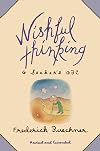
Definitions and explanations of the ABC's of religion and spirituality.
Good and clever writing makes this more than a dry theological guide.
"Doubts are the ants in the pants of faith. They keep it awake and moving."
"If you want to know who you really are, as distinct from who you like to think you really are, keep an eye on where your feet take you."
"In our minds, we are continually chattering with ourselves, and the purpose of meditation is to stop it."
"We learn to praise God not by paying compliments, but by paying attention. Watch how the trees exult when the wind is in them. Mark the utter stillness of the great blue heron in the swamp. Listen to the sound of the rain. Learn how to say Hallelujah! from the ones who say it right."
Good and clever writing makes this more than a dry theological guide.
"Doubts are the ants in the pants of faith. They keep it awake and moving."
"If you want to know who you really are, as distinct from who you like to think you really are, keep an eye on where your feet take you."
"In our minds, we are continually chattering with ourselves, and the purpose of meditation is to stop it."
"We learn to praise God not by paying compliments, but by paying attention. Watch how the trees exult when the wind is in them. Mark the utter stillness of the great blue heron in the swamp. Listen to the sound of the rain. Learn how to say Hallelujah! from the ones who say it right."
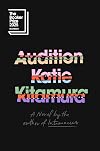
I like books about what happens, or doesn't happen, because of the choices characters make, or because of some change in their circumstances.
In this case, the question is: what if he isn't her son; what if he is.
I don't know why, then, that this didn't really click for me. It's possible that it was because I didn't like the people in the story.
In this case, the question is: what if he isn't her son; what if he is.
I don't know why, then, that this didn't really click for me. It's possible that it was because I didn't like the people in the story.

Can't wait to read the rest of this (long) series, but don't want to do one right after the other. There are other things I want to read :)
Nice bit of humor, unexpected descriptions, thought-provoking observations from the adult narrator of these days of young life.
Nice bit of humor, unexpected descriptions, thought-provoking observations from the adult narrator of these days of young life.