
Running is a heady, engaging war tale with a well-paced plot of an American combat hero trying to clear his name when he is wrongly accused of a treasonous conspiracy in Southeast Asia. It is set during the Vietnam war and follows the shadowy paths of several characters across many national borders. Learning that this substantial book was originally fueled by memoir made it more riveting for me. Author Lofthouse, a Vietnam veteran, paints an exotic picture that ranges between thrilling and bleak. His experiences reveal a level of human suffering that the politicians and generals never could conceive and to this day, don't understand. That any dignity or loyalty or human compassion could rise out of such a misguided exercise in futility, points at the strengths of the human heart. Lofthouse is an excellent storyteller with an important tale to tell. I recommend this novel to anyone with an interest in learning the boundaries that apply to the human condition during wartime.
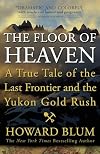
Skagway! The Dead Horse Trail! Chilicoot Pass! The Klondike! For a boy growing up in the Pacific Northwest during the 1950s, what words could ever be as evocative of adventure and primal struggle? Stories of the Klondike gold rush filled my ears when I was a youngster and stuck me with a life-long interest. When I heard Howard Blum had taken these tales and the fog-obscured facts surrounding their inception to task and written a factual history, I was equally amused and anxious. Tall tales reduced to history? Really?
My pre-read amusement was dashed as I poured through his fiction-like prose. Here was historic detail and recorded fact presented as a novelist would. Fresh. Immediate. Fully engaging. My anxiety over discovering that my childhood take on this visceral time would be destroyed, vanished. I read on and on, re-discovering the tales I had grown up with, now in three dimensions. Strong, vibrant and every bit as fantastic as they were when I first heard little snatches of them as a child.
Blum's cast of characters, were very carefully chosen and beautifully rendered as living, breathing Americans with all their warts intact. Though their exploits and legends made them giants in a young boy's mind, their actual exploits, now digested from an adult's perspective, were writ even larger in Blum's pages. A very human understanding of motivation and regret fuels the writing and it rarely disappoints.
From the author's use of period vernacular in the voice of the narrative, show more to his thorough research, to his very organic analysis of the times and the character of the people who took the risk and traveled north, Heaven's Floor is the best reflection of the times, its dreams and its rewards, I have ever read. For anyone with an interest in the transition years ending the nineteenth century, as we became a nation of industry while the frontier dwindled, this is a must read; as it should be for anyone who grew up on tales of striking it rich in the Klondike and Sgt. Preston of the Royal Canadian Mounted Police in the Yukon. show less
My pre-read amusement was dashed as I poured through his fiction-like prose. Here was historic detail and recorded fact presented as a novelist would. Fresh. Immediate. Fully engaging. My anxiety over discovering that my childhood take on this visceral time would be destroyed, vanished. I read on and on, re-discovering the tales I had grown up with, now in three dimensions. Strong, vibrant and every bit as fantastic as they were when I first heard little snatches of them as a child.
Blum's cast of characters, were very carefully chosen and beautifully rendered as living, breathing Americans with all their warts intact. Though their exploits and legends made them giants in a young boy's mind, their actual exploits, now digested from an adult's perspective, were writ even larger in Blum's pages. A very human understanding of motivation and regret fuels the writing and it rarely disappoints.
From the author's use of period vernacular in the voice of the narrative, show more to his thorough research, to his very organic analysis of the times and the character of the people who took the risk and traveled north, Heaven's Floor is the best reflection of the times, its dreams and its rewards, I have ever read. For anyone with an interest in the transition years ending the nineteenth century, as we became a nation of industry while the frontier dwindled, this is a must read; as it should be for anyone who grew up on tales of striking it rich in the Klondike and Sgt. Preston of the Royal Canadian Mounted Police in the Yukon. show less
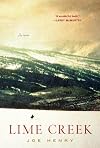
I've always enjoyed lyric writing in fiction. There's a very special way that words fall on my inner ear. They create a cadence and rhythm that good wordsmiths can exploit and use to conjure deeper understandings within the very words they have chosen. [[ASIN:1400069416 Lime Creek: Fiction]] is such a work. The author, a recognized, pedigreed song writer, has written in this novella-length work, a feast for the senses and the spirit, too.
Wyoming has inspired more than its share of great writing. The land lends itself to lyrical description and vibrant interconnections with those who make it their home. Lime Creek explores both of these wonderful subjects through the critical moments in a family's life, seen through the eyes of its sons. Each chapter stands as a story in its own right, creating unforgettable scenes revealing love, pain and joy on many levels. The sense of place draws the reader in and the author's expression of the interdependence and love between humans and animals is particularly touching throughout.
Lime Creek may be short, but it is a complete meal, make no mistake. The poetry of its language, along with the grit of the Dust Devils and the smell of leather and horses, fill the readers mind. Considering its source, I shouldn't have expected anything less. I hope it's released in hard cover as it deserves a permanent place in my library.
Wyoming has inspired more than its share of great writing. The land lends itself to lyrical description and vibrant interconnections with those who make it their home. Lime Creek explores both of these wonderful subjects through the critical moments in a family's life, seen through the eyes of its sons. Each chapter stands as a story in its own right, creating unforgettable scenes revealing love, pain and joy on many levels. The sense of place draws the reader in and the author's expression of the interdependence and love between humans and animals is particularly touching throughout.
Lime Creek may be short, but it is a complete meal, make no mistake. The poetry of its language, along with the grit of the Dust Devils and the smell of leather and horses, fill the readers mind. Considering its source, I shouldn't have expected anything less. I hope it's released in hard cover as it deserves a permanent place in my library.
A Broader View:
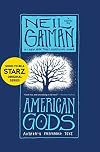
I was born within sight of the Golden Gate Bridge. As a child, my family lived in every state in the western US before entering my own traveling period in the early 1970s, eventually settling in New York. I’ve seen the Midwest, from the road and driven all over the South, from Key West, to New Orleans. Like the Johnny Cash song says, “I’ve been everywhere, Man…” but something brand new dawned on me while I was reading Neil Gaiman’s great book, American Gods (10th Anniversary Edition), this past week. I realized that my own perceptions of my homeland are defined by the fact of my being born here. Maybe a broader view has to come from outside our borders. Thanks, Mr. Gaiman. You’ve opened my eyes a little wider.
No matter the geographic size of the US, the cultural size of our nation is much, much larger. Large enough to contain the dreams of almost all the world’s people. Those living now, and all of those who lived before. Gaiman’s grand travelogue of the spirit is a remarkable book on several levels. First, it’s a great, wild ride. While it is a cracking fantasy tale of ultimate belonging and redemption, filled with memorable human and non-human, shifty and recognizable characters, it is also a grand lesson. The author teaches us gently, with gem-like specimens of the variety of cultures and locales that make this place what it is. He alternates story chapters with parallel and divergent sidebar-like small nuggets and stories of places show more and the hardships of those who came to America from their old homes and those who were here to watch them arrive.
Towards the end, I was deeply moved by Gaiman’s masterful phrasing and thought-provoking explanations. He really knocked me out with a very special gift, waiting within a paragraph describing a line of small gods on their way to do battle, of a nod to Richard Adams’ Shardik (one of my very favorite fantasy novels), or so it appeared to me. My memory kicked into high gear displaying mental images of characters and phrases from a lifetime of reading, and I found myself swept away by a feeling of compassion for our species. At our heart, we are really nothing more than small, frightened children, sheltering in a cave near a fire, afraid of what lies beyond our sight. What was, still is. Invention and construction and all our knowledge remains nothing more than our attempts to shine some light everywhere we can’t really see clearly.
American Gods is one of the most satisfying reads I’ve had the pleasure of engaging in, and would recommend it to anyone who enjoys history, a sense of place, and has an eye for detail. It encompasses a monumental range of philosophy, character and landscape and is as big as the sky over the Great Plains.
A Note on the Edition: The author explains that this edition contains some previously edited material. I would say that the restored section of the conversation involving Jesus is worth the price of the book on its own. show less
I was born within sight of the Golden Gate Bridge. As a child, my family lived in every state in the western US before entering my own traveling period in the early 1970s, eventually settling in New York. I’ve seen the Midwest, from the road and driven all over the South, from Key West, to New Orleans. Like the Johnny Cash song says, “I’ve been everywhere, Man…” but something brand new dawned on me while I was reading Neil Gaiman’s great book, American Gods (10th Anniversary Edition), this past week. I realized that my own perceptions of my homeland are defined by the fact of my being born here. Maybe a broader view has to come from outside our borders. Thanks, Mr. Gaiman. You’ve opened my eyes a little wider.
No matter the geographic size of the US, the cultural size of our nation is much, much larger. Large enough to contain the dreams of almost all the world’s people. Those living now, and all of those who lived before. Gaiman’s grand travelogue of the spirit is a remarkable book on several levels. First, it’s a great, wild ride. While it is a cracking fantasy tale of ultimate belonging and redemption, filled with memorable human and non-human, shifty and recognizable characters, it is also a grand lesson. The author teaches us gently, with gem-like specimens of the variety of cultures and locales that make this place what it is. He alternates story chapters with parallel and divergent sidebar-like small nuggets and stories of places show more and the hardships of those who came to America from their old homes and those who were here to watch them arrive.
Towards the end, I was deeply moved by Gaiman’s masterful phrasing and thought-provoking explanations. He really knocked me out with a very special gift, waiting within a paragraph describing a line of small gods on their way to do battle, of a nod to Richard Adams’ Shardik (one of my very favorite fantasy novels), or so it appeared to me. My memory kicked into high gear displaying mental images of characters and phrases from a lifetime of reading, and I found myself swept away by a feeling of compassion for our species. At our heart, we are really nothing more than small, frightened children, sheltering in a cave near a fire, afraid of what lies beyond our sight. What was, still is. Invention and construction and all our knowledge remains nothing more than our attempts to shine some light everywhere we can’t really see clearly.
American Gods is one of the most satisfying reads I’ve had the pleasure of engaging in, and would recommend it to anyone who enjoys history, a sense of place, and has an eye for detail. It encompasses a monumental range of philosophy, character and landscape and is as big as the sky over the Great Plains.
A Note on the Edition: The author explains that this edition contains some previously edited material. I would say that the restored section of the conversation involving Jesus is worth the price of the book on its own. show less
A Wild Chase Across the Globe and Through the Network
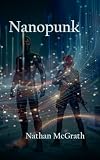
Nathan McGrath's novel Nanopunk carries a lot of clout. It's an astonishing story of a teenager from a foster home searching for his missing sister. With all the confusion and torn decision-making that would imply, he's also chased by shady government security and intelligence forces pushing him into an incredible, unexpected journey. But, in McGrath's tale, this is no typical teenage boy. To say he is well-equipped is an understatement.
The seed of driven scientific research, laboratory carelessness and close family ties, Alistair may not know it yet, but he's ready for whatever the near-future's dystopian corporate culture can throw against him. Fighting his way through remarkably cinematic scenes set in a bleak, post-apocalyptic world, he finds his own young carelessness and his long lost family have given him weapons, connections and information the most skilled hacker would die for. In addition to a gathered group of rebel freedom-fighters, he has best ally cybernetics could provide: a private, full-time, organic connection with the world's largest scale server.
How he balances his humanity with his uncanny abilities, despite betrayals and near-fatal accidents kept me turning pages. Through the crossed paths of his search, his battles and his finding real friendships, he matures far beyond the nano-technology that keeps him alive. If you enjoy fast-paced, action thrillers with a decidedly scientific bent, Nanopunk is show more for you. I'll be looking for Alistair's next chapter. show less
Nathan McGrath's novel Nanopunk carries a lot of clout. It's an astonishing story of a teenager from a foster home searching for his missing sister. With all the confusion and torn decision-making that would imply, he's also chased by shady government security and intelligence forces pushing him into an incredible, unexpected journey. But, in McGrath's tale, this is no typical teenage boy. To say he is well-equipped is an understatement.
The seed of driven scientific research, laboratory carelessness and close family ties, Alistair may not know it yet, but he's ready for whatever the near-future's dystopian corporate culture can throw against him. Fighting his way through remarkably cinematic scenes set in a bleak, post-apocalyptic world, he finds his own young carelessness and his long lost family have given him weapons, connections and information the most skilled hacker would die for. In addition to a gathered group of rebel freedom-fighters, he has best ally cybernetics could provide: a private, full-time, organic connection with the world's largest scale server.
How he balances his humanity with his uncanny abilities, despite betrayals and near-fatal accidents kept me turning pages. Through the crossed paths of his search, his battles and his finding real friendships, he matures far beyond the nano-technology that keeps him alive. If you enjoy fast-paced, action thrillers with a decidedly scientific bent, Nanopunk is show more for you. I'll be looking for Alistair's next chapter. show less
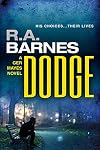
Raise a glass to Ger! He's at it again!
Author Ruby Barnes has provided a great deal of fun, lots of laughs and not just a few near spills in his latest -- Getting Out of Dodge: Peril 2. His main character, Ger Mayes, brings us up to date, after an early release nine years into his prison sentence. He's older, but only a tiny bit wiser.
His little lad still makes most of the major decisions along the way and despite the jams he fell into into before, he settles into a new life in Kilkenny with almost exactly the same degree of denial. It seems that many of his life decisions are being made for him and not always to his own best interest. His choices of friends and business associates, lined up against a wall, would spell doom for anyone else, but not for Ger.
Ger remains one of my favorite characters in recent fiction, and at read's end, there is just enough carrot left dangling on the end of the stick (even a tiny bit of redemption), to keep me anxious for the next book. I can easily recommend this book for anyone who enjoys a tight-paced caper and has a sense of humor.
Author Ruby Barnes has provided a great deal of fun, lots of laughs and not just a few near spills in his latest -- Getting Out of Dodge: Peril 2. His main character, Ger Mayes, brings us up to date, after an early release nine years into his prison sentence. He's older, but only a tiny bit wiser.
His little lad still makes most of the major decisions along the way and despite the jams he fell into into before, he settles into a new life in Kilkenny with almost exactly the same degree of denial. It seems that many of his life decisions are being made for him and not always to his own best interest. His choices of friends and business associates, lined up against a wall, would spell doom for anyone else, but not for Ger.
Ger remains one of my favorite characters in recent fiction, and at read's end, there is just enough carrot left dangling on the end of the stick (even a tiny bit of redemption), to keep me anxious for the next book. I can easily recommend this book for anyone who enjoys a tight-paced caper and has a sense of humor.