"No Sleep Till Saltburn", by author, broadcaster and commercial voice artist [a:Mark Gregory|37774|Susanna Gregory|https://d202m5krfqbpi5.cloudfront.net/authors/1316288895p2/37774.jpg] examines the New Wave Of British Heavy Metal (NWOBHM) scene of the early to mid-1980s in and around my neck of the woods, the North East of England. His excellent book chronicles his adventures as a fan, a fanzine magazine publisher, concert promoter, band manager and milk man. This was an era when I had long messy hair, ripped skin-tight jeans, denim and bikers jackets with obscure band patches and an even more obscure band t-shirts. I was there when Metallica played Newcastle Mayfair 1986, with Cliff Burton (see my photos of that gig here and a bootleg here) on bass but even at that point Metallica had been around for a few years as they themselves had been influenced by the likes of Diamond Head and Raven (who recorded some seminal albums at Neat Records in my home town of Wallsend). So, Mark's book helped me to conceptualize the first several years of the metal scene in region, the years where I was just a little too young to go to gigs, drink beer, jump around the place and miss my last bus home.
Mark has a real love of the subject and this shines through in his writing which is full of depreciating humour. Easy to read and therefore enjoy I devoured this book in one day. This is a must read for all heavy metal and rock fans and having briefly met Mark at gigs he comes across as a show more really nice guy; here's hoping Mark writes a follow-up book! Check out the official Facebook page for more information and read a great interview with the man himself!
Visit Marks Blog show less
Mark has a real love of the subject and this shines through in his writing which is full of depreciating humour. Easy to read and therefore enjoy I devoured this book in one day. This is a must read for all heavy metal and rock fans and having briefly met Mark at gigs he comes across as a show more really nice guy; here's hoping Mark writes a follow-up book! Check out the official Facebook page for more information and read a great interview with the man himself!
Visit Marks Blog show less

In this post I review some the themes (and frustrations) I identified when reading [b:The Fortress of the Pearl|594574|The Fortress of the Pearl (The Elric Saga, #8)|Michael Moorcock|https://d202m5krfqbpi5.cloudfront.net/books/1265756984s/594574.jpg|1479741] by [a:Michael Moorcock|16939|Michael Moorcock|https://d202m5krfqbpi5.cloudfront.net/authors/1222901251p2/16939.jpg].
Firstly, I was (and still am) a great fan of the Elric books having read these extensively as a teenager. This story takes place during a previously ambiguous period between [b:Elric of Melniboné|30036|Elric of Melniboné (Elric, #1)|Michael Moorcock|https://d202m5krfqbpi5.cloudfront.net/books/1388345555s/30036.jpg|388812] and [b:The Sailor on the Seas of Fate|60154|The Sailor on the Seas of Fate (Elric, #2)|Michael Moorcock|https://d202m5krfqbpi5.cloudfront.net/books/1352574936s/60154.jpg|1777516] and has Elric questing (as usual) following on from inadvertently swallowing some slow acting poison. He needs to retrieve the "Pearl at the Heart of the World" to receive the antidote. The journey takes him through a dream world where reality is distorted and warped. In addition to the antidote Elric will also secure the release of a young boy who has been taken hostage.
The book is split into three parts: parts I and III are more in line with the previous Elric books, in terms of thrills, composition and construction. In these sections you have the characteristic elements which you’ve come across before in show more terms of rich descriptions of cultures and civilizations, plus the usual strange mix of characters all underpinned with ruthless action.
The first issue I had concerned the reason for the quest itself. Here we have a mighty warrior, aided by magic and a sword which sucks your soul out of you. Why didn't Elric just beat the living daylights out of the villain and get the antidote immediately after swallowing the poison (in fact he does as much towards the end of the book anyway, practically killing everyone in the entire city)? Also, why is he so bothered about one boy? Like I've just said he practically kills everyone anyway, plus in previous books he slaughters many innocents basically because they just got in his way.
As ever the book uses the idea of the multiverse:
This idea is explored further in part II via an exploration of the nature of dreams and reality. Each of the dream worlds Elric passes through tries to entice Elric to attain unreachable desires in different ways but ultimately suggests that spiritual nourishment is an important as physical.
So in summary, not one of the best Elric stories as there was too much philosophizing which slowed down the action to a meandering snail’s pace at times and although you could read [b:The Fortress of the Pearl|594574|The Fortress of the Pearl (The Elric Saga, #8)|Michael Moorcock|https://d202m5krfqbpi5.cloudfront.net/books/1265756984s/594574.jpg|1479741] as a stand-alone novel I would suggest that your read the rest of the series first to set this story into context. show less
Firstly, I was (and still am) a great fan of the Elric books having read these extensively as a teenager. This story takes place during a previously ambiguous period between [b:Elric of Melniboné|30036|Elric of Melniboné (Elric, #1)|Michael Moorcock|https://d202m5krfqbpi5.cloudfront.net/books/1388345555s/30036.jpg|388812] and [b:The Sailor on the Seas of Fate|60154|The Sailor on the Seas of Fate (Elric, #2)|Michael Moorcock|https://d202m5krfqbpi5.cloudfront.net/books/1352574936s/60154.jpg|1777516] and has Elric questing (as usual) following on from inadvertently swallowing some slow acting poison. He needs to retrieve the "Pearl at the Heart of the World" to receive the antidote. The journey takes him through a dream world where reality is distorted and warped. In addition to the antidote Elric will also secure the release of a young boy who has been taken hostage.
The book is split into three parts: parts I and III are more in line with the previous Elric books, in terms of thrills, composition and construction. In these sections you have the characteristic elements which you’ve come across before in show more terms of rich descriptions of cultures and civilizations, plus the usual strange mix of characters all underpinned with ruthless action.
The first issue I had concerned the reason for the quest itself. Here we have a mighty warrior, aided by magic and a sword which sucks your soul out of you. Why didn't Elric just beat the living daylights out of the villain and get the antidote immediately after swallowing the poison (in fact he does as much towards the end of the book anyway, practically killing everyone in the entire city)? Also, why is he so bothered about one boy? Like I've just said he practically kills everyone anyway, plus in previous books he slaughters many innocents basically because they just got in his way.
As ever the book uses the idea of the multiverse:
"There is an infinity of worlds and some are yet unborn, some so old they have grown senile, some born of dreams, some destroyed by nightmares."
This idea is explored further in part II via an exploration of the nature of dreams and reality. Each of the dream worlds Elric passes through tries to entice Elric to attain unreachable desires in different ways but ultimately suggests that spiritual nourishment is an important as physical.
So in summary, not one of the best Elric stories as there was too much philosophizing which slowed down the action to a meandering snail’s pace at times and although you could read [b:The Fortress of the Pearl|594574|The Fortress of the Pearl (The Elric Saga, #8)|Michael Moorcock|https://d202m5krfqbpi5.cloudfront.net/books/1265756984s/594574.jpg|1479741] as a stand-alone novel I would suggest that your read the rest of the series first to set this story into context. show less

This fast paced adventure takes elements of early 1970s kung-fu chop chop action movies and merges them with the bloody violence of pulp novels. This is the first novel in a very lengthy series of books (more than 150 to date) and while it doesn't feature Remo’s Yoda-like teacher Chuin all that much as I understand it he became a more prominent character in later novels. So this book focuses on Remo almost exclusively; who is as tough as nails, but still fairly likeable bloke. However, saying this he isn't the sharpest tool in the toolbox as while he’s been trained in 'Sinanju', the 'sun source' of all martial arts and therefore has superhuman abilities at times he acts like an overgrown child.
For me, the most interesting part of the series is Sinanju; according to Chiun, other martial arts are all diluted imitations of Sinanju. He compares the other arts to rays of sunshine with Sinanju being the sun itself. Some of the specific teachings are worth repeating:
Let your opponent point to you the way to overcome him.
The most dangerous man is he who does not appear dangerous.
A man who cannot apologize is no man at all.
Everything is a weapon in the hands of a man who knows.
One cannot sew a silk purse from a sow's ear.
One cannot fit the ocean into a brandy snifter.
One cannot make a diamond out of river mud; be happy with a brick.
Overall a fun book: chewing gum for the brain.
For me, the most interesting part of the series is Sinanju; according to Chiun, other martial arts are all diluted imitations of Sinanju. He compares the other arts to rays of sunshine with Sinanju being the sun itself. Some of the specific teachings are worth repeating:
Let your opponent point to you the way to overcome him.
The most dangerous man is he who does not appear dangerous.
A man who cannot apologize is no man at all.
Everything is a weapon in the hands of a man who knows.
One cannot sew a silk purse from a sow's ear.
One cannot fit the ocean into a brandy snifter.
One cannot make a diamond out of river mud; be happy with a brick.
Overall a fun book: chewing gum for the brain.
Firstly, I'm more of a fantasy or sci-fi man myself, so this wasn't a book that I would usually read (or listen to in this case). Crime thrillers don’t particularly capture my attention but with Jack Reacher by Lee Child I thought I’d try something different. Jack is an ex-military cop who drifts from town to town, gets involved in mischief, kills bad guys, gets the girl, acts first then thinks later, etc. He’s what Americans would call a “bad- ass”. I’m not going to provide a summary of the story, the blurb on the jacket does a great job at that, suffice to say that it reads like something out of a 1980s action movie.
As I listened to the audiobook I noticed that the narrator frequently paused. When checking out the text in the book itself I realised that this was due lots of remarkably short, sharp and punchy sentences (possibly to try to build up the suspense and tension?) and its all written in the first person. I can image that it would be a somewhat irritating novel to read because of this.
The characters themselves were very stereotypical: the lead was a tough male and not a particularly complex character: ex-military with black and white attitudes when it came to situations. Perhaps Reacher is developed more in further books in the series? At no point did you worry that he would be killed off despite the various threats to his life.
I felt somewhat sorry for the “strong” female character in the book: Roscoe. Although she is Reacher’s girlfriend she show more seems to be constantly the victim, requiring his protection and when she does come up with some theories on why the events are happening in the way they are, she turn out to be wrong. I guess my point is why try to promote her as this “strong” person when she’s clearly just another character?
Anyway, Reacher’s logical analysis of situations, interspersed with extreme violence, is what draws you into this book. The plotting is well placed leaving the reader wondering how Reacher will survive in the circumstances he finds himself in, but you know he always will … somehow.
Of course the plot is unbelievable and improbable but the book certainly was clever, entertaining and very well controlled when it came to letting the story slowly unfold. This is entertaining fiction and while there are lots of convenient coincidences they all add to the enjoyment. Child also clearly put some effort into researching impressive facts concerning how money flows in a country to what sort of damage a specific weapon or bullet will do.
Overall I enjoyed this book much more than I was expecting to, and I think others will enjoy it too. This isn’t a book for younger readers as some of the violence is graphic making it probably one of the best examples of man-lit (is that a real word?) around. I’m happy enough to give some more of the books in the series a read based on what’s on offer here.
As I listened to the audiobook I noticed that the narrator frequently paused. When checking out the text in the book itself I realised that this was due lots of remarkably short, sharp and punchy sentences (possibly to try to build up the suspense and tension?) and its all written in the first person. I can image that it would be a somewhat irritating novel to read because of this.
The characters themselves were very stereotypical: the lead was a tough male and not a particularly complex character: ex-military with black and white attitudes when it came to situations. Perhaps Reacher is developed more in further books in the series? At no point did you worry that he would be killed off despite the various threats to his life.
I felt somewhat sorry for the “strong” female character in the book: Roscoe. Although she is Reacher’s girlfriend she show more seems to be constantly the victim, requiring his protection and when she does come up with some theories on why the events are happening in the way they are, she turn out to be wrong. I guess my point is why try to promote her as this “strong” person when she’s clearly just another character?
Anyway, Reacher’s logical analysis of situations, interspersed with extreme violence, is what draws you into this book. The plotting is well placed leaving the reader wondering how Reacher will survive in the circumstances he finds himself in, but you know he always will … somehow.
Of course the plot is unbelievable and improbable but the book certainly was clever, entertaining and very well controlled when it came to letting the story slowly unfold. This is entertaining fiction and while there are lots of convenient coincidences they all add to the enjoyment. Child also clearly put some effort into researching impressive facts concerning how money flows in a country to what sort of damage a specific weapon or bullet will do.
Overall I enjoyed this book much more than I was expecting to, and I think others will enjoy it too. This isn’t a book for younger readers as some of the violence is graphic making it probably one of the best examples of man-lit (is that a real word?) around. I’m happy enough to give some more of the books in the series a read based on what’s on offer here.
“Evaluate. Long experience had taught me to evaluate and assess. When the unexpected gets dumped on you, don’t waste time. Don’t figure out how or why it happened. Don’t recriminate. Don’t figure out whose fault it is. Don’t work out how to avoid the same mistake next time. All of that you do later. If you survive.”show less
― Lee Child, Killing Floor
The New Wave of Heavy Metal (NWOBHM), depending on your point of view:
— Kerrang! NWOBHM supplement (1989)
Or it was:
— Joel McIver, Justice for All: The Truth about Metallica (2004)
Well, I agree with both of these statements: it was, in my opinion, a magical coming of age for heavy metal which will never be bettered. The term NWOBHM was conjured up at the time by journalists to conveniently package the rock and metal bands which had embraced the DIY punk ethic; speeding up what went before, toning down the blues influences and turning it up to 11. The genre reached its peak in the UK in the early 80s when the charts were packed full of Maiden, Priest, Motorhead, Saxon and loads of other excellent metal bands. It was also a period where the numerous subgenres of metal were slowly starting to define themselves.
This book is probably the most comprehensive record of the bands from that era (with 500 plus entries) and exposes the real size and scope of revolution that was taking place at the time. Of course not every band can be Def Leppard and the while a lot of the copycat and hopeful bands faded into obscurity it’s still massively interesting to read about their brief time in time spotlight and why it all went wrong for them.
The occasional show more illustration, rare photograph, copy of album and 7” single sleeves, sporadic inclusion of gig information from the time and comments from the band members themselves liven up what could have a fairly dry read.
I found some the entries were out of date but if you supplement most of the band entries with the data available at Rate Your Music then the colourful discographies can easily be updated and releases rated making it easy to separate the wheat out from the chaff.
When I was reading the book I couldn't believe there were so many bands which I'd forgotten about who were still actually releasing music and gigging after all of these years. To me, this highlights the fact that big labels will continue to shovel crap onto the general public who are happy to buy it, while 99.9% of the truly awesome bands who created superbly influential songs sadly fail to make a living from doing what they love.
So in summary, this is the ultimate primer of an all too short but hugely important chapter of musical history. A must read for anyone interested in the metal genre. show less
“.. was a nationwide ground-breaking phenomenon from which sprang such heavy metal legends as Iron Maiden, Def Leppard, Saxon and Diamond Head.”
— Kerrang! NWOBHM supplement (1989)
Or it was:
“... crude, poorly produced and played by musicians with rudimentary talents.”
— Joel McIver, Justice for All: The Truth about Metallica (2004)
Well, I agree with both of these statements: it was, in my opinion, a magical coming of age for heavy metal which will never be bettered. The term NWOBHM was conjured up at the time by journalists to conveniently package the rock and metal bands which had embraced the DIY punk ethic; speeding up what went before, toning down the blues influences and turning it up to 11. The genre reached its peak in the UK in the early 80s when the charts were packed full of Maiden, Priest, Motorhead, Saxon and loads of other excellent metal bands. It was also a period where the numerous subgenres of metal were slowly starting to define themselves.
This book is probably the most comprehensive record of the bands from that era (with 500 plus entries) and exposes the real size and scope of revolution that was taking place at the time. Of course not every band can be Def Leppard and the while a lot of the copycat and hopeful bands faded into obscurity it’s still massively interesting to read about their brief time in time spotlight and why it all went wrong for them.
The occasional show more illustration, rare photograph, copy of album and 7” single sleeves, sporadic inclusion of gig information from the time and comments from the band members themselves liven up what could have a fairly dry read.
I found some the entries were out of date but if you supplement most of the band entries with the data available at Rate Your Music then the colourful discographies can easily be updated and releases rated making it easy to separate the wheat out from the chaff.
When I was reading the book I couldn't believe there were so many bands which I'd forgotten about who were still actually releasing music and gigging after all of these years. To me, this highlights the fact that big labels will continue to shovel crap onto the general public who are happy to buy it, while 99.9% of the truly awesome bands who created superbly influential songs sadly fail to make a living from doing what they love.
So in summary, this is the ultimate primer of an all too short but hugely important chapter of musical history. A must read for anyone interested in the metal genre. show less
In this review I'm going to explore one specific aspect of the book The Moon is a Harsh Mistress by Robert Heinlein which I have just finished reading; this is the political philosophy of Rational Anarchy and how it can help to address the following:
What is Rational Anarchy?
Exactly what a Rational Anarchist believes is defined by one of the characters:
So while the Rational Anarchist appreciates that some form of government is required he believes that it is merely just a collection of individuals making individual choices. How would government differ if all politicians took personal responsibility for their choices? Would different choices be made? Rational Anarchy show more then is anarchy at an individual level as each person strives to makes rational decisions in the context of the environment, customs and constraints he or she lives in:
It’s interesting to note that the typical reaction when anarchy is mentioned is that the default thought is one of no government and no laws, the assumption being that people would then act purely in their own self-interest. The concept of Rational Anarchy isn't about this as it uses phrases such as,"...self-responsible individuals" and "Each responsible for his own acts." This suggests recognition of a level of constraint over and above total self-interest where people would just do as they please without fear of retribution. An example given in the book:
So the society portrayed, while there may not be laws to protect the population, had certain customs in place which people have individually chosen to accept.
An interesting idea indeed and only one of the many explored in this fascinating and well plotted book. show less
That we were slaves I had known all my life — and nothing could be done about it. True, we weren't bought and sold — but as long as Authority held monopoly over what we had to have and what we could sell to buy it, we were slaves.
What is Rational Anarchy?
Exactly what a Rational Anarchist believes is defined by one of the characters:
… concepts such as ‘state’ and ‘society’ and ‘government’ have no existence save as physically exemplified in the acts of self-responsible individuals. He believes that it is impossible to shift blame, share blame, distribute blame . . . as blame, guilt, responsibility are matters taking place inside human beings singly and nowhere else. But being rational, he knows that not all individuals hold his evaluations, so he tries to live perfectly in an imperfect world ... aware that his effort will be less than perfect yet undismayed by self-knowledge of self-failure.
So while the Rational Anarchist appreciates that some form of government is required he believes that it is merely just a collection of individuals making individual choices. How would government differ if all politicians took personal responsibility for their choices? Would different choices be made? Rational Anarchy show more then is anarchy at an individual level as each person strives to makes rational decisions in the context of the environment, customs and constraints he or she lives in:
My point is that one person is responsible. Always. If H-bombs exist—and they do—some man controls them. In terms of morals there is no such thing as a ‘state.’ Just men. Individuals. Each responsible for his own acts.
It’s interesting to note that the typical reaction when anarchy is mentioned is that the default thought is one of no government and no laws, the assumption being that people would then act purely in their own self-interest. The concept of Rational Anarchy isn't about this as it uses phrases such as,"...self-responsible individuals" and "Each responsible for his own acts." This suggests recognition of a level of constraint over and above total self-interest where people would just do as they please without fear of retribution. An example given in the book:
There is no rape in Luna. None. Men won’t permit. If rape had been involved, they wouldn't have bothered to find a judge and all men in earshot would have scrambled to help.
But we figure this way: If a man is killed, either he had it coming and everybody knows it — usual case—or his friends will take care of it by eliminating man who did it. Either way, no problem. Nor many eliminations. Even set duels aren't common.
So the society portrayed, while there may not be laws to protect the population, had certain customs in place which people have individually chosen to accept.
An interesting idea indeed and only one of the many explored in this fascinating and well plotted book. show less
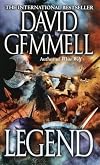
Firstly, to be clear, Legend isn’t the finest set of words ever committed to paper. In some ways David Gemmell’s writing is rather unsophisticated and technically flawed (in some places its actually rather raw) but this doesn’t matter. Taken as a whole Legend is perhaps it’s one of the most entertaining books I’ve ever read. Why? Well, a number of reasons:
1. The depth of characterization surprised me. Gemmell’s writing style is crisp and succinct and he retains an ability to get you to really care about the characters. For example, even the antagonist Ulric, leader of the Nadir, is presented as a multidimensional person, to the point where you actually feel he is a reasonable and rounded person: not just a cackling villain who rubs his hands together and then twirls his moustache.
2. Druss the greatest hero of the Drenai. At the start of the book it is clear that Druss is in his sixties and much weaker than his prime but still a formidable warrior and an inspirational leader to the Drenai. His death is foretold; he is to die defending his people one last time at Delnoch or he has the option to prolong his life by lapsing slowly into senility. He chooses the former. This immediately draws you to this man and gives you an insight why he is called Legend.
3. Unlike most novels I’ve read, the premise here is the apparently a useless and futile quest. The efforts of the defenders are pitiful against the unstoppable and infinite surge of the invaders. The show more characters are going to fight and almost certainly die; the odds they face are too overwhelming to overcome and yet they choose to fight anyway. Isn’t this what makes true heroes? Living and dying for a cause you believe in, even though the outcome may be hopeless for you personally? This raises the question in the readers mind: just how do I want to be remembered and am I leading a worthy life?
4. The parts of the book where Druss trains and leads the men provides an inspiring analysis on what I means to be a man. Several times the point of view switches. The worries, concerns and anxieties are articulated but these are offset by the individual and collective acts of integrity, respect and dignity.
5. Gemmell doesn’t use the usual fantastic plot devices: magic, dragons, etc, which is refreshing. He does however leave the extremely well written and exciting battle /fight scenes (of which there are many) intact.
So in summary, it’s not how Gemmell writes that’s ultimately important it's what he writes. Highly recommended, even if you’re first choice of book isn’t heroic fantasy.
Quotes from the Book
Here are list of some of the quotes I liked from Legend:
By nature of definition only the coward is capable of the highest heroism.
Ch. 4
Live or die, a man and a woman need love. There is a need in the race. We need to share. To belong. Perhaps you will die before the year is out. But remember this: to have may be taken from you, to have had never. it is far better to have tasted love before dying than to die alone.
Ch. 6
[A]ll men die. ... A man needs many things in his life to make it bearable. A good woman. Sons and daughters. Comradeship. Warmth. Food and shelter. but above all these things, he needs to be able to know that he is a man. And what is a man? He is someone who rises when life has knocked him down. Someone who raises his fist to heaven when a storm has ruined his crop — and then plants again. And again. A man remains unbroken by the savage twists of fate. That man may never win. But when he sees himself reflected, he can be proud of what he sees. For low he may be in the scheme of things: peasant, serf, or dispossessed. But he is unconquerable. And what is death? an end to trouble. An end to strife and fear. ... Bear this in mind when you decide your future.
Ch. 7
We are not made for life at all, old horse. It is made for us. We live it. We leave it.
Ch. 9
No one can take away the freedom of a man's soul.
Ch. 9
Liberty is only valued when it is threatened, therefore it is the threat that highlights the value. We should be grateful to the Nadir, since they heighten the value of our liberty.
Ch. 9
A man must know his limitations.
Ch. 10
None of us can choose the manner of our passing.
Ch. 10
Everyone makes mistakes. Everyone fails at something.
Ch. 10
This world has few redeeming features, and one is the capacity for people to love one another with great, enduring passion.
Ch. 12
You may think life is sweet now, but when death is a heartbeat away then life becomes unbearably desirable. And when you survive, everything you do will be enhanced and filled with greater joy: the sunlight, the breeze, a good wine, a woman's lips, a child's laughter.
Ch. 18
Man alone, it seems, lives all his life in the knowledge of death. And yet there is more to life than merely waiting for death. For life to have meaning, there must be a purpose. A man must pass something on — otherwise he is useless.
Ch. 29 show less
1. The depth of characterization surprised me. Gemmell’s writing style is crisp and succinct and he retains an ability to get you to really care about the characters. For example, even the antagonist Ulric, leader of the Nadir, is presented as a multidimensional person, to the point where you actually feel he is a reasonable and rounded person: not just a cackling villain who rubs his hands together and then twirls his moustache.
2. Druss the greatest hero of the Drenai. At the start of the book it is clear that Druss is in his sixties and much weaker than his prime but still a formidable warrior and an inspirational leader to the Drenai. His death is foretold; he is to die defending his people one last time at Delnoch or he has the option to prolong his life by lapsing slowly into senility. He chooses the former. This immediately draws you to this man and gives you an insight why he is called Legend.
3. Unlike most novels I’ve read, the premise here is the apparently a useless and futile quest. The efforts of the defenders are pitiful against the unstoppable and infinite surge of the invaders. The show more characters are going to fight and almost certainly die; the odds they face are too overwhelming to overcome and yet they choose to fight anyway. Isn’t this what makes true heroes? Living and dying for a cause you believe in, even though the outcome may be hopeless for you personally? This raises the question in the readers mind: just how do I want to be remembered and am I leading a worthy life?
4. The parts of the book where Druss trains and leads the men provides an inspiring analysis on what I means to be a man. Several times the point of view switches. The worries, concerns and anxieties are articulated but these are offset by the individual and collective acts of integrity, respect and dignity.
5. Gemmell doesn’t use the usual fantastic plot devices: magic, dragons, etc, which is refreshing. He does however leave the extremely well written and exciting battle /fight scenes (of which there are many) intact.
So in summary, it’s not how Gemmell writes that’s ultimately important it's what he writes. Highly recommended, even if you’re first choice of book isn’t heroic fantasy.
Quotes from the Book
Here are list of some of the quotes I liked from Legend:
By nature of definition only the coward is capable of the highest heroism.
Ch. 4
Live or die, a man and a woman need love. There is a need in the race. We need to share. To belong. Perhaps you will die before the year is out. But remember this: to have may be taken from you, to have had never. it is far better to have tasted love before dying than to die alone.
Ch. 6
[A]ll men die. ... A man needs many things in his life to make it bearable. A good woman. Sons and daughters. Comradeship. Warmth. Food and shelter. but above all these things, he needs to be able to know that he is a man. And what is a man? He is someone who rises when life has knocked him down. Someone who raises his fist to heaven when a storm has ruined his crop — and then plants again. And again. A man remains unbroken by the savage twists of fate. That man may never win. But when he sees himself reflected, he can be proud of what he sees. For low he may be in the scheme of things: peasant, serf, or dispossessed. But he is unconquerable. And what is death? an end to trouble. An end to strife and fear. ... Bear this in mind when you decide your future.
Ch. 7
We are not made for life at all, old horse. It is made for us. We live it. We leave it.
Ch. 9
No one can take away the freedom of a man's soul.
Ch. 9
Liberty is only valued when it is threatened, therefore it is the threat that highlights the value. We should be grateful to the Nadir, since they heighten the value of our liberty.
Ch. 9
A man must know his limitations.
Ch. 10
None of us can choose the manner of our passing.
Ch. 10
Everyone makes mistakes. Everyone fails at something.
Ch. 10
This world has few redeeming features, and one is the capacity for people to love one another with great, enduring passion.
Ch. 12
You may think life is sweet now, but when death is a heartbeat away then life becomes unbearably desirable. And when you survive, everything you do will be enhanced and filled with greater joy: the sunlight, the breeze, a good wine, a woman's lips, a child's laughter.
Ch. 18
Man alone, it seems, lives all his life in the knowledge of death. And yet there is more to life than merely waiting for death. For life to have meaning, there must be a purpose. A man must pass something on — otherwise he is useless.
Ch. 29 show less
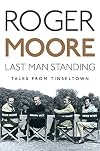
I’m a huge fan of Sir Roger who not only enjoyed a lengthy and successful career in show business but has worked as a goodwill ambassador for UNICEF following on from him hanging up his PPK back in the mid 1980s. Its probably fair to say that he has become a popular and well respected national treasure as he ages gracefully.
When I grew up in the 1970s and 80s Moore was a huge star; in between making the Bond movies (which I grew up watching) he also made some excellent actions movies, specially designed to watch with your Dad: Gold, Sea Wolves, North Sea Hijack, Wild Geese and Cannonball Run for example, not to mention TV series such as The Saint and my personal favourite, The Persuaders:
https://www.youtube.com/watch?v=t99QQIXez4M
In his third outing as an author “Tales from Tinseltown” its clear that his off screen life was almost as interesting as what happened to him while on set. The book lives up to its title (sub-title: Last Man Standing; a quote from Frank Sinatra, 'Who's going to be left to turn the light off?', Roger hopes it will be him) as its essentially Rodge relaying decades worth of anecdotes to Gareth Owen. He’s never nasty or malicious when he name checks practically every movie star from the 1950s onwards. The tales are all relayed in a lighthearted manner, along with some candid photographs. These snaps highlight Rodge modelling high fashion over the decades along with him clowning around: my personal favourite is Peter Sellers painting Rogers show more toenails for some forgotten reason.
The book itself is split into eight chapters:
1) The Fun - and Feisty - Leading Ladies
2) The Pinewood Years
3) Stage-struck
4) On-set Tales
5) The Good Guys (and a Few Rascals)
6) The Rat Pack
7) The Creative Geniuses
8) The Producers
From time to time Sir Roger adds a few thoughts which didn’t make it into his autobiography and the mood dips as he reminisces about friends who have died, gone to “that great cutting room in the sky” as he says but on the whole is an upbeat entertaining giggle from beginning to end. I also like the fact that Roger knows that he’s been lucky for three reasons: the secrets of his success? ... he looked
Thankfully, Moore is very much still standing and that is something which we should be very grateful indeed; highly recommended. show less
When I grew up in the 1970s and 80s Moore was a huge star; in between making the Bond movies (which I grew up watching) he also made some excellent actions movies, specially designed to watch with your Dad: Gold, Sea Wolves, North Sea Hijack, Wild Geese and Cannonball Run for example, not to mention TV series such as The Saint and my personal favourite, The Persuaders:
https://www.youtube.com/watch?v=t99QQIXez4M
In his third outing as an author “Tales from Tinseltown” its clear that his off screen life was almost as interesting as what happened to him while on set. The book lives up to its title (sub-title: Last Man Standing; a quote from Frank Sinatra, 'Who's going to be left to turn the light off?', Roger hopes it will be him) as its essentially Rodge relaying decades worth of anecdotes to Gareth Owen. He’s never nasty or malicious when he name checks practically every movie star from the 1950s onwards. The tales are all relayed in a lighthearted manner, along with some candid photographs. These snaps highlight Rodge modelling high fashion over the decades along with him clowning around: my personal favourite is Peter Sellers painting Rogers show more toenails for some forgotten reason.
The book itself is split into eight chapters:
1) The Fun - and Feisty - Leading Ladies
2) The Pinewood Years
3) Stage-struck
4) On-set Tales
5) The Good Guys (and a Few Rascals)
6) The Rat Pack
7) The Creative Geniuses
8) The Producers
From time to time Sir Roger adds a few thoughts which didn’t make it into his autobiography and the mood dips as he reminisces about friends who have died, gone to “that great cutting room in the sky” as he says but on the whole is an upbeat entertaining giggle from beginning to end. I also like the fact that Roger knows that he’s been lucky for three reasons: the secrets of his success? ... he looked
'like a hero … can remember lines and ... work cheaply'.
Thankfully, Moore is very much still standing and that is something which we should be very grateful indeed; highly recommended. show less
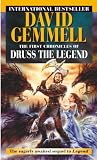
The First Chronicles of Druss the Legend was a novel I picked up almost at random from a second hand bookshop, knowing nothing at all about the rest of the series which it is part of. It was only later that I found out that this was a prequel to the first book, Legend. The First Chronicles of Druss the Legend explores how the Druss became the hero he is. So not a bad place to begin then, I guesses?
The book is an easy read and is driven forward by the main protagonist going on a quest, interspersed with non-stop bloody, well written action and some philosophical meanderings on what is means to:
:: be true to who you really are and your values,
:: be in love,
:: to harbour a burning desire for revenge, and
:: be cursed with the “gift” of being able to see into the future.
Of course, as with any good quest, the journey changes not only the course of Druss’ life but also Druss himself. The other perhaps less obvious topic which is covered in the book concerns appearances: Druss appears to be a huge well-built brute when in reality he is an introverted, loyal and in some ways a gentle and highly principled person. Other themes explored include honour, loyalty and redemption. Because of this he is admired and ultimately develops the status of Legend.
The initial chapters of the book come across as a series of barriers which once overcome lead to another set of obstacles. However, these are essential to the development of the character as someone who does not give up on what show more he believes in, who would be willing to take setbacks in his stride and persevere towards a goal or a desired endpoint.
Druss sees the world as good or bad, right or wrong, black or white with no shades in between. His adherence to the ‘Warrior’s Code’ (below) suggests that while not all fights will necessarily result in victory it’s important to at least know that you tried your best to fight for what is right.
Adherence to this Code also allows a contrast to develop with a conflicted evil side of his character, a side which is enhanced and strengthened because of the evil which resides in and permeates from his battle axe.
Also interesting is the way the bard Sieben creates stories around the exploits of Druss. It is these which people remember and all go towards creating a legend and promoting him as a hero.
So in summary, a book which shows that our journey through life changes us, the importance of having a clear set of values by which to benchmark yourself against and how adherence to these generates respect from others. show less
The book is an easy read and is driven forward by the main protagonist going on a quest, interspersed with non-stop bloody, well written action and some philosophical meanderings on what is means to:
:: be true to who you really are and your values,
:: be in love,
:: to harbour a burning desire for revenge, and
:: be cursed with the “gift” of being able to see into the future.
Of course, as with any good quest, the journey changes not only the course of Druss’ life but also Druss himself. The other perhaps less obvious topic which is covered in the book concerns appearances: Druss appears to be a huge well-built brute when in reality he is an introverted, loyal and in some ways a gentle and highly principled person. Other themes explored include honour, loyalty and redemption. Because of this he is admired and ultimately develops the status of Legend.
The initial chapters of the book come across as a series of barriers which once overcome lead to another set of obstacles. However, these are essential to the development of the character as someone who does not give up on what show more he believes in, who would be willing to take setbacks in his stride and persevere towards a goal or a desired endpoint.
Druss sees the world as good or bad, right or wrong, black or white with no shades in between. His adherence to the ‘Warrior’s Code’ (below) suggests that while not all fights will necessarily result in victory it’s important to at least know that you tried your best to fight for what is right.
Never violate a woman, nor harm a child. Do not lie, cheat or steal. These things are for lesser men. Protect the weak against the evil strong. And never allow thoughts of gain to lead you into the pursuit of evil. Never back away from an enemy. Either fight or surrender. It is not enough to say I will not be evil. Evil must be fought wherever it is found.
Adherence to this Code also allows a contrast to develop with a conflicted evil side of his character, a side which is enhanced and strengthened because of the evil which resides in and permeates from his battle axe.
Also interesting is the way the bard Sieben creates stories around the exploits of Druss. It is these which people remember and all go towards creating a legend and promoting him as a hero.
So in summary, a book which shows that our journey through life changes us, the importance of having a clear set of values by which to benchmark yourself against and how adherence to these generates respect from others. show less
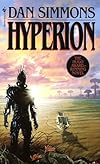
First published in 1989, Hyperion has a similar structure to Geoffrey Chaucer's Canterbury Tales and Giovanni Boccaccio's Decameron. Very simplistically the story revolves around a diverse group of pilgrims who have been sent by the Church of the Final Atonement and the Hegemony (the government of the human star systems) to the Time Tombs on the planet of Hyperion.
After reading around half of this book, I have to admit that I just couldn't finish it (I actually skimmed through the last half of the book); I’ll briefly explore why.
The first issue I had surrounded the way it is arranged; it’s basically a number of short stories merged together with some loose linkage and sadly, this just wasn't the sort of framework that generated an enormous amount of excitement for me. However as I had read so many reviews saying how awesome the book actually was I thought I’d give it a go. I’d also listened to a concept album by Manticora called Hyperion based on the first book which sparked my interest too.
Another problem I had was that Simmons delights in describing situations, people, places, and things in general. Fantastic world building and background for sure, but in my view it adds little to the overall plot. I’m sure that the vast majority of readers will appreciate this and be drawn into the richly described world thereby bonding in some way with the events that unfold. For me these descriptions just slowed the story down. Rather than making each scene thrilling I felt show more that this, in conjunction with its wide-ranging use of ideas from the likes of Keats (the title "Hyperion", is taken from a Keats's poem), Chardin and Wiener (to name but a few), hugely decelerated the whole narrative.
The other concern I had was with the characters themselves. Every nuance, every minor mannerism and characteristic of every person was examined and explained. Were these critical to moving the story forward? Probably not. While the tales they told were all different I lost a sense of who was actually delivering the story at times and found there were several plot holes which were all covered by blaming previous characters who had apparently narrated the story incorrectly.
Throughout the book we get lengthy plot explaining speeches and the output of the research conducted by Simmons, for example, on Keats which is infodumps onto the reader.
Even reaching the halfway point in the book took some effort and in summary, I felt that if the word count had been halved then it would have made for an eminently more enjoyable read. show less
After reading around half of this book, I have to admit that I just couldn't finish it (I actually skimmed through the last half of the book); I’ll briefly explore why.
The first issue I had surrounded the way it is arranged; it’s basically a number of short stories merged together with some loose linkage and sadly, this just wasn't the sort of framework that generated an enormous amount of excitement for me. However as I had read so many reviews saying how awesome the book actually was I thought I’d give it a go. I’d also listened to a concept album by Manticora called Hyperion based on the first book which sparked my interest too.
Another problem I had was that Simmons delights in describing situations, people, places, and things in general. Fantastic world building and background for sure, but in my view it adds little to the overall plot. I’m sure that the vast majority of readers will appreciate this and be drawn into the richly described world thereby bonding in some way with the events that unfold. For me these descriptions just slowed the story down. Rather than making each scene thrilling I felt show more that this, in conjunction with its wide-ranging use of ideas from the likes of Keats (the title "Hyperion", is taken from a Keats's poem), Chardin and Wiener (to name but a few), hugely decelerated the whole narrative.
The other concern I had was with the characters themselves. Every nuance, every minor mannerism and characteristic of every person was examined and explained. Were these critical to moving the story forward? Probably not. While the tales they told were all different I lost a sense of who was actually delivering the story at times and found there were several plot holes which were all covered by blaming previous characters who had apparently narrated the story incorrectly.
Throughout the book we get lengthy plot explaining speeches and the output of the research conducted by Simmons, for example, on Keats which is infodumps onto the reader.
Even reaching the halfway point in the book took some effort and in summary, I felt that if the word count had been halved then it would have made for an eminently more enjoyable read. show less
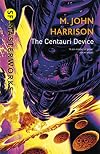
The Centauri Device is the third novel by English author [a:M. John Harrison|10765|M. John Harrison|https://d202m5krfqbpi5.cloudfront.net/authors/1277603037p2/10765.jpg].
I got halfway through this book and lost interest.
The main protagonist, John Truck, flops his way around the universe before being dragged into a conflict between the Earth's superpowers, Anarchists, a religious cult and several other groups. Written in the mid 1970s Truck comes across as the archetypical hippie. Drugs and mentioned throughout and this becomes extremely tiresome.
I'll not spoil the reason why all these groups want a piece of John but the clue is in the title of the book. The majority of the text is about John evading capture from one set of individuals while falling into the hands of another evil bunch. Villains conveniently appear and push John into the next chapter. Why? Because the author wants the book to progress, none of it seems natural and it's all very contrived.
I was first attracted to the novel as I like space operas but here the prose is too flowery (why use a short, punchy word when seventeen long words can be used instead?), the characters aren't particularly well fleshed out and the plot is really non-existent; it's just a series of plodding encounters over time. Personally, I like protagonists who are complex, multi-layered and have a well thought through backstory, whereas John is just a passive character. I think the book is making the point that ideologies can be warped show more and distorted until they ultimately become self-defeating and destructive. However, perhaps I'm wrong as because I just lost the will to keep on reading.
I guess it says something about the novel that perhaps the most significant detractor of the book is [a:M. John Harrison|10765|M. John Harrison|https://d202m5krfqbpi5.cloudfront.net/authors/1277603037p2/10765.jpg] himself who, in a 2001 interview with SF Site, described it as:
In summary, a stale, hollow and ultimately a joyless read. show less
I got halfway through this book and lost interest.
The main protagonist, John Truck, flops his way around the universe before being dragged into a conflict between the Earth's superpowers, Anarchists, a religious cult and several other groups. Written in the mid 1970s Truck comes across as the archetypical hippie. Drugs and mentioned throughout and this becomes extremely tiresome.
I'll not spoil the reason why all these groups want a piece of John but the clue is in the title of the book. The majority of the text is about John evading capture from one set of individuals while falling into the hands of another evil bunch. Villains conveniently appear and push John into the next chapter. Why? Because the author wants the book to progress, none of it seems natural and it's all very contrived.
I was first attracted to the novel as I like space operas but here the prose is too flowery (why use a short, punchy word when seventeen long words can be used instead?), the characters aren't particularly well fleshed out and the plot is really non-existent; it's just a series of plodding encounters over time. Personally, I like protagonists who are complex, multi-layered and have a well thought through backstory, whereas John is just a passive character. I think the book is making the point that ideologies can be warped show more and distorted until they ultimately become self-defeating and destructive. However, perhaps I'm wrong as because I just lost the will to keep on reading.
I guess it says something about the novel that perhaps the most significant detractor of the book is [a:M. John Harrison|10765|M. John Harrison|https://d202m5krfqbpi5.cloudfront.net/authors/1277603037p2/10765.jpg] himself who, in a 2001 interview with SF Site, described it as:
"the crappiest thing I ever wrote."
In summary, a stale, hollow and ultimately a joyless read. show less
I actually listened to this on BBC Radio 4 (here). This was a great adaptation which I enjoyed although it was very clear that these stories were loosely woven together with a series of short, interstitial vignettes for publication.
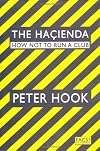
In “The Haçienda: How Not To Run a Club” Peter Hook, bass player in two of Manchester’s greatest bands: Joy Division and New Order and also co-owner of the club itself explains how it vacuumed up the bands income and brought him to the point of bankruptcy.
This is a candidly entertaining short’ish read written in a personal and chatty style. While Manchester in the early 1980s probably wasn't quite ready for a New York style disco it wasn’t long before the popularity of the club soared and things started to fall apart. Hooky reveals that in the 15 years it was open the club effectively cost the band £10 for every person who entered! I have to admit that I never went and I’m rather pleased I didn’t after reading some of the stories.
The book covers the drug fuelled meetings, Madchester and Acid House excesses, the influx of gangsters and subsequent violence, so it’s definitely not a tale for faint hearted. The book also has its fair share of funny passages too which are offset with stories where you find yourself shaking your head in disbelief, for example paying bands generous flat fees to perform to almost nobody and organising the bar so it required two staff to serve every customer.
I listened to the audio book and its split into sections devoted to each year the Hacienda was open. Each section is preceded with a snippet of a song which may have been played at that specific point in the clubs timeline. This device helped to set the scene and enhance the show more “read”. However, it’s worth trying to get a copy of the actual print version as it contains a chapter listing outlining which gigs put on during that specific year and it has copies of balance sheets which I’m guessing would make an accountant cry. You also get to see the photos of the interior and exterior of the Haçienda along with various flyers, posters and other media.
I would recommend that you read Unknown Pleasures first as the end of that book slightly bleeds into the start of this one. The Haçienda: How Not To Run a Club is a great read even if you’re not a fan of his music as if nothing else it certainly puts the evolution of the 1980s/90s clubbing scene into context. show less
This is a candidly entertaining short’ish read written in a personal and chatty style. While Manchester in the early 1980s probably wasn't quite ready for a New York style disco it wasn’t long before the popularity of the club soared and things started to fall apart. Hooky reveals that in the 15 years it was open the club effectively cost the band £10 for every person who entered! I have to admit that I never went and I’m rather pleased I didn’t after reading some of the stories.
The book covers the drug fuelled meetings, Madchester and Acid House excesses, the influx of gangsters and subsequent violence, so it’s definitely not a tale for faint hearted. The book also has its fair share of funny passages too which are offset with stories where you find yourself shaking your head in disbelief, for example paying bands generous flat fees to perform to almost nobody and organising the bar so it required two staff to serve every customer.
I listened to the audio book and its split into sections devoted to each year the Hacienda was open. Each section is preceded with a snippet of a song which may have been played at that specific point in the clubs timeline. This device helped to set the scene and enhance the show more “read”. However, it’s worth trying to get a copy of the actual print version as it contains a chapter listing outlining which gigs put on during that specific year and it has copies of balance sheets which I’m guessing would make an accountant cry. You also get to see the photos of the interior and exterior of the Haçienda along with various flyers, posters and other media.
I would recommend that you read Unknown Pleasures first as the end of that book slightly bleeds into the start of this one. The Haçienda: How Not To Run a Club is a great read even if you’re not a fan of his music as if nothing else it certainly puts the evolution of the 1980s/90s clubbing scene into context. show less