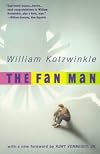
I haven't laughed this gleefully at a book since I read Gravity's Rainbow (yes, I'm one of those people). Horse Badorties is one of the most singularly unique and memorable characters in literature, reminiscent of later free-spirited slackers like The Dude and Kramer, but with his own particular brand of lunacy. If he were a real person, Hoarders could devote an entire season to him, and his overriding obsession is finding 15-year-old girls to comprise his "Love Chorus," and bringing medieval church music (set to the pitch of Japanese handheld, battery-powered electric fans, no less) to the masses via a nationally televised concert, but his ADD tendencies and perpetually stoned headspace get in the way (although surprisingly not that much). So, in other words, it's a pretty weird book, but funny, very funny. And I'll never look at the word "dorky" the same way again.
One Hundred Years of Solitude (Everyman's Library Classics & Contemporary Classics) by Gabriel Garcia Marquez
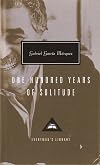
I feel about the Buendía family the way Mitch Hedberg felt about pancakes--"all exciting at first, but then by the end you're fuckin' sick of 'em."

I've never been particularly interested in political novels or had any great fascination with ancient Rome, but this beautifully written novel held me transfixed nonetheless. It's a cliché to say it "brings history alive," but it does indeed bring history alive. Told in epistolary form as a compendium of letters and journal entries by characters both integral and incidental, we get to know Octavius Caesar the August from the perspective of those who love him and of those who despise him, but we don't hear directly from the titular character until near the end of the novel (and the end of his life), as he writes to an old friend and ruminates in moving fashion over his accomplishments and regrets, his beloved city of Rome, and the legacy he leaves behind. These multiple viewpoints give Augustus a richness and believability that almost makes one forget that one is reading a masterful work of historical fiction and not a collection of actual historical documents, yet it still reads like a novel, not a history. From a historical novel there is not much else one can ask.I just wanted to add that it seems as if this work gets short shrift compared to Williams' other novels, Stoner and Butcher's Crossing, possibly because they are on the great NYRB imprint and Augustus isn't, denying it that sort of instant audience. I've read all three, and Augustus is at least as good a novel as the brilliant Stoner (maybe even better, I haven't decided), and better than the very good show more Butcher's Crossing. I would love to see more people reading and talking about it; it won the National Book Award for a reason! show less
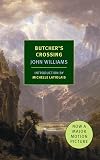
I didn't enjoy this as much as Williams' other novels, Stoner and Augustus, which were both two of my absolute favorite books I read this year, but it was nonetheless a very good read despite some slow going for me through the first half. It was really hard for me to get engaged in this book at first for some reason, but that was probably more my fault than the book's; I just don't think I was in the mood for a western when I started it, but I was definitely craving more Williams, so that kept me going. Once the characters found themselves in true jeopardy, snowbound in the mountains, that was where the rubber hit the road for me, and from that point on the rest was gripping. Even through the slow parts, though, Williams' fine prose sustains you. For those looking for a revisionist western/back-to-nature/survival novel that is also a well written piece of literature, you can't go wrong here. I could see it making a fine film adaptation, which it is slated to be in 2013. I look forward to that, if only for the reason that it will garner some more attention for this under-recognized novelist.

I read this back around junior high or thereabouts, enjoyable enough action/adventure fare for a not-particularly-discriminating kid who devoured "men's adventure" series like Mack Bolan and Able Team like candy. On the cover it says, "Compelling action in the spirit of Raiders of the Lost Ark," and I guess that says it all. I remember at the end there was some silly business about an ancient alien spaceship; so, full circle, huh?
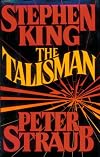
To be honest, I read this book back when I was 14 when the paperback came out, and I loved it. I've never been much of a King fan (and I've never read another Straub book), and if I read it now I don't know if I would love it as much, but I will say that I can still conjure up images from this book in my mind after all this time.

It's kind of like a Jimmie Rodgers song in book form; hopping trains, "riding the rods," hobos, gambling, hold-ups, violent deaths, prison, duplicitous backstabbers, tried-and-true pals, pistol-packin' papas (and mamas); it's just about all in there. I'm a sucker for that kind of stuff if it's done well, and this is done very well, so I loved every minute of it. Some reviewers have called into question the veracity of Black's "autobiography," but to me it just doesn't matter whether he told the absolute truth as it happened or if there were some "stretchers," as Huck Finn would say, or even if he just made the whole damn thing up (which I doubt very much). There are truth and value in his words, and it's quite an entertaining and informative read.

Let's say ****1/2. Very melancholy and lacking a lot of Brautigan's usual humor, but something about it affected me really deeply. There's a great ring of truth about it. I like Brautigan best when he's in that semi-autobiographical mode, where you can tell that what he's writing came from some personal experience, even if it's fictionalized on the page.

The story is fairly silly--and I hate it when a book has tossed-off sci-fi elements like a scientist inventing something by throwing a little bit of this and a little bit of that of some unknown and unexplained ingredients and voila, something amazing!--but the ingratiating characters and Brautigan's folksy humor and gift for inspired similes saved this from a three-star rating. An enjoyable read.

A semi-autobiographical novel written as the memoir of a crusty (yet kindhearted) old bachelor who has lived his entire life on the island of Guernsey, The Book of Ebenezer Le Page is the only novel completed by G.B. Edwards, who didn't begin writing the novel until he was in his seventies. Discursive and digressive to the point that you begin to wonder if there is a point (hint: there is), Ebenezer's tale is nonetheless enthralling as you become swept up in his reminiscences of friends, family, loved ones and enemies over the course of an eighty-year lifespan. The German occupation of Guernsey during World War II is at the center of the novel, but that is only a relatively minor part of the story (although its repercussions are felt throughout the rest of the book). The book is really about Ebenezer's relationship to the island home that he loves and to his friends and relations, and his desire to leave a legacy behind now that he is reaching the end of his life. Funny, joyous and sad, Ebenezer Le Page is one of a kind, a truly special book. I've never read anything quite like it before, and I don't expect I ever will.
An amazing read. Harrowing, demoralizing and appallingly violent, but amazing nonetheless.
Swiftly moving, endlessly entertaining, and brimming with historically accurate 10th-century flavor, this recounts in Norse saga fashion the adventures of Orm Tostesson (aka "Red Orm"), beginning with his capture as a young lad by Vikings, where, initially taken as a slave, he quickly proves his mettle and is initiated into the group as one of their own, and is eventually elected chieftain. The book follows Orm as he travels far and wide, makes lifelong friendships (and a few enemies), fights battles on land and at sea, accumulates wealth, finds love, and eventually makes his way back home and settles down to a quiet family life...or so he thinks, because his adventures aren't over.Enormously popular in Sweden since its publication during the Second World War, it deserves to be more widely known in the States because so many people would love it if they read it. I only just heard of it recently, myself, and I'm sure glad I did, because since I read it I'll always fondly recall Red Orm and his friends Toke and Father Willibald. If you read it you'll feel as if they're your friends as well.***UPDATE 6/11/2011***Just finished reading it a second time, and I enjoyed it at least as much as the first time. I guess I have to move on to something else now. Sigh. I have no doubt I'll return to it in the future, though.

Highly engrossing, often thrilling, and always enlightening. I'm just sorry I waited so long to read it.
Goodreads defines the five-star rating as "It was amazing." I've given books five-star ratings before, then asked myself, "Was it amazing?", and then had to admit to myself that the answer was "no" and changed my rating accordingly. In the case of Please Kill Me I don't even have to think about it. It was amazing. I've read it three times and I'm sure before long I'll probably make it four. Greatest rock 'n' roll book ever and one of the greatest oral histories ever.

Groom's post-Zemeckis sequel unfortunately reads more like a sequel to the movie Forrest Gump rather than his original novel, which is a shame. It lacks the bite of the Forrest Gump novel, and is instantly forgettable. Meh.

I first read this book back when it came out back in 1986 and have re-read it several times since. I always said they should make a movie out of it, and when they did I was very excited...until I saw it. Movie adaptations are almost always inferior to their source material, so I won't belabor the "book vs. movie" argument. So, moving on...Like Mark Twain via Voltaire, the book is essentially a very funny satirical adventure, borrowing the structure of Candide, lampooning the modern world as seen through the eyes of an "idiot." It's politically incorrect and laugh-out-loud funny. My first-edition copy is still a prized possession.

I read this when I was 9 years old, got it through the Scholastic Book Club. Still never seen the movie!
I really wanted to like this book more than I did, especially since The Chess Garden was so sublime. Perlman's Ordeal at least held my interest enough for me to finish it, but it didn't stick with me the way The Chess Garden does to this day.
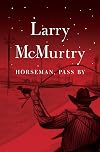
I've seen the movie Hud so many times that it probably colored my perception of this book too much while I was reading it, and I'm sure I would have enjoyed Horseman, Pass By more if I had never seen the movie which was adapted from it; that said, I still enjoyed it a great deal. McMurtry's a terrific writer and his concise yet often aridly poetic prose captures the feel of coming of age in a small western town in the mid-20th century perfectly.Those who come to the book after having seen the movie will probably be shocked by the book's portrayal of the Hud character. In the movie, the titular character of Hud is a charming, likable (no doubt the benefit of being portrayed by the charismatic Paul Newman), although entirely self-interested rapscallion. In Horseman, Hud is something closer to a sociopath--a charming cad, still, but colder, more vicious, and even more indifferent to the feelings of other human beings. It makes the character as portrayed in the book a lot harder to take, but like the movie, the book isn't really about Hud so much as it is about Lonnie, and his Granddad, and their relationship to each other and to the changing West.I highly recommend both the book and the movie, but I have to admit that as fine as Horseman, Pass By is, the images from Hud are what is going to stick with me.
Real Conversations, No.1 (Henry Rollins Jello Biafra Lawrence Ferlinghetti Billy Childish) (Real Conversations (Re/Search)) by V. Vale

Worth it just for the Billy Childish and Lawrence Ferlinghetti interviews.
Trout Fishing in America / The Pill versus the Springhill Mine Disaster / In Watermelon Sugar by Richard Brautigan
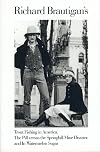
In Watermelon Sugar reminded me, in a certain way, of the Unthank parts of Alasdair Gray's Lanark in that you're never quite sure if the world it inhabits is our world, an alternate dimension, our world in a post-apocalyptic state, or perhaps the afterlife. And I mention "post-apocalyptic" not because it seems like a hostile wasteland (the world it describes is actually quite magical and beautiful), but because there are hints at mysterious "forgotten things," suggesting that perhaps this is a world inhabited by our descendants--but that is only a possibility, and by no means the point. Like Unthank, this world is a dreamlike one that seems to have its own laws of nature and physics, although in watermelon sugar is a pastoral, agrarian existence rather than an urban, industrial one. I very much enjoyed In Watermelon Sugar, but my favorite section of this omnibus was the first and most famous one, Trout Fishing in America. What really knocked me out was that even when it seems outlandish, it is believable, giving the impression that this was something that actually happened to the author or someone he knows, but then was filtered through a twisted lens of poetic vision.

This book's been out of print for probably a good four decades, which is a shame because it's terrific. Actually, none of Harris's books are in print, which is hard for me to fathom considering what a truly great writer he is (or was--he died in 1993). The only other novel of his that I've read was also by far his most popular, The Balloonist, which was excellent, but Mortal Leap is even better in my opinion. I won't go into a synopsis; I recommend reading the writeup at the Neglected Books page. http://neglectedbooks.com/?p=206
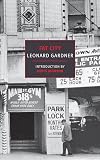
Fat City is astoundingly good, and Leonard Gardner, like Harper Lee, ranks among the great one-novel novelists. His prose is as close to perfection as one could imagine: tight, economical, yet packing a powerful descriptive punch, his dialogue ringing with verisimilitude. Describing the travails of two boxers--one up-and-coming, and one past his prime yet hopeful of a comeback--in 1950s Stockton, California, this novel will appeal to anyone who enjoys true-to-life stories featuring three-dimensional, fully realized characters. It should also please those who enjoy books about "the sweet science," as well as Bukowski fans and "hard-boiled" fiction enthusiasts.

Maybe not five stars, but easily a solid four and a half. No plot to speak of and no clean resolution at the end, but I knew to expect that from Brautigan going in. Oh, and of course it has virtually nothing to do with Confederate generals or the Civil War, except maybe tangentially, but I knew to expect that going in as well. Brautigan, though, gotta love him--at least I do. Similar in feel to Trout Fishing in America (loosely structured tales of down-at-the-heels counterculture types), but more traditionally structured (for Brautigan), its protagonists are the the narrator, Jesse, and his buddy Lee Mellon, who is convinced that he is the descendant of a Confederate general who hailed from Big Sur in California and who has been lost to history. In a nutshell, the two hole up in a cabin in Big Sur next to a pond, buy cheap wine by the gallon, try to get laid, scare the shit out of teenagers trying to steal their gas, try to get a few seconds' reprieve from the deafening din of the croaking of the thousands of frogs inhabiting the pond by throwing a rock and yelling something (Lee discovers that "Campbell's Soup!" works best), buy a couple of alligators, get laid (with girls, not the alligators), tie a crazy insurance salesman to a log, and so on. It's all good fun, I laughed a lot, but it also contains some the Brautigan's best writing. Right up there with Trout Fishing and In Watermelon Sugar in my book.

I've lost count of all the aborted attempts I've made to read this book. I devoured Gravity's Rainbow and V., but Vineland stops me dead in my tracks every time. Howard Bloom--a Pynchon proselytizer--said that there's not one worthwhile sentence in it, and although I don't agree with that, every attempt I've made to read it has left me with the distinct feeling that the work as a whole is probably not particularly worthwhile.

What a wonderful novel; my thanks to the person who turned me onto it. I won't belabor a plot summary, just know that it's a Victorian novel (written in 1861) that takes place during the late Middle Ages, and therefore contains the requisite "thee"s and "thou"s and even a few "forsooth"s, so if that doesn't sound like your cup of tea, you know who you are. But beyond that, what it is is a great historical romance filled with believable characters, medieval flavor, comedy, tragedy, and high adventure. The following is an incomplete list of words that I looked up during my reading of The Cloister and the Hearth:theodolitedithyrambpermanganatejalousieotiosepismireexequiesburthenminaretultramontaneexegesisdiademcatechumenskickshawkirtlefarthingalehircinekinearbalestrieranimalculaquadrivialganymedeorisonpsalteriespipkinaubergediapasonleveretpettifoggingdictcapiaswanionpizzlemijaureeminauderiesgrimacierepetroneldudgeoncurtal axchoughcordwainergroateftsoonspursuivantmanteletmangonelsbarbicanmachicolatefascinedevoirmalisonroof-treeviragolemantabormicklecleptycleptfebrifugalwhitemailcaitiffwhidscozeningtatterdemalioncul de boisqueanlapwingvopperrotbossglaivewindlassculverinmarchpanecanzonetorielcavilMyrmidonseptemviousseneschalmare's nestAspersoriumperadventureciliceThat's actually not a complaint; what I'm saying is that the book kept me on my toes, and that I learned a lot.
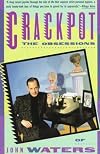
I just wanted to say that I bought my copy at a used bookstore for about $4, and then I flipped to the title page and it was ****ing autographed by John Waters himself!
Trout Fishing in America / The Pill versus the Springhill Mine Disaster / In Watermelon Sugar by Richard Brautigan
In Watermelon Sugar reminded me, in a certain way, of the Unthank parts of Alasdair Gray's Lanark in that you're never quite sure if the world it inhabits is our world, an alternate dimension, our world in a post-apocalyptic state, or perhaps the afterlife. And I mention "post-apocalyptic" not because it seems like a hostile wasteland (the world it describes is actually quite magical and beautiful), but because there are hints at mysterious "forgotten things," suggesting that perhaps this is a world inhabited by our descendants--but that is only a possibility, and by no means the point. Like Unthank, this world is a dreamlike one that seems to have its own laws of nature and physics, although in watermelon sugar is a pastoral, agrarian existence rather than an urban, industrial one. I very much enjoyed In Watermelon Sugar, but my favorite section of this omnibus was the first and most famous one, Trout Fishing in America. What really knocked me out was that even when it seems outlandish, it is believable, giving the impression that this was something that actually happened to the author or someone he knows, but then was filtered through a twisted lens of poetic vision.
This book's been out of print for probably a good four decades, which is a shame because it's terrific. Actually, none of Harris's books are in print, which is hard for me to fathom considering what a truly great writer he is (or was--he died in 1993). The only other novel of his that I've read was also by far his most popular, The Balloonist, which was excellent, but Mortal Leap is even better in my opinion. I won't go into a synopsis; I recommend reading the writeup at the Neglected Books page. http://neglectedbooks.com/?p=206