I could not finish this book. I simply despised the main character.
An abandoned read. Why must the woman always be the victim? Couldn't stand it; Couldn't finish it.

Yaaaawwwwwwnnnnnnn. Irritating, prancing characters. Insipid dialogue.
A little bit too kool-aid/landmarky for me.

Derrida may be brilliant, however, his writing is incomprehensible. This book helped me understand what the hell he was talking about. Now I get to throw Deconstruction around like a ridiculously good hand of poker.

I vow to get back to this book and complete it!

This book is a difficult one to review.
On the one hand, I believe that the book is charmingly portrayed through a child's eyes, that the concept of the book and point of view is an interesting one, that the character of Bruno is (usually) an endearing one, and that the ending is powerful.
On the other hand, this book is rather flawed. It seems to me that throughout the book, the author delicately tiptoes around the real issues of the Holocaust, preferring, instead, to coat everything in euphemism. Perhaps the reason he does this is because all of the meaning in the book is distilled through Bruno's perceptions of things. And let's face it everyone- Bruno is not a very intelligent 9 year old.
Does Bruno develop in the course of the novel? He makes a new friend or whatever, but I must say that the ultimate answer is a resounding "no." Does he question his reality in a real way? No, no he does not. He remains mostly innocent and naive until the very end, totally clueless about the reality of things. His experience doesn't change him in any real way that I can glean, and because of that, the book falls flat for me.
Perhaps the author intends the book to be an allegory of some sort, a "fable" as the back of the book advertises. This makes sense and perhaps on some level it succeeds as such. Ultimately, though, it doesn't work for me. I have been traumatized by too much Holocaust history and literature to be charmed by Bruno's naivete. In many ways, I think that is the only show more response any author of Holocaust literature can (and should?) attempt to garner from his/her audience- horror, trauma, and intense sadness and pain.
I can understand the author skirting around the more graphic descriptions of the Holocaust in an attempt to teach children about it and not scare them, and yet, I feel there is a way to do this without whitewashing it, as the book seems to do through Bruno's simplistic perceptions and (kinda dumb) interpretations. I think The Book Thief is a good example of a book which doesn't get too graphic, yet touches upon issues of the Holocaust in a heart-wrenching, mind-bending way.
I wouldn't say I wouldn't recommend the book per se, but it is not a book I would use to introduce my children to the history of the Holocaust. show less
On the one hand, I believe that the book is charmingly portrayed through a child's eyes, that the concept of the book and point of view is an interesting one, that the character of Bruno is (usually) an endearing one, and that the ending is powerful.
On the other hand, this book is rather flawed. It seems to me that throughout the book, the author delicately tiptoes around the real issues of the Holocaust, preferring, instead, to coat everything in euphemism. Perhaps the reason he does this is because all of the meaning in the book is distilled through Bruno's perceptions of things. And let's face it everyone- Bruno is not a very intelligent 9 year old.
Does Bruno develop in the course of the novel? He makes a new friend or whatever, but I must say that the ultimate answer is a resounding "no." Does he question his reality in a real way? No, no he does not. He remains mostly innocent and naive until the very end, totally clueless about the reality of things. His experience doesn't change him in any real way that I can glean, and because of that, the book falls flat for me.
Perhaps the author intends the book to be an allegory of some sort, a "fable" as the back of the book advertises. This makes sense and perhaps on some level it succeeds as such. Ultimately, though, it doesn't work for me. I have been traumatized by too much Holocaust history and literature to be charmed by Bruno's naivete. In many ways, I think that is the only show more response any author of Holocaust literature can (and should?) attempt to garner from his/her audience- horror, trauma, and intense sadness and pain.
I can understand the author skirting around the more graphic descriptions of the Holocaust in an attempt to teach children about it and not scare them, and yet, I feel there is a way to do this without whitewashing it, as the book seems to do through Bruno's simplistic perceptions and (kinda dumb) interpretations. I think The Book Thief is a good example of a book which doesn't get too graphic, yet touches upon issues of the Holocaust in a heart-wrenching, mind-bending way.
I wouldn't say I wouldn't recommend the book per se, but it is not a book I would use to introduce my children to the history of the Holocaust. show less
Lady Calpurnia is a lonely spinster who has harbored a crush for the gorgeous Marquess of Ralston since the time she was an 18 year old wallflower. As the novel opens, Calpurnia's family is celebrating the marriage of her younger sister and she becomes unbearably aware of the fact that her own opportunity for love and life has passed her by, leaving her to a life of spinsterhood and loneliness. Impulsively, she decides to take life by the horns and creates a list of the things she would want to do if she doesn't have to worry about society's restrictions and rules. And so, MacLean does a fantastic job of setting up the action of the story.
The first 100 pages or so are absolutely charming. Needless to say, Calpurnia's plan brings the Marquess into the mix with delicious results. There are many things which are quite enjoyable about the book. I like that MacLean creates a character who is lonely and truly vulnerable emotionally, a character who has a lot of personal development that needs to take place. I really enjoyed the dialogue because I thought it was well done and not too much. I loved the family dynamic, especially the amazing, supportive Benedick (the overbearing older brother is so overdone) and the loyal Anne (I could have done without the irritating Mariana.) I think the author did a great job of fleshing out the character of Calpurnia, who I found sweet and adorable.
There were some things in the novel, however, that I most definitely did NOT like. The novel show more tended to drag for me a little bit toward the end and I thought it could have been 50 pages shorter. I thought the Marquess was kind of an ass, honestly, and he doesn't seem that bright. Their verbal interactions were interesting because of Calpurnia's insights and passion, not because of his. He was hot, though, I'll give him that. I thought the whole "evil mother" premise sort of weak, and in my mind it didn't excuse his poor behavior. Furthermore, I felt like the pacing of the conflict was inconsistent. Calpurnia and Ralston would get into an argument, for instance, and both would flounce off, and the next time they meet, they start going at it, seemingly forgetting their previous fight. It got kind of old toward the end...
A last word: I thought it kind of cool that the author chose not to frame Ralston's mistress into evil Satan, just because she's hotter than the heroine and happened to be with him before her. I think it may be interesting if MacLean chose to write a book featuring Nastasia's story. And let's not forget adorable Benedick... show less
The main character of this book is utterly and completely stupid. There were some bright parts in the book, but they were destroyed by the braindead, airhead heroine. The ending is laughable particularly because an IQ above 50 seems to appear out of nowehere like a deus ex machina and instills Rebecca with semi-coherent thought and a delayed but warped hint of consideration for others. Yeah, right.
I really did not like this book.
There were too many things that simply rubbed me the wrong way. I didn't doubt that Alex loved Annie and all that, but it just seemed so odd and Lolita-esque in some ways and not in a good way.
The romance in this book was sort of creepy and the plot-line got dull and repetitive to me. Annie's plight and struggle was an interesting one, but I just didn't buy the romance between them as legitimate. I mean, why exactly, did he find her so charming? Was it her childlike innocence? Or her feminine body? Creeep out.
There were too many things that simply rubbed me the wrong way. I didn't doubt that Alex loved Annie and all that, but it just seemed so odd and Lolita-esque in some ways and not in a good way.
The romance in this book was sort of creepy and the plot-line got dull and repetitive to me. Annie's plight and struggle was an interesting one, but I just didn't buy the romance between them as legitimate. I mean, why exactly, did he find her so charming? Was it her childlike innocence? Or her feminine body? Creeep out.

This book began promisingly enough.
The first half of the book was actually quite entertaining almost in the style of a Julie Garwood novel.
About, 150 pages in, though, everything unravels and the book becomes choppy, ridiculous, and just plain boring, "and no mistake" to quote a colloquialism that Lindsey repeats ad neauseam.
The first half of the book was actually quite entertaining almost in the style of a Julie Garwood novel.
About, 150 pages in, though, everything unravels and the book becomes choppy, ridiculous, and just plain boring, "and no mistake" to quote a colloquialism that Lindsey repeats ad neauseam.
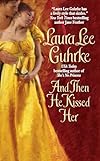
Don't let the (pretty awful) cover fool you. This was a great book, among the best romance novels I've read lately.
Set in the Victorian era, at the turn of the century, And Then He Kissed Her deals with issues that I've never seen before in a romance novel, and it is a refreshing breath of fresh air amongst the many many (tired) regencies out there.
I liked this novel not only because of the budding relationship between Emmaline and Marlowe, but mostly because of Emmaline's transformation from a prim and proper young lady content to follow society's strictures and rules and to uphold them most rigidly, to a woman who uncovers who she really is, stands up for herself and comes into her own.
Excellent.
Set in the Victorian era, at the turn of the century, And Then He Kissed Her deals with issues that I've never seen before in a romance novel, and it is a refreshing breath of fresh air amongst the many many (tired) regencies out there.
I liked this novel not only because of the budding relationship between Emmaline and Marlowe, but mostly because of Emmaline's transformation from a prim and proper young lady content to follow society's strictures and rules and to uphold them most rigidly, to a woman who uncovers who she really is, stands up for herself and comes into her own.
Excellent.
I was thoroughly impressed with Ms. Hoyt's work in The Serpent Prince. In the third book of the series Hoyt explores a plot that swiftly turns markedly darker than the two previous books that came before it.
In The Serpent Prince, we meet Lord Simon Iddesleigh and Ms. Lucy Craddock-Hayes. Lord Simon is found soundly beaten at the side of road by Lucy's home in Maiden Hill, a village a 1/2 a day's ride away from London. Lucy takes him in to her home and as he recovers it becomes rather clear that they have the quite the hots for each other. The plot thickens when we learn Simon is on a single-minded quest for revenge against his brother's murderers which threatens to destroy the budding relationship between Simon and Lucy.
For the first 2/3rds of the novel, Hoyt for the most part is able to create interesting and three dimensional characters. Serious, direct and innocent Lucy is described as an angel- an Old Testament angel- who sees through Simon's facades and witticisms to the man beneath. This scares the hell out of Simon but he can't help but be attracted to her. Simon's arrival only brings home to her how boring and empty her life has been.
Simon, let's face it, is honestly a creep in my opinion. Hoyt is unafraid to show his ugly side (oh and there are many) and most of the time Simon is obnoxious, stubborn and at times reprehensible. It is difficult for me to love Simon, particularly as he continuously shows a lack of honor, selfishness,and a narrow minded show more stubborness. At the same time, though, Simon is a complex character, one who deeply loves his wife. I really wish that Lucy took a more active role in the plot and in many ways this seems more Simon's story than Lucy's story. show less
In The Serpent Prince, we meet Lord Simon Iddesleigh and Ms. Lucy Craddock-Hayes. Lord Simon is found soundly beaten at the side of road by Lucy's home in Maiden Hill, a village a 1/2 a day's ride away from London. Lucy takes him in to her home and as he recovers it becomes rather clear that they have the quite the hots for each other. The plot thickens when we learn Simon is on a single-minded quest for revenge against his brother's murderers which threatens to destroy the budding relationship between Simon and Lucy.
For the first 2/3rds of the novel, Hoyt for the most part is able to create interesting and three dimensional characters. Serious, direct and innocent Lucy is described as an angel- an Old Testament angel- who sees through Simon's facades and witticisms to the man beneath. This scares the hell out of Simon but he can't help but be attracted to her. Simon's arrival only brings home to her how boring and empty her life has been.
Simon, let's face it, is honestly a creep in my opinion. Hoyt is unafraid to show his ugly side (oh and there are many) and most of the time Simon is obnoxious, stubborn and at times reprehensible. It is difficult for me to love Simon, particularly as he continuously shows a lack of honor, selfishness,and a narrow minded show more stubborness. At the same time, though, Simon is a complex character, one who deeply loves his wife. I really wish that Lucy took a more active role in the plot and in many ways this seems more Simon's story than Lucy's story. show less

In Soulless, Carriger creates an alternate Victorian England (of the steampunk genre,) one in which vampires, werewolves, and ghosts are open and active members of society and politics. Ms. Alexia Tarabotti, a half Italian spinster, is a preternatural and has the rare ability to return supernaturals to their human state with a mere touch.
Alexia and Lord Conall Maccon (a werewolf pack leader alpha) become embroiled in some crazy drama when werewolves and vampires start going missing, newly created vampires start appearing out nowhere (one of whom Alexia does away with in the first chapter using a wooden hair pin,) a scary wax man monster starts pursuing Alexia and, oh yes, Alelxia and Lord Maccon finally start making out. :-)
This was a delightful read on many counts.
Number one, the writing is witty, deliciously dry dry dry and laugh out loud hilarious at times. Carriger has little problem poking fun at her characters and making them the butt of her snarky humor, which is rather fresh and fun. I guess I didn't know I was getting tired of romance authors idealizing their characters all the time.
Number two, Alexia is awesome and one of the most interesting and unique heroines I've seen in awhile. She's bossy, sharp-tongued, direct and quite the ball buster. She's incisively intelligent and takes no nonsense from anyone. She is, perhaps, secretly lonely and insecure about her swarthy looks (Italian features apparently, inherited from her dad,) but but doesn't sit around show more feeling sorry for herself or making drama over it. Lord Maccon is the dreamiest- strong, intelligent, gruff and protective (but not annoyingly so.) They make an amazing pair. The supporting characters are a lot of quirky fun too, from Lyall to Floote to Ms. Hisselpenny who each enriched the story in their own way and made each scene interesting.
Number three, the social construct of the vampire hive (with the queen bee vampire) and the werewolf pack, along with their loyal human servant clavigers/drones was rather interesting. The relation of the amount of soul to the supernatural was unique, and Carriger puts a lot of thought into creating her steam-punk world.
My only complaint is that I wish there was a little more steam and a lot less punk in Soulless. The novel takes place over 3-4 days, and I wanted more time for Alexia and Lord Maccon to interact, bicker, make out and fall in love. There were many long scenes with Alexia and secondary characters, which was a lot of fun, but I wanted more Alexia and Lord Maccon social situations and tension. In many ways, this book seemed like an alternate history paranormal novel with romance in it, rather than a romance novel which takes place within a paranormal alternate history. That would be the only reason why I wouldn't want to read book 2 in the series. I like reading books in which the development of the relationship is central to the plot.
Otherwise, the book was fresh, hilarious and recommended. A great read! show less
Alexia and Lord Conall Maccon (a werewolf pack leader alpha) become embroiled in some crazy drama when werewolves and vampires start going missing, newly created vampires start appearing out nowhere (one of whom Alexia does away with in the first chapter using a wooden hair pin,) a scary wax man monster starts pursuing Alexia and, oh yes, Alelxia and Lord Maccon finally start making out. :-)
This was a delightful read on many counts.
Number one, the writing is witty, deliciously dry dry dry and laugh out loud hilarious at times. Carriger has little problem poking fun at her characters and making them the butt of her snarky humor, which is rather fresh and fun. I guess I didn't know I was getting tired of romance authors idealizing their characters all the time.
Number two, Alexia is awesome and one of the most interesting and unique heroines I've seen in awhile. She's bossy, sharp-tongued, direct and quite the ball buster. She's incisively intelligent and takes no nonsense from anyone. She is, perhaps, secretly lonely and insecure about her swarthy looks (Italian features apparently, inherited from her dad,) but but doesn't sit around show more feeling sorry for herself or making drama over it. Lord Maccon is the dreamiest- strong, intelligent, gruff and protective (but not annoyingly so.) They make an amazing pair. The supporting characters are a lot of quirky fun too, from Lyall to Floote to Ms. Hisselpenny who each enriched the story in their own way and made each scene interesting.
Number three, the social construct of the vampire hive (with the queen bee vampire) and the werewolf pack, along with their loyal human servant clavigers/drones was rather interesting. The relation of the amount of soul to the supernatural was unique, and Carriger puts a lot of thought into creating her steam-punk world.
My only complaint is that I wish there was a little more steam and a lot less punk in Soulless. The novel takes place over 3-4 days, and I wanted more time for Alexia and Lord Maccon to interact, bicker, make out and fall in love. There were many long scenes with Alexia and secondary characters, which was a lot of fun, but I wanted more Alexia and Lord Maccon social situations and tension. In many ways, this book seemed like an alternate history paranormal novel with romance in it, rather than a romance novel which takes place within a paranormal alternate history. That would be the only reason why I wouldn't want to read book 2 in the series. I like reading books in which the development of the relationship is central to the plot.
Otherwise, the book was fresh, hilarious and recommended. A great read! show less
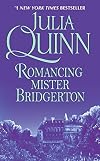
In Romancing Mr. Bridgerton, Quinn's 4th book in the Bridgerton series, we finally get the story of Colin and Penelope Featherington. Penelope has been in love with Colin for years, and in this book, Colin finally wakes up and notices Penelope and falls in love with her too. The plot is a simple one but for the "secret" Penelope harbors and which Colin uncovers.
The novel contains Quinn's signature style: overall wlel adjusted characters well placed in society, fun verbal sparring and dialogue and light plot lines without too much drama. That was, perhaps, what bothered me most about this book. There were many undercurrents in the plot that could have been picked up and dealt with and would have made the book much more powerful in my opinion.
The novel contains Quinn's signature style: overall wlel adjusted characters well placed in society, fun verbal sparring and dialogue and light plot lines without too much drama. That was, perhaps, what bothered me most about this book. There were many undercurrents in the plot that could have been picked up and dealt with and would have made the book much more powerful in my opinion.
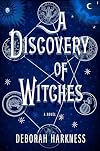
This book was crap.
As a general rule, I have no problem reading crap but this was boring, drawn out crap without any juiciness to keep me going.
I gave up on p.348/581 Loc6683- after we get a boring blow by blow of how the vampire Matthew hunts down a stag. Snore! Can we get to a plot please? You know, like one that progresses forward and where shit actually happens??
As a general rule, I have no problem reading crap but this was boring, drawn out crap without any juiciness to keep me going.
I gave up on p.348/581 Loc6683- after we get a boring blow by blow of how the vampire Matthew hunts down a stag. Snore! Can we get to a plot please? You know, like one that progresses forward and where shit actually happens??
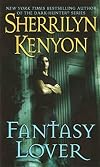
2.5 Stars-
There were some sweet and poignant moments in the book. I particularly liked the way the characters related to one another and cared for each other, there was a tenderness and love between them that was quite touching, but too many other things bothered me:
~Too many deus ex machinas, especially toward the somewhat ridiculous ending where everything completely unravelled into a near farce.
~Formulaic plotlines galore, despite the initial intriguing premise. Sometimes it felt that the author was trying to fill the pages with unnecesary conflict which really had nothing to do with the central plot.
Despite its flaws, the book was ultimately readable and enjoyable.
There were some sweet and poignant moments in the book. I particularly liked the way the characters related to one another and cared for each other, there was a tenderness and love between them that was quite touching, but too many other things bothered me:
~Too many deus ex machinas, especially toward the somewhat ridiculous ending where everything completely unravelled into a near farce.
~Formulaic plotlines galore, despite the initial intriguing premise. Sometimes it felt that the author was trying to fill the pages with unnecesary conflict which really had nothing to do with the central plot.
Despite its flaws, the book was ultimately readable and enjoyable.

This book is absolutely, undeniably brilliant from start to finish. In Maus I and II, Spiegelman layers the story of his father's survival of the Holocaust with his own achingly humorous (or humorously aching?) interactions with his father, effectively displaying the ways in which the horrors have reverberated through time and into the present, rather than remaining a fixed historical occurence. Spiegelman is brutally honest about who his father is and the realities experienced, and the reader has no choice but to be swept into the story, transfixed and horrified. Spiegelman tells the story through the format of a graphic novel and uses animals to represent various groups. On the surface, one may think the media he chooses should ultimately simplify the Holocaust experience, perhaps watering it down to a juvenile level. In my opinion, however, quite the opposite occurs. There are nuances in this book that make themselves felt. There are juxtapositions that stun the reader with their power. Ultimately, in experiencing this novel, I grieved as much as I ever did reading Wiesel's night and watching Lanzmann's Shoah not only for those who perished (z"l), but also for those who survived and who would never be the same.
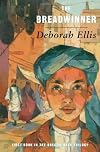
This book had no real plot that I could see. Who is the lady who keeps throwing tokens down from the window? We never really find out. What happens to her family at the end? We don't really know. What happens to Mrs. Weeza and the secret school? Nooriya? The Taliban? Anyway, the list goes on and on.
I felt as if this children's book was attempting to provide an overview of the harsh Taliban regime and a family's suffering. But that's just it- it's an overview. I wanted a story and a plot I could truly care about and feel for. I got neither. I felt like I was reading the book in a truly superficial way.
My favorite part was the Author's note at the end which mentions how, "In the fall of 2001, the Taliban were driven from most of Afghanistan" but failed to mentioned who did the driving out. Way to conceal a whole messy can of worms from the innocent youth.
I felt as if this children's book was attempting to provide an overview of the harsh Taliban regime and a family's suffering. But that's just it- it's an overview. I wanted a story and a plot I could truly care about and feel for. I got neither. I felt like I was reading the book in a truly superficial way.
My favorite part was the Author's note at the end which mentions how, "In the fall of 2001, the Taliban were driven from most of Afghanistan" but failed to mentioned who did the driving out. Way to conceal a whole messy can of worms from the innocent youth.
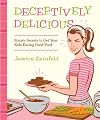
I was hoping I could use some of these recipes to trick my fiance into eating healthier, but I don't know if adding purees to everything is the way.
Also, I know it may be difficult to be get your kids to eat fruits and vegetables and many parents feel like they need to resort to "tricking" their kids, I think it is also important to teach one's kids to MAKE the right choices for themselves. In today's society, eating healthy is a decision and a choice, albeit not an easy one when there is temptation everywhere.
Also, I know it may be difficult to be get your kids to eat fruits and vegetables and many parents feel like they need to resort to "tricking" their kids, I think it is also important to teach one's kids to MAKE the right choices for themselves. In today's society, eating healthy is a decision and a choice, albeit not an easy one when there is temptation everywhere.
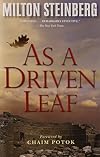
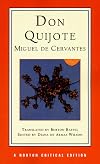
Abandoned on page 34 unfortunately and returned to the library. I vow to come back to it one day as I think it's a worthwhile read.
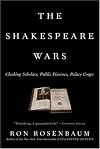
I read more than half of this book which pretty much counts as reading the whole thing...A little (a lot) repetitive.
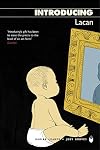
This book literally got me through grad school. After days and days of reading sentences of Lacan over and over in the hopes of understanding something, anything- even if it was wrong- this book came and created light out of darkness! Highly recommended to anyone studying Lacan!
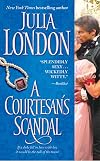
I liked this one.
London does an excellent job setting up the conflict between Grace and Grayson, and I kept reading because I was quite curious as to how the author will resolve the seemingly insurmountable difficulties. To be honest, I was disappointed with the ending. I felt that it was contrived and unrealistic. I also felt that at many times the characters acted selfishly and irrationally. I thought that the resolution to the conflict was almost too easy and I almost wished that it have been solved with a little bit more finesse.
London does an excellent job setting up the conflict between Grace and Grayson, and I kept reading because I was quite curious as to how the author will resolve the seemingly insurmountable difficulties. To be honest, I was disappointed with the ending. I felt that it was contrived and unrealistic. I also felt that at many times the characters acted selfishly and irrationally. I thought that the resolution to the conflict was almost too easy and I almost wished that it have been solved with a little bit more finesse.
This book is the last straw. I am officially done with this series and refuse to waste any more hours of my life plodding through it. I generally really enjoy series and trilogies because I can follow along with a cast of characters I enjoy. It also takes away the decision-making in what I should read next. I just finished book 5 of a series which kept me gnawing my nails off for the last 150 pages? No brainer for me as to what I want to read next. As I forced myself to read this book, I realized that I was being loyal to the series in general, rather than actually enjoying the books and characters themselves. The interest and excitement of the first few novels were gone for me and my reading of these novels became, how shall I say...soulless. In my opinion, there are too many good books out there for me to waste my time in such a manner.
On to greener reading pastures...
On to greener reading pastures...
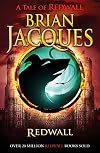
This book was tedious in the extreme.
In Redwall's defense, I read the book over a series of months during my lunch break, while I generally tend to inhale books I like within a couple days. Perhaps the starting and stopping and slow pace made me lose interest in it.
I just think that after Harry Potter, children's fantasy has changed to much to make this really accessible to today's reader. Everything is just so corny and cartoony and things tend to fall into the good vs. evil dichotomy too easily. There is no explanation really for Cluny's evil, except his desire to conquer the Redwall castle. The "good" is just so blatantly and purely good that it gets really dull.
In Redwall's defense, I read the book over a series of months during my lunch break, while I generally tend to inhale books I like within a couple days. Perhaps the starting and stopping and slow pace made me lose interest in it.
I just think that after Harry Potter, children's fantasy has changed to much to make this really accessible to today's reader. Everything is just so corny and cartoony and things tend to fall into the good vs. evil dichotomy too easily. There is no explanation really for Cluny's evil, except his desire to conquer the Redwall castle. The "good" is just so blatantly and purely good that it gets really dull.
I liked the premise of this book:
A beautiful lady of the nobility falls in love with the stableboy on her family's estate.
This is a fantastic plot-line because of the class issues it deals with. Generally, it is the aristocratic man who falls in love with someone below his station, however in this scenario, it is the woman who falls in love with the man "below her station."
After the initial setting up of the story, however, things began to fall very flat for me.
I felt like Kleypas didn't really have anywhere to go with the impasse between Aline and McKenna, so she shifted to the story of Aline's sister and developed that instead. Aline's ridiculousness was the one thing which kept the HEA from moving forward, and it got annoying. The lack of complexity in the relationship kept things stagnant. It seems very much like a Catherine/Heathcliff type of romance to me with a whole of a lot of needless angst, but there didn't seem to be much development within the relationship itself.
Some things I liked: Livia and Gideon's story, the housekeeper, Stony Cross, Kleypas' mention and dealing with the "culture clash" between American culture and British culture, Marcus
A beautiful lady of the nobility falls in love with the stableboy on her family's estate.
This is a fantastic plot-line because of the class issues it deals with. Generally, it is the aristocratic man who falls in love with someone below his station, however in this scenario, it is the woman who falls in love with the man "below her station."
After the initial setting up of the story, however, things began to fall very flat for me.
I felt like Kleypas didn't really have anywhere to go with the impasse between Aline and McKenna, so she shifted to the story of Aline's sister and developed that instead. Aline's ridiculousness was the one thing which kept the HEA from moving forward, and it got annoying. The lack of complexity in the relationship kept things stagnant. It seems very much like a Catherine/Heathcliff type of romance to me with a whole of a lot of needless angst, but there didn't seem to be much development within the relationship itself.
Some things I liked: Livia and Gideon's story, the housekeeper, Stony Cross, Kleypas' mention and dealing with the "culture clash" between American culture and British culture, Marcus
I would like to begin my review by confessing that I am not quite a kid person. There appears to be a Wordsworthian trend in our culture to idolize youth, to see children as somehow more "evolved" than their corrupt adult counterparts.
I happen not to buy that notion at all.
Having said that, there were some things I liked about Jack as narrator and Room and some things which were frustrating.
First off, I felt it was a little bit limiting to filter everything through Jack's perspective. Just as I personally don't like conversing with children because I find doing so dull and un-stimulating and sort of tiring, Jack's voice, at times, began to get tiresome, and I wanted another perspective and more nuance. Jack's thought and ideas were circular and repetitive, which is actually quite authentically child-like, and in that the author succeeds admirably. I personally, however, found it as tedious as conducting an hour after hour conversation with a child, if such a thing were possible.
The plot kept things going forward though, and I really enjoyed the relationships that are created throughout the book- Jack and his Ma, Jack and his Grandma, Jack and Dr. Clay. In reading the book, though, I felt like I was trying to piece together a "real" perspective of things, to distill and interpret Jack's ramblings into something more real, palatable and interesting to me.
I think Donoghue succeeds quite fantastically in what she attempts. Jack seems quite real. He is not a child "older show more than his years" nor is he an idealized tv child. I guess what I'm trying to say is that she succeeds too well in some ways because I was not always fully engaged by Jack's character. But maybe that's because I don't think that everything that comes out of a child's mouth is all that interesting.
Reading this book was a bit like babysitting... show less
I happen not to buy that notion at all.
Having said that, there were some things I liked about Jack as narrator and Room and some things which were frustrating.
First off, I felt it was a little bit limiting to filter everything through Jack's perspective. Just as I personally don't like conversing with children because I find doing so dull and un-stimulating and sort of tiring, Jack's voice, at times, began to get tiresome, and I wanted another perspective and more nuance. Jack's thought and ideas were circular and repetitive, which is actually quite authentically child-like, and in that the author succeeds admirably. I personally, however, found it as tedious as conducting an hour after hour conversation with a child, if such a thing were possible.
The plot kept things going forward though, and I really enjoyed the relationships that are created throughout the book- Jack and his Ma, Jack and his Grandma, Jack and Dr. Clay. In reading the book, though, I felt like I was trying to piece together a "real" perspective of things, to distill and interpret Jack's ramblings into something more real, palatable and interesting to me.
I think Donoghue succeeds quite fantastically in what she attempts. Jack seems quite real. He is not a child "older show more than his years" nor is he an idealized tv child. I guess what I'm trying to say is that she succeeds too well in some ways because I was not always fully engaged by Jack's character. But maybe that's because I don't think that everything that comes out of a child's mouth is all that interesting.
Reading this book was a bit like babysitting... show less
I liked this one although I felt the ending and resolution to be a bit rushed. Also, I didn't buy it that after what she had been through, she could make a decision to simply change her mind and let go of all her trauma and issues so easily. I wanted more angst, I guess.