
Blur presents a look at Sandra Brewster’s eponymous series, a body of work exploring memory, movement, and diasporic identity. The book documents the development of Brewster’s photo-based techniques and themes since the series’ inception in 2016. With an essay by Pamela Edmonds, Blur offers a detailed examination of Brewster’s methods and their engagement with ideas of opacity, resilience, and the complexities of Black identity.

This book was publishes alongside the exhibition Get Up, Stand Up Now. Curated by artist Zak Ové, Get Up, Stand Up Now starts with the work of his father, Horace Ové, creator of the first feature film by a Black British director, and his creative circle who were part of what is now known as the Windrush generation. Together they spearheaded a new cultural wave in 1960s and 1970s Britain, which drew on their African-Caribbean heritage and their experiences in their new home. Their work created ripples of change, inspiring successive generations, who, as a result, have articulated their truths in challenging and innovative ways. Through cultural exchanges and collaborations across the African diaspora, these trailblazing creatives continue to change the consciousness of British society today. Curator Zak Ové has invited each artist to exhibit for becoming a true groundbreaker of their generation and their genre.
Numerous works will be created especially for the exhibition, championing the wealth of contemporary Black creative talent. Highlights confirmed include an original soundtrack by Trinidadian DJ, producer and member of Major Lazer, Jillionaire, which will be streamed throughout the exhibition space. Participating Somerset House Studios residents, including artistLarry Achiampong, musician Gaika and film maker Jenn Nkiru (who worked on Jay Z’s and Beyoncé’s APESH*T), will also present new pieces for the show.
Numerous works will be created especially for the exhibition, championing the wealth of contemporary Black creative talent. Highlights confirmed include an original soundtrack by Trinidadian DJ, producer and member of Major Lazer, Jillionaire, which will be streamed throughout the exhibition space. Participating Somerset House Studios residents, including artistLarry Achiampong, musician Gaika and film maker Jenn Nkiru (who worked on Jay Z’s and Beyoncé’s APESH*T), will also present new pieces for the show.

Che Lovelace is one of the most accomplished Trinidadian artists of his generation, having honed his visual style over the past fifteen years and extended his talents beyond the studio and into various creative outlets. Che Lovelace: Paintings 2004 – 2008 focuses on the artist’s work over a set period, highlighting his exploration of the rich visual and cultural tradition of Trinidad & Tobago’s Carnival. We see Lovelace’s bold visual representations of the festival’s many atmospheres, costuming, music, and hybrid art forms, which create a dialogue between the spirit of Carnival and the formal aspects of painting. Paintings on other themes exist here as well, as Lovelace manipulates the canvas to suit various moods and expressions that, while specific to his native island, will find global resonance.
Lovelace’s stylistic and formal play is supported by three critical essays on his work which provide insight ranging from the broad—how the artist and his work fit into the social context of Trinidad & Tobago—to the specific, voyeuristic look at how he creates a single work of art.
Lovelace’s stylistic and formal play is supported by three critical essays on his work which provide insight ranging from the broad—how the artist and his work fit into the social context of Trinidad & Tobago—to the specific, voyeuristic look at how he creates a single work of art.
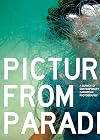
Pictures from Paradise examines the ways in which contemporary art photography has evolved within the English-speaking Caribbean, rising beyond idyllic scenes to tackle more intricate issues.
Within the past few years, regional artists working with the medium of fine art photography have provided an increasingly searching image of the Caribbean and the people who inhabit it. In recognising that the region is not the picture-perfect paradise of traditional depictions, these artists focus instead on what is not easily seen or that which is often ignored – the complex social, racial, political, and physical relationships and landscapes that exist within the Caribbean.
Within the past few years, regional artists working with the medium of fine art photography have provided an increasingly searching image of the Caribbean and the people who inhabit it. In recognising that the region is not the picture-perfect paradise of traditional depictions, these artists focus instead on what is not easily seen or that which is often ignored – the complex social, racial, political, and physical relationships and landscapes that exist within the Caribbean.
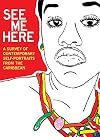
See Me Here: A Survey of Contemporary Self-Portraits from the Caribbean, calls attention to recent directions in self-portraiture throughout the region, by focusing on artists who frequently or significantly use their physical selves, or those to whom they are linked by blood or significant experience, as an avenue for exploration and expression. In so doing, the book asks: How do we really see ourselves? How accurate is the image we present? What formative roles do our cultures and upbringings play? And, what role does the Caribbean as a physical and mental space have in the creation and perception of our own personal, visual identities?
One of the most common understandings of the self-portrait is that it reveals something of an artist’s inner feelings or personality. While this is one focus of See Me Here, the book also examines how, by using their own likenesses, certain artists are speaking to potentially complex, multilayered matters – identity, history, race, gender, sexuality, politics – thus defining themselves within their given contexts and through vastly varied experiences.
One of the most common understandings of the self-portrait is that it reveals something of an artist’s inner feelings or personality. While this is one focus of See Me Here, the book also examines how, by using their own likenesses, certain artists are speaking to potentially complex, multilayered matters – identity, history, race, gender, sexuality, politics – thus defining themselves within their given contexts and through vastly varied experiences.

Catalogue (17.5x25.5cm, color illustrations, 40 pages) of the group show "Global Caribbean" at Little Haïti Center, Miami, exhibition included in the Art Basel Miami Beach art fair official program, December 4th 2009-30th March 2010.

This is a festival with a large exhibition that will include work from more than 40 international artists, work from more than 10 local arts and crafts specialists, and the results of projects that students from schools in and around Mongo have conceived and developed in collaboration with artists from Suriname and abroad. The festival will also include various workshops as well as a three-day seminar,
'Tembe Fu Libi', in which (experiential) experts will discuss their work or subjects that play an important role in the culture of the environment that we live in.
The festival aims to be an artistic meeting place in which all kinds of talent - from young to old, from local to international -, different forms of art and various cultures connect, challenge, inspire and empower each other. It is intended to amaze, to surprise, to entertain, to move, to persuade and to engage the viewer.
I am strongly convinced that art has the power to change a community in a positive sense.
'Tembe Fu Libi', in which (experiential) experts will discuss their work or subjects that play an important role in the culture of the environment that we live in.
The festival aims to be an artistic meeting place in which all kinds of talent - from young to old, from local to international -, different forms of art and various cultures connect, challenge, inspire and empower each other. It is intended to amaze, to surprise, to entertain, to move, to persuade and to engage the viewer.
I am strongly convinced that art has the power to change a community in a positive sense.

Real Art Ways presents some of the most challenging, recent work by artists from the Anglophone Caribbean and the diaspora in Rockstone and Bootheel: Contemporary West Indian Art, curated by Kristina Newman-Scott and Yona Backer. The exhibition evokes the feeling of a high-energy “mash up.” The works are juxtaposed in conversation with each other to reveal complex, fragmented stories about contemporary Anglophone Caribbean culture, challenging common assumptions about West Indian artistic expression.
The name comes from a Jamaican dub-metal song, “Rockstone and Bootheel,” by Gibby. It’s a colloquial phrase that means “taking a journey.” Rockstone and Bootheel is, in fact, an exhibition composed of many journeys, sometimes conflicting, all influenced by the social, political, and economic conditions of life in the West Indies and the diaspora. “West Indies” refers to a group of islands in the Caribbean formerly under British control.
The exhibition focuses on artists from the Bahamas, Barbados, Jamaica, and Trinidad & Tobago, all former British colonies, each with a distinct artistic presence. Rockstone and Bootheel offers a snapshot of recent works that draw from the region’s popular culture and history. Rather than make the case for a particular West Indian aesthetic, the exhibition offers a lively glimpse into contemporary Anglophone Caribbean visual practice – an energetic “mash up” of art that lies at the intersection of popular and urban show more culture. Many of the works in Rockstone and Bootheel incorporate sound and performative elements, drawing from Carnival, Jamaican Dancehall, and other dominant subcultures.
The works also tell stories of the region’s complicated history, a history filled with conflict, transformation, and cross-cultural exchange. Through their work, the artists address issues including gender, race, sexuality and homophobia, and the rampant crime and violence plaguing many of the islands’ inner cities. show less
The name comes from a Jamaican dub-metal song, “Rockstone and Bootheel,” by Gibby. It’s a colloquial phrase that means “taking a journey.” Rockstone and Bootheel is, in fact, an exhibition composed of many journeys, sometimes conflicting, all influenced by the social, political, and economic conditions of life in the West Indies and the diaspora. “West Indies” refers to a group of islands in the Caribbean formerly under British control.
The exhibition focuses on artists from the Bahamas, Barbados, Jamaica, and Trinidad & Tobago, all former British colonies, each with a distinct artistic presence. Rockstone and Bootheel offers a snapshot of recent works that draw from the region’s popular culture and history. Rather than make the case for a particular West Indian aesthetic, the exhibition offers a lively glimpse into contemporary Anglophone Caribbean visual practice – an energetic “mash up” of art that lies at the intersection of popular and urban show more culture. Many of the works in Rockstone and Bootheel incorporate sound and performative elements, drawing from Carnival, Jamaican Dancehall, and other dominant subcultures.
The works also tell stories of the region’s complicated history, a history filled with conflict, transformation, and cross-cultural exchange. Through their work, the artists address issues including gender, race, sexuality and homophobia, and the rampant crime and violence plaguing many of the islands’ inner cities. show less
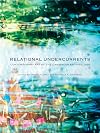
A Relational Undercurrents: Contemporary Art of the Caribbean Archipelago, curated by Tatiana Flores,
features twenty-first century art of the Caribbean, as seen through the framework of the archipelago.
While it is common for scholars to stress the region’s variegated colonial history and extraordinary
diversity, Relational Undercurrents focuses instead on identifying thematic continuities in the art of the
Caribbean islands. As some of these themes are not typically thought of as belonging to “Latin America,”
the exhibition questions the conceptual boundaries imposed on areas that are geographically
contiguous and share both similar ecologies and histories.
Departing from the premise that the concept of Latin America favors mainland countries, the exhibition
proposes a mapping of the region that begins with the islands. It features over 80 artists with roots in
Haiti, the Dominican Republic, Cuba, Puerto Rico, Curaçao, Aruba, St. Martin, Martinique, Guadeloupe,
Trinidad and Tobago, Jamaica, The Bahamas and Barbados.
As their work reveals, an insular focus brings to the fore those issues that cannot be overlooked when
dealing with the Caribbean and which are also relevant to the region as a whole. Arising from the
region’s prolonged legacy of colonialism, recurring themes include race and ethnicity, history, identity,
sovereignty, migration, and sustainability. These and others are explored in the exhibition’s four
thematic sections: Conceptual Mappings, Perpetual Horizons, show more Landscape Ecologies and Representational
Acts. With works by over eighty artists Relational Undercurrents includes painting, installation art,
sculpture, photography, video, and performance. show less
features twenty-first century art of the Caribbean, as seen through the framework of the archipelago.
While it is common for scholars to stress the region’s variegated colonial history and extraordinary
diversity, Relational Undercurrents focuses instead on identifying thematic continuities in the art of the
Caribbean islands. As some of these themes are not typically thought of as belonging to “Latin America,”
the exhibition questions the conceptual boundaries imposed on areas that are geographically
contiguous and share both similar ecologies and histories.
Departing from the premise that the concept of Latin America favors mainland countries, the exhibition
proposes a mapping of the region that begins with the islands. It features over 80 artists with roots in
Haiti, the Dominican Republic, Cuba, Puerto Rico, Curaçao, Aruba, St. Martin, Martinique, Guadeloupe,
Trinidad and Tobago, Jamaica, The Bahamas and Barbados.
As their work reveals, an insular focus brings to the fore those issues that cannot be overlooked when
dealing with the Caribbean and which are also relevant to the region as a whole. Arising from the
region’s prolonged legacy of colonialism, recurring themes include race and ethnicity, history, identity,
sovereignty, migration, and sustainability. These and others are explored in the exhibition’s four
thematic sections: Conceptual Mappings, Perpetual Horizons, show more Landscape Ecologies and Representational
Acts. With works by over eighty artists Relational Undercurrents includes painting, installation art,
sculpture, photography, video, and performance. show less
A to Z of Caribbean Art is a joyous celebration of the lives and works of many of the most outstanding, prolific, groundbreaking, critical, fascinating, and controversial artists of the Caribbean. Thanks to the abécédaire format of this book, a multiplicity of artists have ended up in lively dialogue here. We connect people separated by geography, language, and time: 120 years of movements, moments, schools, and sociopolitical contexts; countries as far apart as Bermuda in the north to Guyana in the south; and the French, Dutch, English, and Spanish Caribbean.
Each artist is represented by a page that shows a definitive work, biographical details, and a short write-up about their oeuvre. These artists were selected based on a number of factors, including critical discourse around their work, inclusion in a significant publication, work written about in regional or international trade magazine, and participation in a curated exhibition at a major institution, or at a regional or international biennial.
Each artist is represented by a page that shows a definitive work, biographical details, and a short write-up about their oeuvre. These artists were selected based on a number of factors, including critical discourse around their work, inclusion in a significant publication, work written about in regional or international trade magazine, and participation in a curated exhibition at a major institution, or at a regional or international biennial.

In 1974, Stuart Robles de Medina's bronze statue of Johan Adolf Pengel was unveiled in Paramaribo, Suriname, on Independence Square. The statue commemorates Pengel, a former Prime Minister, and was revealed 50 years ago. The creation of this sculpture is documented in a book titled "Pengel" by Xavier Robles de Medina, which includes family photos and interviews