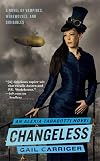
The second installment in The Parasol Protectorate series, which is such a gem of a series it makes me wonder if the author has been reading my diary.
This time we're introduced to dirigibles, spies, mummies and ghosts (I loved the ghosts, I have to say. Let's Free Formerly Merriway, I say.) As with the first book, Soulless, which I finished a few days ago, Changeless is witty and fast-paced with an impeccable heroine, one of the best I've come across in literature. Garriger's writing is as exquisite as ever and the narrative flows effortlessly.
I have a couple of precise things to talk about:
1. The ending - talk about being out of the blue, I was completely taken aback by this sudden turn of events and this is the only time I felt it didn't really connect to the rest of the story. It felt like a huge plot point to me. On the other hand, I'm truly happy to be rid of Lord Macon whom I never liked. The banter is nice but his dominating and aggressive personality makes him sound very entitled to things he simply has no claim to. A woman, or any human being for that matter, is not property. I hope it's the last we see of him and I wonder at the tastes of those for whom he's a favourite character.
2. Ivy needs to be developed, I think, and I hope to see that in Blameless. She's clearly written as a foil to Alexia (she faints a lot and needs rescuing, Alexia doesn't) which is nice to Alexia but really very harsh on Ivy who could use a little more backbone that would flesh her out show more into more than a stereotype. She deserves it.
3. So pleasantly surprised at the lesbian hints at the end, I could have screamed. It's good that the author acknowledges sexual tension when it exists, instead of being coy about it and praising the readers for finding things they 'never thought of including' (which is a gentle authorial dismissal disguised as praise, but a dismissal nonetheless, which I always find sad when it happens to (potential) relationships between characters in literature, especially non-straight ones, as it's often a case of heteronormativity, but I digress).
4. Floote is an underrated character, hope to see more of him. And I loved the bits about Alexia's father and the scene where Alexia and Ivy pick clothes and hats, which was hilarious. This book is a riot.
I can't wait to read Blameless. This series is such a find! show less
This time we're introduced to dirigibles, spies, mummies and ghosts (I loved the ghosts, I have to say. Let's Free Formerly Merriway, I say.) As with the first book, Soulless, which I finished a few days ago, Changeless is witty and fast-paced with an impeccable heroine, one of the best I've come across in literature. Garriger's writing is as exquisite as ever and the narrative flows effortlessly.
I have a couple of precise things to talk about:
1. The ending - talk about being out of the blue, I was completely taken aback by this sudden turn of events and this is the only time I felt it didn't really connect to the rest of the story. It felt like a huge plot point to me. On the other hand, I'm truly happy to be rid of Lord Macon whom I never liked. The banter is nice but his dominating and aggressive personality makes him sound very entitled to things he simply has no claim to. A woman, or any human being for that matter, is not property. I hope it's the last we see of him and I wonder at the tastes of those for whom he's a favourite character.
2. Ivy needs to be developed, I think, and I hope to see that in Blameless. She's clearly written as a foil to Alexia (she faints a lot and needs rescuing, Alexia doesn't) which is nice to Alexia but really very harsh on Ivy who could use a little more backbone that would flesh her out show more into more than a stereotype. She deserves it.
3. So pleasantly surprised at the lesbian hints at the end, I could have screamed. It's good that the author acknowledges sexual tension when it exists, instead of being coy about it and praising the readers for finding things they 'never thought of including' (which is a gentle authorial dismissal disguised as praise, but a dismissal nonetheless, which I always find sad when it happens to (potential) relationships between characters in literature, especially non-straight ones, as it's often a case of heteronormativity, but I digress).
4. Floote is an underrated character, hope to see more of him. And I loved the bits about Alexia's father and the scene where Alexia and Ivy pick clothes and hats, which was hilarious. This book is a riot.
I can't wait to read Blameless. This series is such a find! show less
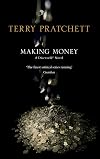
Author: Terry Pratchett
Title: Making Money
Format: eBook
Rating: 5/5
I love Terry Pratchett. Love, love, love him. He's funny, which in my book is one of the most important qualities an author can have. He's warm and he's smart, which makes his humour smart and his books smart as well. Prior to reading Making Money, I'd read Mort and Reaper Man. Then I stopped, I was attracted to other shiny books but I already knew Pratchett and I were in for the long run. You don't forget such impeccable writing - it's like coming home.
So Making Money isn't about Death (though Death has a cameo), it's about Moist, who's much more down to earth. Moist is a thief who was hanged, well, almost hanged and who almost died. He was hanged but he survived and so people think he must be special and must have something to accomplish. Destiny, signs and all that jazz. He's made Postmaster General, that is he's put in charge of the Post Office (I don't know but I'm guessing all this happens in Going Postal, which I have yet to read, one of the many good things about Terry's books is that you can pick them up in any order, you'll miss some jokes but you'll laugh all the same). And then when this is not enough, he's put in charge of the Bank. Hence, Making Money.
The Bank is owned by an unforgettable woman, Mrs Lavish, who then proceeds to die. She leaves her share of the bank (51%) to a dog called Mr Fusspot. Moist must then manage the bank with Mr Fusspot while fighting the influence of every Lavish show more who wants their share of the bank. Moist is also still a thief at heart and can't help taking advantage of his new position (so yes, destiny my foot). There's also something going on with Golems, which I thought provided with an interesting parallel regarding racism in our world (it's not just me, look at that sentence: 'This march was against the employment of golems, who uncomplainingly did the dirtiest jobs, worked around the clock, and were so honest they paid their taxes. But they weren't human and they had glowing eyes, and people could get touchy about that sort of thing.')
The cast of characters is colourful and fully developed and the humour is flawless and effortless. What I like most about Pratchett is that he delivers extremely funny lines while making incredibly spot-on comments on the nature of humanity and on society. It's this clever blend of wit and wisdom (and wisdom through wit) that I adore and the reason why I keep coming back to Pratchett. He gets it. Making Money is an incredibly entertaining read and if you read it carefully, it's an incredibly thought-provoking read.
Terry tackles everything from the making of a society and what money is worth (very very interesting philosophical concepts here when Moist introduces paper money and keeps being quizzed about its value as compared to gold) to how institutions are made are thrive (Apparently, to get a job in the Mint, you had to wait until someone died; it was a case of Dead Man's Sheds. Illuminating the bright side, however, was the fact that when your prospective vacancy became available you got the job even if you were only slightly less dead than the previous incumbent. BUT ALSO the following genius quote: When he got back to the Post Office, Moist looked up the Lavish family in Whom's Whom. They were indeed what was known as 'old money', which meant that it had been made so long ago that the black deeds which had originally filled the coffers were now historically irrelevant. Funny, that: a brigand for a father was something you kept quiet about, but a slave-taking pirate for a great-great-great-grandfather was something to boast of over the port. Time turned the evil bastards into rogues, and rogue was a word with a twinkle in its eye and nothing to be ashamed of.)
I love, love, love Pratchett. And I loved, loved, loved Making Money. Have you read it? If you've reviewed it on your journal I'd love to read your thoughts and I'll link to them here so don't hesitate to drop me a comment. If you have yet to discover it, I envy you for you're in for a treat. show less
Title: Making Money
Format: eBook
Rating: 5/5
I love Terry Pratchett. Love, love, love him. He's funny, which in my book is one of the most important qualities an author can have. He's warm and he's smart, which makes his humour smart and his books smart as well. Prior to reading Making Money, I'd read Mort and Reaper Man. Then I stopped, I was attracted to other shiny books but I already knew Pratchett and I were in for the long run. You don't forget such impeccable writing - it's like coming home.
So Making Money isn't about Death (though Death has a cameo), it's about Moist, who's much more down to earth. Moist is a thief who was hanged, well, almost hanged and who almost died. He was hanged but he survived and so people think he must be special and must have something to accomplish. Destiny, signs and all that jazz. He's made Postmaster General, that is he's put in charge of the Post Office (I don't know but I'm guessing all this happens in Going Postal, which I have yet to read, one of the many good things about Terry's books is that you can pick them up in any order, you'll miss some jokes but you'll laugh all the same). And then when this is not enough, he's put in charge of the Bank. Hence, Making Money.
The Bank is owned by an unforgettable woman, Mrs Lavish, who then proceeds to die. She leaves her share of the bank (51%) to a dog called Mr Fusspot. Moist must then manage the bank with Mr Fusspot while fighting the influence of every Lavish show more who wants their share of the bank. Moist is also still a thief at heart and can't help taking advantage of his new position (so yes, destiny my foot). There's also something going on with Golems, which I thought provided with an interesting parallel regarding racism in our world (it's not just me, look at that sentence: 'This march was against the employment of golems, who uncomplainingly did the dirtiest jobs, worked around the clock, and were so honest they paid their taxes. But they weren't human and they had glowing eyes, and people could get touchy about that sort of thing.')
The cast of characters is colourful and fully developed and the humour is flawless and effortless. What I like most about Pratchett is that he delivers extremely funny lines while making incredibly spot-on comments on the nature of humanity and on society. It's this clever blend of wit and wisdom (and wisdom through wit) that I adore and the reason why I keep coming back to Pratchett. He gets it. Making Money is an incredibly entertaining read and if you read it carefully, it's an incredibly thought-provoking read.
Terry tackles everything from the making of a society and what money is worth (very very interesting philosophical concepts here when Moist introduces paper money and keeps being quizzed about its value as compared to gold) to how institutions are made are thrive (Apparently, to get a job in the Mint, you had to wait until someone died; it was a case of Dead Man's Sheds. Illuminating the bright side, however, was the fact that when your prospective vacancy became available you got the job even if you were only slightly less dead than the previous incumbent. BUT ALSO the following genius quote: When he got back to the Post Office, Moist looked up the Lavish family in Whom's Whom. They were indeed what was known as 'old money', which meant that it had been made so long ago that the black deeds which had originally filled the coffers were now historically irrelevant. Funny, that: a brigand for a father was something you kept quiet about, but a slave-taking pirate for a great-great-great-grandfather was something to boast of over the port. Time turned the evil bastards into rogues, and rogue was a word with a twinkle in its eye and nothing to be ashamed of.)
I love, love, love Pratchett. And I loved, loved, loved Making Money. Have you read it? If you've reviewed it on your journal I'd love to read your thoughts and I'll link to them here so don't hesitate to drop me a comment. If you have yet to discover it, I envy you for you're in for a treat. show less
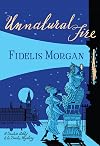
First things first: you HAVE to read this. What a find, I can't believe it's not more of a bestseller, it was so good! Unnatural Fire is the first in a series of mysteries featuring Countess Anastasia Ashby de la Zouche and her former maid Alpiew in Restoration England. It's for you if you like historical crime and it's definitely for you if you like comic mysteries or just want a good laugh really. It's such bawdy, outrageous fun! From the very first lines till the very last, time just flew by.
Let me list here what I absolutely loved about this book:
- The characters are all memorable. They're eccentric and bold and all superbly fleshed-out. The Countess and Alpiew (as well as Pigalle, one of the Countess's friends) are absolutely amazing - so fresh and fun and smart, the book is packed with their wit and all the better for it. I miss them so much already. The friendship between the women is wonderful and this book passes the Bechdel Test effortlessly.
- The sense of the period. When Fidelis Morgan gives you Restoration, she gives you a full picture of the period and the cast of characters as well as the places involved pretty much cover the era. From prison to court, you'll see it all. I learned a lot about alchemy. Since we have two female characters investigating and evolving in Restoration England, we witness the misogyny they suffer from in plenty of areas. Luckily for us the Countess and Alpiew never fail to point out how they disagree with their treatment because of show more their gender.
- The mystery - I found it completely engrossing. The author really explains it all and the finding of the clues and everything is beautifully put together, it felt absolutely genuine to me and I was never lost, the author makes sure of that. Nonetheless, not a soul can possibly guess whodunit so I was very pleased to have both the satisfaction of going through everything with the characters and being very very surprised with the ending (which I thought was in-keeping with the tone of the book: very unbelievable and yet the themes are very dark).
- The HUMOUR! You know me, that's my favourite part of ANY book and really the author gave me my share of laughter, this book is positively hysterical. Fidelis Morgan uses the humour one can find in Restoration plays (bawdy & physical humour) a lot and the characters are all excellent fun. I dare you not to laugh & be hooked from the first few pages.
I'm just so glad this book is the first in a series for I just can't let go of this world. There are three more books to look forward to. I found out about Unnatural Fire by perusing Felony and Mayhem's catalog - they have yet to reprint the other three but I'll watch out for them. I find the cover of the US edition much more attractive and emblematic of the book than the UK one. show less
Let me list here what I absolutely loved about this book:
- The characters are all memorable. They're eccentric and bold and all superbly fleshed-out. The Countess and Alpiew (as well as Pigalle, one of the Countess's friends) are absolutely amazing - so fresh and fun and smart, the book is packed with their wit and all the better for it. I miss them so much already. The friendship between the women is wonderful and this book passes the Bechdel Test effortlessly.
- The sense of the period. When Fidelis Morgan gives you Restoration, she gives you a full picture of the period and the cast of characters as well as the places involved pretty much cover the era. From prison to court, you'll see it all. I learned a lot about alchemy. Since we have two female characters investigating and evolving in Restoration England, we witness the misogyny they suffer from in plenty of areas. Luckily for us the Countess and Alpiew never fail to point out how they disagree with their treatment because of show more their gender.
- The mystery - I found it completely engrossing. The author really explains it all and the finding of the clues and everything is beautifully put together, it felt absolutely genuine to me and I was never lost, the author makes sure of that. Nonetheless, not a soul can possibly guess whodunit so I was very pleased to have both the satisfaction of going through everything with the characters and being very very surprised with the ending (which I thought was in-keeping with the tone of the book: very unbelievable and yet the themes are very dark).
- The HUMOUR! You know me, that's my favourite part of ANY book and really the author gave me my share of laughter, this book is positively hysterical. Fidelis Morgan uses the humour one can find in Restoration plays (bawdy & physical humour) a lot and the characters are all excellent fun. I dare you not to laugh & be hooked from the first few pages.
I'm just so glad this book is the first in a series for I just can't let go of this world. There are three more books to look forward to. I found out about Unnatural Fire by perusing Felony and Mayhem's catalog - they have yet to reprint the other three but I'll watch out for them. I find the cover of the US edition much more attractive and emblematic of the book than the UK one. show less
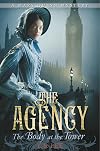
I was really looking forward to reading the second installment in The Agency trilogy. In this book, Mary has to investigate the death of a worker on a construction site & she goes undercover, disguised as Mark. While it was a really enjoyable read, I wasn't as pleased with it as I'd been with A Spy in the House (reviewed here). First of all, I didn't find the plot as engaging as for the first book. In the first book, I'd grown quite fond of reading about the secondary characters and their development (in particular, if you remember, that of Angelica - but I fear I'm spoiling a bit here). With The Body at the Tower, I really struggled to keep up with what was going on and the detective story part of the novel failed to keep me interested. That being said, I didn't give this book 4 stars for nothing - Mary is as lovely a heroine as ever and the social commentary is as sharp as in The Spy in the House - I noticed the author focused more on issues of paternalism this time. For example, at some point, Mary remarks that offering baskets of food to poverty-stricken families gives well-off people a sense of accomplishment but once it's not a sustainable source at all, what they need is lasting change. Also, can I say yay for an awesome reference to Mary Wollstonecraft? :)
Surprisingly enough, I thought the best parts of the books were the ones related to Mary and James, not so much their romance (though the banter's always a welcome addition) but how much the author developed them show more this time. I felt they were more real than ever, especially James who - even though I can't forget his essentialist comments in Spy - is turning into quite the catch. I was also pleasantly surprised to see Mary and James comment on homosexual relationships in a very casual and matter-of-fact way, which made them very endearing.
Overall, I'm constantly impressed at the range this series of books offers. Y.S. Lee does something not many have done before, which is giving a pretty good picture of Victorian London seen through the eyes of not only the happy few and how the happy few sees the rest but also how the rest lives - Mary herself has to deal with this constantly. On top of it all, it's generally a series of really good adventure novels. I'll be very sorry to see the third (and last) book come out next year for I really wish this fantastic series would last but a little longer! show less
Surprisingly enough, I thought the best parts of the books were the ones related to Mary and James, not so much their romance (though the banter's always a welcome addition) but how much the author developed them show more this time. I felt they were more real than ever, especially James who - even though I can't forget his essentialist comments in Spy - is turning into quite the catch. I was also pleasantly surprised to see Mary and James comment on homosexual relationships in a very casual and matter-of-fact way, which made them very endearing.
Overall, I'm constantly impressed at the range this series of books offers. Y.S. Lee does something not many have done before, which is giving a pretty good picture of Victorian London seen through the eyes of not only the happy few and how the happy few sees the rest but also how the rest lives - Mary herself has to deal with this constantly. On top of it all, it's generally a series of really good adventure novels. I'll be very sorry to see the third (and last) book come out next year for I really wish this fantastic series would last but a little longer! show less

Recently, on Twitter, I asked my feed for recommendations of books involving teenagers making a difference in the world and I was recommended this book. Let me get this out of the way right now: this is the kind of book the five-star rating was made for. This book is one of the best books I have ever read. Period. It's about Frankie, a 15-year-old girl who attends Alabaster, an exclusive prep school. It is about that. But then again, it's about every single one of those words: it's about Frankie as a person, it's about the fact that she's 15, it's about the fact that she's a girl and it's about the fact that she attends an exclusive prep school, with all the elitism that contains.
This is the book I would put in the hands of my 15-year-old self were I allowed to meet her once more, because it would help me figure things out, things I now know but would have benefited from knowing back then, too.
So, Frankie has grown over the summer and now, suddenly, Matthew Livingstone, a boy she'd had a crush on for years and years, notices her. He notices when she falls off her bike and comes and rescues her. Frankie is pleased, but part of her wonders whether he'd still be interested in her if she didn't need rescuing. Part of her wonders if he'd still be interested in her if she spoke her mind. If she rebelled. If she outsmarted him. If, in short, she proved to be herself and not live up to his expectations.
The Disreputable History of Frankie Landau-Banks is an insanely smart book show more about gender with a riveting plot, crushing conclusions and well-written, complex characters. It would be hard quoting every single passage I adored, but here are a few:
Frankie is grateful to have such a loyal friend, but it does not escape her notice that Trish's lack of understanding is a condition of that loyalty. Were Trish to fully comprehend the way Frankie thinks, the subjects she ponders all the time when she appears to be quietly doing her homework - Frankie's anger and hunger - she would pull away. To Trish, Frankie is still the ordinary girl with gerbils at home in a Habitail, only now more melancholy and in need of cheering up, due to the second bad boyfriend in a row.
She hoped, she hoped he would understand. That he would appreciate her the way he appreciated Alpha. Admire her cleverness, her ambition, her vision. That he would admit her as his equal, or even as his superior, and love her for what she was capable of.
'Why is it psychotic if I did it and genius if Alpha did it?' wailed Frankie. 'That's so unfair. It's a double standard.'
Elizabeth raised her eyebrows: 'You have some balls'. Frankie hated that expression, ever since Zada had pointed out to her that it equates courage with the male equipment.'
You know what this book does? This book is an answer to 'why do we need feminism today, anyway?' Frankie lives in today's world and she faces misogyny everywhere she goes. It's insidious, it's tiny tiny words and attitudes, but it's there. There's an amazing scene in which she breaks a rule nobody ever realized was a rule because of tradition and familiarity 'we've always done this without questioning it so why do different' and I feel this scene was a symbol of the whole book. Throughout the book, we see Frankie stand up to instances of misogyny nobody seems to realize exist. This book shows you why we need feminism today. In one of the first passages of the book, Frankie wants to go out for a walk and her mother forbids her. Frankie is annoyed and asks, 'if I were a boy, would you let me go?' I think this book explores that - how far people let you go when you're a girl, and how far when you're a boy, and what that means. It's also a wonderfully effective example that gender is constructed, because even when they have the exact same abilities, a boy and a girl won't be treated the same, and Frankie proves that in the best way possible.
It's also a book about prep school, elitism, ambition, connections, networks and friendship, and ultimately, it's also very much a book about nepotism. I thought the setting of Alabaster allowed the author to explore all that through Frankie and for having been through it myself, at least partly, it was good to have an honest look at this world and what is inherently wrong with it. People hire people they know or who've been recommended to them by people they know, they interview people they know, they do services to people they know and those are the people in charge. The end was bitter-sweet in that respect, because I expected Frankie to make a different choice, but I do understand her decision too.
Frankie is an indelible character, she's one of the best heroines I've ever encountered in literature and I feel so lucky to have found this book, which I think deserves to be even more well-known. Had I known how good it was going to be, how I would want to read it again as soon as I'd finished it, I would have picked it up way sooner. Don't make the same mistake, buy The Disreputable History of Frankie Landau-Banks now, it's an outstanding book you'll remember for a long, long time. show less
This is the book I would put in the hands of my 15-year-old self were I allowed to meet her once more, because it would help me figure things out, things I now know but would have benefited from knowing back then, too.
So, Frankie has grown over the summer and now, suddenly, Matthew Livingstone, a boy she'd had a crush on for years and years, notices her. He notices when she falls off her bike and comes and rescues her. Frankie is pleased, but part of her wonders whether he'd still be interested in her if she didn't need rescuing. Part of her wonders if he'd still be interested in her if she spoke her mind. If she rebelled. If she outsmarted him. If, in short, she proved to be herself and not live up to his expectations.
The Disreputable History of Frankie Landau-Banks is an insanely smart book show more about gender with a riveting plot, crushing conclusions and well-written, complex characters. It would be hard quoting every single passage I adored, but here are a few:
Frankie is grateful to have such a loyal friend, but it does not escape her notice that Trish's lack of understanding is a condition of that loyalty. Were Trish to fully comprehend the way Frankie thinks, the subjects she ponders all the time when she appears to be quietly doing her homework - Frankie's anger and hunger - she would pull away. To Trish, Frankie is still the ordinary girl with gerbils at home in a Habitail, only now more melancholy and in need of cheering up, due to the second bad boyfriend in a row.
She hoped, she hoped he would understand. That he would appreciate her the way he appreciated Alpha. Admire her cleverness, her ambition, her vision. That he would admit her as his equal, or even as his superior, and love her for what she was capable of.
'Why is it psychotic if I did it and genius if Alpha did it?' wailed Frankie. 'That's so unfair. It's a double standard.'
Elizabeth raised her eyebrows: 'You have some balls'. Frankie hated that expression, ever since Zada had pointed out to her that it equates courage with the male equipment.'
You know what this book does? This book is an answer to 'why do we need feminism today, anyway?' Frankie lives in today's world and she faces misogyny everywhere she goes. It's insidious, it's tiny tiny words and attitudes, but it's there. There's an amazing scene in which she breaks a rule nobody ever realized was a rule because of tradition and familiarity 'we've always done this without questioning it so why do different' and I feel this scene was a symbol of the whole book. Throughout the book, we see Frankie stand up to instances of misogyny nobody seems to realize exist. This book shows you why we need feminism today. In one of the first passages of the book, Frankie wants to go out for a walk and her mother forbids her. Frankie is annoyed and asks, 'if I were a boy, would you let me go?' I think this book explores that - how far people let you go when you're a girl, and how far when you're a boy, and what that means. It's also a wonderfully effective example that gender is constructed, because even when they have the exact same abilities, a boy and a girl won't be treated the same, and Frankie proves that in the best way possible.
It's also a book about prep school, elitism, ambition, connections, networks and friendship, and ultimately, it's also very much a book about nepotism. I thought the setting of Alabaster allowed the author to explore all that through Frankie and for having been through it myself, at least partly, it was good to have an honest look at this world and what is inherently wrong with it. People hire people they know or who've been recommended to them by people they know, they interview people they know, they do services to people they know and those are the people in charge. The end was bitter-sweet in that respect, because I expected Frankie to make a different choice, but I do understand her decision too.
Frankie is an indelible character, she's one of the best heroines I've ever encountered in literature and I feel so lucky to have found this book, which I think deserves to be even more well-known. Had I known how good it was going to be, how I would want to read it again as soon as I'd finished it, I would have picked it up way sooner. Don't make the same mistake, buy The Disreputable History of Frankie Landau-Banks now, it's an outstanding book you'll remember for a long, long time. show less
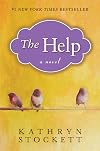
That was a really good book. Clearly this is a character-driven story, the ones Stockett created are so strong and fully-fleshed I felt as if I could touch them right here and now. Each voice was fantastic, so unique. The plot was a page-turner, infused with details about what it's like to live in 1960s segregated America. I wish the author had added an epilogue, the end is quite abrupt and I would have wanted to know more about what happened to some of the characters but Stockett ended the story on a happy, hopeful note that has the characters looking forward to the future.
I can't wait to read another book by Stockett, that was brilliant storytelling.
I can't wait to read another book by Stockett, that was brilliant storytelling.
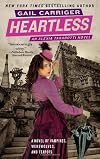
Very entertaining once again. Fast-paced adventures, stoic heroine, witty dialog, cravats, tea. I would have preferred it if Alexia had taken part in the social movements of her day (there's a brief mention of the suffragettes, whom she dismisses quite too easily for my taste) especially since she's so driven and smart. Her lack of political commitment seems really at odds with her personality, which is why I gave the book four stars instead of five. Very joyful read, though, rather like a spicy macaroon. Bring on Timeless!
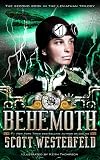
Oustanding book. God, this is so good I can hardly believe it. So interesting and packed full of twists and turns. The one thing preventing me from giving it 5 stars is Alek's sexist remarks throughout, I do hope he sees the error of his ways in the last book. Oh and that kiss at the end! I'm secretly in love with Lilit but don't tell anyone. Unputdownable, quite literally. I had tons of other things to do this weekend but couldn't leave this book behind, it stays with you, the world-building is terrific. So excited about Goliath!
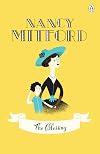
It does feel good to read another Nancy Mitford. Her style is easily spotted in a crowd, I find. Her wit is sharp, to the point, her characters unforgettable and The Blessing is no exception. Such eccentricity in one book, it's amazing how she does it without making it too cliché. I found the essentialist statements to be well below her usual standards (the constant French/English comparisons are frankly strange though it has a context at least) but on the other hand in one scene one of her best characters convinces another one that homosexuality is no worse or better than heterosexuality. I was bracing myself for the inevitable moment when it would be linked to misogyny (in a 'you see, men are so much superior to women, who can blame men for fancying other men' sort of way) but surprisingly enough it wasn't. Such an unexpected relief.
Overall an entertaining book, though not her best it's a good, fun story.
Overall an entertaining book, though not her best it's a good, fun story.
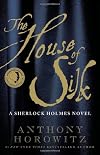
I really enjoyed this. I haven't read any of the Sherlock Holmes novels (not for lack of trying, they just bore me) but the characters rang true and the plot was interesting to follow. I can't say I was that impressed with the author's afterword. While I applaud his candidness in all matters literary, his being proud of not having included any female characters or any hint as to Watson and Holmes' ambiguous relationship fell flat of being a source of celebration for me. How pathetic that anyone should rejoice in the fact that once again women are ignored and anything other than heterosexual relationships simply don't exist. Moriarty was by far the most interesting character in this book and he appears but three times all in all. The more I write about this novel the more flaws I find so perhaps I should stop here and end on a positive note as I, after all, gave it four stars. Let's go for - nice title. Disappointed in the explanation given for the aforementioned title though but we said a positive note. Bunnies.
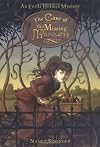
Oh what a find! I'm besotted with Enola, an intelligent and driven fourteen year old, her voice was an absolute joy to follow and I've missed it since closing the book. The characters are colourful and interesting and the ending is careful, very moving and far from sugary neat. Some great feminist ideas in this book. It reminded me of The Agency series by Y.S. Lee. Such a treat. I can't wait to get back to this world.
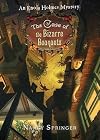
The only problem I have with this book is that I would have loved for it to last longer. Such a good story, once again and the details of the case were actually really chilling. I absolutely adore Enola. I can't wait to read more books in this series, what a find!
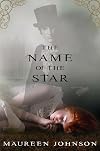
I think I should start this by saying that I never expected this book to be that chilling. The very first part of the book was comfortable - I loved reading about Rory settling in her new school, I loved her friendship with Jazza, I loved Jazza herself, a young girl who reads Jane Austen in the bath and likes to treat herself to a piece of cake, making every little thing special. I would have quite liked for Rory to go visit Jazza's home in Cornwall and for them to have adventures then. Instead, Jack the Ripper came in. Quite a change of atmosphere, but the mystery was interesting and difficult to solve on one's own. I'm not overly fond of paranormal stories but due to the very nature of the legend we're dealing with here, any paranormal element wouldn't have seemed out of place, and it wasn't. I hope the author will develop the Shades' backstory a bit more in the next book but Johnson did a great job of introducing them and making us feel very comfortable with them as the story enfolded.
Maureen Johnson has great humour and it shows here, her turns of phrases are sometimes absolutely hilarious even in the middle of intense scenes and it's a pleasure. The end has a twist I half expected, straight out of Dead Like Me. I look forward to reading the next in the series.
Maureen Johnson has great humour and it shows here, her turns of phrases are sometimes absolutely hilarious even in the middle of intense scenes and it's a pleasure. The end has a twist I half expected, straight out of Dead Like Me. I look forward to reading the next in the series.
Well. I don't know. It wasn't particularly entertaining nor was it original or captivating. The prose is nice and feels right but the whole thing is a little dull and the plot frankly a bit of a joke (to have it all revealed by one person in a simple letter at the end seemed very lazy to me). Still, I give it three stars for the only reason that I finished it, a rare occurrence these days. I won't be remembering it and I'm craving a bit more fun in the next book I pick up, or at least an intriguing story.
I wish I'd read this without knowing the end, which is a stroke of genius. The story itself is fairly conventional but I could see Christie was getting more comfortable with Poirot. Loved the character of Caroline, who can solve a crime from her dining room, and I was very happy indeed to find out she'd inspired the character of Miss Marple.
Now craving some poison, the weapon used here (a dagger) bored me a little :D
Now craving some poison, the weapon used here (a dagger) bored me a little :D
Sisterhood Everlasting is the fifth and last book of The Sisterhood of the Traveling Pants series. I read all five books in a week so my thoughts are really about the series as a whole. I've read all the books in a series back to back once before and the result is always the same - it takes me quite a while to move on to something else as I've been so completely immersed in this world, with no break whatsoever. Similar to when you have to get accustomed to natural lighting after having spent a few hours in a theatre. The Sisterhood of the Traveling Pants is an incredibly beautiful, thoughtful, well-written series about friendship and love that I find completely timeless. The pangs and joys of adolescence are depicted with such accuracy, the girls' voices are unmistakable, unique yet consistent. I loved all four of them for different reasons, identified with their plights, lived vicariously through them in blissful moments. I cannot recommend this series enough. It's a rare jewel, an evocative tale about life that's sure to make you ponder yours. Part of me is angry at my teenage self for having dismissed these books when I was younger as I would have grown up much stronger, and part of me basks in the sheer delight of having discovered such moving books now. Unputdownable and surely a new addition to my to-be-reread pile.
Nice change of pace since the investigation is carried out by three characters that don't include Poirot at first. Very surprising resolution which you just don't expect but no deus ex machina here, it all makes perfect sense. I quite liked the touches of romance here and there which are reminiscent of the earlier books. It's no Orient Express but it's such a good read on a rainy afternoon.
Another winner from Christie. Bizarrely seems to have been written in a rush as I found the characters to be less memorable than some others. Still tremendously good puzzle. I sure didn't guess the murderer before Poirot but I'm getting better.
Such a good commemorative keepsake. Very happy I splurged. Glossy pics and some great exclusive quotes. The book is so massive I almost broke my wrist holding it. You don't learn a ton but you can tell it's a work of love, perhaps meant to replace any kind of film commentary on the DVDs we're unlikely to get now :( It now sits happily with my Potter books.
This is a less linear account of Jennifer's days as a midwife but the book is full of anecdotes about various people she describes so well I was interested in all of them. I particularly loved the end where she explains what happened to everyone and ultimately to Poplar. I thoroughly enjoyed her memoirs - she is infinitely wise and is an excellent storyteller. I will miss these dearly. If you are whatsoever interested in women's lives, pick up these books.
Four and a half stars, really (Goodreads, sort this out please). One of the better Poirot novels. I loved the resolution and the denouement was supremely interesting and the whole plot very believable. I think Murder on the Orient Express takes the cake with the solution but Death on the Nile is quite genius and not void of Christie's earlier novels' humour. It raises interesting questions about justice, not in the profound way Orient did but still. Very good read indeed.
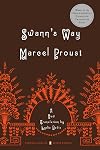
This is a book you very much have to be in the mood for. You can't rush it and you need to be in the position when you can honestly read as if you had all the time in the world. It's a contemplative book, the kind that reads like a long poem. Not to say that there is no plot, that would be unfair - the plot is there and the characters are well fleshed out, but Proust takes the time to really analyse every single feeling and emotion and you shut this book looking at the world differently. It's an experience in itself and I'm changed for having read this. I know that I'll appreciate the complexity of every moment more.
Proust isn't an elitist writer, anyone can read this. His writing isn't obscure or prone to pedantism, it's honest and beautiful and very often funny, the out loud kind. I loved this so much. My favourite part was the first as I think Proust really shines when he talks about his own direct experience and his memories of Combray had me completely fall in love with his writing and with little Marcel. I'll reread this for sure.
Proust isn't an elitist writer, anyone can read this. His writing isn't obscure or prone to pedantism, it's honest and beautiful and very often funny, the out loud kind. I loved this so much. My favourite part was the first as I think Proust really shines when he talks about his own direct experience and his memories of Combray had me completely fall in love with his writing and with little Marcel. I'll reread this for sure.
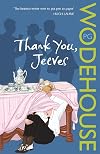
Hilarious, apart from a very peculiar and distressing black face episode. This is endlessly quotable and the best read to cheer one up.
Five Little Pigs: A Hercule Poirot Mystery (Agatha Christie Mysteries Collection) by Agatha Christie
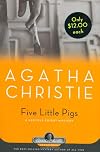
Oooo very good though I didn't appreciate Christie's strange stance on feminism being the same as misandry. Quite a different novel from her previous seeing as here Poirot investigates a murder in a purely psychological way seeing as it happened 16 years earlier and obviously no clues are left and all there is to due is to interrogate people. The end is very interesting and gives a lot to think about regarding the privileges of the peerage. Caroline and Angela are both very interesting female characters.
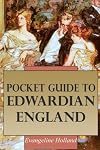
I recently developed an interest in Edwardian England and wanted to find a good overview to get me started nicely on the topic. This was a good summary of various aspects of the era, from the most trivial (food or the London Season, and this well may have been my favourite section!) to politics and the suffragette movement. I thoroughly enjoyed it, it's very good and the author, Evangeline Holland, has an excellent blog (Edwardian Promenade) which goes deeper into some of the topics covered. A bibliography at the end is also of great help to the amateur starting out like me. Great starting point, very thorough, well-researched and eminently readable. Recommended.
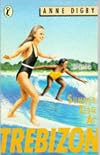
Another great title in the series. The plot was really gripping as usual and I enjoyed the bit of detective work that's done towards the end. School drama is very well-depicted and even though the resolution is a little too easy to be believable, there's also a grown-up feeling in this novel that comes from the great continuity between books and the simple but good writing and characterization.
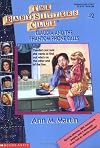
Well-rounded story with a mystery twist. The end is conveniently wrapped but it's still super fun and I love the girls' club and friendship.
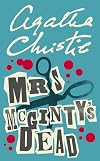
Very good and all tied up nicely. Ariadne makes a wonderful appearance here and Christie's humour really comes through. Lots of characters to keep up with but I did like the references to old murder cases since it's also happening today (Anne Perry being a prime example of someone who changed lives after being convincted for murder).

I almost want to give this five stars. I think it's the best in the series so far. I loved the plot with Pippa, whom I've always liked, and the end is so incredibly lovely and made me deeply nostalgic for my school days which I wish they'd been more like Rebecca's. Wonderful series, very inspiring.
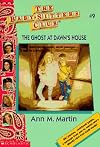
This is a somewhat poor addition to the Babysitter's Club series (which I'm nonetheless really enjoying). The ghost story never picked up for me and there wasn't as much group time with the other girls, or innovative babysitting activities, which is what I like most. What I really enjoyed however was Dawn's description of what she eats (she calls her diet 'health food', I call it actual food). I love it when dishes are described in any story, it feels like I'm eating a meal too.