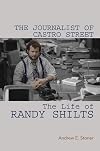
This book contains useful information about the career of Randy Shilts, the author of 3 major books: The Mayor of Castro Street, his biography of Harvey Milk; And the Played On , a chronicle of the early years of the AIDS epidemic in the U.S.; and Conduct Unbecoming, a timely book on the discrimination against gays, lesbians and women in the U.S. military.
Unfortunately, the text is repetitive, and some chapters lack focus. After extensive discussion of Shilts’ childhood, college years and addiction issues, the book only alludes to Shilts’ adult relationships, without shedding light on how they shaped his life during his productive years in San Francisco.
This is more an academic review of aspects of Shilts’ books and of previously published criticism of them than a full biography of the most prominent gay American journalist of the 20th century. One can only wonder if a more complete biography of this subject will be published?
Unfortunately, the text is repetitive, and some chapters lack focus. After extensive discussion of Shilts’ childhood, college years and addiction issues, the book only alludes to Shilts’ adult relationships, without shedding light on how they shaped his life during his productive years in San Francisco.
This is more an academic review of aspects of Shilts’ books and of previously published criticism of them than a full biography of the most prominent gay American journalist of the 20th century. One can only wonder if a more complete biography of this subject will be published?
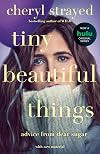
This is the best book I've read in a while. And it's one that I would not have picked up without a recommendation from a wise friend. So different from other advice columnist exchanges, the questions put to "Dear Sugar" on therumpus.net presented real, often wrenching, life dilemmas. And Strayed responds with well-crafted essays that are deeply soulful, bluntly honest and ultimately tender--and often self-revealing and compassionate. I liked this book a lot. Though none of the questions were exactly like issues in my life, there were passages that spoke directly to me, and I suspect most readers will find those pieces that resonate for them. It makes me want to read Strayed's Wild and to look forward to more from her.
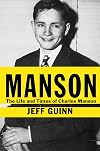
This was a surprisingly good book, a biography rather than a true-crime story. The murders are included, in relatively brief descriptions, but some of the most interesting parts of the books deal with Manson's childhood--especially the conflict between his fundamentalist Christian grandmother and rebellious mother; Manson's years of incarceration; and the stupid crime that resulted in his mother and uncle going to prison, leaving little Charlie to grow up under lousy circumstances. To what extent those circumstances contributed to Manson's becoming a "manipulative sociopath" is a question that the book does not really try to answer.
There are strong chapters on Charlie in the Haight-Ashbury neighborhood during the Summer of Love, finding impressionable young followers, using people who could do something for him and casting off the others; on the "Family" mooching off gullible, successful people, particularly Beach Boy Dennis Wilson; and the accelerating chain of events that lead Manson to order the murders at Roman Polanski's house, and the copycat crimes the following night. The book has some remarkable insights, such as that Manson's ability to mentally control people had as much to do with what he learned from a Dale Carnegie course he took in prison as to the use of sex, drugs and fear; and the origin of the "crazy Charlie" act that became such a part of his personna.
Guinn draws on previous sources, including Vincent Bugliosi's Helter Skelter and Joan Didion's The show more White Album, without quoting extensively from them. Along the way, he provides fascinating social commentary, about a society that produces men like Manson, and about how the crimes associated with Manson became such an indelible part of our collective memory of the 60s. show less
There are strong chapters on Charlie in the Haight-Ashbury neighborhood during the Summer of Love, finding impressionable young followers, using people who could do something for him and casting off the others; on the "Family" mooching off gullible, successful people, particularly Beach Boy Dennis Wilson; and the accelerating chain of events that lead Manson to order the murders at Roman Polanski's house, and the copycat crimes the following night. The book has some remarkable insights, such as that Manson's ability to mentally control people had as much to do with what he learned from a Dale Carnegie course he took in prison as to the use of sex, drugs and fear; and the origin of the "crazy Charlie" act that became such a part of his personna.
Guinn draws on previous sources, including Vincent Bugliosi's Helter Skelter and Joan Didion's The show more White Album, without quoting extensively from them. Along the way, he provides fascinating social commentary, about a society that produces men like Manson, and about how the crimes associated with Manson became such an indelible part of our collective memory of the 60s. show less
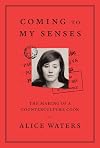
Whether you're interested in the 1960s counterculture aspect of Alice Waters' memoir, or her role as founder of Chez Panisse (the famous Berkeley, CA restaurant) and its impact on the modern food movement, this book is worth your while. Waters tells her life story, growing up in the suburbs of New Jersey, attending college in California, her transformative period in France--and connects all of her life experiences to the founding of Chez Panisse in August 1971.
We would be happier and healthier if we cooked and ate more like the French; if we knew how to use natural ingredients straight from the garden; if we took the time to appreciate good food--rather than settle for fast, easy and cheap. This book doesn't hector the reader, but by suggestion, it tells us a lot about where we've gone wrong as a culture, and the potential for a counter-culture founded on different values to provide a healthy corrective.
We would be happier and healthier if we cooked and ate more like the French; if we knew how to use natural ingredients straight from the garden; if we took the time to appreciate good food--rather than settle for fast, easy and cheap. This book doesn't hector the reader, but by suggestion, it tells us a lot about where we've gone wrong as a culture, and the potential for a counter-culture founded on different values to provide a healthy corrective.
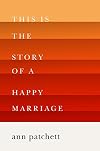
I listened to this book on CDs, read by the author, and thoroughly enjoyed it. It didn't hurt that much of her story is centered in Nashville and Tennessee, where I lived for a number of years. But Patchett's nonfiction pieces, her magazine writing, covers a lot of ground--from the life of the writer, family relationships, devotion to family members and pets, her father and the Los Angeles Police Department and much else. I'd recommend it highly, and if you can, I'd suggest listening to the author's reading.
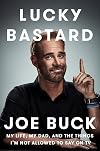
I liked this book much more than I expected to. It helps to have grown up in St. Louis during the 1960s and ‘70s, when Jack Buck was a major figure locally, broadcasting the Cardinals games on radio and playing a large role in the community, where he hosted countless charitable dinners and was a constant presence in the life of the city.
Joe tells some stories about his father that were news to me, especially about the end of his first marriage and his relationships with his half-siblings. The story of this father-son relationship reflected generational differences and a depicts a closeness that is rare. It’s hard not to want to trade places with this lucky man, even while recognizing that his path wasn’t always simple or easy. It’s not hard to see how certain insecurities (about nepotism or being known as his father's son before his own work was acknowledged) became entrenched and the tendency to be a “pleaser” originated. Joe's account of his father's death will stay with me for a long time.
The latter sections of the book interested me less, as I didn’t know many of the stories of Joe’s national media career, including his efforts at hosting talk shows and befriending other famous people. His reflections of his relationships with his daughters and the happiness he has found with his second wife are sweet and allow the book to end on a positive note. It's good to be reminded that we don't have to keep making the same mistakes, that it's not too late to show more apply what we've learned to create a better future for ourselves.
If you can get the audio of the book being read by the author, it adds a particular special dimension in this case. show less
Joe tells some stories about his father that were news to me, especially about the end of his first marriage and his relationships with his half-siblings. The story of this father-son relationship reflected generational differences and a depicts a closeness that is rare. It’s hard not to want to trade places with this lucky man, even while recognizing that his path wasn’t always simple or easy. It’s not hard to see how certain insecurities (about nepotism or being known as his father's son before his own work was acknowledged) became entrenched and the tendency to be a “pleaser” originated. Joe's account of his father's death will stay with me for a long time.
The latter sections of the book interested me less, as I didn’t know many of the stories of Joe’s national media career, including his efforts at hosting talk shows and befriending other famous people. His reflections of his relationships with his daughters and the happiness he has found with his second wife are sweet and allow the book to end on a positive note. It's good to be reminded that we don't have to keep making the same mistakes, that it's not too late to show more apply what we've learned to create a better future for ourselves.
If you can get the audio of the book being read by the author, it adds a particular special dimension in this case. show less
Everything Trump Touches Dies: A Republican Strategist Gets Real About the Worst President Ever by Rick Wilson
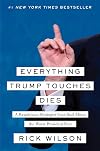
It is hard to argue with much of what Wilson has to say about Trump, his enablers and defenders, including figures like Steve Bannon, Stephen Miller and various figures in the "Alt-Right." But while acknowledging that the worst aspects of Trumpism didn't begin with the Dear Leader himself, he doesn't fully come to terms with the role of Republican leaders, including Ronald Reagan, Newt Gingrich and John McCain (by picking Sarah Palin as his running mate), in making a Trump presidency possible. Wilson denounces Paul Ryan for his enabling Trump and the lack of courage to speak up and act to fight to preserve Congress's role as a coequal branch of government, but he has too little to say, for example, about the GOP leaders whose responses to Trump's birther campaign against President Obama helped to create the 2015-16 Trump phenomenon. When Wilson steps into his traditional GOP role, dishing out attacks on Democrats and liberals, he sounds a lot like the party operatives he sometimes condemns in these pages. It's worth noting that he is still one of them and likely will be again.
Probably, the best response to this type of work is to welcome it and acknowledge that for now there is one big fight worth waging, and all allies in the effort to defeat Trumpism must be welcomed until that fight is won. But it is also wise to remember that some of those in the Never Trump movement will never be true allies of those who oppose Trump's GOP from across the partisan divide. Wilson is show more an entertaining writer and commentator, and he remains a partisan GOP strategist and man of the right. show less
Probably, the best response to this type of work is to welcome it and acknowledge that for now there is one big fight worth waging, and all allies in the effort to defeat Trumpism must be welcomed until that fight is won. But it is also wise to remember that some of those in the Never Trump movement will never be true allies of those who oppose Trump's GOP from across the partisan divide. Wilson is show more an entertaining writer and commentator, and he remains a partisan GOP strategist and man of the right. show less
American Heiress: The Wild Saga of the Kidnapping, Crimes and Trial of Patty Hearst by Jeffrey Toobin
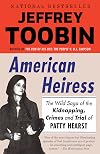
This is a good read. Toobin tells the story of the Patty Hearst kidnapping and the Symbionese Liberation Army well in this book. He also provides a glimpse of some memorable and bizarre aspects of the politics and culutre of the 1970s. For those of us old enough to remember the Hearst case, it will stimulate reflections on that time. For those who are younger, it might be hard to believe that some of these events actually happened.
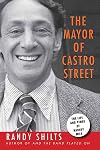
I re-read this book for a book group. Originally, I read it in the 1980s, and it shaped my perspective on the gay rights movement and the development of urban safe spaces for LGBT people. Often, books do not hold up when I reread them, but this one did. It reminded me of Randy Shilts' remarkable decade of incredible productivity, which included And the Band Played On (his chronicle of the AIDS epidemic) and Conduct Unbecoming (his exploration of the gay people serving in the U.S. military, which came well before the ultimate changes during President Obama's first term). And thus, it reminded me of the loss of Shilts and an entire generation of other creative people.
It's a satisfying read and the story of a city in a particular time. That San Francisco is long gone now, not only because so many of the people who lived in the Castro perished from AIDS, but also because that city experienced gentrification to such an extreme degree. Harvey Milk was the kind of person who moved to San Francisco in the 1970s but who could never afford to live there now. People with normal jobs and middle class income levels can't afford San Franscisco any more.
The developments of the 1970s changed the city for the better, and it remains a special place. Along with David Talbot's Season of the Witch, The Mayor of Castro Street is an essential book for understanding how that happened.
It's a satisfying read and the story of a city in a particular time. That San Francisco is long gone now, not only because so many of the people who lived in the Castro perished from AIDS, but also because that city experienced gentrification to such an extreme degree. Harvey Milk was the kind of person who moved to San Francisco in the 1970s but who could never afford to live there now. People with normal jobs and middle class income levels can't afford San Franscisco any more.
The developments of the 1970s changed the city for the better, and it remains a special place. Along with David Talbot's Season of the Witch, The Mayor of Castro Street is an essential book for understanding how that happened.
Russian Roulette: The Inside Story of Putin's War on America and the Election of Donald Trump by Michael Isikoff
A comprehensive look at what happened between the U.S. and Russia, and between Donald Trump and his associates and the Russian government, over the last few years--roughly from the period of "reset" in U.S.-Russia relations during the Obama presidency, when Hillary Clinton was Secretary of State until the early days of the Trump administration. I didn't quite "read" this book, but rather listened to it on CD. In this case, there might be a distinction between the two, as listening to it, with all the Russian names and factual details, you miss a lot. I often thought how a certain passage or chapter would have to be read slowly if I was going actually to absorb it as I wanted to.
Somewhat surprising to me was the lack of certainty in the authors' treatment of Trump's alleged "collusion" with Russia. Both journalists, Isikoff and Corn go only so far as their evidence takes them, and they concede there is much that we cannot know with available information. If you're interested in bringing yourself up to date about what has happened with the Russia story and what is still to be learned, this would be a good book to pick up.
Somewhat surprising to me was the lack of certainty in the authors' treatment of Trump's alleged "collusion" with Russia. Both journalists, Isikoff and Corn go only so far as their evidence takes them, and they concede there is much that we cannot know with available information. If you're interested in bringing yourself up to date about what has happened with the Russia story and what is still to be learned, this would be a good book to pick up.
Well-written and informative, this dual biography is a good introduction to both of these influential 20th Century figures. It motivates me to want to want to go beyond the essays and read Homage to Catalonia and the late novels for which Orwell is best known. And to pick up a full-length biography of Churchill.
This novel is a fascinating exploration of the possible course of a relationship that the author imagines between Nathaniel Hawthorne and Herman Mehlville. The story struck me as plausible, and the emotions recognizable. The long delays after Mehlville writes Hawthorne and then waits in vain for a reply; the way Hawthorne responds in person, unable to express his feelings and determined to honor his wife and children; the magnetic connection between the two men and the impossibility of their dilemma--it all felt like what it might have been like for men in this position in the middle of the 19th Century. The lesser characters--the wives, Mehlville's sisters, and the circle of friends and acquaintances in the small circle of literary and publishing figures who congregated in the Berkshire Mountains of Western Massachusetts--come to life in unexpected ways. Strongly recommended for those with an interest in American literature and gay fiction.
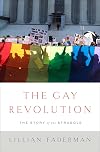
I picked this title up to read for a book group, and liked it a lot more than I expected to. Faderman pulls together many, many threads and weaves them it into a narrative, mixing the familiar with stories of unknown people who represent many thousands of others--people whose lives were shredded in the dark, mid-century days and those who lived to experience triumphant outcomes in the Obama years. For 630 pages, the narrative is gripping and compelling: a real achievement in narrative non-fiction. There are many works of popular gay history, but it's hard to think of one that covers this much ground so well. Highly recommended.
Smart and full of insights, this is a fine book. I'd recommend this for anyone who sees or senses the disparities and injustice in our criminal justice system. And for those who don't, this may be an eye-opening read. As the Kerner Commission noted in the 1960s, we have separate legal systems that operate in different ways and treat people very differently. Hayes writes to expose that in ways anyone can understand. His colony/nation metaphor expresses it well.
Rating this book numerically is kind of beside the point. Less than 50 pages collectively, these brief essays document the final thoughts of a dying man after a long and productive life. You can feel the care that went into Sacks' choices or words and the messages he wanted to include.
At one point, he writes that he no longer has time to watch the news or discuss issues like climate change: as important as those questions are, they are to be resolved in the future after he is gone.
I have long wondered what it would be like to live your life knowing the date you were going to die. As the date became closer, when would you begin dropping the insignificant details and focusing on real life priorities? What would those priorities be? What memories would come back? What relationships would need the most attention, and resolution?
This book gives some idea of how one highly intelligent and sensitive man answered those questions for himself. By exploring these short pieces, we might get inspired to think of these matters before circumstances require us to do it. Maybe, we could get more comfortable with the idea of dying.
At one point, he writes that he no longer has time to watch the news or discuss issues like climate change: as important as those questions are, they are to be resolved in the future after he is gone.
I have long wondered what it would be like to live your life knowing the date you were going to die. As the date became closer, when would you begin dropping the insignificant details and focusing on real life priorities? What would those priorities be? What memories would come back? What relationships would need the most attention, and resolution?
This book gives some idea of how one highly intelligent and sensitive man answered those questions for himself. By exploring these short pieces, we might get inspired to think of these matters before circumstances require us to do it. Maybe, we could get more comfortable with the idea of dying.
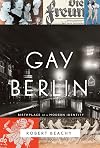
This is a good read and an informative history. Although I've read a fair amount of gay history, this title helped me to understand how U.S.-centered my understanding was. To learn of the work and thought of figures like Karl Heinrich Ulrichs, who "came out" about a century before the Stonewall uprising, was eye-opening. And to learn much more about Magnus Hirschfeld, the leading figure in Germany's fledgling gay movement in the pre-Nazi years, exposed how many of the arguments in LGBT circles in the last quarter century were happening in Germany generations earlier. Beachy provides a detailed exploration of the toleration of gays among Berlin's law enforcement circles, and how the police paired homosexuals and the blackmailers who preyed on them. The big question that remained for me is, "Why did so much happen in Berlin long before it did in other places?" I'm not sure Beachy really answers that question, but his exploration of Prussian military culture, the way that most of the male population spent substantial amounts of time in same-sex environments, with a resulting reverence of brotherhood and comradeship among and between men, seems to suggest at least a partial answer. If you think you know gay history, and haven't read this book, think again.
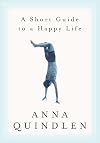
One of those little books that can be carried in a pocket or stuffed into a gift bag that contains many nuggets of wisdom. Quindlen shares how one important thing, losing her mother at a young age, divided her life into a Before and After--and forced her to come to an understanding of what mattered in life. This little book, a commencement speech, is rewarding to return to after a few years. It still resonates.
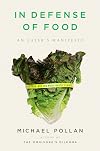
An indispensable book for anyone who wants to understand current issues around food and eating--from medical research into nutrition and health, schools of thought around organic agriculture, vegetarianism, "nutritionism" and food science. Pollan makes an impassioned case for eating real food (mostly plants) and avoiding "edible foodlike" products (made in a plant). His motto--"Eat food, not too much, mostly plants" contains the essence of nutritional wisdom for those struggling to eat well and live healthily in the current food environment. The final section of the book provides guidelines for eaters that was later fleshed out in Pollan's short book, Food Rules, with many smart observations that apply the simple words of the motto, such as, "Don't eat anything your great-grandmother would not have recognized as food."
On Dupont Circle: Franklin and Eleanor Roosevelt and the Progressives Who Shaped Our World by James Srodes
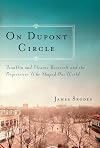
A fine history of the first half of the 20th Century, tracing the lives and careers of Franklin and Eleanor Roosevelt, Herbert Hoover and various other lesser-known figures such as Walter Lippmann, Felix Frankfurter, William Bullitt, Sumner Welles, the Dulles brothers and a range of others. Not really a scholarly history, at times gossipy and fun to read, this book sheds light on the meaning of "progressive" to a generation of progressives that is much more diverse and idealistic than what the term suggests today. I'd recommend it to fans of non-fiction, popular history and those who would like to understand more about the diplomatic history of the United States. It also helps to explain how the world we know came into being.
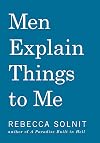
Rebecca Solnit is an indispensable writer, and this slim volume of essays is a great introduction to her work. Most of these pieces have a strong feminist point of view, whether her topic is (overwhelmingly male) violence in the world; or the way stupid men condescend to accomplished women; or the ways that women are "disappeared" from the record, as in the case of biblical genealogies ("Abraham begat Isaac; and Isaac begat Jacob ..."). Along the way, she reflects on the striking originality of Virginia Woolf's path-making, the hopeful possibilities suggested by the radical novelty of same-sex marriage and the possibility for hope in the face of grim challenges.

An excellent introduction to the field of international legal research. While it doesn't cover topical areas such as international trade and human rights research, it addresses the basic research tools very well. Prof. Winer provides enough history and substantive international law to explain the tools he explores, including treaties and United Nations resolutions. For someone who, like me, was teaching a class on the topic for the first time, this is the first title I would recommend.
Guns by Stephen King

Whatever can be said about Stephen King's fiction--I like some of it, love a few things, can take or leave (and have mostly left) the rest--he has always been a perceptive observer of American culture with a talent for noting the holes in the social fabric that create openings for monsters to do their worst.
This is an interesting publishing experiment--too short and urgent for published book and arguably too long for a magazine piece, it is King's post-Newtown examination of America's gun culture and what it would take to limit its most destructive excesses. You can read it on a Kindle for a dollar. King advocates the main prongs of the Obama administration's proposals on guns and opines that a universal background check is the most likely piece to be passed and an assault weapons ban, the least likely.
There are some flashy passages of writing and some powerful stories of the mass shooters and some of their victims. But basically, King is calling for responsible citizenship and common sense in responding to this awful moment with sensible gun policies.
If you go to amazon.com and run the search , the first two results retrieved are this essay and a response titled "Stephen King Don't Know Shit." King would not be the least bit surprised at the tone of that self-parodying title. In discussing the uphill battle to pass an assault weapons ban, King notes:
"[P]lenty of gun advocates cling to their semi-automatics the way Amy Winehouse and Michael Jackson clung to the shit that show more was killing them. There are rationalizations but very little actual discourse on the subject of banning assault weapons. What we get mostly are incoherent screams of outrage and furious references to 'the liberal agenda.' When I listen to gun advocates and NRA brass on this subject, I get an image of a little kid doing a tantrum in the dirt, rolling around with his hands plastered over his ears. No! No! No! No!"
He addresses the wide chasm between activists of the left and right, the tendency to scream back and forth over the impotent center in current debates. This piece speaks to conservatives and gun owners who may be willing to seek sensible solutions before this moment passes. Despite the lack of evidence that common sense will prevail on the assault weapons ban, King is an optimist. But he notes that change will only happen if gun owners and even NRA members break ranks and insist that Congress do the right thing. I hope his optimism is justified. show less
This is an interesting publishing experiment--too short and urgent for published book and arguably too long for a magazine piece, it is King's post-Newtown examination of America's gun culture and what it would take to limit its most destructive excesses. You can read it on a Kindle for a dollar. King advocates the main prongs of the Obama administration's proposals on guns and opines that a universal background check is the most likely piece to be passed and an assault weapons ban, the least likely.
There are some flashy passages of writing and some powerful stories of the mass shooters and some of their victims. But basically, King is calling for responsible citizenship and common sense in responding to this awful moment with sensible gun policies.
If you go to amazon.com and run the search , the first two results retrieved are this essay and a response titled "Stephen King Don't Know Shit." King would not be the least bit surprised at the tone of that self-parodying title. In discussing the uphill battle to pass an assault weapons ban, King notes:
"[P]lenty of gun advocates cling to their semi-automatics the way Amy Winehouse and Michael Jackson clung to the shit that show more was killing them. There are rationalizations but very little actual discourse on the subject of banning assault weapons. What we get mostly are incoherent screams of outrage and furious references to 'the liberal agenda.' When I listen to gun advocates and NRA brass on this subject, I get an image of a little kid doing a tantrum in the dirt, rolling around with his hands plastered over his ears. No! No! No! No!"
He addresses the wide chasm between activists of the left and right, the tendency to scream back and forth over the impotent center in current debates. This piece speaks to conservatives and gun owners who may be willing to seek sensible solutions before this moment passes. Despite the lack of evidence that common sense will prevail on the assault weapons ban, King is an optimist. But he notes that change will only happen if gun owners and even NRA members break ranks and insist that Congress do the right thing. I hope his optimism is justified. show less
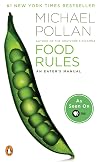
This is not a book that adds much to the knowledge imparted by Pollan's other books, In Defense of Food and The Omnivore's Dilemma. Those who expected it to be a new treatise may be disappointed. Arguably, it's not really a book at all, but more a collection of aphorisms and mini-essays.
But there is another way to look at this small paperback. There is a wealth of practical wisdom from many cultures and generations here that, if we make use of them, could replace shelves of diet and fitness books. Pollan reminds us that much of what Americans eat today really isn't food and that the "edible foodlike substances" that have replaced the real stuff play a huge part in our diet-related epidemics. Most books on food and nutrition won't tell us to avoid eating things that our grandmothers wouldn't have recognized as food, or to avoid eating things advertised on television. But these are key points: the countless choices we make in response to relentless promotional messages, or in resistance to them, will determine how fit and healthy we will be.
The most important section is the last, with simple guidelines on *how* to eat--not too much, not too fast, cook it at home--provide keys to improved health and wellness. Pollan could have devoted hundreds of pages explaining these principles at length. Instead, he provides a portable and accessible set of tips and reminders that can be returned to in a moment and applied for a lifetime.
But there is another way to look at this small paperback. There is a wealth of practical wisdom from many cultures and generations here that, if we make use of them, could replace shelves of diet and fitness books. Pollan reminds us that much of what Americans eat today really isn't food and that the "edible foodlike substances" that have replaced the real stuff play a huge part in our diet-related epidemics. Most books on food and nutrition won't tell us to avoid eating things that our grandmothers wouldn't have recognized as food, or to avoid eating things advertised on television. But these are key points: the countless choices we make in response to relentless promotional messages, or in resistance to them, will determine how fit and healthy we will be.
The most important section is the last, with simple guidelines on *how* to eat--not too much, not too fast, cook it at home--provide keys to improved health and wellness. Pollan could have devoted hundreds of pages explaining these principles at length. Instead, he provides a portable and accessible set of tips and reminders that can be returned to in a moment and applied for a lifetime.

Even if you've never experienced the full Randian oeuvre, just think about what this book represents. Read that title and ponder a society in which altruism is regarded as the greatest vice and selfishness the highest virtue. In which a handful of "talented" supermen rule and prosper, while many if not most are left behind or abandoned. In the world around us, does not much of what is heartless, destructive of the planet and demeaning of human dignity follow from this value system?
Some reviewers of Rand's books note here that they became devoted followers as teenagers and outgrew the ideology as young adults. Good for them. I dabbled a bit with Objectivism in earlier years and moved on. Since then, Rand's persistent followers have attained critical mass in the leadership of one of our two political parties. (Paul Ryan may have had to disown Rand's "atheist philosophy" out of expediency in 2012, but nobody who is familiar with his past statements can be fooled by the disavowals.) Is it coincidence that the rise of the Randians coincides with the Republican Party making itself unfit to participate responsibly in government?
For better or worse, these ideas cannot be ignored. And since most readers will never make it through The Fountainhead--much less that didactic doorstop, Atlas Shrugged--this book is as good as any to experience the great lady at her most accessible.
Some reviewers of Rand's books note here that they became devoted followers as teenagers and outgrew the ideology as young adults. Good for them. I dabbled a bit with Objectivism in earlier years and moved on. Since then, Rand's persistent followers have attained critical mass in the leadership of one of our two political parties. (Paul Ryan may have had to disown Rand's "atheist philosophy" out of expediency in 2012, but nobody who is familiar with his past statements can be fooled by the disavowals.) Is it coincidence that the rise of the Randians coincides with the Republican Party making itself unfit to participate responsibly in government?
For better or worse, these ideas cannot be ignored. And since most readers will never make it through The Fountainhead--much less that didactic doorstop, Atlas Shrugged--this book is as good as any to experience the great lady at her most accessible.
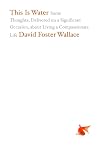
The famous commencement speech that is so accessible. This is a lovely short book that can be easily read in one sitting and returned to again and again, with some insights about how life is now, the ease of settling for our default response to unpleasant things, and the struggle to become more aware, which can make all the difference.
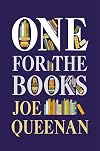
This book is full the hilariously idiosyncratic opinions and digressions on such topics as: the likelihood that a reader's never getting around to reading a book is related to its having an ugly cover, how fine a book has to be to survive a bad movie treatment (War and Peace? The DaVinci Code?), and how difficult it is for the French not to condescend to Americans, even at some point Americans who are well read in French literature. Beneath the funny stories and riffs, there is a sweetness here, as Queenan relates touching and warm stories about his family and friends and how books have shaped relationships and his life. And by books, he does not mean e-books; there are many stories here that JQ reminds us would have never have happened with a Kindle. A great read for book lovers.
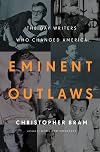
This is one of those perfect matches between author and content. Bram knows the subject intimately. His judgments about the writers and their respective novels, poems, plays and stories are measured and well-informed. He looks back to the years just after World War II and the earliest work by Gore Vidal and Tennessee Williams; he assesses the way homophobia shaped the criticism of James Baldwin's novels and Edward Albee's plays; he traces the evolution of writers ranging from Christopher Isherwood to Edmund White; the "de-gayification" by mainstream critics of writers like Baldwin and Allen Ginsberg; and the huge impact of AIDS on the gay male literature, both the content of the stories told by gay writers in the 1980s and 1990s and the way those stories were received by gay and non-gay readers; and also how the transition from AIDS as death sentence to a manageable, chronic disease corresponded to the acceptability to new, mainstream depictions like the "Will & Grace" television show and, perhaps paradoxically, the decline of the importance of gay writing. Along the way, he provides shrewd portraits of the writers named above and others, among them Larry Kramer, Armistead Maupin and James Merrill. This is a necessary book, recommended for anyone with an interest in gay men's literature in the second half of the 20th Century.
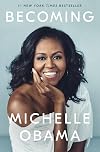
This memoir is more about private life than politics, but as the two become intertwined, it became harder for the two themes to be separated. At the end, Mrs. O makes it clear she has no interest in running for office. Her distaste for the tribal red vs. blue dynamic and the blood sport aspect of Washington politics are clear throughout the political sections. I wanted a bit more on the politics than she chose to provide. Her views are clearly expressed, but there is little score-settling here. She calls out very few people by name, even while expressing dismay at the obstruction and destructive partisanship that she saw in the opposition party. It would be fascinating to hear expound on what she really thinks of various people and events.
Listening to this book on CDs, listening to her familiar voice narrating, made this book a more powerful and moving experience. That is especially true of the sections on personal life: growing up in the South Side of Chicago, the stories of parents and grandparents; stories of she and her brother and friends and classmates navigating their way through schools of greatly varying qualities; her Ivy League education and professional success, and then the pivot away from a legal career when she found she did not like being a lawyer; her relationship with Barrack, the adjustments it took to accommodate his career; the dependence on caregivers to tend to her children as she and her husband pursued their careers; and her relationship to her show more daughters as they grew, and the need to protect them in the White House years; and the claustrophobic constraints of living with a continuous security detail.
The book includes a late section on the final campaign and the election of Donald rump. Michelle was horrified at the revelations of the Access Hollywood tape and appalled at Trump's election. She wonders how so many women could knowingly vote for a misogynist over such an eminently qualified woman as Hillary Clinton. She compares the scene at Trump's innaugural--a triumphant gathering of white men in stark contract to the diverse assortment of women and men at the previous innaugurations--and notes the end of the Obama presidency.
Despite the grimness of the transition in early 2017, the book ends on a hopeful note--and the final sections are good enough to want to listen to again. She writes of experiencing "Hamilton" and the America it speaks to and of, the dignity and grace of the White House staff who served her family for 8 years, and the role of a mother whose daughters don't need her nearly as much as they once did. There is a blend or exceptional and ordinary that make her story into a relatable and compelling that can be recommended highly. show less
Listening to this book on CDs, listening to her familiar voice narrating, made this book a more powerful and moving experience. That is especially true of the sections on personal life: growing up in the South Side of Chicago, the stories of parents and grandparents; stories of she and her brother and friends and classmates navigating their way through schools of greatly varying qualities; her Ivy League education and professional success, and then the pivot away from a legal career when she found she did not like being a lawyer; her relationship with Barrack, the adjustments it took to accommodate his career; the dependence on caregivers to tend to her children as she and her husband pursued their careers; and her relationship to her show more daughters as they grew, and the need to protect them in the White House years; and the claustrophobic constraints of living with a continuous security detail.
The book includes a late section on the final campaign and the election of Donald rump. Michelle was horrified at the revelations of the Access Hollywood tape and appalled at Trump's election. She wonders how so many women could knowingly vote for a misogynist over such an eminently qualified woman as Hillary Clinton. She compares the scene at Trump's innaugural--a triumphant gathering of white men in stark contract to the diverse assortment of women and men at the previous innaugurations--and notes the end of the Obama presidency.
Despite the grimness of the transition in early 2017, the book ends on a hopeful note--and the final sections are good enough to want to listen to again. She writes of experiencing "Hamilton" and the America it speaks to and of, the dignity and grace of the White House staff who served her family for 8 years, and the role of a mother whose daughters don't need her nearly as much as they once did. There is a blend or exceptional and ordinary that make her story into a relatable and compelling that can be recommended highly. show less