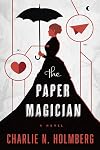
Quick and Enjoyable
I am a school social worker just starting spring break. This book provides a nice mental escape from the everyday heaviness of my job. It was easy to get lost in the story, and I finished it in 1.5 days because I needed to know what would happen. I have already downloaded the second in the series, and look forward to seeing what new adventures are in store for Ceony.
I am a school social worker just starting spring break. This book provides a nice mental escape from the everyday heaviness of my job. It was easy to get lost in the story, and I finished it in 1.5 days because I needed to know what would happen. I have already downloaded the second in the series, and look forward to seeing what new adventures are in store for Ceony.
Best of the Trilogy
I enjoyed reading Time's Divide best out of the series. I found myself trying to guess who was really on Kate's side until the end.
I enjoyed reading Time's Divide best out of the series. I found myself trying to guess who was really on Kate's side until the end.
I will be adding this book to my DNF shelf. This was my first book by Orson Scott Card, and it will also be my last. I do enjoy parts of this book but his subtle and not so subtle bias leanings towards homophobia, agism, sexism, and weight are just not for me.
I had read the Kite Runnner by accident. I needed a book to read in the summer of 2005 on an international flight back home. As I skimmed through some books in the airport bookstore I thought that it would do. I was entralled and finished the book by the next day. It was the first book in a long time that had brought me to tears. For this reason I put off reading "A thousand Splendid Suns" until now.
This book captured my attention as if I was a helpless bystander who wanted to take the hands of Mariam and Laila and soothe their pain away, but could do nothing. At times it was hard to read without becoming emotional, and not wanting to break into tears on my morning commute with a train full of others, I would have to take a rest for a few days. I finished the book today, and shed a lot of tears. "A Thousand Splendid Suns" depicts the the capacity of humans to love selflessly, and in that love empower strength an courage within themselves
This book captured my attention as if I was a helpless bystander who wanted to take the hands of Mariam and Laila and soothe their pain away, but could do nothing. At times it was hard to read without becoming emotional, and not wanting to break into tears on my morning commute with a train full of others, I would have to take a rest for a few days. I finished the book today, and shed a lot of tears. "A Thousand Splendid Suns" depicts the the capacity of humans to love selflessly, and in that love empower strength an courage within themselves
Fostering Resilient Learners: Strategies for Creating a Trauma-Sensitive Classroom by Kristin Souers
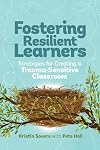
As a school social worker, I have a difficult time rating this book since I have more training and knowledge about trauma than the intended audience. I think that this book would be good for new educators who have very little knowledge of trauma and it's physical and emotional impact on students. As a person of color, I felt that she did not address racial trauma and how that shows up at school. I would have liked her to go more in-depth regarding implicit bias of educators and school staff (who are majority white) and how that can cause more harm to students with trauma histories. As I was reading through the book, I felt this book was written by a white person for primarily white educators who mostly teach white students. I was put off by how she chose to describe certain personal experiences, which to me demonstrated her own bias. An example of this is on page 174: " I got lost on the way to the airport looking for a gas station...I ended up in a rather sketchy neighborhood at a gas station with bars over the attendant's window." That statement is a very loaded statement with a lot of assumptions about the area, and who lives there.
Despite my concerns with the book, I think teachers with no trauma training could use this book as a starting point in their education to becoming more trauma informed.
Despite my concerns with the book, I think teachers with no trauma training could use this book as a starting point in their education to becoming more trauma informed.