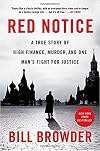
At turns frightening and baffling. This book shines a light on the bizarre state of Putin-era Russia, the violence and corruption it nurtures, and the techniques it uses to confound and confuse its opponents.
This book has made me think again about the novels of Martin Cruz Smith which on the first read seemed far-fetched (although entertaining with a little disbelief suspended) and now feel entirely plausible if not a little tame.
A quick and worthwhile read.
This book has made me think again about the novels of Martin Cruz Smith which on the first read seemed far-fetched (although entertaining with a little disbelief suspended) and now feel entirely plausible if not a little tame.
A quick and worthwhile read.
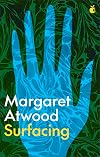
Uncompromisingly bleak, but written so vividly it's hard to pull away from.
Similar to a Shane Meadows film, it's possible to appreciate the quality of the novel whilst simultaneously being unable to recommend it to anyone, knowing that you would be putting them through something that isn't "enjoyable".
The writing style is very much towards the poetic end of the spectrum. Much of the character development is drawn from glimpses of an internal monologue looking out at the world (from the protagonist's detached perspective) meshed with inward-looking fragments of memory and emotion.
I'm sure this book has been analysed to death in a million classrooms... once you get past the depressing plot and basic interactions between the dysfunctional characters on the book's surface there are so many interesting motifs, themes and concepts bundled together, in particular ideas about what it means to be a human and what value (or harm) modern societies bring us. There are also recurring themes of invasion and intrusion: emotional, physical, societal and military.
Worth reading.
Similar to a Shane Meadows film, it's possible to appreciate the quality of the novel whilst simultaneously being unable to recommend it to anyone, knowing that you would be putting them through something that isn't "enjoyable".
The writing style is very much towards the poetic end of the spectrum. Much of the character development is drawn from glimpses of an internal monologue looking out at the world (from the protagonist's detached perspective) meshed with inward-looking fragments of memory and emotion.
I'm sure this book has been analysed to death in a million classrooms... once you get past the depressing plot and basic interactions between the dysfunctional characters on the book's surface there are so many interesting motifs, themes and concepts bundled together, in particular ideas about what it means to be a human and what value (or harm) modern societies bring us. There are also recurring themes of invasion and intrusion: emotional, physical, societal and military.
Worth reading.
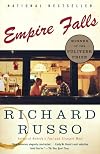
I'm not sure what attracted me to a book about the goings on in a crumbling small American town. On the face of it, it's not an appealing prospect, but the writing is just great. An easy recommendation.
What We Cannot Know: From Consciousness to the Cosmos, the Cutting Edge of Science Explained by Marcus Du Sautoy
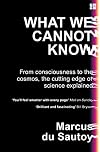
Some interesting areas. Very focused on quantum and astrophysics, but does eventually get around to other topics. Well written.
This is a shocking read in many ways, even for those who have a latent mistrust of large corporations and institutions. The author's passion for the topic is as plain as day and he makes it very clear that this is as much a long-form campaigning pamphlet as it is a non-fiction book.
While the content was illuminating, the style was a little grating in places. Frequent repetition was the biggest peeve and one which could have been edited out quite easily to chop a hundred pages from the book.
I read the ebook version from Google Play in 2018 and there were useful footnotes and hyperlinks embedded, with a significant postscript written a year after initial publication.
While the content was illuminating, the style was a little grating in places. Frequent repetition was the biggest peeve and one which could have been edited out quite easily to chop a hundred pages from the book.
I read the ebook version from Google Play in 2018 and there were useful footnotes and hyperlinks embedded, with a significant postscript written a year after initial publication.
Definitely some interesting concepts to consider. The examples are frustratingly narrow though and due to its age, not altogether relatable.
There are some intriguingly prescient points such as the predictions around smartphones/mobile devices, but running counter to that there is a dismissal of hypertext and the mass availability of information which in hindsight appears short-sighted.
The later sections are somewhat repetitive which adds to the feel of this being a self-indulgent rant disguised as a UX classic. The author even begins to acknowledge this tendency in a discussion of design awards.
On a positive note there is much more to agree with than disagree with in the book. As an example, the concept of user actions being a series of approximations with the designers job being effectively to make a target big enough that it's hard to miss. Thought-provoking and useful when looking at iterative design improvements.
Perhaps I'll upgrade this to a 4 after some mulling...
There are some intriguingly prescient points such as the predictions around smartphones/mobile devices, but running counter to that there is a dismissal of hypertext and the mass availability of information which in hindsight appears short-sighted.
The later sections are somewhat repetitive which adds to the feel of this being a self-indulgent rant disguised as a UX classic. The author even begins to acknowledge this tendency in a discussion of design awards.
On a positive note there is much more to agree with than disagree with in the book. As an example, the concept of user actions being a series of approximations with the designers job being effectively to make a target big enough that it's hard to miss. Thought-provoking and useful when looking at iterative design improvements.
Perhaps I'll upgrade this to a 4 after some mulling...

The edition I read was completed in 1982 with a postscript from 1985. Obviously this is limiting for what is, in part, a science and politics book, but in this case it didn't feel particularly problematic.
Much of the most interesting material in this book is around the history of the civil nuclear industry and its roots and complex interactions with the military nuclear programmes of some of the world's most powerful countries.
There is a significant section devoted to providing a grounding in the various reactor designs, which in my experience was a little dry, but is useful foundational study to make the subsequent chapters comprehensible.
From there on the book really comes into its own. It carefully examines each of the many facets of the nuclear industry in turn, from technical to environmental to commercial. The conclusions one draws are not wholly positive about the nuclear industry and to some extent that appears to correlate with the views of Patterson himself: a nuclear physicist who worked for Friends of the Earth from 1972 well into the 1980s. The information is presented without melodrama, but doesn't spare the gory details either, some of which are difficult reading. On balance he seems to have been on the money with his view of the nuclear industry's prospects, at least until the Chinese expansion of the last decade or so. That expansion itself might leave you with some concerns after completing this book.
Overall I found Nuclear Power a very worthwhile read show more with a good balance of science, politics and economics delivered with as much balance as is reasonably possible given the complex subject matter. show less
Much of the most interesting material in this book is around the history of the civil nuclear industry and its roots and complex interactions with the military nuclear programmes of some of the world's most powerful countries.
There is a significant section devoted to providing a grounding in the various reactor designs, which in my experience was a little dry, but is useful foundational study to make the subsequent chapters comprehensible.
From there on the book really comes into its own. It carefully examines each of the many facets of the nuclear industry in turn, from technical to environmental to commercial. The conclusions one draws are not wholly positive about the nuclear industry and to some extent that appears to correlate with the views of Patterson himself: a nuclear physicist who worked for Friends of the Earth from 1972 well into the 1980s. The information is presented without melodrama, but doesn't spare the gory details either, some of which are difficult reading. On balance he seems to have been on the money with his view of the nuclear industry's prospects, at least until the Chinese expansion of the last decade or so. That expansion itself might leave you with some concerns after completing this book.
Overall I found Nuclear Power a very worthwhile read show more with a good balance of science, politics and economics delivered with as much balance as is reasonably possible given the complex subject matter. show less
This was a reasonably amusing quick read, but let down by a few key elements. Firstly the female dialogue was quite clunky and stretched credibility a little. Secondly, even allowing a little license for this not being a wholly serious procedural, the tying up of loose ends in the final quarter was a little predictable and unsatisfying.
In its favour there were quite a few entertaining sections, particularly in the first half of the book where the narrative felt less constrained.
This was a book that started out as a low 4 and gradually talked itself out of a star.
In its favour there were quite a few entertaining sections, particularly in the first half of the book where the narrative felt less constrained.
This was a book that started out as a low 4 and gradually talked itself out of a star.
A bit too silly for my tastes, but improves as it moves through the four books and the material becomes slightly more philosophical.
Giving this a four rather than a three may be a peak-end bias on my part as I definitely enjoyed SLATFATF most of the four.
Giving this a four rather than a three may be a peak-end bias on my part as I definitely enjoyed SLATFATF most of the four.
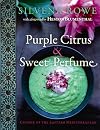
Very nicely presented cookbook with recipes which have all turned out well. I would say the recipes are mostly very Eastern Mediterranean, i.e. Turkey and east. None require particularly skilful technique so it's quite accessible in that respect.
Being harsh I've docked it a star for having a fairly tough ingredients list and not many tips for what can be substituted or dropped from a recipe. I'd recommend making a list of all the obscure stuff and buying them from a specialist store in one go. Souschef seems like a pretty good UK website if you don't have a local supplier.
Being harsh I've docked it a star for having a fairly tough ingredients list and not many tips for what can be substituted or dropped from a recipe. I'd recommend making a list of all the obscure stuff and buying them from a specialist store in one go. Souschef seems like a pretty good UK website if you don't have a local supplier.
Turkish Delights: Stunning regional recipes from the Bosphorus to the Black Sea by John Gregory-Smith
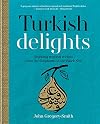
I admit to having gone slightly mad over this book. In a good way. In the last week I've cooked about 6 or 7 recipes from it, some more than once, sometimes 3 recipes at a time. Once you manage to track down the obscure ingredients (turkish pepper flakes being probably the key one) this book is a complete goldmine.
The descriptions alongside the recipes give a really good feel for the cuisine and really show a love for the country, its culture and its food. This is currently my #1 book in the kitchen and I recommend it wholeheartedly.
The descriptions alongside the recipes give a really good feel for the cuisine and really show a love for the country, its culture and its food. This is currently my #1 book in the kitchen and I recommend it wholeheartedly.

This book serves its purpose as a briefing note for GPs who don't have the time or need to read a lengthy tome on a topic. It is about 80% boilerplate text however, so at 30 pages in total don't expect to find any stunning insights if you have read much about the topic.
For me (an interested amateur) the main value was in the description of the effects of some of the more obscure forms of pollution, rather than the particulate pollution which is widespread and the most damaging form of air pollution to human health today.
For me (an interested amateur) the main value was in the description of the effects of some of the more obscure forms of pollution, rather than the particulate pollution which is widespread and the most damaging form of air pollution to human health today.
UPDATED from a low 4 to a mid-low 3 stars after taking a week to ponder this book. It really feels like a wasted opportunity to explore the original REAMDE premise whilst simultaneously dragging the reader through largely pointless plot contortions.
It's hard to compete with Stephenson's Cryptonomicon so this book started out in a precarious position for me.
Obviously it's one of the longest books you'll find on the shelf at over 1000 pages. That inherently demands an ability to keep the reader engaged throughout to prevent them losing faith and abandoning the tome midway.
Reamde definitely sets out to do that. It feels a like the entire cast of Guess Who have been pitched into a Bourne/Bond/Bruce Willis bouillabaisse and stirred violently.
The result is mostly successful in the first third or so. The plot zips along well initially and most of the characters have good definition although the non-native English speakers unleash some surprisingly advanced dialogue which punctures their believability.
A couple of major drawbacks kept this well out of the 5 star category for me and (after some consideration) off the lower end of 4 stars:
The plot really wasn't that clever. The initial premise was great, but past about half way it's really just a heavily interwoven action romp. There are only so many ways to describe handling and firing various models of gun before it feels like watching the YouTube recommendations of a 15 year old Texan. Briefly engaging? yes; satisfying? not show more really.
Secondly, the quality control of the ebook edition. It really is poor and brought the book down to 3 mediocre stars. In a book this length I would expect a few typos, perhaps 4 or 5 at most. I highlighted 24 in total. Twenty four. That's more than one every fifty pages. Bizarrely the errors appear in seams, with 'of' and 'off' being muddled 5 or 6 times in 60 pages, then never again confused. After a run like that it can be difficult to get your head out proof-reading mode. I think my favourite may have been a "multinational feet of small jets".
Overall: entertaining start, but dragged on - nothing life-changing show less
It's hard to compete with Stephenson's Cryptonomicon so this book started out in a precarious position for me.
Obviously it's one of the longest books you'll find on the shelf at over 1000 pages. That inherently demands an ability to keep the reader engaged throughout to prevent them losing faith and abandoning the tome midway.
Reamde definitely sets out to do that. It feels a like the entire cast of Guess Who have been pitched into a Bourne/Bond/Bruce Willis bouillabaisse and stirred violently.
The result is mostly successful in the first third or so. The plot zips along well initially and most of the characters have good definition although the non-native English speakers unleash some surprisingly advanced dialogue which punctures their believability.
A couple of major drawbacks kept this well out of the 5 star category for me and (after some consideration) off the lower end of 4 stars:
The plot really wasn't that clever. The initial premise was great, but past about half way it's really just a heavily interwoven action romp. There are only so many ways to describe handling and firing various models of gun before it feels like watching the YouTube recommendations of a 15 year old Texan. Briefly engaging? yes; satisfying? not show more really.
Secondly, the quality control of the ebook edition. It really is poor and brought the book down to 3 mediocre stars. In a book this length I would expect a few typos, perhaps 4 or 5 at most. I highlighted 24 in total. Twenty four. That's more than one every fifty pages. Bizarrely the errors appear in seams, with 'of' and 'off' being muddled 5 or 6 times in 60 pages, then never again confused. After a run like that it can be difficult to get your head out proof-reading mode. I think my favourite may have been a "multinational feet of small jets".
Overall: entertaining start, but dragged on - nothing life-changing show less
I tried hard to read this purely as a work of fiction without reference to when it was first published or the context it was written within. On that basis alone I think a 3* review is fair. It has a number of fairly clunky didactic sections with the somewhat convenient "librarian" character and some chewy expository dialogue towards the denouement. The central premise is interesting but not fantastically well delivered. Jokey technothriller isn't really a genre and in places this book shows why that is the case. It suffers from some of the same problems as Reamde's later stages with excessive multithreaded trotting around, but does successfully build a degree of tension.
After looking back to see when it was written it is quite remarkable how early it was published and how many references are effectively becoming a reality in some form now. If I had had to guess when it was written I would have thought about 8-10 years later. A rating of the book by how impressive or significant it is would certainly be higher.
After looking back to see when it was written it is quite remarkable how early it was published and how many references are effectively becoming a reality in some form now. If I had had to guess when it was written I would have thought about 8-10 years later. A rating of the book by how impressive or significant it is would certainly be higher.