I gave this 3 stars because the things it's trying to do clearly work for a lot of the people who need it. I am one of those people, but it super did not work for me, alas.
Things that I should have loved about this book: food, the cultural specifics of the LA setting, chosen family, queer characters, SF & fantasy elements
Things that ultimately ruined it for me:
- I cannot deal with books that use sci-fi trappings as whimsy. People keep comparing this book to Becky Chambers' Wayfarers series, but Chambers takes her sci-fi worldbuilding *seriously*, even while the worlds she creates are in service of the stories she wants to tell. In books like this, I can't tell which parts to think about, where to look for meaning or piece together a surprise, and where the author just wants me to shrug and suspend disbelief. (Same issue with This Is How You Lose the Time War, which I also couldn't stand even though everyone else loved it... it's possible this is also my problem with La Cuentista, though that one failed so hard on the worldbuilding that it told no story at all.)
- Who even were any of these people? We're told how special and amazing everyone is in each other's eyes, but we never spend enough time in anyone's perspective for me to *feel* it. Katrina got closest to being a character I could connect with. Lan's family was farthest away -- most of their motivations, after arriving on Earth, made very little sense to me. We learn nothing about Astrid as a person at all, so she show more may as well be a magical butler without a past or desires of her own, which is...honestly kind of offensive? There were a LOT of characters and a LOT going on; I think it needed half as many POV characters and more time with those so they could come into focus. Sometimes a book with a lot of characters successfully tells a larger story or sheds light on a central theme that way; in this book I just kept asking why so-and-so is even in the story.
- I did not come into this book caring about violins or the classical music industry, but I am very open to caring about new things! This book sure said a lot of things about that world, and dropped a lot of violin-related names, but not in a way that made me care.
- All the writing about how so-and-so's music made people "see their past" or "feel their home" or whatever just made me roll my eyes. I have had powerful experiences with music and art, of course, but this felt entirely overblown.
- Speaking of overblown, sentences like: "If magic is more than illusions on a stage, if magic can actually change the world, then what is reality but a song that one imagines and sets free?" Huh?? I kept stopping and saying, "argh, that doesn't MEAN anything!"
- Ugh, human exceptionalism, no one else in the universe has art, blah blah whatever. The Endplague was initially intriguing, especially since Shizuka called my exact problem with Lan's explanation -- "yo, isn't this just mortality? we have that" -- so I expected it to mean something deeper, but nope. show less
Things that I should have loved about this book: food, the cultural specifics of the LA setting, chosen family, queer characters, SF & fantasy elements
Things that ultimately ruined it for me:
- I cannot deal with books that use sci-fi trappings as whimsy. People keep comparing this book to Becky Chambers' Wayfarers series, but Chambers takes her sci-fi worldbuilding *seriously*, even while the worlds she creates are in service of the stories she wants to tell. In books like this, I can't tell which parts to think about, where to look for meaning or piece together a surprise, and where the author just wants me to shrug and suspend disbelief. (Same issue with This Is How You Lose the Time War, which I also couldn't stand even though everyone else loved it... it's possible this is also my problem with La Cuentista, though that one failed so hard on the worldbuilding that it told no story at all.)
- Who even were any of these people? We're told how special and amazing everyone is in each other's eyes, but we never spend enough time in anyone's perspective for me to *feel* it. Katrina got closest to being a character I could connect with. Lan's family was farthest away -- most of their motivations, after arriving on Earth, made very little sense to me. We learn nothing about Astrid as a person at all, so she show more may as well be a magical butler without a past or desires of her own, which is...honestly kind of offensive? There were a LOT of characters and a LOT going on; I think it needed half as many POV characters and more time with those so they could come into focus. Sometimes a book with a lot of characters successfully tells a larger story or sheds light on a central theme that way; in this book I just kept asking why so-and-so is even in the story.
- I did not come into this book caring about violins or the classical music industry, but I am very open to caring about new things! This book sure said a lot of things about that world, and dropped a lot of violin-related names, but not in a way that made me care.
- All the writing about how so-and-so's music made people "see their past" or "feel their home" or whatever just made me roll my eyes. I have had powerful experiences with music and art, of course, but this felt entirely overblown.
- Speaking of overblown, sentences like: "If magic is more than illusions on a stage, if magic can actually change the world, then what is reality but a song that one imagines and sets free?" Huh?? I kept stopping and saying, "argh, that doesn't MEAN anything!"
Read-alikes: Good Omens, Miss Peregrine's... should be made into a Miyazaki movie if Miyazaki were still alive, or filmed by whoever made Amelie or Pushing Daisies. I didn't find it as amazing as some people seemed to, but it is solid and sweet and satisfying.
I found the characters too cutesy-old-fashioned when I tried it as a kid (I was a realistic fiction and sci-fi reader exclusively), so I'd somehow never read the whole thing! Greta Gerwig's movie inspired me to finish it, finally.
As brilliant as that adaptation is, there are still some enjoyable bits that are never filmed, especially in the second half when they're adults -- like the hilarious sequence where Amy makes Jo go visiting with her and Jo keeps fucking it up. I still find Marmee insufferable: turns out the reason every film Marmee is a holy spouter of platitudes is because she's actually written that way, in every single scene. I also really needed some acknowledgement that these are allegedly poor people *with a servant*, so what does Hannah's life look like when she isn't making everyone a meal at odd hours? But overall, ok, I get it now! This book is great, and deservedly groundbreaking!
As brilliant as that adaptation is, there are still some enjoyable bits that are never filmed, especially in the second half when they're adults -- like the hilarious sequence where Amy makes Jo go visiting with her and Jo keeps fucking it up. I still find Marmee insufferable: turns out the reason every film Marmee is a holy spouter of platitudes is because she's actually written that way, in every single scene. I also really needed some acknowledgement that these are allegedly poor people *with a servant*, so what does Hannah's life look like when she isn't making everyone a meal at odd hours? But overall, ok, I get it now! This book is great, and deservedly groundbreaking!
I've never (? at least not often) read a young-YA Holocaust novel that takes place *in* the camps. It's easier to tell a story of hope and resilience when your character escapes. This book walks that line perfectly, I think -- a Holocaust story should feel tragic and exhausting, and a YA novel should have a touch of hopeful ending.
I read this book to consider assigning it as a book club choice for our 8th grade ELA Holocaust unit. It's short, brisk, emotionally resonant, and the overall story isn't complicated. We ended up deciding against assigning it, unfortunately, because it requires far too much background knowledge about Judaism -- that could work in a whole-class novel, maybe, but even if we provided a glossary all the Hebrew and Yiddish and cultural knowledge would bog down many independent readers.
I read this book to consider assigning it as a book club choice for our 8th grade ELA Holocaust unit. It's short, brisk, emotionally resonant, and the overall story isn't complicated. We ended up deciding against assigning it, unfortunately, because it requires far too much background knowledge about Judaism -- that could work in a whole-class novel, maybe, but even if we provided a glossary all the Hebrew and Yiddish and cultural knowledge would bog down many independent readers.
Not sure how a Hardinge came out that I missed (because 2020, I guess), but I was so excited to read it! It took longer than usual for me to get into the world, but once the twists started coming I loved it. It's about recognizing how a person you love can ultimately be damaging to you, and how to let them go. It was also partly inspired by a Deaf reader's request to see herself in a book. Both ideas were explored in an creative, clever way that's fully integrated into the world-building.
This feels like a Knife of Never Letting Go read-alike. I find that book is too "confusing" for most of my students, but those for whom it works might also find Hardinge works for them. I am not a Lovecraft fan, but obviously this is gesturing in that direction and could work for students looking for that sort of slow, creeping, undersea horror.
This feels like a Knife of Never Letting Go read-alike. I find that book is too "confusing" for most of my students, but those for whom it works might also find Hardinge works for them. I am not a Lovecraft fan, but obviously this is gesturing in that direction and could work for students looking for that sort of slow, creeping, undersea horror.

Mafi's writing style in Shatter Me did NOT work for me, nor do I do romance as a genre, so I was surprised by how much I liked this! I love a prickly protagonist who grows by seeing themself through others' eyes (in that way it reminded me of Eliza and Her Monsters), and I appreciate a straight male love interest who is believable *and* a genuinely good dude.
I read this and Darius the Great alongside each other, and having those two very different Persian families in conversation was fun. I was hoping both would be this summer reading list's Aristotle and Dante, and I think that works!
I read this and Darius the Great alongside each other, and having those two very different Persian families in conversation was fun. I was hoping both would be this summer reading list's Aristotle and Dante, and I think that works!
Lost a star because I hoped this would make more sense of the larger world as Dex and Mosscap traveled to new places. It's cool to see a village 3D print shop, but where are the computer chips being made, and with what components, and how are those made without automation? Human hands aren't small or precise enough to hand-craft a processor chip for a tablet! I want to believe in the hope, but that fails (for me) when there are big plausibility gaps in the worldbuilding.
It was even more clear in this book that it's Chambers' self-soothing project, which I can't be mad at. Still love me some Monk and Robot.
It was even more clear in this book that it's Chambers' self-soothing project, which I can't be mad at. Still love me some Monk and Robot.
Solid ghost stories in the classic "Scary Stories to Tell in the Dark" vein. None of them will scare a real horror afficionado, but they're creepy and short and easy and perfect for below-grade-level 6th and 7th grade readers.
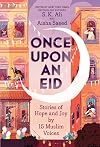
Really enjoyed this! It was less uneven than most short story collections, and most of the stories are short enough to read and discuss in one class period. I loved the array of Muslim experiences and earnest expressions of faith -- I want this book for other major religions!
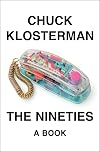
I listened to the first chapter and got bored by all the stats about how many albums Kurt Cobain sold, thought maybe the problem was that I don't care about Nirvana especially and tried chapter two, and was still bored. Oh well!
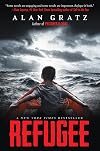
This is the perfect book for what it is. Less skilled middle school readers can access it because the stories and language are straightforward. Chapters are short and always end on a cliffhanger. The pain of these histories is honest, without being hopeless. There’s enough “why did the character do that? What do you think they should have done?” to get into real discussions of compassion, welcome, trauma, and comparative history. Almost no historical background is required, and there are plenty of points to introduce that history. We taught it as a 7th grade book club choice to HUGE success — one of those books that almost everyone likes and many say is their favorite!
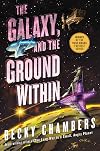
The whole series seems of its time — not that it’s going to feel dated, just that 2015-2021 is such a particular, eventful era that anything thoughtful written in that time is going to feel like it couldn’t have been written anytime else. This is the COVID lockdown / having difficult race conversations with conservative loved ones entry in the series. Again, it’s specific enough to its own universe that I doubt it’ll feel dated, but some moments were deeply emotional for me (like the lights flashing at each other across the habitat domes, the way we stood on our porches with flashlights in early pandemic) that may just go by unnoticed for a younger reader 20 years from now. I understand Chambers needing to move on from this universe, but I will miss it tremendously.
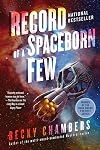
This ended up being my favorite of the four because of it was about a somewhat closed society with values I share, and growth and change within it. There’s almost no adventure compared to the first 2, nor is the story propelled by revealing characters’ secrets like the 4th. It’s the slowest, and I imagine I may be in the minority in loving it best.
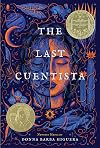
Unpopular opinion time... I was prepared to adore this book. Generation ship YA and power of storytelling?? That has "Sam" written all over it! I could not have been more disappointed.
I'll try to break down my biggest criticisms with some small spoilers but no major ones:
1. The Collective: They borrow from all the classic "make everyone the same" dystopias (Camazotz in Wrinkle in Time, soma in Brave New World, the Pretties in Scott Westerfeld's Uglies series, etc.) without adding anything new. We never see enough of the destruction allegedly caused by difference on Earth to buy the Collective's motivations or feel any tension about them. Earth is destroyed by a comet, not by human conflict! They're just obvious straw-man Bad Guys, from the very beginning when Petra's dad tells us how bad they are. Not to mention that most of those classic dystopias are Cold War stories commenting on Communism. Presumably the Collective are meant as commentary about a more contemporary concern (white supremacy vs. cultural diversity?), but they needed more nuance to make that work.
2. The nonsense science: Oh my goodness, where to start? Downloading all the Wikipedia facts about botany into your brain does not a scientist make. That's not how learning works; you have to practice using the facts to make anything of that knowledge. Even if we accept that Petra is a brilliant scientist because she knows facts, it's absurd to invent the things they invent and create enough of it for even one show more small part of a planet in a matter of hours or days. The most absurd is the plan to kill all the plants in the settlement zone and assume that the native animals will survive. The book is full of botanists and no one considers basic ecology?? Real-life current Earth is losing native insects and birds at a prodigious rate because we plant non-native flowers in our gardens. Y'all think you can wipe out the plant life that evolved for this planet, introduce plants humans like, and keep the planet a paradise? That kind of thinking is at least as dangerous as the Collective's, but it's never even addressed.
3. Relatedly, the Occam's Razor of it all: I kept finding myself asking why anyone was doing the things they were doing. Why can't the Collective just make their own scientists? Why do they need the Zetas at all? There's hundreds of Collective people, and they have enough genetic engineering expertise to make their bodies barely recognizable as humans, yet they can't mix Dawn soap and vinegar together to kill a plant? If the goal is a pure society where everyone is the same, why bother with the messiness of a natural planet at all? Why not just stay on the ship? We're given no indication that ship life isn't sustainable. Why do the Collective people have names -- uniqueness! -- but the Zetas have numbers? How did the Collective maintain their ideology over generations with no culture shift? The world-building logic is, frankly, half-assed at best.
4. The "big reveals": every one was totally obvious if you've read a book before, and usually facilitated by Petra hiding behind a convenient door and saying "for the good of the Collective" a lot to get out of sticky situations.
5. The "tell don't show" writing felt like dropping a hammer on my head. Just to pick a random example, since there's something like this on almost every other page (the character in this passage is named for the shark, but it's so appropriate): "Hammerhead continues. 'Without the Collective, there would only be war and famine. Our unity and agreement on all things ensures we will never return to the ways of conflict....' How would he know? He's never been to a museum and seen art.... And suddenly, after all this time, I truly understand what the word dogma means." Gah, WE GET IT. That was page 165, we got it a long time ago!
Overall it felt like a book written by someone who had never read science fiction or thought about science, but wanted to use the trappings of the genre to put characters in a position to tell us that stories and memory are important. I would have been much more okay with a lot of this if it had leaned into the cuentos woven through the main story as magical realist elements. Petra's connection to stories through Lita and her ancestors was the best part of the book (and the reason for my second star), and I was SO primed to find it beautiful and powerful, but it needed a different context. Once you have your characters spend a lot of time in botany labs and stasis pods and doing genetic engineering, you have signaled that you intend to ground the story in science and world-building. Why do that if you're not invested in telling that part of your story well? show less
I'll try to break down my biggest criticisms with some small spoilers but no major ones:
1. The Collective: They borrow from all the classic "make everyone the same" dystopias (Camazotz in Wrinkle in Time, soma in Brave New World, the Pretties in Scott Westerfeld's Uglies series, etc.) without adding anything new. We never see enough of the destruction allegedly caused by difference on Earth to buy the Collective's motivations or feel any tension about them. Earth is destroyed by a comet, not by human conflict! They're just obvious straw-man Bad Guys, from the very beginning when Petra's dad tells us how bad they are. Not to mention that most of those classic dystopias are Cold War stories commenting on Communism. Presumably the Collective are meant as commentary about a more contemporary concern (white supremacy vs. cultural diversity?), but they needed more nuance to make that work.
2. The nonsense science: Oh my goodness, where to start? Downloading all the Wikipedia facts about botany into your brain does not a scientist make. That's not how learning works; you have to practice using the facts to make anything of that knowledge. Even if we accept that Petra is a brilliant scientist because she knows facts, it's absurd to invent the things they invent and create enough of it for even one show more small part of a planet in a matter of hours or days. The most absurd is the plan to kill all the plants in the settlement zone and assume that the native animals will survive. The book is full of botanists and no one considers basic ecology?? Real-life current Earth is losing native insects and birds at a prodigious rate because we plant non-native flowers in our gardens. Y'all think you can wipe out the plant life that evolved for this planet, introduce plants humans like, and keep the planet a paradise? That kind of thinking is at least as dangerous as the Collective's, but it's never even addressed.
3. Relatedly, the Occam's Razor of it all: I kept finding myself asking why anyone was doing the things they were doing. Why can't the Collective just make their own scientists? Why do they need the Zetas at all? There's hundreds of Collective people, and they have enough genetic engineering expertise to make their bodies barely recognizable as humans, yet they can't mix Dawn soap and vinegar together to kill a plant? If the goal is a pure society where everyone is the same, why bother with the messiness of a natural planet at all? Why not just stay on the ship? We're given no indication that ship life isn't sustainable. Why do the Collective people have names -- uniqueness! -- but the Zetas have numbers? How did the Collective maintain their ideology over generations with no culture shift? The world-building logic is, frankly, half-assed at best.
4. The "big reveals": every one was totally obvious if you've read a book before, and usually facilitated by Petra hiding behind a convenient door and saying "for the good of the Collective" a lot to get out of sticky situations.
5. The "tell don't show" writing felt like dropping a hammer on my head. Just to pick a random example, since there's something like this on almost every other page (the character in this passage is named for the shark, but it's so appropriate): "Hammerhead continues. 'Without the Collective, there would only be war and famine. Our unity and agreement on all things ensures we will never return to the ways of conflict....' How would he know? He's never been to a museum and seen art.... And suddenly, after all this time, I truly understand what the word dogma means." Gah, WE GET IT. That was page 165, we got it a long time ago!
Overall it felt like a book written by someone who had never read science fiction or thought about science, but wanted to use the trappings of the genre to put characters in a position to tell us that stories and memory are important. I would have been much more okay with a lot of this if it had leaned into the cuentos woven through the main story as magical realist elements. Petra's connection to stories through Lita and her ancestors was the best part of the book (and the reason for my second star), and I was SO primed to find it beautiful and powerful, but it needed a different context. Once you have your characters spend a lot of time in botany labs and stasis pods and doing genetic engineering, you have signaled that you intend to ground the story in science and world-building. Why do that if you're not invested in telling that part of your story well? show less
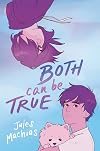
As an "own voices" story of fluid gender identity, this book is unique and wonderful. As a MG novel, it has some hiccups, particularly with pacing. I found it slow to get started with too much wrapped up too quickly at the end, and the characters -- especially Ash -- sometimes had too much going on. When Ash went to the music rehearsal and was all, "music is my life!" my reaction was, "...really? since when?" Not that a character should only have one or two Things, but myriad character traits can be hard for middle grade readers to track, especially in a book with two POV characters, so I want every trait to matter and clearly be in service of the larger story. I predict this will be super important for some of my genderqueer kiddos, but less engaging as a "window" for kids who don't share Ash's experience. I could totally be wrong, though!
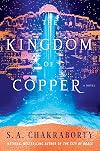
Turns out I don’t care that much. The characters are still fretting about the same things and the elaborate multigenerational war is still elaborate and...meh? I got 150 pages in and there’s still so much AND another book. I’m not invested enough in where everyone ends up.
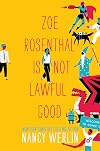
Took a bit for me to get into, mostly because I struggle with fictional fandoms of fictional fiction. I was able to get there quickly enough with Fangirl and Eliza & Her Monsters, but I didn’t buy Zoe’s love of Bleeders right away — maybe partly because the focus wasn’t on Zoe creating anything within the fandom, just gushing about characters I didn’t already care about? Once Zoe’s new friends became real people, though, I was all in. And of course the question about “how can you be a Good Person who makes the world better while also staying true to yourself?” is very much a live one for me.
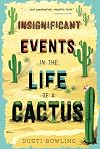
It’s a sweet, touching, funny book (with a totally fairy-tale ending), that felt a little lightweight ultimately. I’m also cautious to recommend it to kids without knowing what the author’s research process was about living with no arms or with Tourette’s, and whether she employed sensitivity readers. She mentions nothing in her acknowledgments.
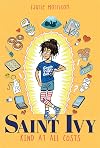
As I said in my book talk to 6th/7th graders, this is a feelings book, which is not everyone’s jam. But it’s a very very GOOD feelings book, about a specific kind of emotional labor that I definitely still relate to at 42. With all the talk floating around about “self care,” I’m glad middle schoolers have books like this to help them find language to understand what caring for others BY caring for themselves might look like.
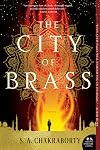
Published as adult but reads like YA, in that it’s about identity formation and it MOVES. Total page-turner, despite being massive and ending on a cliffhanger.
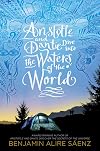
I ended up loving this even more than the first. The first was about Aristotle and Dante creating a relationship; this expanded their sphere. It was about Ari learning to love in general — not just Dante. It was funnier, because Ari was able to laugh more. I loved some of the new characters, and I appreciated the honor Sáenz did to teachers. I remember 1989 and there were some moments that felt like the characters were commenting on 2020 in a way that wasn’t authentic to the late 80s. But in general, the late 80s have a lot to say to the 2020s and vice versa, so I appreciate the attempt even when I felt like it stumbled.
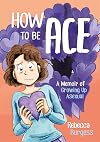
I think it’s interesting that the author chose to focus on “growing up ace” and left “...and autistic” out of the title, since that’s clearly a huge part of their experience. It’s a very particular version of an ace experience, but no book can be every book, and I’m very glad this exists!

Eliza is SO distant and ungenerous with her family and almost everyone in her life for most of the book that I found it hard to read. I feel like the balance of space devoted to her unhealthy and her healing was off. Otherwise, I loved it — especially the unusual exploration of how internet community can be genuinely important “real life” but having a 3D life matters, too. Read-alike: This Song Will Save Your Life

Thomas is a brilliant writer, so of course I loved this book, too. My only quibble is where in the story she chose to end it — there were important events we know about from Hate U Give that I wanted to see unfold.
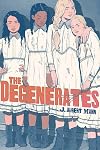
Dark AF. The author’s note that she used direct quotes from medical records is key, because otherwise it would seem over the top. For people who loved The War That Saved My Life and want to level up with far more upsetting realism.
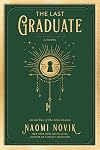
As I suspected, I liked book 2 better than book 1. The world was established, so she could dial back the endless explaining and balance it out with characters and plot. The metaphor about fighting systems, not individuals, took a twist when the school became a character in its own right, but I am always here for a Moana-style “the enemy is a hero twisted by lack of compassion” ending.
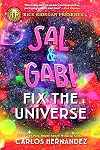
I will follow Sal & Gabi forever. Both books are perfection. They’re complex for struggling readers — the length, the language, the many characters, the rapid-fire jokes that rely on remembering details about all the characters — but the sensibility is solidly and hilariously middle grade.
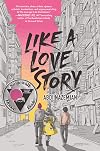
It’s a well-written book, I’m just bored by tortured will-they/won’t-they.
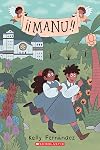
Cute “kid who always messes everything up” friendship story, but not a standout for me. The “magic school run by nuns” setting, inspired by the author’s Dominican heritage, was original and lovely. But the ending was unsatisfying — a book that talks so much about exploring “the mysterious parts of yourself,” as the author note says, should give the protagonist enough time and information to do that — and I found the action scene panels too small to follow. I would’ve appreciated a whole-page layout or two. (Review based on an ARC without final art, but it looks like the finalizing is shading and coloring, not redrawing whole panels.)