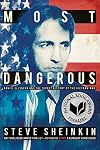
Most Dangerous is another gripping non-fiction book by Steve Sheinkin. It reads like a novel. I got this for my 7th grader, who loved "Bomb," and intends to read "Most Dangerous" for a school project.
I was born after the Vietnam War, and it was too recent as I grew up for anyone to be teaching it in high school or even college. So this is the first time I've gotten the whole narrative, in order, without an agenda. I highly recommend it to anyone born in the 70s or 80s, for the quality of the research and interest level of the writing.
I can also recommend it wholeheartedly for grades 7 and up. It includes some swearing, and some references to "the bachelor life," but without details. I doubt anyone under the ages or 10 or 11 would be interested simply because the subject matter just wouldn't appeal.
I was born after the Vietnam War, and it was too recent as I grew up for anyone to be teaching it in high school or even college. So this is the first time I've gotten the whole narrative, in order, without an agenda. I highly recommend it to anyone born in the 70s or 80s, for the quality of the research and interest level of the writing.
I can also recommend it wholeheartedly for grades 7 and up. It includes some swearing, and some references to "the bachelor life," but without details. I doubt anyone under the ages or 10 or 11 would be interested simply because the subject matter just wouldn't appeal.
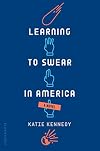
I liked that the protagonist was a science geek with limited social skills, and a kind person. (This might be a sub-genre: books about characters who are supposedly socially limited but turn out to be the best kind of people.) All the characters (except the stock bad guys) were likeable and relateable. The story moved well. Surprising bits of philosophy and history included for discussion/thought.
Some of the characters were a bit flat, but in a fun and easy read kind of a way. I didn't like the sensual scenes, because I wanted to have my kids read this. Probably OK for 14 and up with words of parental caution, but still awkward. In fact, far less sex-oriented than many teen novels. The swearing is a tiny bit of the book and doesn't trouble me in recommending it to kids who aren't inclined to swear.
Some of the characters were a bit flat, but in a fun and easy read kind of a way. I didn't like the sensual scenes, because I wanted to have my kids read this. Probably OK for 14 and up with words of parental caution, but still awkward. In fact, far less sex-oriented than many teen novels. The swearing is a tiny bit of the book and doesn't trouble me in recommending it to kids who aren't inclined to swear.
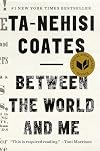
The book was engaging and readable. I read it in a day. There's much to dwell on, ponder and discuss.
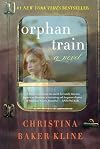
This book embraces some heavy subject matter without depressing the reader. Inspired by real orphan trains, it tells interwoven stories of two girls/young women in highly readable prose.
Many orphans endure terrible hardships, but it ends happily. Probably suitable for young teens, with the exception of one sexual assault that the reader can see coming and skip over if s/he so chooses.
Many orphans endure terrible hardships, but it ends happily. Probably suitable for young teens, with the exception of one sexual assault that the reader can see coming and skip over if s/he so chooses.
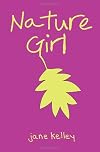
The premise of this book is fun and fairly unusual, and it promotes hiking and the Appalachian Trail, two things I love. I also liked how the main character matured as her hike progressed, and the way she and her best friend finally worked out their miscommunications and conflicts.
I didn't like that it seems written for older elementary aged readers, but the older sister has make-out sessions with her boyfriend that involve loud moaning. This felt inappropriate and ill-suited for the rest of the book. The book also describes some bad hiking practices (burying trash incorrectly, for example, drinking from a spring without filtering - unavoidable in the circumstances, but without correction in the narrative).
I didn't like that it seems written for older elementary aged readers, but the older sister has make-out sessions with her boyfriend that involve loud moaning. This felt inappropriate and ill-suited for the rest of the book. The book also describes some bad hiking practices (burying trash incorrectly, for example, drinking from a spring without filtering - unavoidable in the circumstances, but without correction in the narrative).
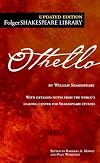
Othello is obviously a masterpiece describing humanity and captivating to the attention. But I didn't really *like* it. It made me profoundly uncomfortable. The racism is awful, as is Iago's betrayal of Othello and, really, society. It's worth a read, and the Yale version I read had copious footnotes to help the reader "get" the Shakespearean wording.
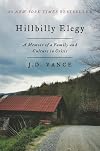
I read this on the recommendation of some friends and articles. I liked that it was a personal story, and that he doesn't give easy solutions. I liked that he finds the good things in people who have given him trouble and heartache, but he doesn't gloss over either good or bad.
I believe have some hillbilly family roots and I know some friends who fit the label. It surprised me to read Vance's claim that racial prejudice and class prejudice kind of mix when it comes to hillbillies (that is, that college educated white people are uncomfortable with hillbillies because of the ways hillbillies mirror black culture). But now that he mentions it, I am examining news and experience in that light, and I see his point. It makes for uncomfortable reading and thinking. I'm glad I read it.
I believe have some hillbilly family roots and I know some friends who fit the label. It surprised me to read Vance's claim that racial prejudice and class prejudice kind of mix when it comes to hillbillies (that is, that college educated white people are uncomfortable with hillbillies because of the ways hillbillies mirror black culture). But now that he mentions it, I am examining news and experience in that light, and I see his point. It makes for uncomfortable reading and thinking. I'm glad I read it.
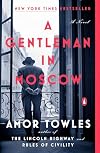
A fictional view of the communist revolution from a charming perspective. I feel I understand Russia better having read this book. The characters were varied and likeable. I didn't like this book as much a Rules of Civility, because some of the scenes felt contrived and some of the conversations too cute. Count Rostov was just a bit too wordy for my taste. Nevertheless, this book is worth reading for its fully drawn world.
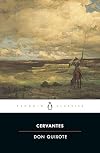
I abandoned Don Quixote for the second time in my life. It is so very long, in a wordy way. I read enough of it in college to do passably well in the Great Books of the Middle Ages class, even writing a paper on the section where Don Quixote wears a suit of armor made of mirrors. (I did read that section. No idea where in the 1000 pages it is.) I skipped most of the rest. Recently I found that old copy on my bookshelf and determined to read it through, having succeeded recently with Homer and Shakespeare. Cervantes proved too much for me again. I even checked out an illustrated, adapted version from the library, but the weight of all those words about a crazy guy helping people who didn't want his unhelpful help were so demoralizing that I couldn't even get into the short version. I'm turning my attention to the countless other good books that appeal to me more.
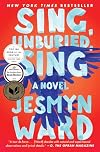
A sad, haunting book that nevertheless shows beauty in unexpected places. It will trouble many of my friends, because in it children are mistreated and neglected. It depicts many of the wrongs in our society. But some of those children prove resilient and have great contributions to make. It's a well-crafted book. I didn't really enjoy reading it, but I'm glad that I did.
Surprisingly well-written Christian historical fiction kept me thinking about the characters while I was not reading. I appreciate the geographic sweep of the book and the historical details, many of which are familiar from my college class on ancient Rome and Greece. There were some modern day issues that Rivers addressed through the story line, quite obviously but with fair success. I thought the interweaving of known historical figures with fictional characters was pretty cool.
I always resist historical fiction because people have a hard time distinguishing the facts from the author's imagination. Yet this is an engaging way to get a "feel" for the time and place. I will probably read the rest of the series.
I always resist historical fiction because people have a hard time distinguishing the facts from the author's imagination. Yet this is an engaging way to get a "feel" for the time and place. I will probably read the rest of the series.
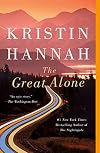
I liked it, but it's too melodramatic for me to give it a higher rating. Women-become-strong-in-adversity themes are cool, Alaska depictions intriguing. We spend a LOT of time in the dark period of this family's life, making some of the other major life stages feel disproportionately brief. It did help me understand the dynamics of abusive relationships a little bit. We see Cora's motivations, and Leni's, but we never see inside Ernt. "POW" and his scars just stand in for character development.
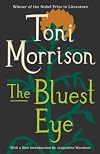
Eye-opening, thought-provoking, with striking language and sympathetic characters. It also has some purposely hateful characters. Short, readable, and powerful.
"...for we were not strong, only aggressive; we were not free, merely licensed; we were not compassionate, we were polite; not good, but well behaved. We courted death in order to call ourselves brave, and hid like thieves from life. We substituted good grammar for intellect; we switched habits to simulate maturity; we rearranged lies and call it truth..."
"...for we were not strong, only aggressive; we were not free, merely licensed; we were not compassionate, we were polite; not good, but well behaved. We courted death in order to call ourselves brave, and hid like thieves from life. We substituted good grammar for intellect; we switched habits to simulate maturity; we rearranged lies and call it truth..."

This review is of the Tantor Media e-audio book narrated by Michael Page, which includes the entire Iliad. I didn't realize until the very end that the translation is centuries old, but it explains some things. (Pope's favorite word: "refulgent." I had to look it up. It means shiny.)
I chose to listen rather than read because that's how Homer's audience would have experienced this epic poem. Also, so I could drive around and do chores. I missed a lot, as would guests at a banquet with a bard, but I got the gist of it. So many ways to die a violent death! Such sorrow, such waste.
I can highly recommend Page as a narrator. Even when I tuned out of the meaning, his delivery was beautiful. Sorry I didn't figure out how to add this edition. It's the one my library has on Overdrive. Oh... maybe Goodreads won't allow it, owned by Amazon as it is...
I chose to listen rather than read because that's how Homer's audience would have experienced this epic poem. Also, so I could drive around and do chores. I missed a lot, as would guests at a banquet with a bard, but I got the gist of it. So many ways to die a violent death! Such sorrow, such waste.
I can highly recommend Page as a narrator. Even when I tuned out of the meaning, his delivery was beautiful. Sorry I didn't figure out how to add this edition. It's the one my library has on Overdrive. Oh... maybe Goodreads won't allow it, owned by Amazon as it is...
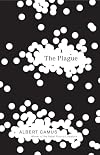
Easier to "get" in my 40s than when I first read it in high school. It reads as a pretty straightforward account of en epidemic in a port city that is cordoned off to contain the disease. It's relatable for a world enduring the coronavirus pandemic. One of its themes is the hardship of isolation caused by the plague; the physical death is depicted graphically but with restraint.
A main character (Tarrou) explains essentially that we all carry the plague, we must pay attention daily lest we kill others. This wearies us but it's a struggle we must face until we die. Rieux recognizes the good and the bad in human nature and holds that the good outweighs the bad.
"The tale... could only be the record of what had had to be done, and what assuredly would have to be done again in the never ending fight against terror... by all who, while unable to be saints but refusing to bow down to pestilences, strive their utmost to be healers." (last page) This story works on the literal level as well as a historical allegory and as a philosophical exercise that relates to many world events.
A main character (Tarrou) explains essentially that we all carry the plague, we must pay attention daily lest we kill others. This wearies us but it's a struggle we must face until we die. Rieux recognizes the good and the bad in human nature and holds that the good outweighs the bad.
"The tale... could only be the record of what had had to be done, and what assuredly would have to be done again in the never ending fight against terror... by all who, while unable to be saints but refusing to bow down to pestilences, strive their utmost to be healers." (last page) This story works on the literal level as well as a historical allegory and as a philosophical exercise that relates to many world events.
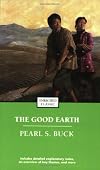
Editing after my book club's discussion: I maintain that the common traits and experiences (both good and bad) of humanity are what make this book connect. Unfortunately, most of the book club discussion focused on the "otherness" of the characters. So I see why folks including Celeste Ng on Goodreads strongly dislike the effect the book has.
The Good Earth is a classic because it tells universally recognizable stories about human nature: Humanity's dependence on the earth for sustenance. Devaluing women. Conflicts between relatives and personalities. The rise and fall of individuals and families due to both character and circumstance. A person's differing perspective based on their lot in life.
I don't think it tells an especially China-centric or China-judging story, it's just set in some specific part of China, unnamed but north of the big cities and away from most military activity. Buck's story does seem to embody the "Protestant work ethic." Wang Lung and O-lan gain wealth through their hard work and thrift.
Well, and the land. There is always the land.
The Good Earth is a classic because it tells universally recognizable stories about human nature: Humanity's dependence on the earth for sustenance. Devaluing women. Conflicts between relatives and personalities. The rise and fall of individuals and families due to both character and circumstance. A person's differing perspective based on their lot in life.
I don't think it tells an especially China-centric or China-judging story, it's just set in some specific part of China, unnamed but north of the big cities and away from most military activity. Buck's story does seem to embody the "Protestant work ethic." Wang Lung and O-lan gain wealth through their hard work and thrift.
Well, and the land. There is always the land.
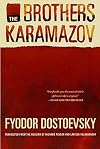
I didn't expect this classic to be so quirky or relatable. It sure is thought-provoking; I wish I had someone to explain it to me, but at least my teens love talking about it. They say it should inspire a boy band.
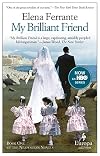
Raw but relatable tale of growing up female and poor in post-war Naples. Elena's childhood and teen experiences are rougher than mine (and most of my peers), but I think most children of the 70s and 80s were afraid of at least one neighbor, punched or were punched, etc. I felt a generational divide between her characters (she's a Boomer) and me (Xer), and this book also demonstrates the generational differences between her and her parents. I like how she illuminates their inner lives, and their society, from a child's, then a teen's point of view.
Yes, I lost track of some of the characters. There's an index at the front, but after a while I stopped checking it and just read on, figuring if it was important to the author, she'd make it clear who this minor figure was. Probably I missed nuance in that approach, but I still enjoyed the book.
Yes, I lost track of some of the characters. There's an index at the front, but after a while I stopped checking it and just read on, figuring if it was important to the author, she'd make it clear who this minor figure was. Probably I missed nuance in that approach, but I still enjoyed the book.
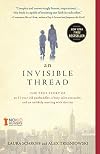
Readable, moving, true story in which both characters overcome remarkable challenges to become caring, functioning adults. Should prompt good discussion in my book club.
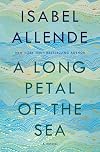
Reading this was like taking a journey to a time and place where I've never traveled, with a companion who's a gifted storyteller. I appreciate seeing this time period from South America, so World War II faded into the backgroun, unlike my usual Euro-centric perspective. The characters were believably complex and changeable.
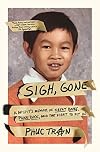
I REALLY liked this book. I found Phuc's story so relatable, partly because we're the same age and I now live near Carlisle, but more because his way of remembering his childhood is realistic and meaningful. It was like hearing from one of the people I went to elementary/middle/high school with, yet with the poignancy and awareness of his refugee experience and ethnic differences.
I listened to it as an audiobook, not my usual. This is the first audiobook that had me looking for tasks to do so I could hear more of the book.
I will warn my friends who don't like racy stuff that there's a section where he and his middle school friends pass around a book about "the happy hooker." More concerning is the R/X rated scene when he's in 9th grade. Despite these Whoa! scenes, I still highly recommend. Just be aware.
I listened to it as an audiobook, not my usual. This is the first audiobook that had me looking for tasks to do so I could hear more of the book.
I will warn my friends who don't like racy stuff that there's a section where he and his middle school friends pass around a book about "the happy hooker." More concerning is the R/X rated scene when he's in 9th grade. Despite these Whoa! scenes, I still highly recommend. Just be aware.
Very readable even though it's literally heavy. Harari looks at history from a different perspective than we're used to. This is uncomfortable but also insightful.
Reading While Black: African American Biblical Interpretation as an Exercise in Hope by Esau McCaulley
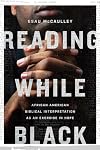
God-honoring, insightful, calm, and engaging. Extensive bibliography and footnotes, but absolutely accessible for laypeople. Like a godly, well-educated brother in Christ explaining to me a whole slice of faith that I'd been missing.
One of those books where I know I missed a lot, but what I "got" was excellent. It feels amazingly, sadly, current. I encourage anyone getting bogged down in the battle royal/college section to persevere. It picks up the pace once the narrator heads to New York.
I loved it, then I dreaded it, then I came to love it again. Doerr explores predestination/fate's interplay with free will with scientific ideas such as atomic structure and chaos theory. However, it's an intensely human story, simply built on that structure. All the Light and Cloud Cuckoo both have darkness, but that darkness showcases the light. In About Grace, we're really in the darkness, living with it, feeling in, for a good long time - almost more than I could bear. I didn't give up on this book because Doerr's other books that I'd read had been SO rewarding, and the beauty in this book was really quite beautiful. And when I got to the end, I was glad I stuck with it.
I strongly disliked this book, only read it because my book club chose it. I liked the title. But the lady in question is manipulative, self-absorbed, deceitful, and hateful.
Relatable family, moves fast, thought-provoking. The promos make it sound more issue-oriented, but it's very human. Could make for an excellent book club discussion but great to read solo.
I resisted reading this for decades, thinking it was too deep. Then I had to read it for book club. Yes, it's deep, but it was a tale that pulled me along. I got completely lost in the story. I looked forwawrd to my time in Glome, with Orual. It feels familiar even though I didn't know the Psyche/Cupid myth. The characters' humanity and the profound but relatable truths make it a compelling read that stuck with me.
We have women overcoming their lots in life, a teacher who teaches well but necessarily incompletely, ideas about the origins and meanings of religions, a soldier whose dedication to his job strains his wife, dysfunctional family, international politics... really it has something for everyone. The tone leans toward dark, and human sacrifice is part of the society, and there's violence and mistreatment of people in many ways, though not depicted in any detail. If a young teen is interested to read it, this book will reward them. But there's meaning to plumb for many adult readings as well.
We have women overcoming their lots in life, a teacher who teaches well but necessarily incompletely, ideas about the origins and meanings of religions, a soldier whose dedication to his job strains his wife, dysfunctional family, international politics... really it has something for everyone. The tone leans toward dark, and human sacrifice is part of the society, and there's violence and mistreatment of people in many ways, though not depicted in any detail. If a young teen is interested to read it, this book will reward them. But there's meaning to plumb for many adult readings as well.
It sounds depressing, and... OK, it ends with death, on an existentialist note, with Ivan at odds with his family. But for most of the time, I was thinking, "more like the LIFE of Ivan Ilych!" I came to this from its repeated mention in Being Mortal by Atul Gawande. It wasn't what I was expecting, but it was even better.
Makes me feel like I could read more by Tolstoy.
Makes me feel like I could read more by Tolstoy.