
OK, so this book bugs me.
"Sympathetic" John Moon is a man poaching to eat, unable to keep a job, in the process of losing his wife and child. One morning, while out hunting on parkland, he accidently shoots a young girl. Instead of accepting responsibility, he hides the girl's body and takes the stolen money that he finds. I get it. He feels life has screwed him and when the opportunity presents itself to get a little back, he does so.
So what bugs me about this book?
SETTING: CHECK: Reader has a clear sense of where and when the action takes place.
CHARACTER : CHECK: Seems like John Moore is a complicated character, full of contradictions and tortured by bad luck.
PLOT: CHECK: Seems like a great premise upon which to build suspense. (Of which, there was sufficient to keep the reader turning pages -- lots of twists and action.)
Seems like this book should be awesome... but NAW. So what is wrong with it?
Well, I don't want to sound like a pris, but there are graphic sex scenes where the women are portrayed as exceedingly stupid sluts. The sex act itself, degrading and meaningless. So maybe this is realistic? Maybe, but to my mind, these scenes are absolutely gratuitous and add nothing to the novel. I wondered as I read if this is the kind of thing that the author added to keep the male readers reading. Then I wondered if I was just being a sexist prig.
Secondly, I found that the vacillating thoughts and actions of the character were too extreme to be realistic. First, he show more stashes the girl's body like garbage (OK, so he panics) and then drags it back to his trailer(OK, so he feels remorse), tenderly washes it clean of dirt, applies his wife's makeup and clothing, (OK, creepy and sick, but he has nothing else) and then while stuffing it into his freezer he breaks her back and casually covers the corpse with stolen meat (Ah...nope....just tooooooo gross).
My son just asked me about this book. I told him, it was about about a guy who accidently shoots a girl and then his life goes to hell. Yep, that about sums it up.
Would I read this again? Only to avoid ending up stuffed in a freezer covered by poached venison steaks.
Would I recommend this? Dah... NO! show less
"Sympathetic" John Moon is a man poaching to eat, unable to keep a job, in the process of losing his wife and child. One morning, while out hunting on parkland, he accidently shoots a young girl. Instead of accepting responsibility, he hides the girl's body and takes the stolen money that he finds. I get it. He feels life has screwed him and when the opportunity presents itself to get a little back, he does so.
So what bugs me about this book?
SETTING: CHECK: Reader has a clear sense of where and when the action takes place.
CHARACTER : CHECK: Seems like John Moore is a complicated character, full of contradictions and tortured by bad luck.
PLOT: CHECK: Seems like a great premise upon which to build suspense. (Of which, there was sufficient to keep the reader turning pages -- lots of twists and action.)
Seems like this book should be awesome... but NAW. So what is wrong with it?
Well, I don't want to sound like a pris, but there are graphic sex scenes where the women are portrayed as exceedingly stupid sluts. The sex act itself, degrading and meaningless. So maybe this is realistic? Maybe, but to my mind, these scenes are absolutely gratuitous and add nothing to the novel. I wondered as I read if this is the kind of thing that the author added to keep the male readers reading. Then I wondered if I was just being a sexist prig.
Secondly, I found that the vacillating thoughts and actions of the character were too extreme to be realistic. First, he show more stashes the girl's body like garbage (OK, so he panics) and then drags it back to his trailer(OK, so he feels remorse), tenderly washes it clean of dirt, applies his wife's makeup and clothing, (OK, creepy and sick, but he has nothing else) and then while stuffing it into his freezer he breaks her back and casually covers the corpse with stolen meat (Ah...nope....just tooooooo gross).
My son just asked me about this book. I told him, it was about about a guy who accidently shoots a girl and then his life goes to hell. Yep, that about sums it up.
Would I read this again? Only to avoid ending up stuffed in a freezer covered by poached venison steaks.
Would I recommend this? Dah... NO! show less
 This review was written for LibraryThing Early Reviewers.
I must confess that Camilla Gibb is one of my favourite Canadian authors. I first fell in love with her Petty Details of So-and-So's Life and continued my love affair with Sweetness in the Belly. Mouthing the Words, although a difficult read, was told with authenticity and tenderness.
Being a traveller at heart, any novel set in Asia immediately draws my eye so I expected to fall in love with this novel. And I did.
The Beauty of Humanity Movement is about daring to express original thoughts at a time when those thoughts are not welcome. It is about fighting to speak the truth and the cost that such action entails.
Maggie is an art specialist who was raised in America but returns to Vietnam in order to find her father who was torn from her at a very young age. During her quest, she not only uncovers information about her father and his contemporaries but also immerses herself in this hitherto unfamiliar culture.
Gibb moves not only from one art form to another, from one culture to another, from past to present but also through the generations. There is beauty in this movement and despite the temptation to believe there is little beauty in humanity, Gibb brings us around to a deeper understanding of our place in the world, of our belonging to an international community and of our obligations to civilization.
Being a traveller at heart, any novel set in Asia immediately draws my eye so I expected to fall in love with this novel. And I did.
The Beauty of Humanity Movement is about daring to express original thoughts at a time when those thoughts are not welcome. It is about fighting to speak the truth and the cost that such action entails.
Maggie is an art specialist who was raised in America but returns to Vietnam in order to find her father who was torn from her at a very young age. During her quest, she not only uncovers information about her father and his contemporaries but also immerses herself in this hitherto unfamiliar culture.
Gibb moves not only from one art form to another, from one culture to another, from past to present but also through the generations. There is beauty in this movement and despite the temptation to believe there is little beauty in humanity, Gibb brings us around to a deeper understanding of our place in the world, of our belonging to an international community and of our obligations to civilization.
I received this book from Librarything as an Early Reviewer.
I thought it would be the story of a war vet. It was not. It is really the story of a criminal, his relationship with his family and small town America, his quest to make his life have meaning.
I would like to say that I loved it but I did not. On the other hand, I did not entirely dislike it. It's just that it is a very sad story which reveals a very real side of life that I would rather not see. "Fulcrum used to say there were exactly three different types of people, but he never told Bandy what they were. Bandy thought now maybe he knew: free, convict, and ex-convict. That about summed it up. Once one comes in contact with the other they aren't the same." p. 119 I found that the more I read, the more I recognized the veracity of the novel and felt the despair of the characters. "'Don't talk to me about guilt. You know shit about guilt. You've been blind to it your whole life. You've got it all fucked up with self-pity and they aren't the same thing. Guilt you carry until it crushes you, self-pity you spray like piss on everyone you love." p. 241. Too true. Too sad. I don't want to feel sad. Maybe that is cowardly, maybe it is self-preservation.
Despite the above evidence to the contrary, this novel is beautifully written; filled with description, symbols, parallelism and pathetic fallacy. "The witch-hair moss hung from the straight, unmoving pines like torn fabric or flood debris, the pale gravel and sand show more stripped naked, ferrous granite rusting, bleeding away in streaks on the cliff walls and weeping from the boulders." p. 15 I found that the writing required that I slow my usual reading pace and savour each word. This novel is not for the faint of heart. It forces the reader to search the human soul and face that what it might find is not all that pretty.
Would I read it again? Probably not. While beautifully written, it is just too depressingly true. show less
I thought it would be the story of a war vet. It was not. It is really the story of a criminal, his relationship with his family and small town America, his quest to make his life have meaning.
I would like to say that I loved it but I did not. On the other hand, I did not entirely dislike it. It's just that it is a very sad story which reveals a very real side of life that I would rather not see. "Fulcrum used to say there were exactly three different types of people, but he never told Bandy what they were. Bandy thought now maybe he knew: free, convict, and ex-convict. That about summed it up. Once one comes in contact with the other they aren't the same." p. 119 I found that the more I read, the more I recognized the veracity of the novel and felt the despair of the characters. "'Don't talk to me about guilt. You know shit about guilt. You've been blind to it your whole life. You've got it all fucked up with self-pity and they aren't the same thing. Guilt you carry until it crushes you, self-pity you spray like piss on everyone you love." p. 241. Too true. Too sad. I don't want to feel sad. Maybe that is cowardly, maybe it is self-preservation.
Despite the above evidence to the contrary, this novel is beautifully written; filled with description, symbols, parallelism and pathetic fallacy. "The witch-hair moss hung from the straight, unmoving pines like torn fabric or flood debris, the pale gravel and sand show more stripped naked, ferrous granite rusting, bleeding away in streaks on the cliff walls and weeping from the boulders." p. 15 I found that the writing required that I slow my usual reading pace and savour each word. This novel is not for the faint of heart. It forces the reader to search the human soul and face that what it might find is not all that pretty.
Would I read it again? Probably not. While beautifully written, it is just too depressingly true. show less
This review was written for LibraryThing Early Reviewers.
Three Seconds - Roslund and Hellstrom
I absolutely LOVE LOVE LOVE this book!
I don't know if it is because I am still recovering from my addiction to Girl with the Dragon Tattoo etc. or if it is because Swedes are expert authors.
The book is divided into five sections and covers a period of two weeks. At first the days are indicated using their proper names but at the end the days are simply called "a day later", "another day later", "yet another day later", and finally, "and yet another day later". I believe this is done in order to reflect the protagonist's detachment from society's ordering and naming of time and maybe also to illustrate his separation from the life he had been leading.
The story is set in modern day Sweden and is packed with suspense. Although the Swedish names of the people and places are unfamiliar and were difficult for me to remember, the fault lies with me as they are necessarily Swedish and add to the realism and exotic nature of the novel. Suspense is created not only through the use of the unfamiliar world of drugs and prison but also through graphic description which is detailed though not burdensome nor over poetic. The first lines begin,
"An hour to midnight. It was late spring, but darker than he thought it would be. Probably because of the water down below, almost black, a membrane covering what seemed to be bottomless. He didn't like boats, or perhaps it was the sea he couldn't fathom. He always shivered when the wind blew as it did now and show more Swinoujscie slowly disappeared. He would stand with his hands gripped tightly round the handrail until the houses were no longer houses, just small squares that disintegrated into the darkness that grew around him. He was twenty-nine years old and frightened." p. 5
The reader is immediately gripped by the references to the night's unnatural darkness, a sea without bottom, houses that disintegrate and a young man who for some reason is frightened.
Ya, ya, many novels are packed with suspense -- what makes this one exceptional?
I really like and respect the two central characters: Ewert Grens and Piet (Paula) Hoffman.
When we meet Ewert Grens he is struggling with his grief.
"He missed her so much. The damned emptiness clung to him, he ran through the night, and it gave chase, he couldn't get rid of it, he screamed at it, but it just carried on and on...he breathed it in, he had no idea how to fill such emptiness." (p. 13)
He is a walking wounded -- trying to carry on, trying to cope. He is real.
Further, he is loyal and driven to do what is right.
"The inner strength he had, the one that was always there and forced him to keep at it, keep at it, keep at it until he had an answer, he knew exactly where it was coming from this time. The older warden. If the two people who had been taken hostage were both fellow prisoners, he wouldn't have been so motivated, he wouldn't have felt the same driving edge...He didn't care much about one of the naked bodies on the workshop floor, he felt nothing for the prisoner who in theory could be in cahoots with the hostage taker. It wasn't something that he was proud of, but that was how he felt. The warden, on the other hand, who wore the uniform and worked there, an ordinary representative of the workplace that the general public hated, an older man who had given his life to this crap, shouldn't have to deal with such deep humiliation, a person who believed they had a right to take his life, a gun to his head." (p. 323)
Once again Grens is real. He self-aware and although he doesn't like everything about himself, he doesn't sugar coat it or pretend that his flaws don't exist.
He is also a man of integrity. When the people around him are selfishly more concerned about saving and even promoting their personal careers regardless of the cost to those around them, he stands up and calls others out on it.
"'Lie to your colleagues. Burn your employees. Give some crimes immunity so that others can be solved. If that is the future of policing...then I'm glad it's only six years until I retire.'" (p. 460)
He recognizes that there are some things that he can't change but refuses to become complicit.
Piet (Paula) Hoffman is really the protagonist of the novel. Like Grens, he too faces inner turmoil and is flawed -- he struggles with guilt and self-contempt because he is lying to his wife and sons whom he dearly loves.
"Zofia had not stopped talking when he put down the phone down. She had continued to talk to him in his head...and was there beside him with her frustration on the seat in the empty car. She wasn't to know that he was the sort who lied. He shivered. It was always cold in these sterile garages, but this particular chill came from within, a chill that neither clothes nor movement could change. There is nothing that chills like self-contempt." (p. 113)
Like Grens, Piet is introspective and self-critical. There is no self-deception. He recognizes his flaws and although he sometimes second-guesses the difficult choices he makes, he strives to redeem himself through the dangerous risks he takes in order to build a better future.
Hoffman is also street-smart and extremely intelligent. On the street, it is these qualities that prevent him from being killed as an informant.
"Everything had gone wrong. A person had been shot through the head. He studied Mariusz; the man with the shaved head and expensive suit had killed someone only a couple of hours ago, but showed nothing. Many he couldn't, maybe he was being professional. Hoffman wasn't frightened of him, and he wasn't frightened of Jerzy, but he respect the fact that they had no limits; if he had made them nervous, suspicious of his loyalty, the shot that had been fired could just as easily have been aimed at him. Anger chased frustration chased dread and he struggled to stand still with all the turmoil inside him. He had been there and he hadn't been able to prevent it. To prevent it would have meant death for him." (p.29) He is a survivor and he uses his intelligence to his advantage.
His intelligence also allows the writers to weave a very complicated, suspenseful and entertaining plot.
Nonetheless Three Seconds is more than just plot and character. The theme of the destructive effect of deceit is pervasive. Hoffman personifies this with the very nature of his life.
"A lie that was never ending. He, if anyone, knew all about it. It just changed shape and content, adapted to the next reality and demanded a new lie so that the old one could die. In the past ten years he had lied so much to Zofia and Hugo and Rasmus and all the others that when this was all over, he would have forever moved the boundary between lies and truth; that was how it was, he could never be entirely sure where the lie ended and the truth began, he didn't know any longer who he was." (p. 181)
Lies lead to death.
So what is it that I like about this novel? The exotic setting? The continual suspense? The realistic, flawed, struggling characters? The intricate plot? The nobel theme?
Simply put, all of the above.
An awesome read! show less
I absolutely LOVE LOVE LOVE this book!
I don't know if it is because I am still recovering from my addiction to Girl with the Dragon Tattoo etc. or if it is because Swedes are expert authors.
The book is divided into five sections and covers a period of two weeks. At first the days are indicated using their proper names but at the end the days are simply called "a day later", "another day later", "yet another day later", and finally, "and yet another day later". I believe this is done in order to reflect the protagonist's detachment from society's ordering and naming of time and maybe also to illustrate his separation from the life he had been leading.
The story is set in modern day Sweden and is packed with suspense. Although the Swedish names of the people and places are unfamiliar and were difficult for me to remember, the fault lies with me as they are necessarily Swedish and add to the realism and exotic nature of the novel. Suspense is created not only through the use of the unfamiliar world of drugs and prison but also through graphic description which is detailed though not burdensome nor over poetic. The first lines begin,
"An hour to midnight. It was late spring, but darker than he thought it would be. Probably because of the water down below, almost black, a membrane covering what seemed to be bottomless. He didn't like boats, or perhaps it was the sea he couldn't fathom. He always shivered when the wind blew as it did now and show more Swinoujscie slowly disappeared. He would stand with his hands gripped tightly round the handrail until the houses were no longer houses, just small squares that disintegrated into the darkness that grew around him. He was twenty-nine years old and frightened." p. 5
The reader is immediately gripped by the references to the night's unnatural darkness, a sea without bottom, houses that disintegrate and a young man who for some reason is frightened.
Ya, ya, many novels are packed with suspense -- what makes this one exceptional?
I really like and respect the two central characters: Ewert Grens and Piet (Paula) Hoffman.
When we meet Ewert Grens he is struggling with his grief.
"He missed her so much. The damned emptiness clung to him, he ran through the night, and it gave chase, he couldn't get rid of it, he screamed at it, but it just carried on and on...he breathed it in, he had no idea how to fill such emptiness." (p. 13)
He is a walking wounded -- trying to carry on, trying to cope. He is real.
Further, he is loyal and driven to do what is right.
"The inner strength he had, the one that was always there and forced him to keep at it, keep at it, keep at it until he had an answer, he knew exactly where it was coming from this time. The older warden. If the two people who had been taken hostage were both fellow prisoners, he wouldn't have been so motivated, he wouldn't have felt the same driving edge...He didn't care much about one of the naked bodies on the workshop floor, he felt nothing for the prisoner who in theory could be in cahoots with the hostage taker. It wasn't something that he was proud of, but that was how he felt. The warden, on the other hand, who wore the uniform and worked there, an ordinary representative of the workplace that the general public hated, an older man who had given his life to this crap, shouldn't have to deal with such deep humiliation, a person who believed they had a right to take his life, a gun to his head." (p. 323)
Once again Grens is real. He self-aware and although he doesn't like everything about himself, he doesn't sugar coat it or pretend that his flaws don't exist.
He is also a man of integrity. When the people around him are selfishly more concerned about saving and even promoting their personal careers regardless of the cost to those around them, he stands up and calls others out on it.
"'Lie to your colleagues. Burn your employees. Give some crimes immunity so that others can be solved. If that is the future of policing...then I'm glad it's only six years until I retire.'" (p. 460)
He recognizes that there are some things that he can't change but refuses to become complicit.
Piet (Paula) Hoffman is really the protagonist of the novel. Like Grens, he too faces inner turmoil and is flawed -- he struggles with guilt and self-contempt because he is lying to his wife and sons whom he dearly loves.
"Zofia had not stopped talking when he put down the phone down. She had continued to talk to him in his head...and was there beside him with her frustration on the seat in the empty car. She wasn't to know that he was the sort who lied. He shivered. It was always cold in these sterile garages, but this particular chill came from within, a chill that neither clothes nor movement could change. There is nothing that chills like self-contempt." (p. 113)
Like Grens, Piet is introspective and self-critical. There is no self-deception. He recognizes his flaws and although he sometimes second-guesses the difficult choices he makes, he strives to redeem himself through the dangerous risks he takes in order to build a better future.
Hoffman is also street-smart and extremely intelligent. On the street, it is these qualities that prevent him from being killed as an informant.
"Everything had gone wrong. A person had been shot through the head. He studied Mariusz; the man with the shaved head and expensive suit had killed someone only a couple of hours ago, but showed nothing. Many he couldn't, maybe he was being professional. Hoffman wasn't frightened of him, and he wasn't frightened of Jerzy, but he respect the fact that they had no limits; if he had made them nervous, suspicious of his loyalty, the shot that had been fired could just as easily have been aimed at him. Anger chased frustration chased dread and he struggled to stand still with all the turmoil inside him. He had been there and he hadn't been able to prevent it. To prevent it would have meant death for him." (p.29) He is a survivor and he uses his intelligence to his advantage.
His intelligence also allows the writers to weave a very complicated, suspenseful and entertaining plot.
Nonetheless Three Seconds is more than just plot and character. The theme of the destructive effect of deceit is pervasive. Hoffman personifies this with the very nature of his life.
"A lie that was never ending. He, if anyone, knew all about it. It just changed shape and content, adapted to the next reality and demanded a new lie so that the old one could die. In the past ten years he had lied so much to Zofia and Hugo and Rasmus and all the others that when this was all over, he would have forever moved the boundary between lies and truth; that was how it was, he could never be entirely sure where the lie ended and the truth began, he didn't know any longer who he was." (p. 181)
Lies lead to death.
So what is it that I like about this novel? The exotic setting? The continual suspense? The realistic, flawed, struggling characters? The intricate plot? The nobel theme?
Simply put, all of the above.
An awesome read! show less
This review was written for LibraryThing Early Reviewers.
This is a wonderful novel -- Not only are the characters complex and realistic but the plot as well.
Heather Welbourne is social worker who counsels people who are going through difficult times. She is also "the other woman" having an affair with Isabella's husband and Cooper's father, Benny Martin.
Benny is sick with cancer and dies. Those who have loved him: Heather, Isabella and Cooper, all deal with their grief in different ways.
Even before the cancer was diagnosed, Benny and Heather's relationship was taking its last breaths. Benny was unwilling to leave his family. Heather, deeply in love, wanted more. After the relationship finally ends, Heather discovers she is pregnant. Grieving the loss of the relationship as well as the loss of her lover, she is ambivalent about the child she is carrying.
While Benny is in the hospital, Isabella decides to move. While packing up Benny's things, she discovers pictures of him with another woman. This woman is not Heather but yet another of his dalliances. She is furious, feels betrayed, yet knows she cannot confront her dying husband. She too must deal with the loss of what she believed was their relationship as well as the loss of her husband.
Cooper (who in my opinion should have been a more rounded character) struggles in his own way with his father's death. Uprooted from his childhood home and adrift with an absent mother, he begins to act out.
So who is Darren? He is a man who loves birds. He gathers broken and dead birds from show more nearby beaches and takes care of them. He also interacts with Heather, Isabella and Cooper.
Libby Creeman is the author of an anthology of short stories, Walking in Paradise. The Darren Effect is her first novel and was published in 2008.
I look forward to seeing more from this novelist.
There is a really excellent analysis of this novel on the Canadian Notes and Queries website. show less
Heather Welbourne is social worker who counsels people who are going through difficult times. She is also "the other woman" having an affair with Isabella's husband and Cooper's father, Benny Martin.
Benny is sick with cancer and dies. Those who have loved him: Heather, Isabella and Cooper, all deal with their grief in different ways.
Even before the cancer was diagnosed, Benny and Heather's relationship was taking its last breaths. Benny was unwilling to leave his family. Heather, deeply in love, wanted more. After the relationship finally ends, Heather discovers she is pregnant. Grieving the loss of the relationship as well as the loss of her lover, she is ambivalent about the child she is carrying.
While Benny is in the hospital, Isabella decides to move. While packing up Benny's things, she discovers pictures of him with another woman. This woman is not Heather but yet another of his dalliances. She is furious, feels betrayed, yet knows she cannot confront her dying husband. She too must deal with the loss of what she believed was their relationship as well as the loss of her husband.
Cooper (who in my opinion should have been a more rounded character) struggles in his own way with his father's death. Uprooted from his childhood home and adrift with an absent mother, he begins to act out.
So who is Darren? He is a man who loves birds. He gathers broken and dead birds from show more nearby beaches and takes care of them. He also interacts with Heather, Isabella and Cooper.
Libby Creeman is the author of an anthology of short stories, Walking in Paradise. The Darren Effect is her first novel and was published in 2008.
I look forward to seeing more from this novelist.
There is a really excellent analysis of this novel on the Canadian Notes and Queries website. show less
I didn't really expect to like this book.
I don't particularly like crime novels.
I didn't like the length of the title.
I thought the name of the protagonist was contrived.
I figured a Canadian male writer would be unable to generate the voice of an eleven year old British girl.
Good thing I didn't listen to myself and leave this book on the library shelf.
In fact, I will most likely pick up his other even longer titled novel, The String that Ties the Hangman's Bag another Flavia de Luce crime novel.
Why you might ask? Am I back for a second helping of Corey Redekop's Critical Monkey Contest? -- NOT.
I actually liked this book. I liked Flavia and her hated her sisters. I found the story complex and intriguing. It was fun to watch Flavia sort out all the intricacies of this mystery.
I don't particularly like crime novels.
I didn't like the length of the title.
I thought the name of the protagonist was contrived.
I figured a Canadian male writer would be unable to generate the voice of an eleven year old British girl.
Good thing I didn't listen to myself and leave this book on the library shelf.
In fact, I will most likely pick up his other even longer titled novel, The String that Ties the Hangman's Bag another Flavia de Luce crime novel.
Why you might ask? Am I back for a second helping of Corey Redekop's Critical Monkey Contest? -- NOT.
I actually liked this book. I liked Flavia and her hated her sisters. I found the story complex and intriguing. It was fun to watch Flavia sort out all the intricacies of this mystery.
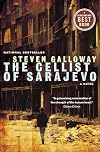
The Cellist of Sarajevo will rip your heart right out of your chest.
It is brutal.
It seems every page echos the melancholic voice of a cello.
Following a mortar attack that killed his neighbours, a cellist makes a courageous decision. "...at four o'clock in the afternoon, twenty-four hours after the mortar fell on his friends and neighbours while they waited to buy bread, he will bend down and pick up his bow. He will carry his cello and stool down the narrow flight of stairs to the empty street. The war will go on around him as he sits in the small crater left at the mortar's point of impact. He'll play Albinoni's Adagio. He'll do this every day for twenty-two days, a day for each person killed. Or at least he'll try. He won't be sure he will survive. He won't be sure he has enough Adagio's left." p. 5
His labour of love becomes inspiration to many who treasure the beauty that his art can bring to their hellish existence during the war. As such, he becomes the target of the "men on the hills with guns and bombs" p. 33.
This novel is not a philosophical discussion about the morality of war. It is about trying to survive: physically -- to find food and water, and spiritually -- to find hope and beauty while dodging bullets and bombs.
The stories of Arrow, Kenan and Dragan remind us of just how great life is in our fortunate country that has never experienced war up close and personal.
It is brutal.
It seems every page echos the melancholic voice of a cello.
Following a mortar attack that killed his neighbours, a cellist makes a courageous decision. "...at four o'clock in the afternoon, twenty-four hours after the mortar fell on his friends and neighbours while they waited to buy bread, he will bend down and pick up his bow. He will carry his cello and stool down the narrow flight of stairs to the empty street. The war will go on around him as he sits in the small crater left at the mortar's point of impact. He'll play Albinoni's Adagio. He'll do this every day for twenty-two days, a day for each person killed. Or at least he'll try. He won't be sure he will survive. He won't be sure he has enough Adagio's left." p. 5
His labour of love becomes inspiration to many who treasure the beauty that his art can bring to their hellish existence during the war. As such, he becomes the target of the "men on the hills with guns and bombs" p. 33.
This novel is not a philosophical discussion about the morality of war. It is about trying to survive: physically -- to find food and water, and spiritually -- to find hope and beauty while dodging bullets and bombs.
The stories of Arrow, Kenan and Dragan remind us of just how great life is in our fortunate country that has never experienced war up close and personal.
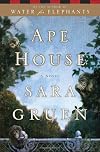
Having loved Water for Elephants, I expected to like this book even after reading a being moderately disappointed by Riding Lessons, Sara Gruen's debut novel.
I thought that this would be about apes -- and in a way it was.
Surprisingly, it was also about relationships and what defines family -- mutual respect, caring, fidelity -- not blood ties nor even commonality of species. Also, unexpectedly this novel was also about exploitation and human moral bankruptcy.
Gruen is a master craftsman. In order to communicate the idea that apes are sentient beings she draws parallels between Isabel and the apes and John and Amanda. As Isabel is separated from the apes, John is separated from Amanda. Although their relationships with each other were good, the separation teaches them to value each other more, to treasure each other for their unique qualities.
Gruen also touches on the theme of reality television. Amanda would like to write scripts but is unable to earn a living because reality television costs much less to produce. It exploits the participants. "Networks used to produce a dozen dramas or comedies, hoping one might take. Now they produce a couple and fill up the rest of the time slots with stupid shows about stupid people apparently trying to find true love by having sex in a hot tub with a different person every night while the cameras roll." p. 32 Once again Gruen draws parallels with the apes who end up living in a house equipped with cameras recording and show more broadcasting their natural sexual promiscuity rather than highlighting their ability to communicate and make cognisant decisions.
Finally, Gruen addresses the use of animals in research. Isabel becomes a victim of extremists who denounce experiments on apes and mistakenly bomb her research facility. Sounds like Gruen is saying that animal research is fine. Wrong. She distinguishes between cruel experimentation and sensitive scientific inquiry.
In this novel, humans are morally inferior to apes. We undervalue our relationships, exploit each other's stupidity and take advantage of those who cannot defend themselves. Yeah us! show less
I thought that this would be about apes -- and in a way it was.
Surprisingly, it was also about relationships and what defines family -- mutual respect, caring, fidelity -- not blood ties nor even commonality of species. Also, unexpectedly this novel was also about exploitation and human moral bankruptcy.
Gruen is a master craftsman. In order to communicate the idea that apes are sentient beings she draws parallels between Isabel and the apes and John and Amanda. As Isabel is separated from the apes, John is separated from Amanda. Although their relationships with each other were good, the separation teaches them to value each other more, to treasure each other for their unique qualities.
Gruen also touches on the theme of reality television. Amanda would like to write scripts but is unable to earn a living because reality television costs much less to produce. It exploits the participants. "Networks used to produce a dozen dramas or comedies, hoping one might take. Now they produce a couple and fill up the rest of the time slots with stupid shows about stupid people apparently trying to find true love by having sex in a hot tub with a different person every night while the cameras roll." p. 32 Once again Gruen draws parallels with the apes who end up living in a house equipped with cameras recording and show more broadcasting their natural sexual promiscuity rather than highlighting their ability to communicate and make cognisant decisions.
Finally, Gruen addresses the use of animals in research. Isabel becomes a victim of extremists who denounce experiments on apes and mistakenly bomb her research facility. Sounds like Gruen is saying that animal research is fine. Wrong. She distinguishes between cruel experimentation and sensitive scientific inquiry.
In this novel, humans are morally inferior to apes. We undervalue our relationships, exploit each other's stupidity and take advantage of those who cannot defend themselves. Yeah us! show less
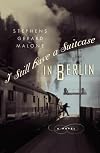
Wow!
Wow!
Wow!
I absolutely loved this book!
At the beginning of the novel, we travel with the protagonist to Germany just before the start of WWII. Although Michael Renner doesn't want to comply with his father's demand that he go to Berlin to ensure that his grandmother is not being exploited by her neighbour, he complies.
Michael is young. He doesn't really know much about life nor about himself. It is his first time traveling and while seriously seasick on the ship, he is forced to quickly learn how to deal with strangers and new situations. He is also ignorant of his German heritage. He knows nothing of Berlin nor of his extended family living there. Further, he also doesn't seem to know what is happening around him in Germany. He unwittingly is politically blind, unaware of the discrimination against the Jews, the homosexuals, and all deemed "deviant" or "enemies" of the State.
What I really really liked about this book is its fresh approach.
This is not a typical Holocaust novel. It is somewhat reminiscent of The Book Thief by Markus Zusak in that the protagonist is simply living his own life and minding his own business while the world around him is changing. He seems blissfully unconcerned by the plight of the less fortunate. Thanks to his grandmother, he has enough money, is meeting friends, partying, discovering his sexuality, simply living. Eventually the realities of his situation catch up with him. He is forced to endure unimaginable brutalities and to cope in ways show more he never thought possible. Although I am not homosexual, I could easily relate to Michael. He is very naive. He simply wants to live and be loved. He is human. He makes mistakes. He is flawed.
Another thing I liked about this novel is the realistic description of Berlin just before WWII. Although I am not a big fan of gratuitous descriptive passages, there is just the right amount of fine relevant historical detail that the pages came alive as I read. Simply amazing!
Would I recommend this book? Most definitely! show less
Wow!
Wow!
I absolutely loved this book!
At the beginning of the novel, we travel with the protagonist to Germany just before the start of WWII. Although Michael Renner doesn't want to comply with his father's demand that he go to Berlin to ensure that his grandmother is not being exploited by her neighbour, he complies.
Michael is young. He doesn't really know much about life nor about himself. It is his first time traveling and while seriously seasick on the ship, he is forced to quickly learn how to deal with strangers and new situations. He is also ignorant of his German heritage. He knows nothing of Berlin nor of his extended family living there. Further, he also doesn't seem to know what is happening around him in Germany. He unwittingly is politically blind, unaware of the discrimination against the Jews, the homosexuals, and all deemed "deviant" or "enemies" of the State.
What I really really liked about this book is its fresh approach.
This is not a typical Holocaust novel. It is somewhat reminiscent of The Book Thief by Markus Zusak in that the protagonist is simply living his own life and minding his own business while the world around him is changing. He seems blissfully unconcerned by the plight of the less fortunate. Thanks to his grandmother, he has enough money, is meeting friends, partying, discovering his sexuality, simply living. Eventually the realities of his situation catch up with him. He is forced to endure unimaginable brutalities and to cope in ways show more he never thought possible. Although I am not homosexual, I could easily relate to Michael. He is very naive. He simply wants to live and be loved. He is human. He makes mistakes. He is flawed.
Another thing I liked about this novel is the realistic description of Berlin just before WWII. Although I am not a big fan of gratuitous descriptive passages, there is just the right amount of fine relevant historical detail that the pages came alive as I read. Simply amazing!
Would I recommend this book? Most definitely! show less
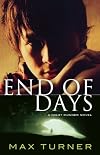
This novel is a lot of fun!
It is the sequel to Night Runner, which was an OLA Red Maple Award Honour Book and Shortlisted for the Sunburst Award.
Last year I reviewed Night Runner and said, "I like this novel because it has twists and turns, great characters and wry humour. While the protagonist is a vampire, this novel deals more with secrets and life choices than it does with vampire angst. More than just a page turner, you will be drawn to the lovable, realistic, multifaceted characters and their weird, humorous reflections as they deal with life's challenges. "
If you have read this far you are probably thinking, OMG another vampire book for teenage girls. You would be wrong. While this is yet another vampire book, it wasn't inspired by the Twilight craze but rather by the desire to whet the appetite of young male readers. Although I am not the target demographic, this novel captured my interest mostly because it is not a star-crossed romance. This is the story of a young boy who, through no fault of his own, is forced to adapt -- to accept his body for what it is, to solve mysteries, cryptic prophecies, deal with dangerous creatures and navigate the tangled and messy interpersonal relationships that are integral to adolescence. This novel appeals directly to all young people and specifically to boys who face similar challenges (-- body image, mysteries of life, confusing female communication, dealing with dangerous creatures of the opposite sex, and learning to show more handle new relationships). The End of Days begins with,
"I'm told vampires are popular in books these days. I'm not surprised. The perks of infection are pretty sick. Awesome physical power. Highly tuned senses. The ability to recover from almost any injury. Good dental hygiene. A simple diet. And that immortality thing -- very impressive on a resume." p.1
This is clearly a male voice -- it does not deal with affairs of the heart rather with the physical aspects of being a vampire and all the challenges associated with that destiny. Zach, the protagonist, wonders,
"My head was full of questions. 'Am I that messiah?'...'So what do I do? Who can I trust? This thing, this Beast, it seems unstoppable. And the Coven wants me dead, me and my friends. They've already sent one vampire. Mr. Entwistle thinks they'll send an army of them once they stop fighting one another.'" p. 132-133.
In addition to being a exciting face-paced page-turner End of Days is also a clever, humorous and insightful novel. Here is an excerpt of a pursuit of a hairy wolf like creature.
"The door frame buckled under Mr. Entwistle's boot. Pieces of cinder block scattered as the housing for the deadbolt tore loose from the wall.
'Well, there goes the element of surprise,' Charlie muttered.
The old vampire laughed. 'The way you two breathe, he could hear you through six feet of concrete.' He stuck his head in the doorway. 'Honey, I'm home...' His voice was remarkably steady....
'Well, let's see what Old Yeller was up to.' Mr. Entwistle moved carefully into the room". p. 228
While details draw the reader into the chase, the pervasive humour remains just as entertaining. As well, all the characters and especially Zack take things in stride with a realistic and pragmatic approach. At the beginning of the next chapter, he reflects,
"Hope is a funny thing. It can be totally unreasonable-- bone dumb, in fact -- and a part of it still clings to your brain. I remember as a kid hoping to find a lightsaber in my Christmas stocking, and after reading my first Marvel Tales comic, hoping that I might get bitten by a radioactive bug and receive the full range of superpowers you'd expect from such a miracle. You can bet all that hope came to nothing. But other times hope is dead on. Like when you hope the winter will soon be over and it's already late April. That's the kind of hope you want to have. It's less disappointing." p. 234
Peppered with thoughtful introspection, this novel invites the reader to relate to its characters, to believe that all of today's challenges can be overcome with determination and sense of humour.
Just another vampire novel? Not really -- more like a novel about hope, about growing up, about bravely meeting challenges face on and winning. show less
It is the sequel to Night Runner, which was an OLA Red Maple Award Honour Book and Shortlisted for the Sunburst Award.
Last year I reviewed Night Runner and said, "I like this novel because it has twists and turns, great characters and wry humour. While the protagonist is a vampire, this novel deals more with secrets and life choices than it does with vampire angst. More than just a page turner, you will be drawn to the lovable, realistic, multifaceted characters and their weird, humorous reflections as they deal with life's challenges. "
If you have read this far you are probably thinking, OMG another vampire book for teenage girls. You would be wrong. While this is yet another vampire book, it wasn't inspired by the Twilight craze but rather by the desire to whet the appetite of young male readers. Although I am not the target demographic, this novel captured my interest mostly because it is not a star-crossed romance. This is the story of a young boy who, through no fault of his own, is forced to adapt -- to accept his body for what it is, to solve mysteries, cryptic prophecies, deal with dangerous creatures and navigate the tangled and messy interpersonal relationships that are integral to adolescence. This novel appeals directly to all young people and specifically to boys who face similar challenges (-- body image, mysteries of life, confusing female communication, dealing with dangerous creatures of the opposite sex, and learning to show more handle new relationships). The End of Days begins with,
"I'm told vampires are popular in books these days. I'm not surprised. The perks of infection are pretty sick. Awesome physical power. Highly tuned senses. The ability to recover from almost any injury. Good dental hygiene. A simple diet. And that immortality thing -- very impressive on a resume." p.1
This is clearly a male voice -- it does not deal with affairs of the heart rather with the physical aspects of being a vampire and all the challenges associated with that destiny. Zach, the protagonist, wonders,
"My head was full of questions. 'Am I that messiah?'...'So what do I do? Who can I trust? This thing, this Beast, it seems unstoppable. And the Coven wants me dead, me and my friends. They've already sent one vampire. Mr. Entwistle thinks they'll send an army of them once they stop fighting one another.'" p. 132-133.
In addition to being a exciting face-paced page-turner End of Days is also a clever, humorous and insightful novel. Here is an excerpt of a pursuit of a hairy wolf like creature.
"The door frame buckled under Mr. Entwistle's boot. Pieces of cinder block scattered as the housing for the deadbolt tore loose from the wall.
'Well, there goes the element of surprise,' Charlie muttered.
The old vampire laughed. 'The way you two breathe, he could hear you through six feet of concrete.' He stuck his head in the doorway. 'Honey, I'm home...' His voice was remarkably steady....
'Well, let's see what Old Yeller was up to.' Mr. Entwistle moved carefully into the room". p. 228
While details draw the reader into the chase, the pervasive humour remains just as entertaining. As well, all the characters and especially Zack take things in stride with a realistic and pragmatic approach. At the beginning of the next chapter, he reflects,
"Hope is a funny thing. It can be totally unreasonable-- bone dumb, in fact -- and a part of it still clings to your brain. I remember as a kid hoping to find a lightsaber in my Christmas stocking, and after reading my first Marvel Tales comic, hoping that I might get bitten by a radioactive bug and receive the full range of superpowers you'd expect from such a miracle. You can bet all that hope came to nothing. But other times hope is dead on. Like when you hope the winter will soon be over and it's already late April. That's the kind of hope you want to have. It's less disappointing." p. 234
Peppered with thoughtful introspection, this novel invites the reader to relate to its characters, to believe that all of today's challenges can be overcome with determination and sense of humour.
Just another vampire novel? Not really -- more like a novel about hope, about growing up, about bravely meeting challenges face on and winning. show less
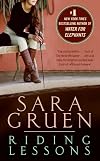
This is the story of Annemarie Zimmer. At 18 years of age, she was a world class rider, who suffered a very serious fall from her much loved horse, Harry. This was no ordinary horse. It was a rare white striped gelding. Unfortunately, as a result of this tragic accident, Harry must be destroyed and Annemarie refuses to return to riding.
The novel begins twenty years after this incident. She has returned to her childhood home, a horse farm which is on the brink of bankruptcy. She has lost her job, her father is gravely ill, and her daughter is going through teenage growing pains. Sara Gruen is a masterful writer. She takes what could on the surface appear to be soap-operatic and weaves a realistic and touching story. She seems to have a natural ability to create images which are tightly tied to character.
"The scene is pure bucolic perfection: the horses, fat and dappled, grazing in an expanse of pasture against a backdrop of indigo sky. A breeze rustles lightly through the surrounding maples, their leaves parted occasionally by the darting streak of birds. The sky, bright and blue and full of the noise of cicadas, crickets, sparrows, finches, and a single Carolina chickadee. I can relate to that chickadee. I, too, should have taken a left turn at Albuquerque.
It may look perfect, but I know the truth. Just beneath the surface, as tangible as the wood under my arms, is a pain as relentless as a toothache." p. 293
Although it has been over thirty years that I have crawled onto show more a horse's back, and although I have never lived on a farm, I loved this novel and look forward to reading Flying Changes which continues Annemarie Zimmer's story. show less
The novel begins twenty years after this incident. She has returned to her childhood home, a horse farm which is on the brink of bankruptcy. She has lost her job, her father is gravely ill, and her daughter is going through teenage growing pains. Sara Gruen is a masterful writer. She takes what could on the surface appear to be soap-operatic and weaves a realistic and touching story. She seems to have a natural ability to create images which are tightly tied to character.
"The scene is pure bucolic perfection: the horses, fat and dappled, grazing in an expanse of pasture against a backdrop of indigo sky. A breeze rustles lightly through the surrounding maples, their leaves parted occasionally by the darting streak of birds. The sky, bright and blue and full of the noise of cicadas, crickets, sparrows, finches, and a single Carolina chickadee. I can relate to that chickadee. I, too, should have taken a left turn at Albuquerque.
It may look perfect, but I know the truth. Just beneath the surface, as tangible as the wood under my arms, is a pain as relentless as a toothache." p. 293
Although it has been over thirty years that I have crawled onto show more a horse's back, and although I have never lived on a farm, I loved this novel and look forward to reading Flying Changes which continues Annemarie Zimmer's story. show less

I received this book from librarything last July but allowed myself some light reading over the summer, thus creating the delay in this review.
Annabel reminded me of Middlesex by Jeffery Eugenides.
"It was as the baby latched on to Jacinda's breast that Thomasina caught sight of something slight, flower-like; one testicle had not descended, but there was something else. She waited the eternal instant that women wait when a horror jumps out at them...As she adjusted the blanket she quietly moved the one little testicle and saw that the baby also had labia and a vagina...Then she said, "I'm going to ask the others to leave, if it's alright with you. We have something to talk about." p. 15,16
However, it is very different in many significant ways. First, Kathleen Winter has set her novel in Croyden Harbour on the southeast coast of Labrador. I have never been to Croyden Harbour, Labrador but imagine it to be an isolated, barren, windswept, desolate corner of Canada -- as opposite as possible from Canada's bustling metropolises of Toronto or Vancouver. A place where close knit communities are capable of survival despite Mother Nature's efforts, a place where everyone knows everyone's business, a place where the banality of life is a constant. The birth of a hermaphrodite in this community would have been a surprise -- had anyone but Thomasina and the parents known. The secrecy that surrounds Wayne/Annabel's birth implies the necessity of shame...something that needs to be show more hidden because it is somehow wrong.
I also found that Winters focuses her novel on the parents more than the child. After communing with nature, Treadway, the father, decides that they will name this child Wayne and raise him as a boy. The mother, Jacinta acquiesces but in her heart is unsure of this choice. She also regrets the decision to hide the child's condition. "She wished she had told all her friends, the day Wayne was born, that he had been born a hermaphrodite. She wished she had not locked the secret inside her, where it clamoured to get out. Treadway would just have to deal with it...This is my problem, Jacinta thought. I am dishonest. I never tell the truth about anything important. As a result, there is an ocean inside me of unexpressed truth. My face is a mask, and I have murdered my own daughter. p. 142 "But was there a place where she could live with truth instead of lies? Truth or Consequences was another TV show. She could relate to that title. You told the truth or you lived with consequences like these. If you held back truth you couldn't win. You swallowed truth and it went sour in your belly and poisoned you slowly." p. 151 Jacinte's life is full of regret and uncertainty. Treadway, for his part, is similarly tormented and confused. "Wayne had never been able to love the dog Treadway brought home the day he dismantled the Ponte Vecchio. He wanted to love the dog but couldn't, and he blamed his father...Wayne had a dog he could not love though he wanted to love it, and Treadway had a son he could not love though he wanted a son and he wanted to love that son. Father and son suffered from backed up, frozen love, and this ate Jacinta's heart." p. 239
Finally, I found that Winters' treatment of Wayne/Annabel's perspective was typically Canadian: nuanced and sensitive. She understates Wayne/Annabel's confusion which I believe is very realistic. I don't think that people navel-gaze as much as depicted by many authors. In the novel, Wayne/Annabel grapples with his/her sexual identity but also grapples with his day to day existence, his relationships, his future. As an infant, Wayne/Annabel had been taken to a hospital in St. Johns for treatment. Throughout his childhood, he is given pills which cause his/her body to grow into a masculine form. As a young man/woman, he must decide for himself whether or not to continue this course of treatment.
What I found most interesting is the idea that life is simpler if everyone is the same, if we don't have to make our own decisions, if we don't have to tread where no one has dared to tread, if we can simply follow the norm. If there is no norm to follow, life gets murky, certainty becomes uncertain, choices are scrutinized, often regretted and painful.
Annabel is not simply a story about a hermaphrodite growing up in Labrador. It is an examination of the sentient human condition -- where choices are consciously made and consequences are clearly felt. show less
Annabel reminded me of Middlesex by Jeffery Eugenides.
"It was as the baby latched on to Jacinda's breast that Thomasina caught sight of something slight, flower-like; one testicle had not descended, but there was something else. She waited the eternal instant that women wait when a horror jumps out at them...As she adjusted the blanket she quietly moved the one little testicle and saw that the baby also had labia and a vagina...Then she said, "I'm going to ask the others to leave, if it's alright with you. We have something to talk about." p. 15,16
However, it is very different in many significant ways. First, Kathleen Winter has set her novel in Croyden Harbour on the southeast coast of Labrador. I have never been to Croyden Harbour, Labrador but imagine it to be an isolated, barren, windswept, desolate corner of Canada -- as opposite as possible from Canada's bustling metropolises of Toronto or Vancouver. A place where close knit communities are capable of survival despite Mother Nature's efforts, a place where everyone knows everyone's business, a place where the banality of life is a constant. The birth of a hermaphrodite in this community would have been a surprise -- had anyone but Thomasina and the parents known. The secrecy that surrounds Wayne/Annabel's birth implies the necessity of shame...something that needs to be show more hidden because it is somehow wrong.
I also found that Winters focuses her novel on the parents more than the child. After communing with nature, Treadway, the father, decides that they will name this child Wayne and raise him as a boy. The mother, Jacinta acquiesces but in her heart is unsure of this choice. She also regrets the decision to hide the child's condition. "She wished she had told all her friends, the day Wayne was born, that he had been born a hermaphrodite. She wished she had not locked the secret inside her, where it clamoured to get out. Treadway would just have to deal with it...This is my problem, Jacinta thought. I am dishonest. I never tell the truth about anything important. As a result, there is an ocean inside me of unexpressed truth. My face is a mask, and I have murdered my own daughter. p. 142 "But was there a place where she could live with truth instead of lies? Truth or Consequences was another TV show. She could relate to that title. You told the truth or you lived with consequences like these. If you held back truth you couldn't win. You swallowed truth and it went sour in your belly and poisoned you slowly." p. 151 Jacinte's life is full of regret and uncertainty. Treadway, for his part, is similarly tormented and confused. "Wayne had never been able to love the dog Treadway brought home the day he dismantled the Ponte Vecchio. He wanted to love the dog but couldn't, and he blamed his father...Wayne had a dog he could not love though he wanted to love it, and Treadway had a son he could not love though he wanted a son and he wanted to love that son. Father and son suffered from backed up, frozen love, and this ate Jacinta's heart." p. 239
Finally, I found that Winters' treatment of Wayne/Annabel's perspective was typically Canadian: nuanced and sensitive. She understates Wayne/Annabel's confusion which I believe is very realistic. I don't think that people navel-gaze as much as depicted by many authors. In the novel, Wayne/Annabel grapples with his/her sexual identity but also grapples with his day to day existence, his relationships, his future. As an infant, Wayne/Annabel had been taken to a hospital in St. Johns for treatment. Throughout his childhood, he is given pills which cause his/her body to grow into a masculine form. As a young man/woman, he must decide for himself whether or not to continue this course of treatment.
What I found most interesting is the idea that life is simpler if everyone is the same, if we don't have to make our own decisions, if we don't have to tread where no one has dared to tread, if we can simply follow the norm. If there is no norm to follow, life gets murky, certainty becomes uncertain, choices are scrutinized, often regretted and painful.
Annabel is not simply a story about a hermaphrodite growing up in Labrador. It is an examination of the sentient human condition -- where choices are consciously made and consequences are clearly felt. show less
This review was written for LibraryThing Early Reviewers.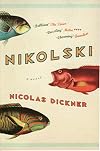
I think I am a pretty good reader...but I also think I need to reread this book.
In fact, I am sure that I need to reread this book.
Set in Montreal and various parts of Canada, this novel tells the story of three different protagonists whose stories are similar in that they are all on a journey of discovery. Joyce Doucet, Noah Riel and an unnamed narrator all search for treasure in obscure places.
Somewhat reminiscent of The Waterproof Bible, there are strange references and interwoven stories that I will one day untangle.
I really need to reread this book.....
In fact, I am sure that I need to reread this book.
Set in Montreal and various parts of Canada, this novel tells the story of three different protagonists whose stories are similar in that they are all on a journey of discovery. Joyce Doucet, Noah Riel and an unnamed narrator all search for treasure in obscure places.
Somewhat reminiscent of The Waterproof Bible, there are strange references and interwoven stories that I will one day untangle.
I really need to reread this book.....

From the back cover:
Orphaned and penniless at the height of the Depression, Jacob Jankowski escapes everything he knows by jumping on a passing train -- and inadvertently runs away with the circus. Thrown into the chaos of a second-rate traveling show, Jacob is adrift in a world of freaks, swindlers, and misfits.
I really didn't expect to like this novel. I actively dislike the whole idea of a circus -- caged animals and exploitation of the poor and uneducated. Further, I also tend to avoid reading historical novels especially American Historical novels which I find tend to ooze patriotic pap.
However, at the urging of many friends, I finally picked it up.
No regrets!!!
Sara Gruen is truly a marvelous story teller and perceptive observer of human nature! Right from the first page, she draws the reader in, making it near impossible to put this novel down. Also she has the ability to put herself (and by extrapolation, the reader too) into the skin of her characters.
This is a love story but not in the conventional sense. This is the story of a man who sticks to his convictions and cares for the animals who have been put in his charge, including a very stubborn and misunderstood elephant called Rosie.
From the back cover:
Water for Elephants is a dark and beautiful portrait of a crumbling circus. With warmth and whimsy, Gruen depicts an unforgettable world where love is a luxury few can afford.
Orphaned and penniless at the height of the Depression, Jacob Jankowski escapes everything he knows by jumping on a passing train -- and inadvertently runs away with the circus. Thrown into the chaos of a second-rate traveling show, Jacob is adrift in a world of freaks, swindlers, and misfits.
I really didn't expect to like this novel. I actively dislike the whole idea of a circus -- caged animals and exploitation of the poor and uneducated. Further, I also tend to avoid reading historical novels especially American Historical novels which I find tend to ooze patriotic pap.
However, at the urging of many friends, I finally picked it up.
No regrets!!!
Sara Gruen is truly a marvelous story teller and perceptive observer of human nature! Right from the first page, she draws the reader in, making it near impossible to put this novel down. Also she has the ability to put herself (and by extrapolation, the reader too) into the skin of her characters.
This is a love story but not in the conventional sense. This is the story of a man who sticks to his convictions and cares for the animals who have been put in his charge, including a very stubborn and misunderstood elephant called Rosie.
From the back cover:
Water for Elephants is a dark and beautiful portrait of a crumbling circus. With warmth and whimsy, Gruen depicts an unforgettable world where love is a luxury few can afford.

I received this novel from Librarything from the Early Reviewers Program. I applied for this book and other "Rapid Reads" because I thought it might be of use to my ESL readers.
This is from the back cover:
"When everything goes wrong at once, Missy Turner begins to make some unusual choices.
Missy Turner thinks of herself as the most ordinary woman in the world. She has a lot to be thankful for—a great kid, a loving husband, a job she enjoys and the security of living in the small town where she was born. Then one day everything gets turned upside down—she loses her job, catches her husband making out with the neighbor and is briefly taken hostage by a young man who robs the local café. With her world rapidly falling apart, Missy finds herself questioning the certainties she's lived with her whole life."
Sounds like it could be interesting, right?
Well, I have to say that I did not like this book -- and that is an understatement!
I found that the characters were flat, the setting non-existent and the plot improbable and cliche -- reminded me of a tired spaghetti western. "Jerry used to beat the crap out of my older brother in the high school. He'd parlayed his schoolyard bullying into a job with the local force. I don't hate a lot of people, but I pretty much hate Jerry. Besides bullying my brother, he also tried to date-rape my sister at the prom. He still has a scar on the side of his face from a bottle she'd smashed into it." p.31
Further, I actively abhorred Missy show more Turner, (what a dumb name to give a character!). After being held a gunpoint, she agrees to meet up with the guy. Then inexplicably she leaves her life behind and begins to drive across the country with this new found "love", stopping periodically at hotels for sex.
Now, although I don't expect anyone to read this book, I should mention that I am going to spoil the plot for those of you who actually do choose to fork over $10.00 for this good for nothing but kindling.
So, since the guy is broke and proud and doesn't want to accept anymore that Missy Turner has been footing the bill for their meanderings, he decides to hold up a gas station. At this moment, the brilliant protagonist asks herself, "Who was this man I'd just spent the better part of two days with? The one I was fantasizing about marrying? Did losing everything in one fell swoop mean I'd lost my mind? Any semblance of intelligence and character?" (p.109) Well I can certainly answer that! Any woman with half a brain doesn't get into a car with a stranger who is known to her as a criminal and expect him to transform into a knight in shining armour!!! I mean DAH!!!! Then, even after he shoots her, she says to herself, "The weirdest thing is, sometimes I think about Red in prison and I feel bad. After everything he did, I still feel compassion. Like he's some one-eyed kitten who can't stop hurting himself. I know this is crazy. I'm still absorbing it all. I think I've still got a ways to go. The truth is, I never knew him at all." p. 118 In my opinion, Missy Turner is not only stupid but also pathetic...and insult to all women.
So what am I going to do with this book (I can't bring myself to call it a "novel".) I thought about setting it free with Book Crossings, but that seems cruel and unusual to any unsuspecting reader. Hmm, what to do??? show less
This is from the back cover:
"When everything goes wrong at once, Missy Turner begins to make some unusual choices.
Missy Turner thinks of herself as the most ordinary woman in the world. She has a lot to be thankful for—a great kid, a loving husband, a job she enjoys and the security of living in the small town where she was born. Then one day everything gets turned upside down—she loses her job, catches her husband making out with the neighbor and is briefly taken hostage by a young man who robs the local café. With her world rapidly falling apart, Missy finds herself questioning the certainties she's lived with her whole life."
Sounds like it could be interesting, right?
Well, I have to say that I did not like this book -- and that is an understatement!
I found that the characters were flat, the setting non-existent and the plot improbable and cliche -- reminded me of a tired spaghetti western. "Jerry used to beat the crap out of my older brother in the high school. He'd parlayed his schoolyard bullying into a job with the local force. I don't hate a lot of people, but I pretty much hate Jerry. Besides bullying my brother, he also tried to date-rape my sister at the prom. He still has a scar on the side of his face from a bottle she'd smashed into it." p.31
Further, I actively abhorred Missy show more Turner, (what a dumb name to give a character!). After being held a gunpoint, she agrees to meet up with the guy. Then inexplicably she leaves her life behind and begins to drive across the country with this new found "love", stopping periodically at hotels for sex.
Now, although I don't expect anyone to read this book, I should mention that I am going to spoil the plot for those of you who actually do choose to fork over $10.00 for this good for nothing but kindling.
So, since the guy is broke and proud and doesn't want to accept anymore that Missy Turner has been footing the bill for their meanderings, he decides to hold up a gas station. At this moment, the brilliant protagonist asks herself, "Who was this man I'd just spent the better part of two days with? The one I was fantasizing about marrying? Did losing everything in one fell swoop mean I'd lost my mind? Any semblance of intelligence and character?" (p.109) Well I can certainly answer that! Any woman with half a brain doesn't get into a car with a stranger who is known to her as a criminal and expect him to transform into a knight in shining armour!!! I mean DAH!!!! Then, even after he shoots her, she says to herself, "The weirdest thing is, sometimes I think about Red in prison and I feel bad. After everything he did, I still feel compassion. Like he's some one-eyed kitten who can't stop hurting himself. I know this is crazy. I'm still absorbing it all. I think I've still got a ways to go. The truth is, I never knew him at all." p. 118 In my opinion, Missy Turner is not only stupid but also pathetic...and insult to all women.
So what am I going to do with this book (I can't bring myself to call it a "novel".) I thought about setting it free with Book Crossings, but that seems cruel and unusual to any unsuspecting reader. Hmm, what to do??? show less
This review was written for LibraryThing Early Reviewers.
I was captivated by the world created by Hilary Mantel but confused as to why this novel would win the Booker Prize. It is a difficult read because Mantel constantly uses "HE" instead of the protagonist's name. This caused me to have to back up in my reading to figure out who the HE was. I can't figure out why this author would refuse the courtesy of using the character's name... maybe to link him closer to the HE of the Bible. Who knows?
A frustrating but fascinating glimpse into Tudor England and all the machinations of the inhabitants of that dangerous time.
A frustrating but fascinating glimpse into Tudor England and all the machinations of the inhabitants of that dangerous time.
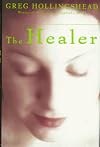
From the front inside jacket flap: "When Tim Wakelin, recently a widower, heads north in search of a story about a local healer named Carolyn Troyer, he enters a world that is real yet strange. Familiar landmarks disappear and extraordinary events unfold as his life becomes intertwined with hers. Even the landscape itself -- ancient rocks, myriad lakes, and cathedral forests of the Canadian Shield -- becomes a source of threat. How can he understand this strange and beautiful woman when he is no longer sure why he has really come or what is happening to him?
Until now, Caroline's life has been dominated by her parents: her cunning father, Ross, who has exerted an unspoken power over her since she was a child; and Ardis, her weak yet abusive mother. Aware that her ability to heal is only part of a mysterious process of transformation that she is undergoing, Caroline must break free of the chains of her family. Perhaps Tim can provide the sanctuary she needs, if he has the strength to survive the violent forces unleashed by his arrival."
This novel, while entrapping the reader in its suspenseful external story, is really an internal quest. Like most people, Tim and Caroline have been shaped by tragic events in their lives: Tim by the death of his beloved wife; and, Caroline by a childhood filled with betrayal and horrific abuse.
Caroline's role as a healer deals not only with the external but the internal. When Tim is injured, she is able to alleviate some of his pain. In show more these moments, he also comes to a startling realization: "The Earth had already brushed him like ash from her sleeve. His last chance had already passed... And he remembered a former perception, a perception undead after all, a light from far away, the cradle perhaps removed from him thereafter, until now. And he knew it must have been the fact of having once enjoyed that light and then enjoying it no longer that made refusal of it so automatic when she had tried to tell him. And one with the light was the knowledge that there is what a man has the power to convince himself concerning the world and there is what he has the power to do there. And then there is the world, the whole scene of it as it spread before and within his eye, a site of wonder, a universe of energy where iron and flesh and will and desire are no more than what they are, which is nothing, a shadow, in the light of that. And what he would not give for a glimpse of that light now." p. 311
This is complexe novel: there is the story of a girl with mystical powers and a journalist who comes to get the story in order to meet a deadline; there is the story of the accident, a hospitalization, a land purchase and a murderous rampage through the wooded Canadian Shield; there is also a exploration of the insignificance of our presence in the world, and yet, at the same time our undeniably important impact on one another.
Inevitably, as with most novels, the reader will take with him/her the lessons that speak to him/her the most...and will be healed. show less
Until now, Caroline's life has been dominated by her parents: her cunning father, Ross, who has exerted an unspoken power over her since she was a child; and Ardis, her weak yet abusive mother. Aware that her ability to heal is only part of a mysterious process of transformation that she is undergoing, Caroline must break free of the chains of her family. Perhaps Tim can provide the sanctuary she needs, if he has the strength to survive the violent forces unleashed by his arrival."
This novel, while entrapping the reader in its suspenseful external story, is really an internal quest. Like most people, Tim and Caroline have been shaped by tragic events in their lives: Tim by the death of his beloved wife; and, Caroline by a childhood filled with betrayal and horrific abuse.
Caroline's role as a healer deals not only with the external but the internal. When Tim is injured, she is able to alleviate some of his pain. In show more these moments, he also comes to a startling realization: "The Earth had already brushed him like ash from her sleeve. His last chance had already passed... And he remembered a former perception, a perception undead after all, a light from far away, the cradle perhaps removed from him thereafter, until now. And he knew it must have been the fact of having once enjoyed that light and then enjoying it no longer that made refusal of it so automatic when she had tried to tell him. And one with the light was the knowledge that there is what a man has the power to convince himself concerning the world and there is what he has the power to do there. And then there is the world, the whole scene of it as it spread before and within his eye, a site of wonder, a universe of energy where iron and flesh and will and desire are no more than what they are, which is nothing, a shadow, in the light of that. And what he would not give for a glimpse of that light now." p. 311
This is complexe novel: there is the story of a girl with mystical powers and a journalist who comes to get the story in order to meet a deadline; there is the story of the accident, a hospitalization, a land purchase and a murderous rampage through the wooded Canadian Shield; there is also a exploration of the insignificance of our presence in the world, and yet, at the same time our undeniably important impact on one another.
Inevitably, as with most novels, the reader will take with him/her the lessons that speak to him/her the most...and will be healed. show less
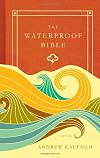
This was a delightful and strange read, very strange, wonderous strange!
From Random House: "A magical story of love and the isolation that defines the modern condition - Andrew Kaufman pulls off the near impossible and creates a wholly original allegorical tale that is both emotionally resonant and outlandishly fun.
Rebecca Reynolds is a young woman with a most unusual and inconvenient problem: no matter how hard she tries, she can't stop her emotions from escaping her body and entering the world around her. Luckily she's developed a nifty way to trap and store her powerful emotions in personal objects - but how many shoeboxes can a girl fill before she feels crushed by her past?
Three events force Rebecca to change her ways: the unannounced departure of her husband, Stewart; the sudden death of Lisa, her musician sister; and, while on her way to Lisa's funeral, a near-crash with what appears to be a giant frogwoman recklessly speeding in a Honda Civic.
Meanwhile, Lisa's inconsolable husband skips the funeral and flies to Winnipeg where he begins a bizarre journey that strips him of everything before he can begin to see a way through his grief… all with the help of a woman who calls herself God."
This novel explores how life's journey is full of twists and turns, encounters and accidents -- most of which remain unexplained and inexplicable. "If I hadn't met Rebecca and fallen in love with her, and then left her, I wouldn't be here, and I wouldn't be making this boat. So show more the boat wouldn't exist and neither would your question. Was it fate that I fell in love with Rebecca? And then that I left her? Or that I loved her, left her and then found this place and started building this boat? What's fate and what isn't? Where does it stop and where does it start? Is fate a part of the the story or the whole story?...I don't know. What about you?" p. 103. Answers to these questions and other life quandaries are thought by some to be found in the of the Bible...the word of God. Kaufman suggests that this idea needs to be reevaluated through Margaret's speech about the Aquatic Bible: "This book is full of lies....Beautiful, true, inspiring...But fiction. This book is filled with stories that can change your life, help you live, love, be loved. But these stories are not here to make us deny any part of ourselves. They are not here to bully us. The Bible teaches us that dying unwatered will curse your soul. How does that help us understand God? Or know God's love? It does not. It only keeps us in fear, leaving half of the grace God gave us unexplored and unused, something I feel God takes more as an insult than as a form of worship. Remember that the truth within yourself will always be greater than the truth found in these pages. These stories are here to guide us -- to help us find that truth, not to tell us what it is." p. 138 As for some great purpose in our lives, Kaufman states, "You idiot...there is no meaning. There's no plan. No script. It's not a movie. There's no lasting significance. No great reward. No right. No wrong. No punishment. No justice. There's no heaven or hell. Forget all that. There's no reason for any of this. It's all random. Everything's fucking random!" p. 163
Kaufman further reminds us that often we view our problems as insurmountable obstacles when in reality, they are insignificant. He invents a ritual for his "Aquatics" called litill. "When Aquatics are overwhelmed, they seek out the tallest object in view, lie on their backs, put their heads against it and look up. The ritual is called litill, and its purpose is to remind believers that they are actually quite small and, therefore, so are their problems." p. 116
Kaufman wants us to realize that although we have little control over the events in our lives, we have the power to determine our perception of it. "...the only difference between a happy ending and a sad ending is where you decide the story ends." p. 191 Further, we must decide whether to hold onto a past which is emotionally paralyzing or daringly stepping into the unknown. "Do you think it's cowardly, or courageous, to get rid of your past and start all over again?" p. 178... "You're about to become emotionally invulnerable...it will feel safe. It will feel like a good thing. But that's the problem. Who's gonna make themselves vulnerable if they don't have to? Who's gonna willingly make themselves weaker? But if you don't start feeling real emotions soon, you will quite literally become nothing...You need to start feeling something. Something meaningful." p. 240-241.
This is a short little book, but one designed to make us think and laugh. show less
From Random House: "A magical story of love and the isolation that defines the modern condition - Andrew Kaufman pulls off the near impossible and creates a wholly original allegorical tale that is both emotionally resonant and outlandishly fun.
Rebecca Reynolds is a young woman with a most unusual and inconvenient problem: no matter how hard she tries, she can't stop her emotions from escaping her body and entering the world around her. Luckily she's developed a nifty way to trap and store her powerful emotions in personal objects - but how many shoeboxes can a girl fill before she feels crushed by her past?
Three events force Rebecca to change her ways: the unannounced departure of her husband, Stewart; the sudden death of Lisa, her musician sister; and, while on her way to Lisa's funeral, a near-crash with what appears to be a giant frogwoman recklessly speeding in a Honda Civic.
Meanwhile, Lisa's inconsolable husband skips the funeral and flies to Winnipeg where he begins a bizarre journey that strips him of everything before he can begin to see a way through his grief… all with the help of a woman who calls herself God."
This novel explores how life's journey is full of twists and turns, encounters and accidents -- most of which remain unexplained and inexplicable. "If I hadn't met Rebecca and fallen in love with her, and then left her, I wouldn't be here, and I wouldn't be making this boat. So show more the boat wouldn't exist and neither would your question. Was it fate that I fell in love with Rebecca? And then that I left her? Or that I loved her, left her and then found this place and started building this boat? What's fate and what isn't? Where does it stop and where does it start? Is fate a part of the the story or the whole story?...I don't know. What about you?" p. 103. Answers to these questions and other life quandaries are thought by some to be found in the of the Bible...the word of God. Kaufman suggests that this idea needs to be reevaluated through Margaret's speech about the Aquatic Bible: "This book is full of lies....Beautiful, true, inspiring...But fiction. This book is filled with stories that can change your life, help you live, love, be loved. But these stories are not here to make us deny any part of ourselves. They are not here to bully us. The Bible teaches us that dying unwatered will curse your soul. How does that help us understand God? Or know God's love? It does not. It only keeps us in fear, leaving half of the grace God gave us unexplored and unused, something I feel God takes more as an insult than as a form of worship. Remember that the truth within yourself will always be greater than the truth found in these pages. These stories are here to guide us -- to help us find that truth, not to tell us what it is." p. 138 As for some great purpose in our lives, Kaufman states, "You idiot...there is no meaning. There's no plan. No script. It's not a movie. There's no lasting significance. No great reward. No right. No wrong. No punishment. No justice. There's no heaven or hell. Forget all that. There's no reason for any of this. It's all random. Everything's fucking random!" p. 163
Kaufman further reminds us that often we view our problems as insurmountable obstacles when in reality, they are insignificant. He invents a ritual for his "Aquatics" called litill. "When Aquatics are overwhelmed, they seek out the tallest object in view, lie on their backs, put their heads against it and look up. The ritual is called litill, and its purpose is to remind believers that they are actually quite small and, therefore, so are their problems." p. 116
Kaufman wants us to realize that although we have little control over the events in our lives, we have the power to determine our perception of it. "...the only difference between a happy ending and a sad ending is where you decide the story ends." p. 191 Further, we must decide whether to hold onto a past which is emotionally paralyzing or daringly stepping into the unknown. "Do you think it's cowardly, or courageous, to get rid of your past and start all over again?" p. 178... "You're about to become emotionally invulnerable...it will feel safe. It will feel like a good thing. But that's the problem. Who's gonna make themselves vulnerable if they don't have to? Who's gonna willingly make themselves weaker? But if you don't start feeling real emotions soon, you will quite literally become nothing...You need to start feeling something. Something meaningful." p. 240-241.
This is a short little book, but one designed to make us think and laugh. show less
As an intrepid traveller and a proud supporter of Canadian Lit, Kim Echlin's The Disappeared definitely appealed to me and it did not disappoint.
I won't retell the plot as other reviewers have already done so.
One of the things that I liked about the novel, of course, were the settings in peaceful Canada as well as war ravaged Cambodia. I also liked the fact that the novel covered a significant part of the protagonist's life because we can see her as a young naive woman as well as a mature experienced woman who somehow has managed to preserve her love for her lover, Serey and her love for being in love.
Usually I am not very tolerant of what I perceive as a gratuitous and self-indulgent poetic style employed by some writers, however, perhaps because The Disappeared is not a seemingly unending piece of fiction, the poetic nature of Echlin's writing does not detract but actually effectively enriches the portrayal of the protagonist's sensitive and ingenuous nature.
I won't retell the plot as other reviewers have already done so.
One of the things that I liked about the novel, of course, were the settings in peaceful Canada as well as war ravaged Cambodia. I also liked the fact that the novel covered a significant part of the protagonist's life because we can see her as a young naive woman as well as a mature experienced woman who somehow has managed to preserve her love for her lover, Serey and her love for being in love.
Usually I am not very tolerant of what I perceive as a gratuitous and self-indulgent poetic style employed by some writers, however, perhaps because The Disappeared is not a seemingly unending piece of fiction, the poetic nature of Echlin's writing does not detract but actually effectively enriches the portrayal of the protagonist's sensitive and ingenuous nature.
This is the story of Azuba Galloway, a young woman living in New Brunswick during the 1860's. In her fourth month of pregnancy, she loses the baby and the absence of her Sea Captain husband feels acute. She vows that when Nathaniel returns to her and Carrie, their four year old daughter, she will insist that they never be left behind again. While awaiting his return, she fills the emotional void with the company of the well-meaning Reverend Walton with whom she collects marine specimens. While on an excursion together, they fall asleep and are stranded overnight by the tide. The community spends the night fruitlessly searching for them. In the weeks that follow their return the following morning, the small town gossips refuse to believe their innocent explanation. When Nathaniel returns home, Azuba is hesitant to tell her husband of her misadventure and he hears only the gossip monger's version. Although Nathaniel has been vehemently opposed to bringing Azuba and Carrie on his seafaring voyages, he feels that under the circumstances, he has no choice. Furious with Azuba, once aboard ship, he treats her coldly. For her part, Azuba understands Nathaniel's rage and decides that she will lovingly wait for his forgiveness.
Beth Powning's portrayal of the 19th century is well researched and detailed. Her descriptions are filled with objects unfamiliar to many 21st century landlubber readers (a glossary is provided at the end of the novel).
Interwoven into the story of this sea show more journey filled with many hardships and disasters, is the personal journey of Azuba, who realizes the full impact of her choices not only for herself but for those whom she loves, who learns new truths about people and situations, who discovers the true complexity of human emotion, and who builds a personal inner strength and courage in the face of adversity. show less
Beth Powning's portrayal of the 19th century is well researched and detailed. Her descriptions are filled with objects unfamiliar to many 21st century landlubber readers (a glossary is provided at the end of the novel).
Interwoven into the story of this sea show more journey filled with many hardships and disasters, is the personal journey of Azuba, who realizes the full impact of her choices not only for herself but for those whom she loves, who learns new truths about people and situations, who discovers the true complexity of human emotion, and who builds a personal inner strength and courage in the face of adversity. show less
This review was written for LibraryThing Early Reviewers.
This is the first novel I have read by Gail Anderson-Dargatz and I am sure it will not be the last. It is realistic in in its portrayal of characters and events and poetic in its style -- an absolutely delightful read. Finally, a novel with a female protagonist, set in Canada, written by a female Canadian writer -- a novel that doesn't drive you to the dark recesses of your mind.
This is the story of Kat, a woman at an emotional crossroad, who goes home to help her parents move their most precious possessions from their home which is threatened by a wildfire. Interwoven into this plot are the stories of her parents' and her grandparents' generations -- family secrets and skeletons are revealed --history repeats itself -- mysteries are unraveled and solved -- I absolutely loved it and am now off to the Chapter's website to see what else this writer has written.
This is the story of Kat, a woman at an emotional crossroad, who goes home to help her parents move their most precious possessions from their home which is threatened by a wildfire. Interwoven into this plot are the stories of her parents' and her grandparents' generations -- family secrets and skeletons are revealed --history repeats itself -- mysteries are unraveled and solved -- I absolutely loved it and am now off to the Chapter's website to see what else this writer has written.

This is a very very funny novel. It has a rapid fire style which never seems to run out of ammunition aimed at best-sellers self-servingly hyped by high profile literary wanna-bes. The narrator is a likable fellow who loves to read and needs work so logically gets himself a job at a bookstore. Sounds rational, sane? Ahh, but there the rub begins. He meets some kindred spirits at the store and begins to make choices that most would consider unwise. If the narrator and the author have anything in common besides a wicked sense of humour Redekop should be firmly locked in a padded cell next to his favourite shelf monkey...although I hope that is not the case as I look forward to reading more of Redekop`s original wacky work.

While I enjoyed Shadow of the Wind by this author, I believe that The Angel's Game far surpasses its predecessor. This novel was amazing! The characters were well rounded and very realistic. The plot, an extensive labyrinth that the reader enters at the the beginning of the novel, twists, turns, leads to cul-de-sacs and finally a stunning, unpredictable conclusion. A MUST READ!!!
I came to this novel with equal amounts of enthusiasm (because I had previously read and laughed my way through A Boy of Good Breeding) and trepidation (because I had previously read and cried my way through A Complicated Kindness). Both sentiments were experienced as I read, laughed and cried my way through The Flying Troutsman. You may think that it is only the characters in this novel who are on a road trip but as a reader I found that I too was (thankfully) firmly buckled into their white knuckle emotional adventure. Once again Toews' genius for deftly painting the intricate contradictions inherent in human nature and motivation captivate the reader's attention from the very first words.

In All That Matters, Wayson Choy expands on the story of the Chen family first introduced in The Jade Peony. This time, Choy makes use of a single narrator, the eldest son, who has recently arrived on the west coast with his grandmother and father. What I really like about Wayson Choy's work is not only his flowing style but also the content of the plot which, with a refreshing and sometimes brutal, frank voice describes the two solitudes experienced by most first generation Canadians.

The Jade Peony by Wayson Choy was an enlightening read granting a peak into Vancouver's Chinatown. I really enjoyed the use of multiple narrators as it provided different perspectives on the family members of Chen family. I also found that the choice of youthful narrators was clever because it allowed the author to use the mouth of babes to reveal "truths" that adults might chose to politely conceal. Their understanding of their "condition" and the events of their lives was both revealing and endearing.
I thoroughly enjoyed this book and was disappointed to learn that it is not shortlisted for a Giller. Too bad. I think it is definitely better than Anne Michael's obscure Winter's Vault. I guess I just don't like poetry much. I really liked Oryx and Crake so it is no surprise that I enjoyed The Year of the Flood. I found the characters sympathetic and realistic. Atwood's world, though far from utopic, offers more hope than the dystopia of Handmaid's Tale. I have always and probably will always love Atwood. I even like HER poetry....
I loved this novel!
After having been involved in a car accident, Clara, the protagonist, decides to look after the family of a woman who has been diagnosed with cancer. Unaccustomed to a house full of children, one of whom is an infant, Clara finds herself exhausted, unemployed, and questioning her own motivations. The characters are exceptionally realistically brought to life, the plot, intricately woven, the sentences infused with images which seemingly occur naturally and do not interrupt the flow of the writing. It was so good, I was truly sad to reach the last word.
After having been involved in a car accident, Clara, the protagonist, decides to look after the family of a woman who has been diagnosed with cancer. Unaccustomed to a house full of children, one of whom is an infant, Clara finds herself exhausted, unemployed, and questioning her own motivations. The characters are exceptionally realistically brought to life, the plot, intricately woven, the sentences infused with images which seemingly occur naturally and do not interrupt the flow of the writing. It was so good, I was truly sad to reach the last word.
Pride and Prejudice and Zombies: The Classic Regency Romance - Now with Ultraviolent Zombie Mayhem! by Seth Grahame-Smith

First, I must confess, I am not a great lover of Jane Austen -- I know, how can anyone utter such thoughts aloud.... Well, it is not the fault of Jane Austen, rather I have a strong preference for modern literature. As a result, it should come as no surprise that my enthusiasm is underwhelming. This novel was written in the style of Austen with the old English structures and dry humour. It was a good read but not something I expect to read again. I would recommend it to those who like 19th century British Literature enough to allow 21st century writers to have a little fun with it.
I loved this book! I found that Nafisi doesn't pull punches when discussing her private life and the secrets of mysterious Iran. Her storytelling skills make this a much easier read than her other book, Reading Lolita In Tehran. Things I've Been Silent About reveals intimate details of an important, well-connected family as well as the moral struggles of young intellectuals squeezed by political times. Absolutely mesmerizing and informative.