A fine example of the writer John Irving writing about being the writer John Irving without writing an actual autobiography. Same rehashed themes as all his other books.
Widely praised, this debut novel reads like a cross between Dorothy Allison's Bastard Out of Carolina and "J.T. Leroy's" Sarah. If you've read a lot of misery lit, especially coming-of-age misery lit, you won't find anything new here. Trailer park, sexual abuse, addiction, check check check.
Essentially an Elmore Leonard novel, but with more description.
Essentially Charles Bukowski's Factotum without the alcoholism.
A well-crafted novel set in a BOYS school in Dublin. It's especially enjoyable if you like reading about the antics of teenage BOYS. However, teenage BOYS are too often predictable, and so are these BOYS. l lost interest in the book after about 400 of the ~600 pages, because I had tired of the BOYS' fart jokes and sex jokes and "gay"-used-as-all-purpose-negative-adjective jokes. If you know a teenage BOY, he might like to give the book a try, but what about the rest of us?
I think I have figured out what it is about Goolrick's writing that bothers me. His prose is very repetitious. He tends to repeat himself. He repeats himself to create a certain tone. He repeats himself and we get it already.
This is misery lit at its finest. By this I mean Goolrick is a very talented writer, and also that his affectless recitation of childhood horrors is exhausting. Normally I enjoy (if that's the right word) dark memoirs. But something about Goolrick's book tried my patience. His parents, as depicted, are vile, reprehensible people--and we don't even learn precisely how reprehensible his father is until late in the book. Goolrick suffered in the extreme, there's no doubt about that. It's just that the reader begins to wonder why he wanted to publish the book. I'm sure writing it was cathartic, of course, but in a surprisingly overwrought finale, Goolrick explains his motive. It's remarkable, in a way, that he survived intact enough to express these thoughts so humanely. Nevertheless, be prepared if you choose to read it, and come equipped with a strong stomach.

This is a very talky crime novel. A little too much, in my opinion, expository dialogue, and not enough action. (Although it must be admitted that the novel's flashback structure dictates this.)
Warning: Contains some vivid descriptions of extreme cruelty to cats.
Warning: Contains some vivid descriptions of extreme cruelty to cats.
Lit is a drunkalogue. If you know what that word means, you'll know what I mean. It's a tremendously well written drunkalogue, but a drunkalogue nonetheless.
I'm done. That is, I'm finally done with this 800-page tree stump, and I fear I'm also done with this series. Now, I'm normally a dirty-realism kind of reader, and the idea of reading a time-travel romance would normally send me into gales of snobbish laughter. But I picked up Outlander in the days directly following 9/11, having decided that I needed to read something that had nothing to do with anything. To my surprise, I liked it. Appealing protagonist, fascinating historical detail, and good dirty bits as well. I read the books as they came out, and I began to notice a shift in emphasis from the female characters to the males. More war, less physick. (And what is with Gabaldon and her penchant for writing gay male sex scenes???) Basically, as the series evolved, it lost what originally attracted me. This book is overlong, overcrowded with people and events, and not likely to gain Gabaldon any new followers. Pity.

Disappointing. Unlike Millar's other books, this one suffers from Elmore Leonard Syndrome: lots of snappy dialogue and no reason to care about the characters.
Descriptively good, but hopelessly marred by tone-deaf dialogue. In particular, the speech she ascribes to the 12- and 14-year-old children is highly implausible.

Excellent psychological exploration from Barb, aka Ruth Rendell. The complex plot rolls out slowly, and there are numerous characters to keep track of. All become clearer with every detail the narrator methodically reveals. I am, however, disappointed that Vine chose to resurrect the hackneyed "sexually repressed psycho spinster librarian" stereotype. I expect better from her. Nevertheless, as absorbing and enjoyable as virtually anything she's written.
This was a pleasant surprise! Very reminiscent of T.C. Boyle in its reimagining of historical figures. Boyne is a satirical adept and a terrific delineator of characters. Highly recommended for fans of T.C. Boyle, of satire, of crime novels, and of Edwardian historical fiction.
This is excellent. Miles has that rare ability to let his language roll and flow in much the same way that Vonnegut's does. Bundled into the chatty, conversational tone are some of our grandest truths and hardest heartbreaks. The book is also funny--unless you bring it to the airport and discover your flight is cancelled, as I did--whereupon it became somewhat less funny. Nevertheless, like the narrator, I finally got up into the sky. Can't ask for more than that.
This is juvenilia, but if (like me) you were lucky enough to read it as a juvenile, it will hold a permanent place in your dagger-pierced little heart. In the mid-1970s Dan Lang has fled Icarus, his suburban Virginia hometown, for the high life in New York City and a punk rock band. As the novel opens, Lang is returning to Icarus after flying too close to the flames in New York, and the novel is mostly concerned with sketching the lives of Lang and his dissipated but creative circle of friends--or "grove of buddies," as Carson puts it, displaying an early hint of the surpassingly clever wordplay he will deploy to great effect in 2003's Gilligan's Wake. Here's where the juvenilia comes in: I read this when I was about 14 or 15. Lang and his friends are roughly the same age--early twenties--as the kids who awed and inspired me at that age, but looking back they seem a little silly. One is described as "the writer, actor, and director of two plays before he graduated [high school]." Big deal. It's high school. Nevertheless, Carson is terrific at describing the empty spaces that can develop between old friends as they grow and explore, as well as the black holes that seem to swallow old friends who fail, or refuse, to move on.
If you believe that drunks and barflies are nice people and loyal friends, you'll probably like this book. Otherwise, it gets a solid "meh."
Most irritating Use of unnecessary Capitals since the Eighteenth Century. This must have driven the Editor completely Insane. It is also driving Me Insane. There is a Plethora of inventive and graphic Description of vomiting, as well as of the actual Vomitus. Nevertheless, and despite the Fact that it is not entirely Factual, I am finding it oddly compelling.
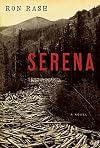
A novel about a bloodthirsty, beautiful woman who fascinates, terrifies, and kills men with nary a backward glance. She doesn't wear underwear beneath her evening dress, she rides a huge white Arabian horse, etc. etc. She is saved from cliche but hurled into caricature by the tame eagle she carries around for killing rattlesnakes. Despite Rash's considerable and obvious gifts as a writer--he's also a poet, and it shows--Serena is as cardboard a female character as any I've ever encountered in fiction. Peculiarly so, considering the larger-than-life persona Rash has given her. Plot steadily gathers speed and is woven together neatly; the logging-crew Greek chorus is a nice touch. Still, it's disappointing to see a writer of Rash's merit do so poorly by one of the main characters in his book.
This vivid and absorbing serial killer novel rises well above the crime genre thanks to the author's intense empathy for her characters. A thread of irrevocable loss pervades the novel. Virtually every major character has lost someone or something, or will do as the plot progresses. The detective protagonist has escaped a miserable marriage; an elderly woman's husband of fifty years has died of cancer; a doctor's best friend is beginning to lose her health to cancer; and the killer, it is implied, has lost a chance at a yearned-for career. The book's pacing increases gradually and steadily like an unhealthy pulse. Toward the climax, Hill makes a bold decision that many (or most) authors couldn't pull off without being accused of ham-fisted deus ex machina. Highly recommended.

Scary, bleak, relentless. Would make an antinuclear activist out of Ronald Reagan.
If you're going to write a book and place the main character amongst horses, you should know the difference between a halter and a bridle. You should also know that there is no such thing as a "chestnut bay." An irritating and implausible sequel to the first Andi Oliver book.
Like a Last Exit to Brooklyn transplanted to rural Ohio, these are interrelated stories about denizens of a southern Ohio "holler" community from the 1960s to the present. Various characters represent, endure, and occasionally (but not often) overcome extreme intellectual and economic poverty, psychological and physical violence, and lack of options. Although Pollock apparently has roots in the community he writes about (supposedly a real place), his stories don't show any particular empathy for his characters. One notable exception is The Fights, in which a recovering alcoholic achieves a certain peace during a visit with his ailing, brutish father. Knockemstiff is reminiscent of Larry Brown's Joe and Cormac McCarthy's Child of God: dark, despairing, and mean.
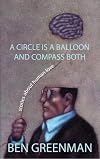
Too clever by half. (Nicely designed, though.) It's got McSweeney's written all over it. Well, not really -- only metaphorically, but it's that quirky, vaguely postmodern prose that just screams "I am not ordinary!" Oddly, Greenman elected not to footnote, perhaps because footnotes in fiction are now considered a 1990s fad. In any case, we can at least be glad he's inventive; god knows the world needs more Ben Greenmans and fewer James Pattersons. (Incidentally, or perhaps not so incidentally, Greenman works as an editor at the New Yorker, and if that's not cause for sour grapes on every other writer's part I don't know what is. And he is very handsome. Someone scan that author photo, it'll brighten up the place.)
An unusual novel that places a possibly abused amnesiac teenager at the center of a dual crusade to discover her own identity and what happened to her, and to halt illegal dogfights and "canned" endangered-animal hunts in rural Idaho. The dogfight and canned-hunt scenes are very unsettling, probably difficult to read even if you don't identify with animal rightists. The main character, who calls herself Annie, and her newfound friend Mary are creatively drawn and believable, despite the sometimes implausible plot, but the bad guys are unconvincingly awful--one is not just a child molester but an animal-abuser-for-profit and a wifebeater too. I believe that people can be this horrible, but Grimes unfortunately doesn't make her villians into more than caricatured monsters.
Not nearly as good as Farrell's masterwork, the Studs Lonigan trilogy. A contemporary reviewer once said of Studs Lonigan, "It's good sociology, but is it art?" I'd say Studs is art and World is sociology. Consists mostly of dialogues among and internal monologues by various members of an extended Irish-American family, the O'Farrells and the O'Reillys, bemoaning their miserable existences and/or formulating Babbitt-esque plans to improve their minds and, in turn, their social and economic fortunes. Interesting for what I perceive as the accurate description of conditions among the very poor and the just barely middle class of that time and place, as well as their perpetual invocations of a Catholic God who is both a savior and an avenger as needs will.
Light and engaging, good for subway, beach, or when you're sick in bed with a cold. Very reminiscent of Jacqueline Susann's Valley of the Dolls in its depiction of several ambitious women and the ups and downs of their glamorous careers in New York City. Well-written and inoffensive commercial fiction.

Unusually profane, and with some awfully strange diction as well as mysteriously senseless comma placement. Good story, though, and witty, except for the part where the protagonist says it would be a relief to be raped, which is, as we all know nowadays, inexcusable, even coming from a septuagenarian Irishman.
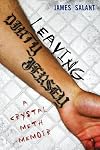
How does a well-brought-up teenager from genteel Princeton, NJ, become, in just a year, a bottomed-out speed freak in cruddy Riverside, CA? Well, he wanted to be cool. That's Salant's blunt explanation (not excuse) for his brush with misery, and it's also the saving grace of this memoir. Now, a lot of people might react immediately by thinking "What an idiot." But guess what? Salant would be the first to agree with you. That forthrightness is what keeps this memoir from being as irritating as, by all rights, it ought to be. Despite his puppy-like need for the approval of some mighty nasty characters, Salant comes across as a straight shooter (pun not intended but irresistible), one who's conceivably likable when he's not tweaking.
[For an example of the totally irritating post-adolescent memoir with which no one in their right mind could sympathize, see Abigail Vona.]
[For an example of the totally irritating post-adolescent memoir with which no one in their right mind could sympathize, see Abigail Vona.]