So this story anthology should probably be a 3.5 star at least - the stories I read were all 3 or above for me. There are two issues that currently have it as a 2.5 star.
The first, a very entertaining tale of romance, fantasy, mystery, and humor, suffered from a lack of proofreading. It's a low-level problem. The tone, pacing and plot were all topnotch. But there were clear typos: "she signed" instead of "she sighed," "moral" instead of "mortal" "cursing them you" instead of "you cursing them" and a couple instances of words smooshed together. Those mistakes were a little jarring particularly because everything else was so good.
The other stories were good as they were, but the problem is that the table of contents listed two more stories than there were. The author bios were also missing. And most problematic of all - the last story apparently cut off by about 20 pages (and it's definitely one worth reading). All told, the book is listed at a page count of 476, but what was delivered was around 280 pages.
I just won another anthology from Running Wild - I'm hoping it doesn't have the same problems. If it's actually complete, I have high hopes. If I ever get a completed copy of this edition, I'll revise this review and actually go into the details about the stories a little and, I assume, I'll up the star rating.
To recap, the stories that were there were good to great. The production issues or whatever occurred derailed things a bit. I hope it gets fixed - these authors show more deserve an audience! show less
The first, a very entertaining tale of romance, fantasy, mystery, and humor, suffered from a lack of proofreading. It's a low-level problem. The tone, pacing and plot were all topnotch. But there were clear typos: "she signed" instead of "she sighed," "moral" instead of "mortal" "cursing them you" instead of "you cursing them" and a couple instances of words smooshed together. Those mistakes were a little jarring particularly because everything else was so good.
The other stories were good as they were, but the problem is that the table of contents listed two more stories than there were. The author bios were also missing. And most problematic of all - the last story apparently cut off by about 20 pages (and it's definitely one worth reading). All told, the book is listed at a page count of 476, but what was delivered was around 280 pages.
I just won another anthology from Running Wild - I'm hoping it doesn't have the same problems. If it's actually complete, I have high hopes. If I ever get a completed copy of this edition, I'll revise this review and actually go into the details about the stories a little and, I assume, I'll up the star rating.
To recap, the stories that were there were good to great. The production issues or whatever occurred derailed things a bit. I hope it gets fixed - these authors show more deserve an audience! show less
 This review was written for LibraryThing Early Reviewers.
I want to give credit to K.F. Black - for a first novel, this was a significant undertaking. But even clocking in at about 500 pages, it seemed like a rough draft rather than a finished piece. Some of that responsibility was on Black, some on an editor.
To be honest, when there are significant errors or issues with tone, that's the author's problem. However, if there is an editor involved - and there was - it's then the editor's problem, or at least shared blame. There are some great works of literature that owe a lot to a thorough and talented editor. Flowers that Grow on Graves lacked that.
Examples:
There's a car crash. The car is flipped. The occupants are hanging suspended from their belts. They extricate themselves from the car. Later, with no mention of the car being righted, a character removes something from the trunk. Still later, they drive away.
That same car also couldn't be started by anyone without royal blood, but it was being driven all over by someone later.
Another scene mentions a character punching a picture of a family and putting their fist through it. Later, a character recognizes the family in the picture. They take the picture and fold it up and put it in their pocket.
Was the picture large enough to still be viewable with a fist-sized hole through it or small enough to tuck into a pocket?
And then there's just clumsy prose:
"Aria dropped to her knees, her breathing troubled and chest stabbing her insides." - unclear how a chest stabs at insides (no, show more it wasn't literally stabbing with broken ribs for example).
"Tavian anxiously rolled around with something in his fingers, still hidden behind his back." What? Maybe, "Tavian anxiously rolled something around with his fingers, keeping it hidden behind his back." But the way it's written sounds like he's on the ground....he's not.
I think even at the length it's at, there should have been much more world building. It seemed to squeeze too much into the story and the end result is it didn't make sense.
That said, this would have issues as a trilogy without HEAVY direction from a talented editor because the character development just wasn't there. There were a lot of reactions and dialogue that didn't hold true either and there were VERY brief interactions with different characters that just didn't make sense with how impactful there were - three different romantic relationships develop during the course of the book and the details don't seem like they go further than what you might have on a single good first date and yet the impact for all are lifechanging with the commitment and devotion at a level that's just unbelievable.
The mishmash of modern and magical and archaic was also jarring. There're cars and castles. Revolvers and daggers.... photos but entertainment is jugglers....the book couldn't decide what it wanted to be. And it showed in the text sometimes - like this line where one character was trying to find another and they "called for her on repeat." It seems too modern and clumsy.
Finally, in addition to a good editor, a proofreader would help. There were some notable typos including the misspelling of a major character's name. They were easy catches for someone paying attention.
So with all that going, how did I still manage to give it two stars? I thought there were some interesting ideas about characters. There were also some interesting powers and demigods.
This book could be much better if there again, was world-building. Too much was squeezed into the story and yet, character development was very weak. If there was more background on characters, there would have been more impact when some didn't make it. I think it also would benefit the book if the rationales and motivations of the characters were better sketched and the reactions based on those details were more realistic.
There's something here, but this is a rough draft with at least a few more drafts ahead before that something should be brought into the world.
2 stars show less
To be honest, when there are significant errors or issues with tone, that's the author's problem. However, if there is an editor involved - and there was - it's then the editor's problem, or at least shared blame. There are some great works of literature that owe a lot to a thorough and talented editor. Flowers that Grow on Graves lacked that.
Examples:
There's a car crash. The car is flipped. The occupants are hanging suspended from their belts. They extricate themselves from the car. Later, with no mention of the car being righted, a character removes something from the trunk. Still later, they drive away.
That same car also couldn't be started by anyone without royal blood, but it was being driven all over by someone later.
Another scene mentions a character punching a picture of a family and putting their fist through it. Later, a character recognizes the family in the picture. They take the picture and fold it up and put it in their pocket.
Was the picture large enough to still be viewable with a fist-sized hole through it or small enough to tuck into a pocket?
And then there's just clumsy prose:
"Aria dropped to her knees, her breathing troubled and chest stabbing her insides." - unclear how a chest stabs at insides (no, show more it wasn't literally stabbing with broken ribs for example).
"Tavian anxiously rolled around with something in his fingers, still hidden behind his back." What? Maybe, "Tavian anxiously rolled something around with his fingers, keeping it hidden behind his back." But the way it's written sounds like he's on the ground....he's not.
I think even at the length it's at, there should have been much more world building. It seemed to squeeze too much into the story and the end result is it didn't make sense.
That said, this would have issues as a trilogy without HEAVY direction from a talented editor because the character development just wasn't there. There were a lot of reactions and dialogue that didn't hold true either and there were VERY brief interactions with different characters that just didn't make sense with how impactful there were - three different romantic relationships develop during the course of the book and the details don't seem like they go further than what you might have on a single good first date and yet the impact for all are lifechanging with the commitment and devotion at a level that's just unbelievable.
The mishmash of modern and magical and archaic was also jarring. There're cars and castles. Revolvers and daggers.... photos but entertainment is jugglers....the book couldn't decide what it wanted to be. And it showed in the text sometimes - like this line where one character was trying to find another and they "called for her on repeat." It seems too modern and clumsy.
Finally, in addition to a good editor, a proofreader would help. There were some notable typos including the misspelling of a major character's name. They were easy catches for someone paying attention.
So with all that going, how did I still manage to give it two stars? I thought there were some interesting ideas about characters. There were also some interesting powers and demigods.
This book could be much better if there again, was world-building. Too much was squeezed into the story and yet, character development was very weak. If there was more background on characters, there would have been more impact when some didn't make it. I think it also would benefit the book if the rationales and motivations of the characters were better sketched and the reactions based on those details were more realistic.
There's something here, but this is a rough draft with at least a few more drafts ahead before that something should be brought into the world.
2 stars show less
This review was written for LibraryThing Early Reviewers.
The writing in The Age of Calamities was, at times, stellar. But that came in small bursts - particular lines and phrases were really riveting. However, that's not to be critical of the rest - the remainder of the writing was impressive as well.
So, with that start, one might wonder why just three stars. That comes down to the stories themselves. No story was bad and a couple were very good, but the decision of having some historical figure or figures in every story was too much for me. The stories were always surreal - an undying wife for Henry VIII, a constantly expanding number of Napoleons with different talents, a murder mystery with a group of famous people....
I think any one of these stories could have been longer. Some might have even made a great standalone novella - the one about the wolves of Genghis Khan comes to mind - but the introduction of new and outlandish scenarios and casts of famous historical figures was too much. Lengthening a few of the stories to cut a couple could have made this a four star for me.
Again, the writing topnotch. Even the stories themselves were all creative and interesting, but it was maybe a case of too much of a good thing for me.
That said, I do recommend - I think Senaa Ahmad is a very talented writer and I hope to see a novel from her in the future and would even be up for checking out another collection of short stories.
3 stars.
So, with that start, one might wonder why just three stars. That comes down to the stories themselves. No story was bad and a couple were very good, but the decision of having some historical figure or figures in every story was too much for me. The stories were always surreal - an undying wife for Henry VIII, a constantly expanding number of Napoleons with different talents, a murder mystery with a group of famous people....
I think any one of these stories could have been longer. Some might have even made a great standalone novella - the one about the wolves of Genghis Khan comes to mind - but the introduction of new and outlandish scenarios and casts of famous historical figures was too much. Lengthening a few of the stories to cut a couple could have made this a four star for me.
Again, the writing topnotch. Even the stories themselves were all creative and interesting, but it was maybe a case of too much of a good thing for me.
That said, I do recommend - I think Senaa Ahmad is a very talented writer and I hope to see a novel from her in the future and would even be up for checking out another collection of short stories.
3 stars.
This review was written for LibraryThing Early Reviewers.
One Day in the Life of Ivan Denisovich seems, like many novels detailing atrocities or a dystopian future (Handmaid's Tale, Fahrenheit 451) to be a book for the times.
In One Day, we learn about the struggles of the protagonist just to get through a day in a Russian gulag in Siberia. Although I believe it was coined by the Germans to use during even greater atrocities, the saying, "Work Shall Set you Free," holds its place in this story. In ways, it's slightly difference though - work in this case offers some respite to the protagonist. His humanity isn't totally stolen, he identifies through work and attaches personal value to his abilities.
It's understandable how the book became a major piece of culture. It shed light on the gulags and also became document of Solzhenitsyn's bravery in creating the novel when the potential repercussions for doing so where probably not clearly known.
The one issue I had with my version (and with numerous other books) is the foreword. I normally read the foreword and get into the book and then read the afterword - it's line up that way, it seems logical. However, some forewords, like this one, contain a lot of spoilers. That seems very problematic. I don't want the story ruined by the person who's writing to extol the value of the story. Don't tell me about what I'm going to read, but you can talk about the cultural impact if you'd like - WITHOUT ruining the story.
Four stars
In One Day, we learn about the struggles of the protagonist just to get through a day in a Russian gulag in Siberia. Although I believe it was coined by the Germans to use during even greater atrocities, the saying, "Work Shall Set you Free," holds its place in this story. In ways, it's slightly difference though - work in this case offers some respite to the protagonist. His humanity isn't totally stolen, he identifies through work and attaches personal value to his abilities.
It's understandable how the book became a major piece of culture. It shed light on the gulags and also became document of Solzhenitsyn's bravery in creating the novel when the potential repercussions for doing so where probably not clearly known.
The one issue I had with my version (and with numerous other books) is the foreword. I normally read the foreword and get into the book and then read the afterword - it's line up that way, it seems logical. However, some forewords, like this one, contain a lot of spoilers. That seems very problematic. I don't want the story ruined by the person who's writing to extol the value of the story. Don't tell me about what I'm going to read, but you can talk about the cultural impact if you'd like - WITHOUT ruining the story.
Four stars

Even though there was a blurb on the cover from Kirkus saying "Hard to put down," I found the book a little bit difficult to pick up. The writing style was middling, but the story could have been interesting. The real problem though was that the novel seemed to not know what it wanted to be or where the focus should be. There were too many characters that seemed to be main characters before their storyline was totally dropped. The dialogue and reactions of each of the characters seemed wooden and unrealistic. And the climactic ending seemed tacked onto an ending of a novel that turned into a romance (without enough real character development to make that romance work). The ending wasn't realistic and the interactions with the characters for the end seemed totally unrealistic. Again, the characters lacked an emotional core. In all, The Pacifist feels like an outline of a novel rather than a finished piece.
This review was written for LibraryThing Early Reviewers.
The newest story in this collection is probably 100 years old...and while even 100 years ago, there were some stunners in horror, I wouldn't place Wharton among their numbers. This collection strikes me as quaint. It's psychological horror for the most part, but even that doesn't seem any worse than the psychological horror of living in today's world.
The thing that really stood out was the epilogue from Wharton about her childhood and how she was traumatized due to reading a children's book and that led to her interest in writing ghost stories.
The thing that really stood out was the epilogue from Wharton about her childhood and how she was traumatized due to reading a children's book and that led to her interest in writing ghost stories.

A Chance to Fade offers a solid collection of short stories. Most continue a theme of an individual's alienation from society, but the stories are all unique enough that it doesn't seem overly repetitive even with elements like a character's inability to sleep coming up in a handful of the tales.
The majority of the stories are real world settings and situations with just two that I can recall going into heavy magical realism. Almost all of the stories deal with relationship problems, but it's all handled well in the writing.
four stars
The majority of the stories are real world settings and situations with just two that I can recall going into heavy magical realism. Almost all of the stories deal with relationship problems, but it's all handled well in the writing.
four stars
This review was written for LibraryThing Early Reviewers.
Sometimes, short story collections authors don't give enough uniqueness to their tales, leaving each story to seem more like a part II or III of a previous tale. Czyz avoids this trap well. Each story is a unique tale - the only real links are that a number of them take place in New Jersey and he does rely on the twist ending a bit. But neither of those are bad things.
For myself, I appreciated the New Jersey references. I recognized all the places he mentioned and the overarching "Jerzyness" of those particular stories. As for the twist endings, they were well-done and not forced, so why not run with it?
I think you can't go wrong with reading this collection. While not to the level of some of my favorite short story authors - Flannery O'Connor and Etgar Keret come to mind for topping that list - he's well above the average.
For myself, I appreciated the New Jersey references. I recognized all the places he mentioned and the overarching "Jerzyness" of those particular stories. As for the twist endings, they were well-done and not forced, so why not run with it?
I think you can't go wrong with reading this collection. While not to the level of some of my favorite short story authors - Flannery O'Connor and Etgar Keret come to mind for topping that list - he's well above the average.
This review was written for LibraryThing Early Reviewers.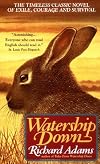
I first read Watership Down probably 25+ years ago. I didn't review it when I listed it, but I did give it four stars based on what I recalled of the experience.
I'm teaching it for a class now and re-read it before introducing it to students. I still maintain the four star, but can give it a little review as well.
In some ways, Watership Down is The Hobbit, but for rabbits. There's a grand quest, there's character similarities, there's the general FEEL of the book....the quiet comfort of the storytelling even when the action gets intense. Watership Down, like The Hobbit, is a book best enjoyed in a comfy chair by a fire on a day where one can look up and out the window to see the snow falling if one has those luxuries available.
The characters are numerous, but Adams does well with giving each a unique personality that defines them enough from the next. While Adams' world-building isn't as intense as Tolkien's (after all, Tolkien built whole worlds and new creatures), Adams does create lore for the rabbits, some language specific to them and insight into their world underground and out of the view of humans.
There are a couple of missteps - namely, where Adams goes out of his way to mention rabbits don't count over four, but Kehaar mentions how there's "thousands" of his kind and that word doesn't confuse the rabbits. He also mentions in one incident where one of the rabbits is covered in its own vomit - but rabbits can't throw up. But I think the mistakes are very few show more and very light
The story moves along well, but does lag at times toward the end before the action kicks up for a climactic ending.
Student reaction (high school class) has been mixed - some enjoying it, some not. show less
I'm teaching it for a class now and re-read it before introducing it to students. I still maintain the four star, but can give it a little review as well.
In some ways, Watership Down is The Hobbit, but for rabbits. There's a grand quest, there's character similarities, there's the general FEEL of the book....the quiet comfort of the storytelling even when the action gets intense. Watership Down, like The Hobbit, is a book best enjoyed in a comfy chair by a fire on a day where one can look up and out the window to see the snow falling if one has those luxuries available.
The characters are numerous, but Adams does well with giving each a unique personality that defines them enough from the next. While Adams' world-building isn't as intense as Tolkien's (after all, Tolkien built whole worlds and new creatures), Adams does create lore for the rabbits, some language specific to them and insight into their world underground and out of the view of humans.
There are a couple of missteps - namely, where Adams goes out of his way to mention rabbits don't count over four, but Kehaar mentions how there's "thousands" of his kind and that word doesn't confuse the rabbits. He also mentions in one incident where one of the rabbits is covered in its own vomit - but rabbits can't throw up. But I think the mistakes are very few show more and very light
The story moves along well, but does lag at times toward the end before the action kicks up for a climactic ending.
Student reaction (high school class) has been mixed - some enjoying it, some not. show less
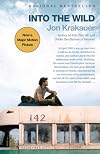
I read this many years back, but I re-read this year in preparation for introducing it to my high school class. I felt this time around that it's a 3.5 star instead of just a 3. Hoping students feel the same or better!
One issue I had was Krakauer interjected his own stories. Part of me thought it was worthwhile, it helped to try to understand McCandless more. Part of me felt like it was Krakauer getting more of the spotlight. I haven't read other books by him, so I'm not sure if this was a one-time thing or a regular occurrence. I think it did make the book better overall, but I just don't know how I feel about it.
One issue I had was Krakauer interjected his own stories. Part of me thought it was worthwhile, it helped to try to understand McCandless more. Part of me felt like it was Krakauer getting more of the spotlight. I haven't read other books by him, so I'm not sure if this was a one-time thing or a regular occurrence. I think it did make the book better overall, but I just don't know how I feel about it.

Akashic continues to be a reliable go-to for quality noir. That said, Hamburg noir, at least for me, wasn't my favorite offering from them, but it's still a great anthology. With such an enormous collection of noir anthologies offered by Akashic, I probably wouldn't have someone start with this one unless they're familiar with Hamburg. Chances are, you'll find a collection where you have some experience with the area covered.
A few stories did stick with me - my favorite about a small restaurant owner's trials and tribulations dealing with thugs trying to extort protection money.
A few stories did stick with me - my favorite about a small restaurant owner's trials and tribulations dealing with thugs trying to extort protection money.
This review was written for LibraryThing Early Reviewers.Strange Conjurings: The Intrepid Gnome's Anthology of Weird and Eldritch Tales: 1819-1929 (Volume 1) by The Intrepid Gnome

What a great collection of classic horror! I don't typically gravitate to horror, but I did find a lot to enjoy here. This journey through some classic horror of the last 100+ years really had topnotch picks. The paragraph or explaining something trivial about the author before launching into the story was a great touch.
This review was written for LibraryThing Early Reviewers.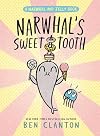
I read this to my 7-year-old and she enjoyed it. We've read some previous Narwhal and Jelly books - they're always well received. Clanton's "I'm a Shark" was a favorite of my older kids when they were little so there's a special connection with Clanton's books. This one, like his previous books, is great as a standalone, but there may be a couple inside jokes/references you'll miss if you don't start from the beginning.
This review was written for LibraryThing Early Reviewers.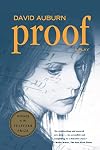
I'll be teaching Proof to my high school English class next year. I think the play came across as very real - the questions of sanity, the interaction with family, with a romantic relationship - it all rang true.
I'm looking forward to student reactions on this book. Unlike when we read Raisin in the Sun, I'm not sure I'll have this be a class read.
I'm looking forward to student reactions on this book. Unlike when we read Raisin in the Sun, I'm not sure I'll have this be a class read.
I read The Marrow Thieves in preparation for teaching it in my high school English class next year. I think it'll work well. It's not a challenging read, so maybe easy for high school students, but a bit dark for younger students.
I already have topics of discussion in mind to get into about the book and I'm looking forward to student reactions.
The story, while fantastical, was not so far beyond the realm of belief except in one or two spots - one being a very mundane kind of interaction between the main character and his love interest. I didn't really see it as explained enough to be justified and her ultimate reaction to it didn't feel right either. That'll be something I look to talk to students about.
I already have topics of discussion in mind to get into about the book and I'm looking forward to student reactions.
The story, while fantastical, was not so far beyond the realm of belief except in one or two spots - one being a very mundane kind of interaction between the main character and his love interest. I didn't really see it as explained enough to be justified and her ultimate reaction to it didn't feel right either. That'll be something I look to talk to students about.

So I read Scribe by Alyson Hagy and The Handmaid's Tale by Atwood in the last 30 days...why not read The Painted Bird?
Well, the "why not" became apparent. The Painted Bird's graphic violence is a level of magnitude to the other two books. This book is not for the faint of heart and maybe I belong to that group.
I've read books by Chuck Palahniuk but didn't find them as disturbing. Maybe in part because I knew Palhniuk was in it for the shock value. For Kosinski, I couldn't figure it out and that bothered me. Not to be mistaken, I think Kosinski was an incredibly talented writer - his writing is beautifully crafted. That beauty though, is counterbalanced by the disturbing descriptions of horrific violence. Maybe it was meant to drive home the horror of the holocaust, but I had an uncomfortable feeling that maybe it was just an effort to see how much truly horrible material he could put on a page.
And toward the end of the book when the main character started to extol the virtues of communism, it didn't sound like the character's voice anymore. It sounded like a propaganda piece about communism. It just sounded off tone from the rest of the of the book which was incredibly violent and detailed in that violence and creative in the different very gross ways that violence played out, but the voice didn't stray.
I think I'm glad I finally read it...maybe? I definitely agree with one of the reviewer's quotes that it's a novel that a reader will never forget. Is that a good show more thing? I'm not sure. I also can't believe anyone ever believed this had been autobiographical - even a tenth of this book as autobiographical would seem to be impossible to me.
3 stars show less
Well, the "why not" became apparent. The Painted Bird's graphic violence is a level of magnitude to the other two books. This book is not for the faint of heart and maybe I belong to that group.
I've read books by Chuck Palahniuk but didn't find them as disturbing. Maybe in part because I knew Palhniuk was in it for the shock value. For Kosinski, I couldn't figure it out and that bothered me. Not to be mistaken, I think Kosinski was an incredibly talented writer - his writing is beautifully crafted. That beauty though, is counterbalanced by the disturbing descriptions of horrific violence. Maybe it was meant to drive home the horror of the holocaust, but I had an uncomfortable feeling that maybe it was just an effort to see how much truly horrible material he could put on a page.
And toward the end of the book when the main character started to extol the virtues of communism, it didn't sound like the character's voice anymore. It sounded like a propaganda piece about communism. It just sounded off tone from the rest of the of the book which was incredibly violent and detailed in that violence and creative in the different very gross ways that violence played out, but the voice didn't stray.
I think I'm glad I finally read it...maybe? I definitely agree with one of the reviewer's quotes that it's a novel that a reader will never forget. Is that a good show more thing? I'm not sure. I also can't believe anyone ever believed this had been autobiographical - even a tenth of this book as autobiographical would seem to be impossible to me.
3 stars show less
I felt like there's no better time than the present to finally read Atwood's story of women being treated like little more than walking wombs....
So yes, the story is very dark and fairly graphic, violent and oppressive throughout, but it felt like a cautionary tale - maybe one that should have been listened to more closely when it was first released or at worst, a decade or so ago. The ending gave me more of a sense of optimism than I feel in real life right now. I think it's a book that should be more widely read than it even is now.
Atwood is a fantastic storyteller. Interesting side note (to me at least) is the lack of using quotes in the book when conversations are a reminiscence. Since very little of the story takes place in the present, the book is almost devoid of quotations.
4 stars
So yes, the story is very dark and fairly graphic, violent and oppressive throughout, but it felt like a cautionary tale - maybe one that should have been listened to more closely when it was first released or at worst, a decade or so ago. The ending gave me more of a sense of optimism than I feel in real life right now. I think it's a book that should be more widely read than it even is now.
Atwood is a fantastic storyteller. Interesting side note (to me at least) is the lack of using quotes in the book when conversations are a reminiscence. Since very little of the story takes place in the present, the book is almost devoid of quotations.
4 stars
I read this book to my seven-year-old as part of a full school book read. Every kiddo got a copy (it's a very small school). She enjoyed the story, I thought it was well done and exciting enough to keep her attention but not too scary for her either. The story weaved together classic Chinese fables and the author's own creativity to tell the story of a young girl on a quest to help her family. She meets interesting characters and friends along the way who in turn, share their fables.
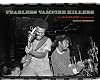
I was surprised that seeing this photos made me sad. Not just because of a time that I don't think we'll have again musically - sans autotune, more about passion and honesty in the music than "perfection." But the other thing that made me sad - the photos or the process and history of the photos. These photos were a rarity. Everyone walking into a show back then didn't have a camera on them. These are something special. Today, kids going to shows won't get it. They won't have that opportunity, they won't share in a very limited experience that links the participants together in a way for life and that's a shame.
All that said, the photos and the bit of text in the introduction and outro were all awesome.
All that said, the photos and the bit of text in the introduction and outro were all awesome.
This review was written for LibraryThing Early Reviewers.Two Old Women [Anniversary Edition]: An Alaska Legend of Betrayal, Courage and Survival by Velma Wallis
Following the book Scribe, this tale of survival in a bleak and hostile environment had similarities. The ending played out much differently however. I enjoyed this book. It was a story of survival, resilience, forgiveness, self-discovery. It had many of the traditional survival twists and turns found in some of the YA books like Hatchet or My Side of the Mountain, with the obvious differences that there were two characters, and they were old women.
Scribe is a dark tale, there's not a lot of hope throughout the story. In some ways, it's very reminiscent of Cormac McCarthy's "The Road," with a lean in to magic and mysticism.
The main character is both incredibly strong and resilient, a survivor, and very flawed and weak in other ways. The world she inhabits has been hit with some kind of worldwide catastrophe with survivors living in a world that's been pushed back many generations with technology being very primitive.
The writing is impressive, the story is great. There is a lot not detailed, but where I normally have an issue with that, the story worked better with its mysterious and light backstory.
I'd give this book 4 out of 5 stars.
The main character is both incredibly strong and resilient, a survivor, and very flawed and weak in other ways. The world she inhabits has been hit with some kind of worldwide catastrophe with survivors living in a world that's been pushed back many generations with technology being very primitive.
The writing is impressive, the story is great. There is a lot not detailed, but where I normally have an issue with that, the story worked better with its mysterious and light backstory.
I'd give this book 4 out of 5 stars.
While the tease about a bunch of stories dealing with bears as humans was a draw, resulting in me requesting this book as an early review, it didn't play out in practice as strongly as I hoped it would. The book is fairly short, yet it's packed with stories - meaning some stories are only a page or two. Few go beyond a half dozen pages. I felt the book improved as it went on. That said, there's very little that stuck with me from the stories and although reading about another bear got to be nails on a chalkboard for me, a later bear story about one managing a company turned out to be a high point.
3 stars.
3 stars.
This review was written for LibraryThing Early Reviewers.
While it tried to get philosophical, the tone from 60 years ago is really not that dark. Maybe it's the reality we're living in.
Simak telegraphed a couple of major plot points much too clearly, so the big reveals at the end weren't a surprise. In fact, I'd argue there wasn't any big surprise for the reader other than an unexpected visitor.
All that said, I enjoyed the book although it felt like a lighter read than what Simak may have aimed for. I did see why his style is sometimes called "pastoral sci-fi." I enjoyed that tone which carried throughout most of the book.
Simak telegraphed a couple of major plot points much too clearly, so the big reveals at the end weren't a surprise. In fact, I'd argue there wasn't any big surprise for the reader other than an unexpected visitor.
All that said, I enjoyed the book although it felt like a lighter read than what Simak may have aimed for. I did see why his style is sometimes called "pastoral sci-fi." I enjoyed that tone which carried throughout most of the book.
North of Ordinary - I'm generally a fan of short stories and John Gardiner is a talented writer. However, I didn't feel like any of the stories in this collection will stick with me. I don't feel like it was a waste of time, I enjoyed the stories enough, but I wouldn't have gone out of my way to pick up the book.
This review was written for LibraryThing Early Reviewers.
This book would have benefitted from a strong editor. Even in the dedication before the book begins, there's a significant typo. There are typos throughout the book, so hopefully it gets a strong read before it hit final release. The three stars however, is more due to the characters. Their way of reacting to extreme events is so far beyond the realm of plausibility, that the idea of extraterrestrial slimemolds hitting the earth seems more reasonable. And yet, the majority of the book is about the interaction of these characters in their slightly-in-the-future world and it's not really worth it.
Still, I think Burgess did put effort into researching and I think there are some interesting facts embedded into the story. Plus, the Keith Richards thing was actually funny, so he gets some points.
Still, I think Burgess did put effort into researching and I think there are some interesting facts embedded into the story. Plus, the Keith Richards thing was actually funny, so he gets some points.
This review was written for LibraryThing Early Reviewers.
The story of Jacob Marley prior to being the ghost that visited Scrooge in A Christmas Carol - at least the story as John Clinch imagined it. I believe this is the third book I've read from Clinch - Finn, the story of Huck's dad prior to his float down the river in the house, was a great read. I think Marley was a great read as well, but the foundational material wasn't as near and dear to me. Clinch does a great job in both books of fitting the mood and being a modern mimic of the authors. There was poetry in sections of his writing, maybe a tad too clear foreshadowing, but excusable. I enjoyed the book though and if you like A Christmas Carol, this is worth picking up.
I thought the story was exciting and interesting, but I thought it was also a bit confusing. The story is sad, but reality (told through a fantastical lens). Sometimes the illustrations were a little muddy where it was hard to see what was happening, but overall the art and story were worth the quick read.
I could understand how some might like this children's book - but I don't think I'll keep it around for my kids to read. I liked some of the story twists and thought that went into it, but the voices to me felt flat and some of the biggest twists were obvious from the start. Overall, the character development felt stunted and the big reveal wasn't much of a reveal with the ending feeling rushed and loose ends left loose.
I really enjoyed this book, but having finished it a week ago and with time to reflect. At 500+ pages, you would think Zusak had time to say what he needed to say. Yet, I felt once it hit the climax, the story wrapped up too quickly. Well-worth the read, but it should have been longer - not just because it would put off having to finally put it down, but because I wanted some more answers. Even a couple pages would have done the trick.
Being a fan of most of Bryson's work that I've read previously (with Walk in the Woods among my at leas top 20 favorite books of all time), I have to say I was disappointed in this. It's short at 50 pages and really doesn't give much space for Bryson to be funny and give a good look at Kenya. I get it though, this was a book he wrote for a charitable cause (CARE International) and he did it as a freebie, so expecting a 300 page, highly detailed laugh riot is a bit much. Still, I don't feel like I learned much and I laughed even less.