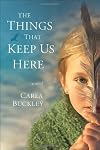
The world as we know it, devastated by an influenza virus carried by birds? Don't say it can't happen. It can; it has. No, let me correct that. There has been no bird flu pandemic of yet, but there have been outbreaks of bird flu that caused deaths and left lingering disability in victims. It might have been about seven years ago, here in the Tidewater region of Virginia where I live, that there were reported cases of avian borne influenza that hospitalized a number of people. Some died; some remained in hospital for a long time then had to go through physical therapy to regain strength. I know because one such gentleman was in an aqua therapy class with me. He had been in the hospital almost a year!
Carla Buckley takes the notion that an avian borne influenza might be the next pandemic and explores how we would handle it in her debut novel, The Things That Keep Us Here. Buckley takes us inside the life of one family in middle America, the family of veterinary medicine researcher, Peter Brooks, his wife, Ann, and their two young daughters and lets us observe what happens when they are faced with the pandemic.
In a sense, the Brooks family is luckier than most. Peter Brooks is one of the first to be aware of the threat of the flu and is able to advise his estranged wife of precautions to take to help her and their children avoid exposure. However, things move faster than anyone anticipates and the Brooks family is just one more competing for increasingly scare resources like show more food, water and medicine.
To complicate matters, there is a mysterious tragedy in the past that has caused Peter and Ann to grow apart so that when conditions force Peter and his beautiful research assistant to seek shelter in the Brooks home, there is added tension. Crowd three tense adults and two bored and restless children into one house to isolate them from the risk of infection, and it's amazing that life continues as smoothly as it does.
Buckley does a great job of realistically describing the mad scramble for scarce resources, the sort of precautionary tactics that might be used to keep the risk of infection down and the make-do attitude families would need to adopt under such conditions. Once the realism of such details is firmly in place and the reader is fixed in a world where the electricity might never again come on, and a meal might be mustard on crackers, she hits hard asking what we would do to protect our family. Would we forsake a dear friend, a neighbor, because we are afraid that helping them might open the door to the risk of infection? Would we remain isolated or reach out and band together? Hard questions. Would we give up all notions of civility for reasons of safety and expediency?
It's a bleak scene that Buckley paints, to be sure. As a reader, I felt it keenly. What I had trouble with, or was unhappy with, was the ending. After the slow and steady buildup of the world of the pandemic, the post pandemic world seems to come rushing at us. Poof! It feels like a chunk of the novel is missing. The transition following a death in the family and the remainder of the family's retreat to a rural location lacks something. Suddenly, it seems, the remaining members of the Brooks family are again gathered at their old home but years have passed. Ann's earlier worries about the effects of the pandemic on her daughters' development are inadequately touched on. The old tragedy in the family has been revealed in an unsatisfactory way.
And what are the things that keep us/them here? Does Buckley refer to that which will allow us to survive in such situations? Or does this refer to Ann's return to the old house, the old neighborhood which has seen so much devastation? What would make her want to return? Loyalty to the family member who did not survive? A testimony to family, friends, and neighbors who died in the pandemic that life goes on? Decide for yourself when you read The Things That Keep Us Here by Carla Buckley. show less
Carla Buckley takes the notion that an avian borne influenza might be the next pandemic and explores how we would handle it in her debut novel, The Things That Keep Us Here. Buckley takes us inside the life of one family in middle America, the family of veterinary medicine researcher, Peter Brooks, his wife, Ann, and their two young daughters and lets us observe what happens when they are faced with the pandemic.
In a sense, the Brooks family is luckier than most. Peter Brooks is one of the first to be aware of the threat of the flu and is able to advise his estranged wife of precautions to take to help her and their children avoid exposure. However, things move faster than anyone anticipates and the Brooks family is just one more competing for increasingly scare resources like show more food, water and medicine.
To complicate matters, there is a mysterious tragedy in the past that has caused Peter and Ann to grow apart so that when conditions force Peter and his beautiful research assistant to seek shelter in the Brooks home, there is added tension. Crowd three tense adults and two bored and restless children into one house to isolate them from the risk of infection, and it's amazing that life continues as smoothly as it does.
Buckley does a great job of realistically describing the mad scramble for scarce resources, the sort of precautionary tactics that might be used to keep the risk of infection down and the make-do attitude families would need to adopt under such conditions. Once the realism of such details is firmly in place and the reader is fixed in a world where the electricity might never again come on, and a meal might be mustard on crackers, she hits hard asking what we would do to protect our family. Would we forsake a dear friend, a neighbor, because we are afraid that helping them might open the door to the risk of infection? Would we remain isolated or reach out and band together? Hard questions. Would we give up all notions of civility for reasons of safety and expediency?
It's a bleak scene that Buckley paints, to be sure. As a reader, I felt it keenly. What I had trouble with, or was unhappy with, was the ending. After the slow and steady buildup of the world of the pandemic, the post pandemic world seems to come rushing at us. Poof! It feels like a chunk of the novel is missing. The transition following a death in the family and the remainder of the family's retreat to a rural location lacks something. Suddenly, it seems, the remaining members of the Brooks family are again gathered at their old home but years have passed. Ann's earlier worries about the effects of the pandemic on her daughters' development are inadequately touched on. The old tragedy in the family has been revealed in an unsatisfactory way.
And what are the things that keep us/them here? Does Buckley refer to that which will allow us to survive in such situations? Or does this refer to Ann's return to the old house, the old neighborhood which has seen so much devastation? What would make her want to return? Loyalty to the family member who did not survive? A testimony to family, friends, and neighbors who died in the pandemic that life goes on? Decide for yourself when you read The Things That Keep Us Here by Carla Buckley. show less
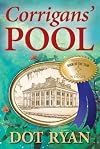
The synopsis on the back of Corrigan's Pool is brilliantly written and hooked me right away. Could the novel live up to its promise, I wondered? I had to find out. I'm a native Virginian, also known as a Southerner, and have a natural interest in tales of the Old South. This historical novel, set in Savannah, Georgia during the years 1861 - 1864 promised to be as vivid and entertaining as Gone With The Wind. Who could resist?
Some might say that it's too familiar, stories of the Old South filled with beautiful plantations, idle rich supported by slaves, fancy dresses, and summer romances. What could give such stories new life? What I immediately noticed was the way the story flowed smoothly, the attention to telling details in both scenery and characterization. Mrs. Ryan drew me into her fictional world quickly, effortlessly, and I had difficulty putting the book down.
The story centers around Ella Corrigan, the eldest daughter of a plantation owner who is overwhelmed with guilt over an accident he believes he caused to his wife. Driven to drink as his wife lies in bed with brain damage, Adam Corrigan leaves Ella to run the plantation and care for her younger sister, Honor. Granted, Ella has help in the form of loyal family slaves but it's a lot of responsibility for a young woman. For the most part, Ella is resigned to her lot, has put aside the usual preoccupations with love and marriage and has shouldered her responsibilities with grace. Ryan creates a fine portrait of show more her as a young woman who has moved beyond the frivolous life so many of her cohorts are leading. She's strong, brave, kind, and has a mind of her own. As family matters continue to deteriorate and war is immanent, Ella's father suggests she marry Victor Faircloth, an older man, a neighbor who has been trying to win her hand for some time. Mr. Corrigan is hoping that marriage to Faircloth will insure his daughter is taken care of and the plantation retained. Even though Ella does not expect to fall in love and marry, she is adamant that she will not marry for convenience. Besides, she finds something chilling about Faircloth.
Someone should have warned Ella never to say never. Unexpectedly, she has a chance meeting, at the beautiful pond on her property, with a rough looking frontiersman, Gentry Garland. Garland seems the antithesis of everything Ella would want in a man, so she is ashamed by her instant attraction to him and covers it with a strong dislike for him. The handling of the developing relationship between Garland and Ella is well done. When Garland abruptly disappears after pledging his love for Ella, the reader's heart is sure to break with hers.
Ella is not a stagnant character and the loss of her lover compounded by other family issues and war negatively affect her. The beautiful twist is that out of her own pain, Ella, marrying Faircloth in desperation, becomes more observant of pain in the lives of others. In particular, living on Faircloth's plantation, Ella learns why his slaves keep disappearing and how this is connected to the beautiful pond on her own plantation. Much as she regrets the loss of the beautiful life in Savannah pre war, Ella learns to question the foundation of that life. Ella's heartbreak has as reward a growth of her character and a willingness to risk her own safety to help others.
Carefully woven together, in Corrigan's Pool, the reader will find the romance of Ella and Gentry Garland, a tale of Georgians dealing with war on their doorsteps, a mystery involving the beautiful Corrigan's Pond, tales of human vice and treachery, and issues of human slavery. Ryan's attention to historical detail, lyrical flow of words, and understanding of matters of the human heart make this a must read. I've bookmarked her blog: http://www.dotryanbooks.com/ and look forward to her sequel. show less
Some might say that it's too familiar, stories of the Old South filled with beautiful plantations, idle rich supported by slaves, fancy dresses, and summer romances. What could give such stories new life? What I immediately noticed was the way the story flowed smoothly, the attention to telling details in both scenery and characterization. Mrs. Ryan drew me into her fictional world quickly, effortlessly, and I had difficulty putting the book down.
The story centers around Ella Corrigan, the eldest daughter of a plantation owner who is overwhelmed with guilt over an accident he believes he caused to his wife. Driven to drink as his wife lies in bed with brain damage, Adam Corrigan leaves Ella to run the plantation and care for her younger sister, Honor. Granted, Ella has help in the form of loyal family slaves but it's a lot of responsibility for a young woman. For the most part, Ella is resigned to her lot, has put aside the usual preoccupations with love and marriage and has shouldered her responsibilities with grace. Ryan creates a fine portrait of show more her as a young woman who has moved beyond the frivolous life so many of her cohorts are leading. She's strong, brave, kind, and has a mind of her own. As family matters continue to deteriorate and war is immanent, Ella's father suggests she marry Victor Faircloth, an older man, a neighbor who has been trying to win her hand for some time. Mr. Corrigan is hoping that marriage to Faircloth will insure his daughter is taken care of and the plantation retained. Even though Ella does not expect to fall in love and marry, she is adamant that she will not marry for convenience. Besides, she finds something chilling about Faircloth.
Someone should have warned Ella never to say never. Unexpectedly, she has a chance meeting, at the beautiful pond on her property, with a rough looking frontiersman, Gentry Garland. Garland seems the antithesis of everything Ella would want in a man, so she is ashamed by her instant attraction to him and covers it with a strong dislike for him. The handling of the developing relationship between Garland and Ella is well done. When Garland abruptly disappears after pledging his love for Ella, the reader's heart is sure to break with hers.
Ella is not a stagnant character and the loss of her lover compounded by other family issues and war negatively affect her. The beautiful twist is that out of her own pain, Ella, marrying Faircloth in desperation, becomes more observant of pain in the lives of others. In particular, living on Faircloth's plantation, Ella learns why his slaves keep disappearing and how this is connected to the beautiful pond on her own plantation. Much as she regrets the loss of the beautiful life in Savannah pre war, Ella learns to question the foundation of that life. Ella's heartbreak has as reward a growth of her character and a willingness to risk her own safety to help others.
Carefully woven together, in Corrigan's Pool, the reader will find the romance of Ella and Gentry Garland, a tale of Georgians dealing with war on their doorsteps, a mystery involving the beautiful Corrigan's Pond, tales of human vice and treachery, and issues of human slavery. Ryan's attention to historical detail, lyrical flow of words, and understanding of matters of the human heart make this a must read. I've bookmarked her blog: http://www.dotryanbooks.com/ and look forward to her sequel. show less