The Power of Play: A Practical Guide to Using Play to Train, Fulfil, and Balance Your Dog by Simon Chapman
An interesting book. A lot of very helpful ideas presented in a clear and accessible manner but it is structured more like a series of handouts than a book. No page numbers, weird chapter breaks.
The View from the Oak: The Private Worlds of Other Creatures (National Book Award for Children's Literature) by Judith Kohl
One of the most beautiful books ever written. The Kohls present Jakob von Uexküll's concept of the umwelt (the hidden inner worlds of animals) in a lyrical and accessible way. This book introduces children and adults to the magic and mind opening wonder of how other species perceive the world.
Buy the book because it will change the way you look at other beings, read it for the pure, luminous beauty of the prose.
Buy the book because it will change the way you look at other beings, read it for the pure, luminous beauty of the prose.

A collection of seminal articles on animal behavior. This book includes Jakob von Uexküll's "A Stroll Through the Worlds of Animals and Men: A Picture Book of Invisible Worlds," his classic work on the umwelt. The book is worth buying for that alone but it also includes articles by other giants in the field like Konrad Lorenz and Nicholas Tinbergen.
If you are interested in the history of electronic training collars and their use this is a helpful reference; however, the collar types and training methods discussed are largely obsolete.

A truly unique cookbook - best described as Lutheran church basement ladies meet Bear Grylls. It includes everything from recipes for Jello salad to directions for cooking a whole porcupine (quills on) in an open fire. A Midwest classic!
The Beast in the Garden: The True Story of a Predator's Deadly Return to Suburban America by David Baron
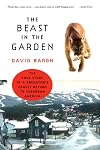
Our ancestors weren't the only apex predators in their neighborhood. Lions and tigers and bears (and wolves) hunted the same prey they did -- and sometimes hunted them as prey. In the early times we also hunted them as totems, to reduce competition, and sometimes for our own protection.
After hunting many of these species nearly to extinction, Americans now see them as valuable parts of the environment, totems, or adorable Disneyesque entertainment.
With modern environmental protections populations of these animals are recovering and once again humans and large predators are sharing the same habitats. The problem is, now that humans only rarely, if ever, hunt them, large predators no longer fear us - and this is not a good thing.
"The Beast In The Garden" tells the true story of a town where mountain lions become habituated to humans and begin to prey on them. As large predators become more common in the United States this is a situation we are going to have to confront in many neighborhoods.
It's food for thought...
After hunting many of these species nearly to extinction, Americans now see them as valuable parts of the environment, totems, or adorable Disneyesque entertainment.
With modern environmental protections populations of these animals are recovering and once again humans and large predators are sharing the same habitats. The problem is, now that humans only rarely, if ever, hunt them, large predators no longer fear us - and this is not a good thing.
"The Beast In The Garden" tells the true story of a town where mountain lions become habituated to humans and begin to prey on them. As large predators become more common in the United States this is a situation we are going to have to confront in many neighborhoods.
It's food for thought...
What's wrong with my plant (and how do I fix it?) : a visual guide to easy diagnosis and organic remedies by David Deardorff

Why didn't anyone think of this before?
Simply take a look at your sick plant, then compare its symptoms to photos and drawings in the book. The book is wonderfully well organized with a detailed index and myriads of cross-references throughout. Information on fixing problems is somewhat brief, but this book can't be beat when it comes to diagnosing garden problems.
Simply take a look at your sick plant, then compare its symptoms to photos and drawings in the book. The book is wonderfully well organized with a detailed index and myriads of cross-references throughout. Information on fixing problems is somewhat brief, but this book can't be beat when it comes to diagnosing garden problems.
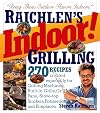
I bought this book after we bought a Wolf range that included a gas grill. It's a lovely thing, but I wasn't sure how to use it.
I couldn't find many books on indoor grilling and Wolf doesn't appear to include many recipes on indoor grilling on their website. I bought Raichlen's book because it was inexpensive and the reviews on Amazon were very good.
I've had this book for a few months now and I am very pleased with it. It has a wide range of recipes and each one includes instructions on how to prepare the dish using a countertop electric grill (George Foreman type), stovetop grill (cast iron kind you heat on a burner) and built in gas grill (like mine).
The cooking directions are clear enough that I can play with ingredients and still get very good results. The book has taken away my fear of indoor grilling and, while we have a lovely outdoor grill -- when it's 20 below zero or we don't want to mess with charcoal the indoor grill is a very nice option.
If you have an indoor grill and want to experiment with it but aren't sure exactly how to go about it - this is the book for you.
I couldn't find many books on indoor grilling and Wolf doesn't appear to include many recipes on indoor grilling on their website. I bought Raichlen's book because it was inexpensive and the reviews on Amazon were very good.
I've had this book for a few months now and I am very pleased with it. It has a wide range of recipes and each one includes instructions on how to prepare the dish using a countertop electric grill (George Foreman type), stovetop grill (cast iron kind you heat on a burner) and built in gas grill (like mine).
The cooking directions are clear enough that I can play with ingredients and still get very good results. The book has taken away my fear of indoor grilling and, while we have a lovely outdoor grill -- when it's 20 below zero or we don't want to mess with charcoal the indoor grill is a very nice option.
If you have an indoor grill and want to experiment with it but aren't sure exactly how to go about it - this is the book for you.

A combination historical account, cookbook, guide to preserving foods, survival manual, travel guide and compendium of several very funny (possibly invented) anecdotes. Get it for unusual recipes like marigold wine, Gethsemene beef, Swedish muskrat, titty sauce yams, dandelion capers and Gregor Mendel's fried eggs.
Read it for the (alleged) back story on how chop suey was invented by a Greek, Roquefort cheese was invented by a biblical sorceress and Worcestershire sauce was invented by a chemist.
Keep it because it includes many excellent cooking and food preparation tips - and because it will make you smile every time you open it.
Read it for the (alleged) back story on how chop suey was invented by a Greek, Roquefort cheese was invented by a biblical sorceress and Worcestershire sauce was invented by a chemist.
Keep it because it includes many excellent cooking and food preparation tips - and because it will make you smile every time you open it.
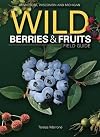
This is an excellent little book. Each fruit is described in detail and illustrated with color photographs. The edibility or poisonousness of each fruit is shown by a prominent logo on the page corner and look-alikes are listed including key differentiating features.
It is a small, thin book perfectly suitable to toss in a backpack or hip pack when you go out on a hike. A smaller, pocket-sized book would mean one had to deal with cryptically small print. I'm glad they chose not to do that.
After getting it, I see why the author chose to publish this and the cookbook separately. I don't need to carry that extra cookbook information in the field.
The only way to improve this book would be to print it on waterproof paper and ring bind it to make it even more field friendly.
It is a small, thin book perfectly suitable to toss in a backpack or hip pack when you go out on a hike. A smaller, pocket-sized book would mean one had to deal with cryptically small print. I'm glad they chose not to do that.
After getting it, I see why the author chose to publish this and the cookbook separately. I don't need to carry that extra cookbook information in the field.
The only way to improve this book would be to print it on waterproof paper and ring bind it to make it even more field friendly.
Eotvos University in Budapest, Hungary is the Mecca of canine ethological studies today. The work being done there is brilliant and ground-breaking. So, of course, this new book by Adam Miklosi, the head of the school’s Department of Ethology was a must read for me.
From the author:
"Until now, the study of dogs was hindered by the view that they represent an ‘artificial’ species, but by accepting that dogs are adapted to their niche, as are other ‘natural’ species, comparative investigations can be put into new light."
From a review in Current Biology:
"Whether one is a behavioral geneticist, a population biologist, a psychologist, an anthropologist or just a dog lover, one cannot help but wonder about the lives of dogs and our lives together with them. But even though Darwin began the Origin of Species with examples of dog domestication, and Pavlov’s dogs were the first to reveal to us classical conditioning, until now there has been no place to obtain answers to questions such as these that are based on rigorous scientific research."
"Adam Miklosi’s new book aims to fill this gap and will be a landmark contribution to the study of animal behavior, evolution and cognition. Over the past decade there has been an explosion of interest in dogs and it is this work that Miklosi uses to provide us with the first modern scholarly review of all there is to know about dogs — and the first review of scientific research on dogs since Scott and Fuller’s pioneering book show more Genetics and Social Behavior of Dogs published in 1974."
"Miklosi himself has been at the center of the surge in research interest on dogs over the past decade. So there is no one in a better position to write the first modern review of dog behavior, cognition and evolution. He has played a leading role in the work of the largest research laboratory working exclusively on dog behavior and cognition, at Eotvos University in Budapest, Hungary. In many ways this book is also a tribute to the hard work of his colleagues. Miklosi and his team have published scores of empirical papers on all aspects of dog behavior and cognition that test phylogenetic, ontogenetic, and even functional explanations of behavior. "
The book is organized into eleven chapters. The first two summarize the history of canine research and discuss conceptual and methodological issues related to the study of behavior. Each of the next eight chapters has a theme: dogs in human society; dogs in comparison to other canids; genetic versus archaeological evidence of domestication; the perceptual world of the dog; physical and environmental cognition in dogs; canine social cognition; behavioral development; and temperament and personality in dogs.
Also from Current Biology:
"This new book is a testament to the bright future of research on dogs. Miklosi has made the case for how important the dog is becoming in the study of animal psychology. The days of dogs being considered artificially created animals for use in conditioning studies have given way to the recognition of the dog’s rich social life requiring it to adapt to the most complex primate of all. With the increasing costs and ethical dilemma often created by keeping nonhuman primates in laboratories, dogs may provide a particularly attractive option in the future for psychologists interested in studying the cognitive processes in nonhuman animals (pet dogs are recruited for non-invasive research as in studies of humans). Miklosi’s new book will be a central fixture in all future work on dogs, as it will be the first place that students and experts alike will go to review unfamiliar topics or search for new research ideas. And it is not just researchers who will benefit. The book will be essential reading for all those using dogs as helpers for the handicapped, assistants to law enforcement, or just those who want to understand their best friend a little better."
If you are a dog lover or a student of animal behavior - you NEED this book. show less
From the author:
"Until now, the study of dogs was hindered by the view that they represent an ‘artificial’ species, but by accepting that dogs are adapted to their niche, as are other ‘natural’ species, comparative investigations can be put into new light."
From a review in Current Biology:
"Whether one is a behavioral geneticist, a population biologist, a psychologist, an anthropologist or just a dog lover, one cannot help but wonder about the lives of dogs and our lives together with them. But even though Darwin began the Origin of Species with examples of dog domestication, and Pavlov’s dogs were the first to reveal to us classical conditioning, until now there has been no place to obtain answers to questions such as these that are based on rigorous scientific research."
"Adam Miklosi’s new book aims to fill this gap and will be a landmark contribution to the study of animal behavior, evolution and cognition. Over the past decade there has been an explosion of interest in dogs and it is this work that Miklosi uses to provide us with the first modern scholarly review of all there is to know about dogs — and the first review of scientific research on dogs since Scott and Fuller’s pioneering book show more Genetics and Social Behavior of Dogs published in 1974."
"Miklosi himself has been at the center of the surge in research interest on dogs over the past decade. So there is no one in a better position to write the first modern review of dog behavior, cognition and evolution. He has played a leading role in the work of the largest research laboratory working exclusively on dog behavior and cognition, at Eotvos University in Budapest, Hungary. In many ways this book is also a tribute to the hard work of his colleagues. Miklosi and his team have published scores of empirical papers on all aspects of dog behavior and cognition that test phylogenetic, ontogenetic, and even functional explanations of behavior. "
The book is organized into eleven chapters. The first two summarize the history of canine research and discuss conceptual and methodological issues related to the study of behavior. Each of the next eight chapters has a theme: dogs in human society; dogs in comparison to other canids; genetic versus archaeological evidence of domestication; the perceptual world of the dog; physical and environmental cognition in dogs; canine social cognition; behavioral development; and temperament and personality in dogs.
Also from Current Biology:
"This new book is a testament to the bright future of research on dogs. Miklosi has made the case for how important the dog is becoming in the study of animal psychology. The days of dogs being considered artificially created animals for use in conditioning studies have given way to the recognition of the dog’s rich social life requiring it to adapt to the most complex primate of all. With the increasing costs and ethical dilemma often created by keeping nonhuman primates in laboratories, dogs may provide a particularly attractive option in the future for psychologists interested in studying the cognitive processes in nonhuman animals (pet dogs are recruited for non-invasive research as in studies of humans). Miklosi’s new book will be a central fixture in all future work on dogs, as it will be the first place that students and experts alike will go to review unfamiliar topics or search for new research ideas. And it is not just researchers who will benefit. The book will be essential reading for all those using dogs as helpers for the handicapped, assistants to law enforcement, or just those who want to understand their best friend a little better."
If you are a dog lover or a student of animal behavior - you NEED this book. show less

I don’t read much fiction, so I tend to be pretty darn choosy about what I do read. David Wroblewski’s The Story of Edgar Sawtelle is proving to be well worth my time. It’s a fascinating book that weaves bits of Skakespeare’s Hamlet, Jean Craighead George’s My Side of the Mountain, Scott and Fuller’s Genetics and the Social Behavior of the Dog and Vicki Hearne’s Animal Happiness into a coming of age tale set in a kennel in rural Wisconsin during the 1970’s. I’m thrilled to report that the book avoids the quirky adorableness, purely positive political correctness and glorification of indulgent dog owners who act as mere spectators in their pet’s lives - that far too many of the dog-related novels written today have tortured me with.
The Story of Edgar Sawtelle is most definately not a feel-good story, and at 576 pages it isn’t a quick, easy read. But it does provide a fascinating look into the lives of rural Wisconsin and the lives of dog breeders and trainers. The kennel and training routines depicted in this book are some of the most authentic and insightful depictions of this life I’ve read in a work of fiction.
As many of the reviewers on amazon.com have noted, I agree that (as good as it is) the book could have been much improved by a more thorough editing. But, unlike most of those reviewers, I wasn’t put off by the long, detailed descriptions of the Sawtelle’s day-to-day activities with their dogs. I found them fascinating. It’s obvious show more that Wroblewski is well-read on the subject of dogs. I’d love the chance to sit down and chat with him. show less
The Story of Edgar Sawtelle is most definately not a feel-good story, and at 576 pages it isn’t a quick, easy read. But it does provide a fascinating look into the lives of rural Wisconsin and the lives of dog breeders and trainers. The kennel and training routines depicted in this book are some of the most authentic and insightful depictions of this life I’ve read in a work of fiction.
As many of the reviewers on amazon.com have noted, I agree that (as good as it is) the book could have been much improved by a more thorough editing. But, unlike most of those reviewers, I wasn’t put off by the long, detailed descriptions of the Sawtelle’s day-to-day activities with their dogs. I found them fascinating. It’s obvious show more that Wroblewski is well-read on the subject of dogs. I’d love the chance to sit down and chat with him. show less

How to Have an Ill-Behaved Dog” from the Self-Hurt Series at Knock Knock is THE best book on dog training that I’ve read in a long time. I’m not joking. This book will give you all the information you need to train your dog.
This is from the promo on Knock Knock’s website:
"Have you ever been to the dog park and wondered, “How do those people achieve such ill-behaved dogs?” Or perhaps you’re thinking about adopting a canine companion and want to start off on the right paw. Whether you’re experienced or new at the pet game, this book will teach you the most cutting-edge techniques for cultivating a dog who doesn’t listen, barks incessantly, and destroys your shoes."
Learn How To:
· Develop your dog into a narcissistic extension of yourself
· Make sure your dog jumps on all visitors
· Harness your dog’s natural drives to extract the worst possible behavior with the minimum effort
And, if you follow the directions in the book, I guarantee that you will have an obnoxious, ill-behaved dog! There’s even a place inside the front cover where you can sign a pledge committing yourself to accomplish the task.
If you read this little gem of a book closely, you’ll see that the folks who wrote it (and by the way, the only way that the book disappointed me was that it gave no credit to the authors or editors) must be absolutely brilliant dog trainers… or psychotherapists who specialize in treating dysfunctional dog owners. Their descriptions of neurotic dog show more owners, obnoxious dogs and the ways that they create each other are deviously clever and wonderfully entertaining.
You might think that this is just a silly, useless, little book – and you’d be wrong. “How to Have an Ill-Behaved Dog” provides the thoughtful dog owner with a sort of magic mirror on “How Not to Live With a Dog.”
Get this book and read it twice. The first time read it purely to be entertained. It’s a very funny book and even someone who isn’t a dog owner will appreciate the humor. Then read it a second time with a more critical eye, to see if you recognize yourself (or your dog) anywhere in its pages. If you do – use the book as a guide to change, and correct the parts of your behavior that you saw mirrored in the book. If you see yourself in many places in its pages, you may want to call a professional dog trainer - and a therapist! show less
This is from the promo on Knock Knock’s website:
"Have you ever been to the dog park and wondered, “How do those people achieve such ill-behaved dogs?” Or perhaps you’re thinking about adopting a canine companion and want to start off on the right paw. Whether you’re experienced or new at the pet game, this book will teach you the most cutting-edge techniques for cultivating a dog who doesn’t listen, barks incessantly, and destroys your shoes."
Learn How To:
· Develop your dog into a narcissistic extension of yourself
· Make sure your dog jumps on all visitors
· Harness your dog’s natural drives to extract the worst possible behavior with the minimum effort
And, if you follow the directions in the book, I guarantee that you will have an obnoxious, ill-behaved dog! There’s even a place inside the front cover where you can sign a pledge committing yourself to accomplish the task.
If you read this little gem of a book closely, you’ll see that the folks who wrote it (and by the way, the only way that the book disappointed me was that it gave no credit to the authors or editors) must be absolutely brilliant dog trainers… or psychotherapists who specialize in treating dysfunctional dog owners. Their descriptions of neurotic dog show more owners, obnoxious dogs and the ways that they create each other are deviously clever and wonderfully entertaining.
You might think that this is just a silly, useless, little book – and you’d be wrong. “How to Have an Ill-Behaved Dog” provides the thoughtful dog owner with a sort of magic mirror on “How Not to Live With a Dog.”
Get this book and read it twice. The first time read it purely to be entertained. It’s a very funny book and even someone who isn’t a dog owner will appreciate the humor. Then read it a second time with a more critical eye, to see if you recognize yourself (or your dog) anywhere in its pages. If you do – use the book as a guide to change, and correct the parts of your behavior that you saw mirrored in the book. If you see yourself in many places in its pages, you may want to call a professional dog trainer - and a therapist! show less
The Onion Book of Dogs, or, more accurately “The Dastardly Book for Dogs” - seems only to be available in the United Kingdom and it’s written as a parody of “The Dangerous Book for Boys.”
From the publisher:
"From the same kennel as The Dangerous Book for Boys, this hilarious doggy equivalent barks one simple question: What’s happened to us?! Designer dog beds? Organic gluten free gourmet doggie biscuits? Spa treatments? Everyone likes to be pampered now and then – but isn’t there more to being a dog than wearing a mini cashmere sweater and riding around in a Louis Vuitton handbag?"
"What about the simple pleasures of life – feeling the wind in your fur, digging up the grass beneath your paws, smelling another dog’s bottom? Isn’t that part of the great joy of being a dog?"
It’s certainly not the best writing I’ve seen from The Onion staff. In addition, some of the humor in the book relies on cultural icons from the other side of the big pond - making it a bit obscure to the average American reader.
The preface is, paws down, the best part of the book. It provides a look into how our lives with dogs have changed in the last century, and it includes some excellent insights on why our dogs find it increasingly difficult to understand the modern world. Here’s a wee bite of it:
"There was a time not long ago when dogs were necessities, not accessories. We corralled wayward sheep in the heartland. We brought warming brandy to climbers in the hinterland. show more We were a valued asset to every fireman, a faithful sentinel for every rag-and-bone man and a slavishly loyal friend to everyman. We roamed freely because we had earned our keep, and our aggressions and wanderlust were celebrated, not curbed. It was a time when we ran on the ground instead of being toted about in frilly pink satchels, a time when we were simpled hosed down in the garden instead of ferried to the groomer. It was a time B.D. - Before Domestication, when we could be what we are. Dogs."
The book is organized as a series of short sections on subjects including: primers on begging, territory and ”foul smells every dog should roll in” - humorous bits that do a lovely job of explaining problem behavior to humans; sections on creative pee stains and “an indelicate discussion” on poo - stinkin’ great pieces of scatological humor; and a serious of odd vignettes about famous dogs in history - most of which were overly contrived and therefore fell rather flat.
In another bit of oddness, “Rex and Sparky” are listed on the cover as authors - but they aren’t mentioned in a single place in the book. Not even the acknowldgements (bad publisher!) IMO the human authors executed a major gaffe here. A few well-chosen references to the canine authors would have added a nice layer of humor to the book and made it a lot more memorable.
I doubt that “The Dastardly Book for Dogs” will be included on anyone’s ”best of” lists for canine literature or humor - but it’s an amusing little book that would be a nice gift for a dog owner - and (appropriately) it’s a great bathroom book. show less
From the publisher:
"From the same kennel as The Dangerous Book for Boys, this hilarious doggy equivalent barks one simple question: What’s happened to us?! Designer dog beds? Organic gluten free gourmet doggie biscuits? Spa treatments? Everyone likes to be pampered now and then – but isn’t there more to being a dog than wearing a mini cashmere sweater and riding around in a Louis Vuitton handbag?"
"What about the simple pleasures of life – feeling the wind in your fur, digging up the grass beneath your paws, smelling another dog’s bottom? Isn’t that part of the great joy of being a dog?"
It’s certainly not the best writing I’ve seen from The Onion staff. In addition, some of the humor in the book relies on cultural icons from the other side of the big pond - making it a bit obscure to the average American reader.
The preface is, paws down, the best part of the book. It provides a look into how our lives with dogs have changed in the last century, and it includes some excellent insights on why our dogs find it increasingly difficult to understand the modern world. Here’s a wee bite of it:
"There was a time not long ago when dogs were necessities, not accessories. We corralled wayward sheep in the heartland. We brought warming brandy to climbers in the hinterland. show more We were a valued asset to every fireman, a faithful sentinel for every rag-and-bone man and a slavishly loyal friend to everyman. We roamed freely because we had earned our keep, and our aggressions and wanderlust were celebrated, not curbed. It was a time when we ran on the ground instead of being toted about in frilly pink satchels, a time when we were simpled hosed down in the garden instead of ferried to the groomer. It was a time B.D. - Before Domestication, when we could be what we are. Dogs."
The book is organized as a series of short sections on subjects including: primers on begging, territory and ”foul smells every dog should roll in” - humorous bits that do a lovely job of explaining problem behavior to humans; sections on creative pee stains and “an indelicate discussion” on poo - stinkin’ great pieces of scatological humor; and a serious of odd vignettes about famous dogs in history - most of which were overly contrived and therefore fell rather flat.
In another bit of oddness, “Rex and Sparky” are listed on the cover as authors - but they aren’t mentioned in a single place in the book. Not even the acknowldgements (bad publisher!) IMO the human authors executed a major gaffe here. A few well-chosen references to the canine authors would have added a nice layer of humor to the book and made it a lot more memorable.
I doubt that “The Dastardly Book for Dogs” will be included on anyone’s ”best of” lists for canine literature or humor - but it’s an amusing little book that would be a nice gift for a dog owner - and (appropriately) it’s a great bathroom book. show less
Not the dinosaur you'd think, Peggy Post’s “Emily Post’s Etiquette“, specifically the introduction - A Note to Readers and Part One - Everyday Etiquette are a must read. No - I’m really not suggesting you need to read and follow 847 pages of detailed advice on manners, but in a time where an ‘everything goes’ attitude combined with the stultification of political correctness has led us to a point where what we say and do is governed more by an intolerance for ideological diversity than by kindness and common sense - the book provides a roadmap back to civility. From the introduction:
"Etiquette must be active. It isn’t enough to now what to do. Courtesy matters only when it is translated into everyday behavior - not just put on for show when it’s convenient. The rewards of an active commitment to everyday courtesy are myriad, though not often tangible. There are also important personal rewards that some people may not even be aware of, including the self-confidence that comes from knowing what to do in new or difficult situations; a positive reputation with others; and personal relationships that are more congenial, even in times of stress, because the people involved treat one another with respect.”
"Etiquette must be active. It isn’t enough to now what to do. Courtesy matters only when it is translated into everyday behavior - not just put on for show when it’s convenient. The rewards of an active commitment to everyday courtesy are myriad, though not often tangible. There are also important personal rewards that some people may not even be aware of, including the self-confidence that comes from knowing what to do in new or difficult situations; a positive reputation with others; and personal relationships that are more congenial, even in times of stress, because the people involved treat one another with respect.”
Burr’s story about Luca Turin, a scientist with an unusually sensitive nose provides some fascinating insights on how dogs may perceive - or more importantly, think about - scent. I found the parts of the book where Turin talks about the way he perceives smells to be utterly fascinating. Much, I imagine, like a dog - Turin can describe a range or odors from feces to flower with both remarkable accuracy and a refreshing lack of judgement. My ideas about odor, and about dogs, were changed after reading this book.
(Sidebar: For a discussion on the philosophy and neurobiology of scent perception, skip Turin’s book on smell and read Wilson and Stevenson’s excellent ”Learning to Smell“ instead.)
(Sidebar: For a discussion on the philosophy and neurobiology of scent perception, skip Turin’s book on smell and read Wilson and Stevenson’s excellent ”Learning to Smell“ instead.)
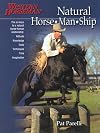
Despite the shortcomings of being somewhat poorly edited and including too many mnemonics and cutesy aphorisms for my taste - this book presents the clearest and most accurate and detailed discussion of the use of pressure and release in training I’ve seen. Pat Parelli also does an excellent job of explaining the dynamic nature of emotional reactions and the need for human leadership in the human-domestic animal relationship. If you train any kind of domestic animals (even dogs), or are interested in training animals - get this book. And if you have a chance, attend a Parellit seminar. To really understand how pressure and release works, you need to see it - and experience it.