This has been, by far, the most difficult review I’ve written in 2012, and I’m not even sure why. Perhaps because I’m so conflicted – I loved the story; the characters, the premise, the writing style, were great…but there’s quite a few holes in the plot that made me slightly uneasy. I have questions about the war with the spores and the missiles. I have some thoughts on the ages of people in the book and how things would have affected each part of the demographic, and a few other things. In the end, I decided that those imperfections and unanswered questions were not enough, in MY opinion, to fuss over.
Starters had me from the very beginning – I absolutely fell.in.love. with Callie, Tyler, and Michael before the first chapter had even come to a close. It wasn’t even that they were incredibly well developed at that point (it wasn’t far enough in the book for that; this isn’t a flaw!), it was simply that the story was poignant and relateable and the writing was detailed and lovely enough to make you want to reach in and hug those poor kids close. Maybe it’s the mommy in me, but I wanted to bring them all home – and I certainly was interested in what was happening to them in the book.
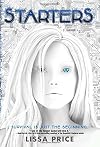
Interestingly enough, Ms. Price did not assign a hair or eye color to Callie. It wasn’t til the end of the book that I realized I’d been imagining her as a dark haired, green eyed, exotic beauty. The cover, with its stark whites and greys and startling eyes, was an show more enigma to me initially – but I get it now. Viewed after reading the story, it makes so much more sense, and is definitely more beautiful.
As far as plot, setting, and all – well, again, there’s some gaps. There’s some world building in place, and it’s definitely enough to bring the story forward and not leave the reader flailing for more information, but I’d have liked more detail.
The pace was -fantastic-. There are very few, if any, spots that drag on. Forward momentum is maintained steadily and characters develop in a believable time frame. As far as grammatical issues, I’m sure there’s probably some there, but I was so interested in the story that I didn’t notice. That, to me, counts for a lot. There -is- a sort of love triangle in the book, but it’s not overwhelming and again, it’s believable.
Starter’s end left me wide eyed and wanting more. It’s a cliffhanger, of sorts, but it’s the type that is rife with suspense and intrigue and sets things up perfectly to flow into the next book.
All in all, I truly and honestly loved this book and I will be reading the 2nd and last in the series, Enders. I’ll be buying copies for my nephews and a copy for myself. Starters is a poignant tale of survival, love, consequence, and growth that will grab the reader from the start and leave you breathless at the end. show less
Starters had me from the very beginning – I absolutely fell.in.love. with Callie, Tyler, and Michael before the first chapter had even come to a close. It wasn’t even that they were incredibly well developed at that point (it wasn’t far enough in the book for that; this isn’t a flaw!), it was simply that the story was poignant and relateable and the writing was detailed and lovely enough to make you want to reach in and hug those poor kids close. Maybe it’s the mommy in me, but I wanted to bring them all home – and I certainly was interested in what was happening to them in the book.
Interestingly enough, Ms. Price did not assign a hair or eye color to Callie. It wasn’t til the end of the book that I realized I’d been imagining her as a dark haired, green eyed, exotic beauty. The cover, with its stark whites and greys and startling eyes, was an show more enigma to me initially – but I get it now. Viewed after reading the story, it makes so much more sense, and is definitely more beautiful.
As far as plot, setting, and all – well, again, there’s some gaps. There’s some world building in place, and it’s definitely enough to bring the story forward and not leave the reader flailing for more information, but I’d have liked more detail.
The pace was -fantastic-. There are very few, if any, spots that drag on. Forward momentum is maintained steadily and characters develop in a believable time frame. As far as grammatical issues, I’m sure there’s probably some there, but I was so interested in the story that I didn’t notice. That, to me, counts for a lot. There -is- a sort of love triangle in the book, but it’s not overwhelming and again, it’s believable.
Starter’s end left me wide eyed and wanting more. It’s a cliffhanger, of sorts, but it’s the type that is rife with suspense and intrigue and sets things up perfectly to flow into the next book.
All in all, I truly and honestly loved this book and I will be reading the 2nd and last in the series, Enders. I’ll be buying copies for my nephews and a copy for myself. Starters is a poignant tale of survival, love, consequence, and growth that will grab the reader from the start and leave you breathless at the end. show less
While I enjoyed Teri Hall’s The Line, I feel like the sequel (2nd in a proposed trilogy) did not live up to the promise of the first book. The story picks up just after Rachel has crossed the Line. One would expect things to start getting interesting at this point, and to an extent it does, but the writing felt a bit flat and the characters all seemed like copies of one another. There were no real striking or stand out personalities and even Rachel, who was fun to read about in the first book, seemed to diminish a little. The powers that some of the Others have seemed underplayed and underdeveloped, which just added to a serious lack of detail and a sluggish pace that made it seems there was little to no forward momentum in the novel. As far as the ending – I don’t know that I’d call it a cliffhanger, as that word brings to mind a feeling of wanting to read more. This was just sudden and stark, and fairly forgettable. Of course, I’m a finisher-of-series, so I’ll read the third. I won’t buy it, though – my library will be getting my patronage for the next installment.
Oh, the promises made in the synopsis. I was so full of hope. I mean, it says, right there - "the world is faced with a choice..." THE WORLD, people. Of course we know that Stephen Quinn is going to be the main man. Of course we know that "the world" isn't going to be a character in this book. But really, shouldn't we get some kind of feeling like "the world" is involved? Instead, we're trapped in this tiny little settlement filled with tiny minds
Now, that said, I do like that Mr. Hirsch explores some tough themes - racism, for one. I like the idea of his world. (But...what plague? It didn't feel very plague-like.) I like where the author was headed, but he just didn't manage to pull it off with any sort of finesse. Also, while I think Stephen could have been a well rounded character, I truly did not understand some of his choices. I can't really say which of them utterly blew me away without spoiling the entire book, but one or two really made my eyes bug out and my brows go up and I had to shake my head and mutter "Huh? What?" a few times.
I really, really wanted to love this. I feel like the lack of world building (there was SOME, not a lot) and the choppy prose combined with a severe lack of detail and information made this one feel a little flat to me.
Now, that said, I do like that Mr. Hirsch explores some tough themes - racism, for one. I like the idea of his world. (But...what plague? It didn't feel very plague-like.) I like where the author was headed, but he just didn't manage to pull it off with any sort of finesse. Also, while I think Stephen could have been a well rounded character, I truly did not understand some of his choices. I can't really say which of them utterly blew me away without spoiling the entire book, but one or two really made my eyes bug out and my brows go up and I had to shake my head and mutter "Huh? What?" a few times.
I really, really wanted to love this. I feel like the lack of world building (there was SOME, not a lot) and the choppy prose combined with a severe lack of detail and information made this one feel a little flat to me.
I’ve had to think about this one for a while. The premise got me from the beginning, but I think the initial execution of thought-to-paper was a little too clinical for my tastes. The first few chapters of the book are FULL of references to various friend-theme scientific studies…so much so that it seems on almost every page the author is telling us where some data appeared. I understand, a little anyway, why she did this – but it just seemed to me a little over the top and not -quite- necessary.
After the first few chapters, though, the writing relaxes and we get into the flow. Yes, there’s still some references to studies, but they’re done more casually and there’s much fewer. The sudden shift to a more casual writing style was what kept me reading, and I’m really glad I did. Mrs. Bertsche is definitely a fun lady and that shows in the way she puts pen to paper (or finger to keyboard, whatever!). I was intrigued to read about her girl-dates; she gives just enough detail about each to keep the readers interest piqued, but not enough to make you wish she’d just hurry up to the next one, already.
The ideas and themes within the novel are, for someone who is also a transplant to another state and has had little time to jump into the epic social swing of things, quite interesting. She introduces a way of thinking about girl-dates and ‘friending’ that makes it seem the norm rather than something quirky that people might look at with raised eyebrows.
All in show more all, I really enjoyed the book and I look forward to sharing it with some of my friends. show less
After the first few chapters, though, the writing relaxes and we get into the flow. Yes, there’s still some references to studies, but they’re done more casually and there’s much fewer. The sudden shift to a more casual writing style was what kept me reading, and I’m really glad I did. Mrs. Bertsche is definitely a fun lady and that shows in the way she puts pen to paper (or finger to keyboard, whatever!). I was intrigued to read about her girl-dates; she gives just enough detail about each to keep the readers interest piqued, but not enough to make you wish she’d just hurry up to the next one, already.
The ideas and themes within the novel are, for someone who is also a transplant to another state and has had little time to jump into the epic social swing of things, quite interesting. She introduces a way of thinking about girl-dates and ‘friending’ that makes it seem the norm rather than something quirky that people might look at with raised eyebrows.
All in show more all, I really enjoyed the book and I look forward to sharing it with some of my friends. show less
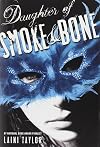
What is good? What is evil? The lines here are blurred and Laini Taylor shows us that things are not always as we perceive them to be.
If at first Karou is a slightly unbelievable character, Ms. Taylor weaves her tale in such a way that all makes sense in the end. This is a story with plot threads twisted and arranged in a web so detailed and intricate that I feel we must truly only have been shown the barest hint of what is in store for Karou. It is a beautiful, terrible, wonderful tale of dark verses light, ‘good’ verses ‘evil’, of love lost and love gained. There is innocence and maturity. There is growth. There is pain and loss and redemption.
The world building – yes, there is WORLD BUILDING in a Young Adult novel! – is fantastic. Though the angel verses demon theme could have quickly turned into a cliched debacle, Ms. Taylor pulls it off in a fresh and ultimately interesting way.. Kudos to her for that.
And I just have to add that though the writing is simple enough for even the younger side of Young Adult to understand, it is in no way dumbed down. It’s simply clear, concise, and the flow is lovely.
Good job, Ms. Taylor. I can’t wait to read the next in this series.
If at first Karou is a slightly unbelievable character, Ms. Taylor weaves her tale in such a way that all makes sense in the end. This is a story with plot threads twisted and arranged in a web so detailed and intricate that I feel we must truly only have been shown the barest hint of what is in store for Karou. It is a beautiful, terrible, wonderful tale of dark verses light, ‘good’ verses ‘evil’, of love lost and love gained. There is innocence and maturity. There is growth. There is pain and loss and redemption.
The world building – yes, there is WORLD BUILDING in a Young Adult novel! – is fantastic. Though the angel verses demon theme could have quickly turned into a cliched debacle, Ms. Taylor pulls it off in a fresh and ultimately interesting way.. Kudos to her for that.
And I just have to add that though the writing is simple enough for even the younger side of Young Adult to understand, it is in no way dumbed down. It’s simply clear, concise, and the flow is lovely.
Good job, Ms. Taylor. I can’t wait to read the next in this series.
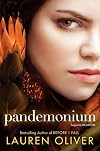
As soon as I read the last of Lauren Oliver’s Delirium, I knew I’d be buying the next in the series. The cliffhanger-esque ending of that book left many a reader gasping and clutching at the pages, asking Why why why it had to be that way. So, yes, I had high hopes for this book. Often, when hopes are so high, they get dashed. Thankfully that was not the case in this instance and Pandemonium delivered a punch that, while it isn’t quite as breath-stealing as the first in the series, definitely got my attention.
I admit that initially I was a little put off by the format. The chapters alternate from “now” to “then”, and I really expected it to be choppy and vile. Ms. Oliver, though, pulled it off without a hitch and I feel like the story flowed well enough forward that the pauses to shift back to the past did not leave it feeling disjointed at all.
I did miss some of the characters from Delirium, and I didn’t really bond so much with some of the new ones introduced in Pandemonium, but I’m fairly certain that was by design and not because they’re badly written characters. Quite the opposite in fact – everyone introduced to the reader seemed well thought out and placed intentionally.
There -are- a few little things in Pandemonium that I feel were thrown in there just because they could be thrown in. Also, the story itself felt a bit less substantial than Delirium. There was just as much world building and we do get to see why things are happening the way show more they’re happening, but it just wasn’t portrayed in as succinct (and yet perfectly detailed) a way as the first book. In that respect, this book definitely has a middle-of-the-series funk to it. It’s not overwhelming, though, and certainly shouldn’t cause anyone to not read through. And really, despite that, I thoroughly enjoyed reading about the time between the end of Delirium and the “now” of Pandemonium. Lena’s life went from innocent and mostly carefree to epic and hard, and she GREW from it. She developed, learned, fought, feared, loved, and became a deep character with many layers.
Now – the ending. Hmm. I have so many mixed emotions about how this book ended. In one way, you’re surprised – but it’s also kind of expected. It really kind of boggled my mind that it ended the way it did.
Pandemonium is a beautiful story that explores the growth of self through trial and heartache and introduces the reader to the flux of emotions that can happen with all of the relationships in a person’s life.
I’ll definitely be reading Requiem, the third in the series. show less
I admit that initially I was a little put off by the format. The chapters alternate from “now” to “then”, and I really expected it to be choppy and vile. Ms. Oliver, though, pulled it off without a hitch and I feel like the story flowed well enough forward that the pauses to shift back to the past did not leave it feeling disjointed at all.
I did miss some of the characters from Delirium, and I didn’t really bond so much with some of the new ones introduced in Pandemonium, but I’m fairly certain that was by design and not because they’re badly written characters. Quite the opposite in fact – everyone introduced to the reader seemed well thought out and placed intentionally.
There -are- a few little things in Pandemonium that I feel were thrown in there just because they could be thrown in. Also, the story itself felt a bit less substantial than Delirium. There was just as much world building and we do get to see why things are happening the way show more they’re happening, but it just wasn’t portrayed in as succinct (and yet perfectly detailed) a way as the first book. In that respect, this book definitely has a middle-of-the-series funk to it. It’s not overwhelming, though, and certainly shouldn’t cause anyone to not read through. And really, despite that, I thoroughly enjoyed reading about the time between the end of Delirium and the “now” of Pandemonium. Lena’s life went from innocent and mostly carefree to epic and hard, and she GREW from it. She developed, learned, fought, feared, loved, and became a deep character with many layers.
Now – the ending. Hmm. I have so many mixed emotions about how this book ended. In one way, you’re surprised – but it’s also kind of expected. It really kind of boggled my mind that it ended the way it did.
Pandemonium is a beautiful story that explores the growth of self through trial and heartache and introduces the reader to the flux of emotions that can happen with all of the relationships in a person’s life.
I’ll definitely be reading Requiem, the third in the series. show less
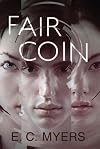
Ephraim Scott, “Eph” to his friends, is a typical teenage boy living a typical (sadly, it -is- fairly common for children to deal with this situation) life. He isn’t entirely happy, but he does seem to be coping; he has friends, he’s performing at an at least average level in school, and has a job that the reader can assume he appreciates. Truthfully, though, he’s a boy who is hurting and he’s all too eager to step away from his not-so-idyllic life.
When he gets the opportunity to do so, he leaps at the chance. It’s through wishes and hopes and chance that Ephraim makes his way through the twists and turns of Mr. Myers fast-paced plot, and it’s really fun to try to figure out just what is going on and why.
What is not so typical about the story is the author’s portrayal of the teen mindset. Ephraim is a young man with strong morals and willpower, though these traits only become truly apparent as we get further into the story. There is character growth (though it’s gradual and not entirely deep) with all three of the “main” characters: Ephraim, Nathan, and Jena. Jena is written as a girl with a brain who knows how to use it, Nathan is a many-layered personality, and Ephraim really has to evaluate his life, his choices, his feelings – his entire self. It’s interesting to watch it all unfold. As the book ends, Ephraim comes to the realization that life is what we make of it and that it’s each person’s responsibility to either stay the course or show more make changes. It’s a really good lesson, albeit a subtle one.
I loved that despite having a male author, a male main character, and just an in general kind of “guy” feel to it, the female characters have strong, independent voices. They may be mainly supporting characters, but they are important and they are not pushed into the shadows willy-nilly.
There are a few bits of the book that make me scratch my head – portions I feel like were glossed over – such as the emotional reactions, or lack thereof, that two particular characters have to losing a friend. It’s a minor flaw, and not one I think takes anything away from the overall story. Also, I feel like there a few unanswered questions dangling there in the open, just waiting…and I’m hoping the sequel answers them for us.
E.C. Myers has written a novel that makes the reader think, which is something that is, sadly, often lacking in the Young Adult genre. He has not over simplified the SciFi aspects of the novel, showing that he has faith in the intelligence and comprehension levels of the young adults reading his novel, which is really rather great of him. Fair Coin is a young adult novel of substance. It is humorous, emotional, and complex in a refreshing way, and I think it’s a book that anyone who enjoys Science Fiction could really love. show less
When he gets the opportunity to do so, he leaps at the chance. It’s through wishes and hopes and chance that Ephraim makes his way through the twists and turns of Mr. Myers fast-paced plot, and it’s really fun to try to figure out just what is going on and why.
What is not so typical about the story is the author’s portrayal of the teen mindset. Ephraim is a young man with strong morals and willpower, though these traits only become truly apparent as we get further into the story. There is character growth (though it’s gradual and not entirely deep) with all three of the “main” characters: Ephraim, Nathan, and Jena. Jena is written as a girl with a brain who knows how to use it, Nathan is a many-layered personality, and Ephraim really has to evaluate his life, his choices, his feelings – his entire self. It’s interesting to watch it all unfold. As the book ends, Ephraim comes to the realization that life is what we make of it and that it’s each person’s responsibility to either stay the course or show more make changes. It’s a really good lesson, albeit a subtle one.
I loved that despite having a male author, a male main character, and just an in general kind of “guy” feel to it, the female characters have strong, independent voices. They may be mainly supporting characters, but they are important and they are not pushed into the shadows willy-nilly.
There are a few bits of the book that make me scratch my head – portions I feel like were glossed over – such as the emotional reactions, or lack thereof, that two particular characters have to losing a friend. It’s a minor flaw, and not one I think takes anything away from the overall story. Also, I feel like there a few unanswered questions dangling there in the open, just waiting…and I’m hoping the sequel answers them for us.
E.C. Myers has written a novel that makes the reader think, which is something that is, sadly, often lacking in the Young Adult genre. He has not over simplified the SciFi aspects of the novel, showing that he has faith in the intelligence and comprehension levels of the young adults reading his novel, which is really rather great of him. Fair Coin is a young adult novel of substance. It is humorous, emotional, and complex in a refreshing way, and I think it’s a book that anyone who enjoys Science Fiction could really love. show less
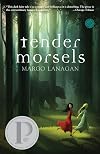
I am nearly always a fan of retellings of classic fairy tales. Nearly always. Honestly, I can't say whether I hated this novel or loved it. It certainly is not a novel for just anyone, and I definitely don't think it's appropriate for the younger side of the Young Adult age range. In fact, I'm pretty sure the themes in this book (incest (forced), more rape, hints of bestiality, forced abortions, suicide contemplation, sodomy (again...forced), gang rape...) make it way too intense for the younger set and is perhaps a touch too over the top for some adults. That said...
Liga is a character you want to see persevere. You want to see her thrive and live and just -be- with no further atrocities committed against her. My heart really did ache for her. That's really the only reason I kept reading - I did have to find out what happened to the poor girl.
I think that though Lanagan tended toward overly detailed and graphic scenes in some cases (namely the rape, forced abortions, other sexual encounters) and added in a ton of superfluous verbiage, the bones of the story were good. There are some scenes in the book that are just a real delight to read so I am definitely glad I didn't give up after the first two chapters. Some of the characters are incredibly well thought out (and some not) and I think the interplay between characters and personalities was well done. The dialogue was a bit stilted and not entirely believable, but it wasn't completely horrible either. All in all, I show more think a few more editing sessions would have ironed things out nicely.
Hopefully without giving away too much, I will say that I absolutely hated the ending of the book. Really? After all that? Ugh. It was so incredibly unfulfilling.
As far as recommending this book to anyone - no, I absolutely would not. I'm not the squeamish type when it comes to reading tough topics and I'm absolutely not one to say a book should just disappear from the shelves, but the world would not be worse for it if Tender Morsels simply ceased to exist. show less
Liga is a character you want to see persevere. You want to see her thrive and live and just -be- with no further atrocities committed against her. My heart really did ache for her. That's really the only reason I kept reading - I did have to find out what happened to the poor girl.
I think that though Lanagan tended toward overly detailed and graphic scenes in some cases (namely the rape, forced abortions, other sexual encounters) and added in a ton of superfluous verbiage, the bones of the story were good. There are some scenes in the book that are just a real delight to read so I am definitely glad I didn't give up after the first two chapters. Some of the characters are incredibly well thought out (and some not) and I think the interplay between characters and personalities was well done. The dialogue was a bit stilted and not entirely believable, but it wasn't completely horrible either. All in all, I show more think a few more editing sessions would have ironed things out nicely.
Hopefully without giving away too much, I will say that I absolutely hated the ending of the book. Really? After all that? Ugh. It was so incredibly unfulfilling.
As far as recommending this book to anyone - no, I absolutely would not. I'm not the squeamish type when it comes to reading tough topics and I'm absolutely not one to say a book should just disappear from the shelves, but the world would not be worse for it if Tender Morsels simply ceased to exist. show less
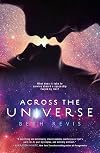
Have you ever read Ringworld by Larry Niven? I have, and I loved the books. I think Ms. Revis has, as well. Now, I could be wrong (obviously I definitely do not have any insider information on what Ms. Revis has or has not read in her lifetime), but I’m fairly certain that I can detect quite a few parallels to Mr. Niven’s books. Now…I’m not implying she stole the story. I’m not saying anything negative, in fact. I’m merely saying that I think this book could have been at least partially influenced by bits and pieces of the Ringworld series of books. There’s nothing wrong with that, is there? As C.C. Colton said, “Imitation is the sincerest [form] of flattery”.
Enough of that. Let’s get to the nitty gritty of things. Our main characters are Elder, the future leader of the spaceship upon which this story takes place, and Amy; She’s ”nonessential cargo”. Amy’s parents are also cargo, though not nonessential, and a cryogenically preserved while waiting for said spaceship to reach its destination. There’s quite a few others waiting in a popsicle-like state in the cargo bit of the ship – 97 others, in fact. So we have a ship full of people who have been traveling from point A to point B for a -very long time-, an up and coming new leader, a few crazies thrown in for good measure, and a plot that’s been done a few times before. But that’s OKAY! Why? Because Beth Revis makes it seem fresh. Also, this particular book is written in such a way that show more the younger crowd can really get into it. It’s not quite so deep that you have to ponder for hours over it. It is, however, fun.
The chapters change character perspective throughout the book and honestly, I felt as though the book suffered a bit for this. The voices of Amy and Elder sound oddly similar and that, to me, was a bit disappointing. Perhaps if they were more noticeably different, the alternating voices would have worked.
All in all I feel the book was decently written, but it’s not one of my favorites. Enjoyable, yes; It’s a fun, light read.
I’ll read the sequel. I’ll probably even like the sequel. In the meantime, though, I’m going to go re-read Ringworld and its sequels and prequels, ’cause Across the Universe made me miss it. show less
Enough of that. Let’s get to the nitty gritty of things. Our main characters are Elder, the future leader of the spaceship upon which this story takes place, and Amy; She’s ”nonessential cargo”. Amy’s parents are also cargo, though not nonessential, and a cryogenically preserved while waiting for said spaceship to reach its destination. There’s quite a few others waiting in a popsicle-like state in the cargo bit of the ship – 97 others, in fact. So we have a ship full of people who have been traveling from point A to point B for a -very long time-, an up and coming new leader, a few crazies thrown in for good measure, and a plot that’s been done a few times before. But that’s OKAY! Why? Because Beth Revis makes it seem fresh. Also, this particular book is written in such a way that show more the younger crowd can really get into it. It’s not quite so deep that you have to ponder for hours over it. It is, however, fun.
The chapters change character perspective throughout the book and honestly, I felt as though the book suffered a bit for this. The voices of Amy and Elder sound oddly similar and that, to me, was a bit disappointing. Perhaps if they were more noticeably different, the alternating voices would have worked.
All in all I feel the book was decently written, but it’s not one of my favorites. Enjoyable, yes; It’s a fun, light read.
I’ll read the sequel. I’ll probably even like the sequel. In the meantime, though, I’m going to go re-read Ringworld and its sequels and prequels, ’cause Across the Universe made me miss it. show less

Vanish picks up where Firelight left us and takes us on a journey into the heart of Draki society. Ms. Jordan shows us more of the mythology behind the dragons in this sequel, which is nice, but it seems that this book just doesn’t quite have the pep and zing that the first in the series had. I think this book suffers a bit from being the middle child. That said, Vanish is definitely not a bad book and is most certainly worth the read.
What I really liked: The introduction of more info about the mythology, the way pack dynamics are portrayed, and the attention to detail on both main and supporting characters. Oh, and there’s dragons, of course…I totally love that.
What I didn’t like: The pacing was a lot slower, the plot seemed to suffer from disorganization, the love triangle (must there always be one?) isn’t believable, and there’s absolutely no feeling of urgency in the story. I just didn’t get pulled in like I did with Firelight.
Despite my lack of total love, I’ll still be reading the final book in the Firelight series
What I really liked: The introduction of more info about the mythology, the way pack dynamics are portrayed, and the attention to detail on both main and supporting characters. Oh, and there’s dragons, of course…I totally love that.
What I didn’t like: The pacing was a lot slower, the plot seemed to suffer from disorganization, the love triangle (must there always be one?) isn’t believable, and there’s absolutely no feeling of urgency in the story. I just didn’t get pulled in like I did with Firelight.
Despite my lack of total love, I’ll still be reading the final book in the Firelight series
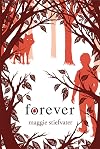
It’s taken me a while to really form my thoughts on this book, and still I can’t really pinpoint exactly what it is that I want to express. I’ve waited for it since readingLinger last year…and my love of Ms. Stiefvater’s writing combined with the anticipation for the end of the series was enough to make me truly excited. Unfortunately, though I loved both Shiver and Linger, Forever fell a little flat for me. The prose, while usually gorgeous from this author, seemed forced. The plot moved forward at such a quick pace that events appeared rushed and fairly artificial, though not so much that you couldn’t get passed it and at least follow along without too much disbelief. Sam seems to have gone from a strong individual to a mopey whiner and Grace’s parents make a token appearance in a way that makes it seem like they were thrown in there just to make sure the reader knew they’d not dropped off the face of the earth. Despite all that, I did enjoy the book. There are parts where the real flow is apparent and the beautiful writing that made me fall in love with the series tugs you in, so I definitely do not regret reading the book.
I will say, though, that the ending left me completely stunned. I truly don’t even know what to say about it in a review that 1) won’t be too spoilerish and 2) won’t sound like I’m just fussing to fuss. I didn’t like it one bit and I feel like things were not wrapped up. The end of a series should not be a show more semi-cliffhanger.
For fans of the series, obviously you should read this book. Don’t expect everything to be tied up with a nice little bow, though. show less
I will say, though, that the ending left me completely stunned. I truly don’t even know what to say about it in a review that 1) won’t be too spoilerish and 2) won’t sound like I’m just fussing to fuss. I didn’t like it one bit and I feel like things were not wrapped up. The end of a series should not be a show more semi-cliffhanger.
For fans of the series, obviously you should read this book. Don’t expect everything to be tied up with a nice little bow, though. show less
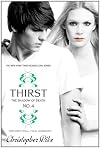
In 1996, with The Last Vampire: Creatures of Forever, Christopher Pike concluded Sita's story. In 2010, he showed us all that Sita's story was not, in fact, over. As if that wasn't enough, he also promised another book, another extension of the series, a glimpse of something more. In 2011, he delivered on that promise...and Sita's story, it seems, is concluded once again.
Or is it? I feel now just as I felt fifteen years ago as a thirteen year old girl finishing a beloved series. Things are all wrapped up nicely. There's a pretty bow tied around this beautiful tale and it appears, truly, as if the end has been reached. But I was convinced then that it was the last of the last vampire, and I was proved wrong. I have to say at this point, though I do believe Sita's tale is fully told, that I hope against hope Mr. Pike is able to continue forward from where Thirst No. 4 ends and that I am wrong again.
Thirst No. 4 picks up exactly where Thirst No. 3 left off. There's clues enough through the book, though, that even if it's been a year since you read No. 3, you should easily be able to follow everything that's currently happening. As I said in my review of Thirst No. 3: The Eternal Dawn, I know that not everything Christopher Pike writes is a masterpiece and obviously the man's writing has some flaws. This book, though, is just fantastic. The pace is spot on - not too fast, not too slow. Like most everything of his that I've read, the story grabs you by the neck and yanks you show more so deep inside its complex web that you're unable to surface again until the very end when you're left sputtering and gasping, yearning for just a tiny iota more and yet ultimately feeling satisfied.
The Last Vampire series is dark yet beautiful, charged with emotion, gripping, and utterly remarkable. Sita's story is tragic, fantastic, and magical and I feel honored that Mr. Pike chose to share her life with us.
Read it, people. show less
Or is it? I feel now just as I felt fifteen years ago as a thirteen year old girl finishing a beloved series. Things are all wrapped up nicely. There's a pretty bow tied around this beautiful tale and it appears, truly, as if the end has been reached. But I was convinced then that it was the last of the last vampire, and I was proved wrong. I have to say at this point, though I do believe Sita's tale is fully told, that I hope against hope Mr. Pike is able to continue forward from where Thirst No. 4 ends and that I am wrong again.
Thirst No. 4 picks up exactly where Thirst No. 3 left off. There's clues enough through the book, though, that even if it's been a year since you read No. 3, you should easily be able to follow everything that's currently happening. As I said in my review of Thirst No. 3: The Eternal Dawn, I know that not everything Christopher Pike writes is a masterpiece and obviously the man's writing has some flaws. This book, though, is just fantastic. The pace is spot on - not too fast, not too slow. Like most everything of his that I've read, the story grabs you by the neck and yanks you show more so deep inside its complex web that you're unable to surface again until the very end when you're left sputtering and gasping, yearning for just a tiny iota more and yet ultimately feeling satisfied.
The Last Vampire series is dark yet beautiful, charged with emotion, gripping, and utterly remarkable. Sita's story is tragic, fantastic, and magical and I feel honored that Mr. Pike chose to share her life with us.
Read it, people. show less
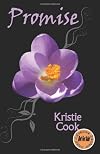
**If you haven't read Twilight, don't read this review. If you have, the spoilers won't matter anyway.**
I wanted so very much to love this book. I read the synopsis on Goodreads.com and it seemed interesting. When the Kindle price on Amazon went to 99 cents, I snagged it.
My delight at the price, though, was where the happy ended.
This review may lean slightly toward the side of spoiler-ish, so stop reading now if you want. Then again, if you’ve even half a clue what went on in Twilight, you’ll have no surprises in Promise.
The protagonist is a young girl who believes she’s ugly as sin but who keeps getting told by everyone else that she’s gorgeous. The self-loathing yet beautiful young girl moves to a new town and once there she meets a new guy who she is, of course, immediately attracted to. This guy is mysterious, slightly creepy, and (again, of course) drop dead gorgeous. Oh, and everyone else thinks he’s bad news.
Guy’s name is Tristan, which I admit is quite a bit nicer (in my opinion) than Edward. Tristan is constantly wanting to kill Alexis even though he loves her. He saves her from a potentially/probably fatal car accident, at which point she figures out he’s not really all that “normal”. No, people, I’m not just superimposing the Twilight plot over this book in some sort of confused daze…this really happens.
Now I could have forgiven this. Really, I could have, because Kristie Cook’s writing is at least a bit better than Mrs. Meyer’s. But show more she lost me with the craptastic “intimate” stuff.
Alexis practically throws herself at Tristan. In fact, she literally does. She begs him repeatedly to have sex with her, but of course he refuses. At one point she feels like she’s losing him so her MOTHER drives her to his house, tells her to do what she has to do, and Alexis proceeds to strip naked and prostrate herself in front of him. Seriously, in an attempt to keep the guy she offers to give him her virginity if he’ll only please, please, please, ohmigosh, not leave her. Argh!
I’m going to just stop here, because I literally can’t find anything nice to say about the book except Ms. Cook’s writing style trumps Mrs. Meyer’s by far. Oh, and the concept was nice – the angel/demon lore was actually interesting and I’m truly sad that absolutely nothing awesome came from such promise. I suppose I don’t have to say that I’ll be skipping the sequel/s in this series. show less
I wanted so very much to love this book. I read the synopsis on Goodreads.com and it seemed interesting. When the Kindle price on Amazon went to 99 cents, I snagged it.
My delight at the price, though, was where the happy ended.
This review may lean slightly toward the side of spoiler-ish, so stop reading now if you want. Then again, if you’ve even half a clue what went on in Twilight, you’ll have no surprises in Promise.
The protagonist is a young girl who believes she’s ugly as sin but who keeps getting told by everyone else that she’s gorgeous. The self-loathing yet beautiful young girl moves to a new town and once there she meets a new guy who she is, of course, immediately attracted to. This guy is mysterious, slightly creepy, and (again, of course) drop dead gorgeous. Oh, and everyone else thinks he’s bad news.
Guy’s name is Tristan, which I admit is quite a bit nicer (in my opinion) than Edward. Tristan is constantly wanting to kill Alexis even though he loves her. He saves her from a potentially/probably fatal car accident, at which point she figures out he’s not really all that “normal”. No, people, I’m not just superimposing the Twilight plot over this book in some sort of confused daze…this really happens.
Now I could have forgiven this. Really, I could have, because Kristie Cook’s writing is at least a bit better than Mrs. Meyer’s. But show more she lost me with the craptastic “intimate” stuff.
Alexis practically throws herself at Tristan. In fact, she literally does. She begs him repeatedly to have sex with her, but of course he refuses. At one point she feels like she’s losing him so her MOTHER drives her to his house, tells her to do what she has to do, and Alexis proceeds to strip naked and prostrate herself in front of him. Seriously, in an attempt to keep the guy she offers to give him her virginity if he’ll only please, please, please, ohmigosh, not leave her. Argh!
I’m going to just stop here, because I literally can’t find anything nice to say about the book except Ms. Cook’s writing style trumps Mrs. Meyer’s by far. Oh, and the concept was nice – the angel/demon lore was actually interesting and I’m truly sad that absolutely nothing awesome came from such promise. I suppose I don’t have to say that I’ll be skipping the sequel/s in this series. show less
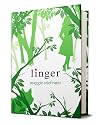
Here is where I’m going to go into lala fan-girl mode for a moment. Thank you, Mrs. Stiefvater, for rocking so much. I absolutely adore your writing. Really, it’s refreshing to read the work of an author who makes full use of the English language. Linger begins in a prologue with Grace as the narrator, and we are privy to all of the tumultuous thoughts that she’s having. Just as the first book in this series did, this one grabbed me from the beginning. Grace says, well..thinks, “This is a love story. I never knew there were so many kinds of love or that love could make people do so many different things.” and “I never knew there were so many different ways to say good-bye.” That was it for me. Had to keep going. We get to know Sam better in this novel, which I really like. He’s an interesting character and I was hoping for a little more of him this go round. Isabel is also introduced more into the main story, and I have to say I like her a lot more than I did before. I didn’t -dislike- her initially, because even as a secondary character she had a lot of depth. This was expanded upon in Linger, and I just love that Ms. Stiefvater made that effort. It was fun to see the bonds forming between Isabel and Grace as the book progressed, and definitely nice to see in a YA novel that the female protagonist CAN exist outside the realm of just her boyfriend’s presence. Cole, too, was an interesting character, albeit a cranky and melancholy one initially. I show more should note that though I did very much enjoy this book, I am not as in love with it as I am with Shiver. That’s not stopping me from anxiously awaiting Forever, though! show less
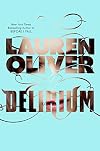
I do love a good dystopian, and this is most certainly good…and dystopian. Lena is an interesting character, mostly because despite seeming like a mindless sheep initially, she actually -isn’t-. There’s a lot I liked about this novel, and I think expressing every bit of that would just be a trifle too spoilery and I tend to avoid that as often as possible. The ending was perfectly set up to allow for future books in the series (and I am OH so glad that it’s a series), and though I was expecting something explosive, I was still a touch stunned by what happened. That, dear reader, brings me to something that is bugging me just a bit…and I’m hoping it’s cleared up or explained in the next novels. How did this world become as it is? What brought them to this point? Who made the decisions to create this society of love-less people? I know the opening mentions “the president” made decisions, but…still and all, I’m confused over it. I’d like some answers in the next book, and I’m going to just assume they’ll be there. I do want to mention that I absolutely love Lauren Oliver’s writing style. She’s able to make words flow so easily and I was easily able to focus on the scene she was describing rather than being distracted by choppy sentences and irregular grammar. This book disturbed me (I do enjoy being pulled into a book and actually feeling as I’m reading) – the thought of not being able to love? That’s simply incomprehensible to me, and show more to even ponder living in that world is horrifying. Ah, well. I don’t live there, so I can love this book. I’m anxiously looking forward to the next one! show less
**I received this book free from the publisher.**
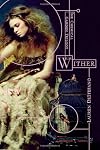
Lauren DeStefano may have just become one of my favorite authors. She introduces the reader to a horrifyingly dark, dismal, and BELIEVABLE world from page 1 and continues to deliver throughout the novel. Rhine, the female protagonist, is a brutally real, honest, and deep character who is likely to appeal to most readers – or at least readers who like a woman with a brain in her head.
The world is Earth, though not at we know it, and supposedly the only remaining continent is North America. Everywhere else is supposed decimated, though there are hints throughout the book that this may just be what the general population believes to be true, and is in fact NOT entirely accurate. Ms. DeStefano’s characters, from the chef in the kitchen of the home in which Rhine lives to Rhine herself are all intricately woven into the story in such a way that they just -feel- real. Even Rowan, who we never actually meet, feels like he’s got depth and substance.
I absolutely love the level of detail that the author worked into her story – there was plenty to really paint a vivid picture of what is happening and where it is happening, but enough was left to the imagination so that each reader can color it with his or her own individual interpretation.
It may sound cheesy and a trifle cliche, but I’d call this little dystopian beauty SPLENDID and absolutely delightful. I cannot wait for number two in the Chemical Gardens trilogy. (Would show more it be too corny to say that I may wither away while waiting? Ooo look at that alliteration, too!) show less
Lauren DeStefano may have just become one of my favorite authors. She introduces the reader to a horrifyingly dark, dismal, and BELIEVABLE world from page 1 and continues to deliver throughout the novel. Rhine, the female protagonist, is a brutally real, honest, and deep character who is likely to appeal to most readers – or at least readers who like a woman with a brain in her head.
The world is Earth, though not at we know it, and supposedly the only remaining continent is North America. Everywhere else is supposed decimated, though there are hints throughout the book that this may just be what the general population believes to be true, and is in fact NOT entirely accurate. Ms. DeStefano’s characters, from the chef in the kitchen of the home in which Rhine lives to Rhine herself are all intricately woven into the story in such a way that they just -feel- real. Even Rowan, who we never actually meet, feels like he’s got depth and substance.
I absolutely love the level of detail that the author worked into her story – there was plenty to really paint a vivid picture of what is happening and where it is happening, but enough was left to the imagination so that each reader can color it with his or her own individual interpretation.
It may sound cheesy and a trifle cliche, but I’d call this little dystopian beauty SPLENDID and absolutely delightful. I cannot wait for number two in the Chemical Gardens trilogy. (Would show more it be too corny to say that I may wither away while waiting? Ooo look at that alliteration, too!) show less
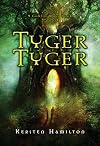
I want to begin by saying that Tyger Tyger is an interesting read. It’s not entirely cookie-cutter and I appreciate that aspect. That said, though, I finished this book feeling absolutely unfulfilled.
The beginning of the book talks of Teagan’s work with CIndy the chimp. There’s of course no mention of the chimpanzee in the middle because of all the “action” happening, but then we return to her…only for it to end with no real explanation of what the purpose of the relationship was to begin with. It seems the entire situation was just filler.
My favorite character by far was Aiden, Teagan’s little brother. His magical singing ability was entirely fun and he was just too cute for words as a supporting character. Finn was likable, for the most part, and his superior fighting abilities were cleverly worked in. I still, though, don’t really know how to feel about Teagan herself.
The Irish folklore was fun to read about, and the -idea- of goblins was interesting. However, I felt like the folklore was there as a prop and to me the goblins did not seem like much more than creepy fairies.
In general, the uneven pacing of the book, the forced (and massive) introduction of information at the beginning, and the lackluster writing quality really dampened my enjoyment of the book.
The beginning of the book talks of Teagan’s work with CIndy the chimp. There’s of course no mention of the chimpanzee in the middle because of all the “action” happening, but then we return to her…only for it to end with no real explanation of what the purpose of the relationship was to begin with. It seems the entire situation was just filler.
My favorite character by far was Aiden, Teagan’s little brother. His magical singing ability was entirely fun and he was just too cute for words as a supporting character. Finn was likable, for the most part, and his superior fighting abilities were cleverly worked in. I still, though, don’t really know how to feel about Teagan herself.
The Irish folklore was fun to read about, and the -idea- of goblins was interesting. However, I felt like the folklore was there as a prop and to me the goblins did not seem like much more than creepy fairies.
In general, the uneven pacing of the book, the forced (and massive) introduction of information at the beginning, and the lackluster writing quality really dampened my enjoyment of the book.
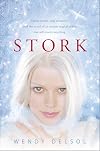
I discovered Stork while filling my Amazon cart with books I’d had on my wish list for a while. When this popped up on the recommended list, the word “Stork” automatically caught my attention – I was, after all, newly pregnant and quite fascinated with everything baby. The synopsis drew me further in and though when I purchased the book there were not a lot of reviews out yet, I decided to go with it anyway. I mean…storks…babies…debut novel…you can’t lose! Right?
Unfortunately, wrong. The book did not live up to my expectations. While the premise was definitely unique (especially for the current YA scene), the execution of it was truly hit or miss. While the author’s writing (and by writing I mean word usage/grammar/spelling/etc) was good enough to keep me reading, I definitely got tired of hearing about the protagonist’s obsession with name-brand clothing. What got me, especially, was that Katla seemed like such a shallow, self-absorbed, selfish little chit of a thing…yet she was tasked with something that I, at least, believe is monumentally huge. Choosing which parents “deserve” a child? THAT sort of life-changing, awe-inspiring decision has been given to -that- girl? Ahh, NOW I understand why we have parents who abuse their children!
That was probably harsh, and I suppose that I am biased. Having struggled with infertility and having seen and heard of truly horrible things happening to children who belong to people who just really don’t show more deserve children…well, that appalled me. Katla even lied at one point about her visions to her mentors and “sister” storks, just to cover her own tush. Yeah, that’s just not okay.
I admit, the twist with Jack was interesting. The character development with Katla was there, and really, the -bones- of the story are very, very good. But, as I said, the execution was lacking. I’ll read the sequel, but I’ll be going into it with lower expectations. show less
Unfortunately, wrong. The book did not live up to my expectations. While the premise was definitely unique (especially for the current YA scene), the execution of it was truly hit or miss. While the author’s writing (and by writing I mean word usage/grammar/spelling/etc) was good enough to keep me reading, I definitely got tired of hearing about the protagonist’s obsession with name-brand clothing. What got me, especially, was that Katla seemed like such a shallow, self-absorbed, selfish little chit of a thing…yet she was tasked with something that I, at least, believe is monumentally huge. Choosing which parents “deserve” a child? THAT sort of life-changing, awe-inspiring decision has been given to -that- girl? Ahh, NOW I understand why we have parents who abuse their children!
That was probably harsh, and I suppose that I am biased. Having struggled with infertility and having seen and heard of truly horrible things happening to children who belong to people who just really don’t show more deserve children…well, that appalled me. Katla even lied at one point about her visions to her mentors and “sister” storks, just to cover her own tush. Yeah, that’s just not okay.
I admit, the twist with Jack was interesting. The character development with Katla was there, and really, the -bones- of the story are very, very good. But, as I said, the execution was lacking. I’ll read the sequel, but I’ll be going into it with lower expectations. show less
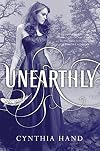
I’m feeling slightly up and down on Cynthia Hand’s Unearthly. On one hand, I definitely liked Clara – she has a lot of depth and it’s obvious Ms. Hand took the time to really flesh her out. On the other hand, I really feel the novel was plagued by a lot of filler and not a lot of actual substance.
That said, I did very much like this book. Clara is a female protagonist I can get behind and understand. She’s a “typical” teenager in that she does in fact ponder about how she’s going to fit in, how she’s going to cope with a new school, new life, new everything…and she even whimpers a bit over her orange hair. She’s so REAL. At the same time, she’s so much more than the “typical” female protagonists that seem to run rampant in a lot of today’s YA novels. Clara is strong, decisive, and independent. She’s not willing to let a boy treat her like dirt – she has enough self esteem and feelings of self worth to really KNOW what she deserves, and she’s not willing to settle for less than that. I adore that about her.
The supporting characters – Angela, Wendy, Christian, Tucker, Jeffrey, and Clara’s mom – are all interesting on their own. Also interesting is the lore behind the Angels and angel-bloods and I definitely would like to read more about that.
The ending of Unearthly, I felt, is a bit abrupt – I was absolutely not prepared for it to end. While I enjoy a good cliffhanger as much as the next person, this was more of a…cessation of show more words? It comes down to there being a whole lot of build up and not a whole lot of resolution.
That’s ok, though. I’ll still patiently wait for the next in the series. show less
That said, I did very much like this book. Clara is a female protagonist I can get behind and understand. She’s a “typical” teenager in that she does in fact ponder about how she’s going to fit in, how she’s going to cope with a new school, new life, new everything…and she even whimpers a bit over her orange hair. She’s so REAL. At the same time, she’s so much more than the “typical” female protagonists that seem to run rampant in a lot of today’s YA novels. Clara is strong, decisive, and independent. She’s not willing to let a boy treat her like dirt – she has enough self esteem and feelings of self worth to really KNOW what she deserves, and she’s not willing to settle for less than that. I adore that about her.
The supporting characters – Angela, Wendy, Christian, Tucker, Jeffrey, and Clara’s mom – are all interesting on their own. Also interesting is the lore behind the Angels and angel-bloods and I definitely would like to read more about that.
The ending of Unearthly, I felt, is a bit abrupt – I was absolutely not prepared for it to end. While I enjoy a good cliffhanger as much as the next person, this was more of a…cessation of show more words? It comes down to there being a whole lot of build up and not a whole lot of resolution.
That’s ok, though. I’ll still patiently wait for the next in the series. show less
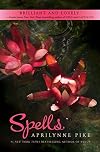
It has taken me a while to gather my thoughts on this book. While I enjoyed the novelty of the first in the series, Wings, it seems this one fell a little flat. Laurel is less likable in Spells, simply because she’s teetering on being just a touch flaky when it comes to choosing her love interest. Also, while I enjoyed the descriptions of the school at Avalon, the novel itself just felt somewhat -empty- of actual content about the place. It’s quite a lot of filler and not a lot of actual events. Sure, things happen, but I’d have expected a little more to be packed in. Despite all that, I did enjoy the read, and I think Aprilynne Pike’s writing style is one I could get used to. The world of Avalon is one I’d really like to get to know more about, because it seems as though Pike’s given a lot of thought to the social structure and class systems. It could be something pretty intriguing. If there’s another in the series, I will read it, though I am not anticipating it as much as I was anticipating this one. We’ll see how it goes.
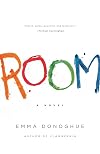
Wow. Really, just wow. This book is, by far, my favorite read of 2010. I admit that coming into it, I was skeptical. SO much hype, so much buzz, so much chatter about how wonderful and fantastic and lovely this book is…could it really hold up to that? Could it deliver as promised? Oh yes…yes it could. It does. It did. Room is -spectacular- on so many levels.
The story is told from the point of view of Jack, a 5 year old little boy who has never seen the world beyond that of the single room in which he and his mother live. His world consists of that room, his Ma, and the fantasy land inside the television. It’s amazing how spot on the author was able to portray a curious, intelligent, and yet very socially handicapped young child. His voice was so plaintive, so real, that it makes the reader want to reach into the pages and hug him close.
I could just go on and on about every tiny little thing that I absolutely loved about this book, but I still don’t think that I could really do it justice. The novel just packs such a huge emotional punch that you really have to read it yourself to experience the beauty of the author’s story. Read Room. You will absolutely not regret it.
The story is told from the point of view of Jack, a 5 year old little boy who has never seen the world beyond that of the single room in which he and his mother live. His world consists of that room, his Ma, and the fantasy land inside the television. It’s amazing how spot on the author was able to portray a curious, intelligent, and yet very socially handicapped young child. His voice was so plaintive, so real, that it makes the reader want to reach into the pages and hug him close.
I could just go on and on about every tiny little thing that I absolutely loved about this book, but I still don’t think that I could really do it justice. The novel just packs such a huge emotional punch that you really have to read it yourself to experience the beauty of the author’s story. Read Room. You will absolutely not regret it.
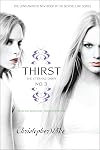
Christopher Pike's The Last Vampire series was one of my favorite things to read as a youngster. I purchased each book as it hit the shelves and devoured them gleefully. I was so terribly unhappy that the series ended in The Last Vampire: Creatures of Forever. That said, however, the ending of that book, the end of the series, was perfect. All the loose ends were tied up into a nice little bow. All questions answered. It was over.
Imagine my surprise (and from what I've seen by poking around the internet, the surprise of many) when I saw that there was going to be a 7th book. What? But Sita's story was over! Done! Finished! We, her devoted fans, knew precisely what happened, we knew her story, we knew the truth, we'd read THE END. Boy were we fooled.
Like many others I wondered how, after such a solid ending to the series, Christopher Pike could bring Sita back into the limelight. I imagined it would be stunningly brilliant, written eloquently and beautifully...the story would flow from the pages into my brain and I would sigh in utter bliss.
Yeah, no.
By the end of Chapter 2, I was so thoroughly and completely disgusted with the blatantly SILLY way that he brought her story back into play that I had to place my bookmark on the page, close the book, and walk away. It was that, or fly to Christopher Pike's house and ask him very plainly, "What were you THINKING?". And where was his EDITOR? Seriously?
Of course, it's -Sita-, man. You have to find out what happens to her, you show more have to see. After a day or two, when my level of rage over the absolutely insanely boring way he explained things, I picked up the book again.
Boy am I glad I did. I know that not everything Christopher Pike writes is a masterpiece. He's not the most brilliant author, at times his writing is choppy and he is repetitive in a way that makes me grit my teeth, but the story - ah the story! By the end of Chapter 3 I was hooked. I forgot, since it's been nearly a decade since I've read a Christopher Pike novel, that sometimes he starts slow. But then the flow happens and you're drawn into the tightly woven story that keeps you snugged tightly in its arms until it darn well chooses to release you. For me, that was at the very last page, the whispered words that sealed that particular portion of the novel also assured that I will be anxiously awaiting, and pre-ordering, Thirst No. 4. Yes, people, there's another coming. Summer of 2011, it says. Read stories 1 - 6 (or Thirst No 1 and Thirst No 2), Read Thirst No. 3: The Eternal Dawn. Sita dazzles, but not in that sparkly glittery craptastic way that Dear Eddie does...I promise you'll be enchanted. show less
Imagine my surprise (and from what I've seen by poking around the internet, the surprise of many) when I saw that there was going to be a 7th book. What? But Sita's story was over! Done! Finished! We, her devoted fans, knew precisely what happened, we knew her story, we knew the truth, we'd read THE END. Boy were we fooled.
Like many others I wondered how, after such a solid ending to the series, Christopher Pike could bring Sita back into the limelight. I imagined it would be stunningly brilliant, written eloquently and beautifully...the story would flow from the pages into my brain and I would sigh in utter bliss.
Yeah, no.
By the end of Chapter 2, I was so thoroughly and completely disgusted with the blatantly SILLY way that he brought her story back into play that I had to place my bookmark on the page, close the book, and walk away. It was that, or fly to Christopher Pike's house and ask him very plainly, "What were you THINKING?". And where was his EDITOR? Seriously?
Of course, it's -Sita-, man. You have to find out what happens to her, you show more have to see. After a day or two, when my level of rage over the absolutely insanely boring way he explained things, I picked up the book again.
Boy am I glad I did. I know that not everything Christopher Pike writes is a masterpiece. He's not the most brilliant author, at times his writing is choppy and he is repetitive in a way that makes me grit my teeth, but the story - ah the story! By the end of Chapter 3 I was hooked. I forgot, since it's been nearly a decade since I've read a Christopher Pike novel, that sometimes he starts slow. But then the flow happens and you're drawn into the tightly woven story that keeps you snugged tightly in its arms until it darn well chooses to release you. For me, that was at the very last page, the whispered words that sealed that particular portion of the novel also assured that I will be anxiously awaiting, and pre-ordering, Thirst No. 4. Yes, people, there's another coming. Summer of 2011, it says. Read stories 1 - 6 (or Thirst No 1 and Thirst No 2), Read Thirst No. 3: The Eternal Dawn. Sita dazzles, but not in that sparkly glittery craptastic way that Dear Eddie does...I promise you'll be enchanted. show less
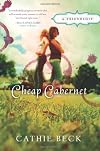
There's always that one book, that one story, that tugs at your heart strings and sucks you in in such a way that you can't stop thinking about it even weeks after you've read it. Cheap Cabernet is, at least for me, one of those stories. This book truly has it all. The voice of the narrator, Cathie Beck herself, is filled with honesty, poignancy, grief, hilarity, and a richness that really catches and holds the reader's attention. Denise is her best and dearest friend and the love and bond that these two women share is a beautiful thing. THIS is an author who can make you truly feel that you are in the story. And while you know that you cannot possibly BE one of this pair, this dynamic duo of women, you do feel as though you are experiencing the joys, the sorrows, the love, the fear that they are feeling. This book made me laugh and sob in turn, and it is one that I will read again and again. Cathie Beck, you are an inspiration, and Denise...what a beautiful, beautiful person. Thank you for letting me have a glimpse into such a special friendship.
 This review was written for LibraryThing Early Reviewers.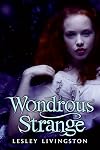
While I did enjoy the story, there were parts of it that I felt were rushed, and/or needed a bit more development. I liked that Kelley was not immediately accepting of her new big life change, but I felt like after she accepted her fate, things began to move at a pace that was just too fast. Some of the dialogue between characters (Kelley and her Aunt) is simply unbelievable and obviously contrived, and the relationship between Kelley and Sonny seemed a trifle forced. The perspective shifts some between Kelley and Sonny, but is done well enough that it isn’t obnoxious at all. The ending was decent, though the major action literally took up around a page and I feel leaves the reader going “What? That’s it?”. That said, though, the story was entirely easy to read and easy to like. I’ll be reading the sequel, Darklight, for sure.
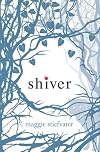
“I remember lying in the snow, a small red spot of warm going cold, surrounded by wolves.” (p 1. of Maggie Stiefvater’s novel, Shiver) That is how this novel begins and that is what hooked me…a small red spot of warm going cold…the description! Right when you open this book it becomes apparent that the author is comfortable with language and grammar. The entire first paragraph is just explosively descriptive, and not in a gushy, overly forceful way. She really puts you there in the scene, in the mind of the narrator. Speaking of narration, that too is something I thought was well executed in Shiver. It’s done in first person and it shifts between the story’s two main characters, Grace and Sam. Now generally I am -not- a fan of books that shift perspective, but Ms. Stiefvater manages to make it such a seamless transition that the reader has no trouble switching back and forth. That said, I think it’s also made easier because it does not shift EVERY chapter. I also like the unique take on werewolves presented in the story – you don’t see many authors actually attempting new things. Kudos to her for that.
The characters themselves, even those not in the forefront of the story, are fairly well developed which of course makes for a more believable, likable tale. Parents should know that though there is a touch of romance in the book, I would say that it’s clean and I would not have an issue with my young nieces and nephews reading it. It’s obviously from show more the telling of the tale that Grace and Sam have something special. There is a connection there that you simply are able to understand and relate to, instead of having to have the author explicitly tell you “These two are in love. The end.” The story was just so well written and so entrancing that I did not want to put it down.
I borrowed this from the Library, but I will be buying my own copy. I’ll also definitely be reading Linger, the sequel to this novel, and Maggie Stiefvater’s other works.“I remember lying in the snow, a small red spot of warm going cold, surrounded by wolves.” (p 1. of Maggie Stiefvater’s novel, Shiver) That is how this novel begins and that is what hooked me…a small red spot of warm going cold…the description! Right when you open this book it becomes apparent that the author is comfortable with language and grammar. The entire first paragraph is just explosively descriptive, and not in a gushy, overly forceful way. She really puts you there in the scene, in the mind of the narrator. Speaking of narration, that too is something I thought was well executed in Shiver. It’s done in first person and it shifts between the story’s two main characters, Grace and Sam. Now generally I am -not- a fan of books that shift perspective, but Ms. Stiefvater manages to make it such a seamless transition that the reader has no trouble switching back and forth. That said, I think it’s also made easier because it does not shift EVERY chapter. I also like the unique take on werewolves presented in the story – you don’t see many authors actually attempting new things. Kudos to her for that.
The characters themselves, even those not in the forefront of the story, are fairly well developed which of course makes for a more believable, likable tale. Parents should know that though there is a touch of romance in the book, I would say that it’s clean and I would not have an issue with my young nieces and nephews reading it. It’s obviously from the telling of the tale that Grace and Sam have something special. There is a connection there that you simply are able to understand and relate to, instead of having to have the author explicitly tell you “These two are in love. The end.” The story was just so well written and so entrancing that I did not want to put it down.
I borrowed this from the Library, but I will be buying my own copy. I’ll also definitely be reading Linger, the sequel to this novel, and Maggie Stiefvater’s other works. show less
The characters themselves, even those not in the forefront of the story, are fairly well developed which of course makes for a more believable, likable tale. Parents should know that though there is a touch of romance in the book, I would say that it’s clean and I would not have an issue with my young nieces and nephews reading it. It’s obviously from show more the telling of the tale that Grace and Sam have something special. There is a connection there that you simply are able to understand and relate to, instead of having to have the author explicitly tell you “These two are in love. The end.” The story was just so well written and so entrancing that I did not want to put it down.
I borrowed this from the Library, but I will be buying my own copy. I’ll also definitely be reading Linger, the sequel to this novel, and Maggie Stiefvater’s other works.“I remember lying in the snow, a small red spot of warm going cold, surrounded by wolves.” (p 1. of Maggie Stiefvater’s novel, Shiver) That is how this novel begins and that is what hooked me…a small red spot of warm going cold…the description! Right when you open this book it becomes apparent that the author is comfortable with language and grammar. The entire first paragraph is just explosively descriptive, and not in a gushy, overly forceful way. She really puts you there in the scene, in the mind of the narrator. Speaking of narration, that too is something I thought was well executed in Shiver. It’s done in first person and it shifts between the story’s two main characters, Grace and Sam. Now generally I am -not- a fan of books that shift perspective, but Ms. Stiefvater manages to make it such a seamless transition that the reader has no trouble switching back and forth. That said, I think it’s also made easier because it does not shift EVERY chapter. I also like the unique take on werewolves presented in the story – you don’t see many authors actually attempting new things. Kudos to her for that.
The characters themselves, even those not in the forefront of the story, are fairly well developed which of course makes for a more believable, likable tale. Parents should know that though there is a touch of romance in the book, I would say that it’s clean and I would not have an issue with my young nieces and nephews reading it. It’s obviously from the telling of the tale that Grace and Sam have something special. There is a connection there that you simply are able to understand and relate to, instead of having to have the author explicitly tell you “These two are in love. The end.” The story was just so well written and so entrancing that I did not want to put it down.
I borrowed this from the Library, but I will be buying my own copy. I’ll also definitely be reading Linger, the sequel to this novel, and Maggie Stiefvater’s other works. show less
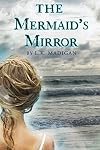
I was hooked as soon as I read the synopsis and I had to read the book. However…and unfortunately…the reading was slow going. Not much happens in the first hundred or so pages, though the pace picks up near the middle of the book. It’s established early on that our protagonist, Lena, very much loves her family and is especially close to little brother Cole. It isn’t until nearly the final third of the book, though, that I began to feel the emotional tug that Lena must have been experiencing while making such huge life choices.
The Mermaid’s Mirror was definitely an engaging read once it go moving, but it was not a novel of any depth. Would I recommend it to my nieces and nephews? Probably so. It’s a fresh, fun read with a premise not often seen.
The Mermaid’s Mirror was definitely an engaging read once it go moving, but it was not a novel of any depth. Would I recommend it to my nieces and nephews? Probably so. It’s a fresh, fun read with a premise not often seen.
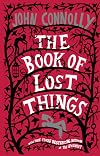
What a fun, fun read! This book has definitely made me want to read more by John Connolly.
Set at the beginning of World War II, the story follows David, a 12 year old boy who lives in Europe, through a coming-of-age journey that keeps the reader interested from beginning til end. Within the pages of The Book of Lost Things, Connolly introduces us to intriguing new interpretations of a few well-known fairy tales. Little Red Riding Hood, Hansel and Gretel, Rumpelstiltskin, the Three Billy Goats Gruff, Beauty and the Beast, all get mentioned…plus many more. I will never be able to think of Snow White the same way again. This is definitely more of an adult read, or at the very least not a children’s book. There’s a dark, twisty play on the fairy tales that will make you cringe or laugh in turn, but in general wouldn’t make for a great bedtime story for an 8 year old. Definitely a must read, though!
Set at the beginning of World War II, the story follows David, a 12 year old boy who lives in Europe, through a coming-of-age journey that keeps the reader interested from beginning til end. Within the pages of The Book of Lost Things, Connolly introduces us to intriguing new interpretations of a few well-known fairy tales. Little Red Riding Hood, Hansel and Gretel, Rumpelstiltskin, the Three Billy Goats Gruff, Beauty and the Beast, all get mentioned…plus many more. I will never be able to think of Snow White the same way again. This is definitely more of an adult read, or at the very least not a children’s book. There’s a dark, twisty play on the fairy tales that will make you cringe or laugh in turn, but in general wouldn’t make for a great bedtime story for an 8 year old. Definitely a must read, though!
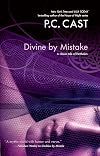
Unfortunately, I was utterly disappointed with this series of books. The synopsis on the back of the book, with its promise of high fantasy and centaurs and Epona, a world with a somewhat medieval feel – why, that’s right up my alley and really had me hooked. The book’s protagonist, Shannon, is meant to be a thirty-five year old woman. However, the majority of the time she acts like a spoiled, whiny teenager. Now imagine having to sit and listen to said spoiled, whiny teenager through 500+ pages. Yes, folks, Shannon is the narrator.
What really got me, however, was the writing. I tried very hard to get passed the obnoxious and immature sounding voice of the narrator, but the short, choppy sentences and simplistic vocabulary really just made it impossible for me to fall in love with the story. What made that even more unbearable to me is that Shannon is supposedly a High School English teacher!
Kudos, though, to anyone who can churn out that many words, get it published, and make money off of it. In that regard, it’s a win.
I read all three of the series (Divine by Mistake, Divine by Choice, Divine by Blood) in a weekend…and I will never read them again.
What really got me, however, was the writing. I tried very hard to get passed the obnoxious and immature sounding voice of the narrator, but the short, choppy sentences and simplistic vocabulary really just made it impossible for me to fall in love with the story. What made that even more unbearable to me is that Shannon is supposedly a High School English teacher!
Kudos, though, to anyone who can churn out that many words, get it published, and make money off of it. In that regard, it’s a win.
I read all three of the series (Divine by Mistake, Divine by Choice, Divine by Blood) in a weekend…and I will never read them again.
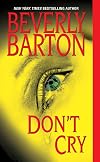
I do love a good mystery. A -good- mystery. Not a flaky, predictable, loosely written mystery with loose ends flapping all over the place. I like it when I don’t already know what’s going to happen by the end of the first five chapters.
This book delivered.
Amazon.com and several reviews I’ve read of it list this book alternately as a Mystery/Thriller and a Romance. I would definitely put it more in the Mystery/Thriller category myself, though there is a bit of chemistry going on between the two main characters.
Audrey Sherrod is a grief counselor who occasionally offers her services to the Chattanooga police department. J.D. Cass is employed by the TBI (Tennessee Bureau of Investigation) and he’s investigating a new series of kidnappings and murders.
The prose is nice – it flows evenly forward even when the author switches narration from the third person to first (the victims and the killer). I also thought the pace was spot on – just enough happens to keep you newly informed and still wanting more every time you turn the page.
One of the biggest aspects of the novel that interested me was J.D.’s relationship with his teenage daughter, Zoe. She’s depressed over the loss of her mother to cancer, bitter because her father was never even known to her before her mother was diagnosed and nearly dead, and conflicted in general because of her stage of development. I love that the author did not make J.D. instantly a nominee for the Most Perfect Father of All Time show more award. He doesn’t know how to relate to this child who showed up and “ruined” his bachelor living and the author does a wonderful job of portraying the development of that relationship. I love that even a relatively minor character like Zoe had enough depth to make her memorable.
As far as the actual mystery part of this book goes, I’m rather pleased. I did not have a single inkling who the killer actually was until nearly the last two or three chapters, though of course there’s enough information to make you suspicious of a few key people.
Definitely a good read. show less
This book delivered.
Amazon.com and several reviews I’ve read of it list this book alternately as a Mystery/Thriller and a Romance. I would definitely put it more in the Mystery/Thriller category myself, though there is a bit of chemistry going on between the two main characters.
Audrey Sherrod is a grief counselor who occasionally offers her services to the Chattanooga police department. J.D. Cass is employed by the TBI (Tennessee Bureau of Investigation) and he’s investigating a new series of kidnappings and murders.
The prose is nice – it flows evenly forward even when the author switches narration from the third person to first (the victims and the killer). I also thought the pace was spot on – just enough happens to keep you newly informed and still wanting more every time you turn the page.
One of the biggest aspects of the novel that interested me was J.D.’s relationship with his teenage daughter, Zoe. She’s depressed over the loss of her mother to cancer, bitter because her father was never even known to her before her mother was diagnosed and nearly dead, and conflicted in general because of her stage of development. I love that the author did not make J.D. instantly a nominee for the Most Perfect Father of All Time show more award. He doesn’t know how to relate to this child who showed up and “ruined” his bachelor living and the author does a wonderful job of portraying the development of that relationship. I love that even a relatively minor character like Zoe had enough depth to make her memorable.
As far as the actual mystery part of this book goes, I’m rather pleased. I did not have a single inkling who the killer actually was until nearly the last two or three chapters, though of course there’s enough information to make you suspicious of a few key people.
Definitely a good read. show less
Veronica "Ronnie" Swan is 12 years old when she witnesses the murder of her two younger sisters. Her idealistic, picture perfect childhood is destroyed completely in that moment, for not only has she lost her sisters, she suddenly has to become the adult in the house. Her mother gives birth to baby brother Rafe just weeks after the death of the sisters and Ronnie has to spend the next year, until her mother can once again function through the grief, raising the baby.
This story of a child growing to womanhood, having to choose between forgiveness or retribution, was a good read. The Swan family has to lean very heavily on their faith (they are Mormons) to cope, and it is this faith that sees Ronnie through.
Unfortunately, I feel approximately half of the book was written a bit loosely. The author tightens things up near the middle and finishes solidly, though, so I at least finished with a sense that everything was tidy and complete.
This story of a child growing to womanhood, having to choose between forgiveness or retribution, was a good read. The Swan family has to lean very heavily on their faith (they are Mormons) to cope, and it is this faith that sees Ronnie through.
Unfortunately, I feel approximately half of the book was written a bit loosely. The author tightens things up near the middle and finishes solidly, though, so I at least finished with a sense that everything was tidy and complete.