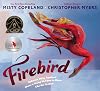
Although this book is told from the perspective of a young ballerina questioning how she could ever achieve what Misty has achieved, it really is the story of the importance of hard work, perseverance, and lifting others up.
2015 Coretta Scott King Illustrator Award Winner - Christopher Myers
2015 Coretta Scott King Illustrator Award Winner - Christopher Myers
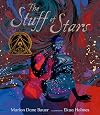
This text describes the origin of our universe and how everything on earth is made from stars. This book would pair nicely with a science unit on space. Features descriptive language and beautiful, colorful pictures.
Coretta Scott King 2019 Illustrator Winner - Ekua Holmes
Coretta Scott King 2019 Illustrator Winner - Ekua Holmes
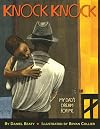
A heartbreaking, but beautiful story about a young boy who struggles to deal with the void in his life after his father leaves. The Author’s Note tells that this is a true story based on the author’s experience of losing his father’s presence in his life, due to incarceration. This book does a nice job of normalizing the experience for children who are dealing with the loss of a parent while offering hope - that they can grow up and realize all of their dreams. That love is still there.
2014 Coretta Scott King Illustrator Winner - Bryan Collier
2014 Coretta Scott King Illustrator Winner - Bryan Collier
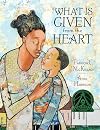
After James’s father dies, he and his momma have very little. However, when his reverend announces that they should bring useful items to church the following week, to help a family who lost everything in a fire, James tries to find something to add to his congregation’s Love Box. A beautiful story about giving from the heart.
2020 John Steptoe Award for New Talent (Illustrator) - April Harrison
2020 John Steptoe Award for New Talent (Illustrator) - April Harrison
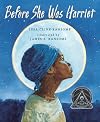
This book goes through the many names and many inspirational roles of Harriet Tubman. It has an interesting format, starting with elderly Harriet and then slowly progressing back to her days as a child. It ends summarizing her numerous amazing accomplishments.
Coretta Scott King 2018 Illustrator Books (Honor)
Coretta Scott King 2018 Illustrator Books (Honor)
Josephine: The Dazzling Life of Josephine Baker (Coretta Scott King Illustrator Honor Books) by Patricia Hruby Powell
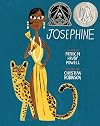
The amazing story of Josephine Baker, born into poverty in Saint Louis in 1906. Called Tumpty as a little girl, she always loved to dance. When she was only thirteen she fell in love with having an audience and ran off with The Dixie Steppers. By 1925 she had an offer to perform in La Revue Negre in Paris, France and became a huge star when Paul Colin painted her as the poster girl for the show. Next she starred in Folies Bergere where she "wriggled like a serpent, slunk like a panther, and boxed like a kangaroo." She made records, starred in three movies, and danced around the world. She even went back to New York and starred as the first and only black star of Ziegfeld Follies. Yet segregation and racism drove her back to France where she joined in the war efforts - joining the Red Cross, feeding the hungry and spying for France. She even won France's highest honor Legion d'Honneur. Later, she adopted 12 children from countries all over the world and raised them in a way that honored their own religions. She called them her Rainbow Tribe. Unfortunately, Josephine still spent tremendous amounts of money and she ended up evicted and living with her famous friends. At the age of 67, she attempted one last comeback at Carnegie Hall, which was wildly successful. She toured 17 cities and then returned to Paris, where she had a glowing performance on opening night. Thrilled by her success, she stayed up half the night, went home to bed, and never woke up. Paris gave her the show more funeral of a queen.
The author ends the book telling us how she did her research, suggesting further reading, and her quotation sources.
Coretta Scott King Book Award, Illustrator, Honor, Robert F. Sibert Informational Book Award, Honor, Boston Globe–Horn Book Award, Nonfiction Honor show less
The author ends the book telling us how she did her research, suggesting further reading, and her quotation sources.
Coretta Scott King Book Award, Illustrator, Honor, Robert F. Sibert Informational Book Award, Honor, Boston Globe–Horn Book Award, Nonfiction Honor show less
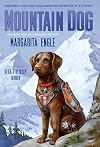
After Tony's mother goes to jail for running pit bull fighting rings, a social worker discovers a (previously unknown to him) great uncle for Tony to life with. His Tio Leo, a forest ranger, lives near the PCT (Pacific Crest Trail) with his SAR (Search and Rescue) dog, Gabe. Tony has led a very unhappy life with little love in it, but slowly, as his Tio shows him how to train SAR dogs and teaches him about the wildlife biology along the PCT, Tony slowly starts to open up. One of the biggest events in the story is when Tony starts looking for a missing hound dog and hunter and gets lost himself.
There are a lot of different subplots - Tio Leo and Tony's mother were both immigrants who escaped from Cuba. Although, he doesn't know much about his family's history, toward the end of the book, Tony realizes he would like to know more about his heritage. Tony's mother is a very selfish character. She does have one scene where Tony thinks she might change, but for the most part she hurts his feelings by refusing to even show up for his visits. Finally, in school Tony doesn't think he will do well, but by forming a friendship with his bossy classmate Gracie, he starts to grow confident in his abilities and even starts a blog to teach others about wilderness survival skills.
There are a lot of different subplots - Tio Leo and Tony's mother were both immigrants who escaped from Cuba. Although, he doesn't know much about his family's history, toward the end of the book, Tony realizes he would like to know more about his heritage. Tony's mother is a very selfish character. She does have one scene where Tony thinks she might change, but for the most part she hurts his feelings by refusing to even show up for his visits. Finally, in school Tony doesn't think he will do well, but by forming a friendship with his bossy classmate Gracie, he starts to grow confident in his abilities and even starts a blog to teach others about wilderness survival skills.
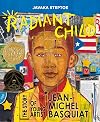
The life story of Jean-Michel Basquiat from his days as a young child in Brooklyn lying on the floor drawing beside his mother, to a young man in a splattered green jumpsuit painting on the Lower Eastside to a famous artist in expensive (but still splattered) suits.
This book has many themes, such as the importance of being true to yourself even if you are a bit different. (Jean-Michel's art is described as not clean, not in the lines but somehow beautiful.) It also touches upon mental health, as it references that his mother's mind is not well and she can no longer live with them. it shows the powerful love of family. (Even though, his mother can no longer live with them, she is still a powerful figure in his life.)
It also tells us that art is healing. When Jean-Michel is afraid after an accident, his mother gives him an anatomy book, and he draws the bones and body parts over and over until he is no longer scared. Finally, it teaches us that art is everywhere.
The book ends with an afterword: "More About Jean-Michel Basquiat."
Winner of the Randolph Caldecott Medal and the Coretta Scott King Illustrator Award
This book has many themes, such as the importance of being true to yourself even if you are a bit different. (Jean-Michel's art is described as not clean, not in the lines but somehow beautiful.) It also touches upon mental health, as it references that his mother's mind is not well and she can no longer live with them. it shows the powerful love of family. (Even though, his mother can no longer live with them, she is still a powerful figure in his life.)
It also tells us that art is healing. When Jean-Michel is afraid after an accident, his mother gives him an anatomy book, and he draws the bones and body parts over and over until he is no longer scared. Finally, it teaches us that art is everywhere.
The book ends with an afterword: "More About Jean-Michel Basquiat."
Winner of the Randolph Caldecott Medal and the Coretta Scott King Illustrator Award
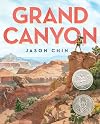
A picture book that teaches about the different climates, habitats, and species, as well as geological history of the Grand Canyon. This text is very technical, but it will teach a lot of scientific concepts and the pictures are absolutely stunning! My favorite pages were the ones in which Chin drew the animals and plants around the edges of the page, so that readers could identify what might be found in that particular habitat.
Caldecott Honor Book, Sibert Honor Book
Caldecott Honor Book, Sibert Honor Book
Raid of No Return (Nathan Hale's Hazardous Tales #7): A World War II Tale of the Doolittle Raid by Nathan Hale
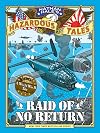
This book tells of the 1942 Doolittle Raid, which was in retaliation for the bombing of Pearl Harbor. 16 bombers, each with a crew of 5 men, flew over Japan targeting Tokyo and several other cities. The raid caused little damage materially but was extremely successful psychologically, as Japan had never before been attacked.
At first, I had a difficult time getting into the book- there were a lot of men to keep track of and it spent some time talking about the weapons and aircrafts, which was not particularly interesting to me.
However, this book taught me a lot about the dynamics in play before the bombing of Pearl Harbor, and I felt it did a wonderful job showing the bravery of the men and Chinese citizens who risked their lives to help them.
At first, I had a difficult time getting into the book- there were a lot of men to keep track of and it spent some time talking about the weapons and aircrafts, which was not particularly interesting to me.
However, this book taught me a lot about the dynamics in play before the bombing of Pearl Harbor, and I felt it did a wonderful job showing the bravery of the men and Chinese citizens who risked their lives to help them.
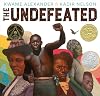
A beautiful poem that pays tribute to African American history. It opens, "This is for the unforgettable. The swift and sweet ones who hurdled history and opened a world of possible. The ones who survived America by any means necessary. And the ones who didn't."
In the afterward, Kwame Alexander tells the reader that he started writing the poem after Barack Obama became the first African American president because he wanted to write a poem tell his daughter about the forgotten American history of people who had to rise up to create a world where where a black president was possible. His poem, he says in the afterward, are a tribute to both.
In the afterward, Kwame Alexander tells the reader that he started writing the poem after Barack Obama became the first African American president because he wanted to write a poem tell his daughter about the forgotten American history of people who had to rise up to create a world where where a black president was possible. His poem, he says in the afterward, are a tribute to both.
On a Beam of Light: A Story of Albert Einstein (Albert Einstein Book for Kids, Books About Scientists for Kids, Biographies for Kids, Kids Science Books) by Jennifer Berne
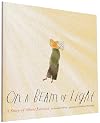
The life story of Albert Einstein. First, it focused on his childhood; he didn't speak for many years until a small compass showed him there were mysteries to the world that he wanted to understand. Then he started asking questions - many questions - and studying. After he graduated from college, he got a job in a government's office, where he had lots of time to think and develop the idea of atoms. Finally, the end of the book focused on his love of wandering around his town, deep in thought and in comfortable clothes, while pondering the mysteries of the universe.
The illustrations were perfect for this book, making Albert Einstein relatable and lovable to the reader.
A Junior Library Guild Selection, Booklist Top Ten Science Book of 2013, and more...
The illustrations were perfect for this book, making Albert Einstein relatable and lovable to the reader.
A Junior Library Guild Selection, Booklist Top Ten Science Book of 2013, and more...
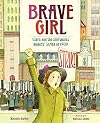
The story of a young Ukrainian immigrant Clara Lemlich who, after arriving in America, was hired as a garment worker. When the men in the factory started to talk of striking, they didn't believe the girls would be tough enough to follow them. But Clara started urging the girls to fight for their rights and strike. She led walk outs and pickets. She was arrested 17 times and had six ribs broken, but still she continued. When small strikes weren't affecting any change, Clara spoke up and started the largest walk out in women's history. All winter long, the strike went on. By the time it ended, hundreds of factory owners agreed to let their workers start unions, shortened the work week, and raised the worker's salaries. The strike inspired women walkouts in Philadelphia and Chicago.
At the end of the story, there is more information about the garment industry.
At the end of the story, there is more information about the garment industry.
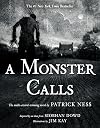
Conor is dealing with a lot. His mother has cancer and needs to go in for specialized treatment, so he needs to go stay with his grandmother, even though they don't exactly see eye to eye. His father, who has started a new life for himself with his family in America, comes to visit. He is being bullied by a trio of boys at his school, but he doesn't want to tell anyone to make it stop. To compound matters, at 12:07, the giant yew tree in his backyard is coming to life and paying him visits. The monster tells him that he will tell him three tales, and afterwards, Conor must tell him his tale. The tales anger Conor because they aren't straightforward tales of good and bad. However, these tales are leading Conor towards something that he isn't ready to see.
Bram Stoker Award Nominee for Best Young Adult Novel (2011), Kate Greenaway Medal (2012), Galaxy British Book Awards for Children's Book of the Year (2011)
Bram Stoker Award Nominee for Best Young Adult Novel (2011), Kate Greenaway Medal (2012), Galaxy British Book Awards for Children's Book of the Year (2011)
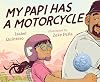
This is a story about a young girl taking a motorcycle ride with her father throughout their town. I liked that it gave positive portrayals - the young girl likes working with her father on his motorcycle and their family relationships seem very loving. I liked that the drawings really helped the reader understand what was happening - both in the story and in her imagination. It was a sweet tribute to families, towns that are changing but are always a part of us, and the immigrants who helped make those towns.
Pura Belpré Honor
Pura Belpré Honor
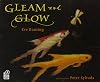
The story of Viktor and his family during the Bosnian War. After his father leaves to fight with the Liberation Army, his family must decide how long they can safely remain in their village. After watching many refugees pass their home, they decide they too must leave. Seeing that the only way two fish, a refugee left with them, might survive, Viktor slips them, Gleam and Glow, into their pond. When they return, after months in a refugee camp, pretty much everything is destroyed - except for their pond teaming with beautiful fish.
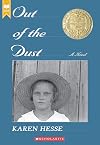
The story of Billie Joe and her family during the Dust Bowl/Great Depression. A beautiful piece of writing; it truly makes you feel as though you are experiencing what is happening right next to the protagonist's side. However, at the same time, this is extremely depressing. Things seem incredibly bleak for the family, and then something happens that changes everything. Her father leaves a bucket of kerosene next to the stove, which Billie Joe's mother mistakes for water. When her mother runs to get her father to help put out the fire, Billie Joe doesn't realize she is coming back to the house and when she throws the bucket out the door, it catches her pregnant mother on fire. Eventually, badly burned by the fire, her mother dies while giving birth to her brother who also dies.
After feeling alone and isolated for too long, especially after noticing that her father has "spots" on his face that remind Billie Joe of her grandfather's cancer, she leaves, hitching a ride West on a boxcar. However, after an encounter with a man who has left his family, Billie Joe realizes that she needs to return home. When she returns, she talks with her father about the things that are weighing on her and they begin to forgive each other for everything that has happened. Eventually, they find a new "normal" alongside Louise, a woman who understands and loves them both.
Newbery Medal and Scott O'Dell Award
After feeling alone and isolated for too long, especially after noticing that her father has "spots" on his face that remind Billie Joe of her grandfather's cancer, she leaves, hitching a ride West on a boxcar. However, after an encounter with a man who has left his family, Billie Joe realizes that she needs to return home. When she returns, she talks with her father about the things that are weighing on her and they begin to forgive each other for everything that has happened. Eventually, they find a new "normal" alongside Louise, a woman who understands and loves them both.
Newbery Medal and Scott O'Dell Award
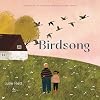
This book is divided into the seasons. It begins in the spring with a young Native American girl and her mother leaving their home by the sea and going to live in the countryside. Although she is reluctant at first, she becomes friends with her elderly neighbor Agnes and as the seasons progress, feels at home in their new setting. This is just soft, lovely book about sorrow and the healing power friendship and kindness. Several Cree words are used in the story and this is a beautiful, multicultural book to add to classroom libraries.
An American Indian Youth Literature Honor Title and A 2020 Boston Globe—Horn Book Award Honor Title
An American Indian Youth Literature Honor Title and A 2020 Boston Globe—Horn Book Award Honor Title
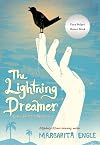
This is the fictionalized biography of Cuban abolitionist, Gertrudis Gomez de Avellanda, otherwise known as Tula. When the novel opens, Tula's mother is planning her engagement, upon her 14th birthday, to a very wealthy man. Tula's mother does not understand her daughter's desire to read and write, which she considers manly interests. The only place Tula can escape her mother's judgement is the convent, where the nuns allow her to read all that she wants, and it is there that she reads the words of Cuban abolitionist Heredia, which deeply inspire her.
Told in verse, predominantly from Tula's perspective. (Although occasionally it offers her mother's, brother's, or Caridad's, a slave to their family who was freed by her father, perspective.)
This book was equally inspiring and sad, as at the end of the novel, Tula fell in love only to become involved in a rather sad love triangle.
In the Historical Note, the author explained to the reader what elements were fictionalized in the story and how forward thinking she was, "Avellaneda not only believed that slaves should be freed and women should choose their own husbands; she was bold enough to portray interracial marriage and voluntary marriage as completely normal." However, she had a sad personal life filled with broken love and disappointment, which was also described in the note.
Pura Belpre Honor
Told in verse, predominantly from Tula's perspective. (Although occasionally it offers her mother's, brother's, or Caridad's, a slave to their family who was freed by her father, perspective.)
This book was equally inspiring and sad, as at the end of the novel, Tula fell in love only to become involved in a rather sad love triangle.
In the Historical Note, the author explained to the reader what elements were fictionalized in the story and how forward thinking she was, "Avellaneda not only believed that slaves should be freed and women should choose their own husbands; she was bold enough to portray interracial marriage and voluntary marriage as completely normal." However, she had a sad personal life filled with broken love and disappointment, which was also described in the note.
Pura Belpre Honor
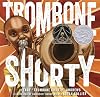
The true story of a young boy growing up in New Orleans with a love of music. This story shows the importance of determination; "I listened to my brother play songs over and over, and I taught myself those songs, too. I practiced day and night, and sometimes I fell asleep with my trombone in my hands." It also shows that you don't need a lot - just dedication - to become great. (He and his friends made their own instruments until they could get real ones.)
The Author's Note is incredibly inspiring. It includes pictures of Troy Andrews (otherwise known as Trombone Shorty) playing the trombone, as just a small child. It also reiterates the importance of hard work, "The only reason I succeeded as a musician was because I practiced every day. Practicing was easy to do, because I loved playing music so much! I knew that if I just kept playing, good things would happen to me. I felt it in my bones." It also talks about his musical accomplishments and his desire to give back to New Orleans and to children around the world. "I wanted to write this book to try to inspire hope in kids who might be growing up under difficult circumstances but who also have a dream, just like I did. I'm living proof that as long as you work hard, you can make your dreams take flight."
The pictures were painted in watercolor and collage and are a beautiful tribute to music and the culture of New Orleans.
Caldecott Honor Book and Coretta Scott King (Illustrator) Award Winner
This was a great book with an show more inspirational message! show less
The Author's Note is incredibly inspiring. It includes pictures of Troy Andrews (otherwise known as Trombone Shorty) playing the trombone, as just a small child. It also reiterates the importance of hard work, "The only reason I succeeded as a musician was because I practiced every day. Practicing was easy to do, because I loved playing music so much! I knew that if I just kept playing, good things would happen to me. I felt it in my bones." It also talks about his musical accomplishments and his desire to give back to New Orleans and to children around the world. "I wanted to write this book to try to inspire hope in kids who might be growing up under difficult circumstances but who also have a dream, just like I did. I'm living proof that as long as you work hard, you can make your dreams take flight."
The pictures were painted in watercolor and collage and are a beautiful tribute to music and the culture of New Orleans.
Caldecott Honor Book and Coretta Scott King (Illustrator) Award Winner
This was a great book with an show more inspirational message! show less
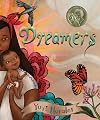
The story of Yuyi Morales who traveled with her two month old son, Kelly, from Mexico to El Paso, Texas. They felt out of place and unsure until they went into a public library, which made them feel at home, safe, and inspired. This book is a love song to books and libraries. "One of the most important things I learned at the library is that through books we can find our path and purpose," Yuyi tells us at the end of the book in the section "My Story." It is also a love song to immigrants, "all immigrants, regardless of our status, are Dreamers: We enter a new country carried by hopes and dreams, and carrying our own special gifts, to build a better future."
After "My Story," the author shares "Books That Inspired Me (and Still Do), along with a small paragraph titled, "How I Made this Book."
What truly makes this books though are the illustrations - bold, colorful, beautiful; Yuyi used mixed media to create an absolute joyful work of art.
Pura Belpré Illustrator Award
After "My Story," the author shares "Books That Inspired Me (and Still Do), along with a small paragraph titled, "How I Made this Book."
What truly makes this books though are the illustrations - bold, colorful, beautiful; Yuyi used mixed media to create an absolute joyful work of art.
Pura Belpré Illustrator Award
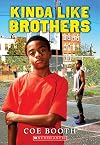
The story of Jarrett, a sixth grader who is forced to share his room with Kevon, when his mother takes in a foster baby - who just happens to have an older brother. Jarrett is already dealing with some complicated factors. His mom is a single mother with a boyfriend who wants to propose to her, he is in danger of having to repeat the 6th grade, as he has missed a lot of school due to his asthma, and he isn't quite sure how to talk to the girl he likes. When Kevon enters his life, Jarrett's frustration boils over, and the boys make several petty decisions as they get to know one another. Eventually both boys need to find a way to get along.
This books deals with complicated father issues, mental health, foster care and a lot of other issues that are especially timely now. I liked that it gave an authentic portrayal of adolescence life while managing to balance light and heavy concepts.
Sasquatch Book Award (2017)
This books deals with complicated father issues, mental health, foster care and a lot of other issues that are especially timely now. I liked that it gave an authentic portrayal of adolescence life while managing to balance light and heavy concepts.
Sasquatch Book Award (2017)
Separate Is Never Equal: Sylvia Mendez and Her Familys Fight for Desegregation (Jane Addams Award Book (Awards)) by Duncan Tonatiuh
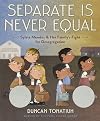
The story of Sylvia Mendez and her family who fought for desegregation after being told that Sylvia and her two brothers need to attend a Mexican only school, which was a shack surrounded by a cow pasture and an electric wire fence. After having difficulty getting people to sign his petition (as they were worried about the repercussions), Mr. Mendez was told that he should file a lawsuit, and so he hired the lawyer David Marcus. Even though it took over a year, the judge ruled in favor of the Mendez family, but the school board did not accept the ruling. Eventually, in 1947 the California Supreme Court ruled in favor of the family and desegregation was signed into California law.
Text Features - Author's Note shows pictures of the Mendez family, links this case to Brown vs The Board of Education and notes the implications of segregation that occurs to this day, Glossary, Bibliography, and Index.
This was a truly inspirational story that I was previously unaware of. One of the most powerful aspects, to me, was how the author linked this story to segregation that is still occurring in our educational system.
Pura Belpre Honor, Robert F. Sibert Informational Book Medal
Text Features - Author's Note shows pictures of the Mendez family, links this case to Brown vs The Board of Education and notes the implications of segregation that occurs to this day, Glossary, Bibliography, and Index.
This was a truly inspirational story that I was previously unaware of. One of the most powerful aspects, to me, was how the author linked this story to segregation that is still occurring in our educational system.
Pura Belpre Honor, Robert F. Sibert Informational Book Medal
The Princess and the Warrior: A Tale of Two Volcanoes (Americas Award for Children's and Young Adult Literature. Commended) by Duncan Tonatiuh
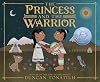
Winner of the Pura Belpre award, this tells the story of a beautiful princess Izta who for falls in love with a brave Aztec warrior Popoca after previously rejecting many suitors. However, her father, the emperor, is not as excited by the match. As he knows Popoca's reputation, he makes a deal with him that if he defeats his enemy Jaguar Claw, he will let him marry his daughter. Every time, during the fierce battle Popoca is about to be defeated, he thinks of his beloved princess and battles his way back. When it becomes clear that Popoca is going to win, Jaguar Claw pays one of Popoca's messengers to go to the princess, tell her Popoca is dead, and offer her a potion to "soothe her grief." Despondent, Izta takes the potion and falls into a deep sleep. Popoca cannot wake her, so he carries her up the mountain, hoping the cold air will revive her. When it does not, he lies by her side determined to keep his word to never leave her. Eventually two volcanoes emerge from where they lay. One dormant and the other, every once in awhile, spewing ash and smoke in order to attempt to awaken his beloved.
Included: author's note explains what is known about this legend, glossary provides translations for words spoken in Nahuatl, and a bibliography.
Art is inspired by Mixtec codices and was hand-drawn and then collaged digitally.
Pura Belpre Award
Included: author's note explains what is known about this legend, glossary provides translations for words spoken in Nahuatl, and a bibliography.
Art is inspired by Mixtec codices and was hand-drawn and then collaged digitally.
Pura Belpre Award