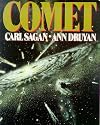
I purchased this book more than once. I bought the book before Halley's Comet returned in 1986. February in Portland is perhaps the worst place and time to comet watch and I was greatly disappointed. It took me until 2018 to read this book and it was more fascinating than I can imagine. I will give copies of these books to my sons. Hopefully they will read it before 2061. Much of the informational is historical so it will still have relevance. It should be fun to see how far astronomy will have advanced by then.
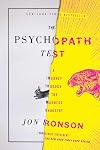
I read this book in less than 24 hours. It is light but engrossing. I guess I've been reading a lot of dense material lately so this was a bit like drinking water.
It starts off with a mysterious book that has been sent to top scientists and meanders around the world looking for psychopaths.
It starts off with a mysterious book that has been sent to top scientists and meanders around the world looking for psychopaths.
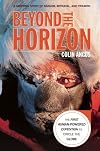
I am not a traveler but I love reading about people who do. Actually, I'm interested in people who are adventurers. It starts out as a buddy book but the partnership quickly falls apart when Tim, the partner, romances Yulia the Siberian guide. Colin asks his girlfriend to join him from Moscow to Lisbon and from there, an ocean crossing complete with two hurricanes, two tropical storms and one crammed rowboat. The second half of the trip and the book is slightly romantic as Colin finds out that Juile really is his soul mate and better half.
I wasn't going to read this book but I keep getting drawn in by people who choose to put themselves in peril and hardship. Colin also wrote a book about his Amazon adventure. He also wrote, "Lost in Mongolia" but it isn't in the library collections.
I wasn't going to read this book but I keep getting drawn in by people who choose to put themselves in peril and hardship. Colin also wrote a book about his Amazon adventure. He also wrote, "Lost in Mongolia" but it isn't in the library collections.
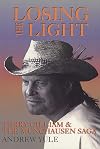
The book puts the blame for all the troubles on the greatest producer in his own mind Thomas Schuley. What I gained from the experience of reading this book is that great people (Terry Gilliam) are not just great because of the things that they do, but their resilency in the face of disaster. Gilliam should never have worked again- especially considering his aborted Man of LaMancha project and the tribulations from Brazil. But he does.
The book itself is an accountant's dream. There were lots of figures flying and it was very confusing. I recomend writing down a character and relationship diagram to keep all the players straight. I was hoping for more anecdotes from the filming process but it mostly focused on politics and lawyering. I liked the story about the traquilized tiger.
The book itself is an accountant's dream. There were lots of figures flying and it was very confusing. I recomend writing down a character and relationship diagram to keep all the players straight. I was hoping for more anecdotes from the filming process but it mostly focused on politics and lawyering. I liked the story about the traquilized tiger.
I was able to read the book in a day. Not necessarily because "it was that good", I just wanted to finish reading it so I could get on with my life. It is not a book I wanted to hang on to for a long period of time.
Murray's credentials seems to be that he had kids in school at one time, and that he went to Harvard. His main thesis is that only 10% of the most academically gifted should be allowed into college. I'm guessing that he just barely made it at 10% and wants to shut the door behind him. After all, it is the elite 10% (1%?) who run everything anyway so stop pretending that it isn't. And stop wasting everyone's time by trying to force people to be who they are not.
His four simple truths are:
1. Ability varies.
2. Half the children are below average.
3. Too many people are going to college.
4. America's future depends on how we educate the academically gifted.
They are not just simple truths, they are simplistic. It is over-simplistic. The book reads like a very long letter to the editor.
The book is not without its merits. My favorite quote can be found on the last page: "They (children) will have succeeded if they discover something they love doing and learn to do it well." I can't argue with that.
Murray's credentials seems to be that he had kids in school at one time, and that he went to Harvard. His main thesis is that only 10% of the most academically gifted should be allowed into college. I'm guessing that he just barely made it at 10% and wants to shut the door behind him. After all, it is the elite 10% (1%?) who run everything anyway so stop pretending that it isn't. And stop wasting everyone's time by trying to force people to be who they are not.
His four simple truths are:
1. Ability varies.
2. Half the children are below average.
3. Too many people are going to college.
4. America's future depends on how we educate the academically gifted.
They are not just simple truths, they are simplistic. It is over-simplistic. The book reads like a very long letter to the editor.
The book is not without its merits. My favorite quote can be found on the last page: "They (children) will have succeeded if they discover something they love doing and learn to do it well." I can't argue with that.
Bill Bryson is fast becoming one of my favorite authors. He tells the stories behind the things and places in his pastoral house. It is similar to "A Brief History of Practically Everything". His style has us bouncing across the planet and through space and back again. Sometimes I had a hard time following what time period he was referring.
It's got a lot of tips that would help first timers and reminders for people who are experienced. Summed up: "When you give these little talks of yours- have a point. It makes it so much more interesting for the listener." And, like getting to Carnegie Hall..."practice, practice, practice."