This book seems like a bit of a hen's tooth to my mind. A fascinating, readable, very comprehensive yet also incredibly detailed dive into a part of history I really knew very little about going in.
Gives all sorts of facts, figures and juicy details whilst still keeping them, well, juicy. A dry tome of events and statistics, this ain't.
Somehow the author covered his subject in painstaking detail without making it any less of an enjoyable narrative. The subject itself may sound kind of niche, but through that subject the book takes a good look at a dazzlingly wide array of subjects - and of course, I've come away with an understanding of West Point (and the American military as a whole) that is 100% improved on the next-to-nothing I knew before.
Gives all sorts of facts, figures and juicy details whilst still keeping them, well, juicy. A dry tome of events and statistics, this ain't.
Somehow the author covered his subject in painstaking detail without making it any less of an enjoyable narrative. The subject itself may sound kind of niche, but through that subject the book takes a good look at a dazzlingly wide array of subjects - and of course, I've come away with an understanding of West Point (and the American military as a whole) that is 100% improved on the next-to-nothing I knew before.
Fantastic book.
Not only is the whole thing a satisfyingly gritty display of heroics in the face of a hopeless struggle, having such a unique viewpoint on an often overlooked bit of history is fascinating - whether it's based on fact or not.
Probably the only thing that bugged me was a line that went something like, "I not once saw him smile", only for the character in question to be described as smiling on at least two occasions later in the book.
Perhaps that sort of grim, fatalistic smirk didn't count as a real smile to the protagonist's mind, due to their lack of genuine warmth? I don't know, but I'll let it slide.
Not only is the whole thing a satisfyingly gritty display of heroics in the face of a hopeless struggle, having such a unique viewpoint on an often overlooked bit of history is fascinating - whether it's based on fact or not.
Probably the only thing that bugged me was a line that went something like, "I not once saw him smile", only for the character in question to be described as smiling on at least two occasions later in the book.
Perhaps that sort of grim, fatalistic smirk didn't count as a real smile to the protagonist's mind, due to their lack of genuine warmth? I don't know, but I'll let it slide.
Good book. Perhaps even very good.
Somehow it reminds me of One Hundred Years of Solitude, oddly enough, and I don't think it's just because my copies of both were printed and bound by the same publisher. I almost gave it four stars, but when I tried to think of a reason why it was a struggle. I guess I would have liked more waffle, more "screen time" for the wide variety of fascinating minor characters, but perhaps that's just me. It says everything it came to say, I suppose.
I will probably seek out more of DeLillo's work at some point - this is the first book of his I've read - and that's a pretty sure sign of having enjoyed something, right?
Somehow it reminds me of One Hundred Years of Solitude, oddly enough, and I don't think it's just because my copies of both were printed and bound by the same publisher. I almost gave it four stars, but when I tried to think of a reason why it was a struggle. I guess I would have liked more waffle, more "screen time" for the wide variety of fascinating minor characters, but perhaps that's just me. It says everything it came to say, I suppose.
I will probably seek out more of DeLillo's work at some point - this is the first book of his I've read - and that's a pretty sure sign of having enjoyed something, right?
There is a lot one could probably say about this book, but I'll just say that in my humble opinion, while there was plenty of action, twists, turns and laughs amid the incessant philosophising, said philosophising did tend to repeat itself somewhat after a while.
For example (mild spoiler): I can no longer even read the phrase "a philosopher who thought himself into a corner" without seething with rage. Damn, I proof-read it just now. I'm going to post this and go take a few deep, calming breaths.
Overall it was reasonably entertaining, though, so don't let me turn you off it.
For example (mild spoiler): I can no longer even read the phrase "a philosopher who thought himself into a corner" without seething with rage. Damn, I proof-read it just now. I'm going to post this and go take a few deep, calming breaths.
Overall it was reasonably entertaining, though, so don't let me turn you off it.
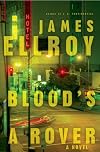
Found this secondhand and hadn't read the previous two books, so I was a bit lost at first, but this still definitely works as a standalone novel. Can't really say much more without having read the rest of the trilogy, but to my mind this was very different to the Ellroy I've read before, with a lot more in the way of international intrigue, conspiracy, sorcery and general political skullduggery, whilst still oozing noir attitude and immersing you in the dank underbellies of the cities it's set in - primarily LA, but there are some more exotic locales as well.
Might shock or open a few wounds for some readers, given its basis in modern history and its utter refusal to pull any punches as far as I could see, but for those who can stomach all that it's an interesting read on multiple levels.
Might shock or open a few wounds for some readers, given its basis in modern history and its utter refusal to pull any punches as far as I could see, but for those who can stomach all that it's an interesting read on multiple levels.
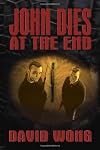
You'll come to love the characters, you'll laugh at their dumb jokes, and you'll share in their existential dread as your sanity erodes whilst you foolishly re-read this book in an airport departure lounge, barely functioning on two hours sleep and far too much coffee.
That was my experience, at least. It was just as brilliant the second time around.
I feel confident in saying this is one of the best "horror" novels ever written. Probably one of the best novels in various other categories, too, but what would I know?
That was my experience, at least. It was just as brilliant the second time around.
I feel confident in saying this is one of the best "horror" novels ever written. Probably one of the best novels in various other categories, too, but what would I know?
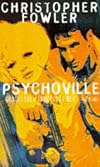
This is one of those half-remembered books from long ago that I'm sure did a real number on me and my impressionable mind when I was a kid far too young to be reading this kind of thing. 10/10 five stars amazing.
I mean, nostalgia probably has something to do with it, too - maybe if I read it for the first time today it wouldn't have much to offer, let alone the level of shock value it probably had for a kid. Maybe books of this sort, edgy but comical and thoughtful, are a dime a dozen these days (if that's the case, feel free to recommend some).
I think it probably still stands on its own merit. Maybe. I actually finished re-reading it months ago but didn't get around to updating this, so the impression it made on me as an adult is perhaps not so fresh in the memory.
I was just pretty stoked to find and re-read a book I'd mostly forgotten about, in any case.
I mean, nostalgia probably has something to do with it, too - maybe if I read it for the first time today it wouldn't have much to offer, let alone the level of shock value it probably had for a kid. Maybe books of this sort, edgy but comical and thoughtful, are a dime a dozen these days (if that's the case, feel free to recommend some).
I think it probably still stands on its own merit. Maybe. I actually finished re-reading it months ago but didn't get around to updating this, so the impression it made on me as an adult is perhaps not so fresh in the memory.
I was just pretty stoked to find and re-read a book I'd mostly forgotten about, in any case.
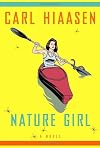
Didn't really go anywhere. Character development at a foetal level, most if not all of them seeming like vague, recycled composites of folks from the Hiaasen novels I remember reading in the past. The "self-proclaimed queen of lost causes" part sounds interesting and edgy but it didn't actually mean anything as far as I could see.
Somehow, despite very little actually happening, the novel still manages to seem extremely slow. I think I need to re-read Stormy Weather or something, since I definitely don't remember his other books having this problem...
I'm sure the Floridian wilderness is a wonderful place, though.
Somehow, despite very little actually happening, the novel still manages to seem extremely slow. I think I need to re-read Stormy Weather or something, since I definitely don't remember his other books having this problem...
I'm sure the Floridian wilderness is a wonderful place, though.
My introduction to Irvine Welsh (unless you count watching Trainspotting once), this book made me an instant fan of the author. Normally I don't read short stories, but I'm glad I made an exception here.
Welsh brings life to a wide variety of characters and situations, and most all of them are very enjoyable to read about. Of course, in my opinion his "drug addled young heroes" make for the highlights of the book; A Smart Cunt is the perfect way to close out the book and would have cheered up a non-short-story-reader like myself even if the quality of the book hadn't already changed my opinion on short stories by that point.
Welsh brings life to a wide variety of characters and situations, and most all of them are very enjoyable to read about. Of course, in my opinion his "drug addled young heroes" make for the highlights of the book; A Smart Cunt is the perfect way to close out the book and would have cheered up a non-short-story-reader like myself even if the quality of the book hadn't already changed my opinion on short stories by that point.
Fantastic!
A neurotic, marginalised main character struggling with his big dreams and worst qualities amidst a varied cast of characters, none of whom are perfect themselves - all against a sumptuous backdrop of '30s LA that, I reckon, makes you feel as though you're really there.
No idea why this book and its author aren't more well-known. I had never heard of Fante before coming across this in a secondhand store, but in my opinion it holds its own amongst other classics of the time.
A neurotic, marginalised main character struggling with his big dreams and worst qualities amidst a varied cast of characters, none of whom are perfect themselves - all against a sumptuous backdrop of '30s LA that, I reckon, makes you feel as though you're really there.
No idea why this book and its author aren't more well-known. I had never heard of Fante before coming across this in a secondhand store, but in my opinion it holds its own amongst other classics of the time.
Dang. That was a doozy of a book. So cheerful, so sad, so brutal in pretty much every sense of the word I'm aware of.
Hunting the Tiger: The Fast Life and Violent Death of the Balkans' Most Dangerous Man by Christopher S. Stewart
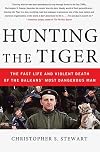
Wow. The book wasn't perfect by any means, but with a subject so fascinating it hardly had to be - plus, I feel like I have at least somewhat of an understanding of the horrifying confusion that was the '90s Balkan War(s) now.
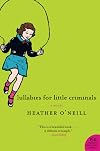
I liked it far more than the other book of hers I've read, The Lonely Hearts Hotel. That book, while I found it far more entertaining than I expected from the title, felt like it was trying a tad too hard to be all tragic and precocious and meaningful.
Lullabies, on the other hand, still manages to be very thoughtful and sappy, but believably so. It stays grounded in something that, at least for someone who has never been to late-20th-century Canada nor grown up in poverty, seems realistic enough.
I also really dug the short essay(s) in the back, about the author's childhood and the writing of the book. A lot more interesting than the average "about the author" tidbits one finds at the end of a novel.
Lullabies, on the other hand, still manages to be very thoughtful and sappy, but believably so. It stays grounded in something that, at least for someone who has never been to late-20th-century Canada nor grown up in poverty, seems realistic enough.
I also really dug the short essay(s) in the back, about the author's childhood and the writing of the book. A lot more interesting than the average "about the author" tidbits one finds at the end of a novel.
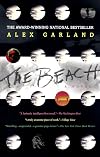
Absolutely fantastic. Veers between well-written abstract sequences and grounded realism with ease, and keeps one guessing right up to the very end without resorting ridiculous, forced-seeming twists.
In various parts I felt a character's dismay, disgust, triumph, seething anger, bewilderment, lust, smugness or absolute horror. Kinda made me long to sell all my belongings and go backpacking across southeast Asia, though, so reader beware, I guess?
In various parts I felt a character's dismay, disgust, triumph, seething anger, bewilderment, lust, smugness or absolute horror. Kinda made me long to sell all my belongings and go backpacking across southeast Asia, though, so reader beware, I guess?
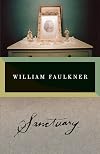
It's actually been quite a while (probably like, almost a year?) since I read this, I just haven't moved it off my 'currently reading' list. Now, there were actually quite a few books like that, partially due to simple laziness, partly due to barely remembering them, but in this case I'm pretty sure it's because the book was pretty bloody brutal and I was kind of traumatised after finishing it.
Now that I've finally given it a bare-bones review (from what I remember it was great. Horrifying and bleak, but great), maybe I can clear the rest of these long-since-finished (or abandoned) books off my virtual shelf.
Now that I've finally given it a bare-bones review (from what I remember it was great. Horrifying and bleak, but great), maybe I can clear the rest of these long-since-finished (or abandoned) books off my virtual shelf.
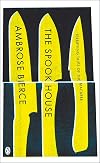
Some of the tales seem a little tame by today's standards, or occasionally to retread similar themes to others in the book, but the writing is sumptuous and most all of the stories at least manage to conjure up a powerful atmosphere.
I don't want to play favourites or spoil anything, but at least one of 'em managed to shock even one so desensitised as I - not bad for a bunch of stories that are at least a century old!
I don't want to play favourites or spoil anything, but at least one of 'em managed to shock even one so desensitised as I - not bad for a bunch of stories that are at least a century old!
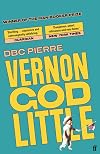
This has to be one of my new favourites. In my honest opinion it is a masterpiece.
I'm no literary scholar or anything so I don't really know what I'm talking about, but the one author I was reminded of in parts would have to be Irvine Welsh, with its mix of horror and hilarity and that same inevitable train wreck-y feeling his books tend to give you. My gut certainly feels like it's taken a similar number of vicious punches during the reading process.
Not sure why this book isn't better known, but then I'm sure there are any number of modern classics I am blissfully unaware of. This one is pretty damn special, though. Don't be put off by the conversational style of narration - that's the only reason I can think of for its surprisingly low rating on here, but anyone who gives up on it for that reason isn't just shooting themselves in the foot, they're blowing it clean off at the ankle.
I'm no literary scholar or anything so I don't really know what I'm talking about, but the one author I was reminded of in parts would have to be Irvine Welsh, with its mix of horror and hilarity and that same inevitable train wreck-y feeling his books tend to give you. My gut certainly feels like it's taken a similar number of vicious punches during the reading process.
Not sure why this book isn't better known, but then I'm sure there are any number of modern classics I am blissfully unaware of. This one is pretty damn special, though. Don't be put off by the conversational style of narration - that's the only reason I can think of for its surprisingly low rating on here, but anyone who gives up on it for that reason isn't just shooting themselves in the foot, they're blowing it clean off at the ankle.

A great, unique, down-to-earth war novel. Very thoughtful for its time, serving up suspense and action as well as plenty of humour and commentary on military life in the Korean War.
I had already enjoyed it a great deal, then the 'epilogue' - which actually describes the surprising series of real-world events that led to the book being written - was basically a whole epic saga of its own. Seriously, that short chapter at the end could make for a whole book (or movie adaptation!) itself.
I had already enjoyed it a great deal, then the 'epilogue' - which actually describes the surprising series of real-world events that led to the book being written - was basically a whole epic saga of its own. Seriously, that short chapter at the end could make for a whole book (or movie adaptation!) itself.

Great stuff. A few minor errors in the text but none bad enough to detract from the narrative.

Utterly fantastic.
A few poems about hunting and horsemanship were largely lost on me (though still interesting, for sure), but some of the rest have to be among the best verse I've ever read.
I'd already encountered a couple of them over the years - such as Unshriven which has long been one of my favourite poems - but the "dramatic lyric" Ashtaroth at the end of the book was certainly another highlight.
The only explanation I can think of for this collection's poor score here is that the others who have left ratings were forced to read it for school or some such. That seems to be a good way to turn students off an author for life, haha.
A few poems about hunting and horsemanship were largely lost on me (though still interesting, for sure), but some of the rest have to be among the best verse I've ever read.
I'd already encountered a couple of them over the years - such as Unshriven which has long been one of my favourite poems - but the "dramatic lyric" Ashtaroth at the end of the book was certainly another highlight.
The only explanation I can think of for this collection's poor score here is that the others who have left ratings were forced to read it for school or some such. That seems to be a good way to turn students off an author for life, haha.
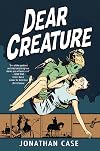
Found it a bit hard to follow at first, but it definitely grew on me as I got used to the chaotic (but lovely!) black-and-white art.
Would probably give it a 3.5 if I could.
Would probably give it a 3.5 if I could.
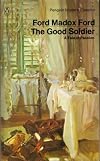
"It was a most amazing business, and I think that it would have been better in the eyes of God if they had all attempted to gouge out each other's eyes with carving knives. But they were 'good people'."
Long-winded and formally written in the extreme despite being framed more like an extended conversation, filled with digressions and no doubt with rather less shock value than it had a century ago, I nevertheless found myself thinking "damn, that was good" when at last I finished it.
I won't lie to you, there was a point in the middle of the book, when the basic outline of the sad tale had already been formed and the teller went back to flesh out every aspect of it with an at times excruciating amount of detail, where I was planning on giving it three or even two stars despite how nicely written it was. But, perhaps due to my becoming more immersed in the story or simply some form of literary Stockholm Syndrome, the book seemed to me to get back on track and I very much enjoyed the later parts, and the evolving details hit far harder than I'd imagined.
It offered a nice glimpse into various aspects of both English and American society of the era, too.
Now if you'll excuse me, I think I'm going to read something quick and (comparatively) cheerful next.
Long-winded and formally written in the extreme despite being framed more like an extended conversation, filled with digressions and no doubt with rather less shock value than it had a century ago, I nevertheless found myself thinking "damn, that was good" when at last I finished it.
I won't lie to you, there was a point in the middle of the book, when the basic outline of the sad tale had already been formed and the teller went back to flesh out every aspect of it with an at times excruciating amount of detail, where I was planning on giving it three or even two stars despite how nicely written it was. But, perhaps due to my becoming more immersed in the story or simply some form of literary Stockholm Syndrome, the book seemed to me to get back on track and I very much enjoyed the later parts, and the evolving details hit far harder than I'd imagined.
It offered a nice glimpse into various aspects of both English and American society of the era, too.
Now if you'll excuse me, I think I'm going to read something quick and (comparatively) cheerful next.
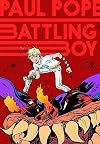
I normally loathe or at least dislike superhero stuff, no matter how hard the creators try to subvert the tropes of the genre, but for whatever reason I had great fun reading this.
Whether it's the art style, the dream-like setting or the sense of humour that, amazingly enough, connects, I don't know - but I really hope there's another volume. I enjoyed watching "Battling Boy" and his growing pains after being thrust suddenly into the role.
(MILD SPOILER: I feel like what he needs for future adventures is a badass, sturdy jacket. Oh well, time to go find out if they released any more.)
Whether it's the art style, the dream-like setting or the sense of humour that, amazingly enough, connects, I don't know - but I really hope there's another volume. I enjoyed watching "Battling Boy" and his growing pains after being thrust suddenly into the role.
(MILD SPOILER: I feel like what he needs for future adventures is a badass, sturdy jacket. Oh well, time to go find out if they released any more.)
I'm not sure what to rate this one. Perhaps it's more worth 2.5 stars, but I'll round up to three for the enjoyment (sometimes more like morbid fascination) it gave me.
There was something else I was gonna write here but I've forgotten.
There was something else I was gonna write here but I've forgotten.
I'd probably give it 4.5 if that was an option. I had my doubts at first but it built up to something pretty special! Nonetheless, I think my expectations were a bit too high.
I definitely plan on continuing with the series, though.
I definitely plan on continuing with the series, though.

For the most part more of a narrative poem (or a philosophical rant with poetic aspirations) than a novel, somewhat disjointed and abstract at times, but definitely a satisfying read throughout.
I was almost going to give it just three or even two stars at certain points, but the ending really won me over. Nice.
I was almost going to give it just three or even two stars at certain points, but the ending really won me over. Nice.

Okay, that was excellent. At first I was under the impression that its prose was quite simplistic and the book was mainly of interest just for the historical setting, but as it turns out it was extremely well-written.
A good mix of fact and fiction. Opening one's eyes to what went on and managing to entertain without pulling punches - rather, if anything it twists the knife. I can only imagine it would have been a very difficult book to write.
A good mix of fact and fiction. Opening one's eyes to what went on and managing to entertain without pulling punches - rather, if anything it twists the knife. I can only imagine it would have been a very difficult book to write.
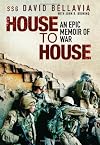
It's pretty damn hard to fault this book. I maybe wish the glossary extended to cover some of the tactical terms that were occasionally thrown about rather than mostly focusing on really basic stuff, but oh well.
Brutal, real, educational and sometimes even funny. Horrifyingly funny.
Brutal, real, educational and sometimes even funny. Horrifyingly funny.