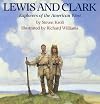
This was a straightforward book that gave a good overview of Lewis and Clark's expedition. It would be a good book to use when studying Lewis and Clark. It mentions the dog, Seaman. It also describes some of the Indian tribes they met along the way and describes some of the hardships they encountered during the trip. It also has a time line in the back and information about what happened to the members of the Corps of Discovery after the expedition.
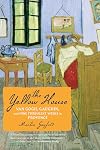
This book was really interesting. I never knew van Gogh and Gauguin lived together. I thought the way the author described their different styles of painting and their temperament would help students gain some knowledge of these famous artists.
I would use this in my bibliography unit - grades 3 - 6.
I would use this in my bibliography unit - grades 3 - 6.
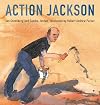
The book tells a little about Jackson's painting technique and what influenced him, but I wish it had added more details to his story. The back of the book gives much more information about his short life in the author's note. The author obviously did a lot of research to write the book - I wish it was longer. Grades 2 - 5
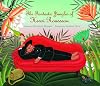
Wonderful illustrations. Good information on Rousseau's life. The author of the book gives detailed information about his failures -- good life lessons. I would definitely use this book in my bibliography unit. (grades 2 - 5)
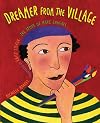
Great details about Chagall's life. I love the bright illustrations. It made me want to know more about his life. There is a glossary of terms at the back of the book but no websites or bibliography. Could be used in classroom - grades 2 - 5. You would need to have some prior knowledge of world events to truly understand his life.
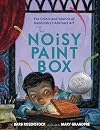
This would be a good way to introduce young children (prek - 3) to Kandinsky, but older students would want more details about his life and his art - It does include an author's note and additional sources.
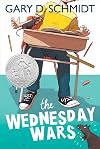
Schmidt captures Holling's personality wonderfully through his writing. The reader cheers for Holling's victories and laughs with him when things don't go as planned. The story focuses on Holling's 7th grade year and most of the story takes place at school. Holling has to stay with his teacher every Wed. while his classmates go to religious training (he is Presbyterian). At first he thinks his teacher hates him and is thinking of punishments for him to do because she has to wait with him every week. Soon she begins to use their time together in productive ways and turns him on to Shakespeare. The book reads like a diary of Holling's life, and I love how he comments on what is happening directly to the reader. This is one of my favorite characters in a book - he takes everything in stride and has a great sense of humor. The Vietnam War serves as a backdrop for the story and current events are interwoven throughout the book. A great book for 5 - 7th graders.
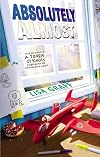
Graff does a great job portraying middle school life. Students will relate to the problems Albie encounters at school and at home. Albie's parents don't know how to help him, and don't fully understand why he struggles so much at school. Albie gains confidence through the support of his friends, teacher, and babysitter/nanny. Life isn't easy for Albie, but he learns to persevere and keep trying. A great book for fifth and sixth grade students who are trying to juggle social issues at school and expectations of parents.
Graff portrays middle school in a realistic way students can relate to. This is Albie's story of trying to understand the world. Albie's parents don't know what to do to help him, and are not willing to admit he needs individualized attention. Albie struggles in school and wants to do well, but everything is a challenge for him. With the support of his teacher, friends, and babysitter/nanny, Albie learns to believe in himself. A great book for fifth/sixth graders. Some fourth graders would enjoy the book as well.
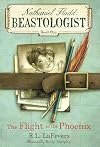
This is a quick, easy read. Third through fifth graders would enjoy the novel. Nate is a likable character and students will like the elements of magic in the book. This is the first book in the series. Reluctant readers would enjoy the book .
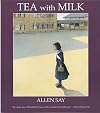
A great companion piece to use with "Grandfather's Journey." This is the story of Allen Say's mother. She is raised in California but her parents move her to Japan after she graduates high school. She is treated like a foreigner because she doesn't really speak the language and doesn't understand the customs. Beautiful illustrations.
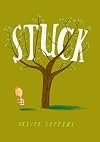
A humorous story that young children will enjoy. After Floyd's kite gets stuck in a tree, he begins to throw ALL sorts of things into the tree to get it out. Of course the things he throws in the tree get progressively stranger and stranger. Aimed for the pre-K to 1st grade crowd.
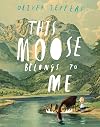
The mixed media approach of this book is half the charm. It is a quirky story about a boy and a moose. Although it is a children's book, Jeffers uses vocab. above the ability of most 1st graders (enraged, haste, perilous, suited, etc.). Students of all grades in elementary school would enjoy this book. It's a fast read.
Balloons over Broadway: The True Story of the Puppeteer of Macy's Parade (Bank Street College of Education Flora Stieglitz Straus Award (Awards)) by Melissa Sweet
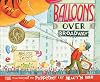
I loved this book-- what a fascinating story about the beginnings of the Macy's Day Parade and the fabulous helium filled creations. I did not know who Tony Sarg was until I read this story. Melissa Sweet is a brilliant illustrator - I love all her books. There is a bibliography in the back with websites/books to explore. The end papers have an original advertisement from Macy's advertising the first parade.
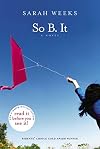
Heidi, a 12 yr. old girl, grows up with her handicapped mother and a kind neighbor who lives in an adjoining apt. and acts as her surrogate mother. Heidi does not know anything about her mother and her mother is unable to communicate very well. After finding a camera and developing the film, she discovers clues to her mother's past. This sends her on a personal journey of discovery. Heidi is a strong, likable character . The story's ending surprised me. The book seems targeted for mature fifth graders and up (questions of how Heidi was conceived may arise).
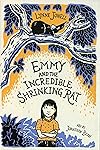
When Emmy's parents inherit a lot of money, things begin to get really strange for Emmy. Her parents don't seem to be interested in her anymore although they once were attentive to her. A suspicious nanny, Miss Barmy, is now in control of Emmy's life. When Emmy is bitten by the classroom rat, she can suddenly understand what he is saying. When her classmate is bitten twice, he shrinks to the size of a rat. Emmy soon finds out the evil plans of MIss Barmy and must try to stop her. A great read for students in 4-6th grades. It was a fast-paced, fun mystery/adventure. Loved it.
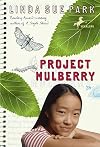
Jules, a sixth grade Korean-American girl, and her friend, Patrick, work together on a state fair science project - raising silkworms. Jules does not want to raise silkworms because she feels the project calls attention to her background. However, as the worms start to grow, Jules becomes more involved in the project and probably a little too invested in the well-being of the silkworms. The book also brings up prejudice and racism - Jules' mom does not like her to spend time at the neighbor's house when she is collecting the mulberry leaves and Jules believes it may be because Mr. Dixon is black. I wish she had confronted her mom, but she never does. The only complaint I have about the book is the intrusion of the author- throughout the book the protagonist has brief conversations with the author. An interesting idea but it made the book feel choppy for me. A good book for 4-6th graders, girls especially.
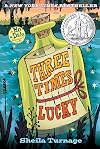
A lighthearted look about a small town coping with a mysterious murder. Our narrator, Mo, is a rising 6th grader who tries to solve the mystery with her best friend, Dale Earnhardt. Through Mo's eyes we get to know the people in the town and how their lives are intersected. This is also about Mo's unorthodox searching for her birth mother. It is a pretty fast read even though it is 312 pages. A good book to recommend to fifth grade readers. AR 3.9/ 9 points. Not really a third grade book.
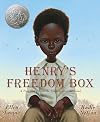
A great story to be shared with students of all ages. Henry's family is sold to other farms and he is left alone and hopeless. With the help of abolitionists, he mails himself to a free state- his journey is far from easy. It is a story of courage against all odds.
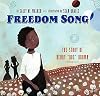
This is the story of Henry "Box" Brown. It is about growing up in slavery, marrying, and having his wife and children ripped from his life and sold to other farms. This story should be read with Henry's Freedom Box by Ellen Levine. The illustrations in this book are more primitive in style and the text is a little simpler.
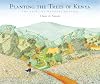
This is the inspirational story of Wangari Maathai, winner of the Nobel Peace Prize in 2004. I had not heard her story before reading this book. It is a story of hope and perseverance. Maathai helps the people of Kenya realize how their actions are destroying the environment and creating an unsustainable land. She teaches as many people as she can the importance of planting trees and taking care of the land. In 30 years, over 30 million trees have been planted- amazing!

A fun way to introduce the exclamation mark to students. It is also a story of finding your own voice and fitting in.
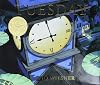
A fun adventure! One Tuesday evening, frogs begin flying around on lily pads. The people don't notice, but in the morning lily pads litter the town- the people can't figure out the mystery. The next Tuesday, pigs start to fly.

This is one of my least favorite Wiesner books. A little boy falls asleep and his imagination takes him on a fanciful journey.
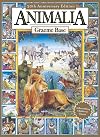
The illustrations are beautiful in this book. Children will like the description of each animal because of the interesting language. Great for expanding students' vocabulary.
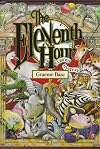
This is a story told in rhyme- students must look carefully at the pages to uncover the mystery- who ate the birthday feast. The back pages include a special "Top Secret" section that helps you to understand each illustration and find the clues to solve the mystery.
The reading zone : how to help kids become skilled, passionate, habitual, critical readers by Nancie Atwell
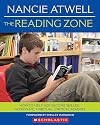
Nancie Atwell does a great job explaining how to practically set up a reading workshop. She includes forms to copy to help explain certain processes to students and gives examples of student writing to show teachers how the letter response - letter essays work in the classroom. I will definitely use some of her ideas this year in my reading classroom.
Pie by Sarah Weeks
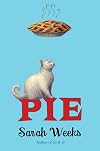
A fun novel that 4th - 6th graders would enjoy reading. Alice's Aunt Polly is a master baker- she is famous for her pies which she has won numerous awards for. She doesn't bake pies for money- people bring her ingredients and she turns them into pies. When she dies, she leaves her grouchy cat, Lardo, to Alice. Everyone wants to know her secret pie crust recipe but Polly's will is very vague- a mystery to find out where the recipe is ensues. It is a heartfelt book that celebrates friendship and family. A fun read.
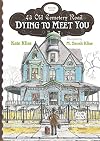
This is a fun story written in letters, emails, and newsletters. A washed-up mystery writer rents a haunted house that has a boy and his cat living in it. At first he is skeptical and doesn't believe in ghosts but then becomes convinced the writer ghost occupying the house is real. It is an easy read but a creative format for a book. Elementary students will enjoy reading the book.
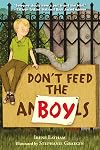
This story centers around a boy named Whit whose parents run a zoo. He has lived at the zoo his entire life and always been homeschooled. When he meets a troubled girl he calls the Bird Girl, his life changes. She becomes his first real friend and he is drawn into her fragile life which involves a verbally abusive father. Whit begins to question his relationship with his parents and the life he has at the zoo. This would be a good book for 4th - 6th graders.