The poems in Some Dredged Deep circle around three subjects: a war between the US and Canada, the poet, and the question of shock vs. surprise. While having more of the former two might have grounded the collection more solidly, I returned again and again to the last. Though there were moments of surprise--lines and phrases that made me look at the containing poem's subject in a new light--these moments were overwhelmed by moments of shock. Though shock can be an effective tool for building up to surprise, much of the shock didn't lead me to anywhere but the shocking image. For readers of horror who are explicitly looking for shock, I think this collection would satisfy.
 This review was written for LibraryThing Early Reviewers.
The poems in Some Dredged Deep circle around three subjects: a war between the US and Canada, the poet, and the question of shock vs. surprise. While having more of the former two might have grounded the collection more solidly, I returned again and again to the last. Though there were moments of surprise--lines and phrases that made me look at the containing poem's subject in a new light--these moments were overwhelmed by moments of shock. Though shock can be an effective tool for building up to surprise, much of the shock didn't lead me to anywhere but the shocking image. For readers of horror who are explicitly looking for shock, I think this collection would satisfy.
As a reader of speculative and mainstream literary poetry, I came to Catherine Moore's Borrowings of the Shan Van Vocht hoping to find what engages me in both: a careful examination of past beliefs set against the lives of those who embraced or fought against those beliefs, lyrically presented using startling and necessary detail. The chapbook achieves this and more. Moore's careful imagination of lives shaped by ancient beliefs about nature set against forensic detail of the bodies after their deaths and interments in bogs gives us a view into the horror of their deaths. From this, we see not only those lives that might have been, but we must also acknowledge the social structures that led to the ends of those lives. That we hear from elements of nature deepens the tension between the natural and the supernatural. A fascinating read, particularly for audiences of poetry, feminist literature, and historical fiction.
This review was written for LibraryThing Early Reviewers.
As a reader of poetry anthologies, I like to begin the book with an understanding of the editor's purpose in assembling the collection. In A Mind Apart: Poems of Melancholy, Madness, and Addiction, editor Mark S. Bauer provides a map of psychiatric research on the book's subject and a guide on how to view the poems in light of those frameworks. In spite of this strong introduction, once I began reading the poems, I kept asking myself who this book is for. Perhaps it's the arrangement of the poems, which are presented in chronological order. I found myself getting bogged down in the older work, and it wasn't until I reached the more modern work that I was drawn back into the book. (I've read a fair bit of pre-1900 poetry, but my area of focus in my studies was poetry of the 20th century, so I'll admit my bias here. I think it's also fair to say that the subject matter weighs on the reader, be prepared for that, too.) Bauer gives us categories ("melancholy," "sweet melancholy," "madness and reason," etc.), and the older work might have been more compelling to a lay reader to give us the chronological order within those categories, but many of the poems don't lend themselves to clear categorization, I'll grant. There is a good balance of insider and outsider poems in the book, as well as popular song lyrics. Overall, I'd say this book succeeds in what the editor set out to create, and recommend this anthology to anyone interested in the connection of mental illness and show more poetry, though I would say don't feel compelled to read in the order the poems are presented. show less
As a reader and writer of a fairly niche genre, I'm always looking for speculative poetry anthologies that work on multiple levels. First, as a reader, I want collections that challenge my ideas about the genre as well as introduce me to writers whose work I'm not familiar with. And second, when readers not familiar with speculative poetry ask me for recommendations, I want to be able to suggest collections that are accessible to both science fiction fans who don't normally read poetry as well as poetry readers who aren't familiar with SF tropes. Multiverse succeeds on both levels. I was delighted with the narrowed scope of the book--all the poems are science fiction, whereas most speculative poetry anthologies contain fantasy and horror poems as well--as well as the consistently solid quality of the poems within. I will be seeking out collections from poets whose work I wasn't familiar with before--many of the poets are outside the US, which is refreshing to me as a US-based poet who mostly encounters the work of other US-based poets. I'm also confident that readers not familiar with the genre will find much to enjoy in the book. A highly recommended read.
I'll admit that I adore a good novel about academic life, as many English majors who've gone on to other things tend to do. And a novel that promises a view into a historical moment--particularly one relevant to my studies--is one I can't miss. Thus, I had to read Julia Kristeva's The Samurai, a novel written by a preeminent theorist that includes fictionalized portraits of her contemporary intellectuals. While the novel lived up to its promise, the view into the world was one of the sensual and exalted world in which the characters lived, but it lacked something of the human ordinariness that even the most elite experience. I'd recommend this for readers interested in the milieu, but I'll add the caveat that, as a novel, the work left me cold.
The Voyager mission, and more specifically the Golden Records they carried with them, provide for Millennials an intriguing problem: what does it mean to be the first generation to be born after the launch of craft that carry what was purported to be the cultural story of humanity? (As a late Gen-Xer, I'm aware that most of us didn't have much input on the story either, but at least we were represented.) Anthony Michael Morena's collection of lyrical essays examines the story behind that story, who chose the representative music and languages and why, and the budding relationship between Carl Sagan and Ann Druyan. These essays cause us too to question now only how we should view the Golden Record but also how we should see any story that claims to be in any way global. A fascinating read, delicately balanced between history and Morena's reflections.
One of the reasons readers seek out poetry is that the genre offers a way of looking at the world that can be more expansive than, say, the essay or the short story. Lines break like worlds just out of view, and language calls us back to linger on what was just said or not said. This is the power of the work in Bryan Thao Worra's Demonstra, a collection of poems that reference, among others, figures of Lao myth, Grendel's mother, kaiju, and Lovecraft, and which ask us to consider whether these references resist closure just as poems do. Poems of note include "The Dream Highway of Ms. Mannivongsa," "The Last War Poem," and "What Is The Southeast Asian American Poem of Tomorrow?" which concludes the collection. This is a book I returned to a number of times, and I highly recommend it.
Perhaps the main concern science poems share with science fiction poems is how the language of science shapes the ways in which we see historical, current, or possible states of knowledge. Christina M. Rau's Liberating the Astronauts examines both science and science fiction in poems that take us from dorm rooms to outer space, from deeply personal relationships to chemistry and astronomy to the world-encompassing responses to space flights successful and disastrous. Poems of note include "Remembering the Challenger," "Opposition Night," and "Chem in Everyday Life." Highly recommended for readers of speculative and literary poetry alike.
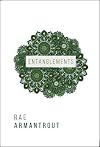
The best science communicators give their lay audiences points of entry into complex subjects at the same time as honoring that complexity. Poetry too has an appearance of complexity, often to the point of intimidating lay readers. That the poems in Rae Armantrout's chapbook Entanglements gives us approachable but multi-layered and considered examinations of concepts particle physics in everyday contexts speaks to both her power as a poet and her ability to communicate the intricacies of scientific concepts. The results are compelling poems that allow readers to see themselves as part of the forces we don't consider day-to-day. Highly recommended for readers of poetry, science, and science fiction.
Sisters of Tomorrow: The First Women of Science Fiction (Early Classics Of Science Fiction) by Lisa Yaszek
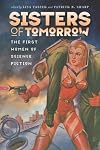
Sisters of Tomorrow provides a much-needed and fascinating contextualization of women in the field of science fiction, including closer examinations of the work of authors, illustrators and editors working in pulp magazines of the early 20th century. As a poet myself, I was most drawn to the section to the section featuring early speculative poets, particularly those writing poems in future contexts. Though there is, in the field of speculative poetry, a wider knowledge of women who wrote fantasy poetry (think Christina Rossetti's "Goblin Market, for example), there seems to be fewer well known early examples of women's science fictional poems. So I especially appreciated the included examples by Julia Boynton Green and Lilith Lorraine. Highly recommended for readers interested in the history of speculative fiction.
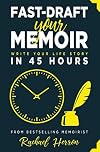
As a fan of Rachael Herron's writing podcasts, I bought Fast Draft Your Memoir despite the fact that I don't write in the genre. The advice on crafting story in the book can be generalized to fiction and, surprisingly, poetry. Ages ago, I stopped writing personal poetry probably for the same reason most writers would be hesitant to write memoir. Herron's advice on writing from life can be applied to poets working in the personal mode who share the concerns of memoirists. The warmth, wit, and wisdom in Herron's voice in her podcasts translates well to the page. Highly recommended for writers of any genre that includes putting the personal on the page.
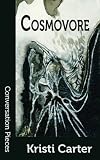
When a poet devotes an entire collection to a single speaker, we expect to see some shift in the character, which really is a shift in the way we see the world through the character's point of view. Kristi Carter achieves this through the poems of Cosmovore, in which the title character meditates on love, loss, and her consumption of the universe. Through poems that focus our attention on objects she consumes, we see her process a lost love through to a redemption of sorts. We realize that we're both part of the world Cosmovore devours and witness to its consumption. I highly recommend this compelling collection.
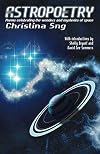
Short form poetry, as Christina Sng shows us in Astropoetry, can open up the vastness of the universe to its readers. The poems in this collection give us glimpses of planets, asteroids, stars, and other celestial bodies while asking us to question what we see. Some of the poems are meditations on what is, and others venture into the speculative, taking as their subjects travel to the outer planets' moons, Dyson spheres, and encounters with extraterrestrial beings. Readers who appreciate the wonders beyond our world and the sense of wonder science fiction can evoke will enjoy this collection.
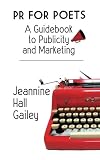
Marketing information specifically for poets is scarce in comparison to that available for authors of prose books. So, nearing the publication date of my first collection, I ordered a copy of PR for Poets as soon as I found out about it. Flipping through its pages, I found answers to questions I hadn't even seen approached elsewhere. In short, PR for Poets is a must read guide for authors of poetry books: Jeannine Hall Gailey's personal experience and that of the poets, editors, publishers, librarians, and PR professionals she interviews gives readers a road map for the months before and years after their books' publication dates. With practical action items and wise advice, this book has been extremely helpful to me, and I highly recommend it.
No Nonsense Technician Class License Study Guide: for tests given between July 2018 and June 2022 by Dan Romanchik KB6NU
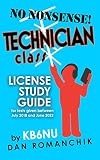
Upon downloading the question pool for the US amateur radio technician class license exam, I was overwhelmed: slogging through the 420-something questions presented in an order that didn't seem to progress smoothly from one topic to another looked like more of a challenge than I wanted to take on. So I did a bit of research and found recommendations for Dan Romanchik's No Nonsense Technician Class License Study Guide. Romanchik presents the questions in a far more logical progression, and the explanations in the book are clear, thorough, and useful. After using this guide as my primary study tool, I easily passed the test on the first go. I recommend this guide for anyone studying for the technician class license. And I plan on buying Romanchik's guide when I start studying for the general class license exam.
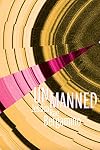
In UNMANNED Jessica Rae Bergamino continues the story of the Golden Record by giving voice to both Voyager spacecraft who must carry it. Through references to popular culture and astronomical phenomena, Bergamino's poems examine ideas of the body: human bodies, celestial bodies, and our body of knowledge about the universe. There is a vitality and ardor behind even the scientific language of the poems, and the characters of the Voyagers are complex and compelling. The story of the Golden Record wasn't the whole story, and thus the voices of the Voyagers are ones we all need to hear. This is a collection I highly recommend to readers of literary and speculative poetry.
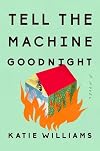
Tell the Machine Goodnight brings together science fiction's sense of wonder and literary fiction's deep interrogation of character to challenge its readers' ideas about happiness and its sources. This is a novel that trusts its readers to be sophisticated consumers of both genres: the set up is speculative, but the delivery is decidedly literary. Though some of the time shifts were somewhat unsatisfying, I found the book as a whole addressed the questions it posed. I highly recommend this witty, engaging book to readers of both genres, even if it does knock our ideas about happiness a bit off kilter.
Gemma Files sets home and family against and within the mythic in her collection Invocabulary. The poems in this collection pull from a wide range of western mythologies, folktales, and later works, ranging from biblical figures and those from Greek and Nordic myths to Little Red Riding Hood and Golems which appear alongside poems that reference Lovecraft and Sweeney Todd. The variety makes for a deeper view into the themes of horror in the book, and it also makes the poignant moments more affecting. Among the strongest poems in the book are those that take a more contemporary voice, such as "The Black Telephone," "Onion Boy," and the wonderful "Build Your Own." For readers of speculative poetry or poetry that explores the relation of myth to how we see our present world, this is a worthwhile read.
The most distinguished of anthologies may begin as a survey of a given subfield but end up as collections that highlight the strongest work of the larger field. So it is with The Moment of Change: though the anthology focuses on feminist speculative poems, the book is easily among the strongest collections of the wider genre. Lemberg gives us a brief history of feminist speculative poetry, then a glimpse at the diversity of poems and poets featured in the book. Across the board, the poems are solid, and the balance between fantasy and science fiction works well. This is the first book I recommend to readers interested in knowing more about speculative poetry, and it's one I highly recommend to those who have read widely in the genre as well.