Vast by Linda Nagata
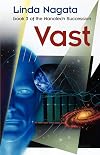
I picked up Vast after a few commentors on Charlie Stross' blog recommended Linda Nagata's work, and while epic post-humanity fiction isn't exactly my sweet spot, Nagata writes so forcefully and clearly that I finished the book right away.
Nagata's characters are lively and flawed (making them recognizable as people), and the technology at work is interesting and (at times) surprising, but not so odd that it became difficult to follow.
My only complaint is the convenience of a couple plot points; a crew member boards an alien ship and somehow picks up warp-drive nanobots by accident, and in all the vastness of a nebulae, the crew stumbles on the radio emissions of a human civilization, despite the fact they're a bazillion light years from a now-defunct earth.
Otherwise, I really enjoyed Nagata's Vast, and plan to buy a few other novels. If you're a hard sci-fi fan, Vast is well worth a look.
Nagata's characters are lively and flawed (making them recognizable as people), and the technology at work is interesting and (at times) surprising, but not so odd that it became difficult to follow.
My only complaint is the convenience of a couple plot points; a crew member boards an alien ship and somehow picks up warp-drive nanobots by accident, and in all the vastness of a nebulae, the crew stumbles on the radio emissions of a human civilization, despite the fact they're a bazillion light years from a now-defunct earth.
Otherwise, I really enjoyed Nagata's Vast, and plan to buy a few other novels. If you're a hard sci-fi fan, Vast is well worth a look.
I found myself alternately enjoying this story and losing my way with it, but my overall impression was favorable. These short works are presumably being published by Tor as promo pieces for their writers, and I suspect this will create a few fans for Rudy Rucker.
A very short piece that was nicely written, but didn't cover enough ground to warrant the $1 price tag. This reads like a loose sketch of an idea for a larger story or a simple story fragment.
One of a series of short works of fiction published by Tor (I'd guess to introduce their writers to new readers), this falls in the same category as many of the others I bought en masse; nice, but at just a handful of pages, it's not enough.
One of a series of short works of fiction published by Tor (I'd guess to introduce their writers to new readers), this falls in the same category as many of the others I bought en masse; nice, but at just a handful of pages, it's not enough.
Fun, but essentially too short to justify even the $0.99 price tag (six pages on Google books). An amusing story about the zombie apocalypse, and how one prepared person had been denied the benefit of all those preparations by a twist of fate.
Amusing twist at the ending, but this story is little more than an amuse bouche -- there isn't enough to make a meal of.
Amusing twist at the ending, but this story is little more than an amuse bouche -- there isn't enough to make a meal of.
Annie Proulx writes so sharply that she defines her characters with what feels like a razor's edge.
This isn't a collection of happy stories about a West that never existed; it's a collection of taut essays about a hardscrabble life. Excellent writing, if not always the easiest stuff to read.
This isn't a collection of happy stories about a West that never existed; it's a collection of taut essays about a hardscrabble life. Excellent writing, if not always the easiest stuff to read.
Most who read this book are polarized by the main character; he's either an idealist or an utter moron who died through stupidity.
It's a testament to Krakauer's skill as a writer that he manages to leave this question up to the reader, and like all his work, it's a gripping read.
It's a testament to Krakauer's skill as a writer that he manages to leave this question up to the reader, and like all his work, it's a gripping read.
Gierach's probably fly fishing's most widely read essayist, a testament to his deceptively folksy writing (he packs a lot of meaning into a few words) and his absolute commitment to the fly fishing life.
Fly fishers will have to admire his tenacity; early in his life, Gierach decided to fly fish for a living, and he made it happen.
Trout Bum was first published in 1986, and this 20th Anniversary hardcover edition of Trout Bum includes new forewords from other fly fishing writers.
In between, Gierach has published a long list of essay books (and a small handful of how-to efforts).
Gierach doesn't waste a lot of words on gear and how-to information -- he's living the life so many fly fishers can only dream of, and writing about it in a direct, friendly, accessible manner.
Fly fishers will have to admire his tenacity; early in his life, Gierach decided to fly fish for a living, and he made it happen.
Trout Bum was first published in 1986, and this 20th Anniversary hardcover edition of Trout Bum includes new forewords from other fly fishing writers.
In between, Gierach has published a long list of essay books (and a small handful of how-to efforts).
Gierach doesn't waste a lot of words on gear and how-to information -- he's living the life so many fly fishers can only dream of, and writing about it in a direct, friendly, accessible manner.
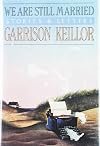
I'm a huge Keillor fan. His essays are insightful and jammed with an elegant, graceful humor, and his more creative efforts are at the very least interesting. At their best, they're mind expanding.
For example, in We Are Still Married, he forgoes the usual author's photo on the back sleeve, preferring to insert a short essay on the wonders of the book (short excerpt):
"Slow to hatch, as durable as a turtle, light and shapely as befits a descendant of the tree. Closed, the object d'book resembles a board. Open, its pale wings brush the fingertips, the spore of fresh ink and pulp excites the nose, the spines easily in the hand."
We Are Still Married is a delightful mix of essay, stories, letters and other creative snippets. It's my favorite Keillor work, but then, there are still a couple left to read.
For example, in We Are Still Married, he forgoes the usual author's photo on the back sleeve, preferring to insert a short essay on the wonders of the book (short excerpt):
"Slow to hatch, as durable as a turtle, light and shapely as befits a descendant of the tree. Closed, the object d'book resembles a board. Open, its pale wings brush the fingertips, the spore of fresh ink and pulp excites the nose, the spines easily in the hand."
We Are Still Married is a delightful mix of essay, stories, letters and other creative snippets. It's my favorite Keillor work, but then, there are still a couple left to read.
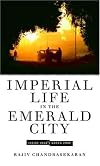
A gripping recounting of the slow-moving rebuilding effort in post-war Iraq, "Imperial life" is an extremely well-researched effort by one of the only print journalists to cover the entire Iraq story from the "inside."
Chandrasekaran lived in Iraq and had ongoing access to the "Green Zone" -- the walled compound within Bagdahd that eventually came to house the American occupying authority.
While he lays out the events leading up to the current strife in Iraq, the most interesting information concerns the individuals charged with rebuilding Iraq -- and why they made the decisions they did.
The list of mistakes is long, but chief among them is the lack of prior planning, the wildly incorrect assumptions made by officials, the inexperience of the often youthful managers chosen for political loyalty rather than expertise, and the isolation of the Americans from the Iraqis.
It offers a great deal of understanding about the conditions in Iraq, and how they got that way.
Chandrasekaran lived in Iraq and had ongoing access to the "Green Zone" -- the walled compound within Bagdahd that eventually came to house the American occupying authority.
While he lays out the events leading up to the current strife in Iraq, the most interesting information concerns the individuals charged with rebuilding Iraq -- and why they made the decisions they did.
The list of mistakes is long, but chief among them is the lack of prior planning, the wildly incorrect assumptions made by officials, the inexperience of the often youthful managers chosen for political loyalty rather than expertise, and the isolation of the Americans from the Iraqis.
It offers a great deal of understanding about the conditions in Iraq, and how they got that way.
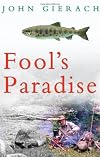
(review originally published on the TroutUnderground.com)
“I don’t have any illusions of permanence… It’s just that I can live with any number of things going straight to hell as long as these streams continue to hold up. If this amounts to living in a Fool’s Paradise, don’t waste your time trying to explain that to the fool.”
– John Gierach, Fool’s Paradise
With sixteen fly fishing books to his credit - all of which have been continuously in print since their release - John Gierach might just be fly fishing’s most-read writer.
Twenty years has passed since the publication of Gierach’s eponymous Trout Bum — a book that remains the favorite of many Gierach fans — and while Gierach’s perspective has evolved, his style remains recognizably (and comfortably) his own.
In his newest book — Fool’s Paradise — Gierach’s facility for one-liners and wry observation from outside the mainstream remain undiminished, and he combines the two frequently:
“I’m still waiting for Americans to realize that being in constant communication is not an advantage, but a short leash. Cell phones have changed us from a nation of self-reliant pioneer types into a bunch of men standing alone in supermarkets saying ‘Okay, I’m in the the tampon aisle, but I don’t see it.’”
Later — at the start of one of my favorite chapters in the book (”Creeks”) — Gierach does it again with:
“While killing time in a Starbucks in Portland, Oregon, not long ago, I was show more idly eavesdropping on two businessmen when one — invoking the tired cliche — said that their problems might be solved if they could start thinking outside the box. The other, younger man replied, ‘Dude, there’s no box.’”
Some fans might be shocked to hear that Gierach spent time in a Starbucks, or that he’s softening his stance on bamboo rods to the point that he fished a graphite rod all week long on another road trip:
“So one afternoon I was happily casting a foam stonefly pattern on a graphite rod when our guide said, ‘You know, if this gets out, you could lose your charter membership in the Old Farts’ Club.’”
Of course, revealing snapshots of your life to strangers comes at a cost; our view of Gierach is partially one of a writer who existed 20 years ago, and in the meantime, Gierach has moved along in his life, and frankly, that’s part of the allure of reading his newer books.
I mean, exactly what is happening with AK, Mike Clark, Ed Engle and the rest of the gang?
I’m tempted to suggest the “theme” of Fool’s Paradise revolves around the concept of change, and I could back it up with a lot of carefully selected passages, but in truth, that’s the kind of thing a critic says out loud while an author scratches his head and wonders what book the guy was reading.
Still, Gierach’s recent books (Fool’s Paradise is his first in three years) recognize the fact he’s not 30 any more, and in places, he does what you’d expect anyone approaching 60 might do; he looks back on his life.
To Gierach’s credit, he does so with a sense of wonder:
“This is how time occasionally works. One minute you’re a thirteen-year-old drowning worms for bluegills because muskies are among the countless things that are out of your league; the next minute you’re a decently preserved fifty-eight and finally landing a muskie. Surely all kinds of things have happened in between, but at the moment, you can’t remember any of them.”
On a fishing trip to the Fryingpan River with Jim Babb, Gierach cops to the changes that have occurred since he became a trout bum, though he also recognizes the dangers of relying on his own memory:
“One afternoon between hatches, I even started in on how the fish used to be bigger here but lost steam after I saw Jim’s skeptical glance. It does seem true, but then over the years we’ve drifted away from the shoulder-to-shoulder hog holes up under the dam (the most famous one is known as the ‘the Toilet Bowl’) into lesser, but also less crowded, water downstream that we’ve since come to know and love. And when I go back over old photos and see that the Fryingpan fish don’t seem as big as I remember, it’s not entirely reasonable to assume that all the snapshots of the really big trout must have gotten lost.
“Jim listened to all this politely, understanding that the old-timer’s litany we all grew up hearing becomes irresistible once you realize that the list of things that just aren’t the same anymore will soon include you — if it doesn’t already.”
One thing that hasn’t changed is Gierach’s wholly readable style. I’ve often said he’s a deceptive writer; he folds keen observation and surprising insight into essays so readable that you arrive at the “a-ha!” moment without realizing he’s been herding you that way the last four pages.
Fool’s Paradise will no doubt be snapped up by Gierach’s faithful.
Those looking for fly fishing instruction will be disappointed, though anyone looking for insight into the fly fishing life — without the trappings of ego that cloud the writings of so many others — will find this is a typically enjoyable (and re-readable) collection of essays. show less
“I don’t have any illusions of permanence… It’s just that I can live with any number of things going straight to hell as long as these streams continue to hold up. If this amounts to living in a Fool’s Paradise, don’t waste your time trying to explain that to the fool.”
– John Gierach, Fool’s Paradise
With sixteen fly fishing books to his credit - all of which have been continuously in print since their release - John Gierach might just be fly fishing’s most-read writer.
Twenty years has passed since the publication of Gierach’s eponymous Trout Bum — a book that remains the favorite of many Gierach fans — and while Gierach’s perspective has evolved, his style remains recognizably (and comfortably) his own.
In his newest book — Fool’s Paradise — Gierach’s facility for one-liners and wry observation from outside the mainstream remain undiminished, and he combines the two frequently:
“I’m still waiting for Americans to realize that being in constant communication is not an advantage, but a short leash. Cell phones have changed us from a nation of self-reliant pioneer types into a bunch of men standing alone in supermarkets saying ‘Okay, I’m in the the tampon aisle, but I don’t see it.’”
Later — at the start of one of my favorite chapters in the book (”Creeks”) — Gierach does it again with:
“While killing time in a Starbucks in Portland, Oregon, not long ago, I was show more idly eavesdropping on two businessmen when one — invoking the tired cliche — said that their problems might be solved if they could start thinking outside the box. The other, younger man replied, ‘Dude, there’s no box.’”
Some fans might be shocked to hear that Gierach spent time in a Starbucks, or that he’s softening his stance on bamboo rods to the point that he fished a graphite rod all week long on another road trip:
“So one afternoon I was happily casting a foam stonefly pattern on a graphite rod when our guide said, ‘You know, if this gets out, you could lose your charter membership in the Old Farts’ Club.’”
Of course, revealing snapshots of your life to strangers comes at a cost; our view of Gierach is partially one of a writer who existed 20 years ago, and in the meantime, Gierach has moved along in his life, and frankly, that’s part of the allure of reading his newer books.
I mean, exactly what is happening with AK, Mike Clark, Ed Engle and the rest of the gang?
I’m tempted to suggest the “theme” of Fool’s Paradise revolves around the concept of change, and I could back it up with a lot of carefully selected passages, but in truth, that’s the kind of thing a critic says out loud while an author scratches his head and wonders what book the guy was reading.
Still, Gierach’s recent books (Fool’s Paradise is his first in three years) recognize the fact he’s not 30 any more, and in places, he does what you’d expect anyone approaching 60 might do; he looks back on his life.
To Gierach’s credit, he does so with a sense of wonder:
“This is how time occasionally works. One minute you’re a thirteen-year-old drowning worms for bluegills because muskies are among the countless things that are out of your league; the next minute you’re a decently preserved fifty-eight and finally landing a muskie. Surely all kinds of things have happened in between, but at the moment, you can’t remember any of them.”
On a fishing trip to the Fryingpan River with Jim Babb, Gierach cops to the changes that have occurred since he became a trout bum, though he also recognizes the dangers of relying on his own memory:
“One afternoon between hatches, I even started in on how the fish used to be bigger here but lost steam after I saw Jim’s skeptical glance. It does seem true, but then over the years we’ve drifted away from the shoulder-to-shoulder hog holes up under the dam (the most famous one is known as the ‘the Toilet Bowl’) into lesser, but also less crowded, water downstream that we’ve since come to know and love. And when I go back over old photos and see that the Fryingpan fish don’t seem as big as I remember, it’s not entirely reasonable to assume that all the snapshots of the really big trout must have gotten lost.
“Jim listened to all this politely, understanding that the old-timer’s litany we all grew up hearing becomes irresistible once you realize that the list of things that just aren’t the same anymore will soon include you — if it doesn’t already.”
One thing that hasn’t changed is Gierach’s wholly readable style. I’ve often said he’s a deceptive writer; he folds keen observation and surprising insight into essays so readable that you arrive at the “a-ha!” moment without realizing he’s been herding you that way the last four pages.
Fool’s Paradise will no doubt be snapped up by Gierach’s faithful.
Those looking for fly fishing instruction will be disappointed, though anyone looking for insight into the fly fishing life — without the trappings of ego that cloud the writings of so many others — will find this is a typically enjoyable (and re-readable) collection of essays. show less
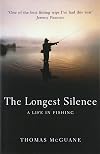
McGuane's grasp of the language is powerful, and his essays on a lifetime of fishing are both perceptive and powerful.
Truly this may be the best essay book on fly fishing ever written; everything from his time at Key West to his more contemporary existence on his Montana ranch falls under the scrutiny of his pen.
A brilliant piece of work -- and a great read for anyone interested in what the fly fishing life looks like.
Truly this may be the best essay book on fly fishing ever written; everything from his time at Key West to his more contemporary existence on his Montana ranch falls under the scrutiny of his pen.
A brilliant piece of work -- and a great read for anyone interested in what the fly fishing life looks like.
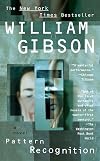
I'm a big fan of Gibson's early novels, but found Pattern Recognition a little hard to warm up to. His insights -- as usual -- feel simultaneously surprising and entirely plausible. Yet in this case, I found the plot a little implausible (especially late in the book) and the characters uninteresting. Not my favorite, but still quality stuff from Gibson.
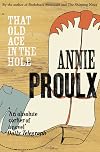
A novel set largely in the Texas/Oklahoma panhandle, this is another winner from Proulx.
Despite what feels like a slightly rushed "Hollywood" ending, this is classic stuff; sharply etched characters set in relief against a wide-open, largely inhospitable landscape.
So many of Proulx's characters struggle with change, and [book: That Old Ace in the Hole] is no exception.
She manages to stuff this book with an interesting history of the Texas Panhandle without bogging down the plot, and hints at the challenges soon to face this region.
Despite what feels like a slightly rushed "Hollywood" ending, this is classic stuff; sharply etched characters set in relief against a wide-open, largely inhospitable landscape.
So many of Proulx's characters struggle with change, and [book: That Old Ace in the Hole] is no exception.
She manages to stuff this book with an interesting history of the Texas Panhandle without bogging down the plot, and hints at the challenges soon to face this region.
I tried, but I couldn't love this book. Uneven and - in several places - overwrought.
Something about fly fishing sparks the essayist in a lot of us, but in this case, too many of the book's chapters (essays by individuals) just miss the mark.
Something about fly fishing sparks the essayist in a lot of us, but in this case, too many of the book's chapters (essays by individuals) just miss the mark.
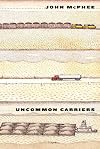
McPhee joins unusual cargo carriers as they transport huge quantities of goods from one point to another.
He travels with a long-haul trucker delivering dangerous chemicals, hitches a ride on a mile-long coal train, lives aboard a river towboat that's longer than the Titanic, and spends time writing about other transportation oddities.
Though his stream of consciousness style sometimes tires the eye, McPhee's essays are engrossing, and his ability to quickly capture the essence of the real-life characters who inhabit them is exceptional.
He travels with a long-haul trucker delivering dangerous chemicals, hitches a ride on a mile-long coal train, lives aboard a river towboat that's longer than the Titanic, and spends time writing about other transportation oddities.
Though his stream of consciousness style sometimes tires the eye, McPhee's essays are engrossing, and his ability to quickly capture the essence of the real-life characters who inhabit them is exceptional.
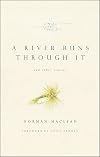
Maclean does a superb job in the novella, which is rightly considered a classic.
It drives me slightly crazy when people suggest this book is about fly fishing (and I say that as a fly fisherman). It's about Maclean's family, and to that end, he carefully and honestly paints a group portrait that absolutely entranced me.
A River Runs Through It was turned into a movie (and survived it better than most works of literature), and has been commercialized and overused by every fly fishermen who fancies himself a writer.
Fortunately, the book sits, waiting to be read and enjoyed for what it is -- a superb portrait of an interesting (if somewhat tragic) family. A must read.
It drives me slightly crazy when people suggest this book is about fly fishing (and I say that as a fly fisherman). It's about Maclean's family, and to that end, he carefully and honestly paints a group portrait that absolutely entranced me.
A River Runs Through It was turned into a movie (and survived it better than most works of literature), and has been commercialized and overused by every fly fishermen who fancies himself a writer.
Fortunately, the book sits, waiting to be read and enjoyed for what it is -- a superb portrait of an interesting (if somewhat tragic) family. A must read.

A collection of bitingly funny essays about growing up, his family, and other topics, "Me Talk Pretty One Day" is hardly news to Sedaris fans (it was published in 2000), but I read it for the first time last week.
Sedaris skewers his own efforts to learn French, and his searingly funny "Twelve Moments in the Life of the Artist" -- an egrossing essay mocking his own efforts as a performance artist -- made me laugh out loud. He's hilarious and entertaining without performing too many literary gymnastics -- the mark of a true humorist. Great stuff.
Sedaris skewers his own efforts to learn French, and his searingly funny "Twelve Moments in the Life of the Artist" -- an egrossing essay mocking his own efforts as a performance artist -- made me laugh out loud. He's hilarious and entertaining without performing too many literary gymnastics -- the mark of a true humorist. Great stuff.
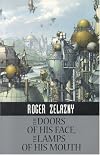
I've been a fan of Zelazny's short stories for decades. His taught prose and spare, whittled-down dialog seemingly defy the laws of physics; he brings full-throated characters to life in the space of paragraphs, and never bogs his stories with unnecessary detail.
A true master of the form, much prefer his shorter works to his more-famous novels. Worth your time.
A true master of the form, much prefer his shorter works to his more-famous novels. Worth your time.
Last Stand: George Bird Grinnell, the Battle to Save the Buffalo, and the Birth of the New West by Michael Punke
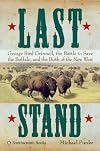
"Last Stand" by Michael Punke is powerful account of the opening of American West -- and the rapid destruction of that frontier.
The story opens with a bang; Punke leads with a chilling account of a hunter killing 107 buffalo without leaving his stand, setting the stage for his engaging narrative about the death of the American west.
A better story than most of the fiction I’ve read, Punke’s book is set in the late 1800s, and revolves around George Bird Grinnell – a man largely responsible for the conservation of much of the American west, but whom remains mostly unknown today.
Opposing him were all the usual suspects: short-sightedness, a belief that the frontier was infinite, a desire to deal with the “Indian problem,” commercial interests, and of course, naked greed.
Punke does a commendable job of weaving together the myriad storylines affecting the west, connecting threads from Lewis & Clark to Custer to Bird’s battle against congressional inaction in the face of a strong railroad lobby.
George Bird – editor of Forest and Stream magazine – was an early convert to the cause of preserving the American west, and the climax of the book details his last-ditch efforts to preserve the handful of remaining buffalo.
With the help of a US Army Captain fighting a wave of poachers in the park, Bird marshaled his few allies in congress, beat back the railroad lobby (who wanted half of Yellowstone for their own use), and finally – with the help of an outraged public show more – succeeded in legislating protections against poaching in the National Parks.
The rapid decimation of the buffalo herds is a recurring (and distressing) theme in Punke’s book:
“The numbers paint the stark picture at the end. In 1882, the Northern Pacific Railroad alone shipped 200,000 hides to eastern processing facilities, an amount that filled an estimated 700 boxcars. In 1883, the railroad shipped 40,000 hides. In 1884, the total harvest fit in a single boxcar, and according to a Northern Pacific official, ‘it was the last shipment ever made.’”
Punke even details the lamentable efforts by many hunters to be the “last to kill a wild buffalo.”
By 1902, the US Army estimated that only 23 wild buffalo remained alive in Yellowstone National Park – the pitiful remnants of the massive herds that once blanketed America.
It’s impossible to read Last Stand without drawing some parallels to the perils facing today’s parks and wilderness areas – privatization, commercialization, and how to preserve wild game stocks in the face of encroaching domestic stocks.
Today, of course, the Old West is long gone, and the landscape surrounding Yellowstone National Park is populated with cattle, ranches, seasonal towns and hordes of automobile-bound tourists.
It’s all the more reason to read Punke’s interesting and compelling book, and anyone who has ever read an account of the Lewis & Clark expedition will likely find Last Stand an outstanding read. show less
The story opens with a bang; Punke leads with a chilling account of a hunter killing 107 buffalo without leaving his stand, setting the stage for his engaging narrative about the death of the American west.
A better story than most of the fiction I’ve read, Punke’s book is set in the late 1800s, and revolves around George Bird Grinnell – a man largely responsible for the conservation of much of the American west, but whom remains mostly unknown today.
Opposing him were all the usual suspects: short-sightedness, a belief that the frontier was infinite, a desire to deal with the “Indian problem,” commercial interests, and of course, naked greed.
Punke does a commendable job of weaving together the myriad storylines affecting the west, connecting threads from Lewis & Clark to Custer to Bird’s battle against congressional inaction in the face of a strong railroad lobby.
George Bird – editor of Forest and Stream magazine – was an early convert to the cause of preserving the American west, and the climax of the book details his last-ditch efforts to preserve the handful of remaining buffalo.
With the help of a US Army Captain fighting a wave of poachers in the park, Bird marshaled his few allies in congress, beat back the railroad lobby (who wanted half of Yellowstone for their own use), and finally – with the help of an outraged public show more – succeeded in legislating protections against poaching in the National Parks.
The rapid decimation of the buffalo herds is a recurring (and distressing) theme in Punke’s book:
“The numbers paint the stark picture at the end. In 1882, the Northern Pacific Railroad alone shipped 200,000 hides to eastern processing facilities, an amount that filled an estimated 700 boxcars. In 1883, the railroad shipped 40,000 hides. In 1884, the total harvest fit in a single boxcar, and according to a Northern Pacific official, ‘it was the last shipment ever made.’”
Punke even details the lamentable efforts by many hunters to be the “last to kill a wild buffalo.”
By 1902, the US Army estimated that only 23 wild buffalo remained alive in Yellowstone National Park – the pitiful remnants of the massive herds that once blanketed America.
It’s impossible to read Last Stand without drawing some parallels to the perils facing today’s parks and wilderness areas – privatization, commercialization, and how to preserve wild game stocks in the face of encroaching domestic stocks.
Today, of course, the Old West is long gone, and the landscape surrounding Yellowstone National Park is populated with cattle, ranches, seasonal towns and hordes of automobile-bound tourists.
It’s all the more reason to read Punke’s interesting and compelling book, and anyone who has ever read an account of the Lewis & Clark expedition will likely find Last Stand an outstanding read. show less
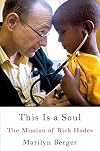
I met Mr. Hodes in Ethiopia, and he is indeed the real thing - a sort of white, Jewish Father Theresa.
This book isn't artfully written, but it does tell the story of a remarkable man in a compelling way. Dr. Hodes tends to those Ethiopians who simply have no other chance at a decent life, and has populated his own home with five adopted kids and many more that simply live there.
The book recounts his experience in the refugee camps that followed the Rwandan genocide, and finishes with the author's own personal story of her psuedo-adoption of one of Hodes' toughest patients - a brilliant little Ethiopian boy named Danny.
This is not a grim recounting of a difficult life; Hodes manages to stay sane in some grim circumstances through the use of an active sense of humor, and overall affect of the book is uplifting - not depressing.
If you wish to be reminded that there is still plenty of good in this world - and of the power of a single person - then this book is a must read.
This book isn't artfully written, but it does tell the story of a remarkable man in a compelling way. Dr. Hodes tends to those Ethiopians who simply have no other chance at a decent life, and has populated his own home with five adopted kids and many more that simply live there.
The book recounts his experience in the refugee camps that followed the Rwandan genocide, and finishes with the author's own personal story of her psuedo-adoption of one of Hodes' toughest patients - a brilliant little Ethiopian boy named Danny.
This is not a grim recounting of a difficult life; Hodes manages to stay sane in some grim circumstances through the use of an active sense of humor, and overall affect of the book is uplifting - not depressing.
If you wish to be reminded that there is still plenty of good in this world - and of the power of a single person - then this book is a must read.
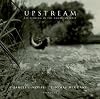
I largely avoid fly fishing coffee table books. The problem? Fly fishing picture books typically attain a kind of artificial beauty, and do so at the expense of spontaneity, realism or soul.
Images are carefully arranged, styled and colored - to the point I’m witnessing the product of an advertising shoot instead of a real moment on the water.
This book avoids those problems. Want the one-word review? Stunning.
Lindsay’s black and white photographs bypass all the pretty-yet-distant cliches, displaying in their stead strong, reductive images where the elements of nature (water, air, fire, bugs, trout, etc) are dynamic - not fodder for a carefully arranged still life.
Through Lindsay’s lens, water becomes elemental and kinetic, with the surface boundary between air and stream displaying elements of both.
Trout ebb and flow through his photographs like elements of nature instead of targets, defined not by flashy parr marks or marketable colors, but revealed instead by a quiet swirl in the water or a taut piece of monofilament.
McGuane’s text is smart and cutting as ever, his status as keen observer of the natural world seemingly amplified by the B&W photographs.
Indeed, viewing McGuane’s text and Lindsay’s photographs in the same context exposes one of the book's weaknesses - the images and words aren’t mixed together on the same pages, but are separated.
Many of Lindsay’s images would have piled meaning atop McGuane’s text (and vice versa), but instead, show more McGuane’s incisive words were left to fend for themselves, including the following passage - which would have soared off the page in the company of the right images. show less
Images are carefully arranged, styled and colored - to the point I’m witnessing the product of an advertising shoot instead of a real moment on the water.
This book avoids those problems. Want the one-word review? Stunning.
Lindsay’s black and white photographs bypass all the pretty-yet-distant cliches, displaying in their stead strong, reductive images where the elements of nature (water, air, fire, bugs, trout, etc) are dynamic - not fodder for a carefully arranged still life.
Through Lindsay’s lens, water becomes elemental and kinetic, with the surface boundary between air and stream displaying elements of both.
Trout ebb and flow through his photographs like elements of nature instead of targets, defined not by flashy parr marks or marketable colors, but revealed instead by a quiet swirl in the water or a taut piece of monofilament.
McGuane’s text is smart and cutting as ever, his status as keen observer of the natural world seemingly amplified by the B&W photographs.
Indeed, viewing McGuane’s text and Lindsay’s photographs in the same context exposes one of the book's weaknesses - the images and words aren’t mixed together on the same pages, but are separated.
Many of Lindsay’s images would have piled meaning atop McGuane’s text (and vice versa), but instead, show more McGuane’s incisive words were left to fend for themselves, including the following passage - which would have soared off the page in the company of the right images. show less
Powerful book that altered the face of science fiction writing - the book credited with bringing "cyberpunk" fully into the light.
Though I might actually prefer Walter Jon Williams' [b:Hardwired|304761|Hardwired (Hardwired, #1)|Walter Jon Williams|http://photo.goodreads.com/books/1173564520s/304761.jpg|2253019] over Neuromancer (it was mostly written before Neuromancer was released), there's no doubt Neuromancer was a game changer.
Though I might actually prefer Walter Jon Williams' [b:Hardwired|304761|Hardwired (Hardwired, #1)|Walter Jon Williams|http://photo.goodreads.com/books/1173564520s/304761.jpg|2253019] over Neuromancer (it was mostly written before Neuromancer was released), there's no doubt Neuromancer was a game changer.
Duel of Eagles: The Struggle for the Skies from the First World War to the Battle of Britain by Peter Townsend
Excellent overview of the Battle of Britain, though Townsend spent a bit too much time on WWI and the years prior to WWII. The history was appreciated, but belabored half to death.
Nicely written and an interesting historical look at the demise of American craftsmanship as seen through the lens of America's Bamboo Fly Rod builders.
My personal take is that he overplays Edwards' influence somewhat, yet that's a forgivable offense given the Edwards rod brand is at the center of story.
A must-read for anyone interested in the history of bamboo fly rods, Casting a Spell is a personable and interesting peek at American craftsmanship -- and it's fall at the hands of industrialism.
My personal take is that he overplays Edwards' influence somewhat, yet that's a forgivable offense given the Edwards rod brand is at the center of story.
A must-read for anyone interested in the history of bamboo fly rods, Casting a Spell is a personable and interesting peek at American craftsmanship -- and it's fall at the hands of industrialism.
I'm a sucker for a good short story, so it's gratifying to recommend this new collection from Science Fiction writer [a:Charles Stross|8794|Charles Stross|http://photo.goodreads.com/authors/1218218373p2/8794.jpg].
Stross isn't the crispest writer going, and the overall quality of the book feels a a little uneven (Missile Gap & Palimpset are brilliant, but Trunk & Disorderly is painful), the overall effect is bracing - a collection of original, interesting ideas from one of science fiction's more interesting thinkers.
I'll save it, and read it again.
Stross isn't the crispest writer going, and the overall quality of the book feels a a little uneven (Missile Gap & Palimpset are brilliant, but Trunk & Disorderly is painful), the overall effect is bracing - a collection of original, interesting ideas from one of science fiction's more interesting thinkers.
I'll save it, and read it again.
Perhaps my favorite of Gierach's essay books -- the title essay is one of his best, and the whole collection effectively delivers the flavor and texture of Gierach's life as a trout bum.
Highly recommended.
Highly recommended.
William Tapply passed away in 2009, which is why it kills me to offer up a poor review of what I believe is his last fly fishing work.
Tapply's a good writer, but this work falls flat; descriptive but lacking insight or any semblance of an "ah-ha" moment that fires the imagination.
Tapply takes us along on a lifetime's worth of fishing adventures, but never goes much beyond a relatively dry description of the trips.
Tapply's earlier books are better, though this work is simply not in the same league as fly fishing's bigger fish (Gierach, Leeson, etc).
Tapply's a good writer, but this work falls flat; descriptive but lacking insight or any semblance of an "ah-ha" moment that fires the imagination.
Tapply takes us along on a lifetime's worth of fishing adventures, but never goes much beyond a relatively dry description of the trips.
Tapply's earlier books are better, though this work is simply not in the same league as fly fishing's bigger fish (Gierach, Leeson, etc).
Royte's book is fascinating - a global view of drinking water issues set against the backdrop of a tiny Maine town fighting the attentions of a Swiss-based multinational with a reputation for predatory behavior.
Much has happened since Royte's book was published (the paperback version includes an afterword detailing more recent news), but the book remains interesting and deeply informative.
Looking forward to Royte's next work.,
Much has happened since Royte's book was published (the paperback version includes an afterword detailing more recent news), but the book remains interesting and deeply informative.
Looking forward to Royte's next work.,

Totally engrossing novel set in a post-apocalyptic earth. As usual, Zelazny's characters offer depth and richness far beyond the few words used to describe them. Often set apart from society in some way, Zelazny's characters never disappoint.
This Immortal draws heavily on Greek mythology, transforming ancient myth into a modern, post-apocalyptic mythology.
This Immortal draws heavily on Greek mythology, transforming ancient myth into a modern, post-apocalyptic mythology.