
The Good: Ash in the forefront. Ash and Puck, traveling together. Ash and Puck dealing with their shared past and current situation with Meghan being a distant character, unable to get involved in the boys issues. I loved the trek, the challenges Ash had to face, everything that lead back to Meghan. Everything, except . . .
The Bad: There is a significant problem with the resolution Ash's major issue in this book. He wants a soul. He must earn a soul, as he is fey and they don't have souls. Souls are a purely human thing. The fey DO NOT have souls. Therefore, Kagawa's plan on how Ash obtains a soul is impossible. Without giving anything away, all I can say is it does not work. You can't say fey's don't have souls of there own and then go the route the author went here. I don't know, maybe she didn't realize went against everything she had previously stated. Or maybe she meant for some exception to that rule. Either way, it kills the power behind stating that souls are not something the fey possess. You can't have it both ways and it absolutely ruined a perfect book for me.
The Bad: There is a significant problem with the resolution Ash's major issue in this book. He wants a soul. He must earn a soul, as he is fey and they don't have souls. Souls are a purely human thing. The fey DO NOT have souls. Therefore, Kagawa's plan on how Ash obtains a soul is impossible. Without giving anything away, all I can say is it does not work. You can't say fey's don't have souls of there own and then go the route the author went here. I don't know, maybe she didn't realize went against everything she had previously stated. Or maybe she meant for some exception to that rule. Either way, it kills the power behind stating that souls are not something the fey possess. You can't have it both ways and it absolutely ruined a perfect book for me.
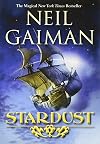
The Good: I haven't enjoyed Gaiman's books as of late. I've enjoyed a few, but on the whole, I tend to hate his stories. I went into Stardust with nothing short of dread in my heart. I dragged my feet the whole way into this book, pushing it off time and again. Turns out, I didn't hate it. It's a fun, lightly written, fairy tale full of dark things. Decent characters and an easy to follow plot made the book very readable and not worthy of the near insurmountable hesitation on my part.
The Bad: Who does Gaiman write these books for? Books like Stardust and The Ocean at the End of the Lane, I mean. They're obviously children's stories, with their basic vocabulary and fairy tale/fable/moral story vibe. They're even presented as such, with big fonts and widely spaced letters. Except the situations faced soon turn darker than your average third graders taste. They're clearly written for adults, but adults with limited vocabularies and bad vision? It bugged me the entire time I read Stardust.
The Bad: Who does Gaiman write these books for? Books like Stardust and The Ocean at the End of the Lane, I mean. They're obviously children's stories, with their basic vocabulary and fairy tale/fable/moral story vibe. They're even presented as such, with big fonts and widely spaced letters. Except the situations faced soon turn darker than your average third graders taste. They're clearly written for adults, but adults with limited vocabularies and bad vision? It bugged me the entire time I read Stardust.
The Good: Bridget Jones, as a person, was awkward - well before awkward was something people celebrated in TV shows and internet memes. It was humorous at times.
The Bad: It is really, really hard to feel Bridget's pain when her pain revolves around being 120ish pounds and the size of her couldn't-possibly-be-all-that-large thighs. Her issues do eventually move past these trivial things and turn to focus on her love life, which is just plain sad. Completely textbook choices of the whiny girl in her twenties. The fact that it was playing out in her 30s, when she should clearly know better, is more pathetic than anything else. Bridget's issues are all in her own mind and of her own doing. At least the movie managed to make it seem charming more often than not.
The Bad: It is really, really hard to feel Bridget's pain when her pain revolves around being 120ish pounds and the size of her couldn't-possibly-be-all-that-large thighs. Her issues do eventually move past these trivial things and turn to focus on her love life, which is just plain sad. Completely textbook choices of the whiny girl in her twenties. The fact that it was playing out in her 30s, when she should clearly know better, is more pathetic than anything else. Bridget's issues are all in her own mind and of her own doing. At least the movie managed to make it seem charming more often than not.
The Good: This book was crazy good, between Zach's personal life and the big evil that has risen again. Seeing the president on the road, campaigning for reelection, with Zach and Cade at his back for protection was really fun. The Boogeyman is a high concept villain that really works well, both here in the story and as a mythology that could work on its own in the world, explaining all the supernatural evil we've seen in movies and books. I can't even put into words my reaction to the end of this book. It was, just, wow. It's actually frightening what may come in the next book.
The Bad: Someone returns from the dead and it's unnecessary. They become central to a plot that could have been managed without them. In an effort to explain how they are alive, there are some weird twists that do nothing but bog down the current story.
The Bad: Someone returns from the dead and it's unnecessary. They become central to a plot that could have been managed without them. In an effort to explain how they are alive, there are some weird twists that do nothing but bog down the current story.
The Good: A couple of really interesting story lines going on, with the four separate stories told as a collection instead of an ongoing story. I always love Bigby and Snow working together and this volume spends some real quality time with them. We get to see a lot of Bluebird, and while not a fun character to follow, it certainly is revealing. Both Jack's and the Lilliputians' stories are flashbacks, giving a great look at the histories of these characters.
The Bad: There seems to be a sad case of "one step forward, two steps back" going on here that I rather wish the author had decided against.
The Bad: There seems to be a sad case of "one step forward, two steps back" going on here that I rather wish the author had decided against.
The Good: Things have never been so dangerous for Lucy and her loved ones. This was a super quick, totally engaging read. I couldn't put it down. My favorite in the series. Every detail was important and the plot was very fast paced. I felt Lucy's fear throughout the book. The book wrapped the entire series up so nicely that I believed it to be the last in the series, until that final chapter threw me through a loop. Looks like we'll be getting more Lucy Valentine in the future, with a much better handle on her powers. I couldn't ask for better news.
The Bad: Not a thing.
The Bad: Not a thing.
The Good: I would love to just bash this book completely and be done with it, but one cannot ignore the popularity of the series. For all their flaws, people love these books. That leads to opening up minds in regards to sexuality that just wouldn't be exposed to anything more than vanilla their entire lives. That can't be all bad.
The Bad: So annoyingly repetitive. This is not good writing, never mind good editing. If Ana referred to her "inner goddess" one more time, I was going to throw the book across the room. "Holy cow" is not a sexy term, yet Ana overuses it in all sorts of situations, even ones that should have been immediately shut down by the phrase. Christian's over use of "Fair point well made" makes one wonder how all these supposedly intelligent adults manage to get by on such limited vocabularies. Ana's repeated references to Christian's psychiatrist is over-the-top offensive. His mental health often reduced to either a joke or a way for Ana to point out his flaws.
The Bad: So annoyingly repetitive. This is not good writing, never mind good editing. If Ana referred to her "inner goddess" one more time, I was going to throw the book across the room. "Holy cow" is not a sexy term, yet Ana overuses it in all sorts of situations, even ones that should have been immediately shut down by the phrase. Christian's over use of "Fair point well made" makes one wonder how all these supposedly intelligent adults manage to get by on such limited vocabularies. Ana's repeated references to Christian's psychiatrist is over-the-top offensive. His mental health often reduced to either a joke or a way for Ana to point out his flaws.
The Good: The idea of magic classes for witches coming into their power is always a win for me, especially twisting it so that the real power doesn't show up until the women are 30.
The Bad: Lust masquerading as love. T.J.'s blatant stalking of Dayna portrayed as his being drawn to her, rather than being a Peeping Tom with an entire catalog of issues. A completely predictable Mean Girls comeuppance story line, except they aren't teenagers anymore and that makes the entire attitude really kind of pitiful. No one is likable. No one is saying or doing anything that would make you care what happens to them. There was absolutely nothing romantic going on in this romance novel.
The Bad: Lust masquerading as love. T.J.'s blatant stalking of Dayna portrayed as his being drawn to her, rather than being a Peeping Tom with an entire catalog of issues. A completely predictable Mean Girls comeuppance story line, except they aren't teenagers anymore and that makes the entire attitude really kind of pitiful. No one is likable. No one is saying or doing anything that would make you care what happens to them. There was absolutely nothing romantic going on in this romance novel.
The Good: Groundhog's Day meets Mean Girls is a premise to get excited about. You'll be disappointed, but at least you'll always remember how awesome the premise was.
The Bad: People love Lauren Oliver's books. I want to love her book. I try, but they're so ridiculous. I really enjoy young adult books, but I think these are the type that you just can't relate to unless you're a teen. Like Delirium, Before I Fall focuses on teen love. It's a common enough theme. Problem is, these books seem to revolve around the worst reactions to a common feeling. Sam is the epitome of self-centered. It's me, me, me. Even in death, the world must revolve around her and her feelings and her ideas of what should and shouldn't happen. Any bad things that happen must be someone else's fault. Oliver took the whole mean girl thing and made it a complete caricature, and then expected us to believe in Sam and want her to find a way to be redeemed. Except she gave us no reason to care about her and all the reasons in the world to wish she's gone straight to hell.
The Bad: People love Lauren Oliver's books. I want to love her book. I try, but they're so ridiculous. I really enjoy young adult books, but I think these are the type that you just can't relate to unless you're a teen. Like Delirium, Before I Fall focuses on teen love. It's a common enough theme. Problem is, these books seem to revolve around the worst reactions to a common feeling. Sam is the epitome of self-centered. It's me, me, me. Even in death, the world must revolve around her and her feelings and her ideas of what should and shouldn't happen. Any bad things that happen must be someone else's fault. Oliver took the whole mean girl thing and made it a complete caricature, and then expected us to believe in Sam and want her to find a way to be redeemed. Except she gave us no reason to care about her and all the reasons in the world to wish she's gone straight to hell.
The Good: Totally Killer is set in the 1990s, which leads to some fun references for those of us who experienced them firsthand. It's very premise, set around the employment agency, is a wonderful idea and could have been gold if handled differently.
The Bad: The characters aren't the least bit sympathetic, which is unfortunate in a novel where we should care that one of them is dead. Telling the story from Todd's point of view well in the future, looking back on the events, was risky and never worked for me. It makes no sense, his tone while telling the story doesn't betray the ending. While it keeps the suspense, it's not plausible he'd tell the story the way he did given his own experiences. Never mind the fact that one would expect a storyteller to make himself seem less like an complete loser. He speaks of all the creepy things he does in his lust for Taylor, all the ways he completely ruined his life just to get to know her better and more, all without a whiff of the shame one would expect years down the line. This was a great idea that just took every wrong turn it could find.
The Bad: The characters aren't the least bit sympathetic, which is unfortunate in a novel where we should care that one of them is dead. Telling the story from Todd's point of view well in the future, looking back on the events, was risky and never worked for me. It makes no sense, his tone while telling the story doesn't betray the ending. While it keeps the suspense, it's not plausible he'd tell the story the way he did given his own experiences. Never mind the fact that one would expect a storyteller to make himself seem less like an complete loser. He speaks of all the creepy things he does in his lust for Taylor, all the ways he completely ruined his life just to get to know her better and more, all without a whiff of the shame one would expect years down the line. This was a great idea that just took every wrong turn it could find.
The Good: Well written, in a technical sense. Managed to read it and understand the basic story line.
The Bad: I really liked American Gods, which lead me to believe I would enjoy this sequel. Except Anansi Boys isn't a sequel as much as a novel that exists in same universe as American Gods. It's a companion novel at best. Different characters. Different mythology. Just the basic theme of gods walk among us. Sometimes. And a focus on trickster gods. I knew nothing about the African trickster god Anansi going in. I'm not sure if that helped or hindered me, because I couldn't care about these characters at all. The book dragged and dragged and was finally, mercifully over. I'm beginning to believe that no matter how much I enjoyed American Gods and Good Omens, Neil Gaiman isn't the author for me.
The Bad: I really liked American Gods, which lead me to believe I would enjoy this sequel. Except Anansi Boys isn't a sequel as much as a novel that exists in same universe as American Gods. It's a companion novel at best. Different characters. Different mythology. Just the basic theme of gods walk among us. Sometimes. And a focus on trickster gods. I knew nothing about the African trickster god Anansi going in. I'm not sure if that helped or hindered me, because I couldn't care about these characters at all. The book dragged and dragged and was finally, mercifully over. I'm beginning to believe that no matter how much I enjoyed American Gods and Good Omens, Neil Gaiman isn't the author for me.
The Good: The premise is amazing. Tailor made for a movie. Which was then made, totally eclipsing the book.
The Bad:I loved the movie. I know, people aren't supposed to admit that, but I say it loud and often. So what if it made Sean Connery quit acting, it entertained me. Having said that, this graphic novels was not good. The artwork was unappealing. That's the best way to describe it. You know what's going on - it's not unclear or anything - but it's not pleasant to look at. It made me want to put the book down. I found it disagreeable to my eyes. The characters are awful people, and not in the fun movie way. Mina whines incessantly (strange as she is in charge now, apparently that's how Moore believes women lead). Quartermain is a drug addict who seems to be getting a his hate lust up way too much for the significantly younger Mina. The invisible man is a serial rapist, and we're supposed to find this acceptable behavior just because. No Tom Sawyer. No Dorian Gray. No fun, at all.
The Bad:I loved the movie. I know, people aren't supposed to admit that, but I say it loud and often. So what if it made Sean Connery quit acting, it entertained me. Having said that, this graphic novels was not good. The artwork was unappealing. That's the best way to describe it. You know what's going on - it's not unclear or anything - but it's not pleasant to look at. It made me want to put the book down. I found it disagreeable to my eyes. The characters are awful people, and not in the fun movie way. Mina whines incessantly (strange as she is in charge now, apparently that's how Moore believes women lead). Quartermain is a drug addict who seems to be getting a his hate lust up way too much for the significantly younger Mina. The invisible man is a serial rapist, and we're supposed to find this acceptable behavior just because. No Tom Sawyer. No Dorian Gray. No fun, at all.
The Good: The very basic premise of the book is good. A widower with young children struggling. A magical nanny appearing out of nowhere to aid him at Christmas time, and maybe find him a little love as well. That's the bare bones of the book and that is all that was included in the delightful Hallmark movie.
The Bad: This is a case of the movie being better than the book. The movie dropped all of the unnecessary and sort of weird angles the book tended to dwell on. The book was very specific about Seth not being able to take care of his kids for 4 years, and how his in-laws raised them at that time. These grandparents love having the kids, yet just decide they're done and send the kids back to understandable unprepared father - with no help and no experience to guide him. The grandparents marriage goes to hell, grandma embracing women's lib and grandpa being aghast that his wife refuses to wait on him hand and foot anymore. Aghast. And for some reason, the reader is supposed to hope they get back together. Yeah, that wasn't happening. Good for grandma. Seth and Reba were closed off, scared of commitment, annoying people who would have never managed to make it work in real life. Overall, the characters were obnoxious and it was hard to want happiness for any of them.
The Bad: This is a case of the movie being better than the book. The movie dropped all of the unnecessary and sort of weird angles the book tended to dwell on. The book was very specific about Seth not being able to take care of his kids for 4 years, and how his in-laws raised them at that time. These grandparents love having the kids, yet just decide they're done and send the kids back to understandable unprepared father - with no help and no experience to guide him. The grandparents marriage goes to hell, grandma embracing women's lib and grandpa being aghast that his wife refuses to wait on him hand and foot anymore. Aghast. And for some reason, the reader is supposed to hope they get back together. Yeah, that wasn't happening. Good for grandma. Seth and Reba were closed off, scared of commitment, annoying people who would have never managed to make it work in real life. Overall, the characters were obnoxious and it was hard to want happiness for any of them.
The Good: Crazy people. It's always crazy people. Whether it be the Governor or cannibals or Negan, at the root of it all is just people who mentally can't handle the world as it now is and act out in ludicrous ways. This new threat is no different, other then there is a whole hell of a lot of them. This new brand of crazy is unlike anything we've seen before and that makes this volume completely worth the read.
The Bad: We seem to be going from Carl being a reckless child to being a irresponsible teenager. He's gone from attempting to protect his friends and family is dangerous ways to doing whatever his hormones dictate. I suppose it was to be expected, but one would hope that growing up in this post-apocalyptic environment, a boy in his position would have developed better priorities. Never underestimate Carl's ability to find the most inappropriate way to deal with something.
The Bad: We seem to be going from Carl being a reckless child to being a irresponsible teenager. He's gone from attempting to protect his friends and family is dangerous ways to doing whatever his hormones dictate. I suppose it was to be expected, but one would hope that growing up in this post-apocalyptic environment, a boy in his position would have developed better priorities. Never underestimate Carl's ability to find the most inappropriate way to deal with something.
The Good: The volume starts out a couple years in the future. Seems we skipped over everybody settling into more stable, mundane lives. I feel this is a good choice. It's a lot more believable that there would be a prolonged period of peace than having new villains appear one right after another as they have in the past.
The Bad: A very slow volume, as they all are right after the epic battle volumes. It's an established cycle in The Walking Dead comic world and we continue on it yet again. Rick makes a truly stupid decision, guaranteed to put the group in danger, in an effort to pretend they are civilized people despite years of bloodshed. The new big bad is introduced and it feels like Kirkman is really reaching here.
The Bad: A very slow volume, as they all are right after the epic battle volumes. It's an established cycle in The Walking Dead comic world and we continue on it yet again. Rick makes a truly stupid decision, guaranteed to put the group in danger, in an effort to pretend they are civilized people despite years of bloodshed. The new big bad is introduced and it feels like Kirkman is really reaching here.
The Good: Suspicion contains a wonderful murder mystery. Had the book focused solely on the mystery and cut all the other distracting nonsense, it could have easily been a five star book. An orphan girl raised in America becoming duchess and uncovering the hidden details of why her entire family is dead is more than enough to carry a book.
The Bad: The aforementioned nonsense. A unrequited love, from 10 years previous, who she never even looked up on social media? Right. He dates her cousin for an entire decade, until the cousin dies, and then just maybe realizes he really loves Imogen? Sure. Randomly thrown in supernatural gobbledygook, in a feeble attempt to make the book more marketable? Great. Wrap that all up in a tidy Princess Diaries ripoff bow, where Imogen has duchess lessons in etiquette or whatever. Wait, that could have worked, I guess, if she had cared a whit about being duchess rather than pining over some boy who'd been banging her cousin forever. All unnecessary attempts to appeal to current book trends that ultimately drag the book down to barely a 3 star rating.
The Bad: The aforementioned nonsense. A unrequited love, from 10 years previous, who she never even looked up on social media? Right. He dates her cousin for an entire decade, until the cousin dies, and then just maybe realizes he really loves Imogen? Sure. Randomly thrown in supernatural gobbledygook, in a feeble attempt to make the book more marketable? Great. Wrap that all up in a tidy Princess Diaries ripoff bow, where Imogen has duchess lessons in etiquette or whatever. Wait, that could have worked, I guess, if she had cared a whit about being duchess rather than pining over some boy who'd been banging her cousin forever. All unnecessary attempts to appeal to current book trends that ultimately drag the book down to barely a 3 star rating.
Nick and Tesla's Super-Cyborg Gadget Glove: A Mystery with a Blinking, Beeping, Voice-Recording Gadget Glove You Can Build Yourself by Bob Pflugfelder
The Good: I love educational series for kids where they can learn while being entertained. Instead of history or mythology, this series focuses on science, technology, and engineering which are rarely - if ever - topics kids find in fiction. Mixed with a kid-friendly mystery, this series continues to be fun that will appeal to book lovers and hesitant-readers alike.
The Bad: My complaints are the same with every book in this series. The story is fine and characters are fine, but the words are off. The phrasing is awkward. There is no flow. The grammar is correct, but it's as though the words are sputtering along instead of being a smooth ride.
The Bad: My complaints are the same with every book in this series. The story is fine and characters are fine, but the words are off. The phrasing is awkward. There is no flow. The grammar is correct, but it's as though the words are sputtering along instead of being a smooth ride.
The Good: If you can get past the first half of the book's slow and pretty boring progress, there is a fairly decent story here. The shift in pace was jarring, but I was so thankful for it, we'll call it a good thing. When dealing with the science fiction angles on genetic modification and breeding, the book was at its best. Had the entire book focused on that, instead of meandering through weird feudal fantasy to get there, it could have been a 5 star read.
The Bad: My big problem with this book was the synopsis is a total bait and switch. Look at that first paragraph. Awesome, right? Except, we never see or talk about any of that in the book. That awesome part is part of the past and it's completely glossed over in the book. The present is so far removed from that past, that there is absolutely no reason we needed to tease that former reality. The book itself pales in comparison to the opening premise of the synopsis and that is really not the impression you want to make to a reader. It completely set me up for disappointment.
The Bad: My big problem with this book was the synopsis is a total bait and switch. Look at that first paragraph. Awesome, right? Except, we never see or talk about any of that in the book. That awesome part is part of the past and it's completely glossed over in the book. The present is so far removed from that past, that there is absolutely no reason we needed to tease that former reality. The book itself pales in comparison to the opening premise of the synopsis and that is really not the impression you want to make to a reader. It completely set me up for disappointment.
The Good: At the last moments of the third book in the series, we finally learn what Kylie is. Pretty much. It's not like we got a clear definition, but at least we have a label of sorts. It's unexpected (because, I assume it's a completely made-up by the author thing, but I could be wrong), but it's something. We get some real action and some real life and death stuff, there seems to be a definite upping of the ante. Kylie now has a direction to focus in so there is real hope for faster paced plot progression in the future. I hope.
The Bad: Kylie needs to swear off dudes. She's an awful person when it comes to dating. It's not that she can't decide between the two guys, it's that she gets one and then only wants the other. Then she gets the other and only wants the first one. And because of this manufactured boy drama, she can't be bothered to spend her time alerting adults to her issues, learning how to harness her abilities or protect herself from danger. The world revolves around her easily-bored heart and it's one of the single most annoy things I've ever read.
The Bad: Kylie needs to swear off dudes. She's an awful person when it comes to dating. It's not that she can't decide between the two guys, it's that she gets one and then only wants the other. Then she gets the other and only wants the first one. And because of this manufactured boy drama, she can't be bothered to spend her time alerting adults to her issues, learning how to harness her abilities or protect herself from danger. The world revolves around her easily-bored heart and it's one of the single most annoy things I've ever read.
The Good: I really enjoyed how the writing was inclusive and accepting of everything, without having to make a big deal about anything. Wiccan religion, lesbian aunt, teen sexuality, whatever. All part of the story, not issues that have to be addressed and dealt with. Beyond the magick themes of the book, the mundane high school life felt accurately portrayed. It wasn't washed-clean of normal teen activities, nor overly hyped to make things more scandalous than in reality.
The Bad: Bree, the best friend, is certifiably crazy. Like dangerous, obsessive, not a person you should associate with, crazy. Beyond angsty teen, in love with random boy issues, she's constructs a fantasy where the boy wants her back and progresses to destroy her relationship with Morgan in the process. It's dangerous to portray this type of behavior as anything other than being in desperate need of psychiatric help. Wicca was portrayed in an odd mix of by-the-book instruction and outlandish power. The author focused on making sure the details were explained well and factually, then immediately twisted the practices in an attempt to make the main character seem special. It was weird and just felt off.
The Bad: Bree, the best friend, is certifiably crazy. Like dangerous, obsessive, not a person you should associate with, crazy. Beyond angsty teen, in love with random boy issues, she's constructs a fantasy where the boy wants her back and progresses to destroy her relationship with Morgan in the process. It's dangerous to portray this type of behavior as anything other than being in desperate need of psychiatric help. Wicca was portrayed in an odd mix of by-the-book instruction and outlandish power. The author focused on making sure the details were explained well and factually, then immediately twisted the practices in an attempt to make the main character seem special. It was weird and just felt off.
The Good: This series isn't my normal type of thing, but the books keep dragging me in. This time, a serial killer is going around assassinating priests, in the same style as past presidential assassinations. The history of it was intensely fascinating. We see these past presidential deaths first-hand in the book, which is newer to most than it really should be. We're usually taught about Kennedy and Lincoln but often American educations neglect details from the assassinations of Garfield and McKinley. The book is very suspenseful and quite surprising at times. It took a little getting into, but after the first couple chapters, I flew through the book.
The Bad: More and more, I'm finding it hard to believe that there is a shadow organization that would rely so heavily on a man who is clearly mentally unstable. I don't doubt the shadow organization. I doubt that they would be so invested in an institutionalized man who is clearly schizophrenic on top of other mental issues. Wouldn't they find someone a bit more reliable to, um, rely upon?
The Bad: More and more, I'm finding it hard to believe that there is a shadow organization that would rely so heavily on a man who is clearly mentally unstable. I don't doubt the shadow organization. I doubt that they would be so invested in an institutionalized man who is clearly schizophrenic on top of other mental issues. Wouldn't they find someone a bit more reliable to, um, rely upon?
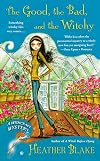
The Good: Amusing, as the series always is. The introduction of the possibility of ghosts was interesting, though I'm glad it seems to not be a permanent addition. In this instance it was very helpful in giving emotion to the case Darcy found herself in the middle of, as well as giving her a very good reason to continue her involvement. With all cozy mystery series, the romance is slow going. But, what I especially like about this series is that there are real obstacles that come up that warrant the snail's pace. Issues that make sense and need to be dealt with.
The Bad: Flowers. Meh. I don't read gardening themed cozy mystery series, although there are a few out there, because I have no interest. The mix of magic made it tolerable, but I was lost for the most part whenever it came to the Floracrafters.
The Bad: Flowers. Meh. I don't read gardening themed cozy mystery series, although there are a few out there, because I have no interest. The mix of magic made it tolerable, but I was lost for the most part whenever it came to the Floracrafters.

The Good: This novella was rich with geeky splendor. Set at the 2014 Sand Diego Comic-Con. A bulk of the main characters are Firefly fans selling merchandise at the con. Another main character is the star of a hit sci-fi show, fictional but seeming to more than mildly resemble Katee Sackkoff (the actress who played Kara Thrace on BSG), but that could just me my own interpretation. Taking us back to the first major outbreak of the zombie apocalypse that is in full swing during the Newsflesh trilogy, trapping us in the convention center as first of the zombies come and begin to multiply (as they are wont to do). This was an amazing, fun story that added little to the Newsflesh world, but was still a super fun experience.
The Bad: It's a novella, when it really should have been a full novel. It has more than enough plot and action to fill a full novel. I'm not a fan of novellas to begin with, but this one clearly had all the makings of something more.
The Bad: It's a novella, when it really should have been a full novel. It has more than enough plot and action to fill a full novel. I'm not a fan of novellas to begin with, but this one clearly had all the makings of something more.
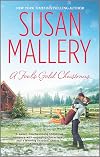
The Good: I fell behind in this series and spent far too much time away from this cozy little town I love. What a wonderful time to come back to it, with a Christmas themed story. Evie was a natural choice for the female lead, having introduced her, a little, in a previous novel. Dante was a little more surprising as the male lead, but they worked together perfectly. Evie and Dante's fears were both understandable, if not completely relatable. The Christmas setting made the entire story a lot more festive and upbeat than their romance would have been alone. Beyond their relationship, it was absolutely wonderful to see Evie interacting with her family, building those relationships for the first time, as well as seeing both Evie and Dante become real, included members of the community.
The Bad: I disliked the turn towards the end of the novel before the inevitable happily-ever-after. Mallery has a nasty little habit of making her male leads act in an unnecessarily cruel manner out of fear of commitment before realizing there is no fighting true love. It happens really often. I find it hard to believe that all these men use this same juvenile tactic and that they are always forgiven for it in the end. To the point where the other townswomen who've gone through it in their own relationships will get together with the hurt woman and laugh about their own miserable experiences. Once, sure. Twice, okay maybe. An entire town full of women who take back purposely hurtful men like show more it's some sort of right of passage, um, no. show less
The Bad: I disliked the turn towards the end of the novel before the inevitable happily-ever-after. Mallery has a nasty little habit of making her male leads act in an unnecessarily cruel manner out of fear of commitment before realizing there is no fighting true love. It happens really often. I find it hard to believe that all these men use this same juvenile tactic and that they are always forgiven for it in the end. To the point where the other townswomen who've gone through it in their own relationships will get together with the hurt woman and laugh about their own miserable experiences. Once, sure. Twice, okay maybe. An entire town full of women who take back purposely hurtful men like show more it's some sort of right of passage, um, no. show less
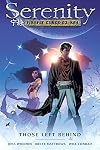
The Good: Those Left Behind is pretty much an episode of Firefly, just in graphic novel form. It comes chronologically after the end of the show and before the movie. It doesn't do much to move from A to B, especially in regard to where we find some of the characters once the movie begins, but it is a start in the right direction. The art is pretty impressive. The characters are immediately recognizable. Wash is a little weird, in an unexplainable way, but you definitely know who he is. Overall, it's a wonderful return to a world we love.
The Bad: This graphic novel was a bit short, story-wise. It was physically short as well. It's weirdly less tall than any other graphic novel I've read, making the pages hold less content than usual. The main problem is the story isn't important, Nothing new and different happens.
The Bad: This graphic novel was a bit short, story-wise. It was physically short as well. It's weirdly less tall than any other graphic novel I've read, making the pages hold less content than usual. The main problem is the story isn't important, Nothing new and different happens.
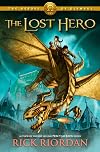
The Good: When I first heard of this series, I had wondered how Riordan wold make it work after bringing the Greek gods to life. I couldn't see how it would possibly work, as the mythologies are so interrelated. I shouldn't have worried. If I know anything by now, I know that Riordan has an uncanny ability to make world work within one another. That he can take something as huge as an entire cultural mythology and make it work in relation to our world. If he can do that, of course he can mess Greek and Roman mythology into something connected, yet existing outside one another. Going in, I at least thought I knew how Riordan would portray his hero Jason. I was wrong there as well. Jason isn't another Percy Jackson. He's someone else entirely and his journey seems to be working out in an wholly different fashion. The continuation of Camp Halfblood didn't seem all that possibly when the Percy Jackson series ended, but again, I was wrong. Riordan continues the world he created, yet makes it more - adding to it in unexpected ways and only enriching it. Fans of Percy Jackson will be blown away by this series if this initial book is any indication. I plan on devouring the entire thing at once.
The Bad: Not a thing.
The Bad: Not a thing.
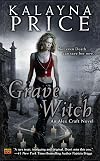
The Good: I started reading Kalayna Price when I first started blogging. I devoured her Haven series (and am still desperately awaiting book 3) and promptly bought Grave Witch when it was released. Popped it on the shelf and literally forgot I owned it, for well over 5 years. What an epic misstep on my part. Urban fantasy is my most loved genre and Price never fails to hit all the right buttons for me. Grave Witch lives up to everything I had hoped for and more. Alex has some necromancy witchcraft abilities going on, rents her home from the fae, has been ousted from her family for her abilities, the grim reaper lurks about (and is something of a friend) and she's got some budding romantic stuff going on that doesn't overtake the action filled mystery she's involved in. I found myself completely thrown off-kilter numerous times, never seeing any of the big reveals coming. Everything in this book is pitch perfect and I will definitely be obsessing over the rest of this series. I think it's safe to say that Kalayna Price has cemented herself as one of my go-to authors.
The Bad: Not a thing.
The Bad: Not a thing.
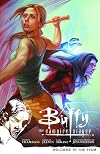
The Good: Xander makes you care about Dawn. That's what we remaining skeptical fans have needed since the moment Dawn appeared in the series. A reason to care about her. She's grown up some, but she's still, at heart, the annoying little sister we all wish had never been introduced. Her relationship with Xander is the only thing that makes her likable, but at least we have that now. Xander is still full of his flaws, the one character that never evolves past his episode, always reverting back to default mode come the next. This graphic novel stays true to that, as annoying as it may be. We see him once again contemplating questionable things based on emotion over logic.
The Bad: The artwork is getting laughable. I mean, look at that cover. Clearly Buffy. Clearly Xander in black and white at the bottom. Obviously the artists have a grasp on what the characters are supposed to look like. Then on the inside we get rushed cartoony nonsense that barely resemble the characters. I couldn't identify Buffy in more than a few panels. Xander is slightly better, but the eye patch is a pretty big tip off. Judge for yourself.
{see blog for photos}
Not good.
The Bad: The artwork is getting laughable. I mean, look at that cover. Clearly Buffy. Clearly Xander in black and white at the bottom. Obviously the artists have a grasp on what the characters are supposed to look like. Then on the inside we get rushed cartoony nonsense that barely resemble the characters. I couldn't identify Buffy in more than a few panels. Xander is slightly better, but the eye patch is a pretty big tip off. Judge for yourself.
{see blog for photos}
Not good.
The Good: The war ends in a surprising twist not everyone will love. I'm not sure I love it, really, except that it's surprising and 21 volumes in, surprising is always good. Negan facilitates a few surprises of his own, chiefly bringing some good, old fashioned biological warfare into the mix. More than anything, the best thing about this volume and the war being over is that we are left with more than one community to build from. The future of The Walking Dead has something it has never had before, a real society - beyond a small community of a few of Rick's people. Varied towns where things don't work exactly the same. Society will have the ability to finally, really begin rebuilding into something normal.
The Bad: Not a thing.
The Bad: Not a thing.
The Good: A whole lot of action going on here, as there should be during a war. Rick has a surprisingly decent plan, especially surprising when we know from the last volume that this isn't a war they were actually prepared for before Rick went rage crazy. Negan is pushing himself to all new levels of skin-crawlingly disgusting yet still pretty hilarious. I have no idea how AMC is going to be able to portray him on the show at all, he's not even close to appropriate for TV, even cable TV.
The Bad: War means people will die. That should be heartbreaking. Except it really isn't when you can't remember who any of these people are. Minor characters die here, but it's more distracting than emotional when you have to stop and think who they are. It's not that their unrecognizable, but people start meaning a whole lot less when there are so many characters now. It really makes a reader miss the good old days when there was a core group and that was who you cared about and focused on.
The Bad: War means people will die. That should be heartbreaking. Except it really isn't when you can't remember who any of these people are. Minor characters die here, but it's more distracting than emotional when you have to stop and think who they are. It's not that their unrecognizable, but people start meaning a whole lot less when there are so many characters now. It really makes a reader miss the good old days when there was a core group and that was who you cared about and focused on.