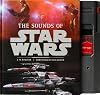
Every non-fiction book or documentary that tries to document the making of more than just one Star Wars movie always has the same flaw: they spend less time, and go into less detail, on each successive movie after the first one.
And it always annoys me.
Other than that, this book is great and has a ton of interesting information.
And it always annoys me.
Other than that, this book is great and has a ton of interesting information.
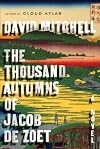
A novel burdened by too much research, and my least favorite David Mitchell book.

It's somehow both undercooked and kinda bloated, in some weird complicated way I can't really explain. And considering the subject matter, it's a surprisingly easy read.
Sooo, 3.5 stars, I guess.
Sooo, 3.5 stars, I guess.
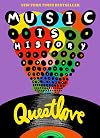
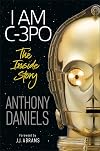
3.5-ish stars.
Anthony Daniels has a million grievances, and he's happy to share them, while never failing to add a passive aggressive "I was just happy to be there."
The (sometimes petty) grievances weren't a surprise though. Anyone who's heard Daniels speak about his experiences with Threepio for the last 45 years should know by now that that's just who he is.
I was surprised by some of the inaccuracies in the book however, mainly relating to when certain events happened in relation to other events. While Daniels often jump around in time, connecting anecdotes and stories across decades as they relate to a certain topic, he also seems to misremember, or at least misrepresent, when certain things happened. Strange that nobody bothered to check these facts, I think.
Anthony Daniels has a million grievances, and he's happy to share them, while never failing to add a passive aggressive "I was just happy to be there."
The (sometimes petty) grievances weren't a surprise though. Anyone who's heard Daniels speak about his experiences with Threepio for the last 45 years should know by now that that's just who he is.
I was surprised by some of the inaccuracies in the book however, mainly relating to when certain events happened in relation to other events. While Daniels often jump around in time, connecting anecdotes and stories across decades as they relate to a certain topic, he also seems to misremember, or at least misrepresent, when certain things happened. Strange that nobody bothered to check these facts, I think.
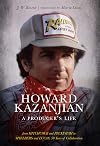
3.5 stars.
Definitely not sure I buy all of Howard Kazanjian and Marcia Lucas' claims in this book, and I would have liked a slightly broader - and more neutral/objective - perspective from Rinzler and his sources, but I got what I came for, namely some rare behind the scenes information on More American Graffiti.
Definitely not sure I buy all of Howard Kazanjian and Marcia Lucas' claims in this book, and I would have liked a slightly broader - and more neutral/objective - perspective from Rinzler and his sources, but I got what I came for, namely some rare behind the scenes information on More American Graffiti.
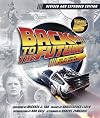
Loved it; lots of great stuff.
However, there not being a single mention of the Crispin Glover lawsuit is ridiculous, and I'm always annoyed in these kinds of books when so much less time is spent on the sequels compared to the first one.
However, there not being a single mention of the Crispin Glover lawsuit is ridiculous, and I'm always annoyed in these kinds of books when so much less time is spent on the sequels compared to the first one.
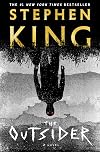
Really liked a lot of it, but it dragged a little by the end.
Probably more like three and a half stars.
Probably more like three and a half stars.
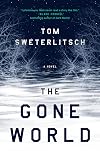
3.75 stars
I really liked the early "using time travel to solve a murder mystery" parts of the story, and was somewhat less enthralled by the "stop the end of the world" parts.
The audiobook is great.
I really liked the early "using time travel to solve a murder mystery" parts of the story, and was somewhat less enthralled by the "stop the end of the world" parts.
The audiobook is great.
So Say We All: The Complete, Uncensored, Unauthorized Oral History of Battlestar Galactica by Edward Gross
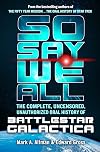
3.5 stars: I would love to know how you do a 700 pages long book about BSG without getting into the reimagining's music at all. Bear McCreary's name only being mentioned once is a crime and I demand justice.
I also wanted way more about 'The Plan', 'Caprica' and 'Blood and Chrome'. Also, I was expecting some discussion of 'Black Market' since Ron Moore was fairly vocal at the time about how that episode turned out.
What is here is fantastic though.
I also wanted way more about 'The Plan', 'Caprica' and 'Blood and Chrome'. Also, I was expecting some discussion of 'Black Market' since Ron Moore was fairly vocal at the time about how that episode turned out.
What is here is fantastic though.
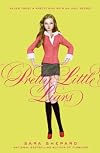
Felt more like a TV pilot than anything even resembling a full story. Maybe that's my cue to just watch the show instead.
The most interesting part about the book is how it sometimes somehow reminded me of American Psycho.
2,5 stars.
The most interesting part about the book is how it sometimes somehow reminded me of American Psycho.
2,5 stars.
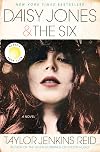
The book itself is probably "only" three and a half stars for me , but the excellent quality of the audiobook bumps it up to four stars total. Everyone should listen to it.
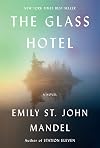
I came for ghosts and got the financial crisis of 2007/2008. Still trying to figure out how I feel about that, but both the writing and the narrative definitely kept me engaged from start to finish.
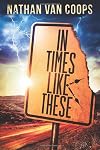
The plot is decent, but the character's are pretty bland for the most part. The dialogue is clunky at its best and just as often outright bad. First half is fairly slow with A LOT of exposition, but the book held my attention much more in the second half when things actually started to happen and the pace picked up.
Am I being nice by giving it 3 stars? Possibly.
Am I being nice by giving it 3 stars? Possibly.
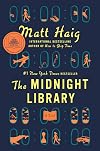
It all builds to a very predictable end, and the overall message is probably a bit too self-helpy for me, but an enjoyable story all the same - with a main character I for one found incredibly relatable. I did listen to the audiobook, which is read by the great Carey Mulligan. So that definitely made the book better, for me at least.
Three and a half stars.
Three and a half stars.

The Revolution Was Televised: The Cops, Crooks, Slingers and Slayers Who Changed TV Drama Forever by Alan Sepinwall
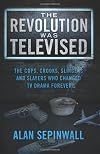
TV critic Alan Sepinwall details the origins and importance of 12 TV shows that together form the backbone of the modern golden age in television. I've been reading Sepinwall's TV blog regularly for several years now and while I don't always agree with him, I do find him to be an interesting voice in the still very young field of television criticism. As someone who tends to look for behind the scenes info as much as possible when I enjoy TV shows, movies or books, this book didn't always reveal that much new information. I actually thought each section could have benefitted from being a little more in depth and analytical. As it is, it is mostly just a recollection of the history of each show with some, but not that much, analysis of the content of the shows themselves. Then again, I could probably read whole books about each of these shows (as well as several not given their own chapter here), but that was never what this was going to be. I enjoyed the book the most when reading what the various creators and writers have to say about their shows in interviews conducted by Sepinwall specifically for this book.
My only real quibbles with the book are incredibly minor and subjective. There were a few times where I disagreed with Sepinwall on his qualitative judgments of certain plotlines, characters and episodes and I found it a little bothersome how he would dismiss these very matter-of-factly without exploring what exactly made them so objectively bad. I was also a bit show more bothered by him unnecessarily spoiling certain specific details from other shows not part of the main focus of this book when he could have gotten his points across by being a little more vague. I do suspect though, that these quibbles are fairly specific to me and won't bother many other readers.
I'd recommend the book for anyone interested in the shows detailed or just interested in how television changed in the late nineties/early aughts. show less
My only real quibbles with the book are incredibly minor and subjective. There were a few times where I disagreed with Sepinwall on his qualitative judgments of certain plotlines, characters and episodes and I found it a little bothersome how he would dismiss these very matter-of-factly without exploring what exactly made them so objectively bad. I was also a bit show more bothered by him unnecessarily spoiling certain specific details from other shows not part of the main focus of this book when he could have gotten his points across by being a little more vague. I do suspect though, that these quibbles are fairly specific to me and won't bother many other readers.
I'd recommend the book for anyone interested in the shows detailed or just interested in how television changed in the late nineties/early aughts. show less