As a home educator and one interested in discerning values worth passing on and developing good character, I really appreciated the life lessons embedded in this story. Fitz the bastard son of a prince, the heir to the throne, has so much against him. And we do, too, whether it's a background of deprivation of poverty and abuse like Fitz's or the story of those privileged and therefore weak of character if not mind and body (think of Eustace in The Dawn Treader and many of the children in Charlie and the Chocolate Factory). As elderly Fitz recalls the history of his people and the events of his life, he recounts the wise words from those around him, sometimes meant for his ears, other times not. But from the perspective of an old man he reveals to us through story the rough and sharp gems that can build our character if we recognize them and put them to use. Allow yourself to be taught, put into practice what you learn, and grow to be strong when pressure reveals who and what you are. And when you fail, begin again.
I was totally immersed in Robin Hobb's world. All my senses were full of the world she's created. I loved it.
I was totally immersed in Robin Hobb's world. All my senses were full of the world she's created. I loved it.
Great concept, poor execution. One of the very few times that the movie is infinitely better. I have removed this from my library. Not worth the shelf space. I actually did not finish. My time--my life!--is worth more. I have very seldom quit a book, but this one just was not worth my life.
Read this book like a devotional, just a page or two at a time. Don't be in a hurry. Breathe, deeply. Set it down, and open it again tomorrow. Reread what you read yesterday, and read the next page.
Easy concept. Now, need the Holy Spirit empowering me to live it.
Again, I debated if this third book in the series was worth reading (not into romance), but I went ahead. Wow! Surprise! Plot twist! I'm all in on this one!
What really makes this personally meaningful is that I just finished reading the academic "The Nazi Doctors and the Nuremberg Code : Human Rights in Human Experimentation" edited by George J. Annas and Michael A. Grodin. I picked that up because of my interest in violations of the Nuremberg Code with regard to the politically motivated policies around 2019 Covid. Put Allegiant, "The Nazi Doctors," and the movie GATTACA together, and try having a thoughtful discussion about personal integrity, the intersection of health, medicine as an industry, human psychology, politics and propaganda, AND the policies that hurt so many people apart from any virus. Line these nonfiction and fiction resources up and soberly consider the ramifications of elites deciding the fates of millions.
Fiction is the sandbox where we get to ask "what if?" and offer possible answers to that question. Allegiant is an important contribution to the discussion around the ways those with means and power may sort, divide, and limit those people with less agency.
Some themes touched on in this series: human psychology (Tris is so obviously young!), growth and development of the intellect and emotions, the capacity of the human spirit to overcome adversity, the ethics surrounding the pursuit of knowledge and technology, the extremes of virtue become vice, show more what makes life meaningful and gives it purpose, what power should elites have over others (with the best of intentions!).
Through Tris, we ask questions about God, family and friendship, and the self, guilt and forgiveness. This is no moralistic story, but what makes it a "good" read is that it touches on real issues, real dilemmas, real pain in betrayal and disappointment in our parents, siblings, authority, God, ourselves. It would be so easy to simply sort people, judge them, and that would be the end of them. This is one of the biggest areas of growth for Tris.
There are no "answers," like in real life. But to ask the questions and be willing to learn, contemplate, and change our minds, to grow in humility, giving grace to ourselves and others are important concepts visited again and again in the broken world of Divergent. show less
What really makes this personally meaningful is that I just finished reading the academic "The Nazi Doctors and the Nuremberg Code : Human Rights in Human Experimentation" edited by George J. Annas and Michael A. Grodin. I picked that up because of my interest in violations of the Nuremberg Code with regard to the politically motivated policies around 2019 Covid. Put Allegiant, "The Nazi Doctors," and the movie GATTACA together, and try having a thoughtful discussion about personal integrity, the intersection of health, medicine as an industry, human psychology, politics and propaganda, AND the policies that hurt so many people apart from any virus. Line these nonfiction and fiction resources up and soberly consider the ramifications of elites deciding the fates of millions.
Fiction is the sandbox where we get to ask "what if?" and offer possible answers to that question. Allegiant is an important contribution to the discussion around the ways those with means and power may sort, divide, and limit those people with less agency.
Some themes touched on in this series: human psychology (Tris is so obviously young!), growth and development of the intellect and emotions, the capacity of the human spirit to overcome adversity, the ethics surrounding the pursuit of knowledge and technology, the extremes of virtue become vice, show more what makes life meaningful and gives it purpose, what power should elites have over others (with the best of intentions!).
Through Tris, we ask questions about God, family and friendship, and the self, guilt and forgiveness. This is no moralistic story, but what makes it a "good" read is that it touches on real issues, real dilemmas, real pain in betrayal and disappointment in our parents, siblings, authority, God, ourselves. It would be so easy to simply sort people, judge them, and that would be the end of them. This is one of the biggest areas of growth for Tris.
There are no "answers," like in real life. But to ask the questions and be willing to learn, contemplate, and change our minds, to grow in humility, giving grace to ourselves and others are important concepts visited again and again in the broken world of Divergent. show less

Because of the teen romance, I nearly passed on this book. It gets better!
The teen romance could be edited out and the story loses nothing. In fact, since I listened on Libby, I used the forward-15-seconds button (but I didn't do this till nearly at the end of book 2, Insurgent).
Mind 4 Survival: How to Face Any Crisis, Minimize Unwanted Struggle, and Live Your Best Possible Life by Brian Duff
You don't have to be in a literal war zone to be in crisis, but whatever your personal hell, you'll do better the closer your perspective is to reality and as you learn to handle it well. Brian is transparent about his difficulties returning to "normal" life after spending over a decade in high stress military combat areas particularly in the Middle East. His mind and body were set on high alert, and as a veteran he had to learn to rationally think through his physiological reactions to "normal" stimulation and retrain his mind and body to respond appropriately. Our society talks about trauma from all kinds of experiences and sources, and Brian's book will help us all to grow with grace toward ourselves and others into healthier, happier people.
The storyline and characters are more developed in this third book of the series. The author continues to imagine a scenario where social conventions have broken down and injury and death is an every present reality. The relationships between people that will impact choices, decisions, and ultimately survival in an extreme situation are further developed. None of us are truly independent, and there are those we want to save but whose perspectives and readiness to change and adapt are different than our own, and there are real human threats to our self-determination. The author has attempted to portray examples of physical, environmental, governmental, and psychological challenges that people in this situation will have to face.
For those who found Morgan to be SO prepared, we see him dealing with his own uncertainty and reluctance to fully accept and adapt to this reality. It is so tempting to try to settle in and hope that people will leave you alone! (But that's probably not going to happen.)
For those who found Morgan to be SO prepared, we see him dealing with his own uncertainty and reluctance to fully accept and adapt to this reality. It is so tempting to try to settle in and hope that people will leave you alone! (But that's probably not going to happen.)
The storyline and characters are more developed than in the first book of the series as the author examines the relationships between people that will impact choices, decisions, and ultimately survival in an extreme situation. None of us are truly independent, and there are those we want to save but whose perspectives and readiness to change and adapt are different than our own. The author has attempted to portray the various psychological challenges that people in this situation will have to face.
This book is written like Common Core public school "literature" with the intent to inform, not as an example of true literary development. It is a list of supplies that would be useful to have in a SHTF situation, why one piece of equipment might be better than another similar piece, how to use the equipment and the necessary peripherals (a stove AND the fuel, as an example). Basically, the story is there to make the learning about equipment interesting and memorable. Along with the equipment list is the fact that a serious consideration for survival are other people: the ignorant, the unprepared, the overconfident, the bullies, the sick and injured, the bewildered, the discouraged, and a lack of social order and conventions to restrain human behavior. After having lived in Florida myself, where this story is set, I noticed the author chose to not address the natural predators (scorpions, snakes, alligators, etc.) but only the human threats. Therefore, it meets the needs of a wider audience in introducing practical equipment that would make life a whole lot easier in a difficult environment.
I have read the next two books, and the storyline and characters are more developed as the author examines the relationships between people that will impact choices, decisions, and ultimately survival in an extreme situation. None of us are truly independent, and there are those we want to save but whose perspectives and readiness to change and adapt are different than our own. The show more author has attempted to portray the various psychological challenges that people in this situation will have to face. show less
I have read the next two books, and the storyline and characters are more developed as the author examines the relationships between people that will impact choices, decisions, and ultimately survival in an extreme situation. None of us are truly independent, and there are those we want to save but whose perspectives and readiness to change and adapt are different than our own. The show more author has attempted to portray the various psychological challenges that people in this situation will have to face. show less
So good! LOTS of literary allusions that ai don't yet get.
About a lot more than just career change. Change is hard and takes time, but taking ACTION is the key to getting out of a less than satisfactory situation, and into something different. Only through action can we create a future self, in a different scenario. Study and assessments and introspection have their place, but ACTION is what will actually get you there.
As another reviewer said, Ibarra's audience is the upper echelon, not working people. We can't just quit and explore scuba diving for fun to find ourselves. No sabbatical where we're paid to fly to France and drink wine on a grant. (Really?!)
As another reviewer said, Ibarra's audience is the upper echelon, not working people. We can't just quit and explore scuba diving for fun to find ourselves. No sabbatical where we're paid to fly to France and drink wine on a grant. (Really?!)
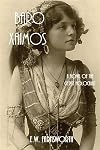
It is so important to remember the Holocaust, how the National Socialists murdered the ill, old, Jewish, Roma, homosexual, Christians, and others who opposed them. I really wanted to love this book. I enjoy "living" in the fiction I read, whether it's historical or any other fiction. That didn't happen with this book.
The communist leader of the militarized group is female until a male shows up and they vie for leadership. She's angry because she wants the man for sex and she wants to remain in charge (see the ugly).
The good: There's one ironic line mentioning that for the group to buy fabric to make clothes for the growing children they had to participate in capitalism. Also, the irony that in America the Roma would be allowed to live as they wish, but they went to America to disrupt capitalism. A character asks, "Why would we want to harm a people who will let us live as we wish to?" Because communism is worth it, "Americans have not awakened to the promise of Communism," is the communist character's answer. Ideology matters more than facts. At least the communist is honest--ha!
The bad: The characters were two dimensional, cardboard. It was like hearing someone tell you about things that happened to other people, and moved quickly with little character development or transition.
The ugly: Unfortunately, this book was much about the idolization of a man. Women are jealous of each other and hungry for men, and having sex is the fix. Is this realistic Roma patriarchy? The show more macho man? It felt stereotypical.
I am so disappointed. I did not immerse in Roma culture or the storyline of the book. I bought the book, read it, and have removed it from my library. I am sorry that it was not worth keeping.
The interesting: The Roma women are considered to be fortune tellers, and there is fear they will lose these gifts along with their virginity. There was no supernatural element here, as they appeared to rely on relationship and observation to affirm the client's views. The same Tarot card keeps appearing, but has different significance to the different clients, who are major historical figures. show less
The communist leader of the militarized group is female until a male shows up and they vie for leadership. She's angry because she wants the man for sex and she wants to remain in charge (see the ugly).
The good: There's one ironic line mentioning that for the group to buy fabric to make clothes for the growing children they had to participate in capitalism. Also, the irony that in America the Roma would be allowed to live as they wish, but they went to America to disrupt capitalism. A character asks, "Why would we want to harm a people who will let us live as we wish to?" Because communism is worth it, "Americans have not awakened to the promise of Communism," is the communist character's answer. Ideology matters more than facts. At least the communist is honest--ha!
The bad: The characters were two dimensional, cardboard. It was like hearing someone tell you about things that happened to other people, and moved quickly with little character development or transition.
The ugly: Unfortunately, this book was much about the idolization of a man. Women are jealous of each other and hungry for men, and having sex is the fix. Is this realistic Roma patriarchy? The show more macho man? It felt stereotypical.
I am so disappointed. I did not immerse in Roma culture or the storyline of the book. I bought the book, read it, and have removed it from my library. I am sorry that it was not worth keeping.
The interesting: The Roma women are considered to be fortune tellers, and there is fear they will lose these gifts along with their virginity. There was no supernatural element here, as they appeared to rely on relationship and observation to affirm the client's views. The same Tarot card keeps appearing, but has different significance to the different clients, who are major historical figures. show less
Very simple, not in a bad way.
Excellent, out-of-the-box thinking about defense, especially for someone elderly or disabled. This book shows how knowledge of herbs, their use and preparation, can save lives.
A thorough examination of what is stated explicitly and what is implied by an author of fiction and nonfiction. And poetry is considered as I wish it had been when I was in school! A wonderful list of deep questions to probe a text and ponder what the author believes to be really real, so we as readers are not hoodwinked into swallowing gobbly-gook whole without chewing thoughtfully.
The Search for God and Guinness: A Biography of the Beer that Changed the World by Stephen Mansfield
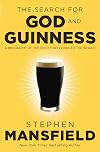
An easy, enlightening read. Is it business? Is it Christian evangelism? Is it social work to help the poor, diseased, illiterate? What an amazing legacy! The Guinness family was generous and forward-thinking. Don't skip this book because you are a Christian and "don't drink." There is so much to be learned and gained as a follower of Christ.
Thank You for Arguing, Fourth Edition (Revised and Updated): What Aristotle, Lincoln, and Homer Simpson Can Teach Us About the Art of Persuasion by Jay Heinrichs
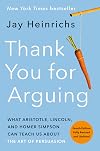
This is SO GOOD. The layout is also amazing in highlighting important information that impacts successful communication. Heinrichs role-plays conversations, contrasting "fighting" versus "arguing" and showing how to move a conversation forward with more productive phrasing into the right timeframe of the future. I am not far into the book at all, but I wanted to review it to encourage more of us to read it and communicate better, to sympathize with those who think differently than we do, and argue more, fight less.
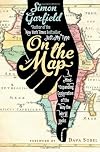
This was an entertaining look at all kinds of maps! Nothing deep, but an introduction to the world from the perspective of maps, globes, satellites, GPS. Fun!
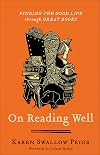
Karen Swallow Prior's On Reading Well : Finding the Good Life Through Great Books is about lifting our eyes to a higher, better calling by practicing virtuous living. Each chapter begins with an epigraph and a Bible verse related to the virtue discussed in the chapter. Prior examines the etymology and past use of the word in ancient literature, our current understanding, and the extremes of too much or too little of the virtue that become vices. Then, taking a work of literature, she shows how the characters display the virtue, or not, if they grow in that area, and by extension, our room for growth. It was a convicting and encouraging read. Highly recommended for all who wish to grow and develop their character, and especially for teachers of reading and literature, to help them develop a worldview and life for themselves and their students beyond a grade.
If you value and enjoy the intellectual life of the mind, read this before you get married.
Especially meaningful as we live in the Columbus Ohio area and I work with Muslims and we have Muslim neighbors. She explains the great lengths a Christian believer must go to for simple safety many of us take for granted.
I listened to the audio. Very insightful. I would like to read a paper copy to mark up and take time to ponder and set changes in motion.
Another excellent book by Ron Clark. I listened to the audio, read by the author. Good observations to help you recognize yourself and others as Runners, Joggers, Walkers, or Riders, with helpful advice to become more engaged in your organization's purpose and encourage those with you, too.
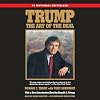
This book was recommended in an article about bartering and negotiation, along with several other books. I read it after Trump's presidency, but it was written in 1987 before becoming president was in his thoughts. His education through his dad's business prepared him, but Donald Trump didn't coast on daddy's reputation. So much of his business depends local knowledge and relationships. It really gave me insight and appreciation of the President Trump and his personality. We all know the stereotypical New Yorker in a movie or book-- well, stereotypes develop from a culture! And here is NY in all its brashness, in reality. Reading the book really helped me separate emotions from the facts of the man.
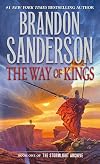
Incredible world building and interesting characters, in a complex plot. Lots of thoughtful musings in this book. Unfortunately, I listened while driving and was unable to write them down. I'd like to have a paper copy, just to reread and find these quotable thoughts.

I learned so much history through this book! Regarding libraries, no one loves a book collection as the original collector. Many libraries are not appreciated by those who inherit them, and they are broken apart, neglected, subject to fire and moisture and dust. A good warning to me, with a small personal library of about 2000 books.
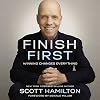
I saw Scott skate in his hometown in the early 90s. His personality SHINES! He is able to connect with every member of the audience in a way few people can do, and turned the spotlight on his fellow performers with gusto. As I read this aloud to my teens, I see his heart truly is to bring out the best in others. This is not a memoir but a book to encourage each of us to find our purpose in serving and live it out boldly.
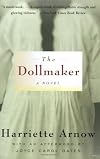
I read this as a teen, and I have thought of it so many times through the years, about a woman at the mercy of cruel circumstances, trying to retain her dignity and strength through a creative act. She is always last after caring for others. I finally searched it out and added it here, to remind me to look for a copy to reread. I will update my review then. For now, I'm giving it a 5 star rating, because it has stuck with me all these years, while some "classics" fade in my memory.