13 Things that Don't Make Sense: The Most Baffling Scientific Mysteries of Our Time by Michael Brooks
This is my first addition and review of a book I only know as an audiobook.
"13 Things" takes a mixture of scientific phenomena that range from the highly technical (dark matter), through what we take too much for granted (life and death), to the scientifically controversial (e.g., the placebo effect). The science left me behind at times, but you can still follow the main arguments even so. It's at times a difficult read (the chapter on free will had me frowning, glaring, and eventually spitting feathers), but always challenging without venturing too deeply into what the lay-person would struggle with. And, it leaves you asking more questions than it answers.
"13 Things" takes a mixture of scientific phenomena that range from the highly technical (dark matter), through what we take too much for granted (life and death), to the scientifically controversial (e.g., the placebo effect). The science left me behind at times, but you can still follow the main arguments even so. It's at times a difficult read (the chapter on free will had me frowning, glaring, and eventually spitting feathers), but always challenging without venturing too deeply into what the lay-person would struggle with. And, it leaves you asking more questions than it answers.
(Note: I've tried to avoid spoilers, except those which are already given on the book's cover!)
Imagine the following scenario: the young Lewis Carroll's publisher is sent Alice's Adventures Through the Looking Glass as an entry for a prestigious writer's prize. He contacts Carroll, and finally cajoles him into doing a major rewrite of the book, as it's "a compelling story but badly written". Carroll insists on meeting Alice first, to get her agreement to this 'publishing fraud'. Alice turns out to be a beautiful but very enigmatic and taciturn young girl; after meeting Carroll, she agrees to the project.
Carroll becomes absorbed in the story, and his rewrite of it. The book wins the prize, becomes a best-seller, and Alice becomes a media darling. Then she disappears suddenly. Carroll has already found himself drawn into her life, but more than that - he is drawn into the very world she depicts in her story…
This, in essence, is the meat of one half of Murakami's classic. The names of course are different (the novel has nothing to do with Lewis Carroll or Alice - that was just my reviewer's fantasy), but the creation of a fantastical 'other world', which is contained within this one, is one of Murakami's trademarks.
The other half of the novel is the story of a young woman who - at the prompting of an eccentric wealthy dowager, commits acts of 'final revenge' upon men who have irredeemably committed acts of unspeakable violence against women. This young woman - Aomame - show more at first seems to be entirely separate from Tengo (the young writer), and Murakami alternates chapters between each of them. As the story develops however, we find that the two are inextricably linked, stemming back to a moment in a classroom when both were 10 years old, even though their lives diverged after that.
1Q84 is Murakami's classic. As the virtual inventor of the magic realism genre, he brilliantly constructs a believable world where the boundaries of fiction and reality blur. To give just one example : after Tengo gradually realises that he is in the world depicted by Fuka-Eri (the "Alice" character), he recognises that there are elements of it that weren't in her original story, but which he himself had added as part of his rewrite. Aomame, too, finds disturbing differences in the familiar world (policemens' uniforms have suddenly changed, for example), and spends time in the library reading past newspaper reports trying to find out major events she "knows" didn't actually happen, at least, not in the world she is familiar with. And she sees two moons in the sky…
Murakami's genius is to bring utterly surreal elements - complete fantasy - into our everyday world, and make them believable. His characters continue to commute to work, prepare and eat meals, form relationships and have sex; everything in fact, which one would expect from a standard work. His central characters are, as always, self-aware and self-critical, yet outsiders too : they live in our everyday ordinary world, but somehow stand apart in some way. Tengo had an unhappy childhood and prefers to live on his own, with few luxuries and contented with his spare life: a frustrated maths genius and would-be author who teaches in a cram school. Aomame is even more stripped down; despite being a highly competent martial arts instructor, her apartment is bare, and she forms very few relationships. She loves only the 'boy in the classroom she met when she was 10 years old', but she doesn't try to find him, believing they may someday 'meet by chance'.
Murakami blends the fictional and the real together, weaves the mundane and the fantastic seamlessly, such that you never feel for even a moment that you are not in the real, everyday world. You enter the lives of his ordinary yet extraordinary characters and you know them. You ARE them. That's his genius. show less
Imagine the following scenario: the young Lewis Carroll's publisher is sent Alice's Adventures Through the Looking Glass as an entry for a prestigious writer's prize. He contacts Carroll, and finally cajoles him into doing a major rewrite of the book, as it's "a compelling story but badly written". Carroll insists on meeting Alice first, to get her agreement to this 'publishing fraud'. Alice turns out to be a beautiful but very enigmatic and taciturn young girl; after meeting Carroll, she agrees to the project.
Carroll becomes absorbed in the story, and his rewrite of it. The book wins the prize, becomes a best-seller, and Alice becomes a media darling. Then she disappears suddenly. Carroll has already found himself drawn into her life, but more than that - he is drawn into the very world she depicts in her story…
This, in essence, is the meat of one half of Murakami's classic. The names of course are different (the novel has nothing to do with Lewis Carroll or Alice - that was just my reviewer's fantasy), but the creation of a fantastical 'other world', which is contained within this one, is one of Murakami's trademarks.
The other half of the novel is the story of a young woman who - at the prompting of an eccentric wealthy dowager, commits acts of 'final revenge' upon men who have irredeemably committed acts of unspeakable violence against women. This young woman - Aomame - show more at first seems to be entirely separate from Tengo (the young writer), and Murakami alternates chapters between each of them. As the story develops however, we find that the two are inextricably linked, stemming back to a moment in a classroom when both were 10 years old, even though their lives diverged after that.
1Q84 is Murakami's classic. As the virtual inventor of the magic realism genre, he brilliantly constructs a believable world where the boundaries of fiction and reality blur. To give just one example : after Tengo gradually realises that he is in the world depicted by Fuka-Eri (the "Alice" character), he recognises that there are elements of it that weren't in her original story, but which he himself had added as part of his rewrite. Aomame, too, finds disturbing differences in the familiar world (policemens' uniforms have suddenly changed, for example), and spends time in the library reading past newspaper reports trying to find out major events she "knows" didn't actually happen, at least, not in the world she is familiar with. And she sees two moons in the sky…
Murakami's genius is to bring utterly surreal elements - complete fantasy - into our everyday world, and make them believable. His characters continue to commute to work, prepare and eat meals, form relationships and have sex; everything in fact, which one would expect from a standard work. His central characters are, as always, self-aware and self-critical, yet outsiders too : they live in our everyday ordinary world, but somehow stand apart in some way. Tengo had an unhappy childhood and prefers to live on his own, with few luxuries and contented with his spare life: a frustrated maths genius and would-be author who teaches in a cram school. Aomame is even more stripped down; despite being a highly competent martial arts instructor, her apartment is bare, and she forms very few relationships. She loves only the 'boy in the classroom she met when she was 10 years old', but she doesn't try to find him, believing they may someday 'meet by chance'.
Murakami blends the fictional and the real together, weaves the mundane and the fantastic seamlessly, such that you never feel for even a moment that you are not in the real, everyday world. You enter the lives of his ordinary yet extraordinary characters and you know them. You ARE them. That's his genius. show less
This is one of the most astounding and original novels you will ever read. Is it also a great novel? Ah, well that's a whole different question altogether...
In essence, House of Leaves is a very simple story, told in the most complex way imaginable. There are four layers to it, which I will call "inner", "middle", "outer", and "editorial". We are introduced to it first via the most nebulous and thinly drawn of those layers, the "middle". That is the work of a character whom we never actually meet, an elderly recluse Zampanó.
This is where the complexity comes in, even before describing the narrative and literary techniques employed. Zampanó's scholarship is discovered after his mysterious death, by Johnny Truant, anti-hero of the "outer" layer, a young man who works in a tattoo parlour and whose main obsessions are drugs and women. On a late night sortie with a friend, he finds himself in Zampanó's unoccupied apartment, sees a trunk and takes it away to his own apartment. The trunk is full of scraps of paper forming the bulk of Zampanó's annotated scholarship, but seemingly incomplete, containing many crossings out and source material of various kinds. Truant makes it a personal project to assemble this academic jigsaw puzzle into a complete and coherent whole. But gradually, as he puts it together, it begins to pervade his life, first simply as a private obsession, then as the portal to some bizarre and terrifying manifestations. As time passes, his life falls apart, show more he loses his job, he loses his friends, he becomes a recluse, and more and more comes to resemble the character that Zampanó had become.
Truant is a troubled individual. When he's a small child, his real father dies in a road accident. He's brought up by his mother, and stepfather with whom he has an uneasy relationship which descends into violence. Then his mother is taken into institutional care when he's still a child, suffering from mental delusions (possibly caused by an kitchen accident when Johnny was very small, involving a pan of hot oil, leaving the child with permanently scarred arms.) Finally, Truant leaves home and makes his own way in the world, to escape the violence and strictures of his stepfather.
Truant's story is presented in the "editorial" layer by way of lengthy footnotes to Zampanó's scholarship, both contained within the fictional edition of a work called "House Of Leaves" (i.e., the "book you're holding in your hands"). Truant's story only barely interfaces with Zampanó's, and neither of them 'interface' with the "inner", which is a multi-media event - portrayed as based upon a real series of phenomena - called The Navidson Record. This is presented - by Zampanó - as a factual record, finally seen in cinemas by millions (like a real-life Blair Witch Project) and written on and reviewed by literally thousands of commentators, media outlets, research and academic journals, literary critics, psychologists, paranormal investigators, etc. Each review and comment is added by Zampanó as a footnote, making it seem as if what he is creating is a major academic work.
Strip all the above layers away - editorial, Johnny Truant, Zampanó, Zampanó's footnotes - and what you are left with is the 'very simple story' I referred to earlier. To summarise : acclaimed war photographer Will Navidson moves his family (beautiful career model wife Karen, and two children) to a house in Virginia. An inexplicable spatial anomaly opens up which Navidson begins to explore and attempt to map, but it grows larger and larger and almost swallows him. He brings in a team of explorers, plus his brother Tom, and an older, wheelchair-bound tutor. Tom is the opposite of Will - he's warm but unfocused - while Will is driven and 'difficult', Tom has no steady relationship or career. After a series of terrifying events, Will finally decides to explore the anomaly on his own, much to the horror of his family. Due to the panoply of recording equipment - still cameras, movie cameras, radio broadcast - there is a solid record of the anomaly's exploration, which eventually forms a cinematic release, the so-called Navidson Record.
There's just one problem for Johnny Truant - in his (i.e. our) world, no-one has heard of The Navidson Record.
So far, so good (if unbelievably and almost unreadably complex). However, there are aspects of this novel which are either completely overdone, or even unnecessary. In order of irritation, they are:
FOOTNOTES. I've already mentioned that Truant's story is conveyed in lengthy footnotes within the "editorial layer". The structural conceit makes this necessary. There are also a smattering of editorial footnotes. However, the footnotes added by Zampanó are so numerous that they will drive you mad. Ok, they present the endless commentary upon The Navidson Record, but we 'get' this by the end of the second chapter if not sooner. Do we really need thousands of invented annotations, from fictional journals, books, reviewers, academics and assorted media? In the end I just scanned each one quickly to see if it contained something beyond a reference. Some I ignored completely and I don't believe this did anything but enhance my enjoyment, unlike the burden of the footnotes themselves.
TEXTUAL FORMAT. Danielewski plays with text. He places words horizontally, vertically, upside down; he scatters a few words across a page, or spirals them into the centre; he buries the narrative within blocks of total garbage (text drawn from where?); this is all in addition to the various differing fonts and point sizes used, which at least serve the purpose of changing the POV, so those are not entirely redundant. But, what starts as a clever kind of device, soon becomes intensely annoying and irritating, especially when the book has to be frequently turned in order to read what may be only ten words on a single page, and the next, and the next. Not really very funny.
DIGRESSIONS. There are at least two lengthy excusions. One on the topic of echoes, and one on labyrinths. These are explored in-depth, as if they were genuine intellectual essays. But do they have any relevance to the narrative? None that I could see. AND they are liberally spiced with the totally overdone footnotes. I'm sure some of those were genuine? I didn't bother to check.
Is this novel some kind of allegory? If so, I wasn't erudite, bright, or intellectual enough to see it. Apart from the seriously spooky central story, and Truant's own horror story (which almost stands alone from the other), this was more hard work to read than I ever want to spend on a novel again. I won't be returning to it. show less
In essence, House of Leaves is a very simple story, told in the most complex way imaginable. There are four layers to it, which I will call "inner", "middle", "outer", and "editorial". We are introduced to it first via the most nebulous and thinly drawn of those layers, the "middle". That is the work of a character whom we never actually meet, an elderly recluse Zampanó.
This is where the complexity comes in, even before describing the narrative and literary techniques employed. Zampanó's scholarship is discovered after his mysterious death, by Johnny Truant, anti-hero of the "outer" layer, a young man who works in a tattoo parlour and whose main obsessions are drugs and women. On a late night sortie with a friend, he finds himself in Zampanó's unoccupied apartment, sees a trunk and takes it away to his own apartment. The trunk is full of scraps of paper forming the bulk of Zampanó's annotated scholarship, but seemingly incomplete, containing many crossings out and source material of various kinds. Truant makes it a personal project to assemble this academic jigsaw puzzle into a complete and coherent whole. But gradually, as he puts it together, it begins to pervade his life, first simply as a private obsession, then as the portal to some bizarre and terrifying manifestations. As time passes, his life falls apart, show more he loses his job, he loses his friends, he becomes a recluse, and more and more comes to resemble the character that Zampanó had become.
Truant is a troubled individual. When he's a small child, his real father dies in a road accident. He's brought up by his mother, and stepfather with whom he has an uneasy relationship which descends into violence. Then his mother is taken into institutional care when he's still a child, suffering from mental delusions (possibly caused by an kitchen accident when Johnny was very small, involving a pan of hot oil, leaving the child with permanently scarred arms.) Finally, Truant leaves home and makes his own way in the world, to escape the violence and strictures of his stepfather.
Truant's story is presented in the "editorial" layer by way of lengthy footnotes to Zampanó's scholarship, both contained within the fictional edition of a work called "House Of Leaves" (i.e., the "book you're holding in your hands"). Truant's story only barely interfaces with Zampanó's, and neither of them 'interface' with the "inner", which is a multi-media event - portrayed as based upon a real series of phenomena - called The Navidson Record. This is presented - by Zampanó - as a factual record, finally seen in cinemas by millions (like a real-life Blair Witch Project) and written on and reviewed by literally thousands of commentators, media outlets, research and academic journals, literary critics, psychologists, paranormal investigators, etc. Each review and comment is added by Zampanó as a footnote, making it seem as if what he is creating is a major academic work.
Strip all the above layers away - editorial, Johnny Truant, Zampanó, Zampanó's footnotes - and what you are left with is the 'very simple story' I referred to earlier. To summarise : acclaimed war photographer Will Navidson moves his family (beautiful career model wife Karen, and two children) to a house in Virginia. An inexplicable spatial anomaly opens up which Navidson begins to explore and attempt to map, but it grows larger and larger and almost swallows him. He brings in a team of explorers, plus his brother Tom, and an older, wheelchair-bound tutor. Tom is the opposite of Will - he's warm but unfocused - while Will is driven and 'difficult', Tom has no steady relationship or career. After a series of terrifying events, Will finally decides to explore the anomaly on his own, much to the horror of his family. Due to the panoply of recording equipment - still cameras, movie cameras, radio broadcast - there is a solid record of the anomaly's exploration, which eventually forms a cinematic release, the so-called Navidson Record.
There's just one problem for Johnny Truant - in his (i.e. our) world, no-one has heard of The Navidson Record.
So far, so good (if unbelievably and almost unreadably complex). However, there are aspects of this novel which are either completely overdone, or even unnecessary. In order of irritation, they are:
FOOTNOTES. I've already mentioned that Truant's story is conveyed in lengthy footnotes within the "editorial layer". The structural conceit makes this necessary. There are also a smattering of editorial footnotes. However, the footnotes added by Zampanó are so numerous that they will drive you mad. Ok, they present the endless commentary upon The Navidson Record, but we 'get' this by the end of the second chapter if not sooner. Do we really need thousands of invented annotations, from fictional journals, books, reviewers, academics and assorted media? In the end I just scanned each one quickly to see if it contained something beyond a reference. Some I ignored completely and I don't believe this did anything but enhance my enjoyment, unlike the burden of the footnotes themselves.
TEXTUAL FORMAT. Danielewski plays with text. He places words horizontally, vertically, upside down; he scatters a few words across a page, or spirals them into the centre; he buries the narrative within blocks of total garbage (text drawn from where?); this is all in addition to the various differing fonts and point sizes used, which at least serve the purpose of changing the POV, so those are not entirely redundant. But, what starts as a clever kind of device, soon becomes intensely annoying and irritating, especially when the book has to be frequently turned in order to read what may be only ten words on a single page, and the next, and the next. Not really very funny.
DIGRESSIONS. There are at least two lengthy excusions. One on the topic of echoes, and one on labyrinths. These are explored in-depth, as if they were genuine intellectual essays. But do they have any relevance to the narrative? None that I could see. AND they are liberally spiced with the totally overdone footnotes. I'm sure some of those were genuine? I didn't bother to check.
Is this novel some kind of allegory? If so, I wasn't erudite, bright, or intellectual enough to see it. Apart from the seriously spooky central story, and Truant's own horror story (which almost stands alone from the other), this was more hard work to read than I ever want to spend on a novel again. I won't be returning to it. show less
Imagine, if you will, that Charles Dickens is kidnapped by time travellers and brought to modern London; that after being given a lengthy tour of the city and of modem culture, he is given Lewis Carroll, Norton Juster, and a selection of 'Gothick' novels to read; finally, that he is asked to re-imagine Alice Through The Looking Glass entirely in his own style. It is not too far-fetched to speculate that Neverwhere might be the result...
Richard Mayhew, a mild and unassuming young man, is on the way to a Very Important dinner date with his beautiful but manipulative girlfriend, Jessica. Nearing the restaurant they encounter a young girl dressed in shabby clothes, lying on the pavement severely injured. Jessica barely registers her, but Richard stops to see if he can help. Much to Jessica's anger, he ignores her ultimatum, abandons dinner, and takes the girl back to his flat, tends to her wounds and offers her refuge. A few bizarre incidents alert him that this is no ordinary girl. Before he knows what has happened he has "fallen through the cracks" into a parallel London, 'London Below', a place where rats are revered and have their human translators, rat-speakers.
Although written in a style to appeal to teenagers especially, this is a book that finds a wide audience - its colourful cast of characters, dramatic narrative that owes much to its origins as a TV series, and its depiction of a locale both familiar and yet unfamiliar, hold the reader's attention well and lead us show more via varied cliffhangers towards a satisfying denouement.
Yet this is no mere childrens' fantasy. It explores many adult issues - of good vs. evil (rarely portrayed in simplistic terms); of facing up to fears leading to self-knowledge and growth; of trust and betrayal; of learning to see beyond the outer appearance of things. It is also a satire on modern urban society, and how some people really do 'fall through the cracks' - the homeless, drug addicts, the poor, misfits, those who live alone.
For readers of all ages there are a series of quests, which only rarely resolve in an expected manner : the search for a magic key; revenge for murder; a personal obsession with slaying the Beast of London; release from 'eternal imprisonment'; and Richard's quest to return 'home' to London Above. All these events take place beneath the familiar London - in the sewers, the Tube system, in long-forgotten stations, up in dark courts and alleys of London Above; and in the regularly staged Floating Market, held overnight in a different London landmark, leaving no trace behind, and where a rigidly observed truce ensures no violence or crime can be committed within its bounds.
It is the characters that make this novel such a success, particularly the way so many of them are drawn from familiar London place-names : there's the friend of the birds, rooftop dweller Old Bailey; the ageing dementia-ridden Earl and his Court; the Seven Sisters, the Black Friars, Hammer Smith, and the angel, Islington. Then there is the heroine, Door - what is her past, and what is the limit of her powers? Who is the Marquis de Carabas, and can he ever be trusted? Never to be trusted are the two agents of villainy, Mr Croup and Mr Vandemar; dressed like shabby Victorian undertakers, their pleasure is to maim, to kill, but most of all, to cause pain. They appear, often silently, on either side of their hapless victim who has fled, thinking he can outwit and outrun them.
London Below occasionally intrudes upon London Above, but it is an oddity that the residents Above, though they can see the residents from Below, simply do not register the fact, and though seen, they are quickly forgotten or ignored as though they did not exist. This is part of the satire of the novel - how so many inhabitants of modern cities do not 'register' to other citizens : the homeless on the streets, the beggars, etc.
Neverwhere belongs to a long and respected list of what can be aptly described as 'one-off moral fantasies', in the manner of Alice Through The Looking Glass, The Phantom Tollbooth, Erewhon, Gulliver's Travels. But unlike many such creations, it can be enjoyed superficially on its own narrative terms, as an exciting and absorbing fantasy novel.
FOOTNOTE. After reading this, I was moved to investigate excerpts from the original BBC TV series on YouTube. Don't bother! It's awful. Only Richard looked anything like my mental picture of him, everyone else looked so wrong somehow. Especially Croup & Vandemar. show less
Richard Mayhew, a mild and unassuming young man, is on the way to a Very Important dinner date with his beautiful but manipulative girlfriend, Jessica. Nearing the restaurant they encounter a young girl dressed in shabby clothes, lying on the pavement severely injured. Jessica barely registers her, but Richard stops to see if he can help. Much to Jessica's anger, he ignores her ultimatum, abandons dinner, and takes the girl back to his flat, tends to her wounds and offers her refuge. A few bizarre incidents alert him that this is no ordinary girl. Before he knows what has happened he has "fallen through the cracks" into a parallel London, 'London Below', a place where rats are revered and have their human translators, rat-speakers.
Although written in a style to appeal to teenagers especially, this is a book that finds a wide audience - its colourful cast of characters, dramatic narrative that owes much to its origins as a TV series, and its depiction of a locale both familiar and yet unfamiliar, hold the reader's attention well and lead us show more via varied cliffhangers towards a satisfying denouement.
Yet this is no mere childrens' fantasy. It explores many adult issues - of good vs. evil (rarely portrayed in simplistic terms); of facing up to fears leading to self-knowledge and growth; of trust and betrayal; of learning to see beyond the outer appearance of things. It is also a satire on modern urban society, and how some people really do 'fall through the cracks' - the homeless, drug addicts, the poor, misfits, those who live alone.
For readers of all ages there are a series of quests, which only rarely resolve in an expected manner : the search for a magic key; revenge for murder; a personal obsession with slaying the Beast of London; release from 'eternal imprisonment'; and Richard's quest to return 'home' to London Above. All these events take place beneath the familiar London - in the sewers, the Tube system, in long-forgotten stations, up in dark courts and alleys of London Above; and in the regularly staged Floating Market, held overnight in a different London landmark, leaving no trace behind, and where a rigidly observed truce ensures no violence or crime can be committed within its bounds.
It is the characters that make this novel such a success, particularly the way so many of them are drawn from familiar London place-names : there's the friend of the birds, rooftop dweller Old Bailey; the ageing dementia-ridden Earl and his Court; the Seven Sisters, the Black Friars, Hammer Smith, and the angel, Islington. Then there is the heroine, Door - what is her past, and what is the limit of her powers? Who is the Marquis de Carabas, and can he ever be trusted? Never to be trusted are the two agents of villainy, Mr Croup and Mr Vandemar; dressed like shabby Victorian undertakers, their pleasure is to maim, to kill, but most of all, to cause pain. They appear, often silently, on either side of their hapless victim who has fled, thinking he can outwit and outrun them.
London Below occasionally intrudes upon London Above, but it is an oddity that the residents Above, though they can see the residents from Below, simply do not register the fact, and though seen, they are quickly forgotten or ignored as though they did not exist. This is part of the satire of the novel - how so many inhabitants of modern cities do not 'register' to other citizens : the homeless on the streets, the beggars, etc.
Neverwhere belongs to a long and respected list of what can be aptly described as 'one-off moral fantasies', in the manner of Alice Through The Looking Glass, The Phantom Tollbooth, Erewhon, Gulliver's Travels. But unlike many such creations, it can be enjoyed superficially on its own narrative terms, as an exciting and absorbing fantasy novel.
FOOTNOTE. After reading this, I was moved to investigate excerpts from the original BBC TV series on YouTube. Don't bother! It's awful. Only Richard looked anything like my mental picture of him, everyone else looked so wrong somehow. Especially Croup & Vandemar. show less
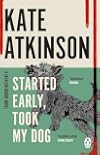
Jackson Brodie has left Scotland, and returned to his native Yorkshire. Or rather, his unwilling search for the real roots of a New Zealand woman who was adopted as a child (and who hasn't accepted Jackson's 'retirement'), plus his haphazard attempt to trace his faithless and conning ex-wife Tessa, have brought him back there - to its towns, its glorious countryside, its ruined abbeys ... and its murky recent past.
Walking through a park, he witnesses casual acts of cruelty towards a dog, leading him kidnap it with menaces towards its lager lout of an owner. For the remainder of the novel, Jackson is saddled with the "dog" of the title.
Tracy Waterhouse, retired cop, single woman, and now unfulfilled security chief of a modern shopping centre, performs a rescue act even more daring, and even more out of character.
These two events are simply the prelude to a chain of cause and effect that slowly unravels a 35-year-old murder mystery, uncovers some incidents that the Leeds police (or some at least), would prefer stay buried, and leads to the discovery of the true identity of various children that lie at the heart of the mystery.
This is a superbly plotted, inimitably told tale - the latest in the short but welcome series featuring Kate Atkinson's rather luckless and accident-prone detective Jackson Brodie. It would spoil the intricately woven plot to reveal any more about the nature of the events at the heart of this book, but it is (sadly we understand) a worthy sign-off show more (but only for now?) of this most engaging of characters.
It is a story of secrets that lie buried for too long, of the search for identity, of the use and abuse of 'women of the street', and the sturdy resilience of children in the face of brutally overwhelming odds. It dances around the terrible murders committed by the man known forever as the Yorkshire Ripper, and convincingly summons up the shape of urban and suburban life in the mid-1970s.
As we have come to expect from Kate Atkinson, the narrative is vivid and engaging, the characters beautifully drawn, and the dialogue never less than natural. Her love of language, so eloquently displayed in her first three novels and short stories, is tempered a little in the Brodie books, but it is still there, and this is a very satisfying read. And not every last loose end is tied up - there is a hint that something is left open (not, I trust, a vain hope?) to pursue in a subsequent tale. show less
Walking through a park, he witnesses casual acts of cruelty towards a dog, leading him kidnap it with menaces towards its lager lout of an owner. For the remainder of the novel, Jackson is saddled with the "dog" of the title.
Tracy Waterhouse, retired cop, single woman, and now unfulfilled security chief of a modern shopping centre, performs a rescue act even more daring, and even more out of character.
These two events are simply the prelude to a chain of cause and effect that slowly unravels a 35-year-old murder mystery, uncovers some incidents that the Leeds police (or some at least), would prefer stay buried, and leads to the discovery of the true identity of various children that lie at the heart of the mystery.
This is a superbly plotted, inimitably told tale - the latest in the short but welcome series featuring Kate Atkinson's rather luckless and accident-prone detective Jackson Brodie. It would spoil the intricately woven plot to reveal any more about the nature of the events at the heart of this book, but it is (sadly we understand) a worthy sign-off show more (but only for now?) of this most engaging of characters.
It is a story of secrets that lie buried for too long, of the search for identity, of the use and abuse of 'women of the street', and the sturdy resilience of children in the face of brutally overwhelming odds. It dances around the terrible murders committed by the man known forever as the Yorkshire Ripper, and convincingly summons up the shape of urban and suburban life in the mid-1970s.
As we have come to expect from Kate Atkinson, the narrative is vivid and engaging, the characters beautifully drawn, and the dialogue never less than natural. Her love of language, so eloquently displayed in her first three novels and short stories, is tempered a little in the Brodie books, but it is still there, and this is a very satisfying read. And not every last loose end is tied up - there is a hint that something is left open (not, I trust, a vain hope?) to pursue in a subsequent tale. show less

SPOILER ALERT : This review will not give away plot details, but does describe the very unusual structure of the novel.
This is not so much a novel as a series of six short novellas, each progressing forward in time, from the early 19th Century, to a far distant future. The stories are not connected except by a very tenuous link : for example, Story 1 (a journal) links to Story 2 by the central character finding the published journal in a library; a piece of music from Story 2 is found in a record shop in Story 3, and so on.
The individual stories are not told in completion, but are left 'hanging', to be returned to and completed later in the book (the exception being the futuristic Story 6 which forms the centre of the novel). The structure of the novel, giving each individual story a letter, is : A B C D E F E D C B A. The novel therefore progresses from the 19th Century to a far-off future, and then returns by stages, ending back in the 19th Century.
The central theme (if there is one) is 'imbalances of power' : Western expansion over indigenous tribes, and of one tribe over another; the clash of youth and old age, new ideas and new money versus the old (aristocracy and musical composition) and traditional; big business over anything seen to be standing in the way of profit and expansion; institutions over the individual; conscious intelligence over a cloned and drugged fantasy life; civilisation versus brute force and superstition.
Each story is told in the form of a show more pastiche of a different literary form, including "Victorian explorer's journal", "episodic cliff-hanger thriller", "satire", "science fiction". Some are eminently more readable and successful than others. In particular I found Story 4 - set in the modern era - an unsuccessful satire, as it painted a picture of Britain that didn't really convince (who on earth says "ruddy" as a swear word these days?), though it does contain some laugh-out-loud moments.
I would have liked to see three of these novellas turned into full length novels - Story 2 took us part-way on a tense psychological journey, but ultimately dumped us out of it at rather high speed; Story 3 was the quintessential exciting "long" short story and although seemingly complete, could equally have made a thrilling and successful full length novel; Story 5's nightmarish vision of a future dystopia was an original and thought-provoking triumph, but had probably the most potential for satisfactory expansion.
The structure of "Cloud Atlas" is uniquely original, and it seems likely that its ABCDEFEDCBA stories are intended to form the literary equivalent of a piece of music; a sextet, or fugue (statement and recapitulation). However, what works with music does not necessarily translate into a literary form, and my overwhelming feeling as the tale lurched back from the far future towards its 19th Century inception was "Yes, very clever ... but so what?" I would say that it's better read by jumping forward to finish each individual story, then returning to start the next one. show less
This is not so much a novel as a series of six short novellas, each progressing forward in time, from the early 19th Century, to a far distant future. The stories are not connected except by a very tenuous link : for example, Story 1 (a journal) links to Story 2 by the central character finding the published journal in a library; a piece of music from Story 2 is found in a record shop in Story 3, and so on.
The individual stories are not told in completion, but are left 'hanging', to be returned to and completed later in the book (the exception being the futuristic Story 6 which forms the centre of the novel). The structure of the novel, giving each individual story a letter, is : A B C D E F E D C B A. The novel therefore progresses from the 19th Century to a far-off future, and then returns by stages, ending back in the 19th Century.
The central theme (if there is one) is 'imbalances of power' : Western expansion over indigenous tribes, and of one tribe over another; the clash of youth and old age, new ideas and new money versus the old (aristocracy and musical composition) and traditional; big business over anything seen to be standing in the way of profit and expansion; institutions over the individual; conscious intelligence over a cloned and drugged fantasy life; civilisation versus brute force and superstition.
Each story is told in the form of a show more pastiche of a different literary form, including "Victorian explorer's journal", "episodic cliff-hanger thriller", "satire", "science fiction". Some are eminently more readable and successful than others. In particular I found Story 4 - set in the modern era - an unsuccessful satire, as it painted a picture of Britain that didn't really convince (who on earth says "ruddy" as a swear word these days?), though it does contain some laugh-out-loud moments.
I would have liked to see three of these novellas turned into full length novels - Story 2 took us part-way on a tense psychological journey, but ultimately dumped us out of it at rather high speed; Story 3 was the quintessential exciting "long" short story and although seemingly complete, could equally have made a thrilling and successful full length novel; Story 5's nightmarish vision of a future dystopia was an original and thought-provoking triumph, but had probably the most potential for satisfactory expansion.
The structure of "Cloud Atlas" is uniquely original, and it seems likely that its ABCDEFEDCBA stories are intended to form the literary equivalent of a piece of music; a sextet, or fugue (statement and recapitulation). However, what works with music does not necessarily translate into a literary form, and my overwhelming feeling as the tale lurched back from the far future towards its 19th Century inception was "Yes, very clever ... but so what?" I would say that it's better read by jumping forward to finish each individual story, then returning to start the next one. show less
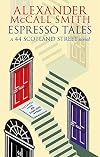
I love the 44 Scotland Street series. I love the conceit of their being serialised daily in a newspaper, which gives them their distinctive form - short chapters of equal length, each ending on a teaser or very gentle cliff hanger. I love their mix of characters : a few parodies & caricatures (Dr Fairbairn, Bruce, Bertie's mum), but mostly well-rounded if sometimes slightly comic personalities.
Sadly I had no idea of the sequence except that the first book in the series was "44 Scotland Street", and so I read that first. However I then followed it up with "The World According To Bertie" which is actually the FOURTH. Due to the gentle pacing of these stories - all set in a beautifully described and intimate Edinburgh - about the only criticism one could make is that not a great deal actually happens. The stories are more about gently witty and warm, mildly satirical excoriations of modern life, than about intricate seat-of-the-pants plotting.
"Espresso Tales" is the SECOND in the series and it is actually my favourite of the three Scotland Street novels I've read to date. More seems to happen in this novel than in the other two I've mentioned, in the case of poor little Bertie, quite dramatically so. However, I won't spoil the fun by revealing any of the plot.
Suffice to say that if you like Alexander McCall Smith, you will love the Scotland Street series. And if you liked the first book, you will enjoy this second instalment equally if not more so.
Sadly I had no idea of the sequence except that the first book in the series was "44 Scotland Street", and so I read that first. However I then followed it up with "The World According To Bertie" which is actually the FOURTH. Due to the gentle pacing of these stories - all set in a beautifully described and intimate Edinburgh - about the only criticism one could make is that not a great deal actually happens. The stories are more about gently witty and warm, mildly satirical excoriations of modern life, than about intricate seat-of-the-pants plotting.
"Espresso Tales" is the SECOND in the series and it is actually my favourite of the three Scotland Street novels I've read to date. More seems to happen in this novel than in the other two I've mentioned, in the case of poor little Bertie, quite dramatically so. However, I won't spoil the fun by revealing any of the plot.
Suffice to say that if you like Alexander McCall Smith, you will love the Scotland Street series. And if you liked the first book, you will enjoy this second instalment equally if not more so.
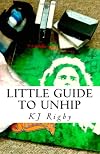
You'll never have so much fun disagreeing with an author. And that's really the point with Kate Rigby's "Little Guide To Unhip" : she has assembled a highly subjective hotch-potch of clothing, pop stars, TV shows, cultural icons, social situations, food, pets, and various other phenomena, and rated them on an 'unhip scale'. They're all personal choices, and as she admits at the end, "you may disagree on some of my inclusions".
I disagreed with her very first choice! Gilbert O'Sullivan, whatever else he fell into, did have one of the great, era-defining songs, "Nothing Rhymed", after which I can forgive him his "Clare"s, his "Oo-wakka-doo-wakka-day"s and his "Get Down"s. Now if she'd said Leo Sayer ... but wait ... read on, perhaps she does?
Rigby writes with wit and dash, and more than a little personal reminiscence. You get the distinct impression that she has lived through, even suffered, each of the unhip manifestations she describes. She also writes with a great deal of affection for her subjects; clearly "unhip" does not mean "terminally awful", but simply "something she may (or may not) enjoy but doesn't rush to put on Facebook".
She deviates very briefly from the blueprint : can religious organisations be rated on a hipness scale? I'm not sure they can. However, you will laugh out loud as you read through this short, undemanding yet comically rewarding book.
One final thing - why the "unhip" of the title, why not "uncool"? This is part of the joke, as Rigby has used show more a term that is in itself "unhip" in these oh-so-cool days.
Thoroughly recommended. show less
I disagreed with her very first choice! Gilbert O'Sullivan, whatever else he fell into, did have one of the great, era-defining songs, "Nothing Rhymed", after which I can forgive him his "Clare"s, his "Oo-wakka-doo-wakka-day"s and his "Get Down"s. Now if she'd said Leo Sayer ... but wait ... read on, perhaps she does?
Rigby writes with wit and dash, and more than a little personal reminiscence. You get the distinct impression that she has lived through, even suffered, each of the unhip manifestations she describes. She also writes with a great deal of affection for her subjects; clearly "unhip" does not mean "terminally awful", but simply "something she may (or may not) enjoy but doesn't rush to put on Facebook".
She deviates very briefly from the blueprint : can religious organisations be rated on a hipness scale? I'm not sure they can. However, you will laugh out loud as you read through this short, undemanding yet comically rewarding book.
One final thing - why the "unhip" of the title, why not "uncool"? This is part of the joke, as Rigby has used show more a term that is in itself "unhip" in these oh-so-cool days.
Thoroughly recommended. show less

I haven't even finished this book, and I'm bursting to write a review! This is one of the most original themes for a novel I've ever read. Think of "The Phantom Tollbooth" meets "Jaws" meets Nick Hornby meets "The Name Of The Rose" ...
Conceptual sharks? That's the central premise, and as a device for narrative fiction, it's pretty awesome on its own account - yet the story is so much more than that. It's a retrospective detective story, it's a love story (well, two love stories.. well, sort of), it's an Odyssey, and it's an exploration of memory loss and grief. I will try not to spoil the plot, so the next paragraph is going to have to be very carefully crafted.
The plot begins dramatically : Eric Sanderson finds himself on the bedroom floor of his own house. Neither of these facts is known to him as his memory - his PERSONAL memory - has been completely wiped. He doesn't know who he is, or where he is, though in all other respects he functions quite normally. He finds his way, via a note left for him by "The First Eric Sanderson", to Dr Randle, who can apparently help him. She tells him about the accident in which his girlfriend Clio Aames died, and about his "condition" which is seemingly more than simple amnesia. Months later, after receiving daily letters from The First Eric Sanderson (who has apparently pre-arranged their mailing), and one extremely dramatic event, Eric sets off with his grumpy cat Ian, to locate the mysterious Dr Trey Fidorous who is somewhere in show more "un-space". En route he is helped by the beautiful Scout, who embodies a few unexplained mysteries of her own. What is her connection with Fidorous? With Eric? With Clio Aames? (And that's about as far as I can go without spoiling the plot).
Stephen Hall draws Eric Sanderson extremely well, as the kind of hapless modern male archetype that Nick Hornby helped to establish as the modern novel's combined "hero and anti-hero". Even better is the dialogue between Eric and both the women in his life, which sparkles with wit, genuine affection, and a realistic kind of modern cynical banter. These relationships are absolutely central to the story, so a facility with drawing them, and the dialogues involved, is necessary; fortunately, Hall handles them well.
The story itself revolves around the fantastical central conceit of "what are conceptual fish, and how do you deal with them?", but because it is set in a familiar everyday world, and peopled by well-drawn characters, the reader is willingly swept along.
The use of graphic illustrations is a luxury not entirely necessary to the story (as they are for example in Mark Haddon's "Curious Case Of The Dog..."). Indeed, at one point they are positively irritating, occupying around 30 pages of the book, and taking you closer to the end than you really wanted to be. However, that's a minor quibble.
All in all, this is a breathtakingly original novel, aided by well-drawn characters, good dialogue, taut action sequences, and one cat. Thoroughly recommended.
(Now I have finished the book, I wish to add a postscript : the final chapter is a pseudo-explanatory addendum which I feel is unnecessary. We could have been left where Eric's story ended, asking the questions that a novel like this almost begs us to ask, but also smiling - emotionally fulfilled and sighing with satisfaction.)
[ Postscript - I have deducted one star and wish to amend this review, in the light of a discovery I have made. Many of the plot devices in this book are a direct "lift" from Haruki Murakami's Wild Sheep Chase published in the early 1980s.
- a virtual animal that takes over the mind of the person "possessed"
- the enigmatic girlfriend
- the eccentric (or "mad") professor / expert who is crucial to the denouement
- the book-long search to hunt down the "virtual animal" and destroy it
- the secret plot for world domination
I still enjoyed reading The Raw Shark Texts, but it's nowhere near as original as I thought at first. ] show less
Conceptual sharks? That's the central premise, and as a device for narrative fiction, it's pretty awesome on its own account - yet the story is so much more than that. It's a retrospective detective story, it's a love story (well, two love stories.. well, sort of), it's an Odyssey, and it's an exploration of memory loss and grief. I will try not to spoil the plot, so the next paragraph is going to have to be very carefully crafted.
The plot begins dramatically : Eric Sanderson finds himself on the bedroom floor of his own house. Neither of these facts is known to him as his memory - his PERSONAL memory - has been completely wiped. He doesn't know who he is, or where he is, though in all other respects he functions quite normally. He finds his way, via a note left for him by "The First Eric Sanderson", to Dr Randle, who can apparently help him. She tells him about the accident in which his girlfriend Clio Aames died, and about his "condition" which is seemingly more than simple amnesia. Months later, after receiving daily letters from The First Eric Sanderson (who has apparently pre-arranged their mailing), and one extremely dramatic event, Eric sets off with his grumpy cat Ian, to locate the mysterious Dr Trey Fidorous who is somewhere in show more "un-space". En route he is helped by the beautiful Scout, who embodies a few unexplained mysteries of her own. What is her connection with Fidorous? With Eric? With Clio Aames? (And that's about as far as I can go without spoiling the plot).
Stephen Hall draws Eric Sanderson extremely well, as the kind of hapless modern male archetype that Nick Hornby helped to establish as the modern novel's combined "hero and anti-hero". Even better is the dialogue between Eric and both the women in his life, which sparkles with wit, genuine affection, and a realistic kind of modern cynical banter. These relationships are absolutely central to the story, so a facility with drawing them, and the dialogues involved, is necessary; fortunately, Hall handles them well.
The story itself revolves around the fantastical central conceit of "what are conceptual fish, and how do you deal with them?", but because it is set in a familiar everyday world, and peopled by well-drawn characters, the reader is willingly swept along.
The use of graphic illustrations is a luxury not entirely necessary to the story (as they are for example in Mark Haddon's "Curious Case Of The Dog..."). Indeed, at one point they are positively irritating, occupying around 30 pages of the book, and taking you closer to the end than you really wanted to be. However, that's a minor quibble.
All in all, this is a breathtakingly original novel, aided by well-drawn characters, good dialogue, taut action sequences, and one cat. Thoroughly recommended.
(Now I have finished the book, I wish to add a postscript : the final chapter is a pseudo-explanatory addendum which I feel is unnecessary. We could have been left where Eric's story ended, asking the questions that a novel like this almost begs us to ask, but also smiling - emotionally fulfilled and sighing with satisfaction.)
[ Postscript - I have deducted one star and wish to amend this review, in the light of a discovery I have made. Many of the plot devices in this book are a direct "lift" from Haruki Murakami's Wild Sheep Chase published in the early 1980s.
- a virtual animal that takes over the mind of the person "possessed"
- the enigmatic girlfriend
- the eccentric (or "mad") professor / expert who is crucial to the denouement
- the book-long search to hunt down the "virtual animal" and destroy it
- the secret plot for world domination
I still enjoyed reading The Raw Shark Texts, but it's nowhere near as original as I thought at first. ] show less
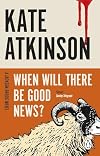
It is so hard to write a review of this book without betraying non-readers with "spoilers", so I will have to try it without giving much plot detail at all.
First, this is a crime story. The novel begins with an event so shocking, so apparently reminiscent of an equally shocking true-life English murder, that it stuns the reader with no warning. And yet, this event is - from the story's perspective - in "past time", and it is not the solving of it as a case that forms the basis of the novel, but its ramifications reverberating through the next generation. This, of course, is Atkinson's great strength, that she can take an established genre and yet make it entirely her own, succeeding on every level as she goes.
The book is full of characters, beautifully drawn and eccentrically real : Jackson Brodie, her private investigator (retired), with a history of failed relationships; orphan Reggie, a gifted child-woman ("I'm NOT twelve, I'm sixteen! Can I help it if I look young?") with a dysfunctional brother, a classical education, and a stubborn refusal to let 'sleeping dogs lie' - quite literally; Louise, a policewoman with an obsession involving cases where women have survived attempted murder; Joanna Hunter, a doctor who dotes on her baby and her dog, with a mysterious past, and a husband who seems to have a less than straight business.
These characters start the novel apparently all walking their separate paths, but it soon enough becomes clear that their lives are interwoven. show more It takes another shocking event to bring them all (sometimes unknowingly) together, an event that at first seems dramatically over-the-top, but which soon emerges as the novel's central plot device, around which the characters encounter each other, from which mistaken identities arise, and through which the events unfold which lead to the novel's dramatic conclusion.
This is a tour-de-force. It does not seek to turn the crime thriller genre on its head, yet in its own brilliance, it does so. Character and psychology displace methodology and dogged detective work; and as ever with Atkinson's work, the reverberation of events through time provide a vivid tapestry upon which the 'smaller warp and weft' of daily life, and the unfolding of personality, take place. As for the conventions of the genre, most loose ends are tied, leaving one or two open for exploration in (one hopes, passionately) the next novel in this series.
(Footnote : for those who like a good "whodunnit", Agatha Christie-style, who prefer their genres more formulaic and less unpredictable, this novel MAY not be for you. It is first and foremost a literary novel, not a genre novel.) show less
First, this is a crime story. The novel begins with an event so shocking, so apparently reminiscent of an equally shocking true-life English murder, that it stuns the reader with no warning. And yet, this event is - from the story's perspective - in "past time", and it is not the solving of it as a case that forms the basis of the novel, but its ramifications reverberating through the next generation. This, of course, is Atkinson's great strength, that she can take an established genre and yet make it entirely her own, succeeding on every level as she goes.
The book is full of characters, beautifully drawn and eccentrically real : Jackson Brodie, her private investigator (retired), with a history of failed relationships; orphan Reggie, a gifted child-woman ("I'm NOT twelve, I'm sixteen! Can I help it if I look young?") with a dysfunctional brother, a classical education, and a stubborn refusal to let 'sleeping dogs lie' - quite literally; Louise, a policewoman with an obsession involving cases where women have survived attempted murder; Joanna Hunter, a doctor who dotes on her baby and her dog, with a mysterious past, and a husband who seems to have a less than straight business.
These characters start the novel apparently all walking their separate paths, but it soon enough becomes clear that their lives are interwoven. show more It takes another shocking event to bring them all (sometimes unknowingly) together, an event that at first seems dramatically over-the-top, but which soon emerges as the novel's central plot device, around which the characters encounter each other, from which mistaken identities arise, and through which the events unfold which lead to the novel's dramatic conclusion.
This is a tour-de-force. It does not seek to turn the crime thriller genre on its head, yet in its own brilliance, it does so. Character and psychology displace methodology and dogged detective work; and as ever with Atkinson's work, the reverberation of events through time provide a vivid tapestry upon which the 'smaller warp and weft' of daily life, and the unfolding of personality, take place. As for the conventions of the genre, most loose ends are tied, leaving one or two open for exploration in (one hopes, passionately) the next novel in this series.
(Footnote : for those who like a good "whodunnit", Agatha Christie-style, who prefer their genres more formulaic and less unpredictable, this novel MAY not be for you. It is first and foremost a literary novel, not a genre novel.) show less
Michael is a violin player. Michael plays in a string quartet. Michael's two loves are his violin and his ex-lover Julia. Michael tracks down a rare Beethoven quintet. From these bare bones, Vikram Seth constructs a sonata of a novel. Music is the narrative thread, indeed it is more than that : it is the heart of the story. It weaves in and around the complex dynamics and strange interpersonal relationships that lie at the claustrophobic heart of a string quartet.
This is a novel of unresolved relationships, in the manner of a fugue that never quite manages to properly conclude. Why did Michael abandon Julia in Vienna years before? What was the big problem between him and his teacher Carl Kall? What drives the individual members of the quartet - what combines them and what separates them?
Seth pursues these threads while always keeping the music at the forefront of the readers' minds : a mysterious Beethoven quintet, Bach's "Art Of Fugue", Schubert's "Trout Quintet", the dynamics of string instruments, rehearsals and public performance. Only at one point - the interlude in Venice towards the end of the book - does the music take a (comparative) back seat, and it is no surprise that this is where the story dips in tension and meanders a little.
The strength of the novel lies in its descriptions - closely observed, poetic, vivid, and yet somehow spare too; the narrative is nicely paced, with tensions largely maintained and no needless sidetracks. If anything, the sense of show more claustrophobia is built remorselessly through the first half of the novel, and while it persists through to the end, the accompanying tension and slight sense of mystery seems to dissipate somewhat in the second half.
The novel's big flaw - though this may have been Seth's intention? - is the character of its narrator Michael. Several women appear to fall for him, yet it is hard to understand why. He is moody, selfish in a nagging and insistent kind of way, and apparently insensitive to his lovers' needs due to his emotional immaturity. He is in many senses every woman's nightmare : initially impressing as attractive, sensitive, artistic and talented, but poisoning this through his marked negative traits which emerge sooner or later. The love for him by Julia is particularly incomprehensible, and in her position I would either given him a good slap, or given up on him pretty quick; I certainly would not have returned for a second helping.
That aside, this is an absorbing book and it is not essential to have a deep knowledge of music in order to enjoy it. show less
This is a novel of unresolved relationships, in the manner of a fugue that never quite manages to properly conclude. Why did Michael abandon Julia in Vienna years before? What was the big problem between him and his teacher Carl Kall? What drives the individual members of the quartet - what combines them and what separates them?
Seth pursues these threads while always keeping the music at the forefront of the readers' minds : a mysterious Beethoven quintet, Bach's "Art Of Fugue", Schubert's "Trout Quintet", the dynamics of string instruments, rehearsals and public performance. Only at one point - the interlude in Venice towards the end of the book - does the music take a (comparative) back seat, and it is no surprise that this is where the story dips in tension and meanders a little.
The strength of the novel lies in its descriptions - closely observed, poetic, vivid, and yet somehow spare too; the narrative is nicely paced, with tensions largely maintained and no needless sidetracks. If anything, the sense of show more claustrophobia is built remorselessly through the first half of the novel, and while it persists through to the end, the accompanying tension and slight sense of mystery seems to dissipate somewhat in the second half.
The novel's big flaw - though this may have been Seth's intention? - is the character of its narrator Michael. Several women appear to fall for him, yet it is hard to understand why. He is moody, selfish in a nagging and insistent kind of way, and apparently insensitive to his lovers' needs due to his emotional immaturity. He is in many senses every woman's nightmare : initially impressing as attractive, sensitive, artistic and talented, but poisoning this through his marked negative traits which emerge sooner or later. The love for him by Julia is particularly incomprehensible, and in her position I would either given him a good slap, or given up on him pretty quick; I certainly would not have returned for a second helping.
That aside, this is an absorbing book and it is not essential to have a deep knowledge of music in order to enjoy it. show less

This is not the definitive work on Mysticism. (I'm not sure that has even been written). It is, however, the best introduction to the subject in the English language. A work of two halves - a Study followed by an Anthology - it includes all the major strands of Christian mysticism plus discussions of Buddhism, Hinduism, Sufism, Platonic thought, and a few expressions from the lives of quite ordinary people who experienced one of those 'timeless moments'.
.
Happold concentrates unequivocally on the Christian mystics, for which he makes no apology, which does however tend to skew the novice reader's mind towards the (incorrect) assumption that Christianity is the principle religion for mystical experience. That said, it is an excellent study, a superb selection of writings, and ultimately brings to the fore some Christian mystics who may be otherwise unfamiliar to even quite knowledgeable and committed Christians. A must-read for anyone wishing to know about mysticism (though not in any sense a manual for anyone wishing to start on a mystical path of experience, nor does it claim to be).
.
Happold concentrates unequivocally on the Christian mystics, for which he makes no apology, which does however tend to skew the novice reader's mind towards the (incorrect) assumption that Christianity is the principle religion for mystical experience. That said, it is an excellent study, a superb selection of writings, and ultimately brings to the fore some Christian mystics who may be otherwise unfamiliar to even quite knowledgeable and committed Christians. A must-read for anyone wishing to know about mysticism (though not in any sense a manual for anyone wishing to start on a mystical path of experience, nor does it claim to be).

There have been several scientific "detective stories" : the unravelling and discovery of DNA by Crick and Watson; the work that led to Darwin's "Origin Of Species"; the cracking of the "Enigma Code" at Bletchley Park in WWII. This book describes something no less engaging, even though it has much less associated 'glamour' than those others, but also arguably less impact on the academic world too.
.
John Chadwick's account of his friend's - the brilliant and gifted Michael Ventris - intuitive leaps that led to the decipherment of the Bronze Age Linear B script (assisted by Chadwick himself), is a highly technical and academic work. Yet it is written so that the lay person can follow the process of thought, the suspicions leading to new intuitions, the underlying assumptions about what Linear B was, and the startling discovery of what it REALLY is.
.
If you like a detective story, you are fascinated by scripts and cyphers, or you just enjoy good history well-told, then this is a book for you.
.
John Chadwick's account of his friend's - the brilliant and gifted Michael Ventris - intuitive leaps that led to the decipherment of the Bronze Age Linear B script (assisted by Chadwick himself), is a highly technical and academic work. Yet it is written so that the lay person can follow the process of thought, the suspicions leading to new intuitions, the underlying assumptions about what Linear B was, and the startling discovery of what it REALLY is.
.
If you like a detective story, you are fascinated by scripts and cyphers, or you just enjoy good history well-told, then this is a book for you.
44 Scotland Street is something of a unique achievement, which also makes it a unique novel : it was possibly the first to be serialised in a daily newspaper (The Scotsman), which has resulted in a large number of short chapters of equal length, a format which the published novel retains.
The author's intention - encouraged rather than imposed by the unusual structure - is to make each chapter self-contained in some way. This is not pursued artificially; three or four consecutive chapters may feature the same characters and the same plot development, but there is something unique to each - it may be location; it may be viewpoint; it may be a simple theme or conversation. The end result reads simultaneously as both a conventional novel with central characters and a series of plot devices, but also as a connected set of linked short stories.
As to characterisation, there are one or two 'sympathetic' central figures : Pat, a young woman "in her second gap year" through whose eyes we largely see McCall Smith's Edinburgh; two bohemian types, Angus and Domenica; the dithering gallery owner Matthew. The rest of the cast are - to a greater or lesser extent - caricatures, and often highly hilarious ones. The pushy mother Irene and her precocious child Bertie, the narcissistic Bruce, the stubbornly persisting Tories Todd and Sasha, all weave in and out of the plot, never really resolving their "issues", and without the sharp focus of a conventional novel, tending sometimes to fade show more into a narrative mist.
In other respects, this book is a satire, its targets Scottish Conservatives, the art market, the ghastly pretensions of certain middle class parents, and the fluid nature of post-modern relationships. It is a not a cruel satire (that's not McCall Smith's style), but nevertheless his gentle authorship often manages to deflect - though only for a moment - the sound of a well-aimed barb finding its mark. And there is a lot of humour in this novel.
Through everything shines McCall Smith's intimate knowledge of Edinburgh, which comes to life on every page : its streets, its cafés bars and galleries, its pretensions, its architecture, its desirable and not so desirable residential areas. By the end, I was wishing that a street map had been included so I too could walk (if only in my mind) from Matthew's gallery to Big Lou's café or The Cumberland Bar or back to number 44.
This is my favourite to date of this author's works. It is a light read, made all the more deliciously compelling by its short chapters, interwoven plots and themes, and miniature cliffhangers. Sufficient of the plot threads are left unresolved at the end, to leave some hope that we may meet these characters again in a future book. show less
The author's intention - encouraged rather than imposed by the unusual structure - is to make each chapter self-contained in some way. This is not pursued artificially; three or four consecutive chapters may feature the same characters and the same plot development, but there is something unique to each - it may be location; it may be viewpoint; it may be a simple theme or conversation. The end result reads simultaneously as both a conventional novel with central characters and a series of plot devices, but also as a connected set of linked short stories.
As to characterisation, there are one or two 'sympathetic' central figures : Pat, a young woman "in her second gap year" through whose eyes we largely see McCall Smith's Edinburgh; two bohemian types, Angus and Domenica; the dithering gallery owner Matthew. The rest of the cast are - to a greater or lesser extent - caricatures, and often highly hilarious ones. The pushy mother Irene and her precocious child Bertie, the narcissistic Bruce, the stubbornly persisting Tories Todd and Sasha, all weave in and out of the plot, never really resolving their "issues", and without the sharp focus of a conventional novel, tending sometimes to fade show more into a narrative mist.
In other respects, this book is a satire, its targets Scottish Conservatives, the art market, the ghastly pretensions of certain middle class parents, and the fluid nature of post-modern relationships. It is a not a cruel satire (that's not McCall Smith's style), but nevertheless his gentle authorship often manages to deflect - though only for a moment - the sound of a well-aimed barb finding its mark. And there is a lot of humour in this novel.
Through everything shines McCall Smith's intimate knowledge of Edinburgh, which comes to life on every page : its streets, its cafés bars and galleries, its pretensions, its architecture, its desirable and not so desirable residential areas. By the end, I was wishing that a street map had been included so I too could walk (if only in my mind) from Matthew's gallery to Big Lou's café or The Cumberland Bar or back to number 44.
This is my favourite to date of this author's works. It is a light read, made all the more deliciously compelling by its short chapters, interwoven plots and themes, and miniature cliffhangers. Sufficient of the plot threads are left unresolved at the end, to leave some hope that we may meet these characters again in a future book. show less

Mainly for British "charts obsessives", this now-out-of-print reference to the UK Top 40 charts from the 60s through to the early 90s, is an amazing record of pop music's Golden Years, from the rise of The Beatles, through glam, disco, punk, New Wave, and the New Romantics, to the emergence of dance music and hip hop as the dominant force in pop.
Now used as the reference work by such radio shows as Pick Of The Pops and Network Gold, it lists a separate 40 for each week of the era covered, drawn from sources like Record Mirror and later the British Market Research Bureau, which became the official chart compiler from 1969.
Stats include previous week's position, record label, and weeks on the chart, plus a whole host of "fascinating facts" footnotes on each page, for example three songs about parents in this week's Top Ten or Al Martino's Spanish Eyes hits the Top Ten 18 years and 293 days after his previous Top Ten hit ... this was a record.
The main omission from the stats - though it is a flaw not of this particular book, but of ALL such chart compilations - is any mention of the songwriter for each hit, arguably of more interest (certainly since the 60s) than the record label. A release date would also be nice, but this is information not widely or generally available I'm afraid.
This book should not be out of print. An updated version (or even merely a reprint) would be welcomed by a generation of chart obsessives who would love to get their hands on a copy, there show more being no other chart-by-week masterwork. This is a sorry omission, considering that the alphabetical-by-artist Guinness Book Of British Hit Singles has been regularly updated, revised, and reprinted. show less
Now used as the reference work by such radio shows as Pick Of The Pops and Network Gold, it lists a separate 40 for each week of the era covered, drawn from sources like Record Mirror and later the British Market Research Bureau, which became the official chart compiler from 1969.
Stats include previous week's position, record label, and weeks on the chart, plus a whole host of "fascinating facts" footnotes on each page, for example three songs about parents in this week's Top Ten or Al Martino's Spanish Eyes hits the Top Ten 18 years and 293 days after his previous Top Ten hit ... this was a record.
The main omission from the stats - though it is a flaw not of this particular book, but of ALL such chart compilations - is any mention of the songwriter for each hit, arguably of more interest (certainly since the 60s) than the record label. A release date would also be nice, but this is information not widely or generally available I'm afraid.
This book should not be out of print. An updated version (or even merely a reprint) would be welcomed by a generation of chart obsessives who would love to get their hands on a copy, there show more being no other chart-by-week masterwork. This is a sorry omission, considering that the alphabetical-by-artist Guinness Book Of British Hit Singles has been regularly updated, revised, and reprinted. show less
Kate Rigby's novel is quite possibly the only one in existence with a central character who is a "thalidomide child". Daryl Wainwright, a schoolchild of the 1970s, lives in Cirencester, in the English Cotswolds, and does not cast himself as an abject victim of circumstances, but a feisty self-styled Superhero determined to overcome the odds.
Extract:
The running commentary in his head went something like this: And it's Thalidomide Kid from Planet Thalidomide where all the crooked kids live. Thalidomide Kid, coming up to the side shows at the Mop Fair where you aim hoops over things in the middle to see if you can win them, and he's stopping at this stall, Thalidomide Kid, looking at all the bright things in the middle and he's going to get a free go, the man in the middle is giving him a free go, and Thalidomide Kid's hoops land on the sticky brown earth in the moat bit, miles from the prizes which are like castles. And Thalidomide Kid's quoits never land where he wants them to land at school either. And it's Thalidomide Kid who should have a side show all of his own, like at the circus where you see dwarves making a king's ransom. See this, Thalidomide Kid - your momma took something that shrivelled up your arms -
Rigby, whose first novel Fall Of The Flamingo Circus on the punk generation, has now produced this, a possibly much more mature work. She gives it her customary attention to "fine details", summoning up the period in which she sets her books with reference to its show more products, fads, hit records, while keeping the plot moving along tautly, and the dialogue "real". (In fact, Thalidomide Kid is probably the best plotted of all her books to date). show less
Extract:
The running commentary in his head went something like this: And it's Thalidomide Kid from Planet Thalidomide where all the crooked kids live. Thalidomide Kid, coming up to the side shows at the Mop Fair where you aim hoops over things in the middle to see if you can win them, and he's stopping at this stall, Thalidomide Kid, looking at all the bright things in the middle and he's going to get a free go, the man in the middle is giving him a free go, and Thalidomide Kid's hoops land on the sticky brown earth in the moat bit, miles from the prizes which are like castles. And Thalidomide Kid's quoits never land where he wants them to land at school either. And it's Thalidomide Kid who should have a side show all of his own, like at the circus where you see dwarves making a king's ransom. See this, Thalidomide Kid - your momma took something that shrivelled up your arms -
Rigby, whose first novel Fall Of The Flamingo Circus on the punk generation, has now produced this, a possibly much more mature work. She gives it her customary attention to "fine details", summoning up the period in which she sets her books with reference to its show more products, fads, hit records, while keeping the plot moving along tautly, and the dialogue "real". (In fact, Thalidomide Kid is probably the best plotted of all her books to date). show less

I feel a bit of a fraud reviewing this story, as it is SO many years (childhood, in fact) since I read it. But I do remember how much I enjoyed it, though as a child has few critical faculties, I can only comment on the plot, not the characters or the writing style.
Even the plot is hazy now in memory, and Google does not help, offering only copies for sale from rare book sellers. What I remember is a tale of a group of children, probably related, becoming involved in a mystery where "something" was at stake (someone vaguely crooked, or corporate, was on the point of .. what? I cannot remember!). But it involved a churchyard, a statue, an inscription, a mystery, an altered watercourse - in short, something of a detective story. The denouement was satisfying and, being a childrens book, "everything turned out all right in the end".
Sorry, this is a pathetic review, hopefully someone who still has the book can rescue me and do a much better job.
Even the plot is hazy now in memory, and Google does not help, offering only copies for sale from rare book sellers. What I remember is a tale of a group of children, probably related, becoming involved in a mystery where "something" was at stake (someone vaguely crooked, or corporate, was on the point of .. what? I cannot remember!). But it involved a churchyard, a statue, an inscription, a mystery, an altered watercourse - in short, something of a detective story. The denouement was satisfying and, being a childrens book, "everything turned out all right in the end".
Sorry, this is a pathetic review, hopefully someone who still has the book can rescue me and do a much better job.
Bill Bryson is American. Bill Bryson moved to England in 1973. Bill Bryson met an English girl, married and settled in England to raise a family. Bill Bryson took his family back to America after several years in Britain. Bill Bryson wrote a book about Britain to mark his stay here.
Doesn't sound exactly riveting, does it? And yet, Bill Bryson has the British observed down to their little fingernails. His dry comments on the "delights" of living here, from eating out, taking a train, reversing in a multi-storey car park, landladies, menus, pubs, "the best route to..." - had me in stitches. Any Brit with a sense of humour will love this book.
Excerpt:
Eventually, when the intricacies of B-roads, contraflow blackspots and good places to get a bacon sandwich have been discussed so thoroughly that your ears have begun to seep blood, one member of the party will turn to you and idly ask ... when you were thinking of setting off. When this happens, you must never answer truthfully and say, in that kind of dopey way of yours, 'Oh, I don't know, about ten, I suppose,' because they'll all be off again.
'Ten o'clock?' one of them will say and try to back his head off his shoulders. 'As in ten o'clock a.m.?' He'll make a face like someone who's taken a cricket ball in the scrotum but doesn't want to appear wimpy because his girlfriend is watching. 'Well, it's entirely up to you of course, but personally if I was planning to be in Cornwall by three o'clock tomorrow, I'd have left show more yesterday.'
'Yesterday?', someone else will say, chortling softly at this misplaced optimism.
Oh, and Americans, though not understanding a whole lot of it, should love it too, just as we Brits adore Bryson on the subject of his native land and his odyssies through it. Travel book? Humour? Journal? Anthropology? Who cares, just read it! show less
Doesn't sound exactly riveting, does it? And yet, Bill Bryson has the British observed down to their little fingernails. His dry comments on the "delights" of living here, from eating out, taking a train, reversing in a multi-storey car park, landladies, menus, pubs, "the best route to..." - had me in stitches. Any Brit with a sense of humour will love this book.
Excerpt:
Eventually, when the intricacies of B-roads, contraflow blackspots and good places to get a bacon sandwich have been discussed so thoroughly that your ears have begun to seep blood, one member of the party will turn to you and idly ask ... when you were thinking of setting off. When this happens, you must never answer truthfully and say, in that kind of dopey way of yours, 'Oh, I don't know, about ten, I suppose,' because they'll all be off again.
'Ten o'clock?' one of them will say and try to back his head off his shoulders. 'As in ten o'clock a.m.?' He'll make a face like someone who's taken a cricket ball in the scrotum but doesn't want to appear wimpy because his girlfriend is watching. 'Well, it's entirely up to you of course, but personally if I was planning to be in Cornwall by three o'clock tomorrow, I'd have left show more yesterday.'
'Yesterday?', someone else will say, chortling softly at this misplaced optimism.
Oh, and Americans, though not understanding a whole lot of it, should love it too, just as we Brits adore Bryson on the subject of his native land and his odyssies through it. Travel book? Humour? Journal? Anthropology? Who cares, just read it! show less

This influential book starts by giving us a brief overview of the workings and structure of the human brain, an essential preamble to what comes next, and which forms the main section of the book.
In addition to the many tips on improving memory and enhancing creativity (all of which can be found elsewhere, not least in Edward de Bono's Lateral Thinking), Use Your Head's great achievement is in bringing the concept of mind mapping to the wider public. Mind mapping? Yes : the traditional methods of note-taking (at lectures, seminars, for revision, etc) are examined and found wanting - they simply do not conform to the pictorial, graphical way in which the brain functions most efficiently; the student ends up with a heap of words from which the essential facts and ideas must further be located, filtered, reduced.
Mind mapping starts with the main theme or idea being planted boldly in the centre of the page. Subsequent threads, arguments, connected ideas, basic facts ("sub-headings", if you like), radiate out from this like a spider's web, or spokes from the hub of a wheel. Although far fewer words are used, the essential structure and the whole web of interconnected ideas, can be seen at a glance. Study therefore becomes more effective, more efficient, and revision takes a fraction of the time that conventional study notes require.
To indicate just how influential this approach has been, one only has to see how much "mind mapping software" is now out there, proving the wide show more acceptance of this basic premise. And I've used it too (mind mapping, rather than the software) - it really works! show less
In addition to the many tips on improving memory and enhancing creativity (all of which can be found elsewhere, not least in Edward de Bono's Lateral Thinking), Use Your Head's great achievement is in bringing the concept of mind mapping to the wider public. Mind mapping? Yes : the traditional methods of note-taking (at lectures, seminars, for revision, etc) are examined and found wanting - they simply do not conform to the pictorial, graphical way in which the brain functions most efficiently; the student ends up with a heap of words from which the essential facts and ideas must further be located, filtered, reduced.
Mind mapping starts with the main theme or idea being planted boldly in the centre of the page. Subsequent threads, arguments, connected ideas, basic facts ("sub-headings", if you like), radiate out from this like a spider's web, or spokes from the hub of a wheel. Although far fewer words are used, the essential structure and the whole web of interconnected ideas, can be seen at a glance. Study therefore becomes more effective, more efficient, and revision takes a fraction of the time that conventional study notes require.
To indicate just how influential this approach has been, one only has to see how much "mind mapping software" is now out there, proving the wide show more acceptance of this basic premise. And I've used it too (mind mapping, rather than the software) - it really works! show less

What if ... your latest relationship has just ended, you run a failing record shop with two 'losers', and you begin to wonder if your life went wrong somewhere along the way ... what do you do next? In Nick Hornby's world there are only two choices really : you could decide into what logical sequence to re-sequence your CD collection, or to look back and review all the "relationships" in your life, starting with a stolen kiss in the park by the swings when you were only 13.
Rob, anti-hero of Hornby's novel does the latter (or probably both, given what we soon find out about him). He addresses a mental letter to his latest ex, Laura, explaining to her just why she doesn't make his Top 5 Break Ups (there are an awful lot of Top 5s in High Fidelity). He's been hurt, over and over again. Laura just doesn't match the awfulness that his love life has been up to now.
From this point, we find that "the gentleman doth protest too much" as he sets out to regain Laura's affections, while keeping his business afloat (with little help from Barry and Dick, the former shouting out of the shop any no-hoper who doesn't endorse the latest unheard-of rock band that is this week's definition of cool), befriending and then bedding American songstress Marie La Salle, while all the time doing his best to flee from the twin horrors of "change" and "commitment".
This flight from manhood is liberally peppered with Top 5s (Top Five Bands Who Will Have To Be Shot Come The Musical Revolution, anyone?), show more and Rob does eventually succeed in making some breakthroughs in self discovery before an ending that wraps things up a little too neatly perhaps, but satisfyingly.
High Fidelity carries Hornby's gift for good dialogue and wryly self-deprecating humour, even if his musical taste is fired directly at us in a manner that is both didactic and dogmatic. I have never apologised for being a Genesis fan, and Hornby won't make me start apologising now - I just wish he had not made me squirm on such matters.
It's a good novel, insightful into male / female relationships, an understanding of both the male and female psyche, strong dialogue, and wryly observant of modern life(styles). So, you don't have to love music to enjoy this book (but it helps!) show less
Rob, anti-hero of Hornby's novel does the latter (or probably both, given what we soon find out about him). He addresses a mental letter to his latest ex, Laura, explaining to her just why she doesn't make his Top 5 Break Ups (there are an awful lot of Top 5s in High Fidelity). He's been hurt, over and over again. Laura just doesn't match the awfulness that his love life has been up to now.
From this point, we find that "the gentleman doth protest too much" as he sets out to regain Laura's affections, while keeping his business afloat (with little help from Barry and Dick, the former shouting out of the shop any no-hoper who doesn't endorse the latest unheard-of rock band that is this week's definition of cool), befriending and then bedding American songstress Marie La Salle, while all the time doing his best to flee from the twin horrors of "change" and "commitment".
This flight from manhood is liberally peppered with Top 5s (Top Five Bands Who Will Have To Be Shot Come The Musical Revolution, anyone?), show more and Rob does eventually succeed in making some breakthroughs in self discovery before an ending that wraps things up a little too neatly perhaps, but satisfyingly.
High Fidelity carries Hornby's gift for good dialogue and wryly self-deprecating humour, even if his musical taste is fired directly at us in a manner that is both didactic and dogmatic. I have never apologised for being a Genesis fan, and Hornby won't make me start apologising now - I just wish he had not made me squirm on such matters.
It's a good novel, insightful into male / female relationships, an understanding of both the male and female psyche, strong dialogue, and wryly observant of modern life(styles). So, you don't have to love music to enjoy this book (but it helps!) show less

The conceit behind this short but wryly amusing book is that the Queen of England has arrived late in life to the habit of reading novels, after she pursues one of her errant corgis into the mobile library on its weekly visit to the Palace. To aid her in this project she promotes gay kitchen skivvy Norman, to the role of page in charge of her reading. The two of them manage to outwit her other other staff, advisers, and politicians.
It is a light piece. Cheeky too, in theorising (however accurately or otherwise) that Queen Elizabeth has never found the time or inclination for 'serious reading'. But it is also poignant, as she has to fend off an army of equerries (and others) all conspiring - in her best interests of course! - to steer her back to the path of 'duty', which in their eyes precludes putting "One's feet up with a good book".
Bennett creates a kind of literary pyramid with authors at the top, the Queen (who simply cannot break into this cloistered, rather pretentious world) occupying the next layer, and everyone else below her. It will make you smile, think and occasionally go misty-eyed.
It is a light piece. Cheeky too, in theorising (however accurately or otherwise) that Queen Elizabeth has never found the time or inclination for 'serious reading'. But it is also poignant, as she has to fend off an army of equerries (and others) all conspiring - in her best interests of course! - to steer her back to the path of 'duty', which in their eyes precludes putting "One's feet up with a good book".
Bennett creates a kind of literary pyramid with authors at the top, the Queen (who simply cannot break into this cloistered, rather pretentious world) occupying the next layer, and everyone else below her. It will make you smile, think and occasionally go misty-eyed.

It may or may not be "generally known" that 1984 was intended by its author to be a code for 1948, and that the world portrayed therein was a thickly disguised attack on the neo-Socialist state that was Great Britain in that post-war year. Political dogma, the plethora of rules and regulations encountered at every turn, "organised" fun in the shape of Butlins Holiday Camps - these were the real targets of Orwell's cynical and bleak view.
Of course, Big Brother has come about too in some respects, and not merely as a reference point in Apple Computers' famous 1984 Macintosh ad. We now have a TV show of the same name, and what is that other than a way to "amuse the proles"? Newspeak too, is with us, in a world where not only politicians (though they are by far the worst offenders), but football club owners and managers, representatives of bodies ranging from local authorities, health services, and large companies, talk in heavily guarded clichés and platitudes serving to disguise the real truth behind what they say. Even Room 101 has passed into common - and TV show - parlance.
Of course, Orwell missed the mark in one major respect. Governments are too often too hopelessly disorganised to achieve the blitzkrieg oppression featured in 1984 : most politicians are too aware of elections to say or do anything remotely interesting, dynamic, or radical. What was sauce for Stalin's goose is not sauce for Western governments whose leaders are trying to avoid 4-yearly wipe-outs.
Yet, show more when I read this book, as a schoolchild in a liberal democracy during a liberal era, I was spooked and frightened by its 'control freak' dystopian vision, and the memory of its nightmarish scenario. I missed - we most of us missed - its bitter satire and its real historical target, but it remains a monument to the deeply cynical, political disillusionment of its author. show less
Of course, Big Brother has come about too in some respects, and not merely as a reference point in Apple Computers' famous 1984 Macintosh ad. We now have a TV show of the same name, and what is that other than a way to "amuse the proles"? Newspeak too, is with us, in a world where not only politicians (though they are by far the worst offenders), but football club owners and managers, representatives of bodies ranging from local authorities, health services, and large companies, talk in heavily guarded clichés and platitudes serving to disguise the real truth behind what they say. Even Room 101 has passed into common - and TV show - parlance.
Of course, Orwell missed the mark in one major respect. Governments are too often too hopelessly disorganised to achieve the blitzkrieg oppression featured in 1984 : most politicians are too aware of elections to say or do anything remotely interesting, dynamic, or radical. What was sauce for Stalin's goose is not sauce for Western governments whose leaders are trying to avoid 4-yearly wipe-outs.
Yet, show more when I read this book, as a schoolchild in a liberal democracy during a liberal era, I was spooked and frightened by its 'control freak' dystopian vision, and the memory of its nightmarish scenario. I missed - we most of us missed - its bitter satire and its real historical target, but it remains a monument to the deeply cynical, political disillusionment of its author. show less
Lewisohn is the Beatles expert, bar none. This book incorporates much of the detail from two of his other exhaustive works, including The Beatles Complete Recording Sessions. If your interest is largely in anecdote rather than detail, then you should look elsewhere, and there is an entire library of work out there.
This is a day-by-day account of The Beatles' career, including their recording sessions. It is NOT a Revolution In The Head (it is more factual, and does not address the music in and of itself). But if you want a diary of The Beatles' lives, then there is no better place - in fact, really, no other place - to go, than here.
This is a day-by-day account of The Beatles' career, including their recording sessions. It is NOT a Revolution In The Head (it is more factual, and does not address the music in and of itself). But if you want a diary of The Beatles' lives, then there is no better place - in fact, really, no other place - to go, than here.

I read this, age 18, and my jaw dropped, exactly as Von Daniken intended it should. I stood in a bookshop and read half of it right off, looking around every now and then to see if I was about to be moved on. Then I returned a few days later and finished it. By that time I was hooked, a complete convert to the notion of alien visitors to this planet, and that I was - perhaps - the descendant of one of them. A spooky thought, though quite soon it was a return to parties, bars, discos, record shops, and live rock gigs. (I did mention I was 18?)
A few years later there was a documentary on the BBC - "Horizon" in the days before it became a cartoon documentary series - on the subject of Von Daniken's thesis. An hour long, it painstakingly took us to every major site mentioned in the books, to every document source referenced, to secondary sources, to the text of the book itself. One by one, each brick of his thesis was removed, examined, found to be made of straw, and long before the end of the documentary, the Von Daniken wall toppled and fell.
I felt shame at my younger gullibility, but I learned my lesson. There is no Bermuda Triangle, no Philadelphia Experiment, no Turin Shroud, no anything of that order, that will make me "do a Von Daniken" now. Is that a shame? No, not really. There is too much of genuine awesomeness in this amazing universe to waste more than half a second on this kind of tripe.
A few years later there was a documentary on the BBC - "Horizon" in the days before it became a cartoon documentary series - on the subject of Von Daniken's thesis. An hour long, it painstakingly took us to every major site mentioned in the books, to every document source referenced, to secondary sources, to the text of the book itself. One by one, each brick of his thesis was removed, examined, found to be made of straw, and long before the end of the documentary, the Von Daniken wall toppled and fell.
I felt shame at my younger gullibility, but I learned my lesson. There is no Bermuda Triangle, no Philadelphia Experiment, no Turin Shroud, no anything of that order, that will make me "do a Von Daniken" now. Is that a shame? No, not really. There is too much of genuine awesomeness in this amazing universe to waste more than half a second on this kind of tripe.

An exhaustive and in-depth study of Lennon, his whole life and the events and influences that formed a bi-directional wash over the times he lived through. It is a psychological treatise of major proportions, and literally no stone is left unturned.
Goldman's biography has been described as "controversial", and if by that is meant "not sufficiently reverent", then this is quite true. But Goldman lists a long appendix of his sources, which include Cynthia Lennon and May Pang among many others, plus an equally full list of all the sources he tried to contact without success.
And you may well find that Goldman actually manages to sympathise with the "warts and all" Lennon, saving the major portion of his ire for Yoko Ono, who - if there is a villain of this piece - emerges from this book as that villain. Her background is exhaustively researched and some of those closest to her were interviewed for the biography. She also emerges as one of those who, in the last 5 or 6 years of his life, proved the greatest 'drag' on him, holding him back.
Lennon-worshippers will hate this book, and it is not a pretty account. Yet its scholarship and research demands that any reader should pass this way at least once, even if ultimately they reject its findings.
Goldman's biography has been described as "controversial", and if by that is meant "not sufficiently reverent", then this is quite true. But Goldman lists a long appendix of his sources, which include Cynthia Lennon and May Pang among many others, plus an equally full list of all the sources he tried to contact without success.
And you may well find that Goldman actually manages to sympathise with the "warts and all" Lennon, saving the major portion of his ire for Yoko Ono, who - if there is a villain of this piece - emerges from this book as that villain. Her background is exhaustively researched and some of those closest to her were interviewed for the biography. She also emerges as one of those who, in the last 5 or 6 years of his life, proved the greatest 'drag' on him, holding him back.
Lennon-worshippers will hate this book, and it is not a pretty account. Yet its scholarship and research demands that any reader should pass this way at least once, even if ultimately they reject its findings.

The first PKD I ever read, and I couldn't put it down, but I was a student then so when I decided to re-read it recently I wasn't expecting much.
It actually holds up very well. The basic premise - of a group of visitors to the Bevatron being caught in its beam after the collapse of a viewing platform, then "waking up" only to find themselves trapped in the subconscious wish-fulfilment-world of a still-unconscious member of the group - is still original and makes an exciting story. And PKD makes as many political points in this as he was to make later, in novels like A Scanner Darkly.
I was a bit startled on my re-read to discover that my student self must have thought that Dick had missed a "neat ending" to this book, and had scribbled a pencil epilogue to it. Enough time has passed (that self is not me) to risk adding it here, even if I expose myself to endless mockery and accusations of arrogance!
Actual ending:
Heading eagerly toward the corrugated-iron shed, Bill Laws yelled, "What are we waiting for? Let's get to work!"
Pathetic student addition:
Hamilton hung back a moment, watching the large form of Edith Pritchet retreat to her car. A warm and contented feeling began to surge up from some hidden source within him. A smile slowly widened across his still painful jaw.
Yes, he thought, this is the kind of world I would create for myself...
It actually holds up very well. The basic premise - of a group of visitors to the Bevatron being caught in its beam after the collapse of a viewing platform, then "waking up" only to find themselves trapped in the subconscious wish-fulfilment-world of a still-unconscious member of the group - is still original and makes an exciting story. And PKD makes as many political points in this as he was to make later, in novels like A Scanner Darkly.
I was a bit startled on my re-read to discover that my student self must have thought that Dick had missed a "neat ending" to this book, and had scribbled a pencil epilogue to it. Enough time has passed (that self is not me) to risk adding it here, even if I expose myself to endless mockery and accusations of arrogance!
Actual ending:
Heading eagerly toward the corrugated-iron shed, Bill Laws yelled, "What are we waiting for? Let's get to work!"
Pathetic student addition:
Hamilton hung back a moment, watching the large form of Edith Pritchet retreat to her car. A warm and contented feeling began to surge up from some hidden source within him. A smile slowly widened across his still painful jaw.
Yes, he thought, this is the kind of world I would create for myself...

If you are working your way through the Castaneda series and haven't reached this one yet, LEAVE NOW! Otherwise I may spoil the dramatic unfolding of events that this book relates...
.......
Still here? Ok, don't say I didn't warn you then.
Castaneda returns to Mexico looking for Pablito and Nestor, the two apprentices with whom he shared an awesome and scarcely-believable mountain-top experience immediately following the departure of Don Juan and Don Genaro from their lives. He has an obsessive need to "corroborate" this experience, which has played on his mind for two years, and needs Pablito and Nestor ro help him get the facts straight.
He doesn't find them immediately. Instead he has a scary encounter with Doña Soledad, Pablito's "mother", now transformed from the old woman he saw on earlier visits into a seemingly much younger and powerful woman. She nearly kills him in an "encounter with power", but he fends her off and delivers a blow that injures her.
Soon after, the "Little Sisters" appear, 3 young women whom Castaneda always assumed were Pablito's sisters and Soledad's daughters : Lydia, Rosa and Josefina. They reveal to his amazement that they too were apprentices of Don Juan and Don Genaro, and that the encounter with Soledad had been set up by Don Juan before his departure, knowing that Castaneda would return to Mexico. Castaneda is shocked at his earlier failure to perceive that there were other apprentices, even more shocked to realise that Don Juan had set up show more such a violent encounter. The Little Sisters explain to him that Soledad too was an apprentice, that this was her one shot at power, and that since she had failed, that now he, Castaneda, was to be "The Nagual".
Shock upon shock. "The Nagual" had always been the apprentices name for Don Juan - how could Castaneda replace him? Another apprentice appears, La Gorda (or "Fat Gorda" as Castaneda remembers her - now slim, athletic and powerful) who explains a lot of the 'missing picture' for Castaneda : the years of apprenticeship have built to this moment, and Castaneda must either lead them as "The Nagual" or abandon them to their fate. His is a free choice, but power must show him the right thing to do.
Meanwhile, the male apprentices (Pablito, Nestor, and Benito) are no help; unable to corroborate Castaneda's questions, they also seem to be morbid, moody and resigned to their fate. Finally Pablito reveals that they are "at war" with the Little Sisters, and nothing good is going to come out of Castaneda's return. La Gorda laughs off Pablito's claims, explaining how remote and embittered the males have become.
Before Castaneda makes a decision, the Little Sisters each demonstrate their own special powers to him in a solemn occasion at their home with all the apprentices present. Castaneda tries to lead them on a hike into the mountains in an ordered, paired line, to make an "encounter with power", but before long La Gorda turns them around and hurries them back home. She says that she "saw" that they had failed and that Castaneda was leading them into danger. After this, the group splits up and Castaneda takes La Gorda back to LA with him to pursue "the designs of power" further.
This book can be characterised in several different ways. One, it is the only one of the series where Don Juan makes no appearance at all. Two, it is the most sombre of the series, especially on first reading, full of violence and concealed threat. Lastly, it is a book where Castaneda is often accused of "knowing more" than he is telling, despite his protestations to the contrary – and yet the other apprentices are as adamant that he DOES know what they tell him, as he is that he does not. This provides a tension and dynamic to The Second Ring Of Power and lifts it out of what might otherwise merely be morbid and sinister, giving this segment of the series an enhanced sense of mystery. show less
.......
Still here? Ok, don't say I didn't warn you then.
Castaneda returns to Mexico looking for Pablito and Nestor, the two apprentices with whom he shared an awesome and scarcely-believable mountain-top experience immediately following the departure of Don Juan and Don Genaro from their lives. He has an obsessive need to "corroborate" this experience, which has played on his mind for two years, and needs Pablito and Nestor ro help him get the facts straight.
He doesn't find them immediately. Instead he has a scary encounter with Doña Soledad, Pablito's "mother", now transformed from the old woman he saw on earlier visits into a seemingly much younger and powerful woman. She nearly kills him in an "encounter with power", but he fends her off and delivers a blow that injures her.
Soon after, the "Little Sisters" appear, 3 young women whom Castaneda always assumed were Pablito's sisters and Soledad's daughters : Lydia, Rosa and Josefina. They reveal to his amazement that they too were apprentices of Don Juan and Don Genaro, and that the encounter with Soledad had been set up by Don Juan before his departure, knowing that Castaneda would return to Mexico. Castaneda is shocked at his earlier failure to perceive that there were other apprentices, even more shocked to realise that Don Juan had set up show more such a violent encounter. The Little Sisters explain to him that Soledad too was an apprentice, that this was her one shot at power, and that since she had failed, that now he, Castaneda, was to be "The Nagual".
Shock upon shock. "The Nagual" had always been the apprentices name for Don Juan - how could Castaneda replace him? Another apprentice appears, La Gorda (or "Fat Gorda" as Castaneda remembers her - now slim, athletic and powerful) who explains a lot of the 'missing picture' for Castaneda : the years of apprenticeship have built to this moment, and Castaneda must either lead them as "The Nagual" or abandon them to their fate. His is a free choice, but power must show him the right thing to do.
Meanwhile, the male apprentices (Pablito, Nestor, and Benito) are no help; unable to corroborate Castaneda's questions, they also seem to be morbid, moody and resigned to their fate. Finally Pablito reveals that they are "at war" with the Little Sisters, and nothing good is going to come out of Castaneda's return. La Gorda laughs off Pablito's claims, explaining how remote and embittered the males have become.
Before Castaneda makes a decision, the Little Sisters each demonstrate their own special powers to him in a solemn occasion at their home with all the apprentices present. Castaneda tries to lead them on a hike into the mountains in an ordered, paired line, to make an "encounter with power", but before long La Gorda turns them around and hurries them back home. She says that she "saw" that they had failed and that Castaneda was leading them into danger. After this, the group splits up and Castaneda takes La Gorda back to LA with him to pursue "the designs of power" further.
This book can be characterised in several different ways. One, it is the only one of the series where Don Juan makes no appearance at all. Two, it is the most sombre of the series, especially on first reading, full of violence and concealed threat. Lastly, it is a book where Castaneda is often accused of "knowing more" than he is telling, despite his protestations to the contrary – and yet the other apprentices are as adamant that he DOES know what they tell him, as he is that he does not. This provides a tension and dynamic to The Second Ring Of Power and lifts it out of what might otherwise merely be morbid and sinister, giving this segment of the series an enhanced sense of mystery. show less
As time goes by;: Living in the sixties with John Lennon, Paul McCartney, George Harrison, Ringo Starr, Brian Epstein, Allen Klein, Mae West, Brian Wilson, ... Los Angeles, New York City, and on the road by Derek Taylor

A curiously detached yet at the same time, highly subjective account of the 60s, and The Beatles' Apple. Written - much of it - in diary form at the time it happened, or not too long after, it has the air of a 'fly on the wall' commentary, but one that has a literate, slightly whimsical, slightly egocentric, slightly judgemental approach to it all.
Extract:
Time magazine wondered whether the Beatles had any comment on JS Bach and Newsweek wanted to know what the Beatles wanted for Christmas. I wanted to know what the Beatles had to do with either Bach or Christmas, and the Beatles didn't want to know about anything, and me not blaming them, I sat at my desk and ... did no more useful work that day, remembering on the train home and to my horror that I had failed to tell Newsweek about the Beatles' Christmas presents or Time about the Beatles' Bach.
I was very annoyed with myself because I didn't like failing in my responsibilities to magazines with the dignity and seriousness of purpose of Time and Newsweek. My goodness, no!
Taylor writes as if he cannot quite believe he was actually present at all he describes. The narrative is disjointed, not a continuous flow, yet that seems to impart a more vivid quality to the episodes he picks out; in so doing he shines a spotlight on matters that must have seemed relevant to the audience of the day, but that - in this post-punk, hip hop, X Factor, iTunes, rock-commentary era - have lessened in importance. So all the more show more interesting to see them buffed up and presented to our view in this rather charming pot-pourri of a book. show less
Extract:
Time magazine wondered whether the Beatles had any comment on JS Bach and Newsweek wanted to know what the Beatles wanted for Christmas. I wanted to know what the Beatles had to do with either Bach or Christmas, and the Beatles didn't want to know about anything, and me not blaming them, I sat at my desk and ... did no more useful work that day, remembering on the train home and to my horror that I had failed to tell Newsweek about the Beatles' Christmas presents or Time about the Beatles' Bach.
I was very annoyed with myself because I didn't like failing in my responsibilities to magazines with the dignity and seriousness of purpose of Time and Newsweek. My goodness, no!
Taylor writes as if he cannot quite believe he was actually present at all he describes. The narrative is disjointed, not a continuous flow, yet that seems to impart a more vivid quality to the episodes he picks out; in so doing he shines a spotlight on matters that must have seemed relevant to the audience of the day, but that - in this post-punk, hip hop, X Factor, iTunes, rock-commentary era - have lessened in importance. So all the more show more interesting to see them buffed up and presented to our view in this rather charming pot-pourri of a book. show less
A vivid yet ultimately depressing account of the rise and long, sad, slow fall of The Who's drummer, mired in substance abuse and alcoholism, afflicted by personality disorders, and attempting - but ultimately failing - to regain his former position as quarter-lynchpin of the most dynamic and explosive rock group ever.
This has to be seen as Moon's definitive biography.
This has to be seen as Moon's definitive biography.
When I bought and read this book in the 1980s I was younger, more gullible, and less cynical; I lapped it up, couldn't put it down, felt myself gasping at each new 'revelation', each new historical link that seemed to show that Christianity (or what we know of it now) was based on a Big Lie, each unfolding of a centuries' old "secret society".
It has had two legacies. One, the birth of a sadder, more cynical me when I discovered through BBC documentary that the so-called 'secret' Prieuré Du Sion - supposedly the guardians of the knowledge of Jesus's "descendants" : the "Holy Blood" of the title - was nothing more than a scam dreamed up by French con-men in the 1950s, fed to and swallowed whole by British researchers in the 70s. This was later picked up by Dan Brown and woven into The Da Vinci Code, though he was cleared of plagiarism by British courts (presumably only because a lie cannot be plagiarised!).
And yet... there is another legacy too. The role of the Emperor Constantine in shaping what we now recognise as "The Church", was never so sharply brought into focus before this book, and has never receded since. Some of the book rehashes popular myth, other parts breathe new life into long-forgotten historical eras (the Merovingian dynasty, the Cathars), and for the latter we should be grateful.
The way to approach this book is complex : it is a highly captivating semi-fictional detective story; it is a vivid document of historical phases of the Christian era; it deals show more in shams that have now been exposed. What it never fails to do is to make you question 'inherited certainties', and for that, we owe it a vote of thanks. And Dan Brown owes it a far bigger vote of thanks as without it, The Da Vinci Code could never have been written. show less
It has had two legacies. One, the birth of a sadder, more cynical me when I discovered through BBC documentary that the so-called 'secret' Prieuré Du Sion - supposedly the guardians of the knowledge of Jesus's "descendants" : the "Holy Blood" of the title - was nothing more than a scam dreamed up by French con-men in the 1950s, fed to and swallowed whole by British researchers in the 70s. This was later picked up by Dan Brown and woven into The Da Vinci Code, though he was cleared of plagiarism by British courts (presumably only because a lie cannot be plagiarised!).
And yet... there is another legacy too. The role of the Emperor Constantine in shaping what we now recognise as "The Church", was never so sharply brought into focus before this book, and has never receded since. Some of the book rehashes popular myth, other parts breathe new life into long-forgotten historical eras (the Merovingian dynasty, the Cathars), and for the latter we should be grateful.
The way to approach this book is complex : it is a highly captivating semi-fictional detective story; it is a vivid document of historical phases of the Christian era; it deals show more in shams that have now been exposed. What it never fails to do is to make you question 'inherited certainties', and for that, we owe it a vote of thanks. And Dan Brown owes it a far bigger vote of thanks as without it, The Da Vinci Code could never have been written. show less