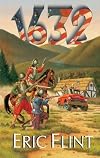
This was a fun little book for the bus. Could a random Appalachian town, if transported to the titular year of 1632, prevail against the whole of Renaissance Europe? Yes. Remarkaby easily,
as it happens.
It almost had a Heinlein vibe, to be honest. A lesser Heinlein, but still. Will i read a sequel? Maybe, but I'm pretty satisfied leaving it there as well.
as it happens.
It almost had a Heinlein vibe, to be honest. A lesser Heinlein, but still. Will i read a sequel? Maybe, but I'm pretty satisfied leaving it there as well.
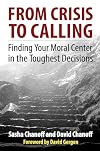
This is a book of two parts. The first part, as the author recounts his experiences of dealing with refugees in a Congolese camp, and the heartbreaking decisions about who could be saved with limited resources, is excellent if horrifying.
The second part, where lessons are drawn from a variety of other individuals, is less impressive, and seems almost perfunctory. If bought as a guide to leadership (I picked up my copy through the Hacking Capitalism bundle), I would suggest pay attention to the first section, seek out more information on it if possible, and the remainder is largely potted reinforcement. In any case, I read it on the bus, so it's not exactly a challenging text from a literary point of view.
It probably deserves a little more than three stars, but I can't honestly say the book as a whole is in the "really liked" category, so three it gets.
The second part, where lessons are drawn from a variety of other individuals, is less impressive, and seems almost perfunctory. If bought as a guide to leadership (I picked up my copy through the Hacking Capitalism bundle), I would suggest pay attention to the first section, seek out more information on it if possible, and the remainder is largely potted reinforcement. In any case, I read it on the bus, so it's not exactly a challenging text from a literary point of view.
It probably deserves a little more than three stars, but I can't honestly say the book as a whole is in the "really liked" category, so three it gets.
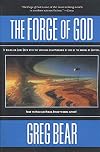
I really enjoyed this, though it should not have taken me nearly two months to read. It's a highly competent example of Niven-style hard SF.

This was a fun little thriller, with enough twists and turns to stay interesting. I did find the body count to be a little unrealistic, though - it seems Elizabeth can move about with impunity as the corpses pills around her. I also found the epilogue to be a little too neat to be realistic - I kept waiting for the other shoe to drop. I don't regret reading it though - as I mentioned above, it was fun.

This is a competent police procedural, which doesn't do anything remarkable but does what it does do well. I enjoyed the experience but I suspect I will forget this fairly soon.
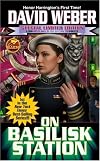
All Honor is missing is a Lens (and a penis, I guess, the time being what it was), and Doc Smith could have written this one.
That's by no means a criticism, of course - if you're after an old school space opera with battles between starships and heavily armoured Marines in ground actions against hordes of primitive nations, then this is the book for you.
That's by no means a criticism, of course - if you're after an old school space opera with battles between starships and heavily armoured Marines in ground actions against hordes of primitive nations, then this is the book for you.
This was a freebie from Amazon, and was competently done I guess. However, it's about a memorable as a sixpack of beer - I suspect that in a week I'll remember none of it. This is not a particularly scary prospect.

This was so good. I was separated from my kindle during this period due to commitments, and my main wish was to return to the smoky streets of Dhamsawaat. This is different to, but evokes memories of, both Leiber and Harrison (M. John, not Harry). I can give no higher praise.
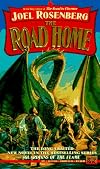
If you liked the first six (and if you didn't, why would you be looking at this one?), you'll like this one, though perhaps not as much. People you already know do the things they always do, and things happening off stage almost seem more important than the characters we're following around. It's still a fun romp though.
I'm reminded of Huff's "How to Lie with Statistics" - this could almost be an update, with a little more formality (and a more modern setting), and perhaps a little less humor.
Certainly, if you're interested in a layman's guide to game theory particularly as it relates to gambling, I doubt you'd do better.It's very good at what it does.
Certainly, if you're interested in a layman's guide to game theory particularly as it relates to gambling, I doubt you'd do better.It's very good at what it does.
This is still my favorite Laymon, although it does plunge into the juvenile every so often.
As noted elsewhere, there's not much of a rationale provided, but if you're in the mood for supernaturally competent monsters with regular sex scenes, this is certainly an example.
As noted elsewhere, there's not much of a rationale provided, but if you're in the mood for supernaturally competent monsters with regular sex scenes, this is certainly an example.
I greatly enjoyed this nostalgic trip with Jack Gudgeon and his son, as they deal with wine, women, and Woggo Slatter in 1920s Sydney. Were it not for the setting (which had some of the flavour of Clive James' Unreliable Memoirs), I could almost believe this book to be written by P.J. O'Rourke on one of his better days.
I shall visit the Gudgeons again.
I shall visit the Gudgeons again.

Leiber is never less than very, very good. Conjure Wife follows this rule, though it shows clear evidence of being published more than half a century ago, not least as Norman (with some help from his faculty) advances the science of witchcraft a millennium or so, surpassing the women's work passed down through generations, cheered on by his perky yet subsumed Tansy.
Hm. Reading that, I shouldn't have enjoyed this nearly as much as I did. When approached correctly, as a period piece, this is a fine way to spend some time, though for peak Leiber I'd look to Our Lady of Shadows or his shorter fiction.
Hm. Reading that, I shouldn't have enjoyed this nearly as much as I did. When approached correctly, as a period piece, this is a fine way to spend some time, though for peak Leiber I'd look to Our Lady of Shadows or his shorter fiction.

That was a fun little story, if a little overlong (even at 257 locations on the Kindle). It's good enough that I'll look out for more from Mr. Smith.

Competent fantasy - I think i liked the first book better than the others, but I don't regret the series.

As someone who loves Leiber's work, but whose familiarity with the Tarzan character was limited to absorption of popular culture, this was kinda fun. I could imagine watching this movie on a summer Saturday afternoon.

This one hit me at the right moment - the voice felt right, and the story was worthwhile. I'll think on it further.

This is Leiber at his finest. Unfortunately, the Kindle version I was reading was marred by typos, evidence of a hasty and unchecked OCRring of an earlier print edition. I expected better.
I have only dipped into this book, having sampled "An Ode to the Queen on Her Jubilee Year", and the companion pieces "The Tay Bridge Disaster" and "An Address to the New Tay Bridge", but I can already tell this is the finest book ever written.
I can only marvel at a mind that produced such consistent work over such a period.
I can only marvel at a mind that produced such consistent work over such a period.
This is what political humor is if you take out the humor. And the intelligence.
And the politics, for that matter.
I do endorse the authors proposal to nuke the moon, however, so there's that.
And the politics, for that matter.
I do endorse the authors proposal to nuke the moon, however, so there's that.

OK, this is a qualified four stars, viewed through the prism of its time (not that I'm thart old, but I date back closer to the publication date than the current day). Asimov is not and will never be known for characterisation (I'm like 85% sure there's not a named female character in here, apart from a few random women whose sole role is to be awed by the Foundation's technical frippery). His books are about men (including ones cunningly disguised as women, such as Susan Calvin) doing manly things for manly reasons, and it just happens that one of those manly things is science. It'd be laughed out of a publisher's office in these days.
As an example of Golden Age SF, though, it still holds up. It became a classic for a reason, and is interesting from that perspective despite its flaws.
As an example of Golden Age SF, though, it still holds up. It became a classic for a reason, and is interesting from that perspective despite its flaws.

This is the literary equivalent of a Die Hard movie, for all that entails. Characterisation is not exactly a strong point (a spoiler free shout out to Hacker Team Six), but it's a pretty fun apocalyptic ride.
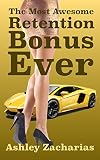
At first, I found all the characters rather dislikeable (even the heroine Starr, who seemed to lack agency through the entire book, which is remarkable for how Zacharias writes women). I found as the story progressed, though, that Dalton and Starr became a little more sympathetic, which I like to think was Zacharias' design showing how Starr's perception changed. Zacharias' subject matter is often bizarre, but she certainly has a particular voice, and writes skilfully within it.
I should note that this is a little closer to [b:Her Strange Bedfellows|28868692|Her Strange Bedfellows|Ashley Zacharias|https://d.gr-assets.com/books/1454417618s/28868692.jpg|49101129]"Her Strange Bedfellows" than other Ashley Zacharias books - her usual inventive cruelty is missing, so if that's you what you're looking for I suggest you go to her earlier work.
In summary, this is perhaps not her best but I do not begrudge the time I spent reading it, and I'll be interested to see what she does next.
I should note that this is a little closer to [b:Her Strange Bedfellows|28868692|Her Strange Bedfellows|Ashley Zacharias|https://d.gr-assets.com/books/1454417618s/28868692.jpg|49101129]"Her Strange Bedfellows" than other Ashley Zacharias books - her usual inventive cruelty is missing, so if that's you what you're looking for I suggest you go to her earlier work.
In summary, this is perhaps not her best but I do not begrudge the time I spent reading it, and I'll be interested to see what she does next.
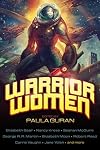
Quick notes on individual stories as I read them:
"Northern Chess" by Tanith Lee - this is well written, of course, being from Tanith Lee, but the plot turns on a fairly hoary line dating back to Macbeth. Still, a scenic ride.
'Anukazi's Daughter" by Mary Gentle
"Become a Warrior" by Jane Yolen
"The Sea Troll's Daughter" by Caitlin R. Kiernan - I kinda get a Conan vibe from this one too. I'm worried that the stories I like best so far are along Conan/Red Sonja lines - traditional S&S heroes who happen to wear chainmail bikinis.
"Joenna's Axe" by Elaine Isaak - I guess this is what I was expecting?
"Love Among the Talus" by Elizabeth Bear
"Soul Case" by Nalo Hopkinson
JJust Yesterday
"The Girls from Avenger" by Carrie Vaughn - I enjoyed this, but it seems a little out of place in this volume. I guess it's alternate history, but I don't really know enough about the WASPs to be sure.
"In the Loop" by Ken Liu -Wow.
"Dying with her Cheer Pants On" by Seanan McGuire
Short but punchy - I liked it.
"Prayer" by Robert Reed
Somewhere between Myth & Possibility
"England Under the White Witch" by Theodora Goss
Poetic, but I don't think it'll stay with me long.
"The Lonely Songs of Laren Dorr" by George R.R. Martin
Bleak, dreamy, beautiful - reminiscent of M. John Harrison or Moorcock.
"The Knight of Chains, the Deuce of Stars" by Yoon Ha Lee
I love the hell out of this story, but I do not begin to understand it.
Space Aria
"Boy Twelve" by Jessica Reisman
"The Application of Hope" by Kristine Rusch
"Not show more That Kind of War" by Tanya Huff
"Naratha's Shadow" by Sharon Lee & Steve Miller
Will No War End All War?
"Eaters" by Nancy Kress
"And Wash Out by Tides of Ware" by An Owomoyela
"Hand to Hand" by Elizabeth Moon
"They Tell Me There Will be No Pain" by Rachael Acks
"Wonder Maul Doll" by Kameron Hurley
"The Days of the War, as Red as Blood, as Dark as Bile" by Aliette de Bodard show less
"Northern Chess" by Tanith Lee - this is well written, of course, being from Tanith Lee, but the plot turns on a fairly hoary line dating back to Macbeth. Still, a scenic ride.
'Anukazi's Daughter" by Mary Gentle
"Become a Warrior" by Jane Yolen
"The Sea Troll's Daughter" by Caitlin R. Kiernan - I kinda get a Conan vibe from this one too. I'm worried that the stories I like best so far are along Conan/Red Sonja lines - traditional S&S heroes who happen to wear chainmail bikinis.
"Joenna's Axe" by Elaine Isaak - I guess this is what I was expecting?
"Love Among the Talus" by Elizabeth Bear
"Soul Case" by Nalo Hopkinson
JJust Yesterday
"The Girls from Avenger" by Carrie Vaughn - I enjoyed this, but it seems a little out of place in this volume. I guess it's alternate history, but I don't really know enough about the WASPs to be sure.
"In the Loop" by Ken Liu -Wow.
"Dying with her Cheer Pants On" by Seanan McGuire
Short but punchy - I liked it.
"Prayer" by Robert Reed
Somewhere between Myth & Possibility
"England Under the White Witch" by Theodora Goss
Poetic, but I don't think it'll stay with me long.
"The Lonely Songs of Laren Dorr" by George R.R. Martin
Bleak, dreamy, beautiful - reminiscent of M. John Harrison or Moorcock.
"The Knight of Chains, the Deuce of Stars" by Yoon Ha Lee
I love the hell out of this story, but I do not begin to understand it.
Space Aria
"Boy Twelve" by Jessica Reisman
"The Application of Hope" by Kristine Rusch
"Not show more That Kind of War" by Tanya Huff
"Naratha's Shadow" by Sharon Lee & Steve Miller
Will No War End All War?
"Eaters" by Nancy Kress
"And Wash Out by Tides of Ware" by An Owomoyela
"Hand to Hand" by Elizabeth Moon
"They Tell Me There Will be No Pain" by Rachael Acks
"Wonder Maul Doll" by Kameron Hurley
"The Days of the War, as Red as Blood, as Dark as Bile" by Aliette de Bodard show less
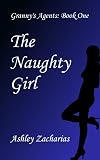
Charlie's Angels 2016, with an octogenarian, cookie baking, and tea loving Charlie (with just a hint of menace). I kinda feel weird that I'm more squicked by the politics of the story than any of the action, but it's all fairly fun, tame (by Zacharias standards) stuff.
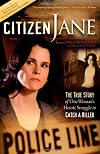
This was ok, I guess, but I get the feeling I was meant to fall in love with Jane and admire her resourcefulness and drive. Instead, while she undeniably had some terrible things happen to her, and did respond with drive, I just didn't like her that much, which put me in conflict with the author.
From previous reviews I was expecting a twist that never came (spoiler: the bloke who looks like the killer in like Chapter 1 is the killer to be posted when I get on an actual computer), and I was left with a Hallmark movie of a crime.
From previous reviews I was expecting a twist that never came (spoiler:
The Curious Story of Malcolm Turnbull, the Incredible Shrinking Man in the Top Hat by Andrew P. Street
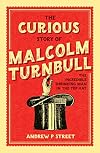
We laugh lest we cry. The period between Mr. Turnbull's ascension to the Prime Ministership and the outcome of the 2016 election is an odd one, but this isn't, I think, intended to be a cautious and careful analysis of the Government's performance, but rather a rollicking ride through catastrophe after catastrophe.

This was a grind, but it got s little better when I realised that it was clearly written on 1953 regardless of the actual date of writing, or references to products in the nineties. It was more understandable with that revelation, but I don't think this book ever worked out what it wanted to be.