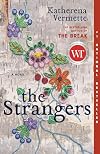
I read the previous novel in this series, The Break, and really appreciated it. It was an engaging story of Métis women coming together to support one another after a terrible crime against a member of the family. The Strangers takes place in the same novelistic universe, but focuses on a different family--that of the perpetrator of the crime. It is helpful, though not necessary, to read The Break first.
While I felt really engaged in The Break I was less so with this novel, and I think it's in part because while the former centred around a particular story arc that drove the events forward, namely the crime and learning what happened and who the perpetrator was. The Strangers is more of a a somewhat meandering narrative about a group of women in a family and the challenges they face, sometimes overcoming them, sometimes not so much. It does follow on the events of The Break, including following one of the characters in jail, but overall I felt less engaged in the events without the kind of broader arc the earlier novel had. There wasn't as much of a central question or conflict, something to wonder about and anticipate, besides maybe one of the characters finishing their jail sentence.
I had to push my way through finishing this one, whereas with The Break it was hard to put down. There is a third book in the series, The Circle (2023), following the aftermath of the release from jail of the person who committed the crime in The Break. I may try that one later. And The show more Real Ones (2024) seems to also include some of the characters from the same family as The Strangers, so I suppose it's somewhat related too. show less
While I felt really engaged in The Break I was less so with this novel, and I think it's in part because while the former centred around a particular story arc that drove the events forward, namely the crime and learning what happened and who the perpetrator was. The Strangers is more of a a somewhat meandering narrative about a group of women in a family and the challenges they face, sometimes overcoming them, sometimes not so much. It does follow on the events of The Break, including following one of the characters in jail, but overall I felt less engaged in the events without the kind of broader arc the earlier novel had. There wasn't as much of a central question or conflict, something to wonder about and anticipate, besides maybe one of the characters finishing their jail sentence.
I had to push my way through finishing this one, whereas with The Break it was hard to put down. There is a third book in the series, The Circle (2023), following the aftermath of the release from jail of the person who committed the crime in The Break. I may try that one later. And The show more Real Ones (2024) seems to also include some of the characters from the same family as The Strangers, so I suppose it's somewhat related too. show less
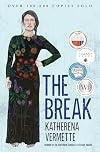
This is a story that revolves around a violent assault that occurs in "the break" which is a strip of land containing electrical towers that forms a break between parts of a city (I believe it's Winnipeg, Manitoba). The event also forms a break in the characters' lives, after which nothing will be the same for many of them.
The story is told through the perspectives of multiple characters, switching between them in various chapters. Most of them are members of a Métis family who is no stranger to difficulties, tragedies, and heartbreak; we get their histories through the mini stories told through the various chapters focusing on the characters. Most of the characters are strong, resilient women whose support for each other brings hope and sometimes joy in the midst of awful events. Their lives are affected by long-standing effects of colonization and racism, but they are not defined by these.
Most of the larger story arc focuses on slowly revealing what happened that night in the break, to whom, and the perpetrators. This is not a typical mystery narrative, in that for met at least it was fairly straightforward to figure these points out pretty early, and also that's not the main focus of the novel. It is instead on the characters: their histories, relationships, motivations, how they react to the crime and how it impacts them. The main perpetrator is treated not only as a villain (though what they did what horrendous) but also as someone with a complicated and traumatic show more backstory that doesn't excuse what they did but does make them sympathetic enough to not simply be rejected as "evil."
I found this book very engaging and ended up reading longer into nights than I had originally planned. The only thing I was left wondering about was the narration approach where most of the chapters were told in third person but some characters' chapters were told in first person (as well as the frame narrator). I couldn't figure out why those particular characters' chapters were in first person and not others. But this was a small thing and perhaps someday I'll figure out a hypothesis! show less
The story is told through the perspectives of multiple characters, switching between them in various chapters. Most of them are members of a Métis family who is no stranger to difficulties, tragedies, and heartbreak; we get their histories through the mini stories told through the various chapters focusing on the characters. Most of the characters are strong, resilient women whose support for each other brings hope and sometimes joy in the midst of awful events. Their lives are affected by long-standing effects of colonization and racism, but they are not defined by these.
Most of the larger story arc focuses on slowly revealing what happened that night in the break, to whom, and the perpetrators. This is not a typical mystery narrative, in that for met at least it was fairly straightforward to figure these points out pretty early, and also that's not the main focus of the novel. It is instead on the characters: their histories, relationships, motivations, how they react to the crime and how it impacts them. The main perpetrator is treated not only as a villain (though what they did what horrendous) but also as someone with a complicated and traumatic show more backstory that doesn't excuse what they did but does make them sympathetic enough to not simply be rejected as "evil."
I found this book very engaging and ended up reading longer into nights than I had originally planned. The only thing I was left wondering about was the narration approach where most of the chapters were told in third person but some characters' chapters were told in first person (as well as the frame narrator). I couldn't figure out why those particular characters' chapters were in first person and not others. But this was a small thing and perhaps someday I'll figure out a hypothesis! show less

This is an engaging novel set in a fictional world with likeable and interestingly complex characters. The world is built up slowly as you are thrown into the middle of it from the beginning.
There are a few main characters followed throughout the book: a poet, a writer and printer, and a mage who used to be a diplomat. Their stories are revealed gradually and their relationships with each other and with other characters are engaged with fairly deeply, making them feel like full, flawed people working to do what they feel is best in their own ways.
Magic is involved somewhat peripherally and treated as an everyday phenomenon. It's nature is revealed bit by bit as the story goes, and by the end there is somewhat of a mystery around one of the main characters' abilities that led me to be interested to find out more in a later book.
The story takes place in a relatively small area laid out in a helpful map provided at the start of the book that I referred back to often to orient myself. Sometimes it was a little challenging to keep track of the political issues in the various areas, which also were built up slowly and at times with only small hints dropped through conversations or through actions. I found myself a little lost at certain points in the political situation, with new aspects being introduced throughout the book and some of them underdeveloped (though presumably more information would be forthcoming in later books).
Overall, the writing was well done, the character show more development very good, the dialogue interesting, and the world felt far away but also just familiar enough to be engaging (it takes place shortly after a pandemic, so that certainly felt familiar!). show less
There are a few main characters followed throughout the book: a poet, a writer and printer, and a mage who used to be a diplomat. Their stories are revealed gradually and their relationships with each other and with other characters are engaged with fairly deeply, making them feel like full, flawed people working to do what they feel is best in their own ways.
Magic is involved somewhat peripherally and treated as an everyday phenomenon. It's nature is revealed bit by bit as the story goes, and by the end there is somewhat of a mystery around one of the main characters' abilities that led me to be interested to find out more in a later book.
The story takes place in a relatively small area laid out in a helpful map provided at the start of the book that I referred back to often to orient myself. Sometimes it was a little challenging to keep track of the political issues in the various areas, which also were built up slowly and at times with only small hints dropped through conversations or through actions. I found myself a little lost at certain points in the political situation, with new aspects being introduced throughout the book and some of them underdeveloped (though presumably more information would be forthcoming in later books).
Overall, the writing was well done, the character show more development very good, the dialogue interesting, and the world felt far away but also just familiar enough to be engaging (it takes place shortly after a pandemic, so that certainly felt familiar!). show less
 This review was written for LibraryThing Early Reviewers.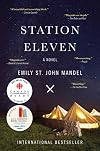
The person at the bookstore who rang up this purchase for me let me know they thought this is an excellent book, so prescient before the Covid-19 pandemic. And yes, it is an excellent book! It does involve a pandemic, but much worse than Covid-19. Still, I felt eerie echoes of that pandemic in the early pages of this book where people start slowly realizing that this illness they've heard about is something serious.
That early part is only a tiny portion of the story, which spans around 20 years with several jumps in time, following different characters in the aftermath of the pandemic onset. It is post-apocalyptic in the sense that much of what went before has completely broken down, except the importance of people doing what they can to support one another. There is a lot of hope in this book, in the relationships formed out of chaos and that protect against horrors.
There were things I wanted more of in this story, like further information about some of the characters that are glossed over quickly, or events that are skipped. And I left a little unsatisfied by the ending, but honestly, how can you end a story of disaster that lasts decades? Still, there is a ray of hope at the end, of rebuilding...and one hopes rebuilding for the better but who knows.
The story is told through alternating points of view of various characters, with a few being central. There are jumps in time that, I felt, weren't too disorienting but provided some helpful backstory.
Upon finishing this show more book I found myself interested to read more by the author, so that's a good sign! show less
That early part is only a tiny portion of the story, which spans around 20 years with several jumps in time, following different characters in the aftermath of the pandemic onset. It is post-apocalyptic in the sense that much of what went before has completely broken down, except the importance of people doing what they can to support one another. There is a lot of hope in this book, in the relationships formed out of chaos and that protect against horrors.
There were things I wanted more of in this story, like further information about some of the characters that are glossed over quickly, or events that are skipped. And I left a little unsatisfied by the ending, but honestly, how can you end a story of disaster that lasts decades? Still, there is a ray of hope at the end, of rebuilding...and one hopes rebuilding for the better but who knows.
The story is told through alternating points of view of various characters, with a few being central. There are jumps in time that, I felt, weren't too disorienting but provided some helpful backstory.
Upon finishing this show more book I found myself interested to read more by the author, so that's a good sign! show less

This is a challenging story of a child taken away from her Mi'kmaq family while they are spending a season in Maine picking berries. The family lives in Nova Scotia but travels to Maine each year for berry picking, and then back home to Nova Scotia, at least for a time. The story is told through two first-person narrators, each with their own experiences of and impacts from the central event of the child stolen away. I was reminded of the many Indigenous children removed from their homes and fostered or adopted by non-Indigenous families, such as during the Sixties Scoop (and at other times). Though the situation here is not the same as that, it is a viscerally painful telling of the impact of losing a child, on the family they left behind, and on the child themselves.
Trying not to give too much away: one thing I struggled with in this story is the number of people who knew what was happening and didn't do anything to rectify the situation. One did eventually but far too late. I had a hard time feeling much empathy or connection to those characters, and it felt like the book presented them more sympathetically than I felt fitting. The same is true for the reaction of the child to the news of her past...I suppose it's complex since she has grown up with her second family for so long, but honestly I would have expected much more anger.
Trying not to give too much away: one thing I struggled with in this story is the number of people who knew what was happening and didn't do anything to rectify the situation. One did eventually but far too late. I had a hard time feeling much empathy or connection to those characters, and it felt like the book presented them more sympathetically than I felt fitting. The same is true for the reaction of the child to the news of her past...I suppose it's complex since she has grown up with her second family for so long, but honestly I would have expected much more anger.
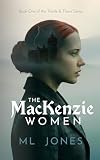
There are many things I like about this book, including the strong female characters throughout, the mystery that you start to understand step by step, and the ending that really nicely bridges into the next book (and leaves you wanting to read that one as soon as possible to find out more!). There were interesting side stories for many of the characters that helped fill them out a bit, though each was quite short and I was really wanting to hear more!
I found myself not entirely satisfied overall, though, partly because things moved pretty quickly and there wasn't as much character development as I was hoping for, and partly because at times I guessed pretty easily where things were going. I suppose the book was using tropes I'm familiar with, but I was hoping for a bit more complexity I guess.
The one thing that really frustrated me, though, is that there are quite a few things in the text that a good editor should have caught. Some are just typos (such as several possessives missing Some are inconsistencies in verb tense--the novel is written in past tense but occasionally a present-tense would crop up without, from what I could tell, a good reason for it. At other times there are grammatical issues in sentences, such as: “ To William, as he gazed across the band of men and women, suited up in various battle gear, he was taken aback.” And a couple of jumps in logic here and there, such as one place where someone is called a "butler" and another where he is referred show more to as a "footman," which I think are very different roles. In short, I think the book could have done with a more thorough editorial review before publishing.
Still, there were many aspects I liked, as I noted above. So 3 stars from me.
Disclosure: I received this book as part of LibraryThing's Early Reviewers program, in exchange for a review. show less
I found myself not entirely satisfied overall, though, partly because things moved pretty quickly and there wasn't as much character development as I was hoping for, and partly because at times I guessed pretty easily where things were going. I suppose the book was using tropes I'm familiar with, but I was hoping for a bit more complexity I guess.
The one thing that really frustrated me, though, is that there are quite a few things in the text that a good editor should have caught. Some are just typos (such as several possessives missing Some are inconsistencies in verb tense--the novel is written in past tense but occasionally a present-tense would crop up without, from what I could tell, a good reason for it. At other times there are grammatical issues in sentences, such as: “ To William, as he gazed across the band of men and women, suited up in various battle gear, he was taken aback.” And a couple of jumps in logic here and there, such as one place where someone is called a "butler" and another where he is referred show more to as a "footman," which I think are very different roles. In short, I think the book could have done with a more thorough editorial review before publishing.
Still, there were many aspects I liked, as I noted above. So 3 stars from me.
Disclosure: I received this book as part of LibraryThing's Early Reviewers program, in exchange for a review. show less
This review was written for LibraryThing Early Reviewers.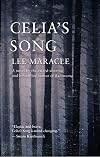
I haven't read Maracle's Ravensong, in which the title character (Celia) first appears. Apparently readers wanted to hear more about Celia, and this book focuses on her to some degree, but not only her. Celia has visions, appears to be able to cross time and space, and a shape-shifting mink acts as a witness for her, her family, and the past. Other important characters include a two-headed serpent, the bones of ancestors, and members of Celia's family, who have experienced horror and tragedy and will do so again. Their resistance and resilience is powerful and potent, and brings life and hope through incredibly difficult events. This is not always an easy book to read, but very important and will stay with me for a very long time.
This is the first book by Maracle I have read, and will put Ravensong (and others of her works) on my "to read" list now!
This is the first book by Maracle I have read, and will put Ravensong (and others of her works) on my "to read" list now!
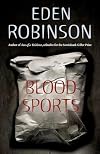
This was a difficult, but worthwhile read. Though it is dark and violent, I really came to care for the characters (which then made what happens to them even more challenging). One thing I especially liked was the structure of the storytelling, using narration, video transcripts, jumps in time. The latter made it a bit of work to figure out what was happening when, and characters were mentioned before you got information/backstory, but I appreciated working through the mystery, going back and forth between sections to figure out the chronology of events and the identity of people.
Good storytelling about challenging topics, and characters that drew me in, even when they were awful. And set in Vancouver where I live so I loved that too!
TW includes violence, torture, kidnapping, threats against a child, drug use.
Good storytelling about challenging topics, and characters that drew me in, even when they were awful. And set in Vancouver where I live so I loved that too!
TW includes violence, torture, kidnapping, threats against a child, drug use.