“The message seems to be that when the possibility of critical discussion is withdrawn, anything can happen, and everything is altered. Among the many things altered is logic itself.” On Mao Zedong, p. 459
So lately I’ve been perusing Clive James’s massive Cultural Amnesia, a browser’s guide to the major thinkers, writers, and cultural icons of the past several hundred years (back as far as Sir Thomas Browne), though most of the personages that fill these pages are from just the past century. At first glance, this book may appear to be friendly to your average reader, one of those books the average reader might pick up to gain a not-so-quick overview of Western thought, or even perhaps just some good talking points for the next cocktail party. Average reader, beware; this book is probably not for you. Even when discussing known figures (Coco Chanel, Jean-Paul Sartre, Michael Mann come to mind), James veers off in completely unexpected directions. Not that this is necessarily bad; Montaigne is famous for this. The difference between Montaigne and James, however, is that Montaigne has a wholly unique and essential way of bringing the reader full circle. James frequently leaves the reader far from where they started.
He also frequently leaves the reader with his abhorrence of totalitarianism. This, no matter the subject, inevitably makes its way into almost all of the essays, even the one on Coco Chanel, who he pinions for accepting the protection of a German officer show more during WWII before hiding out in Switzerland until France saw fit to recognize her as a national treasure. In fact, the essay on Chanel becomes more of an essay about materialism and the economics of war-time Berlin. This is precisely what makes James’s book so fascinating. If you don’t mind getting lost in ideas, following tangents that leave you sometimes far from the place of origin, then this book is a treasure of information: historical, cultural, theoretical. I was so overwhelmed by what I was reading, I started to take notes on some of the essays and created a general reading list of interesting books mentioned in the various essays. These essays are not a starting point for the reader, but rather a focal point. James distills decades of hindsight and perspective through his unique lens and sets the reader on a quest for primary sources, the best thing that can happen for someone like me who loves nothing better than a fat bibliography at the end of an academic article.
“The wretched of the earth get no help from witch doctors, and when academic language gets beyond shourting distance of ordinary speech, voodoo is all it is.” On Walter Benjamin, p. 56
However, this book is not scholarly in the sense that it’s an academic treatise or historical account: there isn’t even a bibliography at the end (only an index!). Yet reading even one page makes you feel as if you’ve learned something, and usually you have. These essays are the opinions of someone dedicated to exposing the faults of some of the West’s most revered thinkers and icons–but not out of malice. As the title suggests, James wants us to remember the multi-faceted aspects of history and to reject the often easy and convenient narrative of our past, especially when it comes to totalitarianism, fascism, communism, and the ideologies that fueled them.
“Tyrants conduct monologues above a million solitudes.” Albert Camus, The Rebel, qtd. in Cultural Amnesia, p. 88 show less
So lately I’ve been perusing Clive James’s massive Cultural Amnesia, a browser’s guide to the major thinkers, writers, and cultural icons of the past several hundred years (back as far as Sir Thomas Browne), though most of the personages that fill these pages are from just the past century. At first glance, this book may appear to be friendly to your average reader, one of those books the average reader might pick up to gain a not-so-quick overview of Western thought, or even perhaps just some good talking points for the next cocktail party. Average reader, beware; this book is probably not for you. Even when discussing known figures (Coco Chanel, Jean-Paul Sartre, Michael Mann come to mind), James veers off in completely unexpected directions. Not that this is necessarily bad; Montaigne is famous for this. The difference between Montaigne and James, however, is that Montaigne has a wholly unique and essential way of bringing the reader full circle. James frequently leaves the reader far from where they started.
He also frequently leaves the reader with his abhorrence of totalitarianism. This, no matter the subject, inevitably makes its way into almost all of the essays, even the one on Coco Chanel, who he pinions for accepting the protection of a German officer show more during WWII before hiding out in Switzerland until France saw fit to recognize her as a national treasure. In fact, the essay on Chanel becomes more of an essay about materialism and the economics of war-time Berlin. This is precisely what makes James’s book so fascinating. If you don’t mind getting lost in ideas, following tangents that leave you sometimes far from the place of origin, then this book is a treasure of information: historical, cultural, theoretical. I was so overwhelmed by what I was reading, I started to take notes on some of the essays and created a general reading list of interesting books mentioned in the various essays. These essays are not a starting point for the reader, but rather a focal point. James distills decades of hindsight and perspective through his unique lens and sets the reader on a quest for primary sources, the best thing that can happen for someone like me who loves nothing better than a fat bibliography at the end of an academic article.
“The wretched of the earth get no help from witch doctors, and when academic language gets beyond shourting distance of ordinary speech, voodoo is all it is.” On Walter Benjamin, p. 56
However, this book is not scholarly in the sense that it’s an academic treatise or historical account: there isn’t even a bibliography at the end (only an index!). Yet reading even one page makes you feel as if you’ve learned something, and usually you have. These essays are the opinions of someone dedicated to exposing the faults of some of the West’s most revered thinkers and icons–but not out of malice. As the title suggests, James wants us to remember the multi-faceted aspects of history and to reject the often easy and convenient narrative of our past, especially when it comes to totalitarianism, fascism, communism, and the ideologies that fueled them.
“Tyrants conduct monologues above a million solitudes.” Albert Camus, The Rebel, qtd. in Cultural Amnesia, p. 88 show less
Let me just state up-front that I’m a huge Jacqueline Carey fan; I’ve read all of her other books except for The Sundering duology. I’ve been excited for this book since she first mentioned on her website that she was working on a new urban fantasy project. My wonderful husband unexpectedly brought it home for me on Tuesday, so I dove right into it. Aside from the ridiculous cover, Dark Currents is pretty good. I’ve never read urban fantasy before, and very little adult paranormal romance (I’m not even sure Dark Currents fits in this category), so I have very little to compare it to other than Carey’s other fiction.
Dark Currents is far closer to Santa Olivia and Saints Astray, but retains some of the darkness of her Kusheline Legacy series. Daisy Johanssen is an agent of the Norse goddess of the dead, Hel. In Carey’s world, there are several functioning underworlds across the globe that allow members of the Eldritch (magical/mythical) community to exist in the world. The sleepy tourist town of Pemkowet’s underworld is presided over by Hel. She is the highest authority and enforcer of Eldritch law. As her agent, Daisy, who is a half-breed hell-spawn, acts as her liaison between the mundane (fully human) world and the Eldritch community and enforcer of Hel’s law. When a human boy apparently drowns in the river, Daisy must figure out the truth before things spiral out of control and the members of the mundane world take up arms and raze Pemkowet’s show more underworld.
Working with her on the case is a closeted werewolf, Cody, who she’s had a crush on since grade-school. Together they track down those responsible for the boy’s death and uncover a plot that puts the newly-renovated image of the ghoul community at risk. There’s fairies, vampires, wood sprites, bog hags, river nymphs, and even a lamia Daisy has to deal with, all the while trying to keep a lid on her otherworldly temper. Since she’s half hell-spawn, Daisy has to potential to unleash Armageddon if she gives in to her father’s powerful temptations. This apocalyptic scenario plays less of a role than I imagine it will in later books, but sets up the probability of its occurrence nicely. As with many of Carey’s books, one of the lessons Daisy must learn is that what you were born to be isn’t necessarily what you become; it all comes down to what you chose to do with your life that matters.
Even though there are some dark themes in the novel, the tone remains light. This, coupled with Daisy’s usually chipper, slightly doltish his-girl-friday personality makes the book feel rather fluffy. She’s not an idiot or airhead by any means, but neither is she a Phedre or even a Lupe. Like I said, I don’t have any other urban fantasy leading women to compare her to, so saying she’s not a Pherdre or a Lupe may not really be fair. Daisy’s perspective and voice didn’t really annoy me, and she did grow a bit over the course of the novel. As long as she continues to grow and her actions remain logical to her character, I think she could be a really good female lead.
One of the things I like about Carey’s novels is that even her side-characters are developed and sometimes experience the same measure of growth as the main character. Dark Currents does less of this than I would have liked, so I was left feeling that some of the characters were just stock. There’s the pretty best friend who sets up the initial conflict and love triangle; once that gets resolved they’re back to being BFFs. There’s also the vaguely European tall, dark and handsome mystery man who could be a stand in for Bill from HBO’s True Blood (except that he’s a ghoul, not a vampire) that completes the main love triangle. Daisy is simultaneously afraid of and attracted to him. Cody is pretty stock too, and is a little too reminiscent of Sam from True Blood. At least this isn’t a human-vampire-werewolf/shapeshifter love triangle, so I should be happy about that. There’s also the magical mystery artifact shop owner who has all the latest gossip, and who’s quirky because he’s a cross-dresser.
One final thing to mention about Dark Currents is the sex, or rather the lack thereof. In almost all of her other novels, sex has been included in a mostly tasteful, not over-the-top manner (Santa Olivia and Saints Astray are a bit of an exception on the over-the-top scale). There is no direct sex in Dark Currents; there’s not even any kissing. But there really wasn’t a need for it either, and I think that’s what I’ve always appreciated about Carey’s use of sex; she rarely includes sex just for the sake of sex. There’s always a purpose for it. I think at some point Daisy will have to cross that bridge and it will not happen just for the hell of it (I imagine it will have something to do with her learning to safely experience intense emotions and passions, which she is currently afraid of doing because of the whole hell-spawn thing).
Dark Currents introduces readers to a world similar to ours, only more magical and more dangerous. Carey’s true strength lies in her world-building, and this is no exception. In Dark Currents she juggles multiple mythologies within one main cosmology, and I can’t wait to see more of both. The novel is a relatively light, quick read, but as the title suggests, there are dark currents running through the small town of Pemkowet, MI. As the series progresses, I imagine the currents will get darker yet, and the stakes will be higher. I finished the novel two days ago, yet I’m still thinking about Daisy and her little world. I will definitely come back for more, and I would recommend this book for people who may not know where to start in urban fantasy/paranormal romance, or who are looking for a slightly less sexy, less bloody entry to what’s already out there. Longtime Carey fans might be a little disappointed with the fluffiness of Dark Currents, but I would say don’t give up hope, and take this mostly light-hearted novel for the fun that it is. show less
Dark Currents is far closer to Santa Olivia and Saints Astray, but retains some of the darkness of her Kusheline Legacy series. Daisy Johanssen is an agent of the Norse goddess of the dead, Hel. In Carey’s world, there are several functioning underworlds across the globe that allow members of the Eldritch (magical/mythical) community to exist in the world. The sleepy tourist town of Pemkowet’s underworld is presided over by Hel. She is the highest authority and enforcer of Eldritch law. As her agent, Daisy, who is a half-breed hell-spawn, acts as her liaison between the mundane (fully human) world and the Eldritch community and enforcer of Hel’s law. When a human boy apparently drowns in the river, Daisy must figure out the truth before things spiral out of control and the members of the mundane world take up arms and raze Pemkowet’s show more underworld.
Working with her on the case is a closeted werewolf, Cody, who she’s had a crush on since grade-school. Together they track down those responsible for the boy’s death and uncover a plot that puts the newly-renovated image of the ghoul community at risk. There’s fairies, vampires, wood sprites, bog hags, river nymphs, and even a lamia Daisy has to deal with, all the while trying to keep a lid on her otherworldly temper. Since she’s half hell-spawn, Daisy has to potential to unleash Armageddon if she gives in to her father’s powerful temptations. This apocalyptic scenario plays less of a role than I imagine it will in later books, but sets up the probability of its occurrence nicely. As with many of Carey’s books, one of the lessons Daisy must learn is that what you were born to be isn’t necessarily what you become; it all comes down to what you chose to do with your life that matters.
Even though there are some dark themes in the novel, the tone remains light. This, coupled with Daisy’s usually chipper, slightly doltish his-girl-friday personality makes the book feel rather fluffy. She’s not an idiot or airhead by any means, but neither is she a Phedre or even a Lupe. Like I said, I don’t have any other urban fantasy leading women to compare her to, so saying she’s not a Pherdre or a Lupe may not really be fair. Daisy’s perspective and voice didn’t really annoy me, and she did grow a bit over the course of the novel. As long as she continues to grow and her actions remain logical to her character, I think she could be a really good female lead.
One of the things I like about Carey’s novels is that even her side-characters are developed and sometimes experience the same measure of growth as the main character. Dark Currents does less of this than I would have liked, so I was left feeling that some of the characters were just stock. There’s the pretty best friend who sets up the initial conflict and love triangle; once that gets resolved they’re back to being BFFs. There’s also the vaguely European tall, dark and handsome mystery man who could be a stand in for Bill from HBO’s True Blood (except that he’s a ghoul, not a vampire) that completes the main love triangle. Daisy is simultaneously afraid of and attracted to him. Cody is pretty stock too, and is a little too reminiscent of Sam from True Blood. At least this isn’t a human-vampire-werewolf/shapeshifter love triangle, so I should be happy about that. There’s also the magical mystery artifact shop owner who has all the latest gossip, and who’s quirky because he’s a cross-dresser.
One final thing to mention about Dark Currents is the sex, or rather the lack thereof. In almost all of her other novels, sex has been included in a mostly tasteful, not over-the-top manner (Santa Olivia and Saints Astray are a bit of an exception on the over-the-top scale). There is no direct sex in Dark Currents; there’s not even any kissing. But there really wasn’t a need for it either, and I think that’s what I’ve always appreciated about Carey’s use of sex; she rarely includes sex just for the sake of sex. There’s always a purpose for it. I think at some point Daisy will have to cross that bridge and it will not happen just for the hell of it (I imagine it will have something to do with her learning to safely experience intense emotions and passions, which she is currently afraid of doing because of the whole hell-spawn thing).
Dark Currents introduces readers to a world similar to ours, only more magical and more dangerous. Carey’s true strength lies in her world-building, and this is no exception. In Dark Currents she juggles multiple mythologies within one main cosmology, and I can’t wait to see more of both. The novel is a relatively light, quick read, but as the title suggests, there are dark currents running through the small town of Pemkowet, MI. As the series progresses, I imagine the currents will get darker yet, and the stakes will be higher. I finished the novel two days ago, yet I’m still thinking about Daisy and her little world. I will definitely come back for more, and I would recommend this book for people who may not know where to start in urban fantasy/paranormal romance, or who are looking for a slightly less sexy, less bloody entry to what’s already out there. Longtime Carey fans might be a little disappointed with the fluffiness of Dark Currents, but I would say don’t give up hope, and take this mostly light-hearted novel for the fun that it is. show less
My foray into the fantasy section of the bookstore was due entirely to the arresting cover art of Jacqueline Carey’s Kushiel’s Dart. I saw it, opened to about the middle and began reading. I stood there for at least an hour. I couldn’t put it down, and I couldn’t afford it at the time. When my shoulders began to ache from my heavy backpack, and I finally noticed the odd looks the salesgirl was giving me, I reluctantly put the book back, determined to come back for it as soon as I got my next pay check. I cam back about a week and a half later, hoping that it would still be there, not knowing what I would do if it wasn’t. It was. I bought it stuffed it into my already overstuffed bag and went home. I read the whole thing in one sitting. It was my First Book in the adult fantasy genre, and I’ve been trying to recapture that thrill ever since.
I read some YA fantasy as a kid, sure. I even managed to find some of the good stuff, like Tanith Lee. But SF/F was not a section I usually bothered with until Carey rocked my little world. I’ve of course read all of her other books and can’t wait to get my hands on her latest, Agents of Hel: Dark Currents, which comes out tomorrow (once again, I’m broke and thus have to wait till my library reservation shows up). I’ve also tried to find more heroines like Phedre, more writers like Carey. There are few out there. It’s no secret that both the Science/Speculative Fiction and Fantasy genres are dominated by male show more writers and male protagonists. This is not to say that there aren’t excellent female writers in the genre, or that a male writer can’t write a strong female lead (though, off the top of my head I can’t think of any in the latter category). Only one author thus far has come close to Carey and her heroines: N.K. Jemisin. Her excellent Inheritance trilogy quickly became a favorite (I’ve written about them here, here, and here), and I devoured the Dreamblood duology. Like Carey, Jemisin has written both male and female leads. Unlike Carey, Jemisin’s worlds aren’t stand-ins for some version of Europe. Carey is a good enough author to not completely white-wash her alterna-Europe, but it wasn’t until the third trilogy in the Kusheline Legacy series that the lead could be considered a Person of Color. Race has been a larger focus and theme of Jemisin’s novels, but not necessarily a blunt point of them.
It was only after reading Jemisin’s work that I added People of Color to my fantasy novel criteria, whether it be the author or the characters depicted. I wanted novels written by women of any race that had strong female leads of any race, but I didn’t want novels that upheld or depicted the status quo regarding race relations. I wanted novels that subverted them or challenged them. It’s harder than you might think to find such a novel, especially when you don’t know how to search for what you want. I was aware of Octavia Butler of course, but I also kind of wanted an author who wasn’t American or British, an author who wasn’t from a colonial power. That’s why I love sites like Io9.com, or when authors themselves recommend novels.
I really don’t remember how I discovered Who Fears Death by Nnedi Okorafor (who is Nigerian-American), but doing so changed many things for me. Who Fears Death is the coming-of-age story of Onyesonwu, an ewu child born to a desert wanderer. To be ewu is to be scorned by everyone, to be feared by everyone, to be hated by everyone. To be ewu is to be a child of rape. Onyesonwu is marked as such by her sand-colored skin and hair and her tiger’s eyes, her biological father’s eyes. Onyesonwu’s mother, like the rest of her people. The Okekke, have dark brown skin and the physical characteristics of indigenous African people. The story takes place in a post-apocalyptic Africa, though the exact place is not disclosed until the author’s afterword. In Onyesonwu’s world, rape is a weapon wielded by the ruling race, the Nuru, who have yellow-brown skin and straight black hair. Okekke and Nuru religion teach that the Nuru were sent from the sun by the goddess Ani to rule the Okekke people, who in the darkness of the world grew monstrous and destructive. Onyesonwu not only has to confront the everyday racism from nearly everyone she encounters, she also has to confront the everyday sexism of her people. Add to that the fact that she is a sorcerer prophesied to rewrite the Great Book (the religious text that justifies Okekke subjugation and self-hatred), and she’s got a lot to deal with. With the help of her friends, she’ll learn to face anything that comes her way as she journeys toward her past and her future.
Onyesonwu is wholly likable and a sympathetic character, and her world is horrible but inhabitable. That’s probably because her world isn’t that different from the place that inspired it. There is magic, yes, and Okorafor does an excellent job describing it, and using it. Okorafor doesn’t shy away from the harsh reality of Onyesonwu’s world, but neither does she relish in it. Rape is often used as a piece of scenery, something common that happens in the background in high fantasy novels (here’s looking at you, George R.R. Martin). Okorafor does too good a job at bringing the horror of rape and its accompanying shame and rage to her readers. This is no casual rape either; it’s weaponized, meaning that the rape that occurs in this novel is part of a military campaign to further break the spirit of the Okekke people. Magic may be pure fantasy in the novel, but this is not. Fantasy and science/speculative fiction have long been an arena to talk about the current societal ills and injustices, and can in many ways be more powerful than seeing the images or the faces of people victimized on the news. It’s the power of a good storyteller to make you care about her characters, to care about what they care about, and Okorafor is a good storyteller. I haven’t yet read any of her young adult novels, but I just got two of them from the library. I am incredibly excited to have discovered Okorafor, and I would highly recommend Who Fears Death to anyone who is tired of the usual fantasy tropes. But be warned, this book is hard to read at times, as only the best books are. show less
I read some YA fantasy as a kid, sure. I even managed to find some of the good stuff, like Tanith Lee. But SF/F was not a section I usually bothered with until Carey rocked my little world. I’ve of course read all of her other books and can’t wait to get my hands on her latest, Agents of Hel: Dark Currents, which comes out tomorrow (once again, I’m broke and thus have to wait till my library reservation shows up). I’ve also tried to find more heroines like Phedre, more writers like Carey. There are few out there. It’s no secret that both the Science/Speculative Fiction and Fantasy genres are dominated by male show more writers and male protagonists. This is not to say that there aren’t excellent female writers in the genre, or that a male writer can’t write a strong female lead (though, off the top of my head I can’t think of any in the latter category). Only one author thus far has come close to Carey and her heroines: N.K. Jemisin. Her excellent Inheritance trilogy quickly became a favorite (I’ve written about them here, here, and here), and I devoured the Dreamblood duology. Like Carey, Jemisin has written both male and female leads. Unlike Carey, Jemisin’s worlds aren’t stand-ins for some version of Europe. Carey is a good enough author to not completely white-wash her alterna-Europe, but it wasn’t until the third trilogy in the Kusheline Legacy series that the lead could be considered a Person of Color. Race has been a larger focus and theme of Jemisin’s novels, but not necessarily a blunt point of them.
It was only after reading Jemisin’s work that I added People of Color to my fantasy novel criteria, whether it be the author or the characters depicted. I wanted novels written by women of any race that had strong female leads of any race, but I didn’t want novels that upheld or depicted the status quo regarding race relations. I wanted novels that subverted them or challenged them. It’s harder than you might think to find such a novel, especially when you don’t know how to search for what you want. I was aware of Octavia Butler of course, but I also kind of wanted an author who wasn’t American or British, an author who wasn’t from a colonial power. That’s why I love sites like Io9.com, or when authors themselves recommend novels.
I really don’t remember how I discovered Who Fears Death by Nnedi Okorafor (who is Nigerian-American), but doing so changed many things for me. Who Fears Death is the coming-of-age story of Onyesonwu, an ewu child born to a desert wanderer. To be ewu is to be scorned by everyone, to be feared by everyone, to be hated by everyone. To be ewu is to be a child of rape. Onyesonwu is marked as such by her sand-colored skin and hair and her tiger’s eyes, her biological father’s eyes. Onyesonwu’s mother, like the rest of her people. The Okekke, have dark brown skin and the physical characteristics of indigenous African people. The story takes place in a post-apocalyptic Africa, though the exact place is not disclosed until the author’s afterword. In Onyesonwu’s world, rape is a weapon wielded by the ruling race, the Nuru, who have yellow-brown skin and straight black hair. Okekke and Nuru religion teach that the Nuru were sent from the sun by the goddess Ani to rule the Okekke people, who in the darkness of the world grew monstrous and destructive. Onyesonwu not only has to confront the everyday racism from nearly everyone she encounters, she also has to confront the everyday sexism of her people. Add to that the fact that she is a sorcerer prophesied to rewrite the Great Book (the religious text that justifies Okekke subjugation and self-hatred), and she’s got a lot to deal with. With the help of her friends, she’ll learn to face anything that comes her way as she journeys toward her past and her future.
Onyesonwu is wholly likable and a sympathetic character, and her world is horrible but inhabitable. That’s probably because her world isn’t that different from the place that inspired it. There is magic, yes, and Okorafor does an excellent job describing it, and using it. Okorafor doesn’t shy away from the harsh reality of Onyesonwu’s world, but neither does she relish in it. Rape is often used as a piece of scenery, something common that happens in the background in high fantasy novels (here’s looking at you, George R.R. Martin). Okorafor does too good a job at bringing the horror of rape and its accompanying shame and rage to her readers. This is no casual rape either; it’s weaponized, meaning that the rape that occurs in this novel is part of a military campaign to further break the spirit of the Okekke people. Magic may be pure fantasy in the novel, but this is not. Fantasy and science/speculative fiction have long been an arena to talk about the current societal ills and injustices, and can in many ways be more powerful than seeing the images or the faces of people victimized on the news. It’s the power of a good storyteller to make you care about her characters, to care about what they care about, and Okorafor is a good storyteller. I haven’t yet read any of her young adult novels, but I just got two of them from the library. I am incredibly excited to have discovered Okorafor, and I would highly recommend Who Fears Death to anyone who is tired of the usual fantasy tropes. But be warned, this book is hard to read at times, as only the best books are. show less
On a planet with two suns, two nations have been at war with each other for almost as long as each has existed. Centuries of war have affected each country differently, though both continually loose generations of men to the endless war. In Nasheen, women rule; The Queen’s word is God’s word, and her laws are carried out by highly skilled female assassins known as bel dames. In Chenja, women are the veiled property of men who are to be cared for by fathers, brothers, or husbands. Each country has specialized breeding compounds to provide a continual stream of fresh bodies for the war, but In Chenja, a woman doing anything other than staying at home and veiled is considered indecent and punishable by laws seemingly based on Sharia law. The women in Nasheen at least get to choose what they will do with their life: breed or fight. Nyxnissa so Dasheem has chosen the latter. A stint at the war front left her half dead, but she was “reconstituted” and joined the law and order of the bel dames, carrying out government-contracted bounties and assassinations. The book opens with her crossing from Chenja to Nasheen after a failed contract kills her partner, selling her womb (quite literally) for a ticket across the border. She is broken, bleeding, and completely out of options.
It’s a situation Nyx will find herself in many times throughout God’s War, Kameron Hurley’s bloody take on religious wars and the damage they inflict on those who suffer them. The titular god show more bears significant resemblance to the god of the Qur’an, which in Hurley’s world is called the Kitab (which means book in Arabic; kitabullah is also used in the book, and this is a direct reference to the Qur’an as kitabullah means “the book of God” in Arabic). No one remembers why the war started, but it continues to be fought over religious and ideological differences (different interpretations of the Prophet’s words) between the two nations. None of this really matters to Nyx; the only thing that matters to her is bringing in her notes, assassination contracts handed out by the bel dame council and sometimes even the Queen herself. The main story takes place several years after the opening sequence and concerns a note handed out by the latter behind the back of the bel dame council. Nyx takes the note in hope of redemption, but instead opens a can of worms that could obliterate Nasheen’s enemy, Chenja, or even Nasheen itself.
Speaking of worms, I’d be remiss if I didn’t mention that the tech on this world is mostly organic and relies almost entirely on the use of bugs by magicians and others who can manipulate organic matter. Cars have organic, living hoses and are powered by red beetles. Organic filters surround entire cities and act as doors, but are tailored to let only certain organic matter through. The war is largely fought with organic bursts, biowarfare that unleashes plagues, disease, and other contagens on anyone not inoculated or caught outside the filters (God help them if something explodes inside the filters). Nyx’s world is harsh, and anything organic is profitable, including, and sometimes especially, genetic material or body parts (hence the womb). Also on this world are shifters, people who can shape-shift into various animals. Explaining some of this is worth while because like any good SFF writer, Hurley drops you into the middle of Nyx’s world and you had better hit the ground running if you want to make heads or tails of anything. She also uses exposition only when necessary, and parsed out in as little space as possible. A line or three here and there, rarely a whole paragraph. And yet it’s easy to inhabit Nyx’s world; Hurley is thorough without being pedantic. Nyx is a completely likable yet frequently feckless anti-hero. In this she reminds me a bit of Mal from Joss Whedon’s excellent but short-lived tv series, Firefly. She’s a lot harder than Mal, but just as bumbling sometimes. She’s aslo pretty damn kick-ass; just the kind of SFF heroine I like.
While I wouldn’t feel comfortable saying that gender politics is a main point of Hurley’s story, it plays a significant role. But the novel isn’t as skewed as one might expect as she gives voice to the Chenja view of women and the world in the character of Rhys, a Chenjan magician hiding out in Nasheen. The narrative form used allows for Hurley to explore multiple perspectives, and while the novel is certainly tilted in favor of Nasheenian views of women and the world through Nyx, it was nice to be given multiple views. If Hurley can anywhere be accused of too much exposition, it’s in the sections from Rhys’s POV, mainly because he frequently comments on the differences between Chenjan women and Nasheenian women.
This book stayed with me long after I finished it, and I frequently found myself thinking of Nyx’s various horrible situations-how she could get out of them, etc. After I finished God’s War, I immediately downloaded the next in the Bel Dame Apocrypha trilogy, Infidel. I just finished God’s War today, and I’m already half-way through Infidel. The third book in the trilogy will be released in early November, but I’ve got a NetGalley advance of it, so come back for a review of the next two books soon. This is exactly the kind of hard SF with a female heroine I look for and rarely find. I highly recommend the Kameron Hurley’s Bel Dame Apocrypha. show less
It’s a situation Nyx will find herself in many times throughout God’s War, Kameron Hurley’s bloody take on religious wars and the damage they inflict on those who suffer them. The titular god show more bears significant resemblance to the god of the Qur’an, which in Hurley’s world is called the Kitab (which means book in Arabic; kitabullah is also used in the book, and this is a direct reference to the Qur’an as kitabullah means “the book of God” in Arabic). No one remembers why the war started, but it continues to be fought over religious and ideological differences (different interpretations of the Prophet’s words) between the two nations. None of this really matters to Nyx; the only thing that matters to her is bringing in her notes, assassination contracts handed out by the bel dame council and sometimes even the Queen herself. The main story takes place several years after the opening sequence and concerns a note handed out by the latter behind the back of the bel dame council. Nyx takes the note in hope of redemption, but instead opens a can of worms that could obliterate Nasheen’s enemy, Chenja, or even Nasheen itself.
Speaking of worms, I’d be remiss if I didn’t mention that the tech on this world is mostly organic and relies almost entirely on the use of bugs by magicians and others who can manipulate organic matter. Cars have organic, living hoses and are powered by red beetles. Organic filters surround entire cities and act as doors, but are tailored to let only certain organic matter through. The war is largely fought with organic bursts, biowarfare that unleashes plagues, disease, and other contagens on anyone not inoculated or caught outside the filters (God help them if something explodes inside the filters). Nyx’s world is harsh, and anything organic is profitable, including, and sometimes especially, genetic material or body parts (hence the womb). Also on this world are shifters, people who can shape-shift into various animals. Explaining some of this is worth while because like any good SFF writer, Hurley drops you into the middle of Nyx’s world and you had better hit the ground running if you want to make heads or tails of anything. She also uses exposition only when necessary, and parsed out in as little space as possible. A line or three here and there, rarely a whole paragraph. And yet it’s easy to inhabit Nyx’s world; Hurley is thorough without being pedantic. Nyx is a completely likable yet frequently feckless anti-hero. In this she reminds me a bit of Mal from Joss Whedon’s excellent but short-lived tv series, Firefly. She’s a lot harder than Mal, but just as bumbling sometimes. She’s aslo pretty damn kick-ass; just the kind of SFF heroine I like.
While I wouldn’t feel comfortable saying that gender politics is a main point of Hurley’s story, it plays a significant role. But the novel isn’t as skewed as one might expect as she gives voice to the Chenja view of women and the world in the character of Rhys, a Chenjan magician hiding out in Nasheen. The narrative form used allows for Hurley to explore multiple perspectives, and while the novel is certainly tilted in favor of Nasheenian views of women and the world through Nyx, it was nice to be given multiple views. If Hurley can anywhere be accused of too much exposition, it’s in the sections from Rhys’s POV, mainly because he frequently comments on the differences between Chenjan women and Nasheenian women.
This book stayed with me long after I finished it, and I frequently found myself thinking of Nyx’s various horrible situations-how she could get out of them, etc. After I finished God’s War, I immediately downloaded the next in the Bel Dame Apocrypha trilogy, Infidel. I just finished God’s War today, and I’m already half-way through Infidel. The third book in the trilogy will be released in early November, but I’ve got a NetGalley advance of it, so come back for a review of the next two books soon. This is exactly the kind of hard SF with a female heroine I look for and rarely find. I highly recommend the Kameron Hurley’s Bel Dame Apocrypha. show less
Read at Parnassus Reads
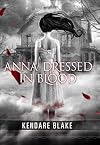
Kendar Blake’s duology, Anna Dressed in Blood and Girl of Nightmares is a paranormal romance dressed up as a bloody horror story. Fortunately told from a male perspective, the novels are a mix of Buffy the Vampire Slayer and Supernatural. Regardless of their obvious influences, the novels are a refreshing break from typical teen romance tropes and mores. Cas, short for Thessius Cassio Lowood, isn’t just any boy; he’s a prety kick-ass ghost hunting boy, akin to Dean from the CW’s Supernatural, complete with some daddy issues. Aside from that, he’s human and fairly likable. The titular girl, Anna, is dead. She haunts an old victorian house in the boonies just outside of Thunder Bay, where the novels are mostly set. In Anna Dressed in Blood, Cas goes there on a mission to kill her (again), since she is a murderous ghost. Things get…complicated, and those complications form the meat of the first novel. Without revealing too much here, Girl of Nightmares complicates those complications. Anna seems to be back and is playing out gruesome scenes of torture for Cas, whose decent conscious demands that he take action to stop whatever is happening to Anna, where ever she is and no matter what the cost. But these books are also the story of a lonely boy finally finding a place to belong.
Part of what makes these novels so enjoyable is a well-rounded secondary cast. This is where the Buffy comparisons come in. Thomas, Cas’s first friend in Thunder show more Bay, is a psychic witch whose character is a cross between Willow and Xander from Buffy, witchy powers included, though his stem from voodoo. Carmel is the extremely popular blonde unwittingly drawn in to Cas’s and Thomas’s world of death, ghosts, and witchcraft. However, she’s a hell of a lot nicer and immediately more likable than Cordelia, her pop-culture predecesor (and of course there’s a love-thing to be resolved between Thomas and Carmel, just as in Buffy). There’s even a stuffy british know-it-all, Gideon. Blake could have at least been more creative with the names here. Cas has a living mother, and thankfully she’s in on the whole gig (in fact, she even cleans the magic, ghost-slaying knife her son wields).
In the first novel, the main focus is on Anna herself and the relationship that forms between her and Cas. As her story unravels, so do pieces of Cas’s past, until they become inexorably entwined and Anna’s fate will determine Cas’s as well. The novel ends well, without major cliffhangers; Anna Dressed in Blood could easily have been a stand-alone. The meat of Girl of Nightmares is less Anna herself and more the relationships Cas has formed with Thomas and Carmel. Some familiar baddies show up to play in the dramatic conclusion, but there are also some new characters, including the vaguely sinister Order of the Black Knife (a druidic order hanging out in a resort complex in the Scottish highlands, black Armani suits and hooded robes included). One new character puts me in mind of Faith from Buffy, though again, more likable. Overall, the first book is the better of the two, but it was nice to see more of Cas and his friends. I’m just glad Blake didn’t submit to blockbuster-trilogy pressure.
And that’s the thing, for me. While these novels are fairly original in what they do, reading them felt like watching old episodes of Buffy or Supernatural. They were familiar in that they fit within accepted paramaters set by these shows, so it was more like watching a new episode of either. This isn’t in itself a bad thing; I love both shows. But it can become problematic when those references and paramaters are too comfortable and familiar, or when they show as badly as they do in the Anna books. I am in no way accusing Blake of plagiarism or of being unoriginal, nor am I saying that I dislike the books. All I’m suggesting is that she be a little less obvious with her influences. My final verdict is that these are enjoyable, quick reads with likable characters and better plotting than a lot of current paranormal teen romances. I would recommend these over a host of others currently out there.
One final, nagging note. In Girl of Nightmares, Cas and the gang have to pass a test put to them by the Order. This test is to survive the “Suicide Forest” in the highlands of Scotland. There is a real suicide forest, Aokigahara Forest, and it’s in Japan. Much of what Blake describes in this scene seems to come straight out of a 20 minute video on Aokigahara that circulated in 2010. This annoyed me greatly. show less
Kendar Blake’s duology, Anna Dressed in Blood and Girl of Nightmares is a paranormal romance dressed up as a bloody horror story. Fortunately told from a male perspective, the novels are a mix of Buffy the Vampire Slayer and Supernatural. Regardless of their obvious influences, the novels are a refreshing break from typical teen romance tropes and mores. Cas, short for Thessius Cassio Lowood, isn’t just any boy; he’s a prety kick-ass ghost hunting boy, akin to Dean from the CW’s Supernatural, complete with some daddy issues. Aside from that, he’s human and fairly likable. The titular girl, Anna, is dead. She haunts an old victorian house in the boonies just outside of Thunder Bay, where the novels are mostly set. In Anna Dressed in Blood, Cas goes there on a mission to kill her (again), since she is a murderous ghost. Things get…complicated, and those complications form the meat of the first novel. Without revealing too much here, Girl of Nightmares complicates those complications. Anna seems to be back and is playing out gruesome scenes of torture for Cas, whose decent conscious demands that he take action to stop whatever is happening to Anna, where ever she is and no matter what the cost. But these books are also the story of a lonely boy finally finding a place to belong.
Part of what makes these novels so enjoyable is a well-rounded secondary cast. This is where the Buffy comparisons come in. Thomas, Cas’s first friend in Thunder show more Bay, is a psychic witch whose character is a cross between Willow and Xander from Buffy, witchy powers included, though his stem from voodoo. Carmel is the extremely popular blonde unwittingly drawn in to Cas’s and Thomas’s world of death, ghosts, and witchcraft. However, she’s a hell of a lot nicer and immediately more likable than Cordelia, her pop-culture predecesor (and of course there’s a love-thing to be resolved between Thomas and Carmel, just as in Buffy). There’s even a stuffy british know-it-all, Gideon. Blake could have at least been more creative with the names here. Cas has a living mother, and thankfully she’s in on the whole gig (in fact, she even cleans the magic, ghost-slaying knife her son wields).
In the first novel, the main focus is on Anna herself and the relationship that forms between her and Cas. As her story unravels, so do pieces of Cas’s past, until they become inexorably entwined and Anna’s fate will determine Cas’s as well. The novel ends well, without major cliffhangers; Anna Dressed in Blood could easily have been a stand-alone. The meat of Girl of Nightmares is less Anna herself and more the relationships Cas has formed with Thomas and Carmel. Some familiar baddies show up to play in the dramatic conclusion, but there are also some new characters, including the vaguely sinister Order of the Black Knife (a druidic order hanging out in a resort complex in the Scottish highlands, black Armani suits and hooded robes included). One new character puts me in mind of Faith from Buffy, though again, more likable. Overall, the first book is the better of the two, but it was nice to see more of Cas and his friends. I’m just glad Blake didn’t submit to blockbuster-trilogy pressure.
And that’s the thing, for me. While these novels are fairly original in what they do, reading them felt like watching old episodes of Buffy or Supernatural. They were familiar in that they fit within accepted paramaters set by these shows, so it was more like watching a new episode of either. This isn’t in itself a bad thing; I love both shows. But it can become problematic when those references and paramaters are too comfortable and familiar, or when they show as badly as they do in the Anna books. I am in no way accusing Blake of plagiarism or of being unoriginal, nor am I saying that I dislike the books. All I’m suggesting is that she be a little less obvious with her influences. My final verdict is that these are enjoyable, quick reads with likable characters and better plotting than a lot of current paranormal teen romances. I would recommend these over a host of others currently out there.
One final, nagging note. In Girl of Nightmares, Cas and the gang have to pass a test put to them by the Order. This test is to survive the “Suicide Forest” in the highlands of Scotland. There is a real suicide forest, Aokigahara Forest, and it’s in Japan. Much of what Blake describes in this scene seems to come straight out of a 20 minute video on Aokigahara that circulated in 2010. This annoyed me greatly. show less
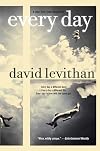
From the co-author of Will Grayson, Will Grayson, comes Every Day, a novel about someone who spends each day of their (the use of their is intentional, as this person is genderless, per se) life in a different body. A has been jumping from body to body each day of A’s life for as long as A can remember. Currently, A jumps through the bodies of 16 years olds. By now A has figured out the basic rules of the jump (every day at midnight, and never in the same body) and has set up some rules to live by in order to stay sane. Rule number one is don’t get attached. Rule number two is don’t interfere with the life of the body A is currently in. Things go as well as can be expected for A until A jumps into the body of 16 year old Justin. Justin himself is more or less a dick. The problem for A is that A falls almost immediately for Justin’s girlfriend, Rhiannon. The rest of the novel is spent working that whole snafu out. There are some fun plots twists in here, especially toward the end, so my summary will stop here.
I haven’t read anything else written or co-written by Levithan, so I can’t offer any comparisons to the wildly popular Will Grayson, Will Grayson or Nick and Nora’s Infinite Playlist, but I can say that I thoroughly enjoyed this novel. It’s a quick read, but it brings up some pretty tough questions about gender and how we view ourselves. In the first respect, there are places where Levithan seems to get a bit preachy, but it was refreshing to hear show more meditations on gender so plainly and bluntly put, while still showing the grace of love across all genders and races through his characters. To be clear, gender is not the central aspect of the novel, but it is an important subtext, especially since A has no gender, or rather identifies as neither male nor female. Levithan handles this extremely well, and yet while reading, A sounded fairly male to me. Perhaps it was just because A’s love interest was female. This didn’t really bother me, and hopefully it won’t bother other readers. How often does a YA novel have a genderless, wholly human protagonist? What Levithan has done here certainly pushes boundaries, but in a very good way.
The only slightly sour note for me was the fact that A came across as slightly obsessive or stalkerish regarding Rhiannon. A is also quite pushy in a seemingly non-pushy way in trying to secure Rhiannon’s affections. A’s first objective, aside from spending time with Rhiannon, is to get her away from Justin, her current boyfriend. A likewise seems fine with the fact that if they were to be together, Rhiannon would have to basically give up all of her friends and family, because how could she explain A’s body-hopping, or the fact that she seems to be with someone new every day? A doesn’t really care; in fact A’s answer is to sweep Rhiannon off to New York where A will have a better chance of staying around her because the city’s large enough to provide A with millions of bodies in a very small location. She’ll apparently just be running a one room hotel.
I’m glad to see that Rhiannon is smarter than that whole thing (saying this is not really a spoiler; do you really think anyone would go for that?). In fact, Rhiannon is a pretty likable character, as is A, once the whole stalker-thing drops off. A is a pretty decent person who tries to do as little damage as possible, given the circumstances, and even does some good where possible. Levithan’s writing is clear, concise, and authentic. At first A comes across as a weary, old-soul type, and A is, but A is also just a kid looking for a place to belong, even though that is nearly impossible. This book will reach out to teens who may feel the same and hopefully open up important discussions about gender and what it means to be a person, regardless of what one looks like. I really enjoyed this book, and hope there is a second, as the end seems to imply. I like A and want to find out what happens next (this doesn’t read like a crappy blockbuster trilogy, but rather like a story that could end here, yet you hope that it doesn’t). Final verdict: Highly recommended. show less
I haven’t read anything else written or co-written by Levithan, so I can’t offer any comparisons to the wildly popular Will Grayson, Will Grayson or Nick and Nora’s Infinite Playlist, but I can say that I thoroughly enjoyed this novel. It’s a quick read, but it brings up some pretty tough questions about gender and how we view ourselves. In the first respect, there are places where Levithan seems to get a bit preachy, but it was refreshing to hear show more meditations on gender so plainly and bluntly put, while still showing the grace of love across all genders and races through his characters. To be clear, gender is not the central aspect of the novel, but it is an important subtext, especially since A has no gender, or rather identifies as neither male nor female. Levithan handles this extremely well, and yet while reading, A sounded fairly male to me. Perhaps it was just because A’s love interest was female. This didn’t really bother me, and hopefully it won’t bother other readers. How often does a YA novel have a genderless, wholly human protagonist? What Levithan has done here certainly pushes boundaries, but in a very good way.
The only slightly sour note for me was the fact that A came across as slightly obsessive or stalkerish regarding Rhiannon. A is also quite pushy in a seemingly non-pushy way in trying to secure Rhiannon’s affections. A’s first objective, aside from spending time with Rhiannon, is to get her away from Justin, her current boyfriend. A likewise seems fine with the fact that if they were to be together, Rhiannon would have to basically give up all of her friends and family, because how could she explain A’s body-hopping, or the fact that she seems to be with someone new every day? A doesn’t really care; in fact A’s answer is to sweep Rhiannon off to New York where A will have a better chance of staying around her because the city’s large enough to provide A with millions of bodies in a very small location. She’ll apparently just be running a one room hotel.
I’m glad to see that Rhiannon is smarter than that whole thing (saying this is not really a spoiler; do you really think anyone would go for that?). In fact, Rhiannon is a pretty likable character, as is A, once the whole stalker-thing drops off. A is a pretty decent person who tries to do as little damage as possible, given the circumstances, and even does some good where possible. Levithan’s writing is clear, concise, and authentic. At first A comes across as a weary, old-soul type, and A is, but A is also just a kid looking for a place to belong, even though that is nearly impossible. This book will reach out to teens who may feel the same and hopefully open up important discussions about gender and what it means to be a person, regardless of what one looks like. I really enjoyed this book, and hope there is a second, as the end seems to imply. I like A and want to find out what happens next (this doesn’t read like a crappy blockbuster trilogy, but rather like a story that could end here, yet you hope that it doesn’t). Final verdict: Highly recommended. show less
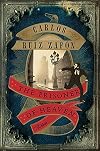
Carlos Ruiz Zafón, is, in many ways a book nerd’s dream. All of his adult fiction thus far translated into English has centered(however obliquely) around the mysterious Cemetery of Forgotten Books. After the first novel released in English, The Shadow of the Wind, fans were hungering for more of this secret place with its impossible architecture and its hundreds of thousands of forgotten books. The next book released, The Angel’s Game, promised to bring us closer to this mystery, yet left us woefully confused (at least I was) at the end and nowhere nearer to the central mystery than we were before. The latest installment, The Prisoner of Heaven, promised the same, but only somewhat delivered.
The Prisoner of Heaven is certainly a good read, better by far than Angel’s Game, but not quite as enchanting as The Shadow of the Wind. In The Prisoner, we return to Daniel Sempere and Fermín, who made their first appearance in the first of Zafón’s intriguing novels. David Martín also makes an appearance and the events of both previous novels are frequently referenced, though you don’t necessarily need to have read them to keep up with this book. Daniel Sempere has been married for two years now, and Fermín is on the verge of marriage. Fermín has some unresolved issues, however, and his past comes a-callin’ one winter evening. Alexander Dumas’s The Count of Monte Cristo plays a significant role in the novel and provides much of Fermín’s backstory, which is show more mainly what The Prisoner gives us. I don’t like to give things away, so I won’t. The background for Fernín’s story is WWII Barcelona and the red scare. Much of the backstory takes place in a famous castle prison full of nutters, one of whom we’ve already met. The main villain of the novel is Governor Mauricio Valls, a man tied to all of the main characters in The Prisoner, but who remains continually out of reach. The Valls enigma becomes central to Daniel, but that unravelling will have to wait for the next book.
This book is a quick read, and nowhere near as complex as either of the other two novels, though better written than one. After Angel’s Game, I was ready to give up on Zafón, but now I might have to stick around for a bit. There was some cheeky meta-stuff happening here (Daniel telling another character to write a secret history of Barcelona and Julian Carax, a significant character in the first novel; a manuscript titled The Angel’s Game appears, etc.), but I really just wish that the book jackets would stop promising to deliver on the Cemetery of Forgotten Books if the novel is only going to include maybe a scene or two of it, especially when those scenes are not central to the plot. Final verdict: this is an excellent book for a late summer beach read (though try not to get sand in the plastic library covers, like I did). show less
The Prisoner of Heaven is certainly a good read, better by far than Angel’s Game, but not quite as enchanting as The Shadow of the Wind. In The Prisoner, we return to Daniel Sempere and Fermín, who made their first appearance in the first of Zafón’s intriguing novels. David Martín also makes an appearance and the events of both previous novels are frequently referenced, though you don’t necessarily need to have read them to keep up with this book. Daniel Sempere has been married for two years now, and Fermín is on the verge of marriage. Fermín has some unresolved issues, however, and his past comes a-callin’ one winter evening. Alexander Dumas’s The Count of Monte Cristo plays a significant role in the novel and provides much of Fermín’s backstory, which is show more mainly what The Prisoner gives us. I don’t like to give things away, so I won’t. The background for Fernín’s story is WWII Barcelona and the red scare. Much of the backstory takes place in a famous castle prison full of nutters, one of whom we’ve already met. The main villain of the novel is Governor Mauricio Valls, a man tied to all of the main characters in The Prisoner, but who remains continually out of reach. The Valls enigma becomes central to Daniel, but that unravelling will have to wait for the next book.
This book is a quick read, and nowhere near as complex as either of the other two novels, though better written than one. After Angel’s Game, I was ready to give up on Zafón, but now I might have to stick around for a bit. There was some cheeky meta-stuff happening here (Daniel telling another character to write a secret history of Barcelona and Julian Carax, a significant character in the first novel; a manuscript titled The Angel’s Game appears, etc.), but I really just wish that the book jackets would stop promising to deliver on the Cemetery of Forgotten Books if the novel is only going to include maybe a scene or two of it, especially when those scenes are not central to the plot. Final verdict: this is an excellent book for a late summer beach read (though try not to get sand in the plastic library covers, like I did). show less
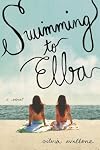
I picked up Swimming to Elba by Silvia Avallone (trans. by Antony Shuggar) because I read somewhere that everyone in Europe was raving about it and there were only 2 holds ahead of me at the library for it (and I am an incessant hoarder of library books, which I have mentioned elsewhere, so when I see a book that people are talking about with few if any holds on it, I must immediately have it). The book is centered around two Italian girls, one blond and the other brunette, both beautiful, the summer they turn 14. Their town, Poimbino, is dominated and in turn centered around a giant but dying steel plant. The novel takes place in early 2000-2001 (the Italians’ take on 9/11 is amusing), and though well before the economic crash of 2008 and later, Poimbino is clearly on the verge of its own economic crash. Glittering just a few miles off-shore is the rich, tourist island of Elba, always visible, but always just out of reach for the novel’s sometimes gritty, usually desperate, and frequently frustrated characters. In many ways this is a classic bildungsroman, but it’s also an indictment of socialism, capitalism, class, and gender stereotypes (however much it fails at the latter).
The two girls, Anna (brunette) and Francesca (blonde) are inseparable best friends. They live one floor up from each other in massive, concrete city-owned housing projects. Anna’s father is a wanna-be Godfather while Francesca’s is a great brute of a man who beats both Francesca and her show more mother. The novel opens with a scintillating description of the girls in their newly developed, scantily clad bodies frolicking on the beach and flirting with the older boys, all as seen through Francesca’s father’s binoculars and told through his POV. Creepy. While there are beautiful passages and cinematic scenes, that opening really sets the tone for the entire novel, but gets progressively worse and more and more depressing as the girls’ relationship crumbles and they each get caught up in the adult world of sex. Books like this are why I generally stay away from modern literary realism.
The jacket describes the book as a “lightening-rod for discussion” in Europe and a strong criticism of the Leftist, Socialist ideal of the happy proletariat in Italy. I can see that, and I get what Avallone is trying to do here, if what the jacket says is true, and I applaud her for doing so. That doesn’t make me like the book any more than I do. There are a few reasons for my general dislike. The first is technical: Avallone uses the third person omniscient POV, which allows her to jump into the head of whoever she wishes, which she does quite frequently. Therein lies the problem. While most writers that I’ve read who use this narrative technique do so with ease, Avallone’s continual head-hopping is confusing, especially when she does it in the middle of a paragraph using only gender pronouns, when the scene includes several members of that gender whose head she’s already been in and could be in again. I frequently wasn’t sure whose head I was in at a given moment, which continually forced me out of the narrative, instead of keeping me locked in an otherwise engrossingly real world.
The second issue I had with the novel was its treatment and view of women. That the opening description of the girls is given through the highly sexualized gaze of one of their fathers is creepy and gut-tumbling enough, but the book is drenched with more and more of it. All of the men in the book are possessive, nearly misogynistic assholes who see women (or rather 13 and 14 year old girls) as nothing more than a good or bad fuck at best, and inhuman house slaves at worst. The women frequently seem to see themselves in these terms as well, and the young ones do what they can as soon as they get tits to look like a good fuck so they can get married to one of the charming assholes from the steel plant and become a house slave later on.
There is so little hope in this book, and what bright spot there is is imperiled half-way through. I don’t doubt that this may be what life in a small costal city dominated by a dying industry in Italy looks like; her depiction of life there was so thorough it began to bleed into my own view of Seattle and for that I hate the book a little bit. But in the same way I get what it’s like to look at something shining and shimmering that is close enough to touch but is always just out of reach. I think anyone who reads this book would (unless they were reading it on the white beach of Elba), and for that level of realism, that level of detail that can suck you right in and make you part of that world, I give the book and its author my respect. Final verdict: read at your own risk. show less
The two girls, Anna (brunette) and Francesca (blonde) are inseparable best friends. They live one floor up from each other in massive, concrete city-owned housing projects. Anna’s father is a wanna-be Godfather while Francesca’s is a great brute of a man who beats both Francesca and her show more mother. The novel opens with a scintillating description of the girls in their newly developed, scantily clad bodies frolicking on the beach and flirting with the older boys, all as seen through Francesca’s father’s binoculars and told through his POV. Creepy. While there are beautiful passages and cinematic scenes, that opening really sets the tone for the entire novel, but gets progressively worse and more and more depressing as the girls’ relationship crumbles and they each get caught up in the adult world of sex. Books like this are why I generally stay away from modern literary realism.
The jacket describes the book as a “lightening-rod for discussion” in Europe and a strong criticism of the Leftist, Socialist ideal of the happy proletariat in Italy. I can see that, and I get what Avallone is trying to do here, if what the jacket says is true, and I applaud her for doing so. That doesn’t make me like the book any more than I do. There are a few reasons for my general dislike. The first is technical: Avallone uses the third person omniscient POV, which allows her to jump into the head of whoever she wishes, which she does quite frequently. Therein lies the problem. While most writers that I’ve read who use this narrative technique do so with ease, Avallone’s continual head-hopping is confusing, especially when she does it in the middle of a paragraph using only gender pronouns, when the scene includes several members of that gender whose head she’s already been in and could be in again. I frequently wasn’t sure whose head I was in at a given moment, which continually forced me out of the narrative, instead of keeping me locked in an otherwise engrossingly real world.
The second issue I had with the novel was its treatment and view of women. That the opening description of the girls is given through the highly sexualized gaze of one of their fathers is creepy and gut-tumbling enough, but the book is drenched with more and more of it. All of the men in the book are possessive, nearly misogynistic assholes who see women (or rather 13 and 14 year old girls) as nothing more than a good or bad fuck at best, and inhuman house slaves at worst. The women frequently seem to see themselves in these terms as well, and the young ones do what they can as soon as they get tits to look like a good fuck so they can get married to one of the charming assholes from the steel plant and become a house slave later on.
There is so little hope in this book, and what bright spot there is is imperiled half-way through. I don’t doubt that this may be what life in a small costal city dominated by a dying industry in Italy looks like; her depiction of life there was so thorough it began to bleed into my own view of Seattle and for that I hate the book a little bit. But in the same way I get what it’s like to look at something shining and shimmering that is close enough to touch but is always just out of reach. I think anyone who reads this book would (unless they were reading it on the white beach of Elba), and for that level of realism, that level of detail that can suck you right in and make you part of that world, I give the book and its author my respect. Final verdict: read at your own risk. show less
The Solitude of Prime Numbers by Paolo Giordano is the second beautiful but sad Italian novel. Well, if I’m being honest, it’s downright depressing, but not in the week-long funk inducing way that Lev Grossman’s The Magicians and The Magician King were. The beauty of the Giordano’s prose tempers the dreary subject matter, which is a sad tale about two broken people trying to deal with the “weight of consequences,” as Alice, one of the book’s protagonists puts it. Both of the actions that create weighty consequences happen in the first two chapters of the novel. For Alice, it’s an unfortunate accident. For Mattia, the other protagonist, it’s an unthinking, childish need to be normal for the space of a birthday party. These actions haunt each character, to the extent that both retreat from the world into solitary obsessions. Mattia turns to the solitude of numbers, and Alice to starving herself. They use these obsessions to create iron-clad barriers between themselves and everyone else, including each other.
The novel follows them from youth, the time surrounding each incident, through adolescence when Alice and Mattia meet and form a timid friendship, and then through early adulthood. What is most depressing about this novel for me was the fact that both Alice and Mattia recognize one another for who they are and have the capacity to understand each other. And yet, time and again, neither will take the action that could save them both. The last two pages show more of the novel helped, gave some hope, but the novel as a whole is pretty bleak. But it is also quite beautiful, and that’s why I continued with it. I also kept hoping that Alice and Mattia would get their shit figured out.
The cast of characters is fairly small, which is good since Giordano sometimes jumps into various heads to offer differing perspectives, not on the same event, but rather as a way to show us how others see the primary two characters. It’s done well and not nearly as jolting as it was in Swimming to Elba, and for that I’m grateful. I realize that I really don’t read much contemporary “literature,” and because of that am not used to it’s tropes. I usually read as an escape and don’t usually enjoy reading about someone who could be my next door neighbor. I need something other, so international contemporary literature or anything pre-1980s is generally acceptable. I’m about to start rambling, so my final verdict is that this is a well-written meditation on the loneliness we inflict on ourselves and the weight of consequences. It is quiet and sometimes lovely, but also heavy and suffocating, like water at the bottom of a river on a warm summer day. show less
The novel follows them from youth, the time surrounding each incident, through adolescence when Alice and Mattia meet and form a timid friendship, and then through early adulthood. What is most depressing about this novel for me was the fact that both Alice and Mattia recognize one another for who they are and have the capacity to understand each other. And yet, time and again, neither will take the action that could save them both. The last two pages show more of the novel helped, gave some hope, but the novel as a whole is pretty bleak. But it is also quite beautiful, and that’s why I continued with it. I also kept hoping that Alice and Mattia would get their shit figured out.
The cast of characters is fairly small, which is good since Giordano sometimes jumps into various heads to offer differing perspectives, not on the same event, but rather as a way to show us how others see the primary two characters. It’s done well and not nearly as jolting as it was in Swimming to Elba, and for that I’m grateful. I realize that I really don’t read much contemporary “literature,” and because of that am not used to it’s tropes. I usually read as an escape and don’t usually enjoy reading about someone who could be my next door neighbor. I need something other, so international contemporary literature or anything pre-1980s is generally acceptable. I’m about to start rambling, so my final verdict is that this is a well-written meditation on the loneliness we inflict on ourselves and the weight of consequences. It is quiet and sometimes lovely, but also heavy and suffocating, like water at the bottom of a river on a warm summer day. show less
Pauline Chen’s new novel, The Red Chamber, is actually a retelling of a classic Chinese novel, The Dream of the Red Chamber. Chen’s version is severely truncated; the original novel is currently sold by Penguin in three volumes and was never finished. Chen freely admits she has taken many liberties with the story in order to better introduce it to Western audiences, she claims. I can in no way compare the two, since I had not even heard of the original before reading Chen’s book, so I will take The Red Chamber as a unique work of fiction.
The Red Chamber is set in 18th c. China and details the lives of the Jia family. The Jias are wealthy and have long and good connections to the imperial palace through the family patriarch, Jia Zheng; however, it is Lady Jia who truly rules the household. When Daiyu’s mother dies, her father sends her to stay with her maternal grandmother at the Jia family palace. There Daiyu meets three individuals who will leave indelible marks on her life: Xue Baochi, daughter of the widowed sister-in-law of Jia Zheng, Wang Xifeng, wife of Jia Lian, and Jia Baoyu, Zheng’s son and Lady Jia’s favorite (there is a helpful family tree at the beginning of the novel). The novel details the intimate family bonds and sometimes chains that bind each character, except for Daiyu, perhaps. It is grand and intimate at the same time; family drama set against the back drop of imperial strife.
Chen’s narrative is told through mainly the three females of show more the novel, with occasional forays into Zheng’s or Baoyu’s perspective. Each of the women is unique as are their voices. Xifeng is the under-appreciated house-hold manager, Baochi is the seemingly cold but dutiful daughter, and Daiyu is the “gauche” newcomer, daughter of a mother who threw away everything and defied Lady Jia to marry for love. Lady Jia never forgave her, even in death and her wrath has carried over to Daiyu. Three events set the course for the fate of the Jia family: the cover up of a murder, illicit love (on multiple fronts), and the fall of an Emperor. How will Daiyu survive in the grand city of Bejing amid all of the family politics and sweeping change?
Many have compared this to Artur Goldstein’s Memoirs of a Geisha, but I was constantly reminded of Raise the Red Lantern, the film by Zhang Yimou. I really, really enjoyed this novel. It immediately draws the reader in and through Chen’s gift for narrative, we begin to understand what drives each of the three women and who they must be in a tight-knit family irrevocably bound together. I wanted more after finishing this, and perhaps that was Chen’s intent: give Western readers a taste of a massive and loved Chinese classic so they’ll go in search of the original. While I’m not rushing out to the bookstore to find it, I did add it to my never-ending wishlist. Final verdict: highly recommended for those who love to be swept away by historical and intimate family portraits. show less
The Red Chamber is set in 18th c. China and details the lives of the Jia family. The Jias are wealthy and have long and good connections to the imperial palace through the family patriarch, Jia Zheng; however, it is Lady Jia who truly rules the household. When Daiyu’s mother dies, her father sends her to stay with her maternal grandmother at the Jia family palace. There Daiyu meets three individuals who will leave indelible marks on her life: Xue Baochi, daughter of the widowed sister-in-law of Jia Zheng, Wang Xifeng, wife of Jia Lian, and Jia Baoyu, Zheng’s son and Lady Jia’s favorite (there is a helpful family tree at the beginning of the novel). The novel details the intimate family bonds and sometimes chains that bind each character, except for Daiyu, perhaps. It is grand and intimate at the same time; family drama set against the back drop of imperial strife.
Chen’s narrative is told through mainly the three females of show more the novel, with occasional forays into Zheng’s or Baoyu’s perspective. Each of the women is unique as are their voices. Xifeng is the under-appreciated house-hold manager, Baochi is the seemingly cold but dutiful daughter, and Daiyu is the “gauche” newcomer, daughter of a mother who threw away everything and defied Lady Jia to marry for love. Lady Jia never forgave her, even in death and her wrath has carried over to Daiyu. Three events set the course for the fate of the Jia family: the cover up of a murder, illicit love (on multiple fronts), and the fall of an Emperor. How will Daiyu survive in the grand city of Bejing amid all of the family politics and sweeping change?
Many have compared this to Artur Goldstein’s Memoirs of a Geisha, but I was constantly reminded of Raise the Red Lantern, the film by Zhang Yimou. I really, really enjoyed this novel. It immediately draws the reader in and through Chen’s gift for narrative, we begin to understand what drives each of the three women and who they must be in a tight-knit family irrevocably bound together. I wanted more after finishing this, and perhaps that was Chen’s intent: give Western readers a taste of a massive and loved Chinese classic so they’ll go in search of the original. While I’m not rushing out to the bookstore to find it, I did add it to my never-ending wishlist. Final verdict: highly recommended for those who love to be swept away by historical and intimate family portraits. show less
British writer Graham Joyce’s latest novel is set in the English countryside near the foreboding Outwoods, which happen to be on a geological anomalie. many of the nearby residents are afraid of the Outwoods, and rightly so, it would seem. 15 year old Tara Martin disappeared from the Outwoods, only to magically return 20 years later, looking the exact same age as when she first disappeared. Her answer for where she’s been for the past 20 years seems insane and yet strangely plausible, if you believe in fairies, that is. Her reappearance uncovers old wounds between her brother, Peter, and Ritchie, her boyfriend at the time of her disappearance. Both men are in their 40s now, and only Peter had been able to move on. Will Tara’s reappearance give Ritchie a fresh start with the girl he never stopped loving, or will it prove to be his undoing? Joyce takes us on a psychological journey of heartbreak and healing and leaves us with the ultimate question of what is fantasy and what is reality?
This is the first novel by Joyce I’ve read, and while it was relatively predictable, I still enjoyed it quite a bit. Joyce’s writing is clean and measured and his characters feel like they could be the people down the street. Only Tara felt somewhat hollow, but that was probably due more to her role in the narrative and plot than a poorly drawn character. My favorite character was actually a minor one; Dr. Vivian Underwood, the shrink hired to examine Tara, who belongs more to the show more fairies than anyone else in the novel. This was a fairly quick read, and not terribly deep or probing. It would be good for an afternoon at the beach or a cloudy evening at home. While reading, I had the strong urge to drink some Earl Grey, since everyone is always drinking tea, which can apparently fix almost anything. One final thing I loved about the novel was the short quotes preceding each chapter. My favorite is by Marina Warner: “Wonder has no opposite; it springs up already doubled in itself, compounded of dread and desire at once, attraction and recoil, producing a thrill, the shudder of pleasure and fear.” show less
This is the first novel by Joyce I’ve read, and while it was relatively predictable, I still enjoyed it quite a bit. Joyce’s writing is clean and measured and his characters feel like they could be the people down the street. Only Tara felt somewhat hollow, but that was probably due more to her role in the narrative and plot than a poorly drawn character. My favorite character was actually a minor one; Dr. Vivian Underwood, the shrink hired to examine Tara, who belongs more to the show more fairies than anyone else in the novel. This was a fairly quick read, and not terribly deep or probing. It would be good for an afternoon at the beach or a cloudy evening at home. While reading, I had the strong urge to drink some Earl Grey, since everyone is always drinking tea, which can apparently fix almost anything. One final thing I loved about the novel was the short quotes preceding each chapter. My favorite is by Marina Warner: “Wonder has no opposite; it springs up already doubled in itself, compounded of dread and desire at once, attraction and recoil, producing a thrill, the shudder of pleasure and fear.” show less
After seeing rave review after rave review on Goodreads and Amazon, I downloaded Cinder by Marissa Meyer (Feiwel &Friends, 1/3/12) and ended up finishing it in one sitting. Yes, the book was that good, and all of the glowing praise is justified. Cinder takes place in New Beijing, 128 years after WWIV. World peace has lasted this long mainly because of a global peace treaty signed by all of the major nations after the war. There is one nation, however that has refused to sign and poses a new threat to not just the Commonwealth of New Beijing, but to the whole of planet Earth: the Lunar people, who reside on the Moon. Peace negotiations have been underway for the last 20 or so years between the Lunars and the Emperor of New Beijing, but with the emperor sick from a sweeping and as-of-yet-incurable plague, and his untested teenage son about to inherit the title of Emperor, nothing is certain.
This is the political backdrop for Meyer's re-imagining of the Cinderella tale. But this is no ordinary re-telling. The titular character, Cinder, is cyborg. She has a mechanical foot and hand (and possibly more) that mark her as a second-class citizen, for cyborgs are feared and openly hated in the Commonwealth. She hides her metal as best she can, and tries to make do with a small mechanic shop in the market area of New Beijing, even though all of her profits legally go to her horrible step-mother. The plot follows the general outline of the cinderella story, ball and glass slipper show more (here, a mechanical foot) included. This Cinder meets her prince long before the ball when he brings her his broken android, and she actually doesn't really want to go the the ball, but of course ends up there on matters of great import. The additions of a horrible plague sweeping Earth's population, a kingdom on the brink of war, and an evil queen to rival anything the Grimm brothers could come up with help flesh out the plot, the world, and the characters, though I never felt like any of it was just fluff. Each of these elements contribute greatly to the action of the story, so it feels less like a re-telling of the Cinderella story and more like speculative fiction with elements of Cinderella added in. The romance (there must always be a romance these days) was not over-the-top and was really more of a subtext for the novel rather than its entire purpose for being (as it is in Delirium and Unearthly, for example). While it doesn't quite have the organic feel I prefer, it also didn't feel forced, which is kind of amazing considering it's really just a plot point to follow the fairy-tale original.
Cinder herself is a highly likable and sympathetic character. Her relationship with her younger step-sister and an android with a personality "glitch" are sweet and comic, respectively, and add some emotional depth to Cinder. She is smart, tough, and doesn't put up with much. She's willing to yell back at her stepmother and stand up for herself, which makes her much more human than her fairy-tale counterpart. She also rarely wallows (though she has plenty of reason to) and prefers action over sitting and waiting for something to happen; you can trust that she'll do what needs to be done. Considering the latest crop of female dystopian leads in YA fiction, Cinder is one of the better ones, and one that I'm more than willing to return to.
Though secrets abound in this novel, the major revelation was rather obvious by the first oh, 5% of the book (I read the ebook version), so it was a little frustrating that Cinder dosen't discover it until the last 2% of the novel. As far as the world building goes, the premise for the existence of the new world order is fairly believable. There are other things, however that would benefit from more/better explanation, specifically concerning the Lunars. What are they? Where do they come from? Have they always existed on the moon? Why do they want Earth? I expect that we'll get a better understanding of them in the second book, so I'll hold out for that. There have also been criticisms concerning Meyer's use of technology, in that she doesn't go into enough detail/explanation etc. I thought that for the genre and the audience she's writing for, it was fine. If I wanted a hefty book about cyborgs and humans living together with an alien race hanging out on the moon, I'd head to the SF section of my book store. In other words, though there are SF elements in the novel, that is clearly not what Meyer is writing. She's writing a teen romance and as such, it's one of the better ones I've come across lately. There have also been criticisms that this book superficially touches on things that could have better developed for more social commentary, which is one of the primary aspects of speculative fiction. I only half agree; again I think it comes down to audience and purpose. Do I think that this novel had much more potential? Yes. Am I disappointed by it? No.
All said, I thought Cinder was a fast-paced and enjoyable read. It held my complete attention for the 5 or so hours it took me to read it, and when I finished it, I checked for a release date for the second book in the series. (Couldn't find one, but it's supposedly called Scarlet and is the story of Little Red Riding Hood, according to Meyer in an interview on Amazon.com. My thoughts: WTF happens to Cinder?). I'd highly recommend this for a bad-weather, stay-at-home-and-drink-tea kind of day. You won't be bored, and I don't think you'll feel you wasted your time either. Happy reading!
P.s. Did anyone else get hints of Sailor Moon in Cinder? If I say why, it might be considered spoilers, but I couldn't help thinking of it while reading. show less
This is the political backdrop for Meyer's re-imagining of the Cinderella tale. But this is no ordinary re-telling. The titular character, Cinder, is cyborg. She has a mechanical foot and hand (and possibly more) that mark her as a second-class citizen, for cyborgs are feared and openly hated in the Commonwealth. She hides her metal as best she can, and tries to make do with a small mechanic shop in the market area of New Beijing, even though all of her profits legally go to her horrible step-mother. The plot follows the general outline of the cinderella story, ball and glass slipper show more (here, a mechanical foot) included. This Cinder meets her prince long before the ball when he brings her his broken android, and she actually doesn't really want to go the the ball, but of course ends up there on matters of great import. The additions of a horrible plague sweeping Earth's population, a kingdom on the brink of war, and an evil queen to rival anything the Grimm brothers could come up with help flesh out the plot, the world, and the characters, though I never felt like any of it was just fluff. Each of these elements contribute greatly to the action of the story, so it feels less like a re-telling of the Cinderella story and more like speculative fiction with elements of Cinderella added in. The romance (there must always be a romance these days) was not over-the-top and was really more of a subtext for the novel rather than its entire purpose for being (as it is in Delirium and Unearthly, for example). While it doesn't quite have the organic feel I prefer, it also didn't feel forced, which is kind of amazing considering it's really just a plot point to follow the fairy-tale original.
Cinder herself is a highly likable and sympathetic character. Her relationship with her younger step-sister and an android with a personality "glitch" are sweet and comic, respectively, and add some emotional depth to Cinder. She is smart, tough, and doesn't put up with much. She's willing to yell back at her stepmother and stand up for herself, which makes her much more human than her fairy-tale counterpart. She also rarely wallows (though she has plenty of reason to) and prefers action over sitting and waiting for something to happen; you can trust that she'll do what needs to be done. Considering the latest crop of female dystopian leads in YA fiction, Cinder is one of the better ones, and one that I'm more than willing to return to.
Though secrets abound in this novel, the major revelation was rather obvious by the first oh, 5% of the book (I read the ebook version), so it was a little frustrating that Cinder dosen't discover it until the last 2% of the novel. As far as the world building goes, the premise for the existence of the new world order is fairly believable. There are other things, however that would benefit from more/better explanation, specifically concerning the Lunars. What are they? Where do they come from? Have they always existed on the moon? Why do they want Earth? I expect that we'll get a better understanding of them in the second book, so I'll hold out for that. There have also been criticisms concerning Meyer's use of technology, in that she doesn't go into enough detail/explanation etc. I thought that for the genre and the audience she's writing for, it was fine. If I wanted a hefty book about cyborgs and humans living together with an alien race hanging out on the moon, I'd head to the SF section of my book store. In other words, though there are SF elements in the novel, that is clearly not what Meyer is writing. She's writing a teen romance and as such, it's one of the better ones I've come across lately. There have also been criticisms that this book superficially touches on things that could have better developed for more social commentary, which is one of the primary aspects of speculative fiction. I only half agree; again I think it comes down to audience and purpose. Do I think that this novel had much more potential? Yes. Am I disappointed by it? No.
All said, I thought Cinder was a fast-paced and enjoyable read. It held my complete attention for the 5 or so hours it took me to read it, and when I finished it, I checked for a release date for the second book in the series. (Couldn't find one, but it's supposedly called Scarlet and is the story of Little Red Riding Hood, according to Meyer in an interview on Amazon.com. My thoughts: WTF happens to Cinder?). I'd highly recommend this for a bad-weather, stay-at-home-and-drink-tea kind of day. You won't be bored, and I don't think you'll feel you wasted your time either. Happy reading!
P.s. Did anyone else get hints of Sailor Moon in Cinder? If I say why, it might be considered spoilers, but I couldn't help thinking of it while reading. show less
Arcadia by Lauren Groff is a beautiful, quiet little book. It starts at the titular Arcadia, a hippie commune established in the 70s somewhere in the upper-midwestern or northeastern United States. The novel is predominantly told from Bit's perspective, though thankfully with the distance of 3rd person POV. Bit is the "littlest bit of a hippie" ever born at Arcadia. His parents are among the original founders of the commune, and some of the last to leave when it eventually fails sometime in the 80s. The narrative follows Bit from his childhood to his 50s, with gaps in-between to progress the storyline. Bit's voice is quiet but strong, and while not terribly unique or original, completely authentic. I was most intrigued by the secondary characters and would have loved more time spent on/with them.
While one might think this novel is about the death of American idealism and all of the baggage this brought to the 80s and 90s, it's really not. It's a bildungsroman, a coming-of-age novel that is more concerned with the death of its subject's innocence and idealism. The wider implications are a barely present subtext, often seen through the eyes of the uncomprehending child Bit. As an adult, Bit trades the open community and its inherent dangers for the quiet and secure life of a college professor and part-time photographer. He also leaves Arcadia and all of its ideals behind him, and rarely looks back. Yet it has indelibly left its mark on him, and the close of the novel is a show more return to his beginnings for a bittersweet end.
I was so captivated by this novel that I ended up reading it in one sitting, staying up half the night to do so. While I don't feel as if it had a major affect on me, on my thinking, or on my understanding of the world, it did leave its impression on my imagination, and I passed the evening with a great character in a setting so unlike my own that I was enthralled. Because it's a coming of age novel, there are certainly relatable aspects, but I found myself more able to recognize my own wants and needs in the middle aged Bit who was trying to keep his family together and make sure his daughter knew she was loved. I think there will be something everyone, at some level can relate to in this novel, which is one of the things that makes it so readable. I'm sure it will be a hit, but ultimately for me, it was just another novel to pass the time with. I liked it, I really and truly did, and I would highly recommend it, but it's not one I'm likely to return to. show less
While one might think this novel is about the death of American idealism and all of the baggage this brought to the 80s and 90s, it's really not. It's a bildungsroman, a coming-of-age novel that is more concerned with the death of its subject's innocence and idealism. The wider implications are a barely present subtext, often seen through the eyes of the uncomprehending child Bit. As an adult, Bit trades the open community and its inherent dangers for the quiet and secure life of a college professor and part-time photographer. He also leaves Arcadia and all of its ideals behind him, and rarely looks back. Yet it has indelibly left its mark on him, and the close of the novel is a show more return to his beginnings for a bittersweet end.
I was so captivated by this novel that I ended up reading it in one sitting, staying up half the night to do so. While I don't feel as if it had a major affect on me, on my thinking, or on my understanding of the world, it did leave its impression on my imagination, and I passed the evening with a great character in a setting so unlike my own that I was enthralled. Because it's a coming of age novel, there are certainly relatable aspects, but I found myself more able to recognize my own wants and needs in the middle aged Bit who was trying to keep his family together and make sure his daughter knew she was loved. I think there will be something everyone, at some level can relate to in this novel, which is one of the things that makes it so readable. I'm sure it will be a hit, but ultimately for me, it was just another novel to pass the time with. I liked it, I really and truly did, and I would highly recommend it, but it's not one I'm likely to return to. show less
 This review was written for LibraryThing Early Reviewers.
*This is a review of an uncorrected proof that was won through Librarything.com.
After his son pulls through a life-threatening illness, Solomon Kugel decides to leave the city and heads to the country for a fresh start with his family. They buy an old farmhouse in the quite town of Stockton, New York which was "famous for nothing. No one famous had lived there, no famous battles had been waged there, no famous movements arose there, no famous concerts had been held there." Or so Kugel thought. Little does he know, he's got a living piece of dead history up in the attic stinking up the whole place. There's also an arsonist on the loose burning down old farm houses, his marriage is strained, and his career is quickly loosing steam. On it's most basic level, Hope: A Tragedy is about Kugel's attempt to deal with these situations. But the novel is also about the attempts, vain attempts as Professor Jove (Kugel's (imagined?) therapist) might say, to deal with living.
For a book about dealing with living, death is more often than not the subject of Kugel's every waking thought. He's obsessed with last words, and keeps a journal of possible winners for his own death bed utterance. Throughout the novel we're also treated to the last words, real or not, of a multitude of famous people. He's got two old ladies at death's door to deal with, who both believe they are holocaust survivors. One of them is his mother. The other is...well, I can't really give it away, but there's plenty show more of disbelief and irony associated with the discovery. His mother's favorite refrain is "those sons of bitches" and "ever since the war." This began shortly after Kugel's father left, and his mother continues to appropriate Holocaust history as her own, even stealing lines from Anne Frank, the "Jewish Jesus" of eternal victimhood. When he was eight, Kugel's mother brought him a lamp and told him that it was his grandfather. This give poor Kugel an innate fear of inanimate objects:
"If the lamp shade could be his grandfather, was the sofa his cousin? Was the ottoman his aunt? The armoire, he was certain, was giving him filthy looks. For weeks he crept outside and peed against the apartment house wall, concerned that perhaps the toilet was his uncle, the bathroom mirror an unknown but all-seeing relation disgusted by his most secret rituals."
Tied up in this black little novel is the question of survivor's guilt. Or, more precisely, the guilt of those who have not suffered at all. Though Jewish, the Kugels are fifth-generation Americans with only the most distant relations victims of the Holocaust. As his unwillingness to deal with his mother (who has taken up a valuable rentable room in their new house because she's supposedly dying) and the attic dweller continues, his marriage and sanity deteriorate.
In this book, hope, the belief that things can or will get better, is the greatest tragedy of all. Optimism is a curse and Kugel's constant hope that things will get better for him and for his family provides much of the tragi-comedy of this novel. Heartbreaking is not a word I would use to describe this story, even though the reader is witness to the quiet dissolution of a family and the protagonist's plummet towards death; it's too black, and more than anything too funny, to be considered heartbreaking. It's also too dead-pan. There are no emotional punches here, no sentimentality; the tone is utterly flat and unforgiving. While driving down the road one day, Kugel spies a small group of deer standing on the side of the road, staring at some bushes on the other. getting out to investigate he finds a fawn with a huge gash in her belly, dying:
"He rested the tips of his first two fingers on the fawn's chest--shh--feeling her heart underneath racing, desperate; slowly, delicately Kugel pressed his two fingers into the gash on her belly. She blinked, licked her lips. She felt warm inside and wet; Kugel moved his fingers slightly, pressing them in deeper until he could feel her terrified heart thumping against the tips of his fingers. Kugel glanced up to the deer watching him from across the way; they seemed to think he was helping, or that there was a chance he might, and for a moment he felt remorse forgiving them such hope. Was that such a crime though Professor? Was a moment of false hope going to make their loss any greater? What was the greater kindness? Wasn't pretending like this, lying, faking, his fingertips on her heart, a crease on his brow, the least he could do? The few moments he kept his fingers inside her--doing nothing--were a few moments more that they could believe in some answer; wasn't that the kindest thing he could do for them?
The Lord is my shepherd, I shall not want.
Ask and thou shall receive.
For God so loved the world He gave His only begotten son, that whosoever believes in Him will not perish but will have everlasting life.
Bullshit, sure, but good bullshit. The best bullshit. A lie, but the whole thing was a lie, what was one more to ease the pain?
And then the fawn sighed deeply, and rested her head, and Kugel pressed his fingers against her heart and it stopped. After a moment, Kugel gently removed his fingers from her wound; they were warm, wet, covered with dark red, almost black, blood. Kugel held his fingers up to his nose, inhaled deeply, and then, slowly, slowly, he placed them into his mouth and closed his eyes.
Fuck all of you motherfuckers, he thought.
Toodle-oo."
Freudian kicks aside, this is the quietest, most intimate moment in the novel, and it's interrupted by someone crashing into the car Kugel left in the middle of the road. For a father concerned enough about his son to move to the country, and for a man on the brink of losing his wife, the novel spends very little time with them. Though the novel is set in third-person PoV, it might as well be first person, as the reader is privy (or trapped, depending on how comfy you are in his head) almost exclusively to Kugel's often, hilarious, often utterly depressing musings. While I wouldn't call him unreliable, I don't entirely trust the words of a man clearly loosing his sanity.
Also tied up in this book are questions of the past, what it means, why we insist on remembering it, and how often we rewrite it to suit our own needs. There were many passages I loved in this book, underlined and dog-eared. This book won't be for everyone, and the main reason I loved it was because it's always nice to see your own cynicism reflected back at you in witty, neatly packaged phrases and sentences. I laughed aloud, hard, several times while reading Auslander's novel. If hope is the greatest tragedy of humanity, then sometimes it's just enough to have a good, black laugh now and then. If that's what you're in the mood for, then I'd highly recommend this book. If you prefer to always look on the bright side of life, wait fifty years and then give this novel a try. For more information on Shalom Auslander and his other works, please visit his webpage at www.shalomauslander.com. Hope: A Tragedy will be published by Riverhead Books on January 12th, 2012. show less
After his son pulls through a life-threatening illness, Solomon Kugel decides to leave the city and heads to the country for a fresh start with his family. They buy an old farmhouse in the quite town of Stockton, New York which was "famous for nothing. No one famous had lived there, no famous battles had been waged there, no famous movements arose there, no famous concerts had been held there." Or so Kugel thought. Little does he know, he's got a living piece of dead history up in the attic stinking up the whole place. There's also an arsonist on the loose burning down old farm houses, his marriage is strained, and his career is quickly loosing steam. On it's most basic level, Hope: A Tragedy is about Kugel's attempt to deal with these situations. But the novel is also about the attempts, vain attempts as Professor Jove (Kugel's (imagined?) therapist) might say, to deal with living.
For a book about dealing with living, death is more often than not the subject of Kugel's every waking thought. He's obsessed with last words, and keeps a journal of possible winners for his own death bed utterance. Throughout the novel we're also treated to the last words, real or not, of a multitude of famous people. He's got two old ladies at death's door to deal with, who both believe they are holocaust survivors. One of them is his mother. The other is...well, I can't really give it away, but there's plenty show more of disbelief and irony associated with the discovery. His mother's favorite refrain is "those sons of bitches" and "ever since the war." This began shortly after Kugel's father left, and his mother continues to appropriate Holocaust history as her own, even stealing lines from Anne Frank, the "Jewish Jesus" of eternal victimhood. When he was eight, Kugel's mother brought him a lamp and told him that it was his grandfather. This give poor Kugel an innate fear of inanimate objects:
"If the lamp shade could be his grandfather, was the sofa his cousin? Was the ottoman his aunt? The armoire, he was certain, was giving him filthy looks. For weeks he crept outside and peed against the apartment house wall, concerned that perhaps the toilet was his uncle, the bathroom mirror an unknown but all-seeing relation disgusted by his most secret rituals."
Tied up in this black little novel is the question of survivor's guilt. Or, more precisely, the guilt of those who have not suffered at all. Though Jewish, the Kugels are fifth-generation Americans with only the most distant relations victims of the Holocaust. As his unwillingness to deal with his mother (who has taken up a valuable rentable room in their new house because she's supposedly dying) and the attic dweller continues, his marriage and sanity deteriorate.
In this book, hope, the belief that things can or will get better, is the greatest tragedy of all. Optimism is a curse and Kugel's constant hope that things will get better for him and for his family provides much of the tragi-comedy of this novel. Heartbreaking is not a word I would use to describe this story, even though the reader is witness to the quiet dissolution of a family and the protagonist's plummet towards death; it's too black, and more than anything too funny, to be considered heartbreaking. It's also too dead-pan. There are no emotional punches here, no sentimentality; the tone is utterly flat and unforgiving. While driving down the road one day, Kugel spies a small group of deer standing on the side of the road, staring at some bushes on the other. getting out to investigate he finds a fawn with a huge gash in her belly, dying:
"He rested the tips of his first two fingers on the fawn's chest--shh--feeling her heart underneath racing, desperate; slowly, delicately Kugel pressed his two fingers into the gash on her belly. She blinked, licked her lips. She felt warm inside and wet; Kugel moved his fingers slightly, pressing them in deeper until he could feel her terrified heart thumping against the tips of his fingers. Kugel glanced up to the deer watching him from across the way; they seemed to think he was helping, or that there was a chance he might, and for a moment he felt remorse forgiving them such hope. Was that such a crime though Professor? Was a moment of false hope going to make their loss any greater? What was the greater kindness? Wasn't pretending like this, lying, faking, his fingertips on her heart, a crease on his brow, the least he could do? The few moments he kept his fingers inside her--doing nothing--were a few moments more that they could believe in some answer; wasn't that the kindest thing he could do for them?
The Lord is my shepherd, I shall not want.
Ask and thou shall receive.
For God so loved the world He gave His only begotten son, that whosoever believes in Him will not perish but will have everlasting life.
Bullshit, sure, but good bullshit. The best bullshit. A lie, but the whole thing was a lie, what was one more to ease the pain?
And then the fawn sighed deeply, and rested her head, and Kugel pressed his fingers against her heart and it stopped. After a moment, Kugel gently removed his fingers from her wound; they were warm, wet, covered with dark red, almost black, blood. Kugel held his fingers up to his nose, inhaled deeply, and then, slowly, slowly, he placed them into his mouth and closed his eyes.
Fuck all of you motherfuckers, he thought.
Toodle-oo."
Freudian kicks aside, this is the quietest, most intimate moment in the novel, and it's interrupted by someone crashing into the car Kugel left in the middle of the road. For a father concerned enough about his son to move to the country, and for a man on the brink of losing his wife, the novel spends very little time with them. Though the novel is set in third-person PoV, it might as well be first person, as the reader is privy (or trapped, depending on how comfy you are in his head) almost exclusively to Kugel's often, hilarious, often utterly depressing musings. While I wouldn't call him unreliable, I don't entirely trust the words of a man clearly loosing his sanity.
Also tied up in this book are questions of the past, what it means, why we insist on remembering it, and how often we rewrite it to suit our own needs. There were many passages I loved in this book, underlined and dog-eared. This book won't be for everyone, and the main reason I loved it was because it's always nice to see your own cynicism reflected back at you in witty, neatly packaged phrases and sentences. I laughed aloud, hard, several times while reading Auslander's novel. If hope is the greatest tragedy of humanity, then sometimes it's just enough to have a good, black laugh now and then. If that's what you're in the mood for, then I'd highly recommend this book. If you prefer to always look on the bright side of life, wait fifty years and then give this novel a try. For more information on Shalom Auslander and his other works, please visit his webpage at www.shalomauslander.com. Hope: A Tragedy will be published by Riverhead Books on January 12th, 2012. show less
This review was written for LibraryThing Early Reviewers.
Delirium takes place in Portland, Maine in a near-future dystopian United States. For some reason or another, love has been declared an infectious but curable disease. The cure for love sounds similar to a lobotomy. Part of the brain is surgically altered and all those pesky feelings are taken care of, for good. Because of the disease, boys and girls are strictly segregated until after they have had the procedure and become known as “cureds.” The procedure happens at age 18 (mysteriously, there are more problems and risks if the cure is given to anyone under 18), right around the same time as “matches” are made. Depending on who you are and what your status is in society, you get assigned to a university or college, and upon graduation marry your match and begin your career.
But there are problems with the cure, and not everyone wants to be cured of love. The main protagonist’s mother was one such individual, and chose suicide instead. This decision has had a lasting effect on her daughter, Lena, short for Magdalena. At the start of the novel, Lena can’t wait to have her procedure, be matched, and get on with her life. She is very much a product of government control (those regulators only raid homes, beat the crap out of people and arrest whoever is suspected of anything really, only do all of this for society’s protection) and swallows love as a curable disease hook, line, and sinker. Yet a chance encounter with a supposedly cured boy, Alex, is the catalyst show more that predictably changes everything. As summer and Lena and Alex’s relationship progress, Lena moves further and further away from her old self, her best friend, and everything she has been taught to believe. Very soon, Lena will have to make a choice that (que dramatic voice) will forever alter her future.
I bought this on my Kindle Fire the same day I got it, on Christmas, because it was on sale along with a slew of other popular YA books. I really didn’t know anything about it other than that it was a bestseller and that book two in the trilogy was coming soon. I am just wading into the YA genre, learning the ropes, as it were, so I wasn’t sure what to expect. I’m surprised to say that I liked it (regardless of the sarcastic overtones in the summary) and am looking forward to book two, Pandemonium, which is due out February 28th. I found Lena to be, in general, a sympathetic character, and the supporting cast was fleshed out just enough to allow the reader to sympathize with them as well, for the most part. Hana’s motivations for co-ed partying were never really given and neither were Alex’s motivations for coming to Portland. I would have liked to know more, and if I had I might have cared about them more, especially Alex. He can really just be summed up as a troubled, but gorgeous and perfect male love interest (I would have been just as happy with the book if the love interest turned out to be Hana; could have made things much more interesting). Lena is neither as whiny nor as helpless as many other teen “heroines” seem to be (including Clara of Unearthly, which will be reviewed here soon), but not quite Katniss material. She’s got potential though, and that’s part of the reason I’m looking forward to Pandemonium. I’d much rather have a bunch of wanna-be Katniss characters who eventually kick ass than a bunch of wanna-be Bellas, who just want to get married and have kids with their creepy stalker-boyfriends. I’m also glad that, as of yet, Oliver hasn’t gone the typical love-triangle route. It’s A+L 4ever, so far, and I hope it stays that way.
As far as the world-building and writing goes, I can’t complain too much. Oliver’s prose is clear, Lena’s voice and motivations are believable and the near-future dystopia is fairly believable. However, I’m not sure how kids can party with loud music and alcohol on the edges of town and generally get away with it in a completely panoptic city. There’s even obvious monitoring of cell phone conversations (the characters can actually hear static and noise every time the government decides to listen in). It seems rather convenient that the party only gets broken up when Oliver needs it to for plot purposes. I do wish that there was more social commentary going on here, as there’s rich ground for it, and that’s one of the main purposes of the dystopian genre/setting. As a society we are so inundated with the concept of love that it has practically become one of the defining traits of our species. Love is part of what it means to be human, right? So how the hell is it possible for society to do a complete 180 and decide that love is a disease that’s curable? Love is an industry, an institution, an essential part of human interaction. How do we get from that to Oliver’s world? What’s the criticism she’s going for here? Is there any? (See additional notes below for more thoughts on this.)(This criticism specifically, is due in part to an essay I recently taught to my college freshman. It’s an excerpt from Laura Kipnis’s book Love’s Labours: A Polemic. Great reading, and I highly recommend it.)
On the whole, the plotting and pacing seemed pretty tight, and the characters and their motivations are believable. With a novel like this, that’s enough to make it good, but not great light reading. I give this 3.7 stars out of five and will be back for the sequel.
Additional Notes:
I’ve got two main but general complaints. First, it seems that no one is willing to deal with the destruction of society as we know it and set all of their dystopias after what ever it is that breaks society apart has happened. I’m getting annoyed by this, not only in YA fiction, but in all dystopic fiction I’ve come across recently (including, and especially, The Road). I want to see what happens, see the event. And I want an actual explanation for why the world in the story is the way it is. Can no one do this? Is no one willing or capable of offering an explanation for these messed up little worlds? Mysterious diseases abound in these dystopias, and frankly, I want to be treated with a measure of intelligence as a reader. Some one, please, explain it to us. Additionally, social criticism is an integral part of the dystopian novel, and as a dystopian novel, this book falls quite short for the lack of it, as discussed above.
The second complaint deals with the YA genre specifically. For the teen girls and boys in these novels, whatever member of the opposite sex they go for is the one. Cosmic stars align and the love interest is always described as perfect, gorgeous (with variations of adverbs such as “impossibly” or “undeniably” in front of them). I was a teen once (recently enough that I remember HS). I dated boys, had first kisses and make-out sessions (since that’s all these characters seem to do, and none of them, not a single one, was as magical, cosmic, or perfect as they are described in these books. Reading girls go on for sometimes pages of how wonderful or unimaginably perfect the boy is is getting very annoying. I’m beginning to wonder if these books are just romance novels dressed up as something else and are setting up a generation of girls for extreme disappointment as well as priming them to become perfect consumers of society’s currently accepted ideal of love. However, I must declare that I don’t read romance novels; perhaps if I did, I would be more used to this. If anyone has good recommendations for Teen/YA books that avoid this pitfall, I’m all ears. As I said, I’m new to the genre and don’t want to judge the whole bunch based on just a few. Feel free to leave recommendations in the comments, they will be most welcome (I’ve already read the Hunger Games trilogy and it pretty much sets the bar for me). show less
But there are problems with the cure, and not everyone wants to be cured of love. The main protagonist’s mother was one such individual, and chose suicide instead. This decision has had a lasting effect on her daughter, Lena, short for Magdalena. At the start of the novel, Lena can’t wait to have her procedure, be matched, and get on with her life. She is very much a product of government control (those regulators only raid homes, beat the crap out of people and arrest whoever is suspected of anything really, only do all of this for society’s protection) and swallows love as a curable disease hook, line, and sinker. Yet a chance encounter with a supposedly cured boy, Alex, is the catalyst show more that predictably changes everything. As summer and Lena and Alex’s relationship progress, Lena moves further and further away from her old self, her best friend, and everything she has been taught to believe. Very soon, Lena will have to make a choice that (que dramatic voice) will forever alter her future.
I bought this on my Kindle Fire the same day I got it, on Christmas, because it was on sale along with a slew of other popular YA books. I really didn’t know anything about it other than that it was a bestseller and that book two in the trilogy was coming soon. I am just wading into the YA genre, learning the ropes, as it were, so I wasn’t sure what to expect. I’m surprised to say that I liked it (regardless of the sarcastic overtones in the summary) and am looking forward to book two, Pandemonium, which is due out February 28th. I found Lena to be, in general, a sympathetic character, and the supporting cast was fleshed out just enough to allow the reader to sympathize with them as well, for the most part. Hana’s motivations for co-ed partying were never really given and neither were Alex’s motivations for coming to Portland. I would have liked to know more, and if I had I might have cared about them more, especially Alex. He can really just be summed up as a troubled, but gorgeous and perfect male love interest (I would have been just as happy with the book if the love interest turned out to be Hana; could have made things much more interesting). Lena is neither as whiny nor as helpless as many other teen “heroines” seem to be (including Clara of Unearthly, which will be reviewed here soon), but not quite Katniss material. She’s got potential though, and that’s part of the reason I’m looking forward to Pandemonium. I’d much rather have a bunch of wanna-be Katniss characters who eventually kick ass than a bunch of wanna-be Bellas, who just want to get married and have kids with their creepy stalker-boyfriends. I’m also glad that, as of yet, Oliver hasn’t gone the typical love-triangle route. It’s A+L 4ever, so far, and I hope it stays that way.
As far as the world-building and writing goes, I can’t complain too much. Oliver’s prose is clear, Lena’s voice and motivations are believable and the near-future dystopia is fairly believable. However, I’m not sure how kids can party with loud music and alcohol on the edges of town and generally get away with it in a completely panoptic city. There’s even obvious monitoring of cell phone conversations (the characters can actually hear static and noise every time the government decides to listen in). It seems rather convenient that the party only gets broken up when Oliver needs it to for plot purposes. I do wish that there was more social commentary going on here, as there’s rich ground for it, and that’s one of the main purposes of the dystopian genre/setting. As a society we are so inundated with the concept of love that it has practically become one of the defining traits of our species. Love is part of what it means to be human, right? So how the hell is it possible for society to do a complete 180 and decide that love is a disease that’s curable? Love is an industry, an institution, an essential part of human interaction. How do we get from that to Oliver’s world? What’s the criticism she’s going for here? Is there any? (See additional notes below for more thoughts on this.)(This criticism specifically, is due in part to an essay I recently taught to my college freshman. It’s an excerpt from Laura Kipnis’s book Love’s Labours: A Polemic. Great reading, and I highly recommend it.)
On the whole, the plotting and pacing seemed pretty tight, and the characters and their motivations are believable. With a novel like this, that’s enough to make it good, but not great light reading. I give this 3.7 stars out of five and will be back for the sequel.
Additional Notes:
I’ve got two main but general complaints. First, it seems that no one is willing to deal with the destruction of society as we know it and set all of their dystopias after what ever it is that breaks society apart has happened. I’m getting annoyed by this, not only in YA fiction, but in all dystopic fiction I’ve come across recently (including, and especially, The Road). I want to see what happens, see the event. And I want an actual explanation for why the world in the story is the way it is. Can no one do this? Is no one willing or capable of offering an explanation for these messed up little worlds? Mysterious diseases abound in these dystopias, and frankly, I want to be treated with a measure of intelligence as a reader. Some one, please, explain it to us. Additionally, social criticism is an integral part of the dystopian novel, and as a dystopian novel, this book falls quite short for the lack of it, as discussed above.
The second complaint deals with the YA genre specifically. For the teen girls and boys in these novels, whatever member of the opposite sex they go for is the one. Cosmic stars align and the love interest is always described as perfect, gorgeous (with variations of adverbs such as “impossibly” or “undeniably” in front of them). I was a teen once (recently enough that I remember HS). I dated boys, had first kisses and make-out sessions (since that’s all these characters seem to do, and none of them, not a single one, was as magical, cosmic, or perfect as they are described in these books. Reading girls go on for sometimes pages of how wonderful or unimaginably perfect the boy is is getting very annoying. I’m beginning to wonder if these books are just romance novels dressed up as something else and are setting up a generation of girls for extreme disappointment as well as priming them to become perfect consumers of society’s currently accepted ideal of love. However, I must declare that I don’t read romance novels; perhaps if I did, I would be more used to this. If anyone has good recommendations for Teen/YA books that avoid this pitfall, I’m all ears. As I said, I’m new to the genre and don’t want to judge the whole bunch based on just a few. Feel free to leave recommendations in the comments, they will be most welcome (I’ve already read the Hunger Games trilogy and it pretty much sets the bar for me). show less
I'll post a longer review later, but the end of this book was kind of "meh" on the wow-I-didn't-see-that-coming factor. I just wish he let the reader figure some things out instead of telling us everything all the time.
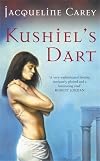
I am about to embark on the most ambitious reviewing project I have ever undertaken thus far; I will be reviewing all 9 of the books in the Kusheline Legacy series. Here goes. I first picked this up at random in a university book store. It was relatively new and I must have stood there for at least an hour or more reading it. I was immediately entranced, and remain so. I had never been much of a fantasy reader as an adult (however, when I was a kid I read several of Tanith Lee's books, among others, so it wasn't too much of a stretch), but this book made me a permanent fan. Now, I am constantly searching for a heroine equal to Phedre no Delaunay; I'm not sure it's even a possibility.In the league of world builders, Carey ranks among the highest. Her world is fully realized and feels as if it could actually exists. In part this is due to the fact that it an alternate version of our world, with several almost direct connections (this comes mainly through geography and through religion). I'm sure there is a more concise word for what she does here, but I am not well-versed enough in fantasy literature to know it. Regardless, Carey's world feels livable. The mythology of the world is unique and all encompassing; For each realm Phedre finds herself in, there is a complete, excellently planned history and mythology. Her characters are wonderfully complex, even as they rely to a degree on traditional high romance traditions (think Arthurian legends). The novel starts with Phedre show more as a child and continues through her upbringing first in the Night Court as damaged goods to her transformation as the foremost courtesan and spy, though information-gatherer might be closer to the mark. One of the consistent refrains through this frist trilogy is that "all knowledge is worth having." The end of this book leaves us in a lurch for the second; luckily for me the next in the series, Kushiel's Chosen, was due out soon. I fell in love with her characters and her style. Carey herself has described her style in this series as "baroque," and this is very true. While it may be slightly of-putting at first, by the end of this book, I hardly even noticed it. It fit perfectly with the character that Phedre became. There is intrigue and plot aplenty in this book and in the rest of the series, but never does it feel as if Carey throws things in just because. While some revelations may seem somewhat obvious by the time they are given, for the most part, I was kept guessing. The who might be known, but the how is just as interesting and important. While I would not say these books are fast paced, they never drag either. All are well planned and well researched. I hate to give too much of a summary because it is too much fun discovering the world of these books on your own. If you are looking for an excellently written fantasy series that features an incredibly strong female lead, enough sexy romance to keep your pulse up and a plot to rival anything George R.R. Martin can dish out, this book and this sereis is for you. Fair warning though: there are explicit heterosexual and homosexual sex scenes, and there is also a healthy dose of BDSM themes (it's one of the main conceits of Phedre's character). If this makes you squeamish, it's your loss. The central theme of the book, and the only religious principal Phedre adheres to is "love as thou wilt." A beautiful message enclosed in a beautiful narrative. show less
I generally enjoy McKinley's work, but I have to give this one only 3 stars because of the shockingly thinly-veiled orientalism present in the novel. Questions of colonialism are part of the plot of the novel, as you have the colonizers in tense peace with the colonized in a let's-just-leave-each-other- alone kind of relationship. The peace is almost dissolved when the leader of the indigenous nomadic tribe comes to the colonial border town and asks for help in a coming war with another group, the degraded, magically warped barbarians from the north. The white colonialists of course say no; why should they help a people they want to conquer? Let the others wipe them out for them, right? McKinley definitely offers commentary on this mentality, and this is not where my criticism lies. No, my biggest issue with this book and the power relations she explores, is the blatant orientalism expressed. The main character, who has blonde hair and blue eyes, begins to feel a certain longing for and comfort in the desert, which as a foreign transplant, she is not supposed to feel. The desert and the desert peoples are the colonial Other; they are not to be considered equals, interesting, or, and especially, not desirable. So what happens when this too, tall, too strong, blonde haired, blue-eyed teenage girl meets the leader of the desert tribes? Why, she can't stop thinking about him, of course! And when he comes back to abduct her from her home (because his mystical magic aura told show more him too) she puts up no protest, and is more than willing to adopt these brown-skinned, exotic but frightening others as her own. Indeed, she even has some of their blood running though her veins, to the great shame of her older brother. Not only is she 1/8th desert tribe, she is also the wielder of great desert-people magic and the true heir of the titular blue sword. Only she can unite all of the nomadic desert tribes against this new foe (if you want a better version of this story, read T.E. Lawrence's The Seven Pillars of Wisdom)My other major issue with this book is that it's supposed to feature a strong female lead. Sure this girl can ride a horse. Sure she can fight with a sword. But for a girl who lets herself be abducted, marries her abductor, and can only wield the true power of the blue sword with the help of her soon-to-be husband, I find little to recommend her. Finally, McKinley's prose in this book is uneven at best, disjointed at worst. There are several places where characters shift between an overly stiff, formal tone in one sentence or paragraph, and in the very next are using contractions. I give this two stars for trying. show less
I came across this book via a recommendation by Kusheline Legacy author Jacqueline Carey. I am so glad I decided to try it! I have never read a book like this before. A bare bones plot summary would say that this is a riff on The 1,001 Nights. There are two central characters; one is a girl who has hundreds of stories imprinted on her eyelids, and is considered cursed by the rest of the palace. Because of this they are afraid to kill her and anger the spirit who cursed her. Instead, they leave her to fend for herself in the vast palace gardens. The other is a princeling who befriends her one night. To say that this is just a new take on the Arabian Nights is to deny the lyrical beauty of Valente's prose. Her words and images flow over each other to create a cascade of imagery and metaphor unlike anything I have ever read. Other reviewers have said that it becomes too much, that the narrative drown in its language, but I never felt that the prose was overwrought; it completely fit both the project and the unique cast of characters who give them voice. In this book, you will find many familiar tales told from a fresh perspective, as many of the tales seem based out of familiar European traditions. There is however a strong Eastern feel to the over-arching narrative, and this seems to come more to the forefront in the second volume. Valente never lets us get lost in too many layers of narrative, at most the stories run three layers deep at any given moment. I was honestly in show more awe of Valente's talent as a story-teller, let alone writer, and it is rare for this to happen with me (maybe I am too analytic; well, I am a grad student in English). I encourage you to let yourself be taken away by these stories, to let yourself be swept away by their beauty. This is pure enjoyment. I am excited to have discovered Catherynne Valente and already have several of her other books on my to-read shelf. show less
As the title suggest, this is the second book of the Inheritance Trilogy (not that Inheritance trilogy). As middle books go, this one is fairly good. There were times where the narrative felt too choppy and things didn't quite seem to mesh well. Working with extended dramatic irony can be difficult, and there were times where my patience with characters' discovery wore thin. This book takes place about 10 years after the events of the first, and those of the ruling class and religious order would have the population believe that not much has really changed since the Gray Lady's rebirth. Godlings now mingle with the general population, having been allowed into the human dimension after Itempas's fall. Only The Three are allowed to kill these godlings, who are their children, and only The Three and other godlings can actually kill them. They are being murdered however, and central to the novel is finding out by whom. The main character, Oree, is a blind artist who can see magic. Since Shadow is the most magical city in the world, she leaves home at a young age and goes there to make her fortune. You will remember that Shadow is the city beneath Sky, and was mentioned but never visited in the first novel. There is another reason it's called Shadow now, however. A giant tree has grown over and through both Sky and Shadow, cutting off what little light there used to be. I wish more had been done with this, but we are to simply take for granted its creation by the Gray Lady and show more its existence. There is a romantic element to this novel, as there was with the first, but it feels less central to the story than it does in the first. Oree and her friends are sympathetic enough, and the plot is, at heart, a mystery novel. having spent so much time in Sky with the horrid back-stabbing, political maneuvering nobility, it was refreshing to see how the rest of the people lived. I think I liked this world, and its protagonists better, and I look forward to the third book (out sometime soon, I believe) as it deals with the last of the three and takes place, to some degree, in the realm of the gods where the Maelstrom looms large. I like Jemsin's writing and world building; it's complete, but it's not as overwhelming with place names, lengthy histories etc. as other fantasy series can be. I'm excited to have discovered her, and I look forward to whatever else she may write. show less
This book was quite good. It had engaging characters, a fast-paced plot, and was generally thoroughly enjoyable. The basic outline of the story is that after a thousand years of oppression by a ruler claiming to be an immortal piece of god, a group of well-trained, expert thieves led by a flawed but nevertheless christ-like figure, who is also a Mistborn (you'll have to read it to find out what that is; I never like giving away too much in my reviews) decides they've had enough and plot to bring the empire down. The crew is joined by a street-urchin who, it turns out, also happens to be a Mistborn. Their plan is to overthrow both the central government and the nobility-dominated economy in order to destabilize the authority and control of the god-like tyrant known as the Lord Ruler. Murder and mayhem ensue, and well, you'll have to read it to see how it all plays out. But Sanderson, for all of the violence, bloodshed, and betrayal seems to be a sentimentalist at heart, so you can be pretty sure that Things Will Work Out In the End. Vin, the Mistborn street-urchin, is a sympathetic character, and the novel is really centered around her. It's something of a bildungsroman and could easily be a stand alone, though this is the first in a trilogy. The other two books seem to center around the same group of characters, which is always nice in a world as big and complete as this one. They cover the what happens after the Things Work Out In the End. There are several philosophical show more issues at work in the novel, as there usually are in SF and Fantasy novels, though the issues in this novel are less subtle. There is even a Philosopher Thief, but because the issues are so obvious, they feel too superficial to require deep thought. The class war recalls early anti-slavery and civil rights issues (are the skaa (the labor class of the Final Empire) really inferior beings? can they really be capable of running an empire?). In this sense, the novel is fairly heavy-handed with its morality, but many fantasies tend to be that way. I generally prefer a more subtle, complex morality tale, but I do have an interest in reading the other two novels, at some point in the Near Future (Murakami's newest, 1Q84, arrives on my doorstep tomorrow). I would definitely recommend this novel to people who like their fantasy high, their worlds complete, and the lines clearly drawn between good and evil, even as the lines between hero and normal are allowed to be a little more blurry, and especially for those who like warm fuzzies at the end of their bloody battles. show less
I read this book in one sitting. It is quickly paced and highly readable, both of which are good qualities for a novel to have, generally. Unless you want readers to linger over passages, to actually experience a character's existential horror at discovering she has been turned entirely red for a crime that in this little dystopic world is paramount to murder. Currently, this is the case in some states (but they don't turn people red and then turn them loose into a holier-than-thou-society where the life expectancy for Chromes, as criminals in this book are called, is relatively short). No, in today's society, things like adultery and abortion are still private matters; unless you're famous, of course. Unfortunately for Hannah Pryne, her lover and the father of her aborted child is rather famous and the society in which she lives is almost more puritain than the puritans. The back bone for this story is a retelling of Nathaniel Hawthorne's 'The Scarlet Letter.' This provides some of the most basic plot points, but the the novel itself feels closer to Margaret Atwood's 'The Handmaid's Tale,' if only because it takes place in a modern, very near future society (at one odd point, the character knows what John F. Kennedy's voice sounded like; this feels rather anachronistic). Christian fundamentalism regarding women's reproductive rights has made its way into national policy, due to a trifecta of disaster: massive decline in white birthrates in general, a super STD (the show more superclap) that made a significant amount of the female population sterile before a cure was discovered 7 years to late, and a briefly referenced Second Great Depression. Almost all of these things are blamed on Feminism and Feminists at one point in the novel. In short, a modern, fully technologically advanced society has reverted back to a form of Puritanism more effectively Puritain than anything our forbearers could have wished for. And yet. And yet. Where is the horror? where is the revulsion, the pity, the terrible cry of protest from the reader that this novel should evoke? It isn't there. It took me several weeks to read 'The Handmaid's Tale', mainly because I had to stop reading, had to give myself a break from a world that felt all too real, from characters that were emotionally vivid and alive. The key word here is felt. When you read Atwood's novel, you feel things; you feel a mounting and inescapable horror. You are haunted by the book and by its narrator. When reading Jordan's, the only thing one feels is a desire to get to the end, to see what happens, to see if she really will make it. And this is the novel's success as well. There is little emotional connection in this novel mainly because of its obviousness and its heavy-handedness. Others have said similar things regarding a lack of subtlety for who we should blame and hate, but I'm talking more about the fact that we are told everything we should feel, and we are told everything thing the character feels. Instead of seeing, instead of being shown how she feels, how she thinks, how she copes,we are told. Jordan seems to make a rather freshman mistake in violating the 'show, don't tell' mantras of writing gurus. More showing and less telling, and this could be a powerful if unambiguous tale. This novel attempts to tackle some of the big ideas of our time; religious freedom, women's continuing struggle for rights to their bodies, sexual identity, racism, class inequality, and last but not least, god. Yet the character's awakening to these issues feels hollow and trite.I give this book four stars because it is good, it is enjoyable. It got me out of my current reality and into one that like Atwood's tale, could come to pass. If not quite literally, then certainly figuratively (if the current breed of conservatives have their way, watch out Planned Parenthood. Oh wait, we've already been there). It will be a good talking point and a way for modern students, if the book doesn't get banned for talking about the scarlet A (abortion, not adultery), to see what ostracism can look like in a modern society (though Hannah spends fairly little time on her own, actually). The book also deals with agency, and that is a discussion that needs to take place more and more often in the face of popular novels like the Twilight series. I would recommend this novel to people who like dystopian fiction, and to people who like good and bad easily and clearly defined for them. This book is good, and I do like it, but it unfortunately doesn't require much thought. Some might argue that Atwood's Tale is just as polarizing, has lines that are just as clearly drawn. Her characters, however complicate these lines. Atwood achieves a humanity in her writing that Jordan lacks, but I think is capable of achieving, given time and experience. The fact that two are even being compared (and not just by me) should say something about Jordan's potential. I look forward to watching Jordan's career, and have Mudbound on order. show less
She's currently doing an interview with Tom Ashbrook on NPR's On Point. THe transcript of the interview should be available tomorrow. Yea!
The Kingdom of Gods (624 pages, Orbit, 10/27/11) is the third and final book in the Inheritance Trilogy by N.K. Jemisin. This book follows Sieh, godling child of Nahadoth and Enefa, two of the Three original children of the malestrom, all of whom are full-fledged gods. This becomes important, so I’ll give a quick run down of who’s who (there’s a full, and cutely scribbled on glossary/appendix that covers this, so I’ll only hit the basics)
The Malestrom: The chaos, essentially (think Hesiod), from which the Three are born.
Nahadoth: First child of the Malestrom, and the most like it. His nature is change itself.
Itempas: Second child of the Malestrom, and the least like it. His nature is to stay the same. He was both enemy of and lover to Nahadoth. From the union of these two, matter, the universe, was born.
Enefa: Last child of the Malestrom; she is the balance between Nahadoth and Itepmas. He nature is creation; she is the giver of both life and death, and she created all sentient life.
Sieh: Child of Nahadoth and Enefa, one of the first godlings born. His nature is essentially that of childhood; he is mischief incarnate.
Sieh has daddy issues. And mommy issues. And second daddy issues. He’s also a jealous little brat (by his own admission). Of gods and godlings sold-out and imprisoned by Itempas after the God’s War, Sieh bears the most hatred towards Itempas, not only for imprisoning him but for also imprisoning his father Nahadoth and killing his mother Enefa. show more His hatred of his second father and subsequent refusal to forgive him provides much of the angst of the novel, and also a few plot points as well. At the beginning of the novel, Sieh has just spied his reincarnated mother, Yeine (see the first book of the trilogy for this story) in the act of….forgiving Itempas. This sends him off in a fit of both anger and jealousy. Sieh feels left out, and like any petulant child, he runs off to take it out on someone else. Back at Sky palace, hiding in one of his empty spaces, he encounters Arameri twins Shahar and Dekarta (appropriately named). However, instead of tormenting them or killing them outright, he reluctantly befriends them.
Shahar is the Arameri heir; Deka is not and gets treated accordingly. His sister, however, loves him fiercely and later makes a decision that saves his life, even as it appears she is destroying it. After their first encounter, Sieh agrees to return on the same day, every year to play with them. During their eighth year play-date, something goes horribly wrong. Fast forward eight years and things have changed drastically, not only for the twins, but for Sieh as well. Shahar is being groomed for her future as the Arameri heir amidst unprecedented national turmoil, threats from the north and a general dwindling confidence in and fear of the Arameri clan. Deka is far away training to be a scrivner, and Sieh is trying to figure out what the hell is going on with his body (cue adolescent angst). After fleeing from a fateful encounter with Shahar, Sieh ends up in Shadow alone and confused. It’s not long before he encounters the godlings who run Shadow and keep the peace between humans and godlings. As plots thicken and unravel completely, Sieh learns he has to face a truth long buried, a truth which could quite literally destroy him as well as the entirety of existence. Sieh wanted to be important; well, he got his wish.
I won’t go into much more detail, as it will ruin what is generally a well-plotted, enjoyable, and satisfying novel. Jemisin manages to create a nice balance between utter childishness and millennia worth of experience in Sieh’s voice and perspective. We know when he’s being willfully ignorant, and usually he does too. Change is hard, especially when its the kind of change Sieh is going through. Add all of the other problems to this and you have a good, tense narrative that’s as much about external change as it is internal change. This novel is the end of an era in more ways than one, but it is also the beginning of a new era, and the double ending is not as annoying as the end of the film version of the Lord of the Rings trilogy. Jemisin leaves us in a generally happy place that is both a conclusion to the events of this trilogy and a beginning for another, if she so chooses. This is a pretty good place to be as an author, and it can work out quite well if done right (see Jacqueline Carey’s Kusheline Legacy series for an example).
My gripe with the second novel, The Broken Kingdoms, mainly that the reader was well aware of key revelations long before the character was, is not much of an issue here. We do know what is going on with Sieh before he does, but his ignorance, willful or otherwise, is neither a plot nor narrative hindrance, for the most part. As usual, Jemisin creates fully realized, complex characters that the reader comes to genuinely care for. Sieh may not be my most favorite (that would have to be Oree), but I felt for Sieh, and for Deka. Shahar is slightly less likable, but she kind of has to be. The novel could have easily dissolved into a soap-opera like love triangle, but Jemisin keeps our attention on the wider issues at stake with multiple plots. These books are marketed as fantasy, not romance, though the romantic element has always played a vital role in these novels. However, the main problem, the thing Sieh has to deal with that no one else can, actually feels kind of glossed-over. It didn’t have the emotional or narrative impact I thought it would, and it ultimately seemed less important than what appeared to be the lesser issues.
The narrative itself felt much less choppy than the previous book, but the issue seemed to become one of balance, as noted above. We visit the titular Kingdom of Gods in the Gods’ realm once, and are shown something both really cool and seemingly massively important, but we never go back there. I know not every little thing has to be important or returned to, but it felt like there was enough build-up for this place that it warranted a return visit or at least a final, closure-giving mention. This might sound nit-picky, but I really wanted the narrative to explore this place. I mean, it’s the title of the book. Can’t we at least stay awhile?
In general, these books, and Jemisin’s writing, have improved and grown over the course of their publications. I am not saying by this that Jemisin started out a bad writer and became better (my favorite of the three is actually the first); I am saying that there has been development and growth over the course of the trilogy. It’s been very exciting to see this and I will continue to read Jemisin’s work and watch her evolvement as a writer. Her voice is fresh, unique and utterly engaging. I give this book four stars, and eagerly await her next book, The Killing Moon, which is due out next March. For more information on Jemisin and her writing, including character studies of those presented in this trilogy, please visit her website at nkjemisin.com. She also recently guest blogged over at The Book Smugglers, and shared her must read list. You can find that post here. show less
The Malestrom: The chaos, essentially (think Hesiod), from which the Three are born.
Nahadoth: First child of the Malestrom, and the most like it. His nature is change itself.
Itempas: Second child of the Malestrom, and the least like it. His nature is to stay the same. He was both enemy of and lover to Nahadoth. From the union of these two, matter, the universe, was born.
Enefa: Last child of the Malestrom; she is the balance between Nahadoth and Itepmas. He nature is creation; she is the giver of both life and death, and she created all sentient life.
Sieh: Child of Nahadoth and Enefa, one of the first godlings born. His nature is essentially that of childhood; he is mischief incarnate.
Sieh has daddy issues. And mommy issues. And second daddy issues. He’s also a jealous little brat (by his own admission). Of gods and godlings sold-out and imprisoned by Itempas after the God’s War, Sieh bears the most hatred towards Itempas, not only for imprisoning him but for also imprisoning his father Nahadoth and killing his mother Enefa. show more His hatred of his second father and subsequent refusal to forgive him provides much of the angst of the novel, and also a few plot points as well. At the beginning of the novel, Sieh has just spied his reincarnated mother, Yeine (see the first book of the trilogy for this story) in the act of….forgiving Itempas. This sends him off in a fit of both anger and jealousy. Sieh feels left out, and like any petulant child, he runs off to take it out on someone else. Back at Sky palace, hiding in one of his empty spaces, he encounters Arameri twins Shahar and Dekarta (appropriately named). However, instead of tormenting them or killing them outright, he reluctantly befriends them.
Shahar is the Arameri heir; Deka is not and gets treated accordingly. His sister, however, loves him fiercely and later makes a decision that saves his life, even as it appears she is destroying it. After their first encounter, Sieh agrees to return on the same day, every year to play with them. During their eighth year play-date, something goes horribly wrong. Fast forward eight years and things have changed drastically, not only for the twins, but for Sieh as well. Shahar is being groomed for her future as the Arameri heir amidst unprecedented national turmoil, threats from the north and a general dwindling confidence in and fear of the Arameri clan. Deka is far away training to be a scrivner, and Sieh is trying to figure out what the hell is going on with his body (cue adolescent angst). After fleeing from a fateful encounter with Shahar, Sieh ends up in Shadow alone and confused. It’s not long before he encounters the godlings who run Shadow and keep the peace between humans and godlings. As plots thicken and unravel completely, Sieh learns he has to face a truth long buried, a truth which could quite literally destroy him as well as the entirety of existence. Sieh wanted to be important; well, he got his wish.
I won’t go into much more detail, as it will ruin what is generally a well-plotted, enjoyable, and satisfying novel. Jemisin manages to create a nice balance between utter childishness and millennia worth of experience in Sieh’s voice and perspective. We know when he’s being willfully ignorant, and usually he does too. Change is hard, especially when its the kind of change Sieh is going through. Add all of the other problems to this and you have a good, tense narrative that’s as much about external change as it is internal change. This novel is the end of an era in more ways than one, but it is also the beginning of a new era, and the double ending is not as annoying as the end of the film version of the Lord of the Rings trilogy. Jemisin leaves us in a generally happy place that is both a conclusion to the events of this trilogy and a beginning for another, if she so chooses. This is a pretty good place to be as an author, and it can work out quite well if done right (see Jacqueline Carey’s Kusheline Legacy series for an example).
My gripe with the second novel, The Broken Kingdoms, mainly that the reader was well aware of key revelations long before the character was, is not much of an issue here. We do know what is going on with Sieh before he does, but his ignorance, willful or otherwise, is neither a plot nor narrative hindrance, for the most part. As usual, Jemisin creates fully realized, complex characters that the reader comes to genuinely care for. Sieh may not be my most favorite (that would have to be Oree), but I felt for Sieh, and for Deka. Shahar is slightly less likable, but she kind of has to be. The novel could have easily dissolved into a soap-opera like love triangle, but Jemisin keeps our attention on the wider issues at stake with multiple plots. These books are marketed as fantasy, not romance, though the romantic element has always played a vital role in these novels. However, the main problem, the thing Sieh has to deal with that no one else can, actually feels kind of glossed-over. It didn’t have the emotional or narrative impact I thought it would, and it ultimately seemed less important than what appeared to be the lesser issues.
The narrative itself felt much less choppy than the previous book, but the issue seemed to become one of balance, as noted above. We visit the titular Kingdom of Gods in the Gods’ realm once, and are shown something both really cool and seemingly massively important, but we never go back there. I know not every little thing has to be important or returned to, but it felt like there was enough build-up for this place that it warranted a return visit or at least a final, closure-giving mention. This might sound nit-picky, but I really wanted the narrative to explore this place. I mean, it’s the title of the book. Can’t we at least stay awhile?
In general, these books, and Jemisin’s writing, have improved and grown over the course of their publications. I am not saying by this that Jemisin started out a bad writer and became better (my favorite of the three is actually the first); I am saying that there has been development and growth over the course of the trilogy. It’s been very exciting to see this and I will continue to read Jemisin’s work and watch her evolvement as a writer. Her voice is fresh, unique and utterly engaging. I give this book four stars, and eagerly await her next book, The Killing Moon, which is due out next March. For more information on Jemisin and her writing, including character studies of those presented in this trilogy, please visit her website at nkjemisin.com. She also recently guest blogged over at The Book Smugglers, and shared her must read list. You can find that post here. show less
Saints Astray (368 pages, Grand Central Publishing, 11/22/12) by Jacqueline Carey is the follow-up to 2009′s Santa Olivia and follows Loup and Pilar as they adjust to life outside Outpost 12. The first place they land after their daring escape is in the backseat of a car for a near cross country drive to meet with representatives of the Mexican Government, a U.S. Senator sympathetic to their plight, and a mysterious third party. While there the girls get treated to a posh (one of Carey’s favorite descriptors, apparently) hotel and a major shopping trip, courtesy of the mysterious third party, who it turns out, wants to offer Loup a job as a body guard to high-profile, supremely wealthy clientele. Before either agrees, they decide to head down to the little beach town where Loup’s cousins have been living freely as GMOs. After a few weeks spent in quiet freedom, the girls decide to accept Magnus’s (mysterious third party) offer of a job at Global securities on the condition that Loup and Pilar work as a team. Magnus agrees as long as Pilar passes the physical test at the end of six weeks of boot camp.
I don’t feel I’m giving too much away to say that they both pass, as anyone reading the novels would know that Loup and Pilar can’t be separated for very long. After passing, they get various jobs, hijinks ensue, confidence is gained (for Pilar), and the girls make a nice bit of money. Eventually they end up doing security work for a band, which leads them to a show more full-time contract with the band (named Kate, after Shakespeare’s The Taming of the Shrew). Loup becomes quite a thing and gains almost as much notoriety as the band. This whole while, Loup and Pilar have been keeping Outpost’s secrets (mainly the means of their escape). The U.S. government denies the existence of the outposts and considers Loup government property. As such, she would be taken into custody the moment she set foot on U.S. soil using her real name. (Conveniently, Magnus has supplied them with fake Canadian passports, which have allowed them to galavant across the globe). Loup finally reveals everything to the band, and they take her and GMO rights up as a cause. Because of this and their stellar personalities, all gets right in the world.
Pilar and Loup’s relationship issues are the main underpinning of the novel, and we have to deal with it on almost every single page. The get it on almost every night the narrative spends with them, and they deal with insecurities, past and present, just as frequently. This got old very quickly. I’m not complaining about the amount of discret sex; just its repetitiveness. I am complaining about how whiney Pilar is and about how often she rehashes past mistakes and subsequent guilt. I’m not a fan of this in any aspect of life. I know that they are both teenagers, so that’s part of it. Another part of this is that this a light novel for Carey, and as such she has to stifle her self-described naturally baroque voice. As a result, the teenage voice she conjures for Pilar mostly (because Loup is pretty damn deadpan) sounds false.
These complaints aside, the novel is pure wish-fulfillment fun. They get out of hell, get some new clothes and some money, get famous and become general badasses who break decades-long government silence on wide-spread injustice. How cool is all that, right? The allegory for illegal aliens is obvious without being too heavy-handed, and the narrative moves at a fast enough pace that while it might be easy to get annoyed by the aforementioned issues, you don’t get bored. These books are good light reading, as Carey intended them to be. I’m not sure I’d call them shallow, but they certainly don’t dive as deeply as they could into the social issues they skim over. As the girls are teens, I’m not sure what keeps this from being classified as a YA novel, except perhaps the amount of sex, which is done more tastefully than many romance novels (arguably the genre that this could easily be classified as). I’ll give it 3 1/2 stars, and stick to her more serious stuff (The high-fantasy Kusheline Legacy series) while I wait patiently for the new series to come out sometime next year and hope that she sticks to what she knows best: her own unique voice, which is what drew me to her writing in the first place. For more information on Jacqueline Carey and upcoming books, visit her website at www.jacquelinecarey.com. show less
I don’t feel I’m giving too much away to say that they both pass, as anyone reading the novels would know that Loup and Pilar can’t be separated for very long. After passing, they get various jobs, hijinks ensue, confidence is gained (for Pilar), and the girls make a nice bit of money. Eventually they end up doing security work for a band, which leads them to a show more full-time contract with the band (named Kate, after Shakespeare’s The Taming of the Shrew). Loup becomes quite a thing and gains almost as much notoriety as the band. This whole while, Loup and Pilar have been keeping Outpost’s secrets (mainly the means of their escape). The U.S. government denies the existence of the outposts and considers Loup government property. As such, she would be taken into custody the moment she set foot on U.S. soil using her real name. (Conveniently, Magnus has supplied them with fake Canadian passports, which have allowed them to galavant across the globe). Loup finally reveals everything to the band, and they take her and GMO rights up as a cause. Because of this and their stellar personalities, all gets right in the world.
Pilar and Loup’s relationship issues are the main underpinning of the novel, and we have to deal with it on almost every single page. The get it on almost every night the narrative spends with them, and they deal with insecurities, past and present, just as frequently. This got old very quickly. I’m not complaining about the amount of discret sex; just its repetitiveness. I am complaining about how whiney Pilar is and about how often she rehashes past mistakes and subsequent guilt. I’m not a fan of this in any aspect of life. I know that they are both teenagers, so that’s part of it. Another part of this is that this a light novel for Carey, and as such she has to stifle her self-described naturally baroque voice. As a result, the teenage voice she conjures for Pilar mostly (because Loup is pretty damn deadpan) sounds false.
These complaints aside, the novel is pure wish-fulfillment fun. They get out of hell, get some new clothes and some money, get famous and become general badasses who break decades-long government silence on wide-spread injustice. How cool is all that, right? The allegory for illegal aliens is obvious without being too heavy-handed, and the narrative moves at a fast enough pace that while it might be easy to get annoyed by the aforementioned issues, you don’t get bored. These books are good light reading, as Carey intended them to be. I’m not sure I’d call them shallow, but they certainly don’t dive as deeply as they could into the social issues they skim over. As the girls are teens, I’m not sure what keeps this from being classified as a YA novel, except perhaps the amount of sex, which is done more tastefully than many romance novels (arguably the genre that this could easily be classified as). I’ll give it 3 1/2 stars, and stick to her more serious stuff (The high-fantasy Kusheline Legacy series) while I wait patiently for the new series to come out sometime next year and hope that she sticks to what she knows best: her own unique voice, which is what drew me to her writing in the first place. For more information on Jacqueline Carey and upcoming books, visit her website at www.jacquelinecarey.com. show less
I received an ARC of this book that came with a little wrapper and a vellum letter, folded and sealed with a wax-seal sticker inside of the book. The letter was one of the letters written by the main character's father to her mother. The presentation is what primarily interested me in this book (I still have the ARC with the letter, and never bothered to buy another edition). The narrative itself is compelling, even if it does drag a bit in the section on the cyrillic alphabet. It feels more like Kostova wanted to include some really awesome research she had done for a Doctoral thesis, but couldn't figure out how to work it into the main narrative well enough, so just stuck it in instead. This seems to be a fairly common complaint. That said, the depth of research is one of the novel's strengths. I was intrigued by the historical figure of Vlad the impaler, and this is one thing that kept me reading. I was also entranced by the descriptions of Budapest. I generally enjoy nested narratives, and this was no exception. Due to the way they were presented in the text, I never got confused as to which storyline I was in. The mix of letters and central narrative aided in overall cohesion, where Stoker's Dracula seemed almost too choppy (I realize that this may be one of its points, but there are limits, and Stoker comes close to them). The romance between Paul and Helen is believable, but the romance between their daughter and a fairly random Oxford boy feels thrown in. That the show more mystery is started by and centers on, to a degree, an unassuming book was aslo a draw for me. In general, this is a wonderful book and one that I will treasure, safe in the knowledge that I read it and enjoyed it before the current vampire craze. I'm old school, you see? show less
Andre Dubus is my favorite American short story writer. In fact, he is one of my few favorite American writers period. He has the realism of Cheever and Carver, but more warmth than Carver and Hemingway. His prose is understated and never unnecessary; he is one of the few writers I have read where every word in every sentence, and every sentence is not only necessary, but meaningful as well (Tom Robbins and Virginia Woolf are others). He is worth reading for his prose alone. Many, if not most, of his stories take place in the New England area, and as such allow for an interesting portrait of that area. I used to want to live in Maine, before I wanted to live in Savannah, GA, so I have some interest in the area itself. Dubus was apparently born in Louisiana, but spent his later years in Haverhill, Massachusettes. The characters are humanely and fully realized, as if they could be someone you pass on the street. The stories seem like briefly opened windows into the characters' lives. As I said above, Dubus has the realism of Carver and Hemingway, but his prose and his treatment of his characters is much warmer than Hemingway's sparse dialogue or Carver's post-modern coldness. The characters do struggle with how to connect to one another, but it doesn't feel cold, cut off or lifeless; it doesn't feel bleak (even though some of the subject matter certainly is). I don't need warm fuzzies to make me a happy reader, and Dubus offers few of these, but I do need a certain level of show more humanity to be present in what I read. And it's this, the variety of humanity, that Dubus offers us. show less
This book is my bible. I first read it for a college class as an undergrad. One of the first books I remember reading was the Symposium. I ended up dropping that first philosophy class for various reasons. When I came back to school at a different university, I decided to try philosophy again. Synchronicity must have been at work in my choice of professors, as the one I chose became my mentor and my friend. It was in his class that I delved back into Plato and fell in love with them. It would be a massive undertaking, and one I am not prepared to do, to summarize the contents of this book. Instead I will point out notable books, and perhaps a few the general or beginning reader should tackle first. It would be a very goo idea to start with the Apology. It will give you a sense of who Socrates is, what Athenian society is like at the time, and for the feel of Plato's style. I strongly recommend that readers stick with these translators: Edith Hamilton and Huntington Cairns. Their translations is lively and captures Socrates' wit and sometimes subtle humour. After the Apology, the Laches would be a good place to go, as it's centered around the single question of courage, and will give readers a feel for the structure and style of his argument. In general, there are six parts and then the release or conclusion. One interesting thing I've noticed is the importance of the middle section of any given book. This is especially noticeable in the Euthydemus and the Phaedrus. show more However, I would not recommend trying these two books until you have made it through several of his others. The Symposium is a beautiful book and pairs nicely with the Phaedrus. The Republic is fairly standard reading for many schools, but there is much to be discovered in this lengthy text besides what he says about philosopher kings. The Republic offers a fairly concise presentation of the Forms, or the eidos that are the central tenant of Plato's philosophy. Many people, including the other father of western philosophy, Aristotle, have mistakenly believed that Plato desired to separate the mind and the body, the ideal from the sensual. In the context of the Symposium and the Phaedo, I do not think this is the case at all. I will not however, try to tell you what to think. All I ask (if I can do such a thing) is that you read mindfully, carefully, and critically. The Euthydemus is perhaps one of my favorite books; it is also the most demanding and existentially terrifying. When reading this book, one must be very aware of language and the meaning of words, for the brother's arguments often turn on a single word. It is also in this text that you can find much of, if not all of the ideas presented in the later dialogues. Perhaps the most difficult book of all however, is the Phaedo because it is in this book that Socrates attempts to describe most directly his concept of the Good--what it is, how we reach it--and a proof for the Forms. This is where we find the argument that "each is in all, and always all." This was one of the last books we covered and it made me feel as if I had lost all the understanding I previously thought I had. It really brought home the other oft quoted piece of wisdom: "wisdom is knowledge of one's own ignorance." I would highly recommend the dialogues for people who are searching for answers to questions they don't know how to ask. The beautiful thing about Plato's philosophy is that it truly is a philosophy for living. While other philosophies or religions will tell you what steps to take at each and every turn on the path, Plato instead shows you the goal, the ultimate Good, and lets you find your own way there. For those who may think that eastern and western philosophies only and always oppose each other, I'd encourage you to consider Plato in light of Buddhism, and visa versa. show less
This is, hands down, one of the most frightening books I have ever read. I cannot recommend it highly enough. Although it is set in the near future, one can already see the beginnings of the dominant mentality presented in this book in our own society. What Atwood describes in the end matter is already becoming realized, as far as women's rights regarding their bodies is concerned. Planned Parenthood, birth control, and a woman's right to reproductive health are being attacked by "conservatives" with more and more force today. This book is a warning from the past about the death of our future. The novel is set in the first-person narrative of an unnamed woman who holds the position of Handmaid in a near future society known as the Republic of Gilead, in which a fundamentalist religious society has taken control of the formerly United States. Part of the horror of the novel is discovering exactly what this society's power structures are and the different, but limited, roles women have to play. The narrator describes both her current situation and her past, which is terrifyingly close to current American society. Part of the wonder of the novel is discovery, so the plot summary must end here. I will say that it is absolutely necessary to read the end matter, or the appendices. For all of it's terror, the novel is beautiful as well, and there is a pervasive feeling of lightness, of hope throughout. All of Atwood's novels that I have read have this quality, but it is nowhere show more more apparent than here. You don't have to be a "feminist" or even a woman to read and be terrified by this book. It is a book that everyone needs to read, so that we can recognize the trends that produce this near-future dystopia and stop them before it becomes to late. show less

I don't generally dip into YA territory, but I have been on a massive dystopia streak lately, and this book kept popping up on lists, so I gave it a try. I liked it well enough to read the sequel, Sapphique, and hope for a third book. The conceit is one of the most original I have come across yet; I would recommend it based on this alone. I had recently read Inverted World by Christopher Priest and found the similarities interesting. That's all I can say without giving away too much. The characters are sympathetic and for the most part believable. The world itself is fully realized and wonderfully imagined. I was slightly confused in the description of Incarceron (the prison itself), however. It is described one way, and then explained as another. The end tries to bring the two together, but I felt there was still some disconnect between what we are led to believe about it and what we find out it actually is. I would recommend this for 5th grade and up. Some of the themes are rather adult and there is some violence.